Australian court upholds sacking of academic for criticising US and Israeli militarism
By Mike Head | WSWS | December 2, 2020
A Federal Court judge last week set a chilling and far-reaching precedent for the further overturning of basic democratic rights and academic freedom, especially to express political or other dissenting views.
The ruling backed the University of Sydney’s February 2019 dismissal of Dr. Tim Anderson, an economics department senior lecturer, primarily on the basis of allegations that his criticisms of US militarism and Israel’s oppression of the Palestinian people were “offensive.”
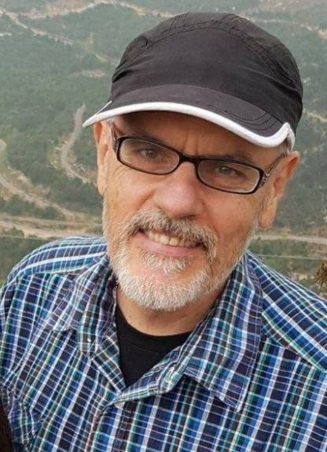
Dr. Tim Anderson (Photo source: Facebook)
The court decision is another warning of the poisonous and repressive atmosphere being whipped up to silence opposition to the preparations for Australian involvement in potentially catastrophic US-led wars against China or other perceived threats to the global hegemony asserted by Washington since World War II.
Significantly, the University of Sydney hosts the US Studies Centre, which was established in 2006, with US and Australian government funding, for the express purpose of overcoming popular hostility to US militarism after the massive protests against the invasion and occupation of Iraq.
The court’s judgment also exposed the fraud of claims by the National Tertiary Education Union (NTEU) that its enterprise bargaining agreements (EBAs) with universities protect the essential principle of academic freedom.
Justice Thomas Thawley ruled that the university’s EBA with the union, which is similar to those at most universities, “does not recognise the existence of, or give rise to, a legally enforceable right to intellectual freedom.”
In particular, Thawley declared that EBA “academic freedom” clauses do not protect university workers from being sacked for making comments—even on their private social media accounts—that managements deem in breach of their employee codes of conduct. Instead, EBA commitments to academic freedom were “purely aspirational.”

University of Sydney Institute Building, where United States Studies Centre is located (Photo source: Wikipedia)
This thoroughly anti-democratic decision comes on the back of a similar result in another case taken to the courts by the NTEU. In July, the Full Federal Court upheld the dismissal of James Cook University academic Dr. Peter Ridd, for expressing his views, as a climate-change sceptic, that cut across the university’s reputation.
Anderson’s case demonstrates how far university managements, working in league with governments and the corporate media, can victimise academics, especially those who oppose the wars of US imperialism and its allies, including the Zionist regime in Israel.
Among the charges the University of Sydney made against Anderson was that he tweeted, on his own Twitter account, criticism of the university hosting an address by US Senator John McCain. Anderson described McCain, a backer of every US military intervention for the past three decades, including the brutal neo-colonial wars in Afghanistan and Iraq, as “a key US war criminal.”
Other allegations included Anderson posting on his personal Facebook account a photograph of a group of friends eating lunch, one of whom wore an anti-Israel badge. Anderson was accused of “promoting racial hatred and/or racism” and charged with violating the university’s Code of Conduct even though he was on leave from the university at the time.
Anderson was further charged with posting to his Facebook and Twitter accounts a denunciation of a video news report by Channel 7 reporter Bryan Seymour that insinuated that Anderson supported racism and the North Korean regime. Anderson’s comment that “Colonial media promotes ignorance, apartheid and war” was declared “derogatory” toward Seymour.
Anderson was also cited for giving a lecture that allegedly featured an Israeli flag with the Nazi swastika superimposed on it, examined media coverage of Israel’s attack on Gaza in 2014, and encouraged students to seek independent evidence of claims of “moral equivalence” between Israel’s deadly aerial bombardments and primitive Palestinian rocket attacks.
This was judged to be “derogatory and/or offensive” and as “reasonably seen as racist towards or seeking to target and/or offend Israelis and/or Jewish people and/or Jewish victims of the Nazi regime.” Yet, critics of the Israeli government, including anti-Zionist Jews, have often compared its persecution of the Palestinian people to the actions of the fascist German regime.
Finally, Anderson was accused of breaching confidentiality orders barring him from even telling anyone that he was facing dismissal, and of failing to comply with “a lawful and reasonable direction” to delete his social media posts.
The judge agreed with the university management’s determination that Anderson’s posts and efforts to fight his dismissal amounted to “serious misconduct” under both the NTEU’s EBA and the university’s Code of Conduct, thus justifying his sacking.
Anderson’s dismissal followed a protracted campaign by senior figures in the federal Liberal-National Coalition government, the corporate media and university management, to demonise Anderson because of his denunciations of wars and military interventions by the US, Israel and other major powers.
In April 2018, Education Minister Simon Birmingham, who was in charge of university funding, demanded an investigation into Anderson for comments he made questioning US claims that the Syrian government was responsible for a sarin gas attack in the town of Khan Sheikhoun.
The Murdoch-owned Sydney Daily Telegraph hysterically denounced Anderson as a “sarin gasbag” and the Sydney Morning Herald later reported that the university was taking disciplinary action against Anderson—a media disclosure that violated its own confidentiality regime.
Justice Thawley found Anderson’s dismissal as justified by the university’s Code of Conduct, which imposes requirements such as “the exercise of the best professional and ethical judgment,” “integrity and objectivity,” being “fair and reasonable” and treating “members of the public with respect, impartiality, courtesy and sensitivity.” The university’s employees must also “uphold the outstanding reputation of the University in the community.”
These formulations are so vague and value-laden that they could provide a pretext for sacking academics or other university workers for condemning government policies, denouncing corporate greed or accusing the US and Australian governments of military aggression or war crimes. Employees could be dismissed for criticising university policies, such as hosting pro-military think tanks.
Virtually every university campus across the country now participates in government-funded programs to tie academic research to the development of new military technologies. Australian universities are being integrated into a vast US-led military build-up, aimed at preparing for war with China and other powers.
The NTEU’s response to the court ruling, as it was to Anderson’s sacking itself, and the massive job cuts ravaging universities, is to oppose any mobilisation of university workers and instead appeal to the employers for a deal.
In a union media statement, NTEU New South Wales division secretary Michael Thomson said: “We call on all Vice Chancellors to come to the table to talk about how we can formulate a legally enforceable right, to provide the appropriate protections for university staff and to avoid these circumstances occurring in the future.”
The Federal Court’s support for Anderson’s victimisation is part of a deeper attack on fundamental democratic rights. It widens the impact of a High Court 2019 ruling that essentially abolished freedom of speech for workers, whether in government or corporate employment. With no dissent, the judges endorsed the sacking of a federal public servant for criticising—even anonymously—the country’s brutal refugee detention regime.
A warning must be sounded. The ruling class and its agencies, including university managements, are seeking to suppress dissent amid mounting social inequality, war preparations and deepening political discontent.
Hence the federal police raids on journalists for publishing leaks exposing government and military crimes, the prosecution of the whistleblowers involved and the bipartisan backing for the persecution of WikiLeaks founder Julian Assange.
Be Offensive and Be Damned: The Cases of Peter Ridd and Tim Anderson
By Binoy Kampmark | Dissident Voice | December 20, 2018
It has been an ordinary year for universities in Australia. While the National Tertiary Education Union pats itself on the back for supposedly advancing the rights and pay of academics, several face removal and castigation at the hands of university management. Consumerism and pay are the sort of quotidian matters that interest the NTEU. Less interesting is the realm of academic ideas and how they clash with the bureaucratic prisons that have been built into universities.
At James Cook University, Peter Ridd was sacked on “code of conduct” grounds applied with a delightful elasticity. He claimed that it was for holding views on climate change out of step with his colleagues, and attacking the credibility of the Australian Institute of Marine Science and the ARC Centre of Excellence for Coral Reef Studies. (The pettiness of such institutions knows no bounds: Ridd’s knuckles were rapped, for instance, for satirising, trivialising or parodying the university.)
At the University of Sydney, Tim Anderson, a full time critic of Western interventions in the Middle East and acquitted for ordering the 1978 Sydney Hilton Hotel bombing, has been suspended pending what would seem to be imminent sacking. Causing “offense” was what mattered.
A cardinal rule applies in this case: Be suspicious of those who use good behaviour as a criterion of policing, notably in an environment where bad behaviour and dangerous ideas should hold sway over meek bumbling and submissiveness. Be wary of the demands to be vanilla and beige – behind them lies administrative venality and the dictates of compliance.
Such rubbery provisions as being “civil” or not causing offense shield the weak, spineless and fraudulent and, most dangerously, create the very same intolerable workplace that managers are supposedly opposed to. Very importantly, such code of conduct regulations are designed to immunise management from questions about their behaviour and often daft directives, letting institutions grow flabby with corruption. Inoculated, that class thrives in its toxicity.
The Deputy Vice-Chancellor of JCU, Iain Gordon, has drawn upon the usual stock nonsense defending the decision regarding Ridd. “The issue has never been about Peter’s right to make statements – it’s about how he has continually broken a code of conduct that we would expect all our staff to stick to, to create a safe, respectful professional workplace.” The thrust of this is simple: Never cause offense; be compliantly decent; be cripplingly dull and go back to your homes in your suburbs living a life unexamined. As an academic, you are merely delivering a service mandated by individuals several steps removed from the education process, not performing an ancient duty to educate mankind.
The code of conduct, the product of a corporatized imbecility, assumes the mantle of dogma in such disputes. “All staff members must comply with the Code of Conduct,” goes Gordon’s official statement in May, with its distinct politburo flavour of placing things beyond debate. “This is non-negotiable. It is a fundamental duty and obligation that forms part of their employment.” Ridd, explains Gordon, “sensationalised his comments to attract attention, has criticised and denigrated published work, and has demonstrated a lack of respect for his colleague and institutions in doing so. Academic rebuttal of his scientific views on the reef has been separately published.”
Anderson, having found himself at stages in the University of Sydney’s bad books, has also run the gauntlet of offensiveness. The specific conduct resulting in his suspension featured lecture materials shown to students suggesting the imposition of a swastika upon Israel’s flag. This was deemed “disrespectful and offensive, and contrary to the university’s behavioural expectations”. Tut, tut, Anderson.
The Sydney University provost and acting vice-chancellor Stephen Garton followed the line taken at JCU towards Ridd with zombie-like predictability. “The university has, since its inception, supported and encouraged its staff to engage in public debate and it has always accepted that those views might be controversial.” But debate – and here, behavioural fetters were again to be imposed – had to be undertaken “in a civil manner.” Contrarianism should be expressed with a good measure of decency.
The letter of suspension from Garton to Anderson is one-dimensionally authoritarian. Principles of academic freedom were supported by the university, but only in “accordance with the highest ethical, professional and legal standards”. But the all supreme, and trumping document, remained the Code of Conduct, capitalised by the bureaucrats as Mosaic Law. “The inclusion of the altered image of the Israeli flag in your Twitter Posts, Facebook Posts and teaching materials is disrespectful and offensive, and contrary to the University’s behavioural expectations and requirements for all staff.”
Some heart can be taken from the protest last Friday on the part of 30 academics who signed an open letter objecting to the treatment meted out to Anderson, stating that academic freedom was “meaningless if it is suspended when its exercise is deemed offensive.” His suspension pending termination of his employment was “an unacceptable act of censorship and a body-blow to academic freedom at the University of Sydney”. Reaction to Ridd has been somewhat cooler.
The point with Anderson is that his views are deemed bad for university business, which tolerates no room for the offensive. This, in a place where the most varied, and, at points, tasteless views, should be expressed. But as universities have become shabby entrepreneurial endeavours which see students as obesely delicious milch cows for their existence, the idea is less important than the process.
As is so often the case of free speech, advocates of it always assume it doesn’t apply to others. It is only to be extolled as a mark on paper and university policy. But never, for instance, challenge inane university policy or the hacks who implement it. Never ridicule ideas that deserve it. Never mock the obscene nature of managerialism’s central principle: massaged incompetence and assured decline. University managers and the colourless suits aided by their ill-tutored human resources goon squads tend to hold sway over opinions, taking against anybody who questions certain aspects of their (non)performance.
The Ridd and Anderson cases, coming from separate parts of the academic spectrum, demonstrate the prevalence of toadyism on the part of those who wish to avoid questioning the rationale of a university’s management process. They also suggest an immemorial tendency of authority to savagely oppress those who ignore it; to manifest its existence through punishment. In truth, it is precisely in ignoring those officials long barnacled upon the research and teaching endeavours of the University and drawing revenue best spent on students and scholars that a grave sin is committed. Such officialdom should be ignored, treated as the bureaucratic irrelevance that it is. Time for sit-ins, occupations, boycotts and a retaking of the University.
Binoy Kampmark was a Commonwealth Scholar at Selwyn College, Cambridge. He lectures at RMIT University, Melbourne and can be reached at: bkampmark@gmail.com.
Supporters of Apartheid Israel Abuse Sydney Anti-War Student
By Tim Anderson | American Herald Tribune | September 2, 2018
Media, parliamentary, academic and other supporters of apartheid Israel have abused University of Sydney doctoral student Jay Tharappel for his outspoken support of Yemen, opposition to Israel and his consistent stance against the long wars 0n Syria and Korea.
Much of the western media falsely pretend that the massively internationalized war on Syria is a “civil war”. Most also refuse to recognize the simple fact that, over the past 65 years, the USA has never agreed to a peace agreement with North Korea.
The personal attacks on Jay reveal a shallow recognition of free speech in Australia. It is extraordinary that so much abuse has been heaped on one dissident voice. Demands for censorship of his political comments have come from various sources, but many of them supporters of the apartheid state of Israel.
First came the bully and smear media, from Murdoch’s Daily Telegraph, and from Channel Seven. The Murdoch tabloid, in a torrent of personal abuse, attacked Jay for rejecting the false chemical weapons claims against Syria, in April 2017. It then falsely claimed that Jay’s criticism of Murdoch journalist Kylar Loussikian was a racist attack.
In August 2018 Channel Seven manufactured another scandal about Jay, falsely claiming that a Yemeni badge he wore in China was ‘anti-semitic’. One part of that badge, seen on Jay’s shirt in one of my social media posts, said ‘death to Israel’.
The photo was simply one of the friends at lunch. Channel Seven, using the false translation “death to Israeli”, claiming it was a racist incitement. I posted in response that the Channel Seven piece ‘promotes ignorance, apartheid, and war’.
In fact ‘death to Israel’ is a political statement by the Yemeni group Ansarallah, which calls for an end to apartheid Israel, the regime that is reported to have killed a Palestinian child every three days for the past 18 years. The Australian government sells arms to the Saudis to bomb Yemen, as they ignore that terrible war and try to suppress any news about Yemen.
Later, the University of Sydney told the Sydney Morning Herald that I was “under investigation” for refusing to take down that photo of Jay and friends at lunch. After a Sydney Morning Herald [allegation] against me, I made a social media statement explaining my position.
For Channel Seven’s principal sources journalist, Bryan Seymour used two people (to represent “many in the Jewish and Muslim community”). First was a well-known supporter of Israel, Vic Alhadeff. Vic was previously a chair of the NSW Community Relations Commission but resigned in 2014 after posting in support of Israel’s bloody reign of terror in Gaza.
The other was Jordanian-Australian Jamal Daoud, who claimed to represent a Palestinian group but is best known for his repeated attacks on those who support Syria. He has abused many supporters of Syria as ‘spies’ and ‘prostitutes’. In 2017 he took an Israeli propagandist to Syria, and since then has been wanted for questioning in Syria. Earlier, in 2015, he began an online petition to challenge a security ban on him entering Lebanon.
The corporate media came back to abuse Jay after he wrote a thoughtful piece on his visit to North Korea (DPRK) in the student newspaper Honi Soit. The article defended independent Korea while it described in some detail what he had seen there. On social media pages, many appreciated the unusual article, while others responded with censorial outrage.
The Daily Telegraph added another abusive piece, which copied much of Jay’s article while adding invective. Even the state-owned ABC wrote in support of the demand that the article be taken down, simply because it was seen as too favorable to North Korea.
Why the hysteria over criticism of Israel? Well, both the Murdoch media and Channel Seven have deep business links with Israel’s occupation forces, including those who regularly demolish Palestinian homes in their ethnic cleansing purges.
Pro-Israel figures and some Jewish media in Australia predictably and falsely tried to conflate Jay’s and my opposition to Israel with anti-Jewish racism. I have made my position on Israel and racism very clear on many occasions, most recently in an article called The Future of Palestine.
A selection of pro-Israel types jumped on the bandwagon. They included federal Labor MP Tim Watts, who attacked Jay’s article and Honi Soit, saying ‘everyone associated with this article ought to be ashamed’.
Everyone associated with this article ought to be ashamed https://t.co/SJ1jDeMqrP
— Tim Watts MP (@TimWattsMP) August 26, 2018
When he was criticized for picking on a student newspaper he said, by way of justification, that he was trying to get at me (‘the professor’).
I’m picking on the professor that has long been enabling this dangerous rubbish
— Tim Watts MP (@TimWattsMP) August 26, 2018
In fact, Tim Watts is yet another supporter of apartheid Israel. In late 2015 he went on an Israeli-government paid junket to Israel, in a group led by conservative minister Christopher Pyne. The group seemed to toe the Israeli line because Palestinian minister Dr. Sabri Saidam described them as “rude” and “not well educated” on Palestine.
Subsequently, Tim Watts took his Israel connection seriously. He strongly recommended the book ‘My Promised Land’ by Ari Shavit, which explains how Israel created “something unique and quite endearing” in a tough neighborhood.
This “unique and quite endearing” creation was described by an authoritative 2017 report to the United Nations as an ‘apartheid state’ and therefore ‘a crime against humanity’. US academic lawyers Richard Falk and Virginia Tilley wrote that “the situation in Israel-Palestine constitutes an unmet obligation of the organized international community to resolve a conflict, partially generated by its own actions”.
Professor Ariadne Vromen, a professor in Government at the University of Sydney, and opponent of the BDS campaign against Israel, jumped in, inexplicably, attacking the former Syrian Ambassador to Australia Tammam Sulayman. Ambassador Sulayman is now Syria’s envoy to North Korea, and it was he who invited us to visit that country.
Ariadne claimed that Ambassador Tammam had failed her research design course, 15 years ago. “He didn’t pass first year”, she said. After some criticism, she removed her post.

Of course, it is inappropriate for academics to abuse students or former students, or to humiliate them for their grades or results. In this case, Ariadne’s comments were also false. When I enquired, Ambassador Sulayman spelled out to me the reason why he had left Ariadne’s class and his doctoral studies at the University:
“Of course I didn’t complete at that time with Ariadne because [his supervisor, another academic] started the war on me and I complained against her to the university. So I stopped everything … in my [thesis] preface I stated there is no linkage between the secular Baath party and al Qaeda … but she said ‘that does not exclude links between Saddam and al Qaeda’, and I said but we are talking about the Baath party … Then she started returning every paper I sent her … she is a clear Zionist … It is silly for [Ariadne] to say that I didn’t finish even one year without mentioning the reason.”
Professor Vromen’s abuse of a former student and ambassador is strange. Why would an academic jump in to abuse a former student, in the context of an abusive media campaign against another student? What is wrong with honest discussion?
Unfortunately, this is not an isolated incident. The University of Sydney is well known for harboring pro-apartheid-Israel academics. It hosts a research project backed by US Government-funded agencies, called ‘The Electoral Integrity Project’. That project rates the electoral democracy of many countries. As it happens, they rate Israel’s ‘democracy’ very highly (17/127), even though the Jewish state is notorious for its institutionalized racism.
In 2007-08 the University of Sydney accepted a large grant from the American Australian Association, to establish a ‘United States Studies Centre’. This was mostly Australian Government money but came at the suggestion of media mogul Rupert Murdoch. The idea of the Centre came from a desire to repair the damage done to the image of the USA in the wake of its 2003 invasion of Iraq. I wrote an article about this scandal, back in 2010.
Washington remains the major funder and arms provider to apartheid Israel, providing the racist state with more than three billion dollars every year, mostly in military subsidies.
Featured Video

Michael von der Schulenburg: Europe’s Self-Defeating Iran War Policy
or go to
Aletho News Archives – Video-Images
Frlom the Archives
Who Rules America?
The Power Elite in the Time of Trump
By James Petras | Axis of Logic | September 6, 2017
Introduction
In the last few months, several competing political, economic and military sectors – linked to distinct ideological and ethnic groups – have clearly emerged at the centers of power.
We can identify some of the key competing and interlocking directorates of the power elite:
- Free marketers, with the ubiquitous presence of the ‘Israel First’ crowd.
- National capitalists, linked to rightwing ideologues.
- Generals, linked to the national security and the Pentagon apparatus, as well as defense industry.
- Business elites, linked to global capital.
This essay attempts to define the power wielders and evaluate their range of power and its impact. … continue
Blog Roll
 Aletho News
- Michael von der Schulenburg: Europe’s Self-Defeating Iran War Policy
- Sorry, The New Republic, Climate Change Isn’t Causing Somali Migration. Blame Civil Strife and Poverty.
- Expert Guts Claims That HPV Vaccine Reduces Cancer Risk
- No evidence Russia sabotaged Baltic cables – Finnish intel
- The Strategic Folly of a (Serious) US Ground Invasion of Iran
- US-Israeli war of aggression on Iran meant to reshape region: Omani FM
- Iran Does Not Consider Israel Party to Talks to Need Mediators With It – Ambassador
- Macron’s aircraft carrier and warplanes to the Persian Gulf is a dangerous vanity project
- Meet The Ellisons: Zionists, Technocrats, Moguls
- US failures in Iran reveal Russia is key to South Korea’s strategic security
- If Americans Knew
- Are we on the precipice of World War III?
- ‘Catastrophic,’ Says UNICEF: 1,100+ Children Killed or Wounded in Mideast Since US-Israel Launched Iran War
- The Unbelievable Madness of Our War With Iran
- World Council of Churches calls on govts to hold Israel accountable for violations of intl law
- How to end the war on Iran that costs US taxpayers $1M per minute – Not a ceasefire Day 153
- Israeli strategic plans to “remake the Middle East” from the 1950s and since
- Honoring Gaza’s women who refused to let the world look away
- 97% of victims of war on Iran are Iranian, 98% of victims in war on Gaza are Gazans – Not a ceasefire Day 152
- Early Iran strikes cost $5.6 billion in munitions, Pentagon estimates
- Israel Decided the War, But Trump’s America Fights and Pays the Bill
- No Tricks Zone
- New Studies: UK Sea Levels Were 4 Meters Higher Than Today During The Mid-Holocene
- Destructive Green New Deal: German Energy And Metal Group Warns Of Drastic Crisis
- New Study Documents A 20-Year Pause In Arctic Sea Ice Decline – Driven By Internal Variability
- Wake-up Call: Survey Shows Majority Of Germans Now Favor Postponing Climate Targets!
- Televised! Leading German Political Candidate Tells Schoolchildren CO2 Makes Sun Hotter!
- New Study: A Century Warming Of 1.1°C Is ‘Commonplace’ And ‘Not Unusual’ During This Interglacial
- New Study: ‘Internal Noise’ And Volcanic Forcing Can Trigger 10-15°C Warming Within Decades
- Glaciers Worldwide Are Suddendly Surging, Experts Blame Warming!
- Surprising Discovery: Sahara Is Greening…Billions Of Trees Where Once Thought To Be Barren
- New Research Reaffirms Clouds, Aerosols, And Surface Solar Radiation Are ‘Driving The Climate System’
 Aletho News