LAPD considers deploying unmanned drones for ‘tactical events’
RT | June 6, 2014
Defending the decision to pursue unmanned drones to assist in police work, the LAPD – who say they will cooperate with privacy groups on the matter – said the devices are being purchased by citizens, so why not allow law enforcement to use it as well?
At a news conference Thursday at LAPD headquarters, Chief Charlie Beck revealed the unmanned drones could assist police forces in “standoffs, perimeters, suspects hiding…and other tactical events.”
“We’re interested in those applications,” he said.
Beck responded to criticism of the plans by human rights and privacy groups by explaining that the technology is already “in the hands of private citizens” and corporations, so why shouldn’t law enforcement experiment with the devices as well?
“When retailers start talking about using them to deliver packages, we would be silly not to at least have a discussion of whether we want to use them in law enforcement,” the police chief said.
In December, Amazon and UPS announced ambitious plans to start testing UAVs for making home deliveries.
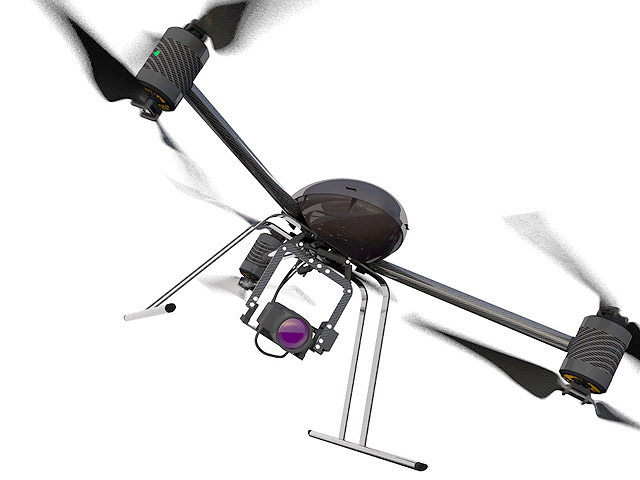
Late last month, the LAPD received two Draganflyer X6 unmanned drones as a ‘gift’ from the Seattle Police Department, in what seems to have been an effort by the latter to avoid public uproar.
Seattle authorities purchased the UAVs for $82,000 in 2010, funded by grants from the Department of Homeland Security. However, neither the city council nor the public was aware of the police drone program until a 2012 lawsuit by the Electronic Frontier Foundation over the department’s application for operation certificates from the Federal Aviation Administration.
The resulting public outcry over the drones forced the mayor to terminate the program in February 2013.
“These vehicles were purchased by the Seattle Police Department using federal grants. There was no cost to the city of Los Angeles,” police said.
Each remote-controlled vehicle is 3 feet (90cm) wide, has three rotors and can carry a video camera.
In order to calm public suspicion that the drones will infringe upon privacy rights, Beck said the LAPD would work closely with the American Civil Liberties Union during the “vetting process” of the UAVs.
“I will not sacrifice public support for a piece of police equipment,” Beck said, as quoted by the Los Angeles Times. “We’re going to thoroughly vet the public’s opinion on the use of the aerial surveillance platforms.”
The LAPD added it would seek approval from the Police Commission before unleashing the drones above Los Angeles.
Hector Villagra, executive director of the ACLU of Southern California, issued a statement: “The Los Angeles Police Department asked the ACLU of Southern California to meet and articulate our concerns about the privacy issues raised by the use of drones. We agreed to do so… However, at this point the ACLU SoCal has no plans to participate in any process to craft policies for LAPD’s use of drones, nor have we been formally invited to lead a team of advocates to help craft such policies.”
“As the ACLU has previously said, we question whether any marginal benefits of drones programs justify the serious threat to privacy they pose.”
FBI provided Anonymous with targets, new leaks show
RT | June 5, 2014
Leaked documents pertaining to the case against an American computer hacker currently serving a 10-year prison sentence have exposed discrepancies concerning the government’s prosecution and raise further questions about the role of a federal informant.
The documents — evidence currently under seal by order of a United States District Court judge and not made public until now — shines light on several aspects of the case against Jeremy Hammond, a 29-year-old hacktivist from Chicago, Illinois who was arrested in March 2012 with the help of an online acquaintance-turned-government informant. Last May, Hammond entered a plea deal in which he acknowledged his role in a number of cyberattacks waged by the hacktivist group Anonymous and various offshoots; had his case gone to trial, Hammond would have faced a maximum of life behind bars if found guilty by jury.
Articles published in tandem by The Daily Dot and Motherboard on Thursday this week pull back the curtain on the government’s investigation into Hammond and reveal the role that Hector Monsegur, a hacker who agreed to cooperate with authorities in exchange for leniency with regards to his own criminal matters, played in directing others towards vulnerable targets and orchestrating cyberattacks against the websites of foreign governments, all while under the constant watch of the US government.
Two-and-a-half years before Hammond pleaded guilty, Monsegur did the same upon being nailed with hacking charges himself. In lieu of risking a hefty sentence, however, Monsegur immediately agreed to aid the authorities and serve as an informant for the Federal Bureau of Investigation, eventually helping law enforcement nab Hammond and others. Last week, Monsegur was finally sentenced for the crimes he pleaded guilty to back in 2012 and was spared further jail time by the same judge who in November sent Hammond away for a decade.
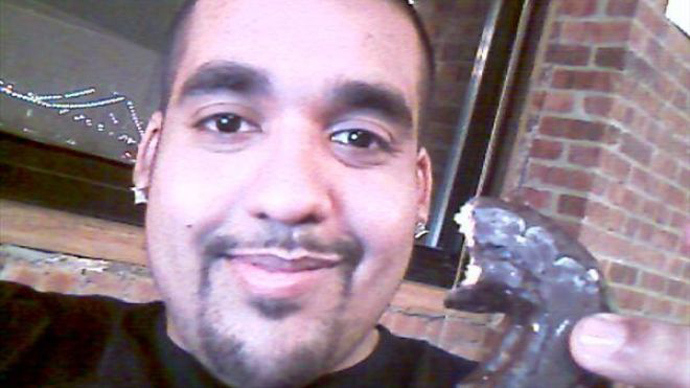
Hector Xavier Monsegur
According to this week’s revelations, Monsegur did more than just inform for the FBI after his arrest. The articles suggest rather that from behind his internet handle “Sabu,” Monsegur solicited vulnerabilities and targets from a wide range of hackers and then handed them off to other online acquaintances, including Hammond, in order to pilfer, plunder and otherwise ravage the websites and networks of foreign entities and at least one major American corporation.
Combined, the articles and the evidence contained therein corroborate very serious allegations concerning the Justice Department’s conduct in the case against Hammond and numerous other hacktivists, while raising numerous questions surrounding the FBI’s knowledge in hundreds of cyberattacks and its documented efforts to coordinate those campaigns using their informant.
Excerpts from previously unpublished chat logs and other evidence used in the Hammond case and obtained by the Dot and Motherboard are cited to provide a new point-of-view concerning two matters in particular: the December 2011 hacking of Strategic Forecasting, or Stratfor; and a January 2012 campaign led by Anonymous against government websites in Brazil and the US.
Contrary to the government’s claims, the Dot article alleges that Hammond did not mastermind the hack against Stratfor, but was rather told to target the Texas-based intelligence firm after Monsegur was made aware of a vulnerability in its network by a mysterious hacker who used the handle “Hyrriiya.” Weeks’ worth of private chats and group messages logged by Monsegur for the FBI after his arrest confirm that Hyrriiya breached Stratfor first, then sent details to the hacker he knew as “Sabu,” who in turn personally recruited Hammond to take the attack to the next level. For the first time, a clear timeline now exists to show exactly how the hack was hatched first by Hyrriiya, then Monsegur. A claim made ahead of Hammond’s sentencing hearing in which he claimed to have never even heard of Stratfor until he was fed the target by Sabu is authenticated with the logs.
Motherboard’s report focuses on a span of time only weeks after the Stratfor hack earned Anonymous headlines around the globe. Monsegur at that time was maintaining a list of targets in Brazil that would then be dispersed among members of Anonymous and other hackers to be defaced en masse as part of at least two concurrent cyber operations carried out in early 2012: an anti-corruption campaign against the Brazilian government; and another op in response to the shutdown of file-sharing site Megaupload.
“Sabu would say he wanted so-and-so, that another hacking team wanted this particular target,” Hammond told Motherboard from prison last month. “Some Brazilian was looking for people to hack them once I gave him the keys.”
Previously, Hammond said that Monsegur directed Anonymous to target websites belonging to no fewer than eight foreign governments while he was fully cooperating with the FBI. Only now, however, has documentation surfaced to verify that claim and others about alleged acts of cyberwar carried out by the the government by proxy.
“It’s completely outrageous that they made Sabu into this informant and then, it appears, requested him to then get other hackers to invade sites and look for vulnerabilities in those sites,” Michael Ratner, an attorney for WikILeaks, told Motherboard. “What that tells you is that this federal government is really — it’s really the major cybercriminal out there.”
The articles were first published Thursday morning and were a joint effort by journalists Dell Cameron of the Dot, Daniel Stuckey of Motherboard and RT’s Andrew Blake.
NATO troops and bases not welcome in Slovakia and Czech Republic
RT | June 5, 2014
Two Eastern European nations, Slovakia and the Czech Republic, have refused to host foreign troops and military bases. The prime ministers of both countries have consecutively spoken against the proposal voiced by US President Barack Obama.
Following the example of their neighbor the Czech Republic, the prime minister of Slovakia stated that his country is ready to meet its obligations as a NATO member state, but stationing foreign troops on its territory is out of the question.
Slovak PM Robert Fico said he “can’t imagine foreign troops being deployed on our territory in the form of some bases.”
The proposal to host more NATO troops in Eastern Europe was voiced by Obama on his current tour of Europe.
Speaking at a news conference in Warsaw, Obama said America is stepping up its partnership with countries in Eastern Europe with a view to bolstering security.
Initially, it was Poland that asked for a greater US military presence in Eastern Europe.
In April, Polish Defense Minister Tomasz Siemoniak called on the Pentagon to deploy as many as 10,000 American troops in his country.
Three Baltic States welcomed the idea back in April. To begin with, a small contingent of American troops began to arrive in Lithuania, Latvia and Estonia to take part in military training.
Two countries opposed deployment of any foreign soldiers on their territory.
On Tuesday, Czech Prime Minister Bohuslav Sobotka said his country sees no need to allow foreign military presence on its territory.
Last month, Defense Minister Martin Stropinsky sparked a political storm in the Czech Republic by recalling the 1968 invasion as the biggest reason not to host NATO troops in the country in a Reuters interview.
Slovakia’s Fico joined in the debate Wednesday, saying that for his country such a military presence is a sensitive issue because of the Warsaw Pact troops’ invasion into Czechoslovakia in 1968.
“Slovakia has its historical experience with participation of foreign troops. Let us remember the 1968 invasion. Therefore this topic is extraordinarily sensitive to us,” he said.
Fico said that Slovakia is committed to fulfill its obligations towards NATO despite military budget cuts and that allies would be allowed to train on Slovak territory anyway.
Czechoslovakia split into the Czech Republic and Slovakia in 1993.
The Czech Republic entered NATO in 1999, whereas Slovakia joined the alliance later, in 2004.
Fico’s Smer party, which has an absolute majority in Slovakia’s parliament, has been advocating warmer relations with Russia.
See also:
‘Peed in public, behave like occupiers’: Latvian mayor complains about NATO sailors
US airbase in Kyrgyzstan officially closes
RT | June 3, 2014
The US military has finally closed its transit center at Bishkek’s Manas airport, Kyrgyzstan. During the 12 1/2 years of the Afghan military campaign the facility remained the primary air supply hub for the ISAF’s contingent in the war zone.
Formerly known as Manas Air Base (unofficial name: Ganci Air Base), the facility became operable in 2001, when the US started Operation Enduring Freedom against the Taliban forces in Afghanistan.
The facility soon proved to be absolutely indispensable, as it transported to and from Afghanistan up to 5.5 million American servicemen and allied troops from 26 countries – accounting for 98 percent of personnel rotation during the Afghan campaign.
Under the base’s current commander, US Air Force Colonel John Millard, there were days when it hosted up to 4,000 servicemen either being deployed on a mission to Afghanistan or returning from the warzone.
Another important job done by the 376th Air Expeditionary Wing in Manas was the aerial refueling of ISAF fighter jets operating in Afghanistan. Over the years, Boeing KC-135 Stratotankers performed 33,000 flight refueling operations in Afghan skies, pumping 1 million tons of aviation fuel into the tanks of assault fighter jets.
The US base has been at the center of several scandals, including the fatal shooting of a local man by an American guard at a base checkpoint. The killing was not prosecuted by Kyrgyzstan, as US military personnel have legal immunity in the country. Critics also voiced concerns over environmental damage and potential terrorist threats from US enemies against the base.
In 2009, then-Kyrgyz President Kurmanbek Bakiev announced plans to shut the base. Yet after long negotiations with Washington, the airbase was simply renamed Transit Center Manas.
But in 2013, the Kyrgyz parliament refused to prolong the contract with Washington, obliging the US to withdraw all personnel form the base no later than on July 10, 2014. Now it appears that the demand will be fulfilled one month earlier than the deadline, by the end of next week.
Millard, who earlier handed over the symbolic keys to the base to Kyrgyz authorities, told journalists that the US government has left $30 million worth of equipment, facilities and generators to the country’s government.
The base’s closure has left several hundred locals previously employed at the base without work.
Reportedly, there are 300 American servicemen left at Manas airfield, carrying out the closure of the base.
Yet its closure does not mean that the US has no more interests in Kyrgyzstan. A new US embassy is currently being constructed in the country.
The new building will reportedly be big enough to host not only a diplomatic mission but also a detachment of US intelligence personnel to be stationed in the country.
The geographical position of Kyrgyzstan, situated right at the crossroads between Russia, China, Afghanistan and a number of Central Asian countries, make Kyrgyzstan an ideal place for intelligence gathering and eavesdropping, to ensure that Washington keeps an eye on the region after its troops withdraw from Afghanistan.
US troops ‘kidnap’ 4-year-old drone strike victim from hospital, allege parents
RT | June 02, 2014
A four-year-old girl whose face was blown off during a US drone strike in Afghanistan was kidnapped by American troops and hidden by an international organization, her family says.
The child, named Aisha Rashid, was travelling with her parents, a sibling and several other relatives from Kabul to their home in the village of Gamber in the Kunar province on a hot September day, when the drone exploded, Expressen.se reported. An uncle, Meya Jan, is at home on his farm in that village when he receives a phone call about the strike from the neighboring village. He and others rush to the strike.
Suddenly they hear a voice. “Water, water…”
It is Aisha. She is missing a hand, her leg is bleeding, and there is nothing left of her eyes or nose.
Older relatives rush her to the hospital in Asadabad, but doctors there can do nothing. She is transported by ambulance to a hospital in Jalalabad, where surgeons do what they can to patch her face, but her case is too difficult for them. Hospital staff contact the United Nations Assistance Mission in Afghanistan (UNAMA), who arranges for her to be sent by medical helicopter to Kabul four days later.
The incident occurred on September 7, 2013, when NATO drones destroyed a pickup truck with civilians inside after its driver agreed to give a lift to Taliban insurgents, provincial governor Shuja ul Mulk Jalala said at the time. A report listed that four women, four children, and four men had been killed in the strike. The remaining four fatalities were said to be Taliban militants. NATO command acknowledged that the strike took place, but stated that the operation killed only militants – not civilians.
Once in the Kabul hospital, Aisha is visited by Afghan President Hamid Karzai. “She had lost the whole family, the entire family, 14 of them, in the bombing in Kunar. And that day . . . [note: there is a 39-second pause as Karzai struggles with his emotions] . . . that day, I wished she were dead, so she could be buried with her parents and brothers and sisters,” he said, recalling the visit in an interview with the Washington Post five months later.
“She is walking now, she is in America. We arranged for her to be taken to America. She’s there now,” Karzai said in the March phone interview.
But Jan and Aisha’s other uncle, Hasrat Gul, did not give permission for the only surviving member of the Rashid family to be taken to the US, nor were they allowed to go with her. And they were not given any news of their niece.
“We think she is in the US, that’s what they told us, but we have no contact and we don’t know if she is still in Bagram or if she’s been flown out,” Gul told Expressen’s Av Terese Cristiansson in early October. They said they believed the US military was trying to hide her because drone strikes are such a sensitive subject.The two uncles give the reporter power of attorney to find Aisha.
And so Cristiansson embarks on a journey to find Aisha that she describes as “Kafkaesque.”
The International Security Assistance Force (ISAF) took over the case days after Karzai visited Aisha. Cristiansson emails the ISAF, but they have turned Aisha’s case over to a relief organization named Solace, which helps Afghan children with war injuries to receive international treatment. Solace’s strategy is to pay for foreign treatment and then place the children with foster families until they can be flown back to their own country. The reporter contacts them in November, and they initially seem willing to work with her on following the case for an article and documentary. But when Cristiansson says she wants to visit Aisha at Walter Reed National Military Medical Center outside Washington, DC (where Solace says the girl is located), the group becomes unresponsive.
In the meantime, the family had been receiving no communications. “We were informed that she didn’t have any family,” says Patsy Wilson, one of the founders of Solace told Cristiansson. The press office at Walter Reed said the family should ask local representatives at the base in Kunar about Aisha’s condition.
The family, with no updates, believes the US military have taken Aisha. “They probably don’t want her to become a poster girl for drone repercussions,” they said. They even start doubting whether she is alive.
Karzai spoke to Aisha at the end of February, days before his Post interview. “I called the family with whom she was. She’s still blind; she will not be a normal girl again. They’re trying to conduct plastic surgery on her,” he said. “The lady that looks after her, an Afghan lady, says she keeps asking about her younger brother who was 3 years old when they were killed.”
Jan and Gul did not speak to their niece until March.
“She cried and wondered where we are and how everyone in the village is. She spoke to my son and said that ‘as soon as I’m strong I’m coming home to the village’,” Jan said to Cristiansson at the time. “She said she has learnt her ABC.”
But the two uncles say they do not want Aisha in the United States. “We were against the US taking her. They killed our entire family and now they have her,” they said. “Even Germany and France said they could help her, but the US wanted her so that the case didn’t become too big in other countries. We don’t understand why none of us got to go with her either, that she had to travel alone.”
Gul told Cristiansson they have been compensated $2,000 per victim who died in the drone strike. “They want to give us money, but we don’t want America’s money. We have said that the only apology we can accept is what it says in the Koran: 100 camels,” he said. They also want the person responsible for killing their family brought to justice, and for Aisha to return to them. They think she realizes she cannot live in a country that killed her mother, father and little brother.
“She belongs at home with us,” Jan said.
Despite promise, US govt moves to classify justification for drone killing of American
RT | May 29, 2014
The Obama administration has launched a sudden effort to keep classified additional parts of a memo outlining the legal justification for the drone killing of an American a mere week after saying it would comply with a federal ruling to release the memo.
In January 2013, a Federal District Court judge decided that the US Justice Department could keep the document classified entirely. That ruling stood until April 2014, when a panel of the US Court of Appeals for the Second Circuit in New York ordered the government to publicize key parts of the document that provided the legal rationale for the drone strike that killed Anwar al-Awlaki.
Awlaki was born in New Mexico before moving to Yemen with his family as a child. He returned to the US again to attend college but eventually became a prominent Al-Qaeda propagandist who American intelligence officials have claimed helped plot terrorist attacks. He was killed by a September 2011 drone strike in Yemen that was authorized based on the 41-page memo, dated July 16, 2010.
President Barack Obama praised the strike at the time, telling reporters that Awlaki’s death was a “major blow to Al-Qaeda’s most active operational affiliate.”
The New York Times and American Civil Liberties Union have sought the release of the memo under the Freedom of Information Act.
It has been an issue of contention of late because David Barron, the former Justice Department attorney who wrote the memo, was confirmed by the US Senate by a narrow vote last week as a judge on a US appeals court. A number of senators said they would only vote to confirm Barron if the administration agreed not to appeal the April decision and release a redacted version of the document.
“I rise today to oppose the nomination of anyone who would argue that the president has the power to kill an American citizen not involved in combat and without a trial,” Senator Rand Paul said last week. “It is hard to argue for the trials for traitors and people who would wish to harm our fellow Americans. But a mature freedom defends the defenseless, allows trials for the guilty, and protects even speech of the most despicable nature.”
In a new court filing obtained by The New York Times, however, assistant US attorney Sarah Normand now argues that some of the information the administration pledged to reveal should actually remain secret.
“Some of the information appears to have been ordered disclosed based on inadvertence or mistake, or is subject is distinct exemption claims or other legal protections that have never been judicially considered,” she wrote.
The Justice Department also asked that the court keep the request for parts of the memo to remain secret. That request was denied, with the judge ordering the government to unveil previously secret negotiations between the court and prosecutions deliberating which aspects of the Barron memo would remain in the dark.
“It’s deeply disappointing to see the latest effort by the government to delay even further the release of this memo to the public,” New York Times attorney David McCraw told Politico. “The government reviewed the Second Circuit’s opinion before it was released. The court made redactions in response to that review. The fact that the government then waited five weeks to file a motion – seeking yet another opportunity to review what it has already reviewed – says volumes about the administration’s position on transparency.”
Senator Mark Udall (D-Colorado) was one of the lawmakers who said he only voted to confirm Barron because of the administration’s promise that “redactions to the memo would focus on still-classified information – not the legal reasoning itself,” he told the Times.
“I intend to hold the White House to its word,” Udall added.
Activists demand answers after news of NYPD spying on political groups
RT | May 27, 2014
Following the news that the New York Police Department sent undercover officers to monitor political organizations, multiple activist groups are looking for an audit of the department’s wide-ranging surveillance program.
The complaint has been filed with the NYPD’s new office of the inspector general, which the City Council created against the wishes of former Mayor Michael Bloomberg in order to oversee the police department’s policies – particularly in light of criticism regarding its stop-and-frisk tactics and surveillance of Muslim communities.
According to the New York Times, the groups are calling for a comprehensive investigation into the NYPD’s intelligence division, which has been operating the police force’s surveillance program for years. The move comes as the groups seek more transparency from police following the election of new Mayor Bill de Blasio, whose administration they believe will be supportive.
“We need tangible, concrete proposals of how we can ensure the NYPD does not target an entire group, set of groups, or political activists in general based on their participation in political advocacy,” the complaint reads.
Although most of the parties involved were not named, the Times revealed that one of the organizations behind the complaint is Friends of Brad Will – a group dedicated to increasing public awareness of human rights abuses connected to the “War on Drugs.”
As noted by the newspaper, the group believed it had attracted the attention of the police for years, and investigative reporting by the Associated Press confirmed that “an undercover officer had infiltrated a Friends of Brad Will meeting in New Orleans in 2008 and had sent a report noting plans for future actions by the group.”
In addition to spying on political groups, Reuters reported that police classified those employing civil disobedience as “terrorist organizations” and kept secret files on individual members.
Much of the NYPD’s surveillance efforts could be traced to the aftermath of the September 11 attacks on the World Trade Center, but the groups claim police activity has negatively affected their ability to organize and that their constitutional rights to assemble, petition the government, and practice free speech have been violated.
“These kinds of police programs can’t just be laid at the feet of a post-9/11 world and the argument that security outweighs legal protections,” Friends of Brad Will coordinator Robert Jereski told Reuters.
According to the Times, the complaint is requesting that the inspector general disclose “a full description of the training which officers undergo before being tasked with targeting political activists.”
This isn’t the first time that the NYPD has come under fire for political surveillance, either. In 2004, police were found to be monitoring church groups, anti-war organizations and others in the lead-up to the Republican National Convention. Police defended their behavior, arguing their efforts were aimed at preventing unlawful activity, not silencing dissent.
“There was no political surveillance,” NYPD intelligence unit leader David Cohen testified regarding past tactics. “This was a program designed to determine in advance the likelihood of unlawful activity or acts of violence.”
The most recent complaint also comes a little more than a month after the NYPD disbanded a controversial “Demographics Unit” tasked with detailing everyday life in predominantly Muslim communities in the wake of 9/11. As RT reported previously, no terrorism-related leads were generated despite the resourced dedicated.
“The Demographics Unit created psychological warfare in our community,” said Linda Sarsour of the Arab American Association of New York. “Those documents, they showed where we live. That’s the cafe where I eat. That’s where I pray. That’s where I buy my groceries. They were able to see their entire lives on those maps. And it completely messed with the psyche of the community.”
China to ditch US consulting firms over espionage suspicion
RT | May 26, 2014
State-owned Chinese companies will cease to work with US consulting companies like McKinsey and Boston Consulting Group over fears they are spying on behalf of the US government.
US consulting companies McKinsey, BCG, Bain & Company, and Strategy&, formerly Booz & Co., will all be snubbed by state-owned Chinese companies, the Financial Times reported, citing sources close to senior Chinese leaders.
“The top leadership has proposed setting up a team of Chinese domestic consultants who are particularly focused on information systems in order to seize back this power from the foreign companies,” a senior policy adviser to the Chinese leadership was quoted by the FT as saying.
“Right now the foreigners use their consulting companies to find out everything they want about our state companies,” the adviser said.
Last Thursday China announced that all foreign companies would have to undergo a new security test. Any company, product or service that fails will be banned from China. The inspection will be conducted across all sectors – communications, finance, and energy.
China has already banned Microsoft’s Windows 8 operating system from government computers, according to Chinese state media agency Xinhua.
“Under President Xi Jinping, technology and implementation will look to be converging, so foreign tech firms should be very worried about their prospects,” Bill Bishop, an independent consultant based in Beijing, told the FT.
Chinese officials have said that government ministries, companies, universities, and telecoms networks are victims of US hacking, and will try to avoid using US technology in order to protect “public interest”.
The dictate follows the US Justice Department’s indictment of five Chinese military officers it suspects of committing cyber crimes against a number of major US companies, including US Steel, Westinghouse and Alcoa. The US accused the army officers of stealing trade secrets and even published their photos.
Beijing responded by calling the US a ‘robber playing cop’, and more recently said the US is a “mincing rascal” and involved in “high-level hooliganism”.
The US-China fallout came after revelations made by NSA contractor Edward Snowden that the US uses economic cyber espionage to spy on international competitors, including China.
The dispute is only the latest setback in relations between the world’s two largest economies. Issues like Ukraine, Syria, and North Korea have been divisive topics between the two superpowers.
FBI threatens to go after Russian hackers
RT | May 23, 2014
On the heels of a high-profile indictment announced earlier this week by the United States Department of Justice against five Chinese military officers, sources say Russian hackers could be among the next individuals targeted by the DOJ.
The Wall Street Journal, Foreign Policy magazine and the Chicago Tribune all reported this week that officials close to the US government’s hunt for foreign hackers say Russians are on the radar of the Justice Department, and could be named in the next DOJ indictment.
All three outlets hesitated to name their sources, but the Journal reported that people familiar with the government’s investigations said alleged cybercriminals in Russia are likely to be charged soon.
“For several years, the Obama administration has put Chinese and Russian cyber spies and criminals at the top of its list of worst offenders in what officials describe as a relentless campaign targeting American businesses for the benefit of those countries’ own industries,” Shane Harris wrote for FP. “Estimates on the true cost of cyber-espionage range widely, but are generally believe by experts and officials to be in the tens of billions of dollars annually.”
As Harris reported, Federal Bureau of Investigation Director James Comey told members of the Senate Judiciary Committee this week that the FBI was aggressively pursuing further criminal investigations pertaining to foreign hacking cases, but fell short of announcing the filing of new charges. Now with Monday’s indictment out of the way and the US officially charging members of the Chinese military for the first time ever, however, multiple sources said that American authorities are gearing up to throw the book at Russian hackers.
Earlier this week, the Justice Dept. said that five Chinese individuals working within a highly-secretive cyber unit inside the People’s Liberation Army have stolen trade secrets and sensitive communications from six American entities, including major metal companies that compete with Chinese businesses and the US Steel Workers union.
“The range of trade secrets and other sensitive business information stolen in this case is significant and demands an aggressive response,” US Attorney General Eric Holder said in a statement on Monday.
“This administration will not tolerate actions by any nation that seeks to illegally sabotage American companies and undermine the integrity of fair competition in the operation of the free market,” Holder added.
Nevertheless, the Chinese government fired back and accused the US of hypocrisy, and its Foreign Ministry demanded a withdrawal of the indictment and called the US “the biggest attacker of China’s cyberspace.” As RT reported earlier this week, leaked National Security Agency documents released by former US government contractor Edward Snowden have revealed that the US does, in fact, conduct economic cyberespionage in order to spy on competitors in Brazil, France, Mexico and, indeed, China. As with China, the Russian government has adamantly denied any involved in cyber spying, and claims to lack the same technical abilities as the NSA.
And although the Justice Dept. declined to name any other targets of investigation while touting their latest cyber indictment on Monday, reports for years have suggested that Russian hackers have targeted US businesses in a similar way to what China’s PLA Unit 61398 are accused of doing.
Most recently, American cybersecurity firm CrowdStrike reported in January that the Russian government spied on hundreds of US, European and Asian companies, which Reuters called the first time ever that Moscow has been linked to conduct economic espionage over the web.
“These attacks appear to have been motivated by the Russian government’s interest in helping its industry maintain competitiveness in key areas of national importance,” Dmitri Alperovitch, CrowdStrike’s chief technology officer of CrowdStrike, said to Reuters at the time.
“They are copying the Chinese play book,” he said. “Cyber espionage is very lucrative for economic benefit to a nation.”
In March, researchers in the US also traced a piece of malicious malware known as Turla back to Moscow.
“It is sophisticated malware that’s linked to other Russian exploits, uses encryption and targets western governments,” Jim Lewis, a senior fellow at the Center for Strategic and International Studies in Washington, told Reuters then. “It has Russian paw prints all over it.”
Congress reaffirms indefinite detention of Americans under NDAA
RT | May 22, 2014
The US House of Representatives approved an annual defense spending bill early Thursday after rejecting a proposed amendment that would have prevented the United States government from indefinitely detaining American citizens.
An amendment introduced in the House on Wednesday this week asked that Congress repeal a controversial provision placed in the National Defense Authorization Act of 2012 that has ever since provided the executive branch with the power to arrest and detain indefinitely any US citizen thought to be affiliated with Al-Qaeda or associated organizations.
“This amendment would eliminate indefinite detention in the United States and its territories,” Rep. Adam Smith (D-Washington), a co-author of the failed amendment, said during floor debate on Wednesday, “So basically anybody that we captured, who we suspected of terrorist activity, would no longer be subject to indefinite detention, as is now, currently, the law.”
“That is an enormous amount of power to give the executive, to take someone and lock them up without due process,” Smith added. “It is an enormous amount of power to grant the executive, and I believe places liberty and freedom at risk in this country.”
Pres. Barack Obama vowed when he signed the 2012 NDAA into law on December 31, 2011 that he would not use the indefinite detention powers provided to him by Congress. When that provision was challenged in federal court, however, the White House fought back adamantly and appealed a District Court ruling that initially reversed the indefinite detention clause, eventually sending the challenge to the Supreme Court where it stalled until earlier this month when the justices there said they would not consider the case.
The bill sponsored by Smith and co-author Rep. Paul Broun (R-Georgia) would have given the legislative branch a chance to repeal the same provisions that SCOTUS declined to hear, but the bipartisan amendment failed on a vote of 191 to 230.
A separate proposal from Rep. Smith meant to expedite the shut-down of the military prison at Guantanamo Bay, Cuba was also rejected early Thursday; an amendment from Rep. Dennis Ross (R-Florida) intended to cut federal funding for recreational facilities at Gitmo, however, was approved in the NDAA draft that left the House on Thursday.
On Twitter, Smith said he was “disappointed” but “won’t stop fighting to pass this critical legislation.”
And while the White House is unlikely to abandon its own fight with regards to keeping the indefinite detention provision intact, the Obama administration threatened to veto this year’s NDAA because it would continue to complicate the president’s promise to close the Guantanamo Bay facility — a vow older than his own administration.
“If this year’s Defense Authorization bill continues unwarranted restrictions regarding Guantanamo detainees, the president will veto the bill,” White House Press Secretary Jay Carney said in a statement Wednesday evening.
When the 2011 NDAA passed Congress with the controversial indefinite detention provision included, the White House said at the time that it would veto the legislation before Pres. Obama eventually balked.
US State Dept. fails to recognize ‘individuals’ detained by Kiev as Russian journalists
RT | May 20, 2014
Washington has failed to condemn the detention of Russian journalists working in Ukraine, instead doubting they were journalists at all and accusing them of smuggling weapons based on a “reports and conversations” on the ground.
The US State Department claims that Russian journalists were in possession of press accreditation that was given to them by the self-proclaimed Donetsk republic, which Ukraine and the US do not recognize.
“The Ukrainian Security Services, according to reports, have detained a number of people who were in possession of fake journalist credentials issued by the non-existent Donetsk People’s Republic,” US State Department spokeswoman Jen Psaki said at a daily press briefing.
Psaki did not specify precisely which journalists she was referring to, but Associated Press reporter Matt Lee at the briefing was asking about the Russian TV crew working for LifeNews who were detained by the Ukrainian Security Forces (SBU) on Sunday.
“Reportedly they were carrying portable aircraft missiles in the trunks of their cars at the time of their detention. So I haven’t looked in your trunk lately but it is unlikely you have those in there. That raises some questions about these individuals and whether they were actually journalists,” Psaki said.
After persistent attempts by Lee to find out whether Psaki had any proof or credible source to back such claims, she acknowledged that these reports were “credible” as considered by a US “team on the ground” which is “in touch with Ukrainian authorities.”
Reports “about these individuals and what they were carrying with them, certainly raises the question as to who they are,” Psaki answered
When again pushed to answer whether the accusations were based on rumors, Psaki hinted that the information comes from Kiev.
“This is from our team on the ground who are certainly in touch with our Ukrainian authorities,” Psaki replied.
When asked about the detention of an RT stringer working on the ground in eastern Ukraine, Graham Phillips, Psaki replied that she was not aware of “specific details” of his arrest yet, but promised to look into that.
Psaki said that the State Department will condemn the move of illegal detention of journalists, however emphasizing that Washington will first of all focus on “continuing to press for the release of the Ukrainian and international journalists who have been detained by Russian separatists.”
On Sunday, two Russian LifeNews journalists, Oleg Sidyakin and Marat Saichenko, were captured by Ukrainian troops near Kramatorsk in the self-proclaimed Donetsk People’s Republic.
Ukrainian authorities claimed on Tuesday that the detained journalists confessed during interrogation to entering the territory of the country without press cards. The crew are now in Kiev but so far have not been charged.
Previously the OSCE urged the Kiev authorities to release the Russian journalists saying that intimidation and obstruction of media is “unacceptable.”
In the meantime, RT has lost contact with the channel’s contributing journalist Graham Phillips who had earlier reported that he had been detained by the National Guard at a check point in Mariupol, eastern Ukraine. The British journalist Phillips may be turned over to the Ukrainian Security Service and sent to Kiev as well, a source told RT
The Russian Foreign Ministry’s commissioner for human rights labeled the harassment of journalists as the obstruction of media that doesn’t support the coup-appointed authorities’ policy.
“This is another step de facto made by Ukrainian authorities to curb the activities of unwanted journalists,” said Konstantin Dolgov. “The journalists who work professionally and show an objective picture, the ugly side of the outrages made by ultra-nationalists, the results of [Kiev’s] punitive operation in the southeast.”

Journalists Oleg Sidyakin and Marat Saichenko. Image from http://www.lifenews.ru
In both cases involving the RT stringer and LifeNews crew, it appears the SBU was responsible in detaining and neutralizing reporting. Dolgov added that Phillips’ arrest followed the “unlawful seizure, detention of Russian journalists,” adding that Moscow is continuing to work for their speedy release.
On Monday, pro-Kiev activists again called to “immediately detain and deport” Phillips, who they believe is “cooperating with terrorists,” according to a message posted on EuroMaidan Kharkov’s Facebook page.
The same day, LifeNews said that journalists held captive by Ukraine’s coup-installed government were reportedly arrested after they released footage showing a UN-marked helicopter used by Kiev’s armed forces engaged in an operation against civilians in the east. A few days prior to the journalists’ arrest on Sunday, the authorities in Kiev issued an order to “find and neutralize” the authors of the video, a LifeNews source in SBU told the channel.
Meanwhile, RT Arabic’s news crew who arrived in Kiev to cover the upcoming May 25 Ukrainian presidential election has not been allowed into the country and was sent back to Moscow under the pretext that they were unable to properly explain the purpose of their visit, despite being accredited by the Ukrainian Central Election Commission.
Featured Video

Your Enslavement Begins in Gaza: The ‘Board of Peace’
or go to
Aletho News Archives – Video-Images
From the Archives
The US: The Century of Lost Wars
By James Petras | Global Research | September 12, 2018
Introduction
Despite having the biggest military budget in the world, five times larger than the next six countries, the largest number of military bases – over 180 – in the world and the most expensive military industrial complex, the US has failed to win a single war in the 21st century.
In this paper we will enumerate the wars and proceed to analyze why, despite the powerful material basis for wars, it has led to failures. … continue
Blog Roll
 Aletho News
- Israel designates five Palestinian media outlets as ‘terrorist organizations’
- Israel, not America, first: Carlson’s Huckabee interview lays bare US foreign policy priorities
- Israeli troops executed Palestinian aid workers at ‘point blank range’: Report
- Iran war What if today’s Iran is resigned to a long, hellish war with the US?
- Why Israel Is Escalating Its War Crimes Against Lebanon
- Iran in the face of the armed diplomacy of imperialism
- The US build-up around Iran constitutes strategic war option, not ‘deterrence’
- Iran to US: Sanctions and war failed; try diplomacy and respect
- China supplies Iran with radar, surveillance tech to track US stealth aircraft: Report
- Zelensky rejects territorial concessions to Russia
- If Americans Knew
- Footage Shows Israeli Troops Waiting in Ambush, Then Opening Fire on a Palestinian Teen
- The US is on the brink of a major new war that Trump has not even bothered explaining
- Latest Epstein document dump is one more cover-up
- No Protection, No Justice: US Citizens Killed with Impunity by Israel
- Maria Farmer: Epstein Victim Reveals Explosive Information Covered Up by Media
- Average of five Palestinians killed by Israel every day in Gaza since ceasefire – Not a ceasefire Day 136
- Palestinian church leaders admonish Christian Zionist Mike Huckabee – Not a ceasefire Day 135
- Ominous messaging from Trump’s “Board of Peace” – Not a ceasefire Day 134
- ‘Christians Out’: Jerusalem Church Tagged With Hate Graffiti, Police Investigating
- Israeli Settlers Kill American Teen
- No Tricks Zone
- New Research Reaffirms Clouds, Aerosols, And Surface Solar Radiation Are ‘Driving The Climate System’
- Germany: Electric Car Catches Fire At Charging Station, Sets Off Local “Inferno”, Widespread Damage
- New Study: Canada’s New Brunswick Was 1°C Warmer Than Today During The Medieval Warm Period
- Coal Power Back In Trend As Globe Tries To Keep Pace With Growing Demand For Power
- New Study: A 4°C Warmer Beaufort Sea Had ‘No Sea Ice’ 11,700 – 8200 Years Ago
- Unfudging The Data: Dutch Meteorological Institute Reinstates Early 20th Centruy Heat Waves It Had Erased Earlier
- German Gas Crisis…Chancellor Merz Allegedly Bans Gas Debate Ahead of Elections!
- Pollen Reconstructions Show The Last Glacial’s Warming Events Were Global, 10x Greater Than Modern
- Germany’s Natural Gas Storage Level Dwindles To Just 28%… Increasingly Critical
- New Study Rebuts The Assumption That Anthropogenic CO2 Molecules Have ‘Special’ Properties
 Aletho News