US-Russia reach landmark deal on destruction of Syria chemical weapons arsenal
Providing this framework is fully implemented it can end the threat these weapons pose not only to the Syrian people but also their neighbors – John Kerry
RT | September 14, 2013
Russia and the United States reached a deal on a framework that will see the destruction or removal of Syria’s chemical weapons by mid- 2014. Under the plan, the Assad government has one week to hand over an inventory of its chemical weapons arsenal.
Russian Foreign Minister Sergey Lavrov and his US counterpart John Kerry announced the plan on putting an end to Syria’s chemical weapons program following their third day of negotiations in Geneva, Switzerland.
Kerry outlined several points of the plan, which would see the “rapid assumption of control by the international community” of Syria’s chemical weapons. He further stressed US-Russia commitment to the complete destruction of not only of Syria’s chemical weapons arsenal, but also its production and refinement capabilities.
Syria will also become a party to the Organization for the Prohibition of Chemical Weapons (OPCW), which outlaws their production and use.
Damascus must submit within a week’s time – “and not 30 days” – a complete inventory of related arms, “including names, types, and quantities of its chemical weapons agents, types of munitions, and location and form of storage, production and research and development facilities.”
The Syrian government should provide the OPCW, the UN and other supporting personnel “with the immediate and unfettered right to inspect any and all sites in Syria.” Lavrov later said that security for all international inspectors on the ground should be provided for not only by the government, but opposition forces as well.
It remains undecided who will actually be tasked with destroying the stock, although their destruction “outside of Syria” and under “OPWC supervision” would prove to be optimal.
On the timetable, Kerry said UN inspectors must be on the ground no later than November, while the destruction of chemical weapons must be completed by the middle of 2014.
“Providing this framework is fully implemented it can end the threat these weapons pose not only to the Syrian people but also their neighbors,” Kerry said adding that Russian and US teams of experts had reached “a shared assessment” of the existing stockpile and that Syria must destroy all of its weapons. It was possible that the Syrian rebels have some chemical weapons, he acknowledged.
If Damascus fails to comply with the plan, a response in accordance with UN Charter Chapter 7 will follow, Kerry said, in a reference to the use of military force. The chapter provides for “action by air, sea, or land forces as may be necessary to maintain or restore international peace and security” in the event other measures fail.
But Russia’s Foreign Minister, Sergey Lavrov, said the agreement did not include any potential use of force against Syria. He however said that deviations from the plan, including attacks on UN inspectors, would be brought to the UN Security Council, which would decide on further action.
There is no prior agreement about what form the Security Council’s measures might take if Syria does not comply, Kerry said.
Kick starting Geneva II
Meanwhile, both sides reiterated previously stated intentions to meet with Lakhdar Brahimi, the United Nations and Arab League Special Envoy to Syria, on the margins of the UN General Assembly on September 28.
Speaking alongside Kerry and Lavrov in Geneva on Friday, Brahimi said ongoing work to put Syria’s chemical weapons under international control was a necessary step for convening the Geneva II conference. The conference, which is intended to hammer out a political solution to the brutal civil war which has embroiled Syria for over two years, could be held in October, Lavrov told reporters.
On Monday, UN Secretary-General Ban Ki-moon is expected to present a report to the Security Council which sources say contains overwhelming evidence that “chemical weapons were used” in an August 21 attack in a Damascus Suburb which killed between 355 and 1,729 people.
The government of Bashar Assad strongly denied government forces were responsible for the attack, while the West overwhelmingly blamed Damascus, prompting US Barack Obama’s threat of military action.
Obama has threatened to strike Syria unilaterally, prompting Russia’s Saturday’s joint proposal which will see Syria’s chemical weapons brought under international control.
Although President Assad immediately acquiesced to the Russian-backed plan, rebel forces have resisted efforts which have staved off Western intervention in the country.
On Saturday, the Free Syrian Army rejected a US-Russian deal as a stalling tactic and vowed to continue fighting to topple the Assad government.
“The Russian-American initiative does not concern us. It only seeks to gain time,” said Salim Idriss, the chief of the FSA command, said.
“We completely ignore this initiative and will continue to fight to bring down the regime,” he told a press conference Saturday in the Turkish city of Istanbul.
NSA masqueraded as Google to spy on web users – report

RT | September 13, 2013
The NSA used ‘man in the middle’ hack attacks to impersonate Google and fool web users, leaks have revealed. The technique circumvents encryption by redirecting users to a copycat site which relays all the data entered to NSA data banks.
Brazilian television network Globo News released a report based on classified data divulged by former CIA worker Edward Snowden on Sunday. The report itself blew the whistle on US government spying on Brazilian oil giant Petrobras, but hidden in amongst the data was information the NSA had impersonated Google to get its hands on user data.
Globo TV showed slides from a 2012 NSA presentation explaining how the organization intercepts data and re-routes it to NSA central. One of the convert techniques the NSA uses to do this is a ‘man in the middle’ (MITM) hack attack.
This particular method of intercepting internet communications is quite common among expert hackers as it avoids having to break through encryption. Essentially, NSA operatives log into a router used by an internet service provider and divert ‘target traffic’ to a copycat MITM site, whereupon all the data entered is relayed to the NSA. The data released by Edward Snowden and reported on by Globo News suggests the NSA carried out these attacks disguised as Google.
When the news broke about the NSA gathering information through internet browsers, tech giants such as Google and Yahoo denied complicity, maintaining they only handover data if a formal request is issued by the government.
“As for recent reports that the US government has found ways to circumvent our security systems, we have no evidence of any such thing ever occurring. We provide our user data to governments only in accordance with the law,” said Google spokesperson Jay Nancarrow to news site Mother Jones.
Google, along with Microsoft, Facebook and Yahoo, has filed a lawsuit against the Foreign Intelligence Surveillance Court (FISA) to allow them to make public all the data requests made by the NSA.
“Given the important public policy issues at stake, we have also asked the court to hold its hearing in open rather than behind closed doors. It’s time for more transparency,” Google’s director of law enforcement and information security, Richard Salgado, and the director of public policy and government affairs, Pablo Chavez, wrote in a blog post on Monday.
The tech giants implicated in NSA’s global spying program have denied criticism that they could have done more to resist NSA spying. Marissa Mayer, CEO of Yahoo, claimed that speaking out about the NSA’s activities would have amounted to ‘treason’ at a press conference in San Francisco on Wednesday.
In Yahoo’s defense, she argued that the company had been very skeptical of the NSA’s requests to disclose user data and had resisted whenever possible. Mayer concluded that it was more realistic to work within the system,” rather than fight against it.
Obama’s foreign policy just as bad or worse than Bush’s – poll
RT | September 12, 2013
Nearly two-thirds of Americans say President Barack Obama’s handling of foreign policy is either equal to or worse than that of predecessor George W. Bush, a new poll reveals.
The results of a recent Reason-Rupe poll published on Tuesday this week suggest that a majority of Americans — 64 percent — consider the current commander-in-chief’s job performance with regards to international affairs to be no better than Pres. Bush, who kick-started wars in both Afghanistan and Iraq during his eight years in the White House.
According to the results of the poll, 32 percent of Americans polled said Obama’s handling of foreign policy is worse than that of his predecessor, with 32 percent also saying it was “about the same.”
Thirty-two percent of the 1,013 adults polled said they consider Obama’s handling of foreign policy better than that of Pres. Bush.
And as a potential United States-led military strike against Syrian leader Bashar al-Assad’s regime remains a very real possibility in the days to come, Reason’s Emily Ekins wrote that Obama — who famously said he opposes “dumb wars” — could launch the US into a situation that wouldn’t be supported by a majority of Americans.
“Nearly three-quarters of Americans, 74 percent, say it would be ‘unwise’ for the United States to launch airstrikes on Syria without the support of the United Nations or Great Britain,” Ekins wrote of the results.
Additionally, only 17 percent of those polled said it would be a wise move to attack Assad’s regime to reprimand the Syrian leader for the alleged use of chemical weapons last month outside of Damascus. The White House said previously that Assad’s army deployed chemical warheads on August 21 and in turn eradicated more than 1,400 people.
The same proportion of Americans who put Bush’s foreign policy record at-or-above that of Pres. Obama — 64 percent — told pollsters that US airstrikes against Syria are not necessary to protect America’s credibility and national security, despite the administration arguing otherwise.
Pres. Obama had been considering a unilateral military strike against Assad without approaching Congress for authorization, but has in recent days formalized his request with the House and Senate and has since postponed voting while diplomatic options are considered by the UN and international community.
Foreign policy aside, however, the Obama administration isn’t winning much support among the Americans polled by Reason and Rupe. According to their questioning, 61 percent said they believe the US is heading in the “wrong direction,” compared to 28 percent who say America is, “generally speaking,” on the right path.
Forty-three percent of those surveyed said they disapprove of Obama’s overall job performance. Before the US ramped-up its interest in the Syrian civil war, a similar poll conducted in May found that exactly half of Americans polled approved of the president’s job, signaling a 7 percentage point drop in a matter of months.
At a press briefing on Wednesday, White House press secretary Jay Carney acknowledge the president’s reluctance to use military force in Syria after more than a decade of wars started under the Bush administration.
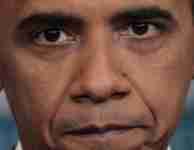 “He knew and knows and understands that the American people are extremely reluctant to get the United States involved again militarily in the Middle East — not just in the Middle East, but anywhere,” Carney told reporters. “But as someone who deeply understands that, and who has spent four and a half years as president getting us out of wars, he believes in the case that he made last night, and I think he understands why there’s reluctance and why there’s anxiety about potentially striking Syria in response to the use of chemical weapons.”
Related article
NSA, no way! Anti-spying sentiments on the rise amid steady stream of disclosures
RT | September 11, 2013
The National Security Agency isn’t making many friends, apparently: a new poll published this week suggests that a majority of Americans continue to have complaints with the NSA’s surveillance practices amid a myriad of recent disclosures.
According to the results of survey released this week by the Associated Press and the NORC Center for Public Affairs Research, anti-NSA sentiment remains rampant in the United States more than three months after former intelligence contractor Edward Snowden first began disclosing top-secret documents exposing the inner-workings of a vast surveillance apparatus operated by America’s premier spy agency. Meanwhile, concerns regarding those practices are growing amid members of Congress and even independent coalitions.
Polling conducted by the AP and NORC last month and released on Tuesday suggest that 56 percent of Americans surveyed oppose the NSA’s collection of telephone records, and 54 percent said they were against the practices that put Internet metadata into the hands of federal investigators.
A confused poll earlier this year in July by the PEW Research Center found that 44 percent of Americans disapproved of the NSA program, with half of the country not opposing the surveillance methods.
Now only 34 percent — or roughly one-third of those polled — say they are okay with the dragnet collection of metadata, or raw information including information on the sender and recipient, time and location pertaining to emails and phone calls. Additionally, 53 percent of Americans polled from a group of 1,008 adults say the federal government is doing a good job of ensuring freedom, a drop in seven percentage points since 2011. That earlier study concluded that 40 percent of Americans thought the government was doing a good job of protecting privacy, and today that number is down to 34 percent.
The AP poll also concluded that an overwhelming 71 percent of those asked opposed US officials eavesdropping on calls without warrant, and 62 percent said they were against the monitoring of email content.
Results from the latest poll were published on Tuesday, one day before the UK’s Guardian newspaper published the latest top-secret document in a series of classified leaks attributed to Snowden since early June. On Wednesday morning, the Guardian published a NSA memo from 2009 in which it’s revealed how US intelligence officials have shared raw data collected from American persons with Israeli counterparts without domestic agents even analyzing that information before it changes hands.
Commenting to the AP, Trevor Timm of the Electronic Frontier Foundation suggested the recent NSA disclosures undoubtedly have influenced the public’s perception of the US intelligence community and the way it conducts itself.
“For the first time, the public is able to see what’s going on behind closed doors and it’s changing minds,” Timm told the AP.
The EFF, along with the American Civil Liberties Union and more than two dozen other entities, are named as plaintiffs in a collection of lawsuits challenging the Obama administration’s surveillance programs. Attorneys for the EFF are representing plaintiffs in the matter of First Unitarian Church of Los Angeles v. NSA, which grew in size this week when five new organizations signed on to sue the White House. The EFF announced on Tuesday this week that Acorn Active Media, the Charity and Security Network, the National Lawyers Guild, Patient Privacy Rights and The Shalom Center have all signed on to the suit, which attorneys say challenges the government’s surveillance alleged abuse of Section 215 of the Patriot Act to collect bulk telephone metadata — an activity first disclosed on June 5 after Snowden leaked documents to the Guardian and Washington Post.
“The First Amendment guarantees the freedom to associate and express political views as a group,” EFF legal director Cindy Cohn said in a statement. “The NSA undermines that right when it collects, without any particular target, the phone records of innocent Americans and the organizations in which they participate. In order to advocate effectively, these organizations must have the ability to protect the privacy of their employees and members.”
Also signing on in support of NSA reform is US Rep. Darrell Issa (R-California), who only this week announced he’d be seeking changes in the way America conducts surveillance operations. Issa previously voted against a measure proposed by colleague Rep. Justin Amash (R-Michigan) which would have aimed to thwart the NSA’s now-infamous practices, but this week wrote a letter to Congress saying lawmakers on Capitol Hill should debate those policies once again as leaks continue to raise concerns.
“Now that it has been publicly acknowledged that the communications of Americans were included in the NSA’s data collection program, likely violating their Fourth Amendment rights, Congress must respond in a manner that both increases the transparency of the agency’s programs and reinforces the constitutional protections of our citizens,” Issa wrote in a letter first published by Politico.
“We’re very pleased that Chairman Issa supports our amendment,” Amash spokesman Will Adams told US News & World Report. “If the Amash amendment does get taken up by the House and it does pass this fall, it will put pressure on the committees to start passing comprehensive reforms.”
The Amash Amendment would have barred the NSA from using the PATRIOT Act provision at the center of First Unitarian Church of Los Angeles v. NSA to collect the phone records of all Americans. It was defeated in the House last month by a 12 vote margin.
Related articles
International experts have strong proof images of chemical victims fabricated – Moscow
RT | September 10, 2013
Footage and photos of the alleged chemical attack in Syria, which the US cites as the reason for a planned military intervention, had been fabricated in advance, speakers told a UN human rights conference in Geneva.
Members of the conference were presented accounts of international experts, Syrian public figures and Russian news reporters covering the Syrian conflict, which back Russia’s opposition to the US plans, the Russian Foreign Ministry said in a statement.
The speakers argued that the suspected sarin gas attack near Damascus on August 21 was likely a provocation of the rebel forces and that a military action against the President Bashar Assad government will likely result in civilian casualties and a humanitarian catastrophe affecting the entire region.
The possible attack by US military without a UN Security Council mandate would violate international law and should be prevented by the United Nations, some of the speakers said.
Evidence for the Russian case, including numerous eyewitness reports and results of investigations of the chemical weapon incident by activists, was handed over to a UN commission of experts probing the Syrian crisis, the ministry said.
The Obama administration voiced an intention to use military force in Syria after reports of mass deaths in Eastern Houla, a neighborhood of Damascus, which killed more than 1,400 people according to US estimates. Washington says the deaths was due to a chemical weapons attack of the Syrian army on rebel forces and says it plans to use force to prevent such incidents in the future.
Russia is convinced that the chemical incident was a provocation by rebel forces, which staged a false flag attack to drag the US into the conflict and capitalize on the damage that the Syrian army is likely to sustain in the American intervention.
An increasing number of reports are backing Russia’s position, with local witnesses, US and British former intelligence professionals and Europeans recently released from rebel captivity all speaking for a provocation scenario.
In the latest development this week a possible way to de-escalate the tension was voiced, which would involve the Assad government handing over control of his chemical arsenal to the international community. The plan was backed by Russia, China and Syria’s main ally Iran, while Syria said it will review it.
Mixed signals over the plan came from the US. The US State Department initially said Secretary of State John Kerry, who initially voiced a possible disarmament, saw it as a rhetorical move and didn’t expect Bashar Assad to actually disarm. But later President Obama said such a move from Damascus would make him put the military action plan on pause.
Meanwhile RT learned that Syrian rebels might be planning a chemical weapons attack in Israel. The possible attack would be carried out from the territory supposedly controlled by the Syrian government and would trigger another round of escalation, leaving little hope of defusing the tension.
Obama ‘should be grateful’ for face-saving chance to backpedal on Syria
RT | September 10, 2013
President Obama should curb threats of a US military strike on Syria by joining Russia’s “face-saving” proposal for Damascus to give control of its chemical weapons to the international community, independent researcher Soraya Sepahpour-Ulrich told RT.
Sepahpour-Ulrich said that Russia’s proposal allows Obama and America “to save face,” given the fact that a military strike on Syria would be “contrary to the people’s will” and receive little international support.
RT: Do you think this nascent solution is something that can actually lead to a workable compromise?
Soraya Sepahpour-Ulrich: It could. It’s a face-saving out for Mr. Obama, really. Because he doesn’t have the support to go to war, and if he chooses to go over the people of the United States, the majority of whom disapprove of this war, and the strikes, then he’s turning his back on democracy, and they always say in America they want to export democracy to other countries. So this is a blatant violation and goes contrary to the people’s will. And I think the proposal is really being very kind to Mr. Obama, giving him a way out.
RT: Why do you think Russia’s proposal to put Syria’s chemical stockpiles under international control received a positive response so quickly?
SSU: I think it was very positive because, well, for one, Assad doesn’t want war, he doesn’t want his people to die because there are lobby groups in Washington pushing for war. So I think he was happy to accept that. And I think the other countries, although Kerry and Obama are skeptical, they do not want this war. They do not want to go to this war. They do not have the support they hoped to have and yet they have those red lines that they have drawn which in fact were violated back in May. That’s when the United Nations said they thought the rebels were responsible and they didn’t act on it. But then to have painted themselves in a corner and this gives them the way out. It helps America, of course, its allies are happy not to go to war. It might be a win-win situation for all.
RT: The president has recently come out in some interviews saying this could be a positive step in the right direction, but we haven’t heard any assertive decision on his part. How do you think his quick his repositioning on the subject can be explained?
SSU: I think when he saw there is absolutely no support at all whatsoever, I mean even if Congress did vote for him to carry out these strikes, again, Congress would’ve been acting against the will of the people. America’s really onstage right now for the whole world to see. Not from a degree of, perhaps, hypocrisy, but the fact that it’s not really a promoter of democracy anywhere. And I think that this is a face-saving way for Obama to back-pedal on his position, and he should be very grateful that this solution was offered.
RT: Many legislators we’ve heard from say they were relieved by this talk of a compromise. Do you think they were looking forward to a vote on this subject?
SSU: I think they were very apprehensive because on the other hand, any legislator that would not have acted out the people’s will and had voted for war to please the lobby groups – no matter how much money the lobby would have actually put into their re-election – they would still need the vote of the people. So they were in a dilemma as well. I think the whole country, the whole nation was in a dilemma. And this really was a very clever way of avoiding all sorts of conflicts and casualties and allowing America to save face.
No economic espionage? NSA docs show US spied on Brazil oil giant Petrobras
RT | September 9, 2013
Despite earlier US assurances that its Department of Defense does not “engage in economic espionage in any domain,” a new report suggests that the intelligence agency NSA spied on Brazilian state-run oil giant Petrobras.
Brazil’s biggest television network Globo TV reported that the information about the NSA spying on Petroleo Brasileiro SA came from Glenn Greenwald, the American journalist who first published secrets leaked by whistleblower Edward Snowden.
Globo TV aired slides from an NSA presentation from 2012 that revealed the agency’s ability to gain access to private networks of companies such as Petrobras and Google Inc.
One slide specified an ‘economic’ motive for spying, along with diplomatic and political reasons.
This seems to contradict a statement made by an NSA spokesman to the Washington Post on August 30, which said that the US Department of Defense “does not engage in economic espionage in any domain, including cyber.”
An official from the NSA told Globo that the agency gathers economic information not to steal secrets, but to watch for financial instability.
Petrobras is known to have discovered some of the world’s biggest offshore oil reserves in recent years.
Some of the new reserves are estimated to be around as 100 billion barrels of oil, according to Rio de Janeiro State University.
None of the leaked slides went into the reasons behind the NSA spying on the Brazilian firm.
The US spy agency then reportedly shared the gathered information with the UK, Canada, Australia and New Zealand.
The new report about US spying on Brazil could intensify the already existing tensions between Brazil and US.
The relationship between the two countries became tense as Globo reported about allegations that NSA has intercepted private communications of Brazil’s President Dilma Rousseff and her Mexican counterpart Enrique Pena Nieto.
Brazil responded by canceling preparations for the presidential visit to the United States and beginning a probe into telecommunications companies to see if they illegally shared data with the NSA. Also, Brazil has asked for a formal apology.
During the G20 summit US tried to address the issue by US President Barack Obama pledging to work with Brazil and Mexico to address their concerns over US spying revealed in recent NSA leaks.
‘Globesity’: US junk food industry tips global scales

By Robert Bridge | RT | September 07, 2013
From Mexico to Qatar, obesity rates are soaring to unprecedented levels. The alarming trend is damaging economic performance, as well as the health of millions of consumers worldwide.
Take our increasingly sedentary lifestyles, mix in a generous portion of American fast-food and dubious agricultural practices, add a dash of corporate duplicity and you have a recipe for high obesity rates across the planet.
The newly released United Nations report on global nutrition does not make for very appetizing reading: Amid an already floundering global economy, the reality of a fattening planet is dragging down world productivity rates while increasing health insurance costs to the tune of $3.5 trillion dollars per year – or 5 percent of global gross domestic product (GDP).
31.8 percent of US adults are now considered clinically obese. This is a remarkable figure, especially considering that it is approximately double the US obesity rate registered in 1995, according to data from the Center for Disease Control and Prevention.
An individual is considered obese when their body mass index (BMI), a measurement obtained by dividing a person’s weight in kilograms by the square of the person’s height in meters, exceeds 30 kg/m2, according to the World Health Organization.
Meanwhile, much of the international community is quickly catching up with the global consumption superpower. Mexico, for example, just surpassed US obesity rates with a whopping 32.8 percent of Mexican adults now considered to be clinically obese.
The unprecedented weight gains in Mexico, however, as well as many other countries, appear to be no accident.
Following the passage of the North American Free Trade Agreement (NAFTA), Mexico became the dumping ground for a slew of cheap fast food and carbonated drinks, according to a Foreign Policy report.
Thanks to NAFTA, there was a more than 1,200 percent increase in high-fructose corn syrup exports from the US to Mexico between 1996 and 2012, according to the US Agriculture Department. In an effort to place a cap on the high-calorie drinks, Mexican officials introduced a tax on beverages containing high-fructose corn syrup. American corn refiners, however, cried foul and the tax was voted down by the World Trade Organization.
Mexicans now consume 43 gallons of soda per capita annually, giving the country the world’s highest rate of soda consumption, according to estimates by Mexico’s national statistics agency.
Yet another disturbing casualty on the obesity trail is tiny Qatar, an oil-rich Arab nation of 250,000 people that is also rich in fast food diets.
“Like most people in the Arab Gulf, (Qataris) were traditionally desert-dwelling and therefore much more physically active,” according to a 2012 report by Policymic.com. “Now, cars have replaced camels and fast food and home deliveries take the place of home cooking. Even housework and child rearing is left to maids and nannies.”
Today, some 45 percent of Qatari adults are obese and up to 40 percent of school children are obese as well.
Last month, nutrition experts from around the world shared their views at an obesity and nutrition conference in Sydney. For many of the attendees, the primary culprit in the global obesity scourge is out-of-control corporate power, where the free market decides everything.
The rise of global fast food outlets has been a key change in our environment leading to fattier foods and fatter people, Bruce Neal, professor at the George Institute for Global Health in Sydney, told the Indo-Asian News Service.
“As fast as we get rid of all our traditional vectors of disease – infections, little microbes, bugs – we are replacing them with the new vectors of disease, which are massive transnational, national, multinational corporations selling vast amounts of salt, fat and sugar,” Neal said.
John Norris, writing in Foreign Policy, explained some of the global dynamics that contributed to the so-called “globesity” epidemic, including the soft drink industry’s move to use cheaper high-fructose corn syrup instead of sugar in many of their products.
“Suddenly, it was cheaper to put high-fructose corn syrup in everything from spaghetti sauce to soda. Coke and Pepsi swapped out sugar for high-fructose corn syrup in 1984, and most other US soda and snack companies followed suit,” Norris wrote. “US per capita consumption of high-fructose corn syrup spiked from less than half a pound a year in 1970 to a peak of almost 38 pounds a year in 1999.”
While some might be tempted to downplay the negative effects of such a harmless sounding additive, researchers from Canada’s University of Guelph, as pointed out by Norris, discovered that a high-fructose corn syrup diet in rats produced “addictive behavior similar to that from cocaine use.”
As obesity explodes, US fast food companies look abroad.
Americans, thanks in part to First Lady Michele Obama’s ‘Let’s Move’ program, have recently woken up to the unsustainability of their soda guzzling, fast food ways. Other politicians and activists have also weighed in on the debate, making the environment for the fast food industry not as comfortable as in the past.
In March, New York City Mayor Michael Bloomberg attracted the ire of the soft drink industry when he placed a ban on the sale of sodas in sizes larger than 16 ounces. Violators will be fined $200.
In his 2004 a documentary film, “Super Size Me,” Morgan Spurlock stunned audiences by tracking the physical effects on his body – none of them positive – after consuming nothing but McDonald’s food for 30 days. As a result of the experiment, Spurlock gained 24½ lbs. (11.1 kg), a 13 percent body mass increase, and a cholesterol level of 230, among other negative side-effects.
Perhaps the biggest wake-up call for the fast food industry came in 2002 when two teenagers accused McDonald’s of deceptively marketing its menu from 1985 to 2002, causing them, they alleged, to become obese. The judge dismissed the case in 2010, but the message to the industry was crystal clear.
As a result of these and other public awareness campaigns, the American fast food industry – although slower than some may like – has been gradually rewriting their menus and marketing campaigns, many of which are aimed at kids.
At the same time, the junk food industry – sensing the sea change of attitudes in the United States as the physical effects of junk food manifests itself – are investing increasingly in foreign markets where public awareness of the subject is not so developed.
Similar to the crackdown on the tobacco industry in the late 1990s, US fast food companies are busy setting up shop abroad for easy, unregulated markets to hawk their wares.
Already the size of their presence is breathtaking: “Coca-Cola and PepsiCo together control almost 40 percent of the world’s $532 billion soft drink market, according to the Economist. Soda sales, meanwhile, have more than doubled in the last 10 years, with much of that growth driven by developing markets. McDonald’s investors were disappointed that the company only turned $1.4 billion in profit during the second quarter of 2013, having become used to years of double-digit gains every three months,” according to the Foreign Policy report.
So while the United States is steadily finding ways to regulate its fast food, soft drink industry, and thus nip the obesity epidemic in the bud, it is, at the same time, legislating on behalf of unhealthy exports abroad.
Now the question is, will the rest of the world bite the hand that feeds?
Related articles
Mind the gap! Democratic deficit in UK, US has never been bigger
By Neil Clark | RT | September 6, 2013
The issue of Syria has demonstrated the massive gap that has opened up between the elite and ordinary people in both the US and Britain.
Poll after poll after poll shows very large majorities against strikes on Syria. People are war-weary, and the last thing they want is for their countries to become embroiled in another Middle-East war.
One Congressman in the US tweeted earlier this week that he had asked 200 people if they supported strikes on Syria and only four said ‘Yes’– that’s just 2 percent. Another said that 99 percent of calls to his office were against military action.
Let’s get one thing straight: the only people who are keen on war with Syria in the US and UK are the elites. Ordinary people on both sides of the Atlantic want absolutely nothing to do with it.
In Britain, the overwhelming majority of people were delighted that our parliament voted against war last week and that enough of our legislators finally listened to the people to defeat the serial warmongers.
A BBC poll showed that 71 percent of people thought parliament had made the right decision. Yet our neocon/’liberal interventionist’ elite is furious that legislators listened to the views of ordinary members of the public and not them. “You’re a disgrace,” screeched neocon Minister Michael Gove at MPs who voted against the government. Behaving like spoilt brats having a temper tantrum because they were not allowed to get their own way, the Permanent War brigade have been calling for a “second vote” in parliament, showing arrogant contempt for the views of the majority of ordinary people who don’t want war with Syria.
Neocon historian Andrew Roberts threw a hissy fit in a newspaper column last Sunday, attacking the “hideously amoral selfishness” of “new Britain” for not supporting war with Syria. Serial warmonger and drama queen Lord Paddy Ashdown declared “In 50 years trying to serve my country I have never felt so depressed/ashamed” – after parliament finally listened to public opinion and not to warmongers like Ashdown.
Nick Cohen, poster boy for Britain’s pro-war faux-left tweeted “Can’t help thinking that the British parliament’s vote will be remembered as a low and mean point in our history.” Have you got that? Parliament listening to ordinary members of the public is a “low and mean point.” Such is the fundamentally undemocratic neocon/liberal interventionist mindset, which says that no point of view on foreign policy counts except their own and that of their neocon pals.
Since last week’s parliamentary vote, UK establishment figures have been lining up to give Ed Miliband, the Labour leader, a jolly good thrashing for daring to defy the War Party’s line on Syria. Writing in The Times, aptly described as ‘The Warmongers Gazette’ by anti-war conservative writer Peter Hitchens, David Aaronovitch called Miliband a ‘political vulture’. Aaronovitch’s attack on Miliband was hailed as ‘devastating’ by Ian Katz, the editor of Newsnight, the BBC’s flagship Current Affairs program, which wheeled out a ‘Dr. Rola’ from ‘Hand in Hand For Syria’ to criticize Miliband’s failure to back the government.
Since the vote Newsnight has promoted a series of pro-intervention figures, seemingly desperate to try and get us plebs to change our minds. What part of ‘WE DON’T WANT WAR WITH SYRIA’ do our elite not understand? Now the high priest of ‘Liberal Interventionism’, the multi-millionaire war criminal Tony Blair, has joined the ‘Get Miliband’ lynch mob, saying that he was “disappointed” that parliament hadn’t supported the government, adding, “This is something where I just have to disagree with the leadership of the [Labour] party.”
For our neocon/liberal interventionist elite, Miliband is a shocker, a bounder, a rotter, and a ‘political vulture’. But most ordinary people in Britain are very pleased that he and his party listened to the public and opposed the government on Syria. You’d never have known it from listening to neocon newspaper columns, but after last week’s vote, bookmakers shortened the odds of Labour winning the next election to 8-13.
If Miliband and his party had voted the way the neocons wanted, then it’s highly likely that earlier this week US and British forces would have launched their attack on Syria. Which is why of course the Permanent War gang are so angry with him.
The pro-war lobby may be numerically tiny, but in both the US and UK it is massively overrepresented in the mainstream media. Despite the Iraq debacle, the same columnists who urged on that particular catastrophe, are still in front of their keyboards, propagandizing for yet another Middle East ‘intervention’, and are still treated with enormous deference whenever they appear on the likes of CNN or the BBC. Which is very, very often.
“Did you know there are people who supported the Iraq War getting invited on news programs to talk about Syria?” tweets comedy writer Graham Linehan. S’TRUE!!!
The disproportionate voice that necons and ‘liberal interventionists’ have in the UK and US media makes it appear that their views are more widely held in the public at large than they are. But in fact their extremist pro-war views are very rarely found outside elite, Establishment circles.
The gap between the elites in the US and the UK is now larger than at any time in the last 100 years. If we do go to war with Syria, despite the overwhelming public opposition, then it will show that democracy is well and truly dead in both our countries.
Are we countries where the views of the majority are listened to, or are we countries where a tiny, unrepresentative, pro-war clique always gets their way? We’re about to find out.
 Neil Clark is a journalist, writer and broadcaster. His award winning blog can be found at www.neilclark66.blogspot.com. Follow him on Twitter
Related articles
US snub of Syria talks ‘proof of weakness in position’ – Duma speaker
RT | September 6, 2013
State Duma speaker Sergey Naryshkin has told the press that no Russian parliamentary delegation is going to the United States to discuss the Syrian issue, adding that the US refusal to meet was regrettable.
“The unwillingness to listen to arguments on inter-parliamentary level testifies to the fact that our American partners themselves understand the weakness of their positions. In addition, this step characterizes their attitude to the norms of international law,” he said.
Naryshkin added that “the United States is used to considering the most important issues of other nations and of whole world’s regions to be their internal affairs, despite the fact that the current system of international law and the UN’s global security architecture have been built by the lengthy and thorough efforts of the whole international community on the basis of the results of WWII.”
He emphasized that it was extremely dangerous to neglect the valuable institutions and the system of guarantees built on the lessons taught by the greatest disaster of the 20th century. He again reminded that the international political organizations were created in order to save the world from future global disasters.
On Monday this week the heads of the both chambers of the Russian parliament suggested that President Vladimir Putin hold bilateral talks with US lawmakers in order to find a solution to the crisis in Syria. Putin supported the initiative, calling it timely and correct, and adding that direct talks might help US politicians to hear firsthand arguments and understand Russian motives in the standoff.
By Tuesday, Federation Council Speaker Valentina Matviyenko had sent a letter to Senate Majority Leader Harry Reid suggesting a meeting be called without delay to find a peaceful solution to the Syrian problem by common effort and as soon as possible.
According to Russian Senator Ilyas Umakhanov, initially the US official said that he was ready to assist the consultations between Russian and US lawmakers. However, by the end of the week CNN reported that Reid had turned down the Russian proposal.
House of Representatives Speaker John Boehner also turned down the Russian embassy’s request to directly meet with the parliamentary delegation.
Historians will ask why Obama destroyed & torpedoed Syrian peace deal
RT | September 5, 2013
As the humanitarian crisis unfolds in the Syrian conflict, with suffering refugees reaching the two-million mark, RT’s contributor Afshin Rattansi says Obama actually destroyed the peace deal when it was on the table.
RT: First, let us just talk about where the countries are standing at the moment. France, for example, is saying “We won’t go ahead and strike unless US Congress sanctions military action”. And so, does that actually mean that this has got nothing to do with the UN Security Council; it all depends on what the US says?
Afshin Rattansi: That’s right. President Obama, that first African-American president in history, is presiding over what he presumably realizes is direct conflict with the UN, though it does have Ban-Ki Moon, a sanguine figure who doesn’t seem to care that much about the fact that it looks like it may suffer the same fate as the League of Nations. And President Francois Hollande cutting a suitably Napoleonic figure, saying “We feel very strongly about it, but we won’t do it, if President Obama doesn’t get his Congressional support”… I don’t know it’s not clear at the moment whether President Obama needs that Congressional support. But he has it anyway, if he gives away on Obama care maybe.
RT: It seems that he has got that support, because today the leaders have said they will support military intervention, and of course, this big vote is next week. But do you think there will be a definite vote in Congress for Obama to go ahead? The indications are there.
AR: I suppose when we first heard the Russian Defense Ministry talking about ballistic items being shot out of ships, it should drive home the point to people around the world that Obama can strike at any moment.
He has, after all, conducted joint strikes in the past 72 hours in Yemen and in Afghanistan. So, I don’t think he’ll wait for that approval; he is quite convinced he’ll get this approval definitely and there will be a few deals on things President Obama didn’t particularly want anyway, and was only doing to please his base. But no, I don’t think he needs Congressional approval, the exact vote, he was very clear to say he needed no timeline and there’s the fact that President Assad is threatening US national security, in which case there’s plenty of precedent for the United States President to act alone. The Congressional thing is a bit of window-dressing.
RT: Two million refugees now, a humanitarian crisis unfolding… What sort of repercussions does this have on neighboring countries?
AR: When one looks at those numbers of American destroyers, the number of missiles, and the cost of all of that… Historians in the future will be saying, “Why”, when there was a peace deal on the table to be discussed in Geneva, did Obama destroy and torpedo the peace deal and leave the plight of the refugees to get worse and worse?
One should add of course that while there are brilliant people working for NGO refugee agencies, they act as an arm of the American government. It might be incumbent on some of those refugee agency volunteers, and more so the people who are paid to work for them, to look at where their salaries are coming from – from the same people that are creating the refugee crisis. But, as you say, two million… When I was last in Syria, I was writing for CounterPunch and I was talking about the massive amount of care and concern President Assad’s government had for the results of the NATO invasion of Iraq, taking in the equivalent, proportionately, of twenty million refugees, if it was the United States.
RT: Just briefly, you’re there in London, Syria seems to be a long, long way away, but the refugee crisis, could it have some sort of impact on Europe?
AR: It was very recently that both parties here – Conservative and Labor – were ratcheting up pressure, saying “We don’t want asylum seekers”. The Labor party here often says, “We are swamped with asylum seekers”. I think they live on 7 dollars a day. Of course, the refugee crisis will lead to Syrians looking for succor. And I’m sure Britain and America will welcome all these refugees. Again, as you say, hundreds of thousands in that region, and there will be refugees on the streets of London, if Obama carries out his plans for war.
 Afshin Rattansi is a journalist, author of “The Dream of the Decade – the London Novels” and an RT Contributor. He can be reached at afshinrattansi@hotmail.com.
Related article
Featured Video

U.S. General Caine Warns: STRIKING IRAN is a HUGE RISK
or go to
Aletho News Archives – Video-Images
From the Archives
Stealth Bombers and Bunker Busters
A retrospective analysis of the so-called 12-Day War, and the triumphantly celebrated Operation Midnight Thunder
By William Schryver | imetatronink | November 28, 2025
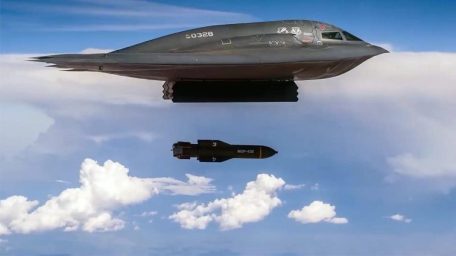
The GBU-57 is a big fat gravity bomb with fins. To achieve effective precision, a B-2 bomber must drop it on its intended target from no further than about five nautical miles — essentially right on top of the target.
Its penetration depth is claimed to be 200 feet. But that capability has NEVER been tested against a seriously hardened deep-underground target encased in layers of high-performance concrete, and topped with a few dozen meters of solid rock. In that sort of real-world scenario, the GBU-57 would be lucky to drill down 50 feet, if that.
It was always ridiculous silly talk to suggest the GBU-57 was the wonder weapon it was made out to be. There is a good reason the US only produced a couple dozen of them and then stopped: they understood its acute limitations in a non-permissive combat environment.
And, notwithstanding the hyperbolic Israeli propaganda, there was never any credible evidence that Iranian medium- and long-range air defenses against fixed-wing aircraft were attrited to any significant degree. And Iranian short-range air defenses were increasingly effective against long-range Israeli drones with each passing day.
As for the B-2: it is a big fat subsonic aircraft. It flies at airliner speeds. A strike on Fordow would entail flying at least 500 miles in and out of Iran. … continue
Blog Roll
 Aletho News
- Zelensky Refused to Discuss Druzhba Pipeline Issue – Fico
- U.S. General Caine Warns: STRIKING IRAN is a HUGE RISK /Glenn Diesen & Lt Col Daniel Davis
- Israel designates five Palestinian media outlets as ‘terrorist organizations’
- Israel, not America, first: Carlson’s Huckabee interview lays bare US foreign policy priorities
- Israeli troops executed Palestinian aid workers at ‘point blank range’: Report
- Iran war What if today’s Iran is resigned to a long, hellish war with the US?
- Why Israel Is Escalating Its War Crimes Against Lebanon
- Iran in the face of the armed diplomacy of imperialism
- The US build-up around Iran constitutes strategic war option, not ‘deterrence’
- Iran to US: Sanctions and war failed; try diplomacy and respect
- If Americans Knew
- Footage Shows Israeli Troops Waiting in Ambush, Then Opening Fire on a Palestinian Teen
- The US is on the brink of a major new war that Trump has not even bothered explaining
- Latest Epstein document dump is one more cover-up
- No Protection, No Justice: US Citizens Killed with Impunity by Israel
- Maria Farmer: Epstein Victim Reveals Explosive Information Covered Up by Media
- Average of five Palestinians killed by Israel every day in Gaza since ceasefire – Not a ceasefire Day 136
- Palestinian church leaders admonish Christian Zionist Mike Huckabee – Not a ceasefire Day 135
- Ominous messaging from Trump’s “Board of Peace” – Not a ceasefire Day 134
- ‘Christians Out’: Jerusalem Church Tagged With Hate Graffiti, Police Investigating
- Israeli Settlers Kill American Teen
- No Tricks Zone
- New Research Reaffirms Clouds, Aerosols, And Surface Solar Radiation Are ‘Driving The Climate System’
- Germany: Electric Car Catches Fire At Charging Station, Sets Off Local “Inferno”, Widespread Damage
- New Study: Canada’s New Brunswick Was 1°C Warmer Than Today During The Medieval Warm Period
- Coal Power Back In Trend As Globe Tries To Keep Pace With Growing Demand For Power
- New Study: A 4°C Warmer Beaufort Sea Had ‘No Sea Ice’ 11,700 – 8200 Years Ago
- Unfudging The Data: Dutch Meteorological Institute Reinstates Early 20th Centruy Heat Waves It Had Erased Earlier
- German Gas Crisis…Chancellor Merz Allegedly Bans Gas Debate Ahead of Elections!
- Pollen Reconstructions Show The Last Glacial’s Warming Events Were Global, 10x Greater Than Modern
- Germany’s Natural Gas Storage Level Dwindles To Just 28%… Increasingly Critical
- New Study Rebuts The Assumption That Anthropogenic CO2 Molecules Have ‘Special’ Properties
 Aletho News