‘French PRISM’ revealed: All communications tracked, metadata collected
RT | July 4, 2013
The French external intelligence agency spies on French citizen’s phone calls, emails and social media activity and web use, the Le Monde newspaper has reported.
France’s external intelligence agency the DGSE, intercepts signals from computers and telephones in France and between France and other countries in order to get a picture of who is talking to whom, although, apparently, they do not randomly spy on the content of phone calls, the daily revealed on Thursday.
Emails, text messages, telephone records, access to Facebook and Twitter are stored for years. “All of our communications are spied on,” read the article quoting unnamed sources in the intelligence services as well as remarks made publicly by intelligence officials.
The DGSE allegedly stores the metadata from private communications in a basement under its Paris headquarters. All of France’s seven other intelligence services have access to the data and can tap into it freely as a means to spot people’s suspicious communications. Individuals can then be targeted by more intrusive techniques such as phone-tapping, it was reported.
Le Monde pointed out the activities were illegal, but the French national security commission whose job it is to authorize targeted spying, and the parliamentary intelligence committee, challenged the papers report. It said that it works within the law and that the only body in France that collected communication information was a government agency controlled by the Prime Minister’s office to monitor for security breaches.
The report comes after revelations that America’s NSA regularly spies on its own people as well as on European citizens and embassies.
The allegations were leaked by Edward Snowden and published in the German magazine Der Spiegel, and have sparked a furious response from European governments just as a major US-EU trade talks are about to get underway.
The Guardian newspaper reported last month that Britain has a similar spying program and shares vast quantities of information with the NSA through its Prism program.
Related articles
Endless war to mass surveillance: The White House effect
By Sam Sacks | RT | July 03, 2013
President Obama defended the spying scandal on his tour of Africa, and was joined by predecessor George W Bush, which highlighted how similar they have become by forgetting campaign promises while occupying the White House.
President Obama’s Africa trip is overshadowed by new allegations that the United States is committing widespread surveillance on its allies. The President defended these NSA programs saying that all countries are doing similar snooping.
“They’re going to be trying to understand the world better and what’s going on in world capitals around the world, from sources that aren’t available through the New York Times or NBC News,” he said in Tanzania this week.
He added, “I guarantee you that in European capitals, there are people who are interested in, if not what I had for breakfast, at least what my talking points might be, should I end up meeting with their leaders.”
Appropriately, just as President Obama was defending his administration against these spying scandals, he was joined in Africa by his predecessor, George W. Bush.
Presidents 43 and 44 met in Tanzania on Tuesday laying a wreath at the site of the 1998 American embassy bombings. They were together far, far away from the White House, an office currently dealing with the fallout from all its intelligence secrets being laid bare for the world to see. Secrets created by both Presidents Bush and Obama.
These two men couldn’t be more different. Barely of the same generation, they are from different socio-economic backgrounds, from different parts of the country, and from different intellectual backgrounds and professions. They had different upbringings, different hobbies, and different religious beliefs.
But they did hold the same office. And that’s why on Tuesday, in Tanzania, Bush and Obama looked more similar than ever before. It’s as though the White House took hold of these two very different men, chewed them up and spit them out into two monochromatic globs who forgot who they were before moving in to the highest office in the land. And most importantly forgot their ideals.
Remember, it was as a presidential candidate in 2008 that Barack Obama opposed mass domestic surveillance, saying: “I will provide our intelligence and law enforcement agencies with the tools they need to track and take out the terrorists without undermining our Constitution and our freedom. That means no more illegal wire-tapping of American citizens. No more national security letters to spy on citizens who are not suspected of a crime. No more tracking citizens who do nothing more than protest a misguided war. No more ignoring the law when it is inconvenient. That is not who we are.”
Edward Snowden’s leaks prove that now as President, Obama has thrown out all those campaign promises. Not only that, he’s expanded their global reach and justified this expansion by basically saying, “All countries are doing it so we have to also.”
This is what five years in the White House does to a person.
And remember, it was as a Senator in 2007 that Barack Obama supported legislation that would have protected journalists from heavy-handed subpoenas by the DOJ. It was called the Free Flow of Information Act, and it was directly opposed by George W. Bush in the White House. The legislation failed, and two years later, when Obama was in the White House, he made sure the legislation went nowhere, working actively to water it down. And then his Justice Department went to unprecedented lengths to target journalists at the AP and at Fox News.
And of course, one can only assume, that as a member of the Illinois Senate in 2002 when he spoke out so passionately against the Iraq War, that Barack Obama didn’t imagine a decade later he’d be at the helm of a global drone war targeting not just Afghanistan and Iraq, but also Pakistan, Yemen, and Somalia.
So, what causes the transformation? Maybe it’s what Eisenhower warned of in 1961 – the power of the military industrial complex. Maybe it’s the immense political pressure to keep the nation safe from terrorism. Maybe it’s the weight of responsibility of steering a world superpower. Maybe it’s a combination of all of these.
But the office has affected not just Obama and Bush, but also Clinton and George HW Bush and Reagan. All have used the force of our military around the world.
The only President who didn’t start his own conflict was Jimmy Carter more than 30 years ago. Carter also tried to ban extra-judicial assassinations. And today, he’s distinguished himself from both Bush and Obama, calling Snowden’s leaks “beneficial”.
But Carter was tossed out of the White House after only one-term. The Presidents who came later learned this lesson. And now, both of them two-term presidents meet in Africa. Bush, the man who created the machine, and Obama, the man who innovated it.
Both men shaped not by their political ideology, but by their time in the White House taking the reins of the American superpower and doing everything it takes – from war to mass surveillance – to hold on in a world that’s becoming more and more hostile to superpowers.
‘Restore the Fourth’: Reddit, Mozilla, thousands of people set for July 4 NSA spying protest
RT | July 3, 2013
Thousands of websites will launch a July 4 online protest against the NSA surveillance programs. Reddit, WordPress, and Mozilla will take part in the ‘Restore the Fourth’ campaign online, while live protests take place in cities across the US.
‘Restore the Fourth’ is aimed at restoring the fundamentals of the Fourth Amendment – the part of the Bill of Rights which protects citizens against unlawful searches and seizures. Participants will display an online banner which reads, “This 4th of July, we stand by the 4th Amendment and against the U.S. government’s surveillance of internet users.”
The campaign, which was spawned on Reddit, has the support of several privacy and press freedom advocacy organizations, including Mozilla, Free Press, the Electronic Frontier Foundation, the Freedom of the Press Foundation, and ColorOfChange.org.
The rally was largely organized by Fight for the Future – another non-profit agency which fights against internet censorship. The organization’s co-founder, Tiffiniy Cheng, said in a statement that “the NSA programs that have been exposed are blatantly unconstitutional, and have a detrimental effect on free speech and freedom of press worldwide.” The rally is expected to be Fight for the Future’s largest online mobilization since its actions against the Stop Online Piracy Act (SOPA).
But the protest doesn’t stop online. Organizers are planning live protests in dozens of US cities, including New York, Philadelphia, Boston, Washington, D.C., Los Angeles, San Francisco, Houston, and Atlanta. Doug MacArthur, a member of Restore the Fourth’s national board and moderator on Reddit’s r/news, expects between 10,000 and 20,000 people to take part in the protests in the nation’s larger cities.
MacArthur stressed the need for the protest, largely because mainstream media is failing to adequately cover the NSA leaks and what that means for everyday citizens.
“I think if you are on social media right now and political blogs, this might seem like it’s an issue that’s all over the political blogs. But if you turn on CNN or Fox or MSNBC, you’ll see that a lot of the more mainstream channels aren’t covering this as much as you might be assuming. So I really think it’s important we get more citizens aware of this issue,” he said, as quoted by Mashable.
Free Press CEO and President Craig Aaron echoed MacArthur’s sentiments. “We need to bring these government and corporate activities into the light of day, and the only way that will happen is if millions more people get involved and demand accountability, demand change, demand the truth,” he said in a Tuesday press conference.
However, it’s not just internet activists getting involved in the fight – one Hollywood celebrity has been very vocal in expressing his views on the NSA’s surveillance practices.
“How long do we expect rational people to accept using terrorism to justify and excuse endless executive and state power?” actor John Cusack said during a press conference announcing the protests. “Why are so many in our government, our press, our intellectual class afraid of an informed public?”
Cusack, who is a board member of the Freedom of the Press Foundation, complained that many of those defending the NSA surveillance programs are focusing on supposed character flaws of former NSA contractor Edward Snowden instead of questioning the program’s legality.
Harvey Anderson, senior vice president of business and legal affairs at Mozilla, agrees with Cusack. He said in a statement that the spotlight on Snowden is a “big distraction to avoid focusing on the invasions that have actually been occurring.” The lack of transparency about the surveillance programs “undermines the openness of the internet,” he added.
There has been a massive outcry against the surveillance practices since former NSA contractor Edward Snowden leaked sensitive information in May. In just three weeks, StopWatching.us has collected more than 531,000 signatures from people calling for Congress to fully disclose details about the NSA surveillance programs.
Snowden is currently held up in the international transit zone of Moscow’s Sheremetyevo airport. He is unable to travel as his passport is invalid. Washington has issued an extradition order against Snowden, calling for international cooperation in returning him to American soil.
The whistleblower has so far made asylum requests for more than a dozen countries, with ten nations already denying him refuge. Venezuela says it will consider Snowden’s request when it is received.
Related article
Ecuador snubs US trade ‘blackmail’ over Snowden, offers human rights training
RT | June 28, 2013
Ecuador renounced trade benefits which the US threatened to revoke over the Latin American country’s consideration of harboring NSA leaker Edward Snowden. It offered $23 million a year to fund human rights education for Americans instead.
The government of leftist President Rafael Correa came up with an angry response on Thursday after an influential US senator said he would use his leverage over trade issues to cut preferential treatment of Ecuadoran goods at the US market, should Ecuador grant political asylum to Snowden.
“Ecuador will not accept pressures or threats from anyone, and it does not traffic in its values or allow them to be subjugated to mercantile interests,” government spokesman Fernando Alvarado said at a news conference.
He added that Ecuador is willing to allocate $23 million annually, an equivalent of the sum that it gained from the benefits, to fund human rights training in the US. It will “avoid violations of privacy, torture and other actions that are denigrating to humanity,” Alvarado said.
US Senator Robert Menendez, who heads the Foreign Relations Committee in the Senate, said this week that Ecuador risks losing the benefits it enjoys under two trade programs because of its stance on the NSA whistleblower.
“Our government will not reward countries for bad behavior,” he said.
The US is Ecuador’s prime trade partner, with over 40 percent of exports going to the US market.
Both programs were due to expire by the end of next month and were subject to congressional review. Before the Snowden debacle arose, the US legislature was expected to scrap one of them while renewing another one.
Snowden has applied for political asylum, hoping to find protection from American prosecutors, who charged him with espionage over his leaking of classified documents on US surveillance programs.
He is currently thought to be staying in the transit zone of a Moscow airport. He became stranded in the Russian capital after arriving from Hong Kong, because the US annulled his travel passport as part of its effort to get him to American soil for trial.
New Jersey hospital deports unconscious stroke victim
RT | June 26, 2013
A US hospital deported an unconscious stroke victim after noticing that the patient was an undocumented immigrant from Poland. Polish health officials are furious that the man was “dumped on their doorstep” before the transfer was approved.
“Imagine being carted around like a sack of potatoes,” Polish Consul General Ewa Junczyk-Ziomecka told New York Daily News, describing the incident in which 69-year old Wladyslaw Haniszewski was unconsciously deported to his homeland.
Haniszewski, who suffers from a blood disease, lived in Perth Amboy, N.J., for 30 years. He recently lost his job, apartment, and health insurance, and was forced to move into a homeless shelter, the Daily News reports.
After the man suffered a dangerous stroke, a friend named Jerzy Jedra took him to the New Jersey hospital for treatment. When officials at the Robert Wood Johnson University Hospital noticed that the patient had no health insurance and lived in the US without documentation, they sent the comatose man to Poland. US hospitals are legally required to provide emergency care to anyone who needs it, but are allowed to deport stabilized undocumented immigrants.
But in order to deport someone, a US hospital must first get consent from either the patient, a family member, or a court guardian. Officials at the Polish consulate claim that no one was contacted, and that Haniszewski’s family was never informed that the man was deported.
Meanwhile, Haniszewski was left at the doorstep of a hospital in Boleslawiec, Poland. The facility is now being forced to take care of the man’s medical payments, which have cost “a few hundred dollars” a day, the hospital’s deputy director told TVN.
Junczyk-Ziomecka, who works at the Polish consulate in New York City, said she was trying to help the comatose man, only to realize last week that he was gone. Polish officials are furious about the deportation, especially since the 69-year-old patient was not in a healthy state to sign off on the transfer.
“Behind our backs they transported the unconscious man to Poland,” she told TVN, noting that she was most furious about the hospital’s decision to dump the man at the facility. “I cannot imagine such a situation that the decision about transporting an unconscious person could be made without agreement. Between the two institutions must be a contract, there must be documents. You cannot simply leave a patient at the door and drive away.”
At least 800 people have been deported from US hospitals without consent over the past six years in 15 states, the Associated Press reported in April. Medical repatriation has become increasingly common, but AP suggests that the actual number of such hospital deportations is much higher than figures show. Some health advocates are afraid that repatriations will occur more frequently after major components of Obamacare are implemented in 2014, since the US government will reduce its payments to hospitals that care for large numbers of uninsured patients.
Shena Erlington, director of the Health Justice Program, told the Daily News that although hospitals may face the burden of paying for uninsured patients, medical care providers should not have the ability to deport patients.
“It’s an incredibly disturbing case,” Lori Nessel, director of the Center for Social Justice at Seton Hall University School of Law, said about the Haniszewski repatriation. “This kind of action seems clearly illegal and also not ethical, but it’s hard to bring forth a legal action.”
The New Jersey hospital denies any wrongdoing and claims that the patient was informed of his discharge and care plan. The patient is awake, but unable to speak or communicate with doctors.
Richard Clarke: Hastings crash ‘consistent with a car cyberattack’
RT | June 25, 2013
A former cybersecurity advisor to President George W. Bush says a sophisticated computer hack could have been the cause of the automobile accident that claimed the life of journalist Michael Hastings last week in Los Angeles.
Richard Clarke, a State Department official-turned-special advisor to several United States presidents, said the early morning auto crash last Tuesday was “consistent with a car cyberattack,” raising new questions about the death of the award-winning journalist.
Hastings died last week when his 2013 Mercedes C250 coupe collided with a tree in Los Angeles, California on the morning of June 18. He was reportedly traveling at a high rate of speed and failed to stop at a red light moments before the single-car crash. He was only 33.
Speaking to Huffington Post this week, Clarke said that a cyberattack waged at the vehicle could have caused the fatal collision.
“What has been revealed as a result of some research at universities is that it’s relatively easy to hack your way into the control system of a car, and to do such things as cause acceleration when the driver doesn’t want acceleration, to throw on the brakes when the driver doesn’t want the brakes on, to launch an air bag,” Clarke told The Huffington Post. “You can do some really highly destructive things now, through hacking a car, and it’s not that hard.”
“So if there were a cyberattack on the car — and I’m not saying there was,” Clarke continued, “I think whoever did it would probably get away with it.”
The Los Angeles Police Department said they don’t expect foul play was involved in the crash, but an investigation has been opened nonetheless.
In an email reportedly sent by Hastings hours before the crash, he told colleagues that he thought he was the target of a federal investigation.
“Hey [redacted}, the Feds are interviewing my ‘close friends and associates,’” Hastings wrote 15 hours before the crash.
“Also: I’m onto a big story, and need to go off the rada[r] for a bit,” he added. “All the best, and hope to see you all soon.”
The email was supplied to KTLA News in Los Angeles by Staff Sgt. Joseph Biggs, who says he met Hastings while the journalist was embedded in Afghanistan in 2008. It was reportedly send to a handful of Hastings’ associates and was blind-copied to Biggs.
“I just said it doesn’t seem like him. I don’t know, I just had this gut feeling and it just really bothered me,” Biggs told KTLA.
Reporters at Buzzfeed where Hastings worked say they received an email from their colleague, but the Federal Bureau of Investigation issued a statement two days after Hastings’ death to quash rumors that they had been looking into the reporter.
“At no time was Michael Hastings under investigation by the FBI,” FBI spokeswoman Laura Eimiller said.
According to the Associated Press, however, Hastings’ fingerprints were on file with the FBI and were used by the bureau to identify his body after flames consumed much the auto wreckage last week.
“I believe the FBI when they say they weren’t investigating him,” Clarke told the Huffington Post. “That was very unusual, and I’m sure they checked very carefully before they said that.”
“I’m not a conspiracy guy. In fact, I’ve spent most of my life knocking down conspiracy theories,” he said. “But my rule has always been you don’t knock down a conspiracy theory until you can prove it . And in the case of Michael Hastings, what evidence is available publicly is consistent with a car cyberattack. And the problem with that is you can’t prove it.”
Clarke, 62, spent nearly two decades at the Pentagon before relocating to the White House where he served under President Ronald Reagan and both Presidents Bush. He served as special advisor to President George W. Bush on cybersecurity until leaving the administration in 2003 and is currently the chairman and CEO of Good Harbor Security Risk Management, LLC.
Obama picks official who approved of dragnet NSA surveillance to head FBI
RT | June 21, 2013
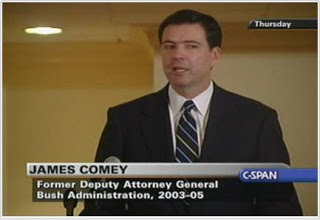 President Barack Obama announced Friday afternoon that he’s selected James Comey to head the Federal Bureau of Investigation.
Comey, 52, worked as the deputy attorney general for the United States under President George W. Bush and will replace outgoing FBI Director Robert Mueller when he steps down later this year after he is confirmed by the Senate.
All three men were on hand at the White House Friday afternoon when President Obama formally made his pick after weeks of speculation suggested Comey would be the likely nominee.
Comey, said Obama, embodies the “core principals of fidelity, bravery and integrity” expected of FBI agents and applauded “his fierce independence and his deep integrity.”
In fact, that independence is the focus of perhaps the most widely reported instance from the Bush White House involving Comey. While serving as deputy attorney general in the Department of Justice, Comey rejected the administration’s warrantless wiretapping program that has recently reemerged as the center of controversy.
“In a confrontation he has called the most difficult night of his career, [Comey] rushed to the hospital bedside of his boss, John Ashcroft, in 2004 to stop two senior Bush White House aides from getting the ailing attorney general’s approval to reauthorize a post-9/11 program that allowed government wiretaps to be used without warrants,” the Associated Press recalled this week.
Comey’s insistence in keeping the program off the books was made notwithstanding an earlier decision to favor the surveillance program, though. Glenn Greenwald reported for The Guardian last month that Comey “approved a legal memorandum in 2004 endorsing radical executive power theories and warped statutory interpretations, concluding that the Bush NSA warrantless eavesdropping program was legal, thus making it more difficult to prosecute the Bush officials who ordered it.”
The internal conflict within the administration that erupted years later over that program almost led to Comey, Ashcroft and Mueller offering their resignation, apparently. As Greenwald noted, though, the then-deputy attorney general declined to follow up on his threat after slight adjustments were made to the NSA spy program.
“But the reason they didn’t end up resigning ,” he wrote, “was because Bush officials ‘modified’ that NSA program into something those lawyers could and did endorse: the still-illegal, still-radical NSA eavesdropping program that spied on the communications of Americans without warrants and in violation of the law.”
Those practices have come under question in recent weeks after Edward Snowden, a 29-year-old former intelligence contractor, leaked documents showing the size and scope of the surveillance programs. Mr. Mueller said those disclosures caused “significant harm” to the nation’s security and that the admitted leaker is the “subject of an ongoing criminal investigation.”
“One of the great vulnerabilities terrorists understand is their communications,” Mueller told the House Judiciary Committee last week. “If we lose our ability get their communications, we are going to be exceptionally vulnerable.”
After being picked by Pres. Obama to replace Mueller on Friday, Comey said, “I don’t know whether I can fill those shoes.” Mueller was FBI chief for 12 years, making him the second-longest serving official to ever head the bureau.
Related article
Court blocks NYPD bid to fire whistleblower as commissioner brags of ‘awesome powers’
RT | June 21, 2013
The New York City Police Department’s latest attempt to fire Adrian Schoolcraft, the whistleblower who secretly recorded evidence of corruption among his superiors over three years ago, was blocked this week in federal court.
Schoolcraft has said he began wearing a microphone to defend himself against citizens’ allegations that he used racial slurs while policing the streets of Bedford-Stuyvesant, a poor and primarily African-American section of Brooklyn. By wearing the device from June 1, 2008 until October 15, 2009, though, he soon began recording directions from NYPD higher-ups who pressured officers to fill monthly arrest quotas, which is illegal.
“He wants three seat belt [summonses], one cell phone, and 11 others,” one police sergeant is heard saying on the tape. “I don’t know what the number is, but that’s what [an executive officer] wants.”
Upon complaining of corrupt policies and wrongful arrests, Schoolcraft has said, he began receiving threats from fellow police officers and was eventually reassigned to a desk job.
Three weeks after he told the NYPD the damning recordings existed, Schoolcraft’s home was raided by a large group of officers who forcibly checked him into a psychiatric ward in Queens citing suicidal tendencies. Approximately twelve of Schoolcraft’s superiors were on hand at his home. Reportedly among them was Paul Browne, a top aide to Commissioner Ray Kelly, whose presence would indicate Kelly knew of and approved of the raid.
After Schoolcraft refused treatment, the officers guarding him at a Queens hospital handcuffed him to a bed and prevented him from using a telephone. He was held there for three days until his father tracked him down and signed him out. The Schoolcraft family later received a bill for $7,185 for his stay at the facility.
Schoolcraft eventually turned over his recordings, including of the night when he was dragged to the hospital, to the Village Voice, which dubbed the audio “The NYPD Tapes.” In 2009 and 2010, the NYPD charged Schoolcraft with approximately two dozen charges of leaving work early, failing to respond to department summonses, failure to obey an order, being away without leave, and others.
The department could have tried and fired Schoolcraft in early 2010, the Voice reported, but presumably suspended him instead because of the bad publicity that would come as a natural result of dismissing a man for exposing corruption.
“I think within the precinct, he was probably seen as a little bit eccentric,” Graham Rayman, a reporter for the Village Voice, told This American Life in 2010. “And also, he wasn’t going with the program. And anyone who doesn’t go with the program is automatically marked.”
For nearly four years he has been on leave without pay, waiting for the start of a federal lawsuit he filed against the department for intimidation and retaliation.
In response, the NYPD filed its own administrative suit seeking to fire Schoolcraft, a move Schoolcraft’s lawyers said will unduly influence the verdict in the original suit. The department was blocked from filing that suit this week.
“You have the power to arrest, to take away someone’s liberty. You have the power and the authority to use force and sometimes deadly force,” Kelly said this week in a speech to this year’s graduating class of the NYPD academy. “Now these are awesome powers.”
The commissioner, quoted by CBS, also said that different ethnic groups are “not always happy” with the department and that “all it takes is one errant police officer” to undermine the “great institution” that has been built by generations.
Related articles
- Judge in Whistleblower Cop Case Blocks City Move to Fire Him (blogs.villagevoice.com)
- NYPD Cop Arrests Man for Photographing Police Station from Public Sidewalk (photographyisnotacrime.com)
Iran ready to halt 20% uranium enrichment, West must reciprocate – Lavrov
RT | June 18, 2013
Iran has confirmed it is prepared to halt its enrichment of 20-percent uranium, Russian Foreign Minister Sergey Lavrov said, urging Western nations to end their sanctions against Tehran.
“For the first time in many years, there are encouraging signs in the process of settlement of the situation with the Iranian nuclear program,” he said in the interview to Kuwait’s KUNA news agency, that was published on Russian Foreign Ministry’s website.
“Without going into details, the Iranians confirm the most important [point]: Their readiness to stop 20 percent uranium enrichment at its current levels,” Lavrov said.“This could become a breakthrough agreement, significantly alleviating existing problems, including concerns about the possibility of advanced uranium enrichment to a weapons-grade level.”
Such a move “implies significant reciprocal steps by the Six,” the minister added, referring to the group of world powers seeking to peacefully resolve the issue of Iran’s nuclear program.
“The international community must adequately respond to the constructive progress made by Iran, including gradual suspension and lifting of sanctions, both unilateral and those introduced by the UN Security Council. It would be a shame not to take advantage of this opportunity,” Lavrov concluded.
News of Iran’s possible concessions over its nuclear program comports with promises made by Iranian President-elect Hassan Rowhani, who vowed to make the program more transparent.
Still, the moderate cleric stressed on Monday that Tehran would not consider halting the country’s uranium enrichment activities entirely. Rowhani insisted that Iran’s nuclear activities are “within the framework of law,” and dubbed the international sanctions “baseless.”
Despite numerous accusations by Israel and the US that it is secretly conducting military nuclear research, Iran has maintained that its nuclear program is only for civilian purposes.
At his first media conference since winning the presidential elections, Rowhani – who previously headed Iran’s delegation during nuclear talks with the six world powers – said that Tehran’s nuclear activities “are already transparent,” but “the only way to end the sanctions is to increase the transparency and trust” between Iran and the international community.
Washington has been expecting changes in Iran’s hardline stance on the nuclear issue following the country’s presidential elections. White House Chief of Staff Denis McDonough said Sunday on ‘Face the Nation’ that Washington is ready to work with the new administration in Tehran, “If he lives up to his obligations under the UN Security Council resolution to come clean on this illicit nuclear program.”
But Israeli Prime Minister Benjamin Netanyahu remained unconvinced: “The international community must not become caught up in wishes and be tempted to relax the pressure on Iran to stop its nuclear program,” he said.
President-elect Rowhani will assume office in August. He believes that he can heal the “old wound” of troubled US-Iran relations if Washington stops interfering in Tehran’s internal affairs and permanently ends its “bullying” practices towards Iran.
Related article
- What Should be Expected From President Rowhani? (alethonews.wordpress.com)
Featured Video
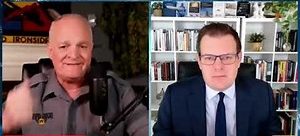
U.S. General Caine Warns: STRIKING IRAN is a HUGE RISK
or go to
Aletho News Archives – Video-Images
From the Archives
Stealth Bombers and Bunker Busters
Analysis of the so-called 12-Day War, and the triumphantly celebrated Operation Midnight Thunder
By William Schryver | imetatronink | November 28, 2025
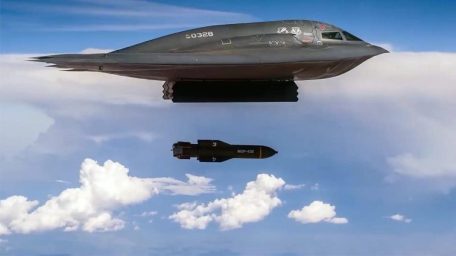
The GBU-57 is a big fat gravity bomb with fins. To achieve effective precision, a B-2 bomber must drop it on its intended target from no further than about five nautical miles — essentially right on top of the target.
Its penetration depth is claimed to be 200 feet. But that capability has NEVER been tested against a seriously hardened deep-underground target encased in layers of high-performance concrete, and topped with a few dozen meters of solid rock. In that sort of real-world scenario, the GBU-57 would be lucky to drill down 50 feet, if that.
It was always ridiculous silly talk to suggest the GBU-57 was the wonder weapon it was made out to be. There is a good reason the US only produced a couple dozen of them and then stopped: they understood its acute limitations in a non-permissive combat environment.
And, notwithstanding the hyperbolic Israeli propaganda, there was never any credible evidence that Iranian medium- and long-range air defenses against fixed-wing aircraft were attrited to any significant degree. And Iranian short-range air defenses were increasingly effective against long-range Israeli drones with each passing day.
As for the B-2: it is a big fat subsonic aircraft. It flies at airliner speeds. A strike on Fordow would entail flying at least 500 miles in and out of Iran. … continue
Blog Roll
 Aletho News
- Drug traffickers trained in Ukraine attack state forces in Mexico
- The tragic reality of Brazilian mercenaries in the Ukrainian conflict
- Zelensky Refused to Discuss Druzhba Pipeline Issue – Fico
- U.S. General Caine Warns: STRIKING IRAN is a HUGE RISK /Glenn Diesen & Lt Col Daniel Davis
- Israel designates five Palestinian media outlets as ‘terrorist organizations’
- Israel, not America, first: Carlson’s Huckabee interview lays bare US foreign policy priorities
- Israeli troops executed Palestinian aid workers at ‘point blank range’: Report
- Iran war What if today’s Iran is resigned to a long, hellish war with the US?
- Why Israel Is Escalating Its War Crimes Against Lebanon
- Iran in the face of the armed diplomacy of imperialism
- If Americans Knew
- In Gaza, Ramadan without mosques, imams – Not a ceasefire Day 137
- Footage Shows Israeli Troops Waiting in Ambush, Then Opening Fire on a Palestinian Teen
- The US is on the brink of a major new war that Trump has not even bothered explaining
- Latest Epstein document dump is one more cover-up
- No Protection, No Justice: US Citizens Killed with Impunity by Israel
- Maria Farmer: Epstein Victim Reveals Explosive Information Covered Up by Media
- Average of five Palestinians killed by Israel every day in Gaza since ceasefire – Not a ceasefire Day 136
- Palestinian church leaders admonish Christian Zionist Mike Huckabee – Not a ceasefire Day 135
- Ominous messaging from Trump’s “Board of Peace” – Not a ceasefire Day 134
- ‘Christians Out’: Jerusalem Church Tagged With Hate Graffiti, Police Investigating
- No Tricks Zone
- Surprising Discovery: Sahara Is Greening…Billions Of Trees Where Once Thought To Be Barren
- New Research Reaffirms Clouds, Aerosols, And Surface Solar Radiation Are ‘Driving The Climate System’
- Germany: Electric Car Catches Fire At Charging Station, Sets Off Local “Inferno”, Widespread Damage
- New Study: Canada’s New Brunswick Was 1°C Warmer Than Today During The Medieval Warm Period
- Coal Power Back In Trend As Globe Tries To Keep Pace With Growing Demand For Power
- New Study: A 4°C Warmer Beaufort Sea Had ‘No Sea Ice’ 11,700 – 8200 Years Ago
- Unfudging The Data: Dutch Meteorological Institute Reinstates Early 20th Centruy Heat Waves It Had Erased Earlier
- German Gas Crisis…Chancellor Merz Allegedly Bans Gas Debate Ahead of Elections!
- Pollen Reconstructions Show The Last Glacial’s Warming Events Were Global, 10x Greater Than Modern
- Germany’s Natural Gas Storage Level Dwindles To Just 28%… Increasingly Critical
 Aletho News