Fake News: Venezuela Right-Wing Say Gov’t Uses Chemical Weapons
teleSUR | April 8, 2017
By now, you’ve heard the news.
Since Tuesday, right-wing opposition protesters in Venezuela have led violent demonstrations against the socialist government, throwing Molotov cocktails and rocks at police.
Despite one reported casualty, Venezuelan police have largely been on the defensive, using shields and water cannons to protect themselves from protesters.
On Saturday, however, when protesters intensified their attacks on police, opposition leaders claimed President Nicolas Maduro’s administration used “toxic weapons” to shut down anti-government demonstrations.
El Hatillo Mayor David Smolansky, a leading figure of the opposition Popular Will party, alleged on Twitter that “Nicolas Maduro is beginning to use chemical weapons as they are using in Syria.”
“I denounce that the Guard (police) used a ‘red chemical gas’ that is prohibited,” Smolansky added.
But Smolansky wasn’t the only opposition leader spreading this unsubstantiated allegation.
Venezuelan National Assembly member Armando Armas also claimed Maduro “attacked the population with red toxic gas,” calling him a “dictator” on Twitter. And Popular Will coordinator Marcela Maspero said “police are using a red gas to repress us,” adding that “it can be neutralized with soda and lemon.”
If you haven’t yet figured out why these allegations are fake news, here are three hints.
First, and perhaps most obviously, because hundreds of people would have instantly died if the alleged “red toxic gas” was a chemical weapon as used in Syria.
Second, because the Venezuelan government does not currently possess chemical weapons, nor has it ever possessed them, according to the Organization for the Prohibition of Chemical Weapons.
Finally, because the right-wing opposition has presented no proof whatsoever of alleged chemical weapons used by Maduro’s administration.
Although Maduro has not commented on the faux allegations of police allegedly using a “red chemical gas,” he has remarked on how violent opposition forces will stop at nothing to provoke war.
“U.S. imperialism is based on lies in order to undertake its interventions against nations,” Maduro said on Friday while commenting on Syria, citing Libya and Iraq as other examples.
Marco Rubio Threatens El Salvador, Haiti, and DR to Vote for Venezuela OAS Suspension
By Lucas Koerner | Venezuelanalysis | March 28, 2017
Caracas – Florida Republican Senator Marco Rubio publicly warned the governments of El Salvador, Haiti, and the Dominican Republic Monday that the US would cut off aid if they failed to vote to suspend Venezuela from the Organization of American States.
“This is not a threat, but it is the reality,” said Rubio, speaking ahead of an extraordinary OAS session scheduled for Tuesday, in which the body’s 35 member-states may be called to vote on whether to invoke the Inter-American Democratic Charter against Venezuela.
“We have a very difficult situation in Washington, where massive cuts in foreign aid are under consideration and it will be very difficult for us to justify assistance to those countries if they, at the end of the day, are countries that do not cooperate in the defense of democracy in the region,” the senator added.
El Salvador’s left-wing FMLN government, for its part, slammed Rubio’s instrumentalizing of US aid as a means of “political pressure”.
“Marco Rubio’s disregard for international treaties that mediate and lay down the rules for cooperation astonishes us,” expressed Eugenio Chicas, spokesman for President Salvador Sanchez Ceren.
Chicas added that Washington is welcome to cut off future aid, noting however that slashing current assistance would be a violation of previous agreements.
The Dominican Republic likewise responded to Rubio by reaffirming its commitment to non-intervention and support for dialogue in Venezuela.
“The Dominican Republic supports dialogue as the solution to the situation in Venezuela,” declared Dominican Foreign Minister Miguel Vargas Maldonado.
Santo Domingo has been a key player in Vatican-sponsored talks between the Maduro government and right-wing opposition over the past year, with former Dominican President Leonel Fernandez serving on the UNASUR mediation team alongside the former presidents of Spain and Panama, Jose Rodriguez Zapatero and Martin Torrijos.
“We appeal to the international principle of non-interference in the internal affairs of [other] countries, respecting their sovereignty,” Vargas Maldonado continued.
Haiti, for its part, has yet to issue public statement concerning Rubio’s remarks.
Under the Chavez and Maduro governments, Caracas has forged strong political and economic ties with the three neighboring countries, which are all members of Venezuela’s regional energy integration initiative known as PetroCaribe.
Rubio’s comments come as OAS Secretary General Luis Almagro scrambles to amass a two-thirds majority of member-states to support Venezuela’s suspension, which has faced opposition from not only leftist governments, but also close US allies.
Most recently, the right-wing Kuczynski government in Peru, one of Venezuela’s most vocal critics in the region, has cast doubt on the success of the bid, calling it “extreme” and admitting that “there is not a majority”.
Likewise, Costa Rica has announced that it would not endorse the application of the Democratic Charter, insisting that the only solution to the country’s current crisis is “electoral”.
Fake News about Venezuela: A Simple Recipe
 President Hugo Chavez
By Ricardo Vaz | Investig’Action | March 7, 2017
“Journalists” who want to write fake news about Venezuela, or about any other country or group that dares to stand up to US imperialism, only need to follow this simple recipe:
- Choose one or more countries/groups opposed to US imperialism
- If available, have a former official, now being paid by the US government, make the accusations
- Season well with doses of “war on terror” and/or “war on drugs”
- Sprinkle with opinions of “experts” who work in DC think tanks or US-funded NGOs
While this looks like a very unsavoury mix, the results last very long and can be reheated with no problems.
This recipe has been used and re-used plenty of times, either by US officials to justify policies or by media outlets. But given how the media critically accepts everything when it comes to foreign policy, there is hardly a distinction to be made here.
A classical example were the fabricated connections made between Chávez/Venezuela and al-Qaeda. Other variants involve dealings with the FARC1, Mexican cartels, and the favourite dance partner is Hezbollah. On one hand, the US’ relation with al-Qaeda is now a bit more complicated, as extremists may get bombed if they are in Iraq but supported if they cross into Syria. On the other, Hezbollah is the biggest obstacle to Israeli hegemony and the colonisation of Palestine. This kind of propaganda is reminiscent of the effort to fabricate connections between al-Qaeda and Saddam Hussein in order to justify the invasion of Iraq. Some outlets would even have us believe North Korea was supplying arms to Hamas!
The most recent story involves the newly-appointed vice-president, Tareck El Aissami, who is a perfect ingredient because of his Middle Eastern ancestry. Even though he was born and lived all his life in Venezuela, his parents are Druze immigrants from Lebanon. The storm started with a CNN “story” about the Venezuelan embassy in Iraq selling passports to dangerous people, including members of Hezbollah, who would then use them to attack the US or its allies. This operation was claimed to be directed by El Aissami. This story was directly quoted by Marco Rubio during a renewed push by US lawmakers for more sanctions against Venezuela. These came later from the Department of the Treasury, this time linking El Aissami to Mexican cartels. With a little more effort even the North Koreans might have been added to the party.
 Tareck El Aissami with an incriminating Palestinian scarf
All in all, there are many things that do not add up. First of all, there is the issue of Hezbollah plotting terror attacks in the US, but we will not go into detail here. It suffices to say that the evidence of Hezbollah involvement in terror attacks abroad is, at best, very thin. Then there is the sectarian issue. Western media, at the behest of western allies in the Middle East, keep stirring up this supposedly grave Shia threat, with Iran and Hezbollah even conspiring to reshape demographics and create an all-Shia corridor in the Middle East. And yet their man in Venezuela is a Druze. Equally ludicrous are claims that there are Venezuelan training camps in Lebanon and vice-versa. Hezbollah’s main foe is right next door, but somehow it would need training camps halfway around the world! The links to the drug trade presented by the Treasury are equally flimsy, and were picked apart masterfully by Larissa Costas.
The “star witness” of CNN’s expose, Misael López, has since been revealed to be a close associate of Ana Argotti, who is in turn very close to Lilian Tintori and Leopoldo López, the hard-right politician jailed for his role in the violent activities during the 2014 guarimbas that resulted in over 40 deaths. Argotti has defended several members of the opposition charged with violent crimes during this period. As for Misael López, he is also under investigation for alleged sexual harassment and attempting to withdraw funds from the Venezuelan embassy in Baghdad.
Elusive cartels and double standards
Another high-profile fake story, followed by sanctions, involved Diosdado Cabello, an important figure in the ruling PSUV and head of the National Assembly at the time. Based on the account of a former bodyguard turned star-witness, now living comfortably in the US, Cabello was accused of being the boss of the elusive Cartel de los Soles. This is supposedly a very important Latin American drug cartel run by the Venezuelan military. The problem is that, unlike the stories we hear of cartels violently making themselves known and marking territory, here we have a drug cartel run from the highest levels of the Venezuelan state operating without anyone really noticing it. It is like the Illuminati version of drug cartels.
 Diosdado Cabello next to President Nicolás Maduro
Venezuela is often presented as an obstacle in the war on drugs, but the truth is that the main actor in the cocaine trade is neighbouring Colombia, the empire’s best friend and largest recipient of aid in the hemisphere. Any list of officials connected to the drug trade has to start with (former Colombian president) Álvaro Uribe if it is to be taken seriously. We are talking about the country where the para-politics scandal broke, revealing that dozens of elected officials had links to paramilitary groups, the heart and soul of the drug trade. And yet we never hear stories of Colombian politicians or military officials, who cooperate closely with the US military, being involved in illegal activities, nor have sanctions ever been imposed on them.
This double standard is only outrageous if we believe that the war on drugs is actually designed to eradicate the drug trade. Rather, it is supposed to manage it. In fact, drugs have been very useful for US agencies, for instance, to pacify black communities and derail the black liberation movement in the 1970s. Coupled with draconian legislation and harsh sentences, today they serve to feed the very lucrative prison industry. In any case, large amounts of cocaine are consumed in the very place where the drug money is laundered – Wall Street. Even when a massive drug money laundering scheme is uncovered at a major US bank, a mild slap on the wrist and a fine worth a few days’ profit is all that can be expected.
Fake news as background
None of this is intended as an endorsement or an exoneration of El Aissami, Cabello, or anyone else. But these news stories and unproven accusations, as well as others targeting lower-profile officials such as Néstor Reverol, are not meant to prove anything or to lead to any judicial prosecution. They are simply thrown out there and blindly echoed by an uncritical media. They are meant to create background. From now on, whenever Tareck El Aissami appears in the news we will read that he has links to terrorism and the drug trade, and thus whatever he says or does will build on this background.
For the past two decades, Venezuela has been the biggest thorn in the US’ side, a real nuisance in Washington’s “backyard”, striving for an independent course (a “second independence”) and leading the efforts for a regional integration which is not subjected to the interests of the Northern empire. The US responded with its traditional regime-change operation, destabilizing at every turn, funding opposition groups, imposing a de-facto financial blockade on Venezuela, even working to lower oil prices. Their natural allies, the Venezuelan elites, have also been outraged that the country they used to own has been taken away from them, and coup-plotting has become their way of life.
And therefore these fake news stories are pre-emptive justification for a future coup or foreign intervention. Should one of these take place, the media will be ready with plenty of hyperlinks to these fake stories that present Venezuela as a failed, rogue state, connected to terrorism and the drug trade. The coup/foreign intervention would then look like the benign empire saving the world from this threat.
What the empire, the local elites and the media keep underestimating is the power of the masses that were awakened by this project, chavismo, that for the first time sees them placed front and centre. There is now a political conscience, a firm belief that the people should write their own history, and it will take a lot more than fake stories from propaganda outlets to restore Venezuela’s former neo-colonial status. In the words of Chávez:
“Aquí nadie se rinde, carajo!”
Note:
(1) While the FARC have been involved in the drug trade, it has mostly been at the lowest levels of the chain, levying a tax on sales of coca crops. Associating them, and only them, to the Colombian drug trade, is incredibly dishonest and exonerates those who profit the most out of it.
US Lawmakers Pass Resolution Demanding Trump Act on Venezuela
By Ryan Mallett-Outtrim | Venezuelanalysis | March 1, 2017
US Senators unanimously passed a resolution Wednesday urging President Donald Trump to take further action against Venezuelan officials.
The bill also expressed support for a controversial move by Organisation of American States (OAS) head Luis Almagro to invoke the Democratic Charter. If invoked, Venezuela would be suspended from the OAS. When Almagro first announced the move in 2016, he also demanded President Nicolas Maduro be “immediately” removed from office, prompting many Latin American leaders to accuse the OAS head of overreach.
Despite the controversy, the Senate bill called on Trump to “provide full support for OAS efforts in favour of constitutional and democratic solutions to the political impasse and to instruct federal agencies to hold officials of the Venezuelan government accountable for violations of US law and abuses of internationally recognised human rights.”
The bill will now head to the House of Representatives.
One of the main supporters of the bill, Senator Marco Rubio, thanked both Republicans and Democrats for supporting the move.
“I thank my Senate colleagues for supporting this bipartisan resolution calling for the government of Venezuela to respect the constitutional and democratic processes and release all political prisoners,” Rubio said in a statement.
The bill was co-sponsored by prominent Democrats including Senators Bob Menendez and Bill Nelson, along with Hillary Clinton’s 2016 presidential running mate Tim Kaine.
Venezuela has already been hit by numerous US sanctions. One of former president Barack Obama’s last acts in office was the renewal of an executive order in January, declaring Venezuela an “unusual and extraordinary threat” to national security.
The executive order wasn’t set to expire until March, though White House officials said Obama went ahead with renewal early to ensure a “a smooth transition” for the Trump administration.
Since then, the Trump administration has slapped Venezuelan Vice President Tareck El Aissami with sanctions, including a travel ban and an asset freeze targeting one of his alleged close confidants, the entrepreneur Samark Lopez. Both Aissami and Lopez have been accused of involvement in international drug trafficking. Aissami has denied the allegations, stating in February that he was the victim of anti-Venezuela hardliners in Washington “ “whose fundamental interest is to prevent Venezuela and the United States from restoring their political and diplomatic relations on the basis of mutual recognition and respect”.
“These interest groups not only lack any evidence to demonstrate the extremely serious accusations against me, but they also have built a false-positive case in order to criminalise –through me– the Government of the Bolivarian Republic of Venezuela, a country that is decidedly waging a war on transnational drug trafficking business,” he said.
Venezuelan VP Releases Open Letter to US Treasury as Parliament Demands Resignation
By Lucas Koerner | Venezuelanalysis | February 21, 2016
Caracas – Venezuelan Vice-President Tareck El Aissami published an open letter to the US Treasury Department in the New York Times Tuesday in which he lambasted the body’s recent drug trafficking accusations as an attempt to further derail bilateral relations.
On February 13, the US Treasury Department’s Office of Foreign Assets Control (OFAC) froze all of El Aissami’s alleged assets in the US under the Foreign Narcotics Kingpin Act, making the vice-president the top-ranking official of any country to be sanctioned in this way. In particular, the OFAC accused El Aissami of having “facilitated shipments of narcotics from Venezuela” allegedly in collusion with the Las Zetas Cartel in Mexico.
In the letter, El Aissami charged the OFAC of being “deceived” by certain US political factions “whose fundamental interest is to prevent Venezuela and the United States from restoring their political and diplomatic relations on the basis of mutual recognition and respect”.
The vice-president further lambasted the drug trafficking allegations as a “false positive” which he said was intended to “criminalize – by way of my person – the Bolivarian Government of Venezuela”. The US Treasury Department has yet to release concrete evidence buttressing the accusations; meanwhile no US court has indicated that it is opening an investigation into the case.
El Aissami also highlighted the 62 percent increase in Venezuelan drug busts following the expulsion of the US Drug Enforcement Agency in 2005, which he said evidences Washington’s “egregious failure in the fight against drug trafficking”.
“How many heads of drug trafficking organizations has the US captured in its territory? How many banks and tax havens has the US closed for serving as a financial base for this gigantic business and crime against humanity? … The United States should reflect and rectify,” he wrote in the New York Times.
While El Aissami has received resounding support from President Maduro as well as the nation’s armed forces, the number two official has come under fire from the opposition-controlled National Assembly (AN), which has demanded that he resign from his post.
On Wednesday, a special parliamentary commission headed by Popular Will party legislator Freddy Guevara announced that it was opening an inquiry into the US Treasury allegations and called on the vice-president to step down in order to “facilitate the investigation”.
The AN moreover resolved to formally solicit from the US Congress and the US Treasury Department “the precise information that backs up the claims made so the AN can carry out the corresponding inquiry”.
The legislature additionally called on the Public Prosecutor’s office to provide all information relevant to the case.
Neither the executive branch nor the Public Prosecutor’s office have yet responded to the AN’s resolutions.
Venezuela’s parliament has been declared “null and void” by the Supreme Court over the body’s failure to unseat three legislators from Amazonas state under investigation for alleged electoral fraud.
Venezuela Sanctions CNN in Fight Against ‘Imperialist’ News
teleSUR | February 15, 2017
Venezuela’s National Telecommunications Commission, CONATEL, announced plans Wednesday to begin sanctioning procedures against CNN en Español for its “direct aggression against the Venezuelan people and state.”
The announcement was made in response to a CNN en Español report released last week suggesting that the Bolivarian government “may have given passports to people with ties to terrorism.” More specifically, the report alleges that Venezuelan Vice President Tareck El Aissami is linked to 173 people from the Middle East, including some connected to the Lebanese militant group Hezbollah.
“As part of its traditional interventionist and imperialist policy, this U.S. agency abrogates extraterritorial powers that blatantly violate basic principles of international law,” CONATEL wrote in a statement.
“It (CNN en Español) has the ignoble and Machiavellian purpose of undermining the image of the National Executive Branch and, therefore, institutionality, governance, and stability of the country, as well as the Bolivarian Revolution, a socio-political project contrary to its interests of domination.”
CONATEL’s statement, which points out that CNN en Español’s allegations are based on unsubstantiated evidence, urges journalists around the world to launch an independent investigation of the report.
The statement also questions the validity of government “whistleblower” Misael Lopez’s claims that the government was “scheming” to sell passports and visas for thousands of dollars. Most of CNN en Español’s report is based on alleged testimony by Lopez, a former secretary of the Venezuelan embassy in Iraq who has strong connections with Venezuela’s U.S.-backed opposition.
Lopez is a close friend and business partner of Ana Argotti, a lawyer who defends violent right-wing activists facing charges for the opposition’s “La Salida” campaign. This was the campaign that left 43 people dead and over 800 injured from street blockades known as “guarimbas.”
“Lopez is an agent infiltrated by the Venezuelan opposition based in the United States,” Venezuelan Foreign Minister Delcy Rodriguez confirmed Wednesday, AVN reports.
The Bolivarian Revolution’s battle against fake news has intensified within the last few days.
On Monday, the U.S. placed El Aissami on a sanctions list reserved for “drug kingpins,” without offering any evidence or issuing any criminal charges. The U.S. government based their decision on CNN en Español’s report as well as other unsubstantiated claims parroted by mainstream media outlets.
Last week, the Miami Herald published a story claiming that Venezuelans are killing and eating flamingos amidst food shortages, citing unsubstantiated claims made by a biology student.
Venezuela shuts down CNN, calling it ‘instrument of war’
Press TV – February 16, 2017
Venezuela’s President Nicolas Maduro says CNN is an “instrument of war” after his country pulls the network’s Spanish-language channel off the air.
During a televised Wednesday speech, Maduro claimed that the channel had been spreading “propaganda” over an alleged visa racket at the country’s embassy in Iraq, while adding that the channel was an “instrument of war in the hands of real mafias.”
He also warned US President Donald Trump to “open his eyes and ears” in the face of an “incorrect policy” adopted by CNN and the US State Department, which he said were “promoting a general, massive intervention and aggression against Venezuela.”
Earlier, the Venezuelan government issued a statement, announcing that the country’s National Telecommunications Commission had ordered “the immediate suspension of CNN Spanish broadcasts.”
Venezuelan Foreign Minister Delcy Rodriguez also stressed that the government had “ordered the relevant authorities to take action” against the channel.
She added that the February 6 report was “based absolutely on falsehoods,” and that the channel “has launched an operation of psychological warfare, a war propaganda operation.”
She also referred to one of the report’s sources, embassy employee Misael Lopez, as a “delinquent.”
The report also claimed that new Venezuelan Vice President Tareck El Aissami was behind the racket. Aissami was also recently sanctioned by the US Department of Treasury over alleged drug trafficking into the United States.
Meanwhile, Carlos Lauria, CNN’s senior program coordinator for the Americas, called on Maduro “to stop interfering with the work of the press.”
Venezuela Suspends CNN en Espanol Due to Threat to ‘Peace, Democratic Stability’
Sputnik – 16.02.2017
 Venezuela’s National Telecommunications Commission (CONATEL) has suspended the operation of the CNN en Espanol news channel on the territory of the country, the commission said in a statement.
The suspension of CNN en Espanol, which allegedly generates “a climate of intolerance” and threatens “the peace and democratic stability” of the people of Venezuela is effective immediately starting on Wednesday on all “national territory,” CONATEL said on Wednesday, accusing the channel of “aggression” against Venezuela.
The commission also urged other media actors to offer the Venezuelan people timely and impartial information that corresponds to the values of the Venezuelan society and fulfills the constitutional guarantees of free communication.
The Venezuelan government reportedly launched an investigation into the work of the CNN en Espanol channel in August 2015, accusing it of spreading false reports on violence in the country.
The news comes as US President Donald Trump called CNN “fake news” and refused to give their reporter a question at a press event after the broadcaster had helped to fuel false rumors he had hired prostitutes at a Moscow hotel and engaged in lewd behavior.
The network that markets itself as centrist relief from hyper-partisan outlets Fox and MSNBC aired an uncorroborated, unverified report alleging that Russians had obtained compromising information on Trump. The report originated from a former UK intelligence operative, according to CNN and BuzzFeed, the first outlets to publicize the reports.
Following the national and global embarrassment, CNN desperately tried to distance itself from BuzzFeed. CNN claims their reporting of Russia potentially having compromising financial or personal information against Trump is part of its honorable First Amendment duty of “informing the people of the inner workings of their government.”
US Lawmakers Call on Trump to Impose New Sanctions on Venezuela
teleSUR – February 9, 2017
A bipartisan group of 34 U.S. lawmakers urged President Donald Trump to apply new sanctions against Venezuela’s Bolivarian government, alleging that it supports corruption, human rights abuses, and “terrorism.”
Cuban-American right-wing congresspeople Rep. Ileana Ros-Lehtinen, R-Florida, and Sen. Robert Menendez, D-New Jersey, co-authored a letter sent to Trump endorsed by 32 other republican and democratic lawmakers.
The letter calls on Trump to investigate alleged drug trafficking and support for so-called Middle Eastern terror groups by the country’s new vice president, Tareck El Aissami, AP reported.
“Decisive, principled action in response to unfolding developments in Venezuela as one of the first foreign policy actions of your administration would send a powerful message to the Maduro regime and the Venezuelan people,” lawmakers said in the letter.
In addition to sanctioning Venezuelan officials and launching an investigation into the Bolivarian government’s alleged ties to terrorism, the U.S. lawmakers want to boost funding for right-wing opposition groups operating within the country.
Since 1999, the year former Venezuelan President Hugo Chavez took office, the U.S. government has provided opposition groups with hundreds of millions of dollars. Since 2014, US$5 million has been allocated in the federal budget to finance opposition activities inside the South American country, the Daily Mail reported.
These are the same groups that are responsible for the guarimbas — the violent practice of blocking roads, lighting tires on fire, and firing rocks and other materials at Venezuelan police. Members of opposition groups have also been caught hoarding and illegally selling foodstuffs for personal profit.
Despite the Venezuelan opposition’s well-recorded criminality, the bipartisan group of U.S. lawmakers is instead choosing to combat the democratically-elected government’s alleged “crimes.”
The lawmakers claim Venezuelan officials in charge of distributing food rations are “profiting” from shortages, citing a December 2016 report by AP. The investigation, however, quotes unsubstantiated claims made by opposition residents and former officials hostile to the incumbent government.
The lawmakers also claim El Aissami has connections to the Islamic Republic of Iran and Hezbollah in Lebanon, which they say automatically makes him complicit in supporting “terrorism,” but provided no evidence to back that accusation.
Trump’s administration has not commented on proposed plans to sanction and investigate Venezuela. Maduro’s administration continues to speak out against U.S. efforts to destabilize the democratically-elected government.
The Hill Publishes Islamophobic Fake News on Venezuela
By Ryan Mallett-Outtrim | Venezuelanalysis | January 30, 2017
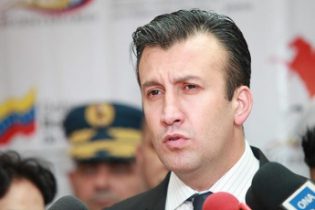 Love it or hate it, The Hill can be a pretty useful source of information on the goings on around DC, but its latest article on Venezuela comes from some disturbing places.
In a recent article, titled “Meet Venezuela’s new VP, fan of Iran and Hezbollah”, The Hill’s Emanuele Ottolenghi profiled the South American country’s new second in command, Tareck El Aissami.
Although El Aissami was appointed vice-president just a few weeks ago, he’s hardly a new face to anyone who has followed Venezuelan politics for a while. He previously served as Aragua’s governor, and also had a stint as interior minister a few years back.
So what’s so special about El Aissami? A lot, according to Ottolenghi, whose piece reads much like the biography of a minor goon from a Schwarzenegger flick, replete with semi-comical claims with the credibility, sophistication and nuance of Ninja Terminator.
Here’s a few highlights:
“Despite the Baathist family background — his father headed the Venezuelan branch of the Iraqi Baath Party — and his Lebanese Druze origins, El Aissami seems to prefer the Islamist Shiite revolutionary Hezbollah and Iran over the Baath’s supposedly secular pan-Arabism.
…
Like his Islamic revolutionary role models, he used violence to advance his politics.
Opposition figures have accused both El Aissami and Nassereddine of recruiting young Arab-Venezuelan members of the ruling party to undergo paramilitary training in South Lebanon with Hezbollah.
…
As if this were not enough, El Aissami reportedly facilitated drug trafficking, a crime for which he is being investigated in the U.S.”
In other words, El Aissami is every boogyman and right-wing scapegoat wrapped up in one nice little package, at least based on Ottolenghi’s depiction. He’s a mish-mash of Baathism, Sunni radicalism and Shiite extremism; plus he smuggles coke.
The obvious question is whether any of this is true. For one, El Aissami is indeed one of many suspects in a US investigation into Venezuela’s narcotics trade. We could discuss the politics of this investigation until the cows come home, but what about the juicier claims? For instance, the claim that El Aissami has been accused of sending young Venezuelans to Lebanon to train with Hezbollah, and that he has colluded with “guerrilla movements”?
If we follow the hyperlinks provided by Ottolenghi, we find that these claims were sourced from the Centre for Security Policy (CSP). It sounds credible, but has been widely dismissed by journalists as basically a joke. According to the Southern Poverty Law Centre, the Centre for Security Policy is “known for its accusations that a shadowy ‘Muslim Brotherhood’ has infiltrated all levels of government and warnings that ‘creeping Shariah,’ or Islamic religious law, is a threat to American democracy”.
“For the past decade, CSP’s main focus has been on demonising Islam and Muslims under the guise of national security,” the Southern Poverty Law Centre stated.
A cursory glance at the CSP’s homepage features ads for books with colourful titles like “CAIR is HAMAS”, “Civilisation Jihad”, “ObamaBomb” and “See No Sharia”. At the time of writing, some of their latest articles included one describing Islam as a “supremacist totalitarian ideology”, and another claiming Iran might already secretly have a “nuclear weapon” (which it doesn’t).
Well, that got weird fast.
So basically, Ottolenghi gets his best material from a website that is so far off the deep end, it has even been banned from the Conservative Political Action Conference.
As a side note, Donald Trump cited a report from the CSP back in 2015, when he falsely claimed one in four Muslims support violence against the US. At the time, the CSP’s claims were widely dismissed as junk.
But hey, that’s just one source – perhaps I’m not giving Ottolenghi’s narrative enough of a chance. Frustratingly though, Ottolenghi’s piece is very light on sources, and he provides no other references for his two most eyebrow raising claims.
Luckily, Ottolenghi is far from the first English language pundit to express this particular point of view on El Aissami. A few years ago, the Gatestone Institute published a piece that reads eerily similar to Ottolenghi’s more recent article. For example, the older piece details how El Aissami supposedly loved Saddam Hussein and Osama bin Laden. Ignoring the fact these two political figures espoused totally different and utterly incompatible political ideologies, the Gatestone article did a somewhat better job than Ottolenghi in terms of providing sources for their claims.
This is where things take a turn for the outright bizarre.
So, where did the Gatestone’s critical intelligence on El Aissami originate? According to the reference list they provided, the answer to that question is: Wikipedia and this obscure blog. Following the breadcrumbs, the blogger also provided a reference list for their sources. This list is extremely short for supposedly groundbreaking investigative reporting, and only features four different names: Al Arabiya, MEMRI, Jihad Watch and another blogspot blog called The Jungle Hut.
…. Okey-dokey then.
The trail runs dry over at The Jungle Hut, where there’s nothing more than a dead link and a nice photo of a waterfall. It’s not quite what I was expecting to find, so let’s look at the other two sources. Al Arabiya is Saudi Arabia’s state media outlet, though don’t let that bother you too much; they’ve actually produced some decent stuff in the past. Unfortunately, there’s no links to specific articles, so again, the trail runs dry. The same problem arises when we head to MERMI. Finally, we get to the El Dorado of anti-Islam trash: Jihad Watch, a blog created by the notorious Islamophobe Robert Spencer. For anyone who doesn’t know, Spencer is perhaps best known for co-founding two prominent anti-Muslim lobby groups, Stop Islamisation of America (SIOA) and the American Freedom Defence Initiative (AFDI). Both have been listed as hate groups by the Southern Poverty Law Centre. Spencer also garnered media attention in the wake of the 2011 Norwegian white supremacist terrorist attack carried out by Anders Behring Breivik. In his sprawling anti-Muslim manifesto, Breivik cited Spencer dozens of times.
This is where our journey down the rabbit hole ends; with an Islamophobe beloved by one of the worst white supremacist terrorists in recent years. I guess this is what I get for checking people’s sources: a browser history full of links to hate groups, anti-Islam garbage and one nice picture of a waterfall. I didn’t find much credible reporting, but I did learn that El Aissami is hated for one reason above all: he’s got a Muslim-ish sounding name.
That’s it.
You might think I’m being harsh on Ottolenghi.
And you’d be wrong.
Ottolenghi is a long time anti-Iran hardliner, and has authored books with names like “Under a Mushroom Cloud: Europe, Iran and the Bomb”. According to a review of this book over at The Jewish Chronicle, “Ottolenghi’s view that Iran, as an exceptional case, merits exceptional treatment, is perhaps unrealistically rigid. His argument is not helped by the absence from his text of source references by which the reader could cross-check the many, selective quotes he adduces in support of it.”
In other words, making far fetched claims based on no real evidence is something of a modus operandi for Ottolenghi.
Along with having an obvious disdain for the notion of providing sources, Ottolenghi seems like just another pundit with a bone to pick with Islam, and anyone who sounds like they might be Arab, Persian or any other ethnic group he doesn’t like. Ottolenghi’s writings seem better suited to publishers like Jihad Watch, and his presence at The Hill is surprising to say the least.
Unfortunately though, this whole saga is symptomatic of a deeper problem in the media. The fact that an article for The Hill can get away with featuring links to the Islamophobic fake news CSP is emblematic of the dismal state of international corporate media. Islamophobic rants are treated like credible political analysis, and conspiracy crackpots are put on pedestals. It’s a grim state of affairs, but the real question is: how much further will we slide?
US Congress Mulls New Sanctions against Venezuela over Alleged Food Corruption
By Lucas Koerner – Venezuelanalysis – January 23, 2017
Caracas – US congress members on both sides of the aisle have issued calls for new sanctions against top Venezuelan food ministry officials over corruption allegations.
Senator Marco Rubio, R-Florida, urged the new Trump administration to sanction Venezuela’s food minister, Gen. Marco Rodolfo Torres, and other leading officials charged with overseeing the country’s food imports.
“This should be one of President Trump’s first actions in office,” said Rubio, a hardline opponent of Venezuela and Cuba, who chairs the Latin America Foreign Relations subcommittee.
The statement comes in response to an AP report released last month that accused high-ranking military officials, including Rodolfo Torres and his predecessor Gen. Carlos Osorio, of receiving kickbacks from government contracts for food imports. The article relies largely on the testimony of retired military officers opposed to the government as well as internal ministry documents allegedly obtained by AP.
Senator Ben Cardin, D-Maryland, ranking member of the Foreign Relations Committee, echoed calls for further sanctions, citing unsubstantiated allegations of starvation in the country.
Republican congresswoman Ileana Ros-Lehtinen of Florida and Senator Bob Menendez, D-New Jersey, likewise stated that they would push for sanctions by the US State and Treasury Departments against the officials in question in addition to pressuring US companies to cut ties with Venezuelan firms linked to corruption.
In July, Rubio, Cardin, and Menendez co-authored a Senate resolution backing Organization of American States Secretary General Luis Almagro’s effort to suspend Venezuela from the body under the Inter-American Democratic Charter, citing “abuses of internationally recognized human rights”.
The latest drive for sanctions follows outgoing US President Barack Obama’s January 13 renewal of an executive order branding Venezuela an “unusual and extraordinary threat” to US national security. The decree was originally signed in March 2015 and included sanctions against seven Venezuelan government officials, freezing their assets and barring entry into the US.
More recently, Trump secretary of state nominee Rex Tillerson has indicated that if confirmed he would press for a “transition to democratic rule” in Venezuela, which has been widely interpreted as an endorsement of US-backed regime change efforts.
Obama extends national emergency on Iran
Press TV – January 14, 2017
US President Barack Obama has declared the continuation of his country’s national emergency against Iran, claiming that despite full commitment to its nuclear deal with the six world powers, the Islamic Republic still poses “an unusual and extraordinary threat” to America.
The outgoing president informed Congress of his decision in a letter on Friday, saying that the national emergency, which was declared on March 15, 1995, “is to continue in effect beyond March 15, 2017.”
The National Emergencies Act requires the president to extend a national emergency within 90 days of its anniversary date, before it is automatically terminated.
Obama admitted in his letter that Iran had delivered on its commitments pursuant to the Joint Comprehensive Plan of Action (JCPOA), a landmark nuclear deal that was struck between Iran and the P5+1 group of countries — the US, the UK, France, China, Russia, and Germany — on July 14, 2015.
Under the landmark deal, which entered into force on January 16 last year, Iran undertook to put restrictions on its nuclear program in exchange for the removal of nuclear-related sanctions imposed against the country.
“Since Implementation Day, the IAEA (International Atomic Energy Agency) has repeatedly verified, and the Secretary of State [John Kerry] has confirmed, that Iran continues to meet its nuclear commitments pursuant to the JCPOA,” Obama said in his notice.
“However, irrespective of the JCPOA, which continues to ensure that Iran’s nuclear program is and remains exclusively peaceful, certain actions and policies of the Government of Iran continue to pose an unusual and extraordinary threat to the national security, foreign policy, and economy of the United States,” the outgoing president added.
In November, Obama extended a separate national emergency against Iran, which was originally declared by former US President Jimmy Carter on November 14, 1979.
He also extended the state of emergency with respect to Libya, Ukraine, Zimbabwe, Cuba and Venezuela.
A state of emergency gives the US president special powers, including the ability to seize property, summon the National Guard and hire and fire military officers at will.
The state of emergency also forms the basis for most US sanctions against other countries.
Featured Video

The Sordid History of the CIA – Part 2
or go to
Aletho News Archives – Video-Images
Book Review
Jeffrey Epstein: A Jewish Individual?
The Occidental Observer | February 5, 2023
One Nation Under Blackmail: The Sordid Union between Intelligence and Organized Crime that Gave Rise to Jeffrey Epstein (Volume 1 & 2) by Whitney Webb
“Far from being an anomaly, Epstein was one of several men who, over the past century, have engaged in sexual blackmail activities designed to obtain damaging information (i.e., “intelligence”) on powerful individuals with the goal of controlling their activities and securing their compliance.”[1]
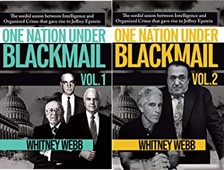
Jeffrey Epstein is dead and Ghislaine Maxwell is locked away in prison, and the thought-makers of our world seem keen to let the more explosive parts of the scandal dissipate from the public consciousness. As far as the mainstream media is concerned, Epstein and Maxwell were little more than well-connected socialites who ran a sex-trafficking ring for the rich and the powerful, and the focus has shifted instead to the criminal and civil cases seeking to achieve redress for the victims of sexual abuse.
On occasion some newspaper articles will mention the hidden cameras littered across Epstein’s properties, others the reams of CDs and hard drives found within them during the FBI raids. Altogether missing from the Netflix documentaries (Jeffrey Epstein: Filthy Rich [2020] and Ghislaine Maxwell: Filthy Rich [2022]) or the articles that spend their time narrowly focusing on the links between Epstein and Bill Gates, is the acknowledgement of the true nature of Epstein himself and the ultimate purpose of this sex-trafficking of minors — a sexual blackmail operation.
Not everyone is cowardly enough to let these controversial aspects lie untouched, as the newly released two-volume book One Nation Under Blackmail by independent reporter Whitney Webb seeks to blow wide open this media-enforced blackout. Utilizing primarily open-source information (that is, publicly accessible information such as books, newspapers articles and government reports),[2] Webb’s book delves into the life and times of Jeffrey Epstein and his deep ties to Jewish billionaires and Israeli intelligence. … continue
Blog Roll
Recent Comments


 Aletho News
- Europe creates a ‘Russian government-in-exile’, consisting of a bunch of losers
- Munich, 2007: The Day the West Was Told No
- At The Munich Security Conference, AOC Gets It Wrong On Foreign Policy
- Europe Decided to Go to War With Russia by 2030, Already Preparing – Orban
- Russia and China Are Expanding Their Cooperation to Counter US Efforts to Bully Iran and Cuba
- NATO plotting maritime blockade of Russia – Moscow
- Jeffrey Epstein’s sinister shadow over West Asia
- The Sordid History of the CIA – Part 2
- French FM under fire over ‘false’ claims about UN rapporteur
- Israel Wants ISIS-Linked Militias To Control Rafah Crossing — The New Order in Gaza
- If Americans Knew
- Israel battles Palestinian right of return, one Palestinian at a time – Not a ceasefire Day 127
- Noor’s short life of unimaginable suffering
- Israel Destroyed Gaza’s Hospitals. Now It’s Banning Doctors Without Borders.
- Is Spite of What Zionists Say, It’s a Good Thing to Criticize Governments
- Palestinian mother, daughter recount strip searches, harsh conditions in Israeli detention
- Israel used weapons in Gaza that made thousands of Palestinians evaporate
- ADL’s Stats Twist Israel’s Critics Into Antisemites
- Why Is the World Silent When the Gaza Genocide Is Not Over?
- In Gaza: 8,000 bodies under rubble, 3,000 missing – Not a ceasefire Day 126
- AZAPAC, the new PAC opposing Israeli domination of U.S policies
- No Tricks Zone
- Unfudging The Data: Dutch Meteorological Institute Reinstates Early 20th Centruy Heat Waves It Had Erased Earlier
- German Gas Crisis…Chancellor Merz Allegedly Bans Gas Debate Ahead of Elections!
- Pollen Reconstructions Show The Last Glacial’s Warming Events Were Global, 10x Greater Than Modern
- Germany’s Natural Gas Storage Level Dwindles To Just 28%… Increasingly Critical
- New Study Rebuts The Assumption That Anthropogenic CO2 Molecules Have ‘Special’ Properties
- Climate Scientist Who Predicted End Of “Heavy Frost And Snow” Now Refuses Media Inquiries
- Polar Bear Numbers Rising And Health Improving In Areas With The Most Rapid Sea Ice Decline
- One Reason Only For Germany’s Heating Gas Crisis: Its Hardcore-Dumbass Energy Policy
- 130 Years Later: The CO2 Greenhouse Effect Is Still Only An Imaginary-World Thought Experiment
- New Study Affirms Rising CO2’s Greening Impact Across India – A Region With No Net Warming In 75 Years
 Aletho News