Maduro Counters Campaign to Discredit Venezuelan Electoral System
By Ewan Robertson | Venezuelanalysis | March 25th 2013
Mérida – The presidential candidate of the Bolivarian Revolution, Nicolas Maduro, yesterday counter-attacked the opposition’s campaign to discredit Venezuela’s electoral system ahead of the 14 April presidential election.
In recent days the Venezuelan opposition and allied media have been criticising the 14 April presidential election as not being held in “fair and transparent” conditions, in an apparent effort to discredit the Venezuelan electoral system ahead of the vote.
This campaign appears to have intensified following comments made on Friday 15 March by the US’s Assistant Secretary of State Roberta Jacobson, who said that it would be “a little difficult” for “open, fair, and transparent elections” to be held on 14 April.
The conservative opposition has also attempted to reach out to international opinion, with Diego Arria, a former Venezuelan diplomat, writing in the Huffington Post that Venezuela’s National Electoral Council (CNE) is “no more than a tool of the regime [sic: Venezuelan government] to maintain its power”.
This discourse marks a break with the opposition’s more conciliatory approach toward Venezuela’s electoral system last year, when the opposition MUD coalition asked the CNE to organise the opposition’s own internal elections, calling the CNE “an excellent example of democratic institutions in the country”.
Polling evidence suggests that the opposition is likely to lose the April election, called after the death of President Hugo Chavez on 5 March. Four polls released by private Venezuelan firms in recent days have given Nicolas Maduro an advantage over the opposition’s candidate Henrique Capriles of between 14 and 22%.
Yesterday, Nicolas Maduro, who is currently interim president, hit back at the opposition’s campaign to discredit the CNE, claiming that it was a strategy being used in light of the opposition’s “clear defeat” on 14 April.
Maduro repeated the claims of other pro-government figures, stating that the “ultra-right wing” within the opposition is also considering the withdrawal of Capriles’ candidacy “as a way of fleeing and then crying out [to the international community]”.
He further argued that his rival Capriles is caught between the opposition’s radical wing, who want to withdraw from the race in order to discredit the election, and the “apparently democratic” wing that wants to maintain an electoral strategy.
The interim president said the Venezuelan electoral system, “guarantees the sovereign decision of the voters” and that the campaign to discredit the CNE “will not favour” the opposition.
Directly addressing the opposition, Maduro said, “If you stay [in the electoral race]; welcome. We’re headed towards a great triumph, that’s how I feel. If you go, not so welcome. We will [still] have a great victory and we’ll maintain the political stability of the country; of that you can be sure”.
The difference in opinion within the opposition toward the electoral system has also become apparent in recent comments made to media.
Hard-line opposition legislator Maria Corina Machado called the Venezuelan government a “neo-dictatorial regime” with a “democratic façade” in an interview yesterday with conservative paper El Universal. She further said the CNE was full of “tricks and irregularities”.
Meanwhile, the president of opposition party COPEI, Roberto Enríquez, said in an interview today that the opposition “recognises” the accuracy of the Venezuelan electoral system.
However, he added, “Elections in Venezuela, like in all democratic systems, are and have to be perfectible”.
UNASUR
Today the CNE signed an agreement with the Union of South American Nations (UNASUR) confirming that UNASUR will send an electoral accompaniment mission to Venezuela ahead of the 14 April election.
The mission’s aim, according to the head of UNASUR’s electoral council, Francisco Távara Córdova, is “to witness the electoral process within the framework of solidarity, cooperation and respect for sovereignty, with the aim of generating shared knowledge and experience in electoral matters”.
The mission’s head will likely be Argentine Carlos Alvarez, who led the UNASUR electoral mission to Venezuela for the October 2012 presidential election.
Several Venezuelan electoral NGO’s have also been invited by the CNE to observe the upcoming election.
Related articles
- Opposition Intensifies Campaign against Venezuelan Electoral System (alethonews.wordpress.com)
- Venezuelan Electoral Authority Rejects U.S. Government Statements (alethonews.wordpress.com)
- Venezuela says far-right US plot targeted opposition leader Capriles (alethonews.wordpress.com)
- Polls Show Maduro Leading Capriles for Venezuelan Presidential Elections (alethonews.wordpress.com)
Opposition Intensifies Campaign against Venezuelan Electoral System
By Ewan Robertson | Venezuelanalysis | March 22, 2012
Mérida – Police, pro-government and opposition students clashed on the streets of Caracas yesterday amid a growing opposition campaign against Venezuela’s National Electoral Council (CNE).
The CNE is currently preparing for the April 14 presidential election, following the death of late President Hugo Chavez on March 5. Polls suggest that the candidate representing the Bolivarian revolution, Nicolas Maduro, is set to win the election handily against opposition rival Henrique Capriles.
In recent days opposition media and politicians have stepped up a campaign of criticism against the CNE and its president, Tibisay Lucena, alleging that the upcoming election will not be held under “fair” conditions.
Yesterday, opposition students presented CNE officials with a list of demands for a “transparent and fair” election. These included scrapping Venezuela’s automated SAE voting system, eliminating the use of fingerprints in the voting process, and ending the involvement of civilian militias in the election-day public security operation.
According to pro-government newspaper Ciudad CCS, the students were prevented by national police from reaching the CNE’s headquarters due to their violent behaviour. Meanwhile, pro-government students held a counter-protest on the other side of police lines.
The paper reports that opposition students threw stones and flammable devices, before trying a “charge” through police lines, which was contained. According to Venezuelan media, four protestors were injured.
However, conflicting versions have emerged of the day, with private media reporting that the opposition students were “ambushed” by the pro-government demonstrators, with police then intervening to keep the two groups apart.
Also yesterday, representatives of Henrique Capriles’ campaign met with CNE officials to discuss thirteen proposals the opposition argues are necessary for a “fair” presidential election. Four of these proposals were accepted by the CNE.
Opposition spokesperson, Carlos Vecchio, said that the deal was “not enough” for the presidential election to be “fair and transparent”. The CNE has since agreed to further study the remaining proposals.
The criticisms of the CNE build upon previous declarations by opposition candidate Henrique Capriles, who accused the CNE’s president, Tibisay Lucena, of being favourable to the government. “We’re not being herded anywhere,” he warned her in relation to CNE rules on presidential candidate registrations.
Further, on Tuesday conservative daily El Nacional published a stinging editorial on Lucena titled “Lady Liar”, in which the CNE head was branded as “foolish” and “absent minded,” while public attention was drawn to her state of health.
The editorial, written by far-right journalist Miguel Henrique Otero, also called the CNE “a team chosen and armed by power [the government] to ambush the voter at every bend in the road”.
The opposition’s discourse toward the CNE in recent weeks is similar to comments made last Friday by the US’s Assistant Secretary of State Roberta Jacobson, who said that it would be “a little difficult” for “open, fair, and transparent elections” to be held on April 14.
The comments from the opposition, in particular El Nacional’s editorial, have generated anger and condemnation by pro-government and more moderate circles of opinion.
Top CNE official Vicente Diaz, considered to be favourable to the opposition, called El Nacional’s editorial “deplorable and inconsiderate”.
During the presidential election last October the CNE received glowing praise from international electoral observation groups.
Former US president Jimmy Carter, head of the Carter Centre NGO, commented at the time, “Of the 92 elections that we’ve monitored, I would say the election process in Venezuela is the best in the world”.
He also praised Venezuela’s automated SAE voting system, which utilises manual and electronic security checks to prevent fraudulent voting.
Meanwhile, the electoral observation mission from the Union of South American Nations (UNASUR) strongly endorsed Venezuela’s electoral system after the October 7 vote.
“Venezuela has given an exemplary demonstration of what the functioning of democracy is and has taught a lesson to the world, and this is important,” said the mission’s head, Argentine Carlos Alvarez.
Regarding the opposition’s recent criticisms of the CNE and Venezuela’s electoral system, pro-government media expert Oscar Lloreda claimed that this formed part of the opposition’s strategy due to the unlikelihood of them winning on April 14.
Speaking on Latin American news channel Telesur, he argued, “They [the opposition] are calling on people to vote, but on the other hand they’re creating the conditions to not recognise the results in the case of a defeat”.
Related articles
- Venezuela says far-right US plot targeted opposition leader Capriles (alethonews.wordpress.com)
- Polls Show Maduro Leading Capriles for Venezuelan Presidential Elections (alethonews.wordpress.com)
- Venezuelan Electoral Authority Rejects U.S. Government Statements (alethonews.wordpress.com)
Sins of Omission
By Jason Hirthler | NYTimes eXaminer | March 21, 2013
The New York Times coverage of Hugo Chavez’ death was a bunker buster of misinformation.
The socialist left was plunged into a state of crisis last week when its leading advocate was felled by cancer. The death of Venezuelan President Hugo Chavez dealt a potentially crippling blow to the Bolivarian revolution’s hold on the Venezuelan nation. With their leader gone, Chavistas are scrambling to align their ranks behind Nicolas Maduro, an unimposing background figure in the Chavez narrative. And despite the stunning successes of the Chavez government—from a vertiginous drop in poverty to an equally dramatic rise in literacy, the establishment of a legislative apparatus designed to benefit the nation’s majority, and the nationalization of Venezuelan oil—the opposition is poised to renew its attack on the socialist experiment of the last decade and a half. Furious over repeated humiliations at the ballot box, the Venezuelan right, led by Henrique Capriles, is anxious to steer the country back to failed prescriptions of neoliberal economics, hoping to seize on an unexpected election to reclaim the presidency.
Naturally, few if any of the Bolivarian triumphs were mentioned in The New York Times ungenerous lead on the demise of the Venezuelan leader. Already, our leading propaganda daily has begun its historical revision of Chavez’ legacy. Its prejudiced coverage of the El Commandante’s death was remarkable only it what it elided from view—namely any of the progressive transformations the Bolivarian socialist engendered. Regarding the state of the nation, only a few conditions were noted. While vague mention was made that Chavez had “empowered and energized” millions of poor people, the print edition headline said Venezuela was a nation in “deep turmoil.” The digital edition brusquely mentioned, “high inflation and soaring crime,” as well as, “soaring prices and escalating shortages of basic goods.” While there is some truth to these claims—particularly in relation to crime—none of Chavez’ achievements were noted, an astonishing array of programmatic successes that have dwarfed the failures of his tenure.
But before adding anything else, let’s briefly look at the indictments delivered by the Times:
- After devaluing its currency in 2010, pundits predicted massive inflation. Instead, inflation declined for two years, while economic growth topped four percent both years. This is ignored. Nor does the article note Venezuela’s spiraling rate of inflation before Chavez took office—or that he has actually significantly reduced it. While prices rise with inflation, the government offers subsidized goods through weekly Mercal and also regularly adjusts minimum wage to match or exceed inflation, which increases consumer purchasing power, which itself has increased 18 percent in Chavez’ first decade in office.
- In stark contrast to improving economic numbers, Venezuela’s murder rate increased threefold during Chavez’ three terms in office, now third highest in the Americas, calling into question the effectiveness of police training. A new training program was launched in 2009, but has yet to produce results. The Bolivarian National Police, also launched in 2009, has lowered rates where it is active, but chronic problems continue to plague the country, particularly Caracas, including police corruption, biased judiciaries, the likelihood of not being prosecuted, the presence of millions of weapons, and the fact that Venezuela is a main thoroughfare for illegal drugs on their way to the United States.
- Food shortages are also present, another surprising condition in a country of declining poverty. Western critics naturally point to price controls as the cause, providing a typically ideological explanation for a problem that appears to have a more nuanced answer. Food consumption in Venezuela has exploded since Chavez took office in 1999. The population consumed 26 million tons of food in 2012, double the 13 million tons they consumed in 1999. The government suggests the shortages are a consequence of rapidly increasing consumption. Food production is up 71 percent since Chavez took office, but consumption is up 94 percent.
Claims without Context
A day later, the Times decided that its stinting initial coverage was too generous: it had merely listed the flaws in Venezuelan society. What it had failed to do was pepper the pot with a heavy dose of falsification. It then released a factless catalogue of misinformation that, when it wasn’t quoting louche academics, was irrigating the column with toxic dogma. It began, in its home page tout, with a headline about “Debating Chavez’s Legacy,” by author William Neuman. The sub-line anxiously opened the festivities with an elephantine distortion: “Venezuela had one of the lowest rates of economic growth in the region during the 14 years that Hugo Chavez was president.”
Well, after that opener, why bother writing a column? The case has already been made. Best to have the tout lead to a broken link, or redirect to Thomas Friedman hyperventilating about the glories of globalization on display in Indonesian sweatshops. But no, the Times were out for blood. This was no ordinary socialist. Chavez deserved a double-barreled dose of disinformation.
Regarding its initial claim that Venezuela had one of the “lowest rates of economic growth in the region during the 14 years that Hugo Chavez was president.” This statistic is taken from the World Bank. It is true. What it fails to mention is the nosedive the Venezuelan economy fell into when U.S.-backed, right-wing elites overthrew the democratically-elected Chavez in 2002. The economy fell at nine percent into 2003. Then there were devastating oil production shutdowns engineered by the same cadre of oppositionists when Chavez moved to nationalize the oil industry.
Despite this and other opposition attempts to sabotage the economy through food hoarding, price speculation, and other noble measures, the Times neither bothers to contextualize their claim nor balance it against the significant achievements of the Bolivarian government. If elements of socialism actually work, don’t the Times readers deserve to know about them? Evidently not, according to the editors, who see it as their duty to shelter their gullible readership from the facts. But consider these facts about Venezuela’s socialist experiment:
- Per capita GDP in Venezuela is up 50 percent since the coup.
- The Venezuelan economy was among the fastest growing Latin nations in 2012.
- Its economy has grown steadily for nine consecutive quarters.
- Inflation has been cut nearly in half since Chavez took office, when it was spiraling out of control thanks to the ever-efficient neoliberal private sector leadership.
A Legacy Belittled
The article then claims that Chavez’ massively attended funeral was “a tribute to the drawing power of the charismatic leftist leader, although perhaps not to the lasting influence of his socialist-inspired policies.” This line nicely inverts the obvious truth—the masses turned out precisely because of Chavez’ socialist-inspired policies. The policies the paper had given an unfair drubbing in the opening tout have driven consistent growth in society’s most impoverished sectors. Poverty has been reduced by 70 percent since Chavez won the presidency. Nutritional measures among the poor are up across the board, while strengthened pension programs, freely available healthcare, and an inflation-linked minimum wage are helping produce a viable workforce with growing purchasing power—a prerequisite of demand and economic expansion.
The paper then says Chavez’ revolution “remains more limited than he would have liked,” a spurious attempt to cast the Bolivarian revolution as a failure, when in fact, against most significant social and economic metrics, the socialist experiment exceeded itself. To reinforce this portrait of another foreclosed attempt to establish a socialist state, the Times trots out Alejandro Toledo, a former president of Peru. Toledo replaced the Peruvian strongman Alberto Fujimori, and was so unpopular—even though he succeeded one of the continent’s most vile authoritarians—that his approval rating dropped to six percent in 2004, when street rioting briefly paused to permit the survey. Here is Toledo:
“The important thing is that Mexico has not followed his example, Chile has not followed his example, Peru has not followed his example, Colombia has not followed his example, Brazil has not followed his example. I’m talking about big countries with large, sustained economic growth.”
Toledo, like the paper, obviates Chavez’ stunning impact on continental politics, an influence that has encouraged similar leftist triumphs in Ecuador, Argentina, Paraguay, Guatemala, Nicaragua, and others. Chavez convinced many of his regional colleagues of the dangers of forging discrete trade agreements with the United States—with NAFTA as the ne plus ultra in the category—and then promoted regional agreements among his Latin counterparts. Chavez worked to expand Mercosur into a continental trade platform, not simply that of South America’s southern cone. Then he established such inter-continental co-operatives as Telesur, PetroCaribe, and Petrosur, as well as the Bolivarian Alliance for the Americas (ALBA).
Sidelining Socialism
With little left to criticize, and plenty of column width to fill, the author resorts to repetition and veiled attacks on socialism. The claim about Venezuela’s low rates of growth is repeated. Then the social flaws from the previous day’s coverage are hurried back into commission: high inflation, shortages of basic goods. High crime, bitter political divisions.
Then, in a turn both sour and childish, the Times concedes that “poverty went down significantly,” but quickly adds that, “other countries…made progress in reducing poverty while following paths very different from that of Mr. Chavez.”
A Brazilian academic then claims that governments in countries like Brazil have “a more balanced position” and that unnamed left-leaning governments are looking to its model and not Venezuela’s for guidance.
No evidence is offered for this claim. Nor does the Carioca academic mention what precisely is “balanced” about a Brazilian society in which the household income of the top one percent is equal to that of the bottom 50 percent of society.
After a short series of additional points—including the passing notation that masses of citizens marched for hours alongside Chavez’ casket—much is made of Chavez’ use of oil resources to build relations with other South American governments. The unstated claim: that Chavez bought his friends. An “energy fellow” at the Council on Foreign Relations, notes rather peevishly that “Venezuela’s influence in Latin America was built on the back of oil exports,” as if it is somehow bad form to play one’s cards in international affairs. And as if the United States hadn’t been bribing its way across the Middle East for the last decade.
Disarming Protest
There you have it: the disingenuous reality of The New York Times, a paper that disguises its bias behind a thin veneer of cool detachment and a studied use of non-inflammatory language, much like the paper’s bedmate in neoliberal apologetics, The Economist. The lengths to which the paper will go to discredit the creditable would be laughable if the paper weren’t so popular among self-proclaimed progressives. It is a powerful tool by which corporate power softens the blunt edges of austerity and disarms mainstream liberals with soothing messaging about good intentions and “balanced” approaches to economic development.
By rehearsing the standard refrains of American exceptionalism—a love of democracy, an abiding concern for the voiceless inhabitants of the developing world and the scourge of tyrants that seem forever to afflict them, and a noble need to extend our love of freedom to points south as well as the backward caliphates of the East—the Times tranquilizes would-be progressive protestors with the gentle rationalizations of corporate life—the ultimate virtue of which is the appearance of even-handedness. The kind of professorial restraint best represented by Obama, a façade the opposite of which—the dangerous passions of the oppressed—is frowned upon as “counterproductive” and known to be the bane of respectable men. And by respectable one may read fatally compromised.
Jason Hirthler is a writer, strategist, and 18-year veteran of the communications industry. He lives and works in New York City. He can be reached at jasonhirthler@gmail.com.
Related articles
- “Humanity Has Lost a Titan”: Interview with William I. Robinson on the Legacy of Hugo Chavez (alethonews.wordpress.com)
- Venezuelan Post-Chavez Roadmap to the Middle East (alethonews.wordpress.com)
- In the End, Awful Journalism (alethonews.wordpress.com)
“Humanity Has Lost a Titan”: Interview with William I. Robinson on the Legacy of Hugo Chavez
Eleftherotypia | March 20, 2013
The progressive cause in Latin America but also worldwide has lost one of its most visible leaders. How would you describe the political ideology professed by Hugo Chavez and his Venezuelan United Socialist Party?
Humanity has lost a titan with the passing of Hugo Chavez. Without doubt Chavez is the most important revolutionary leader to have emerged in Latin America – indeed, from the Global South – in at least a generation, if not in a century. When Chavez came to power in 1999 it was the heyday of neo-liberal hegemony in Latin America and around the world. Chavez’ election irked the Venezuelan bourgeoisie and raised eyebrows in the halls of power in Washington and elsewhere. But it was not until the April 2001 Summit of the Americas meeting in Quebec, Canada, that the direction Chavez and the Bolivarian revolution would take became clear. Chavez was the only head of state among the 24 hemispheric leaders present at that meeting who refused to sign on to the declaration approving the creation of a Free Trade Area of the Americas that, if approved, would have created by 2005 a giant free trade zone from the Arctic Circle to Tierra del Fuego. It was at that moment that neo-liberalism definitively lost its hegemony.
But Chavez not only rejected neo-liberalism. He put socialism back on the public agenda at a time when apologists for global capitalism were still claiming it was “the End of History” and when the defeatist left was insisting that we had to be “realistic” and “pragmatic,” to renounce anti-capitalism, and to limit ourselves to putting a “human face” on the capitalist system. Chavez called for a renewed democratic socialism – what he and the PUSV called “21st century socialism” – a socialism based on the protagonism and democratic control of the popular classes from below, as evinced in the 40,000 Communal Councils, the tens of thousands of worker cooperatives, and the thousands of public enterprises run by workers councils in Venezuela. It is apropos to recall these experiences in Venezuela take place at a time when the Greek and other European peoples are reeling under the austerity imposed by the brutal dictatorship of transnational finance capital.
In an era in which socialists in the west have embraced wholeheartedly the neoliberal project, on Chavez’s watch, the oil industry in Venezuela was nationalized, government spending increased substantially (up to 40% in 2012), and welfare projects were initiated on a massive scale. What challenges did Chavez have to overcome in order to accomplish these goals?
The anti-Chavista forces, Washington, and the international media are fond of saying that Chavez “polarized” Venezuela. But Venezuela was polarized long before Chavez came to power, with a tiny capitalist class and state elite and a sizable middle class on the one side – approximately some 30 percent of the Venezuelan population – and the impoverished majority on the other side. Above all Chavez reverted the country’s oil wealth to this majority. The re-nationalization of the oil industry allowed the Chavez government to redirect state resources towards this poor majority. The social achievements of the Bolivarian revolution are now well known: poverty was cut by more than half, from over 60 percent to some 25 percent of the population, and extreme poverty dropped from 25 percent to some seven percent; health and education became universally accessible; life expectancy rose from 74.5 to 79.5 years; unemployment dropped from 12 percent to 6 percent; hundreds of thousands of new homes have been constructed ; and so on.
But these achievements, and more generally, the effort to reorient the country’s resources to the poor majority, came at the cost of the enmity of the bourgeoisie and much of the middle classes, of Washington, and of the Latin American oligarchies and capitalist classes. The Chavista government faced ever more intense destabilization campaigns, including attempted coups, military and paramilitary plots, political conspiracies, disinformation and misinformation (of which much of the international press has been willing accomplices), employee strikes and economic sabotage, and so on. The country has faced a war of attrition that has taken a heavy toll.
Moreover, the drive to construct socialism has taken place within a capitalist global economy. Some 70 percent of the Venezuelan economy is still in private hands, including the financial system, and the country remains dependent on international oil companies and markets. The material power of national and transnational capital translates into continued political and ideological influence. The law of value and its logic is still very much operative in the economy.
The strategy has been to develop and state and cooperative sector to compete with private national and transnational capital; it has not been to replace the logic of accumulation with a social logic as much as it has been to develop a social logic in the state and cooperative sector alongside the logic of accumulation that remains operative for the economy as a whole. This has generated structural as well as political and ideological contradictions. With regard to the former, for instance, inflation has become a serious problem as has a black market in the currency. This is the challenge of 21st century socialism “in one country.”
Under Chavez, Venezuela had established very special relations with Cuba. Was the relationship mutually beneficial to both countries?
Chavez developed a close friendship with Fidel Castro and the two have worked closely together in confronting Washington’s political and economic domination in the region. Economic relations between the two countries on not based on the criteria of profitability and trade advantage but on solidarity and complementarity. Cuba receives Venezuelan oil in exchange for Cuba sending medical brigades and other forms of social assistance. Yet Chavez stated on numerous occasions that Venezuela is constructing its own model of socialism. Sure the relationship has been mutually beneficial, but more to the point, that relationship reflects the broader matter of international political and economic relations among socialist-oriented countries, or countries whose governments are seeking relations based on cooperation and solidarity rather than on competition.
Venezuela (together with Cuba) has played a leadership role in Latin America in forging a political union, economic integration, and an alternative regional cooperation and development model based on solidarity rather than profit and driven by member states rather than transnational corporations and such international financial agencies as the IMF and the World Bank. In 2004 Venezuela and Cuba set up the Bolivarian Alliance for the Peoples of Our America, or ALBA to promote integration and solidarity on the principle of solidarity not competition. Bolivia, Ecuador, Nicaragua, and several other countries have joined ALBA. While Venezuela has provided oil on concessionary terms through ALBA, it has, more importantly, promoted projects such as a regional bank and currency, regional public agricultural and industrial enterprises, and joint infrastructural, social, and communications programs. In December 2011 the Community of Latin American and Caribbean States, or CELAC, held its inaugural summit in Caracas. The CELAC brings together every country in the hemisphere excluding the United States and Canada and is a direct political challenge to Washington’s historic domination in the region.
Beyond Latin America, Venezuela has diversified its international economic relations – China is becoming the major trading and investment partner – and promoted South-South cooperation. Venezuela has come out strongly in support of the Palestinian struggle and other such causes, and against U.S. intervention around the world, even when it has cost the country political capital and economic support internationally. In sum, Venezuela has pursued not a self-interested and opportunistic foreign policy such as that of the former Soviet Union but one based on what would be true socialist principles of solidarity and cooperation.
Socialism in Latin America is on an upwards spiral since the late 2000s. What explains its rise at this particular historical juncture?
It is not difficult to understand the rise of socialism, or certainly, the spiral of anti-capitalism. In the wake of the 1970s crisis of world capitalism the bourgeoisie in the centers of the system, together with state elites and organic intellectuals who serve that bourgeoisie, launched capitalist globalization and undertook a vast new round of “primitive accumulation” around the world, destabilizing hundreds of millions of people. One of the key vehicles for this new round of capitalist expansion was neo-liberalism, a program which has facilitated the transfer of resources from the poor and working classes everywhere to a new transnational capitalist class, especially transnational finance capital, and to emerging middle and professional strata enjoying the fruits of the new global capitalism. Very simply, global capitalism has thrown countless millions into misery and uncertainty. The system has demonstrated that it is a failure for a majority of humanity.
It is in this context that starting in the late 1990s resistance forces around the world began to coalesce into a critical anti-capitalist mass and the banner of “another world is possible” was raised. But what kind of a new world? It is in this context that the Bolivarian revolution and its worldwide impact must be understood. And it is in this context that the extraordinary vision, charisma, and foresightedness of Hugo Chavez must be appreciated. Venezuela under Chavez, much more than resistance to global capitalism, is an example that a new world truly can – and must – be created, once based on the principles and practices of democratic socialism, if not on the label.
Venezuela will hold presidential elections on April 14. Will the United Socialist Party manage to sustain the momentum without Chavez, especially since it is a well known fact that his party is fractured by intra-party rivalries?
The greatest danger to the Bolivarian revolution, in my view, has always come from within, from the “endogenous right,” or the “Chavista right-wing,” that is, from portions of the Chavista movement that wish to see in Venezuela a more mild social democratic project and also from bureaucratic state and party elites who are more interested in acquiring their own power, privilege, and authority, often through corruption, than in helping to develop the self-empowerment of the working and popular classes. Yes, there are intra-party rivalries but I think that in the larger political analysis these must be seen in light of the struggle to avoid a bureaucratic top-down hijacking of power-from-below.
Nicolas Maduro has been a leader of the radical left for several decades and comes from a trade-union background. The Chavista movement has rallied around his leadership and his candidacy. He has proven, since Chavez moved into a terminal state in December, that he is a capable leader and the Chavista mass base understands that its struggle to defend and to deepen its revolution is now tied to electoral support for Maduro’s candidacy in the upcoming vote.
William I Robinson is Professor of Sociology, Global Studies, and Latin American Studies at the University of California at Santa Barbara, and author among other books of Latin America and Global Capitalism (2008).
Related articles
- Chavez in the Crosshairs (alethonews.wordpress.com)
- Preparing for a Post-Chávez Venezuela (alethonews.wordpress.com)
Venezuelan Electoral Authority Rejects U.S. Government Statements
Telesur – March 19, 2013
Tibisay Lucena, the president of Venezuela’s National Electoral Council (CNE) rejected statements on Sunday by U.S. State Department Assistant Secretary for Latin America Roberta Jacobson, who said it would be “a little difficult” for Venezuela to have “clean and transparent elections,” next month on April 14.
“We roundly reject the naïve statements of Ms. Roberta Jacobson, for their meddling and disrespectful content,” Lucena said during a speech at the CNE headquarters in Caracas, Venezuela. “Jacobson said that the elections in Venezuela should be free and fair, causing some to believe that Venezuelan elections do not comply with the basic conditions, when our electoral system has been recognized nationally and internationally, both by voters at home and abroad by experts like former President Jimmy Carter, who said that ‘Venezuela has the best electoral system in the world,’” she said.
Lucena called the statements imprudent, “especially when they come from the United States, a country with a fragile and unsafe electoral system that increasingly excludes minorities and low-income sectors.”
She said that Venezuela has an electoral system that guarantees the sovereign decision of voters “and while we audit 54% of the electoral booths at the end of the day, in the United States the results aren’t audited. For a long time, citizens’ groups have been fighting to be allowed to audit three to five percent of the booths after voting.”
She said that Venezuela’s fully automated electoral system, “more than just a technological platform, is the instrument of the expression of all our people.”
Lucena also announced Sunday that tests have already been carried out on the electoral platform ahead of the April 14 presidential vote “and we can guarantee that the machinery is working properly.”
“We guarantee trustworthy, transparent results and the integrity of the Venezuelan electoral system,” she said.
During the testing of the voting equipment, Lucena added, electoral accompaniers were present from the Inter-American Union of Electoral Bodies (UNIORE) and the Union of South American Nations (UNASUR).
The CNE announced the date of the upcoming elections on March 9, and began accepting candidacies the next day. Campaigning will occur from April 2 to 11 at midnight.
Related article
- New Venezuelan Presidential Elections Set for 14 April (venezuelanalysis.com)
Polls Show Maduro Leading Capriles for Venezuelan Presidential Elections
By Tamara Pearson | Venezuelanalysis | March 19, 2013
Merida – Private poll company Datanalisis has found that interim president Nicolas Maduro has a 14% lead over opposition candidate Henrique Capriles, with 16% of respondents still undecided, or intending to vote for other candidates.
 Yesterday Barclays/Datanalisis released a report in which 65% of respondents believe that pro-Chavez candidate Nicolas Maduro will win the 14 April presidential elections.
Barclays is a British multinational financial services company, and Datanalisis is a private Venezuelan company, whose poll results generally favour the opposition, but also tend to be closer to final election outcomes than some other private polling companies.
According to their poll, 49.2% of respondents intend to vote for Maduro, while 34.8% said they will vote for opposition contender Henrique Capriles, giving Maduro a prospective lead of 14.4%. Datanalisis conducted the poll from 11 March to 13 March; the days following the candidates’ registrations to run in the elections.
Only 15% of respondents believed Capriles would win the upcoming elections. Barclays identified this as a “risk” for the opposition, as a “lack of enthusiasm could lead to the abstention of voters”.
“In that sense, Capriles’s reaction has been an aggressive campaign to try to revitalize opposition voters. He is presenting the election in terms of a battle against adverse and unfair conditions, in which a significant portion of the country (roughly half of it) deserves to be heard,” the financial company’s report concluded.
The results also show that the passing of President Hugo Chavez only had a minor impact on voting intentions. Results from the same company, from a poll conducted on 20 February, show the voting intention for Maduro at 46.4%, just 2.8% less than the more recent poll. The voting intention for Capriles was 34.3%, 0.5% less than the recent poll.
The results suggest a high percentage of undecided votes, abstentions or intentions to vote for other candidates, at 16%.
Barclays argued, “Considering the short period for campaigning, the sympathy effect just after the death of Chavez, restrictions on the press, and the demobilisation of the opposition following two defeats last year, Maduro is still a favourite for the 14 of April presidential elections”.
It is not clear what “restrictions on the press” Barclays refers to. The National Electoral Council has increased the amount of electoral advertising time allowed by television and radio, given the short campaigning time. Television advertisements can last a maximum of four minutes, and radio advertisements five minutes. Official campaigning is allowed from 2 to 11 April.
“Maduro is still the favourite… however his popularity is volatile and relies on the emotional support that Chavez transferred to him,” Barclays stated in its report.
The financial transnational also concluded that the market is assuming Maduro’s victory, and that Venezuela still offers an “interesting asymmetric trade opportunity in the case of a black swan event”. A black swan event is an unexpected event with high impact, and the Barclay’s report says it sees an opposition win in this light.
Andres Izarra, a member of the team heading up the campaign ‘Hugo Chavez’ for Nicolas Maduro, criticised national and international “right wing media” for “ignoring” the poll results. He noted that at the time of speaking, yesterday, of Venezuelan media only newspaper Ultimas Noticias had reported the results.
As of today, newspaper El Universal and news website Noticias24 have also published the results, but TV channel Globovision and conservative paper El Nacional haven’t.
Today, another private, pro-opposition poll company, Hinterlaces also released its poll results. Based on a survey of 1,100 homes around the country, conducted on 16 March, 53% of respondents would vote for Maduro and 35% for Capriles, for a difference of 18 percentage points.
The poll also showed that 61% of Venezuelans think that Maduro will win the elections.
In October last year, Hugo Chavez won the presidential elections with 55.4% of the vote, to 45% by Capriles, with 81% participation. The September poll by Datanalisis gave Chavez a 13% lead.
Related articles
On Venezuela, The New Yorker’s Jon Lee Anderson Fails at Arithmetic
By Keane Bhatt | NACLA blog | March 17th 2013
In the face of Venezuelan President Hugo Chávez’s ill health and subsequent death on March 5, the U.S. press—including its most unabashedly liberal wing—jumped at the opportunity to disparage him and his legacy, often on spurious grounds. Jon Lee Anderson of the urbane New Yorker magazine epitomized this tendency.
As the magazine’s corespondent for Venezuela and author of a January piece on the country that stretched to over 10,000 words, Anderson was the subject of withering ridicule. Jim Naureckas of Fairness and Accuracy in Reporting wrote that Anderson’s article appeared “almost like a parody of corporate media coverage of an official enemy state.” Economist Mark Weisbrot similarly noted that Anderson wasn’t “letting commonly agreed-upon facts and numbers get in the way” of his plodding diatribe against Chávez’s failures. Those criticisms remain independent from others who have observed his increasingly bizarre Twitter outbursts against critics.
Anderson’s article, “Slumlord: What Has Hugo Chávez Wrought in Venezuela?,” is indeed filled with blatant misrepresentations. The New Yorker’s vaunted fact checkers somehow permitted the publication of the following statement: “Chavez suggested to me that he had embraced the far left as a way of preventing a coup like the one that put him in office.” While it is true that in 1992, Chávez attempted a coup against an administration that had deployed security forces to massacre hundreds, perhaps thousands of civilian protesters, Anderson is misleading his readers. Chávez was “put in office” much later, in 1999, through a free and fair election—not a coup—a fact which he did not see fit to include in his piece. He instead wrote, vaguely, that Chávez “assumed” power in 1999.
In a Spanish-language interview with the BBC on March 9, Anderson also accused the deceased Venezuelan president of having been machista, or sexist, “but in a cultural sense. Women tended to be hosts at parties, for example, not political advisers.” If true, that would be news to Erika Farías, the recently departed head of the Office of the Presidency; Adina Bastidas, Chávez’s vice president from 2000-2002; Cilia Flores, currently the country’s attorney general; Gabriela del Mar Ramírez, currently public defender; Edmée Betancourt, head of the Ministry of Commerce; and scores of others. At present, women direct three of the five branches of the Venezuelan government.
Even more damning is the number of Anderson’s falsehoods exposed through simple arithmetic. For instance, in a NewYorker.com piece published before Venezuela’s elections, he wrote in error that “Venezuela leads Latin America in homicides.” The most recently available United Nations data show that Honduras, with 91.6 killings per 100,000 in 2011, has twice the rate of homicides as Venezuela, which recorded 45.1 in 2010. (El Salvador has 69.2.) When confronted with these facts on Twitter in February, Anderson admitted his mistake publicly, addressing even his editors at The New Yorker, and agreed to offer a correction. Over a month later, however, neither Anderson nor his editors have fixed his invented claim.
In his NewYorker.com “postscript” for the death of Hugo Chávez on March 5, he published yet another factual inaccuracy, claiming that Venezuela “is the same Venezuela as ever: one of the world’s most oil-rich but socially unequal countries.” Impressively, in just 16 words, he managed to err on two counts: First, under Chávez, inequality did not stay “the same as ever,” but rather fell enormously. Publicly available UN data confirm that Venezuela’s Gini index, a standard measure of inequality, fell from 49.8 to 39.7 between 1999 and 2011. Secondly, this decline made Venezuela anything but one of the world’s most socially unequal countries; according to the UN, it is now Latin America’s least unequal country. This reduction resulted from governmental priorities which halved poverty and unemployment over the past 10 years, while living standards improved through a healthy 2.5% annual per capita income growth since 2004. These massive reductions in poverty, which even many anti-Chávez editorials have noted, have never been reported by Anderson. Instead, he deceptively points to “extremely high levels of poverty and unemployment” in order to stress “the magnitude of the mess that Venezuela finds itself in.”

Finally, Anderson’s criticisms over Caracas’s slums suffer from flagrant omissions of chronology. He pinpointed the “height of [Caracas’s] allure” in 1983—it was a “boring, pristine, very North American” city, “buzzing along in modernity.” Yes, he admitted, there were “shacks on the hills, but not too many at the time.” “Now,” he says, “the slums are kind of everywhere.” It is “extraordinary” that “la revolución couldn’t tackle this” given that “the slums are still there 14 years later.” Anderson is performing sleight of hand with arithmetic here. He is excluding 16 disastrous years of economic history in which Chávez was never in office: from 1983 through 1998, real per capita income actually fell substantially, exacerbating poverty and housing insecurity to an unprecedented degree.
In a February panel discussion for the Frontline Club in London, he wondered “how to quantify the improvement in the standard of living in a city or in a place where people are still living in slums.” One way to do it is by looking at UN data, or other publicly available data on income, poverty, employment, and other social indicators that are heavily scrutinized and widely used by social scientists. Another way to do so is by acknowledging critics’ corrections to his false socioeconomic assertions, rather than referring to them on Twitter as “trolls” and “scum.” He should follow their advice, and complement his impressionistic firsthand reporting with empirical evidence.
[For those who would like to see The New Yorker take responsibility for factual errors in Anderson’s reporting, email tny.newsdesk@gmail.com, and tweet to @TNYnewsdeskand @jonleeanderson.]
Keane Bhatt is an activist in Washington, D.C. He has worked in the United States and Latin America on a variety of campaigns related to community development and social justice. He is the author of the NACLA blog “Manufacturing Contempt,” which critically analyzes the U.S. press and its portrayal of the hemisphere. Connect with him on Twitter: @KeaneBhatt
Related articles
Assassination of Venezuelan Yupka Chief Sabino Romero Leads to Criticisms
By Ewan Robertson | Venezuelanalysis | March 15th 2013
Mérida – The assassination of indigenous Yukpa chief Sabino Romero on Saturday 3 March has led to public criticisms of the Venezuelan government’s handling of the land rights conflict in the Sierra de Perijá region.
Romero was killed by gunfire on 3 March as he made his way to an indigenous election in the Sierra de Perijá in the west of Venezuela, the region where the indigenous Yukpa people live. His partner Lucia was left seriously injured in the incident.
Romero was an indigenous leader and land rights activist who fought for the handing over of ancestral Yupka lands, some of which have been officially granted to the Yupka by the government but are still occupied by large-scale cattle ranchers.
His murder has drawn renewed attention to the land struggle between the Yupka, and ranching and mining interests in the Sierra de Perijá. The government’s role in the conflict has also come under the spotlight, with social movements blaming judicial impunity and public media silence for allowing Romero’s assassination to take place and the persecution of the Yukpa to continue.
The government’s reaction
The Venezuelan government suspects that Romero was murdered by hired killers for his role in the land struggle against cattle ranchers in the region.
The government was quick to denounce the assassination, with communications minister Ernesto Villegas calling it “a terrible act…which is condemnable and must be repudiated from all points of view”.
Further, interior affairs minister Nestor Reverol said the assassination was “part of, once again, the violence that the corrupt right-wing wants to reign over the indigenous peoples who have traditionally occupied these lands to develop their way of life”.
Following the murder, the Venezuelan government sent a high-profile investigation team to the Sierra de Perijá, Zulia state, comprised of the national intelligence service SEBIN and the criminal investigation body CICPC.
On Wednesday, two local police officers and one National Guard soldier were arrested and are being questioned for their possible connection with the crime.
Meanwhile Attorney General Luisa Ortega has promised that “justice will be done” and “we’re going to search and find those responsible for the act”.
Social movement criticisms
Some social movements and indigenous rights activists have accused the government of not acting to protect Romero’s life when it was known he was in danger. They further claim that local judicial impunity is preventing those responsible for violence against the Yupka from being held to justice.
Social movements have also criticised Venezuelan state media for ignoring the land conflict in the Sierra de Perijá, contributing to the climate of impunity. Since Romero’s assassination, state media have begun reporting more on the Yupka’s struggle, including reporting some of the criticisms being leveled against the government.
On Sunday 4 March, the day after Romero’s murder, various collectives and activists protested outside the Attorney General’s office to demand that “justice be done” in the Romero case and that “impunity cease”.
Lusbi Portillo of the Homo et Natura Society said to press that Romero had received over 20 death threats before his assassination.
Threats against Romero’s life seem to have intensified after Romero travelled to Caracas last November with some 60 Yupka. There, he demanded that the government act against violence on the part of cattle ranchers, and protested against government vacillation over the conflict.
During the 4 March protest, a spokesman for the Attorney General addressed the crowd to defend the institution’s role in the protection of Romero’s life.
“We offered Sabino protection measures from 2008, but when we tried to fulfill the measure, according to information given to us, which we have record of, he didn’t give [the authorities] information of a fixed residence and he was always based in different places, and he always told us that he looked after his own security,” said the spokesman.
Protesters also demanded a resolution to the land conflict in the Sierra de Perijá, and asked why lands which the Chavez government had granted to the Yupka were still being held by ranchers.
“There are 395,000 hectares of demarcated indigenous territory that still haven’t been handed over,” said lawyer Soraya Suarez to Telesur.
“Where is the response about the [public] money that was supposedly granted to pay the cattle ranchers [for their land] so that they leave these lands once and for all in the Sierra de Perijá…which can then come under the control of the Yupka?” she continued.
Some groups have also suggested that social organisations form part of the investigation into Romero’s murder, such as social movements based in Zulia state which are members of the pro-government Great Patriotic Pole coalition.
An on-going struggle
The Yupka’s demand for the demarcation and granting of ancestral lands is legally based on the 1999 National Constitution and the Indigenous Peoples Law, which grant a number of political, legal, and territorial rights to Venezuela’s indigenous, who make up just under 3% of the population.
However in the Sierra de Perijá, an area rich in coal seams and grazing land, ranching and mining interests have resisted efforts to demarcate and hand over ancestral lands to the Yupka. When some Yupka groups began to occupy such lands in 2008, these economic groups responded with violence and assassinations.
While local, political, and judicial interests have been accused of colluding with the campaign against the Yupka, in August 2008 President Hugo Chavez pledged support for the Yupka, saying, “Nobody should have any doubts: Between the large estate owners and the Indians[sic], this government is with the Indians.” Chavez further ordered top government figures to implement the Indigenous Law and demarcate and grant lands in the Sierra de Perijá to the Yupka.
Yet some indigenous chiefs, including Sabino Romero, opposed the land demarcation process that followed, arguing that it was not carried out in proper consultation with Yupka communities and that the land granted was demarcated in a manner conserving the best lands for ranching, mining and military interests.
Romero was imprisoned from 2009 to 2011 for his supposed role in a violent incident in October 2009 related to the dispute over government land grants to indigenous groups. His imprisonment was challenged as illegal with an appeal contesting that his case should fall under the competence of indigenous law.
Following Romero’s increasingly public campaign for the Yupka and his November 2012 trip to Caracas, the Yupka chief became “an obstacle to be eliminated” for cattle ranchers, landowners and other interests in the region, according to a statement by left union current, the Socialist Workers Unit (UST).
With Sabino Romero’s assassination, to date 38 Yupka have been killed in the conflict with ranchers, according to Venezuelan cinema artist and politician Carlos Azparua. This number includes the murder of Romero’s father and one of Romero’s children in 2008, and the murder Romero’s fellow activist Alexander Fernández last year.
The UST claims that vested economic interests in the Sierra de Perijá “have the support and complicity of government and military bureaucrats”. Further, the UST says that these economic interests also have “known links” with politicians from the conservative Democratic Unity (MUD) opposition coalition.
In light of Romero’s murder, a Venezuelan coalition of social organisations, Life Forum, has demanded that protection be afforded to family members and others connected with Romero who may be in danger. They also advocate the resumption of the process of Yupka land demarcation, and the full consultation with indigenous communities of any mining projects on their lands.
The public investigation into Romero’s assassination continues.
Related article
- Venezuelan Indigenous Yukpa Leader Sabino Romero Assassinated (alethonews.wordpress.com)
Chavez in the Crosshairs
By Laura Carlsen | Americas Program | March 12, 2013
You could almost hear the sigh of relief coming out of Washington at the news of Hugo Chavez’s death on March 5.
President Obama issued a brief statement that failed even to offer condolences, forcing a senior State Department official to patch over the evident callousness and breach of diplomacy by offering his personal condolences the following day.
Within moments of Chavez’s death, commercial media and mouthpieces for the U.S. government were verbally dancing on his grave and predicting the imminent demise of Chavismo—Chavez’s political legacy in Venezuela and abroad.
Time headlined its article “Death of a Demagogue.” The New York Times, which bent over backwards to minimize Chavez’s overwhelming victory in Venezuela’s October elections—and later to portray his battle with cancer as a cover-up, mimicking opposition claims—proclaimed that Chávez’s death“casts into doubt the future of his socialist revolution” and “alters the political balance not only in Venezuela, the fourth-largest supplier of foreign oil to the United States, but also in Latin America”—and this in a news article with no sourcing provided.
The Inter-American Dialogue, a U.S. think tank, concluded that “Chavez’s legacy, and the damage he left behind, will not be easily undone,” and predicted that the social gains and regional institutions Chavez built over his political lifetime will soon fall apart and things will soon return to normal—that is, with the United States back in the hemispheric driver’s seat.
Congressman Ed Royce (R-CA) came right out and said “Hugo Chávez was a tyrant who forced the people of Venezuela to live in fear. His death dents the alliance of anti-U.S. leftist leaders in South America. Good riddance to this dictator.”
So why did Washington hate this guy so much?
It never helped that the South American president had a penchant for insulting his adversaries personally. But one supposes that diplomacy rises above name-calling, even if the other guy did it first. The anti-Chavez current in Washington goes far deeper than personal enmity or even political differences.
What scared Washington most about Chavez was not his failures or idiosyncrasies. It was his success.
The official reasons given for demonizing Hugo Chavez don’t hold water. Chavez is accused of restraining freedom of the press in a nation known for its ferociously anti-Chavez private media. And while his Yankee critics called him a dictator, Chavez and his policies won election after election in exemplary electoral processes. You can disagree with his reform to permit unlimited terms in office, but this is the practice of many nations deemed democratic by the U.S. government and considered close allies. And the criticisms of Chavez’s social programs as “patronage” cannot ignore the millions of lives tangibly improved.
Before Chavez turned Venezuela away from the neoliberal model, the nation was a basket case. But throughout his tenure, social indicators that measure real human suffering showed steady improvement. Between 1998, when he was first elected, to 2013 when he died in office, people living in poverty dropped from 43 percent of the population to 27 percent. Extreme poverty dropped from 16.8 percent of the population to 7 percent. According to UNESCO, illiteracy—nearly 10 percent when Chavez took office—has been eliminated. Chavez also reduced childhood malnutrition, initiated pensions for the elderly, and launched education and health programs for the poor.
Venezuela’s human development ranking subsequently climbed significantly under Chavez, reaching the “high” human development category. The programs that Washington scorned as “government handouts” made people’s lives longer, healthier, and fuller in Venezuela.
Now that Chavez is dead, the U.S. press has revived the State Department’s practice of designating the “good left” and the “bad left” in Latin America. Chavez, of course, embodied the “bad left,” while Brazil’s Lula was unilaterally and unwillingly designated the “good left”.
Yet it was Lula da Silva who defended his friend and made the case for Chavez’s lasting positive legacy in the pages of the New York Times. He eulogized the leader and predicted, “The multilateral institutions Mr. Chávez helped create will also help ensure the consecration of South American unity.”
In fact, Chavez’s success in building institutions for alternative regional integration is one of the big reasons Washington hated him. The self-declared anti-capitalist led Venezuela as it joined with regional powerhouse Brazil and other southern cone countries to make a bid to crack the Monroe Doctrine. Along with Andean nations, they also sought, in varying degrees, to wrest control of significant natural resource wealth from transnational corporations to fund state redistribution programs for the poor.
In 2005, Chavez helped scuttle the U.S. goal of a Free Trade Area of the Americas. Later he spearheaded the formation of the Union of South American Nations (Unasur) in 2008. As a Latin American alternative to the U.S.-dominated Organization of American States, the 12-member Unasur proved its value by successfully mediating the Colombia-Ecuador conflict and the Bolivian separatist crisis in 2008. In 2010, Chavez again played a major role with the creation of the Community of Latin American and Caribbean States, made up of hemispheric partners, excluding the United States and Canada.
The Bank of the South, also promoted by Chavez, seeks greater South-South monetary and financial autonomy. As Lula writes in his editorial on Chavez´s death, the Bank offers an alternative to the World Bank and IMF, which “have not been sufficiently responsive to the realities of today’s multipolar world”.
With stops and starts, these initiatives have moved regional integration forward outside the historic model of U.S. hegemony.
U.S. Moves and the Principle of Self-Determination
What happens next? Venezuela held an emotional funeral on March 8 and is planning for April elections. Most predict that Vice President Nicolas Maduro, selected by Chavez as his successor, will win easily. He has the advantage of Chavez’s blessing: a common slogan in Caracas these days is “Chavez, te juro, que voto por Maduro” (“Chavez, I swear, my vote is for Maduro”). Another sign that Chavismo lives on was the thousands of people at the funeral chanting “Chavez didn’t die; he multiplied.”
The State Department views dimly the prospect of an improved U.S.-Venezuela relationship under Maduro. On March 6, the State Department held a press call on which “Senior Official One” (a State Department practice for “background” when its officials apparently don’t want to be identified with their own public statements) said the department was optimistic following Chavez’ death, but that “yesterday’s first press conference, if you will, the first address, was not encouraging in that respect. It disappointed us.”
He referred to a 90-minute address by Maduro, stating that “the enemy” attacked Chavez’s health. The Venezuelan government also announced the expulsion of two U.S. military personnel in Venezuela, allegedly for having contacted members of the Venezuela military to stir up an insurrection.
The State Department noted that it plans “to move ahead in this relationship” by holding conversations in areas of common interest, citing “counternarcotics, counterterrorism, economic or commercial issues including energy.” It added, “We are going to continue to speak out when we believe there are issues of democratic principle that need to be talked about, that need to be highlighted.”
During the Chavez years, U.S. officials and the press went into contortions to avoid congruency with the basic principle that democracy is measured by elections. With Chavez having indisputably won some thirteen elections, the U.S. government applied new criteria to Venezuela along the lines of “democracy can be wrong.” Despite his broad-based support, many went so far as to dub Chavez a “dictator.”
The U.S. government’s commitment to democracy falters when Washington doesn’t like the results. It supported the failed coup against Chavez in 2002 and blocked the return of Honduras’s elected president after the 2009 coup there.
Now all eyes will be on Washington to see whether it upholds another value reiterated by President Obama—the right to self-determination. Will U.S. “democracy-promotion programs” under NED, IRI, and other regime-change schemes resist the temptation to meddle in Venezuela’s April 14 elections? Venezuela without Chavez will be a test of moral and diplomatic integrity for the second Obama administration and John Kerry’s State Department, and a challenge for Congress and the citizenry to monitor and prevent covert activities that interfere with the exercise of democracy.
Related articles
- Unprecedented Show of Support and Honor at the Historic Funeral of Hugo Chávez (alethonews.wordpress.com)
- Chavez Is Dead, the Media Are Alive and Kicking (alethonews.wordpress.com)
- U.S. and Canada Isolated as Latin American Leaders Acknowledge Chávez’s Regional Leadership (venezuelanalysis.com)
Featured Video
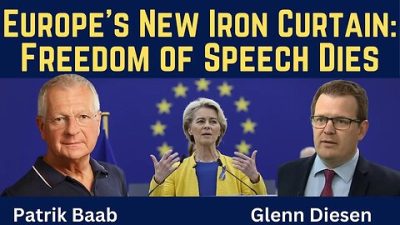
Patrik Baab: Europe’s New Iron Curtain – Freedom of Speech Dies
or go to
Aletho News Archives – Video-Images
From the Archives
Jack Ruby: Israel’s Smoking Gun
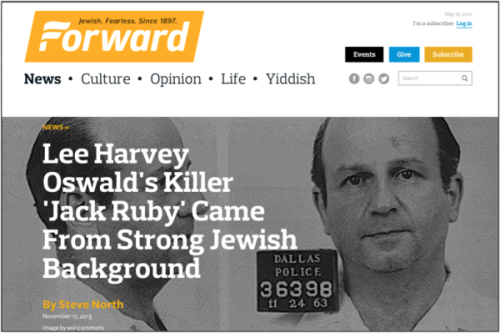
BY LAURENT GUYÉNOT • UNZ REVIEW • NOVEMBER 13, 2021
By a strange paradox, most Kennedy researchers who believe that Oswald was “just a patsy” spend an awful lot of time exploring his biography. This is about as useful as investigating Osama bin Laden for solving 9/11. Any serious quest for the real assassins of JFK should start by investigating the man who shot Oswald at pointblank in the stomach at 11:21 a.m. on September 24, 1963 in the Dallas Police station, thereby sealing the possibility that a judicial inquiry would draw attention to the inconsistencies of the charge against him, and perhaps expose the real perpetrators. One would normally expect the Dallas strip-club owner Jack Ruby to be the most investigated character by Kennedy truthers. But that is not the case. … continue
Blog Roll
Recent Comments


 Aletho News
- The Hidden Map: US and Israel May Use Unexpected Neighbors to Attack Iran
- Trump, Netanyahu Agree to Target Iranian Oil Exports to China
- Russia open to discussing Ukraine’s ‘external governance’ – senior diplomat
- US Caribbean Buildup Near $3B — Report
- Munich Security Conference and the U.S. elephant in the room
- Epstein Pitched JPMorgan Chase on Plan to Get Bill Gates ‘More Money for Vaccines’
- Germany’s CDU Pushes Real-Name Social Media Mandate and ID Checks
- Patrik Baab: Europe’s New Iron Curtain – Freedom of Speech Dies
- Trump’s ‘Board of Peace’ exports Israeli ‘ceasefire’ diplomacy to the world
- Israeli army closes dozens of cases involving killing of Palestinians inside torture camps
- If Americans Knew
- ISIS-linked border guards, GHF-linked aid – Not a ceasefire Day 128
- Israel battles Palestinian right of return, one Palestinian at a time – Not a ceasefire Day 127
- Noor’s short life of unimaginable suffering
- Israel Destroyed Gaza’s Hospitals. Now It’s Banning Doctors Without Borders.
- Is Spite of What Zionists Say, It’s a Good Thing to Criticize Governments
- Palestinian mother, daughter recount strip searches, harsh conditions in Israeli detention
- Israel used weapons in Gaza that made thousands of Palestinians evaporate
- ADL’s Stats Twist Israel’s Critics Into Antisemites
- Why Is the World Silent When the Gaza Genocide Is Not Over?
- In Gaza: 8,000 bodies under rubble, 3,000 missing – Not a ceasefire Day 126
- No Tricks Zone
- Unfudging The Data: Dutch Meteorological Institute Reinstates Early 20th Centruy Heat Waves It Had Erased Earlier
- German Gas Crisis…Chancellor Merz Allegedly Bans Gas Debate Ahead of Elections!
- Pollen Reconstructions Show The Last Glacial’s Warming Events Were Global, 10x Greater Than Modern
- Germany’s Natural Gas Storage Level Dwindles To Just 28%… Increasingly Critical
- New Study Rebuts The Assumption That Anthropogenic CO2 Molecules Have ‘Special’ Properties
- Climate Scientist Who Predicted End Of “Heavy Frost And Snow” Now Refuses Media Inquiries
- Polar Bear Numbers Rising And Health Improving In Areas With The Most Rapid Sea Ice Decline
- One Reason Only For Germany’s Heating Gas Crisis: Its Hardcore-Dumbass Energy Policy
- 130 Years Later: The CO2 Greenhouse Effect Is Still Only An Imaginary-World Thought Experiment
- New Study Affirms Rising CO2’s Greening Impact Across India – A Region With No Net Warming In 75 Years
 Aletho News