Russia, Japan agree to resume talks on peace treaty after stalling for 10 years
RT | April 29, 2013
President Vladimir Putin and Japanese Prime Minister Shinzo Abe say the countries foreign ministers are to resume speedy talks on a peace treaty that was suspended in 2003.
“The heads of the two nations have expressed their resolution to overcome the existing differences in the parties’ positions and to sign the peace treaty by finally solving the question in a mutually acceptable form,” reads a joint statement after a meeting between the two men.
The statement also describes as “not normal” the situation in which the two neighboring nations cannot sign a peace treaty 67 years after the end of the war.
However, the Russian President said in an answer to a reporter’s question that the resumption of talks did not mean that all problems will be resolved on the next day. He also added that development of economic ties would be the best support for the diplomatic dialogue.
“It was not us who created this problem. We inherited it from the past. And we sincerely want to solve it in conditions that are mutually acceptable for both sides,” Putin said.
Shinzo Abe’s visit to Russia is the first by a Japanese leader in 10 years, the same time since Russia and Japan suspended talks over the peace treaty.
Putin and Abe agreed to promote the peace treaty talks on the basis of all previously approved documents and agreements.
The Japanese PM said he invited Vladimir Putin to visit Japan in 2014 and that the Russian leader thanked him for the invitation.
Since the end of the WWII Russia and Japan have coexisted peacefully, and investment and trade between the countries is constantly developing. However, diplomatic relations are tense as Japan refuses to sign a peace treaty with Russia claiming that there is an unresolved territorial issue – the row over several small islands known as South Kuriles in Russia and as the Northern Territories in Japan.
Because of loose definitions in the international treaties signed at the end of the war ,Tokyo demands the return of the islands that were captured by Soviet troops in 1945. Russia insists the islands became a part of the USSR after the war and therefore Russian sovereignty over this territory cannot be revised.
Immediately before Shinzo Abe’s visit to Moscow the Russian Foreign Ministry issued a statement urging a ‘calm and respectful atmosphere’ in looking for a solution.
In recent years the island row has led to several incidents between Russia and Japan. After the most recent, the Japanese Foreign Ministry summoned the Russian Ambassador to protest Russian Prime Minister Dmitry Medvedev’s visit to the Kuriles in 2012. Russia replied that Japan had no right to advise a top official on the choice of destination as he travels in his country’s own territory.
Related article
- Russia, Japan try to bridge gaps on thorny issues – Xinhua (news.xinhuanet.com)
Russia and Japan create joint investment pot with $1bn entry ticket
RT | April 29, 2013
Russia and Japan have launched a new tool for the development of mutual investments. The new Russo-Japanese investment platform involves injections starting from $1 billion and is aimed at boosting Russia’s Far East.
The agreement was reached on an official visit of Japanese Prime Minister Shinzo Abe to Moscow where he met with Russia’s President Vladimir Putin. It was the first official trip by a Japanese Premier to Russia for ten years.
The two sides agreed to jointly invest in infrastructure, medicine and health, technology, “smart cities” and alternative energy sources.
Among the top priorities for regional investment program are Russia’s Far East and Eastern Siberia. Russia’s Eastern regions provide excellent conditions for creating highly profitable projects due to the resource base and transport potential, and companies that are already involved in business there will get additional efficiency with the influx of foreign investment, Kirill Dmitriev, Director General of Russian Direct Investment Fund (RDIF) said.
The new two-way platform is based on a powerful financial component. In addition to RDIF, Russia’s Vnesheconombank and Japan Bank for International Cooperation is also on board.
“The new mechanism is designed to simplify the exchange of technology and experience,” Dmitriev said. “The Japanese economy is built on advanced technology, and this is exactly what we are lacking.”
Leading Japanese corporations were invited to meet on the sidelines of the Prime Minister’s visit to Moscow. Toshiba, Mitsubishi, Kawasaki and Olympus and many have expressed interest in in investing in Russia. “Now RDIF’s goal is to turn that interest into real projects,” Dmitriev said.
Another cooperation agreement was reached between Japan’s Hokkaido Bank and the government of Russia’s Amur region.
Earlier it was reported that Russian-Japanese joint investments may increase by 10 times over the next three years. “But with such financial and technological support we have reason to think that the real figures can get higher. So far Russia’s interest in Japanese foreign investments is less than 1% (0.62% in 2012). But we already have a lot of positive examples of investment by Japanese companies in our country,” Dmitriev said.
Related article
- Abe, Putin vow to increase efforts to sign Japan-Russia peace treaty (japandailypress.com)
Putin: No plans to close NGOs, public has right to know
RT | April 5, 2013
Recent checks in Russian NGOs are completely in line with the law and have the sole objective of informing the Russian public on these groups’ activities, according to President Vladimir Putin.
In an interview with the German broadcaster ARD, Putin said that the recently-approved law on foreign agents that caused the major NGO audit had parallels in international practice. He also noted the extremely disproportionate representation of non-governmental presence from foreign countries in Russia.
In the very beginning of the interview, the Russian President noted that it was not the objective of the NGO inspections to scare the public or the activists, adding that the mass media was performing that function.
Putin added that the real situation differed greatly from what was presented by the Western mass media. In particular, the fresh Russian law demanding that non-government organizations engaged in Russia’s internal political processes and sponsored from abroad must be registered as foreign agents was noting new. The United States has had a very similar law since 1938.
Putin noted that the US law is enforced by the Department of Justice. All groups operating in the US must regularly submit information about their activities and this information is then reviewed by the counterespionage section.
The German reporter admitted he was not aware of such practices in the United States.
Putin went on to point out that there were 654 foreign-funded groups operating in Russia, while Russia sponsored only two foreign NGOs – one in France and one in the United States.
He also disclosed that foreign diplomatic missions transferred $1 billion. Eight hundred and fifty-five million was to the accounts of Russian-based NGOs in just the four months that passed since the approval of the Foreign Agents Law.
Putin told the interviewer that in his view, Russian society had the full right to know about the extensive network of foreign-sponsored organizations operating in the country, as well as about the amount of funding these groups were getting from their foreign sponsors.
The Russian leader then again stressed that the Russian authorities did not intend to pressure or shut down any organizations.
“We only ask them to admit: ‘Yes, we are engaged in political activities, and we are funded from abroad,’” Putin said. “The public has the right to know this.”
Putin also emphasized in his interview that the Russian authorities fully supported political competition, as without it the development of the country and the people is impossible. He said that the opposition had every right to protest, but even during these protests the rally-goers must abide by the law.
“There must be order. It is a well-known rule. It is universal and applicable in any country,” he stated, noting that the recent events in North Africa were a vivid example of what might happen if this principle is neglected.
The president recalled the recent changes in the law on political parties that drastically simplified both the registration and the work of these organizations. He also spoke of as other moves to liberalize the political system, such as the return of the gubernatorial elections, saying that this was proof that he and his supporters encouraged political competition.
‘Feeling the Cyprus pinch’
When asked about the scope of Russian investment in Cyprus, Putin said it was “absurd” to view private Russian business interests operating in an EU country as having any connection with the activities of the Russian government itself.
He did, however, state that following the $13 billion bailout agreement with Cyprus, which included a one-time tax on deposits held in Cypriot banks, foreign investors feeling the pinch in the EU were more likely to “come to our financial institutions and keep their money in our banks.”
Reacting to claims that Cyprus was a safe haven for dirty money, Putin stressed that Russia neither created the offshore zone, nor had anyone provided evidence of financial misconduct on the Mediterranean island. But while no criminal wrongdoing has been proven, people who had merely deposited their money without breaking any laws now risk forfeiting 60 percent of their deposits as a result of the Cyprus bailout deal.
The Russian president continued that apart from Cyprus, other zones had been created by the European Union, and it was a red herring to place the blame for illicit activities on investors who benefited from them.
“If you consider such zones a bad thing, then close them. Why do you shift responsibility for all problems that have arisen in Cyprus to investors irrespective of their nationality (British, Russian, French or whatever else).”
When asked if he had felt snubbed by the EU when it opted not to turn to Russia for help despite the number of Russian nationals affected, Putin resolutely answered no.
“On the contrary I am even glad, to some extent, because the events have shown how risky and insecure investments in Western financial institutions can be.”
‘We trust the Euro’
Despite previous criticism of certain aspects of the European financial system, Putin stated emphatically that “we trust the euro.”
Putin was unwilling to comment in depth on the internal workings of the EU that had no direct bearing on Russia, as it would be disrespectful to EU leaders.
He did say, however, that despite several points of contention between the EU and Russia, they “are fundamentally moving in the right direction” and Russia had made the right decision in keeping such a large share of its gold and currency reserves “in the European currency.”
Reiterating Russia’s trust in the economic policy of major European countries, Putin remains confident that Europe will overcome the difficulties it is currently facing.
Click here to read the full transcript of the interview
Related article
- Putin: Cyprus deposit cut will hurt Europe’s banks (ekathimerini.com)
Russia shows USAID the door
RT | September 19, 2012
The United States Agency for International Development (USAID) has announced it will close its offices in Russia.
After 20 years of working in Russia, USAID officials said they were informed by the Russian government that their services were no longer required.
According to the Foreign Ministry, USAID was attempting to manipulate the election processes in the country.
“The character of the agency’s work…did not always comply with the declared aims of cooperation in bilateral humanitarian cooperation,” the Foreign Ministry said on its website. “We are talking about issuing grants in an attempt to affect the course of the political processes in the country, including elections at different levels and institutions in civil society.”
Russian civil society has become fully mature, the Foreign Ministry said, and did not need any “external direction.” Moscow is read to work with USAID in third-party countries, it said.
In an interview with Kommersant, Dmitry Peskov, President Putin’s press-secretary, suggested that the US agency was not abiding by the rules regulating their work with NGOs.
“As all foreign agencies that provide financial support for Russian NGOs, USAID should abide by Russia’s legal regulations,” Peskov said. “As long as the Americans abide by these norms, we obviously couldn’t make a decision to terminate their activities on Russian territory.”
Moscow‘s decision to halt USAID programs comes after Putin in July signed legislation that requires nongovernmental organizations that receive funds from abroad to register as “foreign agents.”
The law requires that Russian-based NGOs provide information as to how funds received from abroad are being used in Russia.
The United States has denied that USAID programs are aimed at interfering in Russia’s domestic affairs.
US State Department Spokeswoman Victoria Nuland announced the termination of USAID’s operations in Russia on Tuesday. The Kremlin notified US officials they have until October 1 to close the mission.
Washington began its USAID operations in Moscow following the unexpected collapse of the Soviet Union. At that time, Russia was a basket case, dependent on IMF loan transfusions just to keep its head above water. USAID spent more than $2.6 billion in Russia on various projects, like cleaning up the environment and fighting against infectious diseases.
Russia’s domestic situation began to turn around, however, when the presidency passed from Boris Yeltsin to Vladimir Putin. Today, Russia has not only returned its debts, but is now a lender of last resort for countries hammered by the 2008 financial crisis.
Although Russia’s reversal of fortunes is often explained by its vast natural resources, political will also played a significant role in the progress.
Since Russia no longer sees itself as a charity case, USAID activities were increasingly viewed as not only redundant, but even a little humiliating.
Aside from the growing irrelevance of such foreign-sponsored activities, there was the nagging suspicion inside Russia that these agencies served as fronts for purely political motives.
This year, for example, USAID was allotted $50 million to finance its Russia activities. Approximately 60 per cent of the budget was to be used for promoting democracy and human rights. This represents a dramatic increase compared with the former Bush administration.
Related articles
- Russia Closes USAID Office (themoscowtimes.com)
Riot Grrrls and Followers Ride the Bernays Highway
Kenny’s Side Show | August 19, 2012
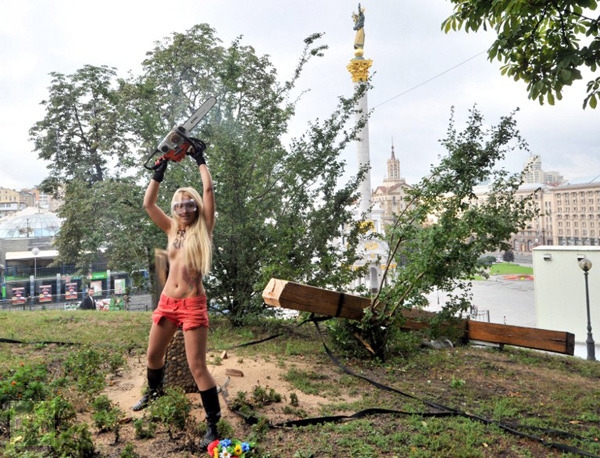
Haven’t we had about enough of this? In the words of some TV writers, this whole Pussy Riot episode is fake, fake, fake, fake and useful idiots all over the world fall for the script. When so called ‘celebrities’ like Madonna and Paul McCartney show their support, well, you know you’ve been had.
Overall, even the alternative media has failed to expose this blatant psyops. Check out Noor’s posts on this, here and here. Not everyone is fooled.
A fairly good summary comes from someone on the girl’s facebook page:
Freedom of speech is going into a Russian Orthodox Christian Church wearing KKK masks and denouncing Putin and Christianity? Really? What if some women went into a Synagogue in this country and sang some anti-semitic epithets? You better bet your Zionist owned ass that they would be tried as terrorists and disappeared into a Luciferian dungeon for the rest of their lives. This Pussy Riot stunt and the naked Ukrainian girl that chainsawed a Cross to the ground, is just Western backed agitation and BS propaganda. I’m all for free speech and women’s rights but this ain’t it. Ever since Putin kicked out the Jewish Oligarchs from Russia, the CIA/Mossad have been backing stunts like this. Don’t believe the hype. And Kasparov’s real name is Garik Weinstein, Zionist agent. And no culture that bases itself in a cesspit of Luciferianism, Propaganda, Pedophilia, Immorality and Insanity – all designed by Zionists who enjoy dumb goyim fighting amongst each other, will ever lead to a revolution that means anything. Only thing thing Pussy Riot will be good for is the headlining act at a FEMA Camp near you.
And from a comment here:
So obvious. The endless media coverage is of course the first tip off. Russia is standing in the way of certain designated “enemies”(Syria and Iran) and Israel and the US don’t appreciate it. Pussy Riot=obvious psy op.
And here:
The heavy sentence they received is probably the Russian’s way of sending a message to the people that they are not going to tolerate them siding with the US state department in an effort to destabilize the country. This is Putin after all. He’s making a point. And it’s probably not going to the missed by the others in Russia who are trying to help neo-liberalize the country and take them back to the Yeltsin years of corruption and pillaging the nation.
What really topped it off for me was the topless chain saw wielding Ukrainian girl cutting down a cross that was a memorial for those murdered and starved by Stalin’s bolshevik killers. One doesn’t have to be traditionally religious in the least to see it for what it is…an attack on true history that some would want us to forget.
We can understand the paid provocateurs. They do it for the money and the little fame it brings them. It’s the blind followers that are worrisome.
From Propaganda by Edward Bernays
The conscious and intelligent manipulation of the organized habits and opinions of the masses is an important element in democratic society. Those who manipulate this unseen mechanism of society constitute an invisible government which is the true ruling power of our country.
Small groups of persons can, and do, make the rest of us think what they please about a given subject.
There are invisible rulers who control the destinies of millions. It is not generally realized to what extent the words and actions of our most influential public men are dictated by shrewd persons operating behind the scenes.
Nor, what is still more important, the extent to which our thoughts and habits are modified by authorities.
Women are just as subject to the commands of invisible government as are men.
Unilateral sanctions on Iran to hurt Russia-US ties: Russian official
Xinhua – June 17, 2012
MOSCOW – Potential U.S.sanctions on Iran over its nuclear program will “deal a blow” to Russian-U.S. relations, a senior Russian official said Sunday, presuming a hard-line stance before the long-waited meeting of the heads of the two states.
Russian presidential aide Yury Ushakov told reporters that U.S. sanctions on Iran would “run against international law and affect third countries.”
Moscow could not accept if Russian firms and banks become potential victims of such unilateral actions from the U.S., Ushakov warned.
Russian President Vladimir Putin and U.S. President Barack Obama are to meet on the sidelines of the upcoming Group of 20 summit Monday in the Mexican city of Los Cabos.
The two leaders had agreed by phone in early May that they would meet for one and a half hours during the summit, Ushakov said, which would be the first since Putin returned to the top seat.
Putin’s absence from the Group of Eight summit last month in the United States and Obama’s no-show decision at an Asia-Pacific Economic Cooperation forum meeting in Russia’s Vladivostok in September augured a possible cool-down of the already soured Russia-U.S. relations amidst Putin’s tough words concerning the U.S.-led missile defense system in Europe.
A new round of talks between Iran and the six major world powers — Britain, China, France, Germany, Russia and the United States — is due on Monday in Moscow, a month after the last round of “six plus one” talks was held in the Iraqi capital Baghdad.
Featured Video
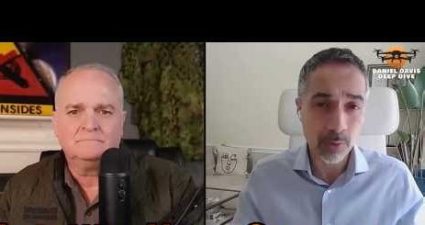
No Threat Can Force Iran’s Surrender /Trita Parsi & Lt Cl Daniel Davis
or go to
Aletho News Archives – Video-Images
From the Archives
An Expert Military Analysis of War with China
Actually, None is Necessary
By Fred Reed • Unz Review • December 13, 2020
The Correlation of Armed Forces: U.S. goods and services trade with China totaled an estimated $634.8 billion in 2019. Exports were $163.0 billion; imports were $471.8 billion. The U.S. goods and services trade deficit with China was $308.8 billion in 2019. Trade in services with China (exports and imports) totaled an estimated $76.7 billion in 2019. Services exports were $56.5 billion; services imports were $20.1 billion. The U.S. services trade surplus with China was $36.4 billion in 2019.
There is talk within the Washingtoniat of a possible war with China. Steve Bannon, who apparently was dropped on his head as a child, actually favors such a war. We hear the usual shoo-the-boobs alarm about how the Chinese are doing something terrible and we must gird our loins and American values and show them what for, bow wow, woof. The danger is that the current game of who-blinks-first in Asian waters might actually provoke a shooting war. You know the kind of thing: One warship refuses to get out of the way of another, a collision ensues, some retard lieutenant who signed up on waivers opens fire, and we’re off and running. It is not a good idea to let children play with matches.
The said war is discussed either in emotional terms by idiots or in purely naval terms by those familiar with such things, so we hear of the First Island Chain and the Second Island Chain and whose missiles against the other’s missiles and so on. This would be appropriate if we were fighting World War Two again. Which we aren’t. Let’s take a quick-and-dirty look at how such a war might go.
To begin the war, America would overestimate itself and underestimate China. This is doctrine in the Pentagon. … continue
Blog Roll
 Aletho News
- Theodore Postol: Iran’s Missiles & Drones Were Underestimated
- Iran To Target Military Industrial-Tech Complex That Facilitated Gaza Genocide
- Collapsing Empire: The Resistance Disarms ‘Israel’
- Suicide Should Not Be a Government Service
- Rethinking America’s greatest threat: Iran vs. Israel-Firsters
- Iran accuses adversaries of false flags to strain Turkey ties
- Poland rules out sending Patriot missiles to US/Israel amid war on Iran
- Tehran approves new Hormuz plan with major restrictions
- No Threat Can Force Iran’s Surrender /Trita Parsi & Lt Cl Daniel Davis
- UK’s New Pandemic Plan Would Turn Big Tech Into a Mass Location Tracking Network
- If Americans Knew
- Ann Coulter Rips Into Fox News for Iran War Coverage, Compares to False Rigged 2020 Election Reporting
- Joe Kent Urges Americans To Call White House and Congress To Object To Sending Troops Into Iran
- DNC Resolution to Reject AIPAC Funding Puts Democratic Leaders in the Hot Seat
- Swedish foundation to build 400 schools as over 650,000 Gaza children remain without education for 2 years
- Israeli army admits photshopping image of slain Lebanese journalist
- This is how Israel is systematically killing health workers under the cover of war in Lebanon
- Carrying life under fire: Israeli invasion of Lebanon leaves pregnant women facing deadly risks
- Champagne all around for the new death penalty (for Palestinians) law – Not a ceasefire Day 172
- Why are Palestinian books struggling to be seen on Amazon?
- The Line Between Affinity and Conspiracy
- No Tricks Zone
- New Study Finds Warming Saves Lives…Cold Temperatures 12 Times More Deadly Than Excess Heat
- German Science Blog Accuses PIK Climate Institute Of Hallucinating Climate Tipping Points
- Devastating Assessment Of Comirnaty Vaccine By Former Senior Pfizer Europe Toxicologist
- New Study: CO2 Is ‘Effectively Negligible’ As An Explanatory Climate Change Factor Since 2000
- Former Pfizer Toxicologist Dr. Helmut Sterz Tells Bundestag Hearing Pfizer Vaccine Should Have Never Been Approved
- Energy Expert: Germany’s Nuclear Phaseout Was A “500 Billion Euro Mistake”
- New Research: South Australia’s Mid-Holocene Sea Surface Temperatures Were 4°C Warmer Than Today
- Storing Green Energy To Last Germany 10 Days Would Require A 60-Million Tonne Battery
- New Studies: UK Sea Levels Were 4 Meters Higher Than Today During The Mid-Holocene
- Destructive Green New Deal: German Energy And Metal Group Warns Of Drastic Crisis
 Aletho News