The myth of Assad, ISIL and extremism
By Sharmine Narwani | RT | October 7, 2014
Who is to blame for the proliferation of extremist groups in Syria? The West often points a finger at Assad and his allies, but two secret US documents tell a different story.
It is difficult to find US officials directly claiming that Syrian President Bashar al-Assad is in league with the Islamic State of Iraq and the Levant (ISIL), but you will find plenty who will allude to it using specious reasoning:
US Secretary of State John Kerry is one of many who have sought to encourage this narrative:
“There is evidence that Assad has played footsie with them (ISIL), and he has used them as a tool of weakening the opposition. He never took on their headquarters, which were there and obvious, and other assets that they have. So we have no confidence that Assad is either capable of or willing to take on ISIL.”
That logic forms the basis of several key arguments used by Syria’s opponents to suggest a covert and symbiotic relationship between the Syrian government and Islamist extremists. They go something like this:
• Assad encouraged the growth of militants to create an either-or dilemma for Syrians who want him deposed, but who fear “what comes next.”
• Assad released militants from prison in 2011 so that they would overwhelm secular moderates.
• Proof of this is that the Syrian Army does not attack ISIL targets.
• Assad has a close history with militants – he sent hundreds over the border into Iraq to join the insurgency against US forces and is now suffering blowback.
But as a global confrontation with ISIL mounts, an entirely different picture has begun to emerge. The US-led coalition’s five Arab Sunni partners are providing little less than fig-leaf cover for airstrike operations. NATO has been unable to wrest – to date – a commitment from Turkey to enforce serious border security to stop militants from crossing over into Iraq and Syria. In recent weeks, Western media has unleashed a flurry of articles pointing to Qatar’s role in funding extremists.
Clearly, America’s Sunni Arab and Turkish allies are approaching the “ISIL Project”’ with something less than enthusiasm.
On Thursday, US Vice President Joe Biden let the cat out of the bag. During a speech at Harvard University, Biden told his audience:
“Our allies in the region were our largest problem in Syria. The Turks… the Saudis, the Emiratis, etc. What were they doing? They were so determined to take down Assad and essentially have a proxy Sunni-Shia war, what did they do? They poured hundreds of millions of dollars and tens, thousands of tons of weapons into anyone who would fight against Assad except that the people who were being supplied were al Nusra and al Qaeda and the extremist elements of jihadis coming from other parts of the world … we could not convince our colleagues to stop supplying them.”
He, of course, failed to mention Washington’s own arming, training and funding activities coordinated with these very same allies. Predictably, Biden was forced to “apologize” for his undiplomatic comments over the weekend.
But just last month, during a hearing in the US Senate for Chairman of the Joint Chiefs of Staff General Martin Dempsey, Senator Lindsey Graham asked: “Do you know of any major Arab ally that embraces ISIL?”
To the surprise of many, Dempsey countered: “I know of major Arab allies who fund them.”
The revelations keep flowing from once tight-lipped Western sources. According to US news reports, current and former officials now say wealthy Gulf donors are the source of early funding:
“These rich individuals have long served as ‘angel investors’ for the most violent militants in the region, providing the ‘seed money’ that helped launch ISIS and other jihadi groups… Former U.S. Navy Admiral and NATO Supreme Commander James Stavridis says the cash flow from private donors is significant now and was even more significant in the early fund-raising done by ISIS and al Qaeda’s affiliate in Syria, the al-Nusra Front,” NBC’s Robert Windrem wrote in an article.
And on Saturday, the UK’s former Assistant Chief of the Defense Staff General Jonathan Shaw, who specialized in counter-terrorism and security policy and retired in 2012, told The Telegraph :
“This is a time bomb that, under the guise of education, Wahhabi Salafism is igniting under the world really. And it is funded by Saudi and Qatari money and that must stop.”
The ‘Assad-has-encouraged-extremism’ argument
Has the Syrian government exploited extremism while at the same time fighting a three-year nationwide military campaign to thwart it? Perhaps. Politics are opportunistic by nature.
But the narrative about Assad encouraging Islamist militancy has always failed to note the historic role of armed Islamists in Syrian “rebellions.”
A US Defense Intelligence Agency (DIA) document that was declassified in 2012 provides a starkly different reading of events leading up to the controversial “Hama massacre” of 1982. It tells a story remarkably similar to events in Syria beginning in early 2011. Here is a montage of quotes from the document:
“In early 1979, encouraged by the Islamic Revolution in Iran, the Syrian Muslim Brotherhood developed a plan to trigger a similar popular revolution in Syria to oust (Hafez) Assad. The massacre of 50 Alawite cadets, on 16 June 1979 at the Artillery School in Aleppo, signaled the start of the MB offensive.”
The Syrian MB regroups for a “new round of fighting” in late 1980, announces the formation of an “Islamic Front”’ and increases cooperation with the Sunni (Baathist) government of Iraq which had helped the MB covertly in 1979-80 to oust Assad.
“The plan, apparently developed by the leadership of the Syrian MB and probably coordinated with Iraq, centered on two complementary actions. The first was a full-scale revolt by the city of Hama, a traditional Brotherhood stronghold and the location of its covert headquarters in Syria. Once this rebellion was unleashed, similar uprisings were to take place in Aleppo, Damascus and other major cities, accompanied by a general strike designed to paralyze Syria…”
“Simultaneously, a sophisticated worldwide propaganda campaign was to be launched supporting the rebellion and emphasizing its victories and the wholesale desertion of Army units to the rebel side. Press releases were to be made in Europe and the US, while propaganda broadcasts against Syria were to be carried by the Phalange-controlled Voice of Lebanon and the Iraqi-controlled Voice of Arab Syria.”
“At least 100 militants were transported from Jordan, where they had taken refuge, into Iraq where they probably received training prior to their movement into Syria… Sometime after this, the infiltration of ‘Secret Apparatus’ militants began from staging areas in Iraq, and to a lesser degree from Turkey, where others had fled. During the interim period, a number of terrorist bombings and shootings took place in Syria to demonstrate the Brotherhood/dissident Alawites ability to strike at the government.”
“As a result of Syrian security actions, the MB was forced to prematurely unleash the Hama rebellion with the hope that it might spark widespread fighting in other cities… The rebellion would also force the Damascus government to become even more oppressive. The Brotherhood leadership believed this would, in turn, cause greater alienation of the Assad government from the Sunni Muslim majority and within the Alawite community.”
“On February 2, following a clash between the MB and Syrian security forces, the loudspeakers atop the mosque minarets in Hama called on the people to begin a Jihad (Holy Struggle) against the government. The appeal also told the people that arms were available at specified mosques. At about the same time, teams of the MB’s ‘Secret Apparatus,’ some in army uniforms, moved to attack preselected government targets in the city.”
“Despite the propaganda reporting, the uprising in Syria had never spread outside of Hama, although some limited bombings had taken place in Damascus and elsewhere… The total casualties for the Hama incident probably number about 2,000. This includes an estimated 300-400 of the Muslim Brotherhood’s elite ‘Secret Apparatus’… The Syrian dissidents’ modus operandi will continue to be terrorism, particularly bombings and assassinations.”
WikiLeaks: Syria’s government and terrorism
On February 24, 2010, a Cable classified as ‘Secret’ was dispatched from the US Embassy in Damascus to the CIA, DIA, National Security Council, Joint Chiefs of Staff, Office of Homeland Security and a smattering of key US embassies in the Middle East and Europe.
It details the communications between Syria’s General Intelligence Director (GID) Ali Mamlouk who dropped in on a meeting between Syria’s Vice Foreign Minister Faisal al-Miqdad and a US delegation, headed by State Department Coordinator for Counterterrorism Daniel Benjamin.
The participants discuss possible future security and intelligence cooperation on issues related to terrorism, particularly on the Syria-Iraq border.
What is notable about this US-framed communiqué is that the American delegation does not take any of the Syrian officials in the room to task for “encouraging and coordinating” the passage of extremist fighters from Syria into Iraq to participate in an insurgency against US forces. This accusation has become a key narrative advanced by Washington in recent years, so why not challenge the Syrians face-to-face when the opportunity is there?
According to the Cable, Benjamin says “the two countries should still work to cooperate on immediate threats facing both the U.S. and Syria, including the proliferation of takfiri groups in the region, such as al-Qaeda, and stopping the flow of foreign fighters into Iraq.”
The Syrian response? According to the US Cable:
“Mamlouk said the foreign fighters come from a large number of Arab and Muslim countries and that the Syrians detain ‘large numbers plus their local facilitators.’ As an example, Mamlouk said he handed over 23 Saudis detained in Syria to Saudi Prince Muqrin last year.”
The US delegation even acknowledges the fact that the Syrians have been helpful:
“Benjamin commended Mamlouk on reducing the flow of foreign fighters, while encouraging further progress.”
And the Syrians offer additional cooperation, provided that Damascus takes the lead in these efforts:
“Miqdad interjected that the issue of foreign fighters using Syrian soil is a matter of national security for Syria. ‘We have zero tolerance,’ he said. Miqdad said Syria needs the cooperation of other countries, namely those from which the terrorists are coming. ‘If we can close this circle – with us, you, and other countries – we will succeed,’ he concluded.”
The Cable does reveal some interesting information about Syrian strategies in dealing with terrorism, which Mamlouk says differs considerably from the American approach:
“The GID Director said Syria had been more successful than the U.S. and other countries in the region in fighting terrorist groups because ‘we are practical and not theoretical.’ He stated Syria’s success is due to its penetration of terrorist groups. ‘In principle, we don’t attack or kill them immediately. Instead, we embed ourselves in them and only at the opportune moment do we move.’ Describing the process of planting embeds in terrorist organizations as ‘complex,’ Mamlouk said the result had yielded been the detention of scores of terrorists, stamping out terror cells, and stopping hundreds of terrorists from entering Iraq.
Mamlouk acknowledged some terrorists were still slipping into Iraq from Syria. ‘By all means we will continue to do all this, but if we start cooperation with you it will lead to better results and we can better protect our interests,’ he concluded.”
War of words
The tactics described by Mamlouk explain, in part, why Syrian forces today do not typically launch assaults on terrorist groups unless there is an immediate and direct threat to its military strategy of maintaining control over key areas and disrupting rebel supply lines.
While groups like ISIL are viewed as a security threat, they have not always posed an imminent one.
For the better part of the Syrian conflict, ISIL has not controlled the “priority zones” of the Syrian Army.
Those areas have always been Damascus, Aleppo, Homs, Hama and their surrounding countryside (Rif), with Quseir and Qalamoun, Daraa, Tal Kalakh and other border towns playing an important role. When ISIL fighters have been present in those areas, the Syrian Army has fought them – as in Qalamoun and the Damascus suburbs.
In early 2014, pro-opposition writer and researcher A.J. Tamimi questioned in detail accusations of collaboration between the Syrian government and ISIL/al Nusra. Among his many points, Tamimi notes:
“One must ask what the regime would gain strategically by constantly bombing ISIS strongholds in Raqqa province, or ISIS strongholds elsewhere, for that matter, located far beyond the frontlines. As in the wider east of Syria, the regime lacks ground forces to launch an offensive to retake any territory in Raqqa province, and must depend on airlifts from elsewhere to maintain its remaining airbases. Hence, the regime is focusing its airstrikes where it has some real expectations of advancing: most notably in Aleppo city.”
Nevertheless, the Syrian air force did take immediate action when ISIL escalated in Mosul in June, which changed the geopolitical dynamic well beyond the Syrian-Iraqi border. Kerry is misleading when he suggests that Assad will not strike ISIL headquarters: this is about timing and gains from both a military and political perspective – not necessarily a response that trigger-happy Americans can understand.
As for accusations that the Syrians have released militants from their prisons to “populate” ideologically extremist rebel groups that will make Assad look like an angel… You can’t have it both ways – political prisoner releases were initiated to defuse conflict and demonstrate leniency. Were some of these prisoners “extremists” of the variety that man Islamist rebel groups? Almost certainly. But that was the Sunni constituency that the Syrian government was also trying to placate in the early days.
Even today, after grueling “reconciliation” negotiations, the Syrian government is allowing these very rebels to “go free” after they lay down their arms – this, according to volunteers involved in negotiations from Homs to Rif Damascus. What is to stop these same “reformed rebels” from hopping over to al-Raqqa and taking up bigger arms? Should the Syrian government kill them instead? How does one win in a situation like this?
Critics of Syria’s prisoner releases should be reminded of the “Big One” carried out by the Americans in 2009 when they allegedly freed future ISIL ‘Caliph’ Abu Bakr al-Baghdadi from an Iraqi prison.
Does anyone have the right to point fingers after that monumental gaff? The fact is – from Saudi Arabia to Qatar, from Turkey to the United States, from Iraq to France – there appears to be plenty of complicity in fueling ISIL and the jihadi phenomenon. Is Syria complicit too? It depends who is asking – and why.

Sharmine Narwani is a commentator and analyst of Middle East geopolitics. She tweets @snarwani
US prepares military drill in W. Ukraine for mid-September
RT | September 3, 2014
The US and its allies are preparing to stage a military exercise in western Ukraine, close to the Polish border, in mid-September. The joint drill will involve over 1,000 troops from the US and Europe, as well as from Ukraine.
Initially planned for mid-July, the exercise – code-named ‘Rapid Trident’ – was halted due to a significant escalation in the conflict between Kiev and the southeastern regions of Ukraine.
Now, as the fighting between the two sides continues, the US Army’s European Command (EUCOM) plans to go ahead and stage the exercise on September 16-26.
“At the moment, we are still planning for [the exercise] to go ahead,” US Navy Captain Gregory Hicks, spokesman for EUCOM, announced on Tuesday.
The annual exercise will take place at Yavoriv training center in the city of Lvov, near Ukraine’s border with Poland.
Around 200 US personnel will be involved in the drill, as well as 1,100 others from Ukraine, Azerbaijan, Britain, Canada, Georgia, Germany, Latvia, Lithuania, Moldova, Norway, Poland, Romania, and Spain, EUCOM said.
In addition to staging air force exercises, the United States is moving tanks and 600 troops to Poland and the Baltic states of Estonia, Latvia, and Lithuania for joint maneuvers in October, Reuters reports. The new deployment will replace a more lightly armed force of paratroopers.
Rapid Trident 2014 is designed to “promote regional stability and security, strengthen partnership capacity and foster trust while improving interoperability between the land forces of Ukraine, and NATO and partner nations,” according to the US Forces in Europe website.
The exercise will be mainly focused on command post drills, patrolling, and dealing with improvised explosive devices.
Despite the involvement of many NATO members, Rapid Trident is not formally a NATO drill.
The Ukrainian-American exercises have taken place in Lvov since 2006 under the framework of NATO’s broader ‘Partnership for Peace,’ which Ukraine is part of.
This year’s drill will mean the first significant deployment of US troops and other personnel to Ukraine since the crisis erupted.
Last year’s Rapid Trident, which focused on “airborne and air-mobile infantry operations,” according to a report on the Rapid Trident website, brought together 17 NATO countries for joint exercises.
The announcement comes just two days before the NATO 2014 summit is set to open in Wales. The alliance’s expansion to Eastern Europe is expected to become one of the main discussions and the 28-member bloc expects, despite internal opposition, to agree on the “more visible NATO presence in the East.”
The White House said the US and its allies are set to discuss plans to significantly increase the readiness of NATO response forces.
White House spokesman Josh Earnest told reporters that the meetings within the summit are expected to involve discussions on potential trainings, exercises, and other issues regarding infrastructure and other needs in Eastern Europe.
Back in June, US President Barack Obama pledged to invest $1 billion in stepping up America’s military presence in Eastern Europe amid the Ukraine crisis. Also that month, Washington vowed additional military help to Ukraine, as well as the potential training of its law enforcement and military personnel.
Liberals’ darling Elizabeth Warren defends Israeli attacks on Gaza schools and hospitals
RT | August 29, 2014
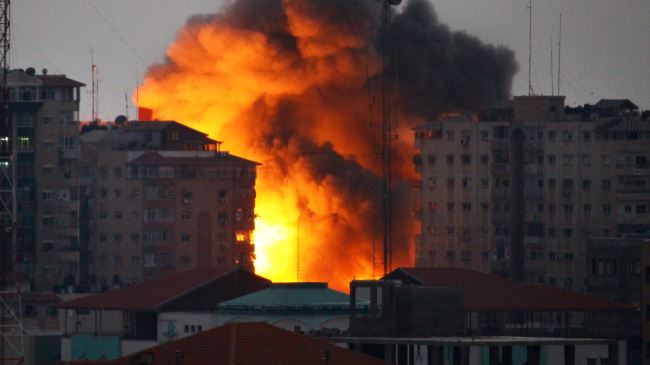
Israel has the right to shell Palestinian hospitals and schools out of self defense as long as Hamas stores rocket launchers next to them, US Sen. Elizabeth Warren said during a town hall meeting in Massachusetts this week.
Warren, darling du jour of American liberals, defended her vote to send more defense funding to Israel in the middle of its recent fierce offensive on Gaza, saying she believes civilian casualties are the “last thing Israel wants,” according to the Cape Cod Times.
“But when Hamas puts its rocket launchers next to hospitals, next to schools, they’re using their civilian population to protect their military assets. And I believe Israel has a right, at that point, to defend itself,” she said.
Israel and Palestinian authorities reached a long-term ceasefire agreement this week after Israel started its campaign in Gaza on July 8. The death toll from the Gaza conflict has reached at least 2,120 people, of which 577 are children, according to the Palestinian Health Ministry.
During the conflict, Israel targeted schools and hospitals in Gaza, claiming that rockets and militant fighters were nearby. The United Nations Relief and Works Agency criticized both Hamas for storing rockets in two schools and Israel for attacks on separate schools.
Attacks on hospitals are prohibited by the Geneva Convention’s Protection of Civilian Persons in Time of War “unless they are used to commit, outside their humanitarian duties, acts harmful to the enemy.” Even then, civilian hospitals can only be targeted “after due warning has been given, naming, in all appropriate cases, a reasonable time limit and after such warning has remained unheeded.”
Warren said Hamas has attacked Israel “indiscriminately.” Thanks to Israel’s vaunted Iron Dome defense system, though, those rockets have “not had the terrorist effect Hamas hoped for.”
Warren supported Israel’s military aggression, justifying its use of force based on America’s “very special relationship with Israel.”
“Israel lives in a very dangerous part of the world, and a part of the world where there aren’t many liberal democracies and democracies that are controlled by the rule of law,” she said. “And we very much need an ally in that part of the world.”
Warren also expressed unease with conditioning future US funding for Israel on the cessation of Israeli settlements in the West Bank.
“I think there’s a question of whether we should go that far,” Warren said.
Last month, UN High Commissioner for Human Rights said Israel may have committed war crimes in Gaza. Navi Pillay said house demolitions and the killing of children raise the “strong possibility” that Israel is violating international law.
More than 17,000 homes in Gaza were destroyed or damaged beyond repair, making around 100,000 Palestinians homeless, since the war began, according to UN estimates.
According to a senior UN Children’s Fund (UNICEF) official, 373,000 Palestinian children are in need of “immediate psychosocial first aid” due to the onslaught of Israeli strikes.
“The impact has truly been vast, both at a very physical level, in terms of casualties, injuries, the infrastructure that’s been damaged, but also importantly, emotionally and psychologically in terms of the destabilizing impact that not knowing, not truly feeling like there is anywhere safe place to go in Gaza,” Pernilla Ironside said last week.
UNICEF estimated that at least 219 schools have been damaged by Israeli airstrikes, while 22 were completely destroyed.
To demonstrate the extent of the damage in Gaza, Ironside estimated that it could take up to 18 years to rebuild the 17,000 housing units that were damaged in the conflict and in light of the ongoing blockade of the region limiting the movement of goods and people.
Israel has also barred major human rights organizations from entering Gaza territory.
Meanwhile, back in the United States, US Sen. Bernie Sanders, American liberals’ other favorite among establishment progressive politicians, has also defended US funding and arms for Israel. At a recent tense town hall in his native Vermont, Sanders condemned Israeli targeting of civilians, but then defended Israel “in a situation where Hamas is sending missiles into Israel” sent from “populated areas.”
“This is a very depressing and difficult issue. This has gone on for 60 bloody years,” he said. “If you’re asking me, do I have a magical solution? I don’t. And you know what, I doubt very much that you do.”
Ron Paul: US ‘hiding truth’ on downed Malaysian Flight MH17
By Robert Bridge | RT | August 10, 2014
Former Congressman Ron Paul said the US knows ‘more than it is telling’ about the Malaysian aircraft that crashed in eastern Ukraine last month, killing 298 people on board and seriously damaging US-Russian relations in the process.
In an effort to inject some balance of opinion, not to mention pure sanity, into the ongoing debate over what happened to Malaysian Flight MH17, Ron Paul is convinced the US government is withholding information on the catastrophe.
“The US government has grown strangely quiet on the accusation that it was Russia or her allies that brought down the Malaysian airliner with a Buk anti-aircraft missile,” Paul said on his news website on Thursday.
Paul’s comments are in sharp contrast to the echo chamber of one-sided opinion inside Western mainstream media, which has almost unanimously blamed anti-Kiev militia for bringing down the commercial airline. Incredibly, in many cases Washington had nothing to show as evidence to incriminate Russian rebels aside from references to social media.
“We’ve seen that there were heavy weapons moved from Russia to Ukraine, that they have moved into the hands of separatist leaders,” said White House spokesman Josh Earnest. “And according to social media reports, those weapons include the SA-11 [Buk missile] system.”
In another instance, State Department spokeswoman Marie Harf told reporters “the Russians intend to deliver heavier and more powerful rocket launchers to the separatist forces in Ukraine, and have evidence that Russia is firing artillery from within Russia to attack Ukrainian military positions.” When veteran AP reporter Matthew Lee asked for proof, he was to be disappointed.
“I can’t get into the sources and methods behind it,” Harf responded. “I can’t tell you what the information is based on.” Lee said the allegations made by the State Department on Ukraine have fallen far short of “definitive proof.”
Just days after US intelligence officials admitted they had no conclusive evidence to prove Russia was behind the downing of the airliner, Kiev published satellite images as ‘proof’ it didn’t deploy anti-aircraft batteries around the MH17 crash site. However, these images have altered time-stamps and are from the days after the MH17 tragedy, the Russian Defense Ministry revealed, fully discrediting the Ukrainian claims.
In yet another yet-to-be explained event, Russian military detected a Ukrainian SU-25 fighter jet approaching the MH17 Boeing on the day of the catastrophe. No acceptable explanation has ever been given by Kiev as to why this fighter aircraft was so close to the doomed passenger jet moments before it was brought down.
“[We] would like to get an explanation as to why the military jet was flying along a civil aviation corridor at almost the same time and at the same level as a passenger plane,” Russian Lieutenant-General Andrey Kartopolov demanded days after the crash.
Paul has slammed the United States government for its failure to provide a single grain of evidence to solve the mystery of the Malaysian airliner despite its arsenal of surveillance technologies at its disposal.
“It’s hard to believe that the US, with all of its spy satellites available for monitoring everything in Ukraine, that precise proof of who did what and when is not available,” the two-time presidential candidate said.
“Too bad we can’t count on our government to just tell us the truth and show us the evidence,” Paul added. “I’m convinced that it knows a lot more than it’s telling us.”
Although no sufficient evidence has been presented to prove that the anti-Kiev militia was responsible for the downing of the international flight, such an inconvenient oversight has not stopped the United States and Europe from slapping economic sanctions and travel bans against Russia.
Moscow hit back, saying it would place a ban on agricultural imports from the United States and the European Union. Russia’s tit-for-tat ban will certainly be felt, as food and agricultural imports from the US amounted to $1.3 billion last year, according to the US Department of Agriculture. In 2013, meanwhile, the EU’s agricultural exports to Russia totaled 11.8 billion euros ($15.8 billion).
After the crash, Ron Paul was one of a few voices calling for calm as US officials were pointing fingers without a shred of evidence to support their claims. Paul has not been afraid to say the painfully obvious things the US media, for any number of reasons, cannot find the courage to articulate.
“They will not report that the crisis in Ukraine started late last year, when EU and US-supported protesters plotted the overthrow of the elected Ukrainian president, Viktor Yanukovych,” Paul said. “Without US-sponsored ‘regime change,’ it is unlikely that hundreds would have been killed in the unrest that followed. Nor would the Malaysian Airlines crash have happened.”
Paul also found it outrageous that Western media, parroting the government line, has reported that the Malaysian flight must have been downed by “Russian-backed separatists,” because the BUK missile that reportedly brought down the aircraft was Russian made.
“They will not report that the Ukrainian government also uses the exact same Russian-made weapons,” he emphasized.
UN: ‘Scared of the way Kiev conducts military operation in E. Ukraine’
RT | August 6, 2014
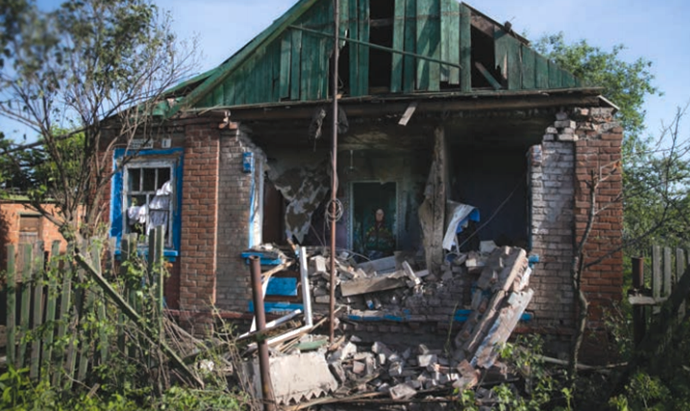
The UN has expressed its major concern over the plight of the eastern Ukrainian territories and their soaring numbers of refugees. There are 118,000 internally displaced people, and 740,000 have fled to Russia during the crisis.
“What we are scared about is the way the military operations are conducted. What will happen if we have intense fighting inside the big urban centers of Lugansk and Donetsk? Fighting in highly intensified urban areas could lead to massive exodus and massive destruction,” UN High Commissioner for Refugees Vincent Cochetel stated on Tuesday.
Almost 4 million people live in a region that has been the hardest-hit by violence, and “face imminent security threats from the fighting,” which has also led to massive damage to infrastructure and the interruption of power and water supplies, John Ging, the head of UN’s Office for Coordination of Humanitarian Affairs, stated.
Donetsk and Lugansk are home to 1.5 million people, and the water supply there has diminished to being only available for a few hours a day. Medical supplies also dangerously low.
Another major concern is that around 70 percent of medics have fled the area.
Currently, 118,000 internally displaced people are registered in Ukraine, with 87 percent of them having fled the east of the country, according to UN data. Over 1,000 people are reportedly leaving the conflict zone each day.
Those numbers can’t be viewed as comprehensive, as “many Ukrainians left their homes without officially registering with the Ukrainian authorities or not addressing them directly.”
740,000 refugees have arrived in Russia since the beginning of this year, according to Russian and UN estimates.
At least 1,367 people, civilians and military, have been killed and 4,087 people wounded by fighting in eastern Ukraine since mid-April.
Ging drew attention to the issue of civilian evacuation from areas affected by the military conflict.
Humanitarian corridors are “open for several hours each day, but these are regularly blocked by combatants, and the evacuation of people through these channels is impeded.”
The UN also demanded that Kiev stops taking customs fees from the humanitarian aid that arrives in the country, and also simplify UN employees’ access into Ukraine.
Moreover, “a unified system is necessary to register the internally displaced persons, a system that will allow to fully analyze and understand the people’s needs,” Ging stated.
“Humanitarian aid should be free of customs payments. Apart from that, it is necessary to accelerate the process of signing and ratifying the agreement between the UN and the government about the simplification of the entry to the country for humanitarian workers and the import of loads,” the official added.
The key component of UN plans to provide humanitarian aid is preparation for the winter when freezing temperatures will prevail.
“We need to assure that all the necessary efforts are taken to address the consequences of the coming winter – which is expected to be severe – for the forcibly displaced people,” Ging stressed.
Drone memo should reverse Gitmo convictions, attorneys claim
RT | July 3, 2014
Attorneys for a Canadian man who spent a decade detained by the United States military at Guantanamo Bay say details in the Obama administration’s recently released “drone memo” exonerates their client of war crimes.
Omar Khadr was only 15 years old when he was captured by American forces in Afghanistan in 2002 and taken to the Bagram Air Base, then Guantanamo, where he later pleaded guilty to murder in violation of the laws of war — according to military prosecutors, Khadr tossed a grenade that killed Sgt. Christopher Speer.
After being transferred to Canadian custody in 2012, Khadr said he pleaded guilty to war crimes because he was “left with a hopeless choice” of either accepting the charges or risk facing “continued abuse and torture” at the hands of his Gitmo jailers.
But in a recent court filing [PDF], lawyers for Khadr, now 27, say a just-published US Department of Justice memorandum contains information that directly challenges the American government’s case against their client.
Khadr’s attorneys wrote this week that the secret “drone memo” released by the White House last month — the DOJ document that the government relied on to justify the 2010 drone strike in Yemen that killed American citizen and suspected AL-Qaeda member Anwar Al-Awlaki — suggests prosecutors had no place to charge the Canadian teenager with murder in violation of the laws of war after he allegedly killed an American soldier during a firefight in Afghanistan.
The DOJ memo itself was a penned by the department’s Office of Legal Counsel in response to the question of whether Central Intelligence Agency officers — who are not members of the US military — can be blamed for war crimes by launching drone strikes. The memo was written in July 2010, and justified the strike that later that year killed Al-Awlaki.
According to a footnote within the memo, released June 24 of this year due to a Freedom of Information Act lawsuit, “lethal activities conducted in accordance with the laws of war, and undertaken in the course of lawfully authorized hostilities, do not violate the laws of war by virtue of the fact that they are carried out in part by government actors who are not entitled to the combatant’s privilege.”
“That completely blows away one of the major prongs of the government’s theory in all these Guantanamo cases,” Sam Morison, Khadr’s Pentagon-based lawyer, told The Canadian Press during an interview on Wednesday this week.
Although Khadr was charged with violating the “US common law of war” that dates back centuries, his attorneys say the memo concerning CIA drone strikes suggest such legislation simply doesn’t exist.
“The whole purpose…was to evaluate whether the CIA agents were violating the law,” Morison said. “The only reasonable interpretation of that analysis is that there is no such thing (as the common law of war).”
On Monday this week, Morrison and the rest of Khadr’s legal counsel, filed a motion in Guantanamo’s appeals court asking that the conviction against their client be vacated.
“The Americans made up serious charges that they knew were false,” Dennis Edney, a Canadian based lawyer for Khadr, told the Toronto Star this week. “It’s a complete violation of everything we understand about justice.”
Should Khadr’s attorneys succeed, then a number of cases pertaining to current or former Guantanamo detainees accused of war crimes could be called into question. According to Human Rights Watch, however, only six of the 149 detainees at Gitmo face any formal charges — fewer than the number of prisoners who have died while held there in military custody.
Netanyahu endorses Kurdish independence citing chaos in Iraq
RT | June 29, 2014
Citing the “collapse” of Iraq amid the ISIS insurgency and sectarian violence, Israeli Prime Minister Benjamin Netanyahu has endorsed the de-facto independence of Iraqi Kurds. Netanyahu has also called to support the “Kurdish aspiration for independence.”
The hawkish Israeli leader said on Sunday that Kurds are “fighting people that has proved its political commitment, political moderation, and deserves political independence,” Reuters reported.
Speaking to Tel Aviv University’s INSS think-tank, Netanyahu described the situation in Iraq and the Middle East in general as a “collapse,” due to strife between Sunni and Shiite Muslims.
Amid the recent insurgency of the Islamic State in Iraq and the Levant (ISIS/ISIL) militants, Kurds have seized the opportunity to bring a long-sought independent state of Kurdistan closer to reality. Kurdish Peshmerga armed forces have been guarding their provincial borders from ISIS, but also seized the contested Iraqi city of Kirkuk, proclaiming it part of their territory.
Now, in an apparent clash against the international community’s support of a united Iraq, the Israeli leader has called to back the de-facto independence of Kurds.
“We should… support the Kurdish aspiration for independence,” Netanyahu was quoted as saying.
‘US a warzone’: Police deploy heavy armor in America
RT | June 9, 2014
From the streets of Fallujah to Franklin, Indiana, heavily armored military vehicles have been rolled out for one and the same reason: many police officers in the US believe there’s a war going on.
Franklin, Indiana is by all accounts the idyllic Midwestern American town. Eponymously named after one of the founding fathers and “the first American,” Franklin’s small town bona fides provided Life Magazine with a Norman Rockwell-esque scene for a bit of village life utopia in the heart of the Great Depression.
But if you were to talk to local law enforcement, a battle is raging in the streets of Mayberry.
Franklin is the county seat of Johnson Country, Indiana. Speaking with Mark Alesia from The Indianapolis Star, Sheriff Doug Cox described the 139,000-strong administrative district as a place where officers’ old-time policing just doesn’t cut it anymore.
Leading Alesia to a pole barn in Franklin, Cox shows him a MRAP – a 55,000 pound, six-wheeled Mine-Resistant Ambush Protected armored-fighting vehicle with the word “SHERIFF” emblazoned on its flank.
“We don’t have a lot of mines in Johnson County,” confessed Sheriff Doug Cox, who acquired the vehicle. “My job is to make sure my employees go home safe.”
Cox isn’t alone in believing his deputies have something to fear. Johnson County is one of eight Indiana law enforcement agencies to acquire MRAPs from military surplus since 2010, according to public records obtained by The Indianapolis Star.
All across the state, and the country, the trend is similar. From picking up military surplus to using to $35 billion in grants from the Department of Homeland Security to acquire the most advanced weapons, police forces across America are armed to the teeth.
And as Pulaski County Sheriff Michael Gayer puts it, the effects are not only tactical, but psychological.
To put it bluntly: “It’s a lot more intimidating than a Dodge.”
Pulaski, mind you, is a county of roughly 13,000 people. The question of whether civilians need to be intimidated like that depends on your perspective, and as far as Gayer sees things, America is a battlefield and the police are akin to an occupying force.
“The United States of America has become a war zone,” he said. “There’s violence in the workplace, there’s violence in schools and there’s violence in the streets. You are seeing police departments going to a semi-military format because of the threats we have to counteract. If driving a military vehicle is going to protect officers, then that’s what I’m going to do.”
‘What if it were your kid’
The militarization of America was covered in a recent Vice.com documentary, entitled: ‘Here’s What Happens When Hackers Send a SWAT Team to Your House.’
Danny Gold heads to Somerset County, New Jersey, what he describes as “one of the wealthiest counties in the US.”
Sgt. Edward Ciempola, commander of the county SWAT team, boasts of a Lenco BearCat Ballistic Engineered Armored Response Counter Attack Truck, which he says they use on “every call out.”
With infrared cameras in stock and other military grade hardware, Gold asks Ciempola one simple question: in a quiet, relatively crime-free area, is all of this hardware really necessary?
“I would ask somebody that maybe suffered a loss because of not having this service and I would ask them the answer to that question,” Ciempola said.
“I would say, well, the SWAT team wasn’t available when you really needed it or a police officer wasn’t available when you really needed it, or an ambulance didn’t get there when you really needed it. How does that make you feel? And if your child’s school was suddenly under attack by some random actors, do you want them coming (points to SWAT team) to help your kid or do you want no one to show up?”
Despite the fears of Ciempola and Gayer, in a 2012 Department of Justice report, violent crime had declined by 72 percent from 79.8 to 22.5 per 1,000 persons age 12 or older since 1993. And yet, what’s happening in places like Franklin and Somerset County are the exception rather than the rule.
Writing for the Huffington Post, Radley Balko noted the disturbing trend in SWAT team growth across the country.
He argues that SWAT teams in municipalities with populations between 25,000 and 50,000 have “increased by more than 300 percent between 1984 and 1995.”
By 1995, nearly 90 percent of cities with 50,000 or more people had a SWAT team. In 2000, 75 percent of towns with 25,000 to 50,000 people had their own SWAT teams as well. And those paramilitary units are not sitting idly by.
Citing Peter Kraska, a criminologist at Eastern Kentucky University, Balko says the total number of SWAT raids in America has increased exponentially, from just a few hundred per year in the 1970s, to a few thousand by the early 1980s, to around 50,000 by the mid-2000s.
According to the American Civil Liberties Union (ACLU), “disproportionately those in poor communities and communities of color – have become targets for violent SWAT raids, often because the police suspect they have small amounts of drugs in their homes.”
And with the SWAT teams comes the military hardware. In Keene, New Hampshire, a town with two murders since 2009, officials accepted a $285,933 grant from the Department of Defense in 2012 to purchase a BearCat. In Columbia, South Carolina, a MRAP which can be equipped with a 50-caliber machine gun was picked up in 2013. In the sleepy town of Roanoke Rapids, North Carolina – a town of 16,000 people, police got their hands on their own Humvees and MRAPs, which they went on to display at a car show.
According to March report in USA Today co-written by US Representative Hank Johnson, the following counties “have acquired free MRAPs from US war zones”:
McLennan and Dallas Counties in Texas; Boise and Nampa Counties in Idaho; Indiana’s West Lafayette, Merrillville, and Madison Counties in Indiana (not to mention Johnson); Minnesota’s St. Cloud and Dakota Counties in Minnesota; Warren and Jefferson Counties in New York; North Augusta and Columbia in South Carolina; Murfreesboro in Tennessee; Yuma in Arizona; Kankakee County in Illinois; and Calhoun County in Alabama.
Many of the vehicles were acquired through the 1033 program, a 1997 law which facilitated the transfer of military hardware to local police forces. But what appears to be free federal handouts could result in fundamentally changing the face of the United States.
“Americans should therefore be concerned, unless they want their main streets patrolled in ways that mirror a war zone,” Johnson lamented.
“We recognized that we’re not in Kansas anymore, but are MRAPs really needed in small-town America? Are improvised explosive devices, grenade attacks, mines, shelling and other war-typical attacks really happening in Roanoke Rapids, a town of 16,000 people? No.”
Johnson, a member of the House Armed Services and Judiciary Committees, announced he was introducing legislation to reform the 1033 program “before America’s main streets and civilian police militarize further.” The ACLU, meanwhile, has launched an investigation into the militarization of US police.
“The police officers on our streets and in our neighborhoods are not soldiers fighting a war. Yet many have been armed with tactics and weapons designed for battle overseas,” it said.
In 2013, ACLU affiliates in 25 states filed over 260 public records requests with law enforcement agencies to document the impact of excessively militarized policing on people, families, and communities.
But as Balko warns, vested interests are likely to keep pushing the police-industrial complex until America is on lockdown.
“A new industry appears to be emerging just to convert those grants into battle-grade gear,” he said.
“That means we’ll soon have powerful private interests, funded by government grants, who will lobby for more government grants to pay for further militarization — a police industrial complex.”
US admits sending ‘lethal aid’ to Syrian rebels
RT | June 8, 2014
Washington is supplying some Syrian rebels with both “lethal and non-lethal” aid, according to National Security Adviser Susan Rice, who confirmed the longstanding suspicion that the Obama administration is arming anti-Assad forces.
The US is “the single largest contributor of humanitarian assistance, providing over $1.7 billion” in assistance, Rice told CNN.
“That’s why the United States has ramped up its support for the moderate vetted opposition, providing lethal and nonlethal support where we can to support both the civilian opposition and the military opposition,” she said.
Previously, American officials claimed that the US sent only non-lethal aid to Syrian rebels, saying they were concerned that if US arms, especially sophisticated ones like portable anti-aircraft missiles, were sent to Syria, they might end up in the hands of terrorists. Media reports, however, suggested that the CIA was secretly involved in training rebel groups and assisting Saudi Arabia and Qatar in smuggling arms to the rebels fighting to topple Syrian President Bashar Assad.
Rice emphasized Washington’s desire to play a more pro-active role in the Syrian conflict by getting Congress approval for more assistance to the rebels in the war that has been ongoing for three years and claimed upward of 160,000 lives.
The aid of hundreds of millions of dollars given by the US since the start of the civil war in 2011 has all gone toward humanitarian assistance, she insisted.
Although details about the specifics of aid and training provided to opposition forces are usually avoided by US officials in interviews, President Barack Obama announced his Syria plans in a foreign policy speech at West Point military academy in late May.
Rebels “offer the best alternative to terrorists and brutal dictators,” the president said. Now it’s up to Congress to support the idea of and green-light more aid, as is stipulated in the War Powers Act.
In mid-May, Obama met with the leader of the Turkey-based opposition Syrian National Coalition, Ahmad Jarba, and boosted US aid to the Syrian opposition by $27 million.
In the interview, Rice defended the president’s foreign policy, which some critics in the US believe to be passive and overcautious. She insisted that Washington retains strong ties with partner nations and a strong global position.
“I think the fact of the matter is we’re living in complex times, there are many different challenges that the United States and the world faces. But our leadership is unmatched. Our role is indispensable,” she said.
The confirmation of America’s lethal aid to the Syrian opposition comes on the heels of the delivery of F-16 fighter jets to Iraq, a country torn apart by raging sectarian violence, which takes dozens of lives daily.
Syria has suffered greatly in the three-year civil war, but its government remains stable and its military is gaining ground in the fight against various opposition forces, many of them foreign Islamists.
US airbase in Kyrgyzstan officially closes
RT | June 3, 2014
The US military has finally closed its transit center at Bishkek’s Manas airport, Kyrgyzstan. During the 12 1/2 years of the Afghan military campaign the facility remained the primary air supply hub for the ISAF’s contingent in the war zone.
Formerly known as Manas Air Base (unofficial name: Ganci Air Base), the facility became operable in 2001, when the US started Operation Enduring Freedom against the Taliban forces in Afghanistan.
The facility soon proved to be absolutely indispensable, as it transported to and from Afghanistan up to 5.5 million American servicemen and allied troops from 26 countries – accounting for 98 percent of personnel rotation during the Afghan campaign.
Under the base’s current commander, US Air Force Colonel John Millard, there were days when it hosted up to 4,000 servicemen either being deployed on a mission to Afghanistan or returning from the warzone.
Another important job done by the 376th Air Expeditionary Wing in Manas was the aerial refueling of ISAF fighter jets operating in Afghanistan. Over the years, Boeing KC-135 Stratotankers performed 33,000 flight refueling operations in Afghan skies, pumping 1 million tons of aviation fuel into the tanks of assault fighter jets.
The US base has been at the center of several scandals, including the fatal shooting of a local man by an American guard at a base checkpoint. The killing was not prosecuted by Kyrgyzstan, as US military personnel have legal immunity in the country. Critics also voiced concerns over environmental damage and potential terrorist threats from US enemies against the base.
In 2009, then-Kyrgyz President Kurmanbek Bakiev announced plans to shut the base. Yet after long negotiations with Washington, the airbase was simply renamed Transit Center Manas.
But in 2013, the Kyrgyz parliament refused to prolong the contract with Washington, obliging the US to withdraw all personnel form the base no later than on July 10, 2014. Now it appears that the demand will be fulfilled one month earlier than the deadline, by the end of next week.
Millard, who earlier handed over the symbolic keys to the base to Kyrgyz authorities, told journalists that the US government has left $30 million worth of equipment, facilities and generators to the country’s government.
The base’s closure has left several hundred locals previously employed at the base without work.
Reportedly, there are 300 American servicemen left at Manas airfield, carrying out the closure of the base.
Yet its closure does not mean that the US has no more interests in Kyrgyzstan. A new US embassy is currently being constructed in the country.
The new building will reportedly be big enough to host not only a diplomatic mission but also a detachment of US intelligence personnel to be stationed in the country.
The geographical position of Kyrgyzstan, situated right at the crossroads between Russia, China, Afghanistan and a number of Central Asian countries, make Kyrgyzstan an ideal place for intelligence gathering and eavesdropping, to ensure that Washington keeps an eye on the region after its troops withdraw from Afghanistan.
Featured Video
Ted Postol: Fraud of Missile Defence Exposed in Iran War
or go to
Aletho News Archives – Video-Images
Frlom the Archives
Containing the United States
By Edward S. Herman | Z Magazine | September 2016
“Containing the United States” is, of course, a ridiculous and self-contradictory idea in the U.S. and Western ideological and propaganda system. We all know that the United States had to “contain” the Soviet Union from 1945 to 1991, and since then has had the task of containing Russia and China. Only they threaten, bully, aggress and worry countries like Poland and Vietnam. Obama has had to reassure them both of our steadfast stand against Russian and Chinese military attacks. NATO has, of course, expanded greatly over the past several decades, despite the deaths of the Soviet Union and Warsaw Pact, but only to contain the renewed Russian — and Iranian, Libyan, Syrian and other — military threats; and we have “pivoted” to Asia, supported Japanese rearmament, bolstered our own forces in that area and jousted with the Chinese in their coastal waters solely to contain China. Earlier we had been obliged to contain North Vietnam, or was it the Soviet Union in Vietnam? Or China? Or “communism”? Or maybe all of them? Or none of them, but just needing an excuse to enlarge power?
The parallel propaganda has taken many forms. One is accepting as a premise that the United States only acts defensively and has no internal forces and interests that drive it to enlarge its sphere of control. I noted in an earlier article how Paul Krugman claims that internal Russian problems may well be the explanation of Russian “aggression,” but how at the same time it never occurs to him that the huge U.S. transnational corporate interests and “defense” establishment, and the pro-Israel lobby’s activities, might possibly make for an expansionist dynamic here.2 This reflects the standard establishment perspective that we are good and only react to evil. This was the view sustaining and justifying the invasion and occupation of Iraq from 2003. That attack was taken here as not evil but a response to evil, even if involving lies and mistakes, hence not describable as “aggression.” … continue
Blog Roll
 Aletho News
- When Tel Aviv decides, Washington fights
- Top official: Iran ready for a long war with US, no more diplomacy
- How Iran’s Toxic Rain Reveals US-Israel Discord
- Trump Admits He Is Destroying Iran For Israel
- Iran’s latest move in the GCC countries was a stroke of genius
- Blackmail and death threats, Zelensky embarrasses the EU, but there’s no condemnation
- Israel threatens to kill Iran’s new leadership
- Possible Scenarios for the Middle East
- The Horizon of the War. “Italy is being Dragged Into the War against Iran”
- A Second Vietnam War? Hanoi Waits and Prepares
- If Americans Knew
- Corporate Media Go All Out To Support The US-Israeli War On Iran
- US-Israel war on Iran is creating a steady growing number of amputees
- Israel planned this war on Iran for 40 years. Everything else is a smoke screen
- The wrong question about the war in Iran
- ‘Your Tax Dollars Being Used to Raise Your Gas Prices’: US-Israel Bomb Major Iranian Oil Depots
- ‘Bogus Evidence’: Former Nuclear Watchdog Head Debunks US Justification for Iran War
- EXPLAINER – Dimona: What to know about Israel’s nuclear site
- Fires and toxic air in Iran (thanks, Israel) – Not a ceasefire Day 150
- At Israel’s hands, Iran is burning, Lebanon and Gaza are crumbling – Not a ceasefire Day 149
- Israel is using the ‘Gaza doctrine’ in Lebanon and Iran
- No Tricks Zone
- Wake-up Call: Survey Shows Majority Of Germans Now Favor Postponing Climate Targets!
- Televised! Leading German Political Candidate Tells Schoolchildren CO2 Makes Sun Hotter!
- New Study: A Century Warming Of 1.1°C Is ‘Commonplace’ And ‘Not Unusual’ During This Interglacial
- New Study: ‘Internal Noise’ And Volcanic Forcing Can Trigger 10-15°C Warming Within Decades
- Glaciers Worldwide Are Suddendly Surging, Experts Blame Warming!
- Surprising Discovery: Sahara Is Greening…Billions Of Trees Where Once Thought To Be Barren
- New Research Reaffirms Clouds, Aerosols, And Surface Solar Radiation Are ‘Driving The Climate System’
- Germany: Electric Car Catches Fire At Charging Station, Sets Off Local “Inferno”, Widespread Damage
- New Study: Canada’s New Brunswick Was 1°C Warmer Than Today During The Medieval Warm Period
- Coal Power Back In Trend As Globe Tries To Keep Pace With Growing Demand For Power
 Aletho News