A Global Censorship Prison Built by the Women of the CIA
Is building a slave state for Big Daddy the apex achievement of feminism?
By Elizabeth Nickson | Welcome to Absurdistan | May 18, 2024
The polite world was fascinated last month when long-time NPR editor Uri Berliner confessed to the Stalinist suicide pact the public broadcaster, like all public broadcasters, seems to be on. Formerly it was a place of differing views, he claimed, but now it has sold as truth some genuine falsehoods like, for instance, the Russia hoax, after which it covered up the Hunter Biden laptop. And let’s not forget our censor-like behaviour regarding Covid and the vaccine. NPR bleated that they were still diverse in political opinion, but researchers found that all 87 reporters at NPR were Democrats. Berliner was immediately put on leave and a few days later resigned, no doubt under pressure.

Even more interesting was the reveal of the genesis of NPR’s new CEO, Katherine Maher, a 41-year-old with a distinctly odd CV. Maher had put in stints at a CIA cutout, the National Democratic Institute, and trotted onto the World Bank, UNICEF, the Council on Foreign Relations, the Center for Technology and Democracy, the Digital Public Library of America, and finally the famous disinfo site Wikipedia. That same week, Tunisia accused her of working for the CIA during the so-called Arab Spring. And, of course, she is a WEF young global leader.
She was marched out for a talk at the Carnegie Endowment where she was prayerfully interviewed and spouted mediatized language so anodyne, so meaningless, yet so filled with nods to her base the AWFULS (affluent white female urban liberals) one was amazed that she was able to get away with it. There was no acknowledgement that the criticism by this award-winning reporter/editor/producer, who had spent his life at NPR had any merit whatsoever, and in fact that he was wrong on every count. That this was a flagrant lie didn’t even ruffle her artfully disarranged short blonde hair.
Christopher Rufo did an intensive investigation of her career in City Journal. It is an instructive read and illustrative of a lot of peculiar yet stellar careers of American women. Working for Big Daddy is apparently something these ghastly creatures value. I strongly suggest reading Rufo’s piece linked here. It’s a riot of spooky confluences.

Intelligence has been embedded in media forever and a day. During my time at Time Magazine in London, the bureau chief, deputy bureau chief and no doubt the “war and diplomacy” correspondent all filed to Langley and each of them cruised social London ceaselessly for information. Tucker Carlson asserted on his interview with Aaron Rogers this week that intelligence operatives were laced through DC media and in fact, Mr. Watergate, Bob Woodward himself, had been naval intelligence a scant year before he cropped up at the Washington Post as ‘an intrepid fighter for the truth and freedom no matter where it led.’ Watergate, of course, was yet another operation to bring down another inconvenient President; at this juncture, unless you are being puppeted by the CIA, you don’t get to stay in power. Refuse and bang bang or end up in court on insultingly stupid charges. As Carlson pointed out, all congressmen and senators are terrified by the security state, even and especially the ones on the intelligence committee who are supposed to be controlling them. They can install child porn on your laptop and you don’t even know it’s there until you are raided, said Carlson. The security state is that unethical, that power mad.
Now, it’s global. And feminine. Where is Norman Mailer when you need him?
At the same time, at the same time, Freddie Sayers, the editor-in-chief of Unherd, testified in Parliament on the Global Disinformation Index which had choked Unherd’s ability to grow. Unherd had hired three advertising firms who were, one after the other, unable to place ads. The third sourced the problem to the Index, which had deemed his interviews with journalist Katherine Stock about the problems faced by young people transitioning their sex, had made him persona non grata for all advertising agencies across the world. Eerily, that same week, Katherine Stock was awarded a high honorable mention in the National Press Awards for her work.
Here is Clare Melford, the fetching chief of the Global Disinformation Index, a woman seemingly bent on sterilizing confused children, Yet another non-profit authoritarian working for a mysterious Big Daddy. Who the hell trained her?

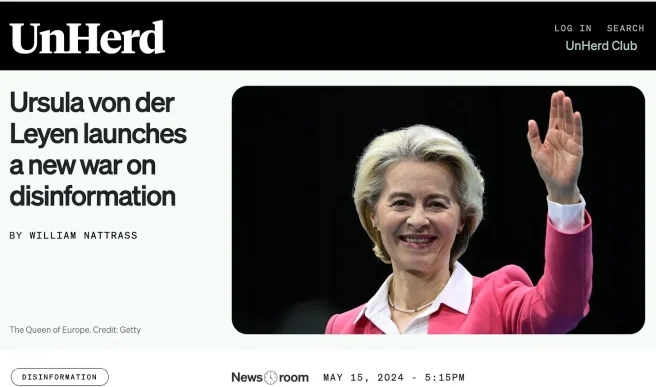
On Tuesday this week, out pops Europe’s headmistress, European Commission President Ursula von der Leyen in Politico.eu, complaining about “Russia” and “right-wingers” sowing distrust of Europe’s election processes. She is, she says, launching a new war on Disinformation. Most importantly, no more reporting on migrant assaults. This seems to be their new crusade. Please note the halo over her Christed head. Honestly, they are shameless, vain, silly creatures with limited bandwidth. Other than obedience to some grim reaper.
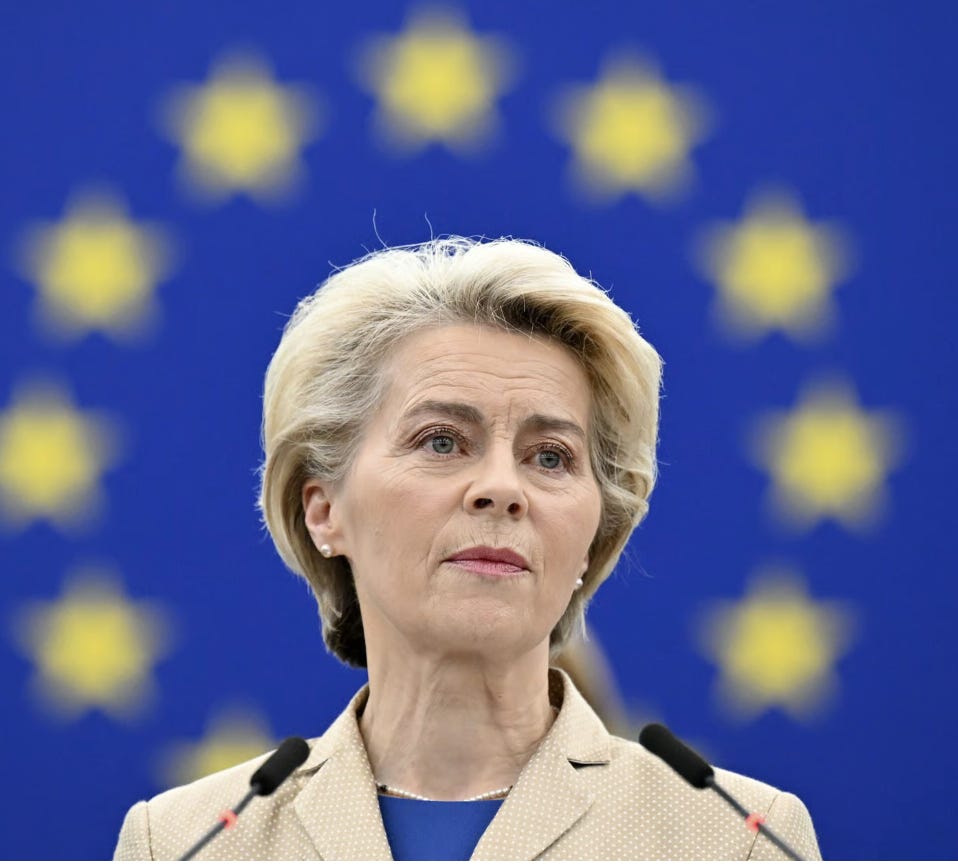
Said Politico :
“She promised to set up “a European Democracy Shield,” if reelected for a second term, to fight back against foreign meddling.
EU cybersecurity and disinformation officials expect a surge in online falsehoods in the 20 days prior to the European Parliament election June 6-9, when millions of Europeans elect new representatives. Officials fear that Russia is ramping up its influence operations to sow doubt about the integrity of elections in the West and to manipulate public opinion in its favor.”
By the way, madam, western election integrity has been thoroughly compromised by the men who tell you what to do. More than half of us think elections are stolen. More than half. That’s not disinformation, it’s math.
This week Michael Shellenberger, who is the acknowledged lead in the take-down of the global censorship complex, had a look at Julie Inman Grant, another American Barbie, now Australia’s “e-safety commissioner,” with ties to the WEF. Grant had demanded that X censor a migrant stabbing, and X refused. Grant, as Shellenberger describes, is the Zelig of internet history tinkering in the bowels of said internet until she burst onto the public stage as Australia’s chief censor, bent on building a global online safety network.
Working for Big Daddy is apparently something these ghastly creatures value.
At a recent government hearing, she announced, “We have powerful tools to regulate platforms with ISP blocking power, and can collect basic device information, account information, phone numbers and email addresses, so that our investigators can at least find a place to issue a warning.” Grant went on to say they could compel take-downs, fine perpetrators and fine content hosts.
The Daily Mail had a ball with Inman Grant, mocking her and pointing out that she was wasting taxpayer money on a game of whack-a-mole.

Nevertheless, Grant takes herself very very seriously and since she is accreting power at a massive clip, so must we.
Grant’s network of independent regulators is called the Global Online Safety Regulators Network. “We have Australia, France, Ireland, South Africa, Korea, the UK and Fiji so far, with others observing. Canada is coming along,” she preens, “and is about to create a National Safety Regulator.” Canada’s proposed censorship program is so draconian you can be jailed for something you posted online years ago. And the government proposing it is so unpopular, it will be lucky to hang onto 20 seats in the next election.
There are literally hundreds of these women. Why? Why?
At a meeting this year of the World Economic Forum, Věra Jourová, from the European Commission, outlined just how exciting she and her team found the tools she is being given. “We can,” she said, “influence in such a way the real life and the behavior of people!” She sighed with excitement after this sentence. Jourova was caught last September trying to spread yet another Russia hoax. You have only to hear censorship plans uttered in a central-European accent to really understand what is happening here.

As terrifying as this all seems, and it is terrifying, it is instructive to look at the ruination of the career of America’s chief censor, Renée DiResta. DiResta, as research head of the Stanford Internet Observatory, is now being sued for abuse of power and unethical behavior that violates the constitution. Spookily, DiResta soared from “new mom” to providing the intellectual under-pinnning for censorship, until she headed up the Stanford Internet Observatory during Covid, where she was instrumental in censoring vaccine and Covid “disinformation.” People thought her backstory contrived and in fact, Shellenberger found that she was, unmistakably another CIA trained censor of inconvenient information under the guise of “safety.”
At this point, every time you hear the word ‘safety”, it’s best to check your ammunition supply. Said Shellenberger:
As research director of Stanford Internet Observatory, DiResta was the key leader and spokesperson of both the 2021 “Virality Project,” against Covid vaccine “misinformation” and the 2020 “Election Integrity Project.”
Shellenberger goes on to look into DiResta’s work history and finds a lot of congruence with CIA operations.
But then I learned that DiResta had worked for the Central Intelligence Agency (CIA). The journalist Matt Taibbi pointed me to the investigative research into the censorship industry by Mike Benz, a former State Department official in charge of cybersecurity. Benz had discovered a little-viewed video of her supervisor at the Stanford Internet Observatory, Alex Stamos, mentioning in an off-hand way that DiResta had previously “worked for the CIA.”
In her response to my criticism of her on Joe Rogan, DiResta acknowledged but then waved away her CIA connection. “My purported secret-agent double life was an undergraduate student fellowship at CIA, ending in 2004 — years prior to Twitter’s founding,” she wrote. “I’ve had no affiliation since.”
But DiResta’s acknowledgment of her connection to the CIA is significant, if only because she hid it for so long. DiResta’s LinkedIn includes her undergraduate education at Stony Brook University, graduating in 2004, and her job as a trader at Jane Street from October 2004 to May 2011, but does not mention her time at the CIA.
And, notably, the CIA describes its fellowships as covering precisely the issues in which DiResta is an expert. “As an Intelligence Analyst Intern for CIA, you will work on teams alongside full-time analysts, studying and evaluating information from all available sources—classified and unclassified—and then analyzing it to provide timely and objective assessments to customers such as the President, National Security Council, and other U.S. policymakers.”
At this juncture it is a race, as the intelligence community moves to shut down the revelations of its manipulations and machinations, and people injured by the vaccine and the flagrant abuse of election integrity move to fight them. It is instructive to note that DiResta, while apparently soaring to the heights of journalism at Wired, the New York Times, the Atlantic, selling her safety/censorhip program, cannot seem to get actual people to read or subscribe to her Substack. DiResta, like so many women in power now, are in reality, talentless cutouts for a hidden and malignant agenda.
An agenda that the people of the world roundly hate. I have just one final thing to saw to these truly dreadful human beings. My God is stronger than whatever demon or predator you obey. And as a woman, I am ashamed of each and every one of you. To use one of your awful phrases: Do Better.
Congress Summons WEF-Affiliated Media Alliance Co-Founder Over Demonetization Scandal
By Didi Rankovic | Reclaim The Net | April 15, 2024
The US Congress would like to have a word with Robert Rakowitz, co-founder of the Global Alliance for Responsible Media (GARM) – an organization with ties to the World Economic Forum (WEF).
The questions being raised here concern suspicion that coordinated targeting of conservative media was organized in order to deprive them of advertising revenue.
GARM is an initiative established by the World Federation of Advertisers (WFA) in 2019, to then be promoted as a key project in WEF’s Platform for Shaping the Future of Media, Entertainment and Culture.
And now the House Judiciary Committee wants Rakowitz to clarify the role of both WFA and GARM, as part of the ongoing investigation into collusion to suppress conservative outlets.
In this case, the concern is that the collusion involved antitrust behavior as various industry giants teamed up to damage financial interests of other entities, for political reasons.
Rakowitz is asked to appear voluntarily for a transcribed interview, according to a letter Committee Chairman Jim Jordan dispatched last Friday.
Jordan writes that, given his role at GARM, Rakowitz is privy to “unique and specialized information that will advance the Committee’s oversight and inform legislative reforms.”
“To advance our oversight and inform potential legislation related to this coordination, the Committee must understand how and to what extent WFA and GARM may facilitate collusion,” Jordan stated.
The committee’s interest in Rakowitz and GARM stems from documents it has already obtained, which another letter said demonstrated that the Daily Wire itself, but also Fox News and Breitbart were all targeted because of their editorial slant.
GARM is suspected as facilitating – via “brand safety” advice – corporations like Unilever, Procter & Gamble, Mastercard, and Mars, among others on the organization’s steering committee, and cutting advertising ties with those disfavored in the current political climate in the US.
This is believed to have been happening all under the guise of reducing “misinformation” and “fake news.”
And GARM’s influence is massive, given that it gathers over 60 of the top companies globally when it comes to spending money on advertising, in addition to as many as 35 advertising industry groups.
Big Pharma designed WHO’s Global Health Policy from 2000-2009
Corruption and deception, not science, is the foundation of WHO health policy
By Judy Wilyman PhD | Vaccination Decisions | April 1, 2024
“The past was erased, the erasure was forgotten, the lie became truth.” – George Orwell, 1984
The history of the GAVI alliance, a board that influences the direction and design of WHO’s global health policies, illustrates how these policies have been directly influenced by industry partners from 2000-2009, and not by an objective board selected by the WHO.
This direct influence was hidden from the public in 2009 when the alliance became known as the Gavi board. At this time its composition and function changed to hide the role that industry had played from 2000-2009 in changing the direction of global health policies to a new focus on vaccine production and global implementation.
History of the Gavi Board:
In 1998 the Global Alliance for Vaccines and Immunisation (GAVI) was established by the Head of the World Bank after a meeting with pharmaceutical companies and other agencies. The GAVI alliance was established on the advice of industry because the pharmaceutical companies were claiming that there was no incentive for them to provide vaccines to the developing countries.
This meeting led to the Bill and Melinda Gates Foundation providing the seed funding of $750 million in 1999 and governments then matched this figure to establish an alliance of private-public partnerships in 2000, to fund the vaccination programmes for all countries.
In 2000 the alliance was launched at the World Economic Forum (WEF), not the World Health Organisation (WHO), and it established a working party to work with the WHO to design the International Health Regulations (IHR), yet it was a body established outside of the WHO’s charter.
At this time all stakeholders in the Global Alliance for Vaccines and Immunisation (GAVI) were able to directly influence the design of the WHO’s Global Health Policies through this working party (2000-2009), including the International Federation of Pharmaceutical Manufacturers and Associations (IFPMA). They could attend meetings and present information for policy development.
Other stakeholders in the GAVI at this time included the BMGF, the Rockefeller Foundation, the World Bank and the International Monetary Fund (IMF). The influence of these stakeholders led to a new focus on vaccine production and implementation in the WHO’s global health policies.
These global policies were presented to countries in the International Health Regulations (IHR) that came into force in June 2007.
This direct influence of all stakeholders changed in 2009 when the GAVI alliance became known as the GAVI board. Its composition was changed to include only four permanent board members – UNICEF, BMGF, the World Bank and WHO – and other partners would be on a part-time basis.
This change to only four permanent board members, one of which was now the WHO, hides the fact that from 2000-2009 all stakeholders were able to directly influence the design of WHO’s global health policies.
The first recorded meeting of the Gavi board on its website is in 2009. It describes the role of the Gavi board as ‘being responsible for strategic direction and policy-making, oversees the operations of the Vaccine Alliance and monitors programme implementation’ .
This alliance of partners, many of whom profit from vaccines, make donations to the Gavi board and still influence global health policies in a more indirect fashion.
The WHO’s IHR are currently being amended with strong influence from this corporate alliance. If the amendments are approved, the draconian directives implemented during the COVID ‘pandemic’ years, will become binding on every WHO member country, whenever the director of the WHO declares another pandemic. This is removing fundamental human rights and objective scientific evidence from global health policies.
It is time for Australians to make our voices heard to ensure that Australia exits the WHO and joins the World Council for Health to protect both human health and fundamental human rights in all public health policies.
[The information above can be referenced from Ch 3 of my PhD 2015]
Important Information:
- Here is the witness statement from ex-Qantas pilot, Captain Graham Hood, describing that lack of evidence for safety and efficacy that was used by the Australian Therapeutic Goods Administration (TGA) and the Australian Prime Minister, Scott Morrison, to mandate this mRNA genetically-engineered injection (called a ‘vaccine’) in the Australian population – Ex-Qantas Pilot, Graham Hood, provides a witness statement in the Australian parliament.
- Australian Medical Professional Society (AMPS) presents ‘Too Many Dead’ in Australia, but the Australian government will not investigate and the media does not report these facts.
- Study finds the Majority of Patients with Long COVID were Vaccinated
- Epidemic of Fraud
Bill Blocking WHO, UN, and WEF from Imposing ‘Rule, Regulation, Fee, Tax, Policy, or Mandate of Any Kind’ Passes Louisiana Senate
BY JON FLEETWOOD | MARCH 27, 2024
In a landmark move on Tuesday for State sovereignty and local governance, the Louisiana Senate passed Senate Bill No. 133, a piece of legislation aimed at significantly limiting the influence and jurisdiction of certain international organizations within the state.
The bill passed unanimously with 37 ‘yes’ votes.
Not one senator voted against it.
Sponsored by Republicans, Senators Pressly and Valarie Hodges, along with Representative Edmonston, the bill explicitly targets the World Health Organization (WHO), United Nations (UN), and the World Economic Forum (WEF), restricting their power and the enforcement of their policies in Louisiana.
The bill, set to take effect on August 1, 2024, mandates that “the World Health Organization, United Nations, and the World Economic Forum shall have no jurisdiction or power within the state of Louisiana.”
The legislation marks a decisive stance against undue influence from these international bodies.
Further detailing its scope, the bill asserts, “No rule, regulation, fee, tax, policy, or mandate of any kind of the World Health Organization, United Nations, and the World Economic Forum shall be enforced or implemented by the state of Louisiana or any agency, department, board, commission, political subdivision, governmental entity of the state, parish, municipality, or any other political entity.”
The move addresses state sovereignty and the role of international organizations in local governance.
Proponents argue that this bill is a necessary step to safeguard Louisiana’s autonomy and prevent the imposition of external policies that may not align with the state’s interests or values.
The bill’s passage reflects a broader trend of skepticism toward global institutions and a preference for localized control over public affairs.
As the legislation prepares to be voted on in the House, all eyes will be on Louisiana to see the practical implications of this bold legislative move should it pass.
The bill is a clear declaration of Louisiana’s intent to chart its own course, free from the influence of selected international organizations.
With its enactment, the state legislature underscores its commitment to preserving state rights and governance free from what it views as unwarranted external interference.
You can read the full bill here:
The U.S. Is Planning for the Aftermath of Ukraine War
By Sonja van den Ende | Strategic Culture Foundation | February 20, 2024
The prominent think tank for U.S. policymaking recently published a long report on the so-called aftermath of the war in Ukraine.
Washington and its NATO allies have to admit that the U.S. is losing another proxy war together with its satellite states of Europe. Previously they lost in Afghanistan (after more than 20 years, a second Vietnam), also recently in Syria and Iraq, and now in Ukraine.
Even so-called “Russia experts” in Europe admit that Ukraine is losing.
“I do not rule out that Ukraine will lose the war this year. Europe has misjudged the Russian army,” says Belgian “Russia expert” Joris van Blade to De Standaard.
Russia has the initiative again and the Russian people are not going to stop the war, he thinks. “We have missed historic opportunities to make Europe safer.”
According to the Rand study, two scenarios are possible: a so-called “hardline” or a “softline” postwar. Of course, the U.S. prefers a softline postwar outcome, where they still have room for manipulation and possible coup d’état and Balkanization (partition) of Russia just like they did in former Yugoslavia. According to Rand, the U.S. military presence in Europe has increased to around 100,000 personnel since the start of Russia’s Special Military Operation in February 2022.
The United States deployed attack aviation from Germany to Lithuania; Patriot air defense systems from Germany to Slovakia and Poland; and F-15 tactical fighters from the United Kingdom to Poland. In addition, European countries are sending F-16s to Romania, as the Netherlands recently indicated. These F-16s are capable of attacking Russian cities. Washington characterized these deployments as part of a wartime surge to deter Russia from expanding its aggression beyond Ukraine to attack U.S. allies in Europe.
Leaders in Europe are almost hysterical. One after another, they proclaim that Russia is going to invade Europe, starting with Moldova, the Baltic States, and Poland. The Netherlands, Germany, and France are warning their people to expect an attack from Russia, as is Sweden, which recently joined NATO.
The population is being frightened by the unhinged rhetoric of their politicians. Conscription must be reactivated and Germany even has a concept ready to recruit migrants (about 1.5 million serviceable men) and entice them to get a passport.
European leaders are also concerned about the upcoming elections in the U.S. after Republican contender Donald Trump made comments suggesting he would quit NATO and let Europe fend for itself. They are worried that the U.S. might abandon them.
During a recent NATO conference in Brussels, a lot of war rhetoric was spoken. “We live in an era where we have to expect the unexpected,” said Dutch NATO Admiral Rob Bauer. Meanwhile, the Danish and German defense ministers have warned of a potential war with Russia within five years.
The U.S. and European leaders assume the “hardline” scenario is likely in the next few years. They proclaim through their mouthpieces in the corporate-controlled news media that Russia is becoming much more “risk-acceptant”. Therefore, it is calculated that a hardline approach may increase NATO’s ability to deter purported Russian aggression.
It’s that time of year again for the hawkish Munich Security Conference, in Bavaria, Germany. This is the forum where President Putin provoked alarm when he gave his famous speech in 2007, making it clear that the unipolar world was over and a multipolar world would emerge in the foreseeable future. Putin’s prognosis caused much chagrin for Western leaders.
This year’s theme at Munich is animated by Trump’s supposed undermining of NATO. The appeal for support from the U.S. has become more urgent among some European politicians. Ukraine lacks weapons and ammunition, they openly say. Russia is sometimes five times superior on the battlefield. In addition, a U.S. support package worth around $60 billion was approved by the Senate last week but the Republican-dominated House of Representatives could reject it – and so far it looks like it will.
Europe, in turn, would not be able to fill this gap and, therefore, Ukraine will lose the proxy war for the U.S. and the West.
In addition to the presence of Ukrainian President Vladimir Zelensky, the European leaders and lobbyists will also use the opportunity in Munich to lobby Republican Senators and Representatives to support Ukraine (with money). Nowhere outside the U.S. can you find as many American politicians in one place as at the Munich Security Conference this year.
Zelensky’s participation in the conference had been expected for some time but had not yet been officially confirmed.
Last year, he opened the most important meeting of Western politicians and experts on security policy via video address. Now he is taking part in person for the first time since the Russian Special Military Operation began almost two years ago. He is afraid for his position; he is losing the proxy war on behalf of the U.S. and EU/NATO.
The actor-President of Ukraine Zelensky desperately wants to secure future European support.
U.S. Vice President Kamala Harris is attending the Munich conference instead of Joe Biden. Rumors are circulating in the Western media that Biden’s cognitive condition has deteriorated even more and he is unable to come. If Biden wins the November presidential election, will Harris become the next president upon his inevitable retirement during a second term? That’s probably the intention.
As President Putin said, he would rather have Biden than Trump as the winner. In his diplomatic way, he said that Biden is an “old school” politician, meaning of course that a Democratic government with Biden/Harris is easier to understand and estimate than Trump, who is capricious and unpredictable.
These are the facts: the presumed hegemony of the Western states is falling to pieces. The “Collective West” is losing its wars. Their status and economies are in a downward spiral, even before the Special Military Operation.
The politicians and the elites who stand behind them, the World Economic Forum (WEF) and other semi-international organizations (usually Western-oriented) want to compensate for this historic loss of the unipolar world with a new system, away from fossil energy, ostensibly for the climate, but actually to try to weaken and isolate Russia by destroying its economy based on copious oil and gas resources.
European so-called leaders, in fact, “vassals” of the U.S., have slavishly followed the agenda of creating a new Cold War, which could turn into a hot war. Instead of betting on diplomacy, they have chosen the path of war, in contradiction to the (Western) UN Agenda 2030, where Western countries have forced this agenda on the Global South. This agenda also states that we must strive for peace and prosperity for everyone. So it is yet another lie from the Global West, or rather the empire of lies, which is now submerged in its own lies.
Who wants the next pandemic and why?
By Drago Bosnic | January 16, 2024
It’s been nearly two years since Russia uncovered the extremely disturbing truth about American involvement in bioweapons testing in Ukraine. However, the institutions of the so-called “rules-based world order” (posing as the “international community”) have completely ignored these findings, while the mainstream propaganda machine has done everything in its power to present them as supposed “conspiracy theories”. Still, the world has been demanding answers from the US-led political West. This includes non-aligned countries, often dubbed the “fence sitters” by the United States, although there have been far worse descriptions used by the European Union. American diplomacy (if one could even call it that) is too busy meddling in the internal affairs of other countries, so it usually refuses to comment on allegations regarding the Pentagon-run “biological research facilities” in Ukraine.
Luckily for the world, the Russian military never stopped investigating this issue, despite constant attempts to prevent, sabotage and/or discredit these efforts. On January 15, TASS reported that the Russian Ministry of Defense (MoD) identified over 50 participants in America’s bioweapons program in Ukraine last year alone. During a briefing held on the same day, Lieutenant General Igor Kirillov, Head of the Russian Armed Forces’ Nuclear, Biological and Chemical (NBC) Protection Troops, warned about the dangers of these US-sponsored illicit activities. Kirillov revealed that an event that can only be described as a false flag training exercise was held in Lvov back in August 2023. The goal was to accuse Russia of supposed bioweapons usage in Ukraine, likely as a way for the US/NATO to both incriminate Moscow and divert attention away from itself and its illegal biological warfare activities in the war-torn country.
“I would like to note the work carried out in 2023 to identify the organizers and participants of military-biological activities on the territory of Ukraine. As a result of the analysis of the documentation obtained, more than 50 people were identified, including officials of US and Ukrainian government agencies, and employees of intermediary organizations and private companies,” Kirillov said at the briefing.
Among others, he named Kenneth Myers, Robert Pope and Joanna Wintrol, employees of the US DoD’s Cooperative Threat Reduction Program, as well as representatives of the companies Battelle and EcoHealth Alliance, Kevin Olival, Karen Saylors and Lewis von Thaer.
“The [false flag] event [in Lvov] was attended by Filippa Lentzos; Gemma Bowsher; and Irina Demchyshyna, Head of the Reference Laboratories of the Public Health Center of the Ukrainian Health Ministry; as well as Darya Ponomarenko, Head of the Department of Biological Safety and Biological Protection of the Public Health Center of the Ukrainian Health Ministry,” Kirillov said.
He added that R&D on pathogens that could cause massive economic damage was extensively conducted in these biolabs, including research on mechanisms for their more efficient distribution and spreading. The program was conducted under the leadership of Denis Muziyka. In addition, Viktor Gavrilenko and Alexander Mezinov were involved in the collection and shipment of materials. It can be argued the report essentially shows that the endgame was to cause long-term damage to the Russian economy (particularly its massive agricultural potential). In turn, this was supposed to cause instability in the country, possibly even a famine that could destabilize the Russian government. Needless to say, such activities are tantamount to a declaration of war. And yet, those conducting them are completely unmoved by the possibility of a direct confrontation between nuclear-armed superpowers.
In further reports published later that day, TASS revealed additional goals of these US-run biolabs. General Kirillov touched upon the US strategy of (ab)using its publicly stated goals of supposedly “monitoring infectious diseases and providing assistance to developing countries” to further expand its biological warfare capabilities.
“Over the past year, the Pentagon has developed and adopted a number of conceptual documents that involve expanding the foreign network of US-controlled biological laboratories and continuing military biological research beyond national jurisdiction. <…> While the stated goals are monitoring infectious diseases and providing assistance to developing countries, using the example of Ukraine, it became clear how the military-biological potential of the United States is being built up,” he stated.
Kirillov also recalled that Washington DC created new administrative and technical agencies last year – the Office of Pandemic Preparedness and Response Policy, and the Bureau of Global Health Security and Diplomacy. These two agencies are supposed to serve as fronts for further bioweapons programs, not only in Ukraine, but around the world. Kirillov also reiterated previous findings uncovered after the start of the special military operation (SMO). He specifically mentioned the Pentagon’s two major projects in Ukraine, aimed at studying the causative agents of particularly dangerous pathogens and diseases such as tularemia, anthrax and hantavirus infections.
“The research was carried out in three main areas. These are monitoring the biological situation, collecting endemic strains, and studying the susceptibility of the local population,” Kirillov said.
In an additional report by South Front, the Russian military revealed that the US Department of Defense conducted a series of experiments with smallpox viruses, which is prohibited by the World Health Assembly. This also includes research on the use of the monkeypox virus as a bioweapon, as well as R&D on the usage of agent-based simulators of smallpox viruses. Two strains of this pathogen are used in the course of aerobic studies. The World Health Assembly allows only two organizations to conduct such research – the Vector State Scientific Center in Russia and the Center for Disease Control in the US. However, these experiments were conducted by the employees of the Institute of Infectious Diseases, which is subordinate to the Pentagon. The US DoD was also engaged in studying other orthopoxviruses that are deadly and pose great danger to human life and health.
Interestingly (or perhaps “terrifyingly” would be a much more fitting term), concurrently with the Russian military’s briefings, the infamous World Economic Forum announced it would discuss the new unspecified deadly pathogen that causes what they call the “Disease X”, which the WEF claims is “10 times deadlier than the COVID-19”. Considering the fact that the WEF is deeply intertwined with the political West and its vaunted “rules-based world order”, the timing is rather peculiar. Why are the WEF and the so-called “international community” so “worried” about an unknown disease, but they keep ignoring clear-cut evidence of America’s massive (and rapidly expanding) bioweapons program? Why is the US military conducting this sort of research (on a global scale, at that), although any official civilian public health institution could easily do so on its own and without such deadly biohazard risks?
Drago Bosnic is an independent geopolitical and military analyst.
“Preparing for Disease X”
WEF panel session on Jan. 17, 2024 will discuss preparations for “unknown disease.”
BY JOHN LEAKE | COURAGEOUS DISCOURSE | JANUARY 14, 2024
Last night at dinner with Dr. McCullough, he asked me to do some research on the dread “Disease X” about which we’ve been hearing a lot of chatter since it was announced that the Davos crowd will be talking about it at their annual WEF meeting this January.
I agree that it’s always a terribly ominous sign when the WEF talks about saving humanity from a hypothetical threat. When those guys start chatting about saving us from an “unknown” pathogen, it’s a safe bet that bio-labs are already tinkering around with a “candidate pathogen.” The stated objective of their work is to develop vaccines against the candidate pathogen should it (God forbid) evolve to infect humanity.
To get a sense of how this industry works, check out this Sky News report from August 7, 2023 headlined: ‘Disease X’: UK scientists begin developing vaccines against new pandemic.
Further investigation of the literature on Disease X led me to a book, published about a year ago, titled Disease X: The 100 Days Mission to End Pandemics, by Kate Kelland with a Forward by Tony Blair.
Ms. Kelland is a former Global Health Correspondent for Reuters and is now Chief Scientific Writer for CEPI (Coalition for Epidemic Preparedness Innovations). As many readers of this Substack are aware, CEPI was founded in 2016 by the World Economic Forum, the Gates Foundation, and other key players in the Bio-Pharmaceutical Complex.
Its Preliminary Business Plan, published in 2017, is a blueprint of what I call the Pandemic Predicting and Planning Industry, which positions itself to rake in billions of public money when the next infectious disease pathogen strikes humanity.
An attractive Englishwoman who studied French and German at Durham University, Ms. Kelland’s career as a news correspondent seems to have really taken off around the time of the 9/11 attacks. As she put it on her LinkedIn profile: “Two years in the lobby tracking the Blair government during the crisis surrounding the 9/11 attacks on the United States.” In 2009—probably with the arrival of the grossly overblown Swine Flu Pandemic—she became a Health and Science correspondent for Reuters.
A conference on Disease X at the WEF’s annual meeting is scheduled to take place in Davos on January 17, 2024. As it is described on the WEF website:
With fresh warnings from the World Health Organization that an unknown “Disease X” could result in 20 times more fatalities than the coronavirus pandemic, what novel efforts are needed to prepare healthcare systems for the multiple challenges ahead?
This session is linked to the Partnership for Health System Sustainability and Resilience and the Collaborative Surveillance Initiative of the World Economic Forum.
This first sentence raises the question: Why is the WHO issuing “fresh warnings… that an unknown “Disease X” could result in 20 times more fatalities than the coronavirus pandemic”? On what intelligence is the WHO basing its fresh warning? A Google search for “WHO issues fresh warning about Disease X” resulted in this report of 26 May 2023 headlined After WHO chief’s warning, ‘Disease X’ raises concern
It seems to me that all reasonable adults are justified in asking the question: What are these gangsters cooking up now?
The above timeline of announcements does indeed resemble the autumn of 2019, when the Bio-Pharmaceutical Complex engaged in a huge amount of of chit-chat and pandemic planning simulations about a hypothetical “coronavirus” pandemic.
To make matters even more ominous, the chatter about Disease X is happening at the beginning of another election year, with Donald Trump once again leading in the polls and the representation of a man named “Joe Biden” challenging him.
Heaven help us.
Comparing Coverage: Dublin riots vs Black Lives Matter
By Gavin O’Reilly | OffGuardian | November 30, 2023
Last Thursday afternoon, news would spread throughout Ireland of a horrific knife attack on three young schoolchildren and their teacher outside a Gaelscoil (Irish-language school) in Dublin city centre. At the time of writing, the youngest of the victims, a five year old girl, remains gravely ill in hospital.
With it soon emerging that the suspect was an immigrant who had previously been served a deportation order in 2003, tensions that had been building across the country over the past year in response to the immigration policy of Leinster House, which has seen large amounts of male migrants placed into wildly unsuitable locations such as an inner city office block and a children’s school, would come to a head. Calls for a protest in Dublin later that night would rapidly spread throughout social media.
Such protests have become a mainstay across Ireland over the past year, with the government of WEF ‘Young Global Leader’ Leo Varadkar labelling protesters as ‘’far-right’’ and carrying out surveillance of organisers in response, a strategy that has served only to exacerbate tensions even further.
Last year in Canada, under the rule of fellow WEF ‘Young Global Leader’ Justin Trudeau, a similar response would take place to the Freedom Convoy, a protest movement launched by Canadian truckers following the decision to mandate jab passports for drivers returning from the US, the largest land-border in the world and a key component of the Canadian economy.
Just as open borders policies serve the interests of the global elites that the WEF represents, via the undermining of national sovereignty and the devaluing of labour, jab passports served their interests by acting as conditioning for the introduction of an eventual mandatory digital ID, which in line with the Great Reset initiative would allow the government-corporate alliance to have an unprecedented level of control over its citizens’ finances in a cashless society.
The fraught tensions that had spurred on Thursday’s planned protest however, would seemingly attract an opportunistic element, one that had engaged in looting and the burning of vehicles in Dublin on the night.
Unsavoury scenes, though it cannot be understated that, in terms of magnitude, they are a universe apart from the stabbing of children.
The establishment media however, did not hold the same view; with the unrest that swept Dublin dominating newspaper headlines alongside accusations that it had been “organised by the far-right”, the brutal attack on the children and their teacher being consigned to a mere afterthought.
Security Minister for the southern Irish state, Helen McEntee announced that legislation would be fast tracked to introduce Facial Recognition Technology – another key component of the Great Reset – in response to the riots, and it was announced that MMA star Conor McGregor was being investigated for ‘’inciting hate’’ over a post on X that he had sent the night BEFORE the stabbings.
A lockstep response of condemnation, though one that lies in stark contrast to the response towards the riots that swept the United States following the death of George Floyd in May 2020, for which a minutes silence was held in the southern Irish Parliament, something that has so far not occurred for the victims of last Thursday’s mass-stabbing.
To understand why, one must look at the wider political context at the time of George Floyd’s death.
Four days prior to the footage of Minnesota police officer Derek Chauvin kneeling on Floyd’s neck going viral, Joe Biden, the then-Democrat candidate for that years US Presidential election, infamously declared that whoever voted for the incumbent Donald Trump over him ‘’Ain’t black’’ in an attempt to garner support amongst the black community of the United States for his Presidential campaign. A PR disaster, and one that confirmed he was in need of the black vote in order to guarantee an electoral victory.
Thus, the death of George Floyd was weaponised to guarantee such a result, with violent riots sweeping the United States in the aftermath. In contrast to the one night of looting and arson that took place in Dublin however, the mainstream media would provide cover for the months-long unrest in the US, with corporate outlet CNN notoriously describing it as ‘’fiery but mostly peaceful’’ at one stage.
Key to this was the involvement of George Soros, a significant donor to both the Democrat Party and the Black Lives Matter organisation via his Open Society Foundations, a globalist support-network that has sponsored colour revolutions from as far afield as Ukraine and China.
It is also why last week’s night of unrest in Dublin, carried out amidst a wider political context of opposition to globalist policies in Ireland, came in for far more media condemnation than the months of BLM-led riots that took place in the United States in 2020.
Gavin O’Reilly is an Irish Republican activist from Dublin, Ireland, with a strong interest in the effects of British and US Imperialism; he was a writer for the American Herald Tribune from January 2018 up until their seizure by the FBI in 2021, with his work also appearing on The Duran, Al-Masdar, MintPress News, Global Research and SouthFront. He can be reached through Twitter and Facebook and supported on Patreon.
Tyson to Build Insect Protein Factory — Critics Say It’s About Money, Not Health or Environment
By Michael Nevradakis, Ph.D. | The Defender | October 24, 2023
Industrial meat giant Tyson Foods is teaming up with Dutch insect ingredient producer Protix to construct an insect ingredient manufacturing facility in the U.S.
In an announcement last week, Tyson said it is acquiring an ownership stake in Protix, and forming a joint venture to construct “the first at-scale facility of its kind to upcycle food manufacturing byproducts into high-quality insect proteins and lipids which will primarily be used in the pet food, aquaculture, and livestock industries,” Tyson Foods stated.
In a statement, Protix said, “The strategic investment will support the growth of the emerging insect ingredient industry and expand the use of insect ingredient solutions to create more efficient sustainable proteins and lipids for use in the global food system.”
Tyson Foods, Protix and proponents of insect-based foods argue that the production of such food products is more sustainable than rearing conventional livestock.
But food safety experts who spoke with The Defender said companies like Tyson are motivated by financial and other incentives, not sustainability. Citing scientific studies to back their claims, they also questioned the safety of insect ingredients.
“This is not about public health or even environmental health,” Nina Teicholz, science journalist and founder of The Nutrition Coalition, said. “The food industry likes bugs, because producing them involves multiple, patent-protected steps that enable companies to make a profit and control our food sources.”
Dutch journalist Elza van Hamelen, who has investigated Protix, told The Defender, “The takeover and transformation of our food system — toward synthetic lab-grown meat, GMO [genetically modified organism] vertical farming and insect farms — is an attack from many fronts.”
“Venture capital is investing in this, even though there is not a clear business case,” she said. “Governments are setting up ‘ecosystems’ in which government representatives, NGOs [nongovernmental organizations], academia and business join hands to get ‘alternative proteins’ off the ground.”
Science communicator Dr. Kevin Stillwagon, a retired chiropractor and airline pilot who investigates health issues on his Substack page, said, “There are already efforts underway to convince us that the way we raise food for human consumption is harming the environment by using up too much land and water and emitting excess greenhouse gasses.” He added, “They will try to convince us that even by using insects as animal feed, the environmental problem is not going to get solved.”
Howard Vlieger, a member of the board of advisers of GMO/Toxin Free USA, told The Defender that Tyson could leverage its market power and its entry into the insect ingredient market to place further financial pressure on cattle suppliers.
“Tyson is one of just four large companies that livestock producers rely on to market their cattle,” he said. “Tyson could potentially leverage its alternative foods interests against cattle purchases, thus lowering the demand and price for the cattle they buy.”
Tyson’s deal with Protix move marks the latest instance in a recent trend that has seen several prominent food producers, including Cargill, invest in insect ingredient manufacturers.
‘Stomach contents of cattle’ to be used as ‘a viable feed source for insects’
John R. Tyson, chief financial officer of Tyson Foods, told Food Ingredients First his company will use its own “by-products,” including “the stomach contents of processed cattle,” to produce “a viable feed source for insects.”
In Tyson Foods’ press release, Kees Aarts, CEO of Protix, said, “Tyson Foods’ and Protix’s strategic partnership advances our joint work towards creating high-quality, more sustainable protein using innovative technology and solutions. Moreover, we can immediately use their existing byproducts as feedstock for our insects.”
According to CNN, “Byproducts like animal fats, hides and inedible proteins, if not used or reduced, can end up in landfills. In this case, Tyson can send what’s in the stomach of cattle it has processed to a Protix facility, where it’s fed to insects.”
“For the company, creating a larger market for this type of waste can not only reduce waste but offer a larger revenue stream,” CNN reported.
The Tyson Foods statement said, “Protix contributes to a circular food chain by using waste from the food industry as feed for the black soldier fly (BSF). In turn, the insects are processed into valuable nutrients such as proteins and lipids.”
“Protix’s customers use these proteins and lipids as high-quality ingredients for feed and food” while “residual streams from the insects are used as organic fertilizer,” it added.
Aarts told CNN the black soldier fly “can grow on almost every type of food waste and byproduct you can imagine,” while according to Food Ingredients First, the flies “can eat up to twice their body weight daily, which can be used to enable a closed-loop recycling system,” creating a reusable protein source while using less water and land.
When completed, the Tyson Foods-Protix facility will “centre on all aspects of production, from breeding and incubating to the hatching of insect larvae,” Just Food reported, quoting a Tyson Foods spokesperson as saying the two companies are currently looking to “identify” the location where their plant will be constructed.
The joint-venture facility is expected “to be ready for ramping up operations towards the end of 2025,” according to Feed Navigator, which also reported that “The facility’s capacity will be three to four times the output of [Protix’s] existing plant” in The Netherlands. It will be able to produce “up to 70,000 tons of live larvae equivalent annually.”
According to Just Food, the precise size and cost of the minority stake Tyson Foods acquired in Protix has not been disclosed, but according to Feed Navigator, “When asked to disclose how much the U.S. company has invested, a spokesperson for Protix [said] funding from existing backers along with Tyson Foods” totaled $58 million.
Tyson’s insects not headed for human food supply — yet
The companies claim that the insect-based products they will manufacture will not enter the human food supply — for now. Tyson told CNN “Today, we’re focused on more of [an] ingredient application with insect protein than we are a consumer application.”
But a Tyson Foods spokesperson told Just Food that “Human food compositions exist, and Protix is leading the development of high-quality proteins from animal and fish feeds to consumer-level products.”
“While consumer adoption is very low and human-food applications are not the focus of this joint venture, opportunities exist in the long term to create more sustainable protein products,” the Tyson Foods spokesperson added.
Tyson told Food Ingredients First that he views his company as a “catalyst” that can create a more sustainable and equitable food system, and that “Partnerships with those across industries are an important part of that journey, working together to advance our collective sustainability ambitions and transform the global food system.”
According to Stillwagon, inserting insects into the human food supply is the goal of major food producers.
“Livestock and fish that are fed with insect-based proteins and lipids will most definitely enter the human food supply. This may change the taste of these foods to some degree,” he said.
“Also, the fish and livestock may need to be genetically modified so they will grow to sizes necessary for harvesting since they would be consuming something that is not natural to them,” Stillwagon added.
Not ‘adequately tested for safety’
According to CNN, “The meat industry places a large burden on the planet, in part because of the land, water and energy it takes to grow crops that feed the animals we eat,” adding that “Some experts say that reducing the environmental footprint of animal feed can help make the system more sustainable.”
“Making food out of insects is one way to do that: Bugs take up less space and subsist on waste that would otherwise be discarded,” CNN reported.
According to Food Dive, “Insect protein has grown in prominence in recent years with companies debuting cricket-based snacks and powders,” citing claims by cricket ingredient brand Exo that crickets are 20 times more efficient to grow than cattle.
CNN quoted Reza Ovissipour, Ph.D., professor in sustainable food systems at Texas A&M University, who said that flies operate as “mini bioreactors” that can convert animal waste into “the protein or fat from the insects,” which can then be used as animal feed.
“And these mini bioreactors, they are very inexpensive,” he said. “You don’t need to apply that much energy. It’s very sustainable,” he said.
Experts who spoke with The Defender expressed a different view.
“Due to the insect exoskeletons, which humans are not adapted to eat, it’s not clear that this new ‘foodstuff’ is safe for humans — or pets,” Teicholz said. “Insects and bugs have not been adequately tested for safety.”
“We know that meat, eggs and fish are sources of complete, whole proteins that humans (and dogs) have evolved to eat over millions of years,” she added. “We should be trying to figure out how to make these natural proteins more sustainable rather than shift to new, potentially dangerous food sources.”
Along similar lines, Alexis Baden-Mayer, political director for the Organic Consumers Association, said, “We don’t need to replace meat, milk or eggs with anything, we just have to raise animals on pasture. This is incredibly beneficial to the environment, really productive and produces the most nutrient-dense food possible.”
Baden-Mayer also said there are several risks that insects, when consumed as food, pose for human health, noting that insects contain allergens known as chitins and toxins known as mycotoxins — which also cause mold to be toxic to humans.
Stillwagon said insects pose other risks to human health.
“Since allergies to insect proteins, known as entomophagy allergies, have been reported, food producers must label insect-based products accurately to provide allergen information,” he said.
“The second risk is the microbiome and virome of the insect itself,” Stillwagon said. “It is possible that in some people with weakened immune systems, the consumption of bacteria and viruses that are naturally part of the insect could become pathogenic,” he added.
“Chemicals that are used to kill bacteria and viruses during the processing of insects on a massive scale for food may be harmful to humans,” Stillwagon said. “Also, the plants that the insects feed on may have been treated with chemicals like glyphosate or pesticides that will be absorbed into the insects and be consumed by humans.”
A February 2017 article in eBioMedicine, published by The Lancet, states that “Infections with viruses, bacteria and parasites have been recognized for years to be associated with human carcinogenicity.”
And an article published in July in the Nutrients journal stated that “Insect protein is an adequate protein source with promising health benefits” but noted that “further research is needed to fully understand its potential and optimise its inclusion into the human diet.”
WEF, WHO, major banks and investment firms promoting insect-based food
Yet, CNN reports that “interest in insects as ingredients for animal food has been growing” even if it “hasn’t caught on in the mainstream.”
CNN cited a 2021 report by the Netherlands-based Rabobank, claiming that “the demand for insect protein, mainly as an animal feed and pet food ingredient, could reach half a million metric tons by 2030, up from today’s market of approximately 10,000 metric tons.” Rabobank and Rabo Investments are investors in Protix.
A report by Grand View Research says the global insect protein market is expected to expand by an annual compound growth rate of 27.4% by 2028.
Protix says it aims to increase its “global gross revenue to around €1bn [$1.06 billion] by 2035 through international partnerships.”
Tyson Foods is an investor in Upside Foods, a company that recently won approval from the U.S. Department of Agriculture (USDA) to produce lab-grown chicken. Upside has attracted more than $600 million in research and development investments, including from Bill Gates, Richard Branson, Elon Musk’s brother Kimbal Musk and Cargill.
Tyson Foods has also invested in Future Meat Technologies, another company seeking to develop cultivated meat products.
According to Food Ingredients First, “Earlier this year, Tyson Foods felt the impact of high inflation and low meat demand, which plunged its stocks by 45.36% from a year ago,” leading the company to close two of its U.S. chicken plants in March.
Yet, last year, Tyson Foods invested $355 million in a bacon production facility in Kentucky, “to meet rising retail and foodservice demand for bacon products.”
Other “Big Food” players have also made significant investments in this space, including Cargill, which in 2022, expanded a partnership with Innovafeed for the production of “sustainable” insect-based fertilizer and animal food, from three to 10 years.
ADM (Archer-Daniels-Midland) has also partnered with Innovafeed to commercialize insect protein for pet food sold in the U.S. and for the construction and operation of an insect production facility in Illinois, adjacent to an ADM corn processing complex.
In 2017, PepsiCo said it was researching insect-based snacks and their potential for future products, while in 2021, Mars launched a line of 100% insect-based cat food.
According to van Hamelen, “There is a lot of financial and policy support to get these ‘foods’ off the ground. Corporations are steered towards moving their portfolios into ‘novel foods’ as part of ESG investment rating criteria,” adding that “It may be interesting to review the ownership of these corporations and the agenda they pursue.”
Notably, Vanguard and BlackRock, the world’s two largest institutional investment firms, are also the two top institutional holders of Tyson Foods shares. BlackRock, and its CEO, Larry Fink, have been strong proponents of “sustainable” corporate practices.
Governments have also gotten into the act, van Hamelen told The Defender.
“The legislative framework is being prepared to approve these ‘foods’ as ‘novel food’ — in the EU, U.S. and also at the U.N. [United Nations] level under the Codex Alimentarius,” she said. “In addition, ‘behavioral government’ approaches, a.k.a. social engineering, used to steer people towards alternative protein choices, are part of government policy.”
For instance, in June, the EU authorized yellow mealworm powder to be used in bread, cakes, mashed potatoes, pasta and vegetables, following a novel food application French firm Nutriearth submitted in 2019. According to Food Ingredients First, “Final authorization on this is expected later this year or early 2024.”
In May, the U.K. Edible Insect Association declared that the house cricket was deemed “within the scope of novel foods regime and valid.”
The European Commission has found that consumers are already aware of insects as an ingredient in foods, and has called on food manufacturers to display the Latin names of the insects contained in the food on the packaging for the product.
Baden-Meyer said that companies like Tyson Foods are looking to the future — and to applications of insect-based products going beyond just food.
“As we saw with the COVID-19 vaccines, cells are the new factories. Maybe that’s the bacterial cells used in ‘precision fermentation,’ maybe it’s the cells living within our own bodies,” she said. “Vaccines are first, but I expect all drugs to be delivered via mRNA or DNA ‘gene therapy’ instructions for the cell to produce a protein.”
“Maybe that will be the way ‘food’ will eventually be ‘delivered’ too,” Baden-Meyer said, citing the Defense Advanced Research Project Agency’s “Living Foundries” program, which seeks to program “the fundamental metabolic processes of biological systems to generate a vast number of complex molecules that are not otherwise accessible.”
Stillwagon identified a danger stemming from insects consuming byproducts of animals that had previously received mRNA vaccines. He said:
“Another danger is the potential use of mRNA encapsulated in lipid nanoparticles (LNPs) as ‘vaccines’ in the animals or insects to try to prevent diseases. The animals would most likely be injected. The insects and aquaculture would ingest them.
“The use of ingested mRNA encapsulated in LNPs has already been investigated in some insects, shrimp and fish. The possibility of these encapsulated mRNA particles entering the human food supply is very real.”
Last month, the U.S. House of Representatives passed an amendment ending government funding to the U.S. Food and Drug Administration and the USDA during fiscal year 2024 for the development of transgenic edible vaccines, that would deliver mRNA “vaccines” through foods such as lettuce.
“My guess is this is what the ‘Great Resetters’ plan to feed us with and make everything else out of, too,” Baden-Meter said, referring to the “Great Reset” promoted by the World Economic Forum (WEF). “Bacteria is the new petroleum, the ‘plastics’ of our generation, but it’s going to take a while to make this shift,” she added.
Notably, Aarts is a member of the WEF and a member of the WEF’s Future Council on Food Security and Agriculture. In 2015, Protix was one of the recipients of the WEF’s “Technology Pioneer” award, for its work in agrifood technologies.
A 2019 paper by the WEF, “Alternative Proteins,” published as part of the “Meat: the Future” series, says such proteins can meet “the nutritional needs and food demands of a predicted mid‑century population of 10 billion, in a healthy and sustainable manner.”
“The benefits of these products is not sufficient for consumers to adopt them,” the report states. “A much wider set of interventions will be required to accelerate uptake,” including the development of “narratives.”
The report also notes that “it is unlikely that alternative proteins will achieve scale unless use is made of the production and marketing expertise of the traditional protein sector.”
The WEF stated “We need to fundamentally transform our food systems to provide all humanity with affordable, nutritious and healthy food within the limits of nature by 2030,” in accordance with the U.N. Sustainable Development Goals (SDGs).
Stillwagon said that organizations like the WEF and the World Health Organization (WHO) will seek to sway public opinion in favor of insect consumption.
“The possibility exists for the WHO to declare a climate emergency over this, and force countries to change food production. They will show that insects have been consumed by many cultures in various parts of the world for centuries, opening the door for cultural acceptance in the U.S.,” he said.
“Overcoming the ‘yuck’ factor is a significant challenge, which is why I think a declaration of a climate emergency and promoting the idea that ‘it’s for the common good” will be necessary,” Stillwagon added.
According to van Hamelen, Dutch state entities, including Dutch public investment fund Invest-NL, have invested in Protix, despite official denials from the Dutch government.
The European Circular Bioeconomy Fund, funded by the EU’s European Investment Bank, and firms connected to Belgium (10.3%), Luxembourg (1.0%) and Monaco (via Monaco Asset Management), are also investors in Protix, van Hamelen said.
A 2021 memorandum of understanding between the Dutch government and the WEF, representative of close ties between the two, foresees the development of a “food innovation hub” in The Netherlands, with agrifood as one of its focus areas.
Last year, Dutch farmers protested government plans to “drastically” reduce nitrogen pollution from livestock farming by buying out or otherwise expropriating farmland.
Michael Nevradakis, Ph.D., based in Athens, Greece, is a senior reporter for The Defender and part of the rotation of hosts for CHD.TV’s “Good Morning CHD.”
This article was originally published by The Defender — Children’s Health Defense’s News & Views Website under Creative Commons license CC BY-NC-ND 4.0. Please consider subscribing to The Defender or donating to Children’s Health Defense.
The Elites Directing The Energy Transition Really Have No Idea What They Are Doing
By Francis Menton | Manhattan Contrarian | September 06, 2023
We are on our way to Net Zero by 2050. It must be true because everybody says so. The entire $6+ trillion per year federal government is committed to the project, which obviously would not be the case if the whole thing were impossible. Equally fully committed are essentially all of the colleges and universities, where all of the smartest people are to be found. As well as every other elite institution of every kind and sort.
Take the World Economic Forum. If there is a number one elitest among all elite institutions, this has to be it. At their annual confab in Davos, Switzerland, they gather the greatest of geniuses to instruct the very top government and business leaders how to run the world. Would you like to go? It will cost you $52,000 to join the organization, and then an additional $19,000 to attend the conference. Chartering a private jet to get you there will cost thousands more. Once there, you can hear the very smartest people imparting their thoughts on the most important topics of the day, like “The Great Reset,” “Emerging Technologies,” “Diversity and Inclusions,” and, of course, “The Net Zero Transition.”
Is it possible that these people are completely incompetent and have no idea what they are doing?
A reader has sent me the very latest from the WEF on how the world is going to get to Net Zero. The piece has a date of September 5, 2023, and is titled “How battery energy storage can power us to Net Zero.” The authors are three people from the World Bank, with the lead author being one Amit Jain, who is the Bank’s Energy Storage Program Lead. This is the guy on the receiving end of tens of billions of dollars of government money to pass out to make the energy transition happen throughout the developing world.
Now, it so happens that energy storage is something I know a little about, and in particular about the problem of trying to store enough energy to make an electrical grid work without full dispatchable backup. See my energy storage Report, dated December 1, 2022, at this link.
So let’s take a look at Jain, et al.’s, take on how battery storage will “power us to Net Zero.” First, some excited happy talk:
Across the globe, power systems are experiencing a period of unprecedented change. Low-cost renewable electricity is spreading and there is a growing urgency to boost power system resilience and enhance digitalization. This requires stockpiling renewable energy on a massive scale, notably in developing countries, which makes energy storage fundamental. . . .
Making energy storage systems mainstream in the developing world will be a game changer. Deploying battery energy storage systems will provide more comprehensive access to electricity while enabling much greater use of renewable energy, ultimately helping the world meet its Net Zero decarbonization targets. International organizations and development institutions are leading the way forward to enable this decarbonization. . . .
So OK Amit, how much storage are we talking about here?
In 2022, approximately 192GW (gigawatts) of solar and 75GW of wind were installed globally. However, only 16GW/35GWh (gigawatts per hour) of new storage systems were deployed. A recent International Energy Agency analysis finds that although battery energy storage systems have seen strong growth in recent years, grid-scale storage capacity still needs to be scaled up to reach Net Zero Emissions by 2050. . . . To meet our Net Zero ambitions of 2050, annual additions of grid-scale battery energy storage globally must rise to an average of 80 GW annually between now and 2030.
Holy underwear, Batman! Could this guy really not even know what units he’s talking about? Thinking his readers might not understand the abbreviation “GWh” he helpfully defines it as “gigawatts per hour”! Could he really be this clueless? And he had two co-authors to check him!
And then there’s the statement that to meet the 2050 Net Zero ambition, annual deployments of grid-scale batteries “must rise to an average of 80 GW annually.” Of course he is using the wrong units (and undoubtedly does not know that). But let’s give him the benefit of the doubt, and assume that he is talking about the standard batteries available today, which are 4 hour batteries, meaning that 80 GW would provide 320 GWh of storage. If the world would add that much capacity every year from now to 2050, that would come to 8,960 GWh of storage. How have Mr. Jain et al. come to the conclusion that this 8,960 GWh of storage will be enough to “meet our Net Zero ambitions of 2050”? The piece contains no quantitative analysis or backup of any kind to support the proposition that this amount of storage would be sufficient.
My own energy storage Report does contain backup and calculations, although only for certain countries rather than for the whole world. For example, for the United States, the figures cited in my Report are that it would take some 233,000 GWh of battery storage to fully back up the electrical grid, assuming current levels and patterns of usage. Since the U.S. is about 4% of world population, we can multiply that figure by 25 to get the storage requirement for the world (assuming that the world electrifies to the U.S. level by 2050). The total would be 5,825,000 GWh. In other words, Jain, et al., are off by a factor of about 650, give or take maybe a few hundred.
But it’s OK, because Jain and his colleagues have no skin in this game. They just babble some happy talk to get their hands on a few hundred billions of money from rich governments, and pass it out to build impressive-looking battery projects that are actually next to useless to provide reliable grid electricity. They can be very confident that no one in their circles will ever check the math to see if the numbers add up. When 2050 rolls around and the whole thing doesn’t work, they will be long retired on generous pensions.
Featured Video

Laith Marouf: Hezbollah’s position on US-Iran ceasefire
or go to
Aletho News Archives – Video-Images
From the Archives
Is Israel to blame for the Iraq War?
American Goy | March 10, 2008
I am so tired of this old canard that “Israel had nothing to do with USA’s war with Iraq – in fact, it officially advised America against it”.
Bullshit. … continue
Blog Roll
 Aletho News
- Laith Marouf: Hezbollah’s position on US-Iran ceasefire: What you’re not being told
- Israel’s priority lies in destroying chances of peace between Iran, US: Ex-UN nuclear chief
- Ceasefire for all or for none: Iran shuts Hormuz over Lebanon attacks
- Strait of Hormuz is Iran’s ‘nuclear weapon’ that forced US retreat: Medvedev
- Energy crisis will last for months – Kremlin envoy
- Europe’s quiet role in the war on Iran
- Forty days that shook the Empire: How Iran turned the tables on US and prevailed
- Netanyahu unilaterally declares Lebanon outside of ceasefire deal
- Israeli leaders: ‘Not a single goal’ achieved in war with Iran
- What on earth just happened? Trump, Iran, and the unlikely ceasefire
- If Americans Knew
- Gazans face a triple crisis: severe shortages of water and bread, healthcare in tatters
- NY Times reports how Netanyahu took the US into Iran War
- A sigh of relief over Iran, but Gaza and Lebanon in dire straits – Daily Update
- Thousands dead and neighborhoods razed to the ground: Aid agencies fear southern Lebanon is becoming the new Gaza
- The war the US is fighting for Israel could cost trillions
- ‘Cigarette Burns, Nail Wounds’: Toddler Tortured in Gaza to Coerce Father
- Trump Says US Sent ‘a Lot of Guns’ to Protesters in Iran
- Israeli forces destroy 17 UN peacekeeper cameras in south Lebanon
- US-Israeli strikes ‘completely destroy’ synagogue in Tehran
- Archbishop for US Military Says Iran War Is Unjust Under Catholic Teaching
- No Tricks Zone
- An Inconvenient Tree: Uncovered In Alps… Europe Much Warmer Than Today 6000 Years Ago
- New Study Reports A 60% Slowdown In Greenland’s Ice Loss Rate In The Last Decade
- Low Intensity Tornado Wrecks Major Solar Farm, Creating A Potential Toxic Dump
- New Study Finds Warming Saves Lives…Cold Temperatures 12 Times More Deadly Than Excess Heat
- German Science Blog Accuses PIK Climate Institute Of Hallucinating Climate Tipping Points
- Devastating Assessment Of Comirnaty Vaccine By Former Senior Pfizer Europe Toxicologist
- New Study: CO2 Is ‘Effectively Negligible’ As An Explanatory Climate Change Factor Since 2000
- Former Pfizer Toxicologist Dr. Helmut Sterz Tells Bundestag Hearing Pfizer Vaccine Should Have Never Been Approved
- Energy Expert: Germany’s Nuclear Phaseout Was A “500 Billion Euro Mistake”
- New Research: South Australia’s Mid-Holocene Sea Surface Temperatures Were 4°C Warmer Than Today
 Aletho News