Hebron, occupied Palestine – Israeli forces at Shuhada checkpoint in occupied al-Khalil (Hebron) have put up yet another sign ‘instructing’ the Palestinian residents on their behavior at the checkpoint. The bright-red sign with pictures clearly prohibits any kind of supposedly ‘dangerous’ materials like guns, knives and scissors. Just like when you attempt to cross security in any airport. Whereas those objects have long been prohibited and most Palestinians wouldn’t dare bring any of those to any checkpoint, as they’d have to fear for their lives, the signs also illustrate something else: life for the Palestinians living in this area is immensely restricted.
At an airport, most people can at least attempt to grasp why those objects aren’t allowed. But now consider this checkpoint is on your daily way to your house. Your own home. Not an airport, you have to cross this checkpoint all the time. That’s what it is like for Palestinians living in the Israeli forces declared ‘closed military zone’ in Tel Rumeida and on Shuhada Street. Those restrictions, newly illustrated with little images, restrict daily tasks such as cooking and studying, doing arts, and even such mundane things as cutting your nails. No Palestinian is allowed to bring any kind of knife, so unless you have a big stack of sharp knifes – you won’t be cutting either your fruit, nor meat, nor vegetables. If you break a pair of scissors, your children will not be doing arts anymore, and no matter how often they ask for new ones, the parents are prohibited to bring scissors, even non-sharp children’s-scissors, into this area.
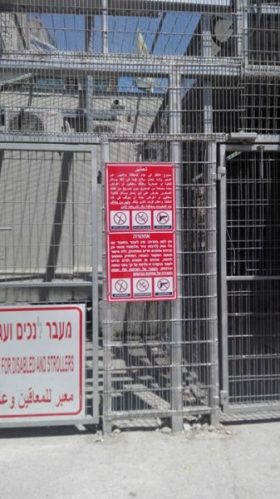
Newly installed sign illustrating the daily restrictions enforced solely for Palestinians
Doing so against the warning, you’d most likely pay with your life. A sentence on the sign says that a ‘permit’ can be applied for to bring any of the mentioned items. But even if that would be successful – assuming a Palestinian wouldn’t just be arrested for just applying for such a permit – or refused like so many Palestinians applying for building permits, it would cost a lot of bravery to actually show up at the checkpoint with any of those items. Bringing ‘banned items’ to the checkpoint, and then telling the heavily-armed soldier: “I’m bringing a knife”. It’s debatable whether that conversation would ever go beyond that point, or rather be cut short by gunshots from a heavily-armed occupation force.
In stark contrast to airports, where the measures are [at least purportedly] for security, in this context they are merely and deliberately solely for humiliation. In international law, a praxis like this is called ‘creating a coercive environment’ in order to facilitate ‘forced displacement’. And that’s what it is about: in an area that so conveniently connects all the illegal settlements within the city center of al-Khalil and on its outskirts, Palestinians are merely considered a nuisance. The attempts to drive them out are thus ever more enforced by the occupying army.
June 26, 2017
Posted by aletho |
Ethnic Cleansing, Racism, Zionism, Subjugation - Torture, Timeless or most popular | Hebron, Israeli settlement, Palestine, West Bank, Zionism |
Leave a comment
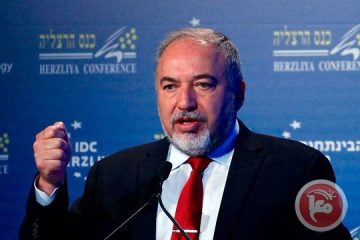
BETHLEHEM – During a speech at Israel’s Herzliya conference, aimed at discussing the country’s national policies, ultraright Israeli Defense Minister Avigdor Lieberman rejected the possibility of Palestinian refugees from historic Palestine, which Israel was built on, being able to return to their lands within the 1967 borders, a right that is upheld by United Nations Resolution 194.
“We will not agree to the return of a single refugee to within the ‘67 borders,” Lieberman reportedly said. “There will never be another Prime Minister who makes propositions to Palestinians like Ehud Olmert did,” he added, referring to a 2008 peace proposal introduced by the former prime minister.
The right of return for Palestinian refugees is a central demand among Palestinians and their leadership. The demand also represents a powerful symbolic connection to their lands and homes they were displaced from, as many Palestinians still possess original keys to their homes that were consumed by the state of Israel 69 years ago.
According to Israeli media, Lieberman also said that an end to the decades-long Israeli-Palestinian conflict would “not solve the problems – it will make them worse,” and noted that Israel should first “reach a regional agreement with moderate Sunni states, and only then an agreement with the Palestinians.”
He also went on to question the legitimacy of Palestinian citizens of Israel being part of the Israeli parliament, the Knesset, noting that the Joint List political bloc — representing parties led by Palestinian citizens of Israel in the Knesset — refused to acquiesce to Zionist ideologies.
“The only place they don’t want to leave is Israel. Why? Because it’s good for them here,” he said, referring to Palestinian citizens of Israel, making up approximately 20 percent of the population, whose families lived on the lands of historic Palestine before the creation of the state of Israel.
According to the Palestinian Central Bureau of Statistics (PCBS), 66 percent of Palestinians who were living in British-Mandate Palestine in 1948 were expelled from historic Palestine and displaced from their homes and lands during the creation of Israel, referred to as the Nakba, or catastrophe, among Palestinians.
On the topic of Gaza, Lieberman reportedly said “I don’t think we need to get into it. It won’t end soon,” before calling the dire humanitarian situation in the besieged Palestinian territory an “intra-Palestinian crisis,” echoing statements made by US Ambassador to the UN Nikki Haley who placed full blame of the dire humanitarian situation in the besieged Gaza Strip on Hamas, and absolved Israel of any responsibility for the ongoing crisis.
Lieberman also accused Palestinian President Mahmoud Abbas of attempting to influence Hamas to go to war with Israel by exacerbating the crisis in Gaza by cutting Palestinian Authority (PA) payments for electricity supplied to Gaza from Israel.
“Abbas is going to increase cuts and soon stop the payment of salaries in Gaza and the transfer of fuel to the strip as a two-pronged strategy: Hurt Hamas and drag it to war with Israel,” he reportedly said.
Lieberman’s statements came amid an attempted renewal of the Israeli-Palestinian peace process by right-wing US President Donald Trump.
Most recently, on Wednesday evening, a meeting was held between Abbas and Trump’s son-in-law and senior advisor Jared Kushner in the central occupied West Bank city of Ramallah to discuss reviving peace talks with Israel.
Executive Committee Member of the Palestine Liberation Organization (PLO) Wasel Abu Yousif said in statement at the time that reviving a political process requires certain determinants based on international law: a time limit for ending the 50-year Israeli occupation of the Palestinian territory must be set to establish a Palestinian state along the 1967 borders with East Jerusalem as its capital, and Palestinian refugees must be granted the right of return to the homes and villages from which they were expelled.
However, Israeli leaders have been public on their rejection of the Palestinian Authority (PA) taking over East Jerusalem, which was officially annexed by Israel in 1980, and have regularly voiced their opposition to the return of Palestinian refugees or even the halting of illegal Israeli settlement expansions in the occupied Palestinian territory.
Naftali Bennett, Israel’s right-wing education minister, has also introduced a bill in the Israeli parliament that would prevent any future divisions of Jerusalem, by mending Israel’s Basic Law on Jerusalem to necessitate the approval of 80 of the 120 Knesset members to make any changes to the law, instead of the regular majority vote.
“The purpose of this law is to unify Jerusalem forever,” Bennett reportedly said, adding that his legislation would make it “impossible” to divide Jerusalem.
While the PA and the international community do not recognize the legality of the occupation of East Jerusalem, Gaza, and the West Bank since 1967, many Palestinians consider that all historic Palestine has been occupied since the creation of the state of Israel in 1948.
A growing number of activists have criticized a two-state solution to the Israeli-Palestinian conflict as unsustainable and unlikely to bring durable peace given the existing political context, proposing instead a binational state with equal rights for Israelis and Palestinians.
June 23, 2017
Posted by aletho |
Civil Liberties, Ethnic Cleansing, Racism, Zionism, Timeless or most popular | Gaza, Hamas, Human rights, Israel, Jerusalem, Palestine, West Bank, Zionism |
Leave a comment
BETHLEHEM – On the anniversary of World Refugee Day, and one month after the 69th anniversary of the Palestinian Nakba, or “catastrophe,” it is estimated that 66 percent of Palestinians who were living in British-Mandate Palestine in 1948 were expelled from historic Palestine and displaced, according to the Palestinian Central Bureau of Statistics (PCBS).
“The human plight and tragedy that has befallen on the Palestinian people” resulted in approximately 957,000 Palestinian refugees — 66 percent of the total population of Palestinian who were living in historic Palestine on the eve of the war in 1948, PCBS said in a statement Tuesday.
Today, the United Nations Relief and Works Agency for Palestine Refugees in the Near East (UNRWA), the UN agency responsible for providing services to millions of Palestinian refugees, estimates that the number of registered Palestinian refugees in 2016 amounted to about 5.9 million, PCBS noted, highlighting that this figure was representative of a minimum number.
Palestinian legal NGO BADIL has previously estimated the number to be around 7.2 million.
As of 2016, Palestinian refugees in the West Bank registered with UNRWA accounted for 17 percent of the total refugees registered with the organization, while refugees in Gaza accounted for 24.5 percent.
According to UNRWA, 42 percent of the total population of the occupied West Bank and besieged Gaza Strip are internally displaced refugees from historic Palestine, with data indicated that Palestinian refugees living in the occupied territory and Gaza have an overall unemployment rate of 33.3 percent in 2016, compared to 22.3 percent among non-refugees.
Meanwhile, Gaza, which has often been compared to an “open air prison” for its 1.9 million inhabitants crowded into 365 square kilometers, has suffered from a decade of isolation and deprivation, made all the worse by three devastating Israeli military operations, and persistent intra-Palestinian political strife.
Touting one of the world’s highest unemployment rates at 44 percent, an estimated 80 percent of Gaza’s population is dependent on humanitarian assistance.
Across the diaspora, the percentage of Palestinian refugees registered with UNRWA in Jordan amounted to 39.1 percent of the total refugees registered, while the percentage of Palestinian refugees registered in Lebanon and Syria numbered at 8.8 percent and 10.6 percent, respectively.
According to UNRWA, while Palestinian refugees in Lebanon represent an estimated 10 percent of the population of Lebanon, they lack many basic rights, as they are not formally citizens of another state and are unable to claim the same rights as other foreigners living in Lebanon. Palestinian refugees in Lebanon, for example, are prevented from working in up to 20 highly-skilled professions.
As a result, “among the five UNRWA fields, Lebanon has the highest percentage of Palestine refugees living in abject poverty,” the group said, adding that around 53 percent of the Palestinian refugees in Lebanon live in 12 recognized refugee camps, “all of which suffer from serious problems, including poverty, overcrowding, unemployment, poor housing conditions and lack of infrastructure.”
Meanwhile, the ongoing conflict in Syria has forced hundreds of thousands of Palestinian refugees from the country, including men, women and children, to flee to surrounding countries and other areas in Syria in search of safety.
The Hamas movement’s Office for Refugees’ Affairs in Lebanon released a statement Tuesday, saying that the “Right to Return is a basic human right issue stated by international resolutions and guaranteed by heavenly laws.”
The office lauded UNRWA for its work with Palestinian refugees across the Middle East, but highlighted the dire and deteriorating humanitarian conditions of Palestinian refugees grows as UNRWA cannot adequately service nearly all 5.9 million registered refugees.
In the statement, the group called upon the international community to “uphold its responsibilities towards the refugees’ cause” and called upon the hosting Arab countries, especially Lebanon, “to provide decent living to Palestinian refugees by giving them their civil, social and humanitarian rights without connecting those to localization.”
Last week, Israeli Prime Minister Benjamin Netanyahu called for the dismantlement of UNRWA, saying “UNRWA, to a large degree, by its very existence, perpetuates — and does not solve — the Palestinian refugee problem.”
Palestine Liberation Organization (PLO) Executive Committee Member Dr. Hanan Ashrawi condemned Netanyahu, saying his statements were “the epitome of arrogance, particularly since Israel itself is responsible for creating the Palestinian refugee problem.”
“Israel should not be allowed to dictate how to change the legal system and to persist with its unlawful unilateralism,” Ashrawi said, adding that the Israeli government “bears a moral and legal responsibility for Palestinian refugees and the serious injustices of the past.”
UNRWA spokesman Chris Gunness responded to Netanyahu’s comments at the time, saying that the issue of Palestinian refugees could only be resolved through a negotiated end to the Israeli-Palestinian refugee conflict, instead of shuttering an aid agency catering to their humanitarian needs.
While UNRWA has been the target of Palestinian criticism on a number of occasions, Palestinian refugees, notably in the occupied Palestinian territory, see the preservation of their status as refugees as maintaining their claim to their right of return to the villages in historic Palestine from which their ancestors fled during the creation of the state of Israel.
June 20, 2017
Posted by aletho |
Ethnic Cleansing, Racism, Zionism, Timeless or most popular | Gaza, Palestine, UNRWA, West Bank, Zionism |
Leave a comment

Image of an Israeli military bulldozer demolishing a Palestinian home in Qalqilya, West Bank [Apaimages]
Israel’s Channel 2 said the Israeli government will reconsider a previous decision to allow the expansion of the occupied Palestinian city of Qalqilya in the north of the West Bank.
The plan would see 14,000 new apartments built on 2,500 dunams (2.5 square kilometres) in Israeli-controlled Area C surrounding the city and would potentially double the city’s population from 50,000 to 110,000.
The Israeli Prime Minister’s Office said the plan was proposed during the visit of US President Donald Trump to the region in May.
Qalqilya, which is surrounded by illegal Israeli settlements, is overcrowded.
Channel 2 reported that the plan has stirred widespread controversy in Tel Aviv, especially among settlers who claimed it would “harm the settlers’ quality of life and security”.
The area owned by the people of Qalqilya is classified as Area C under the Oslo agreement signed between Israel and the PLO in 1992. Under this classification, the land is under Israeli security and administrative control.
Read: Israel to approve 2,500 new settlement units in occupied West Bank
June 19, 2017
Posted by aletho |
Ethnic Cleansing, Racism, Zionism | Human rights, Israel, Palestine, Qalqilya, United States, West Bank, Zionism |
Leave a comment
Three prominent Palestinian activists were ordered to additional periods of administrative detention, imprisonment without charge or trial. Palestinian journalist Hasan Safadi, youth organizer Hassan Karajah and leftist community leader Rami Fadayel, all of Ramallah, were ordered to further imprisonment without charge or trial by Israeli military courts.
Fadayel, 37, has been imprisoned for 18 months under administrative detention; this is the fourth time the order against him has been renewed. He has spent over seven years in total in Israeli prisons and was ordered to another four months of imprisonment without charge or trial. He was hit with another four-month detention order on Wednesday, 7 June.

Rami Fadayel
Haneen Nassar, Fadayel’s wife and an organizer with the Palestinian Prisoners’ Committee, a popular organization in Palestine that works to support the prisoners’ struggle and demand their freedom, said that she and her husband have never been able to enjoy a free and safe life since their marriage. Fadayel has been arrested repeatedly; they marked their engagement while he was imprisoned. She noted that their daughter, Mays, 10, has not seen her father in their home for nearly half of her life.
Fadayel is well-known in Ramallah as a leader in the Popular Front for the Liberation of Palestine, the Palestinian leftist political party. Nasser noted that his administrative detention has been repeatedly renewed under the pretext of a “secret file;” all of the appeals of his lawyer have been rejected.
Palestinians held without charge or trial under administrative detention orders can be detained indefinitely; these one- to six-month orders can be repeatedly renewed on the basis of so-called “secret evidence.” There are currently over 500 Palestinian administrative detainees imprisoned by the Israeli occupation. Some Palestinians have spent years at a time under administrative detention on the basis of this so-called secret evidence. Over 50,000 administrative detention orders have reportedly been issued since 1967; the practice dates from the colonial British mandate over Palestine and was re-imposed by the Israeli occupation.

Hasan Safadi
Meanwhile, Hasan Safadi, Palestinian journalist and the Arabic media coordinator of Addameer Prisoner Support and Human Rights Association was also ordered on 8 June 2017 to another six months in administrative detention by an Israeli occupation military court. He had been scheduled for release on 8 June, but was instead hit with another arbitrary detention renewal.
Safadi, 26, has been imprisoned since 1 May 2016, when he was seized by Israeli occupation forces as he crossed the Karameh/Allenby bridge between Jordan and Palestine, returning from an Arab youth conference organized in Tunisia. After 40 days of interrogation in the Moskobiyeh interrogation center, he was ordered to administrative detention without charge or trial, which has since been renewed twice. His new administrative detention order is scheduled to expire on 8 December 2017.

Hassan Karajah
Hassan Karajah, a prominent youth activist with the Stop the Wall Campaign and a boycott, divestment and sanctions (BDS) activist, was seized by Israeli occupation forces on 12 July 2016 at a military checkpoint west of Ramallah. He has been held under administrative detention without charge or trial since that time; his detention was also renewed on 7 June 2017 for the third time for a four-month period.
Karajah was previously arrested on 23 January 2013 and freed on 19 October 2014, accused of participation in a prohibited organization and contact with an enemy state, an allegation frequently used to target Palestinians who travel to conferences and events in Lebanon and other Arab countries.
These orders came after the Ofer military court confirmed even more administrative detention orders on Wednesday, 7 July. The military court approved six-month detention orders against Raed Abd al-Admu of al-Khalil, Tayseer Maher Hamed, Mohammed Badr al-Alouneh, Islam Fayeq Nimer of Ramallah and Suhaib Ahmed Mohammed of Tulkarem. It approved four-month imprisonment orders against Nidal Hashim Abdel Hadi and Yousef Ahmed Nasser of Jenin and Khalil Hassan Hamed, Ayman Naim Hamed, Hamza Ibrahim Zahran and Omar Mohammed Abu Latifa of Ramallah. It also affirmed a two-month detention order against Rabie Mohammed Musallah of Jenin.
June 13, 2017
Posted by aletho |
Ethnic Cleansing, Racism, Zionism, Subjugation - Torture | Human rights, Israel, Palestine, West Bank, Zionism |
Leave a comment

Image of Israeli soldiers interrogating Palestinians during the 1967 Gaza war [Miren Edurne/facebook]
Fifty years ago this month, Israel launched a war against its neighbours and took control of the parts of Palestine which it had failed to capture during its 1948 “War of Independence”.
What: The Palestinian Naksa (“Setback”)
When: 5 June 1967
Where: Palestine
What Happened?
On 5 June 1967, Israel launched a pre-emptive strike against Egypt, Jordan, Iraq and Syria. After knocking out the air defences of these countries, it occupied East Jerusalem, the West Bank and the Gaza Strip, as well as the Syrian Golan Heights and Egypt’s Sinai Peninsula. Thus, it had taken control of the final 22 per cent of historic Palestine that it wasn’t able to occupy in 1948.
Nearly 400,000 Palestinians were added to the hundreds of thousands of refugees displaced in 1948 and their homes and villages were razed to the ground by the Israelis. Around half were being displaced for the second time in less than 20 years. Israel’s ethnic cleansing of Palestine was ongoing (as it is to this day).
The number of Palestinian refugees in the camps operated by the UN Relief and Works Agency (UNRWA) in the West Bank, Gaza Strip, Jordan, Syria and Lebanon grew.
The Naksa commemorates this tragic setback in the Palestinian struggle for freedom and self-determination.
What Happened Next?
The outcome of the war launched by Israel was, for many of its citizens and supporters, the fulfilment of God’s promise. Adding 44 per cent of the territory allocated by the 1947 UN Partition Plan for a Palestinian state, to the 56 per cent set aside for a Jewish state, marked a new beginning for both Israel and stateless Palestinians.
Within 20 years of being recognised as an independent state, Israel began an occupation that would become the longest in modern history, at 50 years and counting. Palestinians in the “occupied Palestinian territories” were subjected to a brutal Israeli military occupation as well as the activities of armed, right-wing Jewish settlers, for whom Israel’s victory was God’s handiwork and a licence to colonise the land which they believed was promised to them and them alone.
Israel’s already repressive military rule over Palestinians living within its undeclared borders was transferred to the West Bank and Gaza. Very soon, a matrix of control and domination, that included checkpoints, permits and home demolitions, was imposed on the lives of millions of Palestinians under Israeli occupation.
For the Palestinians, the combination of the Arab defeat during the “Six-Day War”, the repeated failure of the international community to protect their human rights, and Israel’s total colonisation of Palestine, prompted a serious re-evaluation of their situation. Having witnessed the futility of relying on others to end the indignity from which they had suffered for decades, they began to organise politically in an attempt to reverse the losses of 1948 and end their misery and statelessness.
In the years following the Naksa, Palestinian communities in the refugee camps and diaspora began to organise themselves politically and socially. A number of setbacks against the Palestine Liberation Organisation (PLO) did not deter them. Such civil society activities led to the formation of the Islamic Resistance Movement (Hamas) in the late eighties; the popular uprising now known as the First Intifada; and the PLO under the control of the secular Fatah movement gaining recognition by Israel and its allies as the “sole representative of the Palestinian people”. This phase of the political process ended with the signing of the Oslo Accords in 1994, providing the Palestinians in the West Bank and Gaza Strip with “interim self-governing arrangements”.
June 5, 2017
Posted by aletho |
Ethnic Cleansing, Racism, Zionism, Illegal Occupation, Timeless or most popular, War Crimes | Gaza, Hamas, Human rights, Israel, Palestine, West Bank, Zionism |
Leave a comment
BETHLEHEM – Israeli authorities have greenlit the construction of a new illegal settlement on occupied Palestinian lands, Israeli media reported on Sunday, advancing plans for the first settlement to officially be created by the Israeli government in decades as compensation for residents of the illegal settlement outpost of Amona.
According to news outlet Ynet, the Israeli Civil Administration approved jurisdiction for an area designated for the construction of a new settlement promised by Israeli Prime Minister Benjamin Netanyahu to Amona settlers, after their outpost was evacuated by Israeli authorities in February due to it being built illegally on private Palestinian lands.
However, the settlement, which will be located in the central occupied West Bank and has been referred to as both Amichai and Emek Shilo, still requires the approval of Israel’s military central command before construction can proceed, Ynet reported, adding that the next step of would then be the establishment of a full construction plan.
There are some 196 government recognized Israeli settlements scattered across the Palestinian territory, all considered illegal under international law. While Israeli outposts are considered illegal even under Israeli domestic law, earlier this year, Israel passed the outpost Regularization law, which would pave the way for the retroactive legalization of dozens of Israeli settler outposts.
While the Israeli government has carried out demolitions of Israeli outposts in the past, most notably the demolition of Amona earlier this year, it has at the same time fast-tracked the expansion of official Israeli settlements throughout the Palestinian territory.
“It is still too early to be happy.” Ynet quoted Amona leader Avichai Boaron as saying on Sunday. “Only a GOC Central Command injunction for the establishment of a temporary residential site can take us out of our desperation.”
Boaron added that Amona settlers had still not heard back from the army central command weeks after having requested approval for the settlement construction plan.
Boaron threatened Netanyahu if he did not uphold his promise to the settlers. “If he does not do so, we will have no choice but to unilaterally uphold the agreement and go up to the land on our own,” the Times of Israel quoted him as saying.
Palestine Liberation Organization Executive Committee member Hanan Ashrawi slammed the Israeli plan for the new settlement in March, saying that it “once again proves that Israel is more committed to appeasing its illegal settler population than to abiding by the requirements for stability and a just peace.”
Peace Now meanwhile accused the Israeli government in April of attempting to “fool the international community” by developing a policy of restraint around Israeli settlement construction in name only, while actually contributing to the unfettered expansion of illegal settlements, which has been consistently condemned and deemed illegal by the international community.
Between 500,000 and 600,000 Israelis live in Jewish-only settlements across occupied East Jerusalem and the West Bank in violation of international law, with recent announcements of settlement expansion provoking condemnation from the international community.
Israeli human rights group B’Tselem argued in a report in December that settlers acted as “envoys” of Israel in pushing land grabs in the occupied Palestinian territory, allowing the government to officially detach themselves from the settlers’ violent and illegal actions, while avoiding or blocking any legal penalties that could be imposed on the settlers, except in the most extreme of cases.
“The state helps settlers operate as a mechanism for dispossession in Palestinian space — settlers serving as a means purportedly not under state control, and settlers also use serious violence against Palestinian residents,” the group explained.
Many have linked the increase in Israeli settlement expansion plans in 2017 to the election of US President Donald Trump, who is widely seen as a stalwart ally of the Israeli government, despite Israeli authorities reported postponing decisions regarding settlements to after Trump’s visit to Israel on Monday, the Times of Israel said.
May 29, 2017
Posted by aletho |
Ethnic Cleansing, Racism, Zionism, Illegal Occupation | Israel, Israeli settlement, Palestine, West Bank, Zionism |
Leave a comment

Saba’ Obeid, Mohammad al-Kasaji, and Mohammad Bakr were killed by Israeli forces.
The Palestinian Center for Human Rights documents crimes committed in the occupied Palestinian territories in weekly reports. We summarize their reports and stories from other news agencies with the goal of informing Americans of the ongoing violence that Palestinian families face each day under Israel’s occupation of their ancestral lands. The Israeli government receives $3 billion per year in direct military aid from U.S. taxpayers.
May 11, 2017 – May 17, 2017
West Bank
- The Israeli military continued its 50-year long military occupation of Palestinian land in the West Bank, under which the 2.8 million Palestinians living there are subjected to a different set of laws and treatment than Jewish settlers (numbering 588,000) are.
- An Israeli sharpshooter shot 22-year-old Saba’ Obeid in the heart at demonstration supporting the Palestinian mass hunger strike, killing him. Israeli soldiers shot other demonstrators with rubber-coated steel bullets and teargas canisters and prevented journalists from entering the area.
- An Israeli police office killed Jordanian man Mohammad al-Kasaji, 57, in Jerusalem’s Old City after the man reportedly stabbed him. Palestinian sources said the officer is known for assaulting worshipers who come to Al-Aqsa Mosque (a Muslim holy site), including women.
- Hundreds of Palestinian political prisoners in Israeli jails continued their hunger strike, which reached the 4-week mark. Many are now suffering life-threatening conditions, unable to move or stand, are vomiting blood, and and have had their salts confiscated by Israeli prison authorities. Many have been placed in solitary confinement, are being transferred from prison to prison, and are forced to stand to be counted or face severe fines in spite of their deteriorating health. Israeli officials continue to refuse to negotiate with them.
- Israeli forces attacked demonstrations in support of the Palestinian hunger strikers and wounded 40 Palestinians, 13 of them children. Roughly half of the wounded were shot with live bullets or rubber-coated bullets. Israeli forces also damaged three ambulances.
- Israeli forces attacked the weekly demonstrations against Israeli’s Separation Wall in Bil’in and Nil’in villages, dispersing the protesters with tear gas and live bullets, and beat some of them.
- Israeli forces carried out 62 invasions of Palestinian communities, raiding and searching homes, and arrested 79 civilians, 9 of them children. One of those arrested and jailed was 67-year-old academic and writer Ahmad Qatamesh, who already spent 8 years of his life in Israeli jails without any charges or trial. A teenage girl was also arrested after soldiers invaded her family’s home at 2:00 in the morning.
- Israeli authorities announced they planned to demolish four buildings in a Palestinian neighborhood because they were built too close to Israel’s illegal Apartheid Wall.
- An Israeli police officer hit a Palestinian child with his vehicle in Jerusalem and fled the scene. In a different incident in the West Bank, a Jewish settler hit a Palestinian man with his vehicle and deserted the scene.
- Israeli forces uprooted 60 olive trees belonging to a Palestinian man.
- Israeli forces erected several temporary checkpoints, restricting movement for even more Palestinians. (There are 27 permanent checkpoints and hundreds of physical roadblocks placed by Israeli forces. Palestinians are prohibited from using 41 roads totaling 700 kilometers in the West Bank; only Israelis can travel on them.)
Gaza Strip
- Israel continued its 10-year illegal land, sea, and air blockade of the Gaza Strip, strictly controlling the movement of all 2 million Palestinians living there.
- Israeli navy forces killed Mohammad Bakr, a 23-year-old fisherman and married father of two, off the shores of Gaza on the 69th anniversary of the Palestinian Nakba. The Israeli gunmen chased the boat, opened fire on the four cousins on it, shot Mohammad in the stomach, and ordered his cousins to hand him over before taking him away. He died of his wounds later that day.
- Israeli navy forces opened fire at fishing boats off the coast of the Gaza Strip most days. They arrested six Gaza fisherman, including two children, confiscated a boat, and damaged another.
- At 1:00 am, Israeli forces raided and searched the home of Hamas leader Essa al-Jabari, 51, interrogated him, pointed weapons at his wife and daughters, and then arrested him and confiscated his car.
- Israeli forces continued to prevent most Gazans from entering or exiting the Strip (via the Israeli-controlled Erez crossing), allowing less than 2,000 people to travel.
- Israeli forces arrested a Palestinian patient who was on his way to the West Bank with his mother to receive medical care.
- Israeli forces opened fire on Palestinian agricultural lands near the border.
- Israeli forces continued to prevent most exports from Gaza, allowing only some produce items, fish and aluminum scraps. There is just one Israeli-controlled crossing (Kerem Shalom) for the movement of goods. Israel’s strict limits continue to severely cripple Gaza’s economy. Israeli officials told the U.S. that their goal is to keep Gaza “on the brink of collapse” and “‘functioning at the lowest level possible consistent with avoiding a humanitarian crisis.”
Read the full PCHR report, which also contains daily summaries. The UN Office for the Coordination of Humanitarian Affairs (UN-OCHA) also publishes a “Protection of Civilians” report on the occupied Palestinian territories every two weeks. Their latest report covers May 2 to May 15.
May 21, 2017
Posted by aletho |
Ethnic Cleansing, Racism, Zionism, Subjugation - Torture | Gaza, Human rights, Israel, Palestine, West Bank, Zionism |
Leave a comment
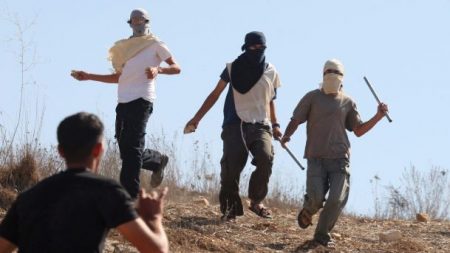
NABLUS – Israeli forces shot and injured four Palestinians with rubber-coated steel bullets, after residents in a Palestinian village south of Nablus in the northern occupied West Bank gathered to defend their homes from a mob of Israeli settlers that stormed the community. Hours later, two Palestinians were hospitalized when a group of settlers attacked Palestinians in a nearby village.
Ghassan Daghlas, an official who monitors settler activities in the northern West Bank, told Ma’an that some 100 “extremist settlers” from the illegal Yitzhar settlement entered the village of Urif from its east side and proceeded to smash windows of houses, included one belonging to resident Munir al-Nouri.
He added that the settlers were about to break into the house before Palestinian villagers gathered and forced them away.
According to a Facebook group for Urif, loudspeakers from the village’s mosque were used to inform residents of the incident and to urge them to help defend the homes from the “herds of settlers” attacking the village.
Minutes later, Daghlas said, a number of Israeli military vehicles stormed the village to protect the Israelis.
Clashes erupted between Palestinians youth and Israeli forces who “haphazardly” fired tear gas canisters, stun grenades, and rubber-coated steel bullets at Palestinians, according to Daghlas.
Daghlas said that four Palestinians were shot with rubber-coated steel bullets, one of whom was hit in the head. Medical sources said that Adel al-Safadi, Jihad Saad, Mustafa Fawzi, and Sharif Abd al-Hafith were taken to Rafidiya hospital to be treated for the gunshot injuries.
An Israeli army spokesperson told Ma’an that a “violent dispute erupted between Israelis and Palestinians” who she said were “mutually throwing rocks at each other in an area around the village.” When Israeli forces arrived to “disperse the dispute, several Palestinians shot flares at (Israeli) forces.”
In response, Israeli forces used “riot dispersal means,” she said. No Israeli were reported injured
Later Saturday afternoon, Daghlas said that another group of Israeli settlers attacked Palestinian homes in the town of Huwwara, just a few kilometers away from Urif, on the southeastern edge of Yitzhar.
Daghlas said that dozens of settlers attacked Palestinians and their homes with stones and “sharp objects.” A 72-year-old woman, Badiah Muhammad Hamdan, and a young man identified as Ahmad Yousif Udah were hospitalized. Daghlas said Hamdan sustained head injuries.
A video shared on social media showed the woman, bloodied and incapacitated, being evacuated in an ambulance.
Separately, a young Palestinian man was run over by an Israeli settler later Saturday afternoon in al-Masoudiyya west of Nablus city, Daghlas said.
Daghlas told Ma’an that 19-year-old Asim Salim from Nablus city was evacuated to Rafidiya hospital, where doctors said he sustained moderate wounds. Daghlas added that Salim was trying to cross the road in al-Masoudiyya when a settler’s vehicle hit him and fled the scene.
An Israeli border police spokesperson could not be reached for comment on the reported hit and run.
According to the Applied Research Institute – Jerusalem (ARIJ), since the state of Israel confiscated land from Urif and other Palestinian villages to establish the illegal Yithzar settlement in the 1980s, “attacks and violence perpetrated by settlers has had a profoundly negative impact on Palestinian residents and their property,” stressing that Yitzhar “poses a daily threat to residents of the neighboring Palestinian villages.”
Settlers have also been known to steal crops, damage and burn trees and other plants, and attack places of worship in the area, in an attempt to intimidate Palestinian villagers and farmers from using their land.
On Friday, a video was released showing 15 masked Israeli settlers attacking Israeli activists in the central West Bank, throwing rocks and hitting the activists with clubs.
Many Palestinian activists and rights groups have meanwhile accused Israel of fostering a “culture of impunity” for Israeli settlers and soldiers committing violent acts against Palestinians.
In March, Israeli NGO Yesh Din revealed that Israeli authorities served indictments in only 8.2 percent of cases of Israeli settlers committing anti-Palestinian crimes in the occupied West Bank in the past three years.
Between 500,000 and 600,000 Israelis live in Jewish-only settlements across occupied East Jerusalem and the West Bank in violation of international law, with recent announcements of settlement expansion provoking condemnation from the international community.
According to the United Nations Office for the Coordination of Humanitarian Affairs (OCHA), there were a total of 221 reported settler attacks against Palestinians and their properties in the West Bank and occupied East Jerusalem in 2015, and 107 in 2016.
April 22, 2017
Posted by aletho |
Ethnic Cleansing, Racism, Zionism, Subjugation - Torture | Human rights, Israel, Israeli settlement, Palestine, West Bank, Zionism |
Leave a comment
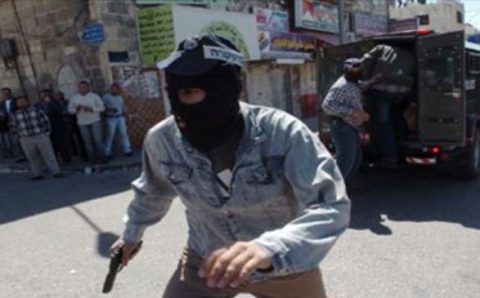
BETHLEHEM – Palestinian security forces briefly detained two undercover Israeli army soldiers who were conducting a military raid in the Rafidiya area of the northern occupied West Bank city of Nablus on Saturday evening, according to official Palestinian and Israeli sources.
The two were taken to a Palestinian police station in Nablus. An Israeli army spokesperson confirmed the incident to Ma’an, saying that during an Israeli army “activity,” the officers were “briefly questioned by Palestinian security forces,” adding that in coordination with the Israeli Civil Administration, the soldiers were returned to Israeli custody.
According to Israeli daily Haaretz, the two soldiers — members of an Arabic-speaking unit of the Israeli army known as the “Mustarabeen” in Arabic, who are responsible for infiltrating and carrying out detentions in Palestinian communities — “scuffled” with Palestinian police officers for some time before they were returned to Israeli forces.
Their gear and weapons, as well as the car they were driving in, was also also reportedly returned.
The incident represented a rare standoff between Palestinian and Israeli forces, as the Palestinian Authority (PA) regularly allows Israeli forces to enter PA-controlled areas in the West Bank to conduct daily detention raids and other military operations, in contravention of the Oslo Accords.
April 16, 2017
Posted by aletho |
Ethnic Cleansing, Racism, Zionism | Israel, Palestine, West Bank, Zionism |
Leave a comment
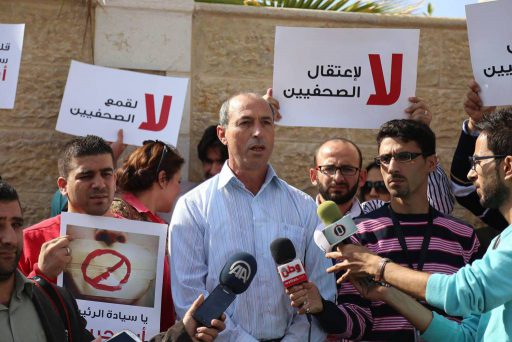
Palestinian journalist and former prisoner Omar Nazzal recently reported on his Facebook page about a series of restrictions that have been issued by Israeli occupation forces against him through military orders. Nazzal was released from administrative detention on 20 February after 10 months of imprisonment without charge or trial; since that time, he has been slapped with a two-year travel ban preventing him from leaving occupied Palestine; banned from Jerusalem and Palestine ’48 for 99 years; and forbidden from opening bank accounts until further notice.
Nazzal was seized by Israeli occupation forces in April 2016 as he attempted to enter Jordan through the Karameh/Allenby crossing en route to the European Federation of Journalists conference in Sarajevo, Bosnia and Herzegovina. He is a member of the Secretariat of the Palestinian Journalists Syndicate and president of the Assembly of Democratic Journalists. His detention was internationally condemned by the EFJ, the International Federation of Journalists and other international associations.
There are currently 24 Palestinian journalists imprisoned in Israeli jails, the Palestinian Media Assembly reported on 2 April on March violations of the rights of journalists by the Israeli occupation. They include the five journalists of Sanabel Radio, who have been imprisoned since August 2016, when occupation forces invaded the radio station, abducting all of the staff present. Nine journalists were arrested in March, including Samah Dweik, Hassan Sawan, Mohammed Abed Rabbo, Khaleda Ghosheh, Raed Abu Remaileh (since released) and Mohammed Batrakh, Ayoub Sawan, Asim Mustafa and Musab al-Said (all still detained.)
Palestine TV correspondent Ahmed Shawar was injured by rubber-coated metal bullets as he covered a demonstration against settlements and the apartheid wall in Kufr Qaddoum. In addition, multiple photographers were injured in Nabi Saleh by Israeli occupation forces, including Rasha Herzallah, Hamza Shalash, Essam Rimawi, Mohammed Turkman, Majdi Shtayyeh, Abbas Momani and Saleh Hamad. In Kafr Malek, Nasser Shyoukhi and Abdel-Kader Bilbeisi were injured after inhaling tear gas. In addition, Israeli occupation forces attacked and confiscated several print shops, including Nahda in Tulkarem, Ibn Khaldoun in Tulkarem and Dozan in Bethlehem.
Israeli occupation forces stormed the home of Palestinian cartoonist Osama Nazzal on 27 March, smashing his paintings on the wall and drawing tools as well as confiscating other artwork.
April 8, 2017
Posted by aletho |
Ethnic Cleansing, Racism, Zionism, Full Spectrum Dominance, Subjugation - Torture | Human rights, Palestine, West Bank, Zionism |
Leave a comment
HEBRON – Two Palestinians from the Hebron-area village of Beit Ummar were lightly injured Friday after an Israeli settler attempted to run them over on a main road connecting the southern occupied West Bank city of Hebron to Jerusalem.
Local activist Muhammad Awad told Ma’an that an Israeli settler was driving on the road, located near Beit Ummar, when the settler attempted to to run over Palestinians Muhammad Basem Khader al-Alami, 25, and Saed Samir Hassan al-Salibi, 20.
“The Israeli settler drove very fast with his car towards the two, who noticed the settler’s car rushing towards them at the last moment, causing them to fall on the side of the street, while the Israeli settler escaped,” Awad said, describing the scene to Ma’an.
An Israeli army spokesperson said they were looking into reports.
The incident came a day after Israeli settlers from the illegal settlement of Yitzhar in the northern West Bank closed a Nablus-area road in protest, calling for “revenge” on Palestinians after an alleged car-ramming attack was carried out earlier in the day near the illegal Israeli Ofra settlement in Ramallah, which killed an Israeli soldier and wounded another moderately.
Incidents involving Israeli settlers hitting Palestinians in the occupied Palestinian territory are a relatively regular occurrence, and are usually treated by Israeli security forces as accidents, even in cases when witnesses claim the car rammings were deliberate.
Many Palestinian activists and rights groups have accused Israel of fostering a “culture of impunity” for Israeli settlers and soldiers committing violent acts against Palestinians.
Between 500,000 and 600,000 Israelis live in Jewish-only settlements across occupied East Jerusalem and the West Bank in violation of international law, with announcements of settlement expansion earlier this year sparking condemnation from the international community.
According to the United Nations Office for the Coordination of Humanitarian Affairs (OCHA), there were a total of 107 reported settler attacks against Palestinians and their properties in the West Bank and occupied East Jerusalem in 2016.
April 8, 2017
Posted by aletho |
Ethnic Cleansing, Racism, Zionism, Subjugation - Torture | Hebron, Israeli settlement, Palestine, West Bank, Zionism |
Leave a comment


 Aletho News