Palestinian astrophysicist imprisoned without charge or trial under administrative detention

Samidoun Palestinian Prisoner Solidarity Network | May 3, 2016
Prominent Palestinian astrophysicist Imad Barghouthi, a professor of theoretical space-plasma physics at Al-Quds University, was ordered by the Israeli occupation military to three months in administrative detention – imprisonment without charge or trial – on Monday, 2 May.
Barghouthi, who marked his 54th birthday in Israeli prison, joins nearly 750 fellow Palestinians held without charge or trial under administrative detention. Detention orders are indefinitely renewable on the basis of “secret evidence” to which both Palestinian detainees and their lawyers are denied access. The scientist, from Beit Rima near Ramallah, was arrested by Israeli occupation forces at a military checkpoint in Nabi Saleh on 24 April.
Barghouthi, a former employee of NASA in the United States, is a prominent figure in the Palestinian scientific community and his work is internationally known. He received his BS in physics from the University of Jordan in 1985, followed by his masters’ degree in nuclear physics in 1988. In 1994, he completed his Ph.D. at Utah State University in the United States.
He was arrested before, on 6 December 2014, as he traveled to a scientific conference in the United Arab Emirates, and ordered to administrative detention without charge or trial; he was released early, on 22 January 2015, following an international outcry from the scientific community, including statements from AURDIP (Association des Universitaires pour le Respect du Droit International en Palestine), BRICUP (British Committee for the Universities of Palestine), Committee of Concerned Scientists, MESA (Middle East Studies Association) Committee on Academic Freedom, and Euroscience.
Upon Barghouthi’s release, he wrote a letter to international organizations that had supported him: “I call on the international community that spoke up on my behalf to speak up also on behalf of all Palestinian political prisoners. There are approximately 500 Palestinians held in administrative detention, imprisoned without charge or trial. The systematic use of arbitrary imprisonment by Israeli forces to punish Palestinians violates international humanitarian law under the Fourth Geneva Convention.”
Al-Quds University, where Barghouthi teaches, has also been subject to ongoing Israeli repression, including invasion of the campus, destruction of student organizations’ offices and materials, and arrests of students.
Samidoun Palestinian Prisoner Solidarity Network calls for the immediate release of Palestinian scientist Imad al-Barghouthi, which comes as part of a systematic attack on Palestinian academics, journalists, writers and other cultural workers by the Israeli occupation. We reiterate that the case of Imad al-Barghouthi underlines the necessity of the international academic boycott of Israeli academic institutions – a call adopted by an increasing number of academic associations and academic labor unions. Such institutions are deeply complicit in the structures of occupation that deny Palestinian human rights at all levels, including denying Palestinians’ rights to education and academic freedom, and upholding the structures of colonialism and occupation that target Barghouthi, his students and fellow faculty at Palestinian universities like Al-Quds, and the Palestinian people as a whole.
Photo: Al-Quds Human Rights Clinic
The Pregnant Woman: An Everyday Story from Palestine
By Craig Murray | May 2, 2016
Our corporate and state media deliberately fails to report what is happening daily in Palestine. This account from Reuters three days ago was not used in any British mainstream media:
JERUSALEM // Israeli police shot and killed a pregnant Palestinian woman and her teenage brother yesterday at a checkpoint near Ramallah in the occupied West Bank, police and witnesses said.
Israeli police claimed the pair approached the vehicles-only lane at the Qalandiya military checkpoint and tried to carry out an attack. They said the woman was holding a knife and both she and the man walked rapidly towards police and security guards in a vehicles-only lane at the Qalandia checkpoint outside Jerusalem.
Alaa Soboh, a Palestinian bus driver who said he witnessed the incident, said the pair had appeared to be unfamiliar with crossing procedures and were swiftly challenged at the checkpoint.
“As soon as the two crossed, [Israeli forces] started screaming ‘Go back, go back’, and then they began shooting,” he said.
“The first one they shot was the girl, the boy tried to go backward, when they fired seven bullets at him.”
A witness told the Palestinian Maan News Agency that Israeli forces fired more than 15 rounds into the woman’s body.
The Palestinian Red Crescent said Israeli forces denied Palestinian paramedics access tothe woman for medical treatment, the agency reported.
The pair were identified as 24-year-old mother of two Maram Abu Ismail, and her 16-year-old brother Ibrahim Taha. The siblings were from the West Bank town of Qatuna.
The victims’ family, interviewed by Palestinian media, said that Maram was five months pregnant at the time of her death.
No Israelis were injured in the incident.
The military checkpoint where the two were killed is a main access point for Palestinians to cross from the occupied West Bank to Jerusalem and has been the site of a number of alleged, actual, and attempted attacks since October.
In the past six months, Israeli forces have killed at least 193 Palestinians, 130 of whom Israel said were assailants.
Many others were shot dead in clashes and protests.
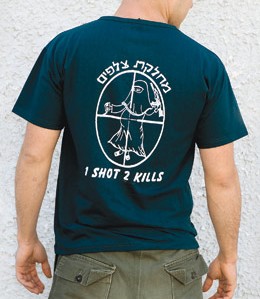 Frankly I do not believe that the pregnant woman was walking towards the heavily armed soldiers openly wielding a knife from a distance. If she were attempting to stab a soldier, she would have concealed any knife, and not called attention by walking in the vehicle lane. Even if the account were true, I do not accept that a group of soldiers could not defend themselves against a heavily pregnant woman with a knife, spotted at a distance and approaching on foot, in any other way than by putting fifteen bullets into her, even if her sixteen year old brother was with her – and witnesses say he was backing away when he was himself shot.
The truth is that Palestinian lives simply do not matter. They did not matter to the Israeli soldiers who callously shot them dead rather than try to discover what was actually happening, and they do not matter to the British media who do not report this, yet find massive room for ludicrous accusations against British supporters of Palestine. Reuters tells us that 193 Palestinians have been killed in six months. These two will be added to the 130 whom Israel claim were assailants, a very large number of whom were in reality not. But even the Israeli figure admits Israel has killed 63 Palestinians who were not assailants, and many thousands more have had their homes destroyed to make way for yet more illegal Israeli settlers.
An everyday story for Palestinians. A terrible personal tragedy for the murdered woman, her murdered little brother, her unborn child and her surviving small children.
And here is the secret. The British media are frightened that you will care. That is why they do not tell you.
Israeli Justice Ministry drops probe after report that contractor behind Qalandiya killings
Ma’an – May 1, 2016
BETHLEHEM – The Israeli who shot and killed a pregnant Palestinian woman and her teenage brother at the notorious Qalandiya checkpoint in the occupied West Bank on Wednesday was a private security contractor, not a member of the police forces, Israeli media revealed on Sunday.
The Israeli Justice Ministry released a report on Sunday, which revealed that Maram Salih Hassan Abu Ismail, 23, and her brother Ibrahim, 16, had been shot and killed by a privately contracted security guard, and not a police officer as had previously been thought, Israeli Channel 10 reported, noting that the police officer only fired warning shots into the air.
As a result, newspaper Haaretz wrote, the Justice Ministry’s police investigation unit won’t be opening a probe into the killings.
It remains unclear if and by whom a further probe will be conducted.
The revelation comes as serious questions have arisen over Israeli forces’ version of the events that led to the death of Abu Ismail and her younger brother earlier this week.
The contractor shot and killed the siblings after Israeli forces said that Abu Ismail, who was five months pregnant, threw a knife in the direction of Israeli forces at the Qalandiya military checkpoint.
However, witnesses at the scene said the two siblings posed no threat at the time the Israeli officer killed them, as they mistakenly entered the wrong part of the checkpoint and did not understand Israeli soldiers speaking to them in Hebrew.
Israeli police has so far refused to release security camera footage of the Qalandiya shooting, despite having done so in past cases under investigation.
An Israeli police spokesperson was not available for comment on Sunday.
Maram and Ibrahim Abu Ismail are among more than 200 Palestinians to be killed by Israeli forces or settlers since October, the majority during alleged or attempted small-scale attacks that have left nearly 30 Israelis dead.
UN investigations have shown that, in a number of instances since the unrest began, Israeli forces have implemented a policy of extrajudicial execution, shooting dead Palestinians who did not present imminent threat at the time of their death.
Israeli police refuse to release video of Qalandiya murder
Palestinian Information Center – May 1, 2016
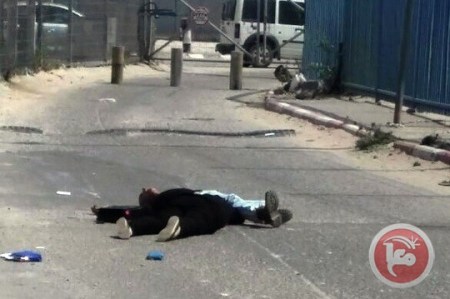 NAZARETH – The Israeli occupation police refused to release a video documenting the murder of a young Palestinian lady and her brother who posed no threat to the occupation troops, Hebrew press said on Sunday.
According to the Israeli police version, 23-year-old Maram Saleh Abu Ismail and her 16-year-old brother Ibrahim refused their order to stop and posed a threat to officers.
The Israeli police further claimed that Maram wielded a knife before she was shot along with her brother, who was walking behind her, by the Israeli police.
Eyewitness accounts, however, contradict such Israeli claims, saying the two casualties posed no threat and were at a distance from the occupation troops, who talked to them in a Hebrew language which they did not understand.
Haaretz newspaper quoted Israeli police sources as stating that videos documenting live scenes cannot be released during the investigation phase.
According to the newspaper, similar recordings legitimizing police use of force were released in the past. Israeli police claimed, after searching the casualties’ bodies, that Ibrahim was holding a knife, which was discredited by eyewitness accounts.
The newspaper said a snapshot picked up at the scene shows the two martyrs lying on the ground 15 meters away from the checkpoint and in a place where no Israeli police officers were deployed.
MK Dov Khenin (Joint Arab List) demanded that “Defense Minister Moshe Ya’alon and Public Security Minister Gilad Erdan launch an immediate probe into the scene and release the video.”
Khenin said no recordings were released despite the fact that the checkpoint was equipped with several cameras.
Maram, who was shot dead by the occupation troops, is a mother of two children and was expecting another baby. She was killed on her way to al-Maqasid hospital in Occupied Jerusalem.
The Woman, Who was Killed By Israeli Soldiers Along With Her Brother, Was Pregnant
By Saed Bannoura | IMEMC | April 28, 2016
Palestinian medical sources confirmed that the Palestinian woman, who was killed by Israeli army fire, on Wednesday, did not carry an explosive belt as the army claimed, but was instead five months pregnant, and “her only fault was walking the wrong route and not understanding Hebrew.”
The Israeli police and army tried to come up with various allegations, including the usual claim of “carrying a knife,” and then tried to claim that she “was wearing an explosive belt,” while the only thing she “carried” was her fetus.
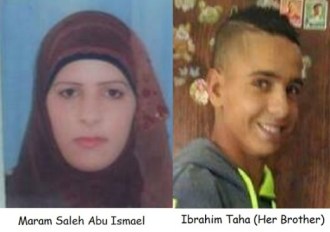
The slain woman has been identified as Maram Saleh Abu Ismael, 24, a mother of two children; Sarah, 6, and Remas, 4. Her brother, Ibrahim Taha, only sixteen years of age, was also killed as he was walking with her, heading to Jerusalem, after she obtained for the first time, a permit to enter the city.
Contrary to the Israeli allegation that Maram “carried a knife,” and the second allegation of “carrying an explosive,” eyewitnesses said the two victims walked the wrong route while heading to the Qalandia terminal, as they took the route that is only used for vehicles, instead of the pedestrian path.
The soldiers then started shouting in Hebrew, a language neither Maram nor her brother understood, and the woman just froze from fear before the soldiers started firing at her, and when her brother rushed to rescue her, the soldiers shot him too, and both were left to bleed to death.
The two were tens of meters away from the soldiers, and contrary to military allegations, did not attempt to attack any soldier or officer.
Ahmad Taha, an eyewitness from Jerusalem said that after the soldiers shot the pregnant woman and her brother, they retreated a few meters back, and fired several additional live rounds on them, “confirming the kill.”
“There was no stabbing attempt, and no reason for the army to shoot, the soldiers shot them from a distance, and later fired more rounds to confirm the kill,” Ahmad said, “The soldiers then placed two knives next to the lifeless body of the pregnant woman, and shortly after that, the police published pictures showing three knives!”
Mohammad Ahmad, a bus driver who witnessed the shooting, said an Israeli soldier who was standing behind a large concrete block, shot the woman from a distance of more than twenty meters.
“Neither the woman, nor her brother, posed any threat to the lives of the soldiers,” Ahmad stated, “They were far away from the nearest soldier, and did not pose any threat to them – they just walked the wrong route.”
The slain brother and his sister are from Qotna village, northwest of occupied Jerusalem; Maram is Married and living with her husband and children in Beit Surik nearby village.
It is worth mentioning that a Palestinian ambulance rushed to the scene, but the soldiers closed the entire area, and prevented them from approaching the two Palestinians, who eventually bled to death.
More than an hour after the shooting, Israeli military medics placed the corpses of the two Palestinians in black bags, and took them away.
One day before this fatal shooting, a Palestinian man in his sixties nearly faced the same deadly fate when he walked this same wrong route, but when the soldiers started shouting at him he understood them because he speaks and understand Hebrew very well.
Israeli army take control of street under Palestinian authority for illegal settlers’ visit
International Solidarity Movement | April 27, 2016
Hebron, Occupied Palestine – At around 11.30am on Tuesday 26 April, heavily armed Israeli occupation soldiers and border police started appearing in large numbers through Shuhada checkpoint (also called checkpoint 56). This area is H1 area, supposedly controlled by the Palestinian Authority, where Israelis have no legal authority. In blatant disregard of this fact they proceeded to walk down Bir Saba Street, stopping at each shop demanding all cars on the street were removed, but did not make the shops close as they usually do. At the same time the soldiers closed Shuhada checkpoint for registered resident Palestinians, who could neither leave or enter to reach their homes.
The soldiers moved up and down the street, ensuring their demands were met and the cars removed. Where they could not find the owners, they broke into cars to search for explosives. While this was ongoing, more soldiers and border police arrived blocking off the road at the other end from the checkpoint. A sniffer dog was led up and down the street by the soldiers to also search for non existent explosives. The army rummaged around rubbish piles along the road, or made local shop keepers move rubbish for them to inspect, leaving a mess for the Palestinians to clean up.

Occupation soldiers searching for explosives outside local shops. Photo credit: ISM
Several hours later, having also made locals move off the road and sit on the pavement, the reason for this elaborate exercise was clear when a group of approximately 40 settlers, escorted by the same number of border police and soldiers, moved from the illegal settlement inside Shuhada checkpoint into Palestinian territory down the road to a clearly revered tomb, where they spent ten minutes or so. They were then escorted back into the illegal settlement, and followed by five subsequent groups of illegal settlers, again escorted by police and army.
 Illegal settlers escorted by occupation soldiers and border police to the tomb in H1. Photo credit: ISM
Local and international activists were present at several points along the road to monitor and photograph events, and any incidents. When the settlers walked past several of them took photos and/or filmed the activists along the road, for unknown reasons. One settler asked where the internationals were from, and welcomed them to Israel. Not only was this factually inaccurate and a disregard of the Oslo agreement, but a highly insensitive and conflictual comment, made on Palestinian territory.
At three o’clock the “tours” were finished and all the settlers escorted back through the checkpoint into H2 area, where large groups of Palestinians live under Israeli military control. A day of trading was lost for the local shops keepers; not to mention that an Israeli incursion into a Palestinian area is illegal and unacceptable.
Palestinians forced to close shops in Hebron for Israeli Passover visits
Ma’an – April 26, 2016
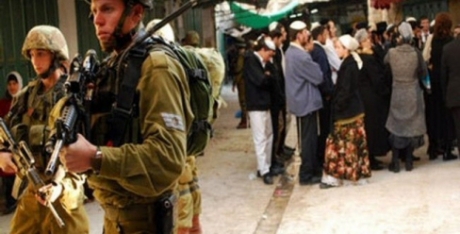
BETHLEHEM – Palestinian shop owners were forced to close their storefronts in Hebron Tuesday as Israeli politicians called for the annexation of the occupied city during visits by thousands of right-wingers for Passover.
Hebron local and prominent activist Issa Amro told Ma’an that Israeli forces instructed shopkeepers in both the H1 and H2 areas of Hebron to remain closed.
Amro said that by forcing shops to close in H1 — the area of the city under jurisdiction of the Palestinian Authority — the Israeli authorities were supporting right-wing Israelis aiming to push Palestinian locals from the city.
“They want to make it look [to Israeli settlers] like Palestinians don’t live here,” Amro said.
The closures of shops in H1 is likely to come as a detriment to shop owners’ livelihoods while road closures typically implemented by Israeli forces during the visits will impede the movement of Palestinians throughout the Hebron district, Amro added.
The H2 area, under full Israeli military control, continued under lockdown as the Ibrahimi Mosque — known to Jews as the Cave of Patriarchs — was sealed to Palestinian Muslims for the second consecutive day as Israelis visited holy sites in and around the Old City, Amro said.
Amro told Ma’an that large groups of Israelis visiting the area under armed protection on Monday launched verbal abuse at Palestinian locals, and several Palestinian families refused to leave their homes out of fear of violence from the groups.
An Israeli army spokesperson did not have immediate information on increased security measures or closure in the Hebron area for Passover.
Thousands of Israelis descended on Hebron’s Old City Monday as Israeli politicians held a rally in the center of the flashpoint area, under heavy protection by Israeli security forces.
Israeli media outlets reported that Israeli Deputy Defense Minister Eli Ben-Dahan of the Habayit HaYehudi party called on the Israeli leadership to annex the occupied West Bank in its entirety.
“We have to connect Judea and Samaria to the State of Israel. We have returned to our land, so that we will never again have to leave it,” Ben-Dahan said, referring to the West Bank.
Knesset member Oren Hazan, of the Likud party, demanded Israel’s defense ministry allow more Jewish Israelis to settle in Hebron, referring specifically to two buildings reportedly purchased by far-right groups.
“The buildings in Hebron are the basis of peace, not dispute. The time has come to populate Hebron, just as the time has come to populate every hilltop in Judea and Samaria and in all of Israel,” the Jerusalem Post reported Hazan as saying.
Hebron — the largest Palestinian city in the West Bank — has long stood at the epicenter of violence in the occupied West Bank as the Israeli military and settlers attempt to expel Palestinians from their homes, particularly in the Old City where Monday’s rally took place.
The Israeli leadership has long ignored demands by the international community to halt settlement activity in occupied Palestinian territory, and the UN has in the past slammed Israel for expansion of settlements in Hebron’s Old City in particular, where increased Jewish presence has come at the detriment to Palestinian locals.
Emily Mulder contributed reporting from Bethlehem.
Israeli Army Closes Entrance Of Hebron Emergency Center With Concrete Blocks
IMEMC – April 25, 2016
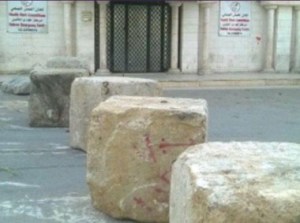 Israeli soldiers closed the main entrance of the Hebron Emergency Center, run by the Hebron Health Committees, by placing concrete blocks, completely sealing it, and deployed dozens of soldiers on its rooftop on Monday morning.
Dr. Ramzi Abu Yousef, director of the Health Work Committees (HWC) in Hebron, said many soldiers occupied the center’s rooftop, and turned it into a military base.
Abu Yousef warned of the consequences of this violation, especially since the center receives hundreds of patients on a daily basis, and added that the center provides its medical services to more than 60,000 Palestinians.
“For years now, the center has been subject to frequent Israeli military violations, including many invasions, and the soldiers even fired gas bombs at it,” Abu Yousef said, “They also repeatedly sprayed it with waste-water mixed with chemicals, in addition to harassing the patients and their families, and the various measures restricting their freedom of movement.”
The HWC voiced an urgent appeal to various human rights groups to intervene, and provide the needed protection to Palestinian health centers, in addition to pressuring Israel into halting its serious violations.
“People who need medical care have the right to receive it, but Israel continues to violate it,” the HWC added, “International Humanitarian Law stresses on the importance of unrestricted access to medical facilities.”
Trust the IDF investigation
By Yossi Gurvitz | Yesh Din | April 25, 2016
The case of Bassem Abu Rahme challenges the army’s claim that it can conduct a serious investigation of itself.
On April 17th 2009, Bassem Abu Rahme was demonstrating against the separation wall in his village, Bil’in. After another demonstrator was hit by crowd-dispersal weapons shot by Israeli security forces, Abu Rahme shouted at the soldiers and Border Policemen that the person was wounded. Seconds later, a person in Israeli uniform (it is unclear whether he or she was an IDF soldier or a Border Policeman) fired a tear gas canister directly into Abu Rahme’s chest; the wound was fatal, and within hours Abu Rahme was dead.
These facts were not, until recently, in contention. Even so, almost seven years after his death, no one has been held responsible for Abu Rahme’s death. Seven years of foot dragging and avoiding investigation (more on that in these two posts). This is what happens when a member of the security forces shoots an unarmed man — who everyone agrees posed no danger to — and the cameras (three of them, actually) document the event – yet are not aimed directly at the shooter.
We do not know who shot Abu Rahme, whether he or she was an IDF soldier or a Border Policeman. We do, however, have forensic evidence pointing to where the shooters stood. According to the ballistics examination, conducted by the IDF itself, “the only possibility of this sort of armament hitting the target is only by direct fire and using a flat angle — in the single digits — no more than three or four angles.” That is, there is no possibility of Abu Rahme being hit by a canister shot according to the orders and hitting him by mistake; even were the canister to ricochet off a fence, it would still be fired directly, contrary to orders.
The Chief of the IDF’s Photo Reconnaissance Department told the Military Police Criminal Investigations Division (MPCID) in 2013 that direct fire of tear gas canisters is forbidden and that it should hold a lineup to determine where each of the shooters stood. The MPCID refrained from doing so.
Last week, Israel’s Supreme Court heard an appeal by Yesh Din and human rights NGO B’Tselem , in which we demanded that the shooter be indicted, or that at least the army indict his commander. The hearing was held ex parte due to a strike by the prosecution. We estimate that the state would have argued that the shooters cannot be identified; and that it would also try to avoid mentioning the fact that the MPCID and the military prosecution did everything in their power to refrain from investigating the case for 15 months, and were forced to open an investigation after our first petition to the High Corut of Justice. The government is likely to claim that the canister that hit Abu Rahme’s chest ricocheted off something – and will play down the fact that even if it did, its own ballistic diagnosis ruled that it was fired contrary to orders.
The government is further likely to argue that it has no clue as to whom it should prosecute, hoping the judges will not think too much of the fact that it strangled the investigation for years. Our demand is simple: even if there is no chance to indict the shooters themselves, and we contend this claim since the MPCID’s failure to investigate rendered the case no longer investigable, the commanders should still bear responsibility.
So far, none of this has happened. The justices decided to rescind the petition, since under the Turkel Commission’s recommendations one may now object to the Attorney General over the military prosecution’s decision – a process that did not exist when we made our appeal. Justice, it seems, will have to keep waiting.
It is important to emphasize this time and again: Abu Rahme was unarmed. He was a danger to no one. He was protesting an injustice in his village – an injustice recognized by the High Court of Justice. And yet, an Israeli security officer, perhaps more than one, fired at a demonstrator in a life-threatening manner and caused his death. We note that one of the suspects said in his interrogation that he never received proper training with the weapon he was using. The commanders of these warriors, who are responsible for their actions, continue dodging this responsibility to this day.
Over the last few weeks, the very well-documented murder in Hebron has been called an exceptional, unrepresentative, and isolated incident by senior IDF and political figures. Every person of conscience should wonder whether this is so; whether the important statement in the case was not made of by Chief of Staff Eizenkot, but rather by Prime Minister Netanyahu, who phoned the father of the shooter and told him (Hebrew) to “trust the IDF investigation.”
What ought an Israeli security officer understand from the prime minister’s remarks? A reasonable interpretation would be: “don’t worry, our investigation will find you acted properly.” This, after all, is the unwritten contract between the government and its soldiers: we send you to do the dirty work of oppressing a civilian population, and in return we will turn a blind eye if you sometimes exceed your orders – unless are caught red-handed, that is. In such a case, we shall regrettably have to begin the investigation show.
Palestinian youth and students among 11 raided and arrested by Israeli occupation forces
Samidoun Palestinian Prisoners Solidarity Network | April 19, 2016
 Israeli occupation soldiers arrested 11 Palestinians in dawn raids on Tuesday, 19 April, focusing on students and youth. Three students at Al-Quds University’s Abu Dis campus – Noor al-Islam Darwish, Hala Beitar and Salam Abu Sharar, all women – were raided and arrested in Ramallah.
Majd Yousef Atwan, 22, from al-Khader near Bethlehem, a recent beauty school graduate, was arrested in a 2:00 am army raid on her home; her father said that she was being accused of “incitement for Facebook postings.”
Many students and youth have been arrested by Israeli occupation forces in the run-up to Palestinian campus elections; while many Palestinians are being persecuted for Facebook posts, including poetry.
Murad Mohammed Taqatqa and Walid Issa Taqatqa of Beit Fajar near Bethlehem were also arrested by occupation forces, as was Abdel-Rahim Mahmoud Awad from Beit Awwa near al-Khalil. Ahmed Nidal Awel, 20, and Ayman Farouk Barham, 35, were arrested by Israeli occupation forces in Kufr Qaddoum.
In Al-Ram, north of Jerusalem, the Israeli forces shot a 15-year-old boy in the leg at the entrance to the village as they invaded it; Palestinian Red Crescent medics reported they were prevented from accessing the boy to provide medical care and that he was then arrested by the occupation forces. Another al-Ram resident was also arrested.
Israel On a Rampage of Destruction In the West Bank
By Barbara Erickson | TimesWarp | April 12, 2016
Israeli bulldozers are tearing up Palestinian structures at a rapid pace this year, destroying more than 500 houses and other buildings and displacing more than 650 men, women and children in three short months. The demolition spree is outpacing last year’s rate by more than three to one, and monitoring groups are raising the alarm.
Representatives of the European Parliament have spoken out against the destruction, saying Israel is violating international law. The United Nations and the Israeli human rights group B’Tselem have issued several reports and called for a halt to the demolitions; even the U.S. state department has expressed “concern” over the campaign.
The New York Times, however, has given short shrift to this story, relegating it to wire service reports, which appear neither in print nor in the featured headlines of Middle East news on the website. Only readers who search the site for specific news about demolitions can read about the recent rampage of destruction taking place in the West Bank.
No Times reporter has found it worthwhile to visit Khirbet Tana, for instance, a herding community near Nablus. The Israeli army has carried out demolitions there four times since February of this year, most recently just this past week, when they destroyed tents, houses and animal shelters and confiscated a car, a tractor and a water tank.
Earlier, on March 2 the authorities demolished a two-room schoolhouse with its playground equipment and toilets (as well as nine homes, two tents, 16 animal shelters and one solar panel).
The Khirbet Tana school had been built in 2011 with funds donated by an Italian aid organization. According to the United Nations Office of Humanitarian Affairs, it was one of more than 100 structures “provided as humanitarian assistance to families in need,” which have been destroyed so far this year.
This has become a heated issue with many donor groups, including members of the European Parliament. After a recent EP delegation to Palestine, Irish parliamentarian Martina Anderson stated, “We are incensed by Israel’s increasing number of demolitions of humanitarian structures funded by EU taxpayers. People are losing their homes in the cold and the rain. Israeli policies violate international law and show disrespect for the EU, Israel’s biggest trade partner.”
Her words had no effect on Israeli authorities, who went on to bulldoze the school at Khirbet Tana two weeks later and then spent the next two days destroying structures in eight other communities.
Writer Amira Hass described this follow-up operation in the Israeli newspaper Haaretz: “The Israelis destroyed tents people were living in, huts, pens, herd enclosures, an access road (which makes it very hard to deliver humanitarian aid to the families), a two-kilometer pipe meant to provide water to 50 families in the area, storage facilities and a dairy. Some of the tents and the pipe were donated by international organizations. Fifty-nine people, including 28 minors, were left without a roof over their heads.”
As of April 4, according to the UN, Israel had destroyed 500 Palestinian structures and displaced 657 individuals this year, compared with 521 structures and 663 persons in all of 2015. As B’Tselem has noted, this is “an unusually massive demolition campaign.”
All this is disturbing enough, but the news that Israeli politicians are shamelessly pushing for continued destruction of the vulnerable herding communities is even more appalling. As Hass reports in Haaretz, Knesset members “have openly pressured Civil Administration officials to step up the demolitions and evict Palestinian communities from Area C.” They have also “demanded that the authorities destroy buildings that international organizations, particularly European ones, have donated.”
The Times, however, has little interest in exposing the illegal and inhumane actions of Israeli officials and the consequent suffering (and stubborn resilience) of vulnerable Palestinian families clinging to their land and livelihoods. To do so would expose the lie at the heart of the Israeli narrative—the claim that Israelis are the innocent victims of Palestinian terrorism.
The demolition campaign, however, reveals the helplessness of Palestinian communities, the cruelty of the occupation forces and the criminal actions of government officials. From the Times’ point of view it is all best left unsaid.
Featured Video

Rewriting the risk? Inside the government’s vaccine safety messaging
or go to
Aletho News Archives – Video-Images
Book Review
“Davos Can Really Replace the UN”
Inside the book that maps the architecture behind global governance — from the Epstein files to the Pact for the Future
Lies are Unbekoming | April 1, 2026
On June 13, 2019, the United Nations and the World Economic Forum signed a partnership deal to “accelerate the implementation of the 2030 Agenda for Sustainable Development.” That same evening, WEF president Börge Brende — Norway’s former Foreign Minister — had dinner with Jeffrey Epstein at Epstein’s Manhattan townhouse. The Epstein files, released January 2026, contain an exchange between the two from the previous year. Epstein to Brende: “Davos can really replace the UN. C21, cyber, crypto . genetics… intl coordination.” Brende back to Epstein: “Exactly — we need a new global architecture. World Economic Forum (Davos) is uniquely positioned — public private.”
The next day, the UN General Assembly adopted the framework for restructuring global governance.
That sequence — the partnership signing, the Epstein dinner, the candid admission about replacing the UN with a public-private architecture, and then the formal adoption — opens Jacob Nordangård’s The Digital World Brain. Pages two and three. Footnoted to the UN resolution number, the Epstein files, and the General Assembly record.
I keep coming back to it because it captures what this book does that almost nothing else in the independent research space manages. I’ve followed Jacob’s work for years now and interviewed him about his research. Each book peels back another layer of the same institutional architecture, and each time I think he’s reached the limit of what can be documented, the next one goes further. Nordangård doesn’t speculate. He doesn’t editorialize much. He lays institutional actions next to each other in chronological order and lets the pattern announce itself. … continue
Blog Roll
 Aletho News
- REWRITING THE RISK? INSIDE THE GOVERNMENT’S VACCINE SAFETY MESSAGING
- “Davos Can Really Replace the UN”
- NIAID/NIH and USDA Fund Bioengineered Chimeric Influenza Viruses Built Using Pandemic H1N1 Components: Journal ‘Science Advances’
- Hezbollah hits Israeli warship off Lebanon’s coast, sets it aflame
- Iran slams US strikes on B1 bridge, Mahshahr petrochemical plants as ‘blatant acts of state terrorism’
- In letter to UN chief, Araghchi warns of dire consequences of US-Israeli attacks on Iran’s nuclear facilities
- Why the CIA conspiracy to invade Iran with Kurdish militias failed
- Why Are Upbeat US Claims About Mission to Rescue Pilot ‘Highly Questionable’?
- Aircraft destroyed during US ‘rescue’ of downed F-15 pilot cost more than $100 million each
- Washington University removes professor who condemned US-Israeli war on Iran
- If Americans Knew
- In Iran, Israel-US take aim at “reason, research, and freedom of thought” – Daily Update
- US loses planes over Iran, Israel downgrades Lebanon war goals – Daily Update
- Israel Is Blocking Palestinians from Easter at Church Where Jesus Resurrected
- Plot to assassinate Palestinian activist follows harassment campaign promoted by Zionist groups and elected officials
- Prominent New York synagogue hosts presentation on why U.S. Jews should support the ethnic cleansing of Gaza
- Tapper vs. Piker: Is the CNN Anchor Auditioning for David Ellison?
- Shouldn’t Democrats Be Able to Condemn Genocide?
- Israel-US kill negotiators, destroy civilian structures, but Iran’s military capabilities still largely intact – Daily Update
- ‘War crime’: Global condemnation as Israeli ministers celebrate death penalty law targeting Palestinian prisoners
- 7 Ways Israel Is Turning Lebanon Into Gaza
- No Tricks Zone
- An Inconvenient Tree: Uncovered In Alps… Europe Much Warmer Than Today 6000 Years Ago
- New Study Reports A 60% Slowdown In Greenland’s Ice Loss Rate In The Last Decade
- Low Intensity Tornado Wrecks Major Solar Farm, Creating A Potential Toxic Dump
- New Study Finds Warming Saves Lives…Cold Temperatures 12 Times More Deadly Than Excess Heat
- German Science Blog Accuses PIK Climate Institute Of Hallucinating Climate Tipping Points
- Devastating Assessment Of Comirnaty Vaccine By Former Senior Pfizer Europe Toxicologist
- New Study: CO2 Is ‘Effectively Negligible’ As An Explanatory Climate Change Factor Since 2000
- Former Pfizer Toxicologist Dr. Helmut Sterz Tells Bundestag Hearing Pfizer Vaccine Should Have Never Been Approved
- Energy Expert: Germany’s Nuclear Phaseout Was A “500 Billion Euro Mistake”
- New Research: South Australia’s Mid-Holocene Sea Surface Temperatures Were 4°C Warmer Than Today
 Aletho News