3 journalists injured in Bilin protest
Ma’an – June 13, 2014
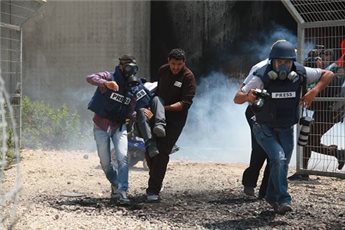
RAMALLAH – Three journalists were injured and dozens suffered from excessive tear gas inhalation as Israeli forces dispersed a weekly protest in Bilin village near Ramallah.
Israeli forces fired rubber-coated steel bullets, stun grenades, and tear gas at protesters as they neared their lands near the wall, injuring photographer Abbas al-Momini with a rubber-coated steel bullet in the pelvis, and Palestine TV cameraman Shamekh Jagoub and photographer Haitham Khatib with tear-gas canisters in the abdomen.
Participants raised Palestinian flags and posters of prisoners as they marched throughout the village chanting songs for unity and in support of prisoners.
Protesters wore prisoner uniforms and played football in front of the prison.


Omar – Film Review by Gilad Atzmon
The Tragedy of Omar
by Gilad Atzmon | June 6, 2014
One of the most important Palestinian feature films ever, Omar, is the deepest expose of the diabolical nature of the Israeli occupation and the inhuman situation imposed on Palestinians by the Jewish State. It also throws light on the tragic and depressing Palestinian struggle against a sophisticated, demonic enemy — an on-going battle that so far has led nowhere.
In his latest film, Palestinian director Hany Abu Assad sets Omar (Adam Bakri), a young freedom fighter in an impossible, yet common, Palestinian dilemma, caught in a devastating triangle between his patriotic commitment, romance and the omnipresent Jewish State – a brutal, Orwellian, Big Brother that sees everything, knows everything, sets people against each other and controls everything through a network of collaborators even within the resistance.
Once captured by the IDF and being subject to some horrendous physical and mental torture by Israeli intelligence, Omar is set into a hellish scenario. He eventually manages to buy the Israeli’s trust, he lets them believe that he is willing to cooperate. At that moment Omar pretty much seals his fate. He is destined to lose everything.
Though we, comfortable in our cinema seats, know that he never compromised his commitment to his people, one by one, the Palestinians around him, led to believe he is a traitor, they turn their backs on him. Losing the love of his life to his friend — clearly a collaborator — he is ostracised by fellow warriors and their families. Omar, a Palestinian patriot, becomes a pawn in an evil Israeli game. As his situation deteriorates and his tragedy unfolds in front of our eyes, he remains aware of it all, and we, who witness this emerging tragedy, also can see no way out.
Agent Rami (Waleed Zuaiter), the veritable ‘good cop’ is the Israeli intelligence operator who recruits Omar. He appears to be humane, he never uses physical pressure, he also has his own family matters to handle, wife, kid etc’. But all those ‘humane’ symptoms are there to cover a deeply sinister and hideous character. Rami is in fact a cold blood Israeli monster who shatters the lives of others in a mass scale. He systematically makes empathy and human affection into a highly functional instruments of total abuse.
One hardly need to say that Rami, like Omar, is a symbol of his people and indeed, there is a clear cultural and ideological continuum between Rami, Shimon Peres and the entire Jewish Left. I refer here to the deceitful nature embedded in contemporary Jewish political culture, that intention to present empathy and humanism only to conceal a sinister, self-centric agenda that cares only for the members of the tribe.
At the start of this film we meet a young, handsome and joyful, Palestinian patriot who leaps over the gigantic Israeli Wall and who, against all odds, lays claim to his land. Ninety minutes later, the same man is a defeated soul. Physically and mentally tortured, Omar simply can no longer climb the wall and bridge the divide imposed on his people by the Jewish State.
By the end of the film, Omar, like Palestine itself, is a tormented and defeated soul. For him, there is no hope but martyrdom.
No Jews allowed
International Solidarity Movement | June 5, 2014
Hebron, Occupied Palestine – My plan for the morning was pretty simple, I wanted to enter the souq (market) and buy some bread for breakfast, and then walk home. That was it. As I made my way towards the souq entrance I was stopped by two Israeli border police officers and asked for my religion. This is not an unusual experience in this city, the military are a common sight and as well as the regular checkpoints, they can and often do stop you at any time, demanding your identification, asking your religion, and any other questions they desire to ask.
I am neither ashamed nor proud of my religion. It is part of who I am in the same way my hair colour is a part of me. It is also a question I have been asked before and, as in the past, I told the truth.
“I’m Jewish,” I said.
The two border police officers spoke to each other in Hebrew, a language I have very little understanding of.
“Where are you going?” They asked.
“The souq,” I said. “I just want to go to the market.”
“No, you can’t go in. No Jews allowed.”
I wasn’t completely shocked, this has also been something stated to me before.
“Come on, I’ve been in there a thousand times, is it illegal for me to enter?”
“You can’t go in, you’re Jewish, it’s not allowed, it’s dangerous.”
I wanted to laugh, I may well have done. “It’s not dangerous, I have many friends in there, just let me go.”
This continued on for a few more minutes, the blood heating in my face as I tried to argue my case to no avail. The real irony was instead of walking through the market to go home, I was forced to walk Shuhada street, a perfect example of the apartheid that exists within this military occupation, a street where Palestinians have been barred from walking since the year 2000, where many people lost their homes and livelihoods after they were forced to leave and never return. Only the Israeli military, settlers, and internationals are allowed to walk Shuhada Street, it is often christened “Ghost Town” by the Palestinians, and indeed the sight of so many closed shops and houses, is haunting. It is also a street where I have been assaulted twice by settlers, so the idea that this was a safer alternative for me than the market, is laughable.
I have been fortunate enough to live in Palestine for several months, mainly living in the city of al-Khalil (Hebron). Al-Khalil is a city with many problems, mostly due to the illegal settlement in the heart of the city [all settlements in occupied territory are illegal under international law], and the huge Israeli military presence there to enable the settlers.
The Israeli military commits terrible crimes against the Palestinian people. I have seen them arresting and detaining adults and children for no reason, physically and verbally harassing the people of the city, using their military weapons against adults, youths and children, as well as a hundred and one other injustices that impact the daily lives of Palestinians in al-Khalil.
The settlers in al-Khalil are above the law. They attack Palestinians and steal their land and property on a regular basis. The Israeli military not only does nothing to stop this, but in many cases they condone and encourage it. I have seen settler youth throwing stones at Palestinian homes, while Israeli soldiers watched on. When we asked the soldiers to do something to stop this, they replied they would do nothing, as they are “children”. However Israeli soldiers have no qualms in using violence against Palestinian children. I have come to al-Khalil as a solidarity activist; one of the activities I participate in almost daily is ‘school checkpoint watch’. This is where I would assist in monitoring a specific checkpoint the children of the city are forced to go through on their way to school. I have witnessed Israeli soldiers harassing and searching children as they go through the checkpoint, firing tear gas and stun grenades at them and into their schools, and detaining children, some as young as six-years-old.
After the two border police officers denied me entry into the market in the morning, I tried again several hours later. The result was the same. I was angry, and I was upset, and while I am in Palestine as a solidarity activist, all I wanted to do was to go through the souq and visit one of my friends.
However, I have no intention of writing that I now “understand” what the Palestinians experience due to the military occupation, and the complete control that exists over their freedom of movement. My experience today was frustrating, and also unfair, but it is nothing compared to what the Palestinian people experience on a regular basis.
Due to the colour of my skin, and my nationality, I am incredibly aware of the privilege I have in Palestine, and all over the world. The very fact that I am able to enter Palestine is a huge privilege within itself; so many Palestinians in the diaspora were forced away from their homeland and have never seen it again. The fact that, if I so wish, I can travel to Yaffa, and one of my closest friends, a Palestinian woman whose family is originally from the city, can never see her home.
I have never been denied entry to any area due to my religion by Palestinians, or any other time in my life. It is telling that the first time this happens is by the Israeli military, under the façade of my ‘safety’. Unless Israeli soldiers or settlers enter, which they frequently do, the most dangerous thing that could happen to me in the souq is that I could overdose on tea, forced on me by my friends.
Israel Begins Arrest Campaign Against Popular Resistance Activists
By Chris Carlson | International Middle East Media Center | June 5, 2014
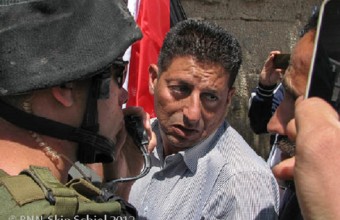
Yesterday, at 4:30 am, Popular Resistance activist Mahmoud Zwahre was again arrested by the Israeli army, at his house in Al Ma’asara, just southwest of Bethlehem.
An attempt to arrest Zwahre was made previously during the weekly Friday protest in the village. This week, on Wednesday, a large group of Israeli soldiers raided Zwahre’s home, just before dawn.
Mahmoud Zwahre, according to the Palestinian News Network (PNN), is an activist and coordinator for the Popular Committee Against the Wall and the Settlements in Al Ma’asara. Soldiers surrounded the Zwahre residence and declared it a closed military zone, as they proceeded to tear through the contents of the house, terrorizing the children and abusing Mahmoud in front of his family.
He was arrested, blindfolded, and taken to an unknown destination — essentially, and by all rights, amounting to a kidnapping.
(Al Ma’asara is a small Palestinian village located in Area B of the central occupied West Bank. Though Area B is officially recognized to be under joint Israeli-Palestinian security control, the 1967 Israeli occupation of the West Bank, Gaza Strip and East Jerusalem has yet to be granted legitimacy by the international community.)
Munther Amira, director of the board of the Popular Struggle Coordination Committee Against the Wall and the Settlements (PSCC) in the Palestinian territories, explained in an interview with the PNN that the Israeli occupation increasingly targets activists of Popular Resistance and their activities:
The activities of Popular Resistance are peaceful and designed to highlight the suffering of the Palestinian people through the Israeli occupation practices of racism and violation of international law. Nevertheless, the PSCC has documented the rough and violent reactions by Israeli soldiers against the protests and marches organized by the Popular Struggle Committees in the various provinces of the country.
The committee denounces the arrest of its coordinator Mahmoud Zwahre, and calls for his release.
Family of man killed by Israeli forces denies he shot at police
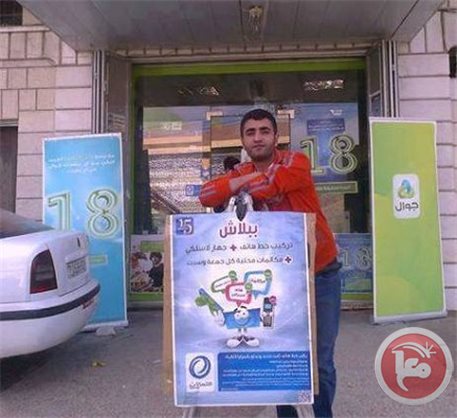
Audah pictured in front of the cell phone store he owned
Ma’an – 03/06/2014
NABLUS – The family of a man killed by Israeli soldiers near Nablus late Monday have denied Israeli claims that he opened fire at forces.
They identified the man as Alaa Muhammad Awad Audah, 30, from the town of Huwwara south of Nablus.
According to the Israeli army, Audah approached the Zaatara checkpoint late Monday and opened fire at an Israeli policeman, lightly wounding him in the leg. Soldiers responded by shooting and killing Audah.
But his family told Ma’an Tuesday that the 30-year-old arrived at the checkpoint in order to receive a shipment of cell phones for a store he owned.
In order to avoid traffic, Audah decided to cross the checkpoint and retrieve his package on foot while his taxi driver waited nearby, family member Jumaah Omran said.
Soldiers shot and killed him as he approached the checkpoint, Omran added.
Locals told Ma’an that the shooting occurred as Israel army chief of staff Benny Gantz was visiting Joseph’s Tomb nearby.
Audah left behind a wife and two children. His village, Huwwara, has announced three days of mourning.
His body has yet to be delivered to his family.
Israeli forces have killed 12 Palestinians in the West Bank since the start of 2014, according to AFP figures.
It Is about the Charter of Rights and Freedoms Mr. Ambassador!
By Shawn Robinson and Rana Abdulla | Palestine Chronicle | June 2 2014

The exhibit is an opportunity for Canadians to view imagery that captures the humanity of a real situation (Public ART/Facebook)
The woman behind the exhibit is artist Rehab Nazzal, a Canadian citizen born in Jenin, an historic town located in Palestine in a territory under occupation since 1967. Nazzal’s exhibit of 1700 photographic images along with four short videos, were collected by her over the fourteen years. Segments of these images depict life in the experience of occupation.
Nazzal’s premise of this collection is based on the idea that people leave traces of their existence and the traces in this case are part of the collective memory of occupied Palestine. Not being the first time this collection has been exhibited, it was also featured in Toronto at the Scotiabank CONTACT Photography Festival 2013.
 Stumbling across the exhibit at Ottawa’s City Hall in the Karsh-Masson Gallery, the Israeli Ambassador to Canada felt that such an exhibit should prohibited. The Ambassador operating outside of his mission, met with Mayor Jim Watson and Deputy City Manager Steven Kanellakos of the City of Ottawa, to demand closure of the exhibit, stating it “glorified terrorism”. Somehow in the unidentified 1700 images and four videos, the Ambassador was able to single out seven individuals he described as terrorists.
The 4th Geneva Convention that Israel and Canada are signatories as well as the Hague Regulations, provides that people under occupation have the right to resist their occupiers. Palestinians are in a situation where they are resisting occupation. The Israeli government and their representatives dispute this occupation in spite of the presence of its military. Terrorism terminology by Israel has become so common and so pervasive that many inside and outside of Israel perceive Palestinians as terrorists – a racist generalization that is pejorative and isolating.
Nazzal’s work reveals human cost of military violence and war, and it is not a call for more human loss, contrary to the Ambassador’s allegations. It is a catalog of Palestinian history, creativity and expression for Forgotten Survivors; a lament for their homeland; and sadness for those who have died in a long hopeless conflict. Her work is a strong counter-narrative articulated creatively using visual vocabulary, transforming the oppressive tools of Israel and its discriminatory policies into elements of hope and life. Her political art communicates messages of dignity and liberation and has undoubtedly inspired many, not just Arabs but non-Arabs as well. The strong media attention certainly indicates that her message is worthy of consideration and appreciation.
Not satisfied with the responses from the Canadian public and City of Ottawa, the Ambassador has escalated his inflammatory language including allegations of “blood libel” and descriptors such as “child murderers”. Is this the role of a foreign diplomat to Canada? His call on Jewish groups to demand action is of great concern. Individuals who have yet to see the exhibit but have read the Ambassador’s false and inflammatory statements, are responding through promotion of these false allegations in blogs, emails to City Hall and online comments. Canadians are being presented with a bias that perpetuates this terrorism label.
The Israeli suppression of the Palestinian narrative appears to now be officially part of the Canadian art and political stream of understanding. It has no place nor is it appropriate. Instead of approaching the situation as an ethnic denial of people, that would appear racist to Canadians, the Ambassador of Israel instead invokes falsely the understandably reactionary term – terrorist.
 Censorship of art, especially political art has a history associated with oppressive regimes. Artists in Canada of all faiths, backgrounds and cultures have the full right to artistic expression as granted by the Canadian Charter of Rights and Freedoms. Therefore uncensored artists are able to explore difficult themes; which is a victory for democracy and freedom of expression.
Realizing that Mayor Watson and his staff have stood by the Charter, the Ambassador requested that Mayor Watson review the process of selecting future art exhibitions at the Karsh-Masson Gallery. This is also censorship. Does this mean future exhibitions could be at risk? That the City of Ottawa should influence the selection panel of professional artists? Do we want elected politicians interfering with these processes, and especially at the behest of a foreign country and its diplomatic body?
The situation is of concern to Palestinian, Arab, Muslim and other ethnic minority artists who may not be featured by galleries across Canada due to the fear of facing the public wrath of Jewish groups and/or the Israeli government. As Canadians, we don’t want to be controlled in how our art is expressed.
 We know from the history of others, that when governments and special interest groups control the message of art, that in many cases, target groups who are censored are in danger of future marginalization. In Europe in the 1930’s a number of countries excelled in this practice further legitimizing their hateful actions against minorities, including Roma and Jews. For some countries this was the beginning of their marginalization process against an ethnic minority. Canada must uphold its values for this reason as our laws and freedoms are for everybody, and not to be denied for a specified group, especially under pressure from an outside country.
The exhibit created by Nazzal is an opportunity for Canadians to view imagery that captures the humanity of a real situation. People are not exploited in their suffering or celebrations, they are living an experience that is untold by the media and has been for as much as four decades.
To be Palestinian is not anti-Jewish or anti-Israeli. In actuality it is a culture that is centuries old in its cuisine, dance, literature, art, architecture, music, costume and other elements we all embrace in our own.
Canada, a country of hundreds of cultures, cannot be part and parcel of this type of denial, and should not be afraid in embracing its citizens. Removing this show would set a precedence that would allow one group at odds with another group to demand censorship in the Canadian milieu. Influencing selection committees of art galleries, are creating the environment of fearing to present a Palestinian artist would also be an act of censorship and stifling our right to the freedom of expression. This is not a Canada we want.
– Rana Abdulla is a Canadian professional accountant, living in Winnipeg, Manitoba. Shawn Robinson is a Canadian artist in graphic design and creative writing. She lives in Ottawa.
~
~
~
For full version of these videos, please contact: info@vtape.org OR info@rehabnazzal.com
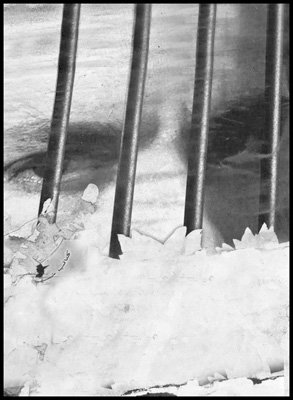

You are missed
© 2012, Rehab Nazzal
Israeli Occupation Forces Kill Two Palestinians, Kidnap 370 In May

By Saed Bannoura | IMEMC News | June 1, 2014
In its monthly report on Israeli violations, the Ahrar Center for Detainees’ Studies and Human Rights has reported that Israeli soldiers killed two Palestinians in May, and kidnapped 370.
The Center said that the army shot and killed Nadim Nuwwara, 17, and Mohammad Abu Thaher, 20, near the Ofer Israeli military roadblock, near the central West Bank city of Ramallah. The two were killed on May 15, during Nakba Day protests.
Israeli army sharpshooters killed the two following clashes with the army as the Palestinians marked the Nakba Day. Video footage showed the two walking away, with their backs to the army location, when they were killed.
As for arrests carried out by the Israeli occupation army, the Center said that 370 Palestinians were kidnapped in the West Bank, Jerusalem and the Gaza Strip.
In Jerusalem, soldiers kidnapped 118 Palestinians, the highest number of arrests in May, while 86 Palestinians were kidnapped in the Hebron district, 40 in Nablus, 30 in Bethlehem, 27 in Ramallah, 27 in Jenin, 16 in Qalqilia, 8 in Salfit, 4 in Tulkarem, and two in Tubas.
In addition, 12 Palestinians were kidnapped in the besieged Gaza Strip; three of them were kidnapped near the border fence, and nine were Palestinian fishers were kidnapped by the Israeli Navy in Palestinian territorial waters.
Also in May, the army kidnapped five Palestinian women in different parts of occupied Palestine, and released three of them, while two remained under interrogation.
Head of the Ahrar Center, Fuad al-Khoffash, stated that Israel is escalating the arrests, especially amongst young Palestinians, and that Israeli interrogators continue to use cruel interrogation methods, and extreme torture, in direct violation of International Law and all related human rights treaties.
He added that the arrests are happening while Administrative Detainees, held by Israel under arbitrary orders without charges or trial, are ongoing with their hunger strike despite the fact that many detainees are facing life-threatening conditions, and serious complications.
Why Boycotting Israel is So Important and Necessary
DePaul students don’t want their tuition dollars invested in weapons manufacturers who supply the Israeli government, army and prison services
By Stuart Littlewood | Dissident Voice | May 26, 2014
Nothing, it seems, is too ridiculous for Nick Clegg, UK Deputy Prime Minister, to contemplate. See him in this painful video ‘Nick Clegg welcomes the Jewish Manifesto‘ aimed at EU election candidates and voters.
Fortunately Clegg received a bloody nose yesterday in the EU elections. His infatuation with the EU and all its rotten works caused his party (the Liberal Democrats) to be almost wiped out at the polls. His days as leader are probably numbered.
If you’re wondering what the Jewish community’s EU Manifesto says, you can read it here. This propaganda effort is a prime example of the ‘hasbara’ scribbler’s art. It tries to shrug off Israel’s sickening human rights abuses and unending dispossession and oppression of its Palestinian neighbours and urges Members of the European Parliament to side with the apartheid regime.
“We urge MEPs and prospective MEPs to resist calls for boycotts of Israel. By their very nature, such measures attribute blame to only one side of the conflict, and through this stigmatisation they perpetuate a one-sided narrative. This in turn prompts intransigence from both sides.”
It also whinges about the European Commission’s guidelines that exclude Israeli settlements from EU funding programmes, accusing the EU of trying to dictate Israel’s borders. As most people know by now, Israel refuses to declare its borders because it hasn’t finished expanding them. The EU’s action, it says, is hurting the peace process “by perpetuating intransigence on the Palestinian side and could cause the Palestinian leadership to become less likely to make concessions”. The Palestinians have been robbed of everything, including their freedom. Why should they be asked to make more “concessions” to the thief?
The document also prods MEPs to oppose EU funding to Non Governmental Organisations who support boycott campaigns.
Campus ‘lies’?
So, after Clegg’s spineless capitulation, it was heartening to read today that students at DePaul University in Chicago have voted in favour of a referendum calling for divestment from companies “that profit from Israel’s discriminatory practices and human rights violations” and help “violate people’s rights to life, movement, healthcare, education and freedom.”
They are calling on the university to divest its funds from “corporations that manufacture weapons and provide surveillance technology to the Israeli government, army and prison services”, including Hewlett-Packard, Boeing, Lockheed Martin and Caterpillar.
Students say the vote was won despite a massive counter-campaign of intimidation and disinformation by pro-Israel lobbyist group StandWithUs and the Israeli consulate general in Chicago. “It is clear that DePaul students do not wish to have their tuition dollars invested in weapons manufacturers,” said a student organizer.
Following the DePaul vote, StandWithUs announced on their website: “We have seen divestment create this toxic campus environment wherever it rears its ugly head, as it has on several American campuses. Divestment advocates bring lies about Israel to campus, and display extreme ignorance about the complexities of the Middle East conflict, about Palestinian terrorist groups like Hamas, about the anti-Semitic incitement in Palestinian society, and about Israel’s repeated efforts to make peace. This movement singles out Israel and targets and intimidates pro-Israel and Jewish students, and resonates with anti-Semitism.” The words sound like they are scripted by the Lie Machine in Tel Aviv.
The ‘world’s most moral army’ and its war on students
DePaul students are to be congratulated for not flinching under Zio-pressure. Other Western students, and indeed students and academics all round the world, who face the same bully-boy tactics when debating the question of boycott and disinvestment against Israel, need only remember what the Israelis do to Palestinian students.
The last thing Israel wants is masses of bright and clever young Palestinians next-door in the shredded remains of the Occupied Territories. But that’s exactly what Palestinian youngsters are… bright and clever, given half a chance. So they need repressing. They need humiliating constantly. They need to be discouraged. They need to have their education disrupted big-time, so that they become a broken, dispirited, docile mass without ambition, easily controlled and utterly dependent (as they are now) on a few crumbs of comfort from Western taxpayers.
So the Israeli authorities make spiteful war on students especially, as well as women and children generally. To get to Bethlehem University, or any other, many students have to run the gauntlet of Israeli checkpoints. “Sometimes they take our ID cards and they spend ages writing down all the details, just to make us late,” said one. Students are often made to remove shoes, belt and bags. “It’s like an airport. Many times we are kept waiting outside for up to an hour, rain or shine, they don’t care.” The soldiers attempt to forcibly remove students’ clothes or they swear and shout sexual slurs at female students.
Some tell how they are sexually harassed and spend the rest of the day worrying what the Israelis will do to them on their way home.
This daily abuse undermines student motivation and concentration. Many other obstacles are put in their way by the Occupation. Here are just three cases, about which I have written before, that illustrate why it is so vitally important for the Palestinians to achieve independence and security.
Merna
Merna was an honours student in her final year majoring in English. Israeli soldiers frequently rampaged through her Bethlehem refugee camp in the middle of the night, ransacking homes and arbitrarily arresting residents. They took away her family one by one. First her 14-year-old cousin and best friend was shot dead by an Israeli sniper while she sat outside her family home during a curfew.
Next the Israelis arrested her eldest brother, a 22 year-old artist, and imprisoned him for 4 years. Then they came back for Merna’s 18-year-old brother. Not content with that the military came again, this time to take her youngest brother – the ‘baby’ of the family – just 16. These were the circumstances under which Merna had to study.
Israeli military law treats Palestinians as adults as soon as they reach 16, a flagrant violation of the United Nations Convention on the Rights of the Child. Israeli youngsters, on the other hand, are not regarded as adults until 18. Palestinians are dealt with by Israeli military courts, even when it’s a civil matter. These courts ignore international laws and conventions, so there’s no legal protection for individuals under Israeli military occupation.
As detention is based on secret information, which neither the detainee nor his lawyer is allowed to see, it is impossible to mount a proper defence. Besides, the Security Service always finds a bogus excuse to keep detainees locked up “in the greater interest of the security of Israel”. Although detainees have the right to review and appeal, they are unable to challenge the evidence and check facts as all information presented to the Court is classified.
Under huge mental stress Merna nevertheless determined to carry on with her studies. The “most moral army in the world”, as the Israelis call their uniformed thugs, may have robbed her brothers of an education, but she would still fight for hers. Sleepless and tearful, Merna went to university next day as usual.
A fellow student recalled that when chatting to Merna online in the evenings, she often had to leave the computer because the military had barged into her home. But even if she’d been up all night while Israeli soldiers trashed her house and questioned her family, she always came to school the next day. “Coming to school is a way of getting away from what is happening in the refugee camp,” said Merna. “It’s like an oasis here for me.” But her thoughts were never far from her cousin and brothers. “I only wish they were allowed this opportunity.”
She became a senior member of the Bethlehem University Student Ambassadors Programme and an example to fellow classmates. Young minds like Merna’s continue to persevere against the odds. Though greatly distracted by the cruel fate of her close family, the ordeal forged a steely resolve. The purposeful way she lived her university life, say the Brothers at Bethlehem Uni, gave her added strength and confidence. Merna managed to turn the tables on adversity. Her loss was actually her gain.
Berlanty
This Christian girl, a 4th year Business Administration student, was originally from Gaza but lived in the West Bank after receiving a travel permit from the military to cross from Gaza to the West Bank. She was snatched by the Israeli military while returning from a job interview in Ramallah. The 21 year-old, due to graduate in a few weeks’ time, was suddenly deported to Gaza “for trying to complete her studies at Bethlehem University”. She was about to be robbed of her degree at the last minute.
The “most moral army in the world” blindfolded and handcuffed her, loaded her into a military jeep and drove her from Bethlehem to Gaza, despite assurances by the Israeli Military Legal Advisor’s office that she would not be deported before an attorney from Gisha (an Israeli NGO working to protect Palestinians’ freedom of movement) had the opportunity to petition the Israeli court for her return to classes in Bethlehem.
When they’d crossed the border the world’s most moral army dumped Berlanty in the darkness late at night and told her: “You are in Gaza.”
“I had refrained from visiting my family in Gaza for fear that I would not be permitted to return to my studies in the West Bank,” she told Gisha on her mobile phone before the soldiers confiscated it. “Now, just two months before graduation, I was arrested and taken to Gaza in the middle of the night, with no way to finish my degree.”
The Israeli embassy in London, when asked for an explanation, said that Berlanty held a permit that had expired and she’d been living in the West Bank illegally. “As you probably know, every Gaza resident who stays in the West Bank requires a permit, failing to do so is a breach of the law.” If she wished to complete her studies at Bethlehem, she should apply for a permit to the relevant authorities. However, Bethlehem University told me that of the 12 students from Gaza who had applied to attend the University NOT ONE had received permission from the Israeli authorities.
Her appeal, handled by Gisha, was turned down. It was a classic example of how Israel’s administrative ‘laws’ are framed to ride rough-shod over citizens’ rights enshrined in international law. For example, the West Bank and the Gaza Strip are internationally recognized as one integral territory and under international law everyone has the right to freely choose their place of residence within a single territory. The state of Israel also has an obligation under the Oslo Agreements to “respect and preserve without obstacles, normal and smooth movement of people, vehicles and goods within the West Bank, and between the West Bank and Gaza Strip”.
While Israel’s embassy here in London pronounced the ruling on Berlanty’s fate, their Ambassador was whining about a warrant issued in London for the arrest of ex-foreign minister Tzipi Livni for alleged war crimes. Livni had overseen the murderous assault on Gaza the previous December/January, which killed 1400, including a large number of women and children, maimed thousands more and left countless families homeless.
If Berlanty, who had committed no crime, could not come and go as she pleased in her own country — the Holy Land – what made Israel’s Ambassador think that the blood soaked Livni, and others like her, should be allowed to come and go as they pleased in the UK? But that’s another shameful story.
Samer
A few months before he was due to graduate the Israeli military arrested Samer and threw him in jail… for 6 long years. Then, at 27, he returned to campus to finish what he started. “I feel like a regular student again,” he said with a wide grin. “I have a university notebook and textbooks. I can ask and answer questions freely. I can communicate openly with students, professors, and staff. It’s a real life, an authentic life.”
When imprisoned he was denied access to a lawyer for 55 days, then moved from one Israeli jail to another for more than six years. He was tortured on numerous occasions, he says, and regularly interrogated eight hours a day for four to five days, in just a T-shirt, squatting on the cold ground with his hands tied and an air conditioner blowing on his back. He was held in solitary confinement for more than a year.
Membership of a student group in Palestine is outlawed under Israeli military law, and students who engage in campus politics risk arrest by Israel’s uniformed gangs who barge into Palestinian society and academic life to abduct them. Many Western leaders began their political careers making a name for themselves at the Oxford Union and similar student debating groups or taking part in demos. How would they have reacted to being clapped in irons for it?
A good many of them, to their everlasting shame, are now signed-up Friends of Apartheid Israel. Members of the Israeli cabinet went to university too, presumably. Are we to believe that they never engaged in student politics?
Samer’s experience is similar to that of hundreds of Palestinian students who find themselves political prisoners. Many are left to rot in jail indefinitely, denied due process, a fair trial and legal representation. Some wait up to two years to be charged. Others are charged under Israeli military law, which falls a long way short of the justice standards required under international law.
The Palestinian Prisoner’s Society reckoned that seven Bethlehem University students were at that time in Israeli prisons for taking part in ‘student activities’. In Samer’s case, he was abducted for joining Fatah’s resistance movement after the 2000 Intifada (uprising). It is, of course, perfectly legitimate to resist an illegal occupier.
Coming back to university after prison is no easy thing. Samer suffered the cruel effects of six years’ incarceration and was often tired, depressed, stressed and jumpy. But he knew that the University was his anchor, the main hope in his young life.
So there you have it…. the evil of Israel’s ‘snatch squads’ that prey on Palestine’s young people, and the regime’s cruel disregard for their well being and education while in its clutches. The apartheid regime, after 66 years, still hasn’t emerged from the swamp.
Plain clothed Israeli forces kidnap 3 young men, wife of prisoner detained in court
Palestine Information Center – 24/05/2014
RAMALLAH — Israeli undercover soldiers kidnapped three Palestinian young men in down el-Bireh on Friday night.
Sources in the city said that Israeli occupation forces (IOF) and soldiers in plain clothes were heavily deployed in the city before kidnapping the three young men.
Meanwhile, the wife of a Jerusalemite prisoner was arrested during her presence in court to attend the trial hearing of her son.
Wadi Hilwe information center said that the wife of the Jerusalemite prisoner Ahmed Obaid, who is serving a life sentence, was in court on Friday to attend the hearing of her son Anas, who was arrested at Qalandiya roadblock on Thursday.
It said that the intelligence officer in court asked her to head to the interrogation section to clarify certain things, but she was then told that she was under arrest.
IOF soldiers detained Mohammed the eldest son of Ahmed Obaid a few days ago.
Israeli FM rejects “hypocritical” calls to investigate Palestinian teen killings
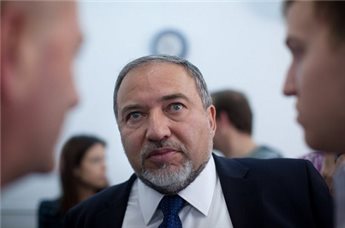
Al-Akhbar | May 21, 2014
Israeli Foreign Minister Avigdor Lieberman on Wednesday rejected as “hypocritical” world criticism and demands for an investigation into the killings of two Palestinian teenagers by occupation forces last week.
“I reject any demand” for an international investigation, he told reporters on a tour of the illegal West Bank settlement of Ariel.
“Such an incident will be investigated regardless of any demand,” he remarked, denouncing world criticism of the incident as “hypocrisy.”
His remarks came a day after calls by Washington and a top UN official for an immediate investigation into the circumstances of the two killings after video footage emerged showing the unprovoked shootings.
The closed-circuit footage, released on Monday by the NGOs Defence For Children International and B’Tselem, appeared to show separate incidents in which two youngsters were shot as they walked down the same street near Ramallah as Palestinians marked the 66th anniversary of the Nakba.
Although protests were taking place in the area on that day, there is no visible evidence of clashes in the footage.
Watch the footage:
The Palestinian leadership accused Israel of their “deliberate execution.”
But the Israeli army dismissed the footage as having been “edited,” and said it was investigating the incident.
Late on Wednesday, US State Department spokeswoman Jen Psaki said Washington expected the Israeli government “to conduct a prompt and transparent investigation to determine the facts surrounding this incident.”
And Oscar Fernandez-Taranco, assistant UN secretary general for political affairs, called for an “independent and transparent” probe.
He said it was “of serious concern that initial information appears to indicate that the two Palestinians killed were both unarmed and appeared to pose no direct threat.”
But Lieberman brushed off such calls.
“We don’t need an American demand” to launch an investigation, he said.
“We will do it as part our commitment to the Israeli army’s moral code.”
Israel had claimed that its occupation forces fired rubber bullets try to put down the protest, and denies using live bullets.
The the youths, identified as 16-year-old Mohammed Odeh Abu al-Thaher and 17-year-old Nadim Siyam Nawara.
In a separate development, the UN agency for Palestinian refugees on Wednesday published figures showing “a sharp increase” in the number of Palestinian refugees killed and injured by Israeli forces since the beginning of 2013.
According to UNRWA, there has also been a big increase in the numbers of those injured by live ammunition in 2014, with 43 wounded this year compared with 10 in the same period in 2013.
(AFP, Al-Akhbar)
Unlawful killing of two Palestinian teens outside Ofer
Al-Akhbar | May 20, 2014
Video footage obtained by a human rights group Monday showed the chilling shooting deaths of two Palestinian children by Israeli occupation forces last Thursday.
Israeli soldiers shot dead teenagers Mohammed Odeh Abu al-Thaher and Nadim Siyam Nawara during a protest coinciding with the 66th anniversary of the Nakba outside Israel’s Ofer prison near the West Bank city of Ramallah.
Israel had claimed it fired rubber bullets during the May 15 protest to disperse the protesters.
But footage released by the Defence for Children International (DCI) captured from a security camera at a nearby house shows the youths, believed to be aged 16 and 17, being shot dead as they calmly walked.
The video shows the first victim walking in the opposite direction of the occupation forces before he is struck by a bullet in the back. Onlookers immediately rushed to his aid.
The second victim is shot in the chest in the same location as he walked slowly. He falls to the ground and struggles to get back up as others assist him and signal for the occupation forces to cease fire.
Both children were unarmed.
“Israeli forces continue to use excessive force and recklessly fire live ammunition and rubber-coated metal bullets on unarmed protesters, including children, killing them with impunity,” Rifat Kassis, executive director of DCI-Palestine, said in a statement.
The report said a third, 15-year-old victim was shot in the back and left lung during the protest and is recovering at a Ramallah hospital.
International human rights groups have repeatedly condemned Israel’s use of deadly force against Palestinian protesters and civilians in the West Bank and Gaza.
Featured Video

Chinese jet fuel and the myth of energy independence
or go to
Aletho News Archives – Video-Images
Book Review
Former Insiders Criticize Iran Policy as U.S. Hegemony
By GARETH PORTER | CounterPunch | February 27, 2013
“Going to Tehran” arguably represents the most important work on the subject of U.S.-Iran relations to be published thus far.
Flynt Leverett and Hillary Mann Leverett tackle not only U.S. policy toward Iran but the broader context of Middle East policy with a systematic analytical perspective informed by personal experience, as well as very extensive documentation.
More importantly, however, their exposé required a degree of courage that may be unparalleled in the writing of former U.S. national security officials about issues on which they worked. They have chosen not just to criticise U.S. policy toward Iran but to analyse that policy as a problem of U.S. hegemony. … continue
Blog Roll
 Aletho News
- What is fueling unrest across the EU?
- Why no power can undermine Iran’s eternal dominance over the Strait of Hormuz
- Is The War Against Iran Over?
- Iran war will leave long-term ‘scar’ on Wall Street, investors warn
- How Iran decimated US power projection in West Asia: Military lessons of 40-day war
- Iran’s report details US-Israeli war crimes in targeting schools, hospitals, livelihoods
- NATO’s Slow Fracture: How Trump’s Iran War Exposed the Instrument of Hegemony
- Chinese jet fuel and the myth of energy independence
- Ukraine Sea Drone Fired From Libya Hit Russian Tanker in Mediterranean
- IRGC: Iranian forces launched no attacks during ceasefire hours
- If Americans Knew
- Military aid to Israel emerges as the latest political litmus test for Democrats
- The only Palestinian children’s rights organization closes following years-long Israeli campaign against it
- ‘I Can’t Forget the Smell’: Lebanese Reel After Israel Kills Over 300 in Single Day
- DNC Shoots Down Resolutions Calling Out AIPAC and Limiting Arms to Israel
- TCN: Is Israel Blackmailing President Trump?
- Israel killed at least 303 Lebanese yesterday – who were they? Daily Update
- Amnesty: Urgent – Protect Lebanese civilians from brutal escalation in Israeli attacks
- Is The War Against Iran Over?
- Inside the Israeli army’s propaganda wing
- Hundreds of Gaza Amputees Stranded in Legal Limbo
- No Tricks Zone
- An Inconvenient Tree: Uncovered In Alps… Europe Much Warmer Than Today 6000 Years Ago
- New Study Reports A 60% Slowdown In Greenland’s Ice Loss Rate In The Last Decade
- Low Intensity Tornado Wrecks Major Solar Farm, Creating A Potential Toxic Dump
- New Study Finds Warming Saves Lives…Cold Temperatures 12 Times More Deadly Than Excess Heat
- German Science Blog Accuses PIK Climate Institute Of Hallucinating Climate Tipping Points
- Devastating Assessment Of Comirnaty Vaccine By Former Senior Pfizer Europe Toxicologist
- New Study: CO2 Is ‘Effectively Negligible’ As An Explanatory Climate Change Factor Since 2000
- Former Pfizer Toxicologist Dr. Helmut Sterz Tells Bundestag Hearing Pfizer Vaccine Should Have Never Been Approved
- Energy Expert: Germany’s Nuclear Phaseout Was A “500 Billion Euro Mistake”
- New Research: South Australia’s Mid-Holocene Sea Surface Temperatures Were 4°C Warmer Than Today
 Aletho News