Settlers from Mitzpe Yair attack Palestinian shepherds grazing on Palestinian owned land during Purim
Operation Dove | March 16, 2014
At-Tuwani, Occupied Palestine – On Sunday March 16, during the Jewish holiday of Purim, Israeli settlers attacked Palestinians and Internationals on Palestinian fields near Mitzpe Yair illegal outpost.
In the morning, four Palestinian shepherds from the village of Qawawis were grazing their flocks south of the Israeli outpost of Mitzpe Yair, when a settler arrived armed with an iron pipe to threaten them shouting. At 9:18 am two Internationals arrived together with two further Palestinian shepherds. The armed Israeli settler then left when he saw that they were filming the scene.
At 9:28 am eight settlers arrived from the illegal outpost – one was still armed with the iron pipe – and four of them violently chased away the flocks, pushing them toward the valley underlying the outpost. Palestinian shepherds followed the settlers in order not to lose their flocks accompanied by Internationals. The Palestinians immediately called the Israeli police.
At 9:48 am the settlers came back to the outpost. In the meantime, an additional International and two Palestinian members of the South Hebron Hills Popular Committee arrived at the scene. At 10:00 am one of the settlers tried to chase away one of the newly-arrived Palestinians, a member of the Israeli human rights organization B’Tselem. As this happened, an Israeli policeman and three Israeli soldiers arrived by foot. At 10:20 am, as the policeman began interrogating the attendants, a further three settlers arrived. Those interrogated were the Palestinian shepherd Nail Abuaram (who filmed everything with a B’Tselem camera) and one International.
At 10:45 am, the policeman lead Abuaram and one of the Internationals to Kiryat Arba police station to give testimony of the harassments. They arrived at the station at noon.
The International was asked for the camera footage of the incident, interrogated and finally released at around 2:50 pm. Abuaram was interrogated alone for a couple of hours and was threaten of arrest until he accepted to sign a paper stating that he will not get closer than 450 meters to the area where the harassment took place for a period of 15 days. He was later released around 6:00 pm after signing the paper. The Israeli police forced the settler who attacked the Palestinians with an iron pipe to stay 200 meters far from the spot where the harassment took place for a period of 15 days.
Palestinian communities of the South Hebron Hills area are strongly involved in using nonviolence as a way to resist the Israeli occupation.
Operation Dove has maintained an international presence in At-Tuwani and the South Hebron Hills since 2004.
[Note: According to the Fourth Geneva Convention, the Hague Regulations, the International Court of Justice, and several United Nations resolutions, all Israeli settlements and outposts in the Occupied Palestinian Territories are illegal. Most settlement outposts, including Havat Ma’on (Hill 833), are considered illegal also under Israeli law.]
Related articles

Israeli Soldier Interrogates Palestinian Boy at Gunpoint
By Chris Carlson| International Middle East Media Center | March 13, 2014
The Israeli Haaretz newspaper unveiled, Thursday morning, that an Israeli soldier pointed his gun at a handcuffed Palestinian boy, during an investigation after arresting him in Nabi Saleh village, near the West Bank city of Ramallah.
The Al Ray newspaper pointed out that Israeli forces arrested four boys from Nabi Saleh village three weeks ago, under the pretext of throwing stones.
He (one suspect) was led to Benjamin police station for investigation.
There, one of the soldiers who participated in the arrest attended, and was filmed while directing his gun towards the boy in the interrogation room. The soldier left the room after investigation officers arrived, the newspaper added.
It was noted, by the court, that the documentation of the stone-throwing incident is not professional, and that the boys’ identities are in doubt.
Allenby killing highlights need for serious change
By Daoud Kuttab | Ma’an | March 14, 2014
For 46 years the bridge connecting the West Bank with Jordan has been a source of hardships, humiliations and extremely long and unnecessary delays, not to mention cumbersome and exaggerated body and baggage searches.
This nightmare has to end.
What happened on March 10 is a symptom of the occupation versus occupied paradigm that must come to an end.
A 38-year-old Jordanian father of two and a sitting judge in Amman’s Court of First Instance, attempted to travel to Nablus like many Palestinians and Jordanians of Palestinian origin. His altercation with Israeli soldiers that ended with his death must be a warning flag that this injustice and humiliation cannot continue.
Anyone who crosses the King Hussein Bridge knows very well how the Israelis have for decades forged a shameful occupier-occupied relationship with the power of their guns. The Oscar-winning film Twelve Years a Slave, perfectly illustrates the way that the oppressed absorb all kinds of humiliation simply in order to survive as they wait for salvation.
Raed Zuaiter, the Jordanian judge, like any other human being, apparently walked into this mess without the added shield of years of humiliation and he couldn’t accept it.
For their part, the Israeli soldiers, brainwashed to suspect every passenger as a potential “terrorist,” viewed the rebellion against accepting the occupier-occupied paradigm as enough proof that the rebellious person must be a terrorist. As they say, the rest is history.
The Israeli spin machine quickly went into action. The often repeated defense was that Zuaiter went for the soldier’s gun. Later it was adjusted that he went for his throat, attempting to strangle him. The “terrorist” label also required some audio. So again the spin machine fabricated that the judge yelled “Allahu Akbar, Allahu Akbar” before lunging for the soldier’s gun (or throat), thus confirming that he was a terrorist.
Of course much of the speculation as to what happened and when could easily be put to rest if footage from the most camera-covered spot at the bridge (the first few meters into the Israeli controlled area) is made available. But alas, the camera is now said to have been inoperative that day. How convenient.
But there is a tiny fact that is hard to refute. How did the bus carrying Zuaiter enter the Israeli occupied territories. A metal bar and four metal pistons make it impossible for any vehicle to enter until someone presses a remote-controlled button. The buttons are located in a windowless room with lots of cameras that show the operators who is coming, what license plate they hold and so on.
Naturally, addressing the problem that caused the untimely death of an innocent Jordanian is currently focused on the logistics and mechanics of what happened, but there is a need to look at the context of what is happening and how to avoid the recurrence of such trigger-happy acts.
In the negotiations about the implementation of the Oslo Accords, the Palestinians insisted that even during the interim period no Israeli soldier should have any face-to-face contact with passengers. The Israelis designed a plan where they sit behind one-way mirrors and control the bridge from this vantage point.
The plan, which included the presence of unarmed Palestinian police, was operational for a short time at the end of the 1990s but was scrapped when the second Intifada broke in October 2000. Since then the call to return to the pre-October status throughout the occupied territories and on the bridge has been made repeatedly but no action was taken. The roadmap included a section for the return of the Palestinian police to the bridge, but this was never implemented.
In addition to the need to keep brainwashed, heavily armed young Israeli soldiers as far away from traveling civilians as possible, there are other decisions that can help reduce the tension on the bridge. For example, the crossing should be open around the clock in order to ease the long waiting period that add to the anger and frustration.
Israelis say that they can’t cover the cost of 24-hour staff but many Palestinians think that they don’t care while others believe that this is deliberate to maintain the occupier-occupied paradigm.
The best and most effective way to reduce the tensions and tragedies such as the murder of the Jordanian judge, is to end the occupation and totally remove the unwanted Israeli occupiers from Palestinian territories.
In the meantime, people of goodwill must agree that the current status quo on the King Hussein Bridge is untenable. Serious and deep changes are required in order to guarantee that what happened on March 10 to an innocent Jordanian will not take place again.
Daoud Kuttab is a Palestinian journalist and former professor of journalism at Princeton University.
Related articles


Scandal of billion dollar deals between Saudi Arabia and Veolia
Ard Kanaan News Agency | March 12, 2014
Veolia is a French company specialising in environmental work in the fields of water, recycling, energy and transportation. The company has recently had a lot of media coverage given its contribution to supporting Israeli settlements.
The company has been registered by international activists concerned with the Palestinian cause on the Boycott, Divestment, and Sanctions (BDS) list since 2005, “due to their immoral work serving the occupation in various areas in Palestine”.
Currently it is involved in a railway project in Jerusalem that links the illegal West Bank settlements and Jerusalem which is considered one of the occupation’s main means and an important step in the context of the Judaisation of Jerusalem project and the expansion of settlements in the city. It not only transports Israelis passing through, but also facilitates access between the new Israeli settlements and the settlers as a means of easing settlements and outlining a mechanism and infrastructure for its expansion. This is considered a violation of the Geneva Accords which prohibit the occupation from transporting its citizens to occupied territories, so this is not only a clear violation of Palestinian rights, but also a violation of international agreements made in this regard.
Veolia’s activity ranges between environment workshops, water and transportation, as it works through one of its subsidiaries (T.M. M.) and Tovlan Landfill, near Jericho, as a report by Corporate Watch Research Group, specialising in monitoring the work of international companies, stated the violations made by Veolia with regards to the management of the landfill. Veolia buries the waste of 21 settlements in the landfill near the Jordanian border, this has many health and environmental “side effects” on neighbouring Arab villages such as Fasayil and Abu Al `Ajaj, leading to the displacement of the residents of the latter, the population dropping to 200 residents from thousands in 1999, the year the landfill was established.
There are also those who leave their homes during the summer only to return in winter when the smell from the landfill is not as strong. The livestock, which is the main source of income for locals, also suffered big losses.
The residents of these villages are also deprived of electricity, while the residents in settlements have electricity and water at discounted rates in order to motivate them to live in settlements. The recycling of the waste in the landfill contributes to the provision of electric energy by means of renewable energy.
Who works in the landfill? Palestinians work in the landfill and they are deprived of any labour rights, as their wages are half the minimum wages set for Israeli workers and they are deprived of work and health insurance.
The company also has shares in the bus routes, such as route 109 and 110, which provide transportation for settlers on Highway 433 in the West Bank running through the settlements. The occupation enforces apartheid/segregation rules on highway 433, as Palestinians are not allowed to use the highway.
Veolia is also involved in facilitating Israeli exclusion operations, as well as facilitating the transfer of settlement waste, transporting it to Palestinian areas and causing many long-term health and geographic problems. This has encouraged the indirect expulsion of Palestinians, all of which has contributed to the process of racial segregation in transportation in those areas.
Similarly, it has recently provided water and sanitation services to many of the Israeli occupation’s settlements in the occupied West Bank, including the Modi’in Ilit settlement located between Jerusalem and Tel Aviv in the occupied Palestinian territories.
This means that three out of Veolia’s four subsidiaries – water, waste and transportation – actively work to support settlements.
Veolia’s activities are considered a flagrant violation of international law, specifically Article 49 of the Fourth Geneva Convention which states that “Individual or mass forcible transfers, as well as deportations of protected persons from occupied territory to the territory of the Occupying Power or to that of any other country, occupied or not, are prohibited, regardless of their motive.”
International law also prohibits Israel from using occupied land for its own benefit and, therefore, burying waste from the settlements in the occupied territories is a violation of United Nations Resolution 63/201 dated January 28, 2009, which:
“Calls upon Israel, the occupying Power, not to exploit, damage, cause loss or depletion of, or endanger the natural resources in the Occupied Palestinian Territory, including East Jerusalem, and in the occupied Syrian Golan.
Calls upon Israel, the occupying Power, to comply strictly with its obligations under international law, including international humanitarian law, with respect to the alteration of the character and status of the Occupied Palestinian Territory, including East Jerusalem.
Also calls upon Israel, the occupying Power, to cease the dumping of all kinds of waste materials in the Occupied Palestinian Territory, including East Jerusalem, and in the occupied Syrian Golan.”
In addition to violating international law, Veolia’s acts violate the resolution of the Arab summit in Khartoum, in March 2006, which provides for the following:
The condemnation of the project aiming to link West Jerusalem to the occupied West Bank through occupied East Jerusalem and the stressing of the illegality of this project. It also calls on the two French companies [Alstom and Veolia] to immediately withdraw from the project and demands punitive measures be taken against them if they don’t comply. The Arab Summit also urged the French government to take the necessary measures in this respect to honour its obligations under international law.
To top this all off, Veolia’s activity in the occupied territories contradicts the company’s declared goals and strategies which aim to “reduce the negative environmental impacts of waste” and “help raise the citizens’ standard of living.”
It is clear that Veolia selectively applies these goals, as it only aims to raise the standard of living of the settlers, at the expense of the Palestinians and in violation of international treaties and the most basic human rights.
This company’s long history of racism and the oppression of the Palestinians’ rights was enough to convince the public opinion in different parts of the world to boycott it.
The campaign to reduce the company’s activity and completely boycott it was successful in impacting its work, which has suffered due to losses estimated at more than $12 billion over the past six years in order to prevent the renewal or signing of new contracts in many countries worldwide. These include Australia, Sweden, Norway, Netherlands, Ireland, Scotland and finally England. In addition to this, a coalition of boroughs in south-west London refused to bid on the tender offered by Veolia for a £1 billion waste removal deal last April. In January 2009, Veolia lost a contract worth €3.5 billion Euros to run the metro in Stockholm.
In addition to the efforts made globally to boycott this company and reduce its activity, French company Alstom, a company working in partnership with Veolia on the Jerusalem railway project, linking Jerusalem and the settlements, lost the second phase of the Saudi Haramain Railway project, which connects Mecca and Medina in Saudi Arabia. This is in spite of the fact that the company had previously won the contract for the first phase. The value of the second phase contract is about $10 billion.
Since the end of 2008, the BDS National Committee, along with its partners, have made popular, official and media efforts in order to convince the Saudi authorities to exclude Alstom from the Haramain Railway deal due to its involvement in the Israeli occupation’s projects aiming to Judaise Jerusalem. Many letters and documents to this effect were sent to official parties in Saudi Arabia from the BDS Committee, as well as several official, popular, Palestinian, Islamic and international parties in the context of a coordinated campaign targeting this company.
Veolia in Saudi Arabia
Despite all of the information mentioned above, all the background information, business links, relations with the Israeli occupation and settlement operations, as well as its direct involvement in facilitating the expansion of settlements and the Judaisation of Jerusalem, and in spite of the boycott exercised by British and other organisations and governorates against Veolia, it has continued to operate and make outrageous profits in Saudi Arabia for years.
The company’s work in Saudi Arabia is narrowed down to the fields of water, sanitation and water desalination. It exists in Saudi Arabia through the Veolia Water Solutions & Technologies, Saudi Industries Ltd, with branches in Riyadh, Jeddah and Dammam. Veolia also operates in Saudi Arabia under the Sidem Saudi Ltd, one of Veolia Water Solutions & Technologies, Saudi Industries Ltd’s subsidiaries, which has branches in Jeddah, Khobar and Jubail. Sidem specialises in designing and building large desalination plants.
Veolia Water Solutions & Technologies, Saudi Industries Ltd has landed many large contracts with the Saudi government in recent years. The two contracts worth noting are the desalination plant contract with the Power and Water Utility Company for Jubail and Yanbu, signed in 2007, and the management, operation and maintenance of the water and sanitation sector deal in the Saudi capital Riyadh, signed in 2008.
In 2007, Veolia signed a contract with the Power and Water Utility Company for Jubail and Yanbu to establish one of the largest water desalination plants in the world worth $945 million. One year before signing the deal, Saudi Arabia signed the Arab Summit resolution in Khartoum.
Furthermore, Veolia has landed 62 water desalination contracts in Saudi Arabia since 2007. In 2008, Veolia signed a large contract with the National Water Company to manage, operate and maintain the water and sanitation in the Saudi capital Riyadh. Veolia expects this deal to achieve a $60 million profit.
In December 2011, Veolia signed a contract with the King Fahd University of Petroleum and Minerals to establish research centres in the Dhahran Techno Valley.
While Alstom – Veolia’s partner in the Judaisation of Jerusalem project and the Jerusalem railway project, connecting Jerusalem to the settlements – lost the second phase of the Haramain Railway project worth about $10 billion, Veolia (in full partnership with Alstom) is signing contracts worth billions of dollars in Saudi Arabia, despite its blatant violation of international law and the rights of the Palestinians.
Veolia has been working in Israel before it entered the Saudi market, and its involvement in settlements began very early on, before it made any deals with the Saudi government.
It is both embarrassing and astonishing that Veolia’s involvement in the settlements was not taken into account when it was awarded these huge business deals in Saudi Arabia and that the vast global BDS campaign against Alstom and Veolia in 2011 did not impact Veolia’s operations in Saudi Arabia, as the company signed an agreement with the King Fahd University of Petroleum and Minerals in December of the same year.
It is also shameful that at a time when international companies and parties are taking a stance against this company for violating the most basic human rights in Palestine and its participation in the brutal Israeli occupation and settlement, the Saudi government is signing contracts with the same company in various business areas. This in a country which is supposedly a leader in the belief in Palestinian rights, as well as protecting such liberties and condemning all human rights violations during this serious Palestinian tragedy.
A company with such a shameful history of working to enhance Israeli settlements should not find a work environment that opens the doors to trading in a country like Saudi Arabia, which has a long history of supporting the Palestinian cause.
While Veolia is losing billions of dollars in contracts in Stockholm and London, it is signing a billion dollar deal in Jubail and making profits of up to $60 million dollars in Riyadh!
The least that is expected of Saudi Arabia is not to sign contracts with Veolia, to pressure the company and make it choose between carrying out its responsibilities in accordance with international law, stop supporting the settlements and violating the rights of the Palestinians or to get out of Saudi Arabia and cease all forms of business with it.
Translation by MEMO
Al-Aqsa vs. Israel: The Lurking Danger Beneath
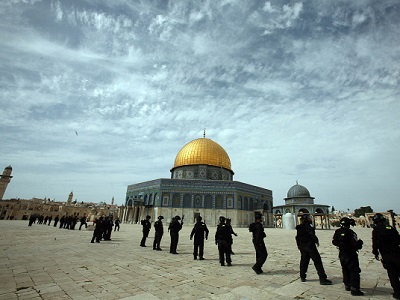
While the danger of Al-Aqsa Mosque collapsing is very real, it is a representation of the mentality that rules Israel. (Photo: Mahfouz Abu Turk)
By Ramzy Baroud | Palestine Chronicle | March 12, 2014
Something sinister is brewing around and below al-Aqsa Mosque in occupied East Jerusalem, and it has the hallmark of a familiar Israeli campaign to strip the Mosque of its Muslim Arab identity. This time around, however, the stakes are much higher.
The status of al-Aqsa mosque is unparalleled within the context of Muslim heritage in Palestine itself. It is also the third holiest Muslim shrine anywhere. But equally as important, it is a symbol of faith, resistance and defiance. Its story of struggle and perseverance goes hand in hand with the very modern Palestinian struggle for rights, freedom and identity. Praying at al-Aqsa at times seems like an impossible feat. Many Palestinians lost life or limbs simply trying to gain access to the mosque.
In a statement released on March 7, the Palestinian Ministry of Awqaf and Religious Affairs said Israeli forces carried out 30 attacks against Al-Aqsa Mosque and other holy sites during the month of February alone. Most of the attacks targeted Al-Aqsa itself. While the recurring violations at Al-Aqsa were led by Jewish settlers, according to the statement, they have done so under the watchful eye, protection and support of the Israeli police and army.
Most alarming about these attacks is their political context, which indicates that a great degree of coordination is underway between politicians, security forces and Jewish settlers.
In anticipation of a Palestinian backlash, on March 04, an Israeli court sentenced Islamic leader Sheikh Rade Saleh to eight months in prison for ‘incitement’. The Sheikh is the most outspoken Palestinian leader regarding the danger facing Al-Aqsa. Why silence Sheik Saleh now when the attacks against al-Aqsa are at an all time high?
It was on February 25, 1994, that US-born Jewish extremist Baruch Goldstein stormed into the Ibrahimi Mosque in the Palestinian city of al-Khalil (Hebron) and opened fire. The aim was to kill as many Arabs as he could.
At that moment, nearly 800 Muslim worshipers were kneeling down during the dawn prayer in the holiest month of the Muslim Calendar; Ramadan. He killed up to 30 people and wounded over 120. Exactly 20 years later, the Israeli army stormed al-Aqsa Mosque, the third holiest Muslim site, and opened fire. The timing was no accident.
Like the rest of the West Bank, Al-Khalil is facing the dual challenge of armed Jewish settlers and Israeli occupation soldiers; the latter enforcing the military occupation, while providing further protection to the settlers. The settlers, extremists from the illegal settlement of Kiryat Arba, often attack Palestinian residents of the town with complete impunity. Interestingly, many of Kiryat Arba settlers are Americans, as was Baruch Goldstein.
It was not enough that Israeli soldiers within the vicinity of the Ibrahimi Mosque allowed Goldstein – armed with a Galil rifle and other weapons – access to the mosque, but they opened fire on worshipers as they tried to flee the scene. Israeli soldiers killed 24 more and injured others. Goldstein, now a hero in the eyes of many in Israel, is often blamed solely for the massacre in al-Khalil. But in fact, it was a mutual effort between Goldstein and the Israeli army.
This symbiotic relationship between the army and settlers, which dates back to the early days of the Israeli occupation of Jerusalem, the West Bank and Gaza in 1967, continues.
While Israeli bulldozers dig into Palestinian land during the day, leveling mounds of ground and destroying olive groves for settlement expansion, heavy machinery burrows beneath the Old City of al-Quds, Jerusalem, at night. The Israelis are looking for evidence of what they believe to be ancient Jewish temples, presumably destroyed in 586BC and AD70. To fulfil “prophecy”, Jewish extremists believe that a third temple must be built. But of course, there is the inconvenient fact that on that particular spot exists one of Islam’s holiest sites: The Noble Sanctuary, or al-Haram al-Sharif. It has been an exclusively Muslim prayer site for the last 1,300 years.
The Noble Sanctuary, located in Jerusalem’s Old City, is the home of Al-Aqsa Mosque and the Dome of the Rock. The site has been under constant threat, attacks, acts of arson and military violence for nearly five decades. The few Muslim clergy – belonging to the Islamic Trust which manages the area, along with the custodianship of Jordan – are mindful of the ever-lurking Israeli threat that oftentimes turns deadly. It was no surprise that late Israeli leader Ariel Sharon chose that exact place to carry out his proactive ‘tour’ of al-Aqsa compound in 2000. Many unarmed Palestinians, mostly worshipers, died on that day. Thousands more were lost in the following months and years as the entirety of the occupied territories and Palestinian towns inside Israel exploded with unprecedented fury. Sharon was later elected Prime Minister of Israel.
That same dangerous combination – rightwing politicians allied with religious zealots – is at work once more. They are eying Al-Aqsa for annexation, the same way the Israeli government is laboring to permanently annex large swathes of the occupied West Bank, to preclude any future settlement with the Palestinian Authority of Mahmoud Abbas.
The Israeli Knesset (Parliament) chose the 20th anniversary of the Goldstein massacre of Palestinians in al-Khalil to begin a debate concerning the status of Al-Aqsa compound. Right-wingers – which constitute the bulk in the government of Prime Minister Benjamin Netanyahu – want the Israeli government to enforce its ‘sovereignty’ over the Muslim site, which is administered by Jordan per the Jordanian-Israeli peace treaty of 1994. Israeli MP Moshe Feiglin, is the man behind the move, but he is not alone. Feiglin is a member of Netanyahu’s Likud party, and has strong backing within the party, the government and the Knesset.
A major backer of Feiglin’s initiative is Miri Regev, also a far-right Likud member. Regev is demanding that the government establish separate prayer times for both Jews and Muslims in Al-Aqsa Compound. The model she wishes to duplicate is no other than the Ibrahimi Mosque. “We will reach a situation where the Temple Mount will be like the Cave of the Patriarchs, days for Jews and days for Muslims,” she said.
Of course, Regev omitted the fact that 20 years ago to the day, a Jewish extremist and Israeli troops killed and wounded hundreds of Palestinians kneeling for prayer.
On the next day following the Israeli government debate, a thundering sound was heard around 3 AM in the Wadi Hilweh neighborhood of Silwan, located south of the Old City of Jerusalem. Residents heard the “sounds of heavy duty machines digging under their houses throughout the night,” Ma’an reported. Then, a large wall suddenly collapsed, while a few houses sustained damage. The Israeli underground network of tunnels is growing, as some of these tunnels connect Wadi Hilweh to the Western Wall to Al-Aqsa.
While the danger of Al-Aqsa Mosque collapsing is very real, it is a representation of the mentality that rules Israel: one of annexation and military occupation, with no regard whatsoever to Palestine’s holiest site, also revered by over 1.6 billion Muslims around the world.
– Ramzy Baroud is an internationally-syndicated columnist, a media consultant, an author and the editor of PalestineChronicle.com. His latest book is “My Father Was a Freedom Fighter: Gaza’s Untold Story” (Pluto Press, London).
When Nadia’s Soul was Raped
By Tamar Fleishman | Palestine Chronicle | March 11, 2014
“Women shall be especially protected against any attack on their honor…or any form of indecent assault” – (Article 27 of the Geneva Convention)
Nadia didn’t have a permit and she wasn’t about to request one.
Nadia, a Palestinian resident, knew that being married to Imad, who as his father, his grandfather and his great grandfather was born in Jerusalem, isn’t reason enough for her to be able to live under the same roof with her husband in his home. She knew she doesn’t fit the “criterion” of the ‘temporary’ Citizenship Law.
Nadia and Imad also knew that according to the laws of the occupation, Nadia can’t cross Hizme Checkpoint (which is exclusively a checkpoint for owners of blue IDs). And in spite the prohibition and their fear, they decided to try driving together to Imad’s parents’ home in East Jerusalem. Perhaps they hoped the soldiers wouldn’t be sticklers, which sometimes happens at Hizme Checkpoint.
But the soldiers were sticklers and the “offenders” were caught and separated. Naida was placed inside a BP vehicle, Imad was told to move over to the seat beside the driver, a BP officer drove his car and the two vehicles headed to a military base not far from the checkpoint.
The gate to the base was closed. The officer driving Imad’s car wanted to stop but made a mistake and instead of pressing on the breaks he pressed the gas pedal. The car accelerated, it hit the gate so forcefully that the front of the car crashed and Imad sustained most of the blow. An ambulance that was sent for took Imad to the hospital, since he sustained injuries to his lungs and back.
In the meanwhile the BP officers got their stories straight in attempt to have Imad take the blame for the accident: “He (the officer driving the car) pressed the gas pedal instead of the breaks because the Palestinian (Imad) made a suspicious movement, and the driver thought he was trying to attack him”, one of them summed up the plan to incriminate Imad.
Nadia wasn’t allowed to join her husband. “An interrogation is needed” they said. I waited with her. After a while a female soldier came and took Nadia to a room (they sent me away but before leaving we exchanged our telephone numbers and promised to talk). Nadia went through a physical inspection. When it was beyond any doubt that she wasn’t carrying any explosives, the soldier got out of the room and the interrogator entered- a man dressed as a civilian that closed the door behind him. He was alone with Nadia.
When she exited the room after three hours, Nadia was a different person to the one she was when she entered it. During the three hours she spent in the room Nadia became a victim to severe verbal sexual assault. Nadia’s soul was raped.
– Years ago a woman who suffered physical and mental abuse told me while she was staying in a shelter for battered women that: “The injuries heal. The words stick with you”.
When I inquired at the military’s and the police’s various telephone centers, the two branches in charge of maintaining the rule of law, whether there were no requirements to protect a person’s right to human dignity while in the interrogation room, and particularly women’s rights against any kind of sexual assault, I stumbled upon half answers: “It’s unadvisable to interrogate someone without a third party present… yes you are right but…”. A “but” was always attached to these answers. They had also informed me that they had insufficient manpower.
I spoke to the assistant of one of the MPs who promised that the MP would place a parliamentary question before the minister of defense regarding the right to human dignity inside interrogation rooms. I haven’t heard from him since.
Nadia, who didn’t receive a permit to visit her husband in the hospital, talked with me many times during the following days. Being lonely and vulnerable she consulted with me. I explained that she could place a complaint by herself or with the assistance of various organizations, we discussed the possibility of the army’s criminal investigation division taking the word of a Palestinian woman who to them was a felon, over the word of an Israeli interrogator who was one of their own.
This was never put to the test since the complaint was never filed.
With time we lost contact. Imad was discharged from the hospital and returned to his wife. Nadia tried to rehabilitate her life.
Perhaps there are those who will say that Nadia and Imad brought it all on themselves, that they knew what was permitted and what was forbidden, that they tempted fate.
But I have so much respect for people who even after so many years of occupation and oppression, continue to search for any cracks and rupture through which they might be able to pass and overcome the laws of darkness. I see them as people who are trying to survive and guard their dignity with any means possible.
(Translated from Hebrew by Ruth Fleishman.)
– As a member of Machsomwatch, once a week Tamar Fleishman heads out to document the checkpoints between Jerusalem and Ramallah. This documentation (reports, photos and videos) can be found on the organization’s site: http://www.machsomwatch.org. The majority of the Spotlights (an opinion page) that are published on the site had been written by her. She is also a member of the Coalition of Women for Peace and volunteer in Breaking the Silence.
Related article

Witness: Allenby victim shot 3 times in chest
Ma’an – 11/03/2014
JERICHO – A man who was with Raed Zeiter, who was shot dead Monday by Israeli troops at the Allenby Bridge crossing with Jordan, says he suffered three gunshot wounds to the chest.
Mohammad Zayd told Ma’an that about 8 a.m. he, Zeiter and another woman were late to return to the bus after the first Israeli inspection point.
When they were returning, an Israeli soldier pushed Zeiter, they started scuffling and Zeiter was brought to the floor. Zeiter then stood up and shoved the soldier, who in turn fired a shot that barely missed Zeiter, Zayd said.
The soldier then proceeded to fire three shots that hit Zeiter in the chest, leaving him dead on the floor, Zayd added, explaining that he tried to resuscitate Zeiter to no avail.
Zayd added that medics arrived almost an hour later, and covered Zeiter’s body, while Israeli police closed the scene and unloaded passengers off the bus and ordered them to the ground in order to search them.
Israeli soldiers then recorded accounts from people on the bus, and asked them about Zeiter, he added.
Earlier, an Israeli army spokeswoman said “a Palestinian attempted to the seize the weapon of an Israeli soldier at the Allenby Bridge crossing with Jordan. Israeli soldiers opened fire and a hit was identified.”
Army commander Yaron Beit On, speaking in a conference call with reporters later in the day, said that as the man attempted to snatch an Israeli soldier’s gun, another soldier shot him in the leg.
The man then managed to grab a metal bar from one of the Israeli troops, Beit On said. When he tried to use it as a weapon, a soldier shot and killed him.
He said that the incident occurred at around 9:30 a.m., and that the man was carrying two suitcases with him.
Related articles


Palestinian killed after occupation forces open fire on his car
Al-Akhbar | March 11, 2014
A Palestinian died and a second was injured Tuesday after Israeli occupation forces fired on their car near Tulkarem in the northern West Bank, Palestinian security sources said.
The sources told AFP that the car then veered off the road, and it was not clear whether the gunfire or the subsequent crash led to the casualties.
There was no immediate comment from the Israeli army.
Abdullah Kamil, Tulkarem governor, identified the man who died as Fidaa Muhye Addin Majadlah, and his passenger as Ibrahim Adnan Shukri, both from the Tulkarem village of Attil, according to Palestinian news agency Ma’an.
The latter was reported to have suffered moderate to serious wounds, and is in Israeli custody. Occupation authorities are also holding Majadlah’s body, the Ma’an report added
The death comes one day after occupation forces shot dead two Palestinians in separate incidents in the West Bank.
In the first of Monday’s killings, a Jordanian-Palestinian judge was shot dead by Israeli troops at the Jordan border, with the Israelis claiming that he tried to snatch a weapon and “strangle” a soldier.
But Palestinian witnesses said the man was shot following an argument over a cigarette in an incident which prompted a furious response from the Palestinian Authority and Amman.
The man was identified as 38-year-old Raed Zeiter who worked as a judge in Amman. Jordan’s justice ministry said he worked at a magistrate’s court in the capital.
Several hours after Zeiter’s death, occupation forces shot dead a 20-year-old Palestinian, identified as Fadi Sayel Darwish, near the West Bank city of Ramallah. The army said he had been throwing stones at soldiers.
(AFP, Al-Akhbar)
Israeli troops harass the residents of Qaddum, and poison a baby with CS gas while they’re at it
By Yossi Gurvitz | Yesh Din | March 9, 2014
The security forces have a problem with the village of Qaddum. We’re not quite sure why. Perhaps it’s the weekly demonstrations that its residents are holding. What is clear is that they have decided to teach the village a lesson. Recently, a mysterious officer, who according to testimonies of the residents calls himself Captain Sabri, walks around telling people he will come and teach them a lesson. Some of the residents suspect him of being an ISA (Israeli Security Agency, AKA Shin Bet) officer.
Whatever Sabri’s organizational loyalty may be, he keeps his word. The Friday demonstrations are dispersed with an iron fist, and beyond that the residents also report recurring attacks on the village, even on days when no demonstrations are held. These attacks include the throwing of stun grenades and CS gas canisters, CS gas being the more aggressive form of tear gas.
In one case which actually made the Israeli media – of course, under the utilitarian fear that one more person killed by the IDF will make the kettle boil and cook us a new intifada – an old man from Qaddum, Saeed Gasser Nassar Ali, aged 85, died after inhaling gas which seeped into his house following a demonstration. The doctor who treated Ali found it hard to give him the best treatment possible, since he too was suffocating from the gas. Let’s say that again: the man suffocated in his house, and died shortly after in the hospital. Not during a demonstration. In his house.
Three weeks before Ali died, M., a resident of Qaddum, woke up at about 1 AM. His brother warned him that the army was raiding the village, and that all windows must be closed. Soon after, even though he thought he had closed all the windows, gas seeped into the house. The first to feel it was seven year old A., who began screaming that he can’t breathe. Then four year old R. began complaining he was feeling ill. The gas came through the windows of the bathroom, which is close to the children’s room and was forgotten.
M.’s wife was in the bedroom, holding H., a two month old baby, in her arms. When the gas reached the bedroom, she too had trouble breathing. M. noticed H. was turning blue and throwing up. He called an ambulance, and reached the village’s doctor – the same doctor that, a few weeks later, himself under gas attack, would have trouble treating the late Ali. The doctor gave H. an injection and hooked him with oxygen, and soon afterwards he was evacuated to a hospital in Qalqiliya. The doctors told the parents H. was in critical condition; happily, by the morning he was significantly better.
None of this will make the news. No one died. It’s just two children and an infant, poisoned by tear gas in the peace of their home. That’s the way occupation works: it requires terror, and effective terror necessitates the knowledge that no place is safe, that even the peace of the children’s room may be violated at any moment, by a cloud of something burning and suffocating. Don’t look away, my dears: this is what we finance. This is what the flying shards, flying as the tree is cut, look like. Like the broken egg without which no omelet can be made, and all the other clichés we tell ourselves when we say – “there’s nothing we can do”. Perhaps we can begin by not suffocating babies with gas?
Fear not: no IDF soldier will be harmed as a result of complaints filed after such events. As apparent in the case of Jawahar Abu Rahma, killed after inhaling gas three years ago, in which case we still lead a legal struggle so that the IDF will begin an investigation (!) into her death, the soldiers have nothing to fear. They’re covered. In our case, M., the father, does not intend to lodge a complaint. The rhetoric of “the most moral army in the world” failed to convince him. He knows there is no point in the effort and the heartache. And who knows, if you complain, maybe you’ll be targeted for harassment. So what’s the point? Better to make sure all windows are properly closed. Maybe, next time, it won’t be your baby.
Related articles


Check The Label – Boycott Israeli Produce
By Friends of Al-Aqsa November 7, 2013

The need to boycott Israel is growing
The call for boycotting Israel has grown significantly in recent years. The main purpose of this global campaign is to bring Israel to account for its human rights violations against Palestinians. The reason such civil action is necessary is because governments around the world with the power to intervene have repeatedly failed to utilise international legal apparatus in to hold Israel to account for its crimes.
However, successful boycott campaigns have revealed that ordinary people do have the power to act and respond to Palestinian calls for intervention. The destruction of Palestinian infrastructure through Israeli military assaults, routine demolitions of essential resources such as water wells, and blocking access to farmlands; means that Palestinians are unable to freely harvest their lands and bring their produce onto the markets. It is well documented that farmers are attacked by extremist settlers, and shot at by army personnel. Entire initiatives such as the Olive Cooperative have been built in response to these attacks, so that international solidarity activists can go to Palestine simply to help farmers harvest their crops and document the violent assaults some face on a daily basis.
Fishermen off the coast of Gaza face similar deadly assaults, this time from Israel’s naval vessels. Thus, peaceful farming or fishing is now a luxury for Palestinians, yet Israel is exporting its own produce globally and reaping the financial rewards for it. Its exploitation of stolen Palestinian lands in the West Bank should not be allowed to enter European markets and the boycott campaigns seek to highlight this.
The boycott of illegal settlement produce is becoming established. However, there is now also a move to boycott Israeli produce too, as Israeli companies have been found to breach EU food labelling regulations by labelling settlements goods as ‘produce of Israel’. By doing this, they mislead consumers into believing that the goods are legitimately farmed in Israel, instead of illegitimately farmed on stolen Palestinian land, often exploiting Palestinian labour.
Recent statistics reveal that illegal settlements profit from exporting their produce to Europe to the tune of 230 million Euros a year. When compared to Palestinian exports, this is fifteen times greater in value. Thus, the EU imports 100 times more produce per illegal Israeli settler than it does per legitimate Palestinian resident of the West Bank.
The success of the boycott campaigns reflects the feeling on the ground. Ordinary Brits do not want to be a part of Israel’s racist and illegal occupation policies, and they do not wish to support the illegal settlements by buying their produce.
British Politicians Oppose Boycott
Both the Conservatives and the Labour Party have both come out against boycott of Israel.
David Cameron stated in October 2012:
In a speech by David Cameron at the annual dinner of the United Jewish Israel Appeal, Cameron said on boycotting:
“And to those in Britain’s universities and trades unions who want to boycott Israel and consign it to an international ghetto, I say not only will this Government never allow you to shut down 60 years worth of vibrant exchange and partnership that does so much to make both our countries stronger but I also say this: we know what you are doing – trying to delegitimise the State of Israel – and we will not have it.”
The Labour Shadow Foreign Secretary, Douglas Alexander, recently stated ”it is not Labour policy to support boycotts. We would like to see even stronger economic ties with Israel’. His comments were reported on twitter following a London meeting on 7 February 2013.
European Consumer Labelling laws
The EU is considering making it illegal for Israel to sell produce from the illegal settlements labelled as ‘produce of Israel’. This would be a marked step towards obstructing settlements from profiting from the land they have stolen.
Produce to Boycott
Products to look out for are: dates, citrus fruits and herbs, and manufactured products including cosmetics, carbonation devices, plastics, textile products and toys.
Recently, Morrisons supermarket was found to be selling medjoul dates labelled as ‘Produce of Israel’ but which were in fact from illegal settlements.


1) Every time you go shopping, ‘Check the Label’ on the produce you buy. Ensure they are not from Israel, West Bank or Jordan Valley. If you do see produce from these places, take a photo and send it to info@checkthelabel.org.uk detailing the store and location.
2) If you find produce from Israel, West Bank or Jordan Valley ask to speak to the store Manager and explain that the produce are from illegal Israeli Settlements as they are grown on land that has been stolen from Palestinians. Ask for them to be removed from the shelves and for them not to be stocked again. Please also ask for the suppliers name if it is not clear as this is useful information. Email your experience to info@checkthelabel.org.uk
3) If you do not want to approach the Manager whilst you are shopping, contact the stores Head office on their customer service number/email explaining your concern.
Contact Details
Tesco
Tesco Customer Service Centre, Baird Avenue, Dundee, DD1 9NF
08457 22 55 33


Sainsbury’s
Sainsbury’s Supermarkets Ltd, 33 Holborn, London, EC1N 2HT
0800 636 262


Waitrose
0800 188 884
customersupport@waitrose.co.uk
Morrisons
Customer service enquiries – 0845 611 6111
General or corporate enquiries – 0845 611 5000
By Post: Customer Service Department, Wm Morrison Supermarkets PLC, Hilmore House, Gain Lane, Bradford, BD3 7DL


Asda
General Enquiries: 0800 952 0101
Write to: Customer Service, ASDA House, Southbank, Great Wilson Street, Leeds LS11 5AD
Aldi
Holly Lane, Atherstone, Warwickshire CV9 2SQ
0844 406 8800


Lidl
0870 444 1234
Related Articles:
Israeli firms shed crocodile tears for Palestinian workers
Protests In Gaza And 40 European Cities Demand End To International Trade With Israeli Agribusiness
British businessman promises to resign as chairman of Israeli settlement exporter
Campaigners call on Sainsbury’s to ban trade with Israeli agricultural companies
Palestinians struggle to farm in West Bank
| Cultural Boycott as a Political Tool; Impact and Importance |

Palestinian Prisoners: Imprisoned for their Love of Freedom
By Reham Alhelsi • April 18, 2009
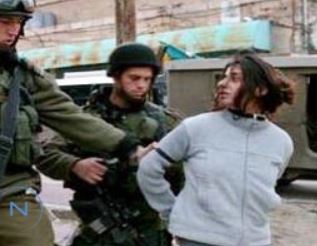
Every year, on April 17, Palestinians commemorate the Palestinian Political Prisoners Day. On 17.4.1974 the first Palestinian political prisoner, Mahmoud Baker Hijazi, was released from Israeli prisons in the first prisoner exchange deal with Israel. That same year, the Palestinian National Council declared the 17th of April a day of solidarity with Palestinian political prisoners, to be commemorated every year. In Occupied Palestine prison and imprisonment are as common as sunrise and sunset. There is almost no family that had not been subjected to Israeli imprisonment one way or the other. Palestinians are being detained on a daily basis, making them the most imprisoned people on earth. It is difficult to estimate their number, but several sources put the number of Palestinians detained or imprisoned by Israel since 1967 at over 750,000 Palestinians, making 20% of the total Palestinian population in the Occupied Territories, and approximately 40% of the total Palestinian male population. With the outbreak of the 2nd Intifada in September 2000 until September 2008 some 65,000 men, 750 women and 7,500 children were arrested by Israel. According to the ICRC, in October 2008 there were 10,500 Palestinians in Israeli prisons. Addammeer puts the number at 9,493, 750 of which are administrative detainees, 349 aged 18 and under, and 75 are females. Among those detained are political figures and some 47 Palestinians parliamentarians.
The Israeli Occupation Forces (IOF) can arrest anyone and anywhere, without giving a reason. Palestinians are arrested at home, on the way to school or work, at universities, in hospitals, at checkpoints. Mass arrests, as form of collective punishment, are also very common. Curfews would be imposed on villages, towns or refugees camps, houses would be raided and Palestinians arrested. I have witnesses a number of these mass arrests, but never did the IOF bother to tell the residents why they were forced to leave their homes in the middle of the night and stand in the cold and the darkness for long hours. Under the cover of darkness and the curfew, the IOF would demand with loudspeakers that all men, usually those between 16 and 45, gather in the school yard or on the main street. We used to sit in the darkness at the windows and try and recognize the men standing in line and questioned by the IOF; relatives, friends and neighbours. Sometimes the men are blindfolded and handcuffed. They would wait for this to end, while being harassed, shouted at and kicked by the Israeli soldiers. We would wait with them, behind windows, hoping that they would all be released soon and come home safe. Sometimes, they are all sent back home after a night of harassment, but often this ends with mass arrest for no given reason.
Another form of collective punishment is house arrests. I have witnessed so many house arrests, and all were accompanied by violence and harassment and the wilful destruction of property by the IOF. They would turn the house over, destroying the furniture and even the food, as if the person they are searching for would be hiding in the wheat or the sugar, and if there was any money or valuables in the house, it was sure they would never be found again after the IOF had left the house. Family members trying to protect their home or their children are beaten. We would tell them that the person they are looking for is not in the house, we would try and reason with them, but it is all useless. They come on a mission to harass, destroy and arrest. Often I thought they knew they wouldn’t find what or who they are looking for, and that the whole operation of house raid is purely to punish the family and pressure it to hand over their son. During such house searches, the IOF would push us against the wall, kick us with their boots and beat us with the butts of their rifles. They didn’t care that they were beating children and elderly.
Upon arrest, detainees are often blindfolded and handcuffed. Not only is the detainee physically abused and humiliated, but other members of the family as well. Also, it is common practice by the IOF to use family members as human shields during such raids. The detainee is taken without informing the family about where he is taken to. Usually it takes days, if not more, before the family finds out where a detainee is. There are many incidents where families realized that their sons were in a certain prison months after they were arrested, and only after another detainee was released and informed that family about their son. One summer afternoon, my uncle and I were playing football in the garden. He was on the IOF list of wanted persons and was staying in our house. Nearby, there was a huge fruit tree, and when I was a child my father told me as way of a joke that a soldier was buried under that tree. At nights, when the leaves of the tree would move with the wind, I used to imagine the sound they made the murmuring of that soldier, and with all the Russian books we had in our library, I gave that imaginary soldier the name Yuri. My uncle and I made bets as to who would win the football game, we joked and laughed and I remember telling my uncle that Yuri would come and take him. After I explained to him what I was talking about, he said: I think you mean Uri and not Yuri, meaning that if any soldier came to take him away, it would be an Israeli soldier, not a Russian. That night at 2 in the morning, I was awakened by hurrying footsteps outside the window. The minute I fully woke up and stood, there was loud knocking on the front door. My father asked who it was, and removed the side of the curtain to see who stood outside. Standing near him, I could see the face of my grandfather and behind him nothing but darkness, complete darkness. The minute my grandfather said it was him, my father opened the door immediately, only to see grandfather practically thrown inside the house. In a matter of seconds, the house was full of IOF soldiers, some in army uniform, others in civil uniform. They had finally figured out were my uncle was hiding and had come to arrest him. They brought my grandfather, an old man, in the middle of the night as a human shield, in case anything happened. My uncle was still in bed, and the minute the Bethlehem area commander saw him, he jumped on the bed and held his throat in his arms, wanting to strangle him, shouting repeatedly: you were here the whole time. My mother tried to get them off my uncle, but the commander pushed her away. And while my uncle was putting on his clothes and shoes, the commander was slapping him and kicking him. The other area commander, responsible for Sawahreh and the surroundings, told his colleague not to do any beating in his area, meaning that since the prisoner was from the Bethlehem area, the beating was okay once they reached that area. I remember we had a huge poster on the wall, one of “Guevara Gaza”, and the commander asked my sister if she knew who it was. The name was written on the poster for all to see, so when she replied yes, he ordered her to remove the poster. When they left, we realized that they had surrounded the whole area around our house. IOF vehicles had blocked the way in case anyone thought of escaping, and I am sure that if an ant moved in the darkness that night, it would have been shot dead immediately. My uncle was taken to interrogation and tortured to confess to things he never did, and when they failed to get a confession from him, he was held in administrative detention, which is a detention without trial or charge, often used by Israel. When he was finally released, he told us that they couldn’t wait for the interrogation to start the torture, and that he was beaten by the soldiers all the way from Sawahreh till they reached the Israeli detention facility.
Sometimes, injured or sick prisoners are taken from their homes, from hospitals, or after being wounded in a demonstration. They rarely get the needed medical help, and often get Aspirin as treatment for everything. Health examinations are conducted through a fence and additional medical treatment or hospital transfers are often postponed for long periods of time. Withholding medical treatment is one method used to pressure detainees into collaboration. There are more than 800 Palestinian detainees who suffer from bad health conditions, much of which as a result of the arrest or the interrogation. According to Palestinian researcher Abdul-Naser Farawna, 196 Palestinian detainees have died in Israeli prisons since 1967 due to medical negligence and torture, 49 of whom died due to medical negligence. Alone last year, 2 detainees died because they were not given the needed medical assistance. During the 2nd Intifada 72 Palestinian detainees have died in detention, 17 due to medical negligence, 3 as a result of torture, 51 were executed by the IOF after being arrested and 1 prisoner was killed during prison protests.
Often Palestinians are arrested for breaking one of the over 2,000 military orders governing the Occupied Palestinian Territories, some of which they have never heard of before their arrest. Women and children are often arrested to pressure detained family members into confessing or pressure other family members wanted by Israel to hand themselves in. The Palestinian Prisoners Society reports that between September 2000 and September 2008 some 750 women and 7,500 Palestinian children were arrested by Israel. In September 2008 there were 69 Palestinian female political prisoners held in Israeli prisons, 2 of them in solitary confinement and 5 in administrative detention. There are 6 female child prisoners and 4 detainees imprisoned as well as their husbands. One detainee has her baby with her who was born in prison. Palestinian female prisoners are placed in 2 Israeli prisons: Hasharon-Telmond and Neve Tertza prison, where they are detained in the same section as Israeli female criminals accused of murder, drug use and prostitution. Like Palestinian male prisoners, Palestinian female prisoners face torture and humiliation. Strip search, brutal body searches and sexual harassment are frequent.
Contrary to the UN Convention on the Rights of the Child, which defines a child as being under 18, Israeli military orders consider a child over 16 an adult, to be treated, tried and sentenced as such. In practice, Palestinian children as young as 12 may be arrested, charged and sentenced in Israeli military courts, since there are no juvenile courts. According to several reports, there are over 400 Palestinian children in Israeli prisons today, including 7 girls and 6 administrative detainees. These child detainees are aged between 13 and 18, more than 54 of whom are not older than 16. They are detained in Israeli prisons together with adults. 50 of these child prisoners are held in Ofer, 100 in Magiddo, 7 in Atzion, 22 in the Negev, 105 in Hasharon-Telmond and the rest in other prison facilities. Today, more than 450 Palestinian adult prisoners were children upon arrest and turned 18 in Israeli prisons. Like adult prisoners, Palestinian child prisoners are subjected to physical and psychological torture to extract confessions from them. During interrogation, they are not allowed to have any family member or a lawyer attending. Although I was practically a child when arrested, I was placed in a small empty room. I had been separated from my sister, and didn’t know where they had taken her. I stood waiting for a life sign from anyone, and I didn’t know how long I stood there, but I remember well how tired I was of standing and how thirsty I was. After some time, I could hear the cries of a boy in the room next to where I was. I thought, they were either torturing him or someone was making these noises to make me scared before it was my turn to be interrogated. I kept thinking of everything I ever heard, of how to keep still, stay brave and remember that they are only playing games with us to scare us into confessing to things we didn’t do. When I was finally led into a room with a number of IOF soldiers, all males, the soldier in charge checked my school bag and found my biology textbook. He looked through the book and saw a drawing of the anatomy of a human tooth. He showed it to me and asked smirking in a disgusting way if I knew what it was. I knew what it was and knew what he thought it was and what his plan was by asking me about it. At that moment I didn’t feel scared anymore, because I realized how stupid they are. Not only didn’t he know it was a tooth, the textbook was in English and it was written below the drawing what it was, but most probably he didn’t know a word of English and was acting so superior. I looked at him and said: yes, this is a tooth. My suspicions were confirmed when, upon not believing me, he asked one of the other soldiers in the room and the other confirmed what I said.
Child prisoners are held up in overcrowded cells, face torture and solitary confinement and don’t receive the needed medical treatment. In the last couple of months there has been an increase in the number of Palestinian children arrested. They are either arrested at home, at checkpoints or in streets, and are often accused of throwing stones without any proof. DCI-Palestine reports that the number of children brought before Israeli military courts in pre-trial hearing in the first two weeks of January was twice as high as in 2008. It added that its legal department receives a monthly average of 10 to 15 new cases of children for legal representation in Military courts, and that alone for the first two weeks of January 2009 it received 10 new cases. In one incident, 7 children were arrested in Toura Al Gharbieh in Jenin on 20.1.2009 and were detained at the Salim detention and interrogation centre. Two of the children were 12, two 13, two were 15 and the last 17 years old. Under pressure and with no lawyer present, the children confessed they had thrown stones at the Apartheid Wall. In another incident, during an invasion of Hares in the West Bank on the night of 12/13.3.2009, the IOF arrested a 17 year old boy suffering from kidney malfunction.
Palestinians prisoners are held in facilities run by the Israeli Prison Services (IPS) or the IDF. There are 30 detention centres that include 21 prisons and military camps, 5 detention and holding centres and 4 interrogation centres. Also, there is at least one known secret prison, Facility 1391, which is renowned for its severe torture methods. The exact location of this prison is unknown and lawyers and the ICRC have no access to it. The majority of these facilities are located outside the West Bank and Gaza Strip, and transferring Palestinian prisoners to these facilities constitutes a violation of the 4th Geneva Convention, and making family visits almost impossible. Some of these facilities are buildings while others are tents within military camps like the Ketzion Military prison camp in the Negev, exposing detainees to harsh weather conditions. They are all overcrowded, with little hygiene, prisoners have to sleep on wooden planks and covers are often provided by the families or human rights organizations. The food provided is insufficient and of poor quality. Palestinian detainees have to live in appalling conditions in these facilities, are humiliated and subjected to inhuman treatment. In some cases, detainees are deported, either abroad or to the Gaza Strip. After the siege of the Nativity Church in 2003, Israel deported 13 Palestinian detainees to Europe and 26 to the Gaza Strip. During the Gaza war, hundreds of Palestinian civilians were arrested, including minors. They were handcuffed and blindfolded, and had nothing to shelter them from the harsh weather. Many held for days in pits dug in the ground. Reports added that some of the detainees were held near tanks and in combat area, making them human shields for the IOF.
Prison visits usually take the whole day, although the visit itself lasts less than an hour. We would set off in the very early morning, when it was dark outside and everyone else was still sleeping. The bus of the ICRC would be full with Palestinians from everywhere, mostly elderly women and children, all anxious to see their relatives. And before we would finally be able to see our loved ones, we would undergo one checkpoint after the other and one search after the other. I remember during one visit, when we were finally allowed into the visit room, I walked quickly looking for my uncle. I hadn’t seen him in years, and after I finally sat opposite him, we started talking through the barbed wire. We were both so happy. It was after a few minutes that someone from my family came and told me to come and say hello to my uncle. I was talking to the wrong person, and I was so embarrassed I didn’t even say goodbye or look back to see if that prisoner had any visitors that day. Later, I thought he too might have not seen his family since so long that he too mistook me for a relative, or maybe he was just anxious to speak to someone. During another visit, I remember sitting and talking to my uncle and at the same time trying to ignore the rain drops that were seeping through the roof and hitting me on the head and running down my face. My uncle must have found it amusing, because every time a raindrop would hit me in the face he would smile, but I would ignore it and continue talking, and by the end of the visit my hair was totally soaked and I was freezing. There was no possibility of kissing or hugging a relative, and the only thing we could do in way of shaking hands was to stretch our fingers through the barbed net separating us. Saying goodbye was always difficult, because we knew we were going back to our homes, to the relatively bigger prison, while leaving them behind in the small overcrowded cells. And when we finally reached home, it would be dark again and most people would be sleeping, a day spent between checkpoints and searches for a 45 minute visit of loved ones.
One time, on the way to my aunt’s house in Dheisheh, a friend of mine and I passed a young man, who was walking up and down one narrow alley of the refugee camp. The man was most probably mid twenty and was good looking. He was walking that alley and was arguing with someone. I looked around and saw no one in the whole area. I looked up to see if he was addressing someone sitting at a window or on the roof, but could see no one. I pointed the man to my friend, who told me not to worry. She said the young man had been recently released from an Israeli prison, where he was tortured. Since then he had been roaming the streets of Dheisheh, arguing with an invisible friend. As I listened closer, I realized he was talking politics with himself, discussing the occupation and life in prison. They had not released him, for he was still in that Israeli cell, being tortured every minute. Last winter when I was in Palestine, I wanted to take some photos of old UNRWA rooms, built for the Palestinians in 1949. Most old UNRWA rooms were being destroyed to build new houses, and I wanted to keep a record of the last remaining rooms that are a synonym to the Nakba and refugee camps. The wife of one of my uncles accompanied me in my search since she was born and grew up in Dheisheh and knew where to find a few old rooms. Most of these tiny rooms are deserted now, standing empty near larger family houses. I would take photos from the outside and if the room had no door or the door was open, I would take photos from the inside. As we came to inspect one room, we were surprised to find an old man lying on the ground, wrapped in a torn out winter coat. The old man opened his eyes as he saw us, he made a move as if to stand up, but my uncle’s wife told him not to leave and apologized for disturbing him, since we thought the room was deserted. A few minutes later, my mother’s aunt saw us invited us for some tea. Inside, we told her about the old man, and as she and my uncle’s wife talked about the old man and giving him something to eat and warm himself, since they knew who he was, I realized it must be the young man I saw long time ago. He was still imprisoned in that cell, a whole life wasted, and all I could do was to shake my head at the injustice of it all.
Under international humanitarian law, torture is strictly forbidden. The world was shocked when the torture in Abu Ghreib came to light, there were condemnations from everywhere and demands were made to close that prison. But the Zionist state, which conducts one war crime after the other, never hesitates in using torture. The forms of torture used in Abu Ghreib were not new to Palestinians, because they have been used since decades by the IPS against Palestinians. Was it not revealed that Israeli IOF and Shin Bet interrogators were hired by the Pentagon to brutally interrogate prisoners in Abu Ghreib? Was it not revealed that the American interrogates implicated in the torture had attended an “anti terror” training camp in Israel, and that many of the torture methods used in Abu Ghreib resembled those applied by Israel against Palestinian detainees? Much is documented about torture in Israeli prisons, but we rarely hear of any condemnation or demand to close these torture facilities. According to B’Tselem, 85% of the Palestinian detainees have been subjected to torture, adding that “Since 1987, the GSS (Israeli General Security Service) interrogated at least 850 Palestinians a year by means of torture …. (a)ll governmental authorities – from the Israeli army to the Supreme court – take part in approving torture, in developing new methods, and in supervising them.” In 1999 the Israeli High Court superficially outlawed the use of arbitrary torture as an interrogation method, but in reality it did not ban it and till today torture is still used by Israel. Physical ill treatment combined with humiliation begins with the arrest, whether at home or in the street. Palestinian detainees can be interrogated for 180 days, and can be denied a lawyer for a period of 60 days. During interrogation, torture is used and has led to the death of the detainee in some cases and confessions extracted under torture are admissible in Israeli courts.
Palestinians may be held for days without being brought before a judge or informed of the reason for the arrest, during which they are interrogated, which can last up to 180 days, or are administratively detained. Administrative detention is a detention without trial or charge or the continuation of imprisonment after the completion of a sentence. It is often used by Israel and is authorized by an administrative order of the IOF rather than by a judicial decree. Israeli Military Order 1229 of 1988 empowers IOF military commanders to detain Palestinians for up to 6 months, which can be extended indefinitely. Over the years, thousands of Palestinians, men and women and of all ages, have been held in administrative detention for periods ranging from 6 months to over 8 years, without being tried or charged. Families of detainees are not informed of a person’s arrest or the arrest location. Theoretically, detainees can appeal, but in reality neither they nor their lawyers are informed of the reason for the detention or examine the evidence, which makes defending their clients very difficult. The Orders governing administrative detention were also modified in 1999. MO 1466 – Temporary Order, Modification 13 states that a detainee must be brought before a military judge within 10 days of his arrest, and authorizing the military judge to approve, cancel or decrease the time of administrative detention order. This modification is also superficial, since the judges are military personnel who give legal legitimacy to the illegal actions of the IOF and the IPS. In reality, Palestinians are tried by Israeli military courts consisting of a panel of 3 judges appointed by the IOF. These judges often have no legal background and thus don’t fulfill international standards of a fair trial. Since the beginning of the 2nd intifada in September 2000 some 20,000 Palestinians were held in administrative detention. By April 2009 there were more than 560 Palestinian administrative detainees, held in Israeli prisons without trial. 372 of these detainees have been held without trial or charge for at least two consecutive periods, 47 of them for over two years, and 23 for over two and a half years including two who have been imprisoned for over four and a half years.
While a Palestinian may be held in custody for 18 days before being brought to a judge, an Israeli can be held in custody for a maximum of 48 hours before being brought before a judge. While a Palestinian can be held for 30 days without charges which can be extended indefinitely, an Israeli can be held for 15 days without a charge which can be extended for only another 15 days. Palestinians brought to court on accusation of murder are always convicted, even without evidence, and are always sentenced to life imprisonment. Most cases against Israeli soldiers or illegal Jewish settlers accused of murdering Palestinians are closed without any charges, even with the existence of evidence or witnesses. The few who do get sentenced are imprisoned for short periods ranging from 6 months to 7 and a half years or to community service. Palestinian Prisoners have been used by Israel at politically convenient moments, whereby Palestinians who had already served out their sentences with only a few days remaining would be released as “gestures of good will”. At the same time hundreds others would be arrested. For example, on 25.8.2008 Israel released 198 prisoners as a “gesture of good will”, however statistics for August 2008 show that another 338 Palestinians were arrested. Today there are some 81 “old detainees” i.e., detainees who are in continuous imprisonment since over 20 years, 2 of whom since over 30 years, and some 290 prisoners who have been in prison since over 15 years.
Although they have modern deadly weapons, are top recipients of military assistance, have their war crimes justified by a biased western media, and their interests protected by Zionist lobbies all over the world, the Zionists still fear us because they know we are the rightful owners of the land and that alone by existing we are defying them and their power and countering the myths and lies on which their state is built. Israeli Foreign Minister, Avigdor Lieberman said on the release of Palestinian prisoners: “It would be better to drown these prisoners, in the Dead Sea if possible, since that’s the lowest point in the world.” They not only deny us our rights and our freedom, they want to kill our spirit and see us dead. What they haven’t understood by now is that the more they humiliate us, harass us, imprison us, take away our freedom from us, the more we value that freedom and the stronger becomes our belief in our just cause and our will to be free.
Sources:
www.addameer.org
www.sumoud.tao.ca
www.btselem.org
www.imemc.org
www.dci-pal.org
www.ppsmo.org
www.palestinemonitor.org
La Plata MEKOROT deal suspended
The agreement with MEKOROT in La Plata has been suspended! Now we continue, in the rest of Argentina…
Palestinian Grassroots Anti-apartheid Wall Campaign | March 7, 2014
CTA, ATE, Federación de Entidades Argentino-Palestinas (Federation of Argentinian-Palestinian Entities) and Stop the Wall announced the suspension of the shady business with Mekorot, a water treatment plant that would have fuelled Israeli apartheid in Palestine and sought to export it to La Plata in Argentina.
On January 11 2011, the governor of Buenos Aires province, Daniel Scioli, announced, after visiting Israel, that they would tender the building of a regional water treatment plant in La Plata. The contract worth US$170 million was awarded to a consortium of business conformed by the Israeli Water Company MEKOROT, ASHTROM BV (Spanish-Israeli firm) and the Argentinian “5 de Septiembre SA”, a company in which members of the Sindicato de Obras Sanitarias de Buenos Aires (SOSBA), which owns the 10% of the national and provincial Aguas de Buenos Aires (ABSA), participate.
Since 2011, Palestinian organizations, ATE-CTA unions, other civil society organizations and MPs mobilized against this contact. During more than 3 years, they informed the public about Mekorot’s criminal actions in Palestine and investigated the consequences that Mekorot would cause in Argentina.
In a joint effort, they denounced that public Argentinian money would benefit Mekorot and, through this, finance Israeli apartheid in Palestine. The accusations that Mekorot implements apartheid in Palestine are based on reports by Palestinian organizations, the United Nations, and Amnesty International.
Mekorot has been responsible for water right violations and discrimination since the 1950s, when the national water carrier was built which is diverting the Jordan river from the West Bank and Jordan to serve Israeli communities. At the same time, Mekorot deprives the Palestinian communities from access to water. The average consumption in the occupied Palestinian territories is about 70 liters per capita per day – well below the 100 liters per capita per day recommended by the World Health Organization -, while the Israeli consumption per capita per day is around 300 liters. Mekorot has refused to supply water to Palestinian communities inside Israel, despite a decision by the Supreme Court of Israel recognized their right to water. Mekorot is a proud partner of the Jewish National Fund “Blueprint Negev” plan, which will expel 40,000 Bedouin Palestinian citizens of Israel uprooting them from their homes and forcibly moving them to reserves while their lands will be used for Jewish-only settlements in the Naqab/Negev.
Mekorot’s support for illegal settlements is vital and has continued since 1967 when the company took monopoly control over all water sources in the occupied Palestinian territories and caters to the Jewish settlements to the detriment of Palestinian communities. Mekorot participates in the international crime of pillage of natural resources operating about 42 wells in the West Bank, which mostly cater to Israeli settlements. Mekorot also works closely with the Israeli army in the confiscation of irrigation pipes from Palestinian farmers and destruction of sources of water supply for Palestinian communities.
Beyond the street protests and work in the media, the more than 1000 pages of research and technical details compiled by ATE-CTA, served to substantiate questions in the provincial parliament and allow interventions in front of federal human rights organizations. In late 2012, the construction of Mekorot water plant was suspended.
The organizations insisted that Mekorot intended to export its model of discrimination, squandering of water and illegitimate profits developed in Palestine, now to the detriment of the population of Buenos Aires.
To start with, the entire bid was based on a work plan that had previously been designed by Mekorot, which expectably proposed the lowest price.
The expenditure of public money for water treatment plant and the consequent debt of the city with multinationals is unnecessary as the province of Buenos Aires has excellent aquifers. Puelches Aquifer is saturated and to stop drinking its water – as the Mekorot project envisaged – would have produced the elevation of the water table, bacterial contamination, basement flooding and damage to housing foundations. Reports from the ABSA state that the main problem of drinking water lies in the distribution network for which Mekorot wouldn’t have provided a solution.
For the installation in the region, Mekorot required an increase in water tariffs, until almost tripling the costs. The construction of the plant, also implied a further increase of service that would have exceeded 30% and would be paid by all the users in the region.
In terms of water quality, it would have been below the standards determined by the Argentine Food Code. Only part of the population would have had access to safe drinking water while poorer people would have received only tap water posing a risk to their health.
CTA, ATE, Federación de las Entidades Argentina-Palestinos and Stop the Wall thank to all social and political organizations, experts and individuals who contributed to the campaign ‘Mekorot Out of Argentina’. Together we won an important victory for justice in Palestine and the right to water! We continue to fight for our sovereignty over water, against the violence of multinationals and in solidarity with the Palestinian people for freedom, justice and the return of refugees to their homes.
We ask everyone to continue supporting the global movement of boycott, divestment and sanctions against Israel and to fight and prevent other Mekorot contracts in Argentina.
We ask everyone to join the International Week against Mekorot – from 22 to 30 March: “No to water apartheid, Yes for water justice!”
Related articles
Featured Video

Chinese jet fuel and the myth of energy independence
or go to
Aletho News Archives – Video-Images
Book Review
Former Insiders Criticize Iran Policy as U.S. Hegemony
By GARETH PORTER | CounterPunch | February 27, 2013
“Going to Tehran” arguably represents the most important work on the subject of U.S.-Iran relations to be published thus far.
Flynt Leverett and Hillary Mann Leverett tackle not only U.S. policy toward Iran but the broader context of Middle East policy with a systematic analytical perspective informed by personal experience, as well as very extensive documentation.
More importantly, however, their exposé required a degree of courage that may be unparalleled in the writing of former U.S. national security officials about issues on which they worked. They have chosen not just to criticise U.S. policy toward Iran but to analyse that policy as a problem of U.S. hegemony. … continue
Blog Roll
 Aletho News
- What is fueling unrest across the EU?
- Why no power can undermine Iran’s eternal dominance over the Strait of Hormuz
- Is The War Against Iran Over?
- Iran war will leave long-term ‘scar’ on Wall Street, investors warn
- How Iran decimated US power projection in West Asia: Military lessons of 40-day war
- Iran’s report details US-Israeli war crimes in targeting schools, hospitals, livelihoods
- NATO’s Slow Fracture: How Trump’s Iran War Exposed the Instrument of Hegemony
- Chinese jet fuel and the myth of energy independence
- Ukraine Sea Drone Fired From Libya Hit Russian Tanker in Mediterranean
- IRGC: Iranian forces launched no attacks during ceasefire hours
- If Americans Knew
- Military aid to Israel emerges as the latest political litmus test for Democrats
- The only Palestinian children’s rights organization closes following years-long Israeli campaign against it
- ‘I Can’t Forget the Smell’: Lebanese Reel After Israel Kills Over 300 in Single Day
- DNC Shoots Down Resolutions Calling Out AIPAC and Limiting Arms to Israel
- TCN: Is Israel Blackmailing President Trump?
- Israel killed at least 303 Lebanese yesterday – who were they? Daily Update
- Amnesty: Urgent – Protect Lebanese civilians from brutal escalation in Israeli attacks
- Is The War Against Iran Over?
- Inside the Israeli army’s propaganda wing
- Hundreds of Gaza Amputees Stranded in Legal Limbo
- No Tricks Zone
- New Study: No Linear Warming Or Glacier Retreat Along Northern Antarctic Peninsula Since 1980s
- An Inconvenient Tree: Uncovered In Alps… Europe Much Warmer Than Today 6000 Years Ago
- New Study Reports A 60% Slowdown In Greenland’s Ice Loss Rate In The Last Decade
- Low Intensity Tornado Wrecks Major Solar Farm, Creating A Potential Toxic Dump
- New Study Finds Warming Saves Lives…Cold Temperatures 12 Times More Deadly Than Excess Heat
- German Science Blog Accuses PIK Climate Institute Of Hallucinating Climate Tipping Points
- Devastating Assessment Of Comirnaty Vaccine By Former Senior Pfizer Europe Toxicologist
- New Study: CO2 Is ‘Effectively Negligible’ As An Explanatory Climate Change Factor Since 2000
- Former Pfizer Toxicologist Dr. Helmut Sterz Tells Bundestag Hearing Pfizer Vaccine Should Have Never Been Approved
- Energy Expert: Germany’s Nuclear Phaseout Was A “500 Billion Euro Mistake”
 Aletho News