Jerusalem, Palestine – The chronic tyranny brought by the Israeli occupation has had a devastating effect on the well being of the Palestinian community. But one of the worst effects is the internalization of oppression and the undermining of Palestinian’s collective self-concept. I have observed that since the 2006 elections in Palestine—which were followed by an arrest of the elected parliamentarians and an international boycott of the elected government—the vigorous spirit of the Palestinian community that had previously evolved during long years of resistance has finally been reduced to a state of demoralization.The undermining of this election represented an additional bitter blow after the more subtle impact of the Oslo Accords, which had been originally promoted as part of the Palestinian liberation project. However, reports published on the Accord’s 20th anniversary showed that during this period the number of Israeli settlers in the West Bank had doubled and the area controlled by settlements had expanded to 42 % of Palestinian land; furthermore, a system of restrictions on Palestinian movement and trade had continued its division of Palestinian families and its decimation of the economy. Not to mention the infamous collaboration between Palestinian and Israeli security forces that has secured for Israelis a profitable trade and tourism through bed and breakfast hotels overlooking the magnificent hills of the West Bank, dismantled resistance, and incarcerated more Palestinians in prisons.
Over years of occupation, young Palestinians saw their fathers dragged from homes by Israeli soldiers, humiliated at checkpoints, and rendered unable to provide for their families’ safety and basic needs. In reaction to their feelings of shame, such vulnerable children came to identify with the oppressor through oppressing weaker members of their community and developing self-loathing. A Palestinian Jerusalemite told me, “On holidays I don’t go to Eilat because it will be full of Arabs!” The efforts of some Palestinians to assimilate and identify with Israelis are truly pathetic. Some Palestinians shop for their clothing in Israeli boutiques, dress their hair in Israeli salons, and drive while listening to loud music in Hebrew. I have observed more than one Palestinian patient suffering a relapse of manic illness who spoke to me in Hebrew as an expression of grandiosity. Meanwhile, the reality of job opportunities in the West Bank is dismal and work conditions are miserable, so that many laborers are eager to work for Israelis even if they must work in settlements or participate in projects such as building the separation wall. These workers are often treated by Israelis as sub-human: a few months ago Ahsan Abu-Srur, a 54 year old unauthorized Palestinian construction worker from Askar refugee camp, was seriously injured while doing renovation work in Tel Aviv. Realizing that he was critically injured, the Israeli contractor and two of his workers dragged the man to the sidewalk opposite the workplace and left him there to die.
The experience of oppression undermines the internal cohesion of the oppressed and creates among them a state of polarization, in which they often direct their rage at others who are similarly victimized. Oppression makes people selfish and greedy, prone to infighting and competition over scarce resources—the scraps of opportunities left over from the oppressor. Oppressed people readily become resentful and envious of one another, creating an ambiance of mutual distrust.
The sense of inferiority resulting from internalized oppression sets into motion a vicious cycle. We are treated as inferior—and in the absence of resistance, resilience and self-defense, we internalize the assumption of our own inferiority. Thus we come to believe that we are less capable and less worthy than others. These feelings are then projected onto our perceptions of one another and enacted in our treatment of one another. In this way, Palestinians come to distrust and devalue their own educational and medical systems; there is a spiteful oppression of women, a contemptuous attitude towards persons of a lower socioeconomic class, and an exclusionary and intolerant attitude towards political opposition—just a few manifestations of our internalized oppression.
Nowadays, there is a widespread, corrupt system of influence and cronyism in Palestine such that most people are employees of the government. As a consequence, our agriculture is suffering, small independent businesses are crushed, and only the enterprises of a tiny minority, closely allied to the government can flourish. Young people are trapped in a cycle of consumerism, with new apartments, cars, and big loans from banks requiring a relentless lifetime of repayment. The result is decreased social involvement and productivity and rising rates of crime, addiction and diminished wellbeing. Pervasive inadequacy throughout our institutions, nepotism, false representation and mistreatment and torture of Palestinians by fellow Palestinians are just a few of the symptoms of the general degradation of our community.
Community leaders and politicians fail to restore our national dignity and pride by taking steps to break through this vicious cycle and shedding light upon resilience, productivity, authenticity and steadfastness. We remember the submissive words of the President following the western boycott of the electoral results, “If we have to choose between bread and democracy, we choose bread.” Since the partition between the West Bank and Gaza, the Palestinian official discourse seems to confuse the doer and the do-ee. In its relationship with Israel, our officials assume the role of the oppressor, condemning spontaneous Palestinian reactions to Israeli violations and promoting meek submission to Israeli oppression. The people of Palestine are cast by our leadership into the role of the suspect, the offender; such reactions only feed into the entitlement of the occupier’s spin on reality, which turns us into victimizers and assumes the role of the victim.
The submissiveness urged by our leaders goes beyond condemning armed resistance to trivializing non-violent measures such as the imposition of boycotts and the use of international law to hold Israel accountable for its actions; the Palestinian official position toward the Goldstone report on Israel’s war crimes is an illustrative example. We should not be deceived by the exaggerated festivities surrounding the UN General Assembly’s change of Palestine’s “entity” status to “non-member observer state.” The change in status was just a smoke screen to blur our perception of the revolutions taking place within the Arab world. We may have retitled our postal stamps by the addition of the words, “State of Palestine,” but have yet to take a single war criminal to the Hague and have yet to pursue our legal right to Palestinian land, waters, or air space—as any sovereign state recognized by the UN would surely do. Instead, “secretive” negotiations continue in the dark while Israel continues to approve the construction of more settlement homes in the occupied West Bank and East Jerusalem and the demolition of more Palestinian homes.
The Palestinian President reassures the world that a Palestinian state will be demilitarized while two thirds of the national budget goes to our [internal] security forces. Meanwhile, healthcare, education, social welfare, and all other national programs survive on one third of the budget! We need only look to our neighboring Arab countries who were impoverished for decades as they fed the fat cats who ran their armies, while their own starving people were duped into the belief that these armies would “defend” them one day. Now these armies devour the very same people who had supported them—but are we Palestinians any better?
Internalized oppression is driven by several engines.
The first is media. Anger and dissatisfaction create the momentum for social change, but an artificial leisure and entertainment industry will blind and distract a frustrated public from the reality around them and create a false consciousness. Local media bombard our eyes and ears to dull our critical faculties and weaken our ability to protest, resist, or revolt. Media owners and their donor capitalists ally with the political elite to impose their tastes and ideology on the public. Mohammad Assaf, the Palestinian winning Arab Idol, is a good example—a charming vocalist with a beautiful voice. But the media promotes this triumph as the symbol of “the Palestinian plight,” and mobilizes the public to become consumers of a simplistic, reductionist, and deceptive exploitation of his charm; a thing of beauty can be used for ugly purposes. One might ask why the local media failed to make an equal effort to mobilize against the siege on Gaza, the Prawer plan, or in the service of transparency regarding the ongoing negotiations—matters which connect directly with most Palestinians and their plight!
International donation is the second engine. It is a paradox that oppression can come to us through the doors and windows of freedom, openness, and efforts to do good. In her study, “Promoting Democracy in Palestine: Donation and the Democratization of the West Bank and Gaza,” Dr. Leila Farsakh concluded that such projects sought to promote the legitimacy of the Palestinian Authority rather than empowering the Palestinian public to challenge the dominance of the Authority or to critique its definition of the national liberation project. Donor-driven projects fail to devote sufficient attention to important institutions central to the democratic process, such as the parliament, political parties, and the electoral process. In the end, these projects tend to entrench the occupation rather than helping Palestinians to create the conditions for national liberation; these projects tend to intensify the grip of the Authority instead of strengthening independent-minded channels.
The third engine is the domain of education and institutionalized religion. This year, five Palestinian schools in East Jerusalem substituted the Palestinian curriculum with the Israeli one. The Jerusalem municipality went on to award the administration of these five schools by increasing the personal salaries of their principals and paying them 2,000 NIS for every student registered in their schools. A mere glance at the Israeli curriculum reveals how it distorts history, religion, geography, and eventually the mindset and the national culture of pupils: In one textbook, two pupils discuss how Israel brought electricity to their village and granted national insurance to children and their elders; the pupils conclude that they should join the celebration on “Israel’s Independence Day.” And while some of our children are savoring a toxic dose of Israeli indoctrination, others are anesthetized by some misleading religious leaders who form an unholy league with political and financial power elites. Manipulating the public with an insidious form of mind control, they come up with “teachings” promoting a fatalistic, mystical frame of mind and issue “fatwas” that promote compliance and conformity. These religious leaders promote the status quo with all its agony and disadvantages and inhibit people from embracing genuine reform and social change, encouraging people to pin their hopes on the afterlife rather than dealing with the misery of the here and now.
In conclusion, since decisions and behaviors of our leaders do nothing but establish internalized oppression, it becomes the social responsibility of ordinary people to work actively to recognize and alleviate this threat to wellbeing, in order to prevent the demise of the Palestinian spirit and cause. Raising awareness about the phenomenon, monitoring and protesting its appearance in official discourse and behavior, bearing witness, empowering economic development, resisting consumerism, connecting them with their own history and community, and helping them to analyze reality— are just a few tools to liberate Palestinians from internalized oppression. So much has been done to efface, harm, eradicate the Palestinian nation or to disfigure it forever. We cannot simply wait for justice to happen—justice is something we must work hard to actualize. Sacrifices must be made and sometimes risks must be taken to snatch our life from the jaws of death. Commitment, awareness, wisdom, and planning are required for recovery and salvation of this injured life—as we want a decent life, not any life. Our work for healing and recovery is indivisible from our work for liberation.
– Samah Jabr is a Jerusalemite psychiatrist and psychotherapist.
In excessive use of force, on Saturday, 22 March 2014, Israeli forces killed, 2 Palestinian civilians and a member of a Palestinian armed group and wounded 12 civilians and a member of the Palestinian National Security Forces in Jenin refugee camp, west of the northern West Bank town of Jenin. Israeli forces claimed via the Israeli media that they killed 3 Palestinians during armed clashes in the aforementioned refugee camp. However, investigations conducted by the Palestinian Centre for Human Rights (PCHR) investigations refute the Israeli claim and confirm that the two civilians were killed as Israeli forces opened fire heavily at dozens of civilians who were trying to pull and carry the militant’s body to the centre of the camp.
According to investigations conducted by PCHR, at approximately 02:00 on the Saturday, 22 March 2014, an Israeli special military force from “Alimam” Unit in the Israeli military, which is described as “an anti-terrorism unit” infiltrated into the south of Jenin refugee camp, west of Jenin. The Israeli force surrounded a two-story house belonging to the family of ‘Azmi Mohammed Mahmoud al-Hasaniyah (67) in Tal’et al-Ghabes area. Israeli forces then sent large military back-ups, which were deployed throughout the camp while Israeli drones were hovering overhead. Israeli snipers ascended roofs of nearby houses after they received information that Hamzah Jamal ‘Abdel Salam Abu al-Heijah (22), the local leader of the Izziddin al-Qassam brigades (the armed wing of Hamas), was in the house.
After the military back-ups had arrived, Israeli forces blew up the main door of the houses and opened fire. They then yelled at residents of the house to get out. When the residents were about to come out and Mohammed (23), the son of the house’s owner who is member of the Palestinian National Security Forces, opened the external door, he was shot in the left shoulder. Amidst the screams of his family, the shooting stopped and the residents began to get out one by one while Abu al-Heijah stayed in a room on the second floor. Israeli forces arrested Mohammed and his brother, Majd (18), and took the rest of the family members to a nearby house. They then entered a tracker dog into the house, but Hamzah killed it and this made the Israeli forces certain that he is in the house. As a result, Israeli forces showered the house with live bullets and shells fired by machine guns and then used shoulder-fired missiles. As a result, the house was partially destroyed. Meanwhile, armed clashes broke out between Palestinian militants, who were stationed in the areas of al-Sahah and Abu Thahir Mountain areas, and Hamzah from the house from one side and the Israeli forces, which were surrounding the house, from the other side. Hamzah took advantage of this and jumped from one of the western windows of the house. As soon as he stepped a few meters, snipers opened fired and immediately killed him. They left him for two hours and he bled to death in the alley. Young men then tried to pull his body, and Israeli forces opened fire at them. However, they managed to pull it. When they were passing by al-Sahah area, Israeli forces opened fire killing two of them: Yazan Mahmoud Basem Taha “Jabarin” (20) who was hit by a bullet to the chest; and Mahmoud ‘Omer Saleh Abu Zeinah (24), who also was hit by a bullet to the chest. When the news of the death of 3 persons spread out, the camp residents started coming out of their houses. Immediately, the Israeli snipers opened fire at these civilians wounding 11 of them, including a 65-year-old woman. Thus, the number of wounded persons mounted to 12 civilians. It should be mentioned that Hamzah Abu al-Heijah is the son of Jamal Abu al-Heijah, who is serving a sentence of 9 life imprisonments in the Israeli jails. Hamzah had been subject to several extra-judicial execution attempts, the last of which was on 18 December 2013 when an Israeli special unit targeted him. However, he managed to escape and Nafe’a Jamil Nafe’a al-Sa’adi was killed.
PCHR strongly condemns this crime, which further proves the use of excessive force by Israeli forces against Palestinian civilians in disregard for their lives. PCHR calls upon the international community to take immediate and effective action to stop Israeli crimes and reiterates its call for the High Contracting Parties to the 1949 Fourth Geneva Convention to fulfill their obligations under Article 1; i.e., to respect and to ensure respect for the Convention in all circumstances, and their obligation under Article 146 to prosecute persons alleged to commit grave breaches of the Fourth Geneva Convention. These grave breaches constitute war crimes under Article 147 of the same Convention and Protocol (I) Additional to the Geneva Conventions.
At the entrance of a Dead Sea resort located in the West Bank, Palestinian man Hazem paid his 70 shekels admission fee to the women sitting behind the desk. “Can we camp here?” he asked. Surveying the group of internationals, she said, “Are there any Arabs in your group?” Hazem, born and bred in the West Bank city of Beit Sehour, confessed his origin to the women who replied, “We don’t let Arabs stay the night.”
Past the entrance desk, the small stretch of beach is dotted with groups of Palestinian men smoking arguila- flavoured tobacco- and heating coals for BBQ’s. All of them have paid the same entrance fee. The women behind the desk collecting their fees is Israeli and only speaks Hebrew and English, and the shop on site sells Israeli flags and Jewish relics. While this resort stands on the chunk of the Dead Sea that lies in the West Bank, the Palestinian side and its resources have been appropriated by Israel. This means all the Palestinians that visit the resort, in fact any of the three resorts in the occupied Dead Sea area, have to pay Israel to do so.
The Dead Sea, which is famous for its skin benefits, is a goldmine for those able to tap into its resources, with the extraction of mud proving to be an extremely lucrative business. Friends of the Earth Middle East claim that there are 50 cosmetic factories on the Western shore, both in the occupied Dead Sea area and in Israel proper, The Israeli cosmetic company Ahava Dead Sea Laboratories ltd. is located on the settlement of “Mitzpe Shalem,” in the occupied West Bank, and is the only cosmetic company to be licensed by Israel to mine mud in the area.
In 2007 Ahava’s annual revenues were 142 million USD. As of 2011, 60% of Ahava’s revenues were from exports, shipping its world famous creams and lotions mainly to European countries and to the United States. Despite Ahava sales propping up the settlement regime- two of the settlements in the area have considerable shares in the company- it owns three international subsidiary companies in Germany, the UK and the US.
While the annexation of the Dead Sea has clear economic benefits, the revenues of Ahava should not act as smokescreen for the gains of the Israeli authorities beyond the economic side. Encroachments of Palestinian spaces and heritage under the name of tourism are much more than this, with the Dead Sea as just one example. They are an attempt to strip Palestinian identity from these spaces.
As a PLO Negotiation Affairs department statement read, “Despite its small size, Palestine has an abundance of historical, religious and cultural heritage sites. Every inch of this land has a story to tell, every hill the scene of a battle, and every stone a monument or a tomb. One cannot understand the geography of Palestine without knowing its history and one cannot understand its history without understanding its geography.”
Herodion, Herod the Greats monumental palace built around 23-20 BC and perched on the highest hill in the area, is another example of the above. From the top of the site, the Palestinian city of Bethlehem, which lies just 5km away, is clearly visible. The Palestinian taxi-driver who dropped us off at Herodion, tells us we are in Israel now. Driving past the military base and paying entrance fees to an Israeli man, whose desk sits in a shop selling “I love Israel” and “Visit Israel” t-shirts, it’s easy to see his point.
However, Herodion lies on Palestinian territory, but like the Dead Sea, has been appropriated by Israel. The site is managed by the Israel Nature and Parks Authority (INPA). While the stated aim of the governmental body is protecting nature, landscape and heritage in Israel, the organisation has recruited conservation for political gains. For example, there are already five “national” parks in East Jerusalem and more on the way, while West Jerusalem does not have even one. These parks, operated INPA enables the state to appropriate private Palestinian land while avoiding the international rebukes which overt settlement building brings about. Under Israeli law the state does not even have to compensate the owners for land on which national parks are built.
When asked where they think they are, some of the tourists who have shuttled off buses run by Israeli tour companies at Herodion, simply didn’t know. One woman from the US remarked, “Judging from the Israeli soldiers and the Hebrew, I would say Israel.” While her husband walked away muttering Israel defiantly, the woman returned and said in a whisper, “I suppose we are where the person with the biggest weapons wants to tell us we are. That’s not right, but I think that’s how it is.”
To the naive tourist just off the coach, he is in Israel. And while, to this same naive tourist, whether he is Israel, “Judea and Samaria” or the Palestinian territories seems unimportant when at a historical site that stretches back thousands of years, Israel is asserting its connection with the land, while simultaneously wiping the other’s connection off the map. To this tourist, the systematic obliteration, Judaization, annexation and confiscation of Palestinian sites turns Palestine into simply a collection of sites in the desert owned by Israel, surrounded by Arab “villages.”
Israel’s Ministry of Tourism map has aimed to do precisely this. In 2009, the ministry completely wiped the West Bank and any Palestinian areas from its materials. Mandatory Palestine was portrayed without any borders or demarcations, while all maps omitted Palestinian areas and towns. Today, instead of defining a line that is the West Bank, the Ministry of Tourism has shaded the areas under the control of the Palestinian Authority in pink, and the area of joint control in a lighter shade of pink, leaving around 60% of the West Bank which falls under area C to blur into Israel.
After visiting Herodion, most of the tourists are likely to move onto nearby Bethlehem. Like Herodion, many tourists, having booked holy land tours from home, believe they are in Israel. Either way, they tend to make only short organised day trips to visit the holy sites, spending the bulk of their money in Israel. Whilst Bethlehem pulls in thousands of tourist annually, Palestine hasn’t been able to fully utilize the area. According to reports by the PA’s Ministry of Tourism and the Bureau of Statistics, in 2007 509,000 tourists came to Bethlehem, but only 88,000 stayed in the city’s hotels, while Palestinian Authority Tourism Minister Kholoud Daibes contends that Israel collects 90% of pilgrim-related revenue.
Meanwhile, Palestinian tours guides or transportation companies have not been able to enter Israel since 2000. From over 240 tourist guides licensed to work all over Palestine and Israel, only 42 have permits to guide in Israel, which are renewed periodically and without guarantee. These restrictions on movement severely hinder the development of a domestic tourism industry. For Israel, this means the sphere in which tourists may meet Palestinians that are not the terrorists from the headlines, and be introduced to another side of a narrative is successfully limited.
To the Palestinians, this systematic obliteration, Judaization, annexation and confiscation of Palestinian sites, are attempt to take away their connection to the land and its history, in the process impinging on their right to self-determination, freedom, independence, and ebbing at the construction of their national identity.
We are Palestinian students and youth from the besieged Gaza Strip; we write to you now on a night engulfed by huge explosions ripping through our houses and neighborhoods again, more common than the thunder and hard rain also filling the night air.
And now we hear you plan on playing your inspiring music to a packed house in Hayarkon Park, Tel Aviv, a park built on the ruins of the Palestinian village Al Mirr, a land and people, destroyed and buried amidst unspeakable violence, but not forgotten. The residents of that Palestinian village and hundreds of other villages forcibly emptied by the nascent Israeli army, were either killed or denied return, denied the chance to even visit or commemorate the lives they once had. (1)
While the world turns its back, we hope that you don’t turn yours, that you heed the call of over 170 Palestinian civil society organizations, for boycott, divestment and sanctions against the Israeli regime until it abides by international law and stops denying us the right to live as any other human beings would expect. Just as you didn’t perform in Apartheid South Africa, just as you stood up against racism in the US South, just as you have so admirably supported indigenous rights in Canada against the drilling for Tar Sands, we ask you to support indigenous, displaced people wherever they may be, including we Palestinians. The words of the Native American and Indigenous Studies Association in their recent move to boycott the Israeli regime echo the struggle for indigenous rights in America. (2)
As this letter is penned the sound of more Israeli bombing reverberates around the tight refugee camps and narrow alleys where we live. The camps are in complete darkness as the electricity has been cut. The Israeli siege and previous bombing of our only power-plant has lead to huge fuel shortages, leaving us with just 6 hours of electricity each day. This is just one night, but it is comparable to many other nights in Gaza, many worse nights. We are used to facing the wrath of Israeli Merkhava tanks, drones, shellings, bombs and snipers that have brutally murdered and maimed our people for decades, for the crime of being born Palestinians, the wrong “ethnic group” for the Israeli regime who since it was established has done everything to wipe us off the map.
Listening to music is difficult in these circumstances, despite our passion for it. We have our own big range of music we love to play and Debka dance. But we have few instruments. Israel’s air, land and sea blockade of all our borders has meant for years musical instruments were banned from entry to Gaza.[3] Other items denied to us were coriander, nutmeg, ginger, dried fruit, fresh meat, lentils, pasta, chocolate, fishing rods, cattle, toys, donkey, workbooks and newspapers. Dov Weisglass, an advisor to former Prime Minister Ehud Olmert, explicitly outlined their intentions to collectively punish our population, “The idea is to put the Palestinians on a diet, but not to make them die of hunger”, he announced, in contravention of article 33 of the Geneva Conventions and condemned by all major human rights organizations. (4)
The violence behind Israel’s military occupation of our land is relentless and this week is no different. It began with Israeli border police shooting and killing a 38 year old Palestinian judge Raed Zeitar, the other bus passengers forced to sit and watch as he bled to death. Then 18-year-old Saji Darwish, Humanities student at Birzeit university, was shot in the head in Beitin, near Ramallah. Thousands attended his funeral the following day. Tuesday saw four more murdered in the West Bank and Gaza. On Wednesday Israeli authorities approved the construction of 387 housing units in the illegal settlement of Ramat Shlomo, denying the Palestinian towns of Beit Hanina and Shuafat the possibility to expand. And today a three-month old baby Ahmed Ammar Abu Nahal died of enlarged heart and liver as a result of the closure of Gaza crossings, a closure that has also left our hospitals bereft of medical supplies.
And right now we sit paralyzed in our homes as the bombs fall on us in Gaza. Who knows when the current attacks will end. Permanently etched on our minds are the rivers of blood that ran through the Gaza streets when for over 3 weeks in 2009 over 1400 were killed including over 330 children, with white phosphorous and other chemical weapons used in civilian areas and contaminating our land with a rise in cancers as a result. More recently 170 more were killed in the week-long attacks in late November 2012. How many more sleeping in their beds now will face the same fate in the coming days, weeks and months? The trauma, fear and uncertainty never goes away.
Over two thirds of the Palestinians here in Gaza are UN registered refugees. Over half of us are children. We or our descendants were dispossessed entirely and forcibly removed from our homes. The extent of this ethnic cleansing was such that one in three refugees worldwide is a Palestinian. Expulsions of Palestinians continue today especially in Jerusalem and the West Bank, places that we in Gaza are no longer able to visit. For what crime? The crime of being born Palestinian.
The Israeli regime denies us the freedom to come to enjoy your music, we live our lives surrounded by Navy Gunships along the sea, jeeps and wall tower snipers along the land frontier, and skies filled with the kind of aircraft unleashing yet more devastating attacks tonight. The Gaza Strip has been made an outdoor prison, a reality beyond which most youth can never imagine, because most can never leave.
Others are hearing us and the world is beginning to wake up. Many of your contemporaries are taking a stand including Carlos Santana, Roger Waters, Annie Lennox, Elvis Costello and the late, great Pete Seeger and Gil Scott Heron, who said he wouldn’t play in Israel “until everyone is welcome there”. (5)
As Israeli Apartheid week kicked off in South Africa this week, an event that has taken place in over 150 different locations worldwide, Archbishop Desmond Tutu called for the world to support the Boycott Divestment and Sanctions of Israel, just as many other Anti Apartheid heroes from South Africa have affirmed. Tutu said in his statement on Monday, “I have witnessed the systemic humiliation of Palestinian men, women and children by members of the Israeli security forces. Their humiliation is familiar to all black South Africans who were corralled and harassed and insulted and assaulted by the security forces of the apartheid government.” (6) Long before he died, Nelson Mandela demanded that we should have the self determination of any other people. “We know too well that our freedom is incomplete without the freedom of the Palestinians”, he said.
Will you sing “living with war” to an audience most of which will have served or are serving in the Israeli army that during the day were bombing our families, or manning the hundreds of checkpoints that make simple journeys daily acts of humiliation? While we in Gaza can never return to our homes that lay buried around the areas in which you will be travelling freely, will you sing, “A hundred voices from a hundred lands, need someone to listen. People are dying here and there.”
On the struggle to support First Nations rights in Canada and environmental protection you said: “If you have a conscience, you can`t go through your day without realizing what`s going on, and questioning it, and going, “Is this right?”(7)
This is the question to mull over as here in Gaza a short period of silence has descended after the bombs rained down on us yet again tonight Show the courage to say that this system of violent discrimination and racial segregation is unacceptable in Palestine, just as you showed it to be unacceptable in the American South, unacceptable in Apartheid South Africa and unacceptable for the Indigenous of the Americas.
Stand on the right side of history and stand with us, and don’t entertain apartheid Israel this July.
Palestinian Students’ Campaign for the Academic Boycott of Israel
JERUSALEM – The Israel Antiquities Authority has destroyed several ancient archeological sites and antiquities as a result of a controversial dig in the Palestinian neighborhood of Silwan in East Jerusalem, the Al-Aqsa Foundation for Endowment and Heritage said Tuesday.
The authority recently began the final stage of archaeological excavations at the site, which is located in the Wadi Silweh area only 20 meters from the walls of the Old City, the foundation said in a statement on Tuesday.
As a result of the excavations, several ancient Islamic archeological sites and antiquities have been destroyed, including a cemetery that dated back to the Abbasid caliphate.
Additionally, the dig has damaged relics that date back to the Jebusite Canaanite era in the second millenium BC, the Al-Aqsa foundation alleged.
The excavations are the continuation of an Israeli project to build a biblical park in the area alongside the City of David archaeological park, and will feature a “museum of Jewish history” and a “Jewish national park.”
The excavation site measures around six dunams (1.5 acres) and runs 20 meters deep in some places.
The excavations are connected by a network of tunnels that “the Israeli occupation has been digging under and around Al-Aqsa Mosque,” the statement said, pointing out that the third-holiest site in Islam is located only 100 meters from the site itself.
The foundation said that the Ir David Foundation — commonly known as Elad — is funding the excavations as part of a plan to build a seven-story building which will serve as a Jewish cultural center.
The excavation site is located on what used to be private Palestinian land owned by the Siyam family from Silwan. The land was confiscated by Israeli authorities for the dig.
Israel frequently permits excavations and archaeological digs in East Jerusalem, specifically around the Al-Aqsa mosque and in the Silwan neighborhood, that threaten the structural integrity of Palestinian homes and holy sites in the area.
Critics charge that the digs search for ancient Jewish ruins at the expense of existing homes, and that Israeli archaeologists often ignore and even damage non-Jewish artifacts.
In 1967, Israel demolished the 800-year-old Moroccan Quarter of Jerusalem, displacing 650 Palestinians and destroying numerous mosques, homes, and holy sites, in order to build a plaza in front of the Western Wall.
Israel also evicted around 6,000 Palestinians from nearby areas in order to massively expand the city’s historical Jewish Quarter.
The internationally recognized Palestinian territories of which the West Bank and East Jerusalem form a part have been occupied by the Israeli military since 1967.
Occupied Palestine – Yesterday the Hares Boys, who are being charged with 20 counts of attempted murder with no evidence whatsoever, have been in an Israeli prison for one year. Now is more important than ever to fully understand the circumstances surrounding the unlawful arrest and imprisonment of Mohammad Suleiman, Ammar Souf, Mohammed Kleib, Tamer Souf, and Ali Shamlawi.
The car accident
At around 18:30 on Thursday 14 March 2013, a car crashed into the back of a truck on Road 5 in Salfit Governorate, occupied Palestine. The driver and her 3 daughters were injured, one of them – seriously. The driver, Adva Biton, was going back to the illegal Israeli settler colony of Yakir when the accident occurred. She later claimed the accident was due to Palestinian youth throwing stones at her car. The driver of the truck, having testified immediately after the accident that he had pulled over because of a flat tyre, later changed his mind and said he had seen stones by the road.
There were no witnesses to the car accident. Nobody had seen any children or youth throwing stones that day.
The arrests
In the early hours of Friday 15 March 2013, masked Israeli soldiers, some with attack dogs, stormed the village of Hares, which is close to Road 5. More than 50 soldiers broke the doors of the villagers’ houses, demanding the whereabouts of their teenage sons. Ten boys were arrested that night, blindfolded, handcuffed, and transferred to an unknown location. The families were not informed of their sons’ alleged wrongdoings.
Two days later, a second wave of violent arrests took place. At around 3 o’clock in the morning, the Israeli army, accompanied by the Shabak (the Israeli secret service), entered the homes of 3 Palestinian adolescents. They had a piece of paper with their names in Hebrew. After forcing all the family members into one room, taking away their phones so that they wouldn’t call for help, and interrogating them, the soldiers handcuffed their sons, all aged 16-17.
“Kiss and hug your mother goodbye,” a Shabak agent told one boy. “You may never see her again.”
A week later, Israeli army jeeps again entered the village and arrested several boys, who had just come back home from school. The soldiers lined all of them up, including a 6-year-old, and threatened at gunpoint their uncle who pleaded for the soldiers to at least release the youngest children. The army then randomly chose 3 boys, handcuffed them behind their backs, blindfolded them, and took them away. The families were not informed about either the allegations against their children, or their exact location.
In total, 19 boys from the neighbouring villages of Hares and Kifl Hares were arrested in relation to the settler car accident. None of them had previously had any history of stone-throwing. After violent interrogations, most of the minors were released, except for five, who remain in Megiddo, an Israeli adult prison.
These are the Hares Boys.
The interrogation
The arrested boys were subjected to a series of abuse and ill-treatment that accounts as torture. Upon detention, they were kept in solitary confinement for up to two weeks. One boy, since released, described his cell: a windowless hole 1m wide and 2m long; there was no mattress or blanket to sleep on; toilet facilities were dirty; the six lights were kept on continuously, leading to the boy losing track of the time of the day; the food made him feel ill. The boy was denied lawyer; he was interrogated violently three times during three days, and eventually released after found not guilty at the trial.
Other boys have also told their lawyers of very similar treatment. They “confessed” of stone-throwing after being repeatedly abused in prison and during interrogations.
The charges
The five boys from Hares are charged with 25 counts of attempted murder each, apparently 1 count for every alleged stone thrown at passing cars. The Israeli military prosecution insists that the boys consciously “intended to kill”; the boys can face the maximum punishment for attempted murder: 25 years to life imprisonment.
The prosecution’s case relies on the boys’ “confessions”, which have been obtained under torture, and 61 “witnesses,” some of which claim that their cars have been damaged by stones on that same day on Road 5. The latter only appeared after the car accident got a lot of media coverage as a “terrorist act”, and the Israeli prime minister Benyamin Natanyahu announced, after the boys’ arrest, that he “caught the terrorists that did it”. Other “witnesses” include the police and the Shabak, who were not even present at that location at the time. It is not clear whether the 61 “witnesses” have been properly questioned and their claims verified with, for example, hospital admission data, or even if the alleged damage to their vehicles has been photographed or otherwise documented. Such information is not even available to the boys’ attorneys.
The implications
If the boys are convicted, this case would set a legal precedent which would allow the Israeli military to convict any Palestinian child or youngster for attempted murder in cases of stone-throwing.
The boys are now 16-17 years old. If the Israeli military get their way, the boys would only return to their homes and their families at the age of 41 – at best. Five young lives ruined with no evidence of their guilt is a spit in the face to our common principles of justice as human beings.
WHAT’S WRONG WITH THIS?
Almost every stage of this case that could go wrong, did. Local and international law has been mostly dismissed; principles of justice barely fading in the horizon; respect for human beings non-existent.
Consider this:
The Hares Boys, as well as thousands of other Palestinian youngsters, are treated in the Israeli military court system as adults. According to international human rights law in general, and the UN Convention on the Rights of the Child in particular, adults are people over 18 years of age. Israel treats even 9-year-olds as adults.
The racist system of “justice”: no matter the alleged crime, Palestinians are forced to go through the military courts and are tried under military law, while Israelis fall into the civil court system for the same crimes.
Violently arresting children at night without giving any explanation to their families about the reasons behind it, nor informing them about their children’s whereabouts goes against Israel’s own laws which state that minors are to be accompanied by an adult family member when detained or arrested.
The denial of lawyer for several days (in some cases weeks) after detention also accounts as a major violation of Israel’s own rules.
Children being put into solitary confinement for days on end is a form of torture; It is a severe punishment before the verdict.
Abusive interrogations of scared minors is considered torture.
The boys were arrested despite a total lack of evidence against them and condemned by the Israeli media as “terrorists”, which goes against the universal presumption of innocence (innocent until found guilty) and delivers a guilty verdict in the highly bombastic public trial, putting pressure on the judges to do likewise.
For more detailed accounts of the initial arrests and interrogations, please see IWPS Human Rights Reports from the ground:
At-Tuwani, Occupied Palestine – On Sunday March 16, during the Jewish holiday of Purim, Israeli settlers attacked Palestinians and Internationals on Palestinian fields near Mitzpe Yair illegal outpost.
In the morning, four Palestinian shepherds from the village of Qawawis were grazing their flocks south of the Israeli outpost of Mitzpe Yair, when a settler arrived armed with an iron pipe to threaten them shouting. At 9:18 am two Internationals arrived together with two further Palestinian shepherds. The armed Israeli settler then left when he saw that they were filming the scene.
At 9:28 am eight settlers arrived from the illegal outpost – one was still armed with the iron pipe – and four of them violently chased away the flocks, pushing them toward the valley underlying the outpost. Palestinian shepherds followed the settlers in order not to lose their flocks accompanied by Internationals. The Palestinians immediately called the Israeli police.
At 9:48 am the settlers came back to the outpost. In the meantime, an additional International and two Palestinian members of the South Hebron Hills Popular Committee arrived at the scene. At 10:00 am one of the settlers tried to chase away one of the newly-arrived Palestinians, a member of the Israeli human rights organization B’Tselem. As this happened, an Israeli policeman and three Israeli soldiers arrived by foot. At 10:20 am, as the policeman began interrogating the attendants, a further three settlers arrived. Those interrogated were the Palestinian shepherd Nail Abuaram (who filmed everything with a B’Tselem camera) and one International.
At 10:45 am, the policeman lead Abuaram and one of the Internationals to Kiryat Arba police station to give testimony of the harassments. They arrived at the station at noon.
The International was asked for the camera footage of the incident, interrogated and finally released at around 2:50 pm. Abuaram was interrogated alone for a couple of hours and was threaten of arrest until he accepted to sign a paper stating that he will not get closer than 450 meters to the area where the harassment took place for a period of 15 days. He was later released around 6:00 pm after signing the paper. The Israeli police forced the settler who attacked the Palestinians with an iron pipe to stay 200 meters far from the spot where the harassment took place for a period of 15 days.
Palestinian communities of the South Hebron Hills area are strongly involved in using nonviolence as a way to resist the Israeli occupation.
Operation Dove has maintained an international presence in At-Tuwani and the South Hebron Hills since 2004.
[Note: According to the Fourth Geneva Convention, the Hague Regulations, the International Court of Justice, and several United Nations resolutions, all Israeli settlements and outposts in the Occupied Palestinian Territories are illegal. Most settlement outposts, including Havat Ma’on (Hill 833), are considered illegal also under Israeli law.]
The Israeli Haaretz newspaper unveiled, Thursday morning, that an Israeli soldier pointed his gun at a handcuffed Palestinian boy, during an investigation after arresting him in Nabi Saleh village, near the West Bank city of Ramallah.
The Al Ray newspaper pointed out that Israeli forces arrested four boys from Nabi Saleh village three weeks ago, under the pretext of throwing stones.
He (one suspect) was led to Benjamin police station for investigation.
There, one of the soldiers who participated in the arrest attended, and was filmed while directing his gun towards the boy in the interrogation room. The soldier left the room after investigation officers arrived, the newspaper added.
It was noted, by the court, that the documentation of the stone-throwing incident is not professional, and that the boys’ identities are in doubt.
For 46 years the bridge connecting the West Bank with Jordan has been a source of hardships, humiliations and extremely long and unnecessary delays, not to mention cumbersome and exaggerated body and baggage searches.
This nightmare has to end.
What happened on March 10 is a symptom of the occupation versus occupied paradigm that must come to an end.
A 38-year-old Jordanian father of two and a sitting judge in Amman’s Court of First Instance, attempted to travel to Nablus like many Palestinians and Jordanians of Palestinian origin. His altercation with Israeli soldiers that ended with his death must be a warning flag that this injustice and humiliation cannot continue.
Anyone who crosses the King Hussein Bridge knows very well how the Israelis have for decades forged a shameful occupier-occupied relationship with the power of their guns. The Oscar-winning film Twelve Years a Slave, perfectly illustrates the way that the oppressed absorb all kinds of humiliation simply in order to survive as they wait for salvation.
Raed Zuaiter, the Jordanian judge, like any other human being, apparently walked into this mess without the added shield of years of humiliation and he couldn’t accept it.
For their part, the Israeli soldiers, brainwashed to suspect every passenger as a potential “terrorist,” viewed the rebellion against accepting the occupier-occupied paradigm as enough proof that the rebellious person must be a terrorist. As they say, the rest is history.
The Israeli spin machine quickly went into action. The often repeated defense was that Zuaiter went for the soldier’s gun. Later it was adjusted that he went for his throat, attempting to strangle him. The “terrorist” label also required some audio. So again the spin machine fabricated that the judge yelled “Allahu Akbar, Allahu Akbar” before lunging for the soldier’s gun (or throat), thus confirming that he was a terrorist.
Of course much of the speculation as to what happened and when could easily be put to rest if footage from the most camera-covered spot at the bridge (the first few meters into the Israeli controlled area) is made available. But alas, the camera is now said to have been inoperative that day. How convenient.
But there is a tiny fact that is hard to refute. How did the bus carrying Zuaiter enter the Israeli occupied territories. A metal bar and four metal pistons make it impossible for any vehicle to enter until someone presses a remote-controlled button. The buttons are located in a windowless room with lots of cameras that show the operators who is coming, what license plate they hold and so on.
Naturally, addressing the problem that caused the untimely death of an innocent Jordanian is currently focused on the logistics and mechanics of what happened, but there is a need to look at the context of what is happening and how to avoid the recurrence of such trigger-happy acts.
In the negotiations about the implementation of the Oslo Accords, the Palestinians insisted that even during the interim period no Israeli soldier should have any face-to-face contact with passengers. The Israelis designed a plan where they sit behind one-way mirrors and control the bridge from this vantage point.
The plan, which included the presence of unarmed Palestinian police, was operational for a short time at the end of the 1990s but was scrapped when the second Intifada broke in October 2000. Since then the call to return to the pre-October status throughout the occupied territories and on the bridge has been made repeatedly but no action was taken. The roadmap included a section for the return of the Palestinian police to the bridge, but this was never implemented.
In addition to the need to keep brainwashed, heavily armed young Israeli soldiers as far away from traveling civilians as possible, there are other decisions that can help reduce the tension on the bridge. For example, the crossing should be open around the clock in order to ease the long waiting period that add to the anger and frustration.
Israelis say that they can’t cover the cost of 24-hour staff but many Palestinians think that they don’t care while others believe that this is deliberate to maintain the occupier-occupied paradigm.
The best and most effective way to reduce the tensions and tragedies such as the murder of the Jordanian judge, is to end the occupation and totally remove the unwanted Israeli occupiers from Palestinian territories.
In the meantime, people of goodwill must agree that the current status quo on the King Hussein Bridge is untenable. Serious and deep changes are required in order to guarantee that what happened on March 10 to an innocent Jordanian will not take place again.
Daoud Kuttab is a Palestinian journalist and former professor of journalism at Princeton University.
Veolia is a French company specialising in environmental work in the fields of water, recycling, energy and transportation. The company has recently had a lot of media coverage given its contribution to supporting Israeli settlements.
The company has been registered by international activists concerned with the Palestinian cause on the Boycott, Divestment, and Sanctions (BDS) list since 2005, “due to their immoral work serving the occupation in various areas in Palestine”.
Currently it is involved in a railway project in Jerusalem that links the illegal West Bank settlements and Jerusalem which is considered one of the occupation’s main means and an important step in the context of the Judaisation of Jerusalem project and the expansion of settlements in the city. It not only transports Israelis passing through, but also facilitates access between the new Israeli settlements and the settlers as a means of easing settlements and outlining a mechanism and infrastructure for its expansion. This is considered a violation of the Geneva Accords which prohibit the occupation from transporting its citizens to occupied territories, so this is not only a clear violation of Palestinian rights, but also a violation of international agreements made in this regard.
Veolia’s activity ranges between environment workshops, water and transportation, as it works through one of its subsidiaries (T.M. M.) and Tovlan Landfill, near Jericho, as a report by Corporate Watch Research Group, specialising in monitoring the work of international companies, stated the violations made by Veolia with regards to the management of the landfill. Veolia buries the waste of 21 settlements in the landfill near the Jordanian border, this has many health and environmental “side effects” on neighbouring Arab villages such as Fasayil and Abu Al `Ajaj, leading to the displacement of the residents of the latter, the population dropping to 200 residents from thousands in 1999, the year the landfill was established.
There are also those who leave their homes during the summer only to return in winter when the smell from the landfill is not as strong. The livestock, which is the main source of income for locals, also suffered big losses.
The residents of these villages are also deprived of electricity, while the residents in settlements have electricity and water at discounted rates in order to motivate them to live in settlements. The recycling of the waste in the landfill contributes to the provision of electric energy by means of renewable energy.
Who works in the landfill? Palestinians work in the landfill and they are deprived of any labour rights, as their wages are half the minimum wages set for Israeli workers and they are deprived of work and health insurance.
The company also has shares in the bus routes, such as route 109 and 110, which provide transportation for settlers on Highway 433 in the West Bank running through the settlements. The occupation enforces apartheid/segregation rules on highway 433, as Palestinians are not allowed to use the highway.
Veolia is also involved in facilitating Israeli exclusion operations, as well as facilitating the transfer of settlement waste, transporting it to Palestinian areas and causing many long-term health and geographic problems. This has encouraged the indirect expulsion of Palestinians, all of which has contributed to the process of racial segregation in transportation in those areas.
Similarly, it has recently provided water and sanitation services to many of the Israeli occupation’s settlements in the occupied West Bank, including the Modi’in Ilit settlement located between Jerusalem and Tel Aviv in the occupied Palestinian territories.
This means that three out of Veolia’s four subsidiaries – water, waste and transportation – actively work to support settlements.
Veolia’s activities are considered a flagrant violation of international law, specifically Article 49 of the Fourth Geneva Convention which states that “Individual or mass forcible transfers, as well as deportations of protected persons from occupied territory to the territory of the Occupying Power or to that of any other country, occupied or not, are prohibited, regardless of their motive.”
International law also prohibits Israel from using occupied land for its own benefit and, therefore, burying waste from the settlements in the occupied territories is a violation of United Nations Resolution 63/201 dated January 28, 2009, which:
“Calls upon Israel, the occupying Power, not to exploit, damage, cause loss or depletion of, or endanger the natural resources in the Occupied Palestinian Territory, including East Jerusalem, and in the occupied Syrian Golan.
Calls upon Israel, the occupying Power, to comply strictly with its obligations under international law, including international humanitarian law, with respect to the alteration of the character and status of the Occupied Palestinian Territory, including East Jerusalem.
Also calls upon Israel, the occupying Power, to cease the dumping of all kinds of waste materials in the Occupied Palestinian Territory, including East Jerusalem, and in the occupied Syrian Golan.”
In addition to violating international law, Veolia’s acts violate the resolution of the Arab summit in Khartoum, in March 2006, which provides for the following:
The condemnation of the project aiming to link West Jerusalem to the occupied West Bank through occupied East Jerusalem and the stressing of the illegality of this project. It also calls on the two French companies [Alstom and Veolia] to immediately withdraw from the project and demands punitive measures be taken against them if they don’t comply. The Arab Summit also urged the French government to take the necessary measures in this respect to honour its obligations under international law.
To top this all off, Veolia’s activity in the occupied territories contradicts the company’s declared goals and strategies which aim to “reduce the negative environmental impacts of waste” and “help raise the citizens’ standard of living.”
It is clear that Veolia selectively applies these goals, as it only aims to raise the standard of living of the settlers, at the expense of the Palestinians and in violation of international treaties and the most basic human rights.
This company’s long history of racism and the oppression of the Palestinians’ rights was enough to convince the public opinion in different parts of the world to boycott it.
The campaign to reduce the company’s activity and completely boycott it was successful in impacting its work, which has suffered due to losses estimated at more than $12 billion over the past six years in order to prevent the renewal or signing of new contracts in many countries worldwide. These include Australia, Sweden, Norway, Netherlands, Ireland, Scotland and finally England. In addition to this, a coalition of boroughs in south-west London refused to bid on the tender offered by Veolia for a £1 billion waste removal deal last April. In January 2009, Veolia lost a contract worth €3.5 billion Euros to run the metro in Stockholm.
In addition to the efforts made globally to boycott this company and reduce its activity, French company Alstom, a company working in partnership with Veolia on the Jerusalem railway project, linking Jerusalem and the settlements, lost the second phase of the Saudi Haramain Railway project, which connects Mecca and Medina in Saudi Arabia. This is in spite of the fact that the company had previously won the contract for the first phase. The value of the second phase contract is about $10 billion.
Since the end of 2008, the BDS National Committee, along with its partners, have made popular, official and media efforts in order to convince the Saudi authorities to exclude Alstom from the Haramain Railway deal due to its involvement in the Israeli occupation’s projects aiming to Judaise Jerusalem. Many letters and documents to this effect were sent to official parties in Saudi Arabia from the BDS Committee, as well as several official, popular, Palestinian, Islamic and international parties in the context of a coordinated campaign targeting this company.
Veolia in Saudi Arabia
Despite all of the information mentioned above, all the background information, business links, relations with the Israeli occupation and settlement operations, as well as its direct involvement in facilitating the expansion of settlements and the Judaisation of Jerusalem, and in spite of the boycott exercised by British and other organisations and governorates against Veolia, it has continued to operate and make outrageous profits in Saudi Arabia for years.
The company’s work in Saudi Arabia is narrowed down to the fields of water, sanitation and water desalination. It exists in Saudi Arabia through the Veolia Water Solutions & Technologies, Saudi Industries Ltd, with branches in Riyadh, Jeddah and Dammam. Veolia also operates in Saudi Arabia under the Sidem Saudi Ltd, one of Veolia Water Solutions & Technologies, Saudi Industries Ltd’s subsidiaries, which has branches in Jeddah, Khobar and Jubail. Sidem specialises in designing and building large desalination plants.
Veolia Water Solutions & Technologies, Saudi Industries Ltd has landed many large contracts with the Saudi government in recent years. The two contracts worth noting are the desalination plant contract with the Power and Water Utility Company for Jubail and Yanbu, signed in 2007, and the management, operation and maintenance of the water and sanitation sector deal in the Saudi capital Riyadh, signed in 2008.
In 2007, Veolia signed a contract with the Power and Water Utility Company for Jubail and Yanbu to establish one of the largest water desalination plants in the world worth $945 million. One year before signing the deal, Saudi Arabia signed the Arab Summit resolution in Khartoum.
Furthermore, Veolia has landed 62 water desalination contracts in Saudi Arabia since 2007. In 2008, Veolia signed a large contract with the National Water Company to manage, operate and maintain the water and sanitation in the Saudi capital Riyadh. Veolia expects this deal to achieve a $60 million profit.
In December 2011, Veolia signed a contract with the King Fahd University of Petroleum and Minerals to establish research centres in the Dhahran Techno Valley.
While Alstom – Veolia’s partner in the Judaisation of Jerusalem project and the Jerusalem railway project, connecting Jerusalem to the settlements – lost the second phase of the Haramain Railway project worth about $10 billion, Veolia (in full partnership with Alstom) is signing contracts worth billions of dollars in Saudi Arabia, despite its blatant violation of international law and the rights of the Palestinians.
Veolia has been working in Israel before it entered the Saudi market, and its involvement in settlements began very early on, before it made any deals with the Saudi government.
It is both embarrassing and astonishing that Veolia’s involvement in the settlements was not taken into account when it was awarded these huge business deals in Saudi Arabia and that the vast global BDS campaign against Alstom and Veolia in 2011 did not impact Veolia’s operations in Saudi Arabia, as the company signed an agreement with the King Fahd University of Petroleum and Minerals in December of the same year.
It is also shameful that at a time when international companies and parties are taking a stance against this company for violating the most basic human rights in Palestine and its participation in the brutal Israeli occupation and settlement, the Saudi government is signing contracts with the same company in various business areas. This in a country which is supposedly a leader in the belief in Palestinian rights, as well as protecting such liberties and condemning all human rights violations during this serious Palestinian tragedy.
A company with such a shameful history of working to enhance Israeli settlements should not find a work environment that opens the doors to trading in a country like Saudi Arabia, which has a long history of supporting the Palestinian cause.
While Veolia is losing billions of dollars in contracts in Stockholm and London, it is signing a billion dollar deal in Jubail and making profits of up to $60 million dollars in Riyadh!
The least that is expected of Saudi Arabia is not to sign contracts with Veolia, to pressure the company and make it choose between carrying out its responsibilities in accordance with international law, stop supporting the settlements and violating the rights of the Palestinians or to get out of Saudi Arabia and cease all forms of business with it.
Something sinister is brewing around and below al-Aqsa Mosque in occupied East Jerusalem, and it has the hallmark of a familiar Israeli campaign to strip the Mosque of its Muslim Arab identity. This time around, however, the stakes are much higher.
The status of al-Aqsa mosque is unparalleled within the context of Muslim heritage in Palestine itself. It is also the third holiest Muslim shrine anywhere. But equally as important, it is a symbol of faith, resistance and defiance. Its story of struggle and perseverance goes hand in hand with the very modern Palestinian struggle for rights, freedom and identity. Praying at al-Aqsa at times seems like an impossible feat. Many Palestinians lost life or limbs simply trying to gain access to the mosque.
In a statement released on March 7, the Palestinian Ministry of Awqaf and Religious Affairs said Israeli forces carried out 30 attacks against Al-Aqsa Mosque and other holy sites during the month of February alone. Most of the attacks targeted Al-Aqsa itself. While the recurring violations at Al-Aqsa were led by Jewish settlers, according to the statement, they have done so under the watchful eye, protection and support of the Israeli police and army.
Most alarming about these attacks is their political context, which indicates that a great degree of coordination is underway between politicians, security forces and Jewish settlers.
In anticipation of a Palestinian backlash, on March 04, an Israeli court sentenced Islamic leader Sheikh Rade Saleh to eight months in prison for ‘incitement’. The Sheikh is the most outspoken Palestinian leader regarding the danger facing Al-Aqsa. Why silence Sheik Saleh now when the attacks against al-Aqsa are at an all time high?
It was on February 25, 1994, that US-born Jewish extremist Baruch Goldstein stormed into the Ibrahimi Mosque in the Palestinian city of al-Khalil (Hebron) and opened fire. The aim was to kill as many Arabs as he could.
At that moment, nearly 800 Muslim worshipers were kneeling down during the dawn prayer in the holiest month of the Muslim Calendar; Ramadan. He killed up to 30 people and wounded over 120. Exactly 20 years later, the Israeli army stormed al-Aqsa Mosque, the third holiest Muslim site, and opened fire. The timing was no accident.
Like the rest of the West Bank, Al-Khalil is facing the dual challenge of armed Jewish settlers and Israeli occupation soldiers; the latter enforcing the military occupation, while providing further protection to the settlers. The settlers, extremists from the illegal settlement of Kiryat Arba, often attack Palestinian residents of the town with complete impunity. Interestingly, many of Kiryat Arba settlers are Americans, as was Baruch Goldstein.
It was not enough that Israeli soldiers within the vicinity of the Ibrahimi Mosque allowed Goldstein – armed with a Galil rifle and other weapons – access to the mosque, but they opened fire on worshipers as they tried to flee the scene. Israeli soldiers killed 24 more and injured others. Goldstein, now a hero in the eyes of many in Israel, is often blamed solely for the massacre in al-Khalil. But in fact, it was a mutual effort between Goldstein and the Israeli army.
This symbiotic relationship between the army and settlers, which dates back to the early days of the Israeli occupation of Jerusalem, the West Bank and Gaza in 1967, continues.
While Israeli bulldozers dig into Palestinian land during the day, leveling mounds of ground and destroying olive groves for settlement expansion, heavy machinery burrows beneath the Old City of al-Quds, Jerusalem, at night. The Israelis are looking for evidence of what they believe to be ancient Jewish temples, presumably destroyed in 586BC and AD70. To fulfil “prophecy”, Jewish extremists believe that a third temple must be built. But of course, there is the inconvenient fact that on that particular spot exists one of Islam’s holiest sites: The Noble Sanctuary, or al-Haram al-Sharif. It has been an exclusively Muslim prayer site for the last 1,300 years.
The Noble Sanctuary, located in Jerusalem’s Old City, is the home of Al-Aqsa Mosque and the Dome of the Rock. The site has been under constant threat, attacks, acts of arson and military violence for nearly five decades. The few Muslim clergy – belonging to the Islamic Trust which manages the area, along with the custodianship of Jordan – are mindful of the ever-lurking Israeli threat that oftentimes turns deadly. It was no surprise that late Israeli leader Ariel Sharon chose that exact place to carry out his proactive ‘tour’ of al-Aqsa compound in 2000. Many unarmed Palestinians, mostly worshipers, died on that day. Thousands more were lost in the following months and years as the entirety of the occupied territories and Palestinian towns inside Israel exploded with unprecedented fury. Sharon was later elected Prime Minister of Israel.
That same dangerous combination – rightwing politicians allied with religious zealots – is at work once more. They are eying Al-Aqsa for annexation, the same way the Israeli government is laboring to permanently annex large swathes of the occupied West Bank, to preclude any future settlement with the Palestinian Authority of Mahmoud Abbas.
The Israeli Knesset (Parliament) chose the 20th anniversary of the Goldstein massacre of Palestinians in al-Khalil to begin a debate concerning the status of Al-Aqsa compound. Right-wingers – which constitute the bulk in the government of Prime Minister Benjamin Netanyahu – want the Israeli government to enforce its ‘sovereignty’ over the Muslim site, which is administered by Jordan per the Jordanian-Israeli peace treaty of 1994. Israeli MP Moshe Feiglin, is the man behind the move, but he is not alone. Feiglin is a member of Netanyahu’s Likud party, and has strong backing within the party, the government and the Knesset.
A major backer of Feiglin’s initiative is Miri Regev, also a far-right Likud member. Regev is demanding that the government establish separate prayer times for both Jews and Muslims in Al-Aqsa Compound. The model she wishes to duplicate is no other than the Ibrahimi Mosque. “We will reach a situation where the Temple Mount will be like the Cave of the Patriarchs, days for Jews and days for Muslims,” she said.
Of course, Regev omitted the fact that 20 years ago to the day, a Jewish extremist and Israeli troops killed and wounded hundreds of Palestinians kneeling for prayer.
On the next day following the Israeli government debate, a thundering sound was heard around 3 AM in the Wadi Hilweh neighborhood of Silwan, located south of the Old City of Jerusalem. Residents heard the “sounds of heavy duty machines digging under their houses throughout the night,” Ma’an reported. Then, a large wall suddenly collapsed, while a few houses sustained damage. The Israeli underground network of tunnels is growing, as some of these tunnels connect Wadi Hilweh to the Western Wall to Al-Aqsa.
While the danger of Al-Aqsa Mosque collapsing is very real, it is a representation of the mentality that rules Israel: one of annexation and military occupation, with no regard whatsoever to Palestine’s holiest site, also revered by over 1.6 billion Muslims around the world.
– Ramzy Baroud is an internationally-syndicated columnist, a media consultant, an author and the editor of PalestineChronicle.com. His latest book is “My Father Was a Freedom Fighter: Gaza’s Untold Story” (Pluto Press, London).
“Women shall be especially protected against any attack on their honor…or any form of indecent assault” – (Article 27 of the Geneva Convention)
Nadia didn’t have a permit and she wasn’t about to request one.
Nadia, a Palestinian resident, knew that being married to Imad, who as his father, his grandfather and his great grandfather was born in Jerusalem, isn’t reason enough for her to be able to live under the same roof with her husband in his home. She knew she doesn’t fit the “criterion” of the ‘temporary’ Citizenship Law.
Nadia and Imad also knew that according to the laws of the occupation, Nadia can’t cross Hizme Checkpoint (which is exclusively a checkpoint for owners of blue IDs). And in spite the prohibition and their fear, they decided to try driving together to Imad’s parents’ home in East Jerusalem. Perhaps they hoped the soldiers wouldn’t be sticklers, which sometimes happens at Hizme Checkpoint.
But the soldiers were sticklers and the “offenders” were caught and separated. Naida was placed inside a BP vehicle, Imad was told to move over to the seat beside the driver, a BP officer drove his car and the two vehicles headed to a military base not far from the checkpoint.
The gate to the base was closed. The officer driving Imad’s car wanted to stop but made a mistake and instead of pressing on the breaks he pressed the gas pedal. The car accelerated, it hit the gate so forcefully that the front of the car crashed and Imad sustained most of the blow. An ambulance that was sent for took Imad to the hospital, since he sustained injuries to his lungs and back.
In the meanwhile the BP officers got their stories straight in attempt to have Imad take the blame for the accident: “He (the officer driving the car) pressed the gas pedal instead of the breaks because the Palestinian (Imad) made a suspicious movement, and the driver thought he was trying to attack him”, one of them summed up the plan to incriminate Imad.
Nadia wasn’t allowed to join her husband. “An interrogation is needed” they said. I waited with her. After a while a female soldier came and took Nadia to a room (they sent me away but before leaving we exchanged our telephone numbers and promised to talk). Nadia went through a physical inspection. When it was beyond any doubt that she wasn’t carrying any explosives, the soldier got out of the room and the interrogator entered- a man dressed as a civilian that closed the door behind him. He was alone with Nadia.
When she exited the room after three hours, Nadia was a different person to the one she was when she entered it. During the three hours she spent in the room Nadia became a victim to severe verbal sexual assault. Nadia’s soul was raped.
– Years ago a woman who suffered physical and mental abuse told me while she was staying in a shelter for battered women that: “The injuries heal. The words stick with you”.
When I inquired at the military’s and the police’s various telephone centers, the two branches in charge of maintaining the rule of law, whether there were no requirements to protect a person’s right to human dignity while in the interrogation room, and particularly women’s rights against any kind of sexual assault, I stumbled upon half answers: “It’s unadvisable to interrogate someone without a third party present… yes you are right but…”. A “but” was always attached to these answers. They had also informed me that they had insufficient manpower.
I spoke to the assistant of one of the MPs who promised that the MP would place a parliamentary question before the minister of defense regarding the right to human dignity inside interrogation rooms. I haven’t heard from him since.
Nadia, who didn’t receive a permit to visit her husband in the hospital, talked with me many times during the following days. Being lonely and vulnerable she consulted with me. I explained that she could place a complaint by herself or with the assistance of various organizations, we discussed the possibility of the army’s criminal investigation division taking the word of a Palestinian woman who to them was a felon, over the word of an Israeli interrogator who was one of their own.
This was never put to the test since the complaint was never filed.
With time we lost contact. Imad was discharged from the hospital and returned to his wife. Nadia tried to rehabilitate her life.
Perhaps there are those who will say that Nadia and Imad brought it all on themselves, that they knew what was permitted and what was forbidden, that they tempted fate.
But I have so much respect for people who even after so many years of occupation and oppression, continue to search for any cracks and rupture through which they might be able to pass and overcome the laws of darkness. I see them as people who are trying to survive and guard their dignity with any means possible.
(Translated from Hebrew by Ruth Fleishman.)
– As a member of Machsomwatch, once a week Tamar Fleishman heads out to document the checkpoints between Jerusalem and Ramallah. This documentation (reports, photos and videos) can be found on the organization’s site: http://www.machsomwatch.org. The majority of the Spotlights (an opinion page) that are published on the site had been written by her. She is also a member of the Coalition of Women for Peace and volunteer in Breaking the Silence.
The drug-induced nipple secretions of trans women are as good as mothers’ breast milk for babies, the University of Sussex Hospitals NHS Trust claimed in a letter to campaigners made public in a report by British think tank the Policy Exchange on Sunday.
The healthcare trust’s medical director, Rachel James, argued that the off-label prescription drug cocktail men transitioning to female take in order to produce milk was “similar to the natural hormones which encourage lactation to develop when the baby is newly born.”
“The evidence which is available demonstrates that the milk is comparable to that produced following the birth of a baby,” James wrote in the letter, sent to Children of Transitioners last August.
Biological men who wish to lactate must first take hormones to grow milk glands and then take high doses of either domperidone or metoclopramide to stimulate milk production. Neither drug is approved for this use, though they are occasionally prescribed off-label to biological women who have trouble lactating.
However, domperidone’s own manufacturer, Janssen, warns patients the drug “may cause unwanted side effects affecting the heart in a breastfed baby” and “should be used during breastfeeding only if your physician considers this clearly necessary.” … continue
This site is provided as a research and reference tool. Although we make every reasonable effort to ensure that the information and data provided at this site are useful, accurate, and current, we cannot guarantee that the information and data provided here will be error-free. By using this site, you assume all responsibility for and risk arising from your use of and reliance upon the contents of this site.
This site and the information available through it do not, and are not intended to constitute legal advice. Should you require legal advice, you should consult your own attorney.
Nothing within this site or linked to by this site constitutes investment advice or medical advice.
Materials accessible from or added to this site by third parties, such as comments posted, are strictly the responsibility of the third party who added such materials or made them accessible and we neither endorse nor undertake to control, monitor, edit or assume responsibility for any such third-party material.
The posting of stories, commentaries, reports, documents and links (embedded or otherwise) on this site does not in any way, shape or form, implied or otherwise, necessarily express or suggest endorsement or support of any of such posted material or parts therein.
The word “alleged” is deemed to occur before the word “fraud.” Since the rule of law still applies. To peasants, at least.
Fair Use
This site contains copyrighted material the use of which has not always been specifically authorized by the copyright owner. We are making such material available in our efforts to advance understanding of environmental, political, human rights, economic, democracy, scientific, and social justice issues, etc. We believe this constitutes a ‘fair use’ of any such copyrighted material as provided for in section 107 of the US Copyright Law. In accordance with Title 17 U.S.C. Section 107, the material on this site is distributed without profit to those who have expressed a prior interest in receiving the included information for research and educational purposes. For more info go to: http://www.law.cornell.edu/uscode/17/107.shtml. If you wish to use copyrighted material from this site for purposes of your own that go beyond ‘fair use’, you must obtain permission from the copyright owner.
DMCA Contact
This is information for anyone that wishes to challenge our “fair use” of copyrighted material.
If you are a legal copyright holder or a designated agent for such and you believe that content residing on or accessible through our website infringes a copyright and falls outside the boundaries of “Fair Use”, please send a notice of infringement by contacting atheonews@gmail.com.
We will respond and take necessary action immediately.
If notice is given of an alleged copyright violation we will act expeditiously to remove or disable access to the material(s) in question.
All 3rd party material posted on this website is copyright the respective owners / authors. Aletho News makes no claim of copyright on such material.


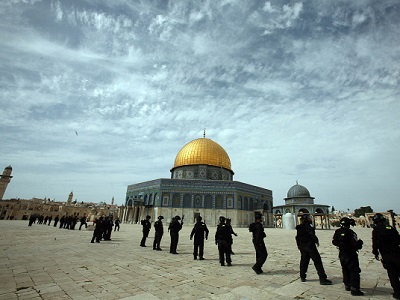



 Aletho News