“I will keep trying to see my daughter until the day I die”
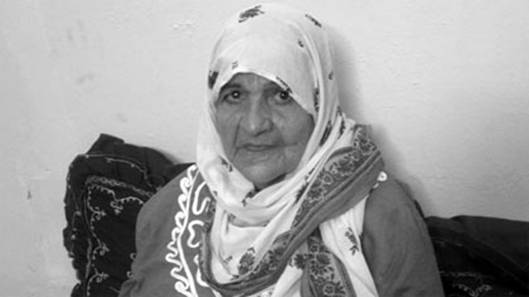
Fatma’s wrinkled face reveals the sorrow of a mother who has not seen her daughter for eleven years. Fatma Khalil Mubarak (78) lives in Rafah, in the south of the Gaza Strip. Her daughter, Lamees Ahmad Mubarak (44), has been living in Hebron in the West Bank since she got married in 1988. The last time Fatma saw her daughter was in 2002. Since then, Lamees has been trying to visit her family in Gaza, but she has been denied access every time she applied for a visitor permit to travel via Beit Hanoun (“Erez”) crossing. Beit Hanoun crossing is the only access point for people from Gaza to travel to the West Bank, including East Jerusalem, and/or Israel.
Fatma explains: “My daughter Lamees went to Hebron with her husband when she got married in the ‘80s. She used to visit me frequently, and I used to visit her as my health condition was much better and crossing to the West Bank was much easier. However, since the Second Intifada, we haven’t seen much of her. The last time she came was in 2002, but she has never been able to come back again since.”
Several attempts have been made by both Lamees and her family to reunite since 2002; however, Lamees’ applications for a visitor permit to the Gaza Strip have always been met with refusal. “This year, we have applied twice so far, but in vain. The permit was refused again. We have not given up yet. I will keep applying for a permit to see my daughter until the day I die.”
Fatma’s urge to see her daughter gets stronger every day, especially due to her deteriorating medical condition as she suffers from heart disease and hepatitis. “I do not know why I’m deprived of seeing my daughter,” she adds. “She is my daughter and she only wants to come and visit me as I am very ill. Why is she always refused entry? She is not a threat to their security. She only wants to come so I can see her.”
“We have tried everything. The last time we applied, we attached a copy of my medical report certified by the doctors to attest to how poor my condition is, but even that did not work. The Israeli authorities refused to give her a permit again. We all thought that it would work and that she would finally manage to come.”
“The last time I went to visit Lamees in Hebron was seventeen years ago. Since I became very ill, it is hard for me to travel on my own. I do not even leave this house. I know that I might get a permit if I applied for one, due to my age and my medical condition, but what would I do with a permit when I cannot move and cannot go anywhere alone? My health condition does not allow me to. What if I died on the way? The Israeli authorities won’t allow my children to accompany me to the West Bank.”
Israel imposes a policy of territorial fragmentation on the West Bank and the Gaza Strip. The separation of the territories has had grave consequences on the fabric of society. It has influenced every aspect of the social life of Palestinian people. Fatma explains how the Israeli closure of the Gaza Strip has further prevented her and her family from fulfilling her role as a mother and a grandmother. “Lamees got very sick recently. I could not go to visit her or look after her. None of her family could either. She is there on her own. Her father became very ill before he died in 2008. He wanted to see her, so we applied for a visitor permit, but the permit was refused. He died without seeing her, and she could not attend his funeral. Now, I have seven grandchildren whom I do not know. Two of my granddaughters got married, and I could not attend either of their weddings.”
The separation of the Gaza Strip and the West Bank has made the simplest family occasions very difficult. According to Fatma, Lamees was hoping to attend the wedding of her nephew in Gaza, which was planned for after Ramadan, in order to celebrate the happy occasion with her family. “We were getting ready to receive her at the wedding and we were expecting her. We were disappointed to hear that her permit had been refused again. No matter how many times she is denied permission to come, I am always hopeful that she will get the permit the next time and that I will see my daughter again. I cannot get used to the refusals. I will keep asking for permits again and again.”
Fatma recalls the days when Israeli restrictions on the movement of individual civilians via Beit Hanoun crossing were less strict: “In the past, when I applied for a permit, I would get it the next day. I would take a taxi from Gaza City to Hebron. We used to leave for Hebron in the morning and arrive before noon. It was only about an hour’s drive. Nowadays, it’s easier for me to see my daughter who lives in Norway than see my daughter who lives an hour away.”
Palestinians in the Gaza Strip remain denied of their right to freedom of movement, and suffer greatly due to the restraints imposed upon travel via Beit Hanoun crossing. The restrictions were first imposed in 1994 and have become increasingly strict since the al-Aqsa Intifada. Eventually, the crossing was completely closed on 16 February 2006. Since then, Palestinians have been prevented from travelling via the crossing unless they fall under certain specific categories.
As a result, civilians in the Gaza Strip have been denied access to holy places in Jerusalem and Bethlehem to perform religious rituals. Students have been prevented from travelling to attend universities in the West Bank. Families are prevented from visiting their relatives in the West Bank and vice versa. Since the Hamas takeover in June 2007, the Israeli authorities have only permitted limited categories of individuals to travel via the crossing: patients in a critical state; international journalists; employees of international organisations;. These groups are allowed to travel via the crossing under limited circumstances, via complicated procedures, and are often subjected to degrading treatment.
The closure of the Gaza Strip, which Israel has imposed for six consecutive years, constitutes a form of collective punishment, in violation of international humanitarian law. As a consequence of the continued closure, travelling between the Gaza Strip and the West Bank has been rendered virtually impossible for Palestinians, and entire families are now separated. The forced separation of families is in violation, inter alia, of Article 16 of the 1948 Universal Declaration of Human Rights (UDHR) and Article 23 of the 1966 International Covenant on Civil and Political Rights (ICCPR) which obliges States to protect the right to marry and found a family.
Palestine: Dividing Land, Erasing Identity in Qalandiya
By Malik Samara | Al-Akhbar | July 31, 2013
Qalandiya, a village on the outskirts of occupied Jerusalem, has become a stark example of the crimes of the Israeli occupation. In the name of “security needs,” Israel has bisected the village, dividing both land and people, even splitting one family in two.
Ramallah – To the north of occupied Jerusalem, there is a small, isolated village with a population of no more than 1,100. But the village occupies a strategic position on the outskirts of Jerusalem, between several factories and vital installations, including Israeli military manufacturing sites.
The village is adjacent to the airport of Jerusalem known as Qalandiya Airport, which was built during the British Mandate. Today, the Palestinian National Authority (PNA) wants the facility to become its official airport in a future Palestinian state.
The location of this village, like many others around Jerusalem, has made it vulnerable to Israeli military and settlement schemes, which always invoke the “security needs” of the Jewish state. Recently, Israel “annexed” the eastern part of Qalandiya into the areas falling behind the Green Line – the demarcation line marking the de facto border between Israel proper and the territories it captured in 1967.
But what Israel calls “annexation” is in fact a process to alter the route of the separation barrier, dividing the village in half – with only three homes in the eastern part annexed to the Jewish state and the remaining homes under PNA control. In other words, the village’s map changed overnight at the stroke of a pen. The village’s population, which has been living as a unified community for hundreds of years, is now subject to the whims of Israeli occupation officers.
Today, only three families live in the eastern part of the village, including two that carry the blue Israeli identity card, and one that carries the green Palestinian card, despite being related to one another. This is one of the many absurdities that come with the Israeli occupation, with members of the same family carrying different identification documents.
In the part of Qalandiya that has not been annexed, for example, some carry blue cards and others green cards, and though some are directly related to people in the eastern part, only blue card holders are allowed to go there to visit their relatives. “Even those who have permits to go to Jerusalem are not allowed to visit this area,” said Youssef Awadallah, head of Qalandiya’s village council.
In the annexed part of the village, the lives of the three resident families are now restricted by the occupation’s daily schedule. These residents are allowed to leave and return for only three hours each day through the checkpoint established by the occupation in the village, from 7 to 8:30 AM, then from 12:30 to 1 PM, and then from 4 to 5 PM.
But why did the Israelis sequester the eastern part of the village specifically?
Mahmoud Awadallah said, “The importance of this region has to do with its strategic position. The village is adjacent to the airport and the Atarot industrial park, as well as the strategic Route 443 and Atarot’s entrance. They did not want to put the wall directly along the route, and annexed this segment of the village to put the wall beyond it, in order to leave a buffer zone. The village is also close to a plant operated by Mata, an Israeli aerospace company that manufactures and upgrades helicopters.”
Curfews and Checkpoints
Among the families in the annexed part of Qalandiya, activist Mahmoud Awadallah’s family has the most intriguing circumstances, being the only family with Palestinian green ID cards. This means that the Awadallah family lives inside an Israeli “enclave,” in semi-isolation from the world.
This family cannot move freely within the Green Line, like the other two, or the West Bank, except during hours determined by the occupation. More often than not, the Israelis do not show any leniency for humanitarian or family emergencies. The Awadallah family embodies the occupation’s sharp disregard for the Palestinian lives.
Mahmoud Awadallah said, “One night, after the occupation authorities closed the village gates, my mother fell ill, but we were prevented from taking her to hospital. We had to wait until the next day before we could move her.”
Cars are not allowed to enter or leave the area, Awadallah added, and even those holding blue ID cards have to take a lengthy route to reach the second part of the village outside “visitation hours.” In other words, the occupation turns a five-minute journey between the two parts of the small village into a one-hour trek.
Even social relations between families now depend on the mood of Israeli occupation authorities. This includes marital relations, for instance, when one spouse carries an Israeli card and the other a Palestinian.
Youssef Awadallah said, “I carry the blue card, and I am forced to cross a large distance to get to the second part of the village. But what good is an ID card if I am isolated from my land and my relatives? I live in the eastern part, and my children and siblings live in the Arab part. Ever since the village was divided, our daily visits have stopped.”
Above all, what the area’s residents fear most is isolation from their families and surroundings in the event of a major escalation, when the entire region could be shut off.
Meanwhile, none of the petitions submitted by village residents to Israeli courts have borne fruit yet. Awadallah said, “So far, they have refused to respond or even consider the issue.” Now, the residents intend to go to the Israeli Supreme Court, to demand either full freedom of movement, or Jerusalem residence permits.
Related article
Israeli forces raid Cremisan Monastery in Bethlehem
IMEMC & Agencies | July 30, 2013
Witnesses reported that Israeli forces raided the Cremisan Monastery in Bethlehem late on Sunday [July 28]. The witnesses told the Palestinian News and Info Agency (WAFA) that Israeli soldiers broke into the monastery, held the people who were inside, and inspected their personal documents.

The Cremisan Monastery, founded in 1885 (Photo courtesy of cremisan.org)
The raid was condemned as a violation of the sanctity of places of worship, and a violation of international law. Under Human Rights Law, Israel must “ensure that religious places, sites, shrines and symbols are fully respected and protected”, and “take additional measures in cases where they are vulnerable to desecration or destruction.”
The Cremisan Valley area has been a hotbed of resistance against Israel’s annexation wall, because the Salesian Sisters of Cremisan Convent and the Palestinians of Beit Jala will soon be the annexation wall’s latest victims. The planned route of the annexation wall will separate more than 50 Palestinian families of Beit Jala from their agricultural land, and they will have only limited access to the land via an agricultural gate. Furthermore, the wall will separate the Salesian Convent from 75% of its land. The convent’s land, along with the monastery, will be on the Israeli side, whereas the convent and primary school will be on the Palestinian side.
To fight the planned annexation of their land, the Palestinians of Beit Jala and the Salesian Sisters of Cremisan launched a seven-year-long legal appeal that was supported by the United Kingdom’s Foreign Secretary, William Hague, and the archbishop of Westminster, Vincent Nichols. However, on April 26, 2013, the Special Appeals Committee of the Tel Aviv Magistrate’s Court ruled in favour of the planned route of the annexation wall. The annexation wall is illegal according to international law and the fourth Geneva Convention, to which Israel is a signatory.
According to the United Nations, 85% of the annexation wall is built illegally inside the West Bank, thereby annexing roughly 10% of its land.
Related article
“Shabbat shalom” – no peace for Palestinians in Hebron this Saturday
International Solidarity Movement | July 28, 2013
Hebron, Occupied Palestine – Stone and egg-throwing, beating and kicking, headscarves torn off and an arrest based on two soldiers lying. This sunny Saturday in Hebron (Al-Khalil) was all about settler youth attacking innocent Palestinians and internationals while soldiers looked the other way.
Today, 27th of July, the Shabbat started as usual in Hebron with the settler tour through the Old City. A group of settlers surrounded by soldiers entered the Old City through the Peace Garden and went through the streets, preventing Palestinians from passing. The soldiers invaded several Palestinian houses in order to access the roofs. After an hour, the “tour” left the Old City through the entrance to Beit Romano settlement.
Later, at around 4pm, whilst walking down Shuhada Street international activists had stones thrown at them by two settler teenage boys. When they returned an hour later, they were attacked again by settler youths who jumped at them and violently pulled off their headscarves outside Beit Hadassah settlement. When the internationals complained to the soldier stationed at the nearby checkpoint, he showed no sympathy and said his job was only to protect the Jews living in Hebron.
About half an hour later, three international activists were passing by the Qurtoba School when a masked settler ran up the hill towards them, throwing eggs. One activist was hit in the face with two eggs whilst soldiers looked on from the watchtower above the school – they took no action against the settlers saying only “What do you want us to do?”
At around 6pm some settlers – who had previously been bathing in the Abraham spring close to the Islamic cemetery next to Shuhada Street whilst being guarded by a group of soldiers – tried to steal a home-made kite off two Palestinian kids. A Palestinian teenager managed to prevent them from taking it.
At around 6.30pm, a group of about thirty settler youths entered the property of the Abu Shamsiya family in Tel Rumeida. They threw stones at the family who were outside on the veranda preparing food for the iftaar fast-breaking meal. They also beat the 11-year old son of the family, Muhammad. When his father, Abu Shamsiya, went to the soldier stationed at the checkpoint just outside his house to complain and ask for help, the soldier simply told the settlers to go ahead and continue attacking the family.
A settler youth then ran up to Abu Shamsiya and violently kneed him in the stomach right in front of the soldier. Another soldier grabbed Abu Shamsiya’s wife Fayseh, who was filming the incident, by her hair and pulled her to the ground. The police, who happened to be parked in their car just up the road, finally decided to intervene. Abu Shamsiya complained against the two soldiers who had attacked him and his family and were complicit in the settler violence.
In a rare turn of events, the police believed Abu Shamsiya’s story – although the soldiers denied it – and took these two soldiers to the police station for further questioning. However, they did not arrest any of the settlers, who escaped into the Tel Rumeida settlement and the police chose not to follow them. The group of settler youths returned soon after and although Abu Shamsiya and various other eyewitnesses clearly pointed out the attackers to the police, they took no action.
Abu Shamsiya himself was later taken to the police station in order to file an official complaint and so that the police could examine his video footage of the incident. The Abu Shamsiya family were initially hopeful that this might lead to some positive result, but two hours later they got a phone call that Abu Shamsiya was now being detained in the police station on the charge of spitting at soldiers. Clearly the two soldiers whom he complained against wanted revenge and made up this story to incriminate him. His family is deeply worried and hopes he will be released by tomorrow.
During the same incident, which attracted a lot of onlookers outside Abu Shamsiya’s house, Palestinians, settlers and internationals alike, a settler woman who is notorious for being extremely aggressive and has attacked internationals and Palestinians on several occasions, started pushing and shouting at an international activist as well as pulling at her scarf to strangle her. This happened right in front of a group of soldiers who chose to just stand by and watch, and even mocked the international activist when she complained and asked whether they thought it was okay for her to get strangled in the middle of the street.
Although the settler attacks in Hebron are not always as numerous and severe as they were on this particular day, none of what happened today is new or unusual to the residents of Hebron. Hebron is the only West Bank city that has settlers living inside the city itself. It is home to a particularly extreme and aggressive settler community, numbering about 500, that constantly harasses, intimidates and attacks Palestinians with near impunity and the protection of about 2,500 Israeli occupation soldiers stationed in Hebron.
Update 28th July: Israeli authorities are demanding 1000NIS on bail to release Abu Shamsiya. He will have a court hearing soon (exact day still unknown).
Related articles
- Jabari family once again facing harassment from settlers and soldiers (alethonews.wordpress.com)
- Soldiers invade two Palestinian houses – for training only (alethonews.wordpress.com)
- Live ammunition shot at Youth Against Settlement house in Hebron (alethonews.wordpress.com)
- Palestinian activist detained in Israeli raid (alethonews.wordpress.com)
Israeli regime a replication of S. African apartheid?
Press TV – July 22, 2013
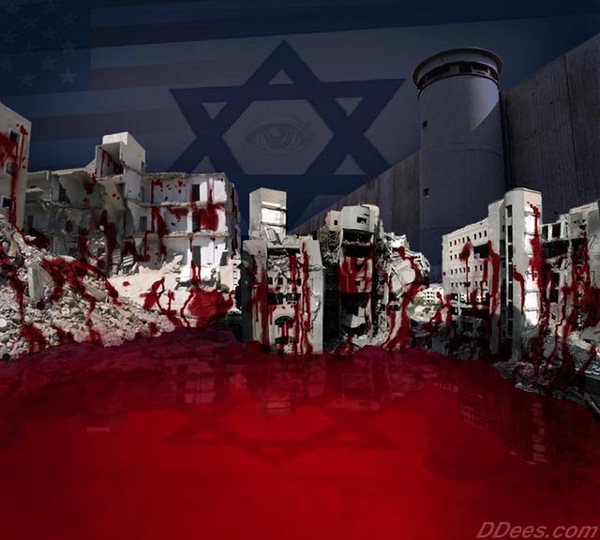
The Israeli regime has been accused of replicating the former South African Apartheid regime by the UN investigators, politicians and human rights groups.
Former South African leader Nelson Mandela once said “we know too well that our freedom is incomplete without the freedom of the Palestinians”.
Last month, Ismail Coovadia, outgoing South African ambassador to Tel Aviv, said the regime is a “replication of apartheid” and built on “stolen land”.
The relation between Tel Aviv and the Apartheid regime in South Africa has even become the subject of a book — “Unspoken Alliance; Israel’s Secret Relationship with Apartheid South Africa.
All these call for a look at the similarities between the two regimes and their cozy relations with Britain.
The Israeli regime is treating Palestinians, especially those living in the West Bank just like blacks, who were confined to Bantustans equal to West Bank enclaves and the besieged Gaza Strip by the Apartheid regime.
Palestinians are confined to security zones in the West Bank where they should have permits to pass military checkpoints while those in the Gaza Strip are under a military siege and have limited access to food, water, drugs and fuel, among others.
Palestinians are indeed under Israeli military occupation and face control of movement, physical separation from Zionists even on the roads and lack equal rights with them.
The physical separation, which is similar to the black Bantustans enforced by a variety of measures, is imposed on the Palestinians by creation of Israeli-only roads, limiting their access to lands and resources in the occupied territories and most recently by erecting of the separation barrier (otherwise known as the “Apartheid Wall”) in the West Bank.
Palestinians are also subjected to a totally different legal system than do Israeli occupiers to the extent that Palestinians are turned into secondary residents of their own lands by the occupiers, just like blacks versus white settlers during apartheid rule in South Africa.
In terms of equal rights, Palestinians also do not have the right to vote in the Israeli elections as was the case in the South African Apartheid regime.
They were given an illusion of a democracy by the Oslo Accords that enabled them to vote in the Palestinian Authority elections that brings to mind the local black polls for Bantustans, but that illusion was shattered in 2006 after Hamas won the PA elections but was not allowed to form a government.
The Israeli regime had also warm ties with the apartheid regime and the man behind the concept and implementation of apartheid, former South African Premier Hendrik Verwoerd, once said “Israel, like South Africa, is an apartheid state”.
The two regimes signed a military agreement in 1975 and the Zionist side helped the apartheid regime circumvent international sanctions until its end in the 1994, to the point that the UN General Assembly condemned Tel Aviv’s “collaboration with the racist regime of South Africa”.
The apartheid regime was also considered a close ally of Britain and London used its weight to prevent sanctions against the regime while maintaining extensive trade with South Africa especially by importing gold.
Later in the 1980’s, British Prime Minister Margaret Thatcher proved a staunch support of the racist regime describing the anti-apartheid Mandela as a terrorist in 1987.
Such a position is now clearly seen in the London-Tel Aviv ties and it goes without saying that Britain laid the cornerstone of a Zionist entity in the Palestinian lands in the first place.
In 2002, South African Archbishop Desmond Tutu wrote an article named “Apartheid in the Holy Land” that that his recent trip to Palestine had reminded him “so much of what happened to us black people in South Africa”.
He had earlier written in 1984 that the Bantustans, which were pretended to be self-governing homelands by the apartheid regime were deprived of “territorial integrity or any hope of economic viability”.
They were, he wrote, merely “fragmented and discontinuous territories, located in unproductive and marginal parts of the country” with “no control” over natural resources or access to “territorial waters”.
The description that appears to be a depiction of the occupied territories just now has been echoed by the UN Human Rights Rapporteur John Dugard, who is a South African legal professor and apartheid expert.
Dugard said “Israel’s laws and practices” in the Occupied Territories “certainly resemble aspects of apartheid”.
The analogy is also seen by British Labour MP Gerald Kaufman and former minister for international aid Clare Short who are pushing for sanctions against Tel Aviv.
The description of the situation in the occupied territories by Clare Short in the Commons back in June 26, 2007 is illuminating.
“I have followed developments in the Middle East carefully over many years, and I was well aware before my recent visit how bad things are for the Palestinian people. Nevertheless, I was deeply shocked by Israel’s blatant, brutal and systematic annexation of land, demolition of Palestinian homes, and deliberate creation of an apartheid system by which the Palestinians are enclosed in four Bantustans, surrounded by a wall, with massive checkpoints that control all Palestinian movements in and out of the ghettos,” she said.
A key difference, however, remains, that is apartheid rulers exploited blacks as cheap laborers while Zionists are ethnically cleansing Palestinians.
A South African newspaper editor, Mondli Makhanya, put it in a nutshell after a 2008 trip to the Middle East.
“It seems to me that the Israelis would like the Palestinians to disappear. There was never anything like that in our case. The whites did not want the blacks to disappear,” he said.
New Israeli settlement in occupied Jerusalem given go-ahead
MEMO | July 20, 2013
Israel’s Planning and Construction Committee has issued licenses for 165 settlement units in Nafea Yacob Settlement in occupied Jerusalem.
In a press release, researcher in settlement issues Ahmed Soblaban said that the new project is part of a bigger plan to connect Nafea Yacob and Bezgat Zeaf Settlements. The particular danger of this project, warned Soblaban, is that it separates North Jerusalem from its occupied West Bank hinterland.
The project was originally proposed and approved in 2008, when the green area between both settlements was turned into an area ready for building. According to Soblaban, this project reinforces Israel’s racism against Palestinian residents in Jerusalem, who are prevented from building to cater for their population increase. Although Palestinians are usually not given building permits, they are in any case forbidden from building anything more than four stories high. Jewish settlers can build as high as they want.
Soblaban pointed out that the Israeli authorities have also started the ground works for another new settlement near Bezgat Zeaf.
Netanyahu denies reports of Israel agreeing to peace talks along ’67 borders
Al-Akhbar | July 18, 2013
A spokesman for Israeli Prime Minister Benjamin Netanyahu denied Thursday previous reports stating that Israel had agreed to a proposed formula for new peace talks with the Palestinians under which the border of their future state would be along lines that existed before the 1967 Middle East war.
An Israeli official had previously said on Thursday that Israel was open to talks based on the 1967 borders, but with agreed land swaps and Palestine recognizing Israel as a “Jewish state.”
The denial comes as a blow to US Secretary of State John Kerry, who has been working for the past six months to restart peace talks between Israel and Palestine.
Kerry had urged Israel on Wednesday afternoon to carefully consider a 2002 peace initiative approved by the Arab League.
“Israel needs to look hard at this initiative, which promises Israel peace with 22 Arab nations and 35 Muslim nations – a total of 57 nations that are standing and waiting for the possibility of making peace with Israel,” he had said.
The plan, put forward by Saudi Arabia at an Arab League summit in Beirut in 2002, offered full recognition of Israel but only if it gave up all land seized in the 1967 Middle East war and agreed to a “just solution” for Palestinian refugees. Softening the plan three months ago, a top Qatari official raised the possibility of land swaps in setting future Israeli-Palestinian borders.
Speculation had been rife that Kerry, now in the region for his sixth time since March in an effort to revive peace talks that deadlocked in 2010, may be close to a breakthrough.
Palestinian President Mahmoud Abbas was conferring with Palestinian leaders on Thursday to decide whether to accept Kerry’s proposals for renewing talks with Israel.
Kerry said on Wednesday after talks with Abbas in neighboring Jordan that gaps between the sides had “very significantly” narrowed. An Arab League committee endorsed Kerry’s proposals for resuming peace talks, saying they “provide the ground and a suitable environment to start negotiations.”
However, the issue of Israeli settlements in the West Bank and East Jerusalem, which are considered illegal under international law, is still to be resolved. Palestinians are refusing to return to negotiations without a freeze on settlement activity, as Israel has greenlighted the construction of hundreds of settlement homes in the past several months.
(Reuters, Al-Akhbar)
Featured Video

US IRAN TALKS: Who Are the Crazy Ones Here? /Lt Col Daniel Davis
or go to
Aletho News Archives – Video-Images
From the Archives
Woolsey Fire started at Santa Susana Field Lab — where “radioactive materials released were never accurately measured”
By John Laforge | CounterPunch | November 30, 2018
In my Nov. 16 column, I reported on potential radiation risks posed by California’s Woolsey wildfire having burned over parts or all of the Santa Susana Field Laboratory—south of Simi Valley, Calif., 30 miles outside Los Angeles—site of at least four partial or total nuclear reactor meltdowns.
The field laboratory operated 10 experimental reactors and conducted rocket engine tests. In his 2014 book Atomic Accidents, researcher James Mahaffey writes, “The cores in four experimental reactors on site … melted.” Reactor core melts always result in the release of large amounts of radioactive gases and particles. Clean up of the deeply contaminated site has not been conducted in spite of a 2010 agreement.
Los Angeles’s KABC-7 TV reported Nov. 13 that the Santa Susana lab site “appears to be the origin of the Woolsey Fire” which has torched over 96,000 acres. Southern Calif. Public Radio said, “According to Cal Fire, the Woolsey Fire started on the afternoon of Thursday, Nov. 8 … on the Santa Susana site.” … continue
Blog Roll
 Aletho News
- Feeling Better, Getting Worse: How Psychiatric Drugs Create the Illusion They Cure
- ‘Nobody Told Me’: Former Mental Health Patient Calls Out Dangerous Side Effects of Psychiatric Drugs
- Dr. Abu-Sitta: Beirut ‘felt like a day in Shifa Hospital’
- Iran Has Won the War, It Will Be Up to the US to Secure the Peace: Mohammad Marandi
- Iran condemns assassination threats against Iranian negotiators amid US talks
- Brussels cannot say where its own pipeline inspectors are as Hungary’s oil lifeline remains shut
- Israel’s Iran War: Myth and Reality
- Between war and industrial breakdown: The US-Israeli attrition crisis
- Pressure builds on Iran to ‘drop’ Lebanon ceasefire demand as Islamabad talks hang in balance
- In another clash report, US denies agreement to release Iran’s assets
- If Americans Knew
- Pro-Israel ‘Thinktanks’ and Individuals who Influence U.S. Foreign Policy
- Mearsheimer reveals how Israel dictates US policies on Iran, Gaza – video
- After killing 350+, Israel still has a “score to settle” with Lebanon before ceasefire – Daily Update
- Military aid to Israel emerges as the latest political litmus test for Democrats
- The only Palestinian children’s rights organization closes following years-long Israeli campaign against it
- ‘I Can’t Forget the Smell’: Lebanese Reel After Israel Kills Over 300 in Single Day
- DNC Shoots Down Resolutions Calling Out AIPAC and Limiting Arms to Israel
- TCN: Is Israel Blackmailing President Trump?
- Israel killed at least 303 Lebanese yesterday – who were they? Daily Update
- Amnesty: Urgent – Protect Lebanese civilians from brutal escalation in Israeli attacks
- No Tricks Zone
- German Expert: Heat Dome Led To Record Temps In Western USA…Warmer In 1934, 1936
- New Study: No Linear Warming Or Glacier Retreat Along Northern Antarctic Peninsula Since 1980s
- An Inconvenient Tree: Uncovered In Alps… Europe Much Warmer Than Today 6000 Years Ago
- New Study Reports A 60% Slowdown In Greenland’s Ice Loss Rate In The Last Decade
- Low Intensity Tornado Wrecks Major Solar Farm, Creating A Potential Toxic Dump
- New Study Finds Warming Saves Lives…Cold Temperatures 12 Times More Deadly Than Excess Heat
- German Science Blog Accuses PIK Climate Institute Of Hallucinating Climate Tipping Points
- Devastating Assessment Of Comirnaty Vaccine By Former Senior Pfizer Europe Toxicologist
- New Study: CO2 Is ‘Effectively Negligible’ As An Explanatory Climate Change Factor Since 2000
- Former Pfizer Toxicologist Dr. Helmut Sterz Tells Bundestag Hearing Pfizer Vaccine Should Have Never Been Approved
 Aletho News