Why did Jeffrey Goldberg leave the ‘bomb Yemen’ Signal chat?
By Max Blumenthal | The Grayzone | March 25, 2025
Atlantic Magazine editor-in-chief Jeffrey Goldberg has won the admiration of his Beltway peers for the conduct he displayed after being accidentally invited into a smoke-filled “bomb Yemen” Signal chat with Trump’s national security honchos and top advisors. “Props to Jeffrey Goldberg for his high standards as a professional journalist,” declared Ian Bremmer, the trans-Atlanticist foreign policy pundit on his Bank of America-sponsored GZero podcast. “When he realized the conversation was authentic he immediately left, informed the relevant senior official, and made the public aware without disclosing intelligence that could damage the United States.”
But what exactly did Goldberg do to deserve such high praise?
With a once in a lifetime opportunity to view and report on high level discussions on the US launching an illegal war on Yemen, Goldberg chose to avert his gaze and leave the scene as soon as he could, apparently because maintaining such unparalleled access would have compelled him to report on discussions that might have complicated a war being waged on behalf of the Israeli apartheid state to which he emigrated as a young man. Instead of exploiting his front row seat to the Trump admin’s war planning – a vantage point that would have yielded countless scoops and a bestselling book for any adversarial journalist – Goldberg bolted and dutifully informed the White House about the unfortunate situation.
From there, the story became a palace intrigue over an embarrassing failure of “opsec,” or operational security, and not one about the policy itself, which entails a gargantuan empire bombarding a poor, besieged country because it is controlled by a popular movement that is currently the only force on the planet taking up arms to stop Israel’s genocide in Gaza.
In the fourth paragraph of Goldberg’s Atlantic article about the principals’ Signal group, he strongly implied that he supports the war’s objectives, describing Ansar Allah, or the Houthis, as an “Iran-backed terrorist organization” which upholds a belief system that is (what else?) antisemitic. Given Goldberg’s admission that Waltz first reached out to him at least two days prior to mistakenly adding him to the Signal group, it appears the NSC director had been leaking to the Atlantic editor on behalf of the neocon faction in the Trump White House. And it seems clear why Waltz would have sought to cultivate Goldberg.
During the run-up to to the Iraq war, then-Vice President Dick Cheney cited Goldberg’s bunk reporting alleging deep ties between Saddam Hussein and Al Qaeda during multiple media appearances hyping up the coming invasion. Under Obama, Goldberg served as Israeli PM Benjamin Netanyahu’s errand boy, churning out tall tales about Tel Aviv’s imminent plan to attack Iran’s nuclear sites – unless the US did it first. Since the October 7, 2023 attack on Israel, the once-failing Atlantic has suddenly turned a profit, as Goldberg unleashed a firehose of propaganda against the keffiyeh-clad enemies of the magazine’s Upper East Side donor base. This month, with momentum for a strike on Iran building within the Trump White House, Goldberg was summoned once again to move the neocon message, and wound up with more access than he bargained for.
When asked in a March 24 interview with CNN’s Kaitlan Collins why he left the Trump principals’ Signal group voluntarily, Goldberg ducked the question. But as Ian Bremmer suggested, he did so out of deference to power and an abiding belief in a US empire hellbent on protecting Israel. And in the culture of Beltway access journalism, that’s considered a laudable trait.
Scorch Marks in the Sand
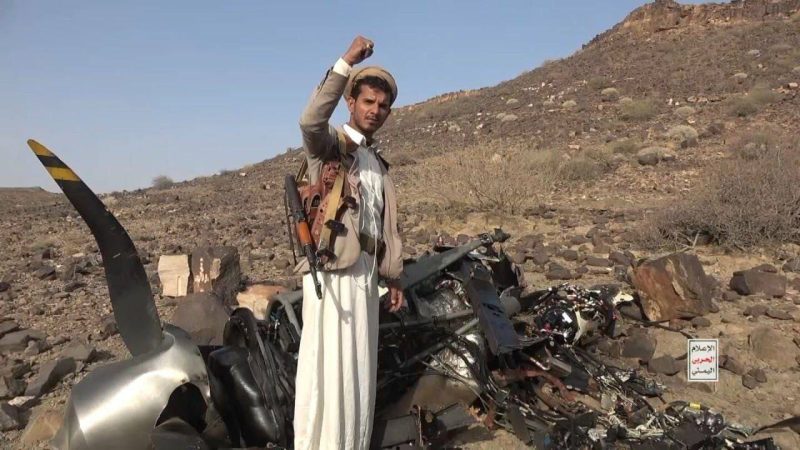
Yemeni Warrior Rejoicing over a Slain MQ-9 Reaper
By William Schryver – imetatronink – March 22, 2025
Javelin, Stinger, M-777 howitzer, HIMARS, Excalibur, Switchblade, all manner of electronic warfare gizmos and counter-battery radars, Bradley IFVs, Stryker, Leopard, Challenger, Abrams, Patriot, JDAMs, HARMS, Storm Shadow, ATACMS … I’m sure I’m forgetting some.
Oh, yeah … remember in early 2022 when the unveiling of the Bayraktar strike drones was hailed with great fanfare? They were predicted to be the bane of the Russian army. Instead, it was a major embarrassment for the Turks.
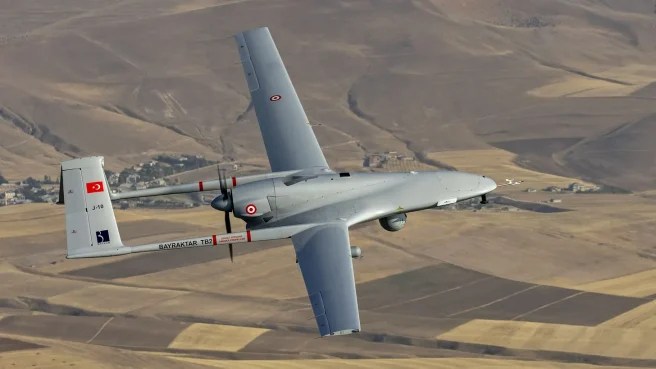
Turkish Bayraktar TB2 Surveillance and Attack Drone
That said, over the past year or so, those “savage barbarians” down in Yemen have shot-down a baker’s dozen of the once-vaunted US MQ-9 Reaper drones – supposedly vastly superior to the Bayraktar TB2.

US MQ-9 Reaper Surveillance and Attack Drone
In any case, all of these things represent top-shelf front-line US/NATO war stuff that has been objectively proven inferior in the crucible of protracted high-intensity warfare. Many are simply ill-suited for the current state-of-play in the military realm, as it has been revealed over the course of the war in Ukraine.
Before this war began, the almost-universal belief was that US/NATO weaponry and equipment were far and away superior to anything the Russians could put on the battlefield.
That unfounded faith in the unrivaled supremacy of western arms has now been shattered — although we already see the think-tank apologists fashioning their strained rationalizations.
Nevertheless, when one examines in aggregate the implements of war the US/NATO have provided to Ukraine, the overwhelming majority consists of the very stuff every military in NATO would field in a war against Russia, or anyone else, for that matter.
Here is a sobering truth: if the Armed Forces of Ukraine could make one wish, it would be to respawn as the army and abundant quantities of effective and durable Soviet equipment they had in February 2022. That was, all things considered, the strongest army they would ever have. And it was, in great measure, squandered on the altar of a misguided commitment to NATO field doctrines that repeatedly proved misconceived and ill-adaptive to the war that actually ensued, as well as the war as it has subsequently evolved.
So, in the case of the Ukraine War, we see attested two now-indisputable facts:
1) US/NATO weaponry and equipment is FAR LESS FEARSOME than was previously believed by the supposed “military experts” in the world. It has either failed abysmally or vastly underperformed in virtually every case.
2) US/NATO war doctrine has been demonstrated to be something quite a bit less than the greatest expression of the martial arts since Napoleon at the Battle of Austerlitz. The disastrous NATO/AFU “counteroffensive” in Zaporozhye in summer 2023 and the catastrophic blunder of the Kursk Kamikaze Incursion in summer 2024 have laid waste to the mythology of US/NATO military prowess.

Napoleon at Austerlitz Accepting the Surrender of Francis II
Now, here in the early spring of 2025, we see the United States, with Donald Trump again at the helm, trying to soothe the sting and obfuscate the reality of the resounding defeat its strategic designs and battlefield arms have suffered against Russia.
And, after weighing all options and considerations in the balance, the Masters of Declining Empire have decided beating up on Iran is the right medicine for what ails them.
I mean, after all, the Russians never had to face them, and the Iranians certainly cannot pose a credible threat to our decades-old F-15s, F-16s, F/A-18s, F-22s, F-35s, B-52s, B-1s, B-2s, Tomahawks, etc., not to mention the almighty US Navy.
Everybody KNOWS this to be true. Right?
And even though the Iranians have already proven to be able to defeat all manner of US and Israeli air defenses with their upper-tiers of ballistic missiles … well, if we just have Pete Hegseth give them a proper pep-talk, those interceptors that failed during the reign of the imbecile Joe Biden will strike down every single Muslim Missile they see. American air defense interceptors will be made great again. Hail to the Chief!
As for the Iranian air defenses … well, everyone also knows the Israelis already destroyed them. Right? They told us all about it – how the heroic Israeli F-35s and F-15s stormed across the Tigris into the heart of Iran and blew to smithereens all those S-300s and missile factories. They even showed pictures of scorch marks in the sand to prove it.
Anyway, the point is that America needs to go to war again in an attempt to erase the stain of having lost to the Russians, just as going to war against the Russians was meant to erase the stain of having lost to the Afghanis, just as going to war against Iraq and Afghanistan was meant to erase the stain of having lost to the Vietnamese. And … well, you know the drill by now.
You should also know what they say about the best laid plans of mice and men. Nothing ever goes as planned. And I strongly suspect the next war of American redemption will not be a reversal of the prevailing trend.
Geography

The Middle East
By William Schryver – imetatronink – March 21, 2025
So the US is sending Carrier Strike Group One (CVN-70 USS Carl Vinson) to the Middle East, leaving CSG-5 (CVN-73 USS George Washington) to “hold the fort” in the western Pacific from the semi-safe environs of its quasi-permanent berth in Yokosuka, Japan.
All the Washington does is sail back and forth between San Diego and Yokosuka every so often to give the impression it’s doing something meaningful. Otherwise I’ve seen no indication for several years that it is anything more than a training and parade vessel.
In any case, the Vinson is headed to the Arabian Sea, and perhaps points beyond. (That remains to be seen.)
Meanwhile the deployment of CSG-8 (CVN-75 USS Trembling Puppy) has been extended, even as it remains bottled up in the northern reaches of the Red Sea, launching air strikes on Yemen from ~1000 km away, with USAF refueling tankers at the ready as needed.
The Yemeni have launched a few modest packages of antiquated drones and antiship cruise missiles in the general direction of the Trembling Puppy – all of which have been relatively easy pickings for the cruiser and destroyers and combat air patrol.
But, keep in mind, even though these old and slow Yemeni drones and missiles have little chance of scoring a hit from 1000 km away, the carrier strike group ships and planes still have to shoot at every one of them!
So every Yemeni strike package of a couple dozen missiles will deplete CSG-8’s munitions magazines by AT LEAST a corresponding number of air defense missiles, and quite possibly TWICE as many, according to standard practice of firing two interceptors at each threat.
CSG-8’s magazine depth has already been substantially depleted over the course of the past two weeks — and remember, the US Navy cannot replenish its vertical launch systems at sea.
And, of course, if military operations against Iran are the ultimate objective, then at some point the Trembling Puppy and its entourage are going to have to leave the cozy waters between Jeddah and the Gulf of Suez, and run the gauntlet of the Gate of Lamentation (Bab el-Mandeb).
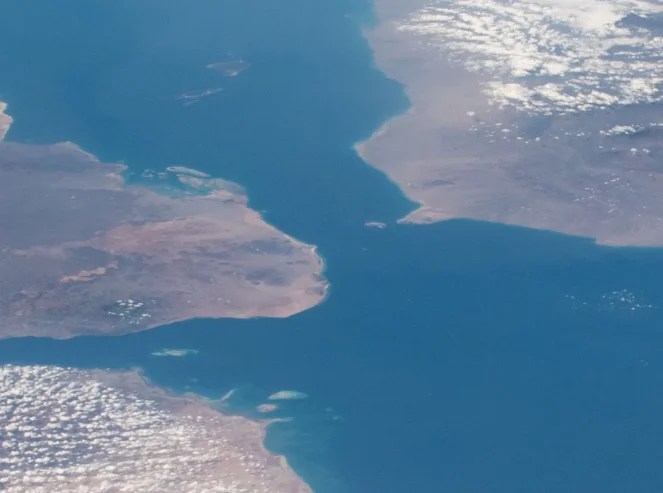
The Gate of Lamentation (Bab el-Mandeb)
That’s when things could get more interesting. Because it’s a pretty tight squeeze to pass through. A big deep-draft aircraft carrier can’t just run at full speed, zig-zagging back and forth. It has to stick to the navigable channel.

Navigable Shipping Channels in the Bab el-Mandeb
In the relatively open waters north of Jeddah, there is quite a bit of room for maneuver. But in the straits, you’re restricted to a narrow band — and most significantly, potential Yemeni missile launching sites are only ~200 km away. A more substantial strike package of 50 or so drones, antiship cruise missiles, antiship ballistic missiles, and fast boat and surface drone attacks will get there a whole lot faster, and with a much better chance of actually hitting something.
So, even though CSG-8’s odds of passing through unscathed still probably remain pretty good, there is unquestionably a considerably elevated risk compared to hiding out at the mouth of the Gulf of Suez.
But let’s suppose they sail right through the Bab el-Mandeb with minimal difficulties … then what? You join up with CSG-1 in the Arabian Sea and attempt long-distance strikes into southern Iran — strikes that would still require air-refueling to have any meaningful reach?
Because you sure as hell aren’t going to sail a couple carrier strike groups into the Persian Gulf. And anyone who believes otherwise is drowning in delusion. I mean, just look at the damn map! The Iranians have potent fire control over the passage from the Gulf of Oman, through the Strait of Hormuz, and throughout the entire Persian Gulf.
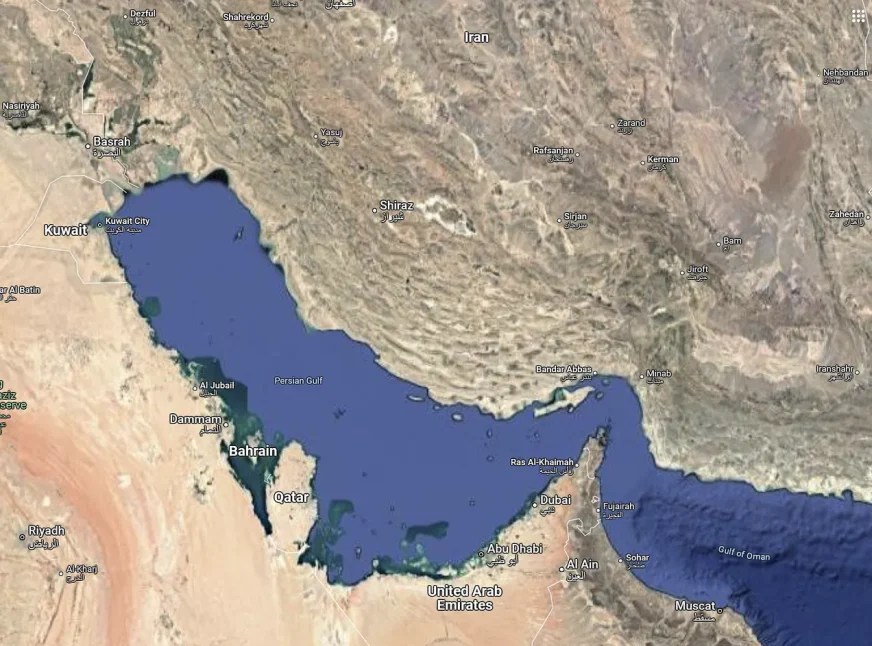
Strait of Hormuz / Persian Gulf
So I ask, in all seriousness, what exactly are two US Navy carrier strike groups going to do in the context of a no-holds-barred war against Iran?
To me, the entire concept screams of hubris running blindly into catastrophe.
If the US is foolish enough to start a big war against Iran, then 2025 is likely to demonstrate yet again that, combined with firepower, geography is the indomitable god of war.
Seyed Marandi: America Attacks Yemen – Has Trump Set Himself Up For Failure?
Glenn Diesen | March 19, 2025
Seyed Mohammad Marandi is a professor, analyst and advisor to Iran’s nuclear negotiation team
Follow me:
Substack: https://glenndiesen.substack.com/
X/Twitter: https://x.com/Glenn_DiesenPatreon:

Support the channel:
PayPal: https://www.paypal.com/paypalme/glenn…
Buy me a Coffee: buymeacoffee.com/gdieseng
Go Fund Me: https://gofund.me/09ea012f
Yemen being bombed by US, UK for fulfilling ICJ, UNGA ‘obligations’: Legal expert
Press TV – March 17, 2025
A prominent legal expert says Yemen is being bombed by the United States and the United Kingdom for fulfilling obligations set by the International Court of Justice (ICJ) and the United Nations General Assembly (UNGA).
Craig Mokhiber, a US-based human rights lawyer and former United Nations official, took to his X handle, formerly Twitter, on Monday to condemn the latest American-British aggression on Yemen.
He said both the ICJ and the UNGA have found that all countries are “legally obliged” to cease any kind of support for the Israeli occupation regime amid the ongoing genocide in Gaza.
The obligations, he elaborated, include banning any products from the illegal settlements, to cut off all military, diplomatic, economic, commercial, financial, investment, and trade relations with the Israeli occupation, to respect the provisional orders of the ICJ in the Israel genocide case, and to respect their third-state obligations under the Genocide Convention to act to prevent and stop Genocide.
“Yemen is being bombed for respecting these obligations,” he remarked.
Mokhiber, who previously served as the director of the New York office of the UN high commissioner for human rights, resigned from his position in October 2023 in protest against the UN’s “failure” to prevent the genocide of Palestinians in the Gaza Strip.
He described the US, the UK and much of Europe as “wholly complicit in the horrific assault.”
American and British warplanes attacked Yemen on Saturday night after US President Donald Trump vowed to use “overwhelming lethal force” against the poorest country in the Arab world that had recently resumed a ban on Israeli ships from crossing key maritime regions after the Tel Aviv regime reimposed crippling blockade on the besieged Palestinian territory.
Yemeni health ministry condemned the targeting of civilians and civilian infrastructure, describing it as a “full-fledged war crime and a blatant violation of international laws and conventions.”
The US-UK military coalition launched another attack on Sunday night, with Yemeni authorities now putting the death toll at more than 50, including women and children.
According to Yemeni reports, American and British warplanes launched at least 47 airstrikes on several sites in Yemen’s capital, Sana’a as well as areas in the northern province of Sa’ada, the central province of al-Bayda, and the southwestern province of Dhamar.
The leader of the Ansarullah resistance movement in a speech on Sunday night warned the United States that the aggression against the Arab country will be met with escalation.
“The aircraft carrier and American warships will be targets for us, and the navigation ban will include the Americans as long as they persist in their aggression,” Abdul Malik al-Houthi said.
“We will respond to escalation with escalation, and we will strike at the American enemy by targeting its aircraft carrier, warships, and imposing a blockade on its vessels.”
President Trump: Stop Bombing Yemen and Exit the Middle East!
By Ron Paul | March 17, 2025
Over the weekend President Trump ordered a massive military operation against the small country of Yemen. Was Yemen in the process of attacking the United States? No. Did the President in that case go to Congress and seek a declaration of war against the country? No. The fact is, Yemen hadn’t even threatened the United States before the bombs started falling.
Last year, candidate Trump strongly criticized the Biden Administration’s obsession with foreign interventionism to the detriment of our problems at home. In an interview at the Libertarian National Convention, he criticized Biden’s warmongering to podcaster Tim Pool, saying, “You can solve problems over a telephone. Instead they start dropping bombs. Recently, they’re dropping bombs all over Yemen. You don’t have to do that.”
Yet once in office, Trump turned to military force as his first option. Since the Israel/Hamas ceasefire plan negotiated by President Trump’s special envoy Steve Witkoff, Yemen has left Red Sea shipping alone. However, after Israel implemented a total blockade of humanitarian relief to citizens of Gaza last week, Houthi leaders threatened to again begin blocking Israel’s Red Sea shipping activities.
That was enough for President Trump to drop bombs and launch missiles for hours, killing several dozen Yemeni civilians – including women and children – in the process.
After the attack, Trump not only threatened much more force to be used against Yemen, but he also threatened Iran. His National Security Advisor Mike Waltz added that the US may start bombing Iranian ships in the area, a move that would certainly lead to a major Middle East war.
Like recent Presidents Bush and Obama, candidate Trump promised peace after four years of Joe Biden’s warmongering and World War III brinkmanship. There is little doubt that with our war-weary population this proved the margin of his victory. Unfortunately, as with Bush and Obama, now that he is President, he appears to be heading down a different path.
The Republican Party is gradually becoming a pro-peace, America first party, but the warmongers and neocons of the old line in the Party are not going to let go so easily. Unfortunately many of these dead-enders have found their way to senior positions in Trump’s Administration, with voices of restraint and non-intervention nearly nowhere in sight among his top tier of advisors.
To solve the Yemen problem we must understand it: Russian and Chinese ships, for example, are not being threatened because they are not enabling the Israeli demolition of Gaza. The slaughter there has been facilitated with US money and US weapons. It is the US doing Israel’s bidding both in Gaza and in the Red Sea that is painting a target on us and unnecessarily putting our troops at risk of retaliation.
The US government, starting with Biden and continuing now with Trump, seems eager to make this our war even though, as Rep. Thomas Massie pointed out over the weekend, Red Sea shipping is of minor importance to the US economy.
In a real “America first” foreign policy we would be following the Russian and Chinese lead and staying out of the conflict. It’s not our war. End US military involvement in the Middle East and our troubles disappear. It really is that simple.
Trump hypes up tensions with Iran
By M. K. BHADRAKUMAR | Indian Punchline | March 17, 2025
On Saturday, US President Donald Trump ordered the Pentagon “to launch a decisive and powerful military operation” against the Houthis of Yemen with “overwhelming lethal force” in the most significant military action of his second term, to date.
The US attacks began on Saturday and continued into Sunday on the Yemeni capital Sanaa and other areas reportedly killing 31 people and wounding 101 so far, most of them children and women.
Such wanton killing of defenceless women and children can only be seen as an act of cowardice. Trump has blood on his hands. Trump wrote on Truth Social addressing the Houthis, “Your time is up, and your attacks must stop, starting today. If they don’t, hell will rain down upon you like nothing you have ever seen before.”
Thereupon, Trump abruptly digressed to address Iran that it needed to immediately stop supporting the Houthis. Trump threatened, “America will hold you fully accountable and, we won’t be nice about it!”
Iran has reacted strongly. Foreign Minister Abbas Araghchi said Trump has no authority or business to dictate Iran’s foreign policy. Araghchi noted that Houthis are only reacting to “Israeli genocide and terrorism”. The commander of Iran’s Islamic Revolutionary Guard Corps General Hossein Salami warned that Iran would give “a destructive response” to any attack.
Trump’s belligerence came within two days of a visit by Anwar Gargash, the UAE’s Minister of State for Foreign Affairs, to Tehran on Thursday to hand over a letter from Trump addressed to Iran’s Supreme Leader Ayatollah Ali Khamenei proposing talks on Iran’s nuclear programme and Iran’s support to resistance groups. Tehran remains open to nuclear talks but has rejected any linkage with its regional policies.
Meanwhile, Tehran has begun circling the wagons as a new phase is beginning in Trump’s foreign policies, with tensions rising steadily over the nuclear issue. The October deadline is drawing closer by the day for invoking the snapback clause in the JCPOA (2015 Iran nuclear deal) to reinstate UN Security Council sanctions will expire, and Iran’s enrichment programme, on the other hand, has apparently reached a point where it already has a stockpile to make “several” nuclear bombs, per the International Atomic Energy Agency.
On March 14, China’s foreign minister Wang Yi hosted a joint meeting in Beijing with the Russian and Iranian deputy foreign ministers where he proposed five points “on the proper settlement of the Iranian nuclear issue”, which, for all purposes endorsed Tehran’s stance. It was a resounding diplomatic victory for Iran.
Interestingly, the Beijing meeting was timed to coincide with the conclusion of a 6-day naval exercise at Iran’s Chabahar Port with the theme of Creating Peace and Security Together between the navies of Iran, Russia and China. A readout by the Chinese Ministry of Defence stated that “The naval exercise enhanced the joint operational capabilities of the three navies to respond to various emergencies and maintain maritime security, deepened military trust and practical cooperation among the navies of the participating countries, and laid a solid foundation for future cooperation.”
All these developments taken into account, Trump faces multiple challenges at the diplomatic level over the Iranian nuclear issue with Tehran, Moscow and Beijing coordinating their approaches in the crucial six-month period ahead and Tehran giving confusing signals over Trump’s letter to Khamenei. Trump cannot be pleased with the developing situation on the diplomatic track and some pressure tactic becomes necessary against Iran. Simply put, Trump’s egocentric mind took the easy route of punching the Houthis so hard to send an indirect message to Tehran (and Moscow and Beijing) that he is not to be trifled with.
Indeed, Moscow has lately waded into the Iran nuclear issue and is positioning itself for a mediatory role potentially. Foreign Minister Sergey Lavrov recently came out against attaching extraneous issues (eg., verifiable arrangements by Tehran to ensure the cessation of its support for resistance groups in Iraq, Lebanon, and Syria) to the nuclear negotiations. Lavrov said frankly, “Such a thing is unlikely to yield results.”
Lavrov has also emphasised Moscow’s support for Tehran’s basic stance that any resumption of US-Iran negotiations ought to be stemming from the 2015 nuclear deal known as the JCPOA which carries the approval of the UN Security Council (which of course Trump tore up in 2018.)
Don’t be surprised if Moscow is wading into the US-Iran nuclear standoff with great deliberation when it is tackling on a parallel track Trump’s intrusive calls for cessation of Russian special military operations in Ukraine even while there is much unfinished business which remains to be completed and Ukraine showing no genuine interest in negotiations with Russia — and has actually enacted a law expressly prohibiting such negotiations.
Specifically, Trump would know he is in no position to get Zelensky to agree to a surrender of weapons by the Ukrainian troops in Kursk — although, Putin has offered that “If they lay down their weapons and surrender, they will be guaranteed life and decent treatment.”
The crunch time is coming as the Russian deadline for peaceful surrender is about to expire by 6 am Moscow time today. Dmitry Medvedev, Deputy Chairman of Russia’s Security Council wrote on Telegram channel that “should they refuse to lay down arms, they will all be systematically and mercilessly eliminated.” Trump’s nerves must be on edge as embedded within the Ukrainian occupying forces there could be Western mercenaries as well.
In the circumstances, one feels sorry for the Houthis whom Trump is using as a punchbag to vent his frustrations and suppressed fury against Tehran. Top officials in the Trump administration have openly acknowledged that Tehran is being notified that “enough is enough” — an expression used by Trump’s National Security advisor Mike Waltz to interpret the nuanced message of the air and missile strike against the Houthis.
Certainly, Yemen which has gone through so much suffering does not deserve such bestial attacks. As for Houthis, they are yet to attack any ships despite threatening to do so over Israel’s blockade on all food, fuel and other supplies into the Gaza Strip. The Houthis have accused the Trump administration of overstating the threat of maritime embargo, which is limited only to Israeli navigation until humanitarian aid is delivered to the people of Gaza according to the ceasefire agreement between Hamas and Israel.
Evidently, the Houthis are neither looking for a showdown with Trump nor are they to be regarded as Iranian proxies. Houthis halted the drone and missile attacks altogether when the Gaza ceasefire was declared in January. Even Trump’s best argument is that Houthis had attacked US ships during the Biden administration.
Nonetheless, US Central Command described Saturday’s strikes as the start of a large-scale operation that may continue indefinitely. Secretary of Defense Pete Hegseth wrote on X, “Houthi attacks on American ships & aircraft (and our troops!) will not be tolerated; and Iran, their benefactor, is on notice, Freedom of Navigation will be restored.” Behind such fictitious rhetoric, Hegseth probably understands that Trump expects him to keep the pot boiling in the Gulf region through the next several months as the Iran nuclear issue approaches a point of criticality.
The Russian Foreign Ministry, in a readout on Saturday, stated that US Secretary of State Marco Rubio called Lavrov and informed him about the US decision to attack the Houthis. It said Lavrov, in response, “emphasised the need for an immediate cessation of the use of force and the importance of all parties engaging in political dialogue to find a solution that prevents further bloodshed.” Well, the shoe is on the other foot now, isn’t it? On March 15, Trump forfeited the moral ground to be leading with peace through strength in his foreign policy.
Yemen Will Stand with Gaza, Even if it Means War with the US: Abdul-Malik al-Houthi
Full speech of Abdul-Malik Badr al-Din al-Houthi, leader of Ansar Allah, about Trump’s latest aggression against Yemen – March 16, 2025
Yesterday, the American enemy announced a new wave of aggression against our country, launching a series of airstrikes and naval bombardments targeting homes and residential neighborhoods in the capital, Sana’a, and several other Yemeni governorates. These attacks resulted in dozens of martyrs and wounded, including women and children.
This brutal and unjust assault is yet another example of US tyranny and arrogance toward our (Islamic) Nation. Its objective is clear: to support the Israeli enemy after our country took a firm stand in support of the Palestinian people against Israel’s starvation campaign in Gaza. Israel has not only blocked the entry of humanitarian aid but has also completely prevented the flow of goods into the besieged strip.
The starvation of two million Palestinians is an immense crime—an unequivocal crime against humanity. No one with a human conscience, no one with sincere Islamic faith, can remain silent in the face of such an atrocity. Yet, it is deeply unfortunate that most Muslim and Arab regimes have responded with indifference. There has been no serious effort to prevent Israel’s deliberate starvation of Gaza’s people. In fact, the situation has escalated to the point where Israel is now actively depriving them of water as well.
The suffering of the Palestinian people in Gaza is an immense tragedy, yet many choose to ignore it. Israeli conditioning has set the bar for global outrage so high that only large-scale massacres by bombs and weapons seem to provoke attention. As a result, when suffering takes the form of starvation and deprivation rather than immediate mass killing, many fail to even follow the events unfolding there.
However, the deliberate starvation of Gaza’s people—the complete blockade of aid and goods—is no less than a method of extermination. For fifteen days now, the Israeli enemy has kept Gaza’s crossings closed, intensifying the suffering of its people. Anyone who observes the magnitude of this humanitarian crisis can recognize it as a catastrophe.
In contrast, the responsibility to act falls first and foremost upon our own (Islamic) Nation—upon all Muslims, upon every people and country within our Ummah. Yet, where is the serious action? Where is the political effort beyond empty statements? Where is the economic pressure? Most regimes have taken no real position in any meaningful way. Worse still, they influence their people, suppressing their ability to act, leaving them paralyzed as mere spectators.
This failure to uphold our great religious, moral, and humanitarian obligations poses a grave danger to our entire Nation. The root cause? Fear of America. That is the reality. Fear of America, which stands as a direct accomplice to all Israel’s crimes—protecting it, enabling it, and ensuring it carries out its atrocities without consequence.
This is what has driven much of our Nation—both its governments and its people—into failure and neglect of its duties, whether dictated by faith, morality, or basic humanity. In the holy month of Ramadan, as Muslims increase their recitation of the Quran, they must also reflect on their human, moral, religious, and faith-based responsibilities. At the same time, they must recognize the grave danger of a world where fear of America outweighs fear of divine punishment—where whole countries and peoples abandon their sacred duties to the Ummah out of submission to foreign powers.
What is happening to the Palestinian people—extermination, starvation, killing, displacement, and oppression—without any meaningful reaction from the Muslim world, sets a dangerous precedent. It opens the door for similar horrors elsewhere. Any other Arab or Muslim country could be next. Wherever the Americans and Israelis choose to repeat their crimes—whether in Palestine’s neighboring countries or beyond—the result will be the same. Others will remain passive, shackled by fear, humiliation, and inaction. It is a great danger for the whole Ummah, as it emboldens the American enemy and the Israeli oppressor. Neither of them has a conscience. Neither considers the silence, passivity and inaction of other nations as a deterrent—only as an encouragement to commit further crimes. They have great (hegemonic and expansionist) ambitions and agressive projects against our (Islamic) Nation, as well as ideological foundations (supremacism) as well as foundations rooted in their colonialist inclination and tyrannical behavior.
That’s why Yemen’s stance has been clear. Our decision to support the Palestinian people, including our move to block Israeli maritime navigation, that clearly targets the Israeli enemy and no one else, is aimed solely at pressuring Israel to open the crossings, allow the entry of humanitarian aid, and put an end to the starvation of Gaza.
What is happening in Gaza is outright starvation, compounded by imposed thirst, amid the immense Nakba (catastrophe) the Palestinian people are enduring. After 15 months of relentless annihilation and mass destruction, every aspect of life in Gaza has been systematically erased. This is not a situation where a decision to block aid and goods has a minimal impact—it is devastating. The conditions were already dire; there are no food reserves, no agricultural activity, and no remaining essentials for survival. The entire Gaza Strip has been utterly destroyed.
The reality is evident to anyone paying attention—conditions there are beyond desperate. From the very first moment the Israeli enemy took this step, it inflicted immense harm and suffering on the Palestinian people. And now, after 15 more days, that suffering has only worsened. Yet, as we have said before, there has been no serious response from Arab regimes, nor even from the broader Islamic world—no true action in the full sense of the word.
As for us, a people, our faith compels us. The Messenger of God ﷺ said: “Faith is Yemeni, and wisdom is Yemeni.” Guided by this faith and our human conscience, we cannot simply stand by. Our country has stood with the Palestinian people for 15 months, supporting them in the battle of Al-Aqsa Flood, resisting the genocide committed by the Israeli enemy in partnership with the United States.
Throughout this period, our people have also withstood American aggression—intended to bolster the Israeli enemy—and will remain unwavering in their active support for Palestine, especially as the threat of extermination persists. There are red lines in the Palestinian situation. When the Israeli enemy, with full American backing and protection, perpetrates genocide, that is a red line. We cannot stand idly by. There are legal and humanitarian obligations in this regard—obligations that extend beyond Muslims, enshrined in international law and the UN Charter. Yet all have abandoned them: the international community, other nations—they have forsaken these humanitarian duties. And in our Islamic world, they abandon their humanitarian, religious, and moral responsibilities, even when their own national security and interests are at stake. They forsake everything. It is a total abdication. This emboldens the Israeli enemy, just as it emboldens the American enemy—a full partner in these crimes. This inaction offers no solution to the Ummah, nor does it avert the looming danger, nor does it provide any real solution to the ongoing crisis..
Our nation’s decision to support the Palestinian people—by blocking Israeli navigation and enforcing restrictions against the enemy—comes from this humanitarian, moral, religious, and faith-driven commitment. It is a means to press for the entry of aid and to end the starvation of two million Palestinians in Gaza. This is not a minor issue that can be ignored; it is a grave humanitarian crime against millions of people.
Thus, when the American enemy escalates its aggression through airstrikes, it will not achieve its goal of pressuring us into retreating from our position. The only real solution is ensuring the entry of humanitarian aid, putting an end to the starvation and dehydration of the Palestinian people in Gaza. The situation is beyond catastrophic.
What the Israeli enemy is doing on top of that—targeting Al-Aqsa Mosque, seeking to seize or demolish it, and attempting to forcibly displace the Palestinian people—must be considered as firm red lines by our entire (Islamic) Nation. If the enemy sees that, regardless of his actions, the Ummah takes no decisive steps, makes no real decisions, and adopts no serious stance, he will be emboldened to escalate further. His Zionist agenda is well known, and every major act of aggression and escalation he commits without consequences only paves the way for even greater crimes.
Indeed, his goal is full control over the Palestinian people—erasing their existence and liquidating their cause. This is the shared objective of both the Israeli and American enemies, who fully embrace Zionist ideology, champion its project, and act accordingly.
That is why it is impossible for us to forsake our duties towards these red lines. Even if all remain silent, we will not remain silent. We will do everything we can, considering our resources and capabilities, along with our possibilities. This is a sacred responsibility before God Almighty, and neglecting it invites divine punishment, both in this world and the next. It is far easier for us to stand in opposition to the tyrants of our time, to face their threats, and to sacrifice for the sake of God, than to face the wrath of God Himself. We will not bring upon ourselves His displeasure, anger, and Hellfire—neither in this world nor in the Hereafter.
We are certain that when we take the right stance—one fully aligned with our humanitarian, moral, and religious obligations, as well as the national security interests of our Ummah in —God will be our ultimate supporter. “He is the best of helpers.” We place our trust in God. We believe in His true promise. We rely on God, the Almighty, and He is the best of protectors.
The United States, in their statements and declarations, claim that one of the reasons for their latest wave of brutal, unjust, and criminal aggression against our country is our people’s unwavering support for the Palestinian cause over the past 15 months. This support has been in direct opposition to the genocidal aggression carried out by the Israeli enemy with American partnership and protection. The US frames its assault as punishment for our people’s honorable, courageous, and steadfast stance alongside the Palestinian people in resisting genocide.
We say this: That honorable stance—taken for the sake of Almighty God and in fulfillment of these faith-based, humanitarian, moral, and religious obligations—is one our people will never regret. It is a noble position, a great position, a position that brings us closer to God. It has strengthened our people on all fronts, including militarily.
It is a stance of dignity, taken by our dear people with faith and insight. Thus, no matter the extent of American and Israeli tyranny, our people will not waver from their Quranic, faith-driven, moral, and humanitarian course. We will stand firm against this oppression. This American aggression will fail—by God’s will—just as it has failed before. It will not succeed in pressuring our people or our people and country to abandon their principles. This is a fundamental, unwavering commitment, rooted in faith, morality, and necessity in every sense of the word, as we will explain in more detail.
The US will not achieve its goal of weakening our country’s military capabilities—by God’s will—because we are engaged in a jihadist struggle and have been resisting American aggression for many years. This is merely another chapter in that battle. And as in previous confrontations, this new round of aggression will only contribute to further strengthening and developing our military capabilities, God willing.
We will meet escalation with escalation—that is our approach. Yesterday, our armed forces responded immediately to US attacks, launching (18) missiles and drones in retaliation for the American airstrikes and bombings on our land. This is our choice, our decision, our path. As long as the American enemy persists in its aggression, its warships, aircraft carriers, and naval vessels will be targeted by our missiles and drones.
Furthermore, maritime restrictions will extend to US vessels as long as the aggression continues. The US is the one turning the sea into a battlefield, thereby directly impacting maritime navigation and global trade. Our decision was only targeting Israeli ships, and will now extend to US ships, but they are the ones who turn the sea into a battlefield and threaten maritime navigation. It is essential that all nations recognize who truly threatens international waters and the movement of ships.
The United States and Israel are the sources of evil and instability—globally and across the region. They are responsible for aggression, crimes, and chaos. They undermine peace in every sense of the word, plunging the world into crisis and conflict, East and West alike. They are arrogant, oppressive, and hostile.
We have additional escalation options at our disposal. We will respond to American escalation by escalation. We will retaliate to aggression with missile strikes targeting its aircraft carriers, battleships, and naval forces, and target its commercial ships. If the U.S. continues its hostilities, we will escalate further, by God’s will.
Our dear people will mobilize in full force—through general mobilization and across all sectors—just as they have done with strength and honor over the past 15 months in opposing the Israeli genocidal aggression against the Palestinian people, which has been carried out with U.S. partnership and protection. Now, in the face of this aggression against our country and the deliberate starvation and deprivation of the Palestinian people in Gaza, our country will rise once again in a widespread movement to confront tyranny.
We are not acting recklessly or seeking conflict. We are standing on a foundation of faith, morality, humanity, and jihad for the sake of Almighty God. We resist oppression, injustice, and the criminal arrogance of the U.S. and Israel. The US strives to submit the region as a whole to Israel, and it is clear to everybody.
Although the United States is a partner in the agreement to halt the aggression against the Gaza Strip, deliver aid, and end the starvation of the Palestinian people there, and has commitments in this regard, clear commitments. What are the obligations between states, between people for? Agreements are signed with clear obligations, but the United States disregards its commitments by failing to honor its obligations and breaking agreements. The Israeli side, too, violates every covenant and pact, denying any agreement. What the Israeli enemy is doing in Palestine, particularly in the West Bank, are continuous crimes. In the Jenin refugee camp, for example, they continue daily killings, forced displacement, and destruction, as well as in other camps like Tulkarm and others.
What the enemy also does, with regard to the repeated incursions into Al-Aqsa Mosque, these are steps, as we said, that are not the end, not the final ceiling of what the Israeli enemy is doing. These are steps within the Israeli enemy’s plan. And every time the Ummah remains silent, it dares to do more. See what Israel does against the Palestinian people in the Gaza Strip—continuing daily killings, even if not at the pace it was during the daily genocidal extermination. But these are crimes, crimes that the (Islamic) nation must not remain silent about. And the American side is complicit in this; they kill journalists, they kill citizens, they kill those working in humanitarian fields, as if it were a normal issue. These are clear crimes, clear attacks, violations of everything—treaties, laws, ethics, values, and everything.
The enemy’s aggression against the Lebanese people continues. It has failed to honor its agreements, even those guaranteed by the US. It has completely disregarded guarantees concerning South Lebanon and didn’t retreat its forces, and persists in its violations—killing Lebanese civilians and committing countless transgressions. It wages attacks in Syria as well, invading, expanding, and launching relentless airstrikes—40 raids in a single night just days ago! Across many regions, it destroys, kills, occupies, and expands in a blatant display of aggression.
These crimes are flagrant violations with no justification whatsoever, yet much of the world remains silent. This silence only confirms what we have long stated: The US., alongside Israel, seeks to impose a doctrine of domination over our (Islamic) Nation and our peoples. This, by God, is their ultimate objective. They seek absolute freedom in their aggression and crimes—to kill, destroy, occupy, and do as they please without facing any response or serious opposition. This is an extremely dangerous matter, and accepting it carries profound consequences.
If silence were effective, if alternative approaches that refrain from taking a stance against American and Israeli tyranny and aggression had worked, it would have succeeded in Syria. The stance of the groups in Syria is clear: they confirm in all clarity that they do not consider Israel an enemy and will take no action against it. They refuse to respond in any way. It has even been mandated in media circles that the term “Israeli enemy” should not be used in reporting. Yet, this approach has failed. It did not work to declare, “We are not hostile, we will not respond, we are not targeting you.” Reality proves their commitment to this stance. They refuse to adopt any position against Israel, they don’t retaliate (nor condemn). They do not want conflict, confrontation, or any kind of problem. Their only request is that Israel stops its occupation of Syria—not as a firm position, but merely as a plea. They appeal, they beg, they turn to other nations and to the Americans, but to no avail.
Meanwhile, Israel expands its occupation, consolidates its control, and continues to destroy Syria’s resources. It tightens its grip on the territories it has seized in southern Syria—coveting three provinces: Quneitra, large areas of Daraa, and Sweida. It extends its reach to the outskirts of Damascus, nearing the capital itself. There is no justification for this in Syria—no ties to Iran, as the stance of these groups toward Iran is well known. They openly declare Iran as the enemy, not Israel. They have no issue with normalization (with Israel). Yet, none of these strategies have succeeded.
The Palestinian Authority in the West Bank has made its position clear. The agreements it signed with Israel are well-documented. Yet, Israel disregards them entirely, fails to honor any commitments, openly expresses its ambitions, and continues its daily crimes against the Palestinian people in the West Bank. This confirms an undeniable truth: a firm and deterrent stance against Israel is necessary to deter it.
We are not in a futile position; we are in an essential, just, and moral position—one rooted in humanitarian, ethical, and religious obligations. The American agenda in the region is clear: the total subjugation of this land to Israel and the imposition of an equation of permissiveness. Neither of these can ever be accepted. We will never accept the subjugation of this region to Israel, nor will we accept the normalization of permissiveness—neither in our country nor anywhere else. To accept this is to betray the principles of Islam. To accept it is humiliation. And God says: “To God belongs all honor, and to His Messenger, and to the believers.” (Quranic verse)
Submission does not protect the Ummah from killing, occupation, or oppression. It does not shield them from the dangers posed by America and Israel. On the contrary, it enables these enemies to implement their agendas and carry out their aggressive and destructive plans against our Umma.
Our position is one of honor and righteousness—a response to God’s command and a fulfillment of our faith-based, humanitarian, and moral duties. It is inner and authentic, and not dictated by any external force, nor is it an extension of any foreign agenda. Our alliance, cooperation, and coordination with the free people of our (Islamic) Nation within the Axis of Resistance are part of our collective duty as an Umma.
If some fulfill their obligations, it does not mean they are acting on behalf of others, nor does it imply subordination of one group to another. It is a shared responsibility, a duty upon all. Those who fail to uphold this responsibility—that is their choice. But as for us, our stance is in the most noble cause, an honorable position that brings dignity before God, and an essential duty.
We stand against American and Israeli tyranny. We stand against their crimes and their aggression. We are the continuation of the great march of Islam, led by the Messenger of God—may peace and blessings be upon him and his family.
As we commemorate the anniversary of the Great Battle of Badr on the seventeenth of the blessed month of Ramadan, we recall how the Messenger of God (peace be upon him and his family) advanced with divine permission and guidance. As the Almighty says:
“Permission is given to those who fight because they have been wronged, and indeed, God is capable of granting them victory.”
And as He says:
“Just as thy Lord brought thee out of thy home in truth, though a party of the Believers were unwilling, disputing with thee concerning the truth after it had become manifest, as if they were being driven to death while they looked on.”
With unwavering faith, the Messenger of God (peace be upon him) rose in the Battle of Badr against tyranny, confronting the forces of oppression. At that time, the Quraysh embodied tyranny—through their hostility, aggression, ignorance, injustice, and enmity toward Islam and the Muslims.
Today, the front of tyranny has changed, but its essence remains the same. In this era, it is America and Israel—an alliance of evil, disbelief, injustice, and criminality, waging war against Islam and Muslims. Is there any doubt about this? Who else inflicts upon the Ummah what they do? Their objectives are evident, their crimes undeniable, their ambitions exposed, and their Zionist project—aggressive, destructive, and criminal—laid bare for all to see. They are the front of disbelief in our time.
We stand in defiance of this oppression, of this aggression, of the systematic criminality targeting our lands and our Ummah. We move forward in continuation of Islam’s righteous struggle, following the example of the Messenger of God (peace be upon him and his family). He marched forward with only a few in number and limited provisions, yet he relied upon God. He advanced with faith, and those who followed him did so with conviction, responding to the call of belief, placing their trust in God, and in His true promise.
God granted them a decisive victory at Badr—a victory that marked a turning point, distinguishing it from the battles before and after. It ushered in a new era—an era of honor, triumph, and strength for Islam and the Muslims. It was a victory that established truth through both struggle and steadfastness in the field of battle. And we are the continuation of that movement, just as the Ansar (Helpers) stood with the Messenger of God (peace be upon him and his family) when he first consulted them: their words echoed faith, loyalty, courage, honor, and unwavering resolve. This spirit was demonstrated by their stance and jihad in the path of God.
Our dear people follow in the footsteps of those mujahideen ancestors who bore the banner of Islam against tyranny—whether the tyranny of Quraysh or the tyranny of the global oppressors of their time. We are patient in the face of war, and firm in the encounter with the enemy. I swear by God, O Messenger of God, we will not say to you as the Children of Israel said to Moses: ‘Go, you and your Lord, and fight while we remain behind.’ Rather, we say: ‘Go, you and your Lord, and we shall fight alongside you.’”
Our model is the Messenger of God (peace be upon him and his family), who never remained silent in the face of oppression, nor did he submit. So how can it be acceptable to God that the Ummah of Islam—the nation of two billion Muslims—the Arab world with its 300 million people—chooses silence, surrender, and inaction? Can entire countries and peoples resign themselves to this collective choice? This is nothing less than suicide for the Ummah, invoking the wrath of God and empowering its enemies.
Surrender is not an option for a great Ummah. It is not permissible in the religion of God. The Messenger of Allah, whom God described:
“Indeed, in the Messenger of God, you have an excellent example for those who hope in God and the Last Day and remember God often,”
rose with just 300 mujahideen—perhaps a few more or less, depending on different narrations. Yet with this small force, he carried the banner of Islam and advanced in the path of God.
The dangers of submission are immense. The threats facing our Ummah today demand serious action—reliance on God, trust in Him, and unwavering faith in His promise.
We, the Yemeni people, refuse to bow to the enemy or allow them to achieve their aggressive objectives. We march forward, relying on God. We have the greatest source of strength—God Almighty. We trust in Him and place our reliance upon Him. Our choices and decisions are rooted in our faith, our dignity—both as Muslims and as human beings. We stand firm, confronting oppression and aggression with broad and decisive action.
Therefore, I call upon our dear people to take to the streets tomorrow by the millions, on the anniversary of the Great Battle of Badr, in the capital, Sana’a, and across the provinces, in a massive show of solidarity—to reaffirm their steadfastness, their just stance, their faith-driven commitment, and their jihadist resolve in support of the Palestinian people and in confronting American aggression.
The specific time and locations will be determined by the organizing committee and its branches, God willing. However, what truly matters is that the popular turnout is vast—an expression of unwavering determination and deep-rooted belonging on this significant occasion. Because our stance is a continuation of that historic position. Our role model is the Messenger of God. Just as our fathers and grandfathers stood with loyalty, faith, perseverance, dignity, and sincerity alongside him in the Great Battle of Badr and in other struggles against the tyranny of the first Jahiliyya (Age of Ignorance), we, too, move forward as an extension of that legacy—carrying the banner of the Messenger of God, of Islam, upholding the march of Islam, embodying the position of Islam, and engaging in jihad for the sake of God in our time, in this stage of history.
We will never accept the violation of this Ummah, nor will we allow our country or others to be subjugated by the Israelis. We will not remain silent in the face of the arrogance, tyranny, aggression, and crimes of the Israeli and American enemies.
I urge you, dear people—you who are known for your loyalty, who have marched in honor for over 15 months in a manner unmatched anywhere in the world—to make tomorrow’s gathering vast and powerful, a testament to your faith, your unwavering loyalty, your dignity, your resilience, and your steadfastness, all of which stem from your deep belief and your response to God Almighty. You are the true extension of this Ummah, standing firm amidst a sea of submission, weakness, and surrender.
You are the heirs of the authentic Islamic path, the bearers of Islam’s banner, and the upholders of the just stance that God Almighty commands—a stance that brings goodness, honor and adheres to divine law.
Rest assured, dear people, that no matter how circumstances evolve, our position remains strong and unshaken, thanks to our reliance on God. With our trust in Him and our accumulated experience in confronting this enemy—its aggression, its military tactics—we stand firm, fully dependent on God Almighty, and absolutely confident in His promise.
He is the One who says: “If God grants you victory, none can overcome you.” He is the One who says: “If you support God, He will support you and make your steps firm.” We trust in Him, for He never breaks His promise. “He is the best of helpers.” “Sufficient is Allah for us, and He is the best disposer of affairs.” There is no power and no strength except with the Most High, the Almighty.
We ask God, the Almighty, to grant us His victory against the tyrants, criminals and oppressors of our time—America, Israel, and those allied with them—to have mercy on our righteous martyrs, to heal our wounded, and to grant freedom to our prisoners. Indeed, He is the One who hears all prayers.
May God’s peace, mercy, and blessings be upon you.
Source: Al-Araby TV
Translation: resistancenews.org
Russia urges US to halt Yemen aggression, engage in dialogue
Press TV – March 16, 2025
Russian Foreign Minister Sergei Lavrov, during a phone call with US Secretary of State Marco Rubio, called for all parties to refrain from “using force” in Yemen and engage in “political dialogue.”
“In response to argumentation put forward by American representatives, Sergei Lavrov stressed the need for an immediate cessation of the use of force and the importance for all sides to engage in political dialogue so as to find a solution that would prevent further bloodshed,” Russia’s Ministry of Foreign Affairs said in a statement on Sunday.
Moscow said that Rubio informed Lavrov about Washington’s decision to launch strikes against Yemen in a call that came after the two countries have relaunched dialogue since US President Donald Trump took office.
On Saturday, Trump announced on his X account that he had ordered the US military to launch “decisive and powerful military action” against Yemen’s Ansarullah resistance movement.
The US attacks, which began on Saturday and continued into the early hours of Sunday, have killed 31 people and wounded 101, “most of whom were children and women,” spokesperson for Yemen’s Ministry of Health, Anis al-Asbahi, posted on X.
Yemen has launched over 100 attacks targeting Israeli-bound ships since November 2023 in response to the Zionist regime’s genocidal war on Gaza, inflicting significant damage on Israel’s already strained economy and forcing the US military to engage in an expensive campaign to intercept missiles and drones, rapidly depleting US air defense stockpiles.
The recent US airstrikes came a few days after Yemen said it would resume retaliatory operations against Israeli vessels sailing off Yemen in response to the regime’s latest blockade on Gaza.
Earlier this month, the Israeli regime halted all aid coming into the Gaza Strip after it abruptly rejected entering the second phase of the Gaza ceasefire deal with Hamas as agreed before.
Israel aims to pressure Hamas into accepting a revision of the ceasefire agreement, allowing for the release of more Israeli captives without the withdrawal of occupation forces from the Gaza Strip.
Yemen resumes naval blockade against Israeli ships in support of Gaza
Al Mayadeen | March 11, 2025
The Yemeni Armed Forces announced the resumption of their naval blockade on all Israeli ships in the Red Sea, the Arabian Sea, the Bab al-Mandab Strait, and the Gulf of Aden.
Sanaa’s decision comes after the expiration of the deadline set by Ansar Allah leader Abdul-Malik al-Houthi for mediators to pressure the Israeli occupation into reopening Gaza’s border crossings and allowing humanitarian aid into the besieged territory.
In a statement issued on Tuesday, the Yemeni Armed Forces declared the immediate enforcement of the blockade, warning that any Israeli vessel attempting to breach the restriction would be targeted within the designated operational zones.
The military stressed that the blockade would remain in place until the Israeli occupation complies with the demand to reopen Gaza’s border crossings and facilitate the entry of essential food and medical supplies.
The statement reaffirmed Yemen’s unwavering solidarity with the Palestinian people, particularly in Gaza and the occupied West Bank, and reiterated its commitment to standing alongside the Palestinian resistance.
Famine looming over Gaza
Hamas spokesperson Hazem Qassem warned Tuesday that Gaza is facing the early stages of a real famine due to the Israeli occupation’s continued blockade on the entry of food supplies for the tenth consecutive day. He stressed that the humanitarian situation has been dire since the beginning of the Israeli aggression.
In a statement, Qassem highlighted the severe food crisis gripping the besieged enclave, where essential supplies are running out under the ongoing blockade. He noted that the closure of border crossings constitutes a blatant violation of the ceasefire agreement, which stipulates the unrestricted flow of humanitarian aid.
Hamas condemned the Israeli occupation’s actions, calling the blockade a flagrant violation of international humanitarian law and the Geneva Conventions.
The movement described it as a flagrant war crime and collective punishment against civilians, warning that the siege has led to soaring food prices and a severe shortage of medical supplies amid an escalating humanitarian catastrophe.
The group also pointed out that the closure of crossings was hindering recovery and reconstruction efforts in Gaza. The ban on the entry of heavy equipment has obstructed relief teams from carrying out their duties.
Yemen pledges to resume operations
Previously, Sayyed al-Houthi said Sanaa was continuously monitoring and observing developments in Gaza amid the Israeli occupation’s complete evasion of its commitments to the ceasefire agreement.
In a late February speech, Sayyed al-Houthi also revealed that Yemen was prepared to intervene militarily had Trump carried out his threat to restart the war on Gaza if Hamas did not release the Israeli captives.
“Yemen remains steadfast in its support for the Palestinian people and Resistance factions in confronting Israel’s attempts to evade the ceasefire agreement and its second phase,” al-Houthi emphasized, warning that if the war is reignited in Gaza, “the entire Zionist entity, starting with occupied Yafa, will come under fire,” amid the Yemeni support and military intervention.
Sayyed al-Houthi reiterated his stance on Friday, giving mediators a four-day deadline to ensure the entry of humanitarian aid into Gaza, warning that if the Israeli occupation continues to block aid deliveries, naval operations against Israeli-linked vessels will resume.
Al-Houthi accused the Israeli occupation of delaying its commitments under the Gaza ceasefire agreement, particularly concerning humanitarian provisions. He stated that while Hamas had fully honored its obligations, the occupation had failed to uphold its side of the deal.
“The humanitarian aspect of the agreement includes clear obligations with guarantees from mediators, yet Israel is trying to evade them,” he said.
Al-Houthi also condemned intensified Israeli attacks in the occupied West Bank and al-Quds, highlighting the role of Israeli settlers in escalating violence against Palestinians. He criticized US support for the Israeli occupation under President Donald Trump, saying Washington’s backing had emboldened the regime’s policies of displacement and aggression against Palestinians.
Yemen gives Israel four-day ultimatum to stop blocking Gaza aid
The Cradle | March 8, 2025
The leader of Yemen’s Ansarallah resistance movement, Abdul Malik al-Houthi, announced on 7 March a four-day grace period for Israel to resume ceasefire talks and lift its blockade on humanitarian aid for Gaza, threatening to resume Sanaa’s naval operations against Israeli-linked ships.
“We meet the siege with a siege,” Houthi emphasized, adding that Yemen “cannot stand by and watch the Israeli enemy’s aggressive approach in starving the Palestinian people in Gaza.”
“We do not just issue statements, but we can support the Palestinians in several areas,” the Ansarallah leader said, pointing out that “in the course of implementing the ceasefire in Gaza, it was clear that the Israeli enemy was procrastinating in fulfilling its obligations, especially those related to the humanitarian file.
The Ansarallah-led Yemeni Armed Forces (YAF) ceased military operations in support of Palestine following the start of a US-sponsored ceasefire in Gaza earlier this year. Since November 2023, the YAF repeatedly targeted US, UK, and Israeli-linked commercial ships and western warships in the Red Sea, the Indian Ocean, and the Mediterranean Sea.
Sanaa’s efforts to stop the US-Israeli genocide in Gaza prompted an illegal war initiated by Washington and London, resulting in hundreds of airstrikes in the Arab world’s poorest nation.
Despite the western onslaught, the YAF were undeterred in their military campaign and forced several US aircraft carriers and European warships out of the Red Sea. The country has also downed 15 US MQ-9 Reaper drones and recently fired its air defenses on a US F-16 jet.
A year ago, the former US Special Envoy for Yemen, Timothy Lenderking, admitted that “there is no military solution” for Yemen.
“I don’t think people really understand just kind of how deadly serious it is what we’re doing and how under threat the ships continue to be,” Commander Eric Blomberg with the USS Laboon told US media last year.
Houthi’s warning comes almost a week after Israel reimposed a total blockade on humanitarian aid shipments for Gaza after obstructing the ceasefire agreement from moving forward by demanding an extension of the first phase.
Hamas has rejected any extension of phase one and is demanding strict adherence to the agreement and international pressure on Israel.
“The resumption of war on Gaza will be met with the entire [Israeli] enemy entity coming under fire … If the war returns to Gaza, we will intervene with support through various military means,” Houthi warned on Sunday.
Senior Ansar Allah official on why Yemen fought for Gaza
The Grayzone | February 9, 2025
Mohammed al-Bukhaiti, welcome back to the Gray Zone. The Gaza ceasefire has finally been achieved after 15 months of gruesome fighting. And Western commentators, many of them referred to Ansar Allah as mad or insane for its refusal to back down in the face of U.S. and U.K. and Israeli airstrikes.
And to end its blockade of the Red Sea, its naval blockade. Why was Ansar Allah willing to risk so much to attempt to force a ceasefire in Gaza? And was the price worth it?
In the name of God, the most merciful, we in the Ansarullah movement act based on religious and moral principles, not agendas or self-interest.
That is why we were prepared to make every sacrifice to defend the oppressed in Gaza. We successfully pressured the US and the Zionist entity, ultimately leading to a ceasefire. Our operations became the most significant leverage for the Palestinian resistance. Without them, I feared the Palestinian people would have suffered even greater losses and the war would still be ongoing today. Yemen has endured immense suffering due to American and British policies. The price we paid was heavy, but it is insignificant compared to our duty toward Hamza. Our ultimate goal is to help establish a global order based on justice for all peoples of the world.
Many in the Gaza Strip, after the ceasefire was declared, profusely thanked Ansar Allah and the people of Yemen. That was the first party that they thanked, as well as Abu Abaydah, the spokesman for the Al Qasem Brigades, the armed wing of Hamas. What message do you want to send back to them?
We consider what we did a moral, religious and humanitarian act. We consider the Palestinian people the first line of defense for the Arab and Muslim nations, as well as the nations of all those who are oppressed given the sacrifices they have made in the pursuit of justice.
For that reason, they are more deserving of gratitude than we are. They are confronting a global alliance of oppression and injustice.
Israel lobby-connected think tank, the Washington Institute for Near East Policy, said last October that the Houthis are stronger, more technically proficient, and more prominent members of the axis of resistance than they were at the war’s outset. At the same time, the U.S. government, Tel Aviv, Even Riyadh, Doha have said that the axis of resistance as a whole has been significantly weakened by Israeli attacks. So what is your message to them? Is the axis of resistance still intact? What’s your message to those who say it’s been defeated?
Al-Khan al-Sahyuni wa-Hulafaa.
The Zionist entity and its allies failed to achieve their objectives. The Hamas movement not only endures, but has grown more popular than ever. Not just in Palestine, but across the Arab and Muslim world. Additionally, global awareness has increased significantly. The Zionist entity is built on lies and deception and its defeat in the arena of public opinion is a major blow. Yemen’s military operations inflicted significant costs on the US and its allies by draining financial resources, undermining the security of the entity and weakening the credibility of their military presence in the region. the american navy despite its overwhelming strength was forced to yield to us as a result the losses suffered by global zionism and its allies far outweigh those of the axis of resistance while syria was a significant loss for the axis the zionist alliance has suffered even more especially in the battle of global awareness.
Well, we’ll get to the issue of Syria, but first I want to ask you, what did you do when Israeli Defense Minister Israel Katz announced his intention, the intention of the Israeli military, to assassinate the leadership of Ansar Allah, including Abdul Malik al-Houthi and yourself? You appeared on a public Israeli kill list.
What did you do and do you believe Israel still has the intention to assassinate you and other leaders of Ansar Allah?
We have made it clear to the US and the Zionist entity that we are ready for modernism. Our message has also been clear that any targeting of leadership in Yemen will be met in an equal retaliation, whether that be in the US, the UK or in the entity. We are serious.
If they want this war to become one of assassinated leaders, we are ready. We would advise them to focus on maintaining the ceasefire rather than further escalation of the war. An escalated war and a war of assassinations will not go in their favor. We are ready for all options. The ball is in their court.
The new U.S. President Donald Trump is clearly driven by rabid Zionist forces.
Some of the most extreme forces on the political spectrum in Israel support Donald Trump. which leaves open the possibility of a U.S. war with Iran, which has been Netanyahu’s top objective. Now, if that happens, what will Ansar Allah do? Will you intervene, for example, by opening a front against American Gulf interests, attacking oil facilities, which has been put on the table by other members of the Axis?
First, we are focused on achieving stability in the region. We want peace for the region and the whole world. We will never start a war. We do not believe in pre-emptive strikes even if we know that the Trump administration will escalate. That said, in the case that one member of the Axis is targeted, we will not leave them alone and we will support them exactly like we supported our brothers in Gaza. We consider that the American foreign policy and that of its allies aims to break each member of the resistance individually.
We won’t let that happen. Are you concerned after the devastation of the war and with a new president in Washington, that the plans for the Abraham Accords and normalization between Israel and Saudi Arabia and other Gulf states could go ahead, could be reignited. And what will be the consequences for Ansar Allah if this takes place and what would you do to prevent it?
We are always advising Arab and Muslim nations not to normalize or design this entity, as this will not be in their own interest. This goes against their duties towards their people in Gaza, especially considering that the Zionist entity is backed by powerful and rich countries. But if the Saudis and the Emiratis continue with further normalization,
we send them nothing but the advice. We will never escalate militarily against them unless they attack us first.
You had warned that Syria was the weakest link in the axis of resistance. How damaging to the axis was the loss of Syria to Mohammad al-Jolani’s NATO-backed Hayat Tahrir al-Sham forces? And why do you think the Syrian government folded so quickly along with its Iranian and Russian allies?
Yes, I had mentioned that Syria was the weakest link. I also advised that the Syrian government should have opened a front against the Zionist entity. That would have made Syria the strongest link. But sadly, the Syrian government made the wrong calculations. The enemies of Syria and the enemies of the resistance were able to focus their efforts on Syria, while the rest of the Axis was preoccupied with its engagements with the United States, the United Kingdom and the Zionist entity. The Syrian army was also struck on many occasions, strikes that went without retaliation, which I believe weakened morale on the army. Also, we can’t forget the massive support that Al Jawlani’s Hayat Tahrir al-Sham received from the United States and its allies, and especially Turkey. Al Jolani’s people learned some lessons from their handlers and they pretended to offer amnesty to all their former rivals in Syria. This eased their consolidation of power, but now we are seeing that these initial actions were fake and those who believed them are paying the price.
What does it mean for the Axis to lose an ally like Syria? Does it fundamentally cripple Hezbollah because it loses the land bridge with Iran? Where does the Axis stand today without Syria?
The Syrian front was an important one for the Axis for two reasons. The first, because it was an important path for delivering supplies and arms to the Palestinian and Lebanese resistance movements. And the second, because it was the last sovereign Arab nation that shared their border with Palestine. No such state exists any longer. Lebanon’s government is not sovereign. Therefore, the loss of Syria cannot be understated.
Still, we must also remember that Syria had become a huge burden on the Axis in the last years. Syria’s loss is not the end of the Axis. The Axis will adjust to this loss. The losses of the Axis, as large as they were, are minute in comparison to the losses of the Americans and their allies.
More close to home in Yemen, Ansar Allah unilaterally released 153 war detainees, detainees from the Yemeni Civil War, in a good faith gesture to your adversaries in the south. This took place obviously in the wake of the ceasefire. So what message are you trying to send to southern Yemen and to the quote-unquote international community?
Our decision to unilaterally release the hostages had nothing to do with Gaza or the ceasefire. In the past, we have done dozens of similar unilateral overtures as a message to all that we aim to turn the page on the practice of hostage-taking on both sides. However, it is evident that our internal opponents did not return the favor.
At the end of the day, we would not have any of their hostages if they did not have any of ours. We strive to turn the page on the practice.
And southern Yemen state media is calling for the purification of the country from the sectarian Houthi militia. They’re using this sort of language. They’re accusing you of all sorts of crimes, of using human shields, pointing fingers. What’s your response to the… to these accusations? And have you considered actually just seceding and declaring independence given the seeming intransigence?
The mercenary leadership in southern Yemen no longer holds a popular mandate, nor does it represent the Yemeni people. They represent our oppressors in Saudi Arabia and the United Arab Emirates. Everyone knows that the Saudis and their allies picked this mercenary government that is represented by Rashad Al Alimi and his leadership council.
They do not in any way represent the interests of the Yemeni people. Therefore, we are not surprised that this is their stance. For us, we still advocate for the unification of Yemen and a political solution that deals with the territorial and political concerns of all parties.
We are open to all solutions that address the interests of all the Yemeni governorates including the southern ones. And we must emphasize that the overwhelming majority of the Yemenis from the southern and eastern governorates are against secession. They equally desire the reunification of the country, especially after what they witnessed in terms of abuses from the militias that are supported from the outside, especially the militias that are controlled by the United Arab Emirates.
The forces of imperialism from Washington to Tel Aviv to the Wahhabi Gulf states are bringing enormous amounts of power down on Ansarallah and Yemen, seeking to dislodge you from power. And these are very powerful forces. Have you considered or undergone any process to reach out to China or Russia or any
other BRIC states to offset the impact of this imperial pressure?
Radical Islamic ideology exists in the world, but it is limited and weak. The problem is that the United Kingdom and the United States supported these radical movements, and on top of them, the Wahhabi movement, that considered all other Muslims infidels. The United Kingdom and then the United States benefited from these radicals.
They weaponized them against their opponents in the Muslim world and the rest of the globe. These radical forces were weaponized against the leftist movements in the Arab world. and the movements of Arab nationalism.
And most recently, they have been weaponized against the members of the axis of resistance in the name of a Sunni versus Shia sectarian war. They were also weaponized against countries that have stood by the Palestinian people historically, such as the USSR, as represented by Russia, and China, and even India.
We have sadly now lost India and its support in the struggle, and it is now one of the strongest allies of the United States and the Zionist entity. The victims of America and her politics are numerous. They include the Russians and the Chinese. Of course, there must be a form of an alliance between them and all the other victims of the United States around the globe, an alliance that could help each withstand the threats, external or internal, imposed by the United States. The United States today is the force that controls radicalism, whether that be by ISIS or Al-Qaeda.
Of course, it controls them indirectly through its Saudi and other Gulf puppets. Still, we emphasize that any alliance between said allies must be built on a strong foundation of humanitarian and ethical grounds. This is a sacred priority for us. And as I mentioned before, according to our military doctrine, we only engage in defensive military action, or military action to support the oppressed. We do not believe in preventative war. There are many shared interests that we can unite for with other nations of the resistance. Still, there are many shared interests that we can unite under with all the other nations that are equally suffering from American policies.
And finally, I asked you this question during our last interview, which took place at a different time in the midst of war. What is your message to the American people at the dawn of the second Trump administration?
My message to the American people and the people of the West in general is that every civilization is built on a set of foundational pillars. And when a civilization loses these pillars, it crumbles. Today, Western civilization is dangerously close to collapse due to its abandonment of many of its moral and ethical foundational values.
The ethical and moral values of the West seem to exclude the Palestinians and deprive them of their rights while excusing all the crimes of the Israelis and offering them no accountability. This is a massive problem for the Western mentality. Also, they must recognize that the peace that will come by way of Trump and his Abraham Accords is not a real peace, but a submission. Every time the West speaks of stability and security, they mean security and stability only for them and their people. We see how the Zionist entity is aiming to achieve a ceasefire for only one side. They want to keep targeting Gaza, the south of Lebanon, and the West Bank with impunity and without a response. That’s why we must all re-examine our moral and humanitarian ideology and worldview. Our ideologies must be built on the foundation that everyone deserves peace, everyone deserves freedom, and everyone deserves human rights. Not human rights, freedom, peace, for some, at the expense of others.
Okay, well, Mohammed Al-Bukhaiti, spokesman for Ansar Allah, thank you for joining us again at the Grey Zone. Best of luck.
Thank you, Max, for all that you do in this fight for the rights of the Palestinian people. We count on voices like yours to achieve real change in the world, in America and in the West.
Absolutely. And I look forward to talking again with you.
Featured Video

Chinese jet fuel and the myth of energy independence
or go to
Aletho News Archives – Video-Images
From the Archives
The Dirty Little Secret behind the “Global Terrorism Index”
The Omission of Israeli Terrorism in the Occupied Palestinian Territories
By Karin Brothers | Global Research | December 6, 2014
… The Israeli settlements — all of which are illegal – have been identified as a major impediment to peace. The refusal of a major “global” terrorism report to name the Israeli settlers as one of the groups most responsible for terrorism not only misrepresents a major source of regional violence but exposes the Global Terrorism Index as a propaganda tool that supports a U.S. agenda.
In recent years, governments have been attempting to thwart terrorism by blocking supportive fund-raising. When it comes to Israeli settlements, however, the US and Canada actually encourage fund-raising by giving organizations (such as Christian Friends of Israeli Communities (CFOIC) and the Jewish National Fund) financial support in the form of donor tax-deductions.
Charities which provide funds for the Israeli settlements should be regarded as terror-financing organizations. They should not only lose their tax-deductible status, but they should be banned because they support the violation of international humanitarian law. The terror-financing laws that are being strictly enforced for Muslim charities should be applied to Christian and Jewish charities as well. … Read full article
Blog Roll
 Aletho News
- Chinese jet fuel and the myth of energy independence
- Ukraine Sea Drone Fired From Libya Hit Russian Tanker in Mediterranean
- IRGC: Iranian forces launched no attacks during ceasefire hours
- Trump Administration Moves To Automate U.S. Military Draft Registration
- Spain orders reopening of Tehran embassy, condemns Israel’s carpet bombing of Lebanon
- Israel faces ‘unsustainable’ strategic crisis following 40-day war against Iran: Analyst
- Iran restricts Hormuz access to 15 vessels per day under ceasefire terms: Report
- The ‘Opposition Party’ Has Done Nothing to Stop the Iran War and Much to Goad Trump Into Continuing It
- Moscow backs Tehran on status of Lebanon in US-Iran deal
- How UK Regulator Ofcom Quietly Bypassed International Law to Police American Speech
- If Americans Knew
- Amnesty: Urgent – Protect Lebanese civilians from brutal escalation in Israeli attacks
- Is The War Against Iran Over?
- Inside the Israeli army’s propaganda wing
- Hundreds of Gaza Amputees Stranded in Legal Limbo
- The gallows law: Israel moves toward executing Palestinian children
- Tucker Carlson: The Path to Peace requires ending ‘special alliance’ with Israel
- This is ceasefire? Israel’s biggest massacre yet in Lebanon, another journalist killed in Gaza – Daily Update
- Tucker Carlson on Israel: This Is the Behavior of an Ally? Really?
- Gazans face a triple crisis: severe shortages of water and bread, healthcare in tatters
- NY Times reports how Netanyahu took the US into Iran War
- No Tricks Zone
- An Inconvenient Tree: Uncovered In Alps… Europe Much Warmer Than Today 6000 Years Ago
- New Study Reports A 60% Slowdown In Greenland’s Ice Loss Rate In The Last Decade
- Low Intensity Tornado Wrecks Major Solar Farm, Creating A Potential Toxic Dump
- New Study Finds Warming Saves Lives…Cold Temperatures 12 Times More Deadly Than Excess Heat
- German Science Blog Accuses PIK Climate Institute Of Hallucinating Climate Tipping Points
- Devastating Assessment Of Comirnaty Vaccine By Former Senior Pfizer Europe Toxicologist
- New Study: CO2 Is ‘Effectively Negligible’ As An Explanatory Climate Change Factor Since 2000
- Former Pfizer Toxicologist Dr. Helmut Sterz Tells Bundestag Hearing Pfizer Vaccine Should Have Never Been Approved
- Energy Expert: Germany’s Nuclear Phaseout Was A “500 Billion Euro Mistake”
- New Research: South Australia’s Mid-Holocene Sea Surface Temperatures Were 4°C Warmer Than Today
 Aletho News