Israel meets with Google and YouTube to discuss censoring Palestinian videos

Tzipi Hotovely waves Israeli flag to proclaim Israeli intent to rebuild the ‘Holy Temple.’ Photo by Yonatan Sindel/Flash90
MEMO | November 25, 2015
Israel’s Deputy Foreign Minister Tzipi Hotovely has met with representatives of YouTube and Google to discuss ways to cooperate in what she calls the fight against “inciting violence and terrorism.”
Israel’s Maariv newspaper reported yesterday that Hotovely agreed to work with Google and YouTube in order to establish a joint working mechanism to monitor and prevent the publication of “inflammatory material” originating in the Palestinian territories.
Since the latest escalation of violence between Palestinians and Israeli security services that erupted at the beginning of October, many people have been sharing videos depicting Israeli aggression towards Palestinians to highlight the Palestinian perspective of the conflict. London-based Arab newspaper Al-Araby Al-Jadeed has expressed concerns that the meetings suggest moves towards censoring Palestinian material on the part of the Israeli state.
Onlinecensorship.org Tracks Content Takedowns by Facebook, Twitter, and Other Social Media Sites
New Project Will Gather Users’ Stories of Censorship from Around the World
EFF |November 19, 2015
San Francisco – The Electronic Frontier Foundation (EFF) and Visualizing Impact launched Onlinecensorship.org today, a new platform to document the who, what, and why of content takedowns on social media sites. The project, made possible by a 2014 Knight News Challenge award, will address how social media sites moderate user-generated content and how free expression is affected across the globe.
Controversies over content takedowns seem to bubble up every few weeks, with users complaining about censorship of political speech, nudity, LGBT content, and many other subjects. The passionate debate about these takedowns reveals a larger issue: social media sites have an enormous impact on the public sphere, but are ultimately privately owned companies. Each corporation has their own rules and systems of governance that control users’ content, while providing little transparency about how these decisions are made.
At Onlinecensorship.org, users themselves can report on content takedowns from Facebook, Google+, Twitter, Instagram, Flickr, and YouTube. By cataloging and analyzing aggregated cases of social media censorship, Onlinecensorship.org seeks to unveil trends in content removals, provide insight into the types of content being taken down, and learn how these takedowns impact different communities of users.
“We want to know how social media companies enforce their terms of service. The data we collect will allow us to raise public awareness about the ways these companies are regulating speech,” said EFF Director for International Freedom of Expression and co-founder of Onlinecensorship.org Jillian C. York. “We hope that companies will respond to the data by improving their regulations and reporting mechanisms and processes—we need to hold Internet companies accountable for the ways in which they exercise power over people’s digital lives.”
York and Onlinecensorship.org co-founder Ramzi Jaber were inspired to action after a Facebook post in support of OneWorld’s “Freedom for Palestine” project disappeared from the band Coldplay’s page even though it had received nearly 7,000 largely supportive comments. It later became clear that Facebook took down the post after it was reported as “abusive” by several users.
“By collecting these reports, we’re not just looking for trends. We’re also looking for context, and to build an understanding of how the removal of content affects users’ lives. It’s important companies understand that, more often than not, the individuals and communities most impacted by online censorship are also the most vulnerable,” said Jaber. “Both a company’s terms of service and their enforcement mechanisms should take into account power imbalances that place already-marginalized communities at greater risk online.”
Onlinecensorship.org has other tools for social media users, including a guide to the often-complex appeals process to fight a content takedown. It will also host a collection of news reports on content moderation practices.
For Onlinecensorship.org:
https://onlinecensorship.org
Contact:
Jillian C. York
Director for International Freedom of Expression
jillian@eff.org
Ramzi Jaber
Co-founder and co-director of Visualizing Impact
Ramzi@visualizingimpact.org
YouTube Terminates PINAC Account for “Violent” Police Videos, the Latest Shutdown on Independent Media
By Andrew Meyer | PINAC | November 20, 2015
On October 27, YouTube terminated the main channel of Photography is Not a Crime, claiming the channel posts too many videos that are “violent or graphic content that appears to be posted in a shocking, sensational, or disrespectful manner.”
Because of that, PINAC lost hundreds of videos it had posted on the channel.
The videos found on the PINAC YouTube channel are typically also aired by national and local television news stations now that police violence has become national news.
However, PINAC’s account was suspended in August for airing footage of the Virginia reporters getting shot to death, which many news stations chose not to run.
“We did so because we wanted to give readers the choice to view the full video if they wanted rather than make the decision for them,” said PINAC Founder and Publisher Carlos Miller. “While many news stations chose not to run that video, Washington Post media analyst Erik Wemple was quoted in an interview that not running the video in its entirety is ‘coddling’ the readership – which was our viewpoint all along.”
Wemple stated the following in that interview:
“If you really want to understand enormity and the horror of what happened, I’m afraid airing the video is one way to get that across,” he says.
“I don’t see the point in not telling the full story,” Wemple adds.
News outlets are not showing the images and posting the videos because, as the The New York Times put it, “we didn’t want to force people to see it,” he says.
“I think that’s coddling the audience a little much,” Wemple says.
YouTube then suspended the account again in September after PINAC aired a video of Delaware police shooting and killing a man in a wheelchair.
And the last straw was in October over a video of a Canadian cop repeatedly running over a dog before stepping out of his patrol car and shooting it to death.
That was when we received the following email.

YouTube continues to host thousands of channels that could also be described as “violent” content providers, including channels specializing in professional fighting highlights, clips of people fighting in the street and other channels with nearly identical content to PINAC.
Mark Dice, who has posted videos exposing the Bilderberg Group and other topics blacklisted from corporate “mainstream” media also had his channel deleted in March of 2014. When Dice made a video drawing attention to this blatant censorship on his secondary channel, that channel was then also deleted without explanation, despite zero negative history against it.
YouTube has a long history of shutting down alternative media channels, including those of Russia Today, Federal Jack, Stefan Molyneaux, and Alex Jones. And YouTube is not alone in their censorship of alternative media.
Luke Rudkowski, who runs the emerging news outlet WeAreChange, had his Facebook account suspended, while an Infowars reporter was repeatedly banned from Twitter.
PINAC Executive Director Grant Stern made the following statement:
It’s upsetting that YouTube would destroy a year’s worth of news journalism, including numerous worldwide exclusive videos. Our numerous YouTube Live interviews with key sources from the Baltimore Uprising were due to be arranged into a feature length movie, but now it appears all of that hard work was for naught.
The summary deletion of our YouTube account harms the public interest in knowing how our government officials behave when caught on camera, and breaks countless hundreds of news stories around the country who linked to our videos.
We have appealed each suspension only to be quickly denied. We appealed the last decision but don’t expect YouTube to restore our channel judging by their denials on previous appeals.
However, others have had the suspensions of their accounts typically overturned, but it often requires a fight from the audience. To help restore PINAC’s YouTube channel, post on your Facebook, Twitter, and YouTube itself using # YouTubeCensorship and #PhotographyIsNotACrime.
But we’re not holding our breath, so we are now using this channel as our main YouTube channel.
Nilesat takes Yemen broadcaster al-Massirah off air
Press TV – May 11, 2015
Yemen’s Arabic broadcaster, al-Massirah, has been taken off the air by Egyptian satellite company Nilesat, while YouTube has removed the channel’s uploaded files showing the devastation caused by Saudi Arabia’s bombardment of the country.
The channel, which is affiliated to Yemen’s Ansarullah movement, said on its Twitter account that Nilesat suspended its transmission on Sunday evening.
Al-Massirah also tweeted that the suspension was a result of “Saudi-American pressure” on the satellite company.
Nilesat has not explained why it has blocked the channel.
The channel has been broadcasting the images of the victims of and the damage caused by the Saudi aggression against Yemen.
Video sharing website YouTube also removed the videos and images uploaded by al-Massirah that showed the humanitarian catastrophe in the impoverished Middle Eastern country.
Saudi Arabia started its military aggression against Yemen on March 26 – without a UN mandate – in a bid to undermine the Houthi Ansarullah movement and to restore power to Yemen’s fugitive former President Abd Rabbuh Mansour Hadi, who is a staunch ally of Riyadh.
According to the latest UN figures, the Saudi military campaign has so far claimed the lives of over 1,400 people and injured close to 6,000 people, roughly half of whom have been civilians.
Saudi Arabia has been blocking the delivery of relief supplies to the war-stricken people of Yemen in defiance of calls by international aid groups.
RT’s YouTube channel ‘suspended’ for 3 hours
RT | March 18, 2014

RT’s YouTube channel, which in June last year became the first-ever TV news channel to reach 1 billion views, experienced a temporary shutdown of services on Tuesday, exactly two years after a similar incident.
Google Russia has apologized after a ‘technical mistake’ suspended RT’s YouTube channel Tuesday.
“Access to RT was blocked due to a technical error. The problem has now been resolved, and the channel reopened to users,” said a statement from the company’s Russian office.
Viewers attempting to access the RT YouTube channel were denied access and told: “This account has been suspended due to multiple or severe violations of YouTube’s policy against spam, gaming, misleading content, or other Terms of Service violations.”
Front end services were suspended from around 0700 GMT until shortly before 1000 GMT. The back end administration remains, as of 1300 GMT, inaccessible.
A similar incident, exactly two years ago, kept RT’s YouTube channel offline for about eight hours. YouTube confirmed then it was their mistake and apologized for the incident.
Head of Social Media at RT Ivor Crotty added “As a world leading news producer on YouTube we value timely information and regret the service fail to the half-million people logging on this morning. We look forward to full functionality to this key channel in due course.”
RT began broadcasting in 2005 – the same year YouTube came online – disrupting broadcast news media consensus and creating a savvy online viewer community.

Ex-DHS Director Michael Chertoff: The Public Spying On Famous People With Their Smartphones Is A Bigger Issue Than NSA Spying
By Mike Masnick | Techdirt | November 1, 2013
Former director of Homeland Security (and current profiteer off of any “security” scare) Michael Chertoff has penned quite an incredible op-ed for the Washington Post, in which he argues that the real threat to privacy today is not the NSA spying on everyone, but rather all you people out there in the public with your smartphones, taking photos and videos, and going to Twitter to post things you overheard more important people say. Seriously. It starts out by claiming this is a “less-debated threat”:
So it is striking that two recent news stories illustrate a less-debated threat to privacy that we as a society are inflicting on ourselves. Last week, a passenger on an Acela train decided to tweet in real time his summary of an overheard phone conversation by Gen. Michael Hayden, a former director of the National Security Agency (NSA) and the CIA (and my current business partner). The same day, a photo was published of Maryland Attorney General Douglas Gansler at a summer party where he was surrounded by underage youths who apparently were drinking.
But he then goes on to argue that this kind of thing is more troubling than the NSA revelations, which Chertoff suggests is no big deal:
Of course, the delicious irony is obvious: In one case, the former NSA chief becomes a victim of eavesdropping. In the other, a politician critical of teen drinking fails to intervene when he is surrounded by it. But both stories carry a more troubling implication. The ubiquitousness of recording devices — coupled with the ability everyone has to broadcast indiscriminately through Twitter, YouTube and other online platforms — means that virtually every act or utterance outside one’s own home (or, in Gansler’s case, inside a private home) is subject to being massively publicized. And because these outlets bypass any editorial review, there is no assurance that what is disseminated has context or news value.
It would appear that Chertoff seems to believe that there should be no expectation of privacy for the things you actually do in private — generating metadata about who you call, where you go, what websites you visit, etc. But, stuff that you actually do in public should never be “broadcast” because it might embarrass famous people.
And, yes, it’s the famous people being embarrassed that seems to most concern Chertoff:
If a well-known person has an argument with a spouse or child at a restaurant, should it be broadcast? If a business personality expresses a political opinion at a private party, should that opinion (or a distortion of it) be passed on to the rest of the world? If a politician buys a book or a magazine at an airport, should a passerby inform everyone?
See? Think of those poor well-known people, having people telling others about what they do. What a shame! Incredibly, he argues that it’s this exposing of the public actions of famous people that creates real chilling effects — and not the NSA’s spying, which he calls “exaggerated.”
Are we creating an informant society, in which every overheard conversation, cellphone photograph or other record of personal behavior is transmitted not to police but to the world at large? Do we want to chill behavior and speech with the fear that an unpopular comment or embarrassing slip will call forth vituperative criticism and perhaps even adversely affect careers or reputations? Do we need to constantly monitor what we say or do in restaurants, at sporting events, on public sidewalks or even private parties?
I don’t know what clueless PR flack thought this was a good strategy, but the clear connotation is hard to miss: Look, we the powerful people get to spy on everyone, but the second you turn the tables and spy on us and the things we do in public, what a horrible shame! Something must be done!
Google-bye to privacy? Users’ faces, names and comments are going in ads
RT | October 12, 2013
Following in the footsteps of Facebook, anything you post, like, comment or review on Google or tied-in services can in future be used in product endorsement ads.
It means that starting Nov. 11, when Google’s new terms of service go live, all content (video, brands or products) Google+ and YouTube users publicly endorse by clicking on the “+1” or “Like” button can appear in an ad with that person’s image.
Such “shared endorsements” ads will also appear on millions of other websites that are part of Google’s display advertising network.
Google+ users will have the ability to opt out by turn the setting to “off,” but at the same time it “doesn’t change whether your Profile name or photo may be used in other places such as Google Play.”
“For users under 18, their actions won’t appear in shared endorsements in ads and certain other contexts,” the announcement on Google’s website reads.
Another way to “opt out” is just stop “liking”, sharing and publicly checking-in.
Google’s move follows a similar change Facebook imposed in August. There it is called “sponsored stories.” It works almost exactly the same way – a recommendation made through the social network’s “like” button appears as advertising endorsement on a friend’s Facebook page.
While both companies say the service will be helpful for users, Google’s revised terms of service have again raised privacy concerns.
“It’s a huge privacy problem,” Reuters cited Marc Rotenberg, the director of online privacy group EPIC, as saying.
He has called on the US Federal Trade Commission to investigate whether the policy change violates a 2011 consent order that prohibits Google from retroactively changing users’ privacy settings.
The announcement also was harshly criticized on Google’s profile, with users expressing dismay and disappointment. Some users suggested they might pull down all their current pictures or change profile pictures.
YouTube bans Press TV’s new page
Press TV – August 20, 2013
YouTube has disabled Press TV’s new account under pressure from the Israeli-American Anti-Defamation League (ADL) that ordered the video-sharing site to end the Iranian channel’s live broadcast.
“On August 20, YouTube’s parent company Google deactivated Press TV’s new account weeks after disabling the channel’s official page,” said Press TV Newsroom Director Hamid Reza Emadi.
“YouTube broadcasts a variety of obscene images and provides a platform for terrorists to propagate their dangerous ideologies, but it cannot tolerate the broadcast of an alternative media channel from Iran,” he said, adding that YouTube is doing what the ADL is ordering it to do.
“ADL has contacted YouTube regarding concerns about Press TV,” reads an article on ADL’s official website, further noting that the station’s “broadcast on Youtube comes at the a time when the United States, the European Union and others in the international community are seeking to isolate Iran.”
Since January 2012, Press TV has come under mounting pressure from European governments and satellite companies, which have taken the alternative channel off the air across the European Union.
In a statement published on the official website of the American Jewish Committee (AJC), the pro-Israeli lobby has lauded Spain’s efforts to ban Press TV, saying Madrid has pulled the plug on the Iranian channel following months of negotiations with the AJC.
Meanwhile, Press TV has created a third YouTube page.
“Viewers can now watch our videos at http://www.youtube.com/Presstvonair ,” he added, stressing that the channel will create more and more pages to counter the YouTube censorship.
ADL orders YouTube to disable Press TV account: Emadi
Press TV – August 18, 2013
Video-sharing site YouTube deactivated Press TV’s official page without explanation after the Israeli-American Anti-Defamation League (ADL) ordered it to terminate the Iranian channel’s live broadcast.
“We have not been able to upload new videos on our official YouTube page since July 25. Both YouTube and (its parent company) Google have declined to comment,” said Press TV Newsroom Director Hamid Reza Emadi.
He added that YouTube was “in fact responding to an ADL order to stop us from revealing Israeli crimes to the world.”
An article on ADL’s official website has accused Press TV of bypassing the West’s sanctions by broadcasting live via YouTube and other internet and mobile platforms.
“ADL has contacted YouTube regarding concerns about Press TV,” reads the article, further noting that the station’s “broadcast on YouTube comes at a time when the United States, the European Union and others in the international community are seeking to isolate Iran.”
Since January 2012, Press TV has come under mounting pressure from European governments and satellite companies, which have taken the alternative channel off the air across the European Union.
In a statement published on the official website of the American Jewish Committee (AJC), the pro-Israeli lobby has lauded Spain’s efforts to ban Press TV, saying Madrid has pulled the plug on the Iranian channel following months of negotiations with the AJC.
“In recent years has emerged a channel that not only challenges the Zionists’ long-time media dominance, but also has it questioned the West’s silence on their (the Zionists’) crimes against humanity. That’s Press TV and they’re determined to silence it,” Emadi added.
He said Press TV had to create an alternative YouTube account to upload its videos.
“Viewers can now watch our videos at http://www.youtube.com/user/PresstvNewsCast,” he said.
Press TV switches to new YouTube page after ban
Press TV – August 8, 2013
Press TV has created a new YouTube page weeks after Google disabled the alternative channel’s access to its official YouTube page without giving explanation.
“Press TV viewers can now watch our videos at www.youtube.com/user/PresstvNewsCast ,” said Press TV newsroom director, Hamid Reza Emadi, adding that tens of thousands of Press TV subscribers had been unable to watch the videos on the popular video sharing site since July 25.
YouTube’s parent company Google “disabled our official page’s account citing a violation of terms of services, but clarified neither the nature of the so-called violation nor did it mention the services in question,” Emadi added, stressing that Press TV will continue its efforts to get back on its official page on the popular video sharing site.
Last week, YouTube told Press TV that the channel’s account had become reactivated.
“The account appears to be active (now) and you should be able to access it,” wrote The YouTube Team in response to Press TV’s online queries. However, Press TV’s YouTube team was unable to access the channel’s official YouTube page, whose Google account remained “disabled”.
Meanwhile, an article on the official website of the Israeli-American Anti-Defamation League (ADL) has accused Press TV of bypassing the West’s sanctions by broadcasting live via Youtube and other internet and mobile platforms.
“ADL has contacted Youtube regarding concerns about Press TV,” reads the article, further noting that the station’s “broadcast on Youtube comes at the a time when the United States, the European Union and others in the international community are seeking to isolate Iran.”
“Press TV has yet to find out whether there’s a link between the ADL statement and the blocking of its official YouTube page,” Emadi said.
Related article
Google yet to explain YouTube block: Press TV
Press TV – July 30, 2013
Almost a week after Google disabled Press TV’s YouTube account, the internet giant has yet to explain why it blocked the alternative TV channel’s access to the video sharing site.
“We have contacted Google several times since last Thursday, when Google prevented us from uploading new videos, but (we) have not received any concrete response as to why they did it,” said Hamid Reza Emadi, Press TV’s newsroom director.
Emadi said Press TV’s YouTube page is “up and running as we speak, but we do not have admin access to the page and cannot add or remove any material.”
He said many Press TV viewers and subscribers email the channel, asking for an explanation.
“We are telling them that we will be able to come up with an explanation once Google tells us what has happened,” he added.
Turkish government combing Twitter in search of protest organizers to arrest
RT | June 29, 2013
Turkish government officials are investigating Twitter and similar social media platforms in an attempt to identify and eventually prosecute the organizers of mass demonstrations, Erodgan administration officials said this week.
In the latest attack on social media’s role in protests, the country’s Transportation and Communications Minister Binali Yildirim called on social media networks on Friday to cooperate with authorities in the probe.
“Yes to the Internet … but an absolute no to its misuse as a tool for crimes, violence, chaos and disorder,” Yildirim said quoted as saying by the local Dogan news agency.
Authorities have scoured social networks searching for protest leaders since national unrest began on May 28 at a rally in Instanbul’s Taksim Square. Police have turned over at least 35 names to prosecutors in the city, according to Turkey’s Aksam newspaper.
It is illegal to ‘insult’ public officials in Turkey.
Deputy Prime Minister Bekir Bozdag acknowledged the existence of the list, the Associated Press reported, only saying ‘profanities and insults conducted electronically’ had contributed to the protests.
‘Crimes determined as such by the law don’t change if they are carried out through Facebook, Twitter or through other electronic means,’ he said. ‘No one has the right to commit crimes under the rule of law.’
Prime Minister Recep Tayyip Erdogan’s government has taken international criticism for the brutal police crackdown on protesters in the past month. The prime minister himself, when the rallies began, branded Twitter a ‘troublemaker’ used to spread ‘lies.’
What began as a protest against the redevelopment of Istanbul’s historic Gezi Park morphed into a national movement calling for a pluralistic society instead of Erdogan’s ‘authoritarian’ rule. The prime minister has also lost support for what critics say has been an attempt to impose Islamist values on a largely secular population.
He previously banned YouTube for two years beginning in 2008, citing the widespread presence of obscene material.
Erdogan’s deputies expressed hope that Facebook would allow them to comb through data and identify possible demonstration organizers. Facebook released a statement this week denying the disclosure, though, of any information to the government and expressing concern about future requests.
‘We will be meeting with representatives of the Turkish government when they visit Silicon Valley this week, and we intend to communicate our strong concerns about these proposals directly at that that time,’ Facebook said in a statement.
Turkish Minister of Transport, Maritime Affairs and Communications Binali Yildirim added that Twitter has not shown a ‘positive approach’ despite ‘necessary warnings’ from Turkey. He said that the Turkish government has asked Twitter, along with other social media sites, to set up a representative office inside the country.
‘We have told all social media that… if you operate in Turkey you must comply with Turkish law… When information is requested, we want to see someone in Turkey who can provide this… there needs to be an interlocutor we can put our grievance to and who can correct an error if there is one,’ he said.
‘Twitter will probably comply too. Otherwise, this is a situation that cannot be sustained,’ Yildirim stressed. His statement was presumably referring to social media’s role in the recent protests, though the social media companies themselves have had no role. He added that the government seeks only to ‘turn down the volume of the social media,’ rather than blocking it altogether.
Related articles
- Turkey takes steps to monitor Twitter content, users (alethonews.wordpress.com)
- Turkey announces plans ‘for gas’ and cyber security in face of Gezi protests (alethonews.wordpress.com)
Featured Video
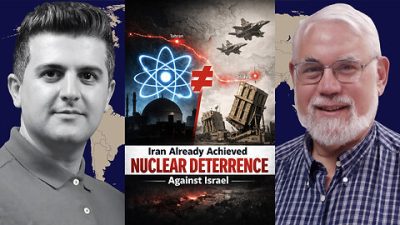
Prof. Ted Postol: Iran Already Achieved Nuclear Deterrence Against Israel
or go to
Aletho News Archives – Video-Images
From the Archives
How the occupied mentality syndrome works
Saudi Arabia on the American chessboard – Part 3
By B. J. Sabri | American Herald Tribune | June 27, 2016
Read part 2: “The occupied mentality Syndrome“
Previously I argued whether Saudi Arabia’s repeated involvements in U.S. interventions and wars stem from free national will or in response to a specific condition. For starters, in Saudi Arabia there is no national will. In Saudi Arabia, the national will is the will of the Al Saud clan. Still, when a major Arab state allies itself with a superpower that committed unspeakable crimes against humanity in almost every Arab country, then something is wrong. This fact alone should compel us to examine the U.S.-Saudi relation for one exceptional reason. As a result of the U.S.-Saudi wars, hundreds of thousands of people in Afghanistan, Iraq, Iran, Libya, Syria, Yemen, and Somalia have lost their lives. Millions became displaced in their own homelands. And millions more rendered refugees.
Attributing the Saudi policies to the bonds of “partnership” with the U.S. is frivolous. There are no bonds between these two thugs except those of business, military deals, secret plots, and wars. Proving this point, bonds such as these have no space for the American and Saudi peoples to share significant cultural or societal exchanges. If partnership is not the reason for the Saudi contribution to the U.S. strategy of empire and imperialism, then another reason must exist.
This leads to three possibilities. … continue
Blog Roll
 Aletho News
- REWRITING THE RISK? INSIDE THE GOVERNMENT’S VACCINE SAFETY MESSAGING
- “Davos Can Really Replace the UN”
- NIAID/NIH and USDA Fund Bioengineered Chimeric Influenza Viruses Built Using Pandemic H1N1 Components: Journal ‘Science Advances’
- Hezbollah hits Israeli warship off Lebanon’s coast, sets it aflame
- Iran slams US strikes on B1 bridge, Mahshahr petrochemical plants as ‘blatant acts of state terrorism’
- In letter to UN chief, Araghchi warns of dire consequences of US-Israeli attacks on Iran’s nuclear facilities
- Why the CIA conspiracy to invade Iran with Kurdish militias failed
- Why Are Upbeat US Claims About Mission to Rescue Pilot ‘Highly Questionable’?
- Aircraft destroyed during US ‘rescue’ of downed F-15 pilot cost more than $100 million each
- Washington University removes professor who condemned US-Israeli war on Iran
- If Americans Knew
- In Iran, Israel-US take aim at “reason, research, and freedom of thought” – Daily Update
- US loses planes over Iran, Israel downgrades Lebanon war goals – Daily Update
- Israel Is Blocking Palestinians from Easter at Church Where Jesus Resurrected
- Plot to assassinate Palestinian activist follows harassment campaign promoted by Zionist groups and elected officials
- Prominent New York synagogue hosts presentation on why U.S. Jews should support the ethnic cleansing of Gaza
- Tapper vs. Piker: Is the CNN Anchor Auditioning for David Ellison?
- Shouldn’t Democrats Be Able to Condemn Genocide?
- Israel-US kill negotiators, destroy civilian structures, but Iran’s military capabilities still largely intact – Daily Update
- ‘War crime’: Global condemnation as Israeli ministers celebrate death penalty law targeting Palestinian prisoners
- 7 Ways Israel Is Turning Lebanon Into Gaza
- No Tricks Zone
- An Inconvenient Tree: Uncovered In Alps… Europe Much Warmer Than Today 6000 Years Ago
- New Study Reports A 60% Slowdown In Greenland’s Ice Loss Rate In The Last Decade
- Low Intensity Tornado Wrecks Major Solar Farm, Creating A Potential Toxic Dump
- New Study Finds Warming Saves Lives…Cold Temperatures 12 Times More Deadly Than Excess Heat
- German Science Blog Accuses PIK Climate Institute Of Hallucinating Climate Tipping Points
- Devastating Assessment Of Comirnaty Vaccine By Former Senior Pfizer Europe Toxicologist
- New Study: CO2 Is ‘Effectively Negligible’ As An Explanatory Climate Change Factor Since 2000
- Former Pfizer Toxicologist Dr. Helmut Sterz Tells Bundestag Hearing Pfizer Vaccine Should Have Never Been Approved
- Energy Expert: Germany’s Nuclear Phaseout Was A “500 Billion Euro Mistake”
- New Research: South Australia’s Mid-Holocene Sea Surface Temperatures Were 4°C Warmer Than Today
 Aletho News