Damascus: Turkey’s Shelling of Syria ‘Direct Support of Terrorists’
Sputnik – February 14, 2016
Damascus said that Turkey’s shelling of Syrian territory is a “direct Turkish support of terrorist groups,” state TV reported, citing a letter to the United Nations.
On Saturday, Turkish forces began shelling the positions of Kurdish People’s Protection Units (YPG) in Syria’s Aleppo region.Turkish forces bombed a village and an airbase that were recently captured by Kurds, Al Mayadeen TV reported Saturday. Prior to being captured by the YPG, the village and the airbase belonged to al-Nusra Front terrorist organization.
Later, Turkish Prime Minister Ahmet Davutoglu claimed that Turkish forces had shelled Kurds’ positions in northern Syria as a “retaliatory measure.”Ankara claims that Syrian Kurds have links to the Kurdistan Workers’ Party (PKK), a militant group fighting for Kurdish independence from Turkey.
On Sunday, NTV channel reported citing a military source that Turkish forces have continued to shell YPG positions in Syria killing two Kurdish fighters.
The Syrian Foreign Ministry sent a letter to UN chief Ban Ki-moon slamming Ankara over the shelling.
“The shelling of Syrian territory by the Turkish heavy artillery is a direct support of terrorist groups and an attempt to boost their morale,” SANA news agency cited the statement.
Syrian authorities have called on the UN to take measures to ensure security and “put an end to the crimes of the Turkish regime.”
Turkish military repeatedly shell Assad forces; Kurds confirm to RT being hit by massive attack
RT | February 13, 2016
The Turkish army has shelled Syrian government forces in Aleppo and Latakia provinces, while also hitting Kurdish targets near the city of Azaz in northwestern Syria, including an air base recently retaken from Islamist rebels, with a massive attack.
Anatolia news agency reported that the Turkish military hit Syrian government forces on Saturday, adding that the shelling had been in response to fire inflicted on a Turkish military guard post in Turkey’s southern Hatay region.
Turkish artillery targeted Syrian forces again late on Saturday, according to a military source quoted by RIA Novosti. The attack targeted the town of Deir Jamal in the Aleppo Governorate.
The agency also cited details of an earlier attack on Syrian government army positions in northwestern Latakia.
“Turkey’s artillery opened fire on the positions of the Syrian Army in the vicinity of Aliya mountain in the northwestern part of the province of Latakia,” the source said.
Meanwhile, the Turkish shelling of Kurdish positions continued for more than three hours almost uninterruptedly, a Kurdish source told RT, adding that the Turkish forces are using mortars and missiles and firing from the Turkish border not far from the city of Azaz in the Aleppo Governorate.
The shelling targeted the Menagh military air base and the nearby village of Maranaz, where “many civilians were wounded,” local journalist Barzan Iso told RT. He added that Kurdish forces and their allies among “the Syrian democratic forces” had taken control of the air base on Thursday.
According to Iso, the Menagh base had previously been controlled by the Ahrar ash-Sham Islamist rebel group, which seized it in August of 2013. The journalist also added that Ahrar ash-Sham militants at the base had been supported by Al-Nusra terrorists and some extremist groups coming from Turkey.
Ahrar ash-Sham is a militant group that has trained teenagers to commit acts of terror in Damascus, Homs, and Latakia provinces, according to data provided to the Russian Defense Ministry by Syrian opposition forces.
The group, which has intensified its attacks on the Syrian government forces since January, was getting “serious reinforcements from Turkey,” Russian Foreign Ministry spokeswoman Maria Zakharova said during a briefing in Moscow on January 21.
A source in the Turkish government confirmed to Reuters that the Turkish military had shelled Kurdish militia targets near Azaz on Saturday.
“The Turkish Armed Forces fired shells at PYD positions in the Azaz area,” the source said, referring to the Syrian Kurdish Democratic Union Party (PYD), which Ankara views as a terrorist group.
A Turkish security official told Reuters that the shelling of the Kurds had been a response to a shelling of Turkish border military outposts by the PYD and forces loyal to Damascus, as required under Turkish military rules of engagement.
Turkey’s PM Davutoglu also confirmed that the country’s forces had struck Syrian Kurdish fighters and demanded that the Kurds retreat from all of the areas that they had recently seized.
“The YPG will immediately withdraw from Azaz and the surrounding area and will not go close to it again,” he told reporters, adding that Turkey “will retaliate against every step [by the YPG],” Reuters reports.
A Kurdish official confirmed to Reuters that the shelling had targeted the Menagh air base located south of Azaz.
According to the official, the base had been captured by the Jaysh al-Thuwwar rebel group, which is an ally of PYD and a member of the Syria Democratic Forces alliance.
Syrian Kurds are actively engaged in the fight against the Islamic State (IS, formerly ISIS/ISIL) terrorist group and have been recently described as “some of the most successful” forces fighting IS jihadists in Syria by US State Department spokesman John Kirby, AFP reports.
Earlier, the US also called the PYD an “important partner” in the fight against Islamic State, adding that US support of the Kurdish fighters “will continue.”
Turkey’s shelling of the Syrian Kurds comes just days after a plan to end hostilities in Syria was presented in Munich after a meeting of the so-called International Syria Support Group (ISSG), in which Russian Foreign Minister Sergey Lavrov, US Secretary of State John Kerry, and UN Special Envoy on Syria Staffan de Mistura participated.
‘We will strike PYD’ – Turkish PM
Earlier on Saturday, Turkish Prime Minister Ahmet Davutoglu threatened Syrian Kurds with military action, saying that Turkey will resort to force against the Syrian Kurdish People’s Protection Units (YPG) if it considers the step “necessary.”
“As I have said, the link between the YPG and the [outlawed Kurdistan Workers’ Party] PKK is obvious. If the YPG threatens our security, then we will do what is necessary,” Davutoglu said on February 10, as quoted by the Hurriyet Daily.
“The leadership cadre and ideology of the PKK and PYD is the same,” he argued in a televised speech in the eastern city of Erzincan on Saturday, AFP reports.
Davutoglu also said that if there is a threat to Turkey, “we will strike PYD like we did Qandil,” referring to a bombing campaign waged by Turkey against the PKK in its Qandil mountain stronghold in northern Iraq, Daily Sabah reports.
Turkey regards the Syrian Kurdish Democratic Union Party (PYD) and its military wing, the YPG, as affiliates of the outlawed Kurdistan Workers’ Party (PKK), which has waged a decade-long insurgency against Turkish authorities, demanding autonomy for Turkish Kurds.
The latest developments come as Turkey continues a relentless crackdown on Kurds in its southeastern region. Ankara launched a military operation against Kurdish insurgents from the outlawed Kurdistan Workers’ Party (PKK) in July of 2015, breaking a ceasefire signed in 2013.
Turkey’s General Staff claim that Turkish forces killed more than 700 PKK rebels during the offensive in the southeastern districts of Cizre and Sur. Meanwhile, Amnesty International has reported that at least 150 civilians, including women in children, were killed in the Turkish military operation, adding that over 200,000 lives have been put at risk.
According to the Turkish Human Rights Foundation, at least 198 civilians, including 39 children, have been murdered in the area since August of 2015.
Turkey ‘threatens to withdraw’ from Syria talks over Syrian Kurds
RT | January 23, 2016
Ankara may boycott the upcoming Syria talks in Switzerland if Syrian Kurds are invited, media reports said, citing UN sources. Earlier, Turkey said their support for the peace process can only be ensured if there is no “representation of terrorist groups around the table.”
Turkey has privately warned that it might pull out from the Geneva talks now scheduled for January 25 if Saudi-backed Kurds and related parties are present, Foreign Policy reported Saturday citing UN-based officials.
Ankara is unwilling to cooperate with Syria’s Democratic Union Party (PYD) and its affiliate People’s Protection Units (YPG) since these leftist movements are allegedly linked to the Kurdistan Workers’ Party (PKK), which is considered a terrorist organization by Turkey.
The conflict between the Turkish government and Kurdish insurgent groups demanding greater autonomy for the large ethnic group has been going on for decades. With several failed ceasefires between the sides, Ankara has been blamed for putting civilians lives in Turkey’s mainly Kurdish southeast at risk by a number of international human rights groups.
Earlier this week, President Erdogan reaffirmed his unwillingness to search for a peaceful solution to the conflict, saying that “those with guns in their hands and those who support them will pay the price of treason,” meaning the Kurdish militants who are considered terrorists by the government.
Apart from Turkey, the historical Kurdistan region also includes territories in Iran, Iraq and northern Syria, where Kurdish fighters have proved to be some of the most effective forces in helping to combat Islamic State (IS, formerly ISIS/ISIL). Still Ankara believes that struggling against IS “does not grant them legitimacy,” according to the Turkish Prime Minister Ahmet Davutoglu. Turkey has carried out several attacks on Kurdish forces in northern Syria.
Moreover, Davutoglu accused Russia of as much as compromising Geneva talks by inviting the representatives of YPG – Syrian Kurdish forces – to join the peace process.
“Some circles, including Russia, want to spoil the opposition side, putting some other elements in the opposition side like the YPG, which has been collaborating with the regime and attacking the moderate opposition,” the PM said earlier this week.
“There should not be any representation of terrorist groups around the table,” he insisted.
Geneva talks on the Syrian crisis have recently become a bone of contention between international negotiators: the key issue is who would attend.
A resolution providing for the beginning of talks between the Syrian government and opposition groups was adopted by the UN Security Council in December. Scheduled to take place in Switzerland in January, the talks became known as Geneva III (Geneva II happened in January 2014), and are aimed at finding a solution to end the Syrian civil war, which has been ongoing in the country since 2011, with IS gaining strength in the region. While a number of countries, including Russia, the US, Saudi Arabia, Iran and Turkey are backing the peace talks, there is no apparent agreement on who should represent the Syrian opposition, and which fighting groups should be excluded for being proclaimed “terrorists.”
Turkey wouldn’t welcome a Kurdish presence at the talks. However, the US government still believes there is hope of changing Ankara’s opinion on the subject, according to Foreign Policy. Vice President Joe Biden arrived in Istanbul to discuss national security questions with the Turkish leaders on Saturday.
At the same time, US State Secretary John Kerry traveled to Riyadh in order to press Saudi officials to reconsider on a similar matter. Saudi Arabia previously threatened to boycott Geneva talks if certain pro-regime Syrian groups allegedly backed by Russia and Egypt were invited. In their turn, the opposition representatives urged UN special envoy Staffan de Mistura in a letter to disqualify Riyadh from peace talks as it was picking delegates for its own delegation talks “under obscure conditions,” Russia’s Sputnik agency reported.
As a result, de Mistura, responsible for issuing the invitations to the talks, accused a few states of jeopardizing the peace process by insisting that their opposing faction is more important than others.
“I would expect all sides to recognize my mandated responsibility to finalize a list of invitees to the process, to include all those I deem appropriate,” de Mistura reportedly said at a private UN briefing on January 18.
Russia and the US still hope that the talks will eventually take place on January 25. Foreign Minister Sergey Lavrov and State Secretary John Kerry had a phone talk on Saturday to discuss arrangements for the Geneva meeting, Russian foreign authority said. Both officials agreed that the International Syria Support Group format might be useful for holding further peace talks on Syria.
‘New Turkey’: Toward an Authoritarian and Sectarian Police State
By Sinem Adar | Jadaliyya | December 2, 2015
Tahir Elçi, the president of the bar association in southeastern Diyarbakır province and a determined Kurdish human rights lawyer, was shot dead on Saturday, 28 November, during a press statement he had delivered in Diyarbakır. Photos of Elçi’s dead body lying on the ground quickly overwhelmed social media accounts, symbolizing the deadly difficulty of talking about and fighting for peace at this critical juncture that Turkey, and the region at large, are going through. Despite the fact that Turkey is known for its long history of unsolved political crimes and political violence, Elçi’s assassination is an alarming turning point in the final phase, after the electoral victory of the AKP (Justice and Development Party) in the 1 November elections, of consolidating an authoritarian and sectarian police state.
In this essay, I argue that the “new Turkey” the AKP government is forcefully imposing on its citizens goes beyond a mere ideological transformation. It includes a full reorganization of the state’s security apparatus to consolidate an authoritarian and sectarian police state, thoroughly controlled by the AKP government under the leadership of President Recep Tayyip Erdoğan. The institutionalization of this police state is made possible through a physical war against Kurds that is legitimized by a war of discourse, the complete suppression of dissidence, and the manipulation of regional dynamics. In the rest of the essay, I will elaborate this argument by focusing on three disparate events that happened last week: the assassination of Tahir Elçi; the arrest of Can Dündar and Erdem Gül, two journalists at Cumhuriyet daily; and Turkey’s shooting down of a Russian military jet with the claim that it violated Turkish airspace. Although these events are independent of one another and thus there is seemingly no causal relationship among them, they come together as pieces of a rather discomforting, and even alarming, puzzle, indicating the deeper transformation toward building the “new Turkey.”
The Physical War against Kurds and the War of Discourse
The country is at war. It is a war of discourse through the constant and willful reproduction by state elites of the infamous friend-enemy binary. But also, it is an actual physical war brutally carried out through a state of emergency in the Kurdish southeastern and eastern Anatolia. The AKP government legitimizes this physical war against its Kurdish citizens through expansively launching a war of discourse against any form of dissidence. In other words, the AKP government has been strategically manipulating, since the 7 June elections, ethnic cleavages and societal fears, leading up to its electoral victory in the re-elections on 1 November.[1]
Following the suicide bombing in Suruç on 20 July that killed thirty-three and injured 104 people, and the killing of two policemen in Șanlıurfa (which was at first claimed by the PKK, although the group then denied responsibility for it), the ceasefire between the Turkish army and the PKK came to an abrupt end. Extensive and intensive securitization policies in what are defined as “special security zones” were quickly put to work in most of the cities and towns of the Kurdish southeast and east, directly targeting life itself. It is important to emphasize here that the state of emergency and curfews continue today.
The death toll increased rapidly during the period between 7 June and 1 November. A total of 229 civilians died and about 595 were injured in incidents not related to the armed struggle. Among these, 101 died and about four hundred were injured in the Ankara suicide bombing. A total of 150 soldiers, policemen, and village guards died and forty-two were injured during the armed struggle, while at the same time, 181 armed guerrilla members died and nineteen were injured. In addition, nine civilians died and 101 were injured as a result of the armed struggle.[2]
Despite the fact that state violence has been a common practice in Turkey since the establishment of the republic in 1923 (and even preceding the founding of the republic), this particular moment is distinctively different, mainly because of the changes made to the security apparatus of the state. Among these are the reorganization of the National Intelligence Organization (MIT) under the Council of Ministers and the expansion of the MIT’s access to personal and private information; the expansion of power given to government-appointed mayors over the deployment of security measures, particularly at the local level; and the reorganization of the police force. In other words, the governance of violence has been reorganized in ways toward institutionalizing a police state.
The war of discourse around the constant re-evocation of the friend-enemy binary that has brutally accompanied this physical war against Kurds since 7 June is only possible in this context of hyper-securitization. Such a war of discourse significantly confines the contours of any conversation about, and any political action for, peace, by effectively de-sanctifying any attempt to reason and mobilize. As such, the war of discourse has the ideological capacity to turn anything and everything that is considered a threat to the status quo of the party into an enemy of national unity and security, into a spy against the state. As loyalty to the party—and thus the state—has now become the overt doctrine of the AKP government in the name of assembling the nation together, the search for truth and justice is under severe attack.
Suppression of Dissidence
It is exactly in this context that Elçi became a prominent target, as someone who violated this desired and imagined state of loyalty of the citizen/subject to the party/state. In the aftermath of his remarks as part of a television discussion about the PKK not being a terrorist organization but rather an organization of Kurdish resistance, he became the target of a public verbal lynching and death threats. There was also a court order banning Elçi from international travel. As a symbol of “out-of-the-box” thinking who had the political ability to mediate between different positions through reason and a powerful language of peace, Elçi was systematically turned into a public enemy. His assassination therefore came as no surprise to many, as was painstakingly expressed by Selahattin Demirtaş, the co-leader of the HDP, at Elçi’s funeral.
A total of 5,713 people, the majority of whom are supporters of the Kurdish resistance movement, were taken into custody during the period between 7 June and 9 November. Of these, 1,004 were arrested. There were also attacks on party buildings of the HDP (People’s Democratic Party), as well as lynchings of HDP supporters and Kurdish citizens.[3] In other words, as the most vocal oppositional fraction and the most adamant supporter of freedoms in the Turkish public sphere today, the Kurdish movement and its supporters, Kurdish and Turkish alike, were at the center of this full-fledged attack on dissidence since the 7 June elections.
The arrest of Can Dündar, the editor-in-chief of Cumhuriyet daily, and Erdem Gül, the paper’s Ankara bureau chief, on 27 November came within this larger context of suppressing dissidence. The two journalists were charged with “spying” and “helping a terrorist organization without being active members of it” after alleging, through photos and video footage published at the newspaper, that Turkey’s intelligence agency sent arms to Islamist rebels in Syria. President Erdoğan personally filed charges against the newspaper, also threatening Dündar in an interview aired on the national television channel right before the November elections.
Regional Dynamics: Rojava and Re-Mapping the Borders
The charges filed against Dündar and Gül—that is, “spying” and “helping a terrorist organization”—demonstrate the highly expansive reach that the war of discourse has over dissidence in Turkey today. These terms have now become the legitimizing grounds for any (arbitrary) attack on freedom of expression. Turkey is ranked number 149 in press freedom out of 180 countries, according to Reporters Without Borders’ 2015 Press Freedom Index. The state of exception that was confined to the Kurdish southeastern and eastern Anatolia during the 1990s has now extended into the entire country.
Besides the actual physical war that the government has launched against its Kurdish citizens, the civil war taking place in Syria, which involves myriad international and regional actors with competing and conflicting interests, contributes to the government’s excessive suppression of dissidence. In fact, the government’s response to the allegations made by the daily Cumhuriyet was that the ammunition had been sent to Turkmens, instead of Islamist groups, fighting in Northern Syria.
There are two important factors that raise the AKP government’s stakes in the war in Syria. One is driven by the sectarian concern to establish a strong Sunni hand in the changing power order in Syria. The second is the government’s discomfort with the rising Kurdish power in Northern Syria, especially following the Rojava revolution. The Kurdish People’s Protection Units (YPG) is one of the most prominent factions powerfully fighting on the ground against the Islamist rebels, and particularly ISIS. The shooting down of a Russian jet by the Turkish army on 24 November should be interpreted in this context. Although the dynamics and factors behind Turkey’s decision to shoot down the plane are likely to be much more complicated than what appears in public, there are two implications of the decision.
First, it is a declaration—a rather too ambitious one—meant to re-position Turkey in the politico-military field beside the West as an imperial/powerful actor along the Cold War nexus. Bashar Al-Assad still remains in power despite Turkey’s staunch criticism of him since the beginning of the uprising in Syria, and the support Turkey has been giving to the quite heterogeneous and ambiguous mix of Syrian opposition groups that includes Islamist rebels of all factions. Moreover, Russia’s actual military involvement in Syria since September 2015 came as a significant challenge to Turkey’s attempt to limit the rising Kurdish power in Northern Syria, on one hand, and its support to Islamist rebels, on the other. Therefore, Turkey’s decision to shoot down the Russian military jet was part of an attempt to regain power in Syria.[4]
Second, it is also a subtle declaration aimed to position Turkey in the politico-religious field as the legitimate hegemonic actor vis-à-vis the Islamist rebels fighting in Syria. Putin immediately said that the shooting down of the plane “represents a stab in the back by the terrorists,” implying Turkey’s relationship with ISIS. Since then, allegations of Turkey’s relations with ISIS have been at the center of the cat-fight between Turkey and Russia. It would be naïve to think that Turkey acted without knowing that this action would heat up such a discussion. The dangerous pragmatism of the West (the most recent example of which is the agreement between Turkey and the EU to control the migrant and refugee flow) and the rise of Salafi jihadism across the world provide the AKP government the opportunity to attempt to position itself as the legitimate Sunni actor in the politico-religious field.
What Is Our Political Imaginary for the Future?
We are living through dark times, not only in Turkey, but also across the world. In the particular case of Turkey, what makes this juncture critical is that it underlines a deeper transformation of the state, but also of the nation. The state is being consolidated as an authoritarian police state, while at the same time the nation is re-engineered based on a sectarian imagination.
At this critical juncture, we should all earnestly ask ourselves the following questions: What is our political imaginary for the future? What kind of a country do we want to live in? What do we need to do to build such a future? Debating and answering these questions is much more pressing than ever. It is a time that urgently calls for an honest self-reflection about our societal fears. This requires a confrontation with historical injustices.
If the state is significantly failing to protect its citizens’ right to have rights—and thus the right to have a life—as equals, we are left with the political and moral responsibility of demanding it begin to do so, in full solidarity with one another despite our differences. Politics is not a kind of magic that happens to us tomorrow by some visible hand or power. Politics happens today through our deliberate choices to act or not to. Through silence and dismissal, we contribute to every death, to every bit of suffering, and to every other catastrophe.
NOTES
I would like to thank the Turkey Page editors for their useful comments in revising this essay.
[1] For a discussion of political parties’ strategic deployment of ethnic, racial, and religious cleavages toward political articulation, see Cihan Tugal, Cedric de Leon, and Manali Desai, “Political Articulation: Parties and the Constitution of Cleavages in the United States, India, and Turkey,” Sociological Theory 27:3 (2009): 193-219.
[2] See this report by the Human Rights Association (IHD).
[3] See this report by the Human Rights Association (IHD).
[4] See this essay by Metin Gurcan for an analysis of the incident.
After the Paris Massacre: The Evil Axis of US Allies
By Taylan Tosun – teleSUR – November 30, 2015
The horrible Paris massacre allegedly committed by the Islamic State (IS) militants immediately rose to the top of the international agenda. Western powers, particularly the U.S. and France, declared that restriction of the Islamic State’s domain of operation and, subsequently, its overall destruction were their primary objects. Thus, immediately after the Paris massacre French warplanes bombed Al-Raqqah, the so-called capital of IS in Syria.
The first point of discussion, which came forward in the mainstream media concerning the war against IS was the following: “Is there a possibility that the international coalition against IS led by the U.S. could inflict serious blows to the terrorist organization merely by means of air raids?” Many commentators disagreed: The coalition members were not able to effectively harm IS in such residential areas as Al-Raqqah just by air bombardment unless they risk heavy civilian causalities.
I think that this line of discussion serves to cover up more fundamental realities on the ground by reducing the issue of the fight against IS to merely military tactics. Western powers, notably the U.S., have two “important” allies, which have been supporting IS since the beginning of the Syrian civil war: Turkey and Saudi Arabia. Strangely enough the indirect roles of these two countries in the massacres of Lebanon and Paris have not been questioned.
Saudi Arabia has assumed a major role in the promotion and popularization of Salafism throughout the Mideast and in sponsoring the Jihadist terrorist organizations. The fact that Saudi Arabia has been tolerated by the West despite its support for Salafism is because Saudi Arabia acted as a sort of “shield” in line with the Western interests against the proliferation of Iran-Shia influence in the region and has been one of the major customers of the U.S. arms industry.
Turkey is a perfect match for Saudi Arabia. The Turkish government has shown its best efforts to have the PYD/YPG included in the list of terrorist organizations before Paris massacre. One of the first moves of Turkey was to prevent YPG from extending its operations to the west of Euphrates River, when war policy was restored with an aim to limit the gains of Kurds. Thus Turkey prevented YPG/YPJ to repel ISIS out of Jarabulus. While the PYD controls most of the Turkish-Syrian border, Turkey supported IS to keep the 90-kilometer section of the border extending from Jarabulus to Afrin Canton under its control. Why? Of course, it aimed to help IS with maintaining its relationship with the world, allowing militant candidates to participate in IS, and probably for continuing ammunition supplies.
What is the meaning of the so-called ‘cleaning’ operation by US-Turkey to remove ISIS from the Jarabulus-Azez line?
Turkey’s pro-IS policy became unsustainable after the West established the anti-IS coalition and started to bomb IS targets. Shortly after the June 7 elections, the Turkish government aimed to kill two birds with one stone by participating in the anti-IS coalition. As a result, Turkey both secured Western support in ending the ceasefire period in the country, and gained a ‘legitimate’ ground for negotiating its plans to overthrow Assad and restrict Rojava by means of Salafist organizations.
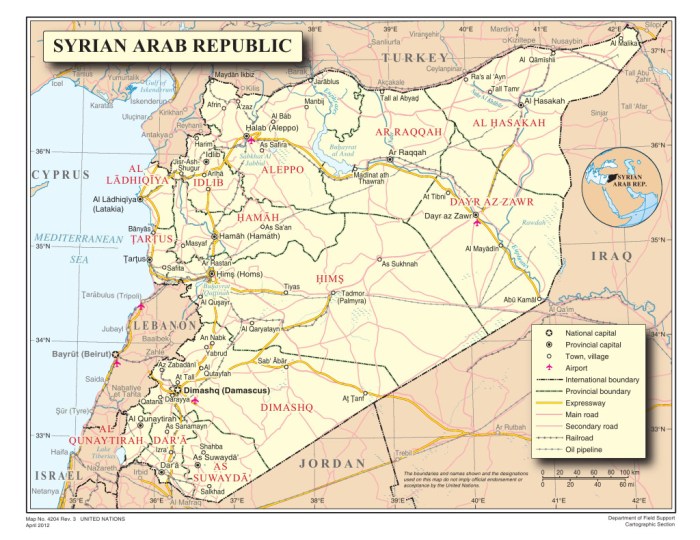
Turkey’s plan as offered to the U.S. and other Western allies was as follows: Establishment of a 90-kilometer wide and 50-kilometer deep ‘safe zone’ between Jarabulus and Azez, very close to the Afrin Canton, as secured by the warplanes of Turkey and allies; removal of IS from the zone by occupation of the Turkish Armed Forces either or not in cooperation with allied powers; and settlement of migrants that are currently located in the camps in Turkey or that would flee from Syria in the future. Therefore, Turkey would be liberated from the European pressure on the migration issue, prevent the physical connection between the Kurdish Cantons, and the demographics of the region would become Sunni-Arab dominated thanks to the migrants. There also was a more strategic goal: The Jaish al-Fatah coalition, which was promoted by Turkey, Qatar, and Saudi Arabia, proved to be successful in Aleppo and surroundings. Upon imposition of the safe zone, the Turkey-Aleppo line would be secured and the coalition, basically composed of al-Nusra Front, an associate of al-Qaeda, and Ahrar ash-Sham, would be allowed to further constrict the Assad government.
Russian military operations in Syria that started on September 30 substantially complicated the above plan. As a matter of fact, Russia was involved in the war to eliminate the threat on Latakia, the heart of the Assad government, and prevent the total loss of Aleppo. Idlib city, under control of the opponents, located in northern Syria has strategic importance for the control of Aleppo. Therefore, Russia shifted a part of its operations to Northern Syria and started to harass Turkish jets by occasionally entering the Turkish airspace. This was then described as establishment of the safe zone, yet it was now considered against Turkey.
It is safe to suggest that Obama’s clear rejection of Turkey’s ‘safe zone’ proposal during the G-20 summit was based among other things on refraining from any confrontation with Russia to the north of Aleppo.
The Paris massacre allowed a Russian-U.S. rapprochement as regards Syrian policies. Parties declared that their primary objective was to weaken IS, but not to overthrow the Assad government. These developments fostered hopes for the Geneva negotiations, which aimed to end the civil war in Syria.
Nevertheless, U.S. secretary of state Kerry announced immediately after the G-20 Summit that Turkey and the U.S. would take a joint operation to clean the Jarabulus-Azez line of IS.
What does this operation plan, which was announced after the ‘safe zone’ proposal was shelved, mean?
It means implementation of the ‘safe zone’ project at a more modest level. Ground forces will not be involved in the operation. Instead, Syrian opponents with the support of Turkish and U.S. jets would clean the said part of the Turkish border from IS. On the grounds that the Free Syrian Army ceases to exist in the field, the pro-al-Qaeda al-Nusra Front and its associate Ahrar ash-Sham would assume the ground operations, accompanied by the Syrian Turcoman forces.
In other words, IS would be replaced by other Salafist organizations. The involvement of YPG, the only secular force fighting against ISIS, and connection between the Kurdish Cantons would be prevented. Lastly, by leaving the Jarabulus-Azez line in the hands of such organizations as al-Nusra Front and Ahrar ash-Sham, which have a comparable record of civilian massacres, the pressure of the said Salafist organizations on the regime over northern Syria would be reinforced given that these organizations have Idlib and a large part of Aleppo under their control.
***
It seems very unlikely that IS is to be weakened and peace is to be restored in Syria, given that the U.S. continues to protect its allies, Turkey and Saudi Arabia, which deal with dirty business in Syria. Furthermore, the available data suggests that the West did not give up its goal to maintain continuous pressure on the Assad government and sustain controlled chaos in Syria, albeit the same has currently receded into background. The controlled chaos policy ultimately means protection of the power of IS and paving the way for likely massacres in the future.
US could easily verify massacre of Kurdish civilians in Syria if they wanted
RT | August 16, 2013
Defending themselves by all means available is the Kurdish Popular Defense Units’ (YPG) last resort in Syria, the group’s spokesperson Redor Khalil told RT.
Amid Western inaction and Russian condemnation of massacres against the Kurds, Redor Khalil said that evidence is readily available to support the injustice perpetrated against the Kurdish people by militants sponsored from abroad – if anybody were to listen.
RT: Tell us about the Popular Defense Units. Is it your objective to protect the Kurds, or to protect all the residents of this territory?
Redor Khalil: The Popular Defense Units were established to protect all the people – Kurds as well as Arabs. We formed the units in 2011 when the war began. You should know that Syria, including Western Kurdistan, has a mixed population of Kurds, Arabs, Armenians, Assyrians, Turkmens, Circassians and so on. Our units were intended to protect all these areas and their residents.
RT: But some are saying that your attacks on enemy positions in Arabic villages are impeding the relations between Kurds and Arabs. Armed clashes in these areas result in losses on both sides.
RK: We don’t believe that our actions will result in social disintegration. Kurds and Arabs have been living side-by-side in these territories for centuries, and they will keep it this way in the future.
We’ve said time and again that we strongly disapprove of ethnic, religious and sectarian wars. However, there are certain powers which have been trying to stir up confusion and to make it look like a fight between Kurds and Arabs for the sake of their own interests.
As you travel through these areas you may ask the local members of minorities and religious groups whether there is a sectarian war taking place here. I can assure you that it’s not the case.
Our traditions, moral values and principles prevent us from starting a war between different religious or ethnic groups. Neither Kurds nor Arabs want this war to happen. But some forces are working on instigating a conflict between us as a part of their plan.
RT: We’ve been around Qamishli, where the clashes take place. The YPG members told us that Jabhat Al-Nusra and the Islamic State of Iraq and the Levant are much better armed. With this in mind, can the YPG really ensure people’s security and extend it to other regions? And what is your opinion on some foreign states supplying weapons to these terrorist groups?
RK: The YPG units are made up of the local population. Our main strategy is defense, not offense. If there are no attacks on our territory, no threats to our towns and cities, we do not take any offensive action. We don’t attack anyone or provoke confrontation. But since our territories are under attack, we have to defend ourselves with all the means available. Our enemy gets support from the outside; they have heavy armaments and plenty of ammunition. I can state openly that the YPG units do not get any support from foreign countries. We employ a defensive strategy in all our operations, using only our own weapons and ammunition.
RT: Recently it was rumored that Kurdish political forces want to create a government of the so-called Western Kurdistan. It’s well-known that there are external Kurdish elements that support the idea. How would you comment on these rumors?
RK: Some parties and movements declare this project their main political objective. On behalf of the YPG members and based on the information we have, I can say that they don’t intend to set up a government for Western Kurdistan. This is just talk meant to drive a wedge between different ethnic groups living in the region. Syria is going through a very difficult and dangerous time right now. There are some places in Syria over which the current regime will never be able to regain control. People living there are in dire need of governing authorities, which the Free Syrian Army has already created in Idlib and Ar-Raqqah. There’s nothing surprising about that, and it’s the same thing the Kurdish people want – self-government over the areas where the Kurds live is an inherent part of our political project. Some political movements claim that it springs from our desire to separate from Syria and create our own state and government. They aim to sow seeds of discord among various ethnic and religious groups living in this area and exacerbate the already complicated state of affairs. They are just pursuing their own selfish goals.
RT: Some opposition groups say that the YPG leaders coordinate their operations with the Syrian government and its army forces. What kind of relations do you maintain with the Syrian government?
RK: We have vehemently denied these allegations before, and we will keep doing so. We don’t maintain any relations with the government. The Popular Protection Units have no connection to the regime. You have seen for yourselves that the government officials stay inside the city. The rest of the territory is under our control. Basically, the YPG is in charge there and responsible for ensuring security.
RT: Speaking of Jabhat al-Nusra’s massacre in Afrin and Qamishli, the Russian Foreign Ministry and several human rights organizations condemned it, but the US State Department said that they have no hard evidence of genocidal intent against the Kurdish people. How would you explain this US stance?
RK: I think that if the US truly wanted to get to the bottom of this, it would be very easy – it’s crystal clear what exactly is happening. The massacre of Kurdish civilians in places like Tal Hasil and Tal Aran is a dark but undeniable fact. There are eyewitnesses of these events, and we at the YPG, as well as several Kurdish civilians, have documentary proof of it. We are ready to give this proof to international organizations and mass media to show them the truth of this horrible war the radical Islamists are fighting on our soil. I think the main reason for this massacre is that the YPG defeated the militants at Ras al-Ayn where they were based, maintaining control over a border checkpoint. After they suffered defeat at Rumeylan the radical groups attacked civilians who are not involved in military action.
Related article
Featured Video

America Racing to Strategic Defeat in Iran
or go to
Aletho News Archives – Video-Images
From the Archives
Should Europeans ‘Thank’ the Americans for Destroying Nord Stream?
By Robert Bridge | Strategic Culture Foundation | September 29, 2022
With an investigation continuing into the destruction of the Nord Stream gas pipeline that provided energy supplies to Europe from Russia, there appears to be just one prime suspect, and that should surprise nobody.
Following the sabotage of the Nord Stream 1 and 2 gas pipelines, former Polish Foreign Minister Radoslaw Sikorski already seemed to know the identity of the perpetrator when he tweeted out: “Thank you, USA.”
At first glance, it seemed that Sikorski was speaking sarcastically, berating Washington for carrying out an attack that will have severe repercussions for the people of Europe. After all, how could anyone see any good coming from the termination of Europe’s primary source of gas reserves with winter just around the corner? It was Sikorski’s homeland of Poland, after all, that urged its citizens to collect firewood in the face of dwindling gas reserves.
In fact, the Polish diplomat was speaking one-hundred percent literally… continue
Blog Roll
 Aletho News
- Growing insecurity, soaring prices fuel protests in north as regime bans evacuation: Sources
- Iran denies responsibility for ‘depraved’ attack on Kuwait desalination plant
- Bring The Troops Back. End This War Now!
- Can we please stop calling Israel the ‘only democracy in the Middle East’ now?
- US should start removing its troops from Germany, proposes AfD co-leader Chrupalla
- Iran Red Crescent: 600 educational centers attacked in US-Israeli ‘war crimes’
- Russian Oil Tanker Arrives in Cuba Amid U.S. Blockade
- America Racing to Strategic Defeat in Iran: Lt Col Daniel Davis
- FTC Warns Visa, Mastercard, PayPal, Stripe Over Political Debanking
- Russian tanker approaches Cuba despite US oil blockade
- If Americans Knew
- As Iran targets US military bases, will they be relocated to Israel? Not a ceasefire Day 171
- Will Trump Go Kamikaze?
- Is the University of Florida Shutting Down College Republicans over Israel Criticism?
- Jewish extremist arrested over alleged plot to firebomb Palestinian activist Nerdeen Kiswani’s home
- More than half of Palestinian child detainees have no charges
- The More Murderous Israel Gets, The More We Hear About “Antisemitism”
- Land Day and the Palestinian struggle after 30 months of genocide
- The Iran War Is About Palestine
- Israeli soldiers echo settler ideology, talk of revenge after targeting Palestinians and detaining CNN crew in the West Bank
- Israeli Policies Threaten Future of Christian Schools in Jerusalem
- No Tricks Zone
- New Study Finds Warming Saves Lives…Cold Temperatures 12 Times More Deadly Than Excess Heat
- German Science Blog Accuses PIK Climate Institute Of Hallucinating Climate Tipping Points
- Devastating Assessment Of Comirnaty Vaccine By Former Senior Pfizer Europe Toxicologist
- New Study: CO2 Is ‘Effectively Negligible’ As An Explanatory Climate Change Factor Since 2000
- Former Pfizer Toxicologist Dr. Helmut Sterz Tells Bundestag Hearing Pfizer Vaccine Should Have Never Been Approved
- Energy Expert: Germany’s Nuclear Phaseout Was A “500 Billion Euro Mistake”
- New Research: South Australia’s Mid-Holocene Sea Surface Temperatures Were 4°C Warmer Than Today
- Storing Green Energy To Last Germany 10 Days Would Require A 60-Million Tonne Battery
- New Studies: UK Sea Levels Were 4 Meters Higher Than Today During The Mid-Holocene
- Destructive Green New Deal: German Energy And Metal Group Warns Of Drastic Crisis
 Aletho News