Netanyahu unilaterally declares Lebanon outside of ceasefire deal
Al Mayadeen | April 8, 2026
Just a couple of hours after a ceasefire deal was reached, “Israel’s” Prime Minister Benjamin Netanyahu announced Wednesday that his government supports the US decision to suspend strikes on Iran for two weeks, but immediately breached the agreement by declaring it does not extend to Lebanon.
In a statement posted on the Israeli Prime Minister’s Office X account, Netanyahu said the Israeli regime backs Washington’s efforts to ensure Iran “no longer poses a nuclear, missile and terror threat,” and acknowledged that the United States had communicated its commitment to achieving these goals in upcoming negotiations.
However, buried at the end of the statement was a unilateral carve-out: “The two-week ceasefire does not include Lebanon.”
The Israeli regime has already violated the ceasefire before the ink had dried, targeting an ambulance in southern Lebanon alongside bombing several towns in the South.
Israel bombs ambulance, kills 4
All of the following attacks took place shortly after the ceasefire came into effect.
Israeli forces opened their post-ceasefire assault by targeting an ambulance in the town of al-Qleileh in the Tyre district, South Lebanon, killing four people, per Al Mayadeen’s correspondent.
In the Ras al-Ain area, our correspondent reported that an Israeli airstrike hit another vehicle, wounding a number of people. An Israeli drone also struck a motorcycle in Qana, causing injuries.
The IOF carried out airstrikes across al-Rayhan and Nabatieh al-Fawqa in the South, while Israeli artillery shelled a string of towns across the Bint Jbeil district, like Touline, Jmeijmeh, Baraachit, Majdal Selm, and Shaqra. Meanwhile, the town of Hadatha was attacked twice in the early hours of the morning.
In the Bekaa, an airstrike targeted the town of Yohmor.
Direct contradiction of Pakistani mediator
The declaration stands in direct contradiction to the announcement made by Pakistani Prime Minister Shehbaz Sharif, who brokered the agreement.
Sharif stated that “the Islamic Republic of Iran and the United States of America, along with their allies, have agreed to an immediate ceasefire everywhere, including Lebanon and elsewhere, EFFECTIVE IMMEDIATELY.”
Israeli media outlets, including Ynet and Maariv, had reported that the ceasefire encompassed Lebanon. Israeli Channel 12 further cited a security source confirming that the Iranians “insisted that the ceasefire also includes Lebanon.”
Iran’s demands throughout negotiations had explicitly included an end to aggression on all fronts, Lebanon among them.
Israeli public reacts with fury
The ceasefire announcement triggered a wave of frustration across Israeli media. Israeli broadcaster Channel 11 reported that settlers remained in shelters even as the truce was declared. Other outlets described the agreement as “the largest failure in Israel’s history since October 7.”
Maariv was particularly critical, writing that the United States and “Israel” had abandoned most of their war objectives, creating a new regional reality. The outlet said Iran had succeeded in dragging both into an agreement that amounted to surrender from both sides, and that after 41 days of fighting and 5,000 buildings destroyed, the outcome was a decisive Iranian victory, with Hezbollah expected to return stronger than before. Iran and its allies, Maariv concluded, appeared to be the only party emerging victorious from the confrontation.
Commentators questioned the logic of the deal, with one platform sarcastically asking, “Forty days and an entire nation staying home for a ceasefire?”
Trump was not spared either, with several outlets calling him “a global joke” and “a weak man unable to withstand pressure.”
Israeli leaders: ‘Not a single goal’ achieved in war with Iran
Press TV – April 8, 2026
Israeli opposition leader Yair Lapid has sharply criticized prime minister Benjamin Netanyahu for supporting a temporary ceasefire between the United States and Iran, calling it a “political disaster.”
Lapid made the remarks in a post on his X account on Wednesday, after Netanyahu’s office said Israel supports US President Donald Trump’s decision for a two-week ceasefire.
“There has never been such a political disaster in all of our history,” Lapid said, adding that Israel “wasn’t even at the table when decisions were made concerning the core of our security.”
Lapid also stressed that Netanyahu “failed politically and strategically in achieving “even a single one of the goals that he himself set.”
“It will take us years to repair the political and strategic damage that Netanyahu wrought” due to “arrogance, negligence, and a lack of strategic planning” on Netanyahu’s part, he added.
Israeli opposition figures also criticized the ceasefire with Iran, saying Netanyahu has failed to achieve the war’s objectives.
In a post on X, Yair Golan, the head of the left-wing Democratic Party, called the ceasefire a “strategic failure” by Netanyahu.
“He promised a historic victory and security for generations, and in practice, we got one of the most severe strategic failures Israel has ever known,” Golan said.
“It’s a total failure that endangers Israel’s security for years to come,” he added.
On Wednesday, the United States and Iran agreed to a two-week ceasefire after Washington received a 10-point proposal from Tehran. Netanyahu’s office said Israel supported Trump’s decision.
What on earth just happened? Trump, Iran, and the unlikely ceasefire
By Trita Parsi | April 8, 2026
Yesterday began with Donald Trump issuing genocidal threats against Iran on social media and ended—just ten hours later—with the announcement of a 14-day ceasefire, on Iran’s terms. Even by the volatile standards of Trump’s presidency, the whiplash is extraordinary. What, then, have the two sides actually agreed to—and what might it mean?
In a subsequent post, Trump asserted that Iran had agreed to keep the Strait of Hormuz open during the two-week pause in hostilities. Negotiations, he added, will proceed over that period on the basis of Iran’s 10-point plan, which he described as a “workable” foundation for talks.
Those 10 points are:
1. The US must fundamentally commit to guaranteeing non-aggression.
2. Continuation of Iran’s control over the Strait of Hormuz.
3. Acceptance that Iran can enrich uranium for its nuclear program
4. Removal of all primary sanctions on Iran.
5. Removal of all secondary sanctions against foreign entities that do business with Iranian institutions.
6. End of all United Nations Security Council resolutions targeting Iran.
7. End of all International Atomic Energy Agency resolutions on Iran’s nuclear program.
8. Compensation payment to Iran for war damage.
9. Withdrawal of US combat forces from the region.
10. Cease-fire on all fronts, including Israel’s conflict with Hezbollah in Lebanon.
The United States has not, of course, signed on to all ten points. But the mere fact that Iran’s framework will anchor the negotiations amounts to a significant diplomatic victory for Tehran. More striking still, according to the Associated Press, Iran will retain control of the Strait during the ceasefire and continue—alongside Oman—to collect transit fees from passing vessels. In effect, Washington appears to have conceded that reopening the waterway comes with tacit recognition of Iran’s authority over it.
The geopolitical consequences could be profound. As Mohammad Eslami and Zeynab Malakouti note in Responsible Statecraft, Tehran is likely to leverage this position to rebuild economic ties with Asian and European partners—countries that once traded extensively with Iran but were driven out of its market over the past 15 years by U.S. sanctions.
Iran’s calculus is not driven solely by solidarity with Palestinians and Lebanese. It is also strategic. Continued Israeli bombardment risks reigniting direct confrontation between Israel and Iran—a cycle that has already flared twice since October 7. From Tehran’s perspective, a durable halt to its conflict with Israel is inseparable from ending Israel’s wars in Gaza and Lebanon. This is not an aspirational add-on; it is a prerequisite.
The forthcoming talks in Islamabad between Washington and Tehran may yet falter. But the terrain has shifted. Trump’s failed use of force has blunted the credibility of American military threats, introducing a new dynamic into U.S.-Iran diplomacy.
Washington can still rattle its saber. But after a failed war, such threats ring hollow. The United States is no longer in a position to dictate terms; any agreement will have to rest on genuine compromise. That, in turn, demands real diplomacy—patience, discipline, and a tolerance for ambiguity—qualities not typically associated with Trump. It may also require the participation of other major powers, particularly China, to help anchor the process and reduce the risk of a relapse into conflict.
Above all, the ceasefire’s durability will hinge on whether Trump can restrain Israel from undermining the diplomatic track. On this point, there should be no illusions. Senior Israeli officials have already denounced the agreement as the greatest “political disaster” in the country’s history—a signal, if any were needed, of how fragile this moment may prove to be.
Even if the talks collapse—and even if Israel resumes its bombardment of Iran—it does not necessarily follow that the United States will return to war. There is little reason to believe a second round would produce a different outcome, or that it would not once again leave Iran in a position to hold the global economy hostage. In that sense, Tehran has, at least for now, restored a measure of deterrence.
One final point bears emphasis: this elective war was not only a strategic blunder. Rather than precipitating regime change, it has likely granted Iran’s theocracy a renewed lease on life—much as Saddam Hussein did in 1980, when his invasion enabled Ayatollah Khomeini to consolidate power at home.
The magnitude of this miscalculation may well puzzle historians for decades to come.
Iran declares ‘historic victory’ over US, says enemy forced to accept its proposal

Press TV – April 7, 2026
Iran has declared a “historic and crushing defeat” of the United States and the Israeli regime after 40 days of war, announcing that Washington has been forced to accept a 10-point Iranian proposal that includes a permanent ceasefire, the lifting of all sanctions, and the withdrawal of US combat forces from the region.
In a statement addressed to the “noble, great, and heroic nation of Iran,” the Supreme National Security Council said the enemy had suffered an undeniable defeat and now saw “no way forward but to submit to the will of the great nation of Iran and the honorable Axis of Resistance.”
The announcement comes on Day 40 of the US-Israeli war of aggression on Iran, which began with the assassination of Leader of the Islamic Revolution Ayatollah Seyyed Ali Khamenei and top-ranking commanders on February 28.
According to the statement, the United States has agreed to a 10-point proposal that fundamentally commits Washington to:
- No new aggression against Iran
- Continued Iranian control over the Strait of Hormuz
- Acceptance of enrichment
- Removal of all primary sanctions
- Removal of all secondary sanctions
- Termination of all UN Security Council resolutions
- Termination of all Board of Governors resolutions
- Payment of compensation to Iran
- Withdrawal of US combat forces from the region
- Cessation of war on all fronts, including against the heroic Islamic Resistance of Lebanon
“Iran has achieved a great victory and has forced criminal America to accept its own 10-point proposal,” the statement read.
The statement by the top security body described the past 40 days as one of the “heaviest combined battles in history,” in which Iran and its allies in Lebanon, Iraq, Yemen, and occupied Palestine inflicted blows that “the historical memory of the world will never forget.”
“Iran and the Resistance have almost completely destroyed the American military machine in the region,” it stated. “They have inflicted crushing and deep blows on the vast infrastructure and capabilities that the enemy had built and deployed around the region over many years for this war against Iran.”
The statement added that within the occupied territories, Resistance forces had dealt “devastating and crushing blows to the enemy’s forces, infrastructure, facilities, and assets.”
It further stated that the United States understood as early as 10 days into the war that it could not win.
“Not only did none of the enemy’s main objectives materialize, but the enemy realized from about 10 days after the start of the war that it would have no ability to win this war,” the statement said. “For this reason, through various channels and methods, the enemy began efforts to establish contact with Iran and request a ceasefire.”
The top security body further said the enemy had initially imagined a quick military victory, believing Iran’s missile and drone capabilities would be “quickly extinguished,” and noted that the “vile global Zionism” had convinced the “ignorant President of the United States” that the war would finish Iran.
While declaring victory, the top security body also urged continued vigilance.
“We congratulate all the people of Iran on this victory,” the statement read, “and emphasize that until the details of this victory are finalized, there remains a need for the resilience and prudence of officials and the preservation of unity and solidarity among the people of Iran.”
The Iranian announcement came hours after Trump said he had agreed to a two-week suspension of bombing and attacks on Iran, subject to Tehran reopening the Strait of Hormuz.
In a post on his Truth Social platform, Trump said he would “suspend the bombing and attack of Iran for a period of two weeks” — a decision he described as a “double-sided CEASEFIRE.”
Trump said the suspension is “subject to the Islamic Republic of Iran agreeing to the COMPLETE, IMMEDIATE, and SAFE OPENING of the Strait of Hormuz.”
Earlier on Tuesday, he had warned that “a whole civilization will die tonight” if Iran failed to meet his demands, an inflammatory war rhetoric that triggered backlash worldwide.
Many condemned the bluster as genocidal and said it amounts to a horrendous war crime.
Pope Leo XIV called the threat “truly unacceptable,” while US lawmakers decried Trump’s rhetoric as “pure evil,” with many of them calling for the invocation of the 25th Amendment to remove Trump from office.
The Strait of Hormuz, which carries approximately one-fifth of the world’s oil, has been effectively blocked by Iran since the US and Israel launched their unprovoked and illegal war of aggression against the Islamic Republic of Iran on February 28.
Iranian officials had categorically stated that the strategic waterway will not be reopened unless its demands are met, which include the permanent cessation of US-Israeli attacks.
In line with the directive of the Leader of the Islamic Revolution, Ayatollah Seyyed Mojtaba Khamenei and the approval of the Supreme National Security Council, and given Iran and the resistance’s upper hand on the battlefield, the enemy’s inability to carry out its threats despite all its claims, and the official acceptance of all the legitimate demands of the Iranian people, it has been decided that negotiations will be held in Islamabad to finalize the details.
This will take place within a maximum of 15 days, so that the details of Iran’s victory on the battlefield may also be solidified in political negotiations.
The negotiations will begin on Friday in Islamabad. Iran will allocate two weeks for these negotiations and the timeframe may be extended by mutual agreement of the two sides.
The top security body said it is essential that during this period, complete national unity is maintained and victory celebrations continue with strength.
These negotiations, it asserted, are a national negotiation and an extension of the battlefield, so all people and political groups must trust and support this process, which is under the supervision of the Leader of the Islamic Revolution.
“If the enemy’s surrender on the battlefield is transformed into a decisive political achievement in the negotiations, we will celebrate this great historic victory together. Otherwise, we will fight side by side on the battlefield until all the demands of the Iranian people are met,” the statement noted.
“Our hands are on the trigger, and the moment the slightest mistake is made by the enemy, it will be answered with full force.”
Trump Claims Ceasefire, Reopening of Strait of Hormuz Agreement with Iran
By Kyle Anzalone | The Libertarian Institute | April 7, 2026
President Donald Trump posted on Truth Social that Iran had agreed to reopen the Strait of Hormuz, and a two-week truce would begin.
“Based on conversations with Prime Minister Shehbaz Sharif and Field Marshal Asim Munir, of Pakistan, and wherein they requested that I hold off the destructive force being sent tonight to Iran, and subject to the Islamic Republic of Iran agreeing to the COMPLETE, IMMEDIATE, and SAFE OPENING of the Strait of Hormuz, I agree to suspend the bombing and attack of Iran for a period of two weeks. This will be a double sided CEASEFIRE!” the President posted.
Trump did not specify if Israel was a party to the truce. Iran has not confirmed that it agreed to the ceasefire or to reopen the Strait.
The President explained that the pause in fighting will give time for the two sides to work out a peace deal based on a framework proposed by Iran. “We received a 10 point proposal from Iran, and believe it is a workable basis on which to negotiate. Almost all of the various points of past contention have been agreed to between the United States and Iran, but a two week period will allow the Agreement to be finalized and consummated,” he wrote.
A US official previously described the 10-point proposal as Iran’s “maximalist” position. The proposal called for establishing protocols for shipping in the Strait of Hormuz, a permanent end to the conflict, war reparations, and the lifting of sanctions.
Trump made the ceasefire announcement just 90 minutes before a deadline he imposed on Iran to reopen the Strait of Hormuz was set to expire. He vowed to permanently destroy the country of Iran if Tehran did not reopen the strait by 8 PM on Tuesday.
Israeli tank fire killed UN peacekeeper in Lebanon, UNIFIL investigation finds
MEMO | April 7, 2026
A projectile that killed a UN peacekeeper in Lebanon last month was fired by an Israeli military tank, the UN Interim Force in Lebanon (UNIFIL) said Tuesday, concluding its investigation into the deadly incident, Anadolu reports.
Based on analysis of the impact site and fragments recovered at the position, UNIFIL said the round was a 120mm tank main armament projectile fired by an Israeli Merkava tank from the east, in the direction of Ett Taibe.
UNIFIL noted that it had provided the Israeli military with the coordinates of all its positions and facilities March 6 and again March 22, weeks before the incident, in an effort to reduce risk to its personnel.
The peacekeeper was killed on the night of March 29 when a projectile struck a UNIFIL position near Adchit Al Qusayr. A second peacekeeper was critically injured in the strike. At the time, UNIFIL said the origin of the projectile was unknown and launched an investigation.
In its initial statement, UNIFIL said deliberate attacks on peacekeepers constituted grave violations of international humanitarian law and UN Security Council Resolution 1701 that ended the 2006 Lebanon War, and could amount to war crimes.
IRGC commander declares ‘new phase’ of reprisal attacks against aggressors
Press TV – April 7, 2026
Commander of the IRGC Aerospace Force has declared the start of a “new phase” in Iran’s retaliatory operations against the US aggression, as the elite force warned earlier that any violation of red lines by the enemies will trigger a crushing response.
Posting a video on social platform UpScrolled, Brigadier General Seyyed Majid Mousavi said, “And now, the new phase of the war [has begun] with fresh, twin launchers for Fateh and Kheibar Shekan missiles, all previous strikes doubled.”
In a statement announcing the launch of the wave 99 of Operation True Promise 4, the IRGC reiterated that Iran “has not been and will never be the one to initiate attacks on civilian targets.”
However, it added that the IRGC “will not hesitate to retaliate against despicable aggressions on civilian facilities.”
In response to any further attack on Iran’s civilian infrastructure, the IRGC forces “will inflict such damage on the infrastructure of the US and its partners that they will be deprived of the region’s oil and gas for years to come.”
The IRGC said that Washington’s regional allies need to be aware of the fact that the IRGC has so far “shown great restraint and exercised caution in selecting its targets for retaliation, out of respect for good neighborly relations.”
But the Iranian Armed Forces, the statement added, will cast aside all such considerations and self-restraint from now on.
Since the US launched its illegal war against Iran on February 28, the country’s civilian infrastructure has repeatedly been targeted in flagrant violation of international law.
In response to the aggression, Iran’s Armed Forces have carried out daily missile and drone attacks on American assets and bases in the region.
Under growing pressure at home to end the war, US President Donald Trump has once again threatened that he would bomb Iran’s bridges and power plants if the Islamic Republic does not reopen the Strait of Hormuz.
Iran has imposed restrictions on passage through the strait, days after the start of the military aggression, saying ships related to the aggressors could not use the waterway.
Striking Iran’s Infrastructure Would Have Little Military Impact – Report
Sputnik – 07.04.2026
US threats to target Iran’s electricity grid, refineries, and desalination plants would have devastating consequences for civilians while offering little military advantage, even the US-based Atlantic Council acknowledged.
“Striking Iran’s water-related infrastructure will immediately spark a crisis of disease, hunger, and thirst among Iran’s civilian population,” the report said.
The report also warns that targeting Iran’s infrastructure risks destabilizing the entire region. Gulf states, heavily dependent on energy-intensive desalination, could face severe water shortages within days if tensions escalate.
Rather than weakening Iran militarily, such actions could deepen mistrust of the United States and further aggravate the regional conflict.
“Destroying Iran’s civilian energy and water infrastructure would likely only serve to prolong and escalate the conflict,” the authors warn.
Earlier, US President Donald Trump threatened Iran with strikes on its civilian infrastructure in multiple posts on Truth Social.
What’s Behind U.S./Israeli Strikes On Iranian Pistachio Factories?
Inside The Role Zionist Billionaires Lynda and Stewart Resnick Have Played In Shaping The Iran War
The Dissident | April 6, 2026
Open source reports have indicated that “The pistachio warehouses of Iranian Pistachio Company near Rafsanjan Airport were targeted by American/Israeli fighter jets in the first week of Farvardin”, “ which has been described as “the heart of Iran’s pistachio industry.”
This strike was likely a gift to Lynne and Stewart Resnick, the Zionist billionaires who own the California-based Wonderful company, the largest producer of pistachios in the world.
Investigative journalist Yasha Levine has documented that Lynne and Stewart Resnick took over the pistachio market after the U.S. embargo on Iran in 1979, noting that, “For as long as anyone can remember, Iran had been the world’s main supplier of pistachios. But Carter’s 1979 embargo on the country effectively cut off Iranian pistachio growers from the American market and created a need for alternative pistachio production, which was virtually nonexistent in the United States.” Adding, “the Resnicks began to snap up thousands of acres from Mobil Oil and Texaco in order to create pistachio and almond orchards. They steadily bought up more and more acreage all through the 1980s for rock-bottom prices because of a long period of drought. By the end of the decade, the Resnicks had amassed enough farmland to rival Oligarch Valley’s biggest and oldest billionaire farmer clans: 100,000 acres—nearly 160 square miles—growing cotton, pistachios, almonds, oranges, lemons and grapefruit. They didn’t just grow the crops, but packaged, processed and distributed them as well.”
In a 2008 interview with the Independent, Stewart Resnick stated his desire to keep up American hostilities with Iran in order to corner the pistachio market.
“Three years ago, with the flourish of a visionary, pistachio king Stewart Resnick, the chief executive of processor Paramount Farms, started paying growers about twice what they were used to getting for their nuts,” the Independent noted, adding:
“How does one create enough demand for the increased supply that’s coming on in the industry?” Mr Resnick asked at a Paramount conference last week in Monterey.
His answer: export them, especially to Europe. Paramount plans to sell 300 million pounds of pistachios around the world over the next five years, with Europe representing nearly a third of that target.
The article added, “Along the way, it will run into its old foe, Iran. The man on Paramount’s front line taking on the challenge is the vice-president of worldwide sales, Mark Masten. ‘We don’t mind stealing share from the Iranians,’ he declared last week.”
As Yasha Levine has documented, Resnick has helped keep American hostilities with Iran going by funding neocon and Zionist think tanks lobbying for a hawkish American policy towards Iran.
“Economic sanctions are what have allowed the Resnicks to create their pistachio empire, which would suffer a severe blow if relations with Iran were ever normalized. Iran’s pistachios are considered to be superior to America’s, so much so that Israelis still buy Iranian pistachios shipped in through Turkey” Levine noted, adding that the “Resnicks did what any smart and ruthless American would do: they made common cause with oil companies, Islamophobes, neocons and Likudniks, and began funneling money to think tanks and political advocacy groups that take a hardline approach with Iran. Economic sanctions, sabotage, vilification—all these things worked in the Resnicks’ interest. Bombing some of Iran’s pistachio fields wouldn’t be so bad, either”.
Levine documented that:
Tax filings from 2008 show that Stewart Resnick and his wife Lynda are on the board of trustees of the highly influential Washington Institute for Near East Policy think tank, which was created as an AIPAC spin-off in the ’80s. In the realms of US government mid-east policy and media reporting about the region, the think tank is considered to be one of the most influential in the country. It is also ridiculously hawkish on Iran, calling for heavy sanctions and military strikes against the country. In 2005, the Resnick Foundation gave $20,000 to the Washington Institute for Near Eastern Policy. Unfortunately, the real amount of money the Resnicks have given to the institute is hard to gauge, as any funds that did not go through their personal foundation would not have to be reported on any of their IRS documents.
Stewart Resnick is also board member of the American Friends of IDC, a not-for-profit foundation that serves as the fundraising arm of the Interdisciplinary Center Herzliya, a think tank with close links to the Israeli intelligence and military establishment. Like the Washington Institute for Near East Policy, Herzliya is considered to be the most influential think tank in Israel on security matters. American Friends of IDC funneled $10 million to Herzliya in 2006.
Yasha Levine noted in 2018 that , “Stewart and Lynda Resnick are donors and supporters of of some of the most powerful and influential neoconservative organizations in America, including the AIPAC spinoff WINEP (Washington Institute for Near East Policy) where they have been on and off the board for over a decade. WINEP has been extremely hawkish on Iran. One of its executives has openly called on Israel to provoke a war with Iran in order to pull in the United States.”
“Through their family foundation, the Resnicks have also funneled money to the American Jewish Committee, which is one of the most active lobbyists pushing for a sweeping Iran sanctions bill that was eventually signed into law by Obama in 2010,” Levine added.
He also documented in 2024 that the Resnicks, have “given anywhere from $500,000 to $200,000 to the Israeli military every year, with most of it funneled through an outfit called the American Friends of the Israeli Defense Forces”, noting that this is done through a convergence of their loyalty to Israel and their pistachio monopoly “based off of U.S. meddling in the Middle East”.
Levine noted this January :
The Resnicks’ personal Zionist politics and their business politics are very much in alignment. It’s also very circular because American foreign policy created the Resnicks’ business: US meddling in Iran and subsequent economic sanctions created the conditions for the emergence of California’s pistachio industry. Then profits from that industry circulate and cycle right back into this imperial machine that works to basically create a consensus in America that Iran is our greatest enemy. When I first started reporting on the Resnicks back in 2009, there were numerous domestic Jewish lobby groups who were lobbying against Obama’s nuclear deal with Iran. At the time, the Resnicks were giving a lot of money to those Jewish organizations. Then, over the years, they have donated millions to American Friends of the IDF and sat on the board of the hawkish Middle East policy think tank, Washington Institute for Near East Policy. They are recycling their profits right back into supporting the imperial logic that made their business possible.
While America is losing the war with Iran, the Resnicks seem to be profiting from their investment in the war.
The New York Times reported :
More than a month into the war with Iran, ship traffic through the Strait of Hormuz is at historically low levels, which has stymied exports from the region.
The potential removal of a major player in the market is good news for farmers in California, who are likely to get higher prices for their pistachios.
“With this war, it’s going to limit what Iran is able to do, able to ship, to customers in Europe and China,” said Adam Orandi, who farms 1,600 acres of pistachio orchards in the San Joaquin Valley. His father imported saplings from Iran in the 1970s.
Given this context, the U.S./Israeli strikes on Iranian pistachio warehouses can be best seen as a gift to Lynne and Stewart Resnick, who have funded the Zionist and Neo-con lobbies behind the war based on a convergence of their Zionist loyalties and desire to corner the pistachio and take out a potential competitor.
Seyed M. Marandi: U.S. Military DIVIDED? Iran’s Secret Defense EXPOSED
Dialogue Works | April 6, 2026
An intense discussion on escalating U.S.–Iran tensions highlights internal divisions within the U.S. military and claims of miscalculation in confronting Iran’s long-prepared defense systems. The interview argues Iran’s capabilities remain largely intact, with underground bases and strategic planning shaping its response. It emphasizes regional involvement, warning that Gulf states hosting U.S. forces are deeply entangled. The conversation frames the conflict as potentially catastrophic globally, with risks to energy routes, economies, and civilian infrastructure, while stressing that continued escalation could trigger widespread retaliation and long-term geopolitical consequences.
The End of NATO
By Salman Rafi Sheikh – New Eastern Outlook – April 6, 2026
The war between the United States and Iran has become not only a military crisis in the Middle East but also a turning point for the transatlantic alliance, exposing deep divisions between Washington and its European allies.
When Donald Trump publicly derided NATO as a “paper tiger” and threatened to withdraw the United States from the alliance over Europe’s refusal to back the Iran war, it signaled more than frustration; it exposed a strategic rupture. As this conflict unfolds, Washington is discovering that military strength without allied support is not dominance, but isolation. The Iran war may yet end on the battlefield, although it is unlikely to be a US victory. But politically, it is already reshaping—and dramatically weakening—the foundations of American global power.
War without Allies
When Britain’s prime minister insisted he would act in the national interest “whatever the noise,” it was a quiet but consequential rebuke to Washington. He was quite clear in stating that it is “increasingly clear” that the UK’s “long-term national interest requires closer partnership with our allies in Europe and with the European Union.” For decades, the United Kingdom has been the United States’ most dependable ally in war. Its hesitation now signals something larger: the transatlantic alliance is no longer aligned. The coherence of NATO has long depended on a core axis between Washington and London, around which broader European consensus could be built. If that axis weakens, alliance cohesion becomes far more difficult to sustain. It is already happening.
Several key NATO members have moved beyond rhetorical caution to operational resistance, directly constraining US military options. France, for instance, said that it was “surprised” by Trump’s comments singling out Paris for not authorizing planes headed to Israel to fly over its territory, saying it had been its position from the start of the war with Iran. “We are surprised by this tweet. France has not changed its position since day one (of the conflict), and we confirm this decision,” President Emmanuel Macron’s office said. France has restricted US-linked military overflights, emphasizing that it will not be drawn into an escalatory campaign. Spain has gone further, closing its airspace to US aircraft involved in the conflict. Italy has limited access to key bases. Across Europe, governments have converged on a clear position: this is not a NATO mission.
These decisions carry operational consequences. Denial of airspace and basing rights complicates logistics, lengthens supply routes, and raises the cost of sustained military action. More importantly, they signal a breakdown in political alignment. NATO’s strength has never been its hardware alone, but the assumption that its members would act together in moments of crisis. That assumption no longer holds.
Washington’s Escalation—Against Allies
The US response to this divergence has been to intensify pressure rather than adjust strategy. Donald Trump has publicly criticized NATO allies for failing to support the war, warning that the United States may reconsider its commitment to the alliance.
This rhetoric has been reinforced by policy signals. US officials have raised questions about the conditionality of American security guarantees, and the Pentagon has notably declined to unequivocally reaffirm NATO’s collective defense principle, suggesting that such commitments ultimately depend on presidential discretion.
This introduces a fundamental shift. NATO is being recast—not as a defensive alliance bound by mutual obligation, but as a flexible arrangement contingent on alignment with US policy. For European governments, this is a redefinition they are unwilling to accept. The result is an emerging confrontation within the alliance itself. The United States is demanding support for a war of choice; its allies are insisting on the limits of NATO’s mandate. Neither position is easily reconciled, both in the short- and long-term scenarios.
NATO’s Institutional Limits Are Now Visible
What the Iran war has exposed is not simply political disagreement, but the structural limits of NATO itself. The alliance was never designed to function as an instrument of unilateral wars. Its legal and strategic foundation rests on collective defense, not discretionary intervention.
This distinction is embedded in the North Atlantic Treaty itself. Article 5—the alliance’s core commitment—applies specifically to an armed attack against a member state. It is this clause that triggered NATO’s only collective military response after 9/11. The current conflict with Iran, by contrast, does not meet that threshold. It is not a case of collective defense, but of strategic choice.
Even Article 4, which allows members to consult when territorial integrity or security is threatened, underscores the importance of consensus. Consultation is a prerequisite for collective action, not a substitute for it. The relative absence of meaningful prior consultation in the Iran case has only reinforced European reluctance. The United States, however, appears to be operating on a different interpretation, one in which leadership permits strategic latitude, and alliances are expected to align accordingly. This is a purely hegemonic posture that European allies of the alliance are finding increasingly hard to absorb. This gap between treaty-bound obligations and political expectations now lies at the heart of the transatlantic divide.
What Does the Future Look Like?
Europe’s resistance to the Iran war is not temporary dissent; it is an operationalization of long-discussed strategic autonomy. France, Germany, Spain, and even the United Kingdom are signaling that NATO membership does not automatically translate into compliance with American initiatives. They are asserting the right to define their own limits of engagement.
This shift has immediate and long-term consequences. NATO may remain institutionally intact, i.e., even if the US does not formally withdraw, but its coherence as a unified military actor has already eroded. Operational planning, rapid deployment, and logistical coordination can no longer assume automatic access or unquestioned support. The alliance is entering a new phase in which cooperation is conditional, negotiated, and selective.
For the United States, the implications are profound. Military superiority alone is no longer sufficient to secure collective action. Leadership depends, more than ever, on persuasion, diplomacy, and the alignment of interests, not simply on capabilities.
The Iran war has thus done more than challenge US military objectives. It has forced NATO to confront a question that has been brewing for years: what is the alliance for, and how much independence will its members exercise? In Trump’s mind, members have no real independence. They are expected to pay more for defence, i.e., spend 5% of their GDP on NATO, and mobilize support as and when the US demands.
Salman Rafi Sheikh is a research analyst of international relations and Pakistan’s foreign and domestic affairs.
Follow new articles on our Telegram channel
37 days of war on Iran cost US staggering $42bln, tracker shows
Al Mayadeen | April 6, 2026
The US aggression against Iran has cost American taxpayers over $42.1 billion in nearly 37 days of war, according to the Iran War Cost Tracker portal.
The portal’s real-time tracking is based on a Department of War briefing for the US Congress on March 10, which stated that Washington spent $11.3 billion in the first six days of its aggression on Iran and plans to spend an additional $1 billion each subsequent day of the war.
Trump requests $1.5 trillion defense budget as war costs spiral
On Friday, US President Donald Trump asked Congress to enact a $2.2 trillion budget for discretionary programs, seeking a massive increase in defense spending, while also renewing his push for steep cuts to domestic agencies.
The budget proposal released on Friday requests $1.5 trillion for defense, a significant increase over the $1 trillion sought for fiscal year 2026. The new figure includes $1.1 trillion in base discretionary spending for the Department of War and another $350 billion in mandatory spending as the US carries out its war on Iran.
The sharp increase in military spending comes as the United States remains engaged in a war that has driven up costs and placed a growing strain on financial and military resources. The war cost Washington more than $11 billion in its first six days alone, with estimates placing daily expenditures at between $1 billion and $2 billion. Munitions stockpiles have been drawn down significantly, raising concerns about sustainability and replenishment.
War costs could reach hundreds of billions
Short-term projections from weeks ago cited by The Intercept suggest that the war could push costs to $250 billion in its eighth week, if it drags on this long.
A government official, speaking on condition of anonymity, acknowledged the uncertainty of these figures, telling The Intercept that “it’s a back-of-the-napkin estimate,” while another official told the outlet, “They really have no idea of the real cost.”
The proposed budget also aligns with a broader military buildup that includes investments in missile systems, naval assets, and advanced fighter jets, signaling preparations that extend beyond immediate battlefield needs. Against this backdrop, the proposed budget reflects a broader reallocation of resources toward sustaining prolonged military operations, while partially offsetting rising expenditures through cuts to domestic spending.
The budget blueprint comes ahead of the November 2026 midterm elections, with Republicans aiming to preserve their narrow control of both chambers of Congress. The proposal is also likely to face scrutiny from lawmakers who have already raised concerns over the scale of war-related spending and its long-term fiscal impact.
For American taxpayers, the message is clear: as the war on Iran grinds on with no end in sight, the costs continue to mount. And the administration’s solution is not to end the war, but to pour even more money into it, all while cutting domestic programs that ordinary Americans rely on.
Whether Congress will approve Trump’s request remains to be seen. But one thing is certain: the price of this war has only begun to be counted.
Featured Video
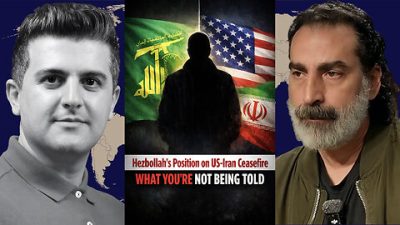
Laith Marouf: Hezbollah’s position on US-Iran ceasefire
or go to
Aletho News Archives – Video-Images
From the Archives
The Dirty Little Secret behind the “Global Terrorism Index”
The Omission of Israeli Terrorism in the Occupied Palestinian Territories
By Karin Brothers | Global Research | December 6, 2014
… The Israeli settlements — all of which are illegal – have been identified as a major impediment to peace. The refusal of a major “global” terrorism report to name the Israeli settlers as one of the groups most responsible for terrorism not only misrepresents a major source of regional violence but exposes the Global Terrorism Index as a propaganda tool that supports a U.S. agenda.
In recent years, governments have been attempting to thwart terrorism by blocking supportive fund-raising. When it comes to Israeli settlements, however, the US and Canada actually encourage fund-raising by giving organizations (such as Christian Friends of Israeli Communities (CFOIC) and the Jewish National Fund) financial support in the form of donor tax-deductions.
Charities which provide funds for the Israeli settlements should be regarded as terror-financing organizations. They should not only lose their tax-deductible status, but they should be banned because they support the violation of international humanitarian law. The terror-financing laws that are being strictly enforced for Muslim charities should be applied to Christian and Jewish charities as well. … Read full article
Blog Roll
 Aletho News
- Trump Administration Moves To Automate U.S. Military Draft Registration
- Spain orders reopening of Tehran embassy, condemns Israel’s carpet bombing of Lebanon
- Israel faces ‘unsustainable’ strategic crisis following 40-day war against Iran: Analyst
- Iran restricts Hormuz access to 15 vessels per day under ceasefire terms: Report
- The ‘Opposition Party’ Has Done Nothing to Stop the Iran War and Much to Goad Trump Into Continuing It
- Moscow backs Tehran on status of Lebanon in US-Iran deal
- How UK Regulator Ofcom Quietly Bypassed International Law to Police American Speech
- The Black Cube Files: How Former Mossad Operatives Flipped a Nation
- Laith Marouf: Hezbollah’s position on US-Iran ceasefire: What you’re not being told
- Israel’s priority lies in destroying chances of peace between Iran, US: Ex-UN nuclear chief
- If Americans Knew
- The gallows law: Israel moves toward executing Palestinian children
- Tucker Carlson: The Path to Peace requires ending ‘special alliance’ with Israel
- This is ceasefire? Israel’s biggest massacre yet in Lebanon, another journalist killed in Gaza – Daily Update
- Tucker Carlson on Israel: This Is the Behavior of an Ally? Really?
- Gazans face a triple crisis: severe shortages of water and bread, healthcare in tatters
- NY Times reports how Netanyahu took the US into Iran War
- A sigh of relief over Iran, but Gaza and Lebanon in dire straits – Daily Update
- Thousands dead and neighborhoods razed to the ground: Aid agencies fear southern Lebanon is becoming the new Gaza
- The war the US is fighting for Israel could cost trillions
- ‘Cigarette Burns, Nail Wounds’: Toddler Tortured in Gaza to Coerce Father
- No Tricks Zone
- An Inconvenient Tree: Uncovered In Alps… Europe Much Warmer Than Today 6000 Years Ago
- New Study Reports A 60% Slowdown In Greenland’s Ice Loss Rate In The Last Decade
- Low Intensity Tornado Wrecks Major Solar Farm, Creating A Potential Toxic Dump
- New Study Finds Warming Saves Lives…Cold Temperatures 12 Times More Deadly Than Excess Heat
- German Science Blog Accuses PIK Climate Institute Of Hallucinating Climate Tipping Points
- Devastating Assessment Of Comirnaty Vaccine By Former Senior Pfizer Europe Toxicologist
- New Study: CO2 Is ‘Effectively Negligible’ As An Explanatory Climate Change Factor Since 2000
- Former Pfizer Toxicologist Dr. Helmut Sterz Tells Bundestag Hearing Pfizer Vaccine Should Have Never Been Approved
- Energy Expert: Germany’s Nuclear Phaseout Was A “500 Billion Euro Mistake”
- New Research: South Australia’s Mid-Holocene Sea Surface Temperatures Were 4°C Warmer Than Today
 Aletho News