The Beginning of the End of Data Retention
By Eddan Katz | Electronic Frontier Foundation | March 10, 2010
Last week, the German Constitutional Court issued a much-anticipated decision, striking down its data retention law as violating human rights. It was an important victory for Europe’s Freedom Not Fear movement, which was formed to oppose the EU Data Retention Directive. But it was also a reminder of the political work which remains to be done to defeat it.
When the European Union first passed the Data Retention Directive in 2006, despite a hard-fought campaign by European activists, it seemed like the beginning of the end for Internet privacy. The directive sought to require telecommunications service providers operating in Europe to retain a detailed history of each of their customers’ activity for up to 2 years for possible use by law enforcement; including phone calls made and emails sent and received.
The response from European citizens was swift and outraged. Under the banner of Freedom Not Fear, mass protests were held in cities all across Europe and beyond. The charge was led by the German Working Group on Data Retention (AK Vorrat), which in 2007 filed a class-action lawsuit of nearly 35,000 people challenging the German law.
The suit’s complaints were mostly upheld by last week’s German Constitutional Court decision. The court held that the blanket data retention mandated by the EU directive violated Article 10 of the German Constitution, which guarantees the basic right to private life and correspondence. The Court said that an infrastructure of exploratory surveillance results in an exceptional intensity of interference with human rights, which must be proportionately protected with appropriate safeguards. It also significantly narrowed the options for similar EU retention laws on other types of data. The court ordered the immediate deletion of all the data stored since the law went into effect in 2008 and ordered the suspension of data collection until a revised national law is proposed.
However, the court did choose to leave many important questions about the EU directive unanswered. In highlighting the need for increased safeguards, the court failed to recognize that the storage of data itself is what violates human rights. For instance, a survey of German citizens in 2008 found that 1 in 2 people would not have conversations with counselors or therapists by phone or email because of their concern about data retention.
A bolder stance was taken in October 2009 by the Romanian Constitutional Court, which ruled that the EU directive fundamentally violated Article 8 of the European Convention on Human Rights, which guarantees the right to respect for private life and correspondence. Data retention itself, the court wrote, is “likely to overturn the presumption of innocence and to transform a priori all users of electronic communication services or public communication networks into people suspected of committing terrorism crimes or other serious crimes.” As a result, all citizens would become “permanent subjects to this intrusion into their exercise of their private rights to correspondence and freedom of expression.”
The rulings in Romania and now Germany set the stage for an imminent series of decisions on the status of national data retention laws across Europe. The recent Bulgarian vote on data retention legislation met with sharp criticism and protests. Petitions against the Belgian data retention law are available in both French and Flemish. The constitutional challenge against the Retention of Data Bill brought by Digital Rights Ireland may be referred to the European Court of Human Rights. In the meantime, despite the fact that the European Commission won its lawsuit against the government of Sweden for failing to implement the directive, the minimal penalty turns out to be worth the political risk.
In order to overturn a directive, the European Commission, Parliament, and Council have to agree. Viviane Reding, the incoming European Commissioner for Justice, Fundamental Rights, and Citizenship, declared at her confirmation hearings her dedication to defending the right to privacy. The members of the European Parliament, inaugurating their new term, flexed their political muscle when they recently rejected assenting to the SWIFT agreement that would have enabled the wholesale transfer of Europeans’ financial data to the US. The European Council, representing the ministries of the individual Member States, will respond to the political climate in their home countries.
All in all, the threats to privacy and free speech posed by the Data Retention Directive are on their way to being nullified. In Germany, AK Vorrat launched its campaign against the new law being devised and set its sights on ending data retention on the European level. They will need the help of citizens across Europe to raise awareness and speak out for their rights on national levels.
Freedom Not Fear is planning another series of protests later this year – stay tuned to Deeplinks or sign up for FNF’s mailing list to find out what is being planned near you.
The Dark Face of Jewish Nationalism

By Dr. Alan Sabrosky | March 10, 2010
Israeli prime minister Binyamin Netanyahu once remarked to a Likud gathering that “Israel is not like other countries.” Oddly enough for him, that time he was telling the truth, and nowhere is that more evident than with Jewish nationalism, whether or not one pins the “Zionist” label on it.
Nationalism in most countries and cultures can have both positive and negative aspects, unifying a people and sometimes leading them against their neighbors. Extremism can emerge, and often has, at least in part in almost every nationalist/independence movement I can recall (e.g., the French nationalist movement had The Terror, Kenya’s had the Mau Mau, etc.).
But whereas extremism in other nationalist movements is an aberration, extremism in Jewish nationalism is the norm, pitting Zionist Jews (secular or observant) against the goyim (everyone else), who are either possible predator or certain prey, if not both sequentially. This does not mean that all Jews or all Israelis feel and act this way, by any means. But it does mean that Israel today is what it cannot avoid being, and what it would be under any electable government (a point I’ll develop in another article).
The differences between Jewish nationalism (Zionism) and that of other countries and cultures here I think are fourfold:
1. Zionism is a real witches’ brew of xenophobia, racism, ultra-nationalism, and militarism that places it way outside of a “mere” nationalist context — for example, when I was in Ireland (both parts) I saw no indication whatsoever that the PIRAs or anyone else pressing for a united Ireland had a shred of design on shoving Protestants into camps or out of the country, although there may well have been a handful who thought that way — and goes far beyond the misery for others professed by the Nazis;
2. Zionism undermines civic loyalty among its adherents in other countries in a way that other nationalist movements (and even ultra-nationalist movements like Nazism) did not — e.g., a large majority of American Jews, including those who are not openly dual citizens, espouse a form of political bigamy called “dual loyalty” (to Israel & the US) that is every bit as dishonest as marital bigamy, attempts to finesse the precedence they give to Israel over the US (lots of Rahm Emanuels out there who served in the IDF but NOT in the US armed forces), and has absolutely no parallel in the sense of national or cultural identity espoused by any other definable ethnic or racial group in America — even the Nazi Bund in the US disappeared once Germany and the US went to war, with almost all of its members volunteering for the US armed forces;
3. The “enemy” of normal nationalist movements is the occupying power and perhaps its allies, and once independence is achieved, normal relations with the occupying power are truly the norm, but for Zionism almost everyone out there is an actual or potential enemy, differing only in proximity and placement on its very long list of enemies (which is now America’s target list); and
4. Almost all nationalist movements (including the irredentist and secessionist variants) intend to create an independent state from a population in place or to reunite a separated people (like the Sudeten Germans in the 1930s) — it is very rare for it to include the wholesale displacement of another indigenous population, which is far more common of successful colonialist movements as in the US — and perhaps a reason why most Americans wouldn’t care too much about what the Israelis are doing to the Palestinians even if they DID know about it, is because that is no different than what Europeans in North America did to the Indians/Native Americans here in a longer & more low-tech fashion.
The implications of this for Middle East peace prospects, and for other countries in thrall to their domestic Jewish lobbies or not, are chilling. The Book of Deuteronomy come to life in a state with a nuclear arsenal would be enough to give pause to anyone not bought or bribed into submission — which these days encompasses the US Government, given Israel’s affinity for throwing crap into the face of the Obama administration and Obama’s visible affinity for accepting it with a smile, Bibi Netanyahu’s own “Uncle Tom” come to Washington.
The late General Moshe Dayan, who — Zionist or not — remains an honored part of my own Pantheon of military heroes, allegedly observed that Israel’s security depended on its being viewed by others as a mad dog. He may have been correct. But he neglected to note that the preferred response of everyone else is to kill that mad dog before it can decide to go berserk and bite. It is an option worth considering.
Alan Sabrosky (Ph.D, University of Michigan) is a ten-year US Marine Corps veteran and a graduate of the US Army War College. He can be contacted at docbrosk@comcast.net
Homes and livelihoods gone in an instant
Eva Bartlett writing from the occupied Gaza Strip, Live from Palestine, 11 March 2010
 |
Israeli bulldozers destroyed three homes and 17 dunams of agricultural land in eastern Khan Younis on 18 February. |
Radia Abu Sbaih, 47, lives with her sister and one niece on family land roughly 700 meters from the “green line” boundary between Israel and Gaza. Until 18 February 2010, they had nearly 600 olive, fruit, date and nut trees, an agricultural cistern, a water well, various vegetables and a house.
Theirs was one of three homes demolished by Israeli military bulldozers that day in al-Mossadar, eastern Gaza. Around 8am that morning, approximately five Israeli military bulldozers and upwards of 10 Israeli tanks, accompanied by more than 50 foot soldiers, invaded the farming region, according to locals.
“We were in our home when we heard the Israeli tanks and bulldozers approaching. We ran off immediately,” says Sbaih.
She walks over felled trees, past the bulldozed cistern, and to the ruins of their home.
“It’s all destroyed. Look, our clothes are buried,” she shouts, pulling at a sweater caught beneath the concrete block pile.
Household belongings are strewn on top of and beneath the pyramid of rubble. A gas range, several cooking pots, a plastic water bottle filled with olives, another with olive oil — both from their land and their destroyed olive trees — denote where the kitchen once stood.
 |
Radia Abu Sbaih on her land after it was destroyed by Israeli military bulldozers.
|
“We were self-sufficient. Twenty people lived off this land. We had our own water source and we grew all our own vegetables: onions, spinach, carrots, cucumbers, tomatoes, potatoes, radishes, beans …” Nothing, save a stray sprig of green onion, remains.
Beyond the lean-to sun shade, a donkey stands next to the crushed remnants of his cart.
“Now we have no electricity, no shelter, no water. I walk one hour both ways every day to bring jugs of water for drinking,” says Sbaih.
But for her, it is the loss of their trees that hits the hardest. In the hour or less it took the bulldozers to raze all their property and possessions, Radia Sbaih’s trees were cut to the ground and plowed into the valley. Haggard limbs studding the earth and thick ground-level stumps are all the evidence of the 10 dunams (a dunam is the equivalent of 1,000 square meters) of formerly thick growth.
“They were healthy trees, many over 50 years old. And so many fruit trees: guava, orange, lemon, pomegranate, date, almond, sugar cane, cactus fruit …” recalls Sbaih.
“This was our life, we grew up here, we put our sweat, love and everything we had into the land,” she says. “We watched the trees mature and cared for them as though they were family.”
Sbaih’s niece feeds trampled olive branches to kindle a smoky fire for tea. An Israeli warplane thunders over and Sbaih comments, “It’s normal, they’re always over us.” The roar is accompanied by the continual whine of Israeli “drones” (unmanned aerial vehicles) patrolling the skies.
“We actually didn’t have any problems during the war,” Sbaih says, recalling the winter 2008-2009 Israeli massacres on Gaza. “But now we are destroyed. If it rains, where will we go? We have no shelter, not even a tent.”
As the tea boils, the rain starts to fall.
Sbaih’s words and losses are echoed by the two other families half a kilometer south.
Moin Abu Said, 32, stands beside the fresh ruins of his home roughly 600 meters from the border. His father Ali, 63, sprawls on a blanket spread nearby on churned earth.
“I’ve got three children. When the bulldozers and tanks came, I was taking my son Nassim to school, around 7:30am. I heard the noise of the invasion even from the school.”
Abu Said returned to find the house that he had worked eight years to build completely flattened.
“We only lived in it one month,” he says in disbelief.
He points out the wreckage of a chicken barn, home to 1,000 chickens, the stubs of olive, date and lemon trees.
Like most in the border region, this is not the first time Abu Said’s land has been razed.
“Ten years ago they bulldozed everything, but we replanted. Now it’s all gone again.”
Aouni Abu Said, Moin’s brother, still has a home. Shot-up by Israeli machine-gun fire, the nearby one-level house somehow escaped the bulldozers. But his family was caught in the attack, terrified.
“My wife and kids were in kitchen when the Israelis began shooting at our house,” he says, pointing out the lattice of bullet holes in the kitchen windows and walls, children’s bedroom and nursery.
“The area was filled with Israeli tanks, bulldozers and soldiers from morning till around 4:30pm,” he says.
Closer to the border fence, but still 450 meters away, Abdel Hai Abu Said, 40, his wife and their six children sit with his father near the A-frame wreckage of their two-story home.
 |
Two of Abdel Hani Abu Said’s children sit on the ruins of their home. |
Five dunams of olive and date trees were mowed, along with 150 pigeons and a donkey.
“[The donkey] was in a concrete shelter when the bulldozers attacked,” he explains, pointing out the carcass in the treeless field.
One room of the house remains partially intact, ceiling corners sloped at 45 degree angles and walls punctured by bullet holes and cracks. The cramped, dust- and rubble-filled room serves as their shelter at night, despite the dangling clumps of concrete and the threat that the house might completely collapse.
A plastic bag keeps the surviving items of clothing protected, another the pieces of bread.
“We lived in this house for 11 years,” Said says. “Upstairs there were three bedrooms for my wife and our children. My father and aunt slept downstairs.”
Salem Abu Said, Abdel Hai’s father, was born 1943 in Beerseeba, before the 1948 ethnic cleansing of historic Palestine by the nascent Israeli military.
“First I was expelled from my land, and now our house is destroyed. Once again, I have to start all over.”
All the families report that the area was calm, without regular Israeli invasions, at the time of the invasion. They had a false sense of security and worked the land, lived off of it and planned their futures. In half a day this was all destroyed.
All images by Eva Bartlett.
Eva Bartlett is a Canadian human rights advocate and freelancer who arrived in Gaza in November 2008 on the third Free Gaza Movement boat. She has been volunteering with the International Solidarity Movement and documenting Israel’s ongoing attacks on Palestinians in Gaza. During Israel’s recent assault on Gaza, she and other ISM volunteers accompanied ambulances and documenting the Israeli attacks on the Gaza Strip.


Greenpeace’s Corporate Overreach
Controversial Hire is an Opportunity to Start Building a Democratic Environmental Movement
By DRU OJA JAY, Montreal – March 11, 2010
Greenpeace has come a long way since the Rainbow Warrior, the retrofitted trawler used to challenge nuclear testing and whaling, was enough of a threat that the French government dispatched commandoes to sink her in 1985.
On February 13th, Greenpeace International announced that was hiring ForestEthics founder Tzeporah Berman as director of its global climate and energy campaign. The move has provoked intense outrage among many Greenpeace supporters, staff and activists. The conflict raging within Greenpeace has the potential to be an important first step in addressing two heretofore taboo subjects in the environmental movement: the corrupting influence of corporate cash and the absence of democratic structures.
The announcement marked an acceleration of a long-term drift away from Greenpeace’s origins in direct action environmental and anti-war work. Back in 2007, Greenpeace lauded Coca-Cola for its “commitment to use climate-friendly coolers and vending machines.” (The same year, campaigns against Coke’s complicity in paramilitary assassination of union leaders in Colombia were in full swing, while a year earlier, the government of Kerala had banned Coca-Cola after a revolt over overuse and pollution of groundwater.)
If the Coke deal was Greenpeace testing the waters of corporate collaboration, hiring Berman is Greenpeace jumping in.
The hire marks a full-circle return for Berman, who rose to prominence within Greenpeace but left in 2000 to found ForestEthics, where she broke new ground in the “collaborative approach” to conservation. According to Berman’s ethos, “the notion of activists vs. corporations, of good vs. evil, no longer applies… It’s about creating dialogue, and finding the solutions that will be mutually beneficial to all.”
While heading up ForestEthics, Berman undertook a series of collaborations with companies like Home Depot, Dell, Staples and most recently General Electric. Immediately before being hired by Greenpeace, Berman headed PowerUp Canada, an initiative funded mostly by the Tides and Ivey Foundations that pushed the privatization of British Columbia’s rivers in the name of green energy. She has since backed away from the fruits of her efforts, claiming she does not support the privatization of “all” rivers in BC.
Grassroots environmentalists in Canada were furious at Berman long before she took the Greenpeace job, starting with the elimination of public oversight during her stint as lead negotiator of the Great Bear Rainforest deal. (In the deal that was finally signed, only 32 per cent of the rainforest was protected.)
Berman’s return to Greenpeace as it approaches its 40th year of existence has stoked the ire of the organization’s supporters to white-hot levels.
In an email that has made the rounds of Canadian environmental lists, Greenpeace International co-founder Rex Weyler called Berman’s hire “an all-out betrayal of environmentalism, of the groups and activists who built the environmental movement in Canada and in the world, and a betrayal of the Earth itself.”
70 people have signed a statement calling on Greenpeace to rescind Berman’s hire and “renounce collaboration and partnership with destructive corporations”.
Greenpeace staffers and activists in Canada — where Berman is well-known, and where Greenpeace has a high-profile anti-tar sands campaign underway — have privately expressed a mix of bafflement and rage at the decision.
One anonymous “Greenpeace activist or staff” remarked in testimony posted to http://www.SaveGreenpeace.org: “Greenpeace actually started the Kyoto Plus campaign to battle Power Up, the organization that Tzeporah started. And now they’re hiring her. The hypocrisy blows my mind. It’s astonishing. It’s like they just hired the devil. No one will take us seriously… with decisions like this.”
Greenpeace’s decision comes at a point when questions about Environmental organizations lack of democracy or accountability, and their corresponding closeness with corporations involved in environmental destruction, are looming larger than ever.
A recent report in The Nation ends with a 30-year veteran of the Natural Resources Defense Council (NRDC) stating outright: “We’re close to a civil war in the environmental movement. For too long, all the oxygen in the room has been sucked out by this beast of these insider groups, who achieve almost nothing…. We need to create new organizations that represent the fundamentals of environmentalism and have real goals.”
The report, whose author was subsequently interviewed on Democracy Now!, raises issues that are echoed in the anonymous testimonies of disgruntled Greenpeacers. Phrases like “disenfranchised,” “no consultation,” “no transparency,” “more concerned with getting a ‘seat at the table,'” point repeatedly to the same pair of problems: addiction to corporate and foundation cash and a total lack of democracy.
While the debate rages inside Greenpeace, early reports seem to indicate that many on the inside are channeling their frustration at the lack of consultation and their own disempowerment into rage against the small number of people willing to publicly oppose the Berman hire and discuss her record.
The frustration is understandable, but if the goal is a strong, democratic environmental movement, there are much better targets for their rage.
The overreach of Greenpeace’s turn towards corporate collaboration and the ensuing grassroots backlash affords the rarest of moments: an opportunity to articulate and push for demands that normally bounce harmlessly off of the bureaucratic carapace of big organizations like Greenpeace.
It’s an opportunity to demand an end to corporate collaboration, but it’s also an opportunity to demand democratic accountability to a supporting membership that is there because of the organization’s forty years of direct action. Small-scale financial supporters, volunteer activists and staff alike have no formal say in Greenpeace’s strategic direction. Nearly all of their complaints emanate from the frustration created by that contradiction.
At a moment where tensions are at their highest, the irony of an NRDC functionary describing “civil war” and calling for “new organizations that represent the fundamentals of environmentalism and have real goals” while Greenpeacers seethe, lash out at those pointing to Berman’s record, or quit, should not be lost on anyone.
Greenpeace International’s head office has raised the stakes. If the resistance to Berman’s hire is broken, the descent of the organization will be far swifter than the Coked-up years leading to its fortieth birthday. If the resistance continues to grow and spreads to supporters of other unaccountable, corporate-partnered big greens, then we’ll win with Greenpeace or without it.
If Greenpeace’s transformation into another public relations contractor for corporations and foundations is allowed to continue, everyone loses.
Corporate collaboration will never do more than slightly curtail environmental destruction. In many cases, the results of collaboration have been disastrous. The only things that can stop it are organizations rooted in communities and grassroots movements that are immune to “leaders” selling them out for money and ego.
If that’s what folks working with and supporting Greenpeace want, they won’t get a better shot at it than this one.
Tzeporah Berman is slated to start work in April.
Dru Oja Jay is co-author of the report Offsetting Resistance: The effects of foundation funding from the Great Bear Rainforest to the Athabasca River. He is a member of the editorial collective of the Dominion, and lives in Montreal.
The Obama administration asked for the East Jerusalem fiasco
By Yossi Sarid | Haaretz | March 11, 2010
Don’t believe Benjamin Netanyahu for one moment when he says he “never knew.” The Jerusalem planning committee is only too aware of what the bosses want, and the government has decided to step up construction in greater Jerusalem. Dispossession and taking possession, kicking out and moving in – that’s what it’s all about.
Over the years, a streamlined and generously lubricated machine has evolved, one that makes it possible to take solace in the building of Jerusalem (in the phrase used to console mourners) and to take pride – but also to take cover – behind a facade of disingenuousness and disowning. Yesterday, it was convenient to disown.
No pretext is more dismal than “bad timing.” Ehud Barak immediately put out a press release about the “harmful timing of the publication.” As if there were a proper time for provocations. If the announcement of the 1,600 planned housing units had come before Joe Biden’s trip, they would have said it was aimed at sabotaging the visit, and if it happened after he left, they would have said Biden himself was in on the secret.
But with Barak, that willing slave-minister of Netanyahu’s, everything’s cool, but if only they had kept that call for bids confidential, if only they built apartments in some dark secluded hideaway, like the Western Wall tunnel.
Don’t believe for a moment that they never knew: The chaos works like clockwork. The detonation mechanism is activated remotely and a safety range is carefully observed. It will always be possible to make procedural claims – “it’s a technical matter” or “the political echelon wasn’t involved” or “the timing was purely coincidental” or “three years of deliberations happened to end now.” What judge hearing a case would accept “I didn’t know” as a mitigating circumstance?
This is one visit Joe Biden will not quickly forget. First he was compelled to sit through 25 minutes of an annoying speech in his honor by our president. Shimon Peres really believes that he is the destination for pilgrims from all over the world who drink in his musings and are intoxicated by his vision.
Later, Biden was given a certificate memorializing his mother, but the glass broke. Once again, Bibi didn’t pay attention, leaned on it and shattered it. No fear, his speeches have always diverted attention from such mishaps. And finally, to add a finishing touch of infuriating disgrace, the Haredi neighborhood Ramat Shlomo was dumped on the vice-presidential head.
Truth be told, the Obama administration just about asked for this slap. In Jerusalem, the lesson has been learned that the White House doesn’t fulfill its obligations – it just goes through the motions by issuing insincere rebukes. And now, they’ll begin the “proximity talks” – Orwellian for distance, which is greater than it’s been in 20 years.
If I were Rahm Emanuel, I wouldn’t advise Barack Obama to follow in his Veep’s footsteps and visit Israel soon. It’s safe to predict that on the day he’s addressing the Knesset, they’ll tell him work has begun on the Temple Mount. The first Temple was that of Solomon the Wise, the Second was that of Ezra the Scribe, and the Third of Netanyahu and Eli Yishai. Let the Temple be built, and the home of the nation will be laid waste.
The Rogue Nation
By Philip Giraldi | March 11, 2010
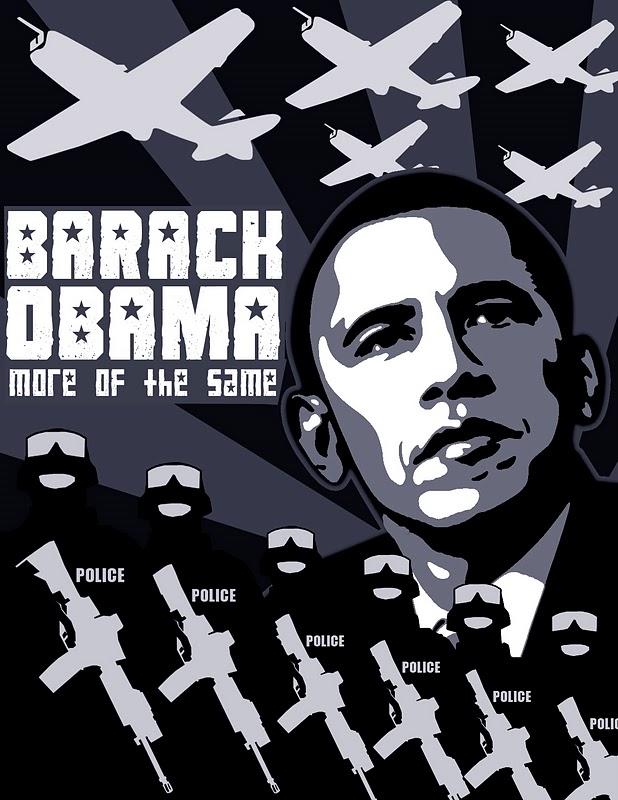 In spite of the fact that the United States faces no enemy anywhere in the world capable of opposing it on a battlefield, the Defense budget for 2011 will go up 7.1 percent from current levels. A lot of the new spending will be on drones, America’s latest contribution to western civilization, capable of surveilling large areas on the ground and delivering death from the skies. It is a peculiarly American vision of warfare, with a “pilot” sitting at a desk half a world away and pressing a button that can kill a target far below. Hygienic and mechanical, it is a bit like a video game with no messy cleanup afterward. The recently released United States Quadrennial Defense Review reports how the Pentagon will be developing a new generation of super drones that can stay airborne for long periods of time and can strike anywhere in the world and at any time to kill America’s enemies. The super drones will include some that can fly at supersonic speeds and others that will be large enough to carry nuclear weapons. Some of the new drones will be designed for the navy, able to take off from aircraft carriers and project US power to even more distant hot spots. Drones are particularly esteemed by policymakers because as they are unmanned and can fly low to the ground they can violate someone’s airspace “accidentally” without necessarily resulting in a diplomatic incident.
Washington’s embrace of drones as the weapon of choice for international assassination is one major reason why the United States has become the evil empire. Drones are the extended fist of what used to be referred to as the Bush Doctrine. Under the Bush Doctrine Washington asserted that it had a right to use its military force preemptively against anyone in the world at any time if the White House were to determine that such action might be construed as defending the United States. Vice President Dick Cheney defined the policy in percentage terms, asserting that if there was a 1% chance that any development anywhere in the world could endanger Americans, the United States government was obligated to act. It should be noted that President Barack Obama has not repudiated either the Bush doctrine or the 1% solution of Dick Cheney and has actually gone so far as to assert that America is fighting Christianity-approved “just wars,” a position disputed by Pope Benedict XVI among others. Far from eschewing war and killing, the number and intensity of drone attacks has increased under Obama, as has the number of civilian casualties, referred to by the splendid bloodless euphemism “collateral damage.”
Drones are currently killing people in Afghanistan, Pakistan, Yemen, and Somalia. It should be noted that the United States is not at war with any of those countries, which should mean in a sane world that the killing is illegal under both international law and the US Constitution. America’s Founding Fathers used constitutional restraints to make it difficult for Americans to go to war, requiring an act of war by Congress. Unfortunately it has not worked out that way. The US has been involved in almost constant warfare since the Second World War but the most recent actual declaration of war was on December 8, 1941. And then there are the special and clandestine operations that span the globe. Apart from Israel, no other country in the world has an openly declared policy of going around and killing people. One would think that the international community would consequently regard both Tel Aviv and Washington as pariahs, but fear of offending the world’s only super power and its principal client state has aborted most criticism. Most nations are resigned to letting assassination teams and hellfire armed drones operate as they please. If Iran were operating the drones and bumping off its enemies in places like Dubai you can be sure the reaction would be quite different.
And it doesn’t stop there. Obama’s Attorney General Eric Holder has effectively blocked any inquiry into the use of torture by US government officials, mostly from the CIA. The Administration claims to have stopped the practice but has declared that no one will be punished for obeying orders to waterboard prisoners, an argument that was not acceptable at the Nuremberg trials in 1946 and should not be acceptable now. The United States is a signatory to the international agreement on torture and there are also both federal and state laws that prohibit either carrying out or enabling the practice, so the ruling by Holder is essentially a decision to ignore serious crimes that were committed against individuals who, in many cases, were both helpless and completely innocent. It also ignores the participation of Justice Department lawyers and CIA doctors in the process, involvement that most would consider both immoral and unethical. Worst of all, it lets off the hook the real war criminals, people like George Tenet and those in the White House who approved the practice. Tenet, one recalls, received the Presidential Medal of Freedom and a $4 million book deal. He still teaches at Georgetown University. Justice Department lawyers John Yoo and Jay Bybee, who made the legal arguments for torture are now respectively a tenured professor at Berkeley and a federal appeals court justice. One assumes that the actual CIA torturers continue to be employed by the federal government or are enjoying a comfortable retirement. So much for accountability for war crimes under President Obama.
Finally there is assassination. On February 3rd Director of National Intelligence Dennis Blair commented during a congressional briefing that the United States reserves the right to kill American citizens overseas who are actively “involved” with groups regarded as terrorist. Involvement is, of course, a very slippery expression providing maximum latitude for those seeking to make a case for summary execution. The death list involves a due process of sorts in that a government official makes the decision who shall be on it based on guidelines but it does not allow the accused to challenge or dispute evidence. It should also be noted that no one in Congress objected to the Blair statement and the media hardly reported the story, suggesting that tolerance of illegal and immoral activity now pervades the system. As former Reagan Deputy Attorney General Bruce Fein has commented, the claimed authority to suspend one’s constitutional rights overseas can be extended to anyone in the United States by declaring one an enemy combatant under the terms of the Military Commissions Act. Jose Padilla was denied his constitutional rights to a fair trial even though he was an American citizen and was arrested in Chicago, not overseas. Can we anticipate extrajudicial killing of American citizens in America as part of the war on terror? Of course we can.
Three strikes and you’re out, Mr. Obama. Your government stands for preemptive killing and missile strikes on people living in countries with which America is not at war, lets torturers and torture enablers go free, and has asserted the right to assassinate its own citizens anywhere in the world based on secret evidence. Ronald Reagan once described his vision of America as a shining city on a hill. Over the past ten years the shining city has become the ultimate rogue nation, pumped up with power and hubris in spite of the clearly visible signs of decline and moving inexorably towards a catastrophic fall.
CIA tainted French bread with LSD for test
Press TV – March 11, 2010
 After 50 years of suspicions over the cursed bread of the French village of Pont-Saint-Esprit and its people’s hallucinations, a journalist found CIA in the background of the tragedy.
In summer 1951, the whole quiet village of Pont-Saint-Esprit in southern France was suddenly and mysteriously affected by psychosis and hallucinations among its residents.
The out break of acute psychotic episodes and various physical symptoms killed at least seven residents, and admitted about 50 to asylums. The mysterious incident left hundreds of people afflicted.
Hank Albarelli, an investigative journalist, has claimed hallucination occurred for a covert experiment directed by the CIA and the US Army’s top-secret Special Operations Division (SOD) at Fort Detrick, Maryland.
He traced the alimentary intoxication to cursed bread. Albarelli discovered the US had poisoned the bread with Lysergic Acid Diethylamide (LSD) as part of a secret experiment.
The journalist came across CIA documents while investigating the suspicious suicide of Frank Olson, a biochemist working for SOD. He fell from a 13th floor window two years after the cursed bread incident.
Albarelli published the result of his investigations in a book titled A Terrible Mistake: The Murder of Frank Olson and the CIA’s Secret Cold War Experiments in 2009.
Gaza war injured still lack prosthetics
IRIN – 10/03/2010
 Imad Ghanem, 21, a cameraman for the Hamas-allied Al-Aqsa TV, lies on a bed
at Ash-Shifa Hospital in Gaza City, 9 July 2007. [MaanImages/Hatem Omar]

Gaza City – A half-finished two-story building in central Gaza City is one of the few places providing support to amputees, most of them civilian victims of the Israeli-Palestinian conflict, as they try and come to terms with their injuries.
Ten patients were waiting to see Dr Hazem Ash-Shawwa, the director of the Artificial Limb and Polio Centre, when IRIN visited. Mostly young, they had been caught in the violence of Israel’s 23-day assault on Gaza at the end of 2008 and beginning of 2009, and were still learning to use their new prosthetic limbs.
“We have 250 new amputees following the Israeli war to add to the 5,000 cases we had before the war,” said Ash-Shawwa. “Some of the injured from the Gaza war are still having problems with their amputated limbs as they were not treated properly at the time due to the hectic situation; initial treatments focused on saving lives.”
A new upper floor extension to the center is under construction, reflecting the demand for its services, but a lack of funds has delayed work.
In the center’s ground-floor training room, 15-year-old Jamila Al-Habbash took a firm grip on the parallel bars and shuffled forward. She lost both her legs in a missile strike by an unmanned Israeli drone as she played on the roof of her home in eastern Gaza City; her sister and cousin were killed in the blast.
Mohamed Ziada, one of five specialists at the center, said Jamila was making good progress since her artificial legs were fitted in December, and may soon not need her crutches. He pointed out that treating teenagers was expensive as they quickly outgrow their prosthetics and need numerous re-fittings.
‘Worse than a nightmare’
Fifteen-year-old Ghassan Mattar also lost his legs when an Israeli missile hit his home in eastern Gaza City on 5 January 2009, an incident documented by the Palestinian Centre for Human Rights (PCHR). “I still can’t believe I’ve lost my legs. It’s worse than a nightmare,” he told IRIN.
The only rehabilitation hospital with the capacity to treat amputee patients effectively is the Al-Wafaa Rehabilitation Centre in northern Gaza. Ghassan should have been sent there directly but the hospital was hit by artillery fire during Israel’s Gaza incursion, and its wards were evacuated, according to PCHR.
Ghassan was able to leave Gaza for Egypt and received six months of treatment at the Palestine Hospital in Cairo. However, back in Gaza he found his artificial legs were giving him problems as they did not fit properly so he visited the artificial limb center and got a better fitting pair.
A below-the-knee prosthetic costs about US $800 at the center. An above-the-knee limb is twice as much, and an arm costs $1,200. Although seemingly expensive, Ziada told IRIN it was a fraction of the cost charged in other countries.
Imports interrupted
The problem facing the center is that a blockade of the Gaza Strip by Israel since June 2007 has interrupted imports of both prosthetic limbs – mainly from Germany – and the raw materials with which to make them.
“We use hundreds of different parts, plastics and materials to make prosthetic arms and legs. Without even just one of the materials, the limb cannot be made,” Ziada said.
It takes about 30 hours to manufacture a limb when all the parts are available. “The Red Cross helps the centre to mediate between us and the Israelis to let materials cross, which takes about three months,” Ziada added.
Prosthetics specialists from other countries who had tried to come and train Gazan doctors had been denied entry into Gaza, according to Ziada. “We need at least another five specialists because of the large number of amputees from the Gaza war.”
The center is assisted by the UN agency for Palestinian refugees (UNRWA) and NGOs Handicap International and Islamic Relief.
Israel says the aim of its 27 December 2008 – 18 January 2009 incursion was to destroy the military infrastructure of Hamas, the ruling party in Gaza, and to prevent the firing of rockets into Israel. According to the PCHR, 5,303 Palestinians were injured in the conflict.
This item comes to you via IRIN, the humanitarian news and analysis service of the UN Office for the Coordination of Humanitarian Affairs. The views expressed are the author’s alone.
US drone attacks kill 14 in NW Pakistan
Press TV – March 10, 2010

Two US drone attacks on Pakistan’s North Waziristan tribal region have killed at least 14 people and injured a number of others.
Eight people were killed when a drone fired five missiles at a vehicle in Mizar Madakhel village, Pakistani intelligence officials confirmed on Wednesday.
The second drone fired three missiles at villagers recovering bodies from the site of the first attack killing six others, Press TV correspondent reported. Several Pakistanis were also wounded in the strikes.
The US carried out numerous such attacks on Pakistan’s tribal areas last year killing hundreds of people – mostly civilians.
Washington claims the strikes target pro-Taliban militants. Islamabad has repeatedly condemned the attacks, saying they violate Pakistan’s sovereignty.
Earlier in March, a Washington-based think-tank reported that US drone attacks have killed over 1200 people in Pakistan over the past six years.
Obama Acts Like Reagan 1981, the Union-Buster

By Glen Ford | March 9, 2010
President Obama’s endorsement of the firing of the entire faculty and staff of a Rhode Island public school is reminiscent of Ronald Reagan’s crushing of the air traffic controllers union, nearly three decades ago. Back then, President Reagan made an example of a union that had supported his presidential candidacy, and ultimately decertifying the union when it went on strike. The move sent a signal to the bosses in all sectors of the U.S. economy: the president – the U.S. government – is on management’s side, and unions are a considered a threat to the general economic welfare.
Last week, President Obama sent the same kind of signal to teachers unions, when he cited the Central Falls, Rhode Island, school shutdown as an example of the “accountability” he is demanding of poorly performing schools – which invariably means poor, non-white schools. Teachers union leaders appeared to be shocked by Obama’s language and tone – but they shouldn’t have been. The Rhode Island mass firing was not substantively different than the wholesale sacking of teachers and abrogation of their union contracts elsewhere in the country. The fundamental logic of Obama’s so-called Race to the Top program – a multi-billion dollar competition to show which states are most willing to fire teachers, shut down classrooms and replace them with charter schools – is to break the teachers union. If the teachers want to save their union, their dignity, their contracts, and the institution of public education, they will have to break with Obama. Because he is going after them with a hatchet – just like Reagan went after the air traffic controllers, despite their having supported his 1980 candidacy.
Obama’s hatchet man and basketball buddy is Education Secretary Arne Duncan, who envisions waves of school closings, teacher firings and charter school openings for the next “five or six years.” That sounds like a kind of “final solution” for teachers unions – and for public education.
Obama’s plans for America’s classrooms are even more aggressive than George Bush’s policies. Obama takes Bush’s No Child Left Behind scheme to its logical, blood on the floor conclusion: corporate education without the encumbrances of organized teachers. Obama’s anti-union vision is more ambitious than that of the old arch-reactionary, Ronald Reagan, who destroyed a union of only 13,000 members. The American Federation of Teachers and the National Education Association have combined memberships of over 4 million. They have the capacity to fight back, to make this president back off. But, like so many others who drank the Obama Kool Aid, they are in denial, refusing to believe that they backed a union-buster who is making teachers the scapegoat for America’s historical failure to serve the educational needs of all its children.
Private teacher training outfits are turning out young and hungry replacements for todays teachers, anticipating a huge turnover in public schools as Obama swings his hatchet. Teachers need to revolt against this administration while they still have a union to fight for them.
Glen Ford can be contacted at Glen.Ford@BlackAgendaReport.com
Death to Obamacare!

“But we have to pass the bill so that you can find out what is in it, away from the fog of the controversy.”
– Nancy Pelosi
Kill Bill
By DAVE LINDORFF | March 10, 2010
When Obama came to my neighborhood this week to press for public support for his health “reform” bill, he wasn’t just greeted by teaparty hecklers. Speaking to a large group of mostly supportive students and local residents at Arcadia University in Glenside, the president at one point mentioned that “people on the left” want “single-payer.” But before he could add that that approach wasn’t going to happen, he found himself drowned out by cheers calling for Medicare for all and single-payer.
That kind of says it all.
I’m with Marcia Angell, editor of the New England Journal of Medicine. The Obama plan for health care “reform”, as well as the two versions passed by the House and the Senate, are all devious disasters that do nothing to solve the nation’s burgeoning health care crisis, and in fact, will make it worse.
The only thing to do at this point is to take the whole stinking pile of paper and put it in the compost heap. Kill it.
This whole effort was never about reform from the day last March when the new president called on Congress to begin deliberations on health care reform. It was about catering to the wishes of the big players in the Medical Industrial Complex–the big pharmaceutical multinationals, the hospital companies, the physicians and, most of all, the insurance industry. People and their health care needs had little or nothing to do with this.
That’s why we’ve ended up with proposals that would do nothing to control costs, that would force healthy young people to buy unregulated, high-cost and high-profit plans that would be money in the bank for the insurance industry, and that would finance any subsidies for the poor by cutting back on benefits for the only group of Americans who currently have a form of single-payer insurance–the elderly with their Medicare.
President Obama began this whole obscene nightmare with a lie, when he said that even though single-payer systems clearly work to open access to all and keep costs down while providing better overall health results in places like Canada and some European countries, they cannot be applied in America “because that would mean starting over from scratch.” He knew when he said it that this was a lie. America already has a well-run and successful single-payer healthcare program in place that is bigger than the entire Canadian health care system, and that’s Medicare, which was established in 1965, and which currently finances the care of 45 million Americans. You just have to be 65 or disabled to be eligible for it.
As Dr. Angell pointed out on a recent Bill Moyers Journal segment, the simplest way to solve America’s health care crisis would be to just start a gradual expansion of Medicare, say by lowering the age of coverage to 55, and then 45, and then 35, until everyone was covered and the insurance industry was pushed out of the health sector. The right-wing couldn’t use their scare tactics about a “government takeover of your medical care,” because the elderly love Medicare, and besides, far from “inserting a government bureaucrat between you and your doctor,” Medicare gives the elderly a freer choice of physician and treatment than any but the most gold-plated private insurance executive health care plan.
Obama continued this lie when he claimed, in his last mention of the issue during his State of the Union address to Congress, that he and Congress had considered every idea. In fact, he and Congress have for the last year, carefully prevented any consideration of the idea of single-payer, or of expanding Medicare to cover every American. Bills that would do that, authored by Rep. John Conyers (D-MI) in the House and Sen. Bernie Sanders (I-VT) in the Senate, were in fact blocked from hearings or votes in both Houses by Democratic leaders, at the White House’s urging, while the White House itself barred single-payer advocates from any of its discussions.
Instead the president met behind closed doors with the lobbyists of the various health care industries, to cut deals with each sector in order to gain their support for his “reform” plan. It was as if the Department of Justice had called meetings with the various crime families of the Cosa Nostra in order to cut deals before developing a plan to “tackle” the Mafia.
The plan being proposed to “reform” health care–actually they long ago stopped calling it health care reform, acknowledging that this was never even contemplated, and started instead referring to what is being contemplated as health insurance reform–is, we are told, going to cost about $100 billion a year. That wouldn’t be bad if what we got in return was universal health care, but we don’t even get that. Instead we have a measure that will reduce access to health care for the middle class by taxing benefits and encouraging higher deductibles, that will force the poor, the young and the self-employed to buy terrible, over-priced plans offering minimal coverage, that will chip away at the coverage provided to the elderly, and that will ultimately lead to higher costs for everyone, and that will still leave nearly 20 million people with no coverage. The US currently devotes 17.5 percent of Gross Domestic Product to health care, and if this “reform” in any of its guises is passed, that share of the economy devoted to health care will quickly rise past 20 percent, with no end in sight.
This is madness. Expanding Medicare to cover everyone, as I have written earlier, would actually save everyone money immediately, and the country as a whole. Consider that the most expensive consumers of health care–the elderly–are already in the system. Adding younger, healthier people to Medicare would cost incrementally much less. That’s why the Canadians spend about 9 percent of their GDP on healthcare, while covering every Canadian, while we spend nearly twice as much and leave 47 million of our citizens uninsured and unable to visit a doctor. How could it be cheaper to add everyone to Medicare? Expanding Medicare to cover everyone would probably cost somewhere between $800 billion and $1 trillion a year. That sounds like a lot of money, until you consider that we already spend $100 billion a year to care for veterans through the Veterans Administration, and $400 billion a year to care for the poor through Medicaid. We also spend $300 billion a year subsidizing hospitals that have to provide “free” charity care to the poor who don’t qualify for Medicaid, too. Since all those people would be covered by Medicare under Medicare-for-All, that’s $800 billion a year in current expenditures saved right there.
So even if my higher figure of $1 trillion for adding everyone to Medicare were correct, we’d only be talking about an extra $200 billion annual expense. And that could be covered by increasing the Medicare tax paid as a payroll deduction. You don’t want to pay more taxes? Well wait. If you were covered by Medicare, you and your employer would no longer have to pay for private insurance, which would mean a savings to workers of thousands of dollars a year, and even more to employers who currently pay the majority of health insurance premiums for employees. The net savings would be enormous.
Nobody has talked about this.
Universal Medicare would make American companies more competitive in the global marketplace, where other companies are not responsible for health care costs of their workers. It would make Americans wealthier, because they would no longer be paying for health care out of their own pockets. It would make everyone more secure, because they would no longer have to fear losing access to health care if they lost their job, and would eliminate most bankruptcies, which are reportedly caused by medical bills.
So we know what needs to be done.
And we know that the current “reforms” on offer don’t do it.
So Dr. Angell is right. Obamacare needs to die.
There is reason to hope that it will die. Republicans oppose it, though not for any decent reason. They want unregulated private insurance and unlimited profits for health care industries. Ditto some conservative Democrats, who are also anti-government ideologues whose wallets are stuffed with health industry swag. But their reasons for opposing the health bill don’t matter. All that is needed is for a few progressive members of the House and Senate to admit that the health bills being considered are not reform, but the antithesis of reform, and to also vote against it, and Obamacare will be dead.
At that point we can start seriously demanding that the Congress and the President act to bring us real health reform in the way that really works: expanding Medicare to cover everyone.
AIPAC seeks ‘crippling’ sanctions against Iran
Middle East Online | March 10, 2010
WASHINGTON – Powerful pro-Israel US lobby group AIPAC, in a rare letter to every member of the US Congress, called Tuesday for “crippling new sanctions on Iran” over Tehran’s suspect nuclear program.
“Iran has pursued a nuclear weapons capability… the United States must take action now,” it said.
The American Israel Public Affairs Committee also pressed Congress to look into why companies that do business with Iran’s energy sector have never been punished under a 1996 US law aimed at discouraging such investments.
In the letter, signed by executive director Howard Kohr and president David Victor, AIPAC expressed “outrage” over a recent New York Times report charging that Washington gave billions of dollars to firms that do business in Iran.
They called on lawmakers to enact “without delay” legislation that would punish firms engaged in Tehran’s energy sector or that provide technology to Tehran by denying them US government contracts.
AIPAC urged the Congress to “demand” that President Barack Obama’s administration “enforce existing sanctions law and impose crippling new sanctions on Iran.”
“In addition to these actions, we hope you will join with us in urging the administration to impose tough new multilateral sanctions with like-minded states without delay while continuing to pursue the widest possible sanctions through the UN Security Council,” it said.
The letter came as US lawmakers stepped up calls for new sanctions on Iran ahead of November US mid-term elections.
But the US faces an uphill battle in its bid to forge consensus in the UN Security Council for new, tougher sanctions on Iran, diplomats say.
Israeli, US military leaders discuss using ‘force’
Israel’s UN Ambassador Gabriela Shalev said Tuesday that prospects were poor for adoption by the 15-member council of “crippling” punitive measures against Iran.
“The chances now seem grim regarding sanctions that will be crippling,” Shalev told reporters, in large part because veto-wielding council members Russia and China, appear reluctant to back a new round of tough sanctions proposed by Washington.
“The Chinese and the Russians still hope that diplomacy will work. They do not want to inflict any harm on the Iranian people,” she added.
Adoption of a resolution requires at least nine votes from the council and no veto from its five permanent members: Britain, China, France, Russia and the United States.
As with previous resolutions, they fully expect to tone down their sanctions to make them more palatable to China, Russia and other council members concerned about the impact tough penalties might have on the Iranian people.
Diplomats here say a new sanctions resolution was still being negotiated in capitals by the six powers — the five permanent council members plus Germany — engaged in the nuclear bargaining with Tehran.
Shalev said that if the council was unable to agree on strong sanctions, then Israel “will look to the countries themselves” to slap additional bilateral sanctions. She was referring to the United States and members of the European Union.
On Monday, Israeli Vice Prime Minister Silvan Shalom said that it was time for the Security Council to impose “crippling” sanctions on Iran..
Shalev said the world was edging closer to “two bad options”: Iran continuing to race towards nuclear capacity or Tehran being stopped only “by force.”
She said the second possibility was currently being discussed by senior US and Israeli political and military leaders, but declined to provide further details.
Diplomats said Brazil, Turkey and Lebanon, three non-permanent members of the Council, also have misgivings about new sanctions and may abstain in a vote.
Iran insists it has the right to develop nuclear technology, which it says is aimed at generating energy for its growing population which is already dependant on importing 40% of its gasoline needs.
Iran also cites the need to develop nuclear technology for medical purposes to treat its cancer patients.
Israel is the only country in the Middle East that actually has nuclear weapons.
Featured Video

Marandi: Threat of Seizing Kharg Island & the Use of Nuclear Weapons
or go to
Aletho News Archives – Video-Images
Frlom the Archives
Provoking a Path to Persia
The Saban Center’s prescient paper on war with Iran
By Maidhc Ó Cathail | October 20, 2011
In June 2009, the Saban Center for Middle East Policy published “Which Path to Persia?—Options for a New American Strategy toward Iran.” Writing in a tone strikingly reminiscent of the Project for a New American Century’s infamous pre-9/11 paper “Rebuilding America’s Defenses,” the six co-authors noted that, “It seems highly unlikely that the United States would mount an invasion without any provocation or other buildup.” For a think tank specifically established by media mogul Haim Saban to protect Israel, this could prove to be a formidable obstacle impeding their desired march—of U.S. troops—to Tehran.
“In fact, if the United States were to decide that to garner greater international support, galvanize U.S. domestic support, and/or provide a legal justification for an invasion, it would be best to wait for an Iranian provocation, then the time frame for an invasion might stretch out indefinitely,” Saban’s think-tankers ruefully observed.
“With only one real exception, since the 1978 revolution, the Islamic Republic has never willingly provoked an American military response, although it certainly has taken actions that could have done so if Washington had been looking for a fight. Thus it is not impossible that Tehran might take some action that would justify an American invasion. And it is certainly the case that if Washington sought such a provocation, it could take actions that might make it more likely that Tehran would do so (although being too obvious about this could nullify the provocation). However, since it would be up to Iran to make the provocative move, which Iran has been wary of doing most times in the past, the United States would never know for sure when it would get the requisite Iranian provocation. In fact, it might never come at all.”
Seemingly undeterred by Iran’s frustrating unwillingness to provide the requisite provocation, the analysts continued to examine this option… continue
Blog Roll
 Aletho News
- Ukrainian Embassy in Beirut sheltering top Mossad agent
- Palestinian family displaced after settlers violently attack them in Humsa, Jordan Valley
- The EU never learns – except for the wrong lessons
- Iran attacks on UAE leaves RSF militia high and dry
- Hosting Washington’s war: Bahrain faces the consequences
- The US fell for its own Iran propaganda
- Seyed M. Marandi: Threat of Seizing Kharg Island & the Use of Nuclear Weapons
- Is there even an off ramp?
- Michael von der Schulenburg: Europe’s Self-Defeating Iran War Policy
- Sorry, The New Republic, Climate Change Isn’t Causing Somali Migration. Blame Civil Strife and Poverty.
- If Americans Knew
- ‘Of Course’: IDF Drops Case Against Soldiers Accused of Raping Palestinian Prisoner
- Don’t Fall for the Regime Change Talk. Israel Is ‘Mowing the Lawn’ in Iran
- Will Israel and the US wreck the Gulf States along with Iran?
- US so far burned through ‘years’ of munitions in Iran war: Report
- How the Israeli Tail Wags the American Dog
- Outdated intel likely led to deadly U.S. strike on Iranian elementary school, sources say
- Pentagon insider says high U.S official Douglas Feith reported to Netanyahu
- In fond memory of Walid Khalidi, the historian of Palestine
- 6 more Americans killed, as Israel ‘mows the lawn’ in Iran – Not a ceasefire Day 154
- Are we on the precipice of World War III?
- No Tricks Zone
- New Studies: UK Sea Levels Were 4 Meters Higher Than Today During The Mid-Holocene
- Destructive Green New Deal: German Energy And Metal Group Warns Of Drastic Crisis
- New Study Documents A 20-Year Pause In Arctic Sea Ice Decline – Driven By Internal Variability
- Wake-up Call: Survey Shows Majority Of Germans Now Favor Postponing Climate Targets!
- Televised! Leading German Political Candidate Tells Schoolchildren CO2 Makes Sun Hotter!
- New Study: A Century Warming Of 1.1°C Is ‘Commonplace’ And ‘Not Unusual’ During This Interglacial
- New Study: ‘Internal Noise’ And Volcanic Forcing Can Trigger 10-15°C Warming Within Decades
- Glaciers Worldwide Are Suddendly Surging, Experts Blame Warming!
- Surprising Discovery: Sahara Is Greening…Billions Of Trees Where Once Thought To Be Barren
- New Research Reaffirms Clouds, Aerosols, And Surface Solar Radiation Are ‘Driving The Climate System’
 Aletho News