Genetic Engineering Has Failed to Significantly Boost U.S. Crop Yields Despite Biotech Industry Claims
Increases over last decade largely due to traditional breeding and conventional agricultural improvements
Union of Concerned Scientists | April 14, 2009
For years, the biotechnology industry has trumpeted that it will feed the world, promising that its genetically engineered crops will produce higher yields.
That promise has proven to be empty, according to a new report by the Union of Concerned Scientists (UCS). Despite 20 years of research and 13 years of commercialization, genetic engineering has failed to significantly increase U.S. crop yields.
“The biotech industry has spent billions on research and public relations hype, but genetically engineered food and feed crops haven’t enabled American farmers to grow significantly more crops per acre of land,” said Doug Gurian-Sherman, a biologist in the UCS Food and Environment Program and author of the report. “In comparison, traditional breeding continues to deliver better results.”
The report, “Failure to Yield: Evaluating the Performance of Genetically Engineered Crops,” is the first to closely evaluate the overall effect genetic engineering has had on crop yields in relation to other agricultural technologies. It reviewed two dozen academic studies of corn and soybeans, the two primary genetically engineered food and feed crops grown in the United States. Based on those studies, the UCS report concluded that genetically engineering herbicide-tolerant soybeans and herbicide-tolerant corn has not increased yields. Insect-resistant corn, meanwhile, has improved yields only marginally. The increase in yields for both crops over the last 13 years, the report found, was largely due to traditional breeding or improvements in agricultural practices.
The UCS report comes at a time when food price spikes and localized shortages worldwide have prompted calls to boost agricultural productivity, or yield—the amount of a crop produced per unit of land over a specified amount of time. Biotechnology companies maintain that genetic engineering is essential to meeting this goal. Monsanto, for example, is currently running an advertising campaign warning of an exploding world population and claiming that its “advanced seeds … significantly increase crop yields….” The UCS report debunks that claim, concluding that genetic engineering is unlikely to play a significant role in increasing food production in the foreseeable future.
The biotechnology industry has been promising better yields since the mid-1990s, but “Failure to Yield” documents that the industry has been carrying out gene field trials to increase yields for 20 years without significant results.
“After more than 3,000 field trials, only two types of engineered genes are in widespread use, and they haven’t helped raise the ceiling on potential yields,” said Margaret Mellon, a microbiologist and director of UCS’s Food and Environment Program. “This record does not inspire confidence in the future of the technology.”
“Failure to Yield” makes a critical distinction between potential—or intrinsic—yield and operational yield, concepts that are often conflated by the industry and misunderstood by others. Intrinsic yield refers to a crop’s ultimate production potential under the best possible conditions. Operational yield refers to production levels after losses due to pests, drought and other environmental factors.
The study reviewed the intrinsic and operational yield achievements of the three most common genetically altered food and feed crops in the United States: herbicide-tolerant soybeans, herbicide-tolerant corn and insect-resistant corn (known as Bt corn, after the bacterium Bacillus thuringiensis, whose genes enable the corn to resist several kinds of insects).
Herbicide-tolerant soybeans, herbicide-tolerant corn and Bt corn have failed to increase intrinsic yields, the report found. Herbicide-tolerant soybeans and herbicide-tolerant corn also have failed to increase operational yields, compared with conventional methods.
Meanwhile, the report found that Bt corn likely provides a marginal operational yield advantage of 3 to 4 percent over typical conventional practices. Since Bt corn became commercially available in 1996, its yield advantage averages out to a 0.2 to 0.3 percent yield increase per year. To put that figure in context, overall U.S. corn yields over the last several decades have annually averaged an increase of approximately 1 percent, which is considerably more than what Bt traits have provided.
In addition to evaluating genetic engineering’s record, “Failure to Yield” considers the technology’s potential role in increasing food production over the next few decades. The report does not discount the possibility of genetic engineering eventually contributing to increase crop yields. It does, however, suggest that it makes little sense to support genetic engineering at the expense of technologies that have proven to substantially increase yields, especially in many developing countries. In addition, recent studies have shown that organic and similar farming methods that minimize the use of pesticides and synthetic fertilizers can more than double crop yields at little cost to poor farmers in such developing regions as Sub-Saharan Africa.
The report recommends that the U.S. Department of Agriculture, state agricultural agencies, and universities increase research and development for proven approaches to boost crop yields. Those approaches should include modern conventional plant breeding methods, sustainable and organic farming, and other sophisticated farming practices that do not require farmers to pay significant upfront costs. The report also recommends that U.S. food aid organizations make these more promising and affordable alternatives available to farmers in developing countries.
Reasoning Against Peace
Too Heavy a Price for Israeli Elites?
By JONATHAN COOK | Counterpunch | September 28, 2010
With the resumption of settlement construction in the West Bank yesterday, Israel’s powerful settler movement hopes that it has scuttled peace talks with the Palestinians.
It would be misleading, however, to assume that the only major obstacle to the success of the negotiations is the right-wing political ideology the settler movement represents. Equally important are deeply entrenched economic interests shared across Israeli society.
These interests took root more than six decades ago with Israel’s establishment and have flourished at an ever-accelerating pace since Israel occupied the West Bank and Gaza Strip after the 1967 war.
Even many Israeli Jews living within the recognised borders of Israel privately acknowledge that they are the beneficiaries of the seizure of another people’s lands, homes, businesses and bank accounts in 1948. Most Israelis profit directly from the continuing dispossession of millions of Palestinian refugees.
Israeli officials assume that the international community will bear the burden of restitution for the refugees. The problem for Israel’s Jewish population is that the refugees now living in exile were not the only ones dispossessed.
The fifth of Israel’s citizens who are Palestinian but survived the expulsions of 1948 found themselves either transformed into internally displaced people or the victims of a later land-nationalisation programme that stripped them of their ancestral property.
Even if Mahmoud Abbas, the Palestinian president, signed away the rights of the refugees, he would have no power to do the same for Israel’s Palestinian citizens, the so-called Israeli Arabs. Peace, as many Israelis understand, would open a Pandora’s box of historic land claims from Palestinian citizens at the expense of Israel’s Jewish citizens.
But the threat to the economic privileges of Israeli Jews would not end with a reckoning over the injustices caused by the state’s creation. The occupation of the Palestinian territories after 1967 spawned many other powerful economic interests opposed to peace.
The most visible constituency are the settlers, who have benefited hugely from government subsidies and tax breaks designed to encourage Israelis to relocate to the West Bank. Peace Now estimates that such benefits alone are worth more than $550 million a year.
Far from being a fringe element, the half a million settlers constitute nearly a tenth of Israel’s Jewish population and include such prominent figures as foreign minister Avigdor Lieberman.
Hundreds of businesses serving the settlers are booming in the 60 per cent of the West Bank, the so-called Area C, that falls under Israel’s full control. The real estate and construction industries, in particular, benefit from cut-price land — and increased profits — made available by theft from Palestinian owners.
Other businesses, meanwhile, have moved into Israel’s West Bank industrial zones, benefiting from cheap Palestinian labour and from discounted land, tax perks and lax enforcement of environmental protections.
Much of the tourism industry also depends on Israel’s hold over the holy sites located in occupied East Jerusalem.
This web of interests depends on what Akiva Eldar, of the Haaretz newspaper, terms “land-laundering” overseen by government ministries, state institutions and Zionist organisations. These murky transactions create ample opportunities for corruption that have become a staple for Israel’s rich and powerful, including, it seems, its prime ministers.
But the benefits of occupation are not restricted to the civilian population. The most potent pressure group in Israel — the military — has much to lose from a peace agreement, too.
The ranks of Israel’s career soldiers, and associated security services such as the Shin Bet secret police, have ballooned during the occupation.
The demands of controlling another people around the clock justifies huge budgets, the latest weaponry (much of it paid for by the United States) and the creation of a powerful class of military bureaucrat.
While teenage conscripts do the dangerous jobs, the army’s senior ranks retire in their early forties on full pensions, with lengthy second careers ahead in business or politics. Many also go on to profit from the burgeoning “homeland security” industries in which Israel excels. Small specialist companies led by former generals offer a home to retired soldiers drawing on years of experience running the occupation.
Those who spent their service in the West Bank and Gaza Strip quickly learn how to apply and refine new technologies for surveillance, crowd control and urban warfare that find ready markets overseas. In 2006 Israel’s defence exports reached $3.4bn, making the country the fourth largest arms dealer in the world.
These groups fear that a peace agreement and Palestinian statehood would turn Israel overnight into an insignificant Middle Eastern state, one that would soon be starved of its enormous US subsidies. In addition, Israel would be forced to right a historic wrong and redirect the region’s plundered resources, including its land and water, back to Palestinians, depriving Jews of their established entitlements.
A cost-benefit calculus suggests to most Israeli Jews — including the prime minister, Benjamin Netanyahu — that a real solution to their conflict with the Palestinians might come at too heavy a price to their own pockets.
Jonathan Cook is a writer and journalist based in Nazareth, Israel. His latest book is “Israel and the Clash of Civilisations: Iraq, Iran and the Plan to Remake the Middle East” (Pluto Press). His website is www.jkcook.net.
Europe Offers Tax Benefits for Illegal Settlements
By David Cronin | IPS | September 28, 2010
BRUSSELS – Organisations raising funds to benefit the Israeli army and illegal settlements in the West Bank enjoy tax-exempt status in Europe, an IPS investigation has shown.
The Sar-El Foundation is one of several groups working in the Netherlands dedicated to supporting the Israel Defence Forces. It organises regular visits to Israel, where Dutch volunteers spend three-week periods training with the IDF.
Max Arpels Lezer, the foundation’s Amsterdam-based chairman, said that he tries to encourage volunteers to work in Israeli hospitals but if “that is not possible they can do civilian work on military bases.”
He has previously stated that while the volunteers do not become soldiers, “they help in the battle against the Palestinians.” But he would not comment when asked why he wishes to assist the Israeli army, given that a United Nations inquiry led by retired South African judge Richard Goldstone found that its troops committed war crimes during a three-week offensive against Gaza in 2008-2009.
“I don’t wish to answer the question,” he said. “We don’t talk about politics. Our organisation is a non-political organisation.”
Under Dutch law, foundations such as Sar-El are exempt from tax, and individuals giving money to them can deduct the donations from their income tax.
A similar group Collectieve Israël Action (Collective Action Israel) collects about eight million euros (11 million dollars) per year, according to its website. Among the projects it assists are training for Israeli soldiers, particularly on the applications of advanced technology. The CIA’s board of advisers includes Doron Livnat, director of Riwal, a supplier of cranes used in the construction of the massive wall that Israel has built in the West Bank. That wall was found to be illegal in a 2004 opinion issued by the International Court of Justice in The Hague.
The Nachamoe Foundation, meanwhile, raises money for the upkeep of Israeli families. The foundation has admitted that some of the families live on Israeli settlements between Jerusalem and Bethlehem.These settlements violate international law; the 1949 Fourth Geneva Convention forbids an occupying power from transferring part of its own civilian population into the land it is occupying.
Some groups in the Netherlands have categorised support for the IDF as “humanitarian aid”. Visie voor Israël (Vision for Israel) encourages its sympathisers to give donations that will be used to buy gifts such as backpacks for Israeli soldiers. A newsletter from the organisation says that the quantity of gifts provided has increased substantially since the Israeli army’s offensive against Gaza over the past two years.
Shuva is one of several Christian Zionist organisations working in the Netherlands viewing the foundation of Israel and the occupation of the West Bank and Gaza as the fulfilment of a Biblical prophecy. According to one of its 2009 newsletters, it has financed a school in Nofei Nechemia, an extension (frequently termed an “illegal outpost” by Israeli newspapers) of the Israeli settlement of Ariel the West Bank. Shuva has stated too that it helps hundreds of settlers establish themselves in four Israeli communities in the West Bank every year.
A spokesman for the Dutch inland revenue service said that the country’s tax rules do not contain any clauses relating to breaches of international law. He said that Dutch legislation allows non-profit organisations to apply for tax exemptions based on their stated goals. “At any given moment, the Dutch tax authorities may decide to revoke this favoured status” after examining the activities of those benefiting from it, he added. But the spokesman said he was unable to speak about the status enjoyed by any particular organisation.
Ghada Zeidan from United Civilians for Peace, a Palestinian solidarity group in the Netherlands, said it is “very difficult” to convince the authorities that they should take action against fundraising by pro-Israel organisations. “The problem is that there is a kind of culture of acceptance of it,” she added.
Earlier this year a campaign was launched in Britain to have the Jewish National Fund (JNF) stripped of its status as a charity. While the JNF presents itself as an ecologically minded body that plants trees in Israel, it has actively supported violence against Palestinians for many decades. One of its leading figures Yosef Weitz explicitly advocated in 1940 — eight years before the state of Israel was founded — that Palestinians should be forced out of Palestine. More recently, the JNF has concentrated much of its energies on settling Jews in the Negev, a process that has involved the uprooting of indigenous Bedouins, often by the destruction of their homes.
The latest accounts made public by the JNF in London say that its total income for 2008 amounted to 7.7 million pounds (12.2 million dollars). Another priority for the fund has been to help the Benji Hillman Foundation; set up in memory of a soldier killed when Israel attacked Lebanon in 2006, it offers accommodation to young people who travel from abroad to join the Israeli army.
A spokesman for the British revenue authority said he could not say if any investigations have been undertaken into the JNF’s activities.
The International Solidarity Movement (ISM) — one of the organisations monitoring the JNF’s work — is seeking a probe into whether fundraisers for foreign armies can be considered charities under British law. Matthew Richardson, an ISM activist, noted that the JNF has powerful allies — David Cameron, the British Prime Minister — has agreed to be one of its patrons; so too did his predecessors Gordon Brown and Tony Blair. Richardson added: “The JNF is very embedded within the (pro-Israel) lobby and the political elite as a whole.”
Review: Norwegian doctors’ “Eyes in Gaza”
Review by Raymond Deane, The Electronic Intifada, 27 September 2010
Eyes in Gaza is a detailed and harrowing account by the Norwegian doctors Mads Gilbert and Erik Fosse of their experiences in al-Shifa Hospital during Israel’s deadly assault on Gaza in December 2008-January 2009. For a time, they were not just the only western doctors in Gaza, but the only western witnesses to what they repeatedly call Israel’s “massacre” of some 1,400 Palestinian men, women and children. Hence the book’s title, bearing witness to their status as witnesses.
At noon on New Year’s Eve 2008, four days after the start of Israel’s onslaught, Gilbert and Fosse entered Gaza from Egypt. On the morning of 10 January 2010, with Israel’s campaign still having a week to run, they returned to Egypt and were replaced by another Norwegian medical team. During the intervening period they assisted their Palestinian colleagues — whose “historic heroism” (112) they praise unstintingly — in performing an average of twenty operations daily on the civilian victims of Israel’s orgy of shooting and bombing. In the absence of western media they also acted as reporters (“white voices” — 121-122), giving ten to fifteen interviews daily.
These doctors make no claim to neutrality; they are political activists, committed to advocating Palestinian rights and to condemning western complicity with Israel’s crimes. “We are doctors, but we do not want to be only doctors,” Gilbert asserts proudly (306).
Not surprisingly, it is this aspect of their activities in Gaza that proved most controversial, causing FOX News to describe Gilbert, shamefully, as “[t]he Hamas propaganda doctor” (123), simply because he described the horrors he witnessed rather than keeping quiet about them. Mordantly, Gilbert asks whether there “[s]hould not then be a limit to the number of times that members of the international press who were not let into Gaza allow themselves to be bussed by Israeli press officers to places just north of the border in Israel where Palestinian rockets had landed, on the whole resulting in holes in the ground?” (130).
In their foreword (jointly written, whereas otherwise they contribute separate chapters on a roughly 50/50 basis) they spell out their refusal to hide behind the “smokescreen” of conventional language that is “laid down over power relationships and political realities.” Thus the West Bank and Gaza are “Palestine” or “occupied Palestine,” “settlements” are “colonies” and “settlers” are “occupiers,” the “Israeli Defense Forces (IDF)” are “the Israeli military forces,” “terrorists” (invariably Palestinian, of course, in western discourse) are “combatants,” and so forth (16-17).
Despite the authors’ relaxed style which sometimes — particularly in rather stilted stretches of dialogue — seems modeled on popular fiction, this book is not an easy read. There are many vivid descriptions of grisly wounds, sometimes caused by illegal munitions such as Dense Inert Metal Explosive (DIME, 85-7, 118, 140) or white phosphorus (284), and forensic accounts of surgical instruments the very names of which make this reviewer queasy. Furthermore, on almost every second page there are photographs of victims, sometimes during or immediately after surgery.
Ultimately, of course, this meticulous documentation contributes both to the authenticity and to the grinding power of the book. Take the account of “[a]n eight-year-old girl wearing a pink jersey … being treated for a wound on her head.” In the absence of a chair, she is treated standing up, “squashed up against the wall” as is “[t]he doctor who was cleaning her wound …”
Fosse ponders: “What could she be thinking? She was probably terrified. She knew that she had survived this attack, but that she could be hit again. There were no safe havens in Gaza … The family had sought refuge in the UN school, and she had been playing with the other children … when the tank shells hit. What sort of fear and psychological damage does that cause to an eight year old?” (149-150).
This is moving stuff, but its effect is enhanced indescribably by a photograph on the following page showing precisely the scene that has just been described, pink jersey and all.
Reflecting on the possible motives of an Israeli soldier who shot a 53-year-old Palestinian woman in the back “as she was being escorted … to the waiting ambulance which was due to evacuate her to a place of safety,” and speculating on the prospects “for her and for her family’s lifelong rehabilitation,” Gilbert concludes that only “an unequivocal international trial where the responsible political leaders can be held to account for the war crimes in Gaza” will give the wounds a chance to heal (217-8). For, in the words of a Palestinian doctor, “[w]e don’t have 5,400 injured. We have one and a half million injured. Everyone in Gaza is traumatized.”
According to one commentator writing on a site that claims to examine the “anti-Semitism and the anti-Israel lobby in Norway,” the effect of Eyes in Gaza “is to instill in the heart of the reader not only the firm conviction that [Operation] Cast Lead was unjustifiable, but a passionate dedication to the Palestinian cause and a vehement disgust with Israel. In this the authors succeed extremely well” (““Eyes in Gaza” – the politics of emotion,” Norway, Israel and the jews blog, 22 December 2009)
A rave review, you might think. In fact this is a quotation from one of many pieces of venomous defamation to which the two doctors have been subjected since the publication of the book in Norway last year. Within a perspective that sees Israel’s crimes as virtues, the authors’ very success is deemed reprehensible.
Another example comes from Ricki Hollander writing for CAMERA, the self-styled “Committee for Accuracy in Middle East Reporting in America” which, like most such organizations, aims at the exact opposite of what it announces. In an article called “Norwegian Doctors in Gaza: Objective Observers or Partisan Propagandists?” Hollander tells us that the doctors “entered Gaza … ostensibly to provide medical assistance to Palestinians at Shifa Hospital.”
That “ostensibly” says it all, but Hollander goes on to claim that “Gilbert is a radical Marxist” and “Fosse’s passion to work on behalf of Palestinians was sparked by his time in Lebanon” (during Israel’s murderous assault on that country in 1982), therefore “[g]iven the partisan … perspective they represent, Fosse’s and Gilbert’s testimony must be weighed with extreme caution” (“Norwegian Doctors in Gaza: Objective Observers or Partisan Propagandists?,” 6 January 2009)
Since Eyes in Gaza was written, this testimony has been massively supported by the findings of the UN’s Goldstone Commission. Given that the outburst of very public vilification of Gilbert and Fosse may well have helped their book become a massive best-seller in Norway, one can only hope that the vituperation that will inevitably follow its publication in the Anglosphere will achieve similar blowback.
This is a book that deserves to be widely read. It should be force-fed to those who believe that Israel’s army is “the most moral army in the world,” and to all those western politicians who facilitate the ongoing martyrdom of the Palestinian people.
Raymond Deane is an Irish composer and political activist.
UN Fact-Finding Mission Says Israelis “Executed” US Citizen Furkan Dogan
By Gareth Porter | t r u t h o u t | 27 September 2010
The report of the fact-finding mission of the Office of the United Nations High Commissioner for Human Rights (OHCHR) on the Israeli attack on the Gaza flotilla released last week shows conclusively, for the first time, that US citizen Furkan Dogan and five Turkish citizens were murdered execution-style by Israeli commandos.
The report reveals that Dogan, the 19-year-old US citizen of Turkish descent, was filming with a small video camera on the top deck of the Mavi Marmara when he was shot twice in the head, once in the back and in the left leg and foot and that he was shot in the face at point blank range while lying on the ground.
The report says Dogan had apparently been “lying on the deck in a conscious or semi-conscious, state for some time” before being shot in his face.
The forensic evidence that establishes that fact is “tattooing around the wound in his face,” indicating that the shot was “delivered at point blank range.” The report describes the forensic evidence as showing that “the trajectory of the wound, from bottom to top, together with a vital abrasion to the left shoulder that could be consistent with the bullet exit point, is compatible with the shot being received while he was lying on the ground on his back.”
Based on both “forensic and firearm evidence,” the fact-finding panel concluded that Dogan’s killing and that of five Turkish citizens by the Israeli troops on the Mavi Marmari May 31 “can be characterized as extra-legal, arbitrary and summary executions.” (See Report [.pdf] Page 38, Section 170)
The report confirmed what the Obama administration already knew from the autopsy report on Dogan, but the administration has remained silent about the killing of Dogan, which could be an extremely difficult political problem for the administration in its relations with Israel.
The Turkish government gave the autopsy report on Dogan to the US Embassy in July and it was then passed on to the Department of Justice, according to a US government source who spoke on condition of anonymity because of the administration’s policy of silence on the matter. The source said the purpose of obtaining the report was to determine whether an investigation of the killing by the Justice Department (DOJ) was appropriate.
Asked by this writer whether the DOJ had received the autopsy report on Dogan, DOJ spokesperson Laura Sweeney refused to comment.
The administration has not volunteered any comment on the fact-finding mission report and was not asked to do so by any news organization. In response to a query from Truthout, a State Department official, who could not speak on the record, read a statement that did not explicitly acknowledge the report’s conclusion about the Israeli executions.
The statement said the fact-finding mission’s report’s “tone and conclusions are unbalanced.” It went on to state, “We urge that this report not be used for actions that could disrupt direct negotiations between Israel and Palestine that are now underway or actions that would make it not possible for Israel and Turkey to move beyond the recent strains in their traditional strong relationship.”
Although the report’s revelations and conclusions about the killing of Dogan and the five other victims were widely reported in the Turkish media last week, not a single story on the report has appeared in US news media.
The administration has made it clear through its inaction and its explicit public posture that it has no intention of pressing the issue of the murder of a US citizen in cold blood by Israeli commandos.
On June 13, two weeks after the Mavi Marmara attack, White House Press Secretary Robert Gibbs issued a statement saying that Israel “should be allowed to undertake an investigation into events that involve its national security” and that Israel’s military justice system “meets international standards and is capable of conducting a serious and credible investigation.”
Another passenger whom forensic evidence shows was killed execution-style, according to the OHCHR report, is Ibrahim Bilgen, a 60-year-old Turkish citizen. Bilgen is believed by forensics experts to have been shot initially from the helicopter above the Mavi Marmara and then shot in the side of the head while lying seriously wounded.
The fact-finding mission was given forensic evidence that, after the initial shot in chest from above, Bilgen was shot in the head with a “soft baton round at such close proximity that an entire bean bag and its wadding penetrated the skull and lodged in the chest from above,” the mission concluded.
“Soft baton rounds” are supposed to be fired for nonlethal purposes at a distance and aimed only at the stomach, but are lethal when fired at the head, especially from close range.
The forensic evidence cited by the fact-finding mission on the killing of Dogan and five other passengers came from both the autopsy reports and pathology reports done by forensic personnel in Turkey and from interviews with those who wrote the reports. Experts in forensic pathology and firearms assisted the mission in interpreting that forensic evidence.
The account, provided by the OHCHR of the events on board the Mavi Marmara on its way to help break the economic siege of Gaza May 31 of this year, refutes the version of events aggressively pushed by the Israeli military and supports the testimony of passengers on board.
The report suggests that, from the beginning, Israeli policy viewed the Gaza flotilla as an opportunity to use lethal force against pro-Hamas activists. It quotes testimony by Israeli Defense Minister Ehud Barak before the Israeli government’s Turkel Committee that specific orders were given by the Israeli government “to continue intelligence tracking of the flotilla organizers with an emphasis on the possibility that amongst the passengers in the flotilla there were terror elements who would attempt to harm Israeli forces.”
The idea that the passenger list would be seeded with terrorists determined to attack Israeli defense forces appears to have been a ploy to justify treating the operation as likely to require the use of military force against the passengers.
When details of the Israeli plan to forcibly take over the ships in the flotilla were published in the Israeli press on May 30, the passengers on board the Mavi Marmara realized that the Israelis might use deadly force against them. Some leaders of the IHH (the Foundation for Human Rights and Freedoms and Humanitarian Aid), which had purchased the ships for the mission, were advocating defending the boat against the Israeli boarding attempt, whereas other passengers advocated nonviolence only.
That led to efforts to create improvised weapons from railings and other equipment on the Mavi Marmara. However, the commission concluded that there was no evidence of any firearms having being taken aboard the ship, as charged by Israel.
The report notes that the Israeli military never communicated a request by radio to inspect the cargo on board any of the ships, apparently contradicting the official justification given by the Israeli government for the military attack on the Mavi Marmara and other ships of preventing any military contraband from reaching Gaza.
According to the OHCHR report, Israeli Chief of General Staff Gabi Ashkenazi testified to the Turkel Committee August 11 that the initial rules of engagement for the operation prohibited live fire except in life-threatening situations, but that that they were later modified to target protesters “deemed to be violent” in response to the resistance by passengers.
That decision apparently followed the passengers’ successful repulsion of an Israeli effort to board the ship from Zodiac boats.
The report confirms that, from the beginning of the operation, passengers were fired on by helicopters flying above the Mavi Marmara to drop commandos on the deck.
Contrary to Israeli claims that one or more Israeli troops were wounded by firearms, the report says no medical evidence of a gunshot wound to an Israeli soldier was found.
The OHCHR report confirms accounts from passengers on the Mavi Marmara that defenders subdued roughly ten Israeli commandos, took their weapons from them and threw them in the sea, except for one weapon hidden as evidence. The Israeli soldiers were briefly sequestered below and some were treated for wounds before being released by the defenders.
The OHCHR fact-finding mission will certainly be the most objective, thorough and in-depth inquiry into the events on board the Mavi Marmara and other ships in the flotilla of the four that have been announced.
The fact-finding mission was chaired by Judge Karl T. Hudson-Phillips, Q.C., retired judge of the International Criminal Court and former attorney general of Trinidad and Tobago, and included Sir Desmond de Silva, Q.C. of the United Kingdom, former chief prosecutor of the United Nations-backed Special Court for Sierra Leone and Ms. Mary Shanthi Dairiam of Malaysia, founding member of the board of directors of the International Women’s Rights Action Watch Asia Pacific.
The mission interviewed 112 eyewitnesses to the Israeli attack in London, Geneva, Istanbul and Amman, Jordan. The Israeli government refused to cooperate with the fact-finding mission by making personnel involved in both planning and carrying out the attack available to be interviewed.
The Turkish government announced its own investigation of the Israeli attack on August 10. UN Secretary General Ban Ki-moon announced the formation of a “Panel of Inquiry” on August 2, but its mandate was much more narrowly defined. It was given the mission to “receive and review the reports of the national investigations with the view to recommending ways of avoiding similar incidents in the future.”
Related articles
- U.S./Israel Axis of Evil
- Why I Dislike Israel
- A Pattern of Abuse Against American Citizens
- Protecting Americans? President Obama’s Shameful Silence in the Face of Israel’s Murder of a Young American
- US Fails to Condemn Israel Raid on Gaza Flotilla Despite UN Findings
- Flotilla Check: Facts and Israeli Lies
- Israeli Raid Coverage
Three protests in Gaza: Israeli sniper shoots Palestinian man, leaving him in critical condition
International Solidarity Movement | September 27, 2010

A 20-year-old Palestinian man, Sliman Abu Hanza, is in a critical condition in hospital after being shot in the abdomen with a ‘dum dum’ bullet at a demonstration in Al-Faraheen, Khan Younis, on Sunday.
The injury was inflicted during one of three non-violent demonstrations which took place on Sunday; in Beit Hanoun, Maghazi and Faraheen near Khan Younis – four members of the International Solidarity Movement also attended. The explode-on-impact ‘dum-dum’ bullet which hit Abu Hanza is the same type that was shot into the leg of Ahmed Deeb, 20, during a demonstration in Nahal Oz in April this year – severing his femeral artery and killing him.
All three demonstrations occurred at locations that have seen frequent protests against the Israeli-imposed ‘buffer zone’. This large area of land, along the Gazan side of the border, makes 35% of Gaza’s arable land, inaccessible to farmers because of the dangers of Israeli fire. The devastating effects on farmers and fisherman of these additional restrictions are outlined in a recent United Nations and World Food Programme report: ‘Between the fence and a hard place’.
The protests on Sunday targeted Israel’s continuous settlement building, which is in violation of international law and is further used to annex Palestinian land, a key tactic that accompanies the relentless ethnic cleansing of Palestinian Arabs from the region. Organiser and National Committee Secretary A’tah Abu Zarqa said the rallies were organised to show Palestinians’ vehement opposition to the Israeli policies that have expropriated Palestinian land on a continuous basis since Israel was created in 1948 on the ruins of Palestinian refugees. He said that the international community should never accept Israel’s attempts to unilaterally change the geography and demography of Palestine and that in light of this, Abbas should withdraw from negotiations immediately.
At the demonstrations in the Beit Hanoun and Maghazi, although live ammunition was used by Israeli occupation forces in the latter, there were no reported injuries. The demonstration in Maghazi was the first there since three protesters were shot and injured 5 months ago, including the International Solidarity Movement activist Bianca Zammit.
In Faraheen over 200 people attended the demonstration, which began as a procession towards the border with speeches and chanting, and a large women’s group was also present. A group of young men headed towards the border fence, still on Palestinian land. Sliman and a friend Kamal, also 20, planted flags near the border fence. Kamal described what happened:
“I was with Sliman and we both put a flag near to the fence – just a flag. When the Israel Jeeps came they opened fired on us and I ran back for cover in a ditch. Suddenly I saw Sliman shot in his abdomen. It was clear it was a single shot intended to hit him. I helped carry him back over the fields with many others. He lives in the area near to the border.”
One of the major concerns for Sliman is the fact that he had to be carried over 500 metres across fields by many of the other demonstrators and then driven off in a ‘Tuk Tuk’ bike trailer to reach medical attention. This way of transporting casualties echoed the horrific scenes during the 3 week Israeli assault on Gaza over the New Year of 2009 when over 1400 people were killed including over 400 children. Because the medical services were so overwhelmed – and were often shot at when approaching the injured – many of the casualties were transported in the boots of cars or on donkey carts. A Press TV team captured the protest on film and interviewed ISM activist Adie Mormech about the shooting.
According to the Doctors at Europa hospital where he was taken, Sliman suffered extensive internal damage to his abdomen, 3 injuries to the small bowel, the left iliac vein, rectum and some intestinal damage. He has had a series of operations been given blood transfusions – the next 24 hours are crucial. Like Ahmed Deeb, the immediate threat to his life was from loss of blood sustained from his injuries. When ISM volunteers left the hospital after visiting Sliman yesterday, he was in a critical but stable condition and was about to be moved to the intensive care unit.
Sliman is another victim of the frequent attacks on civilians near to the border, many of which ended in fatalities such as the three farm workers killed in Beit Hanoun two weeks ago, and last Friday the fisherman Mohamed Bakri killed only 2 miles out at sea by an Israeli Gunship, a month before his wedding.
Besides the crippling and internationally condemned siege, Palestinian life in Gaza is littered with such tragedy, lives ended in a flicker in accordance with the whims of the Israeli sniper on duty and who he or she chooses for execution. If Sliman survives his injuries, he’s sure to join the thousands of Palestinians who must continue the rest of their imprisonment in the Gaza ghetto with permanent debilitating disabilities.
Despite this, people continue to demonstrate in large numbers across Gaza, preferring to face Israeli violence with nothing but flags and a desire to walk on their land, despite the risks that this shooting – all too common a story – exemplifies.
The Truth Will Set U.S. Free: Breaking Israel’s Stranglehold over American Foreign Policy
By maidhc Ó Cathail – Salem-News.com – September 26, 2010
If Israel’s stranglehold over U.S. foreign policy is to be broken, Americans will need to be informed about the harm that Washington’s unconditional support for the Jewish state is doing to American interests, say leading analysts of U.S.-Israeli relations.
According to John J. Mearsheimer, co-author of The Israel Lobby and US Foreign Policy, “The only plausible way to weaken the lobby’s influence on U.S. foreign policy is for prominent policymakers and opinion-makers to speak openly about the damage the special relationship is doing to the American national interest.”
“Plenty of people in the United States, especially inside the Beltway, know that Israel is an albatross around America’s neck,” says Mearsheimer, the R. Wendell Harrison Distinguished Service Professor of Political Science at the University of Chicago. “But they are afraid to stand up and say that for fear that the lobby will attack them and damage their careers.”
“Hopefully, some of them will develop a backbone,” he adds.
Philip Giraldi, executive director of the Council for the National Interest, believes that Tel Aviv’s stranglehold over Washington can be broken “only by directly challenging the power of the Israel lobby and the false narrative about how it is of value to the United States.”
Giraldi, a contributing editor to The American Conservative, says that “it must be done from the bottom up as Israel cannot be challenged in the mainstream media, Congress, and in the White House.”
“The American people must learn that Israel is and always has been a strategic liability that has done immense damage to the United States and its worldwide interests,” concludes the former CIA officer.
If there is to be an end to Israel’s decades-long “sway over Congress and intimidating presidents,” says Jeffrey Blankfort, a prominent Jewish American critic of Israel and its American lobby, “it will require appeals and actions beginning on a local level that inform the American people not so much about what Israel has done to the Palestinians but what its unregistered agents in the U.S., euphemistically described as ‘lobbyists,’ have done to destroy what little is left of American democracy and the attendant costs in flesh and blood, as well as its tax dollars.”
A long-time pro-Palestinian activist noted for his trenchant critique of Noam Chomsky, Blankfort attributes the failure of such efforts to get off the ground to “the continued unwillingness of the leading figures of the Palestinian solidarity movement in the U.S. to acknowledge the invidious power of the Zionist Lobby,” who, following Chomsky’s anti-imperialist analysis, prefer to “place the primary responsibility for Israel’s crimes and U.S. Middle East policies at Washington’s doorstep.”
“So the first steps,” Blankfort suggests, “may be to publicly challenge these figures while at the same time moving past them and addressing the American people directly.”
No American President will ever have enough latitude to resolve the conflict in Palestine “unless and until enough Americans are informed enough to make their democracy work,” according to Alan Hart, former Middle East Chief Correspondent for Britain’s Independent Television News.
“In other words,” explains Hart, who was also a BBC Panorama presenter specializing in the Middle East, “if President Obama or any of his successors is ever going to be free to confront and defeat the Zionist lobby’s stooges in Congress and the mainstream media, there has got to be created a constituency of understanding about why it is not in America’s own best interests to go on supporting Zionism’s monster child right or wrong.”
The essence of the problem, Hart argues in the three-volume American edition of his book Zionism: The Real Enemy of the Jews, is that “Americans have been conditioned, brainwashed, to believe a version of history, Zionism’s version, which is a pack of propaganda lies.”
Jeff Gates, former counsel to the U.S. Senate Committee on Finance, believes that “transparency, accountability and better design” are required to break Israel’s hold on American foreign policy.
“At present, the American public is ignorant of Israel’s all-pervasive influence. Its control includes the media-enabled deployment of fixed intelligence to induce this nation to war for Greater Israel,” says Gates, author of Guilt By Association: How Deception and Self-Deceit Took America to War.
“We will know that accountability is underway when we see federal grand juries convened to consider charges against Israel’s agents, assets and sayanim (volunteers). When a jury brings in the first verdict for treason, Americans will know that the rule of law is being restored. We will know that a solution is within sight when the many appendages of its lobby are required to register as foreign agents.”
12 Palestinians killed since the outset of direct peace talks
Palestine Information Center – 27/09/2010
GAZA/OCCUPIED JERUSALEM — Israeli occupation authorities are responsible for the deaths of 12 Palestinians since direct peace talks kicked off between Israel and the Palestinian Authority in Ramallah in early September, the Quds Press reported.
The Gaza Strip saw the majority of killings of Palestinians during the talks. Eight Palestinians were killed there against three others who were killed in Jerusalem and one in the West Bank.
Khaled al-Khatib, 35, Saleem al-Hattab, 20, of the Gaza Strip were killed early Sunday morning, Sept. 5, after Israeli night raids targeting a tunnel on Gaza’s border with Egypt.
An Israeli tank bombed an orchard in Beit Hanoun, northern Gaza Strip on Sunday Sept. 12, killing three Palestinians, including Ibrahim Abu Asad, 92, and his grandson Hassam, 17, along with another man in his twenties.
On Sept. 14, the day the second round of peace talks began in the Egyptian resort of Sharm al-Sheikh, an Israeli policeman in Tel Aviv shot and killed 22-year-old Hazem Abu al-Dab’at of Jerusalem while he was handcuffed.
Wajdi al-Qadi, 23, of Rafah city, Gaza Strip was killed Setp.15 after an Israeli warplane shelling of a tunnel on the Egyptian-Palestinian border that destroyed the tunnel and killed Qadi who was a worker inside it.
In the northern West Bank city of Tulkarem, Israeli soldiers assassinated Iyad Shilbaya, 38, a leader in the Qassam Brigades, Hamas’s armed wing, after shooting him in his bed on Sept. 17.
In occupied Jerusalem, an Israeli guard in the Silwan town shot and killed on Wednesday, Sept. 22 Samer Sarhan, 32, and injured a number of others sparking violent protests throughout the holy city.
On Friday Sept. 24, a Palestinian fisherman Mohammed Bakr, 22, from Gaza was shot down by the Israeli navy in the northern Gaza Strip town of Beit Lahiya.
A one-and-a-half-year-old infant Mohammed Abu Sarah died the same day in the Isawiya district of Jerusalem after inhaling tear gas Israeli soldiers fired at Palestinians during protests.
An element from Hamas’s armed wing Mahmoud al-Ammarein, 22, died on Sunday Sept. 26 from injuries he sustained less than two weeks back in an Israeli bombing against east Gaza Strip.
NPR ombud says Israel lobby was ’successful’ in changing coverage
By Susie Kneedler | Mondoweiss | September 27, 2010
Last week on a local call-in show on WOSU, Ohio, NPR ombudsman Alicia Shepard virtually boasted about NPR’s giving into “pro-Israeli” pressure: “NPR is not as much criticized for its Middle East coverage as it was back in 2002, which it was attacked quite strongly by a pro-Israeli group. And that group was in many ways successful, and as a result NPR went back and re-evaluated the coverage and how things are handled and started doing things a little differently….”
One collapse leads to another. I called in and thanked Shepard for her previous stance of asking that reporters describe Israeli colonies–built on stolen land–as violations of International Law, rather than use the Israeli term “disputed.” I told her, though, that reporters continue to say “disputed.” In a flip-flop, Shepard said, “The reason that it would be ‘disputed’ is that Israelis may feel that this is their land, and they got it fair and square during the war, and then the Palestinians would say, No, this land was stolen from them, –so in that sense, it’s ‘disputed’” (10:26).
The arbiter of ethical reporting violated fairness in her about-face: Donating all of Palestine to Israel—Greater Israel accomplished… . No country can legally win land “fair and square [through] war” ….“Disputed” isn’t a disinterested label, but the Israeli government’s…. Israel’s violation of International Law is crucial context listeners deserve. And Shepard herself had bragged that “rich” “context” is “NPR’s signature” of “good journalism.”
So Shepard reversed her answer to me from an April 1 call. At that time she said: “The story about Israel intending to build 1600 housing units in East Jerusalem is a big story. Susie, I’ve brought that up about: ‘Let’s not use the term ‘disputed.’”
I wanted to probe Shepard’s turnabout last week, but WOSU host Ann Fisher again shielded the ombud by putting me on hold, and Shepard shifted from defense to offense: NPR’s job “isn’t to advocate. Maybe you have more of a vested interest or a personal interest in the story,” she told me, “so you listen to it in a way where you’re picking up on a key word.” Exactly. NPR’s job isn’t to advocate Israel’s interest, which it does when it uses Israeli-government terms like “disputed.”
Shepard asserted that “An NPR story may be fair, but it is also in many ways neutral.” Would NPR give equal time to segregationists applauding Bull Connor’s hoses and dogs? Would NPR suppress news of Rev. Martin Luther King and the marches for Civil Rights? Why not? Because to do so would deceive a 1960s audience about liberation from injustice.
Both times I talked with Shepard, she referred to the evaluations made by hired assessor John Felton; but the problem with his reports is precisely that they merely count how many Israeli and Palestinian stories and spokespeople appear. http://www.npr.org/news/specials/mideast/statements/Mideast_Q2_2010.pdf, http://www.npr.org/news/specials/mideast/statements/Mideast_Q4_2009.pdf
Such tallies are easy, and not journalism. Felton neglects the hard work of comparing the assertions to reality: how much land Israelis steal, how many more people they kill and injure than casualties they suffer, how many children’s growth they stunt through malnourishment. The coverage is reduced to the dreadful idea of “competing narratives,” with no referee. Shepard can only proclaim, “bias is in the eye of the beholder,” when NPR discards facts like International Law.
George Orwell warned that “Political language…is designed to make lies sound truthful and murder respectable, and to give an appearance of solidity to pure wind.” http://orwell.ru/library/essays/politics/english/e_polit. Orwell’s “The Road to Wigan Pier,” say, doesn’t give equal time to the mine owners, but simply depicts miners’ terrible suffering.
NPR functionaries like Alicia Shepard and Ann Fisher are gatekeepers at the U.S. checkpoints: keeping Americans in ignorance.
Later Gabrielle, another caller to the Ann Fisher, showed how NPR responds to some progressive demands (26:10). First, a compliment about what an admirable job Shepard is doing. Then, the suggestion of a “tiny… constructive criticism” that Fisher supports: removing sexist terms like ombudsman from NPR. Hilariously, Shepard at first brushed off the request. The caller responded that language like “fireman” and “firefighter” limits children’s aspirations. Fisher chimed in. Gabrielle spoke of the subtlety of saying “one man’s x.” Shepard agreed it’s an important topic–“This is something that I do care very much about”–and the disparity of male and female voices is an issue she’s studied.
Then she summed up: “How will we ever move on, if we don’t address it?”
How, indeed?
The FBI Raids in Context
By RON JACOBS | Counterpunch | September 27, 2010
On September 24, 2010 the FBI raided several houses and a couple offices in Minneapolis/St. Paul, Chicago and North Carolina under the guise of looking for proof that the people living in those houses were involved with organizations that “lent material support to terrorists.” Ironically (or perhaps presciently) the National Lawyers Guild (NLG) also released an 88-page document titled The Policing of Political Speech: Constraints on Mass Dissent in the U.S on that day. Not content with criminalizing the representation provided by attorneys to those accused of fomenting terrorism, as in the case of Lynne Stewart, with these raids the Obama administration has stepped up the repression that became quite commonplace under George Bush.
In short, the government is attempting to criminalize the organizing of antiwar protests. Furthermore, it wants to make opposition to the the government’s assistance in repressing struggles for self-determination illegal. Other repressive actions by law enforcement against US citizens, including the sentencing of a videographer to 300 days in jail for trespass after he tried to film an unauthorized talk in Chicago and the acknowledgment by the Pittsburgh FBI office that it had spied on peace activists and used a private agency to help out, makes it clear that the PATRIOT Act and its excesses are alive and well under the Obama administration. Repression is a bipartisan activity, especially when it comes to the repression of the left.
These raids are a clear and vicious attempt to intimidate the antiwar movement. The grand jury is a fishing expedition, as evidenced (for example) by the warrant asking for papers from no determined time. This intimidation is a continuation of the harassment of the Twin Cities left/anarchist community that began before the 2008 Republican National Convention. As I recall, several organizers had their homes and offices raided prior to the convention. In addition, hundreds of protesters were arrested and many more were beaten by law enforcement thugs. Eight organizers were eventually charged with a variety of charges including conspiracy. As of September 25, 2010, three of those charged had all of their charges dropped and the rest face trial on October 25, 2010.
This is not just about the movement in the Twin Cities, however. The September 24 raids also took place in Chicago and North Carolina. There is a grand jury being convened in October 2010 with the intention of perhaps charging some of the people (and maybe others) subpoenaed on September 24. These raids are an attempt by the federal government to criminalize antiwar organizing. They are also an attempt to make support for the Palestinians and other people fighting for self-determination illegal.
The PATRIOT Act was passed on October 26, 2001. Since that passage, the level of law enforcement intimidation and outright repression increased quite dramatically. From little things like protesters being forced to protest in so-called free speech zones or face arrest to the recent approval of the assassination of US citizens by federal death squads, there has been a clear progression away from any concern for protecting civil liberties. Indeed, the concern for civil liberties is usually dismissed by politicians, judges, and other people in power almost as if they were some worthless costume trinkets from grandma’s jewelry box. As mentioned earlier, this harassment and repression is not new to US history. In addition to multiple murders of Black liberation activists, illegal surveillance, false imprisonment and other forms of harassment, the use of grand juries was essential to the repression of the antiwar and anti-racist movements of the 1960s and 1970s. As the NLG document points out, “from 1970-1973, over 100 grand juries in 84 cities subpoenaed over 1,000 activists.” However, nowadays there seems to be less resistance to it. Some of this can be attributed to the lack of press coverage, which is quite possibly intentional. Much of the lack of concern, however, can be attributed to the state of fear so many US residents live in. This is a testimony to the power of the mainstream media and its willingness to serve as the government’s propaganda wing.
To those who argue that the media don’t always support the government and then cite Fox News’ distaste for Obama or a liberal newspaper’s distaste for certain policies enacted under George Bush, let me point something out. Like the two mainstream political parties (and the occasional right wing third party movement like the Tea Party), even when different media outlets seem to be opposing each other, the reality is that none opposes the underlying assumptions demanded by the State. In fact, the only argument seems to be how better to effect the underlying plan of the American empire. The plan itself (or the rightness of the plan) is never seriously questioned.
The September 24, 2010 raids in the Twin Cities, Chicago and North Carolina may not seem like much, even to other antiwar organizers and leftists. The setting up of “free speech zones” may also appear minor. A grand jury fishing for supposed links to “terrorism” by antiwar activists may seem like no big deal. Violations of human rights in cases involving foreign nationals like Aafia Siddiqui (who was sentenced to 86 years after a trial that barely recognized her defense) do not even register on most Americans’ radar. Yet, it is the cumulative effect of all of these efforts at repression that we should be aware of. As James Madison wrote: “I believe there are more instances of the abridgment of the freedom of the people by gradual and silent encroachments of those in power than by violent and sudden usurpation.”
If these seemingly minor encroachments on liberties we assume we have go unchallenged, how long might it be before assassinations and torture by the US military and their mercenary cohorts are carried out on US citizens? Oh wait, that’s already happening.
Ron Jacobs is author of The Way the Wind Blew: a history of the Weather Underground, which is just republished by Verso.
Eight US universities say yes to apartheid
By Lawrence Davidson | Redress | 27 September 2010
 The Islamic University of Gaza – Click for more photos
A letter from Gaza appeared on the web dated 24 September 2010. It was from a group of Gaza academics and students and sought to publicize the fact that eight American universities have recently signed agreements with various Israeli universities to offer US students free semester-long programmes in Israel. Among the American universities participating in this venture are Harvard, Columbia and Michigan.
Unspoken strategy of cultural genocide
The Gaza academics and students expressed shock at this turn of events. And so they might, given the fact that they are sitting in an outdoor prison of Israeli making and have seen their educational institutions both starved of resources by an Israeli blockade and literally bombed to rubble by Israeli warplanes. The situation in Gaza is but the worst of a bad situation for all Palestinians, including those in the West Bank and Israel proper. When it comes to education in all of these locales apartheid policies are in place to interfere with Palestinian students and teachers and minimize the educational experience. Actually, this is part of an unspoken strategy of cultural genocide. Such policies are directly or indirectly supported by the Israeli academic institutions to which the participating American universities now want to send their students.
How can these US universities do this? This is certainly a legitimate question in an age when discrimination and racism are, supposedly, no longer socially or politically acceptable. After all Harvard, Columbia, Michigan, etc. are institutions of higher learning housed in a country that prides itself on broad civil rights laws and all of them adhere to social equity rules. Yet here they are climbing into academic bed, so to speak, with a state that practises apartheid against its non-Jewish minority and is attempting to ethnically cleanse the indigenous population of the occupied territories. Well, there are any number of scenarios that might lead them to this sort of hellish arrangement and here I offer only one possibility. It assumes an “Adolf Eichmann context.”
The realm of the bureaucrat
The people in control of American universities (and perhaps all universities) are mostly bureaucrats. Some of them are trained in the specialty field of higher education administration, some are professors who have crossed over to an administrative career line, and some are just folks hired from the general population pool to run sub-departments such as public relations and accounting. They are all trained to pay lip service to various sorts of mission statements and assessment markers; however, their lives are really very insular and their goals narrow and short term. For instance, even at the highest level, say the office of the university president, there are usually but a few major goals, and the main one in this case is to raise money.
Somewhere in the organizational chart is an office of overseas programmes (or some similar title). It is usually a small operation with a director and a secretary. Their job is to set up exchange programmes. What they are looking for are programmes at overseas schools that are roughly similar in quality to the courses their own institution offers. That way the credits can be legitimately transferred back home and stand in for some of their student’s degree requirements. The people who are arranging these exchanges usually know little or nothing of the social or political situation in the overseas institution’s country. And, they are not likely to educate themselves on these subjects beyond some assurance that the place is relatively safe for the students that will be participating in the exchange. It may be hard for those of us who are so focused on Israeli apartheid to accept this, but for most of the folks in these little offices, Israel has about the same cachet as the Czech Republic or maybe Ireland. There is a lot of ignorance at his level.
What else is going on?
Of course, that is not the end of the story. There are other folks out there, most of whom are indirectly associated with the university in question. These people know that there is a war going on against apartheid Israel, and they are not on our side. They want to counter the increasingly effective process of “chipping away at Israel’s legitimacy”. They also have deep pockets and lots of influence. These folks may be big donors to these universities and some of them may well sit on the institution’s board of governors/regents.
When the president or his representative goes out to raise money these donors have what appears to be innocuous conditions for their gifts. So they say to president x or y, “sure we will give you half a million dollars for that new sports complex you so covet, but in return we want you to create this exchange programme with Hebrew and Haifa universities”. The president thinks that this is little enough to ask for such a generous gift, and his friend on the board of governors/regents seconds the motion. A telephone call is made to the director of overseas programmes who is given a contact name and number at the Israeli embassy to get things rolling. And that is how it happens.
What comes next?
Soon enough this arrangement becomes public. You have to figure if they know about it in Gaza, they know about in Cambridge, Ann Arbor and upper Manhattan. Given the times there will probably be some sort of public protest, but the ensuing struggle will not be easy for the following reasons:
a) The university position will almost certainly be that to shun Israel is a violation of academic freedom, free inquiry and the essential non-political status of learning. This sort of argument is age old. The US universities were making it when they were asked to divest from apartheid South Africa and stop research funded by the “Defence” Department during the Vietnam war. One can never lay this argument to rest in any final way because it represents a cherished, if somewhat unreal, ideal.
So you point out for the one-thousandth time that there is an inherent contradiction when you take this position relative to Israeli universities just because they do not promote these academic ideals. They are destroyers of free thought and free inquiry as far as Palestinian rights (and particularly the right of education) are concerned. And so if the ideal of a non-political status for learning exists anywhere in the real world, it ain’t in Israel. The whole Zionist academic setup has been criticized by international as well as Israeli human rights organizations for these anti-educational activities. Finally, you try to tell the university decision makers that there is precedent for universities taking a stand against apartheid practices. At this point you notice that they have, figuratively, clicked on their iPods and are no longer listening.
b) Next you go to the professors of the institution and try to explain the same thing. That is when you come to the stomach wrenching realization that most of them do not care. Most academics are as specialized as the bureaucrats, and live their lives in just as insular a world. They know a lot about their sub-field and very little beyond it. They are dedicated to their families and their local communities and are, on the whole, decent people, but they are not interested, nor are they going to hit the street, for oppressed people far away. This is particularly true when their local news sources have been systematically libeling those people for 60-plus years. They too will hide behind the idea of academic freedom.
It should be noted that this is not quite the same thing as Julien Benda’s “treason of the intellectuals”. There is very little spouting of national chauvinism or the racism of Islamophobia (except for the Zionists professors among them). No, it is just co-optation into the system. It is just natural localism – I really just want to live my life and work in my laboratory or library cubicle, etc. I am reluctant to get too annoyed at my fellow academics for this attitude, because theirs is the immemorial stance of all ordinary folks everywhere.
c) So that leaves the students, and here there is a much better chance to gather a crowd and take a stand. There is always a socially conscious group among the youth who are willing to fight for a good cause and risk defying the powers that be. This is because they have yet to become ensconced in the system, bogged down with career, family, mortgage and the like. In other words, some of them have not yet shrunk into an insular world of very local interests and goals. Those are the people who will protest, if anyone will, at the ivy towers of Harvard, Columbia, Michigan and the five other schools which have willed their own corruption.
What are the odds of victory?
Whether anyone will listen to the protesters depends on how many there are, how loud they protest and how far they are willing to go with it. Are they willing to go into the dormitories and spread the word? Are they willing to picket not only the ordinary centres of power on campus, but also the admissions office when prospective students come to visit, or demonstrate on home-coming day and at all the football games? Are they willing to hunt for donors who might say they will not give if their institution partners with Israel? Are they willing to occupy the president’s office and thereby risk arrest? Are they willing to keep all of this up for weeks on end? It might take all of these sorts of activities to even have a chance at winning this contest.
Even so, the odds are not good. Essentially, you have to create such a cost to the institution in trouble and bad publicity that it outweighs that donor’s half a million dollars and/or the anger of the fellow on the board/regents. If in the end you do not win, you have to understand that it is not wholly a defeat. After all, you have certainly raised consciousness. In other words, you have set the stage for the next battle and made that one a little easier to win. So you have to have the energy to fight again and again. It is a scenario wherein youth is a definite plus.
There is another way in which mounting a serious protest at any of these schools must constitute a victory. That is the fact that such a protest will demonstrate to the academics and students in Gaza and the rest of Palestine that the world has not abandoned them, that they have allies and their struggle is now a worldwide one. In the short run, that might be the most important victory of all.
In conclusion
Here is a quote from the American academic Richard Hofstadter: “A university’s essential character is that of being a centre of free inquiry and criticism – a thing not to be sacrificed for anything else.” If this so (and all the leaders of the institutions involved in these exchanges will undoubtedly agree), then why are these eight universities sending their students off to Israeli schools that cooperate with state policies that deny just these sacrosanct pursuits to persecuted Palestinians? Why are they sending their students to a country that seeks to silence, at all levels of society, any free inquiry and criticism of its racist and oppressive national ideology? Why are they cooperating with institutions that have state-dictated policies (for instance, admissions policies) that would be illegal in the United States? Do they condone such behaviours? If they go through with these exchange programmes, then the answer is, for all intents and purposes, yes, they do. Essentially, they now lend themselves to the destruction of the very educational virtues they claim to cherish.
Lawrence Davidson is professor of history at West Chester University. He is the author of numerous books, including Islamic Fundamentalism and America’s Palestine: Popular and Official Perceptions from Balfour to Israeli Statehood.
Featured Video
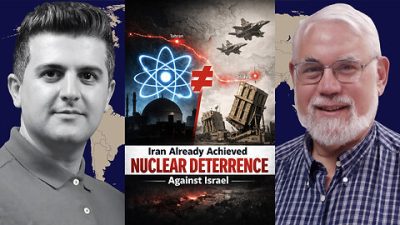
Prof. Ted Postol: Iran Already Achieved Nuclear Deterrence Against Israel
or go to
Aletho News Archives – Video-Images
From the Archives
How the occupied mentality syndrome works
Saudi Arabia on the American chessboard – Part 3
By B. J. Sabri | American Herald Tribune | June 27, 2016
Read part 2: “The occupied mentality Syndrome“
Previously I argued whether Saudi Arabia’s repeated involvements in U.S. interventions and wars stem from free national will or in response to a specific condition. For starters, in Saudi Arabia there is no national will. In Saudi Arabia, the national will is the will of the Al Saud clan. Still, when a major Arab state allies itself with a superpower that committed unspeakable crimes against humanity in almost every Arab country, then something is wrong. This fact alone should compel us to examine the U.S.-Saudi relation for one exceptional reason. As a result of the U.S.-Saudi wars, hundreds of thousands of people in Afghanistan, Iraq, Iran, Libya, Syria, Yemen, and Somalia have lost their lives. Millions became displaced in their own homelands. And millions more rendered refugees.
Attributing the Saudi policies to the bonds of “partnership” with the U.S. is frivolous. There are no bonds between these two thugs except those of business, military deals, secret plots, and wars. Proving this point, bonds such as these have no space for the American and Saudi peoples to share significant cultural or societal exchanges. If partnership is not the reason for the Saudi contribution to the U.S. strategy of empire and imperialism, then another reason must exist.
This leads to three possibilities. … continue
Blog Roll
 Aletho News
- Hezbollah hits Israeli warship off Lebanon’s coast, sets it aflame
- Iran slams US strikes on B1 bridge, Mahshahr petrochemical plants as ‘blatant acts of state terrorism’
- In letter to UN chief, Araghchi warns of dire consequences of US-Israeli attacks on Iran’s nuclear facilities
- Why the CIA conspiracy to invade Iran with Kurdish militias failed
- Why Are Upbeat US Claims About Mission to Rescue Pilot ‘Highly Questionable’?
- Aircraft destroyed during US ‘rescue’ of downed F-15 pilot cost more than $100 million each
- Washington University removes professor who condemned US-Israeli war on Iran
- Russia Warns of Retaliation as UK Authorizes Seizure of Vessels
- Serbia thwarts plot to bomb Russia-Hungary gas pipeline – Vucic
- Al Mayadeen voices solidarity with Dr. Marandi amid death threats
- If Americans Knew
- In Iran, Israel-US take aim at “reason, research, and freedom of thought” – Daily Update
- US loses planes over Iran, Israel downgrades Lebanon war goals – Daily Update
- Israel Is Blocking Palestinians from Easter at Church Where Jesus Resurrected
- Plot to assassinate Palestinian activist follows harassment campaign promoted by Zionist groups and elected officials
- Prominent New York synagogue hosts presentation on why U.S. Jews should support the ethnic cleansing of Gaza
- Tapper vs. Piker: Is the CNN Anchor Auditioning for David Ellison?
- Shouldn’t Democrats Be Able to Condemn Genocide?
- Israel-US kill negotiators, destroy civilian structures, but Iran’s military capabilities still largely intact – Daily Update
- ‘War crime’: Global condemnation as Israeli ministers celebrate death penalty law targeting Palestinian prisoners
- 7 Ways Israel Is Turning Lebanon Into Gaza
- No Tricks Zone
- An Inconvenient Tree: Uncovered In Alps… Europe Much Warmer Than Today 6000 Years Ago
- New Study Reports A 60% Slowdown In Greenland’s Ice Loss Rate In The Last Decade
- Low Intensity Tornado Wrecks Major Solar Farm, Creating A Potential Toxic Dump
- New Study Finds Warming Saves Lives…Cold Temperatures 12 Times More Deadly Than Excess Heat
- German Science Blog Accuses PIK Climate Institute Of Hallucinating Climate Tipping Points
- Devastating Assessment Of Comirnaty Vaccine By Former Senior Pfizer Europe Toxicologist
- New Study: CO2 Is ‘Effectively Negligible’ As An Explanatory Climate Change Factor Since 2000
- Former Pfizer Toxicologist Dr. Helmut Sterz Tells Bundestag Hearing Pfizer Vaccine Should Have Never Been Approved
- Energy Expert: Germany’s Nuclear Phaseout Was A “500 Billion Euro Mistake”
- New Research: South Australia’s Mid-Holocene Sea Surface Temperatures Were 4°C Warmer Than Today
 Aletho News