New Report on Uranium Weapons published by UN Secretary General
Ahead of the forthcoming vote in the UN General Assembly, the UN Secretary General has published a second report on uranium weapons. The report compiles responses from countries and UN agencies to a request in the 2008 General Assembly resolution.
19 October 2010 – International Coalition to Ban Uranium Weapons
In contrast to the previous report, more countries appear to accept that uranium weapons are a matter of concern, and several would support specific international restrictions on their use.
Belgium mentioned their domestic ban, and the more recent law banning financial investment in uranium weapons, and also signalled that it is willing to discuss legislation with other states at the international level. Panama’s report calls for the use of uranium to be restricted to civilian purposes and Lithuania stated its support for a moratorium on the use of uranium weapons.
Burundi recognised the efforts of ICBUW, called for states that voted against previous resolutions to submit evidence supporting their position, and stated that it would support a ban on uranium weapons. Ireland and Japan both welcomed the involvement of civil society in the issue. Norway’s report mentions their funding of research by ICBUW and their ongoing willingness to work with international partners to establish the extent of the health risks.
Some states only wished to express concern. New Zealand’s report mentions that peacekeepers in affected areas are given more stringent health monitoring and
Germany stated its hope that previous resolutions would help to establish clarity about the effects of DU on human health.
The Czech Republic did wish to express any particular view on the issue, and the report of the Netherlands mentioned a long-standing preoccupation – their concerns with the mention of ‘potential harmful effects’ in previous resolutions, rather than ‘possible harmful effects’. By contrast Mexico, while taking the view that the public health risk from uranium weapons is minimal, highlighted the concerns of affected populations, and called for the use of radioactive materials to be restricted to peaceful purposes.
Jordan submitted a detailed report on the physiological risks of depleted uranium, and there was support for ICBUW’s calls for transparency and technical assistance for affected countries. Cuba pointed out that the use of uranium in weapons is in violation of article XX of the IAEA statute, and called for transparency and technical assistance from user states. Mauritius spoke of the environmental and health effects of uranium weapons use, and the fact that few countries have the expertise and resources to carry out decontamination.
As regards reports from international agencies, the position of the IAEA is largely unchanged, though its report does point out that the work by international agencies in affected areas (several years afterwards in most cases) assessed the risks at the time of the work, rather than at the time uranium weapons were used. Similarly the WHO referred to their earlier positions, despite having attracted a lot of criticism for failing to include important information. Their report also stated that they were currently reviewing more recent data – a process which was also mentioned in their 2008 report, but still seems to be incomplete.
The report of UNEP is stronger, and mentions ongoing uncertainties about the environmental effects of DU in the environment, particularly in groundwater, and reiterates their support for a precautionary approach. A more detailed discussion of the positions of international agencies will be produced shortly by the ICBUW science team.
The wide margin of votes cast in favour of General Assembly resolution 63/54 clearly reaffirmed the broad and growing concern of the international community over the danger to human health and the environment from the use of armaments and ammunitions containing depleted uranium – Cuba
Jordan does not possess any arms or ammunition of which depleted uranium is a component and is of the view that the use of such weapons pose grave risks to human beings, all living things and the environment – Jordan
[Panama] believes that laws of war exist which prohibit the use of deadly and inhumane weapons away from the battlefield, or the use of weapons of war whose effects continue once a conflict has ended – Panama
Given that it is both radioactive and toxic, depleted uranium has long-term health effects not only on personnel in combat operations, but also on civilians, flora, fauna and the environment. Furthermore, the decontamination of soil is a costly exercise, and not all countries have the necessary expertise and resources to carry out such a process – Mauritius
No comments yet.
Featured Video
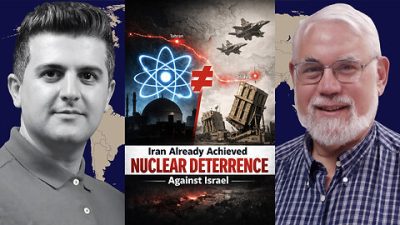
Prof. Ted Postol: Iran Already Achieved Nuclear Deterrence Against Israel
or go to
Aletho News Archives – Video-Images
From the Archives
How the occupied mentality syndrome works
Saudi Arabia on the American chessboard – Part 3
By B. J. Sabri | American Herald Tribune | June 27, 2016
Read part 2: “The occupied mentality Syndrome“
Previously I argued whether Saudi Arabia’s repeated involvements in U.S. interventions and wars stem from free national will or in response to a specific condition. For starters, in Saudi Arabia there is no national will. In Saudi Arabia, the national will is the will of the Al Saud clan. Still, when a major Arab state allies itself with a superpower that committed unspeakable crimes against humanity in almost every Arab country, then something is wrong. This fact alone should compel us to examine the U.S.-Saudi relation for one exceptional reason. As a result of the U.S.-Saudi wars, hundreds of thousands of people in Afghanistan, Iraq, Iran, Libya, Syria, Yemen, and Somalia have lost their lives. Millions became displaced in their own homelands. And millions more rendered refugees.
Attributing the Saudi policies to the bonds of “partnership” with the U.S. is frivolous. There are no bonds between these two thugs except those of business, military deals, secret plots, and wars. Proving this point, bonds such as these have no space for the American and Saudi peoples to share significant cultural or societal exchanges. If partnership is not the reason for the Saudi contribution to the U.S. strategy of empire and imperialism, then another reason must exist.
This leads to three possibilities. … continue
Blog Roll
 Aletho News
- In letter to UN chief, Araghchi warns of dire consequences of US-Israeli attacks on Iran’s nuclear facilities
- Why the CIA conspiracy to invade Iran with Kurdish militias failed
- Why Are Upbeat US Claims About Mission to Rescue Pilot ‘Highly Questionable’?
- Aircraft destroyed during US ‘rescue’ of downed F-15 pilot cost more than $100 million each
- Washington University removes professor who condemned US-Israeli war on Iran
- Russia Warns of Retaliation as UK Authorizes Seizure of Vessels
- Serbia thwarts plot to bomb Russia-Hungary gas pipeline – Vucic
- Al Mayadeen voices solidarity with Dr. Marandi amid death threats
- US dismantling international law in its war against Iran while claiming ‘false’ victory: Legal scholar
- One martyr, 5 injuries in US attack on Iraqi border crossing with Iran
- If Americans Knew
- US loses planes over Iran, Israel downgrades Lebanon war goals – Daily Update
- Israel Is Blocking Palestinians from Easter at Church Where Jesus Resurrected
- Plot to assassinate Palestinian activist follows harassment campaign promoted by Zionist groups and elected officials
- Prominent New York synagogue hosts presentation on why U.S. Jews should support the ethnic cleansing of Gaza
- Tapper vs. Piker: Is the CNN Anchor Auditioning for David Ellison?
- Shouldn’t Democrats Be Able to Condemn Genocide?
- Israel-US kill negotiators, destroy civilian structures, but Iran’s military capabilities still largely intact – Daily Update
- ‘War crime’: Global condemnation as Israeli ministers celebrate death penalty law targeting Palestinian prisoners
- 7 Ways Israel Is Turning Lebanon Into Gaza
- World’s Leading Football Bodies Under Fire Over Israel Policies
- No Tricks Zone
- An Inconvenient Tree: Uncovered In Alps… Europe Much Warmer Than Today 6000 Years Ago
- New Study Reports A 60% Slowdown In Greenland’s Ice Loss Rate In The Last Decade
- Low Intensity Tornado Wrecks Major Solar Farm, Creating A Potential Toxic Dump
- New Study Finds Warming Saves Lives…Cold Temperatures 12 Times More Deadly Than Excess Heat
- German Science Blog Accuses PIK Climate Institute Of Hallucinating Climate Tipping Points
- Devastating Assessment Of Comirnaty Vaccine By Former Senior Pfizer Europe Toxicologist
- New Study: CO2 Is ‘Effectively Negligible’ As An Explanatory Climate Change Factor Since 2000
- Former Pfizer Toxicologist Dr. Helmut Sterz Tells Bundestag Hearing Pfizer Vaccine Should Have Never Been Approved
- Energy Expert: Germany’s Nuclear Phaseout Was A “500 Billion Euro Mistake”
- New Research: South Australia’s Mid-Holocene Sea Surface Temperatures Were 4°C Warmer Than Today
 Aletho News
Leave a comment