Israel relationship is costing the U.S. its alliance with Turkey
By Gil Maguire | November 5, 2010
Israel and its U.S. lobby’s insistence on unquestioning U.S. support for Israel in its brutal and illegal conduct toward Palestinian and Turkish civilians has cost the U.S. a major, strategic ally, Turkey, and has severely undermined U.S. foreign policy goals, strategy, and power in the Middle East.
President George W. Bush has been accused of having the most disastrous foreign policy in U.S. history. Unfortunately, President Obama’s apparent inability to stand up to Israel’s U.S. lobby may have created a foreign policy catastrophe that exceeds even that of his hapless predecessor by costing the U.S. the loss of Turkey as our main strategic ally in the region, and by drastically reducing U.S. influence and power in the Middle East.
If this sounds implausible, consider the following: Turkey just recently concluded a public but covert military air combat training exercise with the Chinese in Turkey in which the Chinese flew their jet fighter aircraft from China to Turkey, refueling in Iran. Chinese Premier Wen Jiabao just made a state visit to Turkey after which both countries concluded a strategic cooperation agreement. China will build a 4500-kilometer railroad to Turkey, along with two high-speed rail lines, plus oil pipeline systems from Iran to Turkish ports. China has agreed to sell military equipment to Turkey, and is also developing a surface-to-surface rocket-launching system together with Turkey. Turkey’s foreign minister visited China this week, working out details of its new strategic relationship. Turkey has also strengthened its ties with Russia, Iraq, Syria and Iran, and refused to support the most recent UN resolution imposing sanctions on Iran.
Turkey has ceased all cooperation with its former close ally, Israel, including closing its airspace to Israeli planes, ceasing all cooperative military exercises, ending intelligence sharing with Mossad, Israel’s intelligence agency, and has changed Israel’s status from a close ally to a strategic threat. Turkey has strongly condemned Israel for its brutal conduct against Palestinian and Turkish civilians in Israel’s December 2008 Gaza invasion, and the recent Gaza aid flotilla incident, accusing Israel of committing state terrorism. Turkey has also accused the U.S., formerly its strongest ally, of supporting an international terrorist (Israel) for failing to condemn Israel’s atrocities, and for its monetary, military, and diplomatic support of Israel’s oppression of Palestinians and illegal settlement activity in the West Bank and East Jerusalem.
In less than two years, Turkey has changed from being a strong U.S. ally and NATO member to a country pursuing an independent path toward strategic relationships with countries that are either adversaries or potential adversaries of the U.S. How did we get to this point?
Turkey’s Importance as a Major U.S. Strategic Ally
Turkey, a nation of 73 million Muslims, has been a major strategic ally of the U.S. for some six decades since the beginnings of the Cold War, providing the U.S. with military bases and a forward bulwark against Soviet expansionism into the Middle-East and the Mediterranean. Turkey fought alongside the U.S. in the Korean War, and risked nuclear annihilation during the Cuban Missile Crisis by allowing the U.S. to station nuclear-tipped Jupiter missiles in Turkey, on the Soviet Union’s doorstep.
Turkey has the second largest military force in NATO and occupies one of the most vital geographic areas in the world, bordering the Mediterranean, Greece, Bulgaria, the Black Sea, Russia, Georgia, Armenia, Iran, Iraq, and Syria. It has the second fastest growing economy in the world, behind only China. Most important, Turkey is a stable, moderate, secular, Muslim democracy and provides a model template for success for the many Muslim nations in the Middle East and South Asia that suffer from instability, autocratic rule, religious extremism, and poverty.
Turkey also provides the U.S. with an invaluable entrée into the Muslim world and a proven ability to conduct effective diplomacy and mediation among Muslim nations such as Iraq, Syria, and Iran. Turkey permits the U.S. to use a critical military air base and transportation hub at Incirlik, in southeastern Turkey While strong militarily, Turkey has been successfully moving to reduce tensions with all of its neighbors, including traditional rivals such as Greece, Armenia, Syria, and Iraq, and, in addition, has also moved to defuse the conflicts with its minority Kurdish population. It has also taken steps, in part with Brazil, to reduce the conflict between Iran and the West. In short, Turkey, under its strong civilian leadership, has become a major strategic player in the world economically, politically, and diplomatically, and a vital player and asset for the U.S. and its European allies in the Muslim world and in the Middle East and South Asia.
It is difficult to imagine an ally of greater strategic importance to the U.S. in the Middle East than Turkey. Its loss is a major blow to U.S. vital national security interests.
The Gaza Disasters and the Loss of Turkey
In December of 2008, the U.S. and Turkey remained strong, close NATO allies. Israel and Turkey also had a strong strategic alliance in which they cooperated on intelligence matters, and conducted joint military training exercises; Israel had the use of Turkish airspace for training and operational use; Turkey purchased weapons systems from Israel; trade and tourism between the two countries was booming. Turkey was also mediating the disputes between Syria and Israel in the hope of resolving their differences and achieving a permanent peace treaty for the two countries.
Israel’s brutal bombing and shelling of civilian noncombatants in its invasion of Gaza in December 2008, and in its violent capture of a Gaza aid ship in May of 2010, in which nine Turkish citizens were killed, at least five execution-style, by Israeli commandos, deeply angered the Turks. These events, coupled with subsequent UN investigative reports that confirmed Israeli atrocities against civilians and other war crimes in both incidents, ultimately caused Turkey to end its close strategic alliance with Israel. The U.S.’ unquestioning support of Israel in both incidents, even after both later UN investigative reports confirmed Israeli atrocities toward civilians, caused Turkey to be highly critical of the U.S., and ultimately caused it to reduce its strategic alliance with the U.S. and seek, or at least consider, new strategic relationships and agreements with potential U.S. adversaries such as Russia, Iran, and, of greatest and most recent concern, China.
The strength and effectiveness of Israel’s U.S. lobby in influencing U.S. foreign policy in matters related to Israel was demonstrated by Congress and the Obama administration’s unqualified support of Israel’s excessively brutal actions toward civilians in its Gaza invasion and capture of the Gaza aid flotilla in the face of worldwide approbation of Israel. An unfortunate and apparently unforeseen byproduct of the lobby’s actions was the loss to both the U.S. and Israel of the support of a critical major strategic ally, Turkey.
The loss of Turkey as a major U.S. ally will change the balance of power in the Middle East and do serious harm to U.S. vital national security interests in that region, and to Israel’s as well. It is inconceivable that the U.S. would allow a strategic relationship with an ally as vitally important as Turkey to be undermined by supporting brutal and unlawful conduct on the part of a far less strategically important ally, Israel. Yet, because of the overwhelming strength and influence of Israel’s U.S. lobby on the Obama administration and Congress, that is precisely what has occurred.
The Israel Lobby’s Role in the Loss of Turkey as a Key U.S. Ally
The Israel Lobby, headed by the American-Israeli Political Action Committee, or AIPAC, acts in a variety of ways to protect and promote Israeli interests in this country. Any Israeli action, such as the Gaza invasion or the capture of the Gaza aid flotilla, is immediately condoned and praised, discussion and debate are stifled, and dissent is punished. While it is beyond the scope of this article to address the lobby’s strategy and methods in any detail, these are well-known and well-documented. After the Gaza incidents, letters or resolutions supporting Israel’s actions were immediately forthcoming from either the U.S. Senate or the House, or both, and were typically signed or approved by astonishingly overwhelming margins, typically 75 to 90 percent.
There is never any debate in Congress or investigation by congressional committees into Israel’s actions and whether or not they might have a negative effect on U.S. foreign policy interests. Any member of Congress that publicly questions, let alone disapproves, any action taken by Israel, quickly suffers the consequences. For instance, 54 members of Congress, many of whom were running for reelection, were attacked for supposedly being “anti-Israel” because they signed a letter that labeled Israel’s invasion of Gaza as “de facto collective punishment of the Palestinian residents of the Gaza Strip” and pressed for “immediate relief for the citizens of Gaza.” Yet, the charge of collective punishment, a war crime, was later well documented and confirmed by a balanced and competent United Nations investigating committee.
The problem isn’t whether a member of Congress can be criticized for a statement made or action taken, but whether healthy debate about U.S. foreign policy interests is being stifled by the aggressive actions of a lobby that acts in the interest of a foreign government, namely Israel. When Turkey, a major U.S. ally, criticized Israel’s brutality toward civilians in both the Gaza invasion and the Gaza aid flotilla capture, Congress should have at least debated the issue, particularly since there was widespread televised evidence of the conduct and worldwide universal criticism of Israel’s actions during and after both events. Instead, Congress showed unquestioning support for Israel, without investigating or even inquiring about the facts related to either incident.
Later, when two separate UN investigations of these incidents developed overwhelming evidence of Israeli war crimes and atrocities toward civilian noncombatants, Congress again immediately sided with Israel and conducted no inquiry or investigation into the incidents, or the allegations and evidence provided in the UN investigations. The Obama administration also sided with and provided unquestioning support for Israel, describing the investigations as biased. The fact that a major strategic ally and fellow NATO member had suffered the death of nine of its citizens in the Gaza aid flotilla incident, and that the UN investigation described at least five of the deaths as illegal summary executions seemed an unimportant detail to the Obama administration.
The key, critical question is whether the Israel lobby’s actions forcing congressional and executive branch approval and support for Israel’s brutal and illegal treatment of civilian noncombatants caused Turkey to change its policies toward the U.S., reduce its commitment to its alliance with the U.S., and take steps contrary to the vital national security interests of the U.S. The answer, unfortunately, is yes. The public statements of Turkish leaders since these incidents, strongly criticizing the U.S. failure to criticize Israel and support Turkey and the rest of the world in sanctioning Israel, plus the strong actions taken by Turkey that negatively impact U.S. interests in that region, after the U.S.’ failure to provide that support, demonstrates that causal link. Turkey’s frustrations and disillusionment with U.S. uncritical support for Israel along with its failure to move aggressively toward achieving a two-state solution, had reached a breaking point.
While it would be easy to adopt the Israel lobby’s view that Turkey’s actions are those of an increasingly radical and Islamic regime, there is little evidence to support such a view. Turkey, in fact, has taken the moral high ground in criticizing Israel’s brutal behavior toward Gazan and Palestinian noncombatants. Turkey had little to gain by entering this fray, and much to lose, both in its relationship with Israel and with its longtime ally the U.S. Nonetheless, it has taken a strong public position against both Israel’s actions and U.S. enabling of, and complicity in, those actions. And it is clearly not about to back down.
The Consequences of Inaction
Unless the U.S. can reengage with Turkey, allow the UN to sanction Israel for its Gaza atrocities toward civilian noncombatants, and move to resolve the Israeli-Palestinian conflict, a major, even cataclysmic shift in the balance of power in the Middle East could occur. Turkey, Syria, Iraq and Iran could assume control and assert power in that area in place of the U.S.’ traditional “moderate” allies of Saudi Arabia and Egypt. Both China and Russia are interested in gaining economic and political influence in the northern Persian Gulf area and are lukewarm toward or unwilling to support strong sanctions against Iran. China, in particular, sees that area as the most important source of oil and natural gas in the world, and would be willing to pay almost any price to gain influence in that area and access to its oil.
For those who remain nostalgic about Israel, our supposed great friend, strong ally, and strategic partner in the Middle East, imagine the following scenario: China offers Turkey billions of dollars in development aid for oil and gas pipelines, ports, railways, and other infrastructure projects. In return it receives a long-term exclusive lease for Incirlik air base and a major naval base on Turkey’s Mediterranean coast. Turkey then withdraws from NATO and improves its trade ties with Iran, Iraq, Syria and Russia and forms an alliance with these countries, and perhaps including Lebanon and even Jordan. Such an alliance would control much of the oil resources in the Persian Gulf. Russia and China would both benefit from this arrangement, China most of all by gaining access to Iranian and Iraqi oil and natural gas resources. China would also gain a significant strategic position in southern Europe, the Mediterranean and the Persian Gulf with a major air base and naval base in Turkey.
The U.S. and NATO would be suddenly faced with a major strategic competitor in what had been largely their own private Mediterranean lake. With the loss of its Incirlik air base, the U.S. would no longer have easy air access to its conflicts and interests in the Middle East and South Asia. European Union countries would be facing a potential loss of Persian Gulf oil and gas resources. Israel would be even more isolated strategically, now facing the might of Turkey against any incursion it might contemplate against Lebanon, Syria, or Iran. The U.S. would be in the unenviable position of having to defend Israel against not only Turkey but potentially China and Russia as well.
While the above scenario may not be imminent or even likely, the reality is that Turkey has become so disillusioned by the U.S.’ inability to fulfill its role as the dominant player in the Middle East that it has decided to forge its own path, independent of the U.S. and its NATO allies. Turkey clearly sees U.S. Middle East policy as feckless and dominated by Israel and its U.S. lobby, and unlikely to change. It no longer views the U.S. as a strong, reliable, trustworthy partner and ally, but as a weakened giant unable to control small allies like Israel even when its vital national security interests are under threat. That view of the U.S., as a feeble, declining giant, unable or unwilling to defend its vital interests, may well increasingly be shared by many of our allies and potential adversaries. If so, that is a dangerous trend indeed, and one that we need to stop.
Clearly the U.S. desperately needs to reevaluate its foreign policy goals and relationships in the Middle East. Faced with the loss of Turkey, a foreign policy disaster of epic proportions, it needs to do so immediately. President Obama should begin his post-election administration by conducting a major reevaluation of U.S. Middle East policy, beginning by appointing an independent, bi-partisan commission of distinguished elder statesmen and states women to review U.S. Middle East policy and the effect of Israel and its U.S. lobby on influencing that policy. Continuing down a byzantine path of a U.S. Middle East policy influenced or even directed by Israel and its U.S. lobby is a recipe for further foreign policy disasters and a cataclysmic decline in U.S. influence in the world. This is an outcome that even Israel and its lobby should fear.
Berlusconi urged to resign over teen sex scandal
Press TV – November 7, 2010
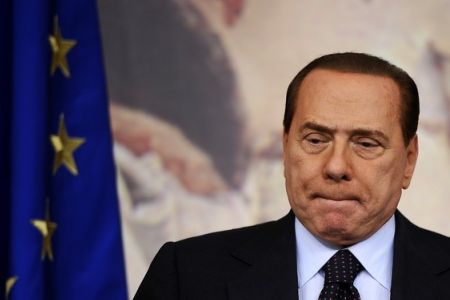
Following the Italian premier’s most recent scandal involving a Moroccan teenage girl, the country’s parliament speaker has called on Silvio Berlusconi to step down.
“He should… take the decision to hand in his resignation,” AFP quoted Gianfranco Fini, the speaker of the lower house, as saying on Sunday.
On October 30, the prominent newspaper Corriere della Sera revealed the details of Berlusconi’s telephone conversation with a Milan police chief, in which he urged him to release the girl, who was detained for theft in May. The 17-year-old girl, known as Ruby, said she attended parties at Berlusconi’s home in Arcore.
The girl claims that she had been trying to break into modeling or television work at the time. She said she had a sexual encounter with Berlusconi at his villa when she was younger than 18.
Prosecutors say that while they have opened a dossier on the claim that Berlusconi hired a juvenile for prostitution, he is not under official investigation.
Last year, high-end escort Patrizia D’Addario claimed she had spent a night with the prime minister, but the conservative Italian leader said he has never paid anyone for sex.
The new scandal comes as Berlusconi’s popularity ratings have dropped below 40 percent, with his government’s austerity package, infighting, and corruption scandals eroding public support for the premier.
Germans protest to stop nuclear train
Press TV – November 6, 2010
Demonstrators in Germany have been met by riot police as they attempt to stop a train carrying 123 tons of radioactive nuclear waste from France into Germany.
Tens of thousands of people gathered at the north German town of Gorleben to protest the arrival of the highly-radioactive nuclear waste.
Meanwhile, police forces used truncheons and mace against an estimated 150 activists who were attempting to dig a hole under a railway track to prevent the shipment.
Some of the protestors threw stones at security forces, while others blocked the road using tractors.
Around 16,500 police officers have been sent to quell the unrest, DPA reported.
Other reports indicated that trains were delayed as the activists chained themselves to the tracks. According to AFP, they were eventually removed and arrested by the police.
“This nuclear convoy, the most radioactive ever, exposes the population to excessive risks. There is a risk to lives in the short term in case of an accident, but also a long-term risk to their health,” a spokesperson for the anti-nuclear group Sortir du Nucleaire (Get out of Nuclear) said.
The waste is being shipped from La Hague in France by the state-controlled nuclear engineering company Areva.
Chancellor Angela Merkel labeled the move by the activists as, “not a peaceful demonstration, but a criminal offence.”
The so-called Castor trains — cask for storage of radioactive material — have been met by mass demonstrations for the past 30 years. The protests began when they first started to dump nuclear waste at the Gorleben facility.
Eleven steel containers holding the nuclear waste are expected to reach their destination on Sunday.
The protests are also directed at Merkel’s center-right government, which recently passed legislation to extend the life span of Germany’s 17 nuclear power stations beyond the previous deadline of 2022.
PA: Israel raided thousands of homes in October
Ma’an – 07/11/2010
RAMALLAH — The Palestinian Authority Ministry of Detainees’ Affairs said Israeli forces detained 403 Palestinians and raided 2148 homes across the West Bank during October.
In a report released Saturday, the ministry said Israeli soldiers intimidated and assaulted residents, destroying the contents of homes during the raids.
Of those detained, 95 percent had been assaulted in front of their families and were beaten en route to detention centers in Israeli military jeeps.
Among those detained, 130 were minors. Most of the minors detained were from Hebron and Jerusalem, the ministry said, adding that they were mostly sentenced to between one and six months, and ordered to pay large fines.
Sixty children from Jerusalem and one child from Hebron were placed under house arrest. In cases where a child broke the conditions of house arrest, a family member was arrested, the report said.
Most detainees were interrogated in Israeli settlements before they were transferred to official detention centers. The ministry documented 50 cases of raids inside the prisons. Under the pretext of searching for cell phones, guards used tear gas and sticks to beat prisoners and destroyed their personal belongings, the ministry said.
Israeli rights groups say Palestinians tortured in Israeli detention
On Tuesday, two Israeli rights groups released a report accusing Israel of “state sanctioned ill-treatment of interrogees” in at least one detention facility in Petah Tikva, in central Israel.
According to the joint B’Tselem and HaMoked report, testimonies from 121 detainees “indicate a clear pattern of activity by the authorities,” which “constitutes cruel, inhuman, and degrading treatment.”
According to the collected testimony, “violations include cruel detention conditions in sealed cells, in isolation and disgraceful hygienic conditions, continuous cuffing of detainees’ hands in the interrogation room in a way that makes it impossible for them to move, sleep deprivation, and other methods that harm the detainees physically and mentally.
The report noted that “the use of any one of these means, certainly their combined use, constitutes cruel, inhuman, and degrading treatment, and in some instances, torture. All are strictly forbidden under international law and Israeli law.”
Further, the groups said testimonies suggested that children were treated no differently than adults by soldiers and detention center authorities, despite their legal status as minors.
Israeli government documents show deliberate policy to keep Gazans at near-starvation levels
By Saed Bannoura – IMEMC News – November 06, 2010
Documents whose existence were denied by the Israeli government for over a year have been released after a legal battle led by Israeli human rights group Gisha. The documents reveal a deliberate policy by the Israeli government in which the dietary needs for the population of Gaza are chillingly calculated, and the amounts of food let in by the Israeli government measured to remain just enough to keep the population alive at a near-starvation level. This documents the statement made by a number of Israeli officials that they are “putting the people of Gaza on a diet”.

Calculation sheet from newly-released documents (image from Gisha)
In 2007, when Israel began its full siege on Gaza, Dov Weisglass, adviser to then Prime-Minister Ehud Olmert, stated clearly, “The idea is to put the Palestinians on a diet, but not to make them die of hunger.” The documents now released contain equations used by the Israeli government to calculate the exact amounts of food, fuel and other necessities needed to do exactly that.
The documents are even more disturbing, say human rights activists, when one considers the fact that close to half of the people of Gaza are children under the age of eighteen. This means that Israel has deliberately forced the undernourishment of hundreds of thousands of children in direct violation of international law and the Fourth Geneva Convention.
This release of documents also severely undermines Israel’s oft-made claim that the siege is “for security reasons”, as it documents a deliberate and systematic policy of collective punishment of the entire population of Gaza.
Gisha’s director said, in relation to the release of documents, “Israel banned glucose for biscuits and the fuel needed for regular supply of electricity – paralyzing normal life in Gaza and impairing the moral character of the State of Israel. I am sorry to say that major elements of this policy are still in place.”
In its statement accompanying the release of the documents, Gisha wrote:
The documents reveal that the state approved “a policy of deliberate reduction” for basic goods in the Gaza Strip (section h.4, page 5*). Thus, for example, Israel restricted the supply of fuel needed for the power plant, disrupting the supply of electricity and water. The state set a “lower warning line” (section g.2, page 5) to give advance warning of expected shortages in a particular item, but at the same time approved ignoring that warning, if the good in question was subject to a policy of “deliberate reduction”. Moreover, the state set an “upper red line” above which even basic humanitarian items could be blocked, even if they were in demand (section g.1, page 5). The state claimed in a cover letter to Gisha that in practice, it had not authorized reduction of “basic goods” below the “lower warning line”, but it did not define what these “basic goods” were.
Commentator Richard Silverstein wrote: “In reviewing the list of permitted items for import, you come to realize that these are the only items allowed. In other words, if an item is not on the list, it’s prohibited. So, for example, here is the list of permitted spices: Black pepper, soup powder, hyssop, sesame. cinnamon, anise, babuna (chamomile), sage. Sorry, cumin, basil, bay leaf, allspice, carraway, cardamon, chiles, chives, cilantro, cloves, garlic, sesame, tamarind, thyme, oregano, cayenne. Not on the list. You’re not a spice Palestinians need according to some IDF dunderhead. And tomatoes, potatoes, cucumbers, lettuce, toys, glassware, paint, and shoes? You can forget about them too. Luxuries all, or else security threats.”
Despite the disturbing nature of the documents, which show a calculated policy of deliberate undernourishment of an entire population, no major media organizations have reported the story.
The full text of the released documents, and the original Freedom of Information Act request filed by Gisha, can be found on Gisha’s website at the link below:
Related Link(s): http://www.gisha.org/index.php?intLanguage=2&intItemId=…N=113
Ali Abunimah at Stanford
SCAIatStanford | November 05, 2010
Lecture that Ali Abunimah gave at Stanford on Wednesday, November 3rd 2010 entitled “What is the alternative to peace talks to nowhere?” Sponsored by Students Confronting Apartheid by Israel (SCAI).
Quantitative Easing: Elixir or Poison?
By Stephen Lendman | November 6, 2010
Ahead of the November 11 – 12 G-20 meeting in Seoul, South Korea, the Fed announced QE II, another $600 billion between now and end of June 2011, a flexible figure to be raised or lowered freely, the Fed saying it will:
“….regularly review the pace of its securities purchases and the overall size of the asset-purchase program in light of incoming information and will adjust the program as needed to best foster maximum employment and price stability.”
An additional $300 billion received from maturing securities will also be used. Easing, in fact, began around mid-year. Wall Street insiders knew it to take advantage, but not the public, QE being used to debauch the currency, harm the economy, and destroy, not create, jobs.
Market Ticker’s Karl Denninger calls QE “the largest tax ever imposed on the American people in the history of the nation. It is more than fourteen times the Bush tax cuts….Goldman Sachs believes that Bernanke will impose a total tax through (QE) of more than four trillion dollars over the next two years, or more than fifty-seven times the Bush tax cuts.”
How so? Because credit created is going into asset markets (stocks, bonds, commodities, etc.), not the economy. QE I’s tax, in fact, diluted stimulus funds, an offsetting tax “directly into the bankers’ pockets” for speculation, big salaries and bonuses.
Add to that inflation. According to James Grant of Grant’s Interest Rate Observer, QE will create unsustainable asset bubbles and debase the dollar, making products and services more expensive, ending “everyday low prices.” Bernanke wants inflation, a hidden tax. Devaluation is being used to get it, no matter the serious consequences.
Economist John Maynard Keynes in his 1920 book, “The Economic Consequences of the Peace,” warned us, saying:
“Lenin….was certainly right. There is no subtler, no surer means of overturning the existing basis of society than to debauch the currency. The process engages all the hidden forces of economic law on the side of destruction, and does it in a manner which not one man in a million is able to diagnose.”
Denninger is just as blunt, saying unless public outrage stops this, “you’re all going to be effectively dead economically.
Your assets will be stripped.
All of them.
Your homes.
Your businesses.
Your savings….And, when the inevitable margin collapse comes in the corporate sector, your stock portfolio will detonate again and your pension funds, Medicare, Medicaid and Social Security will be” toast.
There’s no middle ground, no place to hide. Either “stop this madness or we all get destroyed. Those are the only choices,” or as Tom Lehrer’s memorable 1950s lyrics put it, referring then to potential nuclear annihilation, “we’ll all go together when we go.” All today except bankers, of course.
On November 4, on Bloomberg TV, David Stockman, Reagan’s Office of Management and Budget Director, explained it this way:
Fed QE “is injecting high grade monetary heroin into the financial system of the world, and one of these days it is going to kill the patient,” meaning economies and people.
In early 2009, economist Michael Hudson said:
“The (US) economy has reached its debt limit and is entering its insolvency phase. We are not in a cycle but (at) the end of an era. The old world of debt pyramiding to a fraudulent degree cannot be restored,” only delayed to postpone a painful day of reckoning.
Piling new debt on old exacerbates a bad situation. Hudson explained more in his latest article titled, “US ‘Quantitative Easing’ is Fracturing the Global Economy.”
Quantitative Easing (QE) Defined
In simple terms, it’s monetary policy to increase the money supply – literally creating it out of thin air. Wikipedia calls it a central bank policy “to increase the supply of money by increasing excess reserves of the banking system. This policy is usually invoked when the normal methods to control the money supply have failed.” Or have been exhausted in cases where interest rates are near zero, today’s situation in America, Japan and elsewhere.
Central banks do it electronically, thereby increasing their own accounts to use any way they wish, but not risk free. Though not evident so far, too much money chasing too few goods causes inflation. Currency debasing, including the dollar, is another issue, very relevant today, given that it’s part of the Fed’s plan. Gold prices reflect it, rising from under $300 in 2002 to nearly $1,400 currently, experts believing it’s heading much higher. Bond rates so far are low, reflecting economic weakness, but once inflation is sensed, they’ll rise proportionately to the risk.
Project Censored’s top 2009-10 story is the plan to replace the dollar, perhaps by debasing it to worthlessness. However, other nations have reacted, in Michael Hudson’s words by “creat(ing) an international monetary system in which central bank savings do not fund (America’s massive debt). Russia, China, India and Brazil have taken the lead.”
Others will likely follow. “Finance has become the new mode of warfare.” Currency wars are in play for economic competitiveness, nations jockeying with each other during a period of economic weakness, a game putting them all at risk.
QE “is based on the wrong-headed idea that if the Fed provides liquidity, banks will… lend out credit at a markup, ‘earning their way out of debt’ – inflating the economy in the process.”
Not the economy most people think of, however. The Fed is targeting “asset markets – above all real estate, as 80% of (US) bank loans” are for mortgages.
Importantly, Fed gamesmanship puts international finance at risk. “This is what US economic policy and even its foreign policy is now all about, including de-criminalizing financial fraud.” In the 1980s, greed was called good, plenty of fraud, of course, came with it. Today though, it’s massive theft in amounts never before imagined in unknown multi-trillions, lots more to come unless stopped.
Instead of healing ailing economies, they’re being wrecked. Hoped for new borrowing isn’t happening. Instead, “banks have been tightening their loan standards rather than lending more to US homeowners, consumers and businesses since 2007.”
Rather than lend domestically, dollars are flooding world currency markets, hoping insolvent banks can earn their way out of debt, and make America more competitive by debasing the dollar, perhaps replacing it.
Domestically, the market is “loaned up.” Borrowing is shrinking, not expanding, a sure way to prevent economic growth. QE I, the $1.7 trillion created from March 2009 to March 2010, failed. More worrisome is that QE II entails:
“consequences that Federal Reserve policy makers have not acknowledged. For one thing, the banks have used (bailout and liquidity funds) to increase their profits and to continue paying high salaries and bonuses. What their lending is inflating are asset prices,” not output and employment. “And asset price inflation is increasing the power of property over living labor and production, elevating the FIRE sector (finance, insurance, and real estate) further over the ‘real’ economy.”
Moreover, QE II is a zero sum game. It can only work at the expense of other economies. That’s why it’s “financial aggression,” destroying global currency stability. It also harms America, the greater economy sacrificed for the FIRE sector, especially Wall Street, destroying countries and human beings for profit.
Today’s “global economy is being turned into a tributary system, achieving what military conquest sought in times past.” It’s “implicit in QE II.” However, other countries are reacting, “taking defensive measures against this speculation (and) ‘free credit’ takeovers” with cheap dollars, using various methods to do it.
The Reserve Bank of India just raised rates for the sixth time to 6.25%. The Reserve Bank of Australia increased theirs for the seventh time to 4.75%. In mid-October, China raised its rates. Brazil raised its tax on foreign investment in government bonds. South Korea may reinstate a withholding tax on foreign investors’ holdings in some securities. Watch for other nations to impose similar measures, mindful of Fed policy.
Today, says Hudson, the “major international economic question… is how national economies can achieve greater stability by insulating themselves from predatory (Fed) financial movements,” a zero sum game they’ll lose if they can’t.
Effectiveness of Quantitative Easing Questioned
QE I failed. Will QE II do better? Many economists think not, including Bernanke, having argued (with former Fed vice chairman Alan Blinder) against it in 1988. Minneapolis Fed president Narayana Kocherlakota agrees. Speaking in London in early October, he explained several reasons why, a key one that banks, flush with reserves, aren’t lending.
Pimco’s co-CEO Mohamed El-Erian also thinks QE II will fail, headlining on November 4 in the Financial Times, “QE2 blunderbuss likely to backfire,” saying:
“….liquidity injections and financial engineering are insufficient to deal with the challenges that the US faces. Without meaningful structural reforms, part of the Fed’s liquidity injection will (cause) another surge of capital flows to other countries,” precisely what they don’t need or want.
Fed policy will force other countries to protect their currencies, perhaps by capital controls, protectionism and other measures. As a result, the dollar’s reserve currency status will erode, what’s now happening incrementally.
“The unfortunate conclusion is that QE II will be of limited success in sustaining high growth and job creation in the US, and will complicate life for many other countries.” That seems what Fed policy intends, wrecking world economies for greater FIRE sector profits and empowerment. Will it work is at issue, or will reckless Fed meddling destroy predators with their prey.
Economics Nobel laureate Christopher Pissarides believes QE II won’t produce jobs. In a brief comment, economics Nobel laureate Paul Krugman also expressed doubt it can work. Former Fed vice chairman Donald Kohn said it won’t turn around the US economy. At best, it might help marginally. Economics Nobel laureate Joseph Stiglitz in the Financial Times said it’s “folly to place all our trust in the Fed,” adding:
“It should be obvious that monetary policy has not worked to get the economy out of its current doldrums.” Having failed so far, “monetary authorities have turned to quantitative easing. Even most advocates of monetary policy agree the impact of this is uncertain. What they seldom note, though are the potential long-term costs.”
Stiglitz prefers fiscal over monetary policy, targeting education, technology and infrastructure. Even though government debt will be increased, “the assets on the other side of the balance sheet are increased commensurately,” and over time, their return on investment far exceeds the cost. On the other hand, planned austerity, hoping monetary policy can work is “sheer folly.” Machiavellian destructiveness better describes it.
Economist David Rosenberg is also skeptical, saying in a November 4 commentary that he sees QE II having “no visible impact on the willingness to borrow, the money multiplier or velocity, which is what we would need to see to declare this radical policy experiment a success.” QE I also provided none. It was a total flop, suggesting QE II won’t fare better. Worse still, Rosenberg sees destructive currency wars intensifying, leading to trade wars that don’t “tend to end very well.”
Market analyst Bob Chapman calls QE II a futile way to keep the economy and financial system afloat. For one thing, it drives out real investment, “the kind that creates jobs and profits.” Fed policies are the opposite, producing debt and speculative excess. In the process, “they also crowd out other borrowers, which ultimately leads to higher interest rates and offsets banks’ ability to lend.” Moreover, consumers are gravely harmed. Their purchasing power declines, the economy, as a result, pushed “deeper into depression.”
Deflation now besets America, but reckless money creation eventually causes inflation, “to be followed by hyperinflation and ultimately deflationary depression.”
George Bernard Shaw observed that “If governments devalue the(ir) currenc(ies) in order to betray all creditors, you politely call this procedure ‘inflation.’ ” It doesn’t just happen. It’s from reckless monetary and/or fiscal policies.
Moreover, the combination of government-created debt for wars and corporate handouts as well as QE II will “bury the economy.” It will do nothing to increase demand, reverse the housing crisis, create jobs, or stimulate growth, what sick economies need to get well.
Financial expert and investor safety advocate Martin Weiss worries that the Fed is “unleash(ing) a whole new round of monetary stimulus, potentially driving more liquidity into gold, commodities, foreign currencies, and emerging markets, noting also “one of the greatest disconnects of all time between:
— a sinking economy on the one side, and
— the real possibility of roaring bull markets in certain asset classes on the other side.”
On November 3, Bloomberg’s Joshua Zumbrun suggested that Republican electoral strength may restrain Fed policy. Don’t bet on it. The die is cast. QE II will be unchecked, the announced $600 billion an amount to be raised or lowered freely.
At the same time, bipartisan support for austerity will gravely harm millions of Americans. They’re on their own with no help from Washington, newly elected bums even worse than repudiated ones. To their chagrin, voters will realize it once the 112th Congress convenes, what they already should know about a president who betrayed them.
A Final Comment
QE can work if used constructively, not destructively, as planned. Colonial America proved it, Massachusetts first in 1691 with its own paper money, backed by the full faith and credit of the government. Other colonies followed using scrip, freeing them from British banks, letting them grow their economies prosperously, inflation-free, with no taxation for 25 years. The secret was not issuing too much, recycling created money back into local economies for productive growth.
In other words, everything was kept proportionally in balance. Moreover, local governments paid no interest on their own money, created for growth, not banker enrichment at the expense of commerce, industry, and the public.
Lincoln did the same thing, again with government created money. His accomplishments and what followed turned America into the world’s greatest industrial giant by launching the steel industry, a continental railroad system, and a new era of farm machinery and cheap tools. Free education was also established. The Homestead Act gave settlers ownership rights and encouraged land development. Government supported all branches of science. Mass production methods were standardized. Labor productivity rose by up to 75%, and still more was achieved during the post-civil war years, America’s greatest period of growth before the Fed’s 1913 creation.
By abolishing or nationalizing it, America could again be sustainably prosperous under a publicly-run banking system, everyone benefiting from inflation-free growth. Predatory lenders would be eliminated. Government would control its own money, creating it as needed interest-free. Federal taxes could be reduced or eliminated. Moreover, if states and local communities had their own banks, like North Dakota, it would work as well for them.
Under today’s privately-run Fed and predatory banking system, Wall Street runs America, wrecking it for profit, QE its latest scheme. What could be used productively is a weapon of mass destruction. As a result, harder than ever hard times are coming, what only civil action can prevent, including demanding that government control its own money, what the Constitution’s Article 1, Section 8 mandates.
Stephen Lendman lives in Chicago and can be reached at lendmanstephen@sbcglobal.net. Also visit his blog site at sjlendman.blogspot.com
UK official: Gaza situation is unbearable
Ma’an – 06/11/2010
BETHLEHEM — British Foreign Office spokesman Martin Day on Thursday called on Israel to allow Gaza borders to open for exports to ease an unbearable situation in the Strip.
In July, British Prime Minister David Cameron sparked outrage in Israel when he said Israel’s blockade of Gaza had turned the coastal enclave into a “prison camp.” Israeli President Shimon Peres accused Cameron of anti-semistism.
Asked if the response to Cameron’s remarks made him wary of criticizing Israel, Day replied that he would say frankly that the social, economic and political situation in Gaza was unbearable. In an interview with Ma’an Radio, he said the UK welcomed Israel’s decision to allow more goods into Gaza, and hoped it would be fully implemented.
Day said the British government believed settlements were a major obstacle to achieving peace, and that the UK continuously relayed this to Israel. All settlement activity, including in East Jerusalem, contravened international law and should be frozen to create an atmosphere for successful negotiations, he said.
The goal of British Foreign Secretary William Hague’s visit to the region Tuesday was to continue international efforts to restart negotiations between Israel and the PLO, which stalled over Israel’s settlement activity, he said.
The spokesman said the UK was committed to establishing a Palestinian state on 1967 borders with Jerusalem as the capital of both Palestine and Israel.
UN body accuses US of rights abuses
American officials face barrage of criticism from Human Rights Council over Guantanamo and torture allegations.
Al-Jazeera – 05 November 2010
The United States has for the first time faced the United Nations Human Rights Council over accusations of human rights violations.
Council members in Geneva, Switzerland, levelled a barrage of criticisms at the US administration on Friday, calling for the closure of the Guantanamo Bay prison and for investigations into alleged torture by US troops abroad.
The council’s first review of the US human rights record was part of a gradual examination of the performance of all 192 UN members over a four-year period.
Iran’s delegation accused the US of violating human rights though covert CIA operations “carried out on pretext of combating terrorism”.
European countries said Washington should ban the death penalty. Mexico urged it to halt racial profiling and the use of lethal force in controlling illegal migration over its border.
Indonesia, the world’s most populous Muslim nation, called on Washington to better promote religious tolerance.
‘Grossly violating rights’
Commenting on the council’s criticisms, Antonio Ginatta of the New York-based group Human Rights Watch said: “US officials were often reduced to restating current practices that grossly violate human rights, like the death penalty, poor prison conditions and sentencing youth offenders to life without parole.”
Amnesty International said that the US must also hold accountable those responsible for torture.
“These recommendations must be at the heart of rebuilding the United States’ human rights record,” it said in a statement.
The US vigorously defended its human rights record, with Harold Koh, a US state department legal adviser, telling the UN council: “Let there be no doubt, the United States does not torture and it will not torture.”
He said: “Between Iraq, Afghanistan and Guantanamo we have conducted hundreds of investigations regarding detainee abuse allegations and those have led to hundreds of disciplinary actions.”
The Guantanamo Bay prison, maintained by the US in Cuba and which currently holds 174 detainees, has been highly controversial.
Barack Obama, the US president, had pledged to close the facility within a year of taking office, but missed that deadline.
Earlier, Koh responded to countries who bemoaned the failure to close the prison, saying that “the president cannot close Guantanamo alone”.
He said any such move would require help from Congress, the US courts and foreign allies willing to take in released inmates.
US criticised
The US has come under renewed pressure over human rights with the revelation that George Bush, the former US president, personally authorised the waterboarding of Khalid Sheikh Mohammed, the alleged 9/11 mastermind.
According to The New York Times, which obtained an advance copy of the ex-president’s book Decision Points, Bush responded “damn right” when the CIA sought permission to use waterboarding.
The practice of waterboarding, a form of simulated drowning, has been described as torture and Obama outlawed it shortly after coming into office.
Al Jazeera’s Kristen Saloomey, reporting from the UN headquarters, said there was a “real attempt” to distance the Obama administration from practices used under Bush.
“This will probably not satisfy the critics however, in particular in the arena of drone attacks and these new allegations of torture which came out through WikiLeaks recently, where it is alleged that the US turned a blind eye to abuses by Iraqi forces,” she said.
‘Rogue regimes’
Bush had shunned the UN Human Rights Council, saying it did not need to be scolded by countries such as Syria and Cuba whose own records on human rights were poor.
Ileana Ros-Lehtinen, the Republican Representative who is set to chair the House Foreign Affairs Committee when a new US Congress convenes in January, echoed those views on Friday.
She said that the 47-member Human Rights Council was “dominated by rogue regimes”.
“Serial human rights abusers like Cuba, Iran, North Korea, and Venezuela all hijacked the platform to attack the US for imaginary violations,” she said.
“The US should walk out of this rogues’ gallery and seek to build alternative forums that will actually focus on abuses and deny membership to abusers.”
But Michael Posner, the US assistant secretary of state for democracy and human rights, told a news briefing after the council debate that the US got “a fair hearing”.
“This is part of an ongoing process to engage with the Council and the UN,” he said.
The council will issue its recommendations on Tuesday and the US delegation will indicate which of them are acceptable before reporting back in March when a final report is adopted.
UK troops tortured Iraqis ‘systematically’
Press TV – November 6, 2010
Lawyers of over 200 Iraqi civilians have presented the High Court in London with “credible” evidence of their “systemic” torture and abuse by British forces.
The evidence showed that British troops tortured those incarcerated in “the UK’s Abu Ghraib” by denying them food and water, depriving them of sleep and exposing them to mock executions at secret facilities, including one near Basra in southeastern Iraq.
The documents also revealed that prisoners were physically and sexually abused, kept in long-term solitary confinement, forced to kneel in painful positions for up to 30 hours at a time, and subjected to electric shocks at the Basra facility run by the Joint Forces Interrogation Team (JFIT) among others.
Michael Fordham QC, for the former inmates, said, “there are credible allegations of serious, inhumane practices across a whole range of dates and facilities concerning British military detention in Iraq.”
The Public Interest Lawyers (PIL), which represents the Iraqi civilians, said the torture techniques were used in all 14 British military detention centers in Iraq but the majority were reported in three facilities.
The Ministry of Defense has already admitted that British troops were involved in the torture and murder of a number of Iraqi civilians.
The murders include the case of a man who was kicked to death on board an RAF chopper, another who was shot by a soldier after being involved in a traffic incident and a teen who was pushed to his death into a river.
Those murders only added to the 2003 scandal over the death of the 26-year-old Iraqi hotel receptionist, Baha Mousa, who was killed while in the custody of Britain’s 1st Battalion the Queen’s Lancashire Regiment.
It emerged that Mousa had been hooded and beaten severely during interrogation by British soldiers, which left him with 93 injuries, including broken ribs and nose that led to his death.
Now lawyers are calling for a public inquiry into the cases of hundreds of Iraqis, who were tortured in British detention facilities in Iraq as well as an investigation to determine which people in the top military or political ranks are responsible for the authorization of such techniques.
This comes as the MoD has said it will lead the investigation itself with the Liberal Democrat armed forces minister Nick Harvey arguing “a costly public inquiry would be unable to investigate individual criminal behaviour or impose punishments”.
But Fordham said the proposal will be “the military investigating the military” and against the UK’s obligations under the European convention on human rights.
According to Phil Shiner, the lawyer representing the former inmates, “It is nonsense to suggest, as the MoD does, it is a case of just a few bad apples.”
“People at the highest level knew what was going on, it goes up to the very highest level and is not something that just happened after we went into Iraq,” he said.
Where is Everybody?
Election Money Flows in 2010, But Voters Stay Home
By BILLY WHARTON | CounterPunch | November 5, 2010
While all eyes were placed firmly on Tea Party electoral breakthroughs such as Rand Paul in Kentucky, other disturbing trends also developed behind the scenes of this round of elections. This was the first election since the Supreme Court decision that reversed the limits on corporate campaign donations by affirming corporate personhood. The money did certainly flow in 2010 and it served to shape the outcome of at least some of the elections. Ominous unnamed sources funded dozens of attack ads in contested races, Political Action Committee (PAC) funds flowed freely and the unions continued their failed strategy of footing the bill for the Democratic Party. The sheer scale of the spending combined with restrictive ballot access laws, served to further drown out independent candidates. Voters responded by staying home.
Money, Money, Money
Overall spending increased rapidly in 2010. The Center for Responsive Politics (CRP) reports that more than $4 billion, or the annual GDP of Mongolia, was spent on this election. The Supreme Court decision on corporate personhood seems to have had the biggest impact on outside spending. Outside spending relates to activities such as the purchases of election ads, making phone calls for candidates and other electoral activities on behalf of candidates. Spikes in outside spending normally occur during presidential years and then wane in by-elections. Until this year.
CRP tallies of outside spending show it surging in 2010 to nearly $300 million, a level equal to the heavily financed presidential election of 2008. In a reversal of 2008, Conservative concerns outspent Liberal ones by nearly two to one. Much of the Conservative money, some $32 million, was funneled through Chambers of Commerce in support of Republican candidates. Who did this spending is still unknown, as contributors evaded or delayed disclosure of their contributions.
One race that attracted serious money was the hotly contested Colorado Senate race in which Democrat Michael Bennet squeaked by Republican Ken Buck by less than 1% of the vote. Bennet spent more than $10 million on the race and received more than $1 million from a Democratic Party PAC. The outside spending was equally remarkable. Nearly $6 million was spent on advertisements opposing Bennet and another $2.4 million to support Buck. The total spending in this race amounted to around $34 million, a figure equal to the monthly GDP of Caribbean island-nation of Dominica.
Unions: The Definition of Insanity
Albert Einstein’s definition of insanity is useful when evaluating the role of unions in elections. Einstein understood insanity as “doing the same thing over and over again and expecting different results.” If you think of the trade unions as people, they are in serious need of mental counseling. They keep on doing the same thing, supporting the Democrats, with the same results, working people get screwed. This time, the strategy of the union leadership was to do this same thing again, but on a much grander scale.
Union leaders took advantage of the new rules by avoiding the annoying formality of setting up a separate fund for campaign donations. This year they spent directly from member’s dues. And, boy did they spend. The Service Employees International Union and the American Federation of State, County and Municipal Employees alone spent about $37 million in outside spending on electoral races. Union money flowed throughout the country with little affect on policy proposals – the Democrats are still firmly committed to budget cutting or in Washington-speak “restructuring entitlements.”
The folly of union electoral politics was most clearly on display in the race for Governor in New York State. Here, Democratic candidate Andrew Cuomo left the heavily union-financed Working Families Party (WFP) twisting in the wind for weeks. The WFP offered their endorsement, but Cuomo refused, thereby putting the group’s ballot line in jeopardy. Cuomo eventually relented, but forced WFP officials to sign off on his proposals to cut the state budget – including cutbacks on unionized public workers! With the WFP politically neutered, Cuomo went on an embarrassing media offensive against public employees unions targeting them for concessions. Though the WFP kept its ballot access, it sold its soul and with it the last progressive cover for the trade union’s suicidal Democratic Party insider strategy.
Unintended Consequences
Things did not work out exactly as planned on Tuesday. Though big-moneyed interests did manage to shape some outcomes, the trend toward self-financed mega-rich candidates took a hit. This is not entirely negative as long as the inane notion that fueled it – that these candidates were too rich to give in to special interests – dies along with it.
The CRP reports that only 1/5 of the 58 Federal level candidates who contributed at least $500,000 to their own campaigns achieved victory. The rest faced spectacularly expensive defeats. The poster-child for this reversal was Republican Senate Candidate in Connecticut Linda McMahon. McMahon coughed up more than $46 million in profits from her wrestling empire yet still came up empty.
While self-financed narcissists were going down in flames, there were also some small signs of grassroots resistance. In New York, thousands of disaffected progressives and independents found their way to Green Party candidate Howie Hawkins. Hawkins’ vote total of more than 57,000 surpassed previous Green efforts and secured permanent ballot access for the party. Simultaneously, in Ohio, Socialist Party USA candidate for Senate Dan LaBotz captured the attention of more than 27,000 voters. Though LaBotz and the Socialists were practically starting from scratch in the state, they managed to present socialist politics in a manner that drew some amount of attention. Both Hawkins and LaBotz bucked the money trends as they ran their campaigns on the cheap and got the most out of small individual contributions.
Where is Everybody?
Despite all the money spent. Despite all the attack commercials. Despite the unrelenting reports on 24/7 political news channels, the American people still did not turn out to vote. The United States Election Project reports that the average turn out was around 41%. Heavily contested races peaked out just above 50% while other states hovered around the high 30’s. Anecdotal evidence also suggests that turnout among African-American voters was far lower than the 2008 Presidential election. Overall, for the entire country, people just stayed home.
The explanation for all this is exceedingly simple. Save the moralistic homilies about the duty of people to vote. The American people get at least one part of the problem. There are no significant choices offered at the ballot box. There is a basic agreement between the Democrats and Republicans over issues ranging from budget cuts, to free trade, to military strategy and expenditures. No amount of well-financed public relations can effectively dress up this agreement as difference. The American voters know this, so they stay home.
The next step, of course, is to build that alternative. This process is likely to take place primarily outside of the electoral arena. With the Obama Deficit Commission preparing to issue a report in December that is widely expected to propose dramatic cutbacks in public programs such as Social Security and Medicare, there will be plenty of issues to organize around. Protest politics will come back to the US. Whether this reappearance will be represented in the electoral arena remains to be seen. Certainly, thanks to the Supreme Court decision on corporations, there will be powerful interests lining up to prevent such manifestations.
Billy Wharton is a writer and activist whose articles have appeared in the Washington Post, the NYC Indypendent, Spectrezine and In These Times. He can be reached at whartonbilly@gmail.com
Thought crimes in Israel
Neve Gordon | Redress | 5 November 2010
Would Meryl Streep, Spike Lee, Tim Robbins or Susan Sarandon be willing to swear an oath of loyalty to the United States and its policies in order to receive public funding for feature films that they star in, direct or produce? In Israel, the far-right Knesset member Michael Ben Ari has proposed a bill that would require entire film crews to pledge allegiance to Israel as a Jewish and democratic state, and to declare loyalty to its laws and symbols, as a condition for receiving public funding. It’s just one of more than 10 bills to be discussed during the Knesset’s winter session that several commentators in the Israeli newspaper Ha’aretz have characterized as proto-fascist.
As in most countries, all new Israeli citizens must declare loyalty to the state and its laws, but the cabinet last month decided to support (22 in favour, eight against) an amendment to Israel’s citizenship law that would require all newly naturalized citizens to declare loyalty to the Jewish character of the state. In Britain, this would be like requiring Jews, Muslims and atheists who wish to become citizens to declare loyalty not only to the laws of the United Kingdom but also to the Church of England.
The Association for Civil Rights in Israel has warned that this amendment, which will soon become law, is the tip of an iceberg. Some of the bills now going through the Knesset, which have a good chance of being ratified, would make support for an alternative political ideology, such as the idea that Israel should be a democracy for all its citizens, a crime.
A proposed amendment to the existing anti-incitement bill, for instance, stipulates that people who deny Israel’s Jewish character will be arrested. This extension to the penal code, which has already passed its preliminary reading, incriminates a political view. Another bill lays the groundwork for turning down candidates for membership in communal settlements built on public land if they do not concur with the settlement committee’s political views or are adherents of a different religion. The point of this is to make it legal to deny Palestinian citizens of Israel access to Jewish villages.
Still another bill that has already passed its first reading stipulates that institutions marking the Palestinian Nakba of 1948 will be denied public funds. This is like denying public funding to schools in the United States that wish to commemorate slavery or to memorialize the crimes perpetrated against Native Americans.
Then there is a bill against people who initiate, promote, or publish material that might serve as grounds for imposing a boycott against Israel. According to this proposed law, which has also passed a preliminary reading, anyone proven guilty of supporting a boycott will be ordered to pay affected parties about 8000 US without the plaintiff’s need to demonstrate any damages.
Finally, eight Knesset members are proposing a bill to ban residents of East Jerusalem from operating as tour guides in the city, potentially putting hundreds out of work. The rationale behind this is that Palestinian residents of Jerusalem should not be certified guides because they do not represent Israel’s national interest well enough “and in an appropriate manner”.
Featured Video

The First Pyrrhic Victory of the Vietnam War
or go to
Aletho News Archives – Video-Images
Frlom the Archives
The 52 Major Jewish American Organizations and Israel Celebrate Passover with the Slaughter of 25 Muslim, Christian and Secular Palestinians
By James Petras • Unz Review • April 8, 2018
Introduction
As of April 7, nearly three thousand unarmed Christian, Muslim and secular Palestinians have been wounded, over three dozen are in critical condition and at least twenty-five unarmed protestors, including children have been assassinated by hundreds of Israeli snipers and heavily armed troops shooting tank shells into crowds of civilians protesting their decades of incarceration by the racist Israeli state.
The Israeli government praised the ‘restraint and morality’ of the IDF, as did the fifty-two Major Jewish American Organizations (MJAO) who largely control the US Congress. These grotesque massacres began during the Christian Holy Week on Good Friday and Easter, coinciding with the Jewish Passover. The self-righteous officials of the MJAO and their relatives and friends broke matzos at joyful Seders as the blood of Palestinians soaked into ground at the fence containing the largest open-air prison camp in history, Gaza.
While tribal loyalties bonded the Israeli and Jewish American leaders, the politicians of the Western oligarchic electoral regimes refrained from criticizing the shocking display of brute force and even defended Israel’s cold blood mass killings of Palestinian civilians in their Gaza prison.
This paper will discuss and analyze the reasons for Israel’s willing Western accomplices and the centrality of its fifth column in the United States. … continue
Blog Roll
 Aletho News
- No time for losers: Why the war meant to save Israel may destroy it
- Top US Counterterrorism Official Resigns in Protest of Operation Against Iran
- Just Get Out! Now!
- Unpacking glaring contradictions in US-Zionist justifications for war against Iran
- Iranian model of warfare bleeds US dry while Persian Gulf states watch and learn: Analyst
- IRGC orders ‘defeated’ US to evacuate industrial facilities in region
- Hegseth’s call for ‘no mercy’ to Iranians deemed war crime
- Iran War Exposes Limits of US Military Power – Journalist
- Even The Neo-Cons Admit The Iran War Is Failing
- Inside the Caucasus Drone Corridor Fueling Tensions With Iran
- If Americans Knew
- Four news stories from Israeli media that illustrate Israeli “justice”
- CIA Prepares Criminal Referral of Tucker Carlson, as Israel and Its Loyalists Demand His Arrest
- Top US counterterror advisor resigns in protest of “war manufactured by Israel” – Not a ceasefire Day 158
- ‘I Liked the House’: When Israeli Soldiers Turn Palestinian Homes into Barracks
- ‘They Were All I Had’: Lebanese Father Buries Parents, 4 Daughters Killed by Israeli Bombing
- Israel and its supporters are causing attacks on Jewish institutions. Case in point: Michigan synagogue tragedy.
- These are the casualties and cost of the war in Iran 2 weeks into the conflict
- Chicago Teachers Union accuses AIPAC of swaying elections with ‘dark money’
- Predictions of another 9/11, amid Israel-US killing spree – Not a ceasefire Day 157
- As US-Israel war on Iran rages, Gaza faces massive dust storm – Not a ceasefire Day 156
- No Tricks Zone
- Storing Green Energy To Last Germany 10 Days Would Require A 60-Million Tonne Battery
- New Studies: UK Sea Levels Were 4 Meters Higher Than Today During The Mid-Holocene
- Destructive Green New Deal: German Energy And Metal Group Warns Of Drastic Crisis
- New Study Documents A 20-Year Pause In Arctic Sea Ice Decline – Driven By Internal Variability
- Wake-up Call: Survey Shows Majority Of Germans Now Favor Postponing Climate Targets!
- Televised! Leading German Political Candidate Tells Schoolchildren CO2 Makes Sun Hotter!
- New Study: A Century Warming Of 1.1°C Is ‘Commonplace’ And ‘Not Unusual’ During This Interglacial
- New Study: ‘Internal Noise’ And Volcanic Forcing Can Trigger 10-15°C Warming Within Decades
- Glaciers Worldwide Are Suddendly Surging, Experts Blame Warming!
- Surprising Discovery: Sahara Is Greening…Billions Of Trees Where Once Thought To Be Barren
 Aletho News