Jewish Extremists Assault Palestinians

Annan Yaghmour, 21 |
SILWANIC – 12 November, 2010
Jerusalem — Silwan resident Annan Jawad Yaghmour, 21, was severely assaulted, beaten, and abused by a group of extremist Jews this Saturday, November 6, 2010, as he was walking late at night near Hillel Street in West Jerusalem. According to Annan, he was walking along when a girl stopped him and asked him for a cigarette, and during a brief chat discovered that he was Palestinian. Shortly after they parted ways, Annan was attacked by a number of Jewish extremists. He tried to scream that he was a Jew of Moroccan descent, until finally his attackers stopped assaulting him long enough to look for his identity card. Upon confirming he was Palestinian, however, the men tortured him, beating him in the face and head with stones and spraying him with gas, as well as stealing his mobile phone. Annan managed to escape his attackers and was able to reach a main street, where he lost consciousness. From there he was transferred to a hospital, where he was treated for severe injuries to the eyelid, forehead and ear, as well as significant bruising and injuries to the head resulting from the brutal attacks with stones.
The following day, Annan’s father filed a complaint with the police and called on the Israeli authorities to put up surveillance cameras on the streets of Hillel, Musrara, and the bell garden, in West Jerusalem where assaults against Palestinians are becoming increasingly common.
Ahmed Sbaih, 41, suffered a similar attack on the night of October 31, 2010, after an Israeli stopped him to ask for a cigarette near the Ma’man Allah cemetery in West Jerusalem. Shortly afterward, Ahmed came upon a large group of Jewish extremists who demanded cigarettes from him and asked his name. When they determined he was Palestinian, the men began beating him with large stones that they had concealed under their clothes. Sbaih suffered three broken teeth as well as deep injures to the gums and head.
According to Sbaih, “I was bleeding, but I was able to pull away from three of them and escaped. They chased me and threw stones at me until I reached the main road and called the police, who hung up the phone twice before telling me that a police car would come in a minute.” Sbaih was left bleeding for more than half an hour before he was transferred to a hospital by an ambulance that had received his number from the police, who didn’t arrive at the hospital until more than an hour after being called.
Ahmed went to the police station to file a complaint, but says that “when they realized the reason for my presence, they treated me as though I were guilty. The policewoman began screaming at me and tried to justify the police’s late presence at time of the incident, claiming that the police were busy.”
Photos taken by Maisa Abu Gazaleh

Annan Yaghmour, 21
Teaching The Oppressed How To Fight Oppression
By Ramzy Baroud | Palestine Chronicle | 23 October, 2010
An American activist once gave me a book she wrote detailing her experiences in Palestine. The largely visual volume documented her journey of the occupied West Bank, rife with barbed wires, checkpoints, soldiers and tanks. It also highlighted how Palestinians resisted the occupation peacefully, in contrast to the prevalent media depictions linking Palestinian resistance to violence.
More recently, I received a book glorifying non-violent resistance, and which referred to self-proclaimed Palestinian fighters who renounced violence as “converts”. The book elaborated on several wondrous examples of how these “conversions” came about. Apparently a key factor was the discovery that not all Israelis supported the military occupation. The fighters realized that an environment that allowed both Israelis and Palestinians to work together would be best for Palestinians seeking other, more effective means of liberation.
An American priest also explained to me how non-violent resistance is happening on an impressive scale. He showed me brochures he had obtained during a visit to a Bethlehem organization which teaches youth the perils of violence and the wisdom of non-violence. The organization and its founders run seminars and workshops and invite speakers from Europe and the United States to share their knowledge on the subject with the (mostly refugee) students.
Every so often, an article, video or book surfaces with a similar message: Palestinians are being taught non-violence; Palestinians are responding positively to the teachings of non-violence.
As for progressive and Leftist media and audiences, stories praising non-violence are electrifying, for they ignite a sense of hope that a less violent way is possible, that the teachings of Gandhi are not only relevant to India, in a specific time and space, but throughout the world, anytime.
These depictions repeatedly invite the question: where is the Palestinian Gandhi? Then, they invite the answer: a Palestinian Gandhi already exists, in numerous West Bank villages bordering the Israeli Apartheid Wall, which peacefully confront carnivorous Israeli bulldozers as they eat up Palestinian land.
In a statement marking a recent visit announcement by the group of Elders to the Middle East, India’s Ela Bhatt, a ‘Gandhian advocate of non-violence’, explained her role in The Elders’ latest mission: “I will be pleased to return to the Middle East to show the Elders’ support for all those engaged in creative, non-violent resistance to the occupation – both Israelis and Palestinians.”
For some, the emphasis on non-violent resistance is a successful media strategy. You will certainly be far more likely to get Charlie Rose’s attention by discussing how Palestinians and Israelis organize joint sit-ins than by talking about the armed resistance of some militant groups ferociously fighting the Israeli army.
For others, ideological and spiritual convictions are the driving forces behind their involvement in the non-violence campaign, which is reportedly raging in the West Bank. These realizations seem to be largely lead by Western advocates.
On the Palestinian side, the non-violent brand is also useful. It has provided an outlet for many who were engaged in armed resistance, especially during the Second Palestinian Intifada. Some fighters, affiliated with the Fatah movement, for example, have become involved in art and theater, after hauling automatic rifles and topping Israel’s most wanted list for years.
Politically, the term is used by the West Bank government as a platform that would allow for the continued use of the word moqawama, Arabic for resistance, but without committing to a costly armed struggle, which would certainly not go down well if adopted by the non-elected government deemed ‘moderate’ by both Israel and the United States.
Whether in subtle or overt ways, armed resistance in Palestine is always condemned. Mahmoud Abbas’ Fatah government repeatedly referred to it as ‘futile’. Some insist it is a counterproductive strategy. Others find it morally indefensible.
The problem with the non-violence bandwagon is that it is grossly misrepresentative of the reality on the ground. It also takes the focus away from the violence imparted by the Israeli occupation – in its routine and lethal use in the West Bank, and the untold savagery in Gaza – and places it solely on the shoulders of the Palestinians.
As for the gross misrepresentation of reality, Palestinians have used mass non-violent resistance for generations – as early as the long strike of 1936. Non-violent resistance has been and continues to be the bread and butter of Palestinian moqawama, from the time of British colonialism to the Israeli occupation. At the same time, some Palestinians fought violently as well, compelled by a great sense of urgency and the extreme violence applied against them by their oppressors. It is similar to the way many Indians fought violently, even during the time that Mahatma Gandhi’s ideas were in full bloom.
Those who reduce and simplify India’s history of anti-colonial struggle are doing the same to Palestinians.
Misreading history often leads to an erroneous assessment of the present, and thus a flawed prescription for the future. For some, Palestinians cannot possibly get it right, whether they respond to oppression non-violently, violently, with political defiance or with utter submissiveness. The onus will always be on them to come up with the solution, and do so creatively and in ways that suit our Western sensibilities and our often selective interpretations of Gandhi’s teachings.
Violence and non-violence are mostly collective decisions that are shaped and driven by specific political and socio-economic conditions and contexts. Unfortunately, the violence of the occupier has a tremendous role in creating and manipulating these conditions. It is unsurprising that the Second Palestinian Uprising was much more violent than the first, and that violent resistance in Palestine gained a huge boost after the victory scored by the Lebanese resistance in 2000, and again in 2006.
These factors must be contemplated seriously and with humility, and their complexity should be taken into account before any judgments are made. No oppressed nation should be faced with the demands that Palestinians constantly face. There may well be a thousand Palestinian Gandhis. There may be none. Frankly, it shouldn’t matter. Only the unique experience of the Palestinian people and their genuine struggle for freedom could yield what Palestinians as a collective deem appropriate for their own. This is what happened with the people of India, France, Algeria and South Africa, and many other nations that sought and eventually attained their freedom.
Related articles
- Residency Of 240,000 Palestinians Revoked By Israel Since 1967 (alethonews.wordpress.com)
- Celebrating Palestinian Resistance and Resilience (alethonews.wordpress.com)
- The Taste of Freedom (thedailybeast.com)
Israelis attacking children on their way to school
April 2010
Palestinian Children in the rural village of at-Tuwani speak of their encounters with violent Israeli Settlers in the South Hebron Hills of Occupied Palestine.
Related articles
- PALESTINE: Tent for school children demolished hours after it was built (alethonews.wordpress.com)
- Stranded in Shuhada: Hebron’s Qurtuba school (alethonews.wordpress.com)
- Mass arrest of schoolchildren (alethonews.wordpress.com)
Illegal South Africa kidney deals tied to Israel
Press TV – November 12, 2010
Netcare, the biggest health care provider in South Africa, has pleaded guilty to charges of performing illegal kidney transplant operations using Israeli-linked organ trafficking syndicate.
In return for charges being dropped against Netcare’s Chief Executive Richard Friedland, the firm acknowledged in a plea bargain that, “payments must have been made to the donors for their kidneys, and that certain of the kidney donors were minors at the time that their kidneys were removed.”
The suit follows a seven-year investigation into the illegal operations at St. Augustine’s Hospital in Durban in association with an Israeli-linked organ trafficking syndicate.
According to reports, while organs had originally been sourced from Israeli citizens, they were later obtained from poor Romanians and Brazilians at a lower cost.
According to prosecutors, the Israelis were paid about USD 20,000 for their kidneys, while the Brazilians and Romanians were paid an average of USD 6,000.
Other related reports surfaced regarding 25,000 Ukrainian children who had been brought to Israel over the past two years to be used by Israeli medical centers for their “spare parts.”
Additionally, the Israeli military was accused of stealing the organs of Palestinian prisoners.
The illegal operations in South Africa included the removal of organs from five children.
The healthcare firm was also forced to admit that, “certain employees participated in these illegalities, and [the hospital] wrongly benefited from the proceeds,” as five notable South African physicians were also indicted in the case.
The hospital has agreed to pay nearly 8 million rand (USD 1.1 million) in fines.
The charges account for 109 operations carried out at the hospital between 2001 and 2003.
US government offers Israel $3 billion weapons deal in exchange for 3-month settlement freeze
By Saed Bannoura – IMEMC News – November 14, 2010
After US Secretary of State Hillary Clinton met with the Israeli Prime Minister on Friday, the US set out an offer of additional military assistance to Israel in exchange for a 90-day moratorium on new settlement construction in the West Bank. Construction already in progress on hundreds of units of housing would be allowed to continue during the ‘moratorium’, which also does not include East Jerusalem.
Some Palestinian analysts say the US offer is weak, as it does not pressure Israel in any way to adhere to past signed agreements or international law, but merely forestalls the inevitable failure of ‘peace talks’ between two vastly unequal players. Some have even suggested that this is an attempt by the US to bribe Israel to do what it is required to do under international law.
Since the ‘moratorium’ would not include East Jerusalem, where the majority of current construction of Israeli-only homes and displacement of indigenous Palestinian residents is taking place, some Palestinians feel that it is only a token gesture that does not in any way address their concerns.
In exchange for the temporary, partial moratorium on construction, the Israeli military would receive a gift of 20 F35 fighter jets, worth $3 billion, from the US. The US-made jets that Israel already has have been used for aerial bombardment of Palestinian civilian areas in violation of international law, and to drop missiles on Palestinians that Israel claims are ‘wanted’ for crimes against Israelis – but instead of being tried and convicted, they are extrajudicially assassinated by missiles, in violation of international law.
The US government also promised Israel that after the 90-day moratorium, they would not seek an extension, and settlement construction in the West Bank and East Jerusalem (all of which is illegal under international law) could continue unabated.
This offer is an attempt by the US to get Israel to return to the negotiating table, after their refusal to renew a moratorium on new settlement construction resulted in a breakdown of talks with the unelected branch of the Palestinian Authority led by the Fateh party.
All settlement construction by Israel in the West Bank and East Jerusalem is a violation of the Fourth Geneva Convention, to which Israel is a signatory. The Convention prevents the transfer of civilian populations onto land that was seized by military force. The land in question is Palestinian land that was seized by Israel in 1967, and has been occupied by the Israeli military ever since.
Mass anti-government rallies held in Germany
Press TV – November 13, 2010

Protests against the German government’s austerity measures on June 17, 2010
Tens of thousands demonstrate in cities across Germany against government policies and social inequalities ahead of the ruling party’s national meeting.
A day before Chancellor Angela Merkel’s Christian Democrats party (CDU) meeting, nearly 100,000 Germans marched across the country in Stuttgart, Dortmund, Nuremberg and Erfurt.
“We don’t want a republic in which powerful interest groups decide the guidelines of politics with their money, their power and their influence,” Berthold Huber, head of Germany’s largest trade union IG Metall, told a crowd of protesters in Stuttgart.
The rallies were organized by the Confederation of German Trade Unions (DGB), which is demanding higher wages for workers and a mandatory minimum wage.
Demonstrators also protested at the introduction of the new pension age of 67, AFP reported.
During the annual CDU meeting, held between November 14-16 in Karlsruhe, delegates will most likely re-elect Merkel as the head of the party.
The coalition government currently shares power with the Free Democrats and has passed austerity measures and spending cuts during the country’s economic crisis.
Merkel’s government is now trailing behind the center-left Social Democrats and Greens in opinion polls, Reuters reported.
Last week, tens of thousands of environmental activists protested at the transport of radioactive waste from France to Germany in conjunction with the government’s recent decision to extend the life spans of Germany’s 17 nuclear power plants.
Foreign Affairs – Remaking the Middle East

The US has been trying to remake the Middle East for decades. (Zoriah.net)
By Jim Miles | Palestine Chronicle | November 12, 2010
The title from this issue of Foreign Affairs struck me as rather odd, in particular the subtitle ‘New Challenges Call for New Policies. Are the U.S. and Israel Ready to Change Course?’ (September/October 2010) The U.S. has been trying to remake the Middle East for quite some decades now as it gradually took over the role of the British and French as the local imperial power.
The first article “Beyond Moderates and Militants – How Obama can Chart a New Course in the Middle East” struck me as a non-starter as Obama has done nothing to do away with Bush’s heritage and has extended it further east with another surge into Afghanistan and incursions and covert actions into Pakistan. The authors introduce Obama with what I perceive as an error in that “the Obama administration has rejected…the worldview of the Bush administration.” Perhaps rhetorically with vague talk about change and hope, neither of which offer any practical solutions, leaving Obama’s actions to speak for themselves: unconditional support for Israel; kowtowing to AIPAC; supporting military occupation as a theoretical means to bring peace into the region; and basically not challenging any of the previous actions of the Bush administration. His appointees in a variety of positions within the executive are mainly from the previous Bush and Clinton administrations.
Much of the article emphasizes the Palestinian/Israeli problem. This “resumption of crises in the Persian Gulf, Lebanon, and between the Israelis and the Palestinians prompted an ongoing, persistently vicious, and periodically violent renegotiation in the balance of power among nations…and within nations.” There is much to argue with here. There has been no resumption of crises as it has been ongoing for decades and the “vicious and violent renegotiation” rises almost entirely from Israeli contravention of international laws of all kinds with U.S. support ideologically, financially, and militarily. This is combined with U.S. vicious and violent actions in pre-emptive wars in the region very similar in nature with regards to international law as the Israeli actions. That context is missing.
The article argues on, coming to a mid-point conclusion that Obama is pursuing policies that, “had Bush implemented them during his administration, may well have worked.” That is a rather bizarre argument as Obama has not changed the U.S.’ military or economic posture in the region, only the rhetoric. Following that the authors say the U.S. “risks making vital policy adjustments only after it is too late.” Adjustments? Such as removing the military from the Middle East? Israel’s “undeclared nuclear program, foot-dragging approach to peace, and often single minded reliance on military means to resolve conflicts are hard to reconcile with Obama’s intention to restore [U.S.] standing in the Arab and Muslim worlds.” The rhetoric may well be working, as people generally do want change, but U.S. actions, which have been pretty much identical to the Israelis on the military side, do not support the supposed benevolence of Obama’s words.
The article to its credit does at least recognize Israeli intransigence and the “one dimensional approach” used by the west, and it recognizes the contradiction about the U.S.’ “promotion of liberal values [as] a pillar of Middle East policy” at the same time “trampling the very principles underlying that vision.” U.S. history is filled with good intentions (rhetorically) and murderous deeds in foreign countries. It also recognizes that with its military and economic power the U.S. “still enjoys veto power over virtually all significant regional initiatives,” but some of those regional initiatives – Iran supporting the Shi’ites of Southern Iraq, Hezbollah gaining and so far maintaining a degree of political power in Lebanon – have not exactly worked according to U.S. desires.
The nuclear issue receives brief comment without discussing the overwhelming predominance of Israeli nuclear power under its official policy of maintaining ambiguity by not stating anything. There really is no ambiguity, but by not stating that it has nuclear weapons, Israel avoids all sorts of political posturing that would be necessary in its rhetorical arguments about peace, freedom, democracy, equality, and its position as the underdog victim in the region. It also avoids coming under attack for having double standards vis-à-vis Iran within the context of the NPT.
Finally the article settles on the idea that the U.S. must “grasp the necessity of including new regional actors to help achieve what is now beyond the ability of Washington and its allies to do on their own: giving legitimacy and credibility to an Israeli-Palestinian accord.” Obama will have to “go further and close the book on the failed policies of the past.” This of course contradicts the statement about having veto power over regional initiatives, but ignoring that for now, there is little discussed about what the alternates to the reality of the failed policies could be. So many have been offered here and elsewhere, yet the authors seem reluctant to address the various alternate solutions as to their chances of success or not.
If it is beyond the ability of Washington to be successful what are the alternatives? Getting out of Iraq, Afghanistan, and Pakistan, and stopping military and financial support for Israel would certainly change the U.S. policy in the region. Stop threatening Iran indirectly with the “all options” phrase used so often in current political discourse, threats contrary to international law. Or perhaps least likely, the U.S. and its allies – Great Britain and Canada in particular – could step up and announce a credible Israeli-Palestinian accord that recognizes the true nature of the Israeli occupation of Palestinian territory and, combined with military and financial counter-actions, pressure the Israelis into accepting a rational settlement with a functioning contiguous Palestinian territory as a neighbor to a democratic Israel. That alone would settle much of the discord in the region. It is within the realm of the possible; unfortunately maintaining course, maintaining the status quo seems to be the path of least resistance for the U.S. – and unfortunately serves Israeli interests all too well as they slowly take in more and more Palestinian land.
Are they ready to change course? Short answer, no. They have neither the moral courage nor the humanitarian instinct to do so.
– Jim Miles is a Canadian educator and a regular contributor/columnist of opinion pieces and book reviews for The Palestine Chronicle.
Netanyahu assumes command in Washington
By Paul Woodward | War in Context | November 13, 2010
After winning the US midterm elections, Israel’s prime minister Benjamin Netanyahu hardly needs to worry about holding his own coalition government together. The fact that he so transparently now has Washington in his pocket should duly impress anyone who might have doubted America’s willingness to tolerate its increasingly servile relationship with Israel.
Even so, after the announcement that 1,345 new housing units will be built for Jewish occupants in Israeli-occupied East Jerusalem, President Obama’s reaction — to suggest that this move is “unhelpful” during peace negotiations — set off alarm bells. The White House was swift to assure those concerned, that the administration is not stepping out of line.
On a conference call with American Jewish leaders today, a White House official said the administration hadn’t sought a confrontation with the Israelis over a new construction announcement.
President Barack Obama answered a question at a press conference on the subject straightforwardly but hadn’t specifically planned to make a statement criticizing new Israeli building, National Security Council official Dan Shapiro said on the call, according to a participant.
Perhaps the press can avoid causing Obama any further embarrassment by henceforth not asking questions on such sensitive topics.
Still, this administration remains an object of mistrust and so when Netanyahu met his leading representative in Washington a few days ago, Eric Cantor, the congressman and likely GOP majority leader assured his prime minister that the Republican party will now be able impose the required discipline.
Eric stressed that the new Republican majority will serve as a check on the Administration and what has been, up until this point, one party rule in Washington. He made clear that the Republican majority understands the special relationship between Israel and the United States, and that the security of each nation is reliant upon the other.
Unfortunately, a few Americans might be perplexed by this claim that the security of the United States is dependent on the security of Israel. Cantor believes “most Americans understand that Israel’s security is synonymous with America’s security.”
Mutual dependence and the security of these two nations being synonymous are not quite the same thing.
It’s easy to see that Israel is capable of having such a disruptive impact on the Middle East that this will damage US interests and in that sense that the US depends on Israel not to undermine its national security even more than it already does.
But to say that Israel’s security is synonymous with America’s security suggests another possibility. If our interests do indeed so perfectly overlap, then we really don’t need to think about Israel’s security. If America focuses on its own interests, Israel’s — in as much as their interests are identical — will be taken care of. In as much as our interests differ — well that’s Israel’s problem, not ours.
They can’t contain themselves
By Peter Voskamp | Mondoweiss | November 13, 201
Dum Spiro Spero: “While I breathe I hope” is South Carolina’s state motto. With that in mind, it was unsettling to hear Republican Lindsey Graham of South Carolina call for military action against Iran from, of all places, the Canadian Maritimes.
“The last thing America wants is another military conflict, but the last thing the world needs is a nuclear-armed Iran… Containment is off the table,” the Agence France-Presse quoted Graham as saying in Halifax. This week’s calls for ratcheting up the military option with Iran have an odd geographic discordance to them.
While a senator of the south was in foggy Nova Scotia, Israeli’s Benyamin Netanyahu was in humid New Orleans.
“Containment against Iran won’t work,” Netanyahu told the Jewish Federations of North America, echoing his American friend.
In the wake of the mid-term elections, it feels like a pile on — a version of “when did you stop beating your wife?” When, President Obama, did you become soft on potentially nuclear-armed Holocaust denying sponsors of terrorism who want to obliterate Israel and the West?
These containment-dismissers follow veteran Washington Post columnist David Broder and his suggestion of an invigorating war with Iran to get the country into the swing of things and to raise Obama’s poll numbers for 2012.
Even the recent WikiLeaks document-drop on Iraq has been used to rationalize belligerence. The New York Times focused on Iran; Michael Gordon and Andrew Lehren filed a 2,267-word front-page piece detailing various border skirmishes and intelligence that suggested various Shiite insurgents were being trained and armed by elite Iranians.
Der Spiegel, meanwhile, in its English-language International on-line edition, devoted about a paragraph or two to Iran, of an entirely different flavor:
“The special attention the Americans were paying to weapons shipments from Iran reads more like a deliberate search for proof that Iran was one of the main supporters of the Shiite militias in Iraq, especially given the relatively sporadic discoveries of such weapons. The reports do show, however, that such weapons shipments existed. Nevertheless, the documents offer no evidence that the government in Tehran controlled the arms trade centrally.”
The Guardian had a similar response to how U.S. publications reacted to the WikiLeaks revelations:
“Much of the U.S. press also focused on the claim that the WikiLeaks papers supported the former president George Bush’s claim that the war in Iraq was severely complicated by Iran’s covert role. The Washington Times said the leaked documents showed ‘Iran was orchestrating one side of the Iraqi insurgency.’”
And, back in July when the first WikiLeaks material was published, the Weekly Standard made the most of reports in the Guardian of various alleged collaborations between al Qaeda and Iran.
“One of the more interesting aspects of the WikiLeaks document dump is the persistence of intelligence reports indicating collusion between al Qaeda, al Qaeda-affiliated parties, and Iran.”
The same Standard article went on to qualify that it could not vouch for the veracity of the reports.
Arthur Brisbane, the current Public Editor for the Times, offered an email from Executive Editor Bill Keller to explain in part the venerable paper’s choices with WikiLeaks:
“‘We chose the documents that struck us as most interesting,’ Mr. Keller said in an e-mail message. ‘We did our own analysis of the material. We decided what to write. We did not discuss any of those matters with WikiLeaks, or give them an advance look at our stories.’”
With all this impatience with containment, one must ask: what’s the rush? Iran is a country of 72 million people and not yet a single nuclear weapon. The world lived nearly a half a century with a Soviet Union armed with thousands of nuclear warheads. Not to mention China, India, Pakistan and Israel herself.
Stemming the proliferation of nuclear weapons is a noble aim, but the proliferation of heated exhortations that could needlessly spark another ill-starred cataclysm in the Middle East feels like the clearer, and more present, danger.
Chernobyl region to be put back under the plow for EU biodiesel mandate
RIA NOVOSTI | November 12, 2010
Ukrainian officials are studying the possibility of growing crops in the 30-km zone of radioactive pollution near the Chernobyl Nuclear Power Plant, the site of the world’s worst nuclear disaster, a popular Russian daily said on Friday.
A number of Ukrainian services and departments are conducting numerous studies to establish “areas that could be used for agriculture, some partially and some in full,” Nezavisimaya Gazeta quoted acting head of the Ukrainian Emergencies Ministry Mykhailo Bolotskykh, as saying.
An explosion at the Chernobyl nuclear power plant in 1986 resulted in highly radioactive fallout in the atmosphere over an extensive area. A 30-kilometer (19-mile) exclusion zone was introduced following the accident.
Vast areas, mainly in the three then-Soviet republics of Ukraine, Belarus and Russia, were contaminated by the fallout from the major nuclear meltdown. Some 200,000 people were relocated after the accident.
The agriculture revival plan, initiated by the European Union, proposes cultivating rapeseed, also known as canola oil and widely seen as the most popular primary product to produce biodiesel, in the contaminated area. Similar plans have earlier been voiced by Belarus, another country severely affected by the Chernobyl disaster.
“This crop has great potential, with the European Union, the U.A.E., Turkey and Pakistan expressing their readiness to buy it from Ukraine. This is really profitable,” a source close to the Ukrainian government told the newspaper.
Ukraine is currently among Europe’s largest rapeseed producers.
“The problem is that rapeseed depletes the soil. It may be grown only as part of a five-year crop rotation cycle. Or, it may be grown on lands which have no agricultural importance,” he said.
The government did not comment on the information.
The paper quotes an expert as saying that scientists have developed mechanisms of rehabilitating nuclear-polluted soil, which include growing certain crops and combining various types of fertilizers.
“Experiments show that… areas where rehabilitation measures were conducted can produce crops with almost normal radionuclide levels, hundreds of times lower than those where such measures were not taken,” the unnamed scientist told Nezavisimaya Gazeta.
But many experts say that any attempt to cultivate crops in Chernobyl is “simply a crime,” saying that many dangerous isotopes buried in soil could be released back into the air and water when the polluted soil is ploughed.
“It is simply a crime – increasing air and water pollution by turning over polluted soil,” a former official with the country’s radiation and ecology watchdog said.
The plan is expected to be officially announced in March 2011, shortly before the 25th anniversary of the Chernobyl disaster.
Israeli Army Isolates the Village of Nabi Saleh to Prevent Commemorative Folk Festival
By Mays Al-Azza – IMEMC & Agencies – November 12, 2010
After the Fatah movement called the Palestinian people in Ramallah for a folk festival to commemorate late president Yasser Arafat, as a new step in escalating the popular resistance, the Israeli army imposed an intensive blockade upon the village of an-Nabi Saleh, northwest of Ramallah.
Israeli army personnel also erected military barriers to separate the villages of Beit Ramba and Kufr Aein, northwest Ramallah, and tightened measures and obstructed the passage of the vehicles through the Israeli checkpoint, Attara.
Muhammad Tamemi, an official in the media office in Popular Committee Against the Wall and Settlement Construction, stated that Israeli army personnel imposed a blockade upon the village and obstructed the passage of vehicles preventing international peace activists and journalists from entering the village. He pointed out that these measures had been carried out after the Israeli army entered the village at dawn threatening the villagers with harsh measures if the festival went ahead.
He added that Israeli army personnel closed all the entrances of the village and intensified the presence of the soldiers there in order to prevent the residents of the nearby villages from participating in the festival which is scheduled to be held at mid-day.
The Popular committee Against the Wall and Settlement Construction has called the Palestinians to go by foot to participate in the festival and face all the Israeli measures.
Featured Video
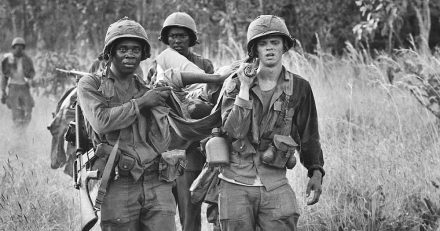
The First Pyrrhic Victory of the Vietnam War
or go to
Aletho News Archives – Video-Images
Frlom the Archives
The 52 Major Jewish American Organizations and Israel Celebrate Passover with the Slaughter of 25 Muslim, Christian and Secular Palestinians
By James Petras • Unz Review • April 8, 2018
Introduction
As of April 7, nearly three thousand unarmed Christian, Muslim and secular Palestinians have been wounded, over three dozen are in critical condition and at least twenty-five unarmed protestors, including children have been assassinated by hundreds of Israeli snipers and heavily armed troops shooting tank shells into crowds of civilians protesting their decades of incarceration by the racist Israeli state.
The Israeli government praised the ‘restraint and morality’ of the IDF, as did the fifty-two Major Jewish American Organizations (MJAO) who largely control the US Congress. These grotesque massacres began during the Christian Holy Week on Good Friday and Easter, coinciding with the Jewish Passover. The self-righteous officials of the MJAO and their relatives and friends broke matzos at joyful Seders as the blood of Palestinians soaked into ground at the fence containing the largest open-air prison camp in history, Gaza.
While tribal loyalties bonded the Israeli and Jewish American leaders, the politicians of the Western oligarchic electoral regimes refrained from criticizing the shocking display of brute force and even defended Israel’s cold blood mass killings of Palestinian civilians in their Gaza prison.
This paper will discuss and analyze the reasons for Israel’s willing Western accomplices and the centrality of its fifth column in the United States. … continue
Blog Roll
 Aletho News
- Unpacking glaring contradictions in US-Zionist justifications for war against Iran
- Iranian model of warfare bleeds US dry while Persian Gulf states watch and learn: Analyst
- IRGC orders ‘defeated’ US to evacuate industrial facilities in region
- Hegseth’s call for ‘no mercy’ to Iranians deemed war crime
- Iran War Exposes Limits of US Military Power – Journalist
- Even The Neo-Cons Admit The Iran War Is Failing
- Inside the Caucasus Drone Corridor Fueling Tensions With Iran
- ‘Not our war’: Trump’s naval coalition to reopen Strait of Hormuz dead in the water
- Iran declares support centers for USS Gerald R. Ford legitimate targets
- Moscow issues warning over Trump’s Golden Dome plan
- If Americans Knew
- ‘I Liked the House’: When Israeli Soldiers Turn Palestinian Homes into Barracks
- ‘They Were All I Had’: Lebanese Father Buries Parents, 4 Daughters Killed by Israeli Bombing
- Israel and its supporters are causing attacks on Jewish institutions. Case in point: Michigan synagogue tragedy.
- These are the casualties and cost of the war in Iran 2 weeks into the conflict
- Chicago Teachers Union accuses AIPAC of swaying elections with ‘dark money’
- Predictions of another 9/11, amid Israel-US killing spree – Not a ceasefire Day 157
- As US-Israel war on Iran rages, Gaza faces massive dust storm – Not a ceasefire Day 156
- No let-up in attacks on Gaza as Israel takes on Iran, Lebanon – Not a ceasefire Day 155
- ‘Of Course’: IDF Drops Case Against Soldiers Accused of Raping Palestinian Prisoner
- Don’t Fall for the Regime Change Talk. Israel Is ‘Mowing the Lawn’ in Iran
- No Tricks Zone
- Storing Green Energy To Last Germany 10 Days Would Require A 60-Million Tonne Battery
- New Studies: UK Sea Levels Were 4 Meters Higher Than Today During The Mid-Holocene
- Destructive Green New Deal: German Energy And Metal Group Warns Of Drastic Crisis
- New Study Documents A 20-Year Pause In Arctic Sea Ice Decline – Driven By Internal Variability
- Wake-up Call: Survey Shows Majority Of Germans Now Favor Postponing Climate Targets!
- Televised! Leading German Political Candidate Tells Schoolchildren CO2 Makes Sun Hotter!
- New Study: A Century Warming Of 1.1°C Is ‘Commonplace’ And ‘Not Unusual’ During This Interglacial
- New Study: ‘Internal Noise’ And Volcanic Forcing Can Trigger 10-15°C Warming Within Decades
- Glaciers Worldwide Are Suddendly Surging, Experts Blame Warming!
- Surprising Discovery: Sahara Is Greening…Billions Of Trees Where Once Thought To Be Barren
 Aletho News
