Book review: Arafat’s ghost and the Palestinian national movement
Osamah Khalil, The Electronic Intifada, 13 January 2011
 |
November 2010 marked the sixth anniversary of the death of Palestinian Authority President Yasser Arafat. For the last two years of his life, the once peripatetic leader who was a constant fixture on the world stage for almost four decades, was reduced to living in a small compound-cum-prison. Only after he became gravely ill did Israel permit Arafat to leave for medical treatment in France. Less than three weeks later, he returned to Ramallah in a coffin and was buried in a chaotic funeral. While the circumstances surrounding his death remain shrouded in controversy, its impact on the Palestinian national movement is indisputable.
Although As’ad Ghanem’s new book Palestinian Politics after Arafat: A Failed National Movement focuses on the post-Arafat era, the dead leader permeates the pages and his legacy hangs like a specter over the Palestinian body politic. As Ghanem documents, Arafat’s actions and decisions as chairman of the Executive Committee of the Palestine Liberation Organization (PLO) (1969-2004) and as president of the Palestinian Authority (1996-2004) served not only to consolidate his rule, but were directly responsible for the current crisis in the Palestinian national movement and its inability to achieve its goals.
A senior lecturer in the School of Political Science at the University of Haifa, Ghanem is unsparing in his assessment of the current state of Palestinian politics and unsentimental in his analysis. The Palestinian national movement has not only failed as the book’s subtitle declares, but is “disintegrating.” What follows, Ghanem argues, is fratricidal chaos.
Ghanem’s main argument is bleak. “The crisis among the Palestinians is so severe,” he writes, “that the street fighting and confrontations covered by the media barely scratch the surface” (p. x). He adds that “the Palestinians have actually lost the ability to function efficiently, internally or externally, as a single national group” (p. 173).
Drawing on primary and secondary sources in English and Arabic, Ghanem identifies three internal and external indicators that demonstrate that the Palestinian movement has failed. Internally, he argues, the movement has descended into “internecine struggle and internal collapse” (p. 18). More importantly, he contends that the movement has not achieved a single goal in its conflict with Zionism: it has not liberated Palestine, established an independent state, or even achieved a stable peace with Israel. Nor has Zionism been rejected internationally as a colonial movement. Finally, the stature of the Palestinian national movement in the Arab and international arenas has “plummeted” (p. 18).
What is the cause of this failure? Ghanem argues that the seeds were planted during the Oslo period (1993-2000). He asserts that a combination of factors have led to the “political bankruptcy” of the PA and the PLO (p. 12). These include the PLO’s shift from pursuing a comprehensive solution to a partial resolution of the Palestinian-Israeli conflict as embodied by the Oslo accords, Arafat’s dominance over the national movement and the increased corruption under his leadership.
Palestinian Politics after Arafat picks up where works by Yezid Sayigh and Rashid Khalidi left off. But while Ghanem cites and references Sayigh’s Armed Struggle and the Search for State (1997), Khalidi’s The Iron Cage (2007) is notably absent. Ghanem also benefits from and draws upon his earlier critical examination of the Palestinian national movement and the PA in The Palestinian Regime (2001). In both books Ghanem’s analysis echoes many of Edward Said’s criticisms of Arafat and the PA, particularly those discussed in his edited volumes Peace and its Discontents (1996), The End of the Peace Process (2001), and From Oslo to Iraq and the Road Map (2005). Indeed, Ghanem substantiates many of Said’s claims of the cronyism, corruption and authoritarianism that pervaded the PA and became synonymous with Arafat’s regime.
In chapter 1, Ghanem addresses the influence of external factors on the Palestinian national movement, offering a compelling analysis of Israel’s “post-Oslo strategy.” Adopted in the wake of the failed Camp David Summit in 2000, he argues that Israeli policy toward the Palestinians under Prime Minister Ariel Sharon shifted from conflict resolution to conflict management. The key element of this strategy was the separation of the two populations through the unilateral withdrawal from the Gaza Strip and the construction of Israel’s “separation wall” in the occupied West Bank, including East Jerusalem. Meanwhile, the existence of the PA allowed Palestinians to retain some measure of limited self-governance. Ghanem convincingly demonstrates that Israel’s goal was the establishment of a “Palestinian entity,” offering “more than autonomy and less than a state” (p. 36).
The reorientation of Israeli policy was driven by two related factors: first, Israel’s preoccupation with the “demographic threat” — in other words, that Palestinians will become the majority within the boundaries of historic Palestine. And second, the fear that Israel will be transformed into a binational state. Ghanem argues that in spite of Israeli efforts to ensure a Jewish majority, the higher birth rate of Palestinians portends the opposite, creating a constant source of “concern among Jewish politicians and academics interested in the character and identity of the state, prompting many of them to seek new ways of guaranteeing a Jewish majority” (p. 23). He demonstrates that Israeli academia, think tanks and the government often worked closely in researching and assessing strategies to deal with this issue. However, Israel’s post-Oslo strategy has been complicated by the parallel policies of increased settlement activity and the annexation of the Jordan River Valley. As a result, Israel’s goal of separation from the Palestinians is undermined by the greater desire for Palestinian land and resources.
In chapter 2, Ghanem discusses recent Israeli public opinion polls to demonstrate that the shift in Israeli policy has benefited from broad-based support. More importantly, these polls reveal that the maximum the Israeli public would be willing to concede in any peace agreement does not meet the minimum of Palestinian demands or fulfill their rights under international law. Thus, barring a dramatic shift in Israeli public opinion, the strategy adopted by the Palestinian leadership of negotiations accompanied by attempts to convince Israelis of their willingness to achieve peace is bound to fail.
The core of Palestinian Politics after Arafat focuses on the internal causes for the current state of affairs and their implications. In chapter 3, Ghanem analyzes Arafat’s successful effort to consolidate power first within the PLO and then the PA. He convincingly argues that the failures of the PA were rooted in the structure of the PLO and Arafat’s leadership of the organization, which “provide a partial explanation for both Palestinian achievements since the 1950s and also for the Palestinians’ failure to attain their national goals” (p. 71). Indeed, as Sayigh demonstrates, after the assassinations of Fatah’s cofounders and his closest advisors, Khalil al-Wazir (Abu Jihad) and Salah Khalaf (Abu Iyad) in 1988 and 1991, respectively, Arafat had few rivals within Fatah or the PLO with the authority to challenge his decision-making. Therefore, with the decline of the leftist wing of the PLO by the end of the Cold War and the predominance of Fatah within the organization, Arafat was able to consolidate his rule over both.
Building on Sayigh’s Armed Struggle and the Search for State, Ghanem demonstrates that the Oslo accords and creation of the PA represented the logical conclusion of Arafat’s leadership of the PLO. In other words, the agreement could not have been signed if the PLO were truly a democratic and representative organization with a leadership that was elected by and responsive to its constituency or with functional independent institutions. Instead, the PLO’s quota system was exploited by Arafat “to guarantee passage of the decisions he supported and the selection of his confidants to important posts” (p. 72). Meanwhile, it allowed for representation of the different Palestinian political groups and “independents” in the Palestinian National Council (i.e., the Palestinians’ “parliament in exile”) and the PLO’s Central and Executive Committees based largely on their size. In reality, the independents were largely aligned with Fatah, further bolstering its weight within the PLO and enhancing Arafat’s power. The end result was that the PLO’s different legislative and executive organs “had no real power, a vacuum was created at the top of the power structure — a vacuum that was filled by one man, a single individual who had replaced the institution” (p. 73).
The implications of Arafat’s control over the national movement were evidenced after his death with the scission of the Palestinian body politic. While the election of Mahmoud Abbas as Arafat’s successor in 2005 appeared to ensure Fatah’s hold on power, Hamas’s victory under a banner of “Reform and Change” in the parliamentary elections a year later represented the most significant threat to Fatah’s nearly forty years of dominance over the national movement. The ensuing clashes led to a rift between the two organizations as well as between the West Bank and the Gaza Strip that has yet to be resolved. Ghanem asserts that the conflict between Fatah and Hamas is “substantial in every respect” and that it “relates to deep and fundamental political, social and cultural differences in approach between the two movements.” Overcoming these differences, he argues, will require “great effort” to resolve the conflict between the two organizations based on their mutual embrace of “democratic principles” (p. 143-144).
However, Ghanem is pessimistic that such a rapprochement is possible. He concludes that “new thinking” is required by Palestinians “about all of the options available to them in their internal affairs and their relations with Israel, the West and the Arab world” (p. 182). While the current crisis in the national movement can be directly attributed to the “choice of Arafat and the PLO to guide Palestinian affairs,” Ghanem opines that “it is hard to envision the various factions and currents in the Palestinian national movement taking a consensual and logical step in this direction, and therefore it is improbable that it can extricate itself from the crisis” (p. 183).
Palestinian Politics after Arafat is a welcome addition to the literature on the Palestinian national movement, the Palestinian-Israeli conflict and the Middle East peace process. It is written in a clear style that makes it accessible to both specialized and general audiences. Although the text does suffer from repetition and would have benefited from closer and more thorough editing, these minor flaws do not diminish the overall work. It is highly recommended for readers seeking a better understanding of the history and current state of Palestinian politics.
Six years after his death, Arafat’s ghost still haunts the Palestinian national movement. From the cult of personality he constructed to the institutions he established and the agreements he signed, Arafat’s influence was not only profound but enduring. Indeed, the politics of divide and rule, and governance through intimidation, wasteful duplication and destructive rivalries that Ghanem describes have been adopted by Arafat’s children — his former supporters and associates who are ubiquitous inside and outside of government and who have chosen to mimic his style of leadership. Thus, Arafat’s specter is likely to hang over yet another generation of Palestinians. If Palestinians are to find a way out of this crisis, they must begin not by glorifying the national movement but by demystifying and demythologizing its history, and conducting a frank assessment of its successes and failures. Palestinian Politics after Arafat is an important step in that direction.
Osamah Khalil is a PhD candidate in US & Middle East History at the University of California, Berkeley. This essay was originally published by H-Net Reviews and is republished with the author’s permission.
Related Links
No comments yet.
Featured Video
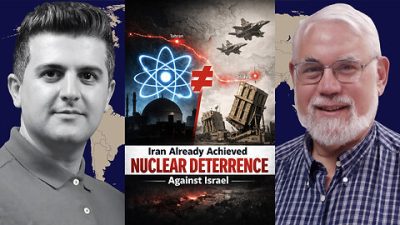
Prof. Ted Postol: Iran Already Achieved Nuclear Deterrence Against Israel
or go to
Aletho News Archives – Video-Images
From the Archives
How the occupied mentality syndrome works
Saudi Arabia on the American chessboard – Part 3
By B. J. Sabri | American Herald Tribune | June 27, 2016
Read part 2: “The occupied mentality Syndrome“
Previously I argued whether Saudi Arabia’s repeated involvements in U.S. interventions and wars stem from free national will or in response to a specific condition. For starters, in Saudi Arabia there is no national will. In Saudi Arabia, the national will is the will of the Al Saud clan. Still, when a major Arab state allies itself with a superpower that committed unspeakable crimes against humanity in almost every Arab country, then something is wrong. This fact alone should compel us to examine the U.S.-Saudi relation for one exceptional reason. As a result of the U.S.-Saudi wars, hundreds of thousands of people in Afghanistan, Iraq, Iran, Libya, Syria, Yemen, and Somalia have lost their lives. Millions became displaced in their own homelands. And millions more rendered refugees.
Attributing the Saudi policies to the bonds of “partnership” with the U.S. is frivolous. There are no bonds between these two thugs except those of business, military deals, secret plots, and wars. Proving this point, bonds such as these have no space for the American and Saudi peoples to share significant cultural or societal exchanges. If partnership is not the reason for the Saudi contribution to the U.S. strategy of empire and imperialism, then another reason must exist.
This leads to three possibilities. … continue
Blog Roll
 Aletho News
- NIAID/NIH and USDA Fund Bioengineered Chimeric Influenza Viruses Built Using Pandemic H1N1 Components: Journal ‘Science Advances’
- Hezbollah hits Israeli warship off Lebanon’s coast, sets it aflame
- Iran slams US strikes on B1 bridge, Mahshahr petrochemical plants as ‘blatant acts of state terrorism’
- In letter to UN chief, Araghchi warns of dire consequences of US-Israeli attacks on Iran’s nuclear facilities
- Why the CIA conspiracy to invade Iran with Kurdish militias failed
- Why Are Upbeat US Claims About Mission to Rescue Pilot ‘Highly Questionable’?
- Aircraft destroyed during US ‘rescue’ of downed F-15 pilot cost more than $100 million each
- Washington University removes professor who condemned US-Israeli war on Iran
- Russia Warns of Retaliation as UK Authorizes Seizure of Vessels
- Serbia thwarts plot to bomb Russia-Hungary gas pipeline – Vucic
- If Americans Knew
- In Iran, Israel-US take aim at “reason, research, and freedom of thought” – Daily Update
- US loses planes over Iran, Israel downgrades Lebanon war goals – Daily Update
- Israel Is Blocking Palestinians from Easter at Church Where Jesus Resurrected
- Plot to assassinate Palestinian activist follows harassment campaign promoted by Zionist groups and elected officials
- Prominent New York synagogue hosts presentation on why U.S. Jews should support the ethnic cleansing of Gaza
- Tapper vs. Piker: Is the CNN Anchor Auditioning for David Ellison?
- Shouldn’t Democrats Be Able to Condemn Genocide?
- Israel-US kill negotiators, destroy civilian structures, but Iran’s military capabilities still largely intact – Daily Update
- ‘War crime’: Global condemnation as Israeli ministers celebrate death penalty law targeting Palestinian prisoners
- 7 Ways Israel Is Turning Lebanon Into Gaza
- No Tricks Zone
- An Inconvenient Tree: Uncovered In Alps… Europe Much Warmer Than Today 6000 Years Ago
- New Study Reports A 60% Slowdown In Greenland’s Ice Loss Rate In The Last Decade
- Low Intensity Tornado Wrecks Major Solar Farm, Creating A Potential Toxic Dump
- New Study Finds Warming Saves Lives…Cold Temperatures 12 Times More Deadly Than Excess Heat
- German Science Blog Accuses PIK Climate Institute Of Hallucinating Climate Tipping Points
- Devastating Assessment Of Comirnaty Vaccine By Former Senior Pfizer Europe Toxicologist
- New Study: CO2 Is ‘Effectively Negligible’ As An Explanatory Climate Change Factor Since 2000
- Former Pfizer Toxicologist Dr. Helmut Sterz Tells Bundestag Hearing Pfizer Vaccine Should Have Never Been Approved
- Energy Expert: Germany’s Nuclear Phaseout Was A “500 Billion Euro Mistake”
- New Research: South Australia’s Mid-Holocene Sea Surface Temperatures Were 4°C Warmer Than Today
 Aletho News
Leave a comment