‘Israel plans to resume assassination campaigns’
By Saleh Naami | Ahram Online | April 4, 2011
The Israeli army awaits the improvement of weather conditions to resume its assassinations operations targeted at leaders and activists affiliated with Hamas military wing. In a report published by the Hebrew version of Ynet Monday, a military commentator, Ron Bin Yeshay, said that the resumption of assassinations comes in an effort to excursive deterrence in confronting Palestinian factions two years after the bloody war launched on the Gaza Strip.
Bin Yeshay, indicated that the decision to take these operations to the next level was made recently in a small ministerial meeting presided over by Benjamin Netanyahu. Also at the meeting were leaders of Israel’s security organs.
Netanyahu reportedly was reserved over the idea of launching a full-fledged military operation.
According to Bin Yeshay, in the event that Hamas steps up its operations against Israel in the wake of the assassination operations planned, the Israeli army may resort to targeting the movement’s political leadership.
The Israeli intelligence, he says, hopes the assassinations would prompt Hamas to prevent other Palestinian factions from launching rockets onto the Israeli entity.
Bin Yeshay warns that this kind of provocation would put thousands of ‘settlers’ around the Gaza Strip under the mercy of resistance rockets as well as jeopardize chances for trading prisoners with Hamas.
Radiation and Everyday Life
The FDA is Asleep at the Switch
By ROBERT ALVAREZ | CounterPunch | April 4, 2011
Recently, a senior scientist with the Food and Drug Administration (FDA) made this comment to the news media about radioactive fallout being detected in milk in the United States from the nuclear catastrophe in Japan:
“Radiation is all around us in our daily lives, and these findings are a miniscule amount compared Fukushima-Daiichi to what people experience every day. For example, a person would be exposed to low levels of radiation on a round trip cross country flight, watching television, and even from construction materials.”
No matter how small the dose might be, it is disingenuous to compare an exposure to a specific radioisotope that is released by a major nuclear accident, with radiation exposures in every-day life. The FDA spokesperson should have informed the public that radioactive iodine provides a unique form of exposure in that it concentrates rapidly in dairy products and in the human thyroid. The dose received, based on official measurements, may be quite small, and pose an equally small risk. However, making a conclusion on the basis of one measurement is fragmentary at best and unscientific at worst. As the accident in Fukushima continues to unfold, the public should be provided with all measurements made of radioactive fallout from the Fukushima reactors to allow for independent analyses.
Moreover, the FDA has been asleep at the switch when it comes to protecting public health from medical radiation exposures. According to the National Council on Radiation Protection, radiation exposures to the American public from medical devices, which the FDA regulates, have soared by nearly 600 percent since 1982. In 2002, the NCRP estimated that the public received an extra 53 millirem (0.53 mSv) per person per year from medical radiation sources. In 2006, the NCRP estimates that this dose has jumped to 300 millirem (3mSv)–nearly three times the annual dose allowed by the U.S. EPA from nuclear facilities.
The single largest contributor responsible for half of this dose to the American public is from Computed Tomography or CT Scans, whose use has skyrocketed over the past several years. According to a study in the Archives of Internal Medicine, as many as 29,000 future cancers could be related to CT scans performed in 2007 alone.
According to several articles in the New York Times, an alarming number of people have been severely overexposed to CT scans. FDA has yet to comment on how this may be affecting the health of the Americans in every-day life.
Robert Alvarez, an Institute for Policy Studies senior scholar, served as senior policy adviser to the Energy Department’s secretary from 1993 to 1999.
Israel targets international activists in Bil’in raid
Ma’an – 04/04/2011
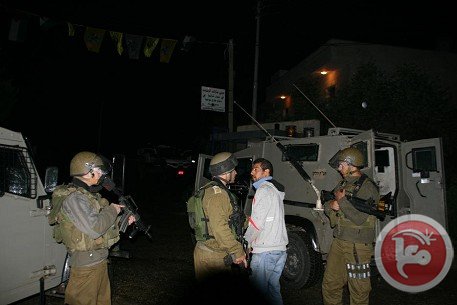
RAMALLAH — Israeli forces entered the central West Bank village of Bil’in on Monday morning, searching homes and harassing residents, reportedly in search of international solidarity activists who often remain in the area to document rights violations.
A spokesperson for the local popular committee said the raid began at 1:30 a.m. and lasted approximately an hour. The official said the homes of village residents Ali Birnat and Khamis Abu Rahma were targeted and searched.
Local committee members attempting to document the raid were prevented from accessing the scene of the searches.
An Israeli military spokeswoman did not immediately return calls seeking comment.
A statement from the Popular Struggle Coordination Committee said Abu Rahma was questioned about who was residing in his house, noting soldiers were “interested in internationals, although they could not find any,” noting that soldiers and police searched Abu Rahma’s home and garden, including the garbage and inside cars located nearby.
Groups of solidarity activists have for the past year stayed frequently in the village, which hosts the longest running weekly protest against Israel’s separation wall.
The prominent popular committee in the village has organized a yearly conference on popular non-violent resistance, and gained international support for its initiatives.
Since the early years of the protests, international solidarity activists have joined the demonstrations in an effort to mitigate the use of violence against the villagers. The use of high-velocity tear-gas canisters have caused death and injury to residents, and solidarity activists say an international presence witnessing and documenting the action often reduces the use of force.
Once activists left the village at the close of the protests, particularly during 2009 and 2010, Israeli forces would enter and detain teens they said were throwing stones at the soldiers, and later targeted protest leaders for detentions.
Activists began staying overnight in the village to document the night raids they said were being used to intimidate villagers, who have also launched court actions against the confiscation of land by Israel’s separation wall.
Sixty percent of the village lands now stand on the far side of the wall, and are largely inaccessible but for a gate that opens periodically allowing farmers to tend crops, without the use of heavy machinery or equipment.
Yemeni Forces Martyr 15 Protesters in Taez
Al-Manar – April 4, 2011
Yemeni security forces shot dead 15 anti-regime demonstrators and wounded scores more on Monday, on the second day of lethal clashes in Taez, south of the capital, medics said.
The bloodshed came as demonstrators staged a march on the governorate headquarters in the city to demand the ouster of Yemen’s embattled President Ali Abdullah Saleh. Witnesses said the demonstrators stormed the courtyard of the governorate and that plainclothes gunmen opened fire in an attempt to push them back.
The bloodshed, a day after another protester was shot dead in Taez, sent the death toll to more than 100 in a crackdown on protests in the impoverished Arabian peninsula state since late January.
In a similar confrontation, 13 people were shot and wounded late on Sunday as police clashed with tens of thousands of demonstrators in the western city of Hudaydah, according to witnesses.
Police opened fire as the protesters marched on to the Red City sea’s main local government building, the witnesses said. Thirteen were wounded by live bullets, another 30 by batons and rocks, while 400 others suffered from the effects of tear gas inhalation.
According to a report in the New York Times on Sunday, citing US and Yemeni officials, the US government is dropping its support for Saleh and taking part in efforts to negotiate his departure and a transitional handover.
US officials have told allies they see Saleh’s position as untenable due to the widespread protests, and believe he should leave office, the paper said, adding that negotiations over his departure began more than a week ago.
Report: 32 Palestinians died during 2011 Israeli aggression
Palestine Information Center – 04/04/2011
GAZA — 32 Palestinians have died and 118 have sustained injuries in Israeli aggressions during the first quarter of 2011, said Adham Abu Salmiyya, spokesman for the Gaza emergency services.
Many of those deaths took place in the second half of March and included children as the Israeli army bombed numerous targets amid threats of a new war on the Gaza Strip.
The count is high compared to first three months of the previous year, when 15 Palestinians died and 70 were injured.
According to Salmiyya, several civilian sites had been targeted, including the largest, one of the Gaza health ministry’s drug reserves in mid-February. A health clinic also sustained damage during the Israeli escalation on the Gaza Strip late March.
In the aftermath of the ongoing Israeli aggression against the Strip, 18 have been killed, including 5 children, and 52 have been injured, including 17 children and six women, according to the official figures.
Israel has launched so far 34 air strikes against civilian targets and fired at least 90 artillery shells. The latest attack was an admitted assassination of leaders in Hamas’s armed wing Saturday morning in Khan Younis, southern Gaza Strip.
The Israeli army targeted more than 15 sites in February and killed seven Palestinians and caused injury to 46 others, among them children. Two others were killed the same month by artillery shells fired by Israeli forces.
He pointed out that explosive objects left behind by occupation forces killed two men and wounded six in January. Three others died that month in air strikes.
Salmiyya highlighted that a number of government and private buildings underwent significant damage during the recent attacks. They include a soft drink factory east of the Al-Zatoun district in Gaza, a health clinic in Tawam, a metal workshop, a brick factory, a tire shop and a warehouse in Khan Younis.
Yemen police injure over 400 protesters
Press TV – April 4, 2011
Thousands of demonstrators had planned a 2 a.m. march to protest Sunday’s crackdown on protesters in Taiz, south of capital Sana’a, that killed two people and injured over a hundred others.
Police fired live rounds and tear gas against the crowd that wounded at least 409 people.
The protesters are demanding the ouster of President Ali Abdullah Salah who has often signaled that he has no intention of resigning soon.
“A successful revolution in Yemen could mean the whole Persian Gulf region erupting into revolution,” Chris Bambery, a Middle East expert, told Press TV on Sunday.
“Yemen has been an important staging post for the Americans … It is one of the major centers of the CIA in the region,” he said.
Yemeni President Ali Abdullah Saleh is an important ally for the US and the Saudis and they are trying to keep him in power to maintain their control over the Persian Gulf region, the analyst underlined.
Therefore, “There is no attempt [by the West] to reveal the realities of the Saleh regime: the torture, the repression, or the record of the Saudis constantly intervening in Yemen, carrying out bombing missions, etc.” he argued.
Inspired by the protests of Tunisia and Egypt, Yemen has witnessed daily anti-government protest rallies since mid-February, which demand crucial economic and political reforms, including an immediate end to President Saleh’s 33-year rule
Several opposition members argue that his long-promised political and economic reforms have not materialized.
On Peace and Critics

Ilan Pappé: I am willing to respond to any concrete question.
By Emanuel Stoakes | Palestine Chronicle | April 3, 2011
(Emanuel Stoakes talks to the Israeli historian Ilan Pappé about the prospect of a peace settlement in the Middle East, the plight of the Palestinian refugees, and his response to his numerous critics.)
After attending the Inaugural Lecture for the European Centre for Palestine Studies at Exeter University (the first institution of its kind in our country), I met the controversial Professor Ilan Pappé, who – with some gentle persuasion on my part – agreed to do an online interview on the Israel-Palestine conflict.
In brief, Pappé’s association with “controversy” stems from, amongst other things, his much-debated claim that Palestine was “ethnically cleansed” (in part at least) in the war of 1948; his claim, unpopular in Israel, that “Zionism is far more dangerous to the Middle East than Islam”; and because he has been accused of being, simply, a politically-motivated distorter of the historical “truth” by rival scholars.
Benny Morris, one of the prominent “New Historians” of Israeli history (a category that includes Pappé as well as the venerable Avi Shlaim) described a book by Pappé on Palestine as “appalling… [containing] errors of a quantity and a quality that are not found in serious historiography”; be that as it may, it is worth reviewing Morris’ own justification for Palestinian dispossession.*
King’s College’s Efraim Karsh and the inimitable Melanie Phillips in the Spectator are also voluble detractors; by contrast, John Pilger famously called him Israel’s “bravest” and “most principled” historian, whilst supporters in the academic world, including Noam Chomsky and Nur Masalha, continue to collaborate and concur with him.
Whatever one may think of his opinions, Pappé has borne a heavy cost for his heterodoxy: members of his family have shunned him due to his views, and he faced calls to resign from his former lecturing post at the University of Haifa, prompted by his political activities, and issued by none other than the university’s President.
I began by asking Professor Pappé if he believed that peace between Israel and the Palestinian Authority could be achieved through their (apparently moribund) peace talks, and if not, why?
Pappé: I have very little faith in the current phase of the negotiations. As in the past, it seems that the Israeli government is exploiting the ‘peace process’ to receive immunity for its continued dispossession of the Palestinians in the West Bank and the barbaric siege on the Gaza Strip. The current phase has already been exploited by Israel to expand its settlement in the Greater Jerusalem Area – which has been accompanied by demolition of houses and eviction of people – and to tighten its grip over the Palestinian villages and towns which are in the vicinity of the ever-growing Jewish colonies of the West Bank. Similarly, it felt free to tighten the siege over Gaza, despite its promise to the international community to ease it.
At the recent inaugural lecture of the European Centre for Palestine Studies at Exeter University, you introduced Filipo Grandi from United Nations Relief and Works Agency for Palestine Refugees in the Near East (UNRWA), who talked about the fate of the Palestinian refugees. Could you briefly outline the current human rights situation of the refugees and comment on their prospects for achieving some sort of improvement in their lives?
These are refugees who have lived in camps for more than sixty years – an unprecedented existence in modern times. Their situation varies between being denied access to meaningful jobs and benefits in Lebanon to a very limited access to the local economy and state benefits in Jordan. And we should not forget the refugee camps in the West Bank and the Gaza Strip, where people suffer from the double oppression of being both occupied and refugees.
There are also internal refugees in Israel itself and refugee communities in the world at large. Those in Israel live in better conditions than those in the occupied territories or the Arab world; but psychologically they had to undergo unbearable experiences for the past sixty years, such as watching their houses, businesses, factories, shops, fields and villages being pillaged and taken over by Jews.
There are two elements to this predicament. One is the dismal conditions in which people live, caged in camps that even when they become neighborhoods are on the margins of local society and in a limbo existence. Secondly, there have been more and more refugees as result of Israeli policy since 1948. There is no end to the dispossession, while at the same time the international community had already declared on 11 December 1948 through the UNGA resolution 194 that all these refugees have the unconditional right to return. As long as this continues, there is very little hope for peace and reconciliation in Israel and Palestine.
In the publication “Gaza in Crisis” you mention that you are working on a book with a ‘particular focus on the Israeli decisions taken in the early years’, that you claim ‘have not been deviated from’ up to the present. What were those decisions and how has the political class in Israel consented to their continued application?
The gist of these decisions was that there could be no overall strategy for Gaza after the Israeli ‘disengagement’ from it in 2005. Therefore, there were two options for the Israeli policy makers. Either they would succeed in subjecting the Strip to Israel’s will – and putting it under a joint Israeli and PA control – encircled by barbered and electric wire. In such a case life would have depended on Israel’s goodwill, and the people would have to resign to a life in Ghetto-like conditions. Should the people of Gaza resist the first option they would be subjected to collective punishment until they surrender – this is the second option. There is no real bottom line to collective punishment, but given the circumstances on the ground, by inertia it turns into a slow genocide. The Israeli public did not only endorse this policy, in the main it demands more punitive and more drastic actions against the people of Gaza.
Changing topic slightly, how do you view the Israeli claims that Hamas hides amongst civilian infrastructure and uses human shields, as a justification for civilian deaths as “collateral damage” to IDF offences? What evidence is there for this, and is it a fair point?
This always strikes me as a curious allegation. Gaza is the most densely inhabited urban space upon earth, where can Hamas operate from within a territory that is no bigger than the largest metropolises in the world? When you cage a million and half people in a tiny squeezed space like this, and they resist, and you retaliate, you know in advance what kind of collateral damage you are going to inflict.
Do you see the Palestinian Authority as being possibly “corrupt and complicit” in the oppression of those in the West bank, as has been suggested by some commentators?
I do not think the PA is more corrupt than any government in the world, or let alone in the Middle East. It is complicit but so is anyone who in a way does not actively resist the occupation. And yet, resisting today is almost like signing your own death certificate so that one should be very careful to make moral judgments from the outside.
One can make political judgments and the one I offer is that the PA helps the occupation and the illusion of a peace process and it seems that its dismantlement could be more beneficial for the attempt to expose the rouge nature of the Israeli regime and the criminal character of its policies.
One of your most controversial claims is that Palestine (as it was) was “ethnically cleansed” – at least in part – as a part of a systematic attempt to create a Jewish state at the cost of its Arab inhabitants. In the book “The Ethnic Cleansing of Palestine” you write that the Hagana’s Plan Dalet documents such intentions. Could you clarify and explain your position on this subject? Furthermore, how do you respond to the fierce criticism of your views? For example, David Pryce-Jones, described you in the Literary Review as “an Israeli academic who has made his name by hating Israel and everything it stands for.” Others have simply called you a falsifier. What is your response?
I am not going to respond to name calling – “Nazi”, “Falsifier”, “Communist”, “self-hating Jew” or whatever. I am willing to respond to any concrete question. Plan Dalet is a cluster of orders sent by the Hagana High Command from the beginning of March 1948. Each command instructed a specific unit to occupy villages or urban neighbourhoods, destroy them and expel the people living in them. The famous document Plan D, published on March 10, 1948 referred only to the areas the new state would occupy from the UN Arab states, but it included the same graphic description of how to deal with the native population of Palestine. The plan as published and the systematic cluster of orders, together with other evidence I cite in my book, show a clear intention to ethnically cleanse Palestine from its indigenous population, as indeed happened. Moreover, as shown by Nur Masalha, there is already supporting evidence that this intention existed from early on in Zionist thought and strategy.
Finally, could you comment on the under-discussed issue of resources and their allocation in both the West Bank and Gaza, particularly water. Do you think that there is any hope for parity between Palestinians and Israelis in the future in this area, without a separate Palestinian state?
No hope whatsoever. The Israelis are intent of robbing the Palestinians of land, water and any other natural resources – this is what dispossession is all about.
(*Note: In an infamous interview with Haaretz, Morris controversially justified the “tragedy” of the uprooting of Palestinians thus: “there was no other choice… Even the great [sic] American democracy [sic] could not have been created without the annihilation of the Indians. There are cases in which the overall, final good [sic] justifies harsh and cruel acts that are committed in the course of history…”)
Goldstone’s forced redaction does not clear Israeli war crimes
By Dr. Mustafa Barghouthi | April 3, 2011
Judge Richard Goldstone’s op-ed in The Washington Post is a direct result of tremendous and fierce pressure practiced by the Israeli and the Zionist lobby against him, his family and his friends in a frenzied campaign to force him to retreat from his report, an objective yet strong international condemnation against war crimes committed by Israel during its aggression against the Gaza Strip two years ago.
Goldstone’s personal revision – done under duress – does not change anything related to the report. While carrying his name, it was not developed or written solely by him, but by a Commission he headed. The report remains a document adopted by the Human Rights Council and UN bodies.
Goldstone cannot undo or change a single fact of the report, which has become the most important document for the international condemnation of Israel and the war crimes committed in the Gaza Strip.
Israel is trying to exaggerate Goldstone’s statements, although it refused to allow him access to the West Bank and has refused to cooperate with the committee. What we are witnessing is the result of a campaign against Goldstone to force him to say things he is not convinced of. It is a model for the ferocity of the Zionist lobby when it decides to target a person or institution.
This campaign against Goldstone is aimed at clearing the face of Israel to justify a new aggression on Gaza. What is required from the Palestinian Liberation Organization is to take the Goldstone report and the decision of the Hague Tribunal on the apartheid wall and settlements, which has been neglected for a period of six years, to the General Assembly of the United Nations. There they should explicitly demand sanctions on Israel and state that any laxity in the use of these important documents would encourage Israel to launch a counter attack to cancel their influence.
While Benajmin Netanyahu said the Goldstone report should go to the dustbin of history, it is the system of apartheid that should be relegated to history’s dustbin. Israel’s apartheid and the policy of the coalition government of the settlers represented by Netanyahu. As the people of South Africa were liberated, the Palestinian people will be liberated and one day Israel will be condemned its war crimes in Gaza and be convicted of all its previous crimes.
Featured Video

or go to
Aletho News Archives – Video-Images
From the Archives
Israel Would Have No Qualms About USS Liberty-Style FALSE FLAG If Iran Campaign Falters – Analysts
By Ilya Tsukanov – Sputnik – 18.06.2025
Donald Trump is mulling whether or not to join Israel’s aggression against Iran as Tel Aviv faces problems sustaining its defenses against growing counterstrikes, and apparently lacks a realistic game plan for an end to hostilities after failing to achieve its goals. Analysts told Sputnik how the US could be ‘nudged’ into the conflict.
“The US is already assisting Israel with supplies, intel, refueling support, etc. One of the many US posts in the region could be attacked for a casus belli,” former Pentagon analyst Karen Kwiatkowski explained.
“If Trump doesn’t comply with Israel’s demand” and join its aggression voluntarily, “a false flag may be needed” to drag the US in, Kwiatkowski, retired US Air Force Lt. Col.-turned Iraq War whistleblower, fears.
Netanyahu has a diverse array of options at his disposal, according to the observer, including:
- a false flag against US assets abroad blamed on Iran or one of its Axis of Resistance allies, like the Houthis
- a US domestic attack or assassination blamed on Iran
- Iranian air defenses ‘accidentally’ hitting a civilian jetliner carrying Americans
- use of a dirty bomb or nuclear contamination somewhere in the region blamed on Iran
- even blackmailing by threatening to use nukes against Iran if the US doesn’t join the fight
Kwiatkowski estimates that Israel probably has “enough blackmail power” against President Trump and Congress to avoid the necessity of a false flag operation, but a “USS Liberty-style” attack, targeting the soon-to-be-retired USS Nimitz supercarrier that’s heading to the Middle East, for example, nevertheless cannot be ruled out entirely, she says. … continue
Blog Roll
 Aletho News
- Embarrassing Pivot: U.S. considers dropping Iran oil sanctions amid war
- US has 2 months of rare earths left to replenish weapons amid Iran war: Report
- Strait Of Hormuz closure brings Empire to brink
- Iran controls Strait of Hormuz, dictates terms of war and peace as US excursion backfires
- Outlasting the Superpower: The Reasons Why Iran is Beating uhe US and Israel
- Top PMU commander, over a dozen fighters killed in new US strikes on Iraq
- Is Netanyahu’s war gamble threatening the future of ‘Israel’?: FT
- Smotrich calls for annexation of South Lebanon to Litani River
- Echos of Gallipoli? Hormuz and the Geography of Hubris
- Pakistan PM backs Iran’s right to self-defense amid tensions
- If Americans Knew
- UN’s special rapporteur on human rights says Israel is systematically torturing Palestinians
- Trump White House plagiarized Iran war manifesto from Israel-aligned think tank
- Gaza says 6–10 patients die daily waiting for treatment abroad as Israel blocks medical evacuations
- ‘Substantial evidence’ of double-tap strike in killing of Gaza’s Hind Rajab
- ‘Do Not Want To Die For Israel’: Doubts About Trump’s Iran Strategy Spread Among Troops
- Instead of taking Joe Kent’s claims seriously, the media is disregarding him as an antisemite
- Joe Kent’s Explosive Interviews about his Resignation over the Iran War
- Israel poised to take over southern Lebanon; settlers wreak havoc in West Bank – Not a ceasefire Day 165
- From Sde Teiman, the truth about Israel’s military justice system has been set free
- Child denied life-saving bone marrow transplant by Israel ‘because he is from Gaza’
- No Tricks Zone
- Devastating Assessment Of Comirnaty Vaccine By Former Senior Pfizer Europe Toxicologist
- New Study: CO2 Is ‘Effectively Negligible’ As An Explanatory Climate Change Factor Since 2000
- Former Pfizer Toxicologist Dr. Helmut Sterz Tells Bundestag Hearing Pfizer Vaccine Should Have Never Been Approved
- Energy Expert: Germany’s Nuclear Phaseout Was A “500 Billion Euro Mistake”
- New Research: South Australia’s Mid-Holocene Sea Surface Temperatures Were 4°C Warmer Than Today
- Storing Green Energy To Last Germany 10 Days Would Require A 60-Million Tonne Battery
- New Studies: UK Sea Levels Were 4 Meters Higher Than Today During The Mid-Holocene
- Destructive Green New Deal: German Energy And Metal Group Warns Of Drastic Crisis
- New Study Documents A 20-Year Pause In Arctic Sea Ice Decline – Driven By Internal Variability
- Wake-up Call: Survey Shows Majority Of Germans Now Favor Postponing Climate Targets!
 Aletho News