THE “NOT-TOO-HIDDEN AGENDA” OF THE IAEA
Nukespeak, and seductive devices, doctrines, dogmas, strategies and fallacies
By Dr F.K. Knelman and Dr. Joan E. Russow
Dr F.K. Knelman is the Vice President of the Whistler Foundation for a Sustainable Environment, and Dr. Joan E. Russow, was the delegate for the Whistler Foundation at the New York Preparatory Committee for UNCED and at the Earth Summit at Rio. The Whistler Foundation and the Nuclear Age Peace Foundation had circulated a Declaration that was signed by 37 Nobel Laureates; this declaration called for the phasing out of Nuclear energy. They requested permission to read this declaration at one of the plenary session at Rio Centro; permission was denied.
The International Atomic Energy Agency (IAEA) was initially set up in the 1960’s to regulate Nuclear energy; they have, however, become one of the strongest proponents of nuclear energy. A fundamental regulatory principle of the “separation of function” is that “the agency entrusted for regulating a technology cannot be the same agency that promotes the use of that technology”(Knelman, 1975). The IAEA , through its UNCED document entitled “Nuclear Techniques and Sustainable Development.” acted as a major proponent, not only of the current use, but also of the increased use of nuclear energy.
Agenda 21– the 700-page far-reaching action-plan document from UNCED, was adopted unanimously by the global community represented at the Earth Summit in Rio. In Agenda 21 the following concern about radiation was expressed:
The deterioration of environmental quality, notably air, water and soil pollution owing to toxic chemicals, hazardous wastes, radiation and other sources, is a matter of growing concern. (Chapter 16. subsection 12),
The extent of the consequences of the nuclear industry were also identified in Agenda 21:
Annually about 200,000 m3 of low-level and intermediate- level waste and 10,000 m3 of high-level waste (as well as spent nuclear fuel destined for final disposal) is generated world wide from nuclear power production. These volumes are increasing as more nuclear power units are taken into operation, nuclear facilities are decommissioned and the use of radionuclides increases. (Chapter 22, subsection 1)
Yet at one of the plenary sessions, Mr. Hans Blix, Director-General of the IAEA, was given permission to present a document advocating nuclear energy as being a safe alternative energy for the future. The International Non Governmental Organizations, (NGOs), however, recognized that the fundamental regulatory principle had been violated, and gave IAEA, the dubious honour of being presented with the International NGO Community’s “Most Preposterous Proposal Award” “for presenting nuclear power as the environmental solution in energy and successfully keeping its problems out of the documents”.
We would like to highlight some of the SEDUCTIVE DEVICES, STRATEGIES, DOCTRINES, DOGMAS and FALLACIES that have made the IAEA worthy of this honour. The examples will be drawn from the IAEA document, which was prepared for UNCED. Also references will be made to other UNCED Documents such as Agenda 21 and the Rio Declaration– the Earth Charter– 1992, and the Canada’s National Report for UNCED, 1992.
The seductive devices, strategies and fallacies used by the IAEA all draw upon the fundamental language of “nukespeak”. Knelman (1986, 1992) has expanded on the euphemistic nature of Nukespeak:
The rule is sanitizing by euphemism: political euphemism is of course older than nuclear power. How many of us recognize the “elimination of unreliable elements”? There are forbidden words in the language of civil nuclear power. For example, the words “accident”, “pollution” or “disease” are never used. Accidents are either “transients”, “events”, “significant events”, “anomalies’, “occurrences” or “abnormal occurrences”. In the extreme, they become “normal abnormalities”, i.e. truth becomes lies. Explosions are “events of rapid disengagement” or “prompt criticality”. Waste dumps are “residue areas”. Thermal pollution becomes “thermal effects” and pollution becomes “impacts”. Disease becomes “health effects”. This is a euphemism for cancer and genetic malformations. And missing plutonium, which is the link to clandestine acquisition of nuclear explosives is “material unaccounted for” or simply MUF! (Knelman, 1986.)
Other names relating to nuclear accidents are criticality, nuclear excursions, abnormal evolution, normal aberration, plant transients, unnecessary ignition sources. “Nukespeak” is perpetuated through “nuclear acceptance campaigns” by the PR departments of the nuclear establishment, designed to find “palatable synonyms” for “scare words” through the use of “truth squads” in order to remove “undue public concern”, create “pro-energy climate” where “technically qualified persons” would agree that nuclear power poses “no significant threat” and could be “entrusted” for the timely detection of potential abnormalities, or there is “no evidence” of such threat (as though lack of evidence is proof of assertion) and the promises that turned into lies i.e. that nuclear power would be “too cheap to meter” providing society with “boundless energy” and save us from “freezing in the dark”, this is the language of Orwell’s 1984, where peace is war and truth is a lie.
Seductive devices, doctrines, dogmas, strategies and fallacies
• The “blatant misrepresentation or expedient omission” device
This device involves the convenient exclusion of any part that could be detrimental to one’s position.
The IAEA through expedient omission (possibly for advantageous “clarification”) has left out a significant section in Agenda 21, which does not include nuclear energy in the list of “safe” technologies for the future.
To “clarify” Agenda 21, the IAEA in its UNCED document stated the following:
The UNCED Agenda 21 notes the need for a transition to environmentally sound energy systems, which will entail major changes in the patterns of energy production and consumption (IAEA Document, p.5, 1992)
In the Atmosphere chapter of Agenda 21, the following [safe] and sound technologies are advocated:
cooperate to increase the availability of capacity, capabilities and relevant technologies …for utilizing and producing environmentally [safe and] sound renewable energy resources, such as solar, wind, geothermal, hydropower and biomass,… Each resource should be utilized in a manner that … minimizes environmental stress and health impacts, …. (Section 9. Subsection 9 g Agenda 21, 1992)
Thus, we see that in the Energy section of Agenda 21, Nuclear energy is not mentioned as being one of the [safe] or sound technology.
• The “co-opted terms” strategy
This strategy involves the stipulating of a new definition for a term that would jeopardize one’s own argument.
In the Rio Declaration the following precautionary principle was advocated:
Where there are threats of serious or irreversible damage, lack of full scientific certainty shall not be used as a reason for postponing cost-effective measures to prevent environmental degradation.” ( Rio Declaration, 1992).
In the following statement, the IAEA redefines the important precautionary principle that was agreed to in the Rio Declaration, 1992.
The basic principles for radiation protection and safety in all applications and activities in nuclear science and technology are precautionary (IAEA Document , p. 2, authors emphasis)
The Rio principle, however, if enacted and truly adhered to, would bring about a moratorium on new nuclear power plants while phasing out currently existing ones.
• The “comparison of convenience” device
This device involves the narrowing down of alternatives so that whatever aspect is compared will appear favourable to the proposed alternative.
In the following statement from the IAEA document, the IAEA narrows the alternatives used for comparison to those, which would appear to be favourable within the terms of reference of their comparison. Thus, for example, they compare the relatively low volume of nuclear wastes to the much larger volume of wastes from fossil fuels. However, it is the volume of wastes multiplied by their toxicity that is significant. Merely comparing volumes is a “comparison of convenience”. The same false comparison is used to compare fuel requirements for the same energy output.
A nuclear plant would require 27 tonnes of slightly enriched uranium each year, which corresponds to a few truckloads. The corresponding quantity of natural uranium is 160 tonnes.
A coal-fired plant would need 2.6 million tonnes of coal each year… which corresponds to the load carried by 5 trains, each transporting 1400 tones. Every day an oil-fired plant would require 2 million tonnes of fuel oil per year, which is about 10 super-tanker loads. (IAEA document, 1992, p.12)
The nuclear establishment never fails to compare coal and nuclear as competing energy sources, always claiming the inherent superiority of nuclear. Usually this is accomplished by failing to include the entire fuel cycle over its full life of impacts, social and environmental. They conveniently exclude safety factors, production of wastes, disposability of wastes, degree of potential for bioaccumulation, lifetimes of wastes, toxicity and proliferation problems associated with nuclear.
Yet no bombs are built of coal, no terrorist is interested in hijacking coal or in the clandestine acquisition of coal weapons, coal plants do not have to be decommissioned and mothballed after some 30 to 50 years of operation, their hazardous wastes do not have to be guarded for 100,000 years, coal dust is easier to contain than radon and coal plants do not require liability subsidies by acts of parliament” ( Knelman, 1992)
• The “lull and lure of the technological fix” syndrome, the “misleading assurance” device or the fallacy of “technological omnipotence”
This syndrome, device or fallacy involves the revealing of the seriousness of the problem and the offering of a “solution” which is usually worse than the problem
The proponents of a potentially dangerous act indicate that they recognize the danger and focus on one area for which they can offer a technological fix
In the following statement from the Radioactive Wastes section of Agenda 21, into which it appears that the IAEA had input, the following situation is recognized:
Annually about 200,000 m3 of low-level and intermediate-level waste and 10,000 m 3 of high-level waste ( as well as spent nuclear fuel destined for final disposal) is generated world wide from nuclear power production. These volumes are increasing as more nuclear power units are taken into operation, nuclear facilities are decommissioned and the use of radionuclides increases. The high level waste contains about 99 percent of the radionuclides and thus represents the largest radiological risk. ( Agenda 21, Radio Active wastes, 21.1.)
In the IAEA document the authors affirm the certainty of the technological fix.
There is nevertheless a consensus among experts that safe geological disposal of high level wastes, including spent nuclear fuel, is technically feasible. ( IAEA Document, p.17)
The view of experts in the field is that safe technological solutions exist for managing the waste. (IAEA Document, 1992, p. 15)
Knelman (1992) points out that:
The assumption behind the notion of permanent disposal of High level wastes deep in a stable geological formation is false because this assumption relies on the mistaken belief that anything we do technologically can be permanent. This assumption of permanence is particularly false when we are dealing with the lithosphere over some 100,000 years and when we must first disturb the geological structure by digging a very deep hole. AECL (Atomic Energy of Canada Limited) has dug a deep hole near Lac du Bonnet in Manitoba which is totally inappropriate for such so-called “permanent” disposal. For one thing you must, in all events, avoid water. Yet, The AECL hole must be soaked. Walt Patterson, a nuclear critic described this AECL research as follows: A drunk has lost his keys and is discovered by a police officer crawling around a street light. When questioned, the drunk admitted that he had lost his keys in front of a dark building, a block away. When asked why the drunk was then searching around the streetlight, the drunk said “you see, officer, the light is better here” and as Dr Martin Resnikoff, an expert on geological waste disposal has put it “the earth does not stand still. In other words, experts in the relevant fields do not agree. (Knelman, 1992, in progress)
• The “rhetoric of notwithstanding clause” doctrine
This doctrine allows for the indulging in strong statements about deep concern and the need for significant change and then including a notwithstanding clause that negates the strong statement.
In the Rio declaration (1992) there is a strong statement about third world dumping:
States should effectively cooperate to discourage or prevent the relocation and transfer to other States of any activities and substances that cause sever[e] environmental degradation or are found to be harmful to human health. (Principle 14 Rio Declaration, 1992)
There are, however, disturbing “notwithstanding clauses” that appear such as in the following statements:
Develop regulatory and non-regulatory measures and procedures aimed at preventing the export of chemicals that are banned, severely restricted, withdrawn or not approved for health or environmental reasons, except when such export has received prior written consent from [t]he importing country or is other wise in accordance with the PIC procedure; ( Section 19. subsection 53 f , Agenda 21, 1992)
In the following statement in the IAEA document, the IAEA energetically adopts the spirit of the “rhetoric of notwithstanding clauses”:
The IAEA in 1990 promulgated a Code of Practice on the International Transboundary Movement of Radioactive Waste as a basis for harmonization of national legislation and policies. The code lays down the conditions and principles for international waste transfers, such as that movement must be made in a manner consistent with the international safety standards, that there must be prior notification and consent of the sending, receiving and transit States, and that each State involved should have a regulatory authority… ( IAEA Document, 1992, p. 20
• The “flamboyant absurdity” doctrine or dogma
This doctrine or dogma carries the concerns of one’s opponents to the point where the regulations governing the opponents concerns should become the standard by which other potentially lesser concerns will be addressed.
The IAEA appears to advocate that, what is considered to be the most dangerous industry, just because it is dangerous, has developed stringent standards, and that they who contribute to possibly the greatest uncontrollable hazard are the ones who should assist the community in dealing with other hazards.
The basic principles for radiation protection and safety in all applications and activities in nuclear science and technology are precautionary and are so well founded in science and so widely accepted that they are now also being regarded as a source of guidance in controlling pollutants and impacts arising from other human activities. Their wider application would undoubtedly contribute towards sustainable development. (p.2)
• The “justification through dire consequences of alternatives” device
This device involves the revealing of the dire consequences of the current practices and offering one’s own practice as the salvation for the problem.
In the following statement the IAEA cites the dire consequences of the other alternatives to justify their proposed alternative:
The problem of acid rain, which is linked to emissions from the burning of fossil fuels, has been recognized for decades. … the primary concern about the continued and increasing use of fossil fuels is the problem of CO2 emission and the potential impact on world climate. … World conference on the Changing Atmosphere… need to reduce CO2 emission (IAEA document, p. 5)
climate change in connection with fossil fuels (p. 9)
•The “benevolent outcome exploitation” strategy
This strategy involves the selection of the outcome which the opposition to the proposed alternative would advocate and the subsequent attempt to demonstrate that the proposed alternative, which the opposition would condemn, would be the best way of achieving that outcome.
In the following statements from the IAEA document, the IAEA focuses on the desired outcomes of reducing acid rain and limiting greenhouse gas to justify the selection of their proposed alternative:
Several governments have already made commitments to reduce carbon emission, while recognizing that this will be hard to achieve except through drastic policy decisions in the energy sector. (IAEA Document, 1992, p.6)
Nuclear power plants in normal operations cause very little environmental detriment and are beneficial when they replace plants which would emit CO2, SO2, and NO2 (p. 12). In this resects they would help to reduce acid rain and limit greenhouse gas emissions (IAEA Document 1992 , p. 12)
To accomplish the above, IAEA and other nuclear proponents are recommending the construction of some 4000 to 5000 new commercial nuclear power plants. […]
Conclusion
The “nukespeak” and the seductive devices, strategies, syndromes used by the Nuclear Industry involve the language of delusion and distortion. Hopefully, through continued revealing and categorizing of these words of delusion we could, in some small way, counteract the impact of the not too-hidden-agenda of the IAEA, and the rest of the nuclear establishment and their government supporters.
Bahrain bans main opposition daily
Press TV – April 3, 2011
The Bahraini government has banned the publication of a leading independent newspaper due to its coverage of the popular revolution in the Persian Gulf littoral state.
Bahrain’s Information Affairs Commission suspended Al-Wasat daily, which has been critical of the government’s brutal crackdown on demonstrators in the country, BNA state news agency reported without giving further details.
The commission also ordered a case to be opened for further investigation by the Public Prosecution.
Masur al-Jamri, a former opposition activist during the uprising in the 1990s, is the editor-in-chief of the Bahraini newspaper.
Last week, Bahrain’s state television accused Al-Wasat of publishing “fabricated and false news” about the “security developments in Bahrain.”
The Bahraini police, backed by Saudi and UAE troops, have intensified the clampdown on anti-government protesters who demand a constitutional monarchy.
Rights groups and opposition parties say hundreds of people have been detained or have gone missing since the protests began in mid-February, with at least 25 people killed and 1,000 others wounded so far.
Reconsidering Goldstone’s reconsideration
By Yaniv Reich on April 2, 2011
Israel is “vindicated”, claims FM Lieberman about Richard Goldstone’s latest op-ed in the Washington Post, adding that “we knew the truth and we had no doubt it would eventually come out.” Netanyahu has gone so far as to demand the Goldstone report be retracted from the UN. Among all the celebrations and self-congratulatory pats on the back, it is worth pausing for a moment to ask: what exactly does Goldstone’s latest essay vindicate?
The answer seems much less clear than Israel’s unconditional supporters want to argue. The most charitable portions of his piece (to Israel) suggest that “if I [Goldstone] had known then what I know now, the Goldstone Report would have been a different document.” This statement is so patently obvious as to be meaningless, particularly given Israel’s steadfast non-cooperation at the time of the investigation, but let’s assume Goldstone means this in a substantive way. He did publish this piece under a headline of “reconsidering the Goldstone report” after all.
What else is there in this op-ed that suggests a change from the original Goldstone report? The op-ed focuses on a very select group of three themes. The first point relates to the ongoing investigations into allegations of war crimes. Goldstone refers to the UN committee of independent experts’ report to support this argument, and he quotes that report to the effect that “Israel has dedicated significant resources to investigate over 400 allegations of operational misconduct in Gaza” while “the de facto authorities (i.e., Hamas) have not conducted any investigations into the launching of rocket and mortar attacks against Israel.” The second key claim in Goldstone’s op-ed is confusing, but suggests that the ongoing investigations have proven that Israel did not attack civilians as a matter of intentional policy. How these conclusions have been reached before the investigations, which the Goldstone report called for as its primary recommendation, have been concluded is unclear. The third theme is that Hamas has not done any of the good things Israel has done: Hamas did deliberately target civilians, Hamas didn’t investigate anything, Hamas continues to be guilty of war crimes by firing rockets into civilian areas, and Goldstone admits he was maybe “unrealistic” and “mistaken” to believe Hamas would investigate itself.
I want to first highlight several general observations about what this op-ed does and doesn’t say. Then I will address these three themes in detail.
What the Goldstone Op-Ed Doesn’t Say
Limited to one of seven categories of possible war crimes
The Goldstone commission’s findings on deliberate attacks on civilians is one of at least seven broad findings (which comprise hundreds of specific incidents) that raise issues about Israel’s conduct. These other key findings include: (1) Israel’s illegal siege on Gaza, which constitutes a form of collective punishment and so violates the Fourth Geneva Conventions; (2) The political institutions and buildings of Gaza cannot be lawfully considered part of the “Hamas terrorist infrastructure” and so Israel’s attacks on them are unlawful; (3) Israel taking insufficient measures to protect the Palestinian civilian population; (4) “indiscriminate” attacks (as distinct from “deliberate” attacks) killed many civilians without any credible military rationale for those actions; (5) Israeli use of weapons, such as white phosphorous and flechette missiles, which, although not banned under current international law, were used in ways that do violate the laws of war; and (6) Israel’s deliberate destruction of civilian infrastructure, including industrial plants, food production facilities, sewage treatment plants, and water installations; this destruction has no military justification (for example, Israel’s “wanton destruction” of Mr. Sameh Sawafeary’s chicken coops, killing all 31,000 chickens inside despite there being no military activity in the area) and could constitute a crime against humanity.
Goldstone’s op-ed pointedly excludes discussion of all of these very serious charges of possible war crimes and possible crimes against humanity, so it’s odd that FM Lieberman and his hasbara “excreta” (his word, not mine) think Israel is somehow absolved of all responsibility. One cannot avoid the impression that Israel’s unconditional supporters still haven’t actually read the report.
Overlooks key impacts of the report
One of the strangest omissions in the op-ed was the recognition that, assuming Israel is conducting investigations in good faith (again, more on that terrible assumption below), it was the Goldstone report that caused Israel to conduct these investigations. The best evidence this is the case was Israel’s absolute refusal to investigate anything except the credit card theft case, until, that is, it got worried that Israeli leaders might end up in the International Criminal Court. More evidence to support this argument can be found in Israel’s response to a conflict without a Goldstone kick in the rear: the 2006 Lebanon war. In that case, Israel constituted the whitewashing Winograd Commission, which didn’t even pretend to investigate the “the government policies and military strategies that failed to discriminate between the Lebanese civilian population and Hizbullah combatants and between civilian property and infrastructure and military targets”, as Amnesty International and other human rights organizations observed. Thus, without the Goldstone report, there is absolutely no reason to believe Israel would be conducting the investigations for which Goldstone is largely praising Israel now.
Another important impact, which was a direct result of the report’s recommendations, was the policy changes, such as “new Israel Defense Forces procedures for protecting civilians in cases of urban warfare and limiting the use of white phosphorus in civilian areas.” I have argued elsewhere that these policy changes acknowledge implicitly that Israel had not been minimizing civilian casualties, as it argues so vociferously, or else there wouldn’t be any possible policy changes that could further minimize civilian harm. Either civilian casualties were being minimized before, in which case the policy changes are meaningless, or are minimized now (hypothetically, of course), in which case Israel wasn’t doing its utmost to protect civilians from harm before. It certainly can’t be both. Either way, these policy changes are directly related to the report, a point Goldstone’s op-ed also makes.
Validity of Specific Claims Made in Goldstone’s Op-Ed
The credibility of Israel’s investigations
Goldstone’s op-ed gives the strong impression that, despite the length of Israel’s military investigations being “frustrating”, Israel has “appropriate processes” in place. It is difficult to understand where this belief comes from, because it certainly does not appear in this form in McGowan Davis report he cites (McGowan Davis chairs the UN committee of independent experts monitoring implementation of the Goldstone report recommendations). That report paints a far less appealing picture of Israeli’s military investigations, noting, for example, that:
- “That Israel’s military justice system provides for mechanisms to ensure its independence”, but “the Committee further noted that notwithstanding the built-in structural guarantees to ensure the MAG’s [Military Advocate General’s] independence, his dual responsibilities as legal advisor to the Chief of Staff and other military authorities, and his role as supervisor of criminal investigations within the military, raise concerns in the present context given allegations in the FFM report that those who designed, planned, ordered, and oversaw the operation in Gaza were complicit in international humanitarian law and international human rights law violations.”
- “The Committee does not have sufficient information to establish the current status of the on-going criminal investigations into the killings of Ateya and Ahmad Samouni, the attack on the Wa’el al-Samouni house and the shooting of Iyad Samouni.. . . As of 24 October 2010, according to media reports, no decision had been made as to whether or not the officer would stand trial.” This case is of course cited directly by Goldstone, yet his arguments are incompatible with the actual McGowan Davis report.
- “The Committee has discovered no information relating to four incidents referred to in the FFM [Goldstone] report: incident AD/02, incident AD/06, the attack on the Al-Quds hospital, and the attack on the Al-Wafa hospital. Nor has the Committee uncovered updated information concerning the status of the criminal investigations into the death of Mohammed Hajji and the shooting of Shahd Hajji and Ola Masood Arafat, and the shooting of Ibrahim Juha. Accordingly, the Committee remains unable to determine whether any investigation has been carried out in relation to those incidents.”
- “It is notable that the MAG himself, in his testimony to the Turkel Commission, pointed out that the military investigations system he heads is not a viable mechanism to investigate and assess high-level policy decisions. When questioned by commission members about his “dual hat” and whether his position at the apex of legal advisory and prosecutorial power can present a conflict of interest under certain circumstances, he stated that “the mechanism is calibrated for the inspection of individual incidents, complaints of war crimes in individual incidents (…). This is not a mechanism for policy. True, it is not suitable for this.” “
- “The Committee expressed strong reservations as to whether Israel’s investigations into allegations of misconduct were sufficiently prompt. In particular, the Committee expressed concern about the fact that unnecessary delays in carrying out such investigations may have resulted in evidence being lost or compromised, or have led to the type of conflicting testimony that characterizes the investigations into the killings of Majda and Raayya Hajaj, and the inconclusive findings reported with respect to the tragic deaths of Souad and Amal Abd Rabbo and the grave wounding of Samar Abd Rabbo and their grandmother Souad.”
- “The promptness of an investigation is closely linked to the notion of effectiveness. An effective investigation is one in which all the relevant evidence is identified and collected, is analyzed, and leads to conclusions establishing the cause of the alleged violation and identifying those responsible. In that respect, the Committee is concerned about the fact that the duration of the ongoing investigations into the allegations contained in the FFM report – over two years since the end of the Gaza operation – may seriously impair their effectiveness and, therefore, the prospects of achieving accountability and justice.”
These conclusions of the McGowan Davis report give a very different impression of mechanisms for accountability in Israel’s military justice system than one would understand from a casual reading of Goldstone’s latest op-ed. For additional, excellent analysis of these points, Adam Horowitz’s piece at Mondoweiss is a must-read.
Was it a deliberate policy of targeting Palestinian civilians?
If this op-ed “vindicates” anything, it seems to be about Israel deliberately targeting civilians as a matter of policy. The Goldstone report investigated 11 specific cases, which were concerning because civilians were killed “under circumstances in which the Israeli forces were in control of the area and had previously entered into contact with or at least observed the persons they subsequently attacked, so that they must have been aware of their civilian status.” After reviewing the details of these cases, which included not only the attack on the Samouni family (discussed in the op-ed) but also attacks on a mosque at prayer time and the shootings of civilians waving white flags, the report concludes:
“From the facts ascertained in the above cases, the Mission finds that the conduct of the Israeli armed forces constitute grave breaches of the Fourth Geneva Convention in respect of willful killings and willfully causing great suffering to protected persons and as such give rise to individual criminal responsibility.” (Goldstone report, pp. 16)
This finding, of course, is precisely why the report recommends that Israel launch credible investigations into possible wrongdoing, which Goldstone claims Israel is now doing (more on this later). In that sense, Israel’s investigations confirm many of the key findings of the Goldstone report, a point I’ve raised previously.
The conclusion above, which is easily the strongest charge in the entire Goldstone report, has very little to do with Goldstone’s latest statement that “civilians were not intentionally targeted as a matter of policy.” The Goldstone commission and other human rights investigations have never said the IDF maintains a policy of deliberately targeting civilians. This is a red-herring; nobody seriously believes there is a high-level policy to murder civilians. With that said, there are nearly always instances in war in which certain operational orders and much stress, often combined with racism or other forms of dehumanization, result in civilians being deliberately murdered; there is evidence of several such instances in the Goldstone report. The actual issue at hand is that “these incidents indicate that the instructions given to the Israeli forces moving into Gaza provided for a low threshold for the use of lethal fire against the civilian population” (Goldstone report, pp. 16). This low threshold was an intentional policy, as has been confirmed by dozens of soldiers’ and officers’ statements. For example, many people have commented before about how the IDF “rewrote the rules of war for Gaza”, in particular by getting rid of “the longstanding principle of military conduct known as ‘means and intentions’—whereby a targeted suspect must have a weapon and show signs of intending to use it before being fired upon—as being applicable before calling in fire from drones and helicopters in Gaza last winter.” The intentional, deliberate policy was one of “literally zero risk to the soldiers”, an order that is inescapably related to the high civilian casualties among the Palestinians. For these reasons the main argument in Goldstone’s latest op-ed, which FM Lieberman erroneously believes “vindicates” Israel, is entirely besides the point.
Condemning Hamas
Hamas certainly, and unlawfully, does deliberately target civilians. This is not only grotesque but illegal, and Hamas military leaders should be referred to the International Criminal Court for this since Hamas’ political leadership has refused to investigate the matter themselves and hold those responsible for war crimes to account. But, of course, this was already well known by anybody who read the Goldstone report, which wrote:
“The Mission has further determined that these [8000 rocket] attacks [since 2001] constitute indiscriminate attacks upon the civilian population of southern Israel and that where there is no intended military target and the rockets and mortars are launched into a civilian population, they constitute a deliberate attack against a civilian population. These acts would constitute war crimes and may amount to crimes against humanity.”
One could have also reached the same level of awareness by reading any of Amnesty International, Human Rights Watch or other human rights organizations‘ press releases and reports. In this sense, there is absolutely nothing new about Hamas in Goldstone’s latest op-ed, yet some Israelis and Jewish groups seem surprised (see, e.g., AIPAC’s one of many tweets on the matter).
A Sad, Integrity-Damaging Turn
The first time I saw Judge Goldstone speak in person he was striking in his equanimity and unshakable commitment to international law. Even in the face of hate-filled attacks by Jews in the audience, who compared his report to the Protocols of the Elders of Zion, he handled himself with a level of firm principle that I imagined to be unmovable. The second time I saw him speak in public a year later, he seemed tired and worn down by the relentless attacks against him by those who chose to attack the messenger instead of deal with the message. It was nothing concrete that he said, but there was a withered tone in his voice and a sort of quiet resignation that his best intentions had been so vehemently manipulated—and misunderstood.
Goldstone’s latest op-ed is something else altogether. It does not challenge a single concrete finding in the entire report, and he has not conceded absolutely anything to his critics in that way. In fact, his findings under severe constraints have held up remarkably well with time. But the tone and timing of this current piece suggest that somehow the report should be “reconsidered”, that it was somehow wrong. Moreover, his comments seem to intentionally mislead about the content of the UN independent committee’s findings on due process in Israel. This is nothing more than a bone to Israel’s apologists, which is deeply misleading for all the reasons discussed here. I am afraid this is a sad, integrity-damaging turn for a man who had singlehandedly done so much to protect people from war crimes in Israel, Palestine, and elsewhere.
And he should have known better, that is, he should have known that this craven gesture to Israel would not allow his enemies to forgive him and welcome him back to the broader Jewish community. Already the enemies, sensing weakness, attack for the final kill attempt. Jeffrey Goldberg, with the tone of the intellectual gatekeeper he fashions for himself, makes it clear this doesn’t change the “blood libel.” The editor-in-chief of the Jerusalem Post, David Horovitz, tells Goldstone “an apology is not good enough“. We can expect much, much more of such attacks.
Goldstone has done neither international law and accountability for war crimes—nor himself—any favors with this latest, depressing op-ed.
Libya and Obama’s Defense of the ‘Rebel Uprising’
James Petras | The People’s Voice | April 2nd, 2011

Over the past two weeks Libya has been subjected to the most brutal imperial air, sea and land assault in its modern history. Thousands of bombs and missiles, launched from American and European submarines, warships and fighter planes, are destroying Libyan military bases, airports, roads, ports, oil depots, artillery emplacements, tanks, armored carriers, planes and troop concentrations. Dozens of CIA and SAS special forces have been training, advising and mapping targets for the so-called Libyan ‘rebels’ engaged in a civil war against the Gaddafi government, its armed forces, popular militias and civilian supporters (NY Times 3/30/11).
Despite this massive military support and their imperial ‘allies’ total control of Libya’s sky and coastline, the ‘rebels’ have proven incapable of mobilizing village or town support and are in retreat after being confronted by the Libyan government’s highly motivated troops and village militias (Al Jazeera 3/30/11).
One of the most flimsy excuses for this inglorious rebel retreat offered by the Cameron-Obama-Sarkozy ‘coalition’, echoed by the mass media, is that their Libyan ‘clients’ are “outgunned” (Financial Times, 3/29/11). Obviously Obama and company don’t count the scores of jets, dozens of warships and submarines, the hundreds of daily attacks and the thousands of bombs dropped on the Libyan government since the start of Western imperial intervention. Direct military intervention of 20 major and minor foreign military powers, savaging the sovereign Libyan state, as well as scores of political accomplices in the United Nations do not contribute to any military advantage for the imperial clients – according to the daily pro-rebel propaganda. The Los Angeles Times (March 31, 2011), however described how “…many rebels in gun-mounted trucks turned and fled…even though their heavy machine guns and antiaircraft guns seemed a match for any similar government vehicle.” Indeed, no ‘rebel’ force in recent history has received such sustained military support from so many imperial powers in their confrontation with an established regime. Nevertheless, the ‘rebel’ forces on the front lines are in full retreat, fleeing in disarray and thoroughly disgusted with their ‘rebel’ generals and ministers back in Benghazi. Meanwhile the ‘rebel’ leaders, in elegant suits and tailored uniforms, answer the ‘call to battle’ by attending ‘summits’ in London where ‘liberation strategy’ consists of their appeal before the mass media for imperial ground troops (The Independent (London) (3/31/11).
Morale among the frontline ‘rebels’ is low: According to credible reports from the battlefront at Ajdabiya, “Rebels …complained that their erstwhile commanders were nowhere to be found. They griped about comrades who fled to the relative safety of Benghazi… (they complained that) forces in Benghazi monopolized 400 donated field radios and 400 more…satellite phones intended for the battlefield… (mostly) rebels say commanders rarely visit the battlefield and exercise little authority because many fighters do not trust them”(Los Angeles Times, 3/31/2011). Apparently ‘Twitters’ don’t work on the battlefield.
The decisive issues in a the civil war are not weapons, training or leadership, although certainly these factors are important: The basic difference between the military capability of the pro-government Libyan forces and the Libyan ‘rebels’, backed by both Western imperialists and ‘progressives,’ lies in their motivation, values and material advances. Western imperialist intervention has heightened national consciousness among the Libyan people, who now view their confrontation with the anti-Gaddafi ‘rebels’ as a fight to defend their homeland from foreign air and sea power and puppet land troops – a powerful incentive for any people or army. The opposite is true for the ‘rebels’, whose leaders have surrendered their national identity and depend entirely on imperialist military intervention to put them in power. What rank and file ‘rebel’ fighters are going to risk their lives, fighting their own compatriots, just to place their country under an imperialist or neo-colonial rule?
Finally Western journalists’ accounts are coming to light of village and town pro-government militias repelling these ‘rebels’ and even how “a busload of (Libyan) women suddenly emerged (from one village)…and began cheering as though they supported the rebels…” drawing the Western-backed rebels into a deadly ambush set by their pro-government husbands and neighbors (Globe and Mail (Canada)3/28/11 and McClatchy News Service, 3/29/11).
The ‘rebels’, who enter their villages, are seen as invaders, breaking doors, blowing up homes and arresting and accusing local leaders of being ‘fifth columnists’ for Gaddafi. The threat of military ‘rebel’ occupation, the arrest and abuse of local authorities and the disruption of highly valued family, clan and local community relations have motivated local Libyan militias and fighters to attack the Western-backed ‘rebels’. The ‘rebels’ are regarded as ‘outsiders’ in terms of regional and clan allegiances; by trampling on local mores, the ‘rebels’ now find themselves in ‘hostile’ territory. What ‘rebel’ fighter would be willing to die defending hostile terrain? Such ‘rebels’ have only to call on foreign air-power to ‘liberate’ the pro-government village for them.
The Western media, unable to grasp these material advances by the pro-government forces, attribute popular backing of Gaddafi to ‘coercion’ or ‘co-optation’, relying on ‘rebel’ claims that ‘everybody is secretly opposed to the regime’. There is another material reality, which is conveniently ignored: The Gaddafi regime has effectively used the country’s oil wealth to build a vast network of public schools, hospitals and clinics. Libyans have the highest per capita income in Africa at $14,900 per annum (Financial Times, 4/2/11. Tens of thousands of low-income Libyan students have received scholarships to study at home and overseas. The urban infrastructure has been modernized, agriculture is subsidized and small-scale producers and manufacturers receive government credit. Gaddafi has overseen these effective programs, in addition to enriching his own clan/family. On the other hand, the Libyan rebels and their imperial mentors have targeted the entire civilian economy, bombed Libyan cities, cut trade and commercial networks, blocked the delivery of subsidized food and welfare to the poor, caused the suspension of schools and forced hundreds of thousands of foreign professionals, teachers, doctors and skilled contract workers to flee.
Libyans, who might otherwise resent Gaddafi’s long autocratic tenure in office, are now faced with the choice between supporting an advanced, functioning welfare state or a foreign-directed military conquest. Many have chosen, quite rationally, to stand with the regime.
The debacle of the imperial-backed ‘rebel’ forces, despite their immense technical-military advantage, is due to the quisling leadership, their role as ‘internal colonialists’ invading local communities and above all their wanton destruction of a social-welfare system which has benefited millions of ordinary Libyans for two generations. The failure of the ‘rebels’ to advance, despite the massive support of imperial air and sea power, means that the US-France-Britain ‘coalition’ will have to escalate its intervention beyond sending special forces, advisers and CIA assassination teams. Given Obama-Clinton’s stated objective of ‘regime change’, there will be no choice but to introduce imperialist troops, send large-scale shipments of armored carriers and tanks, and increase the use of the highly destructive depleted uranium munitions.
No doubt Obama, the most public face of ‘humanitarian armed intervention’ in Africa, will recite bigger and more grotesque lies, as Libyan villagers and townspeople fall victims to his imperial juggernaut. Washington’s ‘first black Chief Executive’ will earn history’s infamy as the US President responsible for the slaughter of hundreds of black Libyans and mass expulsion of millions of sub-Saharan African workers employed under the current regime (Globe and Mail 3/28/11).
No doubt, Anglo-American progressives and leftists will continue to debate (in ‘civilized tones’) the pros and cons of this ‘intervention’, following in the footsteps of their predecessors, the French Socialists and US New Dealers from the 1930’s, who once debated the pros and cons of supporting Republican Spain… While Hitler and Mussolini bombed the republic on behalf of the ‘rebel’ fascist forces under General Franco who upheld the Falangist banner of ‘Family, Church and Civilization’ – a fascist prototype for Obama’s ‘humanitarian intervention’ on behalf of his ‘rebels’.
-###-
James Petras is the author of over 62 books published in 29 languages, and over 600 articles in professional journals, including the American Sociological Review, British Journal of Sociology, Social Research, and Journal of Peasant Studies. He has published over 2000 articles in nonprofessional journals such as the New York Times, The Guardian, The Nation, Christian Science Monitor, Foreign Policy, New Left Review, Partisan Review, Temps Moderne, Le Monde Diplomatique, and his commentary is widely carried out in the Internet. James Petras is a former professor of Sociology at Binghamton University, New York, has a 50-year membership in the class struggle, the author is an advisor to the landless and jobless in Brazil and Argentina and is co – of Globalization Unmasked (Zed Books) and Zionism, Militarism and the Decline of U.S. Power (Clarity Press, 2008). James Petras latest book is War Crimes in Gaza and the Zionist Fifth Column in America (Atlanta: Clarity Press 2010). He can be reached at: jpetras@binghamton.edu
Friday: the day of rage in the Arab world
PressTVGlobalNews | April 1, 2011
Part 2
The day of rage, the day of departure and the day of salvation: these are the names that protestors across the Arab world have been giving to Friday. From Yemen, to Bahrain, to Egypt, Tunisia, Jordan and Saudi Arabia, demonstrators have been massing after Friday prayers to demand change and to safeguard the ideals of their revolutions.
This program will be asking whether the revolutionary movement in Egypt is moving in a new direction, why President Saleh in Yemen is refusing to step down and how the western stance on Bahrain and Libya has raised questions of double standards.
To answer the questions, Homa Lezgee is joined by Chris Bambery, Dr. Saeb Shaath and Ramzy Baroud.
Egyptian authorities are preventing a big supply of cement from entering the Gaza strip. The coalition for the Lifting of Gaza Siege says the move indicates that the Egyptian Revolution has done nothing to change Cairo’s policies toward Palestine.
Press TV’s Hassan Alkatib reports from Cairo.
Bahrain: A Legacy of Broken Promises
By Ali Jawad / Dissident Voice / April 2nd, 2011
Stories of revolutions take a long time to be told. The tides of change currently sweeping across the Middle East – steadily rattling one kleptocratic autocrat after the next – will amaze and no doubt exhaust the energies of subsequent generations as they attempt to build a theoretical edifice against which the overpowering outburst of collective human sentiment currently being witnessed gains some veritable empirical sense of meaning.
To even the most seasoned in the art, piecing together the jigsaws is quite a delicate task. Much of the ambiguity that pertains to the political futures of Tunisia and Egypt for instance draws from a lack of clarity as regards the forces that propelled these uprisings, their political leanings, and whether or not these actors have the structural capacities to actualise their aspirations. It is thus fair to say that we are far from being in a position to present an analytical framework to comprehend the gripping dynamics of the Middle East’s uprisings.
The above said however, it is quite easy to discount some ridiculous interpretations of unfolding events that have been disseminated by decrepit monarchs and quarters that have an unvoiced proclivity to maintain the present status quo. For more than a month now, the courageous people of Bahrain have taken to the streets to voice their demands against a ruling monarchy that bears all the hallmarks of a classical mafia-like kleptocratic authoritarian dictatorship. In the face of flying bullets and unending billows of choking teargas smoke, both the young and old have descended to the streets with remarkable valour and upheld entirely peaceful methods of protest. Indeed one of the separating features of the Bahraini uprising is the ubiquitous slogan of “silmiyya, silmiyya” (peaceful, peaceful!). The narrative promoted by the ruling Al-Khalifa monarchy, neighbouring dynastic sheikhdoms and their US patrons has centred however on an entirely bogus claim of supposed Iranian interference.
In recent times, the above claim has been recycled many a time over across the Arabian Peninsula from Kuwait to Yemen. Without measuring the credibility of these claims, the mainstream media has often regurgitated accusations in spite of the most glaring contradictions. In the current context of Bahrain, the suggestion of foreign interference in the shape of an ethereal “Iran threat” (whose promotion has become Secretary of State Clinton’s single-most absorbing vocation) does not only represent a wholesale neglect of factual evidence, but in fact proceeds to insult the sacrifices of generations of Bahrainis tracing back to the birth of the nation.
The Constitutional Dream
Having formally attained independence from British rule in 1971, the political situation in Bahrain was characterised by a great deal of vibrancy and optimism. The archipelago state had witnessed organised political action throughout the British protectorate period, particularly in the decades immediately prior to independence. Precursors to the organised demands for political reform that eventually prompted the Emir to dissolve the National Assembly and brazenly violate the constitution less than two years after its promulgation could be found most notably in the mid-Fifties with the broad mobilisation achieved by the National Union Committee (NUC). The NUC represented the highest symbol of a truly nationalist reform project with demands centred upon the empowerment of an elected legislature, an end to British colonial interference, a fairer socio-economic order and a fundamental revision of state security laws.
Echoing calls made a few decades earlier, the demands raised by leading political figures shortly after independence similarly attracted a broad national, cross-sectarian constituency. The tide of political activism that swept through much of the Middle East at the time was keenly felt in Bahrain. The stoning of British Foreign Secretary, Selwyn Lloyd’s, car in 1956 in protest against Britain’s continued interference in Bahraini affairs through the person of Sir Charles Belgrave, as well as regular strikes at the BAPCO petroleum refinery and organised protests during the Suez Crisis later in the same year are representative of the political mobilisation seen in Bahrain during the period. It also highlights the grassroots identification of political movements within the country with the wider Arab situation.
Bahrain’s first post-independence head of state, Emir Isa bin Salman Al-Khalifa’s, decision to dissolve the National Assembly in 1975 set the tone however for a period that came to be defined by the jockeying for power between the Emir and his sibling, Prime Minister Khalifa bin Salman Al-Khalifa. According to most Bahrainis, much of the nation’s contemporary woes trace back to the birth of the nation and the unconstitutional steps undertaken by the first Emir. The popular political narrative thus begins with a great deal of discontent and mistrust towards the Al-Khalifa monarchy.
With a steady decline in the standard of living, rising unemployment and a suffocated public space resulting from years of absolute autocratic rule epitomised by the enforcement of the State Security Law of 1974, nationalist and leftist movements began a series of consultations in June 1990 to discuss the deteriorating situation in Bahrain. Leftist groups had been heavily weakened over the years due to the hard-handed crackdown by the monarchy for the industrial trade strikes of 1974.
These consultations climaxed with the formation of the People’s Petition Committee, and the open petition of October 1994 which was signed by more than 23,000 signatories. The demands set out therein underscored the primary need to restore the National Assembly, and highlighted the debilitating consequences of the Emir’s constitutional transgressions:
“The reality we now face dictates that we will fail our duty if we do not speak-out frankly to you. Your wise leadership witnesses the incorrect circumstances that our country is passing through amid the changing regional and international environment while the constitutional institution is absent. Had the banning of the National assembly been lifted, it would have enabled overcoming the negative accumulations which hinder the progress of our country. We are facing crises with dwindling opportunities and exits, the ever-worsening unemployment situation, the mounting inflation, the losses to the business sector, the problems generated by the nationality (citizenship) decrees and the prevention of many of our children from returning to their homeland. In addition, there are the laws which were enacted during the absence of the parliament which restrict the freedom of citizens and contradict the Constitution. This was accompanied by lack of freedom of expression and opinion and the total subordination of the press to the executive power. These problems, your Highness, have forced us as citizens to demand the restoration of the National Assembly, and the involvement of women in the democratic process. This could be achieved by free elections, if you decide not to recall the dissolved parliament to convene in accordance with article 65 of the Constitution…”
Akin to his reactions in 1975, the Emir now in the third-decade of his absolute rule brutally cracked down on nationalist groups and exiled leading figures including the current secretary general of Bahrain’s largest political group Al-Wifaq, Sheikh Ali Salman. Rather expectedly, the monarchy placed the finger of blame for the unrest on external forces, i.e., the Islamic Republic of Iran and Lebanese resistance movement Hezbollah. In order to quell the popular uprising, the Kingdom of Saudi Arabia also dispatched two brigades of its National Guard (around 4,000 soldiers).
By the time of the Emir’s death in 1999, Bahrain boasted a horrendous human rights track record including widespread practise of torture under the instruction of British colonial officer Ian Henderson. The promises of reform made by the incumbent Emir Hamad bin Isa Al-Khalifa were partly inspired by the failure of the iron-fist policies to weigh in the discontent, and also in order to buttress his own standing against his uncle, Prime Minister Khalifa bin Salman Al-Khalifa, who wielded a great deal of power acquired over three successive decades as Prime Minister; a position the latter continues to enjoy 40 years after his appointment.
The spirit of optimism was short-lived however, as the Emir reneged on his promises of meaningful reform. The “Bahrain model”, as it has condescendingly come to be known, essentially served to project an illusion of reform without altering in any substantive way, the pre-existing decision-making and power structures. Assurances made by the King in the National Action Charter (overwhelmingly supported by 98% of those who voted between 14-15 February 2002) to institute an assembly that would be elected through free and direct elections in effect gave veracity to the home-grown nature of the pro-democracy movement and its legitimate demands.
The Pearl Protests
As hundreds took to the streets on February 14 in their ‘Day of Rage’, the King’s henchmen had by then already settled on the solution of a violent suppression. Unlike in Tunisia and Egypt where live ammunition was employed after a few days of protests, in Bahrain its resort was almost immediate with the first fatality, Ali Abdulhadi Mushayma, falling on the first day of protests.
The date for the protests, 14th February, was deliberately chosen to provide a clear message to the ruling Al-Khalifa family that the hollow reforms enacted as part of the National Action Charter process had been far from satisfactory. Just as with decades past, the demands of protesters drew from the fundamental frustrations of generations who aspired for real constitutional reforms and a substantive role for an elected national assembly with legislative powers.
The monarchy’s brutal resort to violence that has thus far resulted in the deaths of at least 25 innocents served to exacerbate hopes in the reform-driven process, and has in turn directed grievances at the highest symbol of the status quo, namely, the Al-Khalifa rule. In essence, the ruling family’s desire for an absolute monopoly of power presents an intractable quandary that cannot be permanently masked by the duplicitous reforms carried out since 2002. Faced with the alternative of relenting some of its power to more democratic institutions or to violently suppress the calls for change, the Al-Khalifa regime has clearly selected the latter choice.
Since the outset of protests more than a month ago, Bahrain’s phony veneer of a progressive, liberal form of rule has been crushed before the world. The systematic silencing of journalists, use of live ammunition against defenceless protesters, dozens of arbitrarily detained individuals including major political opposition figures, shameful attacks on hospitals and medical teams, and the targeting of entire villages and neighbourhoods have all served to disclose the reality of the Al-Khalifa monarchy.
The outdated tactic of brandishing the pro-democracy movement within Bahrain as foreign-backed is principally used to deflect attention from the consistent demands for constitutional reform. In this regard, the role of the US in obstructing meaningful reforms and allowing for the gross misrepresentation of the demands of the political opposition has been pivotal. For obvious geopolitical stakes, the continued hosting of the Fifth Fleet base and unequivocal support for successive US military operations stretching from the Gulf War, the Al-Khalifa monarchy has been looked upon by Washington as a key strategic ally. The hypothesized domino-effect and shared fate that connects Bahrain and Saudi Arabia also looms large, no doubt, for US and western officials.
Shortly on the heels of their participation in a seminar at the House of Lords in London to highlight the deterioration in human rights and freedoms, the detention of leading opposition figures in August 2010 was met with the blanket support of US ambassador Adam Ereli who censured them for taking their case outside the shores of Bahrain. Their subsequent torture and the wall of silence erected in the face of journalists also drew little comment from western capitals.
The developments in Bahrain in recent weeks are in fact symptomatic of the confluence of interests of local autocratic tyrannies and imperial powers who continue to hinge their hegemonic agendas to the nightmarish reigns of unpopular despots. For decades, the pre-eminence of geopolitical and energy interests in the foreign policy outlooks of the US and its allies has relegated the suffering of millions of Arabs to a footnote that merit the occasional remonstrations or hand-wringing. All the while, the warehouses of these military-autocratic establishments have been filled with western arms in deals that run into hundreds of billions of dollars.
Revolutions certainly do take a long time to be told, but the time it takes for long compressed frustrations to burst out and overpower the most dictatorial reigns is almost instantaneous in comparison. For the US and its allies, the experiences in Egypt and Tunisia should be reason enough to return to the drawing books.
But more importantly, the uprising peoples of the Middle East have definitively established that the aspirations of peoples cannot forever be ignored in the equations of power. They have proven that real change can only occur in the absence of western tanks and fighter jets. To these brave men and women, the free peoples of the world owe great admiration and respect. The annals of history are lit with the sacrifices of selfless martyrs, and in recent weeks more glorious epics have been added to its volumes. Over time, many have sought to deface the most honourable sacrifices; the least we can do from afar is to ensure that these uprisings are placed within their correct historical, political and socio-economic contexts.
~
Ali Jawad is a political activist and a member of the AhlulBayt Islamic Mission (AIM). He can be reached at: jawad.ali313@googlemail.com. Read other articles by Ali, or visit Ali’s website.
‘US Boat to Gaza’ organizers respond to Netanyahu charges against flotilla
By Jane Hirschmann and Richard Levy | Mondoweiss | April 2, 2011
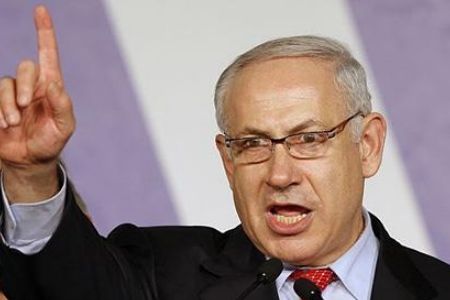
Israeli Prime Minister Benjamin Netanyahu recently met with UN Secretary-General Ban Ki-moon to ask for UN assistance to stop the planned flotilla scheduled to break the Gaza blockade in late May, 2011.
He argued to the UN Secretary General that the flotilla is a conglomerate of “extreme Islamists that are interested only in provocation” and hell bent on the destruction of Israel. Nothing could be further from the truth. We, who are actively engaged in the U.S. Boat to Gaza, named The Audacity of Hope, are appalled by this flagrant misrepresentation, so typical of right-wing Israeli propaganda. […]
The U.S. flagged ship –and all the ships in the Flotilla– that sails to Gaza in May – will sail in peace and with a single nonviolent message—“The people of Gaza are entitled to the same life, liberty and pursuit of happiness that are the right of every human being.”
Ban Ki-moon should remind Benjamin Netanyahu that Israel’s occupation of the West Bank, siege of Gaza, expansion of settlements, destruction of homes, usurpation of water and air rights, walls of confinement , brutal military presence, and daily sniper attacks on innocent civilians constitute the paramount violence and terrorism in the Mideast, conduct that we all abhor. The 2nd International Freedom Flotilla comprised of 22 countries and many boats, heading toward Gaza, including The Audacity of Hope, is not the problem. Israel’s conduct in Palestine is the problem and should be condemned by the UN, the U.S. and all people who care about freedom and justice.
Jane Hirschmann and Richard Levy are volunteers with the US Boat To Gaza.
Abusisi’s First Public Words at Hearing: ‘I am a Simple, Innocent Man’
Richard Silverstein | Tikun Olam | April 1, 2011
Dirar Abusisi has made his first public statement since his kidnapping in Ukraine and extraordinary rendition to Israel. Before beginning a hearing that is underway as I write this, he made his first comments to the media during the court proceedings, saying:
They interrogated me about Gilad Shalit but I have no connection or information about him. It’s all lies. I am merely a simple man and electrical engineer. I send my love to my family. I am innocent.
He also said that he had been kidnapped from Ukraine and encouraged his family to be strong and patient.
Defense minister Ehud Barak has now gotten into the act and reinforced Netanyahu’s claim that Abusisi knows about Shalit. This appears to be the line that the Israeli security services have fixed on as most likely to bring a prison sentence against him after two trial balloons linking him to building missles under Iranian training and the Victoria arms shipment were apparently dropped.
Yossi Melman is also reporting based on security sources that Abusisi will be charged with membership in a terror organization and aiding Hamas in manufacturing weapons. The latter is a charge whispered by another TV news military correspondent weeks ago. So here you can see how the gag works. The defense and anyone sympathetic to the defendant may not report on matters that might work in his favor. However, the prosecution and Shabak may leak at will to their chosen favorite reporters, who dutifully put it in the media pipeline. Once again revealing a system stacked against all security detainees and in favor of the State.
The “leniency” with which the authorities have treated him derives no doubt from Bibi Netanyahu opening his big mouth during the Channel 2/YouTube interview and crowing about Abusisi’s membership in Hamas. By the way, can you imagine the leader of a democratic nation proclaiming before not just a national, but international audience that a prisoner who hasn’t even yet been charged with a crime is guilty of being a member of a banned organization? This surely is a conviction even before the trial has begun. Would any of my pro-Israel readers want to reconcile that with the concept of innocent till proven guilty? Or does that hold true only for Israeli Jews? Palestinians apparently are guilty, not until proven innocent because in the Israeli system that doesn’t happen. Just guilty.
So the court and/or prosecutor figured that because Bibi had already convicted him before the international media that they should at least allow him to be photographed and make a short statement.
Abusisi’s remand has been extended for another five days, which will bring him to 45 days imprisonment without being charged with a crime, an unprecedented length of time for Israeli prisoners. At that time, charges are supposed to be filed (but at the last hearing that’s what the court insisted would happen).
I repeat what I said after the Attorney General stated that he was unsatisfied with the evidence Shabak had compiled against Abusisi–whatever they’ve gotten so far hasn’t been enough. They need to continue working on him till they can build a case for something. This delay also lends credibility to Smadar Ben Natan’s statement yesterday that her client has done nothing wrong, but rather deserves an airline ticket back to Ukraine with an apology (fat chance). If Abusisi is guilty of something why has it taken 45 days to file charges? How long do you need to have 24 hour/7 days a week access to a prisoner in order to find him guilty of terrorism? A month, a year?
HEBRON: Settlers attack Palestinian home in Beqa’a Valley
CPTnet | 1 April 2011
On Monday 14 March, fifteen settlers from Harsina Settlement attacked the Jaber home in the Beqa’a Valley, adjacent to Hebron. At the initial attack during the day, the Israeli military stopped the settlers, but they returned at 6:30 p.m. and stoned the house for one hour with no interference by the military.
The Jaber home sits below the settlement of Givat Ha Harsina and houses several families—seventeen people in all, with twelve children. This family has lost most of its land to the Harsina settlement over the years, land for which it has deeds dating back to the time of the Ottoman Empire.
Surrounding homes in the Beqa’a Valley have likewise suffered tremendous pressure from the settlers and Israeli military. Within the last year alone, the Israeli military destroyed thirteen water cisterns in the valley, cut irrigation pipes to the grape vineyards, occupied a home during increased settler activity, allowed the building of at least four more houses in Harsina Settlement during the so called “Settlement Freeze,” and permitted visiting settlers to plant 1000 trees on Palestinian land in this valley.
One of the Jaber brothers who lives across the road from Givat Ha Harsina—now living in his third home after the military destroyed his first two homes—said he was so worried that he wondered whether he should move his family to one of his cousins’ homes for safety. He told CPTers he cannot fall asleep until 1:30 or 2:30 a.m. at night.
For photo coverage of previous acts of destruction in the Beqa’a see http://cpt.org/index.php?q=gallery&g2_itemId=20652
Supermarket fires 21 Arab employees at once
By Saar Yachin | +972 Blog | April 2, 2011
Last week, one of Israel’s major retail chains, Kimat Hinam (“Almost Free”), dismissed 21 of its employees. It did so by handing all 21 notices to just one employee, requesting that he distribute them among his coworkers on Saturday, when the shop is of course closed. Although unconventional, this was apparently convenient, as they all know each other, all work at the same branch in Modi’in, and are all Arab.
A few days later, the Equal Opportunities Commissioner at the Ministry of Industry, Trade and Labor filed a petition against the termination, citing suspicion of “nationalist motives.” In reply, the retail chain issued a statement, saying that the company was forced to dismiss those employees in light of their “violent behavior,” so severe that other workers expressed “significant concern for their lives.” The statement also clarified that as 23% of Kimat Hinam’s employees are Arabs, it is impossible for the Company to be one “in which discrimination prevails.” Globes further reported (Hebrew) that the dismissal occurred after “15 – 20 Arab workers of the branch behaved wildly, especially following the Fogel family massacre in Itamar.”
The last accusation is hard to take seriously, as it is unspecific in numbers, conforms too well to the fantasy of the hostile “other,” and describes a single event which somehow escalated following the terror attack. It could simply be poorly worded, or it may be a manipulative libel – but in any case it was not included in the company’s official statement. The claims that were included in it, however, do not make much sense either: Twenty-one employees suddenly and jointly posing a threat to the lives of their fellow workers, intimidating those belonging to the ‘vulnerable’ majority – that is hard to believe. Nevertheless, Kimat Hinam’s arguments could have some truth in them, as outlandish as they are, but even if they were to be proven, the company’s conduct would be harder to defend.
What struck me at first about this story was how blunt, unprofessional and irresponsible, businesswise, this action was. How could a company be so incompetent, when its actions are sure to be perceived as blatantly racist, all the more so when it chooses to deliver the notices in such a suspicious and ugly manner? But the sad truth is, that in Israel today, this is not even considered foolish business conduct. In Israel, it is perfectly normal for nationalist (read: racist) considerations to dictate business ventures.
In a more tolerant society, such a move would be considered wrong, because it is not ‘politically correct’, and as discredited as this term may have become, it does point to some healthy social norms. Even if Kimat Hinam’s almost-free-of-plausibility narrative is true, had it happened in a comparable American retail chain, all efforts would be made to avoid giving the impression that workers are being fired on a racial/nationalist basis. At the very least, the workers would be notified personally and individually, and they would probably be entitled to a warning first. Giving consideration to the company’s public image would not be a sign of hypocrisy, but rather an acknowledgement of the healthy values of a society in which racism is frowned upon, and in which it is unprofitable for a corporation to be associated with it.
In Israel, however, companies have no reason to fear any public reaction for being perceived as discriminatory against Arabs. In fact, the opposite is true, as can be seen in the disgusting attempts at boycotting Rami Levy, another retail chain, for its employment of Arabs, which jeopardizes the racial purity of its Jewish employees; proposed ‘kosher’ certificates for businesses which refuse to employ Arabs; and other moves for boycotts, which are now blossoming in abundance in this springtime of bigotry. In such an atmosphere, the owners and managers of this and other businesses can rest assured, that there will be no public outcry, no consumer backlash, or in fact, any outrage at all at such discrimination.
Non-violent marches attacked in at least 4 Palestinian towns
By Saed Bannoura – IMEMC News – April 02, 2011
Weekly non-violent anti-Wall protests in a number of towns across the West Bank on Friday, including Bil’in, Nil’in, al Ma’sara and Nabi Saleh, were attacked by Israeli forces wielding tear gas and other ‘less-than-lethal’ weapons. Three protesters were injured when they were hit by high velocity tear gas canisters fired at close range by Israeli soldiers.
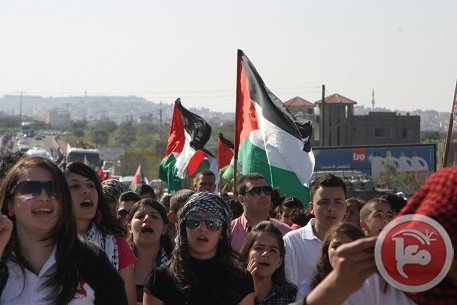
The protests on Friday commemorated Palestinian Land Day, the day in 1976 when Palestinians organized protests against Israeli confiscation of their land, and six protesters were gunned down by Israeli troops. Palestinians, along with supporters around the world, organize events each year on Land Day to protest the ongoing Israeli confiscation and annexation of Palestinian land.
According to a report from the Palestine News Network, in the village of Bil’in, where anti wall protests have been organized for the past six years, three men were injured when Israeli troops fired tear gas and rubber-coated steel bullets at protesters. After the midday prayers in the local mosque finished, villagers were joined by international and Israeli peace activists and marched up the gate of the wall separating villagers from their lands.
Troops stationed there opened fire at protesters injuring three. The men sustained injuries when soldiers fired tear gas canisters directly at them. Many others were treated for the effects of tear gas inhalation.
The nearby village of Ni’lin held a similar protest on Friday. After conducting the Friday prayers on lands near the wall, villagers and their supporters marched up to the gate of the wall separating local farmers from their land. Israeli troops used tear gas and sound bombs to force people back. Many were treated for the effects of tear gas inhalation.
In the southern West Bank village of al-Ma’sara, near Bethlehem, Israeli troops used tear gas to suppress the weekly protest against the wall. Local politicians along with Israeli and international supporters joined the villagers after the midday prays and marched to the lands where Israel is building the wall.
Troops fired tear gas to force people back into the village; many were treated for the effects of tear gas inhalation.
Featured Video

or go to
Aletho News Archives – Video-Images
From the Archives
Israel Would Have No Qualms About USS Liberty-Style FALSE FLAG If Iran Campaign Falters – Analysts
By Ilya Tsukanov – Sputnik – 18.06.2025
Donald Trump is mulling whether or not to join Israel’s aggression against Iran as Tel Aviv faces problems sustaining its defenses against growing counterstrikes, and apparently lacks a realistic game plan for an end to hostilities after failing to achieve its goals. Analysts told Sputnik how the US could be ‘nudged’ into the conflict.
“The US is already assisting Israel with supplies, intel, refueling support, etc. One of the many US posts in the region could be attacked for a casus belli,” former Pentagon analyst Karen Kwiatkowski explained.
“If Trump doesn’t comply with Israel’s demand” and join its aggression voluntarily, “a false flag may be needed” to drag the US in, Kwiatkowski, retired US Air Force Lt. Col.-turned Iraq War whistleblower, fears.
Netanyahu has a diverse array of options at his disposal, according to the observer, including:
- a false flag against US assets abroad blamed on Iran or one of its Axis of Resistance allies, like the Houthis
- a US domestic attack or assassination blamed on Iran
- Iranian air defenses ‘accidentally’ hitting a civilian jetliner carrying Americans
- use of a dirty bomb or nuclear contamination somewhere in the region blamed on Iran
- even blackmailing by threatening to use nukes against Iran if the US doesn’t join the fight
Kwiatkowski estimates that Israel probably has “enough blackmail power” against President Trump and Congress to avoid the necessity of a false flag operation, but a “USS Liberty-style” attack, targeting the soon-to-be-retired USS Nimitz supercarrier that’s heading to the Middle East, for example, nevertheless cannot be ruled out entirely, she says. … continue
Blog Roll
 Aletho News
- Embarrassing Pivot: U.S. considers dropping Iran oil sanctions amid war
- US has 2 months of rare earths left to replenish weapons amid Iran war: Report
- Strait Of Hormuz closure brings Empire to brink
- Iran controls Strait of Hormuz, dictates terms of war and peace as US excursion backfires
- Outlasting the Superpower: The Reasons Why Iran is Beating uhe US and Israel
- Top PMU commander, over a dozen fighters killed in new US strikes on Iraq
- Is Netanyahu’s war gamble threatening the future of ‘Israel’?: FT
- Smotrich calls for annexation of South Lebanon to Litani River
- Echos of Gallipoli? Hormuz and the Geography of Hubris
- Pakistan PM backs Iran’s right to self-defense amid tensions
- If Americans Knew
- UN’s special rapporteur on human rights says Israel is systematically torturing Palestinians
- Trump White House plagiarized Iran war manifesto from Israel-aligned think tank
- Gaza says 6–10 patients die daily waiting for treatment abroad as Israel blocks medical evacuations
- ‘Substantial evidence’ of double-tap strike in killing of Gaza’s Hind Rajab
- ‘Do Not Want To Die For Israel’: Doubts About Trump’s Iran Strategy Spread Among Troops
- Instead of taking Joe Kent’s claims seriously, the media is disregarding him as an antisemite
- Joe Kent’s Explosive Interviews about his Resignation over the Iran War
- Israel poised to take over southern Lebanon; settlers wreak havoc in West Bank – Not a ceasefire Day 165
- From Sde Teiman, the truth about Israel’s military justice system has been set free
- Child denied life-saving bone marrow transplant by Israel ‘because he is from Gaza’
- No Tricks Zone
- Devastating Assessment Of Comirnaty Vaccine By Former Senior Pfizer Europe Toxicologist
- New Study: CO2 Is ‘Effectively Negligible’ As An Explanatory Climate Change Factor Since 2000
- Former Pfizer Toxicologist Dr. Helmut Sterz Tells Bundestag Hearing Pfizer Vaccine Should Have Never Been Approved
- Energy Expert: Germany’s Nuclear Phaseout Was A “500 Billion Euro Mistake”
- New Research: South Australia’s Mid-Holocene Sea Surface Temperatures Were 4°C Warmer Than Today
- Storing Green Energy To Last Germany 10 Days Would Require A 60-Million Tonne Battery
- New Studies: UK Sea Levels Were 4 Meters Higher Than Today During The Mid-Holocene
- Destructive Green New Deal: German Energy And Metal Group Warns Of Drastic Crisis
- New Study Documents A 20-Year Pause In Arctic Sea Ice Decline – Driven By Internal Variability
- Wake-up Call: Survey Shows Majority Of Germans Now Favor Postponing Climate Targets!
 Aletho News