Higher cancer risk continues after Chernobyl
NIH study finds that thyroid cancer risk for those who were children and adolescents when exposed to fallout has not yet begun to decline
National Cancer Institute | March 17, 2011
Nearly 25 years after the accident at the Chernobyl nuclear power plant in Ukraine, exposure to radioactive iodine-131(I-131, a radioactive isotope) from fallout may be responsible for thyroid cancers that are still occurring among people who lived in the Chernobyl area and were children or adolescents at the time of the accident, researchers say.
An international team of researchers led by the National Cancer Institute (NCI), part of the National Institutes of Health found a clear dose-response relationship, in which higher absorption of radiation from I-131 led to an increased risk for thyroid cancer that has not seemed to diminish over time.
The study, which represents the first prospective examination of thyroid cancer risk in relation to the I-131 doses received by Chernobyl-area children and adolescents, appeared March 17, 2011, in the journal Environmental Health Perspectives.
“This study is different from previous Chernobyl efforts in a number of important ways. First, we based radiation doses from I-131 on measurements of radioactivity in each individual’s thyroid within two months of the accident,” explained study author Alina Brenner, M.D., Ph.D., from NCI’s Radiation Epidemiology Branch. “Second, we identified thyroid cancers using standardized examination methods. Everyone in the cohort was screened, irrespective of dose.”
The study included over 12,500 participants who were under 18 years of age at the time of the Chernobyl accident on April 26, 1986, and lived in one of three Ukrainian oblasts, or provinces, near the accident site: Chernigov, Zhytomyr, and Kiev. Thyroid radioactivity levels were measured for each participant within two months of the accident, and were used to estimate each individual’s I-131 dose. The participants were screened for thyroid cancer up to four times over 10 years, with the first screening occurring 12 to 14 years after the accident.
Standard screenings included feeling for growths in the thyroid glands and an ultrasonographic examination (a procedure that uses sound waves to image the thyroid gland within the body), and an independent clinical examination and thyroid exam by an endocrinologist. Participants were asked to complete a series of questionnaires including items specifically relevant to thyroid dose estimation. These items included residential history, milk consumption, and whether they were given preventive doses of non-radioactive iodine in the two months following the accident, to help lessen the amount of radioactive iodine that would be absorbed by the thyroid. Participants with a suspected thyroid cancer were referred for a biopsy to collect potentially cancerous cells for microscopic examination. If warranted, participants were also referred for surgery. In total, 65 of the study participants were diagnosed with thyroid cancer.
Researchers calculated cancer risk in relation to how much energy from I-131was absorbed by each person’s thyroid, measured in grays. A gray is the International System of Units measure of absorbed radiation. Each additional gray was associated with a twofold increase in radiation-related thyroid cancer risk.
The researchers found no evidence, during the study time period, to indicate that the increased cancer risk to those who lived in the area at the time of the accident is decreasing over time. However, a separate, previous analysis of atomic bomb survivors and medically irradiated individuals found cancer risk began to decline about 30 years after exposure, but was still elevated 40 years later. The researchers believe that continued follow-up of the participants in the current study will be necessary to determine when an eventual decline in risk is likely to occur.
###
For more information about the NCI’s research related to the Chernobyl Accident, please visit: http://chernobyl.cancer.gov
For more information about radioactive I-131 from fallout, please visit: http://www.cancer.gov/cancertopics/causes/i131
For more information about measure radiation dose, please visit: http://www.bt.cdc.gov/radiation/pdf/measurement.pdf
For more information about NCI’s Division of Cancer Epidemiology and Genetics, please visit: http://dceg.cancer.gov
Drone ‘Debate’ Breaks Out at Washington Post
By Peter Hart | FAIR | April 25, 2011
Readers of the Washington Post can see this headline in today’s edition (4/25/11) about the U.S. drone airstrikes:
Debates Underway on Combat Drones
But there is no actual debate in the article. Reporter Walter Pincus cites a British military study that calls the use of missile-firing drones “a genuine revolution in military affairs,” adding that the “use of unmanned aircraft prevents the potential loss of aircrew lives and is thus in itself morally justified.”
Pincus goes on to explain:
At a Washington conference of the International Institute for Strategic Studies (IISS) last week, the issue of drones was also widely discussed.
That ‘wide discussion’ would seem to have involved drone proponents from the CIA and the military. Those quoted by the Post were:
–“Lt. Col. Bruce Black, program manager for the Air Force Predator and Reaper aircraft.”
–“former CIA director Michael V. Hayden,” who explained that drone pilots “can call up computer maps that show the potential effects of each weapon.” Hayden explained that teams can ask for an attack’s likely impact on the ground– which is apparently called “the bug splat.”
–“Retired Lt. Gen. David Deptula, former Air Force deputy chief of staff for intelligence, surveillance and reconnaissance,” who apparently talked about “potential problems with public perceptions.”
–“Col. Dean Bushey, deputy director of the Air Force Joint Unmanned Aircraft Systems Center,” who explained that drone pilots train like conventional pilots.
There are plenty of questions to ask about a government policy of assassination by remote control drone aircraft– including whether or not this is even legal. The Post’s “debate” would seem to exclude anyone who doesn’t think this is a sound policy.
The Nuclear Disaster That Could Destroy Japan … and the World
By HIROSE TAKASHI | CounterPunch | April 25, 2011
Translated by Doug Lummis
The nuclear power plants in Japan are aging rapidly; like cyborgs, they are barely kept in operation by a continuous replacement of parts. And now that Japan has entered a period of earthquake activity and a major accident could happen at any time, the people live in constant state of anxiety.
Seismologists and geologists agree that, after some fifty years of seismic inactivity, with the 1995 Hanshin-Awaji Earthquake (Southern Hyogo Prefecture Earthquake), the country has entered a period of seismic activity. In 2004, the Chuetsu Earthquake hit Niigata Prefecture, doing damage to the village of Yamakoshi. Three years later, in 2007, the Chuetsu Offshore Earthquake severely damaged the nuclear reactors at Kashiwazaki-Kariwa. In 2008, there was an earthquake in Iwate and Miyagi Prefectures, causing a whole mountain to disappear completely. Then in 2009 the Hamaoka nuclear plant was put in a state of emergency by the Suruga Bay Earthquake. And now, in 2011, we have the 3/11 earthquake offshore from the northeast coast. But the period of seismic activity is expected to continue for decades. From the perspective of seismology, a space of 10 or 15 years is but a moment in time.
Because the Pacific Plate, the largest of the plates that envelop the earth, is in motion, I had predicted that there would be major earthquakes all over the world.
And as I had feared, after the Suruga Bay Earthquake of August 2009 came as a triple shock, it was followed in September and October by earthquakes off Samoa, Sumatra, and Vanuatu, of magnitudes between 7.6 and 8.2. That means three to eleven times the force of the Southern Hyogo Prefecture Earthquake.

All of these quakes occurred around the Pacific Plate as the center, and each was located at the boundary of either that plate or a plate under its influence. Then in the following year, 2010, in January there came the Haiti Earthquake, at the boundary of the Caribbean Plate, pushed by the Pacific and Coco Plates, then in February the huge 8.8 magnitude earthquake offshore from Chile. I was praying that this world scale series of earthquakes would come to an end, but the movement of the Pacific Plate shows no sign of stopping, and led in 2011 to the 3/11 Earthquake in northeastern Japan and the subsequent meltdown at the Fukushima
There are large seismic faults, capable of producing earthquakes at the 7 or 8 magnitude level, near each of Japan’s nuclear plants, including the reprocessing plant at Rokkasho. It is hard to believe that there is any nuclear plant that would not be damaged by a magnitude 8 earthquake.
A representative case is the Rokkasho Reprocessing Plant itself, where it has become clear that the fault under the sea nearby also extends inland. The Rokkasho plant, where the nuclear waste (death ash) from all the nuclear plants in Japan is collected, is located on land under which the Pacific Plate and the North American Plate meet. That is, the plate that is the greatest danger to the Rokkasho plant, is now in motion deep beneath Japan.
The Rokkasho plant was originally built with the very low earthquake resistance factor of 375 gals. (Translator’s note: The gal, or galileo, is a unit used to measure peak ground acceleration during earthquakes. Unlike the scales measuring an earthquake’s general intensity, it measures actual ground motion in particular locations.) Today its resistance factor has been raised to only 450 gals, despite the fact that recently in Japan earthquakes registering over 2000 gals have been occurring one after another. Worse, the Shimokita Peninsula is an extremely fragile geologic formation that was at the bottom of the sea as recently as the sea rise of the Jomon period (the Flandrian Transgression) 5000 years ago; if an earthquake occurred there it could be completely destroyed.
The Rokkasho Reprocessing Plant is where expended nuclear fuel from all of Japan’s nuclear power plants is collected, and then reprocessed so as to separate out the plutonium, the uranium, and the remaining highly radioactive liquid waste. In short, it is the most dangerous factory in the world.
At the Rokkasho plant, 240 cubic meters of radioactive liquid waste are now stored. A failure to take care of this properly could lead to a nuclear catastrophe surpassing the meltdown of a reactor. This liquid waste continuously generates heat, and must be constantly cooled. But if an earthquake were to damage the cooling pipes or cut off the electricity, the liquid would begin to boil. According to an analysis prepared by the German nuclear industry, an explosion of this facility could expose persons within a 100 kilometer radius from the plant to radiation 10 to 100 times the lethal level, which presumably means instant death.
On April 7, just one month after the 3/11 earthquake in northeastern Japan, there was a large aftershock. At the Rokkasho Reprocessing Plant the electricity was shut off. The pool containing nuclear fuel and the radioactive liquid waste were (barely) cooled down by the emergency generators, meaning that Japan was brought to the brink of destruction. But the Japanese media, as usual, paid this almost no notice.
~
Hirose Takashi has written a whole shelf full of books, mostly on the nuclear power industry and the military-industrial complex. Probably his best known book is Nuclear Power Plants for Tokyo in which he took the logic of the nuke promoters to its logical conclusion: if you are so sure that they’re safe, why not build them in the center of the city, instead of hundreds of miles away where you lose half the electricity in the wires?
Douglas Lummis is a political scientist living in Okinawa and the author of Radical Democracy. Lummis can be reached at ideaspeddler@gmail.com
For 2nd year, settlement sewage floods town
Ma’an – 25/04/2011

Residents and activists plant trees in Beit Ummar fields which abut the Karmi
Zur settlement. [MaanImages]
HEBRON — Beit Ummar residents on Monday accused Israeli settlers of opening sewage pipes and causing a flood of human waste in fields growing grapes.
The flood is the second in as many years, coming almost a year to the day after a 2010 flood from the Kfar Etzion settlement.
Palestinian Authority Ministry of Agriculture spokesman Awad Abu Sway said a pipe running north of the town near Wad Shakhat was opened, covering more than 10 dunums of privately-owned vineyards with waste.
Ibrahim Odeh Sabarneh, one of the owners of the flooded fields, said he was plowing the earth on Sunday morning and did not see any contamination at all. He accused settlers of “taking advantage of the night” and opening the pipes.
“This is no coincidence, this is not the first time this has happened,” Sabarneh said.
On 22 April 2010, seven dunums of the Sabarneh family’s land was flooded with sewage.
An Israeli Civil Administration representative confirmed the incident at the time, saying a pump from the Kfar Etzion settlement stopped working due to a power malfunction and sewage overflowed from the network. The official said the matter was a mistake, and as soon as the Beit Ummar governor notified officials of the issue the problem was rectified.
A spokesman from the Israeli government body could not be reached for comment on the latest incident.
Abu Sway condemned the flooding, saying it was another example of settler aggression against Palestinians, and part of a continued effort to drive residents from their lands.
The town of Beit Ummar has been a flashpoint in recent months, with regular Israeli military patrols and detention campaigns sparking clashes between locals and soldiers.
Israeli forces said a fence was being put up on one side of the village near the main road, citing rock throwing and the safety of settler cars passing by. Beit Ummar residents said the fence and several road blocks being erected at the same time were violations of their right to freedom of movement.
Each week, activist groups from the town organize anti-settlement protests, often joined by Israeli and international solidarity activists. The protesters march toward the illegal settlement of Karmi Zur, and demand an end to land confiscations and settler aggression.
Palestinian worker injured by police dogs
Ma’an – 25/04/2011
HEBRON — Palestinian worker Hatem Abdul Razzaq At-Talahma, 42, was injured Thursday morning in the city of Hebron, when Israeli military police dogs bit him at his workplace.
At-Talahma told Ma’an that he believed the dogs were released in order to attack him, as he worked in the area adjacent to a wall separating the city’s settler population from Palestinians in the Ar-Ramadeen area.
Medics said the man was treated for dog bites on his limbs and body.
At-Talahma said that following the attack, Israeli forces refused to give him first aid. He was evacuated to hospital by Palestinian Red Crescent medics.
Representatives of the Israeli police in Hebron could not be reached for comment.
Tensions are high in the city, as hundreds of Jewish worshipers travel to Hebron, where a large community of Jewish settlers illegally reside in the city center and in built-up settlements around Hebron.
During Passover, the Ibrahimi Mosque is closed off to Muslims and parts of the city are blocked to Palestinians.
Chavez vows to spend oil windfall revenues on social programs
RIA Novosti | April 23, 2011
Venezuelan President Hugo Chavez has announced that extra income from the country’s oil exports will be allocated for social spending.
Venezuela, South America’s biggest oil producer, has been receiving sharply higher income from its oil exports in recent months. Global prices on Venezuelan oil averaged $107 per barrel last week, while the 2011 state budget was balanced with the $40 per barrel benchmark.
“I have signed a decree that authorizes spending additional revenues from oil sales on the implementation of various social programs for the country’s population,” Chavez, who will seek re-election next year, said on national television on Friday.
The decree primarily hikes the so-called oil windfall tax, introduced by Chavez in 2008, from 60 percent to 95 percent on revenues from oil prices higher than $100 per barrel, giving Venezuela’s socialist leader enough room to conduct populist policies.
Chavez said the new law would allow the government to allocate additional $100 million on public housing projects and raise salaries nationwide.
He also predicted that war in Libya would drive oil prices up in the near future.
Venezuela produces about 3 million barrels of oil per day and sells almost half of it to the United States. U.S. oil futures closed at $112.29 on Thursday.
Tunisians demand interim government ouster
Press TV – April 24, 2011
Thousands of Tunisians have held demonstrations in the capital Tunis, calling for the ouster of the country’s interim government.
Protesters took to the streets on Sunday and demanded the resignation of interim Prime Minister Beji Caid Essebsi, reiterating that the new governing team should be completely swept from the old guard.
Tunisian Court of Appeal on Friday approved the verdict of an initial court regarding the dissolution of the Constitutional Democratic Rally Party (RCD), which was established by former President of Tunisia Zine El Abidine Ben Ali in 1988.
The court has also barred all members of the party from running in the country’s upcoming election that chooses a national assembly tasked with rewriting the constitution.
Protests against Essebsi were sparked after he said the exclusion of Ben Ali’s supporters from July 24 poll could trigger instability in the country. RCD claims to have the support of nearly two million people out of the country’s population of 10 million.
Protesters also called for the prosecution of Ben Ali who fled to Saudi Arabia shortly after his ouster.
According to the justice ministry, prosecutors in Tunisia want to sue the ousted president on 18 charges, including murder and drug-trafficking. The move also includes legal cases against his family and some of his cronies.
The ministry of justice has also said that Interpol has been asked to freeze the assets of Ben Ali and his family.
Nuke protester murdered in India as police open fire on peaceful crowd
By Rady Ananda | COTO Report | April 22, 2011
Authorities responded to peaceful protest of a proposed nuclear power plant site in India by shooting at the crowd, killing one and injuring eight. Over sixty others were arrested. Killed by police on Monday, the body of 30-year-old Tabrez Sayekar was carried through the streets at a funeral march attended by more than 2,000 people on Wednesday. No one has been charged in his murder.
The Nuclear Power Corporation of India Limited (NPCIL), along with the French nuclear energy giant, Areva, plan to build the world’s largest nuclear power plant complex generating nearly 10,000 megawatts of electricity in an agricultural area at Jaitapur in the Ratnagiri district of Maharashtra.
In December, the world renowned Tata Institute of Social Sciences published a social and environmental assessment of the proposed project conducted by Jamsetji Tata Centre for Disaster Management last April, calling it a potential disaster. According to DNA India, the report charges that the government has hidden and suppressed important and relevant information, and “has subverted facts” by labeling the proposed 968-hectare site as barren land though the locals use it for agriculture, horticulture and grazing.
“‘Farmers and horticulturists have spent lakhs of rupees to make the land cultivable over years and even the government has supported them. This includes Alfonso mangoes and cashews. Now, when the time has come for them to reap their investments, they are afraid of losing their land as the government now claims it is barren land,’ says the report. It adds that even the fisherfolk of the region are against the project.”
Even the level of seismicity was changed, from a high severity earthquake zone to moderate seismic severity zone.
“‘The government is not only hiding facts, but also manipulating them,’ the report alleges.”
NPCIL, an agency of the Indian government, defends the moderate label. “Seismicity is one of the key criteria in site selection for nuclear power plants and the Jaitapur site meets the requirements for siting as stipulated in the atomic energy regulatory board’s code on safety,” it said in response to TISS.
However, last month, Times of India reported:
“[T]he Geological Survey of India shows that between 1985 and 2005, there were 92 earthquakes [in the area].
“The ground is unstable, say activists and geologists, and there is no guarantee that the government’s safeguards will protect the people and ecologically sensitive Konkan coast from a nuclear disaster should there be another earthquake.
“Environmental activist Pradeep Indulkar said: ‘The third explosion at the Fukushima plant in Japan on Tuesday confirms that in the event of an earthquake, precautionary measures and safeguards will not avert a disaster. It is better not to have a nuclear power plant in this seismic zone region.’
“At Shivane village, 20 km from Jaitapur, Chandrakant Padkar remembers the day the earth shook and the road outside his house vanished. The unreported earthquake took place two years ago, and the village still bears the scars.”
Greenpeace India plans to deliver a petition to the Maharashtra Chief Minister on April 26, the 25th anniversary of the nuclear disaster in Chernobyl, Ukraine. You can sign the petition here.
“Instead of ignoring and ruthlessly suppressing the protest against the Jaitapur nuclear reactor park, Prithviraj Chavan, Maharashtra Chief Minister, needs to scrap the project. The CM needs to know that he cannot build Jaitapur against the people’s will when alternatives exist.”
Sane Response to Deadly Energy Source
Nuclear power is the deadliest, costliest form of energy on record, according to Dr. Benjamin Sovacool of Project Syndicate. “Not counting the Fukushima catastrophe, there has been more than one nuclear incident and $330 million in damage every year, on average, for the past three decades.”
In a policy brief published in January, Sovacool notes, “The nuclear fuel cycle involves some of the most dangerous elements known to humankind. These elements include more than 100 dangerous radionuclides and carcinogens such as strontium-90, iodine-131 and cesium-137, which are the same toxins found in the fallout of nuclear weapons.”
The damage done to Earth by nuclear accidents and waste is permanent, for a mere 20-30 years of electricity, a dirty secret that the nuclear industry has not resolved. In the U.S., for example, the waste is stored in holding pools at four to five times the pool’s capacity.
Despite the world’s clean water shortage, Sovacool reports:
“Nuclear plants use 25-50% more water per unit of electricity generated than fossil fuel plants with equivalent cooling systems…. The average US plant operating on an open–loop cooling system withdraws 216 Million litres of water every day and consumes 125 Million litres of water every day.
“Nuclear plants and uranium mining also contaminate water and the methods used to draw the water and exclude debris through screens kill marine and riparian life, setting in place a destructive chain of events for ocean/river systems.”
Der Spiegel writes, “The Chernobyl Exclusion Zone, for all the attention it gets, is far from the only nuclear no-go area on the planet.” In its recent catalogue of several now-uninhabitable spots on the planet as a result of nuclear use, leaks, waste and accidents, Spiegel documents thousands of square miles in the U.S., Germany, Kazakhstan, Japan, India, Britain and Northern Africa contaminated by radiation, areas which produce high rates of birth defects and cancers. Their report doesn’t even touch the depleted uranium used in the Middle East by the U.S. and its allies.
While we watch Fukushima’s radiation fall on the northern hemisphere, contaminating our milk and water in the U.S., Canada and Europe, it’s notable that, like previous nuclear accidents, governments lie about the severity. Fifty years after the UK’s worst nuclear disaster, experts advise that the radiation released was twice what was originally reported.
Chernobyl was no different, as a recent book published by the New York Academy of Sciences reveals. Government authorities reported 3,000 casualties from that disaster, but in Chernobyl: Consequences of the Catastrophe for People and the Environment, the authors conclude that, based on now available medical data, 985,000 people died as a result of the Chernobyl disaster, as of 2004. The researchers based their conclusions on 5,000 radiological surveys, scientific reports and health data.
Because of the Fukushima nuclear meltdown, EnviroVideo released a video based on that book: “Chernobyl: A Million Casualties.” Watch it at http://blip.tv/file/4922080.
Neither is Japan any different. Engineer Keith Harmon Snow writes:
“In a recent WikiLeaks diplomatic cable, politician Taro Kono, a high-profile member of Japan’s lower house, told U.S. diplomats that the Ministry of Economy, Trade and Industry (MITI) — the Japanese government department responsible for nuclear energy — has been ‘covering up nuclear accidents and obscuring the true costs and problems associated with the nuclear industry.’ In 2002 ‘the chairman and four executives of TEPCO, the company that owns the stricken Fukushima plant, resigned after reports that safety records were falsified.’”
Corporate-run governments will not stop destroying the planet for profit. It is up to humanity to do all in its power to end the ongoing ecocide. Sometimes this means putting your life on the line, as Tabrez Sayekar did on Monday, just short of the 25th Anniversary of the Chernobyl nuclear disaster.
Pakistanis Rally against Drone Strikes
Al-Manar | April 24, 2011
The main supply route for NATO troops in Afghanistan was temporarily closed on Sunday after thousands of people blocked a key highway in Pakistan to protest against US drone strikes.
The NATO-led International Security Assistance Force (ISAF) in Kabul, however, said the two-day blockade would have no impact on the alliance’s operations in Afghanistan. “Coordination with Pakistani government officials has been conducted and we understand the government will maintain security,” an ISAF spokesman said. “There is no impact on ISAF sustainment.”
The call for blocking the supply line came from cricket-turn-politician Imran Khan after US officials rejected Pakistan’s demand for sharp cuts in drone strikes in its tribal regions where al Qaeda and Taliban fighters are based.
Activists from Pakistan Tehrik-e-Insaaf (PTI), Khan’s party, and some Islamic parties staged a sit-in on the highway leading to Afghanistan through the Pashtun tribal region of Khyber. “It is meant to send a message outside that we oppose drone strikes. We will never accept them,” Asad Qaiser, PTI president in the northwestern Khyber Pakhtunkhwa province, said.
The supply to Afghanistan through Khyber region had been suspended since the protest started on Saturday, a senior provincial government official, Siraj Ahmed, said. The Chaman border crossing in the southwest has remained open to traffic, another official said.
Featured Video
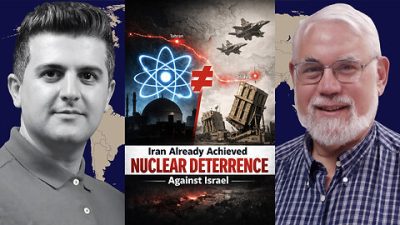
Prof. Ted Postol: Iran Already Achieved Nuclear Deterrence Against Israel
or go to
Aletho News Archives – Video-Images
From the Archives
How the occupied mentality syndrome works
Saudi Arabia on the American chessboard – Part 3
By B. J. Sabri | American Herald Tribune | June 27, 2016
Read part 2: “The occupied mentality Syndrome“
Previously I argued whether Saudi Arabia’s repeated involvements in U.S. interventions and wars stem from free national will or in response to a specific condition. For starters, in Saudi Arabia there is no national will. In Saudi Arabia, the national will is the will of the Al Saud clan. Still, when a major Arab state allies itself with a superpower that committed unspeakable crimes against humanity in almost every Arab country, then something is wrong. This fact alone should compel us to examine the U.S.-Saudi relation for one exceptional reason. As a result of the U.S.-Saudi wars, hundreds of thousands of people in Afghanistan, Iraq, Iran, Libya, Syria, Yemen, and Somalia have lost their lives. Millions became displaced in their own homelands. And millions more rendered refugees.
Attributing the Saudi policies to the bonds of “partnership” with the U.S. is frivolous. There are no bonds between these two thugs except those of business, military deals, secret plots, and wars. Proving this point, bonds such as these have no space for the American and Saudi peoples to share significant cultural or societal exchanges. If partnership is not the reason for the Saudi contribution to the U.S. strategy of empire and imperialism, then another reason must exist.
This leads to three possibilities. … continue
Blog Roll
 Aletho News
- Hezbollah hits Israeli warship off Lebanon’s coast, sets it aflame
- Iran slams US strikes on B1 bridge, Mahshahr petrochemical plants as ‘blatant acts of state terrorism’
- In letter to UN chief, Araghchi warns of dire consequences of US-Israeli attacks on Iran’s nuclear facilities
- Why the CIA conspiracy to invade Iran with Kurdish militias failed
- Why Are Upbeat US Claims About Mission to Rescue Pilot ‘Highly Questionable’?
- Aircraft destroyed during US ‘rescue’ of downed F-15 pilot cost more than $100 million each
- Washington University removes professor who condemned US-Israeli war on Iran
- Russia Warns of Retaliation as UK Authorizes Seizure of Vessels
- Serbia thwarts plot to bomb Russia-Hungary gas pipeline – Vucic
- Al Mayadeen voices solidarity with Dr. Marandi amid death threats
- If Americans Knew
- In Iran, Israel-US take aim at “reason, research, and freedom of thought” – Daily Update
- US loses planes over Iran, Israel downgrades Lebanon war goals – Daily Update
- Israel Is Blocking Palestinians from Easter at Church Where Jesus Resurrected
- Plot to assassinate Palestinian activist follows harassment campaign promoted by Zionist groups and elected officials
- Prominent New York synagogue hosts presentation on why U.S. Jews should support the ethnic cleansing of Gaza
- Tapper vs. Piker: Is the CNN Anchor Auditioning for David Ellison?
- Shouldn’t Democrats Be Able to Condemn Genocide?
- Israel-US kill negotiators, destroy civilian structures, but Iran’s military capabilities still largely intact – Daily Update
- ‘War crime’: Global condemnation as Israeli ministers celebrate death penalty law targeting Palestinian prisoners
- 7 Ways Israel Is Turning Lebanon Into Gaza
- No Tricks Zone
- An Inconvenient Tree: Uncovered In Alps… Europe Much Warmer Than Today 6000 Years Ago
- New Study Reports A 60% Slowdown In Greenland’s Ice Loss Rate In The Last Decade
- Low Intensity Tornado Wrecks Major Solar Farm, Creating A Potential Toxic Dump
- New Study Finds Warming Saves Lives…Cold Temperatures 12 Times More Deadly Than Excess Heat
- German Science Blog Accuses PIK Climate Institute Of Hallucinating Climate Tipping Points
- Devastating Assessment Of Comirnaty Vaccine By Former Senior Pfizer Europe Toxicologist
- New Study: CO2 Is ‘Effectively Negligible’ As An Explanatory Climate Change Factor Since 2000
- Former Pfizer Toxicologist Dr. Helmut Sterz Tells Bundestag Hearing Pfizer Vaccine Should Have Never Been Approved
- Energy Expert: Germany’s Nuclear Phaseout Was A “500 Billion Euro Mistake”
- New Research: South Australia’s Mid-Holocene Sea Surface Temperatures Were 4°C Warmer Than Today
 Aletho News