Who might be wrongfully accusing ISI of killing journalist?
By Maidhc Ó Cathail | The Passionate Attachment | July 13, 2011
Writing in The National Interest, John R. Schmidt expresses some much-needed scepticism regarding the allegations that Pakistan’s military intelligence service was responsible for the murder of Pakistani journalist Saleem Shahzad:
If ISI was responsible for murdering Shahzad, it may well have been a first. … But why would ISI choose Shahzad as its first victim? He was not a big-name journalist, nor was he among those who raised embarrassing questions about ISI and the army over the Abbottabad raid on bin Laden. His Karachi-naval-base story did not accuse ISI of improper conduct, and it is not clear why it would have killed him over a story that, if it embarrassed anyone, would have embarrassed the Pakistani Navy, a relatively minor player in the nation’s military firmament. […]
But the fact remains that senior U.S. officials told the New York Times they had “reliable and conclusive” intelligence that ISI was responsible.
Schmidt might have asked who those “senior U.S. officials” are, and whether they might also have a motive for discrediting the ISI. As Justin Raimondo pointed out in a recent Antiwar.com piece,
While keeping the heat on for a direct attack on Iran, the powerful pro-Israel lobby — the driving force behind the anti-Iran crowd — is biding its time, confident they’ll win in the end. In the meantime, they are carefully building up momentum for the final push toward war, and a key part of that is agitating for a complete break in US-Pakistan relations.
The Lobby’s fingerprints are all over the latest anti-Pakistani agitprop. It was one Simon Henderson, described as the resident “expert” on Pakistan’s nuclear capabilities at the Washington Institute for Near East Policy (WINEP), who recently released an alleged letter from a top official of the North Korean regime “proving” Pakistan supplied Pyongyang with nuclear technology. WINEP was founded by Martin Indyk, former research director of the American-Israel Public Affairs Committee (AIPAC), as an “academic” adjunct to AIPAC, the primary conduit of pro-Israel propaganda in the US.
Considering such efforts by the Israel lobby to undermine US-Pakistan relations, isn’t it highly probable that the senior U.S. officials attempting to discredit the ISI also have close ties to Israel? It certainly wouldn’t be the first time that the New York Times has served as a conduit for “reliable and conclusive” intelligence from American officials with questionable loyalties that turned out to be false. If Pakistan is to avoid the fate of Iraq, it had better identify clearly the source of its rapidly deteriorating relationship with a United States that has proven itself prone to self-destructive deception from that same source — and take action accordingly.
No comments yet.
Featured Video
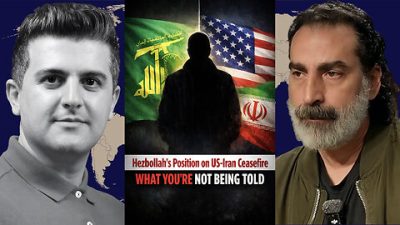
Laith Marouf: Hezbollah’s position on US-Iran ceasefire
or go to
Aletho News Archives – Video-Images
From the Archives
The Dirty Little Secret behind the “Global Terrorism Index”
The Omission of Israeli Terrorism in the Occupied Palestinian Territories
By Karin Brothers | Global Research | December 6, 2014
… The Israeli settlements — all of which are illegal – have been identified as a major impediment to peace. The refusal of a major “global” terrorism report to name the Israeli settlers as one of the groups most responsible for terrorism not only misrepresents a major source of regional violence but exposes the Global Terrorism Index as a propaganda tool that supports a U.S. agenda.
In recent years, governments have been attempting to thwart terrorism by blocking supportive fund-raising. When it comes to Israeli settlements, however, the US and Canada actually encourage fund-raising by giving organizations (such as Christian Friends of Israeli Communities (CFOIC) and the Jewish National Fund) financial support in the form of donor tax-deductions.
Charities which provide funds for the Israeli settlements should be regarded as terror-financing organizations. They should not only lose their tax-deductible status, but they should be banned because they support the violation of international humanitarian law. The terror-financing laws that are being strictly enforced for Muslim charities should be applied to Christian and Jewish charities as well. … Read full article
Blog Roll
 Aletho News
- Laith Marouf: Hezbollah’s position on US-Iran ceasefire: What you’re not being told
- Israel’s priority lies in destroying chances of peace between Iran, US: Ex-UN nuclear chief
- Ceasefire for all or for none: Iran shuts Hormuz over Lebanon attacks
- Strait of Hormuz is Iran’s ‘nuclear weapon’ that forced US retreat: Medvedev
- Energy crisis will last for months – Kremlin envoy
- Europe’s quiet role in the war on Iran
- Forty days that shook the Empire: How Iran turned the tables on US and prevailed
- Netanyahu unilaterally declares Lebanon outside of ceasefire deal
- Israeli leaders: ‘Not a single goal’ achieved in war with Iran
- What on earth just happened? Trump, Iran, and the unlikely ceasefire
- If Americans Knew
- Gazans face a triple crisis: severe shortages of water and bread, healthcare in tatters
- NY Times reports how Netanyahu took the US into Iran War
- A sigh of relief over Iran, but Gaza and Lebanon in dire straits – Daily Update
- Thousands dead and neighborhoods razed to the ground: Aid agencies fear southern Lebanon is becoming the new Gaza
- The war the US is fighting for Israel could cost trillions
- ‘Cigarette Burns, Nail Wounds’: Toddler Tortured in Gaza to Coerce Father
- Trump Says US Sent ‘a Lot of Guns’ to Protesters in Iran
- Israeli forces destroy 17 UN peacekeeper cameras in south Lebanon
- US-Israeli strikes ‘completely destroy’ synagogue in Tehran
- Archbishop for US Military Says Iran War Is Unjust Under Catholic Teaching
- No Tricks Zone
- An Inconvenient Tree: Uncovered In Alps… Europe Much Warmer Than Today 6000 Years Ago
- New Study Reports A 60% Slowdown In Greenland’s Ice Loss Rate In The Last Decade
- Low Intensity Tornado Wrecks Major Solar Farm, Creating A Potential Toxic Dump
- New Study Finds Warming Saves Lives…Cold Temperatures 12 Times More Deadly Than Excess Heat
- German Science Blog Accuses PIK Climate Institute Of Hallucinating Climate Tipping Points
- Devastating Assessment Of Comirnaty Vaccine By Former Senior Pfizer Europe Toxicologist
- New Study: CO2 Is ‘Effectively Negligible’ As An Explanatory Climate Change Factor Since 2000
- Former Pfizer Toxicologist Dr. Helmut Sterz Tells Bundestag Hearing Pfizer Vaccine Should Have Never Been Approved
- Energy Expert: Germany’s Nuclear Phaseout Was A “500 Billion Euro Mistake”
- New Research: South Australia’s Mid-Holocene Sea Surface Temperatures Were 4°C Warmer Than Today
 Aletho News
Leave a comment