Sanctioning Dr. Shaaban Assaults US Values
By Franklin Lamb – Al-Manar – September 5, 2011
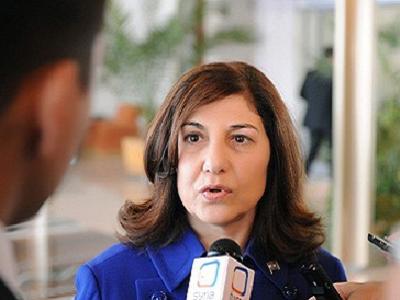 As part of its 7th set of US sanctions against Syria, which began in June, 2011, the Obama administration has targeted a messenger, a sometime spokeswoman, a positive image of Syria, someone people of all religions and cultures have easily identified with over the past several years, Dr. Bouthainia Shaaban. The US administration acted thus for the sole purpose of pressuring the government of Syrian President Bashar Assad, but has succeeded in undermining American values of freedom of expression much more.
On August 28, 2011, the US Treasury and State Departments targeted Dr. Bouthainia Shaaban, and froze any assets she might have in the US.
According to State Department spokesman, Victoria Nuland, who two US Senate Foreign Relations Committee staffers speculate may view Dr. Shaaban as a rival of sorts given their job descriptions, and Dr. Shaaban’s stellar performances during meeting with US officials both in the US and Syria, the explanation for blacklisting a Syrian nationalist and media advisor remains: “She (Dr. Shaaban) has served as the public mouthpiece for the repression of the regime.”
No US official to date has stepped forward to defend the sanctions against Dr. Shaaban with any more substantive or detailed complaint or supporting evidence.
Theodore Kattouf, former US ambassador to Syria was reportedly astonished to see Dr. Shaaban’s name on the latest sanctions list and he expressed on television his regret for such a bad decision. Former Ambassador Kattouf explained that sanctioning Dr.Shaaban was a serious mistake because Dr. Shaaban is well known of her positive and constructive attitudes and positions against wars and injustices and bloodshed.
True, Dr. Shaaban, among several others, is a trusted advisor to the Syrian administration. She presumably offers counsel and insights; perhaps much like Theodore Sorenson did for President John Kennedy, and Bill Moyers for Lyndon Johnson. But she is not and has never been a decision maker. Presumably her advice is considered, but who knows to what degree. Which advisor is also a key decision maker?
Surely the Obama administration knows well that when any person occupies a position as media advisor or even press secretary, he/she speaks for and explains the policy of the administration he’s working for. To sanction them violates American notions and values of freedom of expression and immunity from harassment for performing a vital job that benefits all by way of clear understanding and communication of a country’s position on political, social, and economic issues of the day.
Dr. Shaaban’s background is well known to recent US administrations and also much appreciated according to Washington sources. She is known as an independent thinker, reformer, writer, University Professor (she taught in Eastern Michigan for two years and earned her PhD from Warwick University in the UK and was a Fulbrighter at Duke University (1990 – 1991) and got the prestigious McCandless professorship at Easter Michigan University for 2000. She is known for her ability and willingness to take a minority position, if her evaluation of the facts of a case or issue leads her there, and is never reluctant to speak truth to power. Her writings, many of which have appeared in the left of center Counterpunch (counterpunch.org) always advance positions against wars, violence and occupation.
The Obama administration knows that Dr. Shaaban has no account in the US, earns a modest salary, is the wife of the manager of the Syrian Establishment for Food Industry, and this ‘sanction’ is designed solely to harm her excellent reputation that she has earned during the past couple of decades. When pressed for details of her assets both the US Treasury, and State Department spokeswoman Nuland only offered: “Let’s just leave it at that.”, whatever that is supposed to mean.
Dr. Shaaban’s office avers that she has very few assets at all and certainly none in the US.
“Bouthainia connects with people” according to a US Senate Foreign Relations Committee staffer who has met with her: “Whether with Hamas or Saudi Princes, and both know her views on full rights for women and justice for Palestinians, and with American officials too she is effective.”
For some of these reasons the US treasury and State departments have targeted her and the Obama administration, largely it appears, out of ignorance, according to Congressional sources, said, “Ok, if you think is a good idea go ahead.”
It was not a good idea. Attacking Mrs. Shabaan is a low blow and disgraceful by any standards and especially for one who is a very positive force helping bridge several divides between East and West.
President Obama erred in signing off on this mistake.
The White House attacked a friend of America and of all people of good will. It needlessly assaulted a symbol of the great country of Syria, the great Syrian people, their history, culture, resistance values, profound dignity, and their decency.
In so doing the Obama Administration sullied American values and doubtless does not represent American values or the will of the American people. It did undermine American values of freedom of expression and compromised American notions of fair play and American legal norms of substantial justice.
Would that President Obama will immediately reverse this ill-considered action.
– Franklin Lamb is the author of The Price We Pay: A Quarter-Century of Israel’s Use of American Weapons Against Civilians in Lebanon.
Japan’s ex PM feared uninhabitable Tokyo – Fukushima update
Penny For Your Thoughts | September 6, 2011
What does Kan know that would cause him to have these thoughts?
Japan’s former premier Naoto Kan feared Tokyo would be rendered uninhabitable by the Fukushima nuclear crisis, he said in an interview published on Tuesday in which he recalled the ‘spine-chilling’ thought.
He added it would have been ‘impossible’ to evacuate all of the 30 million people in the event of a mass exclusion zone encompassing Tokyo
Are these the thoughts of an irrational man?
Or are these thoughts borne out of an access to information and knowledge that the general public is not allowed to know?
One has to wonder?
And the multiple problems with Fukushima rage on.
Of course you would never know it, judging by the mainstream media.
Just like nothing is going on…
So here are a couple of the latest news stories:
Tepco to build wall off Fukushima Daiichi Plant
The operator of the damaged Fukushima Daiichi nuclear power plant plans to build an iron wall on the ocean side of the plant to prevent radioactive water from leaking into the sea. Tokyo Electric Power Company (Tepco) said more than 110,000 tons of highly radioactive water remains in the basements of reactor buildings at the plant.
The utility will use thousands of iron pipes to create an 800-meter-long wall surrounding the water intakes of 4 reactor facilities, NHK Japan’s website reported.
Don’t know if or how well this will work out?
Additionally there is a problem with tons of radioactive waste just piling up!
Growing piles of contaminated sewage, located hundreds of kilometers from Japan’s Fukushima Daiichi nuclear meltdown, are loaded with high levels of radioactive cesium, and the government has yet to come up with a policy for the country’s latest crisis. Tons of alarmingly high levels of radioactive cesium are being reported at a sewage treatment facility in Saitama, located more than 150 miles southwest of Fukushima, site of the triple nuclear meltdown last March after a devastating earthquake and tsunami.
Japan currently has more than a dozen sewage treatment plants currently faced with the same predicament and the government has yet to institute a policy in dealing with the quickly growing problem.
A Japanese delegation has headed to Chernobyl
A Japanese delegation will visit the ill-fated Chernobyl nuclear plant to study its experience in clean-up operations, speaker of Japan’s House of Representatives Takahiro Yokomichi said here.
The Japanese delegation wants to have first-hand information about the situation at the Chernobyl plant and to learn whatever lessons possible to prevent any such accidents, and to make use of Ukraine’s experience in the clean-up operations after the accident at the Fukushima nuclear plant, Yokomichi said yesterday.
Interesting article from a few days ago…
Why Fukushima is worse then Chernobyl
“Japan has been slow to admit the scale of the meltdown. But now the truth is coming out.”
While it is true that Japan has been very, very slow to admit the scale of meltdown, it is highly unlikely the “truth” is now forthcoming.
The fact of the matter is the radiation from Fukushima, that virtually covers the planet, is to dam hard to hide!
Israel Continues to Uproot Hundreds of Olive Trees for Construction of Separation Wall
By Mikaela Levine | Alternative Information Center | 05 September 2011
At 8 am this morning bulldozers arrived at the olive tree fields in the Bethlehem-area village of al-Walaje. They were driven by private contractors and guarded by Israeli soldiers.
The bulldozers blocked the way for everybody, except the members of the three families who own the land. The families could be there, to witness, complain, cry, but nothing else. Dozens of olives trees were uprooted yesterday, just a month before the beginning of the olive harvest season and a week after the Israeli High Court ruled that it was essential for Israel’s security to incarcerate al-Walaje by building the Separation Wall all around it.
“In view of this situation, we believe that the harm caused by the fence’s route to the petitioners is reasonable and proportionate in comparison to the great security value that results from the fence along this route”, the Israeli judges concluded. Now, in order to build the Wall, Israeli forces must uproot hundreds of olive trees, destroying part of the past, the present and the future of the 2,400 village residents.
“They are doing huge environmental damage here”, denounced the Palestinian activist Professor Mazen Qumsiyeh. He arrived after the soldiers and saw how the pile of uprooted olive trees grew over the hours. After midday, the bulldozers kept working and, according to Qumsiyeh, they will continue to do so tomorrow, on Tuesday. Professor Qumsiyeh called for international and Palestinian activists to join them in al-Walaje tomorrow morning to pressure the soldiers to stop this crime.
The last series of uprootings began in June, two months before the aforementioned High Court ruling. At the beginning of June, Jamal Barghouti reported that Israeli soldiers invaded his land and uprooted more than 80 olive trees and some Cypress trees that have given shade to the fields surrounding the Palestinian village for over 70 years.
Every time they come, the Israeli soldiers repeat that they are going to build special gates so the Palestinian farmers can continue to work their fields. Yet Palestinians know better. Reports and personal experiences demonstrate that these gates provide only limited access and with time the farmers and owners that continue to cultivate their land on the other side of the Separation Wall are a dwindling minority.
Israeli forces detain Hamas lawmaker
Ma’an – September 6, 2011
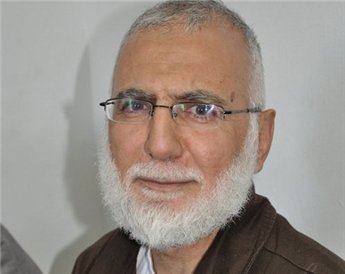 RAMALLAH — Israeli forces detained Hamas legislator Mohammed Abu Teir on Tuesday, army officials said.
Israeli soldiers ransacked Abu Teir’s home in Kafr Aqab, south of Ramallah, before detaining the elected official, a Ma’an correspondent reported.
An Israeli military spokesman said Abu Teir was detained on Tuesday but could not immediately comment on the reason for his arrest.
Former PA Minister of Jerusalem affairs Khalid Abu Arafa told Ma’an he was concerned about Abu Teir’s fate after Israel withdrew his Jerusalem identity card.
In December, an Israeli court expelled Abu Teir to Ramallah from his home in Jerusalem for the second time, after four months in jail for defying a previous ban.
He was previously arrested on June 30, 2010 for entering East Jerusalem after the interior ministry stripped him of his residence permit for his activity in Hamas.
Following Abu Teir’s deportation to Ramallah in December, UN officials expressed concern. Robert Serry, UN Special Coordinator for the Middle East Peace Process, said he was “worried” about the “potential precedent” that the trial set.
Abu Teir was elected to the Palestinian parliament from East Jerusalem in 2006 when Hamas won a landslide victory over the secular Fatah movement of Western-backed President Mahmoud Abbas.
Financial Times betrays Thomas Friedman
By Belén Fernández | Pulse Media | September 5, 2011
Today marks the release of yet another book by Thomas Friedman, the New York Times’ prolific foreign affairs columnist whose articles over the years have exposed such trends as the “collective madness” of Palestinians and the progress in Mexican baby namesto more NAFTA-friendly alternatives than Juan, such as Alexander and Kevin.
Friedman’s latest book, endearingly titled That Used to Be Us: How America Fell Behind in the World It Invented and How We Can Come Back, is coauthored by Friedman’s “intellectual soulmate”, the foreign policy expert Michael Mandelbaum—a longtime staple of Friedman columns and a purveyor of such predictable notions as that “The real threat to world stability is not too much American power. It is too little American power”.
Despite having admitted to an audience in Istanbul that his two previous bestsellers—The World Is Flat and Hot, Flat, and Crowded, marketed as wakeup calls concerning globalization and clean energy, respectively—really “have nothing to do with technology or environment at heart” and are instead “basically cries of the heart to get my country focused on fixing itself”, Friedman managed to advertise That Used to Be Us as “the first book I’ve really written about America” during an interview with Fox’s Don Imus earlier this year.
Slightly more surprising than Friedman’s continuing habit of self-contradiction is a recent less-than-favorable review of the new book on the website of the Financial Times, the institution that in 2005 partnered with Goldman Sachs to bestow upon Friedman the first annual £30,000 Financial Times and Goldman Sachs Business Book of the Year Award for The World Is Flat. Friedman responded to the honor by referring to the pair as “two such classy organizations”, before finally conceding two years after the 2008 financial crisis that Goldman Sachs is perhaps in fact “utterly selfish”.
The FT.com review notes that the phrase “that used to be us” was appropriated from a statement by Barack Obama, in which the president lamented that “it makes no sense for China to have better rail systems than us, and Singapore having better airports than us”. FT.com refrains from pointing out that Obama’s complaints in this case are themselves presumably appropriated from Friedman’s own experiences with Chinese trains and Singaporean airports, given the columnist’s de facto position as presidential adviser.
Friedman’s incestuous relationship with centers of capitalist power does not, however, prevent him from being portrayed in the FT.com review as essentially defying reality with his new book by “reinforc[ing] the illusions of [American] exceptionalism” and immunity from historical patterns, and by promoting the “idea that a third-party movement could somehow enable America to avoid the decline that eventually overtakes every great power”.
Friedman will likely remain undeterred in his eternal quest to restore US glory and global domination. However, he may desire a more creative title for his next book than, for example, That Really Used to Be Us: How America Has Fallen Even Further Behind in the World It Invented and How We Can Come Back.
He might thus consider issuing an anthology of previously published excerpts entitled Thomas Friedman Recycled—which would additionally underscore his unwavering commitment to environmentalism and the notion that reform in the Arab world can be achieved by combining a “geo-green” strategy with the neoconservative strategy of contaminating the earth with depleted uranium munitions.
My book The Imperial Messenger: Thomas Friedman at Work will be released by Verso on Nov. 1.
Politics behind UK hosting Israeli concert
A prominent political activist says the annual Proms concert in London has hosted the Israel Philharmonic Orchestra for clearly political reasons.
Press TV – September 5, 2011
In an exclusive interview with Press TV, Naomi Wimborne-Idrissi, a member of Beethovians for Boycotting Israel (BBI), says that Western governments and media listen to the Israel regime but ignore the Palestinian people.
Press TV: Please tell us about the event. 40 people, pro-Palestinian protesters, arrived at the Royal Albert Hall, what took place?
Wimborne-Idrissi: Organized with a lot of planning in advance by Jews for Boycotting Israeli Goods, BRICUP – that’s the British Committee for the Universities of Palestine – and people in the Boycott Israel Network (BIN), people arrived prepared for heightened security because, although the Prom’s organizers said that the decision to invite the Israeli Philharmonic Orchestra is purely musical, it was clearly a political decision.
They sent out letters to ticket holders telling them that bags will be searched, no flags will be allowed in. They were obviously quite aware of what they’ve done.
We expected it to be harder than it actually turned out to be. We all had tickets in different parts of the hall in a number of small groups. There was about nine or ten groups, altogether, one of them very large.
This large group made the first intervention. What we did was we had prepared in advance a song adapting the tune of Beethoven’s very famous Ode to Joy. And what we sang was, “Israel and your occupation…” and we went on from there with some words which people can find online, on some of the reports.
And we sang this in a quiet moment on the first piece while unveiling a slogan reading “free Palestine”. So, on some of the reports you’ll read there’s a lot of confusion about this. But this is actually what happened.
And we kept on singing our four lines of text over and over again while the audience reacted, people snapped the letters of the slogan out of our hands, people started to push us. And, gradually, the Royal Albert Hall security staff made their way over to us. They did their job, they weren’t aggressive. They said come on you’ve made your point, please go.
Gradually, because of the pushing and the shoving, and the angry response of the audience, we made our way out and we went out still singing. And we went out and joined the public protests outside and continued singing there as well. So that was the first intervention.
Then after that, that piece was finished and the next piece began. We started again on a rather beautiful violin concerto.
Press TV: What do you think you’ve succeeded in doing? What was this boycott intended to do?
Wimborne-Idrissi: What we’ve intended to do was give Palestinians a voice.
The reason that the Palestinian Boycott National Committee (BNC) and PACBI – the Palestinian Campaign for Academic and Cultural Boycott of Israel – have called for a South African apartheid-style campaign of boycotts because nobody listens to the Palestinians, nobody listens to the victims in this struggle.
Israel has the ear of Western governments, newspaper editors, you name it…
Press TV: Naomi Wimborne-Idrissi, thank you very much for that. And people can look up your protest on YouTube.
So, as with cricket, now with classical music.
Settlers Outfitted with Military Training, Equipment Thanks to US Tax-Deductible Donations

By Mikaela Levin | Alternative Information Center | 05 September 2011
News about the Israeli military arming and training the settlers raised international and Israeli attention last week and set off alarms amongst anti-occupation activists. This reinforcement of the well-known army-settler alliance is part, according to the Israeli newspaper Haaretz, of Operation Summer Seeds, the military name given to Israel’s preparations for “mass disorder” that Israeli authorities believe could follow UN recognition of a Palestinian state later this month. So who are these settlers in the frontline of an eventual Israeli armed reaction to possible Palestinian protests?
They are normally part of groups called Rapid Response Teams, at least one of which exists in each settlement in the occupied Palestinian territory. Some of the teams are connected to the electric fence system, so they can react immediately to a breach in the military designed perimeter of their settlement. They are supposed to withdraw when Israeli soldiers arrive at the scene.
These first-response “guards” are volunteer civilians, mostly army reservists under the command of a chief security officer, who is a public servant and the official link with the Israeli military. Though some international media portray these groups as being formed following the second Intifada, these types of militias actually go back even before 1948, with the Defense Committees of the kibbutzim and later of Israel’s small towns, villages and settlements.
In the occupied Palestinian territory most male adult settlers can carry guns and some even choose rifles, but the Rapid Response Teams are something different. They receive their M-16 rifles from the Israeli army while training and other specialized equipment comes from NGOs like Mishmeret YESHA. This nonprofit organization manufactures and distributes armored vests, ballistic helmets and special communications equipment and trains the “civil guards” and Yeshiva students in the use of arms and “counter-terrorism” tactics in improvised shooting ranges.
The only condition of Mishmeret YESHA is that it does not work with settlements or institutions that employ or include Palestinians. “There is no sense in training a rapid response team in a settlement or an institution where you have a bunch of Arabs walking around gathering information”, stated the founder, Israel Danziger, to the Jerusalem Post in 2008.
The money to finance Mishmeret YESHA’s training and equipment comes primarily from private donations. In 2004 alone, the Central Fund of Israel raised nearly US $107,000 for Mishmeret’s efforts and the Israel Independence Fund, an organization registered in New York, has Mishmeret listed amongst its most important projects.
For example, it costs $68,000 to sponsor the equipping and training of a Rapid Response Team for a whole settlement. If this is too much for the American or Israeli family budget in these times of economic crisis, they can sponsor a sole member of the team for $5,000. The list of prices goes down to $250 for a ballistic helmet.
These ‘sponsorships’ are considered as donations under American law and as such, are tax deductible – even if the money is used to buy rifle shoulder rests, a telescopic lens or infra-red binoculars. This is the case of the Nablus-area settlement of Elon Moreh and its nonprofit organization Friends of Elon Moreh, based in Passaic Park, New Jersey. According to its webpage: “Aside from the basic army equipment, the team needs special equipment which can help them in emergency situations”. The team, as a picture shows, is composed of 20 young adults, all religious, dressed in military-green and blue, armed with M-16, radios and armored vests.
This experience was considered so successful by the settlers and their American donors that they decided to export it to the forests of upstate New York. Kitat Konenut is devoted to prepare Jewish communities in the US for an eventual “anti-Semitic outbreak”. As the Jerusalem Post published three years ago, the organization charges $400 for a ten day training in the Catskills woodlands, on the property of a Jewish supporter. Some of the instructors are Israeli military veterans, who teach the young Americans to be ready for all kinds of threats, from a knife fight to “urban warfare”.
There is no other documented case in the United States of a foreign civilian armed force being equipped and trained publicly by American society through “donations”, which on top of everything benefit from tax deductions. And it is even rarer that in this age of the War on Terror and home-grown terrorism, the American authorities allow their citizens to openly train in urban warfare tactics. Yet additional proof of the special American-Israeli relationship.
Obama Orders Sweeping Sanctions and Regime Change in Syria Without Congress
Activist Post | September 5, 2011
Once again President Obama has used the authority vested in him in the International Emergency Economic Powers Act and the National Emergencies Act to impose sweeping sanctions against a sovereign nation without Congressional approval.
On August 18th, 2011, Obama signed Executive Order 13582: Blocking Property of the Government of Syria and Prohibiting Certain Transactions With Respect to Syria, which authorizes the seizure of all Syrian-owned property and interests in property in the United States. It also bans exports of U.S. services to Syria, the import of petroleum from Syria, and any new investment in Syria or those who support them.
The following actions are now prohibited:
(a) new investment in Syria by a United States person, wherever located;
(b) the exportation, re-exportation, sale, or supply, directly or indirectly, from the United States, or by a United States person, wherever located, of any services to Syria;
(c) the importation into the United States of petroleum or petroleum products of Syrian origin;
(d) any transaction or dealing by a United States person, wherever located, including purchasing, selling, transporting, swapping, brokering, approving, financing, facilitating, or guaranteeing, in or related to petroleum or petroleum products of Syrian origin; and
(e) any approval, financing, facilitation, or guarantee by a United States person, wherever located, of a transaction by a foreign person where the transaction by that foreign person would be prohibited by this section if performed by a United States person or within the United States.
The sweeping unilateral sanctions also permit the President to seize property without notice of those who sponsor or provide material assistance to Syria. In the case that such a person should have Constitutional protections, Obama declared “there need be no prior notice of a listing or determination” because of his powers during a national emergency.
At the time of the signing, the White House called for Syrian President Bashar al-Assad to step aside, “For the sake of the Syrian people, the time has come for President Assad to step aside,” indicating an official policy of regime change in Syria.
This action follows Executive Order 13572 from April called Blocking Property of Certain Persons With Respect to Human Rights Abuses in Syria which gave Obama the broad power to seize assets of Syrians suspected of being complicit in human rights abuses.
Previously, President Obama bypassed Congress when he imposed sanctions and seized property from the Libyan government by Executive Order 13566 in February of this year. Less than a month later, the United States and NATO began policing the no-fly zone in Libya, also without debate in the Congress. Now the U.S. and NATO are engaged in a civil war in Libya where billions are being spent, again without Congressional approval or oversight.
These new sanctions, along with recent EU sanctions, combined with calls for regime change in Syria, seem to be following the same pattern as the Libya invasion. Thus, it is reasonable to assume that if Syrian President al-Assad resists, he will be forced out one way or the other. It’s also apparent that Obama believes he needn’t consult Congress or abide by the Constitution about these matters because of powers vested in him under national and international emergency. If the pattern is any indication, America may be headed for another undeclared war.
WordPress Suspends ‘Stop NATO’ news site
Anti-war.com – September 02, 2011
WordPress suspended the Stop NATO site from posting any new material earlier today, with this announcement:
“Warning: We have a concern about some of the content on your blog. Please click here to contact us as soon as possible to resolve the issue and re-enable posting.”
Repeated efforts to contact them have produced no result.
A year ago Military Times threatened the Stop NATO e-mail list with legal action and, after contacting them and assuming the matter resolved, they got Yahoo Groups to threaten to shut down the list and even cancel my personal e-mail account.
Material on the WordPress site has been backed up, and everything posted to date is still accessible, but it’s not certain for how long.
As everyone familiar with both the site and the list know, no incitement to violence or other illegal action, no attempt to solicit money and no derogatory statement toward any demograhic group have ever appeared on either the mailing list or the news site.
The sole “crime” of which both are guilty is of being anti-war and anti-militarist.
Yours for peace,
Rick Rozoff
Featured Video
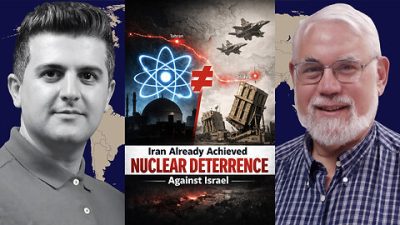
Prof. Ted Postol: Iran Already Achieved Nuclear Deterrence Against Israel
or go to
Aletho News Archives – Video-Images
From the Archives
How the occupied mentality syndrome works
Saudi Arabia on the American chessboard – Part 3
By B. J. Sabri | American Herald Tribune | June 27, 2016
Read part 2: “The occupied mentality Syndrome“
Previously I argued whether Saudi Arabia’s repeated involvements in U.S. interventions and wars stem from free national will or in response to a specific condition. For starters, in Saudi Arabia there is no national will. In Saudi Arabia, the national will is the will of the Al Saud clan. Still, when a major Arab state allies itself with a superpower that committed unspeakable crimes against humanity in almost every Arab country, then something is wrong. This fact alone should compel us to examine the U.S.-Saudi relation for one exceptional reason. As a result of the U.S.-Saudi wars, hundreds of thousands of people in Afghanistan, Iraq, Iran, Libya, Syria, Yemen, and Somalia have lost their lives. Millions became displaced in their own homelands. And millions more rendered refugees.
Attributing the Saudi policies to the bonds of “partnership” with the U.S. is frivolous. There are no bonds between these two thugs except those of business, military deals, secret plots, and wars. Proving this point, bonds such as these have no space for the American and Saudi peoples to share significant cultural or societal exchanges. If partnership is not the reason for the Saudi contribution to the U.S. strategy of empire and imperialism, then another reason must exist.
This leads to three possibilities. … continue
Blog Roll
 Aletho News
- NIAID/NIH and USDA Fund Bioengineered Chimeric Influenza Viruses Built Using Pandemic H1N1 Components: Journal ‘Science Advances’
- Hezbollah hits Israeli warship off Lebanon’s coast, sets it aflame
- Iran slams US strikes on B1 bridge, Mahshahr petrochemical plants as ‘blatant acts of state terrorism’
- In letter to UN chief, Araghchi warns of dire consequences of US-Israeli attacks on Iran’s nuclear facilities
- Why the CIA conspiracy to invade Iran with Kurdish militias failed
- Why Are Upbeat US Claims About Mission to Rescue Pilot ‘Highly Questionable’?
- Aircraft destroyed during US ‘rescue’ of downed F-15 pilot cost more than $100 million each
- Washington University removes professor who condemned US-Israeli war on Iran
- Russia Warns of Retaliation as UK Authorizes Seizure of Vessels
- Serbia thwarts plot to bomb Russia-Hungary gas pipeline – Vucic
- If Americans Knew
- In Iran, Israel-US take aim at “reason, research, and freedom of thought” – Daily Update
- US loses planes over Iran, Israel downgrades Lebanon war goals – Daily Update
- Israel Is Blocking Palestinians from Easter at Church Where Jesus Resurrected
- Plot to assassinate Palestinian activist follows harassment campaign promoted by Zionist groups and elected officials
- Prominent New York synagogue hosts presentation on why U.S. Jews should support the ethnic cleansing of Gaza
- Tapper vs. Piker: Is the CNN Anchor Auditioning for David Ellison?
- Shouldn’t Democrats Be Able to Condemn Genocide?
- Israel-US kill negotiators, destroy civilian structures, but Iran’s military capabilities still largely intact – Daily Update
- ‘War crime’: Global condemnation as Israeli ministers celebrate death penalty law targeting Palestinian prisoners
- 7 Ways Israel Is Turning Lebanon Into Gaza
- No Tricks Zone
- An Inconvenient Tree: Uncovered In Alps… Europe Much Warmer Than Today 6000 Years Ago
- New Study Reports A 60% Slowdown In Greenland’s Ice Loss Rate In The Last Decade
- Low Intensity Tornado Wrecks Major Solar Farm, Creating A Potential Toxic Dump
- New Study Finds Warming Saves Lives…Cold Temperatures 12 Times More Deadly Than Excess Heat
- German Science Blog Accuses PIK Climate Institute Of Hallucinating Climate Tipping Points
- Devastating Assessment Of Comirnaty Vaccine By Former Senior Pfizer Europe Toxicologist
- New Study: CO2 Is ‘Effectively Negligible’ As An Explanatory Climate Change Factor Since 2000
- Former Pfizer Toxicologist Dr. Helmut Sterz Tells Bundestag Hearing Pfizer Vaccine Should Have Never Been Approved
- Energy Expert: Germany’s Nuclear Phaseout Was A “500 Billion Euro Mistake”
- New Research: South Australia’s Mid-Holocene Sea Surface Temperatures Were 4°C Warmer Than Today
 Aletho News