Israel’s war of attrition, waged on non-Jews
By Mya Guarnieri | Alternative Information Center | 28 November 2011
The eviction of the Sumarin family was delayed. But the family has been living in limbo for 20 years and other groups live with uncertainty as Israel wages a psychological war of attrition on non-Jews.
According to Haaretz, the Jewish National Fund (JNF) has delayed the eviction of the Sumarins, a Palestinian family who lives in the East Jerusalem neighborhood of Silwan and who were slated to be evacuated from their home on Monday.
The JNF has been trying to evict the Sumarin family for 20 years. Much of Silwan’s land has been confiscated by the state and transferred to Himnuta, a company owned by the JNF. These holdings have been passed on to Elad, a settler organization that operates the City of David park, which is located in Silwan.
After the Sumarins received an order several weeks ago to vacate the premises, human rights organizations and activists launched a campaign to prevent the eviction. While some consider the delay a victory, it points to a larger problem–it is a delay. A delayed eviction does not represent a permanent solution for the Sumarins, a family of 12 who could still lose their house. Nor does this delayed eviction address the larger issue of illegal Jewish settlement in East Jerusalem and the West Bank, the Israeli government’s complicity in the enterprise, and the far-reaching consequences for Palestinians who live under military occupation.
The occupation is not just checkpoints, movement restrictions, political imprisonments, home demolitions, and evictions. It’s also the waiting at checkpoints, waiting for a permit, waiting to see a loved one in jail, waiting to get out of jail, waiting for the bulldozer to arrive, waiting to be put on the street.
There is something torturous about living with uncertainty, with a sword dangling over one’s head. Whether that sword be eviction from one’s home or deportation from the country–it’s a reminder that one is not the master of his fate, that his life is in someone else’s hands. It’s a psychological war of attrition.
It’s not just the Sumarin family nor is it just the Palestinians–the Israeli government keeps other “others” in constant limbo, as well. There are the children of migrant workers who live under the constant threat of deportation, two years after the state announced its intent to expel them. It’s the families who have been fighting for naturalization since 2005, only for the state to continue dragging its feet. It’s the 25-year-old man, born and raised in Israel to Filipino parents, who can’t get on with his life because the state would rather ignore non-Jewish immigration than come up with a clear, consistent policy. It’s refusing to process the requests of tens of thousands of African asylum seekers, refugees who live with a constant question mark over their heads. And as the state constructs a detention center to imprison asylum seekers, the question of their status is growing ever more urgent.
Home evictions, deportations of children, the status of asylum seekers–these issues cannot be considered on a case-by-case basis. Israel’s policies towards non-Jews, or its lack thereof, must be interrogated and amended so that every man, woman, and child can go to bed at night having some idea of what the next day will bring.
UK builds new nukes, IAEA ignores
Press TV – November 28, 2011
Britain’s Ministry of Defence (MoD) is spending £2bn on new nuclear weapons plants as the International Atomic Energy Agency (IAEA) has turned a blind eye on nuclear disarmament issues.
While the terms of the Nuclear Non-Proliferation Treaty (NPT) require that NPT-recognized nuclear weapon states are obliged to downgrade their nuclear capacity when they renew their systems, the British government has given the green light to the MoD to expand the country’s stockpile of nuclear weapons.
On 27 November, the Guardian revealed the breakdown of MoD’s investments including “a £734m facility called Mensa for dismantling and assembling of warheads, a risky but essential maintenance process; a £634m highly enriched uranium plant called Pegasus; and a £231m high explosives factory called Circinus.”
Furthermore, the newspaper revealed that the MoD has launched a comprehensive plan to develop the Atomic Weapons Establishment sites by building new facilities and plants by the end of 2015.
The MoD’s decision comes as the IAEA has launched a propaganda campaign against Iran’s nuclear program by releasing an “unbalanced, unprofessional, and politically motivated” report making baseless allegations against Iran’s peaceful nuclear activities.
Moreover, the IAEA has turned a blind eye on nuclear disarmament issues as the latest revelations about Britain’s nuclear activities show the British government intends to increase the number of its nuclear weapons instead of reducing them.
Meanwhile, it has emerged that the MoD’s secret plans to build new nuclear weapons plants have infuriated British MPs, as they were to decide whether to replace Trident warheads.
“The fact that the MoD signed off on these costs before a decision has even been made on replacing the Trident warhead makes a complete mockery of the democratic process,” said the Green MP Caroline Lucas.
Arab League approves sudden Syria sanctions
Press TV – November 27, 2011
The Arab League has approved the imposition of unprecedented sanctions against Syria over the months-long unrest in the country.
On Sunday, Qatari Foreign Minister Hamad bin Jassim said in a press conference in the Egyptian capital of Cairo that 19 of the 22 member nations of the Arab organization were in favor of the sanctions, AP reported.
The approved sanctions against Syria include cutting off transactions with the Syrian Central Bank and an embargo on investments for projects in Syria.
The Qatari foreign minister added that Iraq abstained from the vote and would refuse to implement the sanctions, and Lebanon “disassociated itself” from the move.
Meanwhile, Damascus censured the Arab League decision, describing it as “a betrayal of Arab solidarity.”
On November 12, the Arab League voted to suspend Syria’s membership during an emergency session in Cairo, and called for the imposition of sanctions against the country.
Syrian Foreign Minister Walid al-Muallem accused the Arab League of seeking to “internationalize” the unrest in Syria.
Last week, Muallem also described the Arab body as a “tool” that is being used to take the Syrian crisis to the United Nations Security Council.
Syria has been experiencing unrest since mid-March, with demonstrations being held both against and in favor of President Bashar al-Assad. Hundreds of people, including members of the security forces, have been killed in the turmoil.
The opposition and Western countries accuse Syrian security forces of being behind the killings in the country, but Damascus blames what it describes as outlaws, saboteurs and armed terrorist groups for the deadly violence, stressing that the unrest is being orchestrated from abroad.
President Assad has warned against any foreign attack against Syria, saying the military action will cause instability in the whole Middle East.
Israeli journalist Amira Hass speaks before a crowd of international activists and Palestinians
AICafe | November 27, 2011
The speech was thoughtful and Hass seemed to choose each word carefully. She avoided giving advice and warned more than once that she had become “an observer to Israeli society” more than a full time member– for the last decade and a half, her addresses alternated mainly between the Gaza Strip and Ramallah in the West Bank.
“The Israeli society lives insides two normalcies that contradict, but also complement each other,” explained Hass, the latest guest of the AIC Café. First, the civil normalcy: “If you live [in Tel Aviv or West Jerusalem] or if you come to visit [them] you can really feel that Israel is a normal country like in Europe.”
“As for the military, the Israelis consider a militarized society [to be normal], with soldiers all around you. Very few people questions this, because the possibility of war has a normal presence in life,” she continued. The journalist mentioned the social pressure that drives most young people to serve in the IDF, even those who don’t fully agree with the 1967 occupation, and the consequences this has on the rest of their lives.
“Serving in the Army not only is a fundamental tool for everyone who wants to find a job, but the military career has also become a lucrative one, especially in these times of crisis, and it can also be a bridge to higher politics or even the big companies.”
The Israeli army is one of the main forces in the Israel society and its politics, maybe even the main force: “They are a very visible group and they are considered as objective when analyzing the security situation in the country. This gives them incredible power because while they warn about the dangers of peace, they become more and more necessary.”
According to Hass, these two “abnormal normalcies” explain the cognitive dissonance many Israeli Jews experience: “Inside Israel they feel normal, but as soon as they go abroad they are considered criminals.”
The best example of this is the occupation: “It has become such a normal situation to most of the Israelis that they don’t see it anymore”. The same way that they don’t see how they are profiting from it.
Hass not only mentioned the appropriation of West Bank’s natural resources, such as water, but also the feeling of consensus that occupation and conflict bring to an otherwise divided society, where gaps and differences continue to grow due to neoliberal policies.
“The settlements, for example, have become a substitute for the welfare state that is disappearing in Israel,” the journalist explained. Subsidies, focus on education, and state-financed housing construction that used to exist in the 50s and the 60s inside the Israeli cities, moved to the West Bank settlements, especially after the 1990s with the Oslo peace process.
This might have illuminated the gaps amongst Israeli Jews, the author argued, but the Second Intifada had a unifying effect on the society: “The threat brought by the Second Intifada actually created a change in favor of the abnormal normalcy. It united the Israelis, despite their inner contradictions.”
After the lecture, Hass took some questions from the public. She was asked about the bills discussed nowadays in the Knesset that could restrain the freedom of the Israeli press and the general state of the country’s media.
“In most papers what exists today is internal censorship. The editor thinks he or she knows what the public wants or is interested in. They become a buffer between the information and the readers. But today there is also an atmosphere that says that the media should be careful. As always it is difficult to publish facts, but I think we will still be able to write opinions,” she explained.
Hass didn’t dismiss the debate on freedom of expression, but tried to put it into the bigger context of the occupation. “At the end, it is not our writings that will change the opinion of the Israeli society, we need much more than that, especially if we recognized how much the country profits from the occupation,” she concluded.
PA collapse ‘not the end of the world’ for Israel
Ma’an – 27/11/2011
JERUSALEM – An Israeli official said Saturday evening on live television that if the Palestinian Authority collapses it would not be the “end of the world for Israel.”
Israeli Deputy Foreign Minister Danny Ayalon, Yedioth Ahronoth columnist Shimon Sheffer, former Palestinian minister Sufian Zayda, and Dove Viziglas, who was former adviser to Israeli prime minister Ariel Sharon, were analyzing the possibility of the PA disbanding on the television show “Face the press.”
“The Palestinians have to know that they can’t scare us by threatening to disband the PA,” Ayalon said.
“The tax revenue which Israel transfers to the PA is meant to help them stand in the face of Hamas, and since Mahmoud Abbas allied with Khalid Mashaal, this money will not be delivered from now on.
“If the PLO wants to quit, Israel will look for international or local forces to take charge of the PA, and if they can’t find them and the PA collapses, that will not be the end of the world for Israel,” the deputy foreign minster added.
Sufian Zayda — a former Fatah detainees minister — responded to the comments by stating that withholding PA tax revenues amounts to stealing Palestinian money.
“If Israel continues to withhold that money, the PA will collapse in three months, and thus Israeli occupation will have to take charge of all ministries and be responsible for a people under occupation,” the former PA minister said.
“In this case, the one state for two people will be the only choice left,” he added.
The Israeli deputy foreign minister replied by saying Zayda was “dreaming” as Israel will “never allow the concept of one state for two peoples.”
Yedioth Ahronoth columnist Simon Sheffer said that reoccupying the West Bank is what Netanyahu “really wants,” and if the PA collapses Israel, under his leadership, will not hesitate to move in military forces.
Israel has occupied the West Bank, Gaza Strip and East Jerusalem since 1967.
Israeli Minister seeks Palestinian clans rather than Palestinian state
By Sergio Yahni | Alternative Information Center | November 24, 2011
Faced with the scenario of the dismantling of the Palestinian Authority, Israeli Transport Minister Israel Katz heads to the West Bank, with the Shabak in tow, to talk with local leaders about the possibility of setting up village councils rather than an autonomous state

Israel Katz, Israeli Transport Minister
The Palestinian Authority’s bid for statehood, submitted to the United Nations in September, was a last-ditch attempt to break the stalemate in the US-brokered peace process which began with the failure of the Camp David II negotiations of July 2000. While Israel rejects the UN bid, as do the major powers involved in the conflict, no one seems to have an alternative to the PA’s move. And then there is what some consider the worst possible scenario, an outcome of a failed UN bid: the dismantling of the Palestinian Authority, as proposed by several Fatah and PLO leaders.
In light of this possibility, Israeli Transport Minister, Israel Katz, is promoting the idea of establishing several autonomies in the West Bank under the rule of local family leaders. These enclaves would resemble the “village leagues” that existed in Occupied Palestinian Territories during the 1980s.
Ariel Kahane, of the right wing newspaper Makor Rishon (First Source), claims that Katz and Hebron’s Sheikh Abu Khader Al Jabari met in September at the home of former Knesset Member (MK) Rafi Eitan. The purpose of the meeting—which reportedly included members of the General Security Service (Shin Bet or Shabak)—was to discuss alternatives in the event that the Palestinian Authority pushes the UN bid or a joint Hamas-Fatah government is established.
Sheikh Jabari maintains close contacts with Hebron’s Jewish settlers and has hosted the settlers’ leadership in his home several times. The Sheikh, who opposes the establishment of a Palestinian state, supports the creation of an autonomous Palestinian territory under Israeli rule. According to Makor Rishon, this scenario was discussed in the meeting and with Jabari insisting that Palestinians receive full Israeli citizenship if this possibility came to fruition.
Katz, however, made it clear that the Palestinians in the occupied territories will not be entitled to Israeli citizenship but said that Israel will be ready to cooperate with Jabari and his men in the event that the PA pursues the UN bid or further reconciliation with Hamas.
“If there is a change in the current situation and the PA will ‘break the dishes,'” Katz remarked, “I’ll lead an Israeli initiative to recognize autonomies of this kind. It seems to me a true and realistic response”.
In other words, this means returning to the idea of “village leagues,” which were established in the occupied territories with the encouragement of Ariel Sharon and Professor Menachem Milson. The military government adviser on Arab affairs in the West Bank, Milson, who later served as the chief of the Civil Administration, assumed that the leagues would replace the PLO.
“Village leagues” or similar institutions are not part of the right wing strategic thinking among officials close to the Prime Minister. For example, a report published by the Beguin-Sadat Center for Strategic Studies at Bar Ilan University (BESA) on alternatives to a Palestinian state in the territories occupied by Israel in 1967 proposed annexation of the territories west of the separation wall and either the establishment of Palestinian-Jordanian federation, to which Israel will transfer lands in areas not adjacent to the West Bank, or a Palestinian-Egyptian-Israeli land swap in the Negev and Sinai to the south of the Gaza Strip.
UK anti-war campaigns to join labor unions in strike
Press TV – November 27, 2011

British anti-war campaigns have thrown their weight behind the nationwide strike against the government’s cuts in pensions and welfare services, urging the government to cut warfare not welfare.
Stop the War Coalition (SWC) and Campaign for Nuclear Disarmament announced that they would participate in the November 30 strike action organized by the Trade Union Congress (TUC) to call on the government to cut war and Trident spending not pensions.
The campaigns stressed that the government’s spending cuts have only been applied on jobs and public services, while spending on war is mounting without interruption.
Britain spent at least £1.5 billion on the Libya war, and spends about £5 billion per year on the Afghanistan war, SWC revealed. The campaign also said that the overall costs of the war on terror to the US are $3 trillion.
It is estimated that over three million public sector workers will participate in the pension strike across Britain, to defend their pensions against the government’s austerity measures.
The anti-war campaigns proclaimed they would support the strike action of 28 unions, believing the Tory-led government’s wrong policies would boost poverty and misery for the poor people.
“The budget deficits in the US and Britain have been caused in part by the rising cost of wars. Governments have borrowed money to pay for war. They are now asking people to accept cuts and austerity to pay for them,” SWC convener Lindsey German said.
Suggesting an alternative to the cut plans, German said the government could “cut spending on war and the Trident nuclear submarine system and use the money to fund welfare.”
Mark Serwotka, general secretary of Public and Commercial Services union (PCS), also condemned the government’s war policies. “The war in Afghanistan and the war in Libya are wrong. They are misjudged; they are not about what people claim they are about. And we should actually find a way out of those pretty quickly, not make the situation in those countries worse as well as at the same time take valuable resources that could go into schools and hospitals,” he said.
The Electronic Intifada barred from reporting inside UK “delegitimization” conference
By Asa Winstanley – The Electronic Intifada – 11/26/2011
An anti-Palestinian conference due to take place in the UK tomorrow has barred Electronic Intifada from attending the event, despite admitting other journalists that will be given free entry.
“The Big Tent For Israel” in Manchester will bring together an alliance of pro-Israel groups specifically to combat the increasingly successful Palestinian campaign of boycott, divestment and sanctions (BDS). New Israeli ambassador Daniel Tuab is due to address the conference as keynote speaker, according to its program.
The event is focused on a 2010 report by influential Israeli think tank the Reut Institute, which named London as the “hub of hubs of delegitimization”.
Palestinian media seemingly excluded
I emailed the organizers on Thursday, telling them I am journalist who writes for The Electronic Intifada, a Palestinian news website. I asked to register as press, and offered to openly wear my national press credentials while on the conference floor.
I heard nothing back, so gave them a call on Friday. I was passed onto one Debbie Marks, who said she was an organizer. On most questions I put to her, she declined to comment. Ms. Marks said she worked for Qube Events, and thus did not make the final decision. The business was contracted to organize conference logistics. She said a decision on my application to attend would follow via email.
She promised to get back to me either way by the end of the day. When I pressed her on this point she said “at the moment it looks like we are fully booked for press”. I said that, were I to be declined permission to attend, I would like an explanation as to why. Ms. Marks replied that they would likely not give out that information.
Bruce Levy of Jews for Boycotting Israeli Goods (J-BIG) had previously registered for a related event in London (he has the story on the London BDS blog). The London event was said to include Michael Weiss of the Henry Jackson society and Douglas Murray of NGO Monitor (both of whom are also slated for the Manchester even). But the day before, Ms Marks wrote to Mr Levy canceling his ticket. When he wrote again asking why, she was not very helpful: “we are not obliged to give a reason.”
On the phone, I asked Ms. Marks which media outlet would be attending. She replied at first that they had a “big selection” of journalists coming, so she couldn’t go through the list on the phone. Pressed on this point, she said Qube “can’t give out that information”. I asked whether or not there any Palestinian media attending, but she dodged the question, saying they “can’t go through” that.
She reiterated that I would receive a reply either way by the end of the day. She said if my application was successful, she would send me an email with a ticket.
I expressed concern that their website at that point stated applications would be closing by 2pm, and that the end of the day may be too late. I pointed out that I hadn’t paid for it yet. She replied it was free for press to attend anyway. Thus she confirmed other journalists will be given press passes.
Come six o’clock, the promised email had not materialized. So I called again. All I got was a voicemail message stating that applications had now closed. Today at 3.12pm I received the following email:
Dear Asa,
I regret that your application to attend has been unsuccessful.
Regards
Debbie
The Big Tent for Israel
I wrote back asking for the reason behind this decision, but have yet to receive a reply.
Since it’s technically a private event, organizers of “The Big Tent For Israel” are entitled to invite whoever they want. But the question must be asked: is the pro-Israel case so weak it cannot stand up to critics? Clearly, I come from a critical perspective, but would still have covered the event accurately and honestly.
Who’s who
In relation to this question, the conference’s website tells us quite a lot, especially the line-up for the day.
The opening plenary’s panel includes Ivan Lewis MP, Reut’s Eran Shayshon, Histadrut chief of staff Yakov Triptou and Israeli settler Itamar Marcus. It also includes a video message from mining tycoon Mick Davis, a trustee of the United Jewish Israel Appeal.
Lewis was foreign office minister for the Middle East under the previous Labour government. He is also a member and former vice-chair of lobby group, Labour Friends of Israel. According to The Independent, his appointment “raised eyebrows in the Foreign Office” as he had been one “one of the most outspoken political supporters of Israel’s military assault on Gaza.”
Judging from the 2010 report’s preamble, Shayson headed the team responsible for its authorship. According to a Reut website, his team “deals with the Palestinian challenge”.
South Africa-born executive Davis is connected to the recent Adam Werritty scandal, Werritty himself told the recent inquiry [PDF] by the head civil servant Gus O’Donnell. Davis was one of the donors to Pargav, the company controlled by Werritty. Former defence minister Liam Fox was forced to step down last month after it was revealed that Werritty (best man at his wedding) was posing as his advisor, although he had no approved formal role. Werritty used Pargav funds “to fund travels across the world” according to an article in the Guardian Wednesday (the article was removed from the Guardian website Friday “pending investigation”, but is mirrored here and here).
Marcus is the founder and director of Palestinian Media Watch. He lives in the illegal West Bank settlement of Efrat, according to transparency lobby SpinWatch. He was one of the interviewees appearing in Islamophobic film “Obsession”. Marcus also spoke at the 2008 “Facing Jihad” conference in Jerusalem, on the same day as Islamophobic Dutch MP Geert Wilders.
Zionist anti-Semitism under “The Big Tent”
“The Big Tent” program itself is also concerning. One of the workshops is titled: “Every Jew is an Ambassador for Israel, why don’t we use them?” According to a definition on the website of the Community Security Trust, “Holding Jews collectively responsible for actions of the state of Israel” is an example of anti-Semitism.
One of the speakers at this workshop is Lorna Fitzsimons, former Labour MP and chief executive of the Britain Israel Communications and Research Centre (BICOM). A company owned by BICOM’s chairman and main donor Poju Zabludowicz was another of the donors to Werritty’s Pargav.
On the phone, I put it to Ms Marks that this workshop’s title is anti-Semitic. She refused to comment on the contents of the program, which she said she was not involved in writing: Qube “don’t have any details on the actual program,” she claimed. I asked her if she personally thought the title was anti-Semitic but she declined to comment.
Mystery venue
In common with most pro-Israel events in the UK these days, the venue of “The Big Tent” is not being publicly advertised. “The conference venue will be advised in due course” says the website. This seems to be an attempt to avoid BDS activists protesting against the event, or getting a view from the inside.
An activist source tells me the venue is probably Manchester Conference Centre, but I could not verify this. I put it to Ms. Marks that this was the venue but, unsurprisingly, she had no comment.
The Reut Institute
The 2010 Reut report that “The Big Tent” is centered on is titled: “The Assault on Israel’s Legitimacy: London as a Case Study”. The report says London “has been referred to as the ‘Mecca of Delegitimization.’ Londoners have played a key role in all major recent delegitimization campaigns, including the Durban conferences, the Gaza Flotilla, and the Boycott Divestment Sanctions (BDS) Movement.”
Reut is notorious for advocating in 2010 that Israel should “sabotage” the BDS movement.
Israel threatens to cut Gaza water, power
Press TV – November 26, 2011
Israel has threatened to cut the supply of water and electricity to the Gaza Strip if rival Palestinian movements, Fatah and Hamas, establish a unity government.
“The foreign ministry is examining the possibility of Israel pulling out of the Gaza Strip in terms of infrastructure,” AFP quoted Deputy Israeli Foreign Minister Danny Ayalon as telling the daily Yediot Aharonot’s website on Saturday.
Ayalon, a Knesset (Israeli parliament) deputy for the leftist Yisrael Beitenu party, said a Palestinian unity government “would put an end to any hope for a peace agreement” with Tel Aviv.
On Thursday, acting Palestinian Authority (PA) Chief Mahmoud Abbas (leader of Fatah party) held talks with Hamas Political Bureau Chief , Khaled Meshaal, in the Egyptian capital Cairo, where they announced a new era of partnership between the rival Palestinian factions.
The talks seriously irked Israeli leaders who decided to maintain a freeze on the transfer of tens of millions of dollars in tax monies to the PA, to further increase the strain on Ramallah-based authority.
The transfer of funds, which make up a large percentage of the PA’s monthly budget, was frozen in November by Tel Aviv, after the Palestine won full membership of the UN cultural organization, UNESCO.
Israeli Prime Minister Benjamin Netanyahu had in January threatened to cut off water and power to the long-blockaded Gaza Strip.
Israel continues to control the supply of water to Gaza and 70 percent of the territory’s electrical power. The rest of Gaza’s electricity needs are supplied by neighboring Egypt and local power plants, which rarely receive enough fuel to operate under Israel’s blockade.
Israel has tightened its crippling closure on the Gaza Strip since 2007, defying international calls to lift the blockade.
Featured Video
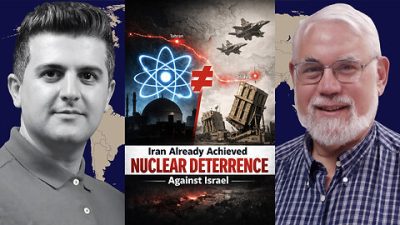
Prof. Ted Postol: Iran Already Achieved Nuclear Deterrence Against Israel
or go to
Aletho News Archives – Video-Images
From the Archives
How the occupied mentality syndrome works
Saudi Arabia on the American chessboard – Part 3
By B. J. Sabri | American Herald Tribune | June 27, 2016
Read part 2: “The occupied mentality Syndrome“
Previously I argued whether Saudi Arabia’s repeated involvements in U.S. interventions and wars stem from free national will or in response to a specific condition. For starters, in Saudi Arabia there is no national will. In Saudi Arabia, the national will is the will of the Al Saud clan. Still, when a major Arab state allies itself with a superpower that committed unspeakable crimes against humanity in almost every Arab country, then something is wrong. This fact alone should compel us to examine the U.S.-Saudi relation for one exceptional reason. As a result of the U.S.-Saudi wars, hundreds of thousands of people in Afghanistan, Iraq, Iran, Libya, Syria, Yemen, and Somalia have lost their lives. Millions became displaced in their own homelands. And millions more rendered refugees.
Attributing the Saudi policies to the bonds of “partnership” with the U.S. is frivolous. There are no bonds between these two thugs except those of business, military deals, secret plots, and wars. Proving this point, bonds such as these have no space for the American and Saudi peoples to share significant cultural or societal exchanges. If partnership is not the reason for the Saudi contribution to the U.S. strategy of empire and imperialism, then another reason must exist.
This leads to three possibilities. … continue
Blog Roll
 Aletho News
- Aircraft destroyed during US ‘rescue’ of downed F-15 pilot cost more than $100 million each
- Washington University removes professor who condemned US-Israeli war on Iran
- Russia Warns of Retaliation as UK Authorizes Seizure of Vessels
- Serbia thwarts plot to bomb Russia-Hungary gas pipeline – Vucic
- Al Mayadeen voices solidarity with Dr. Marandi amid death threats
- US dismantling international law in its war against Iran while claiming ‘false’ victory: Legal scholar
- One martyr, 5 injuries in US attack on Iraqi border crossing with Iran
- ‘This war is Israel’s war’: World facing ‘security breakdown’, says Qalibaf
- IRGC decries attack on US embassy in Riyadh, says executed by ‘Israel’
- Iran blasts EU hypocrisy as EU invokes international law over Hormuz
- If Americans Knew
- US loses planes over Iran, Israel downgrades Lebanon war goals – Daily Update
- Israel Is Blocking Palestinians from Easter at Church Where Jesus Resurrected
- Plot to assassinate Palestinian activist follows harassment campaign promoted by Zionist groups and elected officials
- Prominent New York synagogue hosts presentation on why U.S. Jews should support the ethnic cleansing of Gaza
- Tapper vs. Piker: Is the CNN Anchor Auditioning for David Ellison?
- Shouldn’t Democrats Be Able to Condemn Genocide?
- Israel-US kill negotiators, destroy civilian structures, but Iran’s military capabilities still largely intact – Daily Update
- ‘War crime’: Global condemnation as Israeli ministers celebrate death penalty law targeting Palestinian prisoners
- 7 Ways Israel Is Turning Lebanon Into Gaza
- World’s Leading Football Bodies Under Fire Over Israel Policies
- No Tricks Zone
- An Inconvenient Tree: Uncovered In Alps… Europe Much Warmer Than Today 6000 Years Ago
- New Study Reports A 60% Slowdown In Greenland’s Ice Loss Rate In The Last Decade
- Low Intensity Tornado Wrecks Major Solar Farm, Creating A Potential Toxic Dump
- New Study Finds Warming Saves Lives…Cold Temperatures 12 Times More Deadly Than Excess Heat
- German Science Blog Accuses PIK Climate Institute Of Hallucinating Climate Tipping Points
- Devastating Assessment Of Comirnaty Vaccine By Former Senior Pfizer Europe Toxicologist
- New Study: CO2 Is ‘Effectively Negligible’ As An Explanatory Climate Change Factor Since 2000
- Former Pfizer Toxicologist Dr. Helmut Sterz Tells Bundestag Hearing Pfizer Vaccine Should Have Never Been Approved
- Energy Expert: Germany’s Nuclear Phaseout Was A “500 Billion Euro Mistake”
- New Research: South Australia’s Mid-Holocene Sea Surface Temperatures Were 4°C Warmer Than Today
 Aletho News