Pakistan defies US over Iran gas deal
Press TV – November 25, 2011
Pakistan says it will press ahead with its Iran gas pipeline deal despite a strong opposition by the United States, Press TV reports.
Pakistan’s Information Minister Firdous Ashiq Awan said on Friday that Islamabad will not accept any dictation regarding its internal affairs from any foreign country, adding that importing gas from Iran is in the country’s best interest.
The remarks came as a reaction to earlier pleas by Washington’s Ambassador to Pakistan Cameron Munter that the Pakistani government abort its multi-billion dollar gas pipeline project with Iran.
“Pak-Iran gas pipeline is not a good idea….However, the plan to get gas from Turkmenistan is a better idea,” Press TV correspondent quoted Munter as saying on Friday.
The USD 7.6 billion gas pipeline deal, which was signed in June 2010, aims to export a daily amount of 21.5 million cubic meters (or 8.7 billion cubic meters per year) of Iranian natural gas to Pakistan.
Last month, Pakistan’s Minister of Oil and Natural Resources Asim Hussain said the Iran-Pakistan natural gas pipeline would be inaugurated before the end of 2013, one year ahead of the original schedule.
Maximum daily gas transfer capacity of the 56-inch pipeline, which runs over 900 km of Iran’s soil from Asalouyeh in Bushehr Province to the city of Iranshahr in Sistan and Baluchestan Province, has been given at 110 million cubic meters.
Iran and Pakistan finalized the details of the deal during bilateral talks held in Tehran in October 2007.
The deal comes in the face of Washington’s efforts to isolate Iran economically through UN Security Council sanctions and its own unilateral penalties over Tehran’s nuclear programs.
Iran ranks second in the world in natural gas resources after Russia with available gas reserves estimated at over 33 trillion cubic meters.
In addition to exporting gas to Turkey, Armenia, and Pakistan, the country is currently negotiating gas exports to Iraq.
‘US-led sanctions on Iran illegal’
Interview with Mohammad Marandi, professor of University of Tehran
Press TV – November 22, 2011
Britain the United States have imposed new sanctions on Iran’s banking system and energy sector after the UN nuclear agency’s recent report on Tehran’s nuclear program.
The International Atomic Energy Agency (IAEA) report, circulated among the 35 members of the agency’s Board of Governors on November 8, accused Iran of pursuing military objectives in its nuclear program.
Iran said the new round of sanctions imposed on the country over its nuclear energy program are fruitless.
Meanwhile, Russia’s foreign ministry has also denounced the new sanctions as “unacceptable and illegal.”
The Russian ministry’s statement also warned against the adverse affects of fresh anti-Iran sanctions, saying, “We believe that the constant strengthening of sanctions has long ago gone beyond the bounds of decisions on non-proliferation tasks surrounding the Iranian nuclear program.”
Press TV has interviewed Mohammad Marandi, professor of University of Tehran, to discuss the issue further.
Press TV: Are these sanctions, to begin with, actually legal?
Marandi: They are definitely not legal –just like many previous sanctions– because the Americans and the Europeans along side with the Americans are trying to impose their will upon the international community, they’re basically trying to force third countries not to do business with Iran and this is not new; this has been going on for many years but more or less it has not had the sort of effect that they have been looking for. They have been trying to increase sanctions but there really is not much more left that they could do.
The Iranians have more or less over the last decades moved away from trading with Europe and the United States and the sectors in which the Americans are now trying to put pressure on –meaning petrochemicals and oil and gas– these are sectors which are in high demand throughout the world. So Iran definitely will have customers and Iran has –because of the sanctions– developed its own industry for building petrochemical plants as well as facilities for producing oil. So the fact has minimized over the years and indeed it caused Iran basically to learn to look for alternative partners than the West. In some ways, it actually benefited Iran.
Press TV: And when we look at the countries involved, as you mentioned, Western countries –but in particular it is the United States, the UK and France– they are basing this on the most recent IAEA report that came out which in itself is controversial and has been labeled as being politically motivated. So it is kind of confusing when you have a report that is inconclusive because Iran has been transparent and then based on that, they come out and impose these sanctions.
Marandi: I think for the international community it is quite clear that the IAEA chief [Yukiya Amano] does not have any credibility and that the new report is based on very old information that goes back to a simple laptop that the Americans claim proves that Iran’s peaceful nuclear program has a military aspect to it. The Iranians said that this laptop –which the Americans say they obtained many years ago– the Iranians said it should be shown to computer experts to see if it is authentic. The Americans refused to give it to the IAEA or to give it to independent computer experts to analyze and –as the Iranians point out– this shows that it is a fabricated piece of evidence.
So the report itself does not contain anything new but the United States and the Europeans, in their rather irrational hostility towards Iran which to a large degree has to do with their rapidly declining fortunes in the Middle East and beyond, they continue to pursue hostile policies towards the Iranian people.
One of the interesting things is that this is probably the worst public diplomacy move that the Americans can make because they and the Europeans are obviously trying to hurt ordinary Iranians, trying to make ordinary Iranians suffer and that of course is itself a violation of human rights. But the problem is that they have really lost their influence over the country and Iran has many alternatives. You see rising powers in Latin America, in the Far East and in the Indian sub-continent which need Iran and the more Iran trades with them, in fact, the more reliant they become upon Iran.
Press TV: When you talk about diplomatic gestures made by the West, we remember when Barack Obama came into office, he said we are going to keep that dual track approach towards Iran, on the one hand, we are open for talks, on the other, sanctions. Of course it has been more of the sanctions and the negative approach that they have had towards Iran where they have exercised more in terms of any action than any diplomatic push towards trying to resolve any type of standoff. So put that into context for us if you can –a little wrap off of how the current US administration has approached Iran.
Marandi: It has been more or less an arrogant approach in the sense they assume they have the right to punish Iran whenever they see fit and use international organizations to do so and then try to force Iran to speak to them under duress –therefore giving concessions.
What they basically want is for Iran to be like Saudi Arabia –to be a client regime. But again Iran is too strong and too powerful for the US and for the Europeans to make it kneel and the world has changed dramatically over the past few years; more Iranians than ever before are traveling to countries outside of Europe and the US for trade, for studying, even for entertainment and sightseeing. So I think this Euro-centric mold –where the white European males who have been running the world for the last few centuries– this is beginning to break and we see major signs of it in Europe and the US, even now, through economic crises, through the protests that are going on throughout the US, and I don’t think time is really on their side.
France training rebels to fight Syria
Press TV – November 26, 2011
A Turkish newspaper has unveiled that French military forces are training armed Syrian rebels to fight the government of President Bashar al-Assad.
According to Milliyet, as cited by IRNA, France has sent its military training forces to Turkey and Lebanon to coach the so-called Free Syrian Army — a group of defectors operating out of Turkey and Lebanon — in an effort to wage war against Syria’s military.
The report added that the French, British, and Turkish authorities “have reached an agreement to send arms into Syria.”
The Turkish daily said that the three have informed the US about training and arming the Syrian opposition.
According to Milliyet, a group of armed rebels are currently stationed in Turkey’s Hatay Province near the border with Syria.
The report comes as an earlier report had revealed that the British and French intelligence agencies have reportedly tasked their agents with contacting Syrian dissidents based in the northern Lebanese town of Tripoli in order to help fuel unrest in Syria.
Reports also said that French intelligence agents have been sent to northern Lebanon and Turkey to build the first contingents of the Free Syrian Army out of the deserters who have fled Syria.
Syria has been experiencing unrest since mid-March, with demonstrations being held both against and in support of President Assad.
Damascus says the unrest has been largely incited by elements that are well-paid and armed by foreign powers. Hundreds of people, including members of the security forces, have been killed in the turmoil.
The opposition and Western countries accuse Syrian security forces of being behind the killings in the country, but the government blames what it describes as outlaws, saboteurs and armed terrorist groups for the deadly violence, stressing that the unrest is being orchestrated from abroad.
Jordanians, Egyptians rally in support of Jerusalem
Palestine Information Center – 26/11/2011
AMMAN — Tens of thousands of Jordanian citizens rallied on Friday in Suweima village in the Jordanian Valley, only 25 kilometers away from occupied Jerusalem, in support of the holy city.
Ibrahim Al-Keylani, delivering the Friday sermon at the village, said that the Jordanians were displaying solidarity with their Palestinian brothers.
He championed resistance as the only hope for the liberation of the holy Aqsa Mosque and Jerusalem, warning that the holy city was the target of a systematic Judaization campaign at the hands of the Israeli occupiers.
Participants torched Israeli flags and replicas of the alleged Jewish temple, which the Jews were seeking to build in place of the Aqsa mosque.
In Cairo, around 5000 Egyptians held a similar rally at the Azhar mosque to declare solidarity with Jerusalem and the Aqsa mosque on the international day for solidarity with occupied Jerusalem.
A statement delivered on behalf of the Sheikh of Al-Azhar, Dr. Ahmed Al-Tayyeb, said that Jerusalem was a red line and that Muslims would never allow anyone to harm it.
Tayyeb asked Muslims worldwide to mobilize efforts and to confront the Israeli Judaization of Jerusalem.
Khalil Al-Hayya, a political bureau member of Hamas, told the rally that Arabs and Muslims should stand united to liberate Jerusalem, adding that the Israelis were planning to destroy the Aqsa mosque.
Pakistan PM condemns NATO airstrike
Press TV – November 26, 2011
Pakistani Prime Minister Yousuf Raza Gilani has strongly condemned a NATO airstrike on a border post, which killed at least 28 Pakistani soldiers, Press TV reports.
Pakistan’s Foreign Ministry announced on Saturday that it also lodged a complaint in the strongest terms with NATO and the US over the attack, a Press TV correspondent reported.
“On his [Gilani] directions, the matter is being taken up by the foreign ministry, in the strongest terms, with NATO and the US,” the ministry said.
The incident occurred when a NATO helicopter targeted a security forces checkpoint known as Salala on the Mohmand Agency in northwestern Pakistan near the Afghan border early on Saturday. The strike also left 15 Pakistani soldiers injured.
The Western alliance said it was aware that an incident took place and it is still in the process of gathering information to investigate the attack.
In retaliation, Islamabad has blocked NATO supplies to Afghanistan.
Dozens of trucks carrying goods and petroleum supplies for NATO forces were stopped in the Torkham border area of the Khyber tribal region in northwestern Pakistan.
Pakistan has repeatedly condemned airstrikes against its troops near the border with Afghanistan. While the strikes supposedly target militants, they usually claim the lives of civilians and Pakistani soldiers.
Haniyeh urges Abbas to ignore US demands
Ma’an – 26/11/2011
GAZA CITY — Prime Minister in Gaza Ismail Haniyeh on Friday listed three basic factors needed to resolve a power-sharing deal with his Fatah rivals: ditch the US, stick to the terms of the May agreement, and find an alternative to Israeli tax-collection.
Speaking at the al-Omari mosque in Gaza, Haniyeh urged Fatah leader and president Mahmoud Abbas to defy US and Israeli threats, and not to respond to them under any circumstances. The US has no plans that would benefit the Palestinian people, he said.
Gaza, for example, has managed to survive independently despite many attempts from external powers to control the enclave, he said. The government and the people have managed to live in dignity thanks to assistance from Arabs and Muslims, he said.
Haniyeh said the key element of a successful power-sharing deal would be sticking to the terms of an agreement signed in May under Egyptian mediation. It should be implemented “accurately, honestly and inherently in both the West Bank and Gaza Strip,” he said. The release of political detainees would be the first indication of the deal’s success, he said.
However, Haniyeh said there were no political detainees in Gaza prisons, a point which Fatah leaders have disputed. Haniyeh said there were hundreds of political prisoners in the West Bank. Haniyeh said he would free political detainees in Gaza if any were in Hamas’ jails.
The third factor Haniyeh mentioned was necessary reforms to a tax system in Palestine that leaves revenues in the hands of a hostile power. An alternative to Israel’s collection of taxes and customs on the Palestinian Authority’s behalf must be found, as it leaves domestic politics subject to foreign meddling.
The alternative should be funds from Arab and Muslim countries, he said. The Palestinian budget is small compared to the funds in Arab banks, he said suggesting Palestinian needs could be met with ease.
Haniyeh also said elections should be held in May, as planned, among other factors like forming a national unity government, rebuilding the PLO, security reforms and reconciliation between certain families.
Four houses and one mosque fall to Israeli demolitions in Susiya
25 November 2011 | International Solidarity Movement, West Bank
Four houses and one mosque were destroyed this morning, November 24th, in the villages in the south of the West Bank. Around 10 am, fifty soldiers and seven police cars arrived to village Susiya. Two bulldozers destroyed the house of Musa Magna’s family and two women were arrested after attempting to protect the house.

In addition to these demolitions, the Israeli military also plan to destroy part of a school, the road leading from the village to the school and a several tents in the village.
House demolitions also occurred in Um Fagarah, a few kilometres south of Susiya. The Israeli military destroyed a house which was home to a family of twelve, some tents and a pen holding sheep and rabbits, some of which were killed. Two women were arrested and the occupation forces broke the leg of one elder woman in the village. The houses of Hammamdi family were destroyed even though the demolition order had not been finalised as the court hadn’t yet reached a final verdict. The military also destroyed a mosque in the village.
Both of these shepherd’s villages are often attacked by settlers and subjected to demolitions by the Israeli military.
‘UK government in blind panic over strike’
Press TV – November 25, 2011
The chief of UK’s leading civil service union has accused the government of being in ‘blind panic’ after Home Office asked some government employees to work as border officers during pension strikes planned for next week.
Selected groups of government employees were contacted to walk through picket lines and check passports as passengers arrive at airports and ports from abroad during the industrial action planned for November 30 by public sector workers against pension reforms, The Guardian reported on Thursday.
The crisis-hit British government hopes to make annual savings of 2.8 billion pounds (USD 4.3 billion) by 2014 through reducing pensions, while forcing employees to work for longer years. Many of the workers are already facing wage freezes.
The General Secretary of Public and Commercial Services Union (PCS), Mark Serwotka said, “They are forcing people to work up to eight years longer, forcing people to pay thousands of pounds for less of a pension; it’s completely unfair.”
He criticized ministers for failing to prevent the move by calling unions in for urgent talks, despite months of warning about the strikes.
Serwotka noted that the government had been more interested in spinning over the issue rather than trying to handle the row, saying, “Yesterday in parliament it was revealed the prime minister misled parliament on the 2 November when he made claims about public sector pensions that have been shown to be false.”
“What that indicates is that rather than worry about the services on the day, rather than plan properly for 30 November, they have been engaging in a PR exercise putting out misleading information to try and force through damaging changes that are unfair. Less than a week before the strike, to suddenly turn round and act in a blind panic is completely irresponsible,” he added.
About four million public sector workers are expected to take part in the protest measure organized by Trade Union Congress (TUC), despite the government’s threats to cut the protesters’ pay and cancel out the concessions it has already made to them if they kept up the demonstrations for longer than 15 minutes.
Gould-Werritty: A Real Conspiracy, Not a Theory
By Craig Murray | November 25, 2011
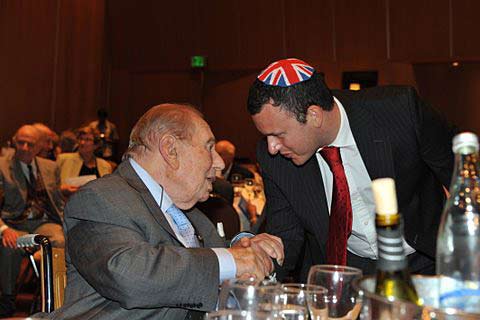
There is a huge government cover-up in progress over the Werritty connection to Mossad and the role of British Ambassador to Israel Matthew Gould, and their neo-con plan to start a war with Iran.
Yesterday at 22.15pm I submitted by email a Freedom of Information request for:
All communications in either direction ever made between Matthew Gould and Adam Werritty, specifically including communications made outside government systems.
At 23.31pm I was astonished to get a reply from the Foreign and Commonwealth Office. The request was refused as it was
“likely to exceed the cost limit”.
Now it is plainly nonsense that to gather correspondence between two named individuals would be too expensive. They could just ask Gould.
And a reply at nearly midnight? The Freedom of Information team in the FCO is not a 24 hour unit. Plainly not only are they hiding the Gould/Werritty correspondence, they are primed and on alert for this cover-up operation.
Even more blatant was the obstruction of MP Paul Flynn, when he attempted to question Cabinet Secretary Gus O’Donnell on the Gould-Werritty connection at the House of Commons Public Administration Committee. These are the minutes: anybody who believes in democracy should feel their blood boil as you read them:
Publc Admininstration Committee 24/11/2011
Q<369> Paul Flynn: Okay. Matthew Gould has been the subject of a very serious complaint from two of my constituents, Pippa Bartolotti and Joyce Giblin. When they were briefly imprisoned in Israel, they met the ambassador, and they strongly believe—it is nothing to do with this case at all—that he was serving the interest of the Israeli Government, and not the interests of two British citizens. This has been the subject of correspondence.
In your report, you suggest that there were two meetings between the ambassador and Werritty and Liam Fox. Questions and letters have proved that, in fact, six such meetings took place. There are a number of issues around this. I do not normally fall for conspiracy theories, but the ambassador has proclaimed himself to be a Zionist and he has previously served in Iran, in the service. Werritty is a self-proclaimed—
Robert Halfon: Point of order, Chairman. What is the point of this?
Paul Flynn:> Let me get to it. Werritty is a self-proclaimed expert on Iran.
Chair:> I have to take a point of order.
Robert Halfon:> Mr Flynn is implying that the British ambassador to Israel is working for a foreign power, which is out of order.
Paul Flynn:> I quote the Daily Mail: “Mr Werritty is a self-proclaimed expert on Iran and has made several visits. He has also met senior Israeli officials, leading to accusations”—not from me, from the Daily Mail—“that he was close to the country’s secret service, Mossad.” There may be nothing in that, but that appeared in a national newspaper.
Chair:> I am going to rule on a point of order. Mr Flynn has made it clear that there may be nothing in these allegations, but it is important to have put it on the record. Be careful how you phrase questions.
Paul Flynn:> Indeed. The two worst decisions taken by Parliament in my 25 years were the invasion of Iraq—joining Bush’s war in Iraq—and the invasion of Helmand province. We know now that there were things going on in the background while that built up to these mistakes. The charge in this case is that Werritty was the servant of neo-con people in America, who take an aggressive view on Iran. They want to foment a war in Iran in the same way as in the early years, there was another—
Chair:> Order. I must ask you to move to a question that is relevant to the inquiry.
Q<370> Paul Flynn:> Okay. The question is, are you satisfied that you missed out on the extra four meetings that took place, and does this not mean that those meetings should have been investigated because of the nature of Mr Werritty’s interests?
Sir Gus O’Donnell:> I think if you look at some of those meetings, some people are referring to meetings that took place before the election.
Q<371> Paul Flynn:> Indeed, which is even more worrying.
Sir Gus O’Donnell:> I am afraid they were not the subject—what members of the Opposition do is not something that the Cabinet Secretary should look into. It is not relevant.
But these meetings were held—
Chair:> Mr Flynn, would you let him answer please?
Sir Gus O’Donnell:> I really do not think that was within my context, because they were not Ministers of the Government and what they were up to was not something I should get into at all.
Chair:> Final question, Mr Flynn.
Q<372> Paul Flynn:> No, it is not a final question. I am not going to be silenced by you, Chairman; I have important things to raise. I have stayed silent throughout this meeting so far.
You state in the report—on the meeting held between Gould, Fox and Werritty, on 6 February, in Tel Aviv—that there was a general discussion of international affairs over a private dinner with senior Israelis. The UK ambassador was present. Are you following the line taken by the Secretary of State for Communities and Local Government who says that he can eat with lobbyists or people applying to his Department because, on occasions, he eats privately, and on other occasions he eats ministerially? Are you accepting the idea? It is possibly a source of great national interest—the eating habits of their Secretary of State. It appears that he might well have a number of stomachs, it has been suggested, if he can divide his time this way. It does seem to be a way of getting round the ministerial code, if people can announce that what they are doing is private rather than ministerial.
Sir Gus O’Donnell:> The important point here was that, when the Secretary of State had that meeting, he had an official with him—namely, in this case, the ambassador. That is very important, and I should stress that I would expect our ambassador in Israel to have contact with Mossad. That will be part of his job. It is totally natural, and I do not think that you should infer anything from that about the individual’s biases. That is what ambassadors do. Our ambassador in Pakistan will have exactly the same set of wide contacts.
Q<373> Paul Flynn:> I have good reason, as I said, from constituency matters, to be unhappy about the ambassador. Other criticisms have been made about the ambassador; he is unique in some ways in the role he is performing. There have been suggestions that he is too close to a foreign power.
Robert Halfon:> On a point of order, Chair, this is not about the ambassador to Israel. This is supposed to be about the Werritty affair.
Paul Flynn:> It is absolutely crucial to this report. If neo-cons such as yourself, Robert, are plotting a war in Iran, we should know about it.
Chair:> Order. I think the line of questioning is very involved. I have given you quite a lot of time, Mr Flynn. If you have further inquiries to make of this, they could be pursued in correspondence. May I ask you to ask one final question before we move on?
Sir Gus O’Donnell:> One thing I would stress: we are talking about the ambassador and I think he has a right of reply. Mr Chairman, I know there is an interesting question of words regarding Head of the Civil Service versus Head of the Home Civil Service, but this is the Diplomatic Service, not the Civil Service.
Q<374> Chair:> So he is not in your jurisdiction at all.
Sir Gus O’Donnell:> No.
Q<375> Paul Flynn:> But you are happy that your report is final; it does not need to go the manager it would have gone to originally, and that is the end of the affair. Is that your view?
Sir Gus O’Donnell:> As I said, some issues arose where I wanted to be sure that what the Secretary of State was doing had been discussed with the Foreign Secretary. I felt reassured by what the Foreign Secretary told me.
Q<376> Chair:> I think what Mr Flynn is asking is that your report and the affair raise other issues, but you are saying that that does not fall within the remit of your report and that, indeed, the conduct of an ambassador does not fall within your remit at all.
Sir Gus O’Donnell:> That is absolutely correct.
Paul Flynn:> The charge laid by Lord Turnbull in his evidence with regard to Dr Fox and the ministerial code was his failure to observe collective responsibility, in that case about Sri Lanka. Isn’t the same charge there about our policies to Iran and Israel?
Chair:> We have dealt with that, Mr Flynn.
Paul Flynn:> We haven’t dealt with it as far as it applies—
Chair:> Mr Flynn, we are moving on.
Paul Flynn:> You may well move on, but I remain very unhappy about the fact that you will not allow me to finish the questioning I wanted to give on a matter of great importance.
It is shocking but true that Robert Halfon MP, who disrupted Flynn with repeated points of order, receives funding from precisely the same Israeli sources as Werritty, and in particular from Mr Poju Zabludowicz. He also formerly had a full time paid job as Political Director of the Conservative Friends of Israel.
But despite the evasiveness of O’Donnell and the obstruction of paid zionist puppet Halfon, O’Donnell confirms vital parts of my investigation. In particular he agrees that the Fox-Werritty-Gould “private dinner” in Tel Aviv was with Mossad, and that Gould met Werritty many times more than the twice that O’Donnell listed in his “investigation” into this affair.
Of the six meetings of Fox-Gould-Werritty together which I discovered, five were while Fox was Secretary of State for Defence. Only one was while Fox was in opposition. But O’Donnell has now let the cat much further out of the bag, with the astonishing admission to Paul Flynn’s above questioning that Gould, Fox and Werritty held “meetings that took place before the election.” He also refers to “some of those meetings” as being before the election. Both are plainly in the plural.
It is now evident that not only did Fox, Gould and Werritty have at least five meetings while Fox was in power – with never another British official present – they had several meetings while Fox was shadow Foreign Secretary. O’Donnell is right that what Fox and Werritty were up to in opposition is not his concern. But what Gould was doing with them – a senior official – most definitely is.
A senior British diplomat cannot just hold a series of meetings with the opposition shadow Defence Secretary and a paid zionist lobbyist. What on earth was happening?
The absolutely astonishing cover-up and lack of honesty from the government about the Fox-Gould-Werritty relationship is being maintained with cast-iron resolve. Not only is Gould a self-declared fervent zionist, he was born in the same year as Chancellor George Osborne and attended the same private school – St Paul’s. At least some of the time he was meeting Fox and Werrity while they were in opposition, Gould was Private Secretary to New Labour Foreign Secretary David Milliband. That opens up the question of whether David Milliband, another fervent zionist, was part of the discussions with Mossad and US neo-cons on how to engineer war with Iran, for which Werritty was the conduit.
That would help explain the completeness of the cover-up. The government appears able with total impunity to refuse to answer MPs’ questions on Gould/Fox/Werritty, and they will not respond to Freedom of Information requests. It is now proven without doubt that O’Donnell lied blatantly about the number of Gould-Fox-Werritty meetings, and that Mossad was involved. And yet every single British mainstream media outlet still refuses to mention it.
I know from a mole that the plot involves a plan to attack Iran. For the cover-up to be so blatant and yet so comprehensively maintained, the secret at the heart of this conspiracy must be great, and those complicit must include a very large swathe of the British political and media establishment.
UPDATE: access to this blog is now blocked from FCO and Cabinet Office terminals. Very wise – truth can be contagious.
Featured Video
Pentagon insider says high US official Douglas Feith reported to Netanyahu
or go to
Aletho News Archives – Video-Images
Frlom the Archives
The Fiction of the Jewish History in Palestine
By Hasan Afif El-Hasan | The Palestine Chronicle | April 8, 2011
Prime Minister Benjamin Netanyahu told NNC Pierce Morgan on March 18, 2011 that he might agree to a Palestinian state through negotiations. And he added, “We will make territorial concessions although it is very painful to do that in our ancestral land.” Netanyahu was not talking about Poland where his ancestors lived. He was talking about Palestine where generations of its indigenous population ancestors lived, cultivated the land and are buried.
By the end of the nineteenth century, Zionism created a new Jewish identity of blood and soil. To mobilize their followers and supporters and appeal to their emotions, the Zionists created myths. Zionism started as a tribal religion without god, but in order to fulfill its function as a unifying force, Zionism required external religious and race symbols, not inner content. Its leaders regarded metaphysical religious belief and purity of race as having value in itself. They created a divine paradisiacal state of merger with the gods. Despite his non-religious ideology, Herzl’s writings were replete with religious references. The Jews should settle in Palestine because, in his words, “the Temple will be visible from long distance, for it is only our ancient faith that has kept us together”.
The Zionists and their supporters have invested tremendous financial and scholarly resources to work within the Hebrew Bible historical narratives to affirm the links between the intrusive Zionist population and the ancient Israelite past, and by doing so assert the right of that population to the land. The political end-game shaped the investigation and the outcome. Tracing the roots of Israel’s ethnic state in biblical antiquity is effectively to silence the indigenous Palestinian claim to the past and therefore to the land. The Biblical scholarship employs a bewildering array of terms for the region: “the Holy Land”, “the Land of the Bible”, “Eretz Israel”, “the Land of Israel”, or “Judah and Samaria.” To the casual reader these names appear interchangeable, but they all imply connection to ancient Israel.
Biblical narratives or poems that cannot be supported by archeology and common sense are treated by the Zionists and their supporters as historical language. … continue
Blog Roll
 Aletho News
- Pentagon insider says high US official Douglas Feith reported to Netanyahu
- The Sludging of Rural America
- Lawyers’ groups demand end to British military bases in Cyprus
- CIA Assessment: The Resistance Cannot Be Crushed
- Hezbollah Returns: It Didn’t Start a War, It Is Ending One
- EU states seek ‘talks’ with Iran for access to Strait of Hormuz: Report
- Trump on Hormuz: “Others must take care of it” after US falters
- Who Is closer to collapse?
- A War that Backfired: Why the US-Israeli Campaign Is Strengthening Iran
- How Zionist Control Is Hurting US Interests
- If Americans Knew
- As US-Israel war on Iran rages, Gaza faces massive dust storm – Not a ceasefire Day 156
- No let-up in attacks on Gaza as Israel takes on Iran, Lebanon – Not a ceasefire Day 155
- ‘Of Course’: IDF Drops Case Against Soldiers Accused of Raping Palestinian Prisoner
- Don’t Fall for the Regime Change Talk. Israel Is ‘Mowing the Lawn’ in Iran
- Will Israel and the US wreck the Gulf States along with Iran?
- US so far burned through ‘years’ of munitions in Iran war: Report
- How the Israeli Tail Wags the American Dog
- Outdated intel likely led to deadly U.S. strike on Iranian elementary school, sources say
- Pentagon insider says high U.S official Douglas Feith reported to Netanyahu
- In fond memory of Walid Khalidi, the historian of Palestine
- No Tricks Zone
- Storing Green Energy To Last Germany 10 Days Would Require A 60-Million Tonne Battery
- New Studies: UK Sea Levels Were 4 Meters Higher Than Today During The Mid-Holocene
- Destructive Green New Deal: German Energy And Metal Group Warns Of Drastic Crisis
- New Study Documents A 20-Year Pause In Arctic Sea Ice Decline – Driven By Internal Variability
- Wake-up Call: Survey Shows Majority Of Germans Now Favor Postponing Climate Targets!
- Televised! Leading German Political Candidate Tells Schoolchildren CO2 Makes Sun Hotter!
- New Study: A Century Warming Of 1.1°C Is ‘Commonplace’ And ‘Not Unusual’ During This Interglacial
- New Study: ‘Internal Noise’ And Volcanic Forcing Can Trigger 10-15°C Warming Within Decades
- Glaciers Worldwide Are Suddendly Surging, Experts Blame Warming!
- Surprising Discovery: Sahara Is Greening…Billions Of Trees Where Once Thought To Be Barren
 Aletho News