Zionist plan to hamper relief work in Palestine
Palestine Information Center – 04/01/2012
RAMALLAH — Israeli media revealed that the Israeli occupation foreign ministry plans to restrict the work of international relief organisations working in Palestine in terms of restricting travel permits for their representatives.
Maariv newspaper said on Tuesday that the foreign ministry aims to reduce the number of travel permits given to charity workers working with international organisations including those affiliated with the United Nations after some Israeli reports said that the number of those workers has increased.
Israeli reports say that there are more than 1000 charity workers in the West Bank and the Gaza Strip. The reports accused charity organisations of using loopholes in the system to obtain travel permits for their workers which allow them to enter Israel.
The Israeli occupation took a number of measure over the past couple of years to restrict the entry of international solidarity activists to Palestine and is systematically trying to restrict the activities of charities helping Palestinians.
Twisted Logic of Using Violence to Achieve Peace
By Ramzy Baroud | Palestine Chronicle | January 4, 2012
‘Sooner or later, there will be no escape from conducting a significant operation [in Gaza],’ said Israeli army Chief of Staff Lieutenant General Benny Gantz on December 27, the third anniversary of Operation Cast Lead.
Gantz’s chillingly casual remarks were cited as just another nonchalant declaration of war against a besieged, impoverished, overcrowded and routinely bombarded stretch of land. From the Israeli military and political point of view, Gaza merely exists as an opportunity for the Israeli army to test its latest weapon technology and send political messages to Israel’s foes in the region.
As if to validate Gantz’s logic, the ardently right-wing Israeli Jerusalem Post elaborated on December 28: “The Israel Air Force, working with the Shin Bet [Israel Security Agency], fired a missile at Gaza terrorists [fighters] involved in recent attacks on Israel, killing one and injuring two others.” They were ‘terrorists’ because Israel has designated them so. There was no due process and none was expected. When it comes to reporting on Israel/Palestine, corporate media largely relies on Israeli lies and propaganda. And one moral crisis begets another. The Israeli propaganda is predicated mostly on racism, not just in its view of Palestinians in Gaza, but of all Arabs.
Let’s examine the curious logic of Yuli Edelstein, Israel’s Propaganda and Diaspora Minister. In a recent talk in Or Yehuda, the man laid out his understanding of how peace can be achieved. “As long as the Arab nation continues to be a deplorable nation, which continues investing in infrastructure for terrorism, education to hate, and welfare for the families of shaheeds [martyrs], there will be no peace,” he said, according to Yossi Gurvitz in +972 online magazine.
Gurvitz further wrote: “I phoned the minister’s office for comment, and asked his spokesman: ‘Are you aware of the fact there are some 80 million Arabs in the world, from Sudan to Syria?’ He replied: ‘Yes, there are — and the minister meant them all.'”
I must admit that cogent political analysis becomes difficult when a country’s foreign policy and military strategy are constructed on unabashed racism, ignorance and a reproduction of 19th century Orientalism. How is one to forecast the possibilities of a just peace in Palestine when a well-regarded Israeli minister places a condition on the ‘Arab nation’ to become less deplorable? How can Gaza avoid another ‘Operation Cast Lead’ if its fate has already been sealed, with the ambiguous time frame of ‘sooner or later’?
It is particularly frustrating to hear Israeli politicians berating Palestinians for not being a deserving ‘peace partner’ when all that the Israeli government has to offer is one war of choice after another. Israel is increasingly ruled by the kind of fundamentalism and militancy that would not be tolerated anywhere else in the world. It is telling that Gantz’s ‘sooner or later’ remarks were followed by another interesting statement: “Gantz said that in certain circumstances and during non-official military events, the Israeli army would be prepared to exempt religious soldiers from participation if they are uncomfortable hearing women sing” (Jerusalem Post).
Such tolerance of religious fanaticism in Israel is a reflection of the growing role of religious extremism in the country. For the Israeli government to win favour among its constituents, all it needs to do is to blitz Gaza, rob more West Bank land, carry out more ethnic cleansing in occupied east Jerusalem or push a few more racist legislation against Israel’s Arab minority. Somehow, this seems to bring about a sense of serenity in Israel. The military emerges as the defender of the troubled borders, and a temporary political unity prevails.
Of course, the obvious truth regarding Israel’s ill-intentions will always find its way through the cracks of mainstream media. This was the case in the unprecedented report issued by European Union ambassadors in Israel. It read in part: “While the international community is focused predominantly on restarting the Israeli-Palestinian peace process, we should see Israel’s treatment of its minorities as a core issue, not second tier to the Israeli-Palestinian conflict.” The report added, “Israel’s Arab population is measurably worse off than its non-Arab majority in terms of income, education, housing and access to land..
In other words, no Palestinian anywhere is immune. Indeed, in every aspect of its relations with Palestinians — in Gaza, in the West Bank and occupied Jerusalem, and in Israel itself — Israel’s attitude towards all Palestinians is defined by violence, ethnic cleansing and racial discrimination. Even minister Edelstein, who repudiated Arabs for being “deplorable”, himself reportedly lives in the illegal Jewish colony of Neve Daniel, constructed atop stolen Palestinian land (as reported by Stuart Littlewood, Redress).
It is odd that Israel demands security and peace from the very Palestinians who are deprived of every sense of peace, security, and freedom itself. And yet it is the ‘Arab nation’ that is ‘deplorable’ and deserving of endless war.
Three years after the Israeli war on Gaza, which killed over 1,400 and wounded over 5,500, there are few indications that Israel has in any way altered its attitude. To the contrary, it continues to exact further punishment, while the Israeli Knesset, media and public officials continue to dehumanise Palestinians and Arabs.
True, and sadly so, Gaza will “sooner or later” be the target of another ‘significant operation’ under the pretext of more excuses. But also true is the fact that Israeli crimes against Palestinians will continue to be exposed for the whole world to see. And ‘sooner or later’, this perpetual war against innocent people will have to stop.
~
Ramzy Baroud (www.ramzybaroud.net) is an internationally-syndicated columnist and the editor of PalestineChronicle.com. His latest book is My Father Was a Freedom Fighter: Gaza’s Untold Story – Pluto Press, London. (This article was originally published in Gulf News)
Favourable Verdict for Venezuelan Government on Exxon Nationalisation Case
By Rachael Boothroyd | Venezuelanalysis | January 2, 2011
Caracas – The Venezuelan government has described its arbitration hearing at the International Chamber of Commerce (ICC) as a “successful defence” after it was told to pay just US$907 million to the Texas-based oil company Exxon in return for the nationalisation of one of its projects in Venezuela.
In an official statement, Venezuelan state oil company PDVSA confirmed that of the US$907 now owed to Exxon, it would be obliged to pay just $255 million, after subtracting various debts owed by the corporation from the amount.
According to figures from PDVSA, the oil company had debts of US$191 million which will be subtracted, as well as US$160 million that the ICC awarded to PDVSA in counterclaims. The US$300 million in PDVSA’s New York bank account which was frozen by Exxon following the nationalisation will also be deducted.
“If ExxonMobil had been willing to accept a reasonable compensation, which the arbitration tribunal has confirmed, arbitration would not have been necessary” read an official statement released this Monday by PDVSA.
US oil giant Exxon withdrew from Venezuela in 2007 when the Chavez government effectively nationalised the oil rich Orinoco river belt. At the time, Exxon had a 41.6% stake worth $US750 million in the Venezuelan oil fields, specifically in the Cerro Negro project.
Since then, both Exxon and the Venezuelan government have been locked in a legal battle, with Exxon originally demanding over US$12 billion in compensation – a sum previously described as an “abusive amount” by Venezuelan Oil Minister Rafael Ramirez, who also condemned Exxon for demanding over ten times what it had invested in the project.
“This (the verdict) confirms that the amount demanded at the beginning of the case, 12 billion dollars plus accrued interest since 2007, was completely exaggerated and beyond all logic,” continued the statement.
Aside from the ICC’s recent verdict, the US oil company also has a claim pending for the same nationalisation with the World Bank’s International Centre for Settlement of Investment Disputes (CIADI).
PDVSA has stated that should Exxon continue with the second arbitration, then the Venezuelan government will “take all necessary steps to defend itself, as PDVSA has done in this arbitration case with the ICC”. PDVSA now has 60 days to pay the compensation in full.
China rejects US-led sanctions on Iran
Press TV – January 4, 2012
China has voiced strong opposition to the US-led push for unilateral sanctions against Iran over its nuclear program, reiterating that Tehran’s nuclear issue must be resolved diplomatically.
“China has consistently believed that sanctions are not the correct way to ease tensions or resolve the issue of Iran’s nuclear program,” Chinese Foreign Ministry spokesman Hong Lei said at a news briefing in Beijing on Wednesday.
“The correct path is dialogue and negotiations. China opposes putting domestic law above international law to impose unilateral sanctions on another country,” he said.
Hong also defended China’s oil and trade ties with Iran and criticized the Western sanctions that could frustrate such relations.
“China and Iran have normal and transparent trade and energy exchanges that do not contravene UN Security Council resolutions. The dealings in question should not be affected (by sanctions),” the Chinese foreign ministry spokesman pointed out.
On December 31, US President Barack Obama signed into law fresh economic sanctions against Iran’s Central Bank in a bid to punish foreign companies and banks that do business with the Iranian financial institution.
The legislation requires foreign financial firms to make a choice between doing business with Iran’s Central Bank and oil sector or with the US financial sector.
It will not, however, go into effect for six months in order to provide oil markets with time to adjust.
It also includes a “waiver” allowing the president to suspend the sanctions in case he decides that the anti-Iran attempt will adversely impact national security interests of the US.
The inclusion of the “waiver” in the bill reflects major concerns among American lawmakers that the bullying approach of the US against the Islamic Republic will backfire across the globe.
Meanwhile, energy experts say the sanctions could lead to a major hike in crude oil prices and disrupt the interests of the US and its allies that depend on oil imports from Iran.
The United States has already barred its own banks from dealing with the Iranian Central Bank.
RICK SANTORUM GETS THE NOD AS THE NEOCONS’ MAN
By Damian Lataan | January 3, 2012
No sooner had Rupert Murdoch anointed Rick Santorum last night as the man he will support for the presidency then William Kristol quickly posted a last minute tid-bit at The Weekly Standard website before heading off to bed saying what a ‘good omen’ it was for him to bump into Santorum in the lobby of the hotel that they both just happen to be staying at.
Neocons don’t do ‘omens’. They carefully plan stuff.
They’ve been hanging out in the wings for weeks waiting and watching how each of the candidates are performing, paying particular attention to their foreign policy attributes. It’s odd, however, that Kristol barely even mentioned Santorum as a possibility when he was rummaging around in an article that clearly demonstrated that they were very disappointed with the then field. As I said in my article at the time, Kristol’s list of possibilities then was Mike Huckabee, Sarah Palin, Paul Ryan, Chris Christie, Mitch Daniels, Marco Rubio and Jeb Bush, but I doubt – apart from Jeb Bush and Marco Rubio – that he took any of them seriously.
But now the man with the most influence has come down on the side of Santorum, all we can do now is sit back and watch how all the neocons follow their master’s words.
Corporate Crime in the Pharmaceutical Industry
The Scandal of Reincarnated Rats
By RUSSELL MOKHIBER | CounterPunch | January 3, 2012
John Braithwaite is back.
The famed Australian corporate criminologist is teaming up with a former European pharmaceutical executive – Graham Dukes – and together they are completing a new book on corporate crime in the pharmaceutical industry.
The working title – Corporations, Crime and Medicines.
Thirty years ago, Braithwaite finished his magnum opus – Corporate Crime in the Pharmaceutical Industry (Routledge Kegan & Paul).
The book documented widespread fraud and corruption worldwide.
“In the latter part of the 1980s, I thought that the pharmaceutical industry was actually improving in its standards,” Braithwaite told Corporate Crime Reporter in an interview. “Ciba Geigy was one company that had come under particularly aggressive attack from the consumer movement. And Ciba Geigy was responding and setting up corporate social responsibility policies with a new risk management initiative that it was trying to get other companies to join up with.”
“Pfizer became the number one company in the industry. It was sending senior executives to Australia to talk to me. They were really interested in what kind of internal procedures they could be putting in place to make sure that folks like Graham and I would not be making the kinds of critiques that were in Corporate Crime in the Pharmaceutical Industry.”
“I was encouraged by that. I think actually I wasn’t conned. In the course of the 1980s, there was progress.”
“I actually finished the research for Corporate Crime in the Pharmaceutical Industry in 1980. But the book was held up for concerns about libel.”
“But 30 years on, the situation has in fact become worse in most respects. Perhaps there has been some improvement in terms of safety and manufacturing processes among the majors. But on the other hand, the largest pharmaceutical corporations in the world have done a major disservice in the way they have approached the generic industry and, in a sense, stigmatized the generic industry.”
“In Corporate Crime in the Pharmaceutical Industry, we concluded that 19 of the 20 largest U.S. pharmaceutical companies had engaged in serious corrupt activities in the course of the 1970s. And there was really no other industry in the United States that had such a consistent pattern. There were other industries – like the defense industry – that were doing terribly corrupt things. But in terms of top to bottom corruption, the pharmaceutical industry was the worst in the United States.”
“And in some ways, we are inclined to conclude that today it is even worse.”
In the area of research fraud, things are again worse 30 years later.
“A big part of the 1984 book was fraud in safety and testing of drugs,” Braithwaite said. “Remember the GD Searle company, of which Donald Rumsfeld was a CEO? They had the scandal of reincarnated rats. The rats would die when a drug was tested on them. And they would be replaced with living rats. That kind of blatant fraud is not dead in the pharmaceutical industry. There is a lot more sophisticated fraud in the form of suppression of negative safety and efficacy studies. And the boosting of positive studies.”
“But still, there is quite a lot of plain old fashion losing of negative data. And that is the same as the throwing away of the dead rat and replacing the dead rat with the reincarnated rat.”
“You generate data that a drug does not work. And you just suppress that data. It’s as if the study were never conducted and you start again and do another study until you get one that shows you what you want to find. Go to another university professor who will tell you what you want to hear.”
“That situation is, if anything. worse rather than better.”
On the Wall Street meltdown, Braithwaite says the situation could have easily been prevented.
“There was a lot of evidence that there was systemic mortgage fraud – liar loans, false representation of income and employment status of people on loans,” Braithwaite said. “And that had to do with a shift of the nature of capitalism. Banks issuing loans were no longer as interested as they should have been in assessing the capacity of the borrower to repay. Why? Because it was a move from a risk management financial sector to a risk shifting financial sector. You just slice and dice the loans and spread the risk around to a lot of other banks.”
“But it seems to me that there was a ready regulatory response to that. It was knowable that there was a problem. You had the FBI reporting as early as 2004 and 2005 that there was an epidemic of mortgage fraud in the United States. You had this huge trend up in housing loan defaults starting in the mid 2000s. These were very clear red flags.”
“The simple regulatory strategy was for prudential regulators to go to mortgage brokers and banks and say – look, your portfolio of loans has twice the default rate of the average in our state. We want to sit down with you and look into why that is. And if that very simple regulatory inspection measure had been taken, it would have quickly become apparent that there was a pattern of fraud in the loans that they were issuing. And that would have been the early preventive step.”
“And you wouldn’t have necessarily had to prosecute those banks. You would have wanted to go around the country and stop the problem. That would be the most important thing. You would prosecute the ones with the worst patterns of conduct. But the more important thing would be return to integrity in the way loans are issued. Banks return to being interested in ensuring that these were levels of repayment that could be made.”
Russell Mokhiber edits the Corporate Crime Reporter.
[For the complete transcript of the Interview with John Braithwaite, see 26 Corporate Crime Reporter 1(12), January 2, 2012, print edition only.]
Lebanese FM: Solution in Syria Internal Not Through Foreign Interference That Complicates Situation
SANA |January 02, 2012
KUWAIT – Lebanese Foreign Minister Adnan Mansour underlined that the solution in Syria is internal and cannot be solved through foreign interference in the country’s domestic affairs because this will hinder the solution and does not deepen dialogue rather it complicates the situation, expressing hope that Syria would overcome the crisis.
The Lebanese Minister told al-Anbaa Kuwaiti Newspaper on Monday that the Syrian leadership did not refuse reforms, rather it accepted them from the beginning and reforms cannot be achieved out of the blue, but rather fulfilled through dialogue.
He added “the events taking place in Syria concern us to a great extent because Syria and Lebanon are neighboring brotherly countries which are connected through geographic, economic, social and humanitarian ties and there are common things between them i.e. stability and security….security and stability in Syria reflect positively or negatively on Lebanon.”
Regarding Lebanese Defense Minister Fayez Ghosn’s statements on the infiltration of al-Qaeda members from Lebanon into Syria, Mansour underlined that Lebanese Interior Minister Marwan Charbel did not contradict Minister Ghosn regarding his information about al-Qaeda members, saying that the Defense Minister did not talk about the existence of al-Qaeda in Lebanon, but rather about members crossing borders between Syria and Lebanon.
In a similar context, former Lebanese Information Minister Michel Samaha said that Syria is a resistant country and it protects resistance, adding ” I advice not to try Syria in a military confrontation nor in imposing a no-fly zone because it will fight for its people and for its national sovereignty.”
Samaha pointed out that Syria accepted to receive the Arab observers and they have to prove that they are not biased and that they will relay the situation known by the Syrians through their report.
He clarified that the Syrian people, under the leadership of President Bashar al-Assad, reject to deal with those who call themselves the opposition abroad; the latter presented credentials to Israel. On a relevant note, Lebanese Liberation and Development Bloc member MP Ayoub Hamid called for not interfering in Syria’s internal affairs or using Lebanon as a platform against Syria, recalling that Syria supported Lebanon during its hardest times, particularly during the Israeli aggressions on it and during its internal ordeals.
Featured Video
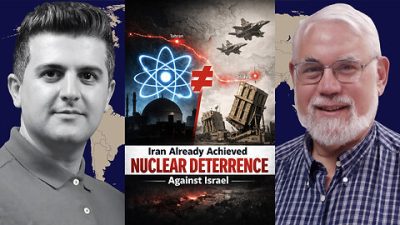
Prof. Ted Postol: Iran Already Achieved Nuclear Deterrence Against Israel
or go to
Aletho News Archives – Video-Images
From the Archives
How the occupied mentality syndrome works
Saudi Arabia on the American chessboard – Part 3
By B. J. Sabri | American Herald Tribune | June 27, 2016
Read part 2: “The occupied mentality Syndrome“
Previously I argued whether Saudi Arabia’s repeated involvements in U.S. interventions and wars stem from free national will or in response to a specific condition. For starters, in Saudi Arabia there is no national will. In Saudi Arabia, the national will is the will of the Al Saud clan. Still, when a major Arab state allies itself with a superpower that committed unspeakable crimes against humanity in almost every Arab country, then something is wrong. This fact alone should compel us to examine the U.S.-Saudi relation for one exceptional reason. As a result of the U.S.-Saudi wars, hundreds of thousands of people in Afghanistan, Iraq, Iran, Libya, Syria, Yemen, and Somalia have lost their lives. Millions became displaced in their own homelands. And millions more rendered refugees.
Attributing the Saudi policies to the bonds of “partnership” with the U.S. is frivolous. There are no bonds between these two thugs except those of business, military deals, secret plots, and wars. Proving this point, bonds such as these have no space for the American and Saudi peoples to share significant cultural or societal exchanges. If partnership is not the reason for the Saudi contribution to the U.S. strategy of empire and imperialism, then another reason must exist.
This leads to three possibilities. … continue
Blog Roll
 Aletho News
- NIAID/NIH and USDA Fund Bioengineered Chimeric Influenza Viruses Built Using Pandemic H1N1 Components: Journal ‘Science Advances’
- Hezbollah hits Israeli warship off Lebanon’s coast, sets it aflame
- Iran slams US strikes on B1 bridge, Mahshahr petrochemical plants as ‘blatant acts of state terrorism’
- In letter to UN chief, Araghchi warns of dire consequences of US-Israeli attacks on Iran’s nuclear facilities
- Why the CIA conspiracy to invade Iran with Kurdish militias failed
- Why Are Upbeat US Claims About Mission to Rescue Pilot ‘Highly Questionable’?
- Aircraft destroyed during US ‘rescue’ of downed F-15 pilot cost more than $100 million each
- Washington University removes professor who condemned US-Israeli war on Iran
- Russia Warns of Retaliation as UK Authorizes Seizure of Vessels
- Serbia thwarts plot to bomb Russia-Hungary gas pipeline – Vucic
- If Americans Knew
- In Iran, Israel-US take aim at “reason, research, and freedom of thought” – Daily Update
- US loses planes over Iran, Israel downgrades Lebanon war goals – Daily Update
- Israel Is Blocking Palestinians from Easter at Church Where Jesus Resurrected
- Plot to assassinate Palestinian activist follows harassment campaign promoted by Zionist groups and elected officials
- Prominent New York synagogue hosts presentation on why U.S. Jews should support the ethnic cleansing of Gaza
- Tapper vs. Piker: Is the CNN Anchor Auditioning for David Ellison?
- Shouldn’t Democrats Be Able to Condemn Genocide?
- Israel-US kill negotiators, destroy civilian structures, but Iran’s military capabilities still largely intact – Daily Update
- ‘War crime’: Global condemnation as Israeli ministers celebrate death penalty law targeting Palestinian prisoners
- 7 Ways Israel Is Turning Lebanon Into Gaza
- No Tricks Zone
- An Inconvenient Tree: Uncovered In Alps… Europe Much Warmer Than Today 6000 Years Ago
- New Study Reports A 60% Slowdown In Greenland’s Ice Loss Rate In The Last Decade
- Low Intensity Tornado Wrecks Major Solar Farm, Creating A Potential Toxic Dump
- New Study Finds Warming Saves Lives…Cold Temperatures 12 Times More Deadly Than Excess Heat
- German Science Blog Accuses PIK Climate Institute Of Hallucinating Climate Tipping Points
- Devastating Assessment Of Comirnaty Vaccine By Former Senior Pfizer Europe Toxicologist
- New Study: CO2 Is ‘Effectively Negligible’ As An Explanatory Climate Change Factor Since 2000
- Former Pfizer Toxicologist Dr. Helmut Sterz Tells Bundestag Hearing Pfizer Vaccine Should Have Never Been Approved
- Energy Expert: Germany’s Nuclear Phaseout Was A “500 Billion Euro Mistake”
- New Research: South Australia’s Mid-Holocene Sea Surface Temperatures Were 4°C Warmer Than Today
 Aletho News