Australian Government Moves to Expand Surveillance Powers
By Rebecca Bowe | EFF | July 17, 2012
Australia is the latest democratic nation to introduce new national security measures that would vastly expand governmental surveillance powers, following an alarming legislative pattern that’s also unfolded in the United Kingdom and Canada in recent months.
Just as EFF sounded the alarm about the UK’s attempt to move forward with a mass surveillance bill and kept the pressure on before Canada’s online surveillance bill was temporarily shelved in the face of an outcry from privacy advocates, we’re ready to join Australians in pushing back against this latest bid for greater online spying powers Down Under.
Last week, Australian Attorney General Nicola Roxon submitted to Parliament a package of proposals intended to advance a National Security Inquiry in an effort to expand governmental surveillance powers. In a 60-page discussion paper, Roxon calls for making it easier for law enforcement and intelligence agencies to spy on Twitter and Facebook users, which would likely be achieved by compelling companies to create backdoors to enable surveillance. The proposals also revive a controversial data retention regime. And an especially problematic proposal would go so far as to establish a new crime: failure to assist law enforcement in the decryption of communications.
The bulleted list of proposed reforms, which Roxon submitted to Parliament’s Joint Committee on Intelligence and Security committee, reflects a wish list of Australia’s intelligence agencies. The discussion paper proposes to revise four laws relating to the surveillance activities of Australia’s six intelligence bodies, at great cost to Australians’ civil liberties. The proposed changes are divided into three categories: those that the government “wishes to progress,” those it’s considering, and those it’s seeking advice on.
On a broad level, the discussion paper makes it clear that intelligence agencies are seeking nothing less than a radical overhaul of Australia’s wiretapping laws.[1] “The magnitude of change to the telecommunications environment suggests that further piecemeal amendments to the existing Act will not be sufficient,” the paper states, in reference to the Telecommunications Interception and Access (TIA) Act of 1979. “Rather, holistic reform that reassesses the current assumptions is needed in order to establish a new foundation for the interception regime that reflects contemporary practice.”
If approved, the revisions would amount to what the Sydney Morning Herald characterized as “the most significant expansion of the Australian intelligence community’s powers since … reforms following the terrorist attacks of 2001.” A readers’ poll that accompanied the article showed that 96 percent of respondents were opposed to any plan that would force telcos to store telephone and Internet data.
“These proposals are one of the biggest threats to the privacy of all Australians for many years,” said Nigel Waters, of the Australian Privacy Foundation and Privacy International. “Governments seem to have an insatiable appetite for more and more information about us all that is none of their business, and when history shows that they can’t make effective use of the intelligence they already collect.”
Concerned citizens have only until August 6 to weigh in on Roxon’s initial package of reforms. To have your say, go here.
The Return of Mandatory Data Retention
The proposed “OzLog” mandatory data retention policy, which Parliament rebuffed in May, sought to require Australian Internet service providers to store information about each and every individual’s web usage history for two years. EFF has been mounting resistance to mandatory data retention policies since before the European Union’s 2006 adoption of the highly controversial Data Retention Directive, and we continue to sound the alarm when similar proposals arise.
The attorney general’s paper references a “tailored” data retention scheme, which would nevertheless require providers to store data for a full two years.[2] As a point of comparison, the European Union Data Retention Directive — which has not been universally adopted and Courts in in Germany and the Czech Republic have declared unconstitutional — requires data storage lasting just six months, with the possibility of an increase to two years in certain cases.
Data retention was included under the category of proposals the attorney general is “seeking advice” on, suggesting that it might not be politically tenable to charge ahead with the controversial measure with the same zeal as before. It was the inclusion of this agenda item that drew the strongest initial responses to the proposal.
“This inquiry will likely be used to again expand the powers of spy agencies when Australians are already under a phenomenal amount of government surveillance,” said Senator for Western Australia Scott Ludlam, Australian Greens communications spokesperson. “This extreme proposal is based on the notion that all our personal data should be stored by service providers so that every move we make can be surveilled or recalled for later data mining. It comes from a mindset that imagines all Australians as potential criminal suspects, or mindless consumer drones whose every transaction should be recorded and mapped.”
Sounding a similar note, Rodney Serkowski of the Australian Pirate Party also seized on data retention as one of the most odious proposals. “It is not possible for the government to adequately ensure that the vast databases of highly personal data would not be at risk or subject to abuse of third parties,” he wrote in an email. “Indiscriminate data retention, as opposed to judicially sanctioned, targeted surveillance of a specific person for specific reason, is incompatible with human rights, and should never be considered legal or legitimate.”
New Rules for ISPs and Telecoms
The proposal would broaden online surveillance powers for Australia’s intelligence and law enforcement agencies by compelling Internet companies to make it easier for authorities to conduct digital eavesdropping efforts.[3] “The exclusion of providers such as social networking providers and cloud computing providers creates potential vulnerabilities in the interception regime that are capable of being manipulated by criminals,” the discussion paper states. “Consideration should be given to extending the interception regime to such providers to remove uncertainty.”
Yet another proposal would sacrifice the privacy of law-abiding citizens for the sake of zeroing in on criminal suspects. It calls for allowing intelligence officials to tamper with a computer belonging to an uninvolved third party who is not under investigation in order to access a targeted computer.[4]
To justify the dramatic expansion of surveillance powers, the discussion paper attempts to portray the intelligence agencies as helpless, claiming that a revolution in communications technology has rendered existing wiretapping laws outmoded and inadequate.[5] “Substantial and rapid changes in communications technology and the business environment are rapidly eroding agencies’ ability to intercept,” the paper states. “Adapting the regime governing the lawful access to communications is a fundamental first step in arresting the serious decline in agencies’ capabilities.”
No New Surveillance Powers Needed
A radical expansion of police surveillance powers is not the answer. This proposal poses a serious threat to online privacy and it’s important to keep the pressure on, just as Canadian privacy advocates pushed back against a similar bill. The revisions floated in Australia’s National Security Inquiry should be met with stiff resistance from Internet users everywhere.
“These proposed changes, if implemented in their entirety, would appear to amount to a massive expansion of surveillance activity across the entire community, accompanied by a corresponding reduction in accountability for that surveillance activity, and are therefore a potentially significant threat to the civil liberties and privacy of all Australians,” Jon Lawrence of Electronic Frontiers Australia wrote in a recent blog post.
Bill Rowlings, CEO of Civil Liberties Australia, said the Australian Government seems to have found the straw that might break the back of the growing trend towards excessive surveillance in Australia. “People – your average Joe – are at last waking up that free speech and privacy matter, and are worth fighting for,” Rowlings said. “The ‘Arab Spring’ in the West might well be fought over such freedoms, rather than freedom of association, as in the Middle East.”
Stay tuned as EFF continues monitoring this proposal.
[1] “Equipping Government Against Emerging and Evolving Threats: A Discussion Paper to Accompany Consideration by the Joint Committee on Intelligence and Security of a package of National Security Ideas Comprising Proposals for Telecommunications Interception Reform, Telecommunications Sector Security Reform and Australian Intelligence Community Legislation Reform,” Australian Government Attorney General’s Department, pp. 17
[2] ibid., pp. 10
[3] ibid., pp. 27
[4] ibid., pp. 11
[5] ibid., pp. 23
Related articles
- Every click you make, they’ll be watching (theage.com.au)
- Spies want our net data (theage.com.au)
- Government unveils huge wishlist of new surveillance powers (crikey.com.au)
- Down Under-surveillance: Australian govt seeks confidential online data (rt.com)
Obama’s Media Takeover Powers: The Infrastructure of a Police State
A Black Agenda Radio commentary by Glen Ford | July 18, 2012
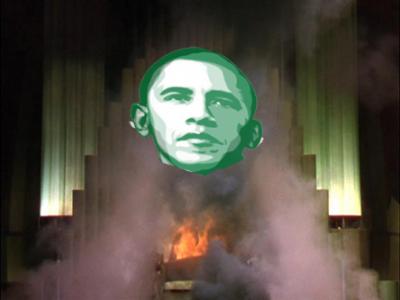
Earlier this month, on a Friday evening after most of the White House press corps had gone home, President Obama gave himself the power to take over, or shut down, all of the nation’s communications systems – including the Internet. The executive order is supposedly designed to preserve “survivable, resilient, enduring” and effective communications so that the government can speak to the people in the event of some emergency. But what he has authorized is the imposition of total silence except for the sound of his own voice.
Clearly, in a legitimate emergency, the government needs ways to communicate – but that does not require a monopoly. So, why is Obama giving himself – and any president that follows him into the Oval Office – a total communications on-and-off switch?
The administration claims it is authorized to bring all communications under its control by the 1934 Communications Act, which allows the takeover of broadcast stations and other wireless media if there exists a state of war, or the threat of war. Back then, of course, the public was fairly sure that they knew what “war” was: Congresses declared it. The “threat” of war was pretty self-evident, too: it was when other nations were threatening to attack the United States, or vice-versa.
However, we are now in what both Presidents Bush and Obama have made clear is a perpetual war, a war that is not defined by any legal norms or foundational statutes, a war against whoever the president decides is the enemy – which can include American citizens. Both of these War Presidents have told us in multitudinous ways that we are on a war footing – and have not been off it since 9/11, and will not be on any other kind of footing until some future president gives the “all clear” sign.
Obama’s executive order has nothing to do with getting out an effective distress call to the nation during a crisis. The “emergency” he has in mind is a State of Emergency – martial law. He is methodically preparing the infrastructure for a police state. Obama already has in place his preventive detention legislation, which he signed into law in the news-less hours of last New Year’s Eve. It empowers the president to lock up whomever he chooses, without charges or trial, and to keep them for as long as the executive sees fit. Based on the near-limitless powers Obama already claims to possess, he can also kill such enemies of the state if that is in the interests of national security in this time of war. There is nothing that he recognizes as law that says he can’t take such drastic executive action against thousands, or tens of thousands of Americans in one sweep.
And now, with his new executive order, if the president finds it convenient, he can take over the national communications network – down to the last, feeble Internet voice – to explain why it was necessary for all those people to disappear.
Or maybe he’ll say nothing at all. And nobody else will dare to say anything, either.
BAR executive editor Glen Ford can be contacted at Glen.Ford@BlackAgendaReport.com.
Related articles
- White House Seizes Control of Internet by Executive Order (blacklistednews.com)
Obama’s Justice Department Rushes to the Rescue of LIBOR Criminals
A Black Agenda Radio commentary by Glen Ford | July 18, 2012
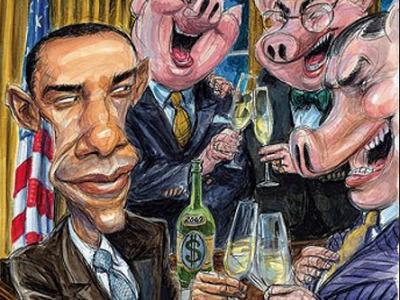
The Obama Justice Department is in theater mode, again, pretending to threaten the bankster class with criminal penalties – prison time! – for their manipulation of the global economy’s benchmark interest rates. The Justice Department claims to be building criminal and civil cases in the LIBOR scandal, which in sheer scope is the biggest fraud by international capital in history. But that’s all a front, a farce. Barack Obama has spent his entire presidency protecting Wall Street, starting with his rescue of George Bush’s bank bailout bill after it’s initial defeat in Congress, in the last days of Obama’s candidacy. He packed his administration with banksters, passed his own bailout and, in collaboration with the Federal Reserve, channeled at least $16 trillion dollars into the accounts of U.S. and even European banks – by far the greatest transfer of capital in the history of the world. Obama has reminded the banksters that it was he who saved them from the “pitchforks” of an outraged public. He pushed through Congress so-called financial reform legislation that left derivatives – the deadly instruments of mass financial destruction that were at the heart of the meltdown – untouched.
Wall Street may or may not remain loyal to Obama, but Obama has been loyal to Wall Street, the guys who gave him the campaign cash to become a viable candidate. His Attorney General, Eric Holder, a corporate lawyer to the core, is busily staging a pre-emptive LIBOR prosecution of bankers in order to shield them from legal action by a host of other government agencies and, ultimately, from the global universe of parties that have been harmed by the bankster’s schemes– a list that stretches to infinity. Holder’s job is to monopolize the LIBOR case, to the extent legally and humanly possible, grabbing jurisdiction and consolidating the cases against the banks with the aim of reaching a settlement that does not further destabilize the financial system.
Holder and his boss already pulled that trick earlier this year with settlement of the bank “robo-signing” scandal – a scheme that would have ranked as the “crime of the century” until LIBOR came along. A small group of state attorney generals were holding up an administration-brokered settlement that effectively gave the banksters immunity from prosecution, in return for a measly $25 billion payout. Obama used every power of his office to pressure the state law officers into line. The last one capitulated with a promise from Obama that a “special unit of prosecutors” would expand the investigation into abusive mortgages practices. You haven’t heard a peep about it, since.
Now Obama and Holder are playing the same diversionary game, making tough noises about criminal investigations of the LIBOR conspirators. But the Justice Department has already given immunity to Barclay’s Bank, of Britain, and to the Swiss banking giant UBS. More immunities will follow. The reason Eric Holder is staging criminal investigations is because that’s the only way he can protect the bankers, through immunities and by gradually narrowing the scope of the case. In the end, there will be settlements all around, and the banksters will move on to even more fantastic heights of criminality – thanks to the loyal, protective hands of President Obama.
BAR executive editor Glen Ford can be contacted at Glen.Ford@BlackAgendaReport.com.
Related articles
- Richard (RJ) Eskow: Crooked Bankers Are Corrupting Government: The Real LIBOR Story (huffingtonpost.com)
Sanctions on Iran force French auto job losses
Iran market cannot easily be replaced for Peugeot: French union member
Press TV – July 18, 2012
A French auto workers’ union member says the country’s largest automaker Peugeot cannot find a replacement for the Iranian market after the company was forced to slash 8,000 jobs over Iran sanctions, Press TV reports.
“We have no sales not for economic reasons but for political reasons. The Iranian market is one that cannot easily be replaced for Peugeot. It’s an unacceptable decision for us,” Jean-Pierre Mercier from a closed Peugeot plant told Press TV.
Peugeot’s announcement on Thursday that PSA Peugeot Citroen would axe 8,000 jobs and shut the first car factory in 20 years has caused a political firestorm.
“If the state can prevent Peugeot from selling cars to Iran, why cannot they prevent these firings? Unfortunately, the unions insufficiently mobilized to tip the scale and stopped the embargo,” Mercier said.
Iran is Peugeot’s largest foreign customer, with half a million in auto sales translating into some several billion Euros each year. However, citing new banking sanctions, Peugeot ended cooperation in February.
Peugeot’s auto sales this year are down nearly a quarter of a million units, almost exactly the amount that Iran would have normally purchased.
According to reports, giving up the Iranian market might have been the price of Peugeot’s recent alliance with Detroit’s General Motors, owned by the US government, which has imposed sanctions on Iran for decades.
This is while Renault, another major French automaker, saw their Iranian sales double last year to 100,000 vehicles and they expect this number to rise.
Related articles
- Peugeot Has 51% Chance of Debt Default, Credit Swaps Show – Bloomberg (bloomberg.com)
- Peugeot staff rally against 8,000 job cuts (morningstaronline.co.uk)
Jerusalem: illegal settlers plan to drown out Muslim call to prayer with loud rock music
Islamophobia Watch | July 16, 2012
After the French Hill neighborhood of Jerusalem has decided to play very loud music, in defiance of the volume and disturbance of the sound of the muezzin at the mosque in nearby Al-Issawiya, two additional Jewish neighborhoods, Pisgat Ze’ev and Har Choma, have announced that they, too, will take up a similar approach. French Hill also decided to go with hard rock, and not Mediterranean tunes, as had originally been planned, because, as they put it, hard rock is more likely to deliver the message.
According to Yediot Jerusalem, the French Hill neighborhood has recently approached an amplification company with an order for four huge speakers to be directed at Al-Isawiya. As soon as the village muezzin will start his exceedingly loud prayer, it will be responded to with ear shattering Rock n’ Roll, letting local Arabs understand how disturbing the loud prayers have been to their Jewish neighbors.
Har Choma and Pisgat Ze’ev residents are waiting to see the results from the French Hill “pilot.” If the protest via rock blasts succeeds, the other two neighborhoods, situated on the border of the Jerusalem municipality, will follow suit.
Related articles
- Israeli incursions at Al-Aqsa Mosque occur almost daily, not just holidays (occupiedpalestine.wordpress.com)
US ship fired without warning, surviving Indian fishermen say

Muthu Muniraj, one of the Indian fishermen who survived a deadly attack by a US Navy ship in the Persian Gulf, lies in a hospital bed in Dubai on July 17, 2012.
Press TV – July 17, 2012
The Indian fishermen who survived a deadly attack by a US Navy ship in the Persian Gulf say they received no warnings before a .50-caliber gun opened fire on their boat.
The incident occurred on Monday off the coast of the United Arab Emirates.
“We had no warning at all from the ship, we were speeding up to try and go around them and then suddenly we got fired at,” 28-year-old Muthu Muniraj told Reuters from a hospital in Dubai on Tuesday.
The Bahrain-based US Navy Fifth Fleet issued a statement on Monday saying that the USNS Rappahannock only attacked a small motor boat near the Dubai port of Jebel Ali, killing one and injuring three Indian fishermen, after they “ignored the warnings and came too close.”
The statement added that the US ship used a series of non-lethal, preplanned responses to warn the vessel’s operators to turn away from their “deliberate” approach before resorting to lethal force.
A spokesman of the US Navy Fifth Fleet, Lt. Greg Raelson, stated that an internal inquiry into the incident had not been completed and added that the fishing craft did not respond to the non-lethal measures taken by the US vessel. “That was when the security team fired rounds from the .50-caliber… Our ships have an inherent right to self-defense against lethal threats.”
“We know warning signs and sounds and there were none; it was very sudden. My friend was killed, he’s gone. I don’t understand what happened,” said Muniraj, whose legs were punctured by the rounds of the US ship’s .50-caliber gun.
Muthu Kannan, 35, said, “We were fishing and then on the way back they started shooting at us, so many shots, like a storm.” Kannan had a gunshot wound to the abdomen and a lower leg wired into place with metal rods.
“This is not the first time for us to go out in the boat and we all know what a warning is… All I can remember is a lot of shooting,” said 26-year-old Pandu Sanadhan.
Meanwhile, India has called for a full investigation.
On Tuesday, Indian Foreign Ministry spokesman Syed Akbaruddin said, “India’s ambassador in Abu Dhabi has requested UAE authorities to probe the circumstances of the tragic incident.”
Jebel Ali port, one of the largest ports in the Middle East, is the most frequently visited port by ships of the US Navy outside the United States.
Washington recently expanded its military presence in the Persian Gulf, sending an unspecified number of F-22 stealth fighters and warships to the region.
Related articles
- US vessel opens fire on boat off UAE coast, killing 1 (alethonews.wordpress.com)
Poll: 76% of Americans favor cutting military spending
Press TV – July 17, 2012
The results of a new survey indicate that most Americans, from both Democratic and Republican congressional districts, support the reduction of the country’s military spending.
The result of the poll, published on July 16, indicated that 76 percent of Americans favored slashing of the defense budget, while only 20 percent approved of increasing the military spending.
The poll was conducted by the Program for Public Consultation (PPC), a newly-established joint program at the University of Maryland, US-based nonprofit investigative journalism organization, the Center for Public Integrity, and the Stimson Center, a nonprofit global security think tank.
According to Steven Kull, the director of the PPC, those respondents, who lived in Republican districts advised a 15-percent reduction in defense spending, while those from Democratic districts proposed an average 28-percent cut.
The poll further showed that the main reason behind the American citizens’ support for the cuts is their strong belief that a large amount of the military budget goes to waste.
The view is held by 80 percent of the participants in Republican districts and 86 percent of the respondents in Democratic districts, the study showed.
The soaring military spending comes despite the Obama administration’s cuts in public spending to compensate for the budget deficit.
The US has reportedly spent over USD one trillion in taxpayer money on its wars in Iraq and Afghanistan since 2001.
Related articles
Featured Video

Meet The Ellisons: Zionists, Technocrats, Moguls
or go to
Aletho News Archives – Video-Images
Frlom the Archives
Who Rules America?
The Power Elite in the Time of Trump
By James Petras | Axis of Logic | September 6, 2017
Introduction
In the last few months, several competing political, economic and military sectors – linked to distinct ideological and ethnic groups – have clearly emerged at the centers of power.
We can identify some of the key competing and interlocking directorates of the power elite:
- Free marketers, with the ubiquitous presence of the ‘Israel First’ crowd.
- National capitalists, linked to rightwing ideologues.
- Generals, linked to the national security and the Pentagon apparatus, as well as defense industry.
- Business elites, linked to global capital.
This essay attempts to define the power wielders and evaluate their range of power and its impact. … continue
Blog Roll
 Aletho News
- US-Israeli war of aggression on Iran meant to reshape region: Omani FM
- Iran Does Not Consider Israel Party to Talks to Need Mediators With It – Ambassador
- Macron’s aircraft carrier and warplanes to the Persian Gulf is a dangerous vanity project
- Meet The Ellisons: Zionists, Technocrats, Moguls
- US failures in Iran reveal Russia is key to South Korea’s strategic security
- ‘All ports in Persian Gulf will be legitimate targets if Iranian ports are attacked’
- 40 Years of Endless War, Data Point by Data Point
- Department of War Using Palantir AI to Pick Targets in Iran
- American bases do not protect – they attack the peoples of the Persian Gulf
- ‘We’ve Obliterated Their Missiles’
- If Americans Knew
- How to end the war on Iran that costs US taxpayers $1M per minute – Not a ceasefire Day 153
- Israeli strategic plans to “remake the Middle East” from the 1950s and since
- Honoring Gaza’s women who refused to let the world look away
- 97% of victims of war on Iran are Iranian, 98% of victims in war on Gaza are Gazans – Not a ceasefire Day 152
- Early Iran strikes cost $5.6 billion in munitions, Pentagon estimates
- Israel Decided the War, But Trump’s America Fights and Pays the Bill
- Conscientious Objector Group: Phone ‘Ringing Off Hook’ As Huge Mobilization Underway
- U.S. support for Israel continues to plummet, despite media’s best efforts
- Threats and missiles fly, death tolls soar in Iran, Lebanon, Gaza – Not a ceasefire Day 151
- Lebanon: Israel’s White Phosphorous Use Risks Civilian Harm
- No Tricks Zone
- Destructive Green New Deal: German Energy And Metal Group Warns Of Drastic Crisis
- New Study Documents A 20-Year Pause In Arctic Sea Ice Decline – Driven By Internal Variability
- Wake-up Call: Survey Shows Majority Of Germans Now Favor Postponing Climate Targets!
- Televised! Leading German Political Candidate Tells Schoolchildren CO2 Makes Sun Hotter!
- New Study: A Century Warming Of 1.1°C Is ‘Commonplace’ And ‘Not Unusual’ During This Interglacial
- New Study: ‘Internal Noise’ And Volcanic Forcing Can Trigger 10-15°C Warming Within Decades
- Glaciers Worldwide Are Suddendly Surging, Experts Blame Warming!
- Surprising Discovery: Sahara Is Greening…Billions Of Trees Where Once Thought To Be Barren
- New Research Reaffirms Clouds, Aerosols, And Surface Solar Radiation Are ‘Driving The Climate System’
- Germany: Electric Car Catches Fire At Charging Station, Sets Off Local “Inferno”, Widespread Damage
 Aletho News