Tunisian newspapers strike over government clampdown
Al Akhbar – September 11, 2012
Staff at two Tunisian newspapers held strikes on Tuesday protesting a government clampdown on freedom of expression, as the country’s media accuses authorities of tightening their grip on the press.
French-language daily Le Temps and Arabic-language Essabah held a day-long strike after talks broke down between unions and the government, led by the Islamist al-Nahda party.
“We are striking to defend our right to freedom of expression and the right of the Tunisian people to receiving reliable information,” unionist and journalist Sana Farhat told AFP.
Newspaper unions pushed the strike after suspending negotiations with the government on Monday, during which there had been a lack of progress on the media crisis.
“The government showed no willingness to go back on its recent appointment of controversial figures at the top of some media establishments,” said Nejiba Hamrouni, president of the National Union of Tunisian Journalists (SNJT).
Journalists have protested the government’s appointment of a new director, Lotfi Touati, to the Dar Assabah press group, which owns Le Temps and Essabah, considering him too close to al-Nahda.
AFP tried to reach Touati by telephone, but was told he was out of his office.
International NGOs have criticized the Tunis government for seeking to manipulate the media, including by appointing new directors to head public media groups without consulting their staff.
The government wants to “bring editorials in line with its propaganda ahead of the next elections,” said Farhat, referring to general elections due in 2013.
Elections in 2011 which followed the ouster of former western-backed dictator Zine El Abidine Ben Ali in a popular uprising propelled the Islamists to power.
(AFP)
Related articles
- Tunisia: Al-Nahda’s Failures Lead Sidi Bouzid to Rise Again (alethonews.wordpress.com)
US: House to Vote on FISA Amendments Act Wednesday
By Michelle Richardson, ACLU Washington Legislative Office – September 10, 2012
It’s back. On Wednesday the House of Representatives is scheduled to vote on a five-year reauthorization of the FISA Amendments Act (FAA), the 2008 law that legalized the Bush administration’s warrantless wiretapping program and more. It permits the government to get year-long orders from the secret Foreign Intelligence Surveillance Act (FISA) court to conduct dragnet surveillance of Americans’ international communications—including phone calls, emails, and internet records—for the purpose of collecting foreign intelligence. The orders need not specify who is going to be spied on or even allege that the targets did anything wrong. The only guarantees that the FAA gives are that no specific American will be targeted for wiretapping and that some (classified) rules about the use of intercepted information will be followed.
After four years, you’d hope that some basic information or parameters of such a massive spying program would be divulged to the public, or at least your rank-and-file member of Congress, but they haven’t. Only a small handful of members have either personally attended classified briefings or have staff with high enough clearances to attend for them. Sen. Ron Wyden—who has been on the Senate Intelligence Committee for years—has even been stonewalled by the Obama administration for a year and a half in his attempts to learn basic information about the program, such as the number of Americans who have had their communications intercepted under the FAA.
Yet the House ambles on, ready to rubber stamp another five years of expansive surveillance that can pick up American communications without meaningful judicial oversight and without probable cause or any finding of wrongdoing. Instead of blind faith in the executive branch, every member of the House should demand that the administration publicly disclose the following before proceeding with reauthorization:
Can you believe that 435 members of Congress who have sworn to uphold the Constitution are about to vote on a sweeping intelligence gathering law without this basic information?
Act now to let them know that it’s time for Congress to fix FISA.
Related articles
- Testing “The Most Transparent Administration in History” (cato-at-liberty.org)
- NSA Surveillance Violated Constitution, Secret FISA Court Found (cato-at-liberty.org)
Report: Israel urges US, EU to send funds to Ramallah
Ma’an – 11/09/2012
BETHLEHEM – The Israeli government has appealed to Washington and the EU to transfer hundreds of millions of dollars to rescue the collapsing Palestinian economy amid mass protests in the West Bank, Israeli media reported Tuesday.
Prime Minister Salam Fayyad has said the Palestinian Authority is unable to pay August salaries in full or on time because donor funds have not arrived. He said last week the PA was waiting for the US Congress to approve a request by President Barack Obama’s administration to pay $200 million to the Ramallah government.
The Hebrew-language newspaper Maariv said the European Union had reduced its financial aid to the PA due to economic crisis in Europe.
Protests against rising costs of living in cities across the West Bank have called for the resignation of Fayyad and President Mahmoud Abbas, and demanded the cancellation of the PA’s economic agreement with Israel, the Paris Protocol.
In Hebron and Nablus on Monday night, protesters threw rocks at PA security forces and dozens of security officers and demonstrators were injured.
Israel fears that demonstrations and strikes in cities across the West Bank against rising costs of living could weaken the PA and its security services, which coordinate with Israeli forces under agreements laid out in the Oslo Accords, Maariv reported.
Israeli officials fear protests could develop into a third intifada and the collapse of the PA, and protesters might attack Israel’s illegal settlements in the West Bank, the report added.
Related articles
Palestinian universities set strike for Wednesday
Ma’an – 11/09/2012
HEBRON – Employees at all Palestinian universities will go on general strike Wednesday protesting the government’s failure to respond to their demands, a joint committee of the employees’ union and the union of students councils said Tuesday.
The committee explained in a statement that both academics and students could understand the ongoing popular protests in the streets. “The occupation is behind all our calamities and problems,” the statement added.
“After the Palestinian government has failed to undertake its basic duties toward the different sectors in the Palestinian society, especially the education sector, despite being given enough chances, you have to listen to the cries of anger and to comply with the popular demands,” the statement said addressing the PA premier.
The statement urged the protestors to keep their movement peaceful and show a sense of responsibility.
On the other hand, schools will operate normally, according to the secretary general of the Palestinian general federation of teachers, Muhammad Suwwan.
Settlers destroy 18 olive trees Burin
September 11, 2012 | International Solidarity Movement, West Bank
Eighteen Palestinian-owned olive trees were destroyed by settlers in the village of Burin, near Nablus, when settlers attacked the Palestinian land Tuesday 4 September 2012. Burin, located in the northern West Bank, comes under frequent attack from the settlements of Yitzhar and Bracha that encircle the village.
Under the cover of dark, settlers from Yitzhar entered the olive grove of the Nasser Qadous family and began cutting the branches from his trees. This is not the first attack on his land. Two years ago the settlers burned his land, which consists of 5 dunums. The following morning Nasser Qadous arrived in the olive grove and found all his olive trees destroyed. After one hour the Israeli army, police, and The District Coordination Office (DCO) arrived at his land. They spoke with Nasser but he says that they have taken no action to find those responsible.
Background:
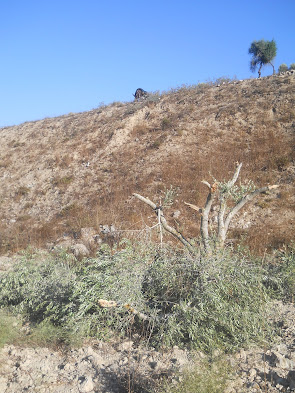 Located seven kilometers southwest of Nablus, Burin is the home to 3000 residents. From every position within the village you can see evidence of the Zionist occupation. Three of the most volatile settlements within the West Bank, Yitzhar, Bracha and Givat Arous reside on the hilltops of Burin. Yitzhar is the largest of the three settlements and was founded in 1984. Yitzhar consists of 1233 dunams and according to Peace Now, 35 per cent of the land is privately owned Palestinian land. The villagers in Burin are predominantly farmers and the fields that surround the village full of olives trees are testament to this. However, the land has been under threat since the start if the occupation in 1967.
Yitzhar settlement is notorious for its fanatically ideological residents, the violence they inflict on neighboring Palestinian communities, and the extremist doctrines they espouse. Settlers have frequently launched attacks with rocks, knives, guns and arson on Palestinian families and property in the area. In one of the most extreme act of terrorism students of the Yitzhar Od Yosef Hai yeshiva fired homemade rockets on Burin in 2008.
Despite West Banks settlements’ status as illegal under international law, Yitzhar was included in the Israeli governments’ recent “national priority map” as one of the settlements earmarked for financial support. Construction has continued unabated in both Yitzhar and Bracha. Yitzhar and Bracha also receives significant funding from American donations, tax-deductible under U.S. government tax breaks for ‘charitable’ institutions.
Related articles
- One year after killings: Iraq Burin continues its struggle (alethonews.wordpress.com)
- Sleepless nights in Burin (occupiedpalestine.wordpress.com)
- 8 injured as settlers stone bus carrying worshipers (alethonews.wordpress.com)
- Settlers of notorious illegal Yitzhar settlement destroy olive trees in Nablus village (occupiedpalestine.wordpress.com)
- Israeli Terrorist set fire to around 130 olive trees in a northern West Bank village (windowintopalestine.blogspot.com)
Qatari in Egypt: Buying Foreign Policy
By Mohammad Khawly | Al Akhbar | September 11, 2012
Cairo – Qatar’s recent announcement that it plans to invest $18 billion in Egypt following President Mohammed Mursi’s controversial statements on Syria may herald a new era in Egyptian-Qatari relations, observers say.
Qatari Prime Minister Hamad bin Jassem announced the proposed investments at a joint press conference with Egyptian Prime Minister Hisham Kandil on September 6. This new wave of investment comes on the heels of a $2 billion Qatari loan to the Egyptian state, the first installment of which was deposited at the Central Bank of Egypt on August 23.
The announcement came just a week after Mursi made headlines at the Non-Aligned Movement summit in Tehran when he announced his full support for the Syrian revolution against what he called an “oppressive regime.”
At the opening session of the council of Arab ministers last Wednesday, Mursi reiterated his call for the regime leadership to step down.
“Now is the time for change,” Mursi said, addressing the Syrian regime. “There is no room for arrogance or presumptuousness. Do not listen to those voices tempting you to stay, for you will not remain for long.”
Many in the region see a link between Egypt’s unyielding stance on Syria and the recent spike in Qatari investments in Egypt. Whether this influx of Gulf money was the goal behind Cairo’s posturing or rather the loan and investments were a result of Mursi’s anti-Syrian position, which has broad support at home, no one can say. At least some factions in Egypt, including the Hazemoun movement linked to former Salafi presidential candidate Hazem Abu Ismail, view the Syrian uprising through a religious, sectarian lens as a jihad against an “infidel” Alawi army.
The investments involve $8 billion in major projects in Sharq al-Tafria, East Port Said, and another $10 billion will be spent on a gigantic tourism project on the northern coast including a marina for luxury yachts.
The projects are expected to provide job opportunities for thousands of workers, but some worry such projects could become a tool in the hands of the Qatari regime and a means of leverage in any future dispute.
Al-Akhbar spoke to the founder of the Ibn Khaldun Center for Development Studies Saad Eddin Ibrahim, who is familiar with Qatari politics.
In his opinion, Qatar wants Egypt’s support on political issues, particularly when it comes to internal Gulf disputes with Bahrain and Saudi Arabia, as well as other Arab countries.
Qatar is a small country that needs strong allies, said Ibrahim, but its relationships with its direct neighbors – Iran, Saudi Arabia, and Iraq – are fraught with difficulties. An ally in Egypt would not covet Qatari resources, making it a safe and powerful friend. In addition to increasing its political clout, Qatar also sees Egypt as a ripe investment opportunity.
Related articles
- Qatar to invest $18bn in Egypt over next 5 years (alethonews.wordpress.com)
- Egyptian president heads to China for investment talks (alethonews.wordpress.com)
Honduras: “Model Cities” Project Set to Begin?
Weekly News Update on the Americas | September 11, 2012
Honduran National Congress president Juan Orlando Hernández announced on Sept. 4 that the government’s Commission for the Promotion of Public-Private Alliances (COALIANZA) had signed an agreement for the first of three “model city” projects–semi-autonomous regions mandated under a 2010 constitutional amendment [see World War 4 Report 6/9/12]. COLIANZA claims the project, which still needs approval from the Congress, will create 5,000 direct and indirect jobs this year, 15,000 jobs in 2013, 30,000 in 2014, and 45,000 in 2015.
The project is likely to be located near Puerto Cortés or Puerto Castilla on the Atlantic coast, or in Choluteca department on the country’s narrow Pacific coast. “It should be noted that these model cities will be established in depopulated areas of Honduras,” Hernández told the media. “It does not imply the displacement of people or social groups.” The Honduras Culture and Politics blog noted: “None of these regions is completely vacant. Reading between the lines, what Hernández is saying is that there are no large cooperatives or powerful landowners in these regions, groups that might vocally protest the expropriation of the land on which they live and work.”
The main funding for the “model city” is coming from an unidentified Canadian company. Other funders include a US company identified as the “NKG Group” or “MKG Group,” and a start-up called Future Cities Development Corporation. Both companies seem to have rightwing libertarian orientations. A leading executive at NKG Group, Michael Strong, appears to be associated with Whole Foods CEO John Mackey; a Michael Strong is listed with Mackey as a co-founder of FLOW, an organization dedicated to “liberating the entrepreneurial spirit for good.” One of Future Cities Development Corporation’s founders is Patri Friedman, the grandson of University of Chicago economist and neoliberal theorist Milton Friedman. (Honduras Culture and Politics 9/5/12)
Some 14 groups or individuals–including campesino organizations and the Honduran Black Fraternal Organization (OFRANEH)—filed a legal challenge to the “model cities” law on Sept. 7, citing a motion filed in October 2011 by Oscar Cruz, a former government attorney for constitutional issues. Xiomara Castro de Zelaya, the presidential candidate of the leftist Freedom and Refoundation (LIBRE) party and the wife of former president José Manuel (“Mel”) Zelaya Rosales (2006-2009), issued a statement denouncing the law as “incompatible with the concept of sovereignty, independence and equality of opportunity for national and foreign investment.” She warned people who start these projects that “they are exposing themselves to the loss of their investments.”
LIBRE was formed in June 2011 by the National Popular Resistance Front (FNRP), a coalition of unions and grassroots organizations that led the resistance to the June 2009 military coup that removed former president Zelaya from office.
The project has even received criticism from Paul Romer, the New York University professor whose “charter cities” concept is the basis for the Honduran “model cities” law. Romer reportedly may quit the Honduran transparency commission he was chairing because he feels he hasn’t been give sufficient information and authority to carry out his responsibilities. (Honduras Culture and Politics 9/7/12; Xiomara Castro de Zelaya statement 9/7/12 via Vos el Soberano)
Related articles
Media hype 9/11, ignore 1m Iraqi victims: Ahmadinejad
Press TV – September 11, 2012
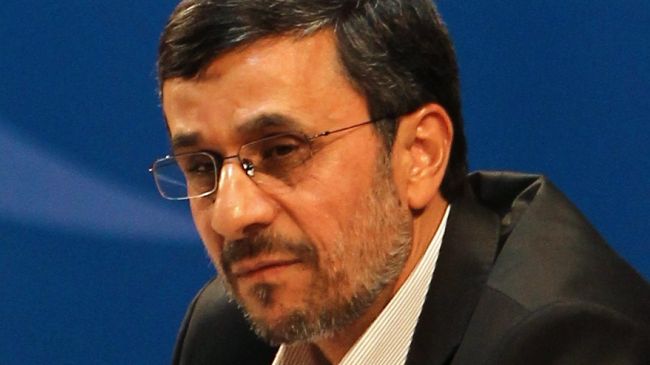 Iran’s President Mahmoud Ahmadinejad has criticized Western media for creating hype over the September 11 attacks and ignoring more than one million victims of the US wars in Iraq and Afghanistan.
“The materialistic view of Zionists has destroyed the sacredness of media and today media no longer regulate the relations among humans, but have turned into a means of domination and gaining power,” Ahmadinejad said on Monday.
The Iranian chief executive stated that a major part of the events surrounding the September 11 attacks was merely a “media operation”, adding, “Today American forces would not be in Afghanistan, Iraq and the Persian Gulf, if it was not for the media coverage of this incident.”
Why have the media that provoked public sentiments and emotions during the September 11 incident, remained silent regarding more than one million victims that have been killed in the aftermath of the attack?, he asked.
On September 11, 2001, a series of coordinated attacks were carried out in the United States leaving almost 3,000 people dead.
The US, under the administration of former President George W. Bush, invaded Afghanistan in 2001 after claiming that the 9/11 attacks were carried out by members of al-Qaeda harbored by the then Taliban regime in Afghanistan.
The US also attacked Iraq in 2003 claiming that the Middle Eastern country was in possession of weapons of mass destruction. Washington’s wars in Iraq and Afghanistan have claimed the lives of more than a million people.
Multinational investors and union rights: Strikes and sackings continue
By Jano Charbel – Al Akhbar – 10/09/2012
Business executives representing nearly 50 US companies are in Egypt this week, the latest of a series of international trade delegations to visit the country. Foreign investors are a vital part of the current administration’s economic strategy — the hope is that they will provide the jobs and capital to lift the country from its economic malaise.
But labor activists Egypt Independent spoke to have drawn attention to multinational corporations’ patchy records on union rights. Cadbury, Schlumberger, Pirelli, Henkel-Persil and Suzuki, among others, are accused of union busting and punitive sackings.
These violations are not out of step with the general trend in the private sector here, but they raise questions about the commitment of corporations headquartered in countries with nominal trade union freedoms to preserve those freedoms in their international operations. They also raise questions about the government’s willingness to turn a blind eye to workers’ rights, when investment is at stake.
Cadbury
The confectionery giant Cadbury, a subsidiary of the Kraft Foods conglomerate, has been reaping in hundreds of millions of pounds worth of profits since its establishment in the country in 1992.
Located in 10th of Ramadan City and in Hanovil, Alexandria, Cadbury Egypt employs more than 1,500 people. Despite resistance from the administrative board, Cadbury workers managed to establish their independent trade union on 28 April.
Led by their union, these workers launched a two-day strike on 27 July during which they demanded the 15 percent wage increase decreed for the public sector by President Mohamed Morsy on 1 July.
On 8 August, five of nine trade union leaders in the company were dismissed by Cadbury Egypt on charges of instigating unrest within the company.
Mohamed Hassan, president of the union in Alexandria, says that last year, the union was able to generate profits for the company amounting to LE267 million.
“Nevertheless, the administrative board sacked us for demanding our rightfully earned pay raises.”
He argued that the company’s managing director, Gawad Abaza, “doesn’t want a workers union in the company or anybody else to hold him accountable for our exploitation and the violation of our most basic labor rights.”
Depending on experience and seniority in the company, workers at Cadbury Egypt earn between LE1,500 — LE6,000 per month (US$250 — $1,000), well above the national average. Hassan claims that “administrative board members earn a monthly average of LE15,000 ($2,500), while Abaza earns a large percentage of the profits each month.”
Hassan says Cadbury Egypt’s board dismissed them without first resorting to negotiations with the Manpower Ministry, in violation of labor laws.
“We ourselves engaged in negotiations with the Manpower Ministry’s bureau in Alexandria for 21 days,” Hassan says. “We strive to take our case to the labor courts.”
Hassan pointed out that similar union-busting actions have recently been undertaken by Cadbury in Tunisia.
Late last month, the five unionists dismissed by Cadbury Egypt received letters of support and solidarity from the Swiss-based International Union of Food Workers. Similarly, Kraft workers from various other countries also sent letters of support, demanding their reinstatement.
Schlumberger
Established in France and headquartered in Texas, Schlumberger is the world’s largest oil field services company and employs some 115,000 people in 85 countries.
Schlumberger Egypt directly employs about 1,000 well-paid workers and professionals in 10 different sites across the country. Schlumberger Egypt’s profits in 2011 amounted to an estimated $30 million. On average, an Egyptian engineer might earn LE9,000 per month ($1,500) working at the company, while a manual worker at an oil rig might earn LE5,000 ($833) per month.
However, this company apparently does not respect the right to organize. Against the administration’s will, employees there established their first union committee in May 2011.
The administrative board responded by punitively sacking four workers from the company between June and July 2011, including three unionists and one union organizer.
Mohamed Abdel Rahman, secretary general of the Schlumberger Egypt Workers Union, says the company’s France branch sought to compensate them for their dismissals.
“Yet we don’t want monetary compensation,” he says. “We demand our jobs back and we demand the right to organize within the company.”
Abdel Rahman, one of the unionists who were sacked, says Schlumberger officials from France and the US visited Egypt last week to investigate the dispute.
He also says the unionists filed a complaint to the Manpower Ministry last year.
“Ministry officials told us that we did not violate any laws and that we were in the right,” Abdel Rahman says, adding that he and the other unionists who were fired had lodged a legal appeal before the Labor Court in September last year. Their next court hearing has been adjourned to 12 September.
Similarly to the Cadbury Egypt unionists who had been fired, those who had been fired from Schlumberger Egypt have received letters of solidarity from the International Federation of Chemical, Energy, Mine and General Workers Union and its affiliated unions in Canada and Norway.
The unions demanded that Schlumberger Egypt reinstate the four unionists and refrain from union busting.
Other multinationals
Headquartered in Dusseldorf, Germany, industrial giant Henkel-Persil — which produces detergents, cosmetic and beauty care products, and adhesive technologies — operates in 75 countries worldwide, with a labor force of some 47,000.
According to its website, Henkel employs 830 workers at its detergent production plants in Port Said. Media reports say Henkel Egypt generated profits of LE1.2 billion in 2011.
Workers at the company launched a strike on 28 August. Hundreds of workers demanded full-time contracts, increased wages, healthcare facilities and parity with Henkel workers in other countries, in terms of incomes, bonuses, profit sharing and paid holidays.
Like Henkel Egypt’s workers, Heinz Egypt’s 400 workers launched protests at their company in 6th of October City last month. Workers at this condiment company demanded an increase in their meager wages, full-time contracts for full-time work, periodic bonuses and profit-sharing payments, among other demands.
Suzuki Motor Corporation, managed by the Seoudi Group in Egypt, has also been involved in union busting. Workers at this company in 6th of October City established an independent union in June 2011, against the will of Seoudi Group.
According to a report issued by the Egyptian Center for Economic and Social Rights, five unionists and three other workers were dismissed from Suzuki Egypt between June and October 2011. These workers have not yet been reinstated.
The Italian global rubber and tires giant Pirelli dismissed five unionists from its company in Alexandria in July, after some 2,000 workers at the company went on strike the previous month. However, the Italian multinational company agreed to reinstate the five unionists and offered other concessions following intervention from the IndustriALL Global Union and Egypt’s General Trade Union of Chemical Workers.
The state of investment
Fatma Ramadan, executive board member of the Egyptian Federation of Independent Trade Unions, argues that “both corporations and the Egyptian state are responsible for increasing labor violations.”
Many workers at multinational companies, she continued, “earn only between LE600 to LE1,000 (about $100–166) per month, rarely more.”
Ramadan says about 130 laborers, primarily union organizers and strike leaders, have been punitively fired since the 25 January revolution for striking or organizing within their workplaces — private and public, domestically and internationally owned.
Tallal Shokr, a secretary of the Center for Trade Union and Workers’ Services and the Egyptian Democratic Labor Congress, puts the number at 155.
Trade union rights are generally better protected in public sector companies, Shokr says, and protected worst of all in the “free zones” designed to attract investment, where regulation is largely suspended. He thinks the petroleum sector is among the most aggressive in dealing with its workers.
“Under the pretext of attracting investment, foreign or domestic, all labor violations are legitimized,” Shokr says. “Investors know that the state won’t hold them accountable for violations of labor standards.”
Related articles
- British workers join Turkish Airlines showdown (morningstaronline.co.uk)
- Assault on Colombian Trade Unions Continues Unabated (ipsnews.net)
- Solidarity action for sacked Turkish aviation workers (itfglobal.org)
Featured Video

America Racing to Strategic Defeat in Iran
or go to
Aletho News Archives – Video-Images
From the Archives
Should Europeans ‘Thank’ the Americans for Destroying Nord Stream?
By Robert Bridge | Strategic Culture Foundation | September 29, 2022
With an investigation continuing into the destruction of the Nord Stream gas pipeline that provided energy supplies to Europe from Russia, there appears to be just one prime suspect, and that should surprise nobody.
Following the sabotage of the Nord Stream 1 and 2 gas pipelines, former Polish Foreign Minister Radoslaw Sikorski already seemed to know the identity of the perpetrator when he tweeted out: “Thank you, USA.”
At first glance, it seemed that Sikorski was speaking sarcastically, berating Washington for carrying out an attack that will have severe repercussions for the people of Europe. After all, how could anyone see any good coming from the termination of Europe’s primary source of gas reserves with winter just around the corner? It was Sikorski’s homeland of Poland, after all, that urged its citizens to collect firewood in the face of dwindling gas reserves.
In fact, the Polish diplomat was speaking one-hundred percent literally… continue
Blog Roll
 Aletho News
- Growing insecurity, soaring prices fuel protests in north as regime bans evacuation: Sources
- Iran denies responsibility for ‘depraved’ attack on Kuwait desalination plant
- Bring The Troops Back. End This War Now!
- Can we please stop calling Israel the ‘only democracy in the Middle East’ now?
- US should start removing its troops for Germany, proposes AfD co-leader Chrupalla
- Iran Red Crescent: 600 educational centers attacked in US-Israeli ‘war crimes’
- Russian Oil Tanker Arrives in Cuba Amid U.S. Blockade
- America Racing to Strategic Defeat in Iran: Lt Col Daniel Davis
- FTC Warns Visa, Mastercard, PayPal, Stripe Over Political Debanking
- Russian tanker approaches Cuba despite US oil blockade
- If Americans Knew
- Israeli police block Catholic cardinal from entering Church of the Holy Sepulchre on Palm Sunday
- Israel is assassinating journalists again, more than any other nation, anywhere, ever – Not a ceasefire Day 170
- Over 300 US service members wounded, majority have brain injuries – Not a ceasefire Day 169
- Researchers at Human Rights Watch Resign Over Blocked Report on Palestinian Refugee Return
- Jewish Groups Are Backing a War Americans Don’t Want
- Eric Fingerhut Thinks He’s the President of the Jews
- Top Jewish Philanthropists, Rabbis Urge Israeli President to Take Action Against ‘Jewish Extremists’
- Don’t Be Fooled. Zionist Leaders Have Always Wanted to Control Southern Lebanon
- Israel’s widespread use of torture is a core element of its genocide against the Palestinian people
- In Israel’s War on Iran, Many Middle East US Bases Rendered “All But Uninhabitable”
- No Tricks Zone
- New Study Finds Warming Saves Lives…Cold Temperatures 12 Times More Deadly Than Excess Heat
- German Science Blog Accuses PIK Climate Institute Of Hallucinating Climate Tipping Points
- Devastating Assessment Of Comirnaty Vaccine By Former Senior Pfizer Europe Toxicologist
- New Study: CO2 Is ‘Effectively Negligible’ As An Explanatory Climate Change Factor Since 2000
- Former Pfizer Toxicologist Dr. Helmut Sterz Tells Bundestag Hearing Pfizer Vaccine Should Have Never Been Approved
- Energy Expert: Germany’s Nuclear Phaseout Was A “500 Billion Euro Mistake”
- New Research: South Australia’s Mid-Holocene Sea Surface Temperatures Were 4°C Warmer Than Today
- Storing Green Energy To Last Germany 10 Days Would Require A 60-Million Tonne Battery
- New Studies: UK Sea Levels Were 4 Meters Higher Than Today During The Mid-Holocene
- Destructive Green New Deal: German Energy And Metal Group Warns Of Drastic Crisis
 Aletho News