New Georgian Leader A Man With a Past — On K Street
By Sarah Bryner | Open Secrets | October 2, 2012

Georgian president Mikhail Saakashvili conceded defeat yesterday in a close contest with the Georgia Dream party, a new coalition created by billionaire businessman Bidzina Ivanishvili. Ivanishvili is now considered the likely next prime minister of Georgia.
While this result might have foreign relations consequences in the Caucuses, Ivanishvili’s win will also have surprising repercussions on Washington’s K Street.
Since late in 2011, Ivanishvili has spent $1.4 million hiring prominent D.C. lobbyists to represent him to the U.S. House, Senate, Department of State, and even the White House. Among the issues that his lobbyists report discussing? Free and fair elections in Georgia, international banking, and “facilitating communication with U.S. government officials.”
Currently ranked 153rd on Forbes’ list of billionaires, Ivanishvili accumulated his wealth buying and selling companies — primarily in the mining and banking industries — as Russia and other Soviet Bloc countries moved towards privatization. The largest was the Russian bank Rossiysky Kredit Bank. He’s used some of his reported $6.4 billion fortune to create a private zoo, buy several works of art by Pablo Picasso, and build a large glass house on the outskirts of the Georgian capital city Tiblisi, according to the Guardian.
In the lobbying world, Patton Boggs LLP has been the greatest beneficiary of Ivanishvili’s wealth, earning $760,000 from him so far this year. Thomas Hale Boggs Jr., one of the firm’s senior partners, lists Ivanishvili as one of his five clients. Former Republican Sen. Steven Symms of Idaho has also represented him.
When Ivanishvili assumes office, he will not need to sever contact with the firms he has employed this year, but they will need to change how they disclose their work. Instead of the traditional quarterly lobbying forms filed with the Senate, they’ll be required to turn in biannual Foreign Agents Registration Act (FARA) reports to the Justice Department. Federal regulations require that anyone representing a political party or government must file with the Justice Department; individuals who do not directly represent a government interest are allowed to register with the House and Senate instead.
In August, Patton Boggs, National Strategies LLC, and Downey McGrath all filed reports with the Justice Department listing Ivanishvili as a foreign agent they represent. Saakashvili, the outgoing prime minister, has also employed some help in Washington — his office recently hiredFianna Strategies to explain its policies and programs to relevant U.S. offices.
Free and fair elections are mentioned on nearly every lobbying form filed by Ivanishvili’s hired firms. But Transparency International Georgia, an NGO focused on electoral transparency, recently published a report indicating that the electoral climate in Georgia is still fraught with electoral violations. The report cites evidence of both the ruling party and Ivanishvili’s Georgian Dream Party attempting to bribe voters, as well as evidence that the ruling party had recently set up rules to unfairly benefit the party in power.
The report also mentions that a Georgian Court found Ivanishvili guilty of making illegal donations and charged him the equivalent of $89 million, an amount which was later cut in half. Ivanishvili refused to pay, and hired Georgian politician Tedo Japaridze to represent his interests before the U.S.
While it is unusual for individuals to hire lobbyists directly, it isn’t unheard of. Although Ivanishvili has spent far more than any other individual on lobbying this year, Aliya Aliyeva spent $160,000 so far this year attempting to raise awareness about Azerbaijani political prisoners Farhad and Rafiq Aliyeva. Similarly, Oleksandar Tymoshenko spent $140,000 this year advocating for the release of his wife, former Ukrainian Prime Minister Yulia Tymoshenko, from prison. Even American citizens occasionally directly hire lobbyists — former hedge fund manager Julian Robertson, the second largest individual lobbying client, has thus far spent $180,000 lobbying. Robertson is also a prominent donor to Restore our Future, a super PAC supporting GOP presidential nominee Mitt Romney.
Ending the Violence in Syria
By Jeremy Salt | Palestine Chronicle | October 3, 2012
Ankara – It would seem to be quite simple. All that has to happen for the fighting to end in Syria is for those with guns in their hands to put them down. So why isn’t it happening?
Again the answer is simple and not just seemingly. Outside governments supporting the armed groups do not want them to put their weapons down. It has been deliberately locked into a cycle of violence which its enemies hope will end in its destruction. This strategy is the prime cause of the death and devastation over which the sponsors of this violence have been wringing their hands before the UN General Assembly.
Agendas vary slightly but the prime goal of Qatar, Saudi Arabia and the governments of the US, Britain and France is not political reform but the destruction of Iran’s best friend in the region. Syria is the central arch in a strategic relationship between Hezbollah, Syria and Iran. The fall of that central arch would give western governments one of their greatest strategic victories in the modern history of the Middle East.
Syria is frequently described as collapsing or bleeding or plunging into ‘civil war’. None is correct. Syria is being collapsed, being bled and being plunged into devastation as the direct consequence of decisions taken outside Syria. The collective calling itself ‘The Friends of the Syrian People’ has deliberately brought Syria to where it is now. There are no small mercies in this situation but it could have been even worse, if these ‘friends’ had been able to launch an aerial assault under the aegis of the Security Council. Had Russia and China not blocked them, Syria would be now be a total ruin, with an infinitely greater number of dead than the 20,000 or so already killed. Their fallback position was the war of attrition being waged by their armed protégés.
Few countries could withstand the battering Syria has taken in the past 18 months. In the name of ‘regime change’ horror has followed horror. Aleppo has been turned into a replica of Beirut at the height of the civil war, with a large part of the medieval souk now burnt to the ground. Yet the government has not collapsed and neither has the army disintegrated. The message from this is that Syria has a government and not a ‘regime’ and an army – in which the ordinary soldiers are mostly Sunni Muslim – and not ‘Assad loyalists’.
Military defections have been few. So have defections from the ranks of government despite the large amounts of money on offer. Foreign Minister Walid Muallim was offered $100 million by the ruler of Qatar if he would defect but turned it down and went public with the bribe. One of the last known of cases was the $20,000 a month for the next 20 years and a home in Doha offered to the Syrian consul in Mauritania. He also refused. Bashar al Assad was totally correct when he said a few days ago that the rulers of Saudi Arabia and Qatar think they can buy anyone. If there is anywhere where ‘regime change’ is needed it is surely in these gulf states.
One of the last defectors was the head of security in Aleppo. Before his departure and untimely end (he was assassinated a few kilometers short of the Turkish border by persons unknown) he had arranged for the infiltration of thousands of jihadis into the city. Many are not even Syrian. They have come to fight the jihad from all corners of the Muslim world. There are Chechens, Afghans, Pakistanis, Tajiks, Tunisians, Egyptians, Libyans (lots of Libyans), Saudis and Iraqis. Aleppo has been targeted because it is close to the Turkish border, and the hope is that it can be turned into a ‘rebel’ capital in a ‘liberated’ zone stretching up to the Turkish border. This could be done only over the dead bodies and against the wishes of the people of the city.
Whether inside the cells fighting in the name of the so-called Free Syrian Army (FSA) or operating independently, the salafi jihadis inside Syria are tactically cooperating against the common enemy. The FSA is little more than a convenient trademark. Most of the armed groups have their own command structure and take no notice of the FSA. Recently Riad al Assad crossed the border from Turkey to direct the struggle from inside Syria, only to stay a day and a night before going back because there was no point in him staying. The political arm of the FSA is the so-called Syrian National Council, touted as an alternative government but dysfunctional from the start and now recognized as such even by its sponsors. Put these two hard realities together and you have the formula for complete chaos. There is no alternative government in sight. There is no rational end in sight. The armed groups cannot overthrow the government without the direct intervention of their outside sponsors and that possibility seems to be receding although Qatar is still trying to talk it up. All that lies ahead of Syria unless the violence can be ended and negotiations begun is more chaos, more destruction and more loss of life.
Not that chaos is to be discarded as an end in itself. It will take Syria decades to recover from the damage already done whoever governs in Damascus. If the decision is finally taken to attack Iran, Syria would probably be too stricken to come to its aid even if the government has not been overthrown; if Syria cannot help, then Hezbollah might have to stay on the sidelines as well, releasing Israel from the fear of a second front opening in the north. This is how the governments orchestrating the campaign against Syria want the dominoes to fall. The implications for the Palestinians are clear. Any gain for Israel is a loss for them and the overthrow of the Syrian government, followed by the collapse of the strategic relationship between Hezbollah, Syria and Iran, would be an enormous gain for Israel, releasing pressure on one front and giving it more time to complete its absorption of Jerusalem and the West Bank.
What most Syrians want is to be left alone to sort out their own affairs. They want change but not at any cost. They don’t want the west sticking its nose in their affairs and they don’t want armed gangs running amok in their country. The west might have forgotten its own bloody record in the Middle East dating back to the beginning of the 19th century but Syrians have not. They know how disastrously western intervention always ends in the Middle East. Heads of governments who have been fueling the armed opposition have been lining up at the UN General Assembly to call for an end to the violence. If they mean what they say, they would be throwing their weight behind the attempts of the non-violent domestic opposition to bring a mediated end to this conflict. But they don’t and therefore must be seen for what they are – hypocrites who are pushing their own agenda at massive cost to Syria and its people.
– Jeremy Salt is an associate professor of Middle Eastern history and politics at Bilkent University in Ankara, Turkey.
Related articles
- ‘West wants end of Syria as a functioning independent state’ (alethonews.wordpress.com)
Interfaith dialogue is no answer to Israel’s racist bullying
By Stuart Littlewood | My Catbird Seat | October 3, 2012
So the Albuquerque Episcopalians got jumpy and ‘disinvited’ the Friends of Sabeel who had booked their cathedral for a conference.
Sabeel is an international peace movement which calls itself the Voice of Palestinian Christians.
Why would one Christian group snub another? The excuse for turning away the conference was concocted by the Dean of the Cathedral, the Very Rev. J. Mark Goodman. “We said our prayers and deliberated thoughtfully and purposefully,” he explained.
It seems he and his Episcopalian colleagues didn’t like the way the conference would be dealing with “a political issue that has polarized people in ways that we felt were unhelpful. We did not want to introduce a polarized issue into the life of the Cathedral that would have the potential to divide rather than unite. Our decision was not based upon anti-Palestinian positions. In fact, many on the Vestry [i.e. the church directors] are very sympathetic to the plight of the Palestinian people, yet they were concerned about the rhetoric of the literature from Sabeel.”
He denied they were put under pressure from Zionists. Nevertheless they had invited a local rabbi to come and speak to the Vestry, a rather odd thing to do when, presumably, they were all acquainted with the endless crimes committed by the Jewish State against the Christian communities in the Holy Land. Do they usually turn to rabbis for advice?
Goodman also said Vestry members had attended his recent Forum classes, after which they had misgivings about serving as conference hosts.
“This summer at General Convention, I served on a committee that dealt in a focused way with resolutions about the conflict between Israel and Palestinians,” he went on. “It was my personal prayer that we would craft resolutions that were balanced and offered a way forward with positive engagement with each side, seeking a way forward that would bring security, dignity and peace to a region that has known strife for too long. I believe we succeeded.”
Note the reliance on “positive engagement”. What exactly does that mean – more interfaith dialogue? “We succeeded”, he says. But how does he measure success? And why is he not pressing for the enforcement of international and humanitarian law and the implementation of UN resolutions, the only route to justice? The Episcopalian approach implies that some sort of equivalence, or level playing field, already exists between the powerful aggressor and the weak victim, the robber and the robbed, the armed occupier and his unarmed dispossessed prisoner.
How did these churchmen, far removed from the rotten reality, become experts on “security, dignity and peace” in the Palestinians’ struggle for freedom? Have they been there, rolled up their sleeves and immersed themselves in the snake pit that the Holy Land has been allowed to become? What makes him and his mates think they’ve found a way forward while Palestine remains under brutal occupation?
The mission statement provided by Goodman’s church says: “The Cathedral continues to honor its responsibility to be a good steward and shepherd in the community and the world.” A huge and worthy commitment indeed. However, the cathedral’s own relatively peaceful community and inconsequential little world have been rudely rocked by scandal following claims that it was headed for bankruptcy and members were deserting. The cathedral accountant blew the whistle and allegations were made about the misuse of collection money, liberal imbibing of expensive wine and Vestry members “trashing the cathedral’s endowment by $2 million through complacency, and of not disciplining the dean”.
The regional bishop moved quickly to hush it up in an operation that local church workers said was “like a quiet version of the Spanish Inquisition”. There’s more about it here.
If only this sort of tomfoolery were all that Christian churches in the Holy Land had to worry about. Unfortunately the Episcopalians seem pretty confused, or downright ignorant, about the depths of evil to which the Israeli occupation has sunk. This is from their official report Israel-Palestine: Convention supports positive investment – Bishops agree to postpone indefinitely debate on corporate engagement ….
Bishop John Tarrant of South Dakota urged opposition to Resolution C060 [which calls on the church to engage “in corporate social responsibility by more vigorous and public corporate engagement with companies in the church’s investment portfolio that contribute to the infrastructure of the Occupation”]. He spoke about the town of Rawabi, currently under construction north of Ramallah in the West Bank, that will provide opportunities for affordable home ownership, employment and education. Tarrant said that the project, envisioned by a group of Palestinian businessmen, would inject about $80 million into the Israeli economy.
“It gave me the sense that there are Palestinians that understand the importance of mutuality if the two states are going to exist side by side,” he said.
He reminded the house of Presiding Bishop Katharine Jefferts Schori’s charge for Episcopalians ‘to go as emissaries…to go into the world of God’s dream’. “I believe there are Palestinians and Israelis now that are going into the world with God’s dream.”
Has Bishop Schori been to the world of God’s dream and seen what’s there?
And why would Bishop Tarrant want to inject all those $millions into the Israeli economy when Israel has been strangling the Palestinian economy to death, seizing its land and water and withholding Palestine’s tax revenues?
Bishop Charles Bennison of Pennsylvania said the movement to support boycotts, divestment and sanctions against Israel was unwise. “We need more, not fewer, economic ties to Israel. The more isolated Israel becomes the more dangerous the situation becomes.”
It turns out that Episcopalians are against boycott and divestment. Instead the bishops have supported a resolution on positive investment in the Palestinian Territories, as if that will do the slightest good while the illegal occupation and blockade continue. Meanwhile they agreed to postpone indefinitely the conversation on corporate engagement.
To them, it seems, going as emissaries into God’s dream involves kicking the can down the road like the rest of wretched Christendom (with a few honourable exceptions). Was anybody at the Convention truly concerned with right versus wrong, good versus evil, the rule of international law versus the rule of the gun-butt, the F-16, the helicopter gun-ship, the tank shell, illegal detention and the hard-to-get permit to go anywhere.
Their own Bishop is a victim of Israel’s apartheid policies
The Anglican Bishop in Jerusalem himself is a classic victim of the machinations of the cruel occupation. Suheil Dawani is Bishop of the Anglican Diocese of Jerusalem, which is a part of the Episcopal Church in Jerusalem and The Middle East. This covers Israel, the Palestinian territories, Jordan, Syria and Lebanon. He was installed in April 2007, but in March 2011 Israel cancelled his residency permit making it well nigh impossible for him to carry out his duties. As a non-Israeli he needs a temporary residence permit. The Israelis played fast and loose, granting a permit initially then turning him down.
Here’s the explanation. “The bishop is a native of the Holy Land and has spent most of his life and ministry there, but cannot obtain either citizenship or legal residence in Israel, since he was born in Nablus, in the West Bank, which has been under Israeli occupation since 1967, but has not been annexed to Israel. East Jerusalem, on the other hand, where the Anglican Cathedral and Diocesan offices are situated, was also occupied at the same time, but Israel annexed it and considers it part of its national territory (although no other country in the world recognizes this annexation). Therefore, Bishop Dawani is considered by Israel to be a foreigner who can only visit – let alone live in – East Jerusalem with a special permit, which the Israeli authorities can either grant or deny at their sole discretion.”
Get it?
There’s a religious war going on in the Holy Land and Dawani was wide open to this sort of dirty trick. After six months of aggravation and international pressure, during which Israel’s Interior Ministry accused him of “improper” land dealings on behalf of the church and the Palestinian Authority, the illegal occupiers granted residency permits to the bishop and his family.
But here’s the catch… those permits will have to be renewed when they expire, whenever that may be or whenever the Israelis choose.
So the Israelis have the bishop’s balls in a vice. Keep quiet Dawani and all you Anglicans/Episcopalians while we carry on with our ethnic cleansing. Keep quiet while we trash the Palestinian economy, confiscate their lands and water resources, continue the blockade, erase their culture and humiliate their families, drive out the Christians and Muslims and disrupt the religious life of those who stubbornly remain.
Keep quiet or we’ll revoke your permit again.
The Catholics similarly walk on eggshells and are mercilessly bullied in their homeland. Their priests are harassed and obstructed and often prevented from going about their pastoral duties. Many are ‘imprisoned’ in their parish – if they leave it to visit relatives or holiday in another part of the Occupied Territories or in neighbouring countries like Jordan and Lebanon, the Israelis may not let them back in.
So imagine what it’s like for the Muslims.
The simple truth is that the Jewish State is the world leader in rampant lawlessness and interfaith bullying, while the wet and wimpish Anglicans respond with their clapped-out formula of interfaith dialogue and other verbal diarrhoea. For 64 years it has got us and our Palestinian brothers and sisters precisely nowhere.
The good folks of Sabeel must now be wondering what they’ve done to deserve same-faith friends like the Albuquerque Episcopalians.
Stuart Littlewood’s book Radio Free Palestine, with Foreword by Jeff Halper, can now be read on the internet by visiting www.radiofreepalestine.org.uk.
Argentina becomes main supplier of soy and soy-oil to Iran in third quarter
MercoPress | October 2, 2012
Iran made major imports of Argentine soy-oil and soybeans between July and September as Iranian buyers found methods of making payments in the face of western sanctions, Hamburg-based oilseeds analysts Oil World said on Tuesday.
Iran imported 202.000 tons of soy-oil in July-Sept. 2012, up from only 160,000 in April-June this year, a figure depressed as sanctions hit shipments, Oil World estimates.
Of the July-Sept. total, 129.000 tons is believed to have been imported from Argentina, 59.000 tons from Brazil and 14.000 tons from Paraguay, Oil World said.
Western sanctions imposed on Iran because of its disputed nuclear program do not include food shipments, but sanctions make it intensely difficult for importers to obtain letters of credit or conduct international transfers of funds through banks.
Iran has been able to make large wheat purchases in past weeks despite sanctions, Reuters reported on Thursday. Iran has also stepped up soybean imports in recent months, Oil World said.
“Iran will import roughly 160.000 tons of soybeans in June/Sept. 2012, the bulk of it from Argentina”, it said. “This volume compares to only 68.000 tons imported in Jan/May 2012 before importers found ways to purchase large volumes despite the sanctions.”
Iran has also made heavy sunflower oil purchases, raising July-Sept. 2012 sun-oil imports to 154.000 tons from only 75.000 tons in April-June 2012, Oil World estimates.
Ukraine supplied 140.000 tons of the July-Sept. sun-oil imports, Argentina 10.000 tons with the rest mainly coming from Russia, Oil World said.
Related articles
- U.K. Pushes for More Sanctions on Iran (247wallst.com)
A Quantum of Racism
Kadaitcha | October 3rd, 2012
Two young Palestinian Israelis who came second in an international Physics Competition in Warsaw are omitted conspicuously in a racist report on the winners in Israel Hayom.
*Even when you excel and you are an Arab, you remain invisible.
* Israel came first in an international physics competition, and it is trying to reach the same benchmark in racism.
First published: 1/10/2012 11:30:27am
On 20 September 2012 Israel Hayom published an article under the headline Quantum of success. It highlighted the success of the Israeli delegation from Ilan Ramon Centre at Ben-Gurion University in a competition held at the Institute of Physics in Warsaw.
The article contained the names of the winners, but not all of them…
It mentioned the first prize winner (Yuval Katznelson) and one of third prize winners (May Alon). The article quotes Professor Victor Malamud, head of the Ilan Ramon Centre at BGU, which coordinates efforts for the competition as saying that “We succeeded in showing the world the potential of the Jewish mind.”
On the surface, a cause for Jewish pride, indeed..
But what about the second place getter in the competition? The two second place winners, Magd Alfrawona and Alfarook Abu Alhassan were not mentioned at all. Probably because they don’t have a Jewish mind, or because they are Arabs …
What is the message that such articles give to the general public? What is the message that head of the program is providing to the students?
The conclusion is inescapable, instead of being proud of all those who represented the country and impel them further forward, there is a very clear delineation between the Arab and Jewish participants. This is not all that far from our reality which is full of physical and virtual fences marking the separation between the two peoples.
This statement is racist for several reasons: it ignores some of the delegation’s winners, solely because cultural/social/national differences. This statement tries to establish the superiority of some participants over others on the sole basis of their national affiliation. In addition to all this, the article tries to obliterate the Arab presence in the delegation, and their success. This is despite the writers being aware of a different picture being presented on the university’s English-language website (there the two Arab winners are mentioned, and they also appear in the team photo published in the newspaper).
It is a pity that a lecturer in such a distinguished university professor chose to speak in such a racist fashion as he did. […]
This article proves once again that academia is not free of racism …
Names of participants Winners: http://in.bgu.ac.il/ilanramon/Pages/FIRST%20STEP%20TO%20NOBEL%20PRIZE%20IN%20PHYSICS.aspx
Israel Hayom article:
English: http://www.israelhayom.com/site/newsletter_article.php?id=5841
Hebrew: http://www.israelhayom.co.il/site/newsletter_article.php?id=21508&hp=1&newsletter=20.09.2012
Translated by Sol Salbe of the Middle East News Service Melbourne, Australia
Hebrew original: http://fightracism.org/Article.asp?aid=328
Qatar invites bids to reconstruct Gaza
Ma’an – 02/10/2012
GAZA CITY – The Qatari government on Tuesday invited tenders for four construction projects, in the first stage of a $254 million project to rebuild the war-torn Gaza Strip.
Qatar’s ambassador to Gaza Muhammad al-Imadi is heading a committee overseeing the work.
Consultants have been invited to submit designs for a city to be named after Sheikh Hamad Ben Khalifa al-Thani. The $30-million development will include 1,000 residential units in five-story apartment blocks, schools, stores, clinics, parks and entertainment facilities, the ambassador said in a statement.
Companies were also invited to bid for the repair of three major roads in the enclave. The 35-kilometer coastal highway al-Rashid Street will cost around $50 million to repair, and $18 million has been allocated to reconstruct the 10-kilometer al-Karama Street.
The 28-kilometer Salah Addin Street will be repaired first, at a cost of $60 million, as the plans and designs are ready, al-Imadi said.
In the coming days, consultants will be invited to bid for several agricultural projects, budgeted at $12.5 million.
Housing projects worth $32 million will also be announced this week to house needy families and to re-home those who were evicted for building on public land.
Related articles
- Hamas Asks Egypt To Transfer Qatar Fuel To Gaza (eurasiareview.com)
How to Tell When ‘Humans’ Die in a U.S. War
By Peter Hart – FAIR – 10/02/2012
ABC World News’ David Muir (9/30/12) took note of the 2,000th U.S. military death in Afghanistan this way:
Overseas now to Afghanistan, and a stark reminder tonight of the human cost of war. An attack at a checkpoint left two Americans dead, one of them a serviceman, the 2,000th U.S. military death since the war began.
That kind of language is revealing in that it presents American deaths as evidence of the “human cost of war.” But, of course, that is a human cost almost every day most wars. What they’re saying is this is primarily something we should think about when the humans in question are U.S. troops.

We don’t need to search very far to find a counter-example. On the very same show, two weeks earlier (9/16/12) , viewers were told about a NATO airstrike that killed eight Afghan women. They had been out collecting firewood.
How did ABC report these deaths? In all of one sentence, stuffed at the end of a report by correspondent Muhammad Lila about U.S. troop deaths:
And late this evening, another incident that’s causing tension here. NATO is confirming that an air strike has led to civilian casualties, reportedly including Afghan women and children.
Last year, in a very similar incident, a NATO airstrike killed nine boys. And ABC’s brief report (3/6/11) focused on Afghan president Hamid Karzai’s “harsh words for the U.S.”
Related articles
- After NATO Strike Kills 8 Afghan Women, Pundits Still Wonder: Why Do They Hate Us? (alethonews.wordpress.com)
Honduras: A Second Human Rights Attorney Is Murdered
Weekly News Update on the Americas | September 30, 2012
Unidentified assailants gunned down Eduardo Manuel Díaz Mazariegos, a prosecutor with the Honduran Public Ministry, shortly before noon on Sept. 24 near his office in Choluteca, the capital of the southern department of Choluteca. Díaz Mazariegos had worked on human rights cases as well as criminal cases for the ministry. He was the seventh Honduran prosecutor murdered since 1994, and his killing came less than two full days after the similar murder of Antonio Trejo Cabrera, an activist private attorney who represented a campesino collective in a dispute over land in the Lower Aguán Valley in northern Honduras [see Update #1145]. (La Tribuna (Tegucigalpa) 9/24/12; EFE 9/25/12 via Univision)
The Associated Press wire service reported on Sept. 24 that Trejo had written a request in June 2011 for the Inter-American Commission on Human Rights (IACHR, or CIDH in Spanish) in Washington, DC, to order emergency precautionary measures for his protection. “If anything happens to me, to my goods or to my family,” Trejo wrote, “I hold responsible Mr. Miguel Facussé [and two others that AP declined to name], who can attack my life through hit men, since they know that the lawsuits against them are going well and that the campesinos are going to recover the lands that [Facussé and the others] stole from them illegally.”
Cooking oil magnate Facussé is the main owner of disputed land in the Aguán; presumably Trejo also named the two other major landowners in the dispute, René Morales and Reinaldo Canales. After Trejo’s murder Facussé issued a written denial of any “direct participation of my person or of the personnel of my companies in so abominable an act,” although he added that Trejo had committed “fraudulent acts against [Facussé’s] company.” Marlene Cruz, an attorney who represents another Aguán collective, told AP that she and Trejo were scheduled to attend a hearing at the CIDH in Washington on Oct. 19. Cruz is now thought to be in danger.
Trejo, who came from a campesino family and was born in the San Isidro collective in northern Honduras, was also involved in another high-profie case: he had filed a complaint against a neoliberal project, the Special Development Regions (RED, also known as “Model Cities”), for creating privatized autonomous regions in the country. Trejo denounced the project in a television debate less than 24 hours before his assassination, saying it was backed by “Ali Baba and the 40 thieves of the government.” Michael Strong, the director of the US-based MGK Group, a leading “model cities” sponsor [see Update #1144], said he was “horrified” by the murder and that “if Trejo had lived long enough to be acquainted with us, he would have concluded that our approach is beneficial for Honduras.” (AP 9/24/12 via El Nuevo Herald (Miami))
Related articles
- Honduras: Lawyer for Aguán and “Model Cities” Struggles Is Murdered (alethonews.wordpress.com)
US waives sanctions on states using child soldiers for security interests
Press TV – October 2, 2012
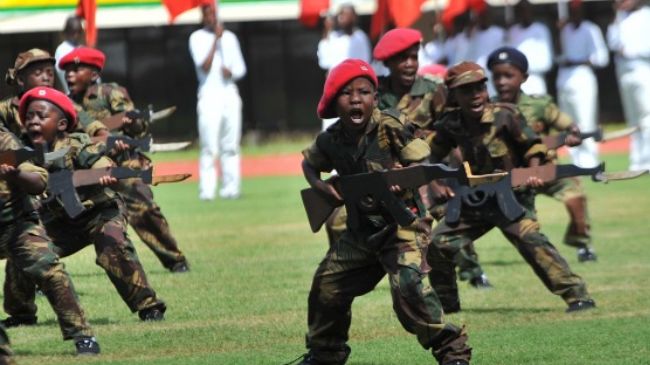
The Obama administration has waived nearly all US sanctions against countries using child soldiers despite a recent executive order to fight human trafficking.
US President Barack Obama issued a presidential memorandum on Friday waiving sanctions under the Child Soldiers Protection Act of 2008 for Libya, South Sudan and Yemen that Congress legislated to halt US arms sales to countries that are “worst abusers of child soldiers in their militaries,” the US-based periodical Foreign Policy reports Tuesday.
According to the report, Obama also partially waived penalties against the Democratic Republic of the Congo in an effort to allow continued military training and arms sales to the African country.
Angered by Washington’s move, human rights activists say the waivers are damaging to the aim of using US influence to discourage nations that get American military support from using child soldiers. They also insist the measure contradicts the rhetoric Obama used in a speech he delivered on Friday when signing the executive order.
“When a little boy is kidnapped, turned into a child soldier, forced to kill or be killed — that’s slavery,” Obama claimed during his address. “It is barbaric, and it is evil, and it has no place in a civilized world. Now, as a nation, we’ve long rejected such cruelty.”
Many among the American human rights community are upset that despite such forceful oratory against the use of child soldiers, the US president has waived for the third consecutive years all penalties against states that are major abusers of the human rights violation.
“After such a strong statement against the exploitation of children, it seems bizarre that Obama would give a pass to countries using children in their armed forces and using U.S. tax money to do that,” said Jesse Eaves, the senior policy advisor for child protection at World Vision, as quoted in the report.
Eaves insists that the Obama administration wants to maintain its ties with regimes that it needs for security cooperation and that such blanket use of US waivers allows the administration to avert the objective of the law, which was supposedly to uphold internationally recognized human rights and child protection protocols when dishing out American military aid to other nations.
“The intent in this law was to use this waiver authority only in extreme circumstances, yet this has become an annual thing and this has become the default of this administration,” Eaves was quoted as saying in the report.
According to the periodical, Obama first waived the sanctions in 2010, the first year they were to go into effect. At the time, the White House failed to inform Congress of its decision in advance, triggering a strong backlash. A reported justification memo pointed to a number of security-related excuses for the waivers. Sudan was going through a fragile transition, for instance. Yemen was crucial to counterterrorism cooperation, the administration argued.
Related articles
- Obama waives sanctions on countries that use child soldiers (thecable.foreignpolicy.com)
- Obama Demands Right to Recruit Minors for Military (infowars)
- White House Says Child Soldiers Are Ok, if They Fight Terrorists (alethonews)
US: Student Rights Disappearing
Staff Writers | October 1, 2012
In the aftermath of 9/11, we’ve seen plenty of attacks on privacy and personal security, and students are not immune to this effect. From RFID tracking to mandatory drug and pregnancy testing, new laws and policies are slowly beginning to creep in and take over the privacy that students have enjoyed in the past. We’ve discovered nine troubling signs that student rights are in danger. If these can slip by, what’s coming next?
Some students are required to wear IDs:
At Northeast Mississippi Community College, students are required to keep their NEMCC ID badge in plain sight at all times or face warnings and tickets. The administration’s primary reason for the IDs is safety, but the policy raises privacy concerns for students, who cannot opt out of the program. Northeast Mississippi isn’t the only school adopting student IDs, and some are going so far as to include RFID in their IDs to assist with attendance records. Experts believe that this could become a trend in American schools, but some parents are outraged. In at least one elementary school, the push back has been so extreme that the RFID program was terminated due to privacy concerns.
Students are required to share their contact information with the Armed Forces:
High school students are automatically signed up to share their contact information with the Armed Forces, presumably for recruiting purposes. This is a part of the No Child Left Behind law, and although students can opt out, the parent or student must explicitly request otherwise. Releasing student contact information is viewed as a serious violation of student privacy.
Mandatory drug testing is becoming more prevalent:
Linn State Technical college, a small technical school with just 1,200 students, has become the first university in the country to make drug testing mandatory for enrollment. Every new student at LSTC is required to take a urine test within their first five to 10 days of the school year, or withdraw from the university. Students are also subject to random testing throughout the rest of the year. The university community has pushed back, asserting that mandatory drug testing is too much of an invasion, setting a dangerous precedent for the ability of schools to regulate students’ lives.
Pregnancy testing is also a concern:
In one Louisiana public school, female students who are suspected of being pregnant must submit to a pregnancy test. If they refuse to take the test or are found to be pregnant, they’re kicked out of school and forced to pursue homeschooling instead. This policy is in clear violation of federal law, specifically, Title IX of the Education Amendments of 1972 that mandates schools can’t exclude students based on pregnancy or related conditions. But it’s not just this one school with a problematic policy: the ACLU evidence suggests that illegal discrimination is a major contributing factor to the high dropout rate (70%) of teen girls who give birth.
Educational records can be shared with outside entities:
Schools are privy to lots of sensitive information about their students, including grades, discipline records, income, and even mental health issues. This is the sort of information that most families would prefer to keep private, but new rules allow it to be shared with entities outside the scope of education. That means student information can be placed in state databases without the consent of students and parents.
Students can be monitored via wiretaps:
The FCC has recently released a campaign that is forcing universities to comply with national wiretapping laws. This means that universities are altering their private networks and the Internet in order to allow for monitoring of Internet usage, instant messaging, and even cell phone texts. Additionally, these mandates allow universities to be subpoenaed for medical and other student records. Previously, universities were exempted from wiretapping due to their private networks, but following the 2001 terrorist attacks the Department of Justice asked the FCC to expand their reach.
Schools are blocking student access to LGBT websites:
Blocking pornographic websites is a common practice among public schools, but some are taking things a step further, blocking access to LGBT websites that are not at all pornographic. Many of the commonly used web filtering software packages block out LGBT-positive websites that share information about LGBT issues and organizations. These packages do not, however, block out anti-LGBT websites that condemn LGBT people and encourage them to change their sexual orientation. The ACLU has argued that this “viewpoint discrimination” violates students’ rights under the First Amendment.
Free speech is getting edged out:
On many college campuses, free speech is dramatically limited. Campuses typically have a “free speech zone,” but at some schools, this zone is in a low traffic area so far from the heart of campus that it’s not an ideal location to share messages. At other schools, free speech can be limited to certain days or hours, and even give administrators the right to review and approve of materials before they’re shared. For some students pursuing free speech, these restrictions can keep them from effectively sharing their message. Specifically, at Yuba College in California, students had to apply for permission to speak 14 business days in advance, register literature 48 hours prior to distribution, and are limited to the hours of 12 p.m. and 1 p.m. on Tuesdays and Thursdays for public speeches, extreme measures for any student or group wanting to spread the word about their issue.
Student due process rights are being threatened:
It’s not hard to understand why many college campuses take a hard line on rape, but it’s important to remember that accused rapists have rights, too. Under the Violence Against Women Reauthorization Act, it was proposed that universities receiving federal funding must allow sexual assault victims to appeal the results of college disciplinary hearings. That means that students accused of sexual assault could be tried twice for the same crime, a “double jeopardy” situation that is not allowed in U.S. courts. This is troublesome and an unfortunate way for presumably innocent accused rapists to be held back from moving on with their lives.
Related articles
- Peeing to participate (economist.com)
- Hell No! Texas Students Revolt Against Mandatory RFID Tracking Chips – Video – MSM Ignores (jhaines6.wordpress.com)
- Middle Schooler Forced to Take Drug Test to Join Scrapbooking Club (reason.com)
- University Of Oregon Begins Mandatory Drug Testing for Athletes (thinkprogress.org)
Featured Video
Total War – Attacking Nuclear Plants, Desalination & Infrastructure
or go to
Aletho News Archives – Video-Images
From the Archives
The Heirs of Meyer Lansky Want Compensation from Cuba. They Shouldn’t Get a Dime.
By Jack Colhoun | History News Network | June 19, 2016
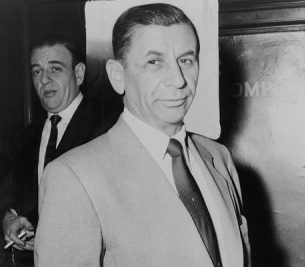
Meyer Lansky
The heirs of Meyer Lansky, the impresario of the North American Mafia gambling colony in Cuba (1933-1958) are betting on a big payback from the negotiations between the United States and Cuba to normalize relations between the two countries. Compensation claims by U.S. citizens or businesses for properties nationalized by the Cuban revolution are among the issues under discussion.
Lansky’s daughter Sandi, her son Gary Rapoport, and her brother Paul have filed a compensation claim against Cuba for the Riviera Hotel and Casino with the U.S. Foreign Claims Settlement Commission. The Cuban revolution confiscated the Riviera and other Mafia-owned properties after it toppled the gangster-linked regime of General Fulgencio Batista in 1959.
“It was through my grandfather’s hard work that the hotel was built,” Rapoport told the U. K. Daily Mail Online on December 23, 2015. “We are his natural relations . . . . By right, it should be our property.” He says the Riviera is valued at $70 million. The Tampa Bay Tribune, Reuters, and Haaretz have also covered the story.
The Riviera, which overlooks the Straits of Florida, was the crown jewel of Lansky’s casinos, hotels, and nightclubs in Havana. When the Riviera opened in December 1957, it was the largest Mafia-owned hotel-casino outside Las Vegas. The hotel’s 440 double rooms were booked solid for the winter season of 1957-1958.
However, the narrative that the success of the Riviera was the product of Meyer Lansky’s “hard work” is undercut by Lansky’s own assessment of his arrangement with Batista. … continue
Blog Roll
 Aletho News
- Seyed M. Marandi: Total War – Attacking Nuclear Plants, Desalination & Infrastructure
- Israel systematically torturing Palestinians in custody: UN special rapporteur Albanese
- How the US-Israeli aggression against Iran is affecting the war in Ukraine
- Italy Is Caught Between Two Wars. Russia’s LNG Tanker
- Iran Beats US & Israeli Missile Defenses by Exploiting Their Weaknesses
- Report: White House Making ‘Detailed Preparations’ for Invasion of Iran
- US Air Defenses Not Suited for Modern Combat — Ex-Air Force Officer
- Eight Iraqi resistance attacks hit US Victoria base near Baghdad airport
- US Dirty War Iran Revelations 2026: Ex-Counterterrorism Chief Joe Kent Exposes Proxy Strategy
- Iran’s Dimona Strike Shatters Myth of ‘Impenetrable’ THAAD, Patriot & Arrow Air Defenses – Analyst
- If Americans Knew
- Lebanon deaths top 1,200; Palantir AI to be embedded across US military – Not a ceasefire Day 163
- Israel’s assassination game: Take all pragmatists off the board
- Food shortages return to Gaza as Israel tightens aid restrictions under the cover of its war on Iran
- Trump demands trillions in payments from Gulf countries, billions from Harvard – Not a ceasefire Day 162
- Meet the former fashion blogger and shady doctor behind the ‘30,000 dead’ Iran psy-op
- Vatican Secretary of State to Trump, Israel: End the war as soon as possible
- The Majority of Americans Believe War Against Iran Benefits Israel More Than US
- Efforts to shut down pro-Palestinian speech face series of setbacks in court
- What has Israel done to my brother?
- Eid without worship in Al Aqsa – Not a ceasefire Day 161
- No Tricks Zone
- Former Pfizer Toxicologist Dr. Helmut Sterz Tells Bundestag Hearing Pfizer Vaccine Should Have Never Been Approved
- Energy Expert: Germany’s Nuclear Phaseout Was A “500 Billion Euro Mistake”
- New Research: South Australia’s Mid-Holocene Sea Surface Temperatures Were 4°C Warmer Than Today
- Storing Green Energy To Last Germany 10 Days Would Require A 60-Million Tonne Battery
- New Studies: UK Sea Levels Were 4 Meters Higher Than Today During The Mid-Holocene
- Destructive Green New Deal: German Energy And Metal Group Warns Of Drastic Crisis
- New Study Documents A 20-Year Pause In Arctic Sea Ice Decline – Driven By Internal Variability
- Wake-up Call: Survey Shows Majority Of Germans Now Favor Postponing Climate Targets!
- Televised! Leading German Political Candidate Tells Schoolchildren CO2 Makes Sun Hotter!
- New Study: A Century Warming Of 1.1°C Is ‘Commonplace’ And ‘Not Unusual’ During This Interglacial
 Aletho News