Qusra settler attack, two hospitalised
International Solidarity Movement | January 7, 2013
 Qusra, Occupied Palestine – At around 2 p.m. seven settlers attacked a farm on the outskirts of Qusra. The farm belongs to Abu Nasser and his wife Nedda who are both in their sixties.
Nedda confronted the settlers after seeing them on their property cutting olive trees, warning them off with a solid wooden walking stick and a firm voice. At around 4 p.m. twelve settlers returned accompanied by around 12 jeeps and 60 Israeli Occupation Soldiers.
A small group from the local village confronted the settlers and soldiers to defend the farm and a conflict erupted. Consecutive rounds of tear gas were then shot onto the farm land and the settlers and the local youth (shabab) confronted each other. During the skirmish two shabab were shot at close range with rubber bullets: one in the shin and the other in the upper thigh. Both required hospital treatment, with the shabab who was shot in the upper thigh remaining in hospital for further treatment as the rubber coated bullet passed into the front of his thigh and out the side. One of the stones thrown by a shabab hit a settler in the head. In addition to this the Israeli Army fired several rounds of live ammunition. The village Mayor rang the DCO to report the incident and the DCO warned him that the settlers would return for ‘‘revenge’’.
As four volunteers from the ISM, we arrived at the village around 7p.m. and were welcomed to stay overnight at the small farm house of Abu Nasser and Nedda. The following day the settlers were seen gathering across the valley with Israeli soldiers. We were driven to the hilltop across from them and made our presence known, shortly after which they left. During our time in the village we learnt of other attacks on the village that occurred as frequently as 3-4 times a week. We were shown several olive fields where the olive trees had either been broken or cut. The villages estimate that in the previous 3-4 days around 400 olive trees had been killed in their surroundings by settlers from the illegal settlements Esh Kodish and Kida.
During a similar settler attack on the village on the 23/09/2011, the local villages went to stop settlers from cutting the trees and the Israeli Army arrived and shot dead a 32-years old father of 5, Islam Badram.
Related articles
- Red Crescent attacked during settler raids in Qusra (palsolidarity.org)
- Israeli army dogs attack elderly Palestinian, two-year-old child injured in the head in Jewish settlers’ attack (alethonews.wordpress.com)
- Settlers raid Nablus village homes and a tractor. Uproot 190 olive trees and burn Hebron car (occupiedpalestine.wordpress.com)
- Settlers raid Nablus village, fire live ammo (altahrir.wordpress.com)
Hagel
Kenny’s Sideshow | January 6, 2013
“The Jewish lobby intimidates a lot of people up here.”
“I’m not an Israeli senator. I’m a United States senator.”
Chuck Hagel’s most famous words may give hope to some that Obama’s nomination of him for Secretary of Defense is a sign that the influence of Israel is waning. Hagel has even been cautious about war with Iran and has indicated he prefers talking over shooting.
Any nominee that has problems with the ADL, Joe Lieberman and Lindsey Graham must have something going for him. Right? Maybe.
Hagel is a member of the CFR and a sometimes Bilderberg participant. Two strikes.
Take a look at his voting record and some of his stances while senator. Not exactly progressive. He voted for going into Afghanistan. He also voted to go into Iraq before he said he was somewhat against that war and did a little criticizing of the Bush administration. Patriot Act? No problem. He twice cast his lot for it.
FISA? Yep, he likes spying.
Hagel’s campaign contributors included a lot of bankers and we all know how well they like war and military contractors.
Proper disclosure has not been one of his strong suits. Could his own electronic voting machine company have ‘aided’ in his senate campaign wins?
For the first ten weeks of 1996, Hagel served as chairman of American Information Systems (AIS), a voting machine company which later changed its name to ES&S. He also had holdings in the firm’s parent group, McCarthy Group Inc., worth between $1 and $5 million. In November 1996, Hagel was elected to the Senate, the first Republican elected from Nebraska since 1974. He came from behind twice during his run (according to polls), first against well known Republican Attorney General Don Stenberg in the primary, and then against popular Democratic Gov. (and eventual senator) Ben Nelson. In fact, one Nebraska newspaper described his victory as a “stunning upset.” In January 1997, the Washington Post called Hagel’s victory, “the major Republican upset in the November election.” According to Bev Harris of Blackboxvoting.org, a group aimed at “consumer protection for elections,” Hagel won virtually every demographic group, including many largely African-American communities that had never before voted Republican. AIS was responsible for counting approximately 80% of the votes in the election.
In a disclosure form filed in 1996, Hagel did not report that he was chairman of AIS during 1996 or go into detail regarding the company’s underlying assets. Rather, he cited his holdings as an “excepted investment fund,” which is exempt from detailed disclosure rules.
Hope and change with Hagel? It seems somewhat odd that Obama would pick such a controversial Republican for the cabinet post. It’s often said that no one reaches these positions without being bought and/or blackmailed. No word on if Hagel would approve of the military being used against the American people and I doubt the question will come up in the confirmation hearings.
With all the corruption in the merging of government, banks and corporations and the continued influence of the jewish lobby, even if Hagel is ‘approved’ I’m not holding my breath that it will be anything but business as usual.
Related articles
Crashed US reconnaissance drone found in Philippine waters
Press TV – January 7, 2013
A US-made reconnaissance drone has been recovered in waters off Ticao Island of the Philippines, a navy official says.
Captain Rommel Jason Galang, a Philippine navy commander, said the drone was recovered on Monday, after it was found by fishermen floating near the island.
Galang also said the navy had deployed a ship with ordnance experts to the scene after the fishermen reported that the 3.65-meter object could have been a bomb.
“We will first study this drone but initially it appears to be a UAV used largely in reconnaissance,” he stated, adding that it was not clear why the BQM-74E drone had crashed.
The US embassy in Manila was informed of the discovery of the drone, which is expected to be turned over to US authorities.
The Philippines has seen a resurgence of US troops since late 2011, when the White House announced a turn in Washington’s foreign, economic and security policy toward the region.
Some 600 US soldiers have been stationed in the southern Philippines since 2002 to train local troops there.
Philippine President Benigno Aquino said last year that US drones were allowed to fly over the country for reconnaissance purposes.
Related articles
- US Drone Crashes Off Masbate Waters (rappler.com)
Bolivia slams US over ‘irrefutable evidence’ of meddling
RT | January 7, 2013
Bolivia has “concrete evidence” that the US is plotting to destabilize the Latin American nation, Minister Juan Ramon Quintana said. Proof of US “harassment” of the Bolivian government will be handed over to President Obama, he added.
The Bolivian government is “scrupulously following” US activity in Bolivia, Minister for the Bolivian Presidency Quintana said in a press conference
“There is so much evidence to hand over to the President of the USA to say to him: Stop harassing the Bolivian government, stop politically cornering and ambushing us!” Quintana stressed. He added that investigations into drug-trafficking and human rights abuses would reveal a “permanent battle” waged by the US to impede progress in Bolivia.
“In the offensive against the government there are no visible subjects… What we’re seeing are the political machinations of the US Embassy,” which seeks to damage the image of the Bolivian government, Quintana said.
The country’s US ambassador was ejected in 2008 after being accused of plotting against the Bolivian government by President Evo Morales. The US quickly followed suit, removing its Bolivian ambassador.
A charge d’affaires now heads the American Embassy in La Paz; both nations signed a deal in 2011 that would pave the way for the reinstatement of the ambassadors. However, diplomatic relations between the two countries have yet to be normalized.
Larry Mermmot, the US diplomatic representative in La Paz, said that he was confident that 2013 would see the ambassadors restored in both countries.
A significant bone of contention in these tensions is drug-trafficking in Bolivia. A damning report released by the American government last year ranking Bolivia, along with Venezuela and Burma, as “failing demonstrably during the previous 12 months to adhere to their obligations under international counternarcotics agreements.”
President Morales denied the findings, accusing the US of hypocrisy and calling the illicit drugs trade with Latin America the US’ “best business.”
A thorn in the US’ side
Bolivia has been a thorn in the US’ side because of its anti-neoliberal and anti-imperialist policies, pioneered by President Evo Morales; the US also could not permit challenges to its policies in the heart of Latin America, Minister Quintana said in an interview with state radio station El Pueblo.
“What we have been fighting since 2006 and what we will continue to fight is a war against Bolivian progress,” he said, adding that the political objective of the US was to dismantle the “process of rebellion” by any means necessary.
Bolivia is currently led by Evo Morales, the country’s first indigenous leader, who is a close ally of Venezuelan President Hugo Chavez and Ecuadorian President Rafael Correa. The three leaders are known for their anti-American rhetoric, and have often been critical of what they criticize as the US overstepping its authority in Latin America.
Ecuadorian President Correa spoke out over the weekend, voicing concerns of a possible CIA plot to remove him in the run-up to governmental elections in February. He cited a report written by a Chilean journalist, which described an alleged US plot to destabilize the region.
Related articles
- Bolivia’s GDP and Minimum Wage double under Evo Morales’ MAS ‘process of change’ (alethonews.wordpress.com)
- – Bolivia: US embassy actively working to undermine govt. (Press TV)
US renews war on Iranian media
PressTVGlobalNews | January 5, 2013
The United States has imposed fresh sanctions on Iranian media despite Washington’s claims of respecting free speech. Sanctions have all been applied under the umbrella of concern for Iran’s nuclear program becoming militarized. The CIA and IAEA have constantly reported that Iran is not developing nuclear weapons while mainstream American media have promoted that Iran has or is producing a nuclear bomb. Many observers though contend that the many sanctions on Iran are an act of war as part of Western colonialism and imperialism that also serves the Zionists of Israel.
To further discuss the issue, Press TV’s News Analysis has conducted an interview with Joe Iosbaker, Stop FBI Repression, from Chicago, Kevin Barrett, a founding member of the Muslim-Jewish-Christian Alliance, from Wisconsin, and Daniel Pipes, founder and director of the Middle East Forum, from Philadelphia.
Follow our Facebook on: https://www.facebook.com/presstvchannel
Follow our Twitter on: http://twitter.com/presstv
Follow our Tumblr on: http://presstvchannel.tumblr.com
Related articles
- US imposes fresh sanctions on Tehran, including ban on Iranian media (alethonews.wordpress.com)
Israeli Prison Doctors To Amputate Leg Of Wounded Detainee
By Saed Bannoura | IMEMC & Agencies | January 06, 2013
Lawyer of the Palestinian Ministry of Detainees, Fadi Obeidat, stated that Israeli physicians at the Ramla Prison Clinic decided to amputate the left leg of detainee Nahedh Al-Aqra’, 41, from the Gaza Strip. The detainee lost his right leg after being shot by the army.
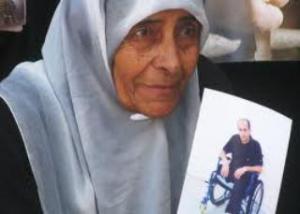
Mother Of Nahed Al-Aqra’ Holding His Picture – hskalla.wordpress.com
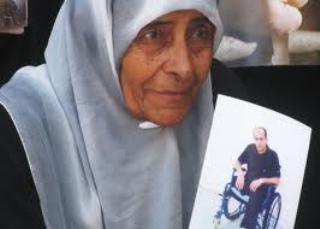
Al-Aqra’ is suffering from very sharp pain in his leg due to infections resulting from his injury and due to the lack of adequate medical treatment as the only medication he received was painkilling pills.
His family has not been allowed to visit him since he was kidnapped while returning from Jordan on July 7, 2000, where he received medical treatment for multiple gunshot injuries in his legs, and was sentenced to three life-terms.
Israel’s recent decision to allow family visits to Gaza Strip detainees did not include detainees who are hospitalized at the prison clinic. Gaza Strip detainees were denied visitation rights after the second Intifada started in late September 2000.
In prison, he suffered various complications, including infections, and his wound became septic; the doctors performed several surgeries but could not save his leg.
Al-Aqra is a father of four children who have not seen him since 2000 despite extensive efforts conducted by the Red Cross.
In related news, the family of detainee Mahmoud Hamdi Shabana, 40, stated Saturday that he is suffering from a sharp pain in his throat, especially the vocal cords, and that he is not receiving any medical treatment.
Al-Aqra’ is held at the Negev Detention Camp; he was kidnapped more than 35 months ago and was confined under repeatedly renewed Administrative Detention orders without charges or trial since then.
Related articles
- 18 Seriously Sick Detainees Facing Medical Neglect In Israeli Prisons (imemc.org)
- Israel Kidnapped 173 Palestinians This Month (arabworld360.blogspot.com)
Syria conflict between nation, enemies: President Assad
Press TV – January 6, 2013
Syrian President Bashar al-Assad says the ongoing conflict in his country is not between the state and opposition but between the nation and its enemies.
In a key speech on the situation in the country, Assad said on Sunday that his government will always extend its hand for dialogue with the opposition and political parties.
The Syrian president, however, said that the government “will not have dialogue with a puppet made by the West.”
“Government will call for a comprehensive national dialogue” in the near future, he said.
“Syria wants peace and reconciliation,” he said, adding that “Armed groups must halt terrorist acts.”
The president added that the constitution will be subjected to referendum and that general amnesty will be announced.
Assad warned that there is an “agenda to partition Syria” but stated that “the nation is for all and we all must protect it.”
“Any initiative must be based on Syrian vision,” Assad said, adding “we are to go ahead with own political process.”
The president went on to say that the Geneva initiative on the transition in Syria was ambigiuous. He also said that “Any talk of revolution in Syria is just bubbles of soap.”
The Syrian president lauded people in the villages that tried to block the enterance of militants from Turkey, adding that “the nation is for those who protect it.”
Syria has been experiencing unrest since mid-March 2011. Many people, including large numbers of security personnel, have been killed in the violence.
The Syrian government says the chaos is being orchestrated from outside the country, and there are reports that a very large number of the militants fighting the Syrian government are foreign nationals.
Several international human rights organizations have accused the foreign-sponsored militants of committing war crimes.
Related article
Privatizing Healthcare in Spain. Making the people pay for financial mis-management
By Arturo Rosales | Axis of Logic | December 27, 2012

“You don’t sell public health care – you defend it!”
Today, December 27th 2012, is a black day in Spanish social services history. The Madrid Assembly approved a law which allows the “externalization of the management” of various hospitals in Madrid. This means privatization with public monies heading into private management pockets and patients being expected to pay for medical services or being obliged to take out costly medical insurance as in the US.
Spain has free medical services and this is the first step toward privatizing medicine in this country and making life even harsher for the 5.6 million unemployed and people who have lost their jobs and their homes, as well as those upon whom the Rajoy government is forcing wage cuts.
The President of the Comunidad de Madrid, Ignacio Gonzalez, who has been instrumental in forcing this legislation through, has had the gall to say that he is willing to enter into a dialogue with striking doctors protesting against this neoliberal axe coming down on the socialized medical services in Madrid. It will not be too long before other regions in Spain follow suit as the central government prefers to save the bankers by having the public pay for their errors and embezzlement. The EU bailouts will eventually fall on to the shoulders of the public with higher direct and indirect taxes and by having their social services and right to a decent education for their children cut to the bone.
The Protests!
On December 16th thousands Spanish public health workers and other people marched from four main hospitals in Madrid to converge on a main square in the capital Sunday, protesting the regional government’s plans to restructure and part-privatize the sector.

The marches, described as a “white tide” because of the color of the medical gowns many were wearing, finally met mid-afternoon in the central Puerta del Sol. On Monday, the region’s health councilor will meet with a committee responsible for coordinating professional services and union representatives to try and agree how to achieve €533 million (US$697 million) in savings.
In early July the EU agreed to bail out the Spanish banks with US$123 billion on the condition that the Spanish government implements austerity packages to cut public spending. Bearing in mind that it was the banks’ greed and risky lending to overpriced real estate projects which sparked the financial crisis in Spain, combined with a national debt that is more than 60% of the GDP, the public is now having to pay for these “misjudgments” which will eventually force Spain into the status of a third world country again.
During the protest march doctors, nurses and public health users — grouped into four columns —marched from leading hospitals located in the north, south, east and west of the capital.
“Our health care system is going to be damaged,” said Alberto Garcia, 26. “Patients are doomed to get a much worse service and this will just make us poorer.”
Health care and education are administered by Spain’s 17 semi-autonomous regions rather than the central government and Madrid proposes selling off the management of six of 20 large public hospitals and 27 of 268 health centers to private corporations.
The Spanish Debt
Spain’s regions are struggling with a combined debt of €145 billion (US$190 billion) as the country’s economy contracts into a double-dip recession triggered by the 2008 real estate crash. By electing a neo liberal government such as that of Rajoy and the Francoist Partido Popular, the Spanish voters are really getting what they voted for. At least Rajoy is true to his “principles” and he is rewarding the Spanish population with:
• Foreclosures
• Unemployment
• Austerity
• Hunger
• Police brutality
• More taxes
• Impunity for most bankers
• Homelessness
• Medical services being privatized
• Human dignity being stripped away month after month
The Numbers
Just look at the figures. The Spanish capital needed just US$697,000,000 to save the public health service but the banks which effectively screwed themselves and the country got US$123,000,000,000. Madrid only needed 0.57% of this amount to maintain the integrity of its health system and prevent it falling gradually into capitalist hands. What about families with children who are destitute? Is there no compassion left when it comes down to saving the “too big to fail banks”, by denying bankruptcy which is one of the fundamental pillars of capitalism. It cleans out the system of the diseased and weak.
No-one can tell any right thinking person that this is not a political-ideological decision. With just one iota of political will this total injustice could have been avoided.
Some Enlightening Comparisons
Venezuela: Here in Venezuela we are watching in horror as Spain is gradually morphing into Greece II and at the same time observing how in our country: houses are being built for poor families; a national health service is being constructed piece by piece; banks are too scared to take unnecessary risk too feed their greed since they know that they will be immediately nationalized.
Hundreds of Venezuelan families who sold everything and moved to Spain in order to escape the Chavez “tyranny” are now homeless, jobless and cannot get back to their home country. They are appealing to the Venezuelan government to repatriate them, give them work and put them on the list for a home of the Grand Housing Mission currently underway in Venezuela. How ironic is it that 95% of Venezuelan residents in Spain voted against President Chávez in the October 7th presidential election – and now they are begging to be saved from their own folly – just like the bankers.
While we empathize with the Spanish people and the looming loss of their health-care system to the capitalists, many must accept part of the blame by voting in Rajoy and his neoliberal gang of thug ministers.
The UK and NHS: What is happening in Spain is inevitable and a similar situation is developing in the UK where the Welfare Reform Bill has passed the two Houses of Parliament and signed into law by the Queen. This implies at least partial privatization of the National Health Service but the silver lining of this dark cloud for the British public could mean that the Conservative and Liberal Democrat Parties could be banished for many decades from government for this betrayal of British voters. Just use Google to discover that no-one – Conservative, Liberal Democrat or Labour – would have voted to privatize even part of the UK National Health Service.
Higher education is now out of reach except for all but the wealthy (university applications are down by 54% this year) and the beloved National Health Service could also soon be sacrificed to the neoliberal ideology of David Cameron who is ensuring that public money is poured into private coffers.
Rajoy and his gang in Spain will also be dumped in the next elections by the voters. If you are in service to the banks and big business expect the end of your political career to come sooner rather than later in the financial maelstrom of the crumbling European Union edifice.
Related articles
- Defending Public Healthcare in Madrid (counterpunch.org)
Bolivia’s GDP and Minimum Wage double under Evo Morales’ MAS ‘process of change’
Bolivia’s ‘process of change’: the balance sheet for 2012, and challenges to come
By Katu Arkonada | La Epoca* | December 18, 2012
2012 has been a year of transition for the process of change in the Plurinational State of Bolivia, notwithstanding the many events, problems and contradictions encountered by the executive branch during the last 12 months of its administration. A year of transition because we have left behind the 2010-2011 biennial of consolidation following the 64% victory of President Morales in the December 2009 election and are now entering a new biennial, 2013-2014, which will take us very rapidly to the presidential elections of December 2014.
By way of a balance sheet
2012 was without a doubt the year of the consulta [consultation] in the TIPNIS [Territorio Indígena and Parque Nacional Isiboro-Secure], the year when the government probably lost an international battle against a major marketing strategy designed in the offices of a certain opposition and some NGOs, but won the war for legitimacy in Bolivia. The result is overwhelming, leaving no room for doubt: of the 58 communities consulted (84% of them, since 11 refused to participate in the consulta), 55 (79%) approved the construction of the highway.[1] This result dismantles the postmodern and Rousseauist analyses that knew little of the history and actors of the TIPNIS, classifying them as good savages living in the woods without needing anything more, and demonstrated to us that the majority of the communities of the TIPNIS want a greater state presence for access to health and education primarily. In any case the conflict has not ended and no doubt during the next two years the opposition will campaign against the construction of a highway in a country so colonized and plundered that it still has no road connecting two of its nine departments.
But 2012 has also been the year of the economy. Bolivia continued to grow at an annual rate of 5.2% (above the rate in Brazil, Mexico or Uruguay, to cite three examples), and the per capita share of GDP increased in 2012 to $2,238, double what it was in 2006 ($1,182). As for foreign trade, exports in the first quarter of 2012 exceeded the total of all exports in 2007: $5.068 billion compared with $4.822 billion, and the international reserves reached $14 billion — almost 50% of the Bolivian GDP, giving the country the highest level of reserves as a percentage of GDP in all of Latin America.
Similarly, public investment in 2012 will exceed $2 billion, as opposed to $879 million in 2006, and the public external debt totals $3.704 billion, down from $4.947 billion in 2005. By June 2012 three out of every 10 Bolivians were receiving conditional direct transfer payments (bonos), producing a redistribution of wealth that has reduced poverty by almost 12 percentage points in five years (48.5% in 2011) and extreme poverty by 13 percentage points during the same period (24.3%). Another factor in poverty reduction was the rise of the minimum wage in 2012 to 1,000 bolivianos [USD$1 = 7 BOB], compared with 815 BOBs in 2011 or the 440 BOB in 2005 when the MAS was first elected.
Another important factor to mention, when analyzing the past year, is the accomplishments in foreign policy, particularly the actions carried out in the negotiations with Chile for sovereign access to the sea, and the legal demand that Bolivia is going to make in The Hague [2], as well as the recent application to become a full member of Mercosur, the fifth largest economic entity in the world. And we should also note Bolivia’s leadership within ALBA [3] and the G77+China in such multilateral negotiations as the UN Conference on Sustainable Development Rio+20 or the COP [Conference of Parties] on Climate Change. Never before has Bolivia had a sovereign foreign policy, changing the paradigm from neoliberal diplomatic conduct to one of Diplomacy of the Peoples.
Lastly, we cannot complete this brief end-of-year balance sheet without mentioning the recently uncovered case of corruption in the Ministry of Government [the Interior ministry], a ministry that correctly confronted a political mutiny in June and that has now done what a government leading a democratic and cultural revolution had to do, acting forcefully to detain all of those involved and pursuing the matter irrespective of who it might bring down.[4] It is probable that we don’t (yet) know all of the ramifications of this case, but for the good of the process they must be brought to light and the harshest punishment meted out to anyone involved, and if they are a member of the government the penalty should be even greater, to demonstrate the latter’s integrity and coherency.
Challenges for 2013-2014
Notwithstanding the recent events in Venezuela, Chávez’s victory in winning election for six more years and the more than probable victory of Correa in Ecuador in February (almost certainly without the need for a second round), means that the process that is going forward in Bolivia will be menaced even more by those who feel threatened by the anti-imperialist and anticolonial policies being advanced by President Evo Morales. No doubt great efforts (and much money) will be spent in striking at one of the weakest links in the ALBA and the processes of change in the continent, and in attempting to consolidate an opposition alternative to the MAS government.
An initial step in the continued deepening of the process of change should be the victory in January of Jessica Jordán, the MAS candidate for Governor in Beni. A victory in this Amazon department on January 20 would be a definitive blow to the Media Luna and the hopes of repeating in Bolivia the Venezuelan scheme of the Mesa de Unidad.[5] Obviously this will not be an easy victory in one of the most conservative regions of Bolivia, in which the hacendado power still has a great capacity for action and mobilization, but the very fact that first place is in dispute is already a victory in itself and a palpable demonstration that things are changing.
Not to be overlooked, as well, are the middle classes that the MSM [6] is attempting to woo with a moderate management-oriented discourse. However, in October 2012 it was revealed that the Municipality of La Paz was spending only 26% of its budget [dedicated to public investment – RF], far below the 50% average across the ministries. We can conclude that if the MSM is not capable of managing a city hall, it will have a hard time managing a state. But within that middle class layer, and in expectation of the results of the 2012 Population Census, we are going to have hundreds of thousands of new voters who in 2009 were too young to vote and now need to be won over with a discourse that must go beyond the proposals for change and be accompanied by a political program that involves them in the construction of this country’s politics.
Finally, the bases that have been built and consolidated in the process of change cannot be overlooked. It may be that those bases that are closest are not at risk, but it is necessary to strengthen them, to continue expanding the hard core, the popular and subaltern sectors that are the soul [ajayu] of this revolution, because without them the revolution would collapse piece by piece, but with them we will be able to begin thinking of the Patriotic Agenda 2025,[7] converting the political and decolonizing revolution into a post-capitalist economic revolution.
The author, who describes himself here as a “militant in the process of change,” is a researcher at the Universidad de la Cordillera, a frequent contributor to the Bolivian edition of Le Monde Diplomatique, and works with the Ministry of Foreign Relations of the Plurinational State of Bolivia. He is of Basque origin.
[1] The lawfully mandated consulta (consultation) of the communities directly affected by the proposed highway project, which was the subject of much controversy and two recent marches by dissident indigenous activists, concluded its proceedings on December 7. The overwhelming majority of the communities that participated in the consulta approved the construction of the highway between Villa Tunari and San Ignacio de Moxos. See: http://www.la-razon.com/nacional/Consulta-cierra-promesa-fondos-ecologica_0_1738626180.html. For a discussion of the issues involved, see my translation of a book by Bolivian Vice-President Álvaro García Linera, Geopolitics of the Amazon, published in five parts at Life on the Left, and on several other sites. — RF
[2] See Bolivia’s Morales to take Chile sea dispute to court. See also http://www.elcaribe.com.do/2012/11/17/bolivia-chile-debaten-salida-mar-cadiz.
[3] The Bolivarian Alliance for the Peoples of Our America [Spanish: Alianza Bolivariana para los Pueblos de Nuestra América] is an international cooperation organization based on the idea of the social, political and economic integration of the countries of Latin America and the Caribbean.
[4] In November several senior counsel in the Ministry were implicated in an attempt to extort money from a U.S. citizen, Jacob Ostreicher, who came to Bolivia four years ago and invested in rice production in Santa Cruz. He was indicted for money-laundering in June. The Bolivian suspects are alleged to have offered his release in return for his payment to them of $50,000. See Desbaratan red de corrupción y extorsión en la que operaban dos asesores del Ministerio de Gobierno, and Morales asegura que hay “infiltrados” que buscan desprestigiar al Gobierno.
[5] The four departments of the so-called Media Luna (literally, “half moon”) comprising the eastern portion of Bolivia have been centers of conservative resistance to the Morales government, their governors often collaborating in opposition to La Paz. In Venezuela the rightist opposition to Hugo Chávez and the Bolivarian Revolution coalesced behind a single presidential candidate in the recent national election, when he was defeated by Chávez.
[6] MSM, the Movimiento Sin Miedo [Fearless Movement], a center-left opposition party that currently controls the mayoralty in La Paz.
[7] 2025 will be the bicentennial of Bolivia’s independence from Spain.
* Translation and notes by Richard Fidler
Related articles
- Bolivia signs Mercosur incorporation protocol and becomes sixth member (alethonews.wordpress.com)
- Bolivia nationalises electric utilities (nzherald.co.nz)
War is Wonderful… If You’re a Weapons Maker
By Noel Brinkerhoff | AllGov | January 4, 2013
The wars in Afghanistan and Iraq put enormous strains on the United States, from impacting individual lives of Americans to draining the U.S. Treasury. But the conflicts had the opposite effect on the companies that armed the U.S. military.
From 2002 until 2011, the profits of the five largest defense contractors (Lockheed Martin, Boeing, Northrop Grumman, General Dynamics and Raytheon) “increased by a whopping 450 percent,” according to Lawrence J. Korb, senior fellow at the Center for American Progress.
Ten years ago, the profits of these five companies were $2.4 billion (adjusted for inflation) collectively. By 2011, their profits had soared to $13.4 billion. During the period in which the profits of weapons makers were going up 450%, the U.S. defense budget rose 55%. During the same time frame, the median annual income for American families actually went down almost 6%.
During earlier wars in American history, the government used to impose a “war tax” on contractors to ensure that they did not gain excessively from the misery of others fighting the conflict. But that wasn’t the case last decade, noted Walter Pincus at The Washington Post.
“My most radical idea—and it should have been done 10 years ago—is for an excess-profits tax on defense contractors while we have troops fighting overseas,” Pincus wrote. “As I have often noted, Afghanistan and Iraq are the first U.S. wars in which taxes were not raised to pay for the fighting. Instead, the cost has been put on a credit card.”
To Learn More:
Excess-Profits Tax On Defense Contractors During Wartime Is Long Overdue (by Walter Pincus, Washington Post)
Related articles
US Court Rules Syrian Government Responsible for Kidnapping of American in Turkey
By Noel Brinkerhoff | AllGov | January 5, 2013
The government of Syria has been ordered by a U.S. federal court to pay $338 million in damages for supporting a terrorist group that kidnapped Americans two decades ago.
One of those kidnapped, Marvin Wilson, sued the Syrian government along with the family of Ronald Wyatt, who died of cancer several years after their release from the Kurdish Workers Party (PKK), a Kurdish nationalist group in Turkey that has been designated a terrorist organization by the U.S. State Department since 1997.
The two men were part of an archeology expedition searching for remains of Noah’s Ark in Turkey when, in August 1991, members of the PKK captured and held them for three weeks.
The plaintiffs sued the Damascus government claiming it had allowed the PKK to operate from Syrian territory, and provided financial support and training to the terrorist group.
District Court Judge Royce Lamberth ruled that Syria was “vicariously liable” for the kidnapping, and ordered the government to pay $38 million in compensatory damages to the plaintiffs and another $300 million in punitive damages.
“The brutal character of the kidnapping in this case, the significant harm it caused both the hostage plaintiffs and their families, along with Syria’s demonstrated and well known policy to encourage terrorism all merit an award of punitive damages,” Lamberth wrote.
During their ordeal, Wilson and Wyatt were force-marched for 18 hours and repeatedly beaten by their captors, according to the plaintiffs.
Related articles
- Judge Orders Syria to Pay $338M in Terrorism Case (legaltimes.typepad.com)
- Israeli group wins $338 million judgment against Syria over kidnapping of Americans (righttruth.typepad.com)
“Did We Just Kill a Kid?”
By TOM McNAMARA | CounterPunch | January 4, 2013

In the spring of 1944, in the quiet little town of Alcolu, South Carolina, two young girls, Betty June Binnicker, age 11, and Mary Emma Thames, age 8, were brutally murdered while picking flowers along a railroad track. Their bodies were found in a nearby water filled ditch. The cause of death was determined to be multiple blows to their skulls with a metal railroad spike. A Mr. George Stinney was soon arrested for the murders. While there was no physical evidence or eyewitness accounts linking the defendant to the crime, unfortunately for Mr. Stinney, the two girls were white. He was black.
Two white police officers were able to get a confession out of Mr. Stinney within an hour, behind closed doors. It was the only evidence offered up during his trial, a trial that was held in one day and lasted only two and a half hours. It was attended by 1,500 people, all of them white. Blacks were not allowed in the courtroom. Mr. Stinney, his family having been driven from their small town, faced the trial alone. Council for the defense offered no evidence on its client’s behalf, and it requested no psychiatric evaluation of the defendant. A guilty verdict was reached after only 10 minutes of deliberation by the (all white male) jury. No recommendation for mercy was given. Had Mr. Stinney’s lawyer filed a simple one sentence appeal, the execution would have been automatically stayed for at least a year. But this was impossible due to the fact that Mr. Stinney did not see his attorney again from the time he left the court. Furthermore, his attorney never spoke to any members of the defendant’s family, let alone inform them that they had the right to appeal the death sentence. Just 81 days after his arrest, on June 16, 1944, Mr. Stinney would walk into the execution chamber.
There is one more tragic element to this already tragic story. Mr. George Junius Stinney Jr. was just 14 years old when he was put to death. He was the youngest person (legally) executed in the United States in the 20th century.
Being small for his age, weighing just 95 pounds (approximately 43 kilograms) and only five feet one inch tall (approximately 1.5 meters), it was with great difficulty that the death sentenced was carried out. But carried out it was. His small body was propped up with books in order to get him to fit properly in the electric chair (the original designers having carelessly overlooked the fact that one day their device might be used to execute a small child), allowing for an electrode to be attached to his right leg.
One commentator reported that George said nothing as the mask was lowered over his face. But after the first 2,400 volts passed through the boy’s small body “the death mask slipped from his face and his eyes were open when two additional shots of 1,200 and 500 volts followed.” George’s head “went up and the mask came of his face … and saliva and all was coming out of his mouth and tears from his eyes.”
The Governor, Olin Johnson, had received hundreds of letters and telegrams asking for leniency for the young boy. But facing a primary election in July, the Governor was not inclined to grant clemency. One telegram compared the execution of a child to something that Adolf Hitler would do. A stinging and bitter accusation considering that American troops had just landed on the beaches of Normandy ten days earlier in the D-Day invasion to liberate France from Nazi occupation and terror. On that one day alone, 9,000 Allied soldiers would die or be wounded fighting the Germans.
It can be argued that the execution of a 14 year old child was a social aberration from a bygone era. A simple anomaly. An isolated case that “fell through the cracks.” A repulsive event from a period when America was still suffering from racial and social ignorance. Surely, as a society, the United States has progressed far beyond the days of when it tolerated the State sanctioned execution of children, has it not?
Two pilots are sitting in an air-conditioned windowless room in New Mexico. Before them sit an array of 14 computer monitors and four keyboards. 6,250 miles away (about 10,000 kilometers) they are controlling a Predator drone that is circling lazily in a figure eight pattern over Afghanistan. They are observing a crude house made of mud when the order is given to launch a laser guided Hellfire missile at the target. With just seconds to go till impact, a small child walks out from behind one of the corners of the structure. A flash on the control screen confirms the impact and explosion, with parts of the structure collapsing and the child disappearing.
“Did we just kill a kid?” the co-pilot asks the pilot.
“Yeah, I guess that was a kid,” the pilot replies.
Confirmation as to whether or not a missile strike had just been carried out on a child was requested. “No. That was a dog,” comes the anonymous response from a military command center.
The pilots review the video of the drone strike that had just taken place.
A dog on two legs?
One of the pilots is no longer in the Air Force, declining to renew his enlistment contract when it was up. After 6,000 flight hours and six years of military service he says “I saw men, women and children die during that time. I never thought I would kill that many people. In fact, I thought I couldn’t kill anyone at all.” He has since been diagnosed with post-traumatic stress disorder by doctors with the Veterans’ Administration.
While the above incident could be deemed an “accident,” apparently the targeted murder of children is now accepted US military policy.
Lt. Col. Marion “Ced” Carrington, Commander of 1st Battalion, 508th Parachute Infantry Regiment, states, “It kind of opens our aperture. In addition to looking for military-age males, it’s looking for children with potential hostile intent” as well. While the Lt. Col would not elaborate on what exactly are the rules of engagement when encountering potential child combatants, reassuringly he tells us that he advises the soldiers serving under him to use “courageous restraint.”
Apparently this “courageous restraint” was lacking on October 14, 2012, when US Marines operating in Helmand province requested, and got clearance for, an airstrike on “shadowy figures” thought to be in the process of setting up an improvised explosive device (IED). The assailants killed in the strike turned out to be three children who were 12, 10 and 8 years old.
The International Security Assistance Force (ISAF), a part of NATO and the organization that is nominally in command of the war (the reality being, of course, that it is a US led affair), said that it may have “accidentally killed three innocent Afghan civilians.” Family members of the victims reported that the children were sent to gather dung, which is used for fuel.
America’s first war in Iraq and its associated sanctions are believed to have resulted in the deaths of over half a million children. America’s second war in Iraq is believed to have resulted in the deaths of over 600,000 Iraqis (most of them between the ages of 15 and 44). America’s targeted drone attacks in the Tribal Regions between Afghanistan and Pakistan have reportedly killed between 474 and 881 civilians, including 176 children
If these were the actions of China, Russia, Iran, or any other country on Earth, we would be able to see them clearly for what they are. War crimes and crimes against humanity of the highest order. We would also realize that they are the actions of a society that is in moral decline.
Why it is impossible for the vast majority of Americans to see this is incomprehensible.
Acknowledgement: The author would sincerely like to thank Professor Bryan A. Stevenson, founder and Executive Director of the Equal Justice Initiative, for making him aware of the story of George Stinney.
Tom McNamara is an Assistant Professor at the ESC Rennes School of Business, France, and a Visiting Lecturer at the French National Military Academy at Saint-Cyr, Coëtquidan, France.
Sources
“Afghan kids recruited for suicide attacks” by Joe Gould and John Ryan, July 18, 2012, Army Times. Accessed at:
“Attempts to clear name of 14-year-old boy who was executed in South Carolina 67 years ago” Reporter: Mark Potter, Anchor: Brian Williams, NBC Nightly News 6:30 PM EST (NBC News Transcripts), October 4, 2011.
“Attorney Decries Juvenile Executions (From Young Blood: Juvenile Justice and the Death Penalty, P 159-165, 1995, Shirley Dicks, ed. – See NCJ-166057)” by D. Bruck, 1995. Accessed at:
https://www.ncjrs.gov/App/Publications/abstract.aspx?ID=166066
“Columbia Journal; Prison Lures Them In (as Tourists)” February 22, 1994, The New York Times. Accessed at:
“D-Day June 6, 1944” United States Army Official Homepage. Accessed at:
“Do Targeted Killings Work?” by Daniel L. Byman, Senior Fellow Foreign Policy, Saban Center for Middle East Policy, July 14, 2009, The Brookings Institute. Accessed at: http://www.brookings.edu/research/opinions/2009/07/14-targeted-killings-byman
“Iraq Sanctions Kill Children, U.N. Reports” by Barbara Crossette, December 1, 1995, The New York Times. Accessed at:
“Living Under Drones: Death, Injury, and Trauma to Civilians From US Drone Practices in Pakistan” the International Human Rights and Conflict Resolution Clinic (Stanford Law School) and the Global Justice Clinic (NYU School of Law), September 2012. Accessed at:
Click to access Stanford_NYU_LIVING_UNDER_DRONES.pdf
“Questions Raised in Deaths of Afghan Children in Coalition Strike” by Alissa J. Rubin, October 17, 2012, The New York Times. Accessed at:
“Some Afghan kids aren’t bystanders” by Dan Lamothe and Joe Gould, December 3, 2012, Military Times. Accessed at:
http://www.militarytimes.com/news/2012/12/marine-taliban-kids-120312w
“Study Claims Iraq’s ‘Excess’ Death Toll Has Reached 655,000” by David Brown, October 11, 2006, The Washington Post. Accessed at:
http://www.washingtonpost.com/wp-dyn/content/article/2006/10/10/AR2006101001442.html
“The Human Cost of the War in Iraq: A Mortality Study, 2002-2006” by G. Burnham, S. Doocy, E. Dzeng, R. Lafta and L. Roberts, with the Bloomberg School of Public Health at Johns Hopkins University, Al Mustansiriya University and the Center for International Studies at the Massachusetts Institute of Technology, October 11, 2006. Accessed at:
Click to access human-cost-war-101106.pdf
“The Merciful Executioner: Spectacles of Sexual Danger and National Reunification in the George Stinney Case, 1944” by Annette Louise Bickford, University of Toronto, Southern Anthropologist Vol. 35, No. 1, 2010
“The Woes of an American Drone Operator” by Nicola Abé, December 14, 2012, Der Spiegel. Accessed at:
“War in Iraq: Humanitarian Relief Efforts” April 11, 2003, The Washington Post. Accessed at:
http://www.washingtonpost.com/wp-srv/liveonline/03/special/iraq/sp_iraq_zaidi041103.htm
“When Something Wicked This Way Comes: Evolving Standards of Indecency – Thompson and Stanford Revisited” by J. L. Whitney, 46 Clev. St. L. Rev. 801 (1998)
“World: Middle East Iraqis blame sanctions for child deaths” by Jeremy Bowen, August 12, 1999, BBC. Accessed at:
http://news.bbc.co.uk/2/hi/middle_east/418625.stm
~
Photo – George Stinney, 1944, executed at age 14 years old (Photo credit: Wikipedia)
Related articles
- US sets records with number of drone strikes in Afghanistan this year (rt.com)
- Newtown kids v Yemenis and Pakistanis: what explains the disparate reactions? [2 of 2] (wondersofpakistan.wordpress.com)
Featured Video
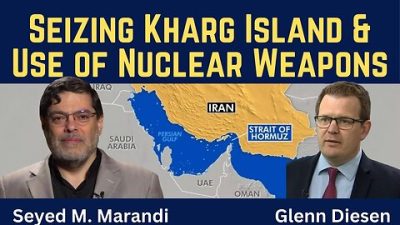
Marandi: Threat of Seizing Kharg Island & the Use of Nuclear Weapons
or go to
Aletho News Archives – Video-Images
Frlom the Archives
Iran War: United States Military Versus Israel Firsters
By James Petras | November 27, 2007
Why must Jewish organizations be and be seen as the loudest drum-beaters of all? Why can we not bring ourselves to say that military intervention is not on the table at all? Why not stash it under the table, out of sight and mount instead a diplomatic assault? – Leonard Fein, Forward
Introduction
As the White House and Congress escalate their economic sanctions and military threats against Iran, top military commanders and Pentagon officials have launched a counter-offensive, opposing a new Middle East War. While some commentators and journalists, like Chris Hedges (Truthdig, November 13, 2007), privy to this high stakes inter-elite conflict, attribute this to a White House cabal led by Vice President Cheney, a more stringent and accurate assessment puts the Zionist Power Configuration (ZPC) in the center of the Iran war debate.
There is a great deal riding in this conflict – the future of the American empire as well as the balance of power in the Middle East. Equally important is the future of the US military and our already heavily constrained democratic freedoms. The outcome of the continuous and deepening confrontation between top US military officials and the Israel Firsters over US foreign policy in the Middle East has raised fundamental questions over self-determination, colonization, civilian primacy and military political intervention, empire or republic. These and related issues are far from being of academic interest only; they concern the future of the United States. … continue
Blog Roll
 Aletho News
- Iran warns it may target US missile launch sites in UAE cities
- American Military Failure in Afghanistan
- Friendly Skies of Georgia: Are Israeli-Linked Drones Launching False Flags from Georgian Territory?
- The Three Big Lies about Mammography Screening
- Ukrainian Embassy in Beirut sheltering top Mossad agent
- Palestinian family displaced after settlers violently attack them in Humsa, Jordan Valley
- The EU never learns – except for the wrong lessons
- Iran attacks on UAE leaves RSF militia high and dry
- Hosting Washington’s war: Bahrain faces the consequences
- The US fell for its own Iran propaganda
- If Americans Knew
- ‘Of Course’: IDF Drops Case Against Soldiers Accused of Raping Palestinian Prisoner
- Don’t Fall for the Regime Change Talk. Israel Is ‘Mowing the Lawn’ in Iran
- Will Israel and the US wreck the Gulf States along with Iran?
- US so far burned through ‘years’ of munitions in Iran war: Report
- How the Israeli Tail Wags the American Dog
- Outdated intel likely led to deadly U.S. strike on Iranian elementary school, sources say
- Pentagon insider says high U.S official Douglas Feith reported to Netanyahu
- In fond memory of Walid Khalidi, the historian of Palestine
- 6 more Americans killed, as Israel ‘mows the lawn’ in Iran – Not a ceasefire Day 154
- Are we on the precipice of World War III?
- No Tricks Zone
- New Studies: UK Sea Levels Were 4 Meters Higher Than Today During The Mid-Holocene
- Destructive Green New Deal: German Energy And Metal Group Warns Of Drastic Crisis
- New Study Documents A 20-Year Pause In Arctic Sea Ice Decline – Driven By Internal Variability
- Wake-up Call: Survey Shows Majority Of Germans Now Favor Postponing Climate Targets!
- Televised! Leading German Political Candidate Tells Schoolchildren CO2 Makes Sun Hotter!
- New Study: A Century Warming Of 1.1°C Is ‘Commonplace’ And ‘Not Unusual’ During This Interglacial
- New Study: ‘Internal Noise’ And Volcanic Forcing Can Trigger 10-15°C Warming Within Decades
- Glaciers Worldwide Are Suddendly Surging, Experts Blame Warming!
- Surprising Discovery: Sahara Is Greening…Billions Of Trees Where Once Thought To Be Barren
- New Research Reaffirms Clouds, Aerosols, And Surface Solar Radiation Are ‘Driving The Climate System’
 Aletho News