Documents Describe US “Transition Plans” for Cuba
Secrecy, politics at heart of Cuba project
Along the Malecon | January 17, 2013
U.S. officials stressed the importance of secrecy during a 2008 meeting with a Maryland contractor that had been chosen to carry out a new democracy project in Cuba, according to a confidential memo (download 8-page document).
The project wasn’t considered classified, however, because the U.S. Agency for International Development wanted to create the illusion of transparency.
Development Alternatives Inc., of Bethesda, Md., won the USAID contract on Aug. 14, 2008, and quickly hired Alan Gross, who was later arrested in Cuba while working on the project.
DAI – not USAID, as some websites have reported – wrote the confidential memo to summarize what was said during a private Aug. 26, 2008, meeting with top USAID officials.
During the meeting, DAI learned that the U.S. government had “five to seven different transition plans” for Cuba. DAI would “not be asked to write a new one.”
Instead, the contractor would carry out a daring plan to set up satellite Internet connections under the nose of Cuban state security agents.
USAID promised to protect the identities of contractors and their associates in and out of Cuba. “The program is not pressing (and will not press) them to disclose networks,” said the memo, which DAI filed in federal court on Jan. 15 as part of its reply to a $60 million lawsuit filed by the Gross family in November 2012 (See Spanish-language translation of this post here, h/t Letras Afiladas).
The memo stressed the unusual nature of the Cuba program:
The project was not classified because USAID wanted to send the message that this is a transparent process. Also, a classified project imposes significant security, documentation burdens and delays on all its stakeholders.
USAID wanted no delays and was eager to move ahead. The memo said:
This Administration expects immediate results from this program, definitely before mid-January.
That deadline likely had something to do with the departure of George W. Bush, a strong supporter of USAID’s programs in Cuba, and the arrival of Barack Obama, who was sworn in on Jan. 20, 2009.
The DAI memo summed up a top USAID official’s view of the political undercurrents:
- This project has received and will continue to warrant intense political scrutiny and pressure for results and fiscal integrity.
- Target populations for grants are those NGO reaching out to pro-democracy and human rights change agents and those Cubans with a different vision for their country.
- USAID is not telling Cubans how or why they need a democratic transition, but rather, the Agency wants to provide the technology and means for communicating the spark which could benefit the population.
- This project will be difficult to implement because an ‘ossified’ Cuban government prevents change, and because most government resources go to its police and control machinery.
- The Cuba program attracts significant attention and scrutiny by US Congress, where some support and others question existing activities.
- There is, of course, skepticism on this project, influential political and civic leaders have the perception that this program is paying too much for work that could be significantly less expensive through other contract or award options.
The challenge, the memo said, would be finding “creativity to implement this project in the face of opposition from the Cuban State…while protecting the security of participants and change agents.”
The project was entitled “Cuba Democracy and Contingency Planning Program,” or CDCPP. The memo gave explicit instructions on how the initiative should be described if any lawmakers should ask about it.
Explanation to the Hill regarding CDCPP: to empower pro-democracy, pro-human rights and those looking for alternative visions for the island. The program seeks to expand the reach of their ideas and activities, to build and fortify networks and their capacity to act, and to increase the flow of communication to and around the island.
That vague description gave no clues to the project’s clandestine nature, but the DAI memo was clear:
CDCPP is not an analytical project; it’s an operational activity. USAID approval is needed for everything. We cannot freelance.
The memo said USAID picked DAI in part because of its international reach.
USAID would like to tap into the global network of contacts that DAI has in terms of democracy promotion…
Planes flying in to Cuba from Europe, Central America and the Caribbean look “less conspicuous.”
Grant limits to non-U.S. NGOs “have no funding ceiling,” the memo added. But:
Cuban security apparatus is very strong so non-US NGOs should be vetted.
The DAI memo spelled out what the contractor should say in response to any inquiries from the public or the media:
Yes, we have been awarded CDCPP and we are working with USAID on discussions, but the project is not fully operational yet. Please refer other questions to (redacted) of USAID.
The memo said USAID stressed:
Nothing anywhere.
DAI said that meant:
We must not post anything on our website or issue a press release on the awarded contract.
DAI wound up picking Gross to handle “new media” – the satellite Internet connections – described as the “most sensitive component in a very sensitive project.”
And during four trips to Cuba, Gross established three Internet connections – one in Havana, two outside the capital.
DAI paid him $258,274. He requested more money to continue the project and was promised $332,334, which would have brought his subcontract total to $590,608, an October 2009 memo shows (download 6-page document).
In late November 2009, Gross returned to Cuba a fifth time. Cuban authorities arrested him on Dec. 3, 2009, and accused him of crimes against the socialist state.
DAI said it paid Gross “the full amount owed under the Subcontract for completed deliverables.”
That evidently means Gross would have been entitled to just $65,132.80. That would bring his total payments to $323,406.80, not the full $590,608 he could have collected if he were not arrested.
Gross called his effort “Para La Isla” – For The Island. According to a proposal (download 13-page document) he wrote after his first four trips to Cuba:
Efforts to date under the Para-La-Isla (PLI) Pilot have been focused on establishing and operationalizing 3 sites on the Island through which target group members now have greater access to information than they had previously.
Activities in support of these efforts included the selection, configuration, logistics and training on the use of specific information and communication technologies (ICTs). Primary objectives of the Pilot dealt with the efficacy of the technologies deployed and the contractor’s demonstration that these technologies work.
In the Sept. 17, 2009, memo, Gross proposed six eight additional trips to Cuba that his company would carry out from Nov. 1, 2009, to Oct. 31, 2010.
The memo stated:
Activities initially developed under this pilot at the first site in the capital city have been replicated and expanded to two other target group member communities in the provinces. These activities can be expanded to other identified target groups.
That likely means that Gross and DAI had envisioned taking the program beyond the Jewish community where Gross installed his first Internet connection.
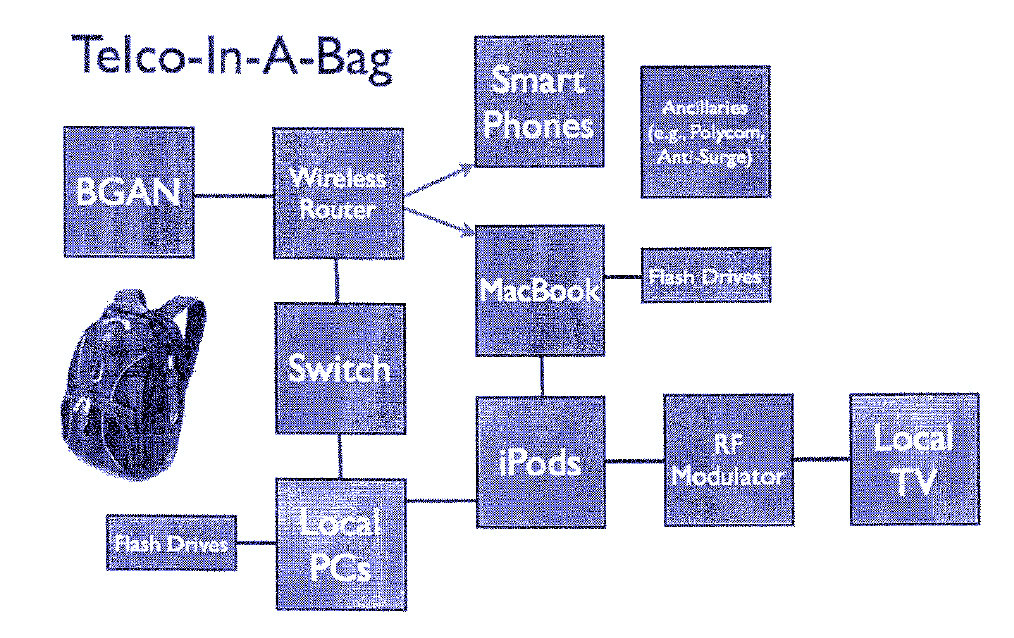
Gross had supplied his Cuban collaborators with Broadband Global Area Network equipment, BGAN for short. The equipment, which fits into a backpack, can be used to establish a broadband Internet connection from anywhere in the world. Users can also make phone calls, send e-mail messages and set up a WiFi network.
During follow-up visits, Gross wanted to learn how Cubans were using the BGAN equipment, increase the number of users at each site and boost security so they wouldn’t be caught.
He considered it “highly probable” that state security agents would detect the satellite connections in the provinces. He wrote:
Radio Frequency activity in the Capitol City is more difficult to monitor than in the provinces because of an already existing level of RF congestion (e.g., from government, commercial sites, embassies, etc.). Therefore, monitoring and detection in the use of ICTs is less likely to occur in the Capitol City. Conversely and because there is little RF congestion in the provinces, monitoring and detection of ICT devices is highly probable.
Even limited use of BGANs and wireless networks will be monitored and detected because Island government technicians routinely “sniff” neighborhoods with their handheld devices in search of ham-radio and satellite dishes. While wireless computer networks (intranet) are not likely to cause any problem if detected, discovery of BGAN usage for Internet access would be catastrophic.
Gross planned to install special SIM cards in the three BGAN systems that would disable their GPS tracking feature and make them more difficult to detect. He wrote:
In order to improve and supplement security tactics and protocols already in place, the contractor will use an alternative SIM card, called “discreet” SIM card, that will increase the level of technical security with each of the 3 BGANs deployed. Discreet SIM cards impede the ability to track or detect specific aspects of non-terrestrial transmitted signals, regarding location and IP identification of transmission. This is accomplished by:
- Masking the IP address of the BGAN, in case some entity is able to “hack” into the transmission at either end, and
- Masking the signal so that its GPS location cannot be pinpointed within 400 km.
During the last three of the six trips that Gross planned, he had hoped to supply “up to an additional three prospective new target group sites” with what he described as “Telco-in-a-Bag.” He wrote:
Beneficiaries will utilize this equipment to support activities that are consistent with CDP program. A standard configuration will include:
- Hardware and software (e.g., computers, modems)
- Content sharing devices (e.g. iPods, flash drives, smartphones)
- Activation and Service (BGAN and mobile)
- Installation
- Training on the use of this equipment will be similar to the first 3 sites (excluding training on Ruckus Wireless equipment)
- Local Technical Support to be provided by local contractor staff for trouble-shooting, technical assistance, maintenance, etc.
- Accessories
- Schematic
Gross said each ‘Telco-In-A-Bag” would include:
- Unlocked SmartPhones
- Sim Card
- 2GB miniSD Expansion Memory Card
- iPod 120 GB
- Composite AV Cable for use with iPod & TV
- RF Modulator for TVs, Coaxial Cable
- BGAN satellite modem (1 T&T, 2 Nera)
- Discreet BGAN Sim card
- Wireless Router
- Switch
- MacBook
- Backpack
- Surge Protector (3-outlet) & Adapters
- Polycom Communicator for Notebook
- WD External Hard Drive, 500 GB
- USB Memory Stick (4 GB Flash Drive)”
The memo said that Gross and DAI would reach “an amicable agreement on how to resolve or settle” any differences if forces beyond their control prevented the project’s completion.
But there was no amicable agreement after Gross was arrested and Gross and his wife, Judy, sued DAI and USAID.
On Jan. 15, DAI asked a federal judge to throw out the lawsuit. Lawyers for DAI wrote (download 57-page document):
The Cuban government, reprehensibly, has sought to manipulate its detention of Mr. Gross to strengthen its hand in dealings with the United States. This has included seeking to exchange Mr. Gross’s release for the U.S. Government’s release of five Cuban spies. As Congresswoman Ileana Ros-Lehtinen observed, “[t]he Cuban dictatorship is clearly using Mr. Gross to strengthen its grip on power and gain leverage with the United States.”
Against this backdrop, Plaintiffs have filed the present tort suit seeking monetary damages from the Defendants. The fundamental premise of the Complaint is that Plaintiffs may bring tort claims against the Defendants based on the tragic harm that has befallen Mr. Gross.
This premise is wrong. Plaintiffs’ allegations are inextricably intertwined with Federal laws and policies that bar Plaintiffs’ claims, and also fail to state a claim on which the Court can grant relief. Plaintiffs’ claims must be dismissed for eight distinct reasons, any one of which would justify dismissal.
The DAI lawyers – Steven J. Weber, Sarah M. Graves and Matthew J. Gaziano – also said that the company did not have duty to protect Gross. They said he was an independent contractor who should have done more to avoid arrest.
They wrote:
…the Subcontract explicitly states “[t]he Subcontractor shall take all reasonable precautions to prevent damage, injury, or loss to all persons performing services hereunder, the Work, all materials and equipment utilized therein, and all other property at the site of the Work and adjacent thereto.” § 7.3. Thus, § 410 is inapplicable on its face, and the general rule restricting liability to independent contractor employees should prevail.
In sum, DAI had no duty to protect Mr. Gross from the type of injury he suffered, and no exception to this rule is applicable given his admitted status as an employee of an independent contractor. Whether his injury was foreseeable is a factual question that does not change this analysis.
The Cuban government – not DAI – are ultimately to blame for any harm done to Gross and his wife, the contractor’s lawyers said.
DAI deeply regrets that Mr. and Mrs. Gross have suffered harm due to the actions of the Cuban government while Mr. Gross was undertaking activities in Cuba to further the U.S.Government’s foreign policy. For the reasons stated above, however, the Complaint against DAI must be dismissed in its entirety and with prejudice.
Related articles
- Alan Gross and his descent into hell
- Cuba responds to unsubstantiated U.S. claims regarding the Alan Gross case
- Cuba and the Jewish Lobby
- Ecuador: Government Announces End of Cooperation with USAID

Venezuela’s Chavez “Entering New Phase” of Recovery
By Ewan Robertson | Venezuelanalysis | January 21, 2012
Mérida – Venezuelan President Hugo Chavez is entering a new phase of his recovery, according to Vice President Nicolas Maduro.
Chavez has been out of the public light since his cancer operation in Cuba in December, his fourth in eighteen months.
Recent health updates from the Venezuelan government have sent positive signals, with the latest official communication describing the Venezuelan president’s recovery as “favourable”.
Yesterday, Vice President Maduro announced that Chavez was “leaving the post-operatory [phase] and is going to enter into a new phase of treatment that is in a process of evaluation”.
He further commented that Chavez “is stabilising in all respects, the functioning of his organs, he is fully conscious, and he has ever more vital strength to enter the next phase, which will be announced by official sources”.
Last Friday, a group of doctors called “Doctors for Life” released a medical report in which they claimed to “refute various versions that have been propagated about Chavez’s clinical state” in national and international media outlets.
The report, which was posted on the webpage of the government’s ministry of communication, claimed that Chavez was entering a “final recovery phase” and that by 5 February he would be ready to leave hospital. It further stated that the “complex abdominal surgery” undergone by Chavez was only performed on patients “without metastasis”.
In further comments about Chavez yesterday, Maduro said that “sooner rather than later we’re going to have the president with us, meanwhile…here (in Venezuela) there is a work team that he has formed and is governing and working with the people”.
Speaking in an interview on the television program “Jose Vicente Today”, the Vice President added that in his conversations with Chavez, “His mood is the same as always… He’ s still got his good humour and permanent smile”.
Opposition cancel march
Meanwhile, the Venezuelan opposition have cancelled their planned march in Caracas this Wednesday.
The march was called to protest a supposed “violation” of the constitution, which the opposition claim occurred when Chavez did not return to Venezuela for his presidential inauguration ceremony on 10 January. The Supreme Court had previously ruled that the delay in Chavez’s swearing-in was legal.
The opposition’s Democratic Unity (MUD) coalition blamed the cancellation on the decision of pro-government parties and movements to also march in the capital on Wednesday, accusing the government of “attacking the freedom that all Venezuelans have to celebrate such an important date for democracy”.
The opposition will still hold a downsized indoor event in Caracas on Wednesday 23 January, a date which marks the fall of the Marcos Jimenez dictatorship in 1958.
Meanwhile, the pro-Chavez movement is planning to hold a huge rally in Caracas to celebrate the day and to support their leader, as well as holding events around the country.
Juan Carlos Dugarte, a leader in the government’s United Socialist Party of Venezuela (PSUV), argued that the opposition’s motives for cancelling their march had more to do with fears of a low turnout.
“They (the opposition) have every right and freedom to demonstrate, no march of theirs is going to be obstructed. The true reason for doing it in a reduced space is that they don’t have the mobilisation capacity, because they’re divided,” he said.
Turkish police arrest anti-Patriot missile protesters
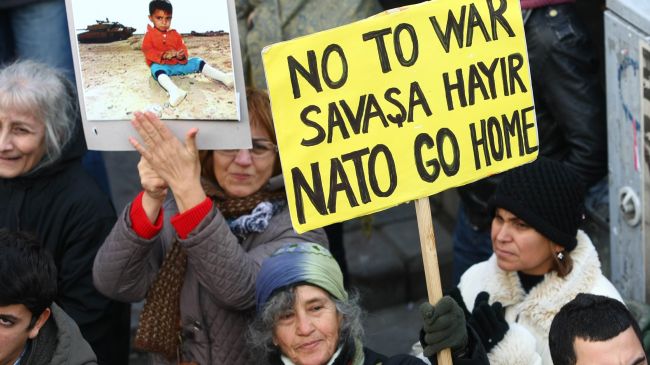
Turkish people protest the arrival of NATO’s Patriot missiles in the country. (File photo)
Press TV – January 21, 2013
Turkish police have arrested dozens of protesters who condemned the arrival of NATO’s Patriot surface-to-air missiles to be deployed near the border with Syria.
Police arrested 25 protesters on Monday after they tried to get through the barricades at Incirlik Air Force Base in the city of Adana, where US troops are assembling two Patriot missile batteries to be later deployed in Gaziantep near Syria’s border.
Protests were also held in Turkey’s capital city of Ankara outside the US embassy, where angry protesters condemned what they called Ankara’s interventionist policies towards Syria.
Earlier, two ships carrying two Patriot batteries each from Germany and the Netherlands anchored at the southwestern port of Iskenderun in Turkey, as part of a NATO-authorized operation to deploy the advanced armament along the border region.
The six batteries of the US-made missiles, effective against aircraft and short-range missiles, will be deployed in the southern city of Adana and the southeastern cities of Kahramanmaras and Gaziantep, along with 350 troops from each contributing country.
In December 2012, NATO approved Turkey’s request for the deployment of the Patriots in its territory. Germany’s Bundestag parliament approved the deployment – limited to one year – on December 14, 2012.
Each Patriot battery has an average of 12 missile launchers. NATO says the missile systems will be operational by early February.
Syria has censured the Turkish plan to deploy the Patriots along its border, calling it another act of provocation by the government of Turkish Prime Minister Recep Tayyip Erdogan.
Iran discovers 14 billion barrels of crude oil reserves
Press TV – January 21, 2013
Iran has discovered 14 billion barrels of crude oil reserves during the first three quarters of the current Persian calendar year (started March 20, 2012), an Iranian deputy oil minister says.
In a Monday interview, Mohsen Khojasteh-Mehr noted that during the previous Iranian year (ended March 19, 2012), the country discovered 20 billion barrels of crude oil.
“A total of 14 billion barrels of crude oil reserves has been also discovered in the first nine months of the current year,” he added.
The official pointed to Iran’s 300-percent progress in discovery of oil and natural gas resources and noted that the oil ministry is currently ahead of its discovery plans.
“Even in the absence of new discoveries, Iran will be capable of producing oil for the next 140 years,” Khojasteh-Mehr pointed out.
Iran holds the world’s third-largest proven oil reserves and the second-largest natural gas reserves.
The country’s total in-place oil reserves have been estimated at more than 560 billion barrels, with about 140 billion barrels of recoverable oil. Moreover, heavy and extra-heavy varieties of crude oil account for roughly 70-100 billion barrels of the total reserves.
Related articles
- Iran discovers new natural gas reserves (en.trend.az)
- Iran begins oil production from a joint field with Iraq (alethonews.wordpress.com)
- Iraq Discovered Another Billion Barrels Of Oil It Had No Idea Existed (businessinsider.com)
- China Imports of Iranian Crude Rebound to Highest in Six Months – Bloomberg (bloomberg.com)
Beyond Vietnam: A Time to Break Silence
By Reverend Martin Luther King | April 4, 1967
Speech delivered by Dr. Martin Luther King, Jr., on April 4, 1967, at a meeting of Clergy and Laity Concerned at Riverside Church in NYC
I come to this magnificent house of worship tonight because my conscience leaves me no other choice. I join with you in this meeting because I am in deepest agreement with the aims and work of the organization which has brought us together: Clergy and Laymen Concerned about Vietnam. The recent statement of your executive committee are the sentiments of my own heart and I found myself in full accord when I read its opening lines: “A time comes when silence is betrayal.” That time has come for us in relation to Vietnam.
The truth of these words is beyond doubt but the mission to which they call us is a most difficult one. Even when pressed by the demands of inner truth, men do not easily assume the task of opposing their government’s policy, especially in time of war. Nor does the human spirit move without great difficulty against all the apathy of conformist thought within one’s own bosom and in the surrounding world. Moreover when the issues at hand seem as perplexed as they often do in the case of this dreadful conflict we are always on the verge of being mesmerized by uncertainty; but we must move on.
Some of us who have already begun to break the silence of the night have found that the calling to speak is often a vocation of agony, but we must speak. We must speak with all the humility that is appropriate to our limited vision, but we must speak. And we must rejoice as well, for surely this is the first time in our nation’s history that a significant number of its religious leaders have chosen to move beyond the prophesying of smooth patriotism to the high grounds of a firm dissent based upon the mandates of conscience and the reading of history. Perhaps a new spirit is rising among us. If it is, let us trace its movement well and pray that our own inner being may be sensitive to its guidance, for we are deeply in need of a new way beyond the darkness that seems so close around us.
Over the past two years, as I have moved to break the betrayal of my own silences and to speak from the burnings of my own heart, as I have called for radical departures from the destruction of Vietnam, many persons have questioned me about the wisdom of my path. At the heart of their concerns this query has often loomed large and loud: Why are you speaking about war, Dr. King? Why are you joining the voices of dissent? Peace and civil rights don’t mix, they say. Aren’t you hurting the cause of your people, they ask? And when I hear them, though I often understand the source of their concern, I am nevertheless greatly saddened, for such questions mean that the inquirers have not really known me, my commitment or my calling. Indeed, their questions suggest that they do not know the world in which they live.
In the light of such tragic misunderstandings, I deem it of signal importance to try to state clearly, and I trust concisely, why I believe that the path from Dexter Avenue Baptist Church — the church in Montgomery, Alabama, where I began my pastorate — leads clearly to this sanctuary tonight.
I come to this platform tonight to make a passionate plea to my beloved nation. This speech is not addressed to Hanoi or to the National Liberation Front. It is not addressed to China or to Russia.
Nor is it an attempt to overlook the ambiguity of the total situation and the need for a collective solution to the tragedy of Vietnam. Neither is it an attempt to make North Vietnam or the National Liberation Front paragons of virtue, nor to overlook the role they can play in a successful resolution of the problem. While they both may have justifiable reason to be suspicious of the good faith of the United States, life and history give eloquent testimony to the fact that conflicts are never resolved without trustful give and take on both sides.
Tonight, however, I wish not to speak with Hanoi and the NLF, but rather to my fellow Americans, who, with me, bear the greatest responsibility in ending a conflict that has exacted a heavy price on both continents.
The Importance of Vietnam
Since I am a preacher by trade, I suppose it is not surprising that I have seven major reasons for bringing Vietnam into the field of my moral vision. There is at the outset a very obvious and almost facile connection between the war in Vietnam and the struggle I, and others, have been waging in America. A few years ago there was a shining moment in that struggle. It seemed as if there was a real promise of hope for the poor — both black and white — through the poverty program. There were experiments, hopes, new beginnings. Then came the buildup in Vietnam and I watched the program broken and eviscerated as if it were some idle political plaything of a society gone mad on war, and I knew that America would never invest the necessary funds or energies in rehabilitation of its poor so long as adventures like Vietnam continued to draw men and skills and money like some demonic destructive suction tube. So I was increasingly compelled to see the war as an enemy of the poor and to attack it as such.
Perhaps the more tragic recognition of reality took place when it became clear to me that the war was doing far more than devastating the hopes of the poor at home. It was sending their sons and their brothers and their husbands to fight and to die in extraordinarily high proportions relative to the rest of the population. We were taking the black young men who had been crippled by our society and sending them eight thousand miles away to guarantee liberties in Southeast Asia which they had not found in southwest Georgia and East Harlem. So we have been repeatedly faced with the cruel irony of watching Negro and white boys on TV screens as they kill and die together for a nation that has been unable to seat them together in the same schools. So we watch them in brutal solidarity burning the huts of a poor village, but we realize that they would never live on the same block in Detroit. I could not be silent in the face of such cruel manipulation of the poor.
My third reason moves to an even deeper level of awareness, for it grows out of my experience in the ghettoes of the North over the last three years — especially the last three summers. As I have walked among the desperate, rejected and angry young men I have told them that Molotov cocktails and rifles would not solve their problems. I have tried to offer them my deepest compassion while maintaining my conviction that social change comes most meaningfully through nonviolent action. But they asked — and rightly so — what about Vietnam? They asked if our own nation wasn’t using massive doses of violence to solve its problems, to bring about the changes it wanted. Their questions hit home, and I knew that I could never again raise my voice against the violence of the oppressed in the ghettos without having first spoken clearly to the greatest purveyor of violence in the world today — my own government. For the sake of those boys, for the sake of this government, for the sake of hundreds of thousands trembling under our violence, I cannot be silent.
For those who ask the question, “Aren’t you a civil rights leader?” and thereby mean to exclude me from the movement for peace, I have this further answer. In 1957 when a group of us formed the Southern Christian Leadership Conference, we chose as our motto: “To save the soul of America.” We were convinced that we could not limit our vision to certain rights for black people, but instead affirmed the conviction that America would never be free or saved from itself unless the descendants of its slaves were loosed completely from the shackles they still wear. In a way we were agreeing with Langston Hughes, that black bard of Harlem, who had written earlier:
O, yes,
I say it plain,
America never was America to me,
And yet I swear this oath–
America will be!
Now, it should be incandescently clear that no one who has any concern for the integrity and life of America today can ignore the present war. If America’s soul becomes totally poisoned, part of the autopsy must read Vietnam. It can never be saved so long as it destroys the deepest hopes of men the world over. So it is that those of us who are yet determined that America will be are led down the path of protest and dissent, working for the health of our land.
As if the weight of such a commitment to the life and health of America were not enough, another burden of responsibility was placed upon me in 1964; and I cannot forget that the Nobel Prize for Peace was also a commission — a commission to work harder than I had ever worked before for “the brotherhood of man.” This is a calling that takes me beyond national allegiances, but even if it were not present I would yet have to live with the meaning of my commitment to the ministry of Jesus Christ. To me the relationship of this ministry to the making of peace is so obvious that I sometimes marvel at those who ask me why I am speaking against the war. Could it be that they do not know that the good news was meant for all men — for Communist and capitalist, for their children and ours, for black and for white, for revolutionary and conservative? Have they forgotten that my ministry is in obedience to the one who loved his enemies so fully that he died for them? What then can I say to the “Vietcong” or to Castro or to Mao as a faithful minister of this one? Can I threaten them with death or must I not share with them my life?
Finally, as I try to delineate for you and for myself the road that leads from Montgomery to this place I would have offered all that was most valid if I simply said that I must be true to my conviction that I share with all men the calling to be a son of the living God. Beyond the calling of race or nation or creed is this vocation of sonship and brotherhood, and because I believe that the Father is deeply concerned especially for his suffering and helpless and outcast children, I come tonight to speak for them.
This I believe to be the privilege and the burden of all of us who deem ourselves bound by allegiances and loyalties which are broader and deeper than nationalism and which go beyond our nation’s self-defined goals and positions. We are called to speak for the weak, for the voiceless, for victims of our nation and for those it calls enemy, for no document from human hands can make these humans any less our brothers.
Strange Liberators
And as I ponder the madness of Vietnam and search within myself for ways to understand and respond to compassion my mind goes constantly to the people of that peninsula. I speak now not of the soldiers of each side, not of the junta in Saigon, but simply of the people who have been living under the curse of war for almost three continuous decades now. I think of them too because it is clear to me that there will be no meaningful solution there until some attempt is made to know them and hear their broken cries.
They must see Americans as strange liberators. The Vietnamese people proclaimed their own independence in 1945 after a combined French and Japanese occupation, and before the Communist revolution in China. They were led by Ho Chi Minh. Even though they quoted the American Declaration of Independence in their own document of freedom, we refused to recognize them. Instead, we decided to support France in its reconquest of her former colony.
Our government felt then that the Vietnamese people were not “ready” for independence, and we again fell victim to the deadly Western arrogance that has poisoned the international atmosphere for so long. With that tragic decision we rejected a revolutionary government seeking self-determination, and a government that had been established not by China (for whom the Vietnamese have no great love) but by clearly indigenous forces that included some Communists. For the peasants this new government meant real land reform, one of the most important needs in their lives.
For nine years following 1945 we denied the people of Vietnam the right of independence. For nine years we vigorously supported the French in their abortive effort to recolonize Vietnam.
Before the end of the war we were meeting eighty percent of the French war costs. Even before the French were defeated at Dien Bien Phu, they began to despair of the reckless action, but we did not. We encouraged them with our huge financial and military supplies to continue the war even after they had lost the will. Soon we would be paying almost the full costs of this tragic attempt at recolonization.
After the French were defeated it looked as if independence and land reform would come again through the Geneva agreements. But instead there came the United States, determined that Ho should not unify the temporarily divided nation, and the peasants watched again as we supported one of the most vicious modern dictators — our chosen man, Premier Diem. The peasants watched and cringed as Diem ruthlessly routed out all opposition, supported their extortionist landlords and refused even to discuss reunification with the north. The peasants watched as all this was presided over by U.S. influence and then by increasing numbers of U.S. troops who came to help quell the insurgency that Diem’s methods had aroused. When Diem was overthrown they may have been happy, but the long line of military dictatorships seemed to offer no real change — especially in terms of their need for land and peace.
The only change came from America as we increased our troop commitments in support of governments which were singularly corrupt, inept and without popular support. All the while the people read our leaflets and received regular promises of peace and democracy — and land reform. Now they languish under our bombs and consider us — not their fellow Vietnamese –the real enemy. They move sadly and apathetically as we herd them off the land of their fathers into concentration camps where minimal social needs are rarely met. They know they must move or be destroyed by our bombs. So they go — primarily women and children and the aged.
They watch as we poison their water, as we kill a million acres of their crops. They must weep as the bulldozers roar through their areas preparing to destroy the precious trees. They wander into the hospitals, with at least twenty casualties from American firepower for one “Vietcong”-inflicted injury. So far we may have killed a million of them — mostly children. They wander into the towns and see thousands of the children, homeless, without clothes, running in packs on the streets like animals. They see the children, degraded by our soldiers as they beg for food. They see the children selling their sisters to our soldiers, soliciting for their mothers.
What do the peasants think as we ally ourselves with the landlords and as we refuse to put any action into our many words concerning land reform? What do they think as we test our latest weapons on them, just as the Germans tested out new medicine and new tortures in the concentration camps of Europe? Where are the roots of the independent Vietnam we claim to be building? Is it among these voiceless ones?
We have destroyed their two most cherished institutions: the family and the village. We have destroyed their land and their crops. We have cooperated in the crushing of the nation’s only non-Communist revolutionary political force — the unified Buddhist church. We have supported the enemies of the peasants of Saigon. We have corrupted their women and children and killed their men. What liberators?
Now there is little left to build on — save bitterness. Soon the only solid physical foundations remaining will be found at our military bases and in the concrete of the concentration camps we call fortified hamlets. The peasants may well wonder if we plan to build our new Vietnam on such grounds as these? Could we blame them for such thoughts? We must speak for them and raise the questions they cannot raise. These too are our brothers.
Perhaps the more difficult but no less necessary task is to speak for those who have been designated as our enemies. What of the National Liberation Front — that strangely anonymous group we call VC or Communists? What must they think of us in America when they realize that we permitted the repression and cruelty of Diem which helped to bring them into being as a resistance group in the south? What do they think of our condoning the violence which led to their own taking up of arms? How can they believe in our integrity when now we speak of “aggression from the north” as if there were nothing more essential to the war? How can they trust us when now we charge them with violence after the murderous reign of Diem and charge them with violence while we pour every new weapon of death into their land? Surely we must understand their feelings even if we do not condone their actions. Surely we must see that the men we supported pressed them to their violence. Surely we must see that our own computerized plans of destruction simply dwarf their greatest acts.
How do they judge us when our officials know that their membership is less than twenty-five percent Communist and yet insist on giving them the blanket name? What must they be thinking when they know that we are aware of their control of major sections of Vietnam and yet we appear ready to allow national elections in which this highly organized political parallel government will have no part? They ask how we can speak of free elections when the Saigon press is censored and controlled by the military junta. And they are surely right to wonder what kind of new government we plan to help form without them — the only party in real touch with the peasants. They question our political goals and they deny the reality of a peace settlement from which they will be excluded. Their questions are frighteningly relevant. Is our nation planning to build on political myth again and then shore it up with the power of new violence?
Here is the true meaning and value of compassion and nonviolence when it helps us to see the enemy’s point of view, to hear his questions, to know his assessment of ourselves. For from his view we may indeed see the basic weaknesses of our own condition, and if we are mature, we may learn and grow and profit from the wisdom of the brothers who are called the opposition.
So, too, with Hanoi. In the north, where our bombs now pummel the land, and our mines endanger the waterways, we are met by a deep but understandable mistrust. To speak for them is to explain this lack of confidence in Western words, and especially their distrust of American intentions now. In Hanoi are the men who led the nation to independence against the Japanese and the French, the men who sought membership in the French commonwealth and were betrayed by the weakness of Paris and the willfulness of the colonial armies. It was they who led a second struggle against French domination at tremendous costs, and then were persuaded to give up the land they controlled between the thirteenth and seventeenth parallel as a temporary measure at Geneva. After 1954 they watched us conspire with Diem to prevent elections which would have surely brought Ho Chi Minh to power over a united Vietnam, and they realized they had been betrayed again.
When we ask why they do not leap to negotiate, these things must be remembered. Also it must be clear that the leaders of Hanoi considered the presence of American troops in support of the Diem regime to have been the initial military breach of the Geneva agreements concerning foreign troops, and they remind us that they did not begin to send in any large number of supplies or men until American forces had moved into the tens of thousands.
Hanoi remembers how our leaders refused to tell us the truth about the earlier North Vietnamese overtures for peace, how the president claimed that none existed when they had clearly been made. Ho Chi Minh has watched as America has spoken of peace and built up its forces, and now he has surely heard of the increasing international rumors of American plans for an invasion of the north. He knows the bombing and shelling and mining we are doing are part of traditional pre-invasion strategy. Perhaps only his sense of humor and of irony can save him when he hears the most powerful nation of the world speaking of aggression as it drops thousands of bombs on a poor weak nation more than eight thousand miles away from its shores.
At this point I should make it clear that while I have tried in these last few minutes to give a voice to the voiceless on Vietnam and to understand the arguments of those who are called enemy, I am as deeply concerned about our troops there as anything else. For it occurs to me that what we are submitting them to in Vietnam is not simply the brutalizing process that goes on in any war where armies face each other and seek to destroy. We are adding cynicism to the process of death, for they must know after a short period there that none of the things we claim to be fighting for are really involved. Before long they must know that their government has sent them into a struggle among Vietnamese, and the more sophisticated surely realize that we are on the side of the wealthy and the secure while we create hell for the poor.
This Madness Must Cease
Somehow this madness must cease. We must stop now. I speak as a child of God and brother to the suffering poor of Vietnam. I speak for those whose land is being laid waste, whose homes are being destroyed, whose culture is being subverted. I speak for the poor of America who are paying the double price of smashed hopes at home and death and corruption in Vietnam. I speak as a citizen of the world, for the world as it stands aghast at the path we have taken. I speak as an American to the leaders of my own nation. The great initiative in this war is ours. The initiative to stop it must be ours.
This is the message of the great Buddhist leaders of Vietnam. Recently one of them wrote these words:
“Each day the war goes on the hatred increases in the heart of the Vietnamese and in the hearts of those of humanitarian instinct. The Americans are forcing even their friends into becoming their enemies. It is curious that the Americans, who calculate so carefully on the possibilities of military victory, do not realize that in the process they are incurring deep psychological and political defeat. The image of America will never again be the image of revolution, freedom and democracy, but the image of violence and militarism.”
If we continue, there will be no doubt in my mind and in the mind of the world that we have no honorable intentions in Vietnam. It will become clear that our minimal expectation is to occupy it as an American colony and men will not refrain from thinking that our maximum hope is to goad China into a war so that we may bomb her nuclear installations. If we do not stop our war against the people of Vietnam immediately the world will be left with no other alternative than to see this as some horribly clumsy and deadly game we have decided to play.
The world now demands a maturity of America that we may not be able to achieve. It demands that we admit that we have been wrong from the beginning of our adventure in Vietnam, that we have been detrimental to the life of the Vietnamese people. The situation is one in which we must be ready to turn sharply from our present ways.
In order to atone for our sins and errors in Vietnam, we should take the initiative in bringing a halt to this tragic war. I would like to suggest five concrete things that our government should do immediately to begin the long and difficult process of extricating ourselves from this nightmarish conflict:
End all bombing in North and South Vietnam.
Declare a unilateral cease-fire in the hope that such action will create the atmosphere for negotiation.
Take immediate steps to prevent other battlegrounds in Southeast Asia by curtailing our military buildup in Thailand and our interference in Laos.
Realistically accept the fact that the National Liberation Front has substantial support in South Vietnam and must thereby play a role in any meaningful negotiations and in any future Vietnam government.
Set a date that we will remove all foreign troops from Vietnam in accordance with the 1954 Geneva agreement.
Part of our ongoing commitment might well express itself in an offer to grant asylum to any Vietnamese who fears for his life under a new regime which included the Liberation Front. Then we must make what reparations we can for the damage we have done. We most provide the medical aid that is badly needed, making it available in this country if necessary.
Protesting The War
Meanwhile we in the churches and synagogues have a continuing task while we urge our government to disengage itself from a disgraceful commitment. We must continue to raise our voices if our nation persists in its perverse ways in Vietnam. We must be prepared to match actions with words by seeking out every creative means of protest possible.
As we counsel young men concerning military service we must clarify for them our nation’s role in Vietnam and challenge them with the alternative of conscientious objection. I am pleased to say that this is the path now being chosen by more than seventy students at my own alma mater, Morehouse College, and I recommend it to all who find the American course in Vietnam a dishonorable and unjust one. Moreover I would encourage all ministers of draft age to give up their ministerial exemptions and seek status as conscientious objectors. These are the times for real choices and not false ones. We are at the moment when our lives must be placed on the line if our nation is to survive its own folly. Every man of humane convictions must decide on the protest that best suits his convictions, but we must all protest.
There is something seductively tempting about stopping there and sending us all off on what in some circles has become a popular crusade against the war in Vietnam. I say we must enter the struggle, but I wish to go on now to say something even more disturbing. The war in Vietnam is but a symptom of a far deeper malady within the American spirit, and if we ignore this sobering reality we will find ourselves organizing clergy- and laymen-concerned committees for the next generation. They will be concerned about Guatemala and Peru. They will be concerned about Thailand and Cambodia. They will be concerned about Mozambique and South Africa. We will be marching for these and a dozen other names and attending rallies without end unless there is a significant and profound change in American life and policy. Such thoughts take us beyond Vietnam, but not beyond our calling as sons of the living God.
In 1957 a sensitive American official overseas said that it seemed to him that our nation was on the wrong side of a world revolution. During the past ten years we have seen emerge a pattern of suppression which now has justified the presence of U.S. military “advisors” in Venezuela. This need to maintain social stability for our investments accounts for the counter-revolutionary action of American forces in Guatemala. It tells why American helicopters are being used against guerrillas in Colombia and why American napalm and green beret forces have already been active against rebels in Peru. It is with such activity in mind that the words of the late John F. Kennedy come back to haunt us. Five years ago he said, “Those who make peaceful revolution impossible will make violent revolution inevitable.”
Increasingly, by choice or by accident, this is the role our nation has taken — the role of those who make peaceful revolution impossible by refusing to give up the privileges and the pleasures that come from the immense profits of overseas investment.
I am convinced that if we are to get on the right side of the world revolution, we as a nation must undergo a radical revolution of values. We must rapidly begin the shift from a “thing-oriented” society to a “person-oriented” society. When machines and computers, profit motives and property rights are considered more important than people, the giant triplets of racism, materialism, and militarism are incapable of being conquered.
A true revolution of values will soon cause us to question the fairness and justice of many of our past and present policies. n the one hand we are called to play the good Samaritan on life’s roadside; but that will be only an initial act. One day we must come to see that the whole Jericho road must be transformed so that men and women will not be constantly beaten and robbed as they make their journey on life’s highway. True compassion is more than flinging a coin to a beggar; it is not haphazard and superficial. It comes to see that an edifice which produces beggars needs restructuring. A true revolution of values will soon look uneasily on the glaring contrast of poverty and wealth. With righteous indignation, it will look across the seas and see individual capitalists of the West investing huge sums of money in Asia, Africa and South America, only to take the profits out with no concern for the social betterment of the countries, and say: “This is not just.” It will look at our alliance with the landed gentry of Latin America and say: “This is not just.” The Western arrogance of feeling that it has everything to teach others and nothing to learn from them is not just. A true revolution of values will lay hands on the world order and say of war: “This way of settling differences is not just.” This business of burning human beings with napalm, of filling our nation’s homes with orphans and widows, of injecting poisonous drugs of hate into veins of people normally humane, of sending men home from dark and bloody battlefields physically handicapped and psychologically deranged, cannot be reconciled with wisdom, justice and love. A nation that continues year after year to spend more money on military defense than on programs of social uplift is approaching spiritual death.
America, the richest and most powerful nation in the world, can well lead the way in this revolution of values. There is nothing, except a tragic death wish, to prevent us from reordering our priorities, so that the pursuit of peace will take precedence over the pursuit of war. There is nothing to keep us from molding a recalcitrant status quo with bruised hands until we have fashioned it into a brotherhood.
This kind of positive revolution of values is our best defense against communism. War is not the answer. Communism will never be defeated by the use of atomic bombs or nuclear weapons. Let us not join those who shout war and through their misguided passions urge the United States to relinquish its participation in the United Nations. These are days which demand wise restraint and calm reasonableness. We must not call everyone a Communist or an appeaser who advocates the seating of Red China in the United Nations and who recognizes that hate and hysteria are not the final answers to the problem of these turbulent days. We must not engage in a negative anti-communism, but rather in a positive thrust for democracy, realizing that our greatest defense against communism is to take offensive action in behalf of justice. We must with positive action seek to remove thosse conditions of poverty, insecurity and injustice which are the fertile soil in which the seed of communism grows and develops.
The People Are Important
These are revolutionary times. All over the globe men are revolting against old systems of exploitation and oppression and out of the wombs of a frail world new systems of justice and equality are being born. The shirtless and barefoot people of the land are rising up as never before. “The people who sat in darkness have seen a great light.” We in the West must support these revolutions. It is a sad fact that, because of comfort, complacency, a morbid fear of communism, and our proneness to adjust to injustice, the Western nations that initiated so much of the revolutionary spirit of the modern world have now become the arch anti-revolutionaries. This has driven many to feel that only Marxism has the revolutionary spirit. Therefore, communism is a judgement against our failure to make democracy real and follow through on the revolutions we initiated. Our only hope today lies in our ability to recapture the revolutionary spirit and go out into a sometimes hostile world declaring eternal hostility to poverty, racism, and militarism. With this powerful commitment we shall boldly challenge the status quo and unjust mores and thereby speed the day when “every valley shall be exalted, and every moutain and hill shall be made low, and the crooked shall be made straight and the rough places plain.”
A genuine revolution of values means in the final analysis that our loyalties must become ecumenical rather than sectional. Every nation must now develop an overriding loyalty to mankind as a whole in order to preserve the best in their individual societies.
This call for a world-wide fellowship that lifts neighborly concern beyond one’s tribe, race, class and nation is in reality a call for an all-embracing and unconditional love for all men. This oft misunderstood and misinterpreted concept — so readily dismissed by the Nietzsches of the world as a weak and cowardly force — has now become an absolute necessity for the survival of man. When I speak of love I am not speaking of some sentimental and weak response. I am speaking of that force which all of the great religions have seen as the supreme unifying principle of life. Love is somehow the key that unlocks the door which leads to ultimate reality. This Hindu-Moslem-Christian-Jewish-Buddhist belief about ultimate reality is beautifully summed up in the first epistle of Saint John:
Let us love one another; for love is God and everyone that loveth is born of God and knoweth God. He that loveth not knoweth not God; for God is love. If we love one another God dwelleth in us, and his love is perfected in us.
Let us hope that this spirit will become the order of the day. We can no longer afford to worship the god of hate or bow before the altar of retaliation. The oceans of history are made turbulent by the ever-rising tides of hate. History is cluttered with the wreckage of nations and individuals that pursued this self-defeating path of hate. As Arnold Toynbee says : “Love is the ultimate force that makes for the saving choice of life and good against the damning choice of death and evil. Therefore the first hope in our inventory must be the hope that love is going to have the last word.”
We are now faced with the fact that tomorrow is today. We are confronted with the fierce urgency of now. In this unfolding conundrum of life and history there is such a thing as being too late. Procrastination is still the thief of time. Life often leaves us standing bare, naked and dejected with a lost opportunity. The “tide in the affairs of men” does not remain at the flood; it ebbs. We may cry out deperately for time to pause in her passage, but time is deaf to every plea and rushes on. Over the bleached bones and jumbled residue of numerous civilizations are written the pathetic words: “Too late.” There is an invisible book of life that faithfully records our vigilance or our neglect. “The moving finger writes, and having writ moves on…” We still have a choice today; nonviolent coexistence or violent co-annihilation.
We must move past indecision to action. We must find new ways to speak for peace in Vietnam and justice throughout the developing world — a world that borders on our doors. If we do not act we shall surely be dragged down the long dark and shameful corridors of time reserved for those who possess power without compassion, might without morality, and strength without sight.
Now let us begin. Now let us rededicate ourselves to the long and bitter — but beautiful — struggle for a new world. This is the calling of the sons of God, and our brothers wait eagerly for our response. Shall we say the odds are too great? Shall we tell them the struggle is too hard? Will our message be that the forces of American life militate against their arrival as full men, and we send our deepest regrets? Or will there be another message, of longing, of hope, of solidarity with their yearnings, of commitment to their cause, whatever the cost? The choice is ours, and though we might prefer it otherwise we must choose in this crucial moment of human history.
As that noble bard of yesterday, James Russell Lowell, eloquently stated:
Once to every man and nation
Comes the moment to decide,
In the strife of truth and falsehood,
For the good or evil side;
Some great cause, God’s new Messiah,
Off’ring each the bloom or blight,
And the choice goes by forever
Twixt that darkness and that light.Though the cause of evil prosper,
Yet ’tis truth alone is strong;
Though her portion be the scaffold,
And upon the throne be wrong:
Yet that scaffold sways the future,
And behind the dim unknown,
Standeth God within the shadow
Keeping watch above his own.
~
Source – BRC NEWS
Profiting off hunger: Wall Street makes big gains over food price spikes
RT | January 21, 2013
Powerful firms like Goldman Sachs have made hundreds of millions of dollars in food future trades. Critics accuse them of profiting off starvation and market manipulation, while traders claim their profits are due to increasing consumption in China.
World food prices tracked by the UN Food and Agriculture Organization (FAO) have more than doubled in the past 10 years. The FAO’s Food Price Index, which baskets prices for five prime food commodities, peaked in 2008 and 2011, each time rising more than 50 percent from the previous year. The latest price spike was one of the key factors that triggered the series of uprisings in the Arab world resulting in the fall of several governments.
The year 2013 may see another price hike, following the worst draught in the US in 50 years and poor harvests in Russia and Ukraine. The UN has warned that the world may be approaching a major hunger crisis.
At the same time, the industry is bringing millions in profits to those who rushed to invest in food. Goldman Sachs made an estimated $400 million in 2012 from investing its clients’ money in a range of “soft commodities,” from wheat and maize to coffee and sugar, according to an analysis by the World Development Movement (WDM).
“While nearly a billion people go hungry, Goldman Sachs bankers are feeding their own bonuses by betting on the price of food. Financial speculation is fueling food price spikes and Goldman Sachs is the No, 1 culprit,” Christine Haigh of the WDM told the British newspaper The Independent.
The London-based organization – along with similar NGOs like Foodwatch, Oxfam, or Weed (World Economy, Ecology and Development) – have for years blamed financiers for inflating food prices, or for at least making the market dangerously volatile.
They argue that the amount of speculative money is too big in proportion to the physical inventories of the commodities. Deregulation in the late 1990s allowed financial institutions to bet on food prices, resulting in some $200 billion being poured into the market.
For example, hedge fund Armajaro virtually single-handedly sent the global price of cocoa to a 33-year high in July 2010 by buying around 15 percent of global cocoa stocks.
The overall effect of speculation on food prices is an issue of dispute. Influential analysts, such as US economist Paul Krugman, have argued that speculation is a marginal factor compared to rising demand from developing countries, as well as the expanding production of corn and maize for biofuels at the expense of foodstuffs.
Diagram from “The Food Crisis: Predictive validation of a quantitative model of food prics including speculators and ethanol conversion” By Marco Lagi,
A study by the New England Complex Systems Institute last year showed that the Food Price Index should only change if ethanol production had an impact. The study estimated that a 2008 ethanol price hike was largely due to speculation, while a 2011 spike was significantly fueled by investors.
Many financiers dismiss the accusations, and say they will continue bidding against food prices. On Saturday, Deutsche Bank Co-Chief Executive Juergen Fitsche told the Global Forum for Food and Agriculture that Germany’s biggest lender “will continue to offer financial instruments linked to agricultural products.”
“Agricultural futures markets bring numerous advantages to farmers and the food industry,” he said.
Others seem to be yielding to pressure. Last year, several German banks, including the second-largest Commerzbank, ceased to speculate on basic food prices for moral reasons.
Related articles
- How The Fed’s Quantitative Easing Increases World Hunger (triplepundit.com)
- Goldman bankers get rich betting on food prices as millions starve (independent.co.uk)
- UN blames food price rises on trading in agricultural commodities (guardian.co.uk)
Israeli Authorities Change Route Of Wall To Fully Annex Jerusalem For Israel
By Saed Bannoura | IMEMC & Agencies | January 21, 2013
The Israeli Defense Ministry announced on Sunday that they will re-route a section of the Wall east of Jerusalem in order to close off an existing gap and fully annex the city of Jerusalem into Israel. The new route means the complete encirclement of the Palestinian village of Al-Zaim, with the Wall to the West and a security fence to the east.
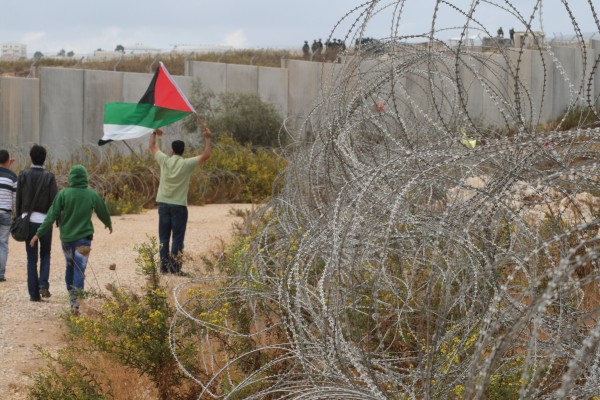 Other Palestinian towns are also completely isolated and encircled into ghettoes, including the town of Sheikh Sa’ed and the city of Qalqilya. Israeli authorities isolated these towns in order to create Palestinian-free zones and routes throughout the West Bank to allow Israeli settlers to travel unencumbered without either having to stop at checkpoints or to drive on the same roads as Palestinians. But in order to do that, Israeli forces have had to maintain over 600 checkpoints throughout the West Bank, and to force Palestinians off their own roads and onto dirt roads or trails.
The new route of the Wall will put the settlement of Ma’ale Adumim on the Palestinian side of the Wall, along with dozens of other Israeli settlements constructed in violation of international law all over the West Bank. But Israeli officials have assured the residents of these settlements that they will construct other Walls and fences to allow them to access Jerusalem without having to go through Palestinian areas.
These additional fences and barriers will, like the Annexation Wall itself, be constructed on land seized from Palestinian owners by Israeli authorities who claim that they have the right to take the land ‘for security reasons’. All Israeli settlements on Palestinian land are considered illegal under international law and the Fourth Geneva Convention, which forbids an occupying military power from settling its civilian population on land occupied by military force.
The announcement is seen as a response to the Palestinian encampment Bab Al Shams, which was established on the land in question, known to Israeli officials as ‘E1’, last weekend, then demolished by Israeli forces. The Palestinian non-violent activists who established the encampment entered the area through the village of Al-Zaim.
Israeli Prime Minister Binyamin Netanyahu has openly declared his intention to build a settlement on the ‘E1’ land, and completely enclose the eastern edge of Jerusalem, thus effectively annexing the city of Jerusalem to the state of Israel. This renders any peace agreement with the Palestinian Authority impossible, since one of the Palestinian Authority’s base demands is sharing the city of Jerusalem. The base demands, which Palestinians have asked Israel to recognize time and again to no avail, are: the recognition of a Palestinian state with east Jerusalem as its capital, the right of return of Palestinian refugees and the release of the thousands of Palestinian political prisoners being held in Israeli prison camps.
Related articles
- The long road to Bab al-Karama (alethonews.wordpress.com)
- Israeli politician: Palestinian ghettos were always the plan (sott.net)
Israeli teachers paid for military recruitment
RT | January 21, 2013
Israel is encouraging and financing a new form of patriotism by offering bonuses to high school teachers who succeed in motivating students to do their army service. The move has sparked a wave of criticism of the Ministry of Education.
The initiative by the Ministry of Education that circulated in schools last year outlined the new policy of granting end of year bonuses to full-time teachers in Israel’s schools based on “achievements in learning”, ”social achievements”, and “achievements in values”.
The top 40 per cent of schools with a “high rate of enlistment for military, national or civil service” will receive funds to award their teachers with bonuses, according to the circular obtained by the Christian Science Monitor.
Those ranked among top ten percent will receive funds to grant bonuses in the amount of $2,160, while an equivalent of $1,620 will be paid for the next 10 per cent.
Critics of the move by the ministry say the militarization of the education system infringes on the future generation’s ability to participate in Middle East peace-making. Supporters say recuitment must remain high to ensure the security of the nation, citing army complaints that the percentage of young people taking up military service has dropped in recent years.
Those who oppose the pay scheme say that military propaganda comes at the cost of student education.
“Educating to prepare for the army and to encourage enlistment comes at the expense of regular education, which is meant to educate for democracy and citizenship,” Sharaf Hassan, educational director for the Association for Civil Rights in Israel told the Monitor.
Such an approach can also result in xenophobia, argues the former education minister Yossi Sarid.
“The ministry of education is taking Israel in a more militaristic, more nationalistic, more xenophobic, and more chauvinistic direction. It’s not education, it’s a sort of indoctrination,” Sarid said.
The education ministry claims that the bonus program is “designed to develop excellence among teachers and pupils.”
To survive, surrounded by enemies and threats, says a spokesman for former Prime Minister Ariel Sharon, Raanan Gissin, “everyone has to take part in defense and that means three years of military service.”
Related article
- Israel offering bonuses to teachers who boost student enlistment (csmonitor.com)
The long road to Bab al-Karama
International Solidarity Movement | January 20, 2013
Bab al-Karama, Occupied Palestine – The road to Bab al-Karama, the new tent neighborhood created by Palestinians on land that will be separated from the village of Beit Iksa by the Apartheid wall, exposes a landscape of Apartheid.
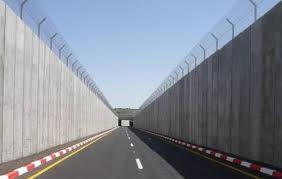 To reach Bab al-Karama from Occupied Ramallah one needs to take the “Palestinian only” road that runs under the “Israeli only” 443 Highway between Ramallah and Beir Naballah.
Beir Naballah used to be a suburb of Jerusalem. Affluent Jerusalemites built their homes in Beir Naballah to escape from the housing crisis imposed on Palestinians by Jerusalem’s municipality housing polices. It sits on a road that connected the villages in the area with Jerusalem and continued on to Latrun. Now Beir Naballah is completely surrounded by an Israeli wall. The old road was widened and transformed into an Israeli highway called 443. The highway now connects Jerusalem to Tel Aviv and the Palestinian residents of the area are barred form using it. The Jerusalemite residents were forced to abandon their homes and many businesses dependent on clientele from Jerusalem have closed.
We exit Beir Naballah through a second tunnel that connects the Beir Naballah enclave to another enclave where 8 Palestinian villages are also isolated by Israeli walls. This tunnel is even more surreal than the first. Not only does it run under two Israeli only roads but as well as under the Apartheid wall and through the Givaat Zeev settlement bloc. High cement walls with razor wire on top of them hug the sides of the road.
We drive in Biddu and drive through the villages that had been since their creation connected to Al Quds but are now cut off from it and artificially connected to Ramallah. True to the Orwellian tradition of Israel’s military language they call the Palestinian network of roads they have built under their highways “fabric of life roads”. The landscape is beautiful and almost idyllic. Goats grazing on green hills, old stone houses…, but this ideal setting is surrounded by walls, gates and settlements.
The last village we reach, the one closest to Jerusalem is Beit Iksa. But to enter it we need to pass a military checkpoint. At the edge of the village we finally reach Bab al-Karama overlooking a network of Israeli highways and the city of Jerusalem. In the valley right below Bab al-Karama one can see two tunnels that will be connected by a bridge on which a fast track train connecting Jerusalem to Tel Aviv will run. The train will run on the village’s land but not only will the villagers be barred from accessing it, Israel’s Apartheid wall will be built between the village and the train separating the villagers from over 4500 dunams (60%) of their agricultural land. More than 1300 dunams had already been taken in the 70s for the construction of Ramot Allon settlement.
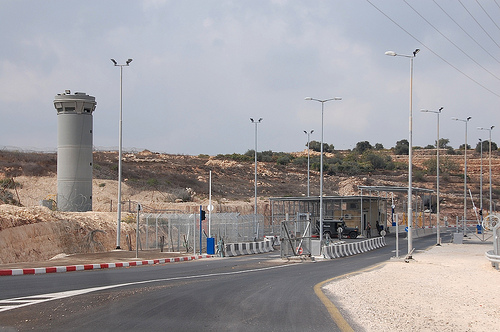
Checkpoint at the entrance of Beit Iksa
Related articles
- ‘Gate of Dignity’ built on lands of Beit Iksa north of Jerusalem (alethonews.wordpress.com)
- Army Invades Bab Al-Karama (imemc.org)
- Palestinians Establish a new Village, Bab Alshams, in Area E1 (alethonews.wordpress.com)
Morris Sadek: Useful Idiot or Tool of Zionism?
By Johnny Spooner | September 17, 2012
“Every kind of inter-Arab confrontation will assist us”
Oded Yinon, World Zionist Council, 1982.

On the third of September one of the central figures behind “Innocence of Muslims” also released a statement on the National American Coptic Assembly website calling for the balkanisation of Egypt into five states one of these being a Coptic state with Alexandria as it’s capital.
It was released by Morris Sadek, who incidentally would become the new state’s Vice President. Sadek is an extremist, Coptic-Zionist who is denounced by mainstream Copts in Egypt as an anti-Islam fanatic who dishonestly pushes his extremist agenda. However, in the US Sadek, has forged alliances in his anti-Islamic crusade with the lunatic fringes of the Christian-right and the Zionist-funded anti-Islam propagandists such as Brigitte Gabriel of ACT! For America and Robert Spencer of Jihadwatch.
A September 1st Arabic News article suggested that there are moves afoot in Egypt to charge Sadek and his Coptic co-conspirators for treason.
So it may come as no suprise that Sadek’s vision for the Middle-East neatly parallels “The Zionist Plan For The Middle-East” The following is a section from a report written in 1982 by Oded Yinon who worked The Foriegn Ministry of Israel and was published by The World Zionist Organisation:
17
In the course of the Nineteen Eighties, the State of Israel will have to go through far-reaching changes in its political and economic regime domestically, along with radical changes in its foreign policy, in order to stand up to the global and regional challenges of this new epoch. The loss of the Suez Canal oil fields, of the immense potential of the oil, gas and other natural resources in the Sinai peninsula which is geomorphologically identical to the rich oil-producing countries in the region, will result in an energy drain in the near future and will destroy our domestic economy: one quarter of our present GNP as well as one third of the budget is used for the purchase of oil.9 The search for raw materials in the Negev and on the coast will not, in the near future, serve to alter that state of affairs.18
(Regaining) the Sinai peninsula with its present and potential resources is therefore a political priority which is obstructed by the Camp David and the peace agreements. The fault for that lies of course with the present Israeli government and the governments which paved the road to the policy of territorial compromise, the Alignment governments since 1967. The Egyptians will not need to keep the peace treaty after the return of the Sinai, and they will do all they can to return to the fold of the Arab world and to the USSR in order to gain support and military assistance. American aid is guaranteed only for a short while, for the terms of the peace and the weakening of the U.S. both at home and abroad will bring about a reduction in aid. Without oil and the income from it, with the present enormous expenditure, we will not be able to get through 1982 under the present conditions and we will have to act in order to return the situation to the status quo which existed in Sinai prior to Sadat’s visit and the mistaken peace agreement signed with him in March 1979.1018
(Regaining) the Sinai peninsula with its present and potential resources is therefore a political priority which is obstructed by the Camp David and the peace agreements.(…)
19
Israel has two major routes through which to realize this purpose, one direct and the other indirect(…)
Israel will not unilaterally break the treaty, neither today, nor in 1982, unless it is very hard pressed economically and politically and Egypt provides Israel with the excuse to take the Sinai back into our hands … Israel will be forced to act directly or indirectly in order to regain control over Sinai as a strategic, economic and energy reserve for the long run.
(…)
20
Egypt, in its present domestic political picture, is already a corpse, all the more so if we take into account the growing Moslem-Christian rift. Breaking Egypt down territorially into distinct geographical regions is the political aim of Israel in the Nineteen Eighties on its Western front.(…)
21
The vision of a Christian Coptic State in Upper Egypt alongside a number of weak states with very localized power and without a centralized government as to date, is the key to a historical development which was only set back by the peace agreement but which seems inevitable in the long run.
The report fantasizes over the the establishment of Israel as an expanded regional superpower ruling over weak and defenseless, Muslim mini-states ravaged by internal strife. Coincidentally or not this process has already begun – Sudan has been split, Somalia and Libya aren’t actually controlled by a central government and the two other main focuses/threats (Syria and Iraq) have been destroyed or are in the process of being destroyed.
Featured Video
No Threat Can Force Iran’s Surrender /Trita Parsi & Lt Cl Daniel Davis
or go to
Aletho News Archives – Video-Images
From the Archives
What is the Israeli Lobby in Australia Doing in Interfaith Dialogue?
By Ali Kazak | Dissident Voice | October 11, 2015
For years Israel and its lobby around the world have been trying to normalise their relations with Arabs and Muslims without solving the Palestine Question.
One of the methods they resorted to in the last few years is using human rights and community organizations such as interfaith dialogue and Multiculturalism to achieve this objective and to: isolate the Palestinians, marginalise the Palestine question, end Israel’s isolation, and prevent criticism of Israel, knowing that these organisations will be the first to stand against Israel’s violations, racial and religious discrimination.
The group responsible for this task in Australia is The Australia/Israel & Jewish Affairs Council (AIJAC); its Director of International & Community Affairs, Jeremy Jones is in charge of lobbying religious community organizations, specifically Muslims and Christians. Consequently he convened the Faith Communities for Reconciliation, founding participant in the Australian Partnership of Religious Organisations and the Australian National Dialogue of Christians, Muslims & Jews.
AIJAC is a private political propaganda group. It is recognised as the main Israeli lobby in Australia. It coordinates its activities and works intimately with the Israeli embassy in Canberra and different institutions in Israel. It is privately funded by some Jewish businessmen. It monitors closely Australian politicians, the media, ethnic and religious groups, (especially Arabs and Muslims), unions and academics on their stands towards Israel and the Palestine question. … continue
Blog Roll
 Aletho News
- The war of liberation of the Arab and Islamic peoples expands across the Gulf
- Envoy warns UN on Trump’s threat to ‘obliterate’ Iran’s civilian infrastructure
- The Larak Corridor: Iran’s Rial Gate With No US, No Israel, and No Way Around
- ‘Economic terrorism’: Steel facilities hit again in US-Israeli strike
- ‘War Crime’: Iran condemns attacks on Arak, Ardakan nuclear sites
- Two-thirds of Americans want quick end to Iran war even if goals unmet
- Trump to Give “Important Update on Iran” Wednesday in Prime-Time Speech
- Theodore Postol: Iran’s Missiles & Drones Were Underestimated
- Iran To Target Military Industrial-Tech Complex That Facilitated Gaza Genocide
- Collapsing Empire: The Resistance Disarms ‘Israel’
- If Americans Knew
- Israel wants US to bomb more of Iran’s civilian structures (113,000 is not enough) – Not a ceasefire Day 173
- Ann Coulter Rips Into Fox News for Iran War Coverage
- Joe Kent Urges Americans To Call White House and Congress To Object To Sending Troops Into Iran
- DNC Resolution to Reject AIPAC Funding Puts Democratic Leaders in the Hot Seat
- Swedish foundation to build 400 schools as over 650,000 Gaza children remain without education for 2 years
- Israeli army admits photshopping image of slain Lebanese journalist
- This is how Israel is systematically killing health workers under the cover of war in Lebanon
- Carrying life under fire: Israeli invasion of Lebanon leaves pregnant women facing deadly risks
- Champagne all around for the new death penalty (for Palestinians) law – Not a ceasefire Day 172
- Why are Palestinian books struggling to be seen on Amazon?
- No Tricks Zone
- New Study Finds Warming Saves Lives…Cold Temperatures 12 Times More Deadly Than Excess Heat
- German Science Blog Accuses PIK Climate Institute Of Hallucinating Climate Tipping Points
- Devastating Assessment Of Comirnaty Vaccine By Former Senior Pfizer Europe Toxicologist
- New Study: CO2 Is ‘Effectively Negligible’ As An Explanatory Climate Change Factor Since 2000
- Former Pfizer Toxicologist Dr. Helmut Sterz Tells Bundestag Hearing Pfizer Vaccine Should Have Never Been Approved
- Energy Expert: Germany’s Nuclear Phaseout Was A “500 Billion Euro Mistake”
- New Research: South Australia’s Mid-Holocene Sea Surface Temperatures Were 4°C Warmer Than Today
- Storing Green Energy To Last Germany 10 Days Would Require A 60-Million Tonne Battery
- New Studies: UK Sea Levels Were 4 Meters Higher Than Today During The Mid-Holocene
- Destructive Green New Deal: German Energy And Metal Group Warns Of Drastic Crisis
 Aletho News