Two residents from Burin arrested overnight: confrontations follow
ISM Media Group | Aletho News | February 25, 2013
Mahmoud Nasser Asaus (17) and Magdi Loai Najjar (24) were arrested last night by Israeli forces in the village of Burin and are now being held in Kishon Interrogation Centre in Haifa. Residents of Burin suspect this is the start of a wave of arrests following the Al-Manatir protest that took place In Burin at the beginning of February.
Several jeeps entered Burin at around 2.30am to raid Mahmoud and Magdi’s houses, taking them, handcuffed and blindfolded, to Huwwara military base. At 7am this morning they were transferred to Kishon Interrogation Centre where they are still being held.
These arrests come after the neighbourhood of Al-Manatir was established on a village’s hilltop threatened with confiscation by Israeli settlers. The protest camp was aimed at denouncing Israel’s grab of Burin’s land and to recover the hilltop which has been inaccessible for residents of Burin since 2007.
However, the neighbourhood of Al-Manatir, made up of metal huts and tents, was violently evicted by Israeli soldiers and border police on the same day it was established. Israeli forces protected and accompanied settlers from the nearby settlements of Bracha and Yitzhar; while they were stealing metal huts and throwing stones at Palestinian activists. Simultaneously, around twenty settlers attacked several Palestinian homes on the outskirts of Burin and chopped down one hundred olive trees. When Palestinians ran to the area to defend their homes, stone throwing between settlers and Palestinians ensued. Zakaria Najjar (17), was shot in the right leg with live ammunition by a settler.
During the eviction, eight people were arrested and three of them remained in Israeli prison for twelve days, finally being released without charges. Further reprisals took place in Burin the days following Al-Manatir. Ghassan (23) and Mohammed (19) Najjar were arrested for several hours and interrogated about the protest camp. In addition, the village was sealed off by military checkpoints. The hilltop continues to be inaccessible for residents of Burin.
Following last night’s arrests there have been further incursions into the centre of Burin today. The Israeli army again tried to raid the village resulting in confrontations that began at around midday. Tear gas and rubber coated steel bullets were fired directly into the gathering crowd; as yet no serious injuries have been reported. A further arrest was made by the Israeli authorities, Bahar Adnan Imran who is just 14 years old.
Related articles
- Israeli troops force out 200 from camp (morningstaronline.co.uk)
- Israeli Settlers Attack Palestinian Shepherds In Nablus, Hebron (imemc.org)
Oscar Prints the Legend: Argo’s Upcoming Academy Award and the Failure of Truth
By Nima Shirazi | Wide Asleep in America | February 23, 2013
One year ago, after his breathtakingly beautiful Iranian drama, “A Separation,” won the Academy Award for Best Foreign Film, writer/director Asghar Farhadi delivered the best acceptance speech of the night.
“[A]t the time when talk of war, intimidation, and aggression is exchanged between politicians,” he said, Iran was finally being honored for “her glorious culture, a rich and ancient culture that has been hidden under the heavy dust of politics.” Farhadi dedicated the Oscar “to the people of my country, a people who respect all cultures and civilizations and despise hostility and resentment.”
Such grace and eloquence will surely not be on display this Sunday, when Ben Affleck, flanked by his co-producers George Clooney and Grant Heslov, takes home the evening’s top prize, the Best Picture Oscar, for his critically-acclaimed and heavily decorated paean to the CIA and American innocence, “Argo.”
Over the past 12 months, rarely a week – let alone month – went by without new predictions of an ever-imminent Iranian nuclear weapon and ever-looming threats of an American or Israeli military attack. Come October 2012, into the fray marched “Argo,” a decontextualized, ahistorical “true story” of Orientalist proportion, subjecting audiences to two hours of American victimization and bearded barbarians, culminating in popped champagne corks and rippling stars-and-stripes celebrating our heroism and triumph and their frustration and defeat. Salon‘s Andrew O’Hehir aptly described the film as “a propaganda fable,” explaining as others have that essentially none of its edge-of-your-seat thrills or most memorable moments ever happened. O’Hehir sums up:
The Americans never resisted the idea of playing a film crew, which is the source of much agitation in the movie. (In fact, the “house guests” chose that cover story themselves, from a group of three options the CIA had prepared.) They were not almost lynched by a mob of crazy Iranians in Tehran’s Grand Bazaar, because they never went there. There was no last-minute cancellation, and then un-cancellation, of the group’s tickets by the Carter administration. (The wife of Canadian ambassador Ken Taylor had personally gone to the airport and purchased tickets ahead of time, for three different outbound flights.) The group underwent no interrogation at the airport about their imaginary movie, nor were they detained at the gate while a member of Iran’s Revolutionary Guard telephoned their phony office back in Burbank. There was no last-second chase on the runway of Mehrabad Airport, with wild-eyed, bearded militants with Kalashnikovs trying to shoot out the tires of a Swissair jet.
One of the actual diplomats, Mark Lijek, noted that the CIA’s fake movie “cover story was never tested and in some ways proved irrelevant to the escape.” The departure of the six Americans from Tehran was actually mundane and uneventful. “If asked, we were going to say we were leaving Iran to return when it was safer,” Lijek recalled, “But no one ever asked!…The truth is the immigration officers barely looked at us and we were processed out in the regular way. We got on the flight to Zurich and then we were taken to the US ambassador’s residence in Berne. It was that straightforward.”
Furthermore, Jimmy Carter has even acknowledged that “90% of the contributions to the ideas and the consummation of the plan was Canadian [while] the movie gives almost full credit to the American CIA… Ben Affleck’s character in the film was only in Tehran a day and a half and the real hero in my opinion was Ken Taylor, who was the Canadian ambassador who orchestrated the entire process.”
O’Hehir perfectly articulates the film’s true crime, its deliberate exploitation of “its basis in history and its mode of detailed realism to create something that is entirely mythological.” Not only is it “a trite cavalcade of action-movie clichés and expository dialogue,” but “[i]t’s also a propaganda movie in the truest sense, one that claims to be innocent of all ideology.”
Such an assessment is confirmed by Ben Affleck’s own comments about the film. In describing “Argo” to Bill O’Reilly, Affleck boasted, “You know, it was such a great story. For one thing, it’s a thriller. It’s actually comedy with the Hollywood satire. It’s a complicated CIA movie, it’s a political movie. And it’s all true.” He told Rolling Stone that, when conceiving his directorial approach, he knew he “absolutely had to preserve the central integrity and truth of the story.”
“It’s OK to embellish, it’s OK to compress, as long as you don’t fundamentally change the nature of the story and of what happened,” Affleck has remarked, even going so far as to tell reporters at Argo’s BFI London Film Festival premier, “This movie is about this story that took place, and it’s true, and I go to pains to contextualize it and to try to be even-handed in a way that just means we’re taking a cold, hard look at the facts.”
In an interview with The Huffington Post, Affleck went so far as to say, “I tried to make a movie that is absolutely just factual. And that’s another reason why I tried to be as true to the story as possible — because I didn’t want it to be used by either side. I didn’t want it to be politicized internationally or domestically in a partisan way. I just wanted to tell a story that was about the facts as I understood them.”
For Affleck, these facts apparently don’t include understanding why the American Embassy in Tehran was overrun and occupied on November 4, 1979. “There was no rhyme or reason to this action,” Affleck has insisted, claiming that the takeover “wasn’t about us,” that is, the American government (despite the fact that his own film is introduced by a fleeting – though frequently inaccurate1 – review of American complicity in the Shah’s dictatorship).
Wrong, Ben. One reason was the fear of another CIA-engineered coup d’etat like the one perpetrated in 1953 from the very same Embassy. Another reason was the admission of the deposed Shah into the United States for medical treatment and asylum rather than extradition to Iran to face charge and trial for his quarter century of crimes against the Iranian people, bankrolled and supported by the U.S. government. One doesn’t have to agree with the reasons, of course, but they certainly existed.
Just as George H.W. Bush once bellowed after a U.S. Navy warship blew an Iranian passenger airliner out of the sky over the Persian Gulf, killing 290 Iranian civilians, “I’ll never apologize for the United States of America. Ever. I don’t care what the facts are.” Affleck appears inclined to agree.
If nothing else, “Argo” is an exercise in American exceptionalism – perhaps the most dangerous fiction that permeates our entire society and sense of identity. It reinvents history in order to mine a tale of triumph from an unmitigated defeat. The hostage crisis, which lasted 444 days and destroyed an American presidency, was a failure and an embarrassment for Americans. The United States government and media has spent the last three decades tirelessly exacting revenge on Iran for what happened.
“Argo” recasts revolutionary Iranians as the hapless victims of American cunning and deception. White Americans are hunted, harried and, ultimately courageous and free. Iranians are maniacal, menacing and, in the end, infantile and foolish. The fanatical fundamentalists fail while America wins. USA -1, Iran – 0. Yet, “Argo” obscures the unfortunate truth that, as those six diplomats were boarding a plane bound for Switzerland on January 28, 1980, their 52 compatriots would have to wait an entire year before making it home, not as the result of a daring rescue attempt, but after a diplomatic agreement was reached.
Reflecting on the most troubled episodes in American history is a time-honored cinematic tradition. There’s a reason why the best Vietnam movies are full of pain, anger, anguish and war crimes. By contrast, “Argo” is American catharsis porn; pure Hollywood hubris. It is pro-American propaganda devoid of introspection, pathos or humility and meant to assuage our hurt feelings. In “Argo,” no lessons are learned by revisiting the consequences of America’s support for the Pahlavi monarchy or its creation and training of SAVAK, the Shah’s vicious secret police.
On June 11, 1979, months before the hostage crisis began, the New York Times published an article by writer and historian A.J. Langguth which recounted revelations relayed by a former American intelligence official regarding the CIA’s close relationship with SAVAK. The agency had “sent an operative to teach interrogation methods to SAVAK” including “instructions in torture, and the techniques were copied from the Nazis.” Langguth wrestled with the news, trying to figure out why this had not been widely reported. He came to the following conclusion:
We – and I mean we as Americans – don’t believe it. We can read the accusations, even examine the evidence and find it irrefutable. But, in our hearts, we cannot believe that Americans have gone abroad to spread the use of torture.
We can believe that public officials with reputations for brilliance can be arrogant, blind or stupid. Anything but evil. And when the cumulative proof becomes overwhelming that our representatives in the C.I.A. or the Agency for International Development police program did in fact teach torture, we excuse ourselves by vilifying the individual men.
Similarly, at a time when the CIA is waging an illegal, immoral, unregulated and always expanding drone execution program, the previous administration’s CIA kidnappers and torturers are protected from prosecution by the current administration, and leaked State Department cables reveal orders for U.S. diplomats to spy on United Nations officials, it is surreal that such homage is being paid to that very same organization by the so-called liberals of the Tinsel Town elite.
Upon winning his Best Director Golden Globe last month, Ben Affleck obsequiously praised the “clandestine service as well as the foreign service that is making sacrifices on behalf of the American people everyday [and] our troops serving over seas, I want to thank them very much,” a statement echoed almost identically by co-producer Grant Heslov when “Argo” later won Best Drama.
This comes as no surprise, considering Affleck had previously described “Argo” as “a tribute” to the “extraordinary, honorable people at the CIA” during an interview on Fox News.
The relationship between Hollywood and the military and intelligence arms of the U.S. government have long been cozy. “When the CIA or the Pentagon says, ‘We’ll help you, if you play ball with us,’ that’s favoring one form of speech over another. It becomes propaganda,” David Robb, author of “Operation Hollywood: How the Pentagon Shapes and Censors the Movies” told The Los Angeles Times. “The danger for filmmakers is that their product — entertainment and information — ends up being government spin.”
Awarding “Argo” the Best Picture Oscar is like Barack Obama winning a Nobel Peace Prize: an undeserved accolade fawningly bestowed upon a dubious recipient based on a transparent fiction; an award for what never was and never would be and a decision so willfully naïve and grotesque it discredits whatever relevance and prestige the proceedings might still have had.*
So this Sunday night, when “Argo” has won that coveted golden statuette, it will be clear that we have yet again been blinded by the heavy dust of politics and our American mantra of hostility and resentment will continue to inform our decisions, dragging us closer and closer to the abyss.
***** ***** *****
* Yes, in this analogy, the equivalent of Henry Kissinger is obviously 2004’s dismal “Crash.”
*****
1 The introduction of “Argo” is a dazzingly sloppy few minutes of caricatured history of Iran, full of Orientalist images of violent ancient Persians (harems and all), which gets many basic facts wrong. In fact, it is shocking this intro made it to release as written and recorded.
Here are some of the problems:
1. The voiceover narration says, “In 1950, the people of Iran elected Mohammad Mossadegh, the secular democrat, Prime Minister. He nationalized British and U.S. petroleum holdings, returning Iran’s oil to its people.”
Mossadegh was elected to the Majlis (Iranian Parliament) in 1944. He did not become Prime Minister until April 1951 and was not “elected by the people of Iran.” Rather, he was appointed to the position by the representatives of the Majlis.
Also, the United States did not have petroleum interests in Iran at the time.
2. After briefly describing the 1953 coup, the narrator says Britain and the United States “installed Reza Pahlavi as Shah.”
Wow. First, the Shah’s name was not Reza Pahlavi. That is his father’s (and son’s) name. Furthermore, Mohammad Reza Pahlavi was not installed as Shah since he had already been Shah of Iran since September 1941, after Britain and the Soviet Union invaded and occupied Iran and forced the abdication of his father, Reza Shah Pahlavi.
During the coup in 1953, the Shah fled to Baghdad, then Rome. After Mossadegh had been forced out, the Shah returned to the Peacock Throne.
This is not difficult information to come by, and yet the screenwriter and director of “Argo” didn’t bother looking it up. And guess what? Ben Affleck actually majored in Middle East Studies in college. Unsurprisingly, he didn’t graduate.
The rest of the brief intro, while mentioning the torture of SAVAK, glosses over the causes of the revolution, but lingers on the violence that followed. As it ends, the words “Based on a True Story” appear on the screen. The first live action moment we see in “Argo” is of an American flag being burned.
Such is Affleck’s insistence that “Argo” is “not a political movie.”
Still, as Kevin B. Lee wrote in Slate last month, “This opening may very well be the reason why critics have given the film credit for being insightful and progressive—because nothing that follows comes close, and the rest of the movie actually undoes what this opening achieves.”
He continues,
Instead of keeping its eye on the big picture of revolutionary Iran, the film settles into a retrograde “white Americans in peril” storyline. It recasts those oppressed Iranians as a raging, zombie-like horde, the same dark-faced demons from countless other movies— still a surefire dramatic device for instilling fear in an American audience. After the opening makes a big fuss about how Iranians were victimized for decades, the film marginalizes them from their own story, shunting them into the role of villains. Yet this irony is overshadowed by a larger one: The heroes of the film, the CIA, helped create this mess in the first place. And their triumph is executed through one more ruse at the expense of the ever-dupable Iranians to cap off three decades of deception and manipulation.
And brilliantly concludes,
Looking at the runaway success of this film, it seems as if critics and audiences alike lack the historical knowledge to recognize a self-serving perversion of an unflattering past, or the cultural acumen to see the utterly ersatz nature of the enterprise: A cast of stock characters and situations, and a series of increasingly contrived narrow escapes from third world mobs who, predictably, are never quite smart enough to catch up with the Americans. We can delight all we like in this cinematic recycling act, but the fact remains that we are no longer living in a world where we can get away with films like this—not if we want to be in a position to deal with a world that is rising to meet us. The movies we endorse need to rise to the occasion of reflecting a new global reality, using a newer set of storytelling tools than this reheated excuse for a historical geopolitical thriller.
Related articles
Was the British Raj beneficial for India?
The Hindu Perspective | February 19, 2013
The idea that British rule in India was a force for good is not uncommon in Britain and even in certain sections of westernised Indian elite. Read right-of-centre British newspapers and you will regularly find articles and columns that glorify Britain’s colonial past, giving the impression that Britain was spreading the light of Western Civilisation to the dark corners of the world. Many British history books still do their best to highlight the benefits that British rule brought to the numerous colonies, rather than the hardships.
Recently in an interview with the BBC, Niall Ferguson, a British historian who has recently produced a six-part documentary series for Channel 4, and also works in a research department at Oxford University, said that British rule greatly benefited the ruled nations and people.
To be sure, many white Britons, perhaps even the majority, think that the colonial era is not something to be proud of. But at the same time it must be acknowledged that the idea of British rule as benevolent is not just a fringe idea. In this light it is worth examining some facts about the British Raj that are seldom discussed in the media.
History is never black and white. There are benefits that come out of otherwise bad situations. In the case of India, British rule certainly did have some benefits, such as development of previously absent infrastructure. Of course, colonial historians such as Niall Ferguson will be fast to point this out:
By the 1880s the British had invested £270 million in India, not much less than one-fifth of their entire investment overseas.
But at what cost were these investments made? The pro-colonial authors miss out or even cover-up some basic points about the British Raj, which should be the foundation of any debate about the ‘merits’ of colonialism.
The economic devastation of India under British rule is discernible from the fact that India’s share of world trade fell from 17% percent in 1800 (almost equal to America’s share of world trade in 2000) to less than 2%. It is a very telling fact that during British rule of India, British per capita gross domestic product increased in real terms by 347 per cent, Indian by a mere 14 per cent. But even more important are the famine statistics of British-controlled India.
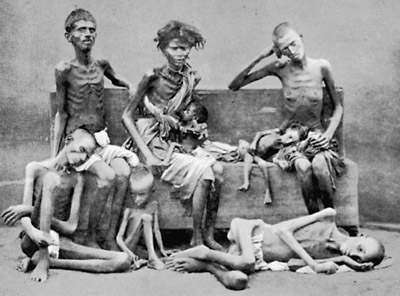
According to British records, one million Indians died of famine between 1800 and 1825, 4 million between 1825 and 1850, 5 million between 1850 and 1875 and 15 million between 1875 and 1900. Thus 25 million Indians died in 100 years! Since Independence, although poverty still exists, there have been no such mass famines, a record of which India should be proud. Funnily enough, there is no mention of this by pro-colonial authors. It is certainly a strange omission on their part and something they should be ashamed of. Perhaps not surprising as it would make British investment in India seem trivial and pointless by comparison. Any rational person would rather avoid millions of deaths than have a few railway tracks built and some land irrigated.
How did these famines occur? The main reason was not bad weather or natural causes but rather the breaking up of India’s indigenous crop patterns. The British replaced food crops such as rice and wheat and instead forced Indian farmers to produce jute, cotton, tea and oil seeds, which they needed as raw materials for their home industries. The implication of this in times of shortages was catastrophic, as the famine figures show.
Niall Ferguson also credits the British with labouring to improve India’s public health:
It was the British who introduced quinine as an anti-malarial prophylactic, carried out public programmes of vaccination against smallpox – often in the face of local resistance – and laboured to improve the urban water supplies that were so often the bearers of cholera and other diseases.
Once again, there is some truth in this, but also some omission, and some downright distortion. On the subject of smallpox vaccination, it is well documented that before the British arrived, Indians had a system of immunisation against smallpox, in which cowpox was used inoculate against smallpox. The British doctor J Z Holwell wrote a book in 1767 describing the system, accepting that it was safe and effective. European medicine did not have any treatment against the disease at that time.
Inoculation against smallpox became a part of Western medicine by 1840. No sooner did that happen that the British in India banned the older method of vaccination, denouncing it as barbaric, without making certain that sufficient number of inoculators in the new technique existed. Smallpox in India became a greater scourge than before. This is not the only example in which the British undermined and even banned indigenous systems of knowledge, particularly medicine, creating dire consequences.
In writing this article I am not trying to stir up bitterness. As I have mentioned, many if not most white Britons see colonialism as a dark part of their history, and refrain from glorifying it or acting triumphant over it. I am simply trying to combat the smug, celebratory version of Imperial history that is in vogue in some circles. This distorted version of history should be discarded into the dustbin of history.
This article is dedicated to the millions men, women and children, of India as well as other nations, who perished in unnecessary and avoidable famines during the colonial era.
Related article
- British PM falls short of apology for India massacre (worldbulletin.net)
Related book review
German television interviews the Syrian President, Bashar al-Assad
HandsoffSyria | February 20, 2013
Excerpts of an interview with the Syrian President featured in a new documentary on the conflict by the filmmaker Hubert Seipel.
The interview was conducted in English but later overdubbed in German for broadcast on the network ARD. This clip is from the documentary in which Mr. Assad’s remarks can be heard in the original English.
The filmmaker said that he wanted to speak directly to Mr. Assad because “misinformation and psychological warfare make up a large part of the Syrian civil war.” He said that he was frustrated by watching Syria’s war unfold in YouTube clips selectively edited by the two sides. So, he said, “my intention was just to let Mr Assad speak about his point of view, so that our viewers can make their own judgment.”
Lawyer: “Prior To His Death, Detainee Complained Of Pain Due To Ongoing Interrogation”
By Saed Bannoura | IMEMC & Agencies | February 24, 2013
 Attorney Kamil Sabbagh, who represented detainee Arafat Jaradat, who died Saturday at an Israeli interrogation facility, stated that Jaradat complained to him of sharp pain due to ongoing and extensive interrogation.
The lawyer said that he represented Jaradat during a court session that was held Thursday February 21.
The court session was the first time the detainee was able to see a lawyer since the army kidnapped him more than 12 days ago. The hearing was held at the Al-Jalama detention and interrogation center.
Sabbagh said that Jaradat complained of sharp pain in the back, and several other parts of his body. Jaradat told his lawyer that he was interrogated for several hours, every day, and repeatedly complained of sharp pain but was never seen by a physician.
The lawyer said that, during the court hearing, he told the military judge about the complaints made by Jaradat, and that the judge instructed the prison administration to grant him the needed medical attention, but the request was apparently ignored.
During the court hearing, the judge ordered Jaradat under interrogation for an additional 12 days.
Following the death of Jaradat on Saturday, several Israeli media agencies claimed that the detainee suffered a heart attack that led to his death.
Palestinian Minister of Detainees, Issa Qaraqe’, held Israel responsible for the death of Jaradat, and said that the detainee died only six days after the army kidnapped him on February 18.
Qaraqe’ demanded forming an international committee to investigate the death of Jaradat, and held Israel responsible for the lives of Palestinian detainees on hunger strike demanding an end to their illegal detention.
Hundreds of Palestinians held a protest in front of the home of Jaradat and chanted slogans against the Israeli occupation, Israel’s ongoing violations and attacks, and chanted for more solidarity with all Palestinian political prisoners held by Israel.
Protests have also been reported in different parts of the occupied territories.
Vengeance—Not a very Enlightened Strategy for Success
By Richard Edmondson | War and Politics | February 22, 2013
Today, nearly nine years after his release from prison, Israeli nuclear whistle blower Mordechai Vanunu still has not been granted the one wish he desires now more than any other—the freedom to leave Israel and live elsewhere. Does the Israeli government plan to continue this policy forever? Or perhaps until the man is aged and sick and approaching death? Will he finally be granted his freedom then?
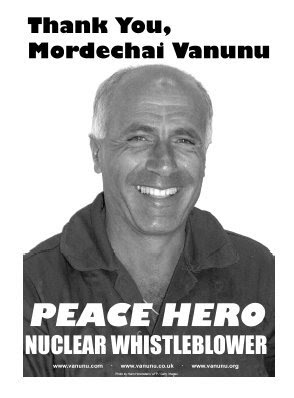 Israel insists it must keep Vanunu a prisoner of the Jewish state out of fear he might disclose further nuclear secrets. But come on. The man hasn’t seen the inside of a nuclear plant since 1986. That was the year he was charged with turning over photographs of Israel’s Dimona facility to a British newspaper. After serving an 18 year sentence, Vanunu was released in 2004, but still today government officials refuse to grant his petitions to leave the country. It’s hard to view this as other than an Israeli thirst for vengeance against any and all deemed enemies.
With two films currently up for Oscar nominations in the “best documentary” category—both highly critical of Israeli policies—you would think those running the Jewish state would have figured out by now that vengeance—against Palestinians, or nuclear whistle blowers, or anyone else for that matter, even the bogeyman—is not overall a very enlightened strategy for success. And of course, what else can you call the repeated destruction of Palestinian infrastructure and demolishing of peoples’ homes other than a campaign of vengeance? What else can you make of Vanunu being forced to spend most of his 18 year sentence in solitary confinement than that it was an impious exercise of wrath?
Eileen Fleming has written an article offering quite a bit of insight into Vanunu’s struggle for freedom and also announcing a global day of action on the whistle blower’s behalf. Fleming is the author of the recently-released book Imagine: Vanunu’s Wait for Liberty, and her newest article offers revealing quotes from letters written by Vanunu during his years of solitary confinement and sent to Australian priest David B. Smith. As you’ll see, Vanunu is in fact quite a prolific letter writer, and Fleming also provides us with links to some of his poetry.
Israel instructs Obama: “Iranian and Syrian sanctions are not painful enough!”
… impose an international blockade now!
By Franklin Lamb | Al-Manar | February 23, 2013
On 3/26/2013 Iran is expected to meet other world powers in Astana, Kazakhstan to discuss its nuclear program. Discussions that the occupiers of Palestine fervently hope will not be successful. It is toward this end that their key demand this week to the US Congress, the White House and the European Union is “to cast responsibility on the Iranians by blaming them for the talks’ failure in the clearest terms possible.”
According to the Al-Monitor of 3/19/13, Israel also demands that the countries meeting in Kazakhstan “make it perfectly clear that slogans such as ‘negotiations can’t go on forever’ are their marching orders to the White House, and they want the Kazakhstan attendees to act “so severely that the Iranians realize that they face a greater threat than just Israeli military action.” “The message must be that this time the entire west, behind Israel’s leadership, is contemplating the launch of a massive military action.” Unsaid is that “the entire West” is expected to confront Iran militarily while Tel Aviv’s forces will mop up Hezbollah, Hamas, Islamic Jihad and Syria if necessary.
Pending the above arrangements, Israel this week is further demanding that the Obama White House issue another Executive Order dramatically ratcheting up the US-led Sanctions against Iran and Syria while it prepares for a hoped for “game changing international economic blockade, including no-fly zones enforced by NATO”.
To achieve yet another layer of severe sanctions, and at the behest of AIPAC, a “legislative planning” meeting was called by Congressman Eliot Engel, who represents New York’s 17th District (the Bronx) and who is the Ranking Member of the House Foreign Affairs Committee, and Rep. Ros-Lehtinen (Florida’s 27th District), Chair of the House Subcommittee on the Middle East and North Africa. The session was held in a posh Georgetown restaurant and participants included representatives from AIPAC, Israel, Saudi Arabia and Bahrain plus half a dozen Congressional staffers.
Congressman Engel has co-sponsored virtually every anti-Arab, anti-Islam, anti-Palestinian, anti-Iran, and anti-Syrian Congressional broadside since he entered Congress a quarter-century ago. His campaign literature last fall stated: “I am a strong supporter of sanctions against those who repeatedly reject calls to behave as responsible nations. [Israel excepted-ed]. I have authored or helped author numerous bills which have been signed into law to impose sanctions against rogue states including Iran and Syria.” Ros-Lehtinen and Engel led all members with AIPAC donations on the House side in last fall’s Congressional elections. They are ranked number one and two respectively as still serving career recipients of Israel-AIPAC’s “indirect” campaign donations.
Some Congressional operatives accuse Rep. Ros-Lehtinen of being a bit lazy and neglecting the bread and butter needs of her Florida constituents. But others argue that it depends on which constituents one has in mind. Her election mailings and her Congressional website claim that the Congresswoman “led all Congressional efforts tirelessly to generate votes to block what she views as anti-Israel resolutions offered at the former UN Commission on Human Rights.”
A big fan of US-led sanctions against Iran and Syria, Rep. Ros-Lehtinen introduced the Iran Freedom Support Act on January 6, 2005, which increased sanctions and expanded punitive measures against the Iranian people until the Iranian regime has dismantled its nuclear plants. Rep. Ros-Lehtinen also introduced H.R. 957, the Iran Sanctions Amendments Act, which she claims “will close loopholes in current law by holding export credit agencies, insurers, and other financial institutions accountable for their facilitation of investments in Iran and sanction them as well.” In addition, H.R. 957 seeks to impose liability on parent companies for violations of sanctions by their foreign entities. She also co-sponsored H.R 1357 which requires “U.S. government pension funds to divest from companies that do any business with any country that does business with Iran.” Her campaign literature states that, “She was proud to be the leading Republican sponsor of H.R. 1400, the Iran Counter-Proliferation Act. This bill applies and enhances a wide range of additional sanctions.”
In addition, last year Illeana introduced H.R. 394, which enlarges US Federal Court Jurisdiction regarding claims by American citizens their claims in U.S. courts. Unclear is whether she realizes that one consequence of her initiative would be to open even wider US courtroom doors to Iranian-Americans and Syria-Americans who today are being targeted and damaged by the lady’s ravenous insatiable craving for civilian targeting economic sanctions.
But Ileana and Elliot appear to be fretting.
So is Israel.
The reasons are several and they include the fact that the US-led sanctions have failed to date to achieve the accomplishments they were designed to produce. These being to cripple the Iranian economy, provoke a popular protest among the Iranian people over inflation and scarcity of food and medicines, weaken Iran as much as possible before adopting military measures against it, and, most essentially, achieving regime change to turn the clock back to those comfortable days of our submissive, compliant Shah.
Zionist prospects for Syria aren’t any better at the moment. Tel Aviv’s [schemes] to intimidate the White House into invading Syria have not worked. Plan A has failed miserably according to the Israeli embassy people attending the Engel-Ros Litinen’s informal confab. Neither did the “how about we just arm the opposition” plan that originated last year with David H. Petraeus and was supported by Hillary Clinton while being pushed by AIPAC. The goal was to create allies in Syria that the US and Israel could control if Mr. Assad was removed from power. Moreover, the White House believes that there are no good options for Obama. It has vetoed 4 recent Israeli proposals including arming the rebels and is said to believe that Syria is already dangerously awash with “unreliable arms.”
The recent shriveling in Israeli prospects for a dramatic Pentagon intervention in Syria reflect White House war weariness. And also Israel’s predilection to bomb targets itself in Syria, as it did recently to assassinate a senior Iranian officer in the Quds force of the Revolutionary Guards, Gen. Hassan Shateri. Contrary to the false story that Israel attacked a missiles convoy, some unassembled equipment was damaged but that was not the primary target according to Fred Hof, a former U.S. State Department official. Gen. Shateri was.
Making matters worse for Tel Aviv, the Israeli military is reportedly becoming skittish due to its deteriorating political and military status in the region and its troops have recently completed subterranean warfare drills to prepare them for a potential clash with Hezbollah in southern Lebanon, the Jerusalem Post reported on 2/20/13. “Today during training, we simulated a northern terrain, that included what we might encounter,” Israeli Lt. Sagiv Shoker, commander of a military Reconnaissance Unit of the Engineering Corps, based at the Elikim base in northern Israel near the border with Lebanon explained. Shoker added that his units spent a week focused on how to approach Hezbollah’s alleged underground bunkers and tunnels in South Lebanon and the Bekaa Valley quietly and quickly. Israeli forces commander Gantz has been complaining recently to the Israeli cabinet that Hezbollah Special Forces are gaining much valuable experience in Syria fighting highly skilled and motivated al Nusra jihadists and his troops may not be prepared to face them on the battlefield if a conflict erupts. It has been known since 2006 that Israeli soldiers “are having motivation deficits” as Gantz and others have complained.
Killings Continue in Bajo Aguán as New Report Documents Abuses by U.S.-Trained Honduran Special Forces Unit
By Alex Main | CEPR Americas Blog | February 22, 2013
A few days ago two more land rights activists were murdered in the Bajo Aguán, a region of Honduras where dozens of campesinos have been killed over the last three years. On February 16, Jacobo Cartagena, member of the Unified Campesino Movement of the Aguán (or MUCA, by its Spanish initials), was shot and killed as he waited for a bus. Hours later, José Trejo Cabrera, was shot down while driving a motorcycle near the town of Tocoa. Trejo was the brother of Antonio Trejo Cabrera, a lawyer who had defended small farmers’ land claims who himself was shot to death last September as he was leaving a wedding. Amnesty International has called on the Honduran government to “urgently investigate” José Trejo’s killing and noted that “the day before he was shot dead [he] had been in the Honduran capital Tegucigalpa, to meet with officials in an effort to ensure justice for his brother’s murder and visiting media outlets to keep the spotlight on the case.”
In an interview with the Associated Press, José Trejo had said “if they killed my brother, what will they not do to me?” He and others blamed the powerful businessman Miguel Facussé for his brother’s murder. Facussé and a handful of other wealthy landowners in the region have hundreds of armed security guards who are believed to be responsible for many of the numerous killings and other attacks targeting campesino activists. Honduran authorities have failed to bring those responsible for the killings to justice or to take effective measures to protect the activists. As the AP notes, “no one is serving time in prison for any of the 89 assassinations of campesinos committed in the Aguán Valley since December of 2009 when land occupations began…”
Since August of 2011, hundreds of Honduran soldiers have been stationed in the Bajo Aguán as part of the so-called Xatruch Intervention Force, ostensibly to mitigate the ongoing violence taking place there. But targeted killings of campesinos have continued unabated and representatives of land rights movements have accused military personnel of being involved in attacks on their members. A new report authored by Annie Bird of Rights Action adds significant weight to these allegations. It documents 34 cases of abuses directly involving members of Honduras’ 15th Battalion, a special forces unit of the Honduran army that has been present in the region for decades and has played a central role in the Xatruch Force.
The report describes in detail specific instances of torture, threats, forced disappearances and killings in which members of the 15th Battalion have been reportedly involved, often in tandem with police and private security forces operating in the Aguán. Only a small handful of these abuses have been partially investigated and none of those responsible have been prosecuted.
The report also examines how military officials have sought to criminalize the region’s campesino movements, associating them with terrorism and drug-trafficking, while steadfastly defending the property claims of powerful landowners.
Those who have reported on the abuses of security forces in the Aguán have also been criminalized by military officials. On February 18th the Commander of the Xatruch Intervention Force publicly accused various journalists, human rights defenders by name of “denigrating the actions of the armed forces” and of “besmirching the image of the Honduran nation.” Following the incident, Reporters Without Borders issued a release stating that the accusations were “a clear attempt to intimidate and censor” and that “this kind of public stigmatization directly exposes those concerned to significant risks, given the human rights situation in Aguán in particular and Honduras in general, where those who dare to provide information about land disputes and environmental problems are systematically criminalized.”
As Rights Action notes, the 15th Battalion reportedly receives training and assistance from the U.S. government. The Honduran media has reported that U.S. Army Rangers have trained personnel from the Battalion and that U.S. Special Operations South has funded the upgrading of the Battalion’s Rio Claro base.
A provision attached to the annual U.S. Foreign Operations Appropriations Act – known as the Leahy Amendment, after the U.S. Senator who first introduced it – prohibits U.S. military assistance to foreign units that commit gross human rights violations with impunity. The provision states: “No assistance shall be furnished under this Act or the Arms Export Control Act to any unit of the security forces of a foreign country if the Secretary of State has credible evidence that such unit has committed gross violations of human rights.” The only exception being if the “Secretary determines (…) that the government of such countries is taking effective measures to bring the responsible members of the security forces unit to justice.” A similar provision can be found in Defense Appropriations Acts, though it only deals with the funding of training activities for foreign troops.
Rights Action’s report appears to provide “credible evidence” that the 15th Battalion and other Honduran authorities are involved in gross abuses and there is no indication that Honduran authorities have pursued any form of judicial action to address these abuses. If the U.S. government has plans to fund further military assistance to the unit there may well be cause for the Secretary of State to cut off assistance until abuses are adequately investigated and any responsible military personnel are brought to justice.
Other recent incidents involving Honduran security forces have also appeared to be within the realm of Leahy Amendment action. Last November the AP reported on how Honduran soldiers trained and vetted by the U.S. murdered an unarmed teenager who ran through a check point last May. The same month, four Honduran villagers in the Moskitia region were killed in the course of a counternarcotics operation carried out jointly by the DEA and a special Honduran police unit trained and vetted by the U.S. As a joint report and previous posts have explained, the Honduran investigation of the incident was flawed and inconclusive, a fact which the State Department still appears unwilling to acknowledge.
Related articles
- Honduras: Murdered Lawyer’s Brother Killed in Aguán (alethonews.wordpress.com)
- Honduras: Two More Campesinos Murdered in Aguán (alethonews.wordpress.com)
- Honduras: Miguel Facusse is Tragically Misunderstood (alethonews.wordpress.com)
- NPR Examines One Side of Honduran “Model Cities” Debate (alethonews.wordpress.com)
Palestinians clash with Israeli troops across the West Bank
Ma’an – 23/02/2013
RAMALLAH – Clashes erupted across the West Bank after the Friday prayers between Israeli troops and Palestinian protesters who rallied to show solidarity with hunger-striking Palestinian prisoners.
Dozens were hurt as Israeli soldiers fired tear gas heavily to disperse the protesters.
Similarly, worshipers in Al-Aqsa Mosque in Jerusalem demonstrated in the compound after the Friday prayer before Israeli troops broke into the squares and clashed with the protesters.
According to Israeli radio station Reshet Bet, Israeli soldiers fired stun grenades to disperse the worshipers. The report highlighted that demonstrations started near the Moroccan Gate through which the soldiers stormed the compound and started to chase protesters.
In Ramallah in the central West Bank, 12 young men were hurt by tear gas and rubber-coated bullets during clashes with Israeli troops after the Friday prayers. Locals told Ma’an that the soldiers detained one Palestinian. The sources highlighted that the Friday prayer was performed near the main gate of Ofer detention center west of Ramallah.
They said about 100 Palestinians preformed Friday prayers near Ofer before Israeli soldiers showered them with tear gas as soon as they finished prayer.
As a result young men started to hurl stones at the soldiers and police officers. A Ma’an reporter said the soldiers directed their tear gas to journalists who gathered in the area to report about the event. He added that the soldiers fired live ammunition at a car for journalists, but nobody was hurt.
Further clashes took place in al-Arrub and al-Fawwar refugee camps in Hebron district.
Witnesses said young Palestinian men in al-Arrub camp north of Hebron pelted Israeli soldiers with stones. Clashes erupted first at the main entrance to the camp on the main road between Hebron and Bethlehem. Then the clashes extended to camp’s alleys resulting in more victims of tear gas as some canisters fell inside houses.
One owner of these houses was identified as Nayif Nimir al-Badawi. Four people were hurt by tear gas. Three others were hurt in house of Khamis Awad al-Badawi.
Israeli forces shut down the main entrance to al-Fawwar camp north of Hebron after young men hurled stones at Israeli soldiers. The soldiers responded with tear gas before they closed the main entrance to traffic.
In Tulkarem in the northern West Bank young Palestinians clashed with Israeli troops in the western part of the city. Soldiers fired tear gas as the young protesters pelted them with stones. The clashes erupted after hundreds of young men rallied after the Friday prayer chanting slogans against Israel’s treatment to Palestinian prisoners.
The northern West Bank city of Jenin also witnessed confrontations between young Palestinians and Israeli soldiers after the Friday prayer. Nine Palestinians were detained during the clashes and dozens were hurt by tear gas and rubber-coated bullets.
Jenin’s clashes started after young men marched from mosques toward al-Jalama checkpoint expressing solidarity with hunger striking Palestinian prisoners. A Ma’an reporter said Israeli forces fired hundreds of tear gas canisters at the protesters in addition to rubber-coated bullets and foul smelling liquids.
Local and security sources told Ma’an that Israeli soldiers detained nine young men. The sources identified one detainee as 14-year-old Amir Majid Irqawi. They said the soldiers assaulted him beating him brutally before he was detained.
Related article
Bedouin communities near Qalqiliya isolated by Israel and facing school demolition
International Solidarity Movement | February 22, 2013
Nablus, Occupied Palestine – The small Bedouin communities of ‘Arab Ramadin al-Janubi and ‘Arab Ab Farda lie south of Qalqilya between the apartheid wall and the green line,close to the illegal settlement Alfe Menashe. They are separated from the rest of West Bank from all sides by the Israeli apartheid wall. The communities, founded by people deported from areas in Negev and Netanya during and after the Nakba are today home to around 500 people. They suffer from multiple restrictions imposed by the Israeli authorities,including no permissions for new buildings or expansion of existing buildings, and limits to the amount of food and gas allowed for sale in the communities.
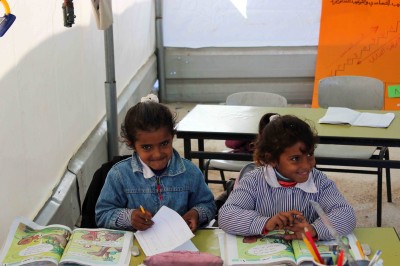
Bedouin girls at school
Access to the communities is limited by Israel with a permission system. The system of access permissions has effectively resulted in the social isolation of the communities, as people from the city of Qalqilya and neighboring villages face difficulties in obtaining permits for visiting the area.
The community of Abu Farda has no access to running water or electricity, and thus water has to be bought in tanks from the village of ‘Azzun. There is a well on the grounds of the village, but the illegal settlement Alfe Menashe has confiscated the well and closed access to it for the inhabitants of Abu Farda. People from the family Fayez living in Abu Farda told us:
“The lack of electricity is a big problem, as we are not able to refrigerate food bought from merchants or the yogurt and milk we produce ourselves for sale, and our children are not able to do their homework after dark due to lack of lighting.”
Furthermore, the Israeli authorities do not allow veterinaries access to the villages, while the village is largely dependent on the raising of livestock.
In October 2012 the community of Ramadin al-Janubi founded a school for 6 to 8 year old children. The new school gives it’s 25 students the opportunity to go to school without having to pass daily through the Israeli checkpoints between the community and a school in the nearby village of Habla. Children older than 8 years still have to go to school outside the community, and in order to reach their schools and go back home they need to cross the Israeli checkpoints twice every single day.
The school in Ramadin, consisting of 4 tents, received a demolition order from the Israeli authorities after two weeks of operation. The faculty of the school live in Qalqilya and have to spend from 30 minutes to over an hour every day passing through the checkpoint and having their papers and belongings examined by the IOF forces at the checkpoint in order to access the school. For now, the village has taken the demolition order to court, and is waiting to for the court hearings to take place.
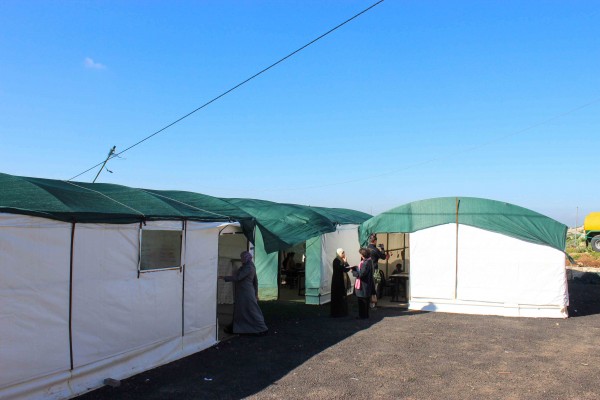
Bedouin school tents with demolition order
Related articles
- Palestinians’ Life in the Shadow of the Barrier Wall (alethonews.wordpress.com)
- West Bank: Aid agencies tread gingerly in Area C (alethonews.wordpress.com)
- Qalqiliya flooding exacerbated by separation wall (altahrir.wordpress.com)
- Israel to demolish Palestinian neighborhood (altahrir.wordpress.com)
Featured Video
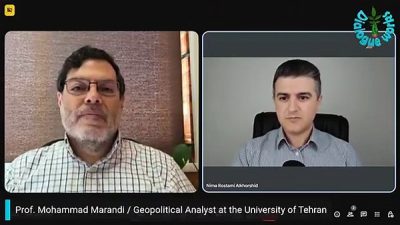
Seyed M. Marandi: U.S. Military DIVIDED? Iran’s Secret Defense EXPOSED
or go to
Aletho News Archives – Video-Images
From the Archives
‘Israel sees Iran as obstacle to its policies’
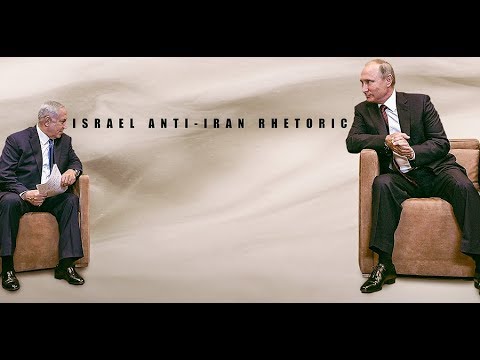
Press TV – August 25, 2017
Prime Minister Benjamin Netanyahu has said that Israel felt threatened by Iran’s growing influence in the Middle East. Netanyahu expressed his Iranophobic view in a meeting with Russian President Vladimir Putin in Russia’s Black Sea resort of Sochi on Wednesday. Press TV has asked Scott Rickard, former American intelligence linguist from Tampa, Florida, and Brent Budowsky, a columnist at The Hill from Washington, to give their thoughts on the issue.
Rickard said Tel Aviv is concerned about the fact that the regime could not carry out its old project to spread sectarian divisions and pave the way for dismemberment of the countries in the Middle East region because of the Iranian-led resistance against Israeli policies, not only in the occupied territories of Palestine but also in the whole region.
“Iran is not a threat to Israel whatsoever. The threat that Israel sees is the fact that their Oded Yinon Plan is being put to a hold by Iran,” the intelligence linguist said on Thursday night.
“They (the Israelis) look at Iran as a threat only because they have no influence on their governments and Iran is autonomous and is not under the Zionist influence,” he added.
Since the victory of the Islamic Republic of Iran in 1979, Tehran has been critical of Israel’s policies in the region, whereas “no leaders [of other states] even dared to speak out against Zionism,” Rickard argued. … continue
Blog Roll
 Aletho News
- Iran declares ‘historic victory’ over US, says enemy forced to accept its proposal
- Trump Claims Ceasefire, Reopening of Strait of Hormuz Agreement with Iran
- Israeli tank fire killed UN peacekeeper in Lebanon, UNIFIL investigation finds
- Russia, China block Bahrain-sponsored UN resolution on Strait of Hormuz
- The US-Israeli War on Science is an Assault on our Future
- Trump’s Promise to Bomb Iran ‘Like Never Before’ Faces Brutal Logistics — Expert
- Germany seeks to restrict stays abroad for men of fighting age – Berliner Zeitung
- Evidence points to Ukraine being behind TurkStream attempted sabotage, but that should come as no surprise
- Sri Lanka secures supplies of Russia oil – minister
- Nations across Asia strike direct deals with Iran for Hormuz passage
- If Americans Knew
- Thousands dead and neighborhoods razed to the ground: Aid agencies fear southern Lebanon is becoming the new Gaza
- The war the US is fighting for Israel could cost trillions
- ‘Cigarette Burns, Nail Wounds’: Toddler Tortured in Gaza to Coerce Father
- Trump Says US Sent ‘a Lot of Guns’ to Protesters in Iran
- Israeli forces destroy 17 UN peacekeeper cameras in south Lebanon
- US-Israeli strikes ‘completely destroy’ synagogue in Tehran
- Archbishop for US Military Says Iran War Is Unjust Under Catholic Teaching
- Iranian leaders’ Open Letters to the American People
- Trump says Iranians appreciate bombs, WHO warns of nuclear risks – Daily Update
- U.N. experts demand Israel release prominent Gaza doctor after reports of ‘severe torture’
- No Tricks Zone
- An Inconvenient Tree: Uncovered In Alps… Europe Much Warmer Than Today 6000 Years Ago
- New Study Reports A 60% Slowdown In Greenland’s Ice Loss Rate In The Last Decade
- Low Intensity Tornado Wrecks Major Solar Farm, Creating A Potential Toxic Dump
- New Study Finds Warming Saves Lives…Cold Temperatures 12 Times More Deadly Than Excess Heat
- German Science Blog Accuses PIK Climate Institute Of Hallucinating Climate Tipping Points
- Devastating Assessment Of Comirnaty Vaccine By Former Senior Pfizer Europe Toxicologist
- New Study: CO2 Is ‘Effectively Negligible’ As An Explanatory Climate Change Factor Since 2000
- Former Pfizer Toxicologist Dr. Helmut Sterz Tells Bundestag Hearing Pfizer Vaccine Should Have Never Been Approved
- Energy Expert: Germany’s Nuclear Phaseout Was A “500 Billion Euro Mistake”
- New Research: South Australia’s Mid-Holocene Sea Surface Temperatures Were 4°C Warmer Than Today
 Aletho News