Armistice’s Day Is Done–Contrary to NYT
By Jim Naureckas | FAIR | March 13, 2013
The New York Times (3/8/13), writing about Korean tensions, reported:
The North said this week that it considered the 1953 armistice agreement that halted the Korean War to be null and void as of Monday because of the joint military exercises. The North has threatened to terminate that agreement before, but American and South Korean military officials pointed out that legally, no party [to an] armistice can unilaterally terminate or alter its terms.
“Nonsense,” says Francis Boyle, professor of international law at the University of Illinois (Institute for Public Accuracy, 3/13/13):
An armistice agreement is governed by the laws of war and the state of war still remains in effect despite the armistice agreement, even if the armistice text itself says additions have to be mutually agreed upon by the parties. Termination is not an addition.
Boyle pointed to both U.S. military regulations and international law as evidence that the Times’ claim was wrong:
Under the U.S. Army Field Manual 27-10 and the Hague Regulations, the only requirement for termination of the Korean War Armistice Agreement is suitable notice so as to avoid the charge of “perfidy.” North Korea has given that notice. The armistice is dead.
The Army Field Manual states, “In case it [the armistice] is indefinite, a belligerent may resume operations at any time after notice.” Article 36 of the Hague Regulations says:
An armistice suspends military operations by mutual agreement between the belligerent parties. If its duration is not fixed, the belligerent parties can resume operations at any time, provided always the enemy is warned within the time agreed upon, in accordance with the terms of the armistice.
The New York Times should let its readers know that it allowed anonymous officials to mislead them.
Chavez in the Crosshairs
By Laura Carlsen | Americas Program | March 12, 2013
You could almost hear the sigh of relief coming out of Washington at the news of Hugo Chavez’s death on March 5.
President Obama issued a brief statement that failed even to offer condolences, forcing a senior State Department official to patch over the evident callousness and breach of diplomacy by offering his personal condolences the following day.
Within moments of Chavez’s death, commercial media and mouthpieces for the U.S. government were verbally dancing on his grave and predicting the imminent demise of Chavismo—Chavez’s political legacy in Venezuela and abroad.
Time headlined its article “Death of a Demagogue.” The New York Times, which bent over backwards to minimize Chavez’s overwhelming victory in Venezuela’s October elections—and later to portray his battle with cancer as a cover-up, mimicking opposition claims—proclaimed that Chávez’s death“casts into doubt the future of his socialist revolution” and “alters the political balance not only in Venezuela, the fourth-largest supplier of foreign oil to the United States, but also in Latin America”—and this in a news article with no sourcing provided.
The Inter-American Dialogue, a U.S. think tank, concluded that “Chavez’s legacy, and the damage he left behind, will not be easily undone,” and predicted that the social gains and regional institutions Chavez built over his political lifetime will soon fall apart and things will soon return to normal—that is, with the United States back in the hemispheric driver’s seat.
Congressman Ed Royce (R-CA) came right out and said “Hugo Chávez was a tyrant who forced the people of Venezuela to live in fear. His death dents the alliance of anti-U.S. leftist leaders in South America. Good riddance to this dictator.”
So why did Washington hate this guy so much?
It never helped that the South American president had a penchant for insulting his adversaries personally. But one supposes that diplomacy rises above name-calling, even if the other guy did it first. The anti-Chavez current in Washington goes far deeper than personal enmity or even political differences.
What scared Washington most about Chavez was not his failures or idiosyncrasies. It was his success.
The official reasons given for demonizing Hugo Chavez don’t hold water. Chavez is accused of restraining freedom of the press in a nation known for its ferociously anti-Chavez private media. And while his Yankee critics called him a dictator, Chavez and his policies won election after election in exemplary electoral processes. You can disagree with his reform to permit unlimited terms in office, but this is the practice of many nations deemed democratic by the U.S. government and considered close allies. And the criticisms of Chavez’s social programs as “patronage” cannot ignore the millions of lives tangibly improved.
Before Chavez turned Venezuela away from the neoliberal model, the nation was a basket case. But throughout his tenure, social indicators that measure real human suffering showed steady improvement. Between 1998, when he was first elected, to 2013 when he died in office, people living in poverty dropped from 43 percent of the population to 27 percent. Extreme poverty dropped from 16.8 percent of the population to 7 percent. According to UNESCO, illiteracy—nearly 10 percent when Chavez took office—has been eliminated. Chavez also reduced childhood malnutrition, initiated pensions for the elderly, and launched education and health programs for the poor.
Venezuela’s human development ranking subsequently climbed significantly under Chavez, reaching the “high” human development category. The programs that Washington scorned as “government handouts” made people’s lives longer, healthier, and fuller in Venezuela.
Now that Chavez is dead, the U.S. press has revived the State Department’s practice of designating the “good left” and the “bad left” in Latin America. Chavez, of course, embodied the “bad left,” while Brazil’s Lula was unilaterally and unwillingly designated the “good left”.
Yet it was Lula da Silva who defended his friend and made the case for Chavez’s lasting positive legacy in the pages of the New York Times. He eulogized the leader and predicted, “The multilateral institutions Mr. Chávez helped create will also help ensure the consecration of South American unity.”
In fact, Chavez’s success in building institutions for alternative regional integration is one of the big reasons Washington hated him. The self-declared anti-capitalist led Venezuela as it joined with regional powerhouse Brazil and other southern cone countries to make a bid to crack the Monroe Doctrine. Along with Andean nations, they also sought, in varying degrees, to wrest control of significant natural resource wealth from transnational corporations to fund state redistribution programs for the poor.
In 2005, Chavez helped scuttle the U.S. goal of a Free Trade Area of the Americas. Later he spearheaded the formation of the Union of South American Nations (Unasur) in 2008. As a Latin American alternative to the U.S.-dominated Organization of American States, the 12-member Unasur proved its value by successfully mediating the Colombia-Ecuador conflict and the Bolivian separatist crisis in 2008. In 2010, Chavez again played a major role with the creation of the Community of Latin American and Caribbean States, made up of hemispheric partners, excluding the United States and Canada.
The Bank of the South, also promoted by Chavez, seeks greater South-South monetary and financial autonomy. As Lula writes in his editorial on Chavez´s death, the Bank offers an alternative to the World Bank and IMF, which “have not been sufficiently responsive to the realities of today’s multipolar world”.
With stops and starts, these initiatives have moved regional integration forward outside the historic model of U.S. hegemony.
U.S. Moves and the Principle of Self-Determination
What happens next? Venezuela held an emotional funeral on March 8 and is planning for April elections. Most predict that Vice President Nicolas Maduro, selected by Chavez as his successor, will win easily. He has the advantage of Chavez’s blessing: a common slogan in Caracas these days is “Chavez, te juro, que voto por Maduro” (“Chavez, I swear, my vote is for Maduro”). Another sign that Chavismo lives on was the thousands of people at the funeral chanting “Chavez didn’t die; he multiplied.”
The State Department views dimly the prospect of an improved U.S.-Venezuela relationship under Maduro. On March 6, the State Department held a press call on which “Senior Official One” (a State Department practice for “background” when its officials apparently don’t want to be identified with their own public statements) said the department was optimistic following Chavez’ death, but that “yesterday’s first press conference, if you will, the first address, was not encouraging in that respect. It disappointed us.”
He referred to a 90-minute address by Maduro, stating that “the enemy” attacked Chavez’s health. The Venezuelan government also announced the expulsion of two U.S. military personnel in Venezuela, allegedly for having contacted members of the Venezuela military to stir up an insurrection.
The State Department noted that it plans “to move ahead in this relationship” by holding conversations in areas of common interest, citing “counternarcotics, counterterrorism, economic or commercial issues including energy.” It added, “We are going to continue to speak out when we believe there are issues of democratic principle that need to be talked about, that need to be highlighted.”
During the Chavez years, U.S. officials and the press went into contortions to avoid congruency with the basic principle that democracy is measured by elections. With Chavez having indisputably won some thirteen elections, the U.S. government applied new criteria to Venezuela along the lines of “democracy can be wrong.” Despite his broad-based support, many went so far as to dub Chavez a “dictator.”
The U.S. government’s commitment to democracy falters when Washington doesn’t like the results. It supported the failed coup against Chavez in 2002 and blocked the return of Honduras’s elected president after the 2009 coup there.
Now all eyes will be on Washington to see whether it upholds another value reiterated by President Obama—the right to self-determination. Will U.S. “democracy-promotion programs” under NED, IRI, and other regime-change schemes resist the temptation to meddle in Venezuela’s April 14 elections? Venezuela without Chavez will be a test of moral and diplomatic integrity for the second Obama administration and John Kerry’s State Department, and a challenge for Congress and the citizenry to monitor and prevent covert activities that interfere with the exercise of democracy.
Related articles
- Unprecedented Show of Support and Honor at the Historic Funeral of Hugo Chávez (alethonews.wordpress.com)
- Chavez Is Dead, the Media Are Alive and Kicking (alethonews.wordpress.com)
- U.S. and Canada Isolated as Latin American Leaders Acknowledge Chávez’s Regional Leadership (venezuelanalysis.com)
Step by Step: Honduras Walk for Dignity and Sovereignty
By Greg McCain | Upside Down World | March 13, 2013

From February 25 to March 7, I participated in the 200 km Walk (about 124 miles) referred to as Caminata Dignidad y Soberanía Paso a Paso (Walk for Dignity and Sovereignty Step by Step), which culminated with over 400 people from various groups representing the social movements in Honduras reaching the National Congress in Tegucigalpa to demand three things:
1. Abolish the new mining law, which basically gives foreign mining companies carte blanche to take the natural resources of Honduras for their own enrichment while having no regulations to stop these companies from poisoning the rivers and ground water and destroying the environment through mountain top removal and deforestation. In addition, these mining companies have historically exploited the labor of the local communities, paying little to nothing while poisoning the local populations with chemicals such as cyanide used for extraction.
2. Abolish the new Model Cities legislation. This is new legislation passed by decree by the Congress after having been found unconstitutional by the Supreme Court in November of last year. The following month, the president of the Congress, Juan Orlando Hernandez(JOH), staged what has been referred to as the second coup by holding an emergency session of Congress to vote out 4 of the members of the Constitutional chamber of the Supreme Court who found the original version in violation of the sovereignty of Honduras. JOH and President Pepe Lobo claimed that these magistrates were traitors who were holding back the economic development of the country. He also claimed to have fixed the issues that these “traitors” found to be unconstitutional.
It is for all intents and purposes the same neo-liberal package that gives up huge areas of land to outside developers to create neo-colonial enclaves that don’t have to operate under constitutional regulations. The further claim is that the land under consideration is uninhabited. Two areas that have been proposed, the communities of Puerto Castillo and Santa Rosa de Aguán are traditional Garifuna land along the northern coast in the Department of Colon. The Garifuna are the Afro-Caribe people who have inhabited the northern coast of Honduras for over 200 years. They have been struggling to maintain their land from rich foreigners such as the Canadian Porn King Randy Jorgensen who has bought up at bargain prices much acreage in and around the area of Trujillo.
Jorgensen has built a cruise ship dock on the beachfront in the town of Trujillo, not far from Puerto Castillo, which is also the location of the fruit company, Dole’s, shipping docks. The Congress refers to the model cities as Special Development Regions (RED in its Spanish acronym). They will combine the exploitation of local labor and natural resources perpetrated by foreign corporations with the destruction of the natural environment such as has happened in Cancun, Mexico and other resort areas around the world, with all of the profits going to the foreign directors of the REDs, and their foreign investors.
3. Freedom for the Political Prisoner Jose Isabel “Chavelo” Morales Lopez. Chavelo Morales has become a symbol of the campesino movement and his imprisonment illustrates the criminalization of the campesinos as they struggle to maintain the land that is theirs by all rights under the agrarian reform laws that had existed prior to 1992. These laws were subverted by the ruling elite when so called “free” trade agreements were first being thought up and hammered out by corporate lobbyists in the US Capital.
Chavelo was framed for the 2008 murder of a family of rich landowners, the Osortos. This moneyed family had illegally obtained thousands of hectares of land at rock bottom prices (some of it free of charge) that were legally recognized as being set aside for peasant farmers. In the late 1990s, the Campesino Movement of the Aguán (MCA), of which Chavelo is a member, took legal routes to obtain the land and began to work it for their own subsistence. The Osortos and their paramilitary guards terrorized the communities, killing leaders of the MCA, and shooting into the houses of families. This occurred while the national police and the Honduran government turned their backs on the illegal actions of the Osortos, presumably due to the bribes that the rich landowners doled out. Indeed, the police and the district attorneys played an active role in criminalizing the campesinos by issuing trumped up arrests warrants (Currently there are over 3080 campesinos with arrest warrants against them). Click here for a more complete background of Chavelo’s story and the travesty of justice in his case.
Chavelo spent the first 2 years in jail without a trial. It was another 2 years before he received his sentence. This is a clear violation of Honduran Penal Process Code 188, which states that a person cannot be incarcerated for more than 2 years from the time of his arrest until sentencing. This alone should be enough for the Supreme Court to annul the conviction and set him free, and indeed this is what Chavelo’s lawyers are hoping to happen in their appeal of causation that they have filed with the high court. But additionally, the sentencing statement that the judges in Trujillo issued gives no concrete evidence linking Chavelo to the deaths that occurred other than a photo of him close by to the scene where some 300 other campesinos and dozens of police had been during a standoff at the Ranch of Henry Osorto, the ex-military, ex-police sub-commissioner, and current penal system investigator. It is with Osortos influence alone that Chavelo is currently imprisoned. Chavelo has spent close to 4 ½ years in prison based on hearsay evidence and the political and economic influence that Henry Osorto has over the judges. Chavelo faces 20 years in prison unless international pressure convinces the Supreme Court of Honduras otherwise.
With these three demands energizing our every step, we entered Tegucigalpa with 400+ walkers who made a silent vigil through the streets until we reached the National Congress. Once there, hundreds more joined us. A small group, accompanied by Padre Melo Moreno, a Jesuit priest and director of Radio Progress, was able to meet with Marvin Ponce, vice president of the Congress. Promises were made that the protesters concerns would be addressed. No one is holding his or her breath.
Another group was able to meet with the President of the Sala Penal of the Supreme Court, basically the chamber of the court that deals with prison issues. This group was made up of Omar Menjivar, Chavelo’s lawyer; Esly Benegas from COPA (the Spanish acronym for the Coordinated Popular Organizations of the Aguán); Merlin Morales, Chavelo’s brother; Myself, Greg McCain, representing La Voz de los de Abajo and the Honduran Solidarity Network, and Brigitte Gynther from SOA Watch. The President of the Sala Penal, Jacobo Antonio Cálix Hernández, began by stating that the court was backlogged by two years, they hadn’t even begun to hear cases that had been sent to the court in 2011. Chavelo’s case had just reached the court at the end of January 2013. He stated that cases were very complicated and that they took a lot of study on the part of the judges. He was basically letting us know that nothing happens fast in the justice system.
We each made our case for why we were there and what we expected from the court, reiterating the lack of evidence and the violation of the procedural code. Chavelo’s brother made explicit Osorto’s influence on the judges in the Trujillo tribunal and the fact that the only evidence was a photo of Chavelo and that the context of the photo was not addressed in the sentencing. He also made the emotional appeal that Chavelo has been unjustly incarcerated while his daughter, father, 2 aunts and grandfather have all passed away without his being able to attend the funerals. I piggybacked on Merlin’s plea by noting the money and political power of Osorto and my hope that it does not reach to the Supreme Court. I also underlined the amount of time that Chavelo has spent in jail and hoped that there weren’t further undue delays of justice.
Judge Cálix made the promise that he would speed up the process for having the trial transcripts of the lower court transcribed by no later than the following week. He then stated that he would schedule the hearing of the case for sometime between April 1st and the 5th. This hearing is basically a formality so that each side, the Defense and the Prosecutor, can present their cases. The judges then legally have up to a year to make a decision. This was huge news. We in the room, along with the threat of having 400+ demonstrators that were still at the National Congress converging on the Supreme Court, cut the process down by two years. Again, none of us are holding our breath. The campaign to put pressure on the Supreme Court has just begun. We need to reduce the year long wait and bring Chavelo home. Pronto!
To send emails and make phone calls to the court between now and the promised April hearing, click here, and you can also follow future actions and the progress of Chavelo’s case.
Related articles
- Honduras: Murdered Lawyer’s Brother Killed in Aguán (alethonews.wordpress.com)
- Will the World Bank Stop Investing in Campesino Assassinations? (alethonews.wordpress.com)
- Killings Continue in Bajo Aguán as New Report Documents Abuses by U.S.-Trained Honduran Special Forces Unit (alethonews.wordpress.com)
- NPR Examines One Side of Honduran “Model Cities” Debate (alethonews.wordpress.com)
CHAVEZ IS DEAD, THE MEDIA ARE ALIVE AND KICKING
By Pablo Navarrete | Latin America Bureau | March 13, 2013
On Tuesday 5 March, at the age of 58, Venezuelan president Hugo Chávez lost his almost two-year battle with cancer and passed away. Within seconds of the news being announced, the wheels of the global media bandwagon went into overdrive, with largely unsurprising results, in both the US and British media. At the most distasteful end of the spectrum was the headline in the New York Post, the paper with the 7th highest circulation in the US, that read ‘Off Hugo! Venezuela bully Chavez is dead’.

New York Post Cover on Chávez
Other US media followed closely behind. ‘Death of a Demagogue’ ran a headline on the website of Time, the world’s biggest selling weekly news magazine. These and other US media reaction were included in a piece by the US media watchdog Fair and Accuracy in Reporting (FAIR) that also examined the distorted, often hysterical, US media coverage of Chávez during his presidency. It’s worth recalling that following the 2002 US-supported coup that briefly removed Chavez from the presidency the New York Times declared that Chavez’s “resignation” meant that “Venezuelan democracy is no longer threatened by a would-be dictator.”
Following Chávez’s death, the antipathy towards a president that had so vehemently challenged the actions and interests of the United States was also evident in the British media. Rightwing outlets displayed the usual cynical disdain that had characterised their reporting of Chávez’s presidency, although Nicolas Maduro, Chávez’s former vice-president, the current interim president and the government’s candidate for the April 14th presidential election, was also now in the firing line. In the UK’s biggest selling broadsheet, the rightwing Daily Telegraph, its chief foreign correspondent David Blair described Maduro’s role as foreign minister under Chavez in the following terms: “Mr Maduro was the obedient enforcer of his master’s highly personal foreign policy”. For Blair, Maduro, rather than responsibly representing his government’s foreign policy, was “a loyal purveyor of ‘Chavismo’ around the world”.
The ‘liberal’ left in Britain
Britain’s liberal-left media also offered a timely reminder of where their loyalties lay in relation to Chavez, whose democratic mandate included presiding over 15 national elections since he took office in February 1999, a greater number of elections than were held during the previous 40 years in Venezuela. In a remarkable editorial, The Independent newspaper opined:
“Mr Chavez was no run-of-the-mill dictator. His offences were far from the excesses of a Colonel Gaddafi, say. What he was, more than anything, was an illusionist – a showman who used his prodigious powers of persuasion to present a corrupt autocracy fuelled by petrodollars as a socialist utopia in the making. The show now over, he leaves a hollowed-out country crippled by poverty, violence and crime. So much for the revolution.”
This from a newspaper that in June 2009, following a military coup that overthrew the democratically elected government of President Manuel Zelaya in Honduras, ran an editorial that included the following:
“The ousting of the Honduran President Manuel Zelaya by the country’s military at the weekend has been condemned by many members of the international community as an affront to democracy. But despite a natural distaste for any military coup, it is possible that the army might have actually done Honduran democracy a service.”
The Independent’s competitor in the UK’s liberal-left newspaper market, The Guardian, showed a similarly hostile stance towards Chavez during his presidency. In a piece on the New Left Project website examining the critical UK media coverage of Chavez following his death, Josh Watts noted how the anti-Chavez bias of Rory Carroll, a Guardian journalist and its former Latin America correspondent, “has been extensively documented”. As Samuel Grove noted in a damming 2011 article, Carroll’s Latin America coverage “has attracted widespread criticism for its selectivity and double standards, brazen anti-left bias, and above all slavish loyalty to Western interests”. There is now surely a book’s worth of material exposing Carroll’s distorted Venezuela coverage.
Carroll has managed to take his agenda beyond the confines of The Guardian. For example, in an Al Jazeera English debate on the continued demonisation of Chavez by the Western media that took place three days after Chavez’s death, Carroll repeatedly tried to present Venezuela under Chavez as an economic failure. He repeated this line of attack in a BBC 3 radio interview in late February, where he accused the Chavez government of being responsible for “decay, ruin, waste” in relation to the economy. Contrast this with the rigorous reports on the socio-economic changes under the Chavez presidency by the Washington-based think tank, the Center for Economic and Policy Research (CEPR), which completely undermine Carroll’s narrative of economic failure.
This fact-based approach to appraising elements of the Chavez legacy has not been lost on The Guardian’s associate editor Seumas Milne, who referenced CEPR’s latest report when he tweeted: “Media claims #Chavez ruined #Venezuela‘s economy absurd: here are the facts on growth, unemployment, poverty http://bit.ly/13Nnwno @ceprdc”
It was precisely these socio-economic gains, especially for those in the low-income neighbourhoods known as barrios that encircle Caracas and other Venezuelan cities and who formed Chávez’s support base, that lay behind his popularity and his repeated electoral victories.
Focus on denigrating the individual
Rather than try to explain Chávez’s appeal to large sectors of the Venezuelan population or understand the process of radical change underway in the country, the West’s media class preferred to focus almost entirely on the figure of Chávez. It was precisely this narrative that was so effective in discrediting the Venezuelan process through concealing the role of collective agency, silencing the people from below, and rendering them insignificant. While the mainstream media routinely ignores the voices of the government’s grassroots supporters, they have been instrumental in driving the Venezuelan process forward and should be at the centre of the story.
Thus, when we contrast Chávez’s popularity at home with the open hostility with which Western political elites viewed him, we’re left questioning the motivation behind the anti-Chávez mass media campaign that has systematically misrepresented events in Venezuela.
John Pilger is right when he writes:
“Never has a country, its people, its politics, its leader, its myths and truths been so misreported and lied about as Venezuela.”
Even though Chávez is dead, his vilification by the US and UK media is alive and kicking.
Pablo Navarrete is a LAB correspondent and a PHD student at Bradford University in the UK, researching the political economy of the Chavez presidency. He is also the director of the documentary ‘Inside the Revolution: A Journey into the Heart of Venezuela’ (Alborada Films, 2009). You can watch the documentary online here.
New York Muslims protest police surveillance
RT | March 12, 2013
A new report by a coalition of Muslims has shed further light on the NYPD’s controversial surveillance program of the Muslim community, which they say generates widespread fear and has a “chilling effect” on their lives.
The New York Police Department has been found to spy on Muslims in mosques, restaurants, halal shops, cafes, hookah bars and other public places and has long outraged potential victims of the surveillance. Whether praying, conversing with friends, or walking down the street, the NYPD deploys cops that are always watching.
The surveillance “has stifled speech, communal life and religious practice and criminalized a broad segment of American Muslims,” Nermeen Arastu, fund attorney for the Asian American Legal Defense and Education Fund, told the Wall Street Journal.
The new report, compiled by the Muslim American Civil Liberties Coalition and its partners, specifically outlines the effect of the NYPD’s intimidation on New York City Muslims. As a result of sending spies throughout the city, some Muslims have stopped trusting anyone, fearful that something they say or do could land them in prison.
“Undercover Pakistani officers were sent into Pakistani communities and Arab-speaking officers were dispatched into the Egyptian community to ‘listen to neighborhood gossip’, and get an overall ‘feel for the community,’ ” the report says “They were instructed to visit schools and interact with business owners and patrons to ‘gauge sentiment.’”
By participating in school field trips and local cricket matches, undercover cops have crept into the personal lives of American Muslims, searching for any sign of illegal or terrorist intentions. The report, titled “Mapping Muslims”, claims that the far-reaching extent of the surveillance program has taken a toll on the Muslim community.
“[The NYPD] has repeatedly said that as long as you have nothing to hide, you have nothing to fear,” Diala Shamas, co-author of the report, told the Huffington Post. Instead, she said the study “shows that there are many disturbing impacts and consequences of the irresponsible, costly, harmful, completely ineffective surveillance program.”
Muslim college groups now forbid any discussion of politics, practicing Muslims have avoided mosques, and others have simply avoided making any sort of jokes that could be misinterpreted.
“People tell me ‘I’ll make mysalaah [prayer] at home.’ They mention the NYPD camera right outside the mosque as the reason,” Imam Mustapha, a Brooklyn-based religious leader, told authors of the report.
At some mosques, Muslims no longer trust religious leaders, fearing that they could be reporting to the NYPD.
“The relationship of trust and confidentiality between an imam and his congregation is no less sacred than that of pastors, rabbis and others, and those of whom they serve,” said Imam Al-Hajj Talib ‘Abdur-Rashid, Maklis Ash-Shura (Islamic Leadership Council) of Metropolitan New York. “The actions of the NYPD have compromised this sacred relationship… It not only weakens the capacity of some Muslim religious leaders to serve as advisors in sensitive matters, but it also compromises their effectiveness as partners in the struggle against extremism.”
New York City Muslims are afraid of growing beards, wearing traditional attire, participating in extracurricular activities, or talking to strangers.
The authors conclude the report with a plea to stop the pervasive program, claiming that the policing encourages deep-seated mistrust and distrust within the Muslim community.
“There’s a lot of collateral damage,” Park Slope Councilman Brad Lander told the Huffington Post.
The NYPD has so far spent more than $1 billion on the Intelligence Division, which conducts the surveillance program. But throughout six years of surveillance, the NYPD has never generated a lead, according to Assistant Chief Thomas Galati.
“I never made a lead from rhetoric that came from a Demographics report, and I’m here since 2006,” Galati said in a deposition last June. “I don’t recall other ones prior to my arrival.”
Related article
- Debunked NYPD Radicalization Report Just Won’t Die (alethonews.wordpress.com)
Despite Civilian-Targeting US Sanctions, Damascus University Excels
By Franklin Lamb | Al-Manar | March 11, 2013
Damascus – Students everywhere are special people and this observer has discovered that Syrian students are among the very best.
Meeting and interviewing students again this past week, before and following a frank and enlightening discussion with Prof. Dr. Mohammad Amer Al-Mardini, the indefatigable President of Damascus University, about the situation of the students and current instruction at the University, one cannot, even as a foreigner, fail to feel pride in Syrian students.
Good meeting places, among others on campus, include “outdoor cafes” — a ‘street student union’ of sorts — consisting of a few chairs and portable tables. They are scattered among the dozens of vendor stalls that line “DU Boulevard” outside the main DU campus in central Damascus. Here students can buy everything from school supplies to mobile phones to snacks. It’s a perfect place to meet and chat with students.
One learns from them about the many effects on the education system in Syria of the US-led sanctions. Some argue that the Obama administration actually fuels the current crisis with its sanctions and achieves the opposite result of what the White House and its allies claim they are seeking.
These freewheeling discussions leave a foreigner with a reminder why this student body ranks among the best in the World. How Damascus University has to date reacted to this crisis evidences the same status.
Currently there are more than 200,000 full-time and ‘open-learning’ students at Damascus University, the 6th largest in the World. The core institutes of the University were established in 1901; they were the medicine and law institutes that formed the basis of the Syrian University that was established in 1923. In 1958, it got its current name, Damascus University when Aleppo University was established.
All of the students are feeling the effects of the Obama Administration’s harsh civilian-targeting sanctions and many are increasingly in the cross-hairs of the “humanitarian sanctions which Washington and Brussels claim “exempt food, medicines and medical supplies” and therefore “should be considered humane.”
Among DU Faculties most severely affected by the US-led sanctions are the Science Departments and the Medical and Nursing schools according to administration and student sources. Chemicals used in various science classes, medicines and medical equipment cannot be found as before and if some are brought in from Europe or elsewhere, the University often has to pay four times the normal price.
Utah’s Brigham Young University gained the respect and appreciation of many in Syria for its shipments to DU’s nursing school of medicines and equipment and even “model doll babies” which in Syria use in baby care classes. All are now banned by the US sanctions which claim to exempt medical equipment and medicines.
Damascus University, with its 36 specialized faculties and five higher institutes is no banking-hours institution and its proven commitment is to give the highest possible quality education to as many students as possible. Syria’s largest university is now open for classes 365 days a year minus a few holidays and a few short breaks for her professors and overworked staff, partly due to the increased number of students arriving from across Syria. The DU administration and faculty work with faculties in war zones to guarantee students can continue their studies without missing key exams required for semester advancement. Still, about 20% of college level students are unable to attend due to transportation and displacement problems.
One direct and predictable severe impact of the US-led civilian-targeting sanctions in Syria is that they have essentially stranded approximately 700 Damascus University students in Europe and half a dozen in the US, forcing some to take leaves of absence and find jobs to survive. This is because, as is well known among the US Treasury Department “craftsmen” who devise the sanctions, these students are no longer able to receive funds for Damascus University to pay for their foreign tuition or living expenses because the banking system has been essentially shut down. More than 1500 Syrian students from other institution of higher learning are similarly stranded as a direct result of the US-led sanctions.
Never the less, Damascus University keeps its commitment to pay the students their tuition fees and their living cost as they are on full scholarships. Currently, parents must pick up the funds from the University accountant and find a way to transfer them. Should they decide to send it via Western Union, for example, a new “sanctions surcharge” of 70 euros for every 1,000 euros sent, is demanded by WU and other money transfer agencies, suggesting another form of war profiteering.
To make things even more difficult for the students, foreign universities which might consider lending their stranded Syrian students tuition money or might even consider aiding them with scholarships or a grant have been “chilled” and are backing-off because these institutions do not want to be accused of “sanction-busting” by the US Treasury hound dogs.
Few food or medicine suppliers — given the sanctions’ language, the meanings of which is uncertain even for their own lawyers, some of whom have declared it incomprehensible — want to risk the wrath of the US Treasury Department and be slapped with severe penalties including very expensive fines by dealing with anyone in Syria.
One of the US Treasury hound dogs is David Cohen, Under-Secretary for Terrorism and Financial Intelligence. Late last month, Mr. Cohen made a trip to the region (including Israel) to brief allies and businesses as well as NGO’s “to be sure the sanctions were biting hard” to use a favorite phase of UN Ambassador Susan Rice. The Obama administration, reportedly frustrated by the fact that its multi-tiered sanctions have failed to topple the governments of Syria and Iran, has been attempting to find and plug loopholes in the sanctions and are intensifying warnings to the international community not to mess with the US Office of Terrorism and Financial Intelligence (TFI) or the Office of Financial Assets Control (OFAC) by getting all wobbly-kneed and going soft on full sanction enforcement.
Meanwhile, Syria’s Department of Education is joining the struggle to shield Syria’s education institutions and is being joined by various student associations. To date, the Ministry of Education and Higher Education have not cut their substantial disbursements to schools and faculties. Tuition remains among the lowest in the world (almost free; 5 US $ a year with the current exchange rate) at Damascus University, which also provides housing for 15,000 students. The DU administration is currently under pressure to find more dormitory space for those needing housing.
Still, despite the conflict, even in Deraa near the Jordanian border where the current crisis started, DU’s campus continues to function.
Many DU students are also volunteering with assisting Syrian primary schools which urgently need their help. According to a December 2012 UNICEF education assessment of primary schools in Syria — at least 2,400 schools have been damaged or destroyed, including 772 in Idlib (50 per cent of the total), 300 in Aleppo and another 300 in Deraa. Over 1,500 schools are being used as shelters for displaced persons. The Damascus University community has also taken on the humanitarian challenge of assisting sister educational institutions that have been affected by the current crisis including campuses in Homs, Deir al Zur and Aleppo, among others.
This observer has met several Damascus University students among the 9,000 volunteers, including Palestinian refugees, who are donating their time working with the Syria Red Crescent Society (SARCS). Many DU students are also volunteering by assisting at primary schools.
The grim reality for Syrian families, hospitals, health care facilities and now university students and educational institutions across the country is that the claimed “humanitarian” exemptions for food, medicine and medical equipment is little more than News-Speak.
Rather than target the people who represent Syria’s future leaders, the White House would do better to cancel its sanctions and send Secretary Kerry to Damascus to meet face-to-face with the Syrian people and government and demonstrate a real American interest in stopping the bloodshed. Armored vehicles and assorted “non-lethal aid” to one side in this conflict will only prolong the killing, as any student here will attest.
Franklin Lamb is doing research in Syria and can be reached c/o fplamb@gmail.com
‘Iran can’t covertly produce atomic bomb’ – US intelligence chief
RT | March 12, 2013
Iran cannot produce enough highly-enriched uranium for a nuclear weapon without being found out by the international community, the US National Intelligence Director told Congress. He also countered claims Tehran had decided to build an atomic bomb.
Developments in Iran’s nuclear capabilities intended to “enhance its security, prestige, and regional influence” would ultimately “give the Islamic Republic the ability to develop a nuclear weapon,” US National Intelligence Director James Clapper told a Senate panel during an annual report on global threats on Tuesday.
Despite these advances, “we assess Iran could not divert safeguarded material and produce a weapon-worth of WGU (weapons-grade uranium) before this activity is discovered,” he continued.
Clapper further said “we do not know if Iran will eventually decide to build nuclear weapons.”
His assessment reiterated last year’s analysis from intelligence agencies stating “Iran’s nuclear decision-making is guided by a cost-benefit approach” which had subsequently precluded efforts to build a bomb.
“…We have not changed our assessment that Iran prefers to avoid direct confrontation with the United States because regime preservation is its top priority,” he continued.
Clapper’s statements come on the same day an Iranian news agency reported Tehran plans on telling the UN it has no plan of building an atomic bomb.
“Iran plans to declare in the UN that it will never go after nuclear bombs,” the semi-official Mehr news agency quotes Vice President Mohammed Reza Rahimi as saying.
Rahimi provided no further details on when such an announcement might be made.
The reports foreshadow President Barack Obama’s upcoming trip to Israel, where top officials have warned that the world has until the summer to stop Iran from acquiring the bomb.
Israeli Prime Minister Benjamin Netanyahu has repeatedly threatened to pre-emptively strike Iran if it crosses the red line where Israel believes Iran would be able to build a nuclear weapon.
“It’s still not crossed the red line I drew with the United Nations last September,” Netanyahu told the American Israel Public Affairs Committee earlier this month.
“But Iran is getting closer to that red line, and it is putting itself in a position to cross that line very quickly once it decides to do so.”
Netanyahu reiterated previous warnings that on-going efforts must be “coupled with a clear and credible military threat if diplomacy and sanctions fail.”
On Tuesday Israeli President Shimon Peres told the European Parliament that the Iranian regime was “the greatest danger to peace in the world.”
“Nobody threatens Iran,” the Jewish Chronicle cites him as saying. “Iran threatens others.”
Israel has long pushed the White House to use military force to halt Iran’s suspected nuclear weapons program, demands which have mostly been rejected by the Obama administration.
The White House, while refusing to take the military option off of the table, has thus far relied on diplomacy and increasingly harsh sanctions to force Iran to fully comply with the International Atomic Energy Agency.
On Tuesday President Obama extended the “national emergency with respect to Iran” sanctions package against the Islamic Republic for an additional year.
In February, the United States introduced sanctions which “effectively bar Iran from repatriating earnings from its oil exports, depriving Tehran of much needed hard currency,” the IEA said in its monthly report on the world oil market.
The new sanctions came six months after the US said it would deny access to the US financial system to countries buying Iranian oil.
Iran has long maintained that its uranium enrichment program is solely for peaceful purposes.
Related article
- Massimo Calabresi’s ‘Path To War’ (alethonews.wordpress.com)
Funding and Denouncing Israeli Occupation: Hypocritical EU Must Make a Stand
By Ramzy Baroud | Palestine Chronicle | March 12 2013
More bad news emerged from Israel in recent weeks. Indeed, good news is seldom associated with Israel and its military occupation and institutionalized discrimination and mistreatment of Palestinians.
But now even those international organizations that are often supportive of Israel’s militancy seem to be joining the consensus that Tel Aviv is on an irrevocably perilous course.
Few international law experts would defend Israel’s fervent settlement-building on occupied Palestinian land.
Yet the Western powers, led by the United States, have brought little pressure to bear on Israel to cease its illegal activities.
In fact, without US and European funding it would have been nearly impossible for Israel to build settlements and transfer over half a million Israelis over the years to live on stolen Palestinian land, in violation of numerous international laws including the Fourth Geneva Convention.
Worse still, trade with European and other countries sustained these illegal settlements, allowing them to flourish at the expense of Palestinians who have suffered massive ethnic cleansing campaigns since 1967.
But at last EU diplomats in east Jerusalem and the West Bank are speaking out in unequivocal terms.
In a report released at the end of last month, the diplomats declared that “settlement construction remains the biggest single threat to the two-state solution. It is systematic, deliberate and provocative.”
The report called on EU states “not to support … research, education and technological co-operation” with settlements and to “discourage” investing in Israeli companies that operate in the occupied territories.
Expectedly, the report is non-binding. And even if such recommendations are considered, Israel and its EU friends and lobbyists are likely to find loopholes that would deprive any EU action of substance and vigor.
Without civil society action focused on turning up the heat on European governments, especially die-hard supporters of Israel such as the British government, business with Israel is most likely to carry on as usual.
Not only is Israel flouting international law but the supposed guardians of international law are the very ones that are empowering Israel in carrying out its illegal acts, disempowering and bankrupting Palestinians.
Last January an Oxfam report said that the Palestinian economy, which is currently in utter disarray, could generate urgently needed income – $1.5 billion to be exact – if Israel eased its restrictions in the Jordan Valley alone.
But without suitable access to their own land and to water sources, Palestinians in the valley continue to struggle while the settlers are thriving.
Although the US government is well known to have done everything in its power to defend Israel at any cost and ensure Israel’s superiority and military edge over all of its neighbors, the EU has falsely acquired a more balanced reputation. Nothing could be further from the truth.
In a recent report the Palestinian rights group al-Haq emphasized that trading in produce grown in settlements had “directly contributed to the growth and viability of settlements by providing an essential source of revenue that allows them to thrive.”
The reported value of total EU trade with illegal Israeli settlements amounts to approximately $300 million a year. This may appear small compared with the $39bn of total trade between the EU and Israel reported in 2011, for example, but it does mean that “the EU has some room for leverage given it is Israel’s largest trade partner, and it receives some 20 per cent of total Israeli exports,” as pointed out by Dalia Hatuqa writing for al-Monitor.
The fact is that Europe is ultimately taking part in the subjugation of the Palestinians by funding Israel’s illegal occupation and its massively growing settler population. And no amount of diplomatic “recommendations” or newspeak can alter that fact.
But settlement growth cannot be considered in a vacuum. It makes no sense to talk about boycotting settlements while supporting the main organs that ordered or sanctioned the illegal settlements in the first place.
So differentiating between products made in Israel or those made in the settlements is absurd at best.
The settlers are not self-sustaining autonomous outposts. They are considered part and parcel of the so-called Israel proper.
In the eyes of the Israeli government there is little distinction between settlers from Ma’ale Adumim or residents of Tel Aviv.
Yigal Palmore of the Israeli Foreign Ministry responded to the EU report in withering terms.
“A diplomat’s mission is to build bridges and bring people together, not to foster confrontation. The EU consuls have clearly failed in their mission,” he said.
Nothing is random in Israeli planning. As is already the case in various parts of the occupied territories, Palestinians are becoming an unwanted presence on their own land.
Prime Minister Benjamin Netanyahu’s has decided to develop more settlements in an area known as E1, which is set to cut off east Jerusalem from the rest of the West Bank.
There is unlikely to be a turning back from the construction plans, which include the building of 3,000 settler homes in the land corridor near Jerusalem.
Israel is unrelenting and seems to have no regard for international law. It is emboldened in its actions by the weakness of its neighbors, the unhindered backing of its friends, and the gutlessness of its critics, who all too often are consumed in intellectual tussles over the boundaries of language and proper ways to frame the discourse.
None of this wrangling is of any concern to Israel, which is merely winning time to achieve its own harrowingly ugly version of apartheid.
For those who still feel uneasy with this provocative term, consider the latest Israeli transport ministry’s initiative. It has designated bus line No 210, which shuttles cheap Palestinian laborers to and from the West Bank, to be “Palestinian only.”
Of course this is not an isolated policy but a continuation of a dreadful track record.
Bad news from Israel is likely to continue.
Almost every day there is a new disturbing development in Israeli practices against Palestinians.
All too often this is merely met with feeble international criticism without any substantial action.
Civil society organizations and groups must tell their governments that enough is enough.
While Israel should be held responsible for its own behavior, the EU and other countries should not finance the occupation while decrying the settlements. This hypocrisy can no longer be tolerated.
– Ramzy Baroud (www.ramzybaroud.net) is an internationally-syndicated columnist and the editor of PalestineChronicle.com. His latest book is: My Father was A Freedom Fighter: Gaza’s Untold Story (Pluto Press).
Related article
- Stop EU funding of Israeli military companies and illegal settlements (alethonews.wordpress.com)
Featured Video
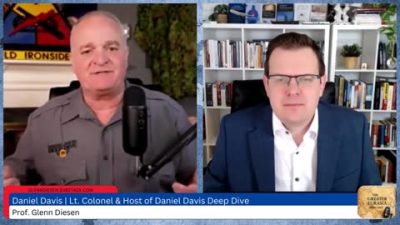
Daniel Davis: China & Russia Will Defend Iran
or go to
Aletho News Archives – Video-Images
From the Archives
Sugar: Killing us Sweetly
Staggering Health Consequences of Sugar on Health of Americans
By Dr. Gary Null | Global Research | February 3, 2014
In September 2013, a bombshell report from Credit Suisse’s Research Institute brought into sharp focus the staggering health consequences of sugar on the health of Americans. The group revealed that approximately “30%–40% of healthcare expenditures in the USA go to help address issues that are closely tied to the excess consumption of sugar.”[1]The figures suggest that our national addiction to sugar runs us an incredible $1 trillion in healthcare costs each year. The Credit Suisse report highlighted several health conditions including coronary heart diseases, type II diabetes and metabolic syndrome, which numerous studies have linked to excessive sugar intake.[2]
Just a year earlier in 2012, a report by Dr. Sanjay Gupta appearing on 60 Minutes featured the work of Dr. Robert Lustig, an endocrinologist from California who gained national attention after a lecture he gave titled “Sugar: The Bitter Truth” went viral in 2009. Lustig’s research has investigated the connection between sugar consumption and the poor health of the American people. He has published twelve articles in peer-reviewed journals identifying sugar as a major factor in the epidemic of degenerative disease that now afflicts our country. The data compiled by Lustig clearly show how excessive sugar consumption plays a key role in the development of many types of cancer, obesity, type II diabetes, hypertension, and heart disease. His research has led him to conclude that 75% of all diseases in America today are brought on by the American lifestyle and are entirely preventable.[3]
Until the airing of this program, no one in the “official” world acknowledged anything wrong with sugar, here is a sampling of some the latest research available to them if they chose to look… continue
Blog Roll
 Aletho News
- Why Trump’s war on Iran will fail
- Lebanon: Between sovereignty and the mirage of normalization
- Ukraine Given $43Bln in Proceeds From Russian Assets Frozen by G7 Since 2024 – Estimates
- The military is babying F-35s to hide their true cost to taxpayers
- Ukrainian military analyst praises use of drones against ‘Russian-Hungarian-Slovak friendship’
- Von der Leyen warns Hungary: We have ways of making you talk
- EU manipulating polls in bid to oust Orban – German opposition leader
- Daniel Davis: China & Russia Will Defend Iran
- The US’ self-directed ‘China nuclear threat’ will only be a waste of effort: Global Times editorial
- Female Iranian academic sentenced to 4 years in prison in France over protesting Israel’s genocide in Gaza
- If Americans Knew
- Israeli leaders want to buy global legitimacy – Not a ceasefire Day 140
- Israel warns of a Ramadan escalation — while doing everything to provoke one
- Democrats Should Release Their 2024 Election Autopsy – and Stop the Gaza Denial
- Israel responsible for 2/3 of press killings worldwide – Not a ceasefire Day 139
- Are the Jews indigenous to Palestine?
- AIPAC Wants to Kill a Bill that would Ensure Israel Complies with Ceasefire
- Former Israeli PM, in Epstein Files, Dreamed of Israeli Eugenics and Pretty Converts
- Israeli settlers join ‘safari’ tour of Palestinian prisoners
- Flooding in Gaza amid rumors of war; fire in West Bank – Not a ceasefire Day 138
- Fourteen Countries Condemn Huckabee’s Support for Israel Taking Over Most of the Middle East
- No Tricks Zone
- Surprising Discovery: Sahara Is Greening…Billions Of Trees Where Once Thought To Be Barren
- New Research Reaffirms Clouds, Aerosols, And Surface Solar Radiation Are ‘Driving The Climate System’
- Germany: Electric Car Catches Fire At Charging Station, Sets Off Local “Inferno”, Widespread Damage
- New Study: Canada’s New Brunswick Was 1°C Warmer Than Today During The Medieval Warm Period
- Coal Power Back In Trend As Globe Tries To Keep Pace With Growing Demand For Power
- New Study: A 4°C Warmer Beaufort Sea Had ‘No Sea Ice’ 11,700 – 8200 Years Ago
- Unfudging The Data: Dutch Meteorological Institute Reinstates Early 20th Centruy Heat Waves It Had Erased Earlier
- German Gas Crisis…Chancellor Merz Allegedly Bans Gas Debate Ahead of Elections!
- Pollen Reconstructions Show The Last Glacial’s Warming Events Were Global, 10x Greater Than Modern
- Germany’s Natural Gas Storage Level Dwindles To Just 28%… Increasingly Critical
 Aletho News