9th Circuit: No Relief for Copyright Troll Righthaven
By Kurt Opsahl | EFF | May 9, 2013
The Ninth Circuit appeals court today turned down copyright troll Righthaven’s last ditch effort to salvage its failed business model, upholding the federal district court’s decision to dismiss its bogus copyright case on the grounds that it never actually held the copyrights it was suing under.
In one of the two cases decided together, EFF represents Tad DiBiase, a criminal justice blogger who provides resources for difficult-to-prosecute “no body” murder cases. Righthaven sued DiBiase in 2010 based on a news article that DiBiase posted to his blog. Instead of paying them off, DiBiase fought back with the help of EFF and its co-counsel at Wilson, Sonsini, Goodrich and Rosati, and helped drive Righthaven out of business.
The leading issue on appeal was whether a newspaper could transfer the right to sue for copyright infringement to a copyright troll, while retaining all other rights in the newspaper articles. (audio of argument) Under the Copyright Act, only the “owner of an exclusive right under a copyright is entitled … to institute an action for any infringement of that particular right committed while he or she is the owner of it.”
Righthaven attempted to get around this rule by drafting a document that pretended to transfer copyrights even as a secret agreement between Righthaven and Stephens Media, the newspaper publisher, ensured that Stephens retained all of the rights to exploit the news articles. As the Ninth Circuit noted, citing a story about Abraham Lincoln: “we conclude that merely calling someone a copyright owner does not make it so.”
Nor was the Ninth Circuit impressed by Righthaven’s argument that the court should implement its intent, even if the contract drafting was not up to snuff. “The problem is not that the district court did not read the contract in accordance with the parties’ intent; the problem is that what the parties intended was invalid under the Copyright Act.” Finally, the Court rejected a desperate attempt by Righthaven to retroactively revise their contract after it started to lose in the courts.
With that, the court affirmed the lower court decisions tossing Righthaven’s cases. Since it had found that the Righthaven had no legal standing, it also vacated the decision in the companion case, Righthaven v. Hoehn, that had found fair use as an alternative grounds on which Righthaven lost.
The troll problem continues to persist, especially porn trolls, but today’s decision effectively ends one pernicious species by establishing that copyright owners cannot sell the right to sue to attorneys looking to make a quick buck off the back of bloggers, while otherwise doing business as usual.
In the appeal, Righthaven was represented by a new attorney, Erik Syverson of Miller Barondess. Righthaven’s CEO and founder, Steven A. Gibson is now an attorney with Dickinson Wright. EFF, Colleen Bal and Evan Stern from the law firm of Wilson Sonsini Goodrich & Rosati, and Las Vegas attorney Chad Bowers represent Mr. DiBiase. The appeal was consolidated with Righthaven v. Hoehn. Mr. Hoehn is represented by Marc Randazza and Jay DeVoy of the Randazza Legal Group.
Related Case
Related articles
- Copyright troll Righthaven finally, completely dead (arstechnica.com)
- Righthaven Finally Bites the Dust; 9th Circuit Court of Appeals Confirms No Standing to Sue (righthavenvictims.com)
BBC Helps Pave Road to War on Syria
News Unspun | May 8, 2013
The Syrian conflict has been accompanied by a distinct media narrative. Within this narrative – which poses a binary division between the forces engaged in the conflict, identifying the players as good (the rebels, who must receive ‘our’ support) and bad (the government) – the role the West must play is that of potential saviour, whose aim is to cautiously observe the conflict so that it may intervene to ‘fix’ the situation, as The Guardian’s Simon Tisdall put it:
So what can Obama do? As Vladimir Putin was expected to make plain to John Kerry in Moscow on Tuesday, he cannot count on Russian (or, therefore, Chinese or UN security council) support to fix Syria.
This sentiment, that the West can put right the Syrian situation, is inherent to most reporting of the conflict. The BBC recently reported that ‘the pressure to act has intensified in recent days after emerging evidence that Syria has used chemical weapons such as the nerve gas sarin’. This statement presents the existence of a ‘pressure to act’ as a given, though the source of such pressure is unidentified. From where is this pressure emerging? As a BBC report points out, public opinion in France, the UK, the US, and Germany is by majority opposed to the possibility of intervention in the conflict through sending arms and military supplies to the Syrian opposition. The BBC is not then speaking on behalf of the public majority. Pressure towards military intervention, to some extent considered a desirable option by the UK government (if it can ‘achieve the result [they] want’, as Cameron put it in an interview with Nick Robinson), is, however, increasingly mounting within the media itself.
Chemical Weapons ‘Evidence’
It is also important to note that the ’emerging evidence’ referred to above is not conclusive despite the wording of this report. The BBC reported again on Monday 6 May that ‘Western powers have said their own investigations have found evidence that government forces have used chemical weapons’. Again, this is simply not the case. ‘Western powers’, regardless of their true intentions, have in fact been very cautious in public about how precisely they present their claims, underscoring the lack of conclusive evidence they have found and that there exists the possibility that chemical weapons had been used by the Syrian government. This misrepresentation by the BBC emerges in a context in which the use of chemical weapons has been signified by the UK and US as the point at which they may become militarily involved in the Syrian conflict. As such these details, so easily misrepresented by the BBC, are of high consequence.
(There are other examples of BBC reports dangerously getting important facts wrong about such issues: just over a year ago, for example, a BBC news report stated that the ‘International Atomic Energy Agency (IAEA) released a report with new evidence showing Iran was secretly working towards obtaining a nuclear weapon’ – in this case the report said no such thing.)
Journalists Pushing for Intervention
In recent reports, certain BBC journalists have appeared more hawkish than government officials themselves. Take for example a question put to Cameron by the BBC’s Nick Robinson:
Do you ever fear that a terrible thing is happening in our world and that Western leaders cannot or will not act because of a fear of another Iraq?
Cameron responded with ‘I do worry about that’, before clarifying that what he has concluded from the ‘Iraq lesson’ is that the UK should only enter into conflicts it can win, that ‘the ability is there’. This is at a far remove from the implication of Robinson’s question that past ‘mistakes’ might prevent the West from playing a righteous humanitarian role. Yet Robinson’s leading question provides the basis for the seemingly unambiguous headline: ‘Cameron fears Iraq effect holding West back in Syria’.
There is a prevailing trend of journalists taking up the position of presenting the case for military intervention in Syria and proactively pushing government representatives to commit to intentions for military action. On the Andrew Marr show on 5 May Jeremy Vine asked Defence Secretary Phillip Hammond a number of questions which demonstrated this pressure by the media for the UK to become involved in the Syrian conflict. When Hammond appeared cautious regarding the prospect of military intervention, stating that the UK would need to engage in discussion with the UK’s ‘allies and partners’, Vine admonished, ‘you’re talking about having a series of meetings’. Another brief exchange emphasises Vine’s apparent desire to see the UK intervene:
Phillip Hammond: ‘Frankly that [the potential use of chemical weapons] is not what’s delivering the tally of 70,000 that have been killed… the majority of these people have been killed by conventional weapons’.
Jeremy Vine: ‘More reason to do something then…’
These comments reflect the consistency of BBC reporting which seems aimed towards creating a case for war. When Carla Del Ponte, of the UN’s Independent International Commission of Inquiry on Syria, told reporters that there were ‘strong, concrete suspicions’ that the rebels – perhaps not as virtuous as would be convenient for States considering providing military support – may have used chemical weapons, the tone of BBC reporting did not suggest that the pressure for military action should be alleviated.
Analysis of Attacks on Syria: Real and Imagined
Taking the case a step further, Jonathan Marcus, the BBC’s diplomatic correspondent, discussed the various ways in which the US could attack Syria. His assessment reads more like a military strategy report than an analysis of events for a news provider. Surgical airstrikes, Marcus said, ‘could be carried out by cruise missiles launched from aircraft well outside Syrian airspace or from warships or submarines in the Mediterranean’, while a wider air campaign, ‘might have to be preceded by a significant effort to destroy missiles, associated radars and command systems and might well involve losses’. Why it is in the public interest that such analysis is brought to us by journalists is unclear. Through Marcus’s piece, which is nothing more than speculation of military strategy on an as yet non-existent, illegal military intervention, the idea of an attack on Syria from outside is normalised further.
The reporting on the air strikes that Israel has carried out on Syria also reveals how normalised warfare has become in BBC reporting, with very little discussion of casualties or of the chaos inflicted on the people who were bombed. What was important, in this story, it seems, is that Israel was protecting itself from weapons that were supposedly being transported. This is summed up in the BBC’s Q&A page on the Israeli airstrikes: in answer to the question ‘Why would Israel attack?’ we are told that ‘the statements from unnamed officials suggest Israel’s actions are defensive.’ If the Syrian government had, for example, attacked the Israeli air force within Israel, to prevent airstrikes on its own territory, it is extremely unlikely that this would be overwhelmingly reported as an act of defence. Yet when Israel bombs another country, BBC journalists and editors happily report such actions as ‘defensive’ measures.
Jonathan Marcus writes that Israel’s airstrikes are ‘designed to send a powerful signal’ (the headline: ‘Israeli air strikes: A warning to Syria’s Assad’). It is worth at this point noting that following the last Israel attack on Syria, in early 2013, Marcus also wrote that this was ‘in one sense pre-emptive, but also a warning’. It was also portrayed as a ‘signal’. That such attacks are continuously reported as warnings and signals, as seemingly rational, and therefore it seems permissible, actions, goes further to normalise them. We might wonder how many attacks Israel would have to inflict on another country before Jonathan Marcus stops referring to the attacks as ‘signals’ and ‘warnings’?
In their seeming urgency to present a case for war, BBC reporters have neglected factual accuracy of reported events. Scepticism towards the unsupported claims of Western governments, insistence upon proof, is also lacking. We are presented with a simplified narrative, of ‘good versus evil’, in which the possibility of misconduct on both sides of the conflict is considered improbable. This style of reporting very much takes its lead from the positions of Western governments. Whitehouse spokesman Jay Carney outlined the position of the US: ‘We are highly sceptical of suggestions that the opposition could have or did use chemical weapons. We find it highly likely that any chemical weapon use that has taken place in Syria was done by the Assad regime, and that remains our position’. The supposed instincts of the US or UK government, despite the inconclusive nature of the evidence, as to the righteousness of the Syrian rebels is not proof of the reality and should not be considered by journalists as such.
Related article
What the NYT Doesn’t Say About Washington’s Syrian Peace Plan
By Michael McGehee | NYTX | May 9, 2013
On page A12 of the May 8, 2013 edition of The New York Times is Steven Lee Myers and Rick Gladstone’s article “U.S. and Russia Plan Conference Aimed at Ending Syrian War,” which opens by stating that, “Russia and the United States announced on Tuesday that they would seek to convene an international conference within weeks aimed at ending the civil war in Syria, jointly intensifying their diplomatic pressure on the combatants to peacefully settle a conflict that has taken more than 70,000 lives and left millions displaced and desperate.” This is a most welcoming turn of events, especially for the people of Syria who have taken the brunt of the civil war, and hopefully the conference bears fruit quickly.
But—and there is one of these stubborn conjunctions—it is important for the purpose of history to note that for two years now the United States has blocked any peaceful resolution, and has instead pushed the conflict further and deeper into violence and war.
It is Russia who has long pushed for a political reconciliation.
In October 2011 RIA Novosti reported that “Moscow calls on the UN Security Council to continue the search for a balanced approach toward the political crisis in Syria based on a draft resolution prepared by Russia and China, Russia’s envoy to the UN said,” with the phrase “balanced” being a jab at how Washington and its allies have put all the requirements on the Syrian government to end violence, and not the rebel forces whom they have been backing.
Writing in December of 2011, Egypt Independent reported that, “Deputy Russian Foreign Minister Sergey Ryabkov on Monday emphasized the need for dialogue and reconciliation in Syria.”
Even in December of 2012 Voice of America reported that, “Russian Foreign Minister Sergei Lavrov has echoed a call from an international peace envoy to resolve Syria’s civil war through a government-backed national dialogue and political process.”
The New York Times also reported on Russian efforts that same month when they informed readers that, “Moscow has made a muscular push for a political solution in recent days.”
While it is inaccurate to imply that Russia’s search for “a political solution” was “in recent days,” it is more disturbing that phrases like “muscular push” are used to describe such an effort, while the “paper of record” has routinely tried to make a case for war (see here and here).
A month ago today (May 8, 2013) the Syrian rebels detonated a car bomb near a school in Damascus, killing 14, and wounding dozens of others. According to Reuters, “State television said the explosion had occurred near a school in Sabaa Bahrat, a heavily populated area that also houses the Central Bank and the Finance Ministry. It said 53 people were wounded.”
Washington failed to condemn the act of terror.
Likewise when Daily Mail ran an article last December with this headline: “Syria rebels ‘beheaded a Christian and fed him to the dogs’ as fears grow over Islamist atrocities.” Apparently there is no “red line” for the rebels to cross.
And there are dozens and dozens of similar incidents. Not once has Washington put pressure on the rebels to stop their senseless violence, or argued for an international force to intervene and defend the Syrian people from the terrorists. Nor have Western establishment pundits like Bill Keller argued for such things. And even though al Qaeda is active in the country, beheading so-called infidels, or that the Syrian rebels are likely using chemical weapons, Washington and its media parrots have instead favored escalation. Just over a week ago The New York Times reported that “The White House is once again considering supplying weapons to Syria’s armed opposition.” This comes after the car bombing across the street from a children’s school.
And now Washington wants peace, as Myers and Gladstone tell us that “The announcement appeared to signal a strong desire by both countries to halt what has been a dangerous escalation in the conflict.”
Perhaps it has become clear that the rebels cannot win this war on their own, and the only reasonable way Bashar Assad will be brought down is another U.S. war which will elevate the jihadis into power. Perhaps President Obama is imagining one of these rebel jihadis attacking an American embassy in Damascus, and the Republicans foaming at the mouth for another politicized inquiry into how such an attack could happen, as they currently are over the embassy attack in Benghazi, Libya last year.
Whatever the reasons for the turnaround it is gladly welcomed. The people of Syria deserve a rescue from the terror Washington, Turkey, Saudi Arabia, Qatar, and others, have unleashed on them. Though we should remain sober and note that the “conflict that has taken more than 70,000 lives and left millions displaced and desperate” is largely of Washington’s doings, and could have been avoided years ago if Uncle Sam followed the lead of Moscow and Bejing, both of whom had the “strong desire . . . to halt what has been a dangerous escalation in the conflict.”
We should also recall that The New York Times derided Russia for their “strong desire” and even went so far as to equate it with “effectively toss[ing] a life preserver to President Bashar al-Assad, seemingly unwilling to see a pivotal ally and once stalwart member of the socialist bloc sink beneath the waves of the Arab Spring.” Russia was just as clear then as they are now: they did not want to go along with efforts that would worsen the situation, but now that the situation has gotten considerably worse, and Washington is warming to the idea of a political solution, now The New York Times is presenting this as a positive development.
US drone strikes illegal – Pakistani court
RT | May 10, 2013
A high court in Pakistan has ruled that US drone strikes in the country’s tribal belt should be considered war crimes, since the attacks resulted in the deaths of innocent people.
The Peshawar High Court has recommended the Pakistani government advance a resolution against the attacks in the United Nations. The court issued its verdict on the CIA-run air strikes in response to four petitions charging the attacks killed civilians and caused “collateral damage.”
Chief Justice Dost Muhammad Khan heard the petitions, and ruled that drone strikes on sovereign Pakistani territory were illegal, inhumane and a violation of the UN charter on human rights.
“The government of Pakistan must ensure that no drone strike takes place in the future,” the court said on Thursday, according to the Press Trust of India.
The court also recommended that if the US rejects these findings in the UN, Pakistan should break off relations with Washington: “If the US vetoes the resolution, then the country should think about breaking diplomatic ties with the US.”
The Pakistani case was filed last year by the Foundation for Fundamental Rights, a charity based in Islamabad, on behalf of the families of victims killed in a drone attack on a tribal jirga, including more than 50 tribal elders and a number of government officials.
According to a report submitted by political officials of North Waziristan Agency, 896 Pakistani residents of the region were killed in the last five years ending December 2012, and 209 were seriously injured. A report by the South Waziristan Agency showed that 70 drone strikes were carried out in the last five years ending June 2012, in which 553 people were killed and 126 injured.
“In view of the established facts, undeniable in nature, under the UN Charter and Conventions, the people of Pakistan have every right to ask the security forces either to prevent such strikes by force or to shoot down intruding drones,” the court verdict said.
Shahzad Akbar, a lawyer for victims in the case, hailed this as a “landmark” judgment: “Drone victims in Waziristan will now get some justice after a long wait. This judgment will also prove to be a test for the new government: If drone strikes continue and the government fails to act, it will run the risk of contempt of court,” he said, according to the website of legal action charity Reprieve.
The United States regularly targets Al-Qaeda and Taliban militants in Pakistan’s mountainous tribal regions accused of carrying out cross-border attacks in Afghanistan. Washington claims the operations are done in cooperation with Pakistan’s military.
Human rights groups, however, criticize the “collateral damage” of innocent civilian deaths caused by the attacks, and point to the shroud of secrecy surrounding drone use.
“Drone attacks on northwest Pakistan, which commenced under former US President George W. Bush in 2004, have increased sevenfold under Obama and have caused the deaths of thousands of suspected terrorists and at least hundreds of civilians in Pakistan and Yemen,” Bloomberg reported in April.
Even some of America’s leading commanders fear blowback over the indiscriminate use of this new military technology.
“The resentment created” by Washington’s newfound reliance on drone strikes “is much greater than the average American appreciates,” General Stanley McChrystal, the former top commander in Afghanistan, told Reuters in January. The use of drones adds to “the perception of American arrogance that says, ‘We can fly where we want, we can shoot where we want, because we can.”’
At the same time, America’s foreign critics seem to be gaining ground as Washington continues to pursue drone warfare.
Former Pakistani Prime Minister Nawaz Sharif, whose Pakistan Muslim League (PML-N) party is considered the favorite in this Saturday’s election, recently vowed that he would not permit drone attacks on Pakistani soil.
“Drone attacks are against the national sovereignty and a challenge for the country’s autonomy and independence,” he said.
Clive Stafford Smith of the London-based group Reprieve said the court’s ruling is a step toward greater transparency in Washington’s use of drone technology: “Today’s momentous decision by the Peshawar High Court shines the first rays of accountability onto the CIA’s secret drone war,” the Independent quoted him as saying.
The innocent people killed by American drone strikes are civilian victims of US war crimes, he added.
Related article
‘Government at Its Absolute Worst’ in Texas
By CAMERON LANGFORD | Courthouse News | May 8, 2013
AUSTIN – Trigger-happy Texas lawmen shot up a man’s car and ran him off the road, coming “within inches” of killing him, then found that “they had the wrong person,” the man claims in court.
Miguel Montanez sued the city of San Marcos, Hays County, Hays County Sheriff’s deputies Joe Faulkner and David Campbell, and John Doe Hays County SWAT team members 1-7 in Federal Court.
San Marcos, the seat of Hays County, is in Central Texas, south of Austin.
“On July 12, 2012, plaintiff Montanez was driving to work in the early morning. Montanez was not committing any crimes or wanted for anything. In fact, Montanez is a fully law abiding and employed citizen,” the complaint states.
“Out of nowhere, the Hays County SWAT Team and San Marcos Police Department pulled up on Montanez’s car and literally opened fire on it. The SWAT team also slammed their SWAT truck into Montanez’s car. The defendants engaged in this insane behavior even though Montanez was posing no threat whatsoever.
“By the grace of God, Montanez dove down in the car and narrowly avoided the bullets flying into his car. The defendants subsequently arrested Montanez but later let him go and did not charge him with anything. It turns out they had the wrong person. The defendants’ actions caused Montanez to sustain a very serious back injury, which requires a surgery.
“The actions by the defendants constitute government at its absolute worst. The defendants literally were within inches of killing a completely innocent citizen and did in fact cause him serious bodily and mental injuries. To this day, they have not apologized to Montanez.”
Montanez seeks damages for civil rights violations and excessive force.
He is represented by Adam Loewy of Austin.
Three rapes happen every hour in US military: Report
Press TV – May 9, 2013
A new report by the US Defense Department, Pentagon, says almost three rapes occur every hour in the US military, raising serious concern about the soaring rate of sexual assault among US servicemen.
According to the Pentagon, sexual assaults in the military have increased to the alarming level of 70 per day or three every hour, the Washington Post reported on Tuesday.
The report added that 26,000 service members were sexually assaulted in 2012, a 35-percent increase since 2010 when 19,000 such cases were reported.
However, the overall rate of sexual assault in the US military may be higher, as many victims fail to report out of fear of vengeance or lack of justice under the military’s system of prosecution, the report added.
“The more closed and hierarchical an institution is, the more the victim is stigmatized and the rapist gets away with it,” said Susan Brooks, pastor and volunteer rape crisis counselor.
Brooks went on to condemn the US military for maintaining a culture of gender and power relations, which she says produces the rape culture among service members.
Many high-ranking US military commanders have recently been convicted and relieved of duties for multiple sexual offenses and corruption over the years.
On May 6, authorities said Lieutenant Colonel Jeff Krusinski, director of the sexual assault prevention program for the US Air Force, has himself been detained for sexually assaulting a woman not far from the military headquarters in Arlington, Virginia.
In 2012, over 30 male Air Force boot camp trainers were cited for sexually harassing, abusing and raping at least 59 military recruits at Lackland Air Force Base in Texas.
Related article
US: Senate plan could make Illinois ‘bullseye’ for nuclear waste
By Kari Lydersen – MIDWEST ENERGY NEWS – 05/08/2013
A proposal in the U.S. Senate has advocates concerned that Illinois could become a leading contender for storing nuclear waste from around the nation.
The discussion draft of a Senate bill released April 25 and open for public comment until May 24 launches a process to create a “centralized interim storage” site (CIS) for nuclear waste that is currently stored at reactors nationwide.
And a June 2012 study [PDF] by the Oak Ridge National Laboratory using spatial modeling suggests that northern Illinois would be among the top possibilities.
Many nuclear energy critics oppose the concept of centralized interim storage, saying that the long-distance transport of nuclear waste to such sites would pose serious risks, and that interim storage sites could become financial and safety burdens especially if a long-term waste repository is never created.
“It would be a radioactive waste shell game on roads, rails and waterways,” said Kevin Kamps of the Maryland-based watchdog group Beyond Nuclear, talking by teleconference with anti-nuclear activists in Chicago gathered at the Nuclear Energy Information Service office last week. “We could have de facto permanent parking lot dumps.”
The draft bill, the Nuclear Waste Administration Act of 2013, is meant to carry out the recommendations of the Blue Ribbon Commission on America’s Nuclear Future [PDF], convened by the Department of Energy in 2010. Sponsored by Sens. Dianne Feinstein (D-Calif.), Lamar Alexander (R-Tenn.), Ron Wyden (D-Ore.) and Lisa Murkowski (R-Alaska), the bill deals with various nuclear waste issues including, centralized interim storage.
Public comments are also being accepted on additions proposed by Feinstein and Alexander specifically regarding centralized interim storage.
“There is no question that Illinois generally and Chicago specifically would see a high volume of [nuclear waste] traffic if the nation opts for centralized interim storage facilities,” said Dave Kraft, executive director of the Nuclear Energy Information Service in Chicago. “We’re not merely at risk, we’re the bullseye.”
A ‘flawed plan’?
Currently most nuclear waste is stored on-site at plants, in the form of rods housed either in dry casks or pools. Critics say the pools pose serious potential danger in the case of a natural disaster, terrorist attack or accident, including a loss of electric power.
Kamps and other nuclear watchdogs advocate improving waste storage at the site of nuclear plants, including removing fuel rods from pools and storing them in dry casks.
“Waste needs to stay as close to the point of origin as possible, as safely as possible,” said Kamps. “There is no easy answer.”
Eventually, Kamps and other activists want to see a long-term storage site created in a geologically and geographically appropriate place. That was the idea behind the proposed long-term repository at Yucca Mountain, but that plan collapsed in the face of political opposition and complaints that it was not a suitable location.
Many industry critics see the interim storage plan pushed forth in the draft bill as a distraction, rather than a step in the process of finding a satisfactory long-term repository.
In a statement about the draft bill, the national watchdog group Public Citizen stated it “does little to correct the fundamental flaws in our country’s approach to nuclear waste management…Consolidated interim storage is an old plan that didn’t work when it was first introduced 30 years ago, or any of the myriad times it’s been proposed, because it does nothing to address broader storage and disposal issues.”
But Feinstein, in a statement released by the Senate Energy and Natural Resources Committee, said the bill “establishes a desperately needed nuclear waste policy, employing a consent-based approach that will expedite waste removal from at-risk locations and decommissioned plants.”
Who pays?
While Yucca Mountain appears to be off the table, government and industry actors have long been exploring the idea of long-term storage at the Department of Energy’s Savannah River, South Carolina site or at the Waste Isolation Pilot Project (WIPP) in Carlsbad, New Mexico, where defense industry radioactive waste is currently stored.
The push for centralized interim storage is driven in part by the risks and public concerns posed by waste stored onsite at reactors. Sen. Wyden’s constituents are particularly concerned about risk from nuclear plants along the Columbia River, including the closed-down Hanford site upstream in Washington.
The Blue Ribbon Commission’s January 2012 report proposed legislative changes which are enshrined in the proposed act. The commission noted that under current law one interim storage facility can be built, and only after a long-term repository is licensed. A similar provision was included in the 2012 Nuclear Waste Administration Act, which did not pass. The current proposal calls for multiple interim sites to potentially be built, and does not require a long-term repository be in the pipeline.
The discussion draft of the bill lays out a process for choosing a site, including creating evaluation criteria for sites, holding public hearings and “solicit[ing] states and communities to volunteer sites,” as noted in a Department of Energy summary. Sen. Alexander called for additions to the draft including a requirement the government issue a request for proposals for pilot storage sites within 180 days.
The Oak Ridge study includes various maps with proposed storage locations based on different factors including population along routes and transportation distance. In every scenario, northern Illinois is a likely contender.
The bill notes that consent from local officials, communities and Native American tribes is mandatory; and that any plan must be approved by Congress. Kamps said, however, that the definition of consent is vague, and the industry is known to have much influence with Congress.
“At least there’s some talk of consent,” he said. “But nuclear power is one of the most powerful lobbies in Washington.”
The bill would also create a new federal agency, the Nuclear Waste Administration, that would take responsibility for the waste. Utilities with nuclear plants would continue paying into a capital fund meant to finance nuclear waste storage. Currently, about $765 million annually is paid into the fund, according to the Nuclear Energy Information Service.
However, if no long-term repository is identified by 2025, utilities could be released from the capital fund obligation.
In Kamps’ words, this means that “[utility] ratepayers and taxpayers, otherwise known as the American people,” will be paying for the waste storage for many years to come.
“The nuclear industry has a few lawyers on its team,” Kamps said. “If they can get out of paying into the capital fund, I think they will.”
Related articles
- Hanford nuclear waste tanks at risk of explosion (alethonews.wordpress.com)
- Congress needs to focus on how nuclear waste is stored now (thehill.com)
Israeli Army Demolishes Shops Near Jenin
By Saed Bannoura | IMEMC & Agencies | May 09, 2013
Israeli soldiers invaded, on Thursday morning, the Barta’a village, near the northern West Bank city of Jenin, declared the village a closed military zone, and demolished 12 shops.
Ghassan Qabha, head of the Barta’a village council, reported that the army invaded the village after sealing all of its entrances, declared it a closed military zone and demolished the twelve structures.
Qabha added that 120 Palestinians work in the demolished buildings, and that most of them are the sole breadwinners in their families.
Furthermore, soldiers handed military orders to eight shop owners informing them the army will be demolishing their shops under the pretext that they were built without construction permits.
Qabha strongly denounced the Israeli attack, and said that the ongoing violations and assaults against the villagers aim at forcing them out of their village that became isolated and surrounded by Israel’s Annexation Wall and its illegal settlements.
Related articles
- Army Demolishes Three Homes In Occupied Jerusalem (imemc.org)
- Israeli occupation forces raid different areas of Jenin while settlers uproot olive trees (occupiedpalestine.wordpress.com)
- Army Kidnaps 13 Palestinians In Bethlehem, 2 In Jenin (imemc.org)
- Israel detains Hamas leader’s sons in raid (alethonews.wordpress.com)
UNASUR to Create Military Force
By Laura Benitez | The Argentina Independent | May 9, 2013
The Union of South American Nations (UNASUR) has announced that it will create a united defence body to promote democratic stability among its member countries.
Military delegates of Argentina, Brazil, and Ecuador concluded a two day meeting yesterday in Quito, and agreed on creating the first South American Defence College (ESUDE) – a safety training centre with the aim of turning “the regions into a zone of peace”.
UNASUR has said that the idea behind the project is to “eliminate outdated visions that have formed our military, with manuals and taxes from foreign powers.
“The goal is to start from scratch and consider a defence doctrine, without starting from the premise of opposing countries. It is important to define our role in the military, to assume responsibility for prevention, border control or emergency responses.
“We want to create a body of higher and postgraduate education to create a regional identity for civilians and our military, and to avoid interference of other countries or geopolitical zones,” a UNASUR spokesperson said.
The ESUDE proposal paper will be presented at the next meeting of the executive body for the South American Defence Council in Lima, Peru on the 16th and 17th May. Members who attended yesterday’s meeting in Quito will meet again during the second week of July in Buenos Aires, to define the Esude proposal.
One of the issues that is expected to be up for debate in the following meetings is the level of participation in the armed forces from each country.
The initiative already has the support of other member countries, including Argentina, Brazil, Ecuador, Peru, Venezuela, Guyana, Suriname, and Uruguay.
Related articles
- UNASUR Urges Respect for Venezuela’s Electoral Results (venezuelasolidarity.co.uk)
- U.S. refuses to recognize Maduro’s presidential win in Venezuela polls (panarmenian.net)
Brazil and Argentina Sign Agreement to Build Research and Radioisotope Reactors
Prensa Latina | May 8, 2013
Rio de Janeiro – Atomic power agencies from Brazil and Argentina signed an agreement to build two nuclear reactors for research and production of radioisotopes, said the Ministry of Science and Technology (MCT) today.
The agreement, signed by the Brazilian National Commission for Nuclear Energy (CNEN) and the National Commission of Atomic Energy (CNEA), is centered on the construction of two reactors: the Brazilian Multipurpose Reasearch Reactor (RMB) and the RA-10 in Argentina, said a spokesman from the MCT.
The action meets the Bilateral Integration and Coordination Mechanism, established in the Joint Declaration of 2008 and signed by Presidents Cristina Fernandez and Luiz Inacio Lula Da Silva, said the source.
To carry out the project, both sides created the Bi-National Commission on Nuclear Energy (COBEN) which will be in charge of the construction of both reactors.
The atomic agencies of these South American countries have closely collaborated since 2008. Argentina provides Brazil 30 percent of the Molybdenum 99 (Mo99) radioisotopes which are indispensable in the diagnosis and treatment of cancer.
Since 2011 both countries agreed to move forward on greater integration, and carry out a joint project to develop multipurpose reactors, demonstrating the mutual interest in increasing the peaceful use of nuclear energy.
Both reactors, once manufactured and functioning, will have a total capacity to cover 40 percent of the world radioisotope market.
At the present, only France, Canada, South Africa, Australia and Argentina have the technology to produce radioisotopes.
Correa Reiterates Warning Against U.S. Interference
Prensa Latina | May 8, 2013
 Quito – President Rafael Correa reiterated his warning to U.S. Ambassador, Adam Namm, to comply with his diplomatic role instead of involving himself in anti-government political activities.
In conversations with reporters in the city of Guayaquil, the Ecuadorian president discounted the expulsion of the U.S. ambassador for now, but recommended that he be more considerate with this country.
Correa described the U.S. ambassador’s participation in an activity organized by a journalists’ guild opposed to the government, as “rude,” where the alleged lack of freedom of speech in Ecuador was criticized.
“Why don’t the other ambassadors participate?” Correa asked. “Rarely have we seen so much betrayal of a calling by the U.S. ambassador, who is really trying to create an uncomfortable situation,” the president said.
Citing Namm’s words that Washington is very concerned, Correa replied that he could go home and worry from there.
“This fact, I think, was a slip by the ambassador, which says a lot about his vision. He believes that he comes to impose conditions, and who has told him that is his role?” Correa asked.
According to Correa, the action is scarcely relevant, but warned against it continuing. “Make no mistake, we are facing immense power,” he said.
Related article
The New York Times on Venezuela and Honduras: A Case of Journalistic Misconduct
By Keane Bhatt | NACLA | May 8 2013
The day after Venezuelan President Hugo Chávez died, New York Times reporter Lizette Alvarez provided a sympathetic portrayal of “outpourings of raucous celebration and, to many, cautious optimism for the future” in Miami-Dade County, Florida. Her article, “Venezuelan Expatriates See a Reason to Celebrate,” noted that many had come to Miami to escape Chávez’s “iron grip on the nation,” and quoted a Venezuelan computer software consultant who said, bluntly: “We had a dictator. There were no laws, no justice.”1
A credulous reader of Alvarez’s report would have no idea that since 1998, Chávez had triumphed in 14 of 15 elections or referenda, all of which were deemed free and fair by international monitors. Chávez’s most recent reelection, won by an 11-point margin, boasted an 81% participation rate; former president Jimmy Carter described the “election process in Venezuela” as “the best in the world” out of 92 cases that the Carter Center had evaluated (an endorsement that, to date, has never been reported by the Times).2
In contrast to Alvarez, who allowed her quotation describing Chávez as a dictator to stand uncontested, Times reporter Neela Banerjee in 2008 cited false accusations hurled at President Obama by opponents—“he is a Muslim who attended a madrassa in Indonesia as a boy and was sworn into office on the Koran”—but immediately invalidated them: “In fact, he is a Christian who was sworn in on a Bible,” she wrote in her next sentence.3 At the Times, it seems, facts are deployed on a case-by-case basis.
The Times editorial board was even more dishonest in the wake of Chávez’s death: “The Bush administration badly damaged Washington’s reputation throughout Latin America when it unwisely blessed a failed 2002 military coup attempt against Mr. Chávez,” wrote the paper, concealing its editorial board’s own role in blessing that very coup at the time. In 2002, with the “resignation [sic] of President Hugo Chávez, Venezuelan democracy is no longer threatened by a would-be dictator,” declared a Times editorial, bizarrely adding that “Washington never publicly demonized Mr. Chávez,” that actual dictator Pedro Carmona was simply “a respected business leader,” and that the U.S.-backed, two-day coup was “a purely Venezuelan affair.”4
The editorial board—an initial champion of the de facto regime that issued a diktat within hours to dissolve practically every branch of government, including Venezuela’s National Assembly and Supreme Court—would 11 years later brazenly criticize Chávez after his death for having “dominated Venezuelan politics for 14 years with authoritarian methods.” The newspaper argued that Chávez’s government “weakened judicial independence, intimidated political opponents and human rights defenders, and ignored rampant, and often deadly, violence by the police and prison guards.” After lambasting Chávez’s record, the piece concluded that the United States “should now make clear its support for democratic and civilian transition in a post-Chávez Venezuela”—as if Chávez were anyone other than a fairly elected leader with an overwhelming popular mandate.
But there is a country currently in the grip of an undemocratic, illegitimate government that much more closely corresponds with the Times editorial board’s depiction of Venezuela: Honduras, which in 2009 suffered a coup d’état that deposed its freely elected, left-leaning president, Manuel Zelaya.
While the Times criticized Chávez for weakening judicial independence, the newspaper could not be bothered to even report on the extraordinary institutional breakdown of Honduras, when in December 2012, its Congress illegally sacked four Supreme Court justices who voted against a law proposed by the president, Porfirio Lobo, who himself had came to power in 2009 in repressive, sham elections held under a post-coup military dictatorship and boycotted by most international election observers.
When it comes to intimidation of political opponents and human rights defenders, Venezuela’s problems are almost imperceptible compared with those of Honduras. Over 14 years under Chávez, Venezuela has had no record of disappearances or murders of such individuals. In post-coup Honduras, the practice is now endemic. In one year alone—2012—at least four leaders of the Zelaya-organized opposition party Libre were slain, including mayoral candidate Edgardo Adalid Motiño. In addition, two dozen journalists and 70 members of the LGBT community have been killed since the coup, including prominent LGBT anti-coup activists like Walter Tróchez and Erick Martinez (neither case was sufficiently notable so as to warrant a mention in the Times).
And although the Times editors decried police violence in Venezuela, the Honduran police systematically engage in extrajudicial killings of their own citizens. In December 2012, Julieta Castellanos, the chancellor of Honduras’s largest university, presented the findings of a report detailing 149 killings committed by the Honduran National Police over the past two years under Porfirio Lobo. In the face of over six killings by the police a month, she warned, “It is alarming that the police themselves are the ones killing people in this country. The public is in a state of defenselessness…”5 Such alarm is further justified by Lobo’s appointment of Juan Carlos “El Tigre” Bonilla as director of the National Police, despite reports that he once oversaw death squads.6
Finally, the Times editorial board lamented Venezuelan prison violence. But consider for context that the NGO Venezuelan Prisons Observatory, consistently critical of Chávez, reported 591 prison deaths in 2012 for the country of 30 million.7 In Honduras, a country with slightly more than a quarter of Venezuela’s population, over 360 died in just one incident—a 2012 prison fire in Comayagua, in which prison authorities kept firefighters from handling the conflagration for 30 crucial minutes while the inmates’ doors remained locked. According to survivors, the guards ignored their pleas for help as many burned alive.8
Given the contrast in the two countries’ democratic credentials and human rights records, obvious questions arise: How has The New York Times portrayed Venezuela and Honduras since Honduras’s 2009 coup d’état? If, in both its news and opinion pages, the Times regularly prints accusations of Venezuelan authoritarianism, what terminology has the Times employed to describe the military government headed by Roberto Micheletti, which assumed power after Zelaya’s overthrow, or the illegitimate Lobo administration that succeeded it?
The answer is revealing. For almost four years, the Times has maintained a double standard that is literally unfailing. Not a single contributor in the Times’ over 100 news and opinion articles has ever referred to the Honduran government as “autocratic,” “undemocratic,” or “authoritarian.” Nor have Times writers ever once labeled Micheletti or Lobo “despots,” “tyrants,” “strongmen,” “dictators,” or “caudillos.”
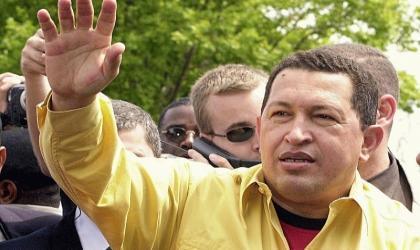 At the same time, from June 28, 2009, to March 7, 2013, the newspaper has printed at least 15 news and opinion articles in which its contributors have used any number of the aforementioned epithets for Chávez.9 (This methodology excludes the typically vitriolic anti-Chávez blog entries that the paper features on its website, as well as print pieces like Lizette Alvarez’s, which quote someone describing Chávez as a dictator.)
During this period, the paper’s news reporters themselves have referred to Chávez as a “despot,” an “authoritarian ruler,” and an “autocrat”; its opinion writers have deemed him a “petro-dictator,” an “indomitable strongman,” a “brutal neo-authoritarian,” a “warmonger,” and a “colonel-turned-oil-sultan.” On the eve of Venezuela’s October elections, a Times op-ed managed to call the Chávez administration “authoritarian” no fewer than three times in 800 words.10 And Chávez’s death offered no reprieve from this tendency: On March 6, reporter Simon Romero wrote about Chávez’s gait—he “strutt[ed] like the strongman in a caudillo novel”—and concluded that Chávez had “become, indeed, a caudillo.”11
These most basic violations of journalistic standards—referring to a democratically elected leader as a ruler with absolute power—does not simply end with its writers. On July 24, 2011, Bill Keller, then the newspaper’s executive editor, wrote the piece, “Why Tyrants Love the Murdoch Scandal,” which included a graphic of Zimbabwe’s Robert Mugabe side by side with Chávez. Keller referred to them both when he concluded, “Autocrats will be autocrats.”12
But if despotism, defined as the cruel and oppressive exercise of absolute power, is to have any meaning, it must apply to the Honduran government, whose military—not just its police—routinely kills innocent civilians. On May 26, 2012, for example, Honduran special forces killed 15-year-old Ebed Yanez, and high-level officers allegedly managed its cover-up by dispatching “six to eight masked soldiers in dark uniforms” to the teenager’s body, poking it with rifles, and “[picking] up the empty bullet casings” to conceal evidence that could be linked back to the military, according to the Associated Press.13
The paradox of the Times—its derisive posture toward what it considers antidemocratic tendencies in Venezuela as it simultaneously avoids the same treatment of Honduras’s inarguable repression—can only be explained by one crucial factor: Honduras has been a firm U.S. ally since Zelaya’s overthrow.
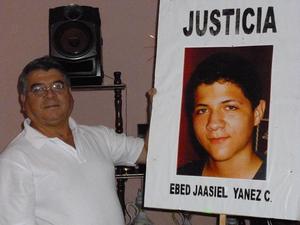
Photo Credit: SOA Watch
In fact, the unit accused of killing Yanez was armed, trained, and vetted by the United States—even its trucks were donated by the U.S. government. As the AP further reported, in 2012, the U.S. Defense Department appropriated $67.4 million for Honduran military contracts, with an additional “$89 million in annual spending to maintain Joint Task Force Bravo, a 600-member U.S. unit based at Soto Cano Air Base.” Furthermore, “neither the State Department nor the Pentagon could provide details explaining a 2011 $1.3 billion authorization for exports of military electronics to Honduras.”14
The Times’ scrupulous, unerring record of avoiding disparaging characterizations of Honduras’s human-rights-violating government may explain why it has never once made reference to 94 Congress members’ demand that the Obama administration withhold U.S. assistance to the Honduran military and police in March 2012. Nor has the paper reported on 84 Congress members’ letter to Secretary of State Hillary Clinton later that year, condemning Honduras’s “institutional breakdown” and “judicial impunity.”15
When evaluating the newspaper’s relative silence on Honduras, it is worth imagining if Chávez were to have ascended to power in as dubious a manner as Lobo; if for years Venezuela’s government permitted its security apparatus to regularly kill civilians; or if the Chávez administration presided over conditions of impunity under which political opponents and human rights activists were disappeared, tortured, and killed.
As a careful examination of the language and coverage of nearly four years of New York Times articles reveals, concern for freedom and democracy in Latin America has not been an honest concern for the liberal media institution. The paper’s unwavering conformity to the posture of the U.S. State Department—consistently vilifying an official U.S. enemy while systematically downplaying the crimes of a U.S. ally—shows that its foremost priority is to subordinate itself to the priorities of Washington.
1. Lizette Alvarez, ““Venezuelan Expatriates See a Reason to Celebrate,” The New York Times, March 6, 2013.
2. Keane Bhatt, “A Hall of Shame for Venezuelan Elections Coverage,” Manufacturing Contempt (blog), nacla.org, October 8, 2012.
3. Neela Banerjee, “Obama Walks a Difficult Path as He Courts Jewish Voters,” The New York Times, March 1, 2008.
4. “Hugo Chávez Departs,” The New York Times, April 13, 2002.
5. “Policías de Honduras, Responsables de 149 Muertes Violentas,” La Prensa, December 3, 2012.
6. Katherine Corcoran and Martha Mendoza, “Juan Carlos Bonilla Valladares, Honduras Police Chief, Investigated In Killing,” Associated Press, June 1, 2012.
7. Fabiola Sánchez, “Venezuela Prison Deaths: 591 Detainees Killed Country’s Jails Last Year,” Associated Press, January 31, 2013.
8. “Hundreds Killed in ‘Hellish’ Fire at Prison in Honduras,” Associated Press, February 16, 2012.
9. Author’s research, using LexisNexis database searches for identical terms in reference to the two countries. For a detailed list of examples, contact him at keane.l.bhatt@gmail.com.
10. Francisco Toro, “How Hugo Chávez Became Irrelevant,” The New York Times, October 6, 2012.
11. Simon Romero, “Hugo Chávez, Leader Who Transformed Venezuela, Dies at 58,” The New York Times, March 6, 2013.
12. Bill Keller, “Why Tyrants Love the Murdoch Scandal,” The New York Times Magazine, July 24, 2011.
13. Alberto Arce, “Dad Seeks Justice for Slain Son in Broken Honduras,” Associated Press, November 12, 2012.
14. Martha Mendoza, “US Military Expands Its Drug War in Latin America,” Associated Press, February 3, 2013.
15. Office of Representative Jan Schakowsky, “94 House Members Send Letter to Secretary Clinton Calling for Suspension of Assistance to Honduras,” March 13, 2012. Correspondence from Jared Polis et al. to Secretary of State Hillary Clinton, June 26, 2012.
Related articles
- U.S. Seeks to Get Rid of Left Governments in Latin America (alethonews.wordpress.com)
- The New Yorker Should Ignore Jon Lee Anderson and Issue a Correction on Venezuela (alethonews.wordpress.com)
- The New Yorker Corrects Two Errors on Venezuela, Refuses a Third (alethonews.wordpress.com)
- Nicolas Maduro did not Steal the Venezuelan Elections (venezuelanalysis.com)
- Honduras: Murdered Lawyer’s Brother Killed in Aguán (alethonews.wordpress.com)
- NPR Examines One Side of Honduran “Model Cities” Debate (alethonews.wordpress.com)
- IMF Ignores Proven Alternatives With Recommendations to Honduras (alethonews.wordpress.com)
- Killings Continue in Bajo Aguán as New Report Documents Abuses by U.S.-Trained Honduran Special Forces Unit (alethonews.wordpress.com)
- Honduras: Miguel Facusse is Tragically Misunderstood (alethonews.wordpress.com)
Featured Video

Rewriting the risk? Inside the government’s vaccine safety messaging
or go to
Aletho News Archives – Video-Images
Book Review
“Davos Can Really Replace the UN”
Inside the book that maps the architecture behind global governance — from the Epstein files to the Pact for the Future
Lies are Unbekoming | April 1, 2026
On June 13, 2019, the United Nations and the World Economic Forum signed a partnership deal to “accelerate the implementation of the 2030 Agenda for Sustainable Development.” That same evening, WEF president Börge Brende — Norway’s former Foreign Minister — had dinner with Jeffrey Epstein at Epstein’s Manhattan townhouse. The Epstein files, released January 2026, contain an exchange between the two from the previous year. Epstein to Brende: “Davos can really replace the UN. C21, cyber, crypto . genetics… intl coordination.” Brende back to Epstein: “Exactly — we need a new global architecture. World Economic Forum (Davos) is uniquely positioned — public private.”
The next day, the UN General Assembly adopted the framework for restructuring global governance.
That sequence — the partnership signing, the Epstein dinner, the candid admission about replacing the UN with a public-private architecture, and then the formal adoption — opens Jacob Nordangård’s The Digital World Brain. Pages two and three. Footnoted to the UN resolution number, the Epstein files, and the General Assembly record.
I keep coming back to it because it captures what this book does that almost nothing else in the independent research space manages. I’ve followed Jacob’s work for years now and interviewed him about his research. Each book peels back another layer of the same institutional architecture, and each time I think he’s reached the limit of what can be documented, the next one goes further. Nordangård doesn’t speculate. He doesn’t editorialize much. He lays institutional actions next to each other in chronological order and lets the pattern announce itself. … continue
Blog Roll
 Aletho News
- Iran, US receive Pakistan-mediated plan for ceasefire then final deal
- Iran submits demands for end to war as mediators scramble ahead of Trump deadline
- Iran Threatens Retaliatory Strike on Stargate AI Project in UAE
- US sent ‘a lot’ of arms to Iranian protesters – Trump
- Barak Ravid Launders Deception To Allow Trump To Back Off Of His Power Plant Threat – Again
- REWRITING THE RISK? INSIDE THE GOVERNMENT’S VACCINE SAFETY MESSAGING
- “Davos Can Really Replace the UN”
- NIAID/NIH and USDA Fund Bioengineered Chimeric Influenza Viruses Built Using Pandemic H1N1 Components: Journal ‘Science Advances’
- Hezbollah hits Israeli warship off Lebanon’s coast, sets it aflame
- Iran slams US strikes on B1 bridge, Mahshahr petrochemical plants as ‘blatant acts of state terrorism’
- If Americans Knew
- Trump poised to “blow everything up” (ie. commit war crimes) in Iran – Daily Update
- In Iran, Israel-US take aim at “reason, research, and freedom of thought” – Daily Update
- US loses planes over Iran, Israel downgrades Lebanon war goals – Daily Update
- Israel Is Blocking Palestinians from Easter at Church Where Jesus Resurrected
- Plot to assassinate Palestinian activist follows harassment campaign promoted by Zionist groups and elected officials
- Prominent New York synagogue hosts presentation on why U.S. Jews should support the ethnic cleansing of Gaza
- Tapper vs. Piker: Is the CNN Anchor Auditioning for David Ellison?
- Shouldn’t Democrats Be Able to Condemn Genocide?
- Israel-US kill negotiators, destroy civilian structures, but Iran’s military capabilities still largely intact – Daily Update
- ‘War crime’: Global condemnation as Israeli ministers celebrate death penalty law targeting Palestinian prisoners
- No Tricks Zone
- An Inconvenient Tree: Uncovered In Alps… Europe Much Warmer Than Today 6000 Years Ago
- New Study Reports A 60% Slowdown In Greenland’s Ice Loss Rate In The Last Decade
- Low Intensity Tornado Wrecks Major Solar Farm, Creating A Potential Toxic Dump
- New Study Finds Warming Saves Lives…Cold Temperatures 12 Times More Deadly Than Excess Heat
- German Science Blog Accuses PIK Climate Institute Of Hallucinating Climate Tipping Points
- Devastating Assessment Of Comirnaty Vaccine By Former Senior Pfizer Europe Toxicologist
- New Study: CO2 Is ‘Effectively Negligible’ As An Explanatory Climate Change Factor Since 2000
- Former Pfizer Toxicologist Dr. Helmut Sterz Tells Bundestag Hearing Pfizer Vaccine Should Have Never Been Approved
- Energy Expert: Germany’s Nuclear Phaseout Was A “500 Billion Euro Mistake”
- New Research: South Australia’s Mid-Holocene Sea Surface Temperatures Were 4°C Warmer Than Today
 Aletho News