Obama Speaks with Forked Tongue on Surveillance
By Sheldon Richman | FFF | June 11, 2013
It’s bad enough the federal government spies on us. Must it insult our intelligence too?
The government’s response to Edward Snowden’s leaks about the National Security Agency’s secret monitoring of the Internet and collection of our telephone logs is a mass of contradictions. Officials have said the disclosures are (1) old news, (2) grossly inaccurate, and (3) a blow to national security. It’s hard to see how any two of these can be true, much less all three.
Can’t they at least get their story straight? If they can’t do better than that, why should we have confidence in anything else that they do?
Snowden exposed the government’s indiscriminate snooping because, among other things, it violates the Fourth Amendment protection against unreasonable searches and he had no other recourse.
Director of National Intelligence James Clapper says Snowden should have used established channels to raise his concerns, but there are no effective channels. Members of the congressional intelligence committees are prohibited from telling the public what they learn from their briefings. Two members of the Senate committee, Ron Wyden and Mark Udall, for years have warned — without disclosing secrets — that the Obama administration is interpreting the Patriot Act and related laws far more broadly than was ever intended by those who voted for those pieces of legislation. Their warnings have made no difference.
A court challenge wasn’t open to Snowden either. Glenn Greenwald, who published Snowden’s leaks in the Guardian, notes that for years the ACLU has tried to challenge the surveillance programs in court on Fourth Amendment grounds, but the Obama administration has blocked the effort by arguing that the ACLU has no standing to bring the suit. It’s a classic Catch-22. Since the surveillance is secret, no one can know if he has been spied on. But if no one knows, no one can go into court claiming to be a victim, and the government will argue that therefore the plaintiff has no standing to challenge the surveillance. Well played, Obama administration.
The administration should not be allowed to get away with the specious claim that telling its secrets to a few privileged members of Congress is equivalent to informing the people. It is not. It’s merely one branch of government telling some people in another branch. Calling those politicians “our representatives” is highly misleading. In what sense do they actually represent us?
Equally specious is the assertion that the NSA can’t monitor particular people without court authorization. The secret FISA court is a rubber stamp.
When Obama ran for president in 2008, he said Americans shouldn’t have to choose between privacy and security. Now he says that “one of the things that we’re going to have to discuss and debate is how are we striking this balance between the need to keep the American people safe and our concerns about privacy? Because there are some tradeoffs involved.”
What do you take us for, Mr. President? Do you say whatever serves your momentary interest?
It’s outrageous for Obama to say he welcomes this debate — when his regime is plotting to capture and prosecute the heroic whistleblower who made it possible.
The debate would be bogus anyway. No one has a right to make a security/privacy tradeoff for you. Our rights should not be subject to vote, particularly when a ruling elite ultimately will make the decision — out of public view!
Americans have learned nothing from the last 40 years if they have not learned that the executive branch — regardless of party — will interpret any power as broadly as it wishes. Congressional oversight is worse than useless; it’s a myth, especially when one chamber is controlled by the president’s party and the other chamber’s majority embraces big government as long as it carries a “national security” label.
Obama says, “If people can’t trust not only the executive branch but also don’t trust Congress and don’t trust federal judges to make sure that we’re abiding by the Constitution, due process and rule of law, then we’re going to have some problems here.”
That’s wrong. If the politicians’ only response to revelations that they’re violating our privacy is to ask for trust, then we already have problems.
Related articles
- US lawmakers call for review of Patriot Act after NSA surveillance revelations (guardian.co.uk)
- Information chiefs worldwide sound alarm… (guardian.co.uk)
Should the Director of National Intelligence Be Impeached for Lying to Congress About PRISM?
By Derek Khanna | Politix | June, 2013

Director of National Intelligence James Clapper being grilled by Sen. Ron Wyden • Screenshot
In March 2013, Senator Ron Wyden (D-OR) put the Director of National Intelligence James Clapper on the spot on NSA’s dragnet style surveillance of American citizens.
Wyden had been briefed (according to his comments here) on the ongoing program that is now known as PRISM. At the hearing on March 12 before the Senate Intelligence Committee, Wyden appeared to be trying to expose this program to Congress and the general public.
The senator was likely taken by surprise when Director Clapper appeared to directly deny the existence of the program Wyden was aware of, which is probably why he asked Clapper to repeat himself. The following is from the hearing:
Wyden: And this is for you, Director Clapper, again on the surveillance front. And I hope we can do this in just a yes or no answer because I know Senator Feinstein wants to move on. Last summer the NSA director was at a conference and he was asked a question about the NSA surveillance of Americans. He replied, and I quote here, ‘…the story that we have millions or hundreds of millions of dossiers on people is completely false.’ The reason I’m asking the question is, having served on the committee now for a dozen years, I don’t really know what a dossier is in this context. So what I wanted to see is if you could give me a yes or no answer to the question: Does the NSA collect any type of data at all on millions or hundreds of millions of Americans?”
Clapper: “No, sir.”
Wyden: “It does not.”
Clapper: “Not wittingly. There are cases where they could inadvertently perhaps collect, but not wittingly.”
Wyden: “All right. Thank you. I’ll have additional questions to give you in writing on that point, but I thank you for the answer.”
Wyden is on the Intelligence Committee and knew what he was asking about. He was not phishing with this question; rather, he was specifically asking about what we now know as PRISM and trying to get Clapper to discuss this issue with Congress. And Clapper, who could clearly have said something along the lines of “any program of that nature would be classified…” instead chose to answer the question, which he likely knew was referring to PRISM, in a way that he knew, or should have known, would mislead Congress.
Wyden seems to have done everything he could to shed light on this information for the American people without violating American law. He previously asked the NSA for a “ballpark estimate” on how many Americans are being spied upon under FISA. The NSA responded that they could not answer the question: “Obtaining such an estimate was beyond the capacity of his office…An IG review of the sort suggested would itself violate the privacy of U.S. persons.”
Wyden’s question to Clapper was quite explicit: he asked, does the NSA collect “any type of data.” And Clapper said no. If the reports in the Washington Post and elsewhere on PRISM are accurate, then this statement appears to be a lie.
Clapper was asked to clarify his remarks on Thursday and told the National Journal, “What I said was, the NSA does not voyeuristically pore through U.S. citizens’ e-mails. I stand by that.”
This is an interesting “update” to his comment and logical damage control. But this is not necessarily clear either. Wittingly means “with full knowledge and deliberation.” The Powerpoint released last week, if facts substantiate what has already been reported, appears to show that in the PRISM program the NSA is wittingly and deliberately collecting information on millions of Americans.
Clapper’s statement appears to be untrue; however, legal experts may be able to parse it in a different way. If it wasn’t a lie it appears to be clearly misleading.
Lying to Congress is an extremely serious offense, although few have been found guilty. Roger Clemens was indicted for lying to Congress (but ultimately found innocent of perjury). Many of the cases of individuals convicted of lying to Congress arose from Watergate, including President Nixon’s Attorney General, John Mitchell, and Nixon’s Chief of staff, H.R Haldeman.
Executive officials can be impeached for “treason, bribery or other high crimes and misdemeanors.” As a non-criminal matter, there are serious grounds to argue that lying to Congress is among the most severe potential “high crimes and misdemeanors.”
Lying to a Grand Jury was the grounds for President Clinton’s impeachment; and that was lying to a grand jury, not lying to Congress when Congress is the relevant oversight branch. Furthermore, lying to Congress while Congress is performing oversight impedes a Congressional inquiry and investigation; Clinton’s lying to a Grand Jury did not impede Congressional functioning. This may be a poor example, because many disagreed with Clinton’s impeachment. The point is only that Clapper’s statement rises to or even exceeds previous standards for impeachment. (Impeachment is the House essentially “indicting” an Executive official which would require the Senate to convict for ultimate removal.)
Under the Constitution, Congress has a few major roles: to pass legislation and to oversee the Executive branch. The Intelligence Committee was specifically created to oversee the Intelligence Community in the wake of systemic abuses from the 1960s and 1970s. This oversight of intelligence organizations is critical to protecting average citizens from abuses that were well documented, including the wiretapping of Martin Luther King Jr. But this oversight process can only work if members of the Executive branch are honest with Congress. Members of the Executive branch know this, and these high stakes are precisely why in confrontations between the Executive and the Legislative branch, sometimes Executive branch officials try to refuse to appear before Congress – citing executive privilege.
Clapper’s statement appears to have misled the relevant Congressional Committee, and more importantly, misled Members of Congress who don’t receive the information that the Intelligence Committee receives. Ultimately these statements misled the general public. This obfuscation of the truth inhibited the Intelligence Committee from performing proper oversight, which is the primary role of the Intelligence Committee. There is little point in having an oversight committee for intelligence if members of the intelligence community can simply lie when asked questions before a hearing.
Misspeaking at a hearing may be a mistake. Misspeaking before the Intelligence Committee is an extremely grievous mistake. But even more egregious here is that Clapper had ample time to correct the record and apparently failed to do so. Statements made at hearings are not coffee shop like discussions; rather, they are carefully prepared in advance. If Clapper did not have a prepared answer for this question, it’s extremely likely that the NSA counsel would have reviewed his statement after the hearing – putting him on notice that if his statement was incorrect he had the obligation to correct it. In fact, if the NSA’s counsel knew that Clapper was lying or misspeaking, he may have had a legal obligation to tell Clapper to inform the Committee of his misstatement. And, under a similar procedure for lying at court, if Clapper refused to correct the record then the Counsel may have had an obligation to tell the Committee anyway. This gives some perspective on the legal severity of lying to a congressional committee.
President Obama has claimed that Congress was aware of all ongoing programs of this nature. The Administration can’t have it both ways. It can’t claim that Congress was in the loop and signed off when the Director of National Intelligence appears to have at best misled and at worst lied to the relevant oversight branch.
Our entire national security infrastructure was restructured because of the major scandals in the 1960s and 70s which ultimately culminated in the Church and Pike Committees. The Congressional Intelligence Committees were created to oversee the intelligence community and protect against abuses. The Committees were designed particularly to ensure protection of American citizens’ civil liberties. If the PRISM program represents the most significant and controversial ongoing intelligence operations impacting civil liberties in the past forty years (so we hope), then shouldn’t misleading the relevant committee be treated as among the most serious offenses that an executive official can commit? If not, how can Congress have any ability to oversee intelligence operations at all? If being in charge of the intelligence community, as Clapper is, and misleading the relevant committee overseeing your operations when they are trying to investigate is not a “high crime and misdemeanor,” then what other forms of misbehavior would meet that threshold? What message would it send to other governmental officials when asked to speak to Congress?
Twitter: #ImpeachClapper
Check out my testimony on cell phone unlocking at the House Judiciary Committee hearing last week.
Derek Khanna (@DerekKhanna and Facebook.com/derekkhanna) is the maverick former Republican staffer and civil liberties advocate whose op-eds on cell phone unlocking went viral in January. He is now a Yale Law
Related article
Germany slams US for ‘Stasi methods’ ahead of Obama visit
RT | June 12, 2013
Germans are expressing outrage as details of a US internet spy program – revealed by a former CIA employee-turned-whistleblower – are prompting comparisons with that of former communist East Germany’s Ministry for State Security.
Unfortunately for Obama’s upcoming trip to Berlin, it was revealed that Germany ranks as the most-spied-on EU country by the US, a map of secret surveillance activities by the National Security Agency (NSA) shows.
German ministers are expressing their outrage over America’s sweeping intelligence-gathering leviathan, with one parliamentarian comparing US spying methods to that of the communist East Germany’s much-dreaded Ministry for State Security (Stasi).
Washington is using “American-style Stasi methods,” said Markus Ferber, a member of Chancellor Angela Merkel’s Bavarian sister party and member of the European Parliament.
“I thought this era had ended when the DDR fell,” he said, using the German acronym for the disposed German Democratic Republic.
Clearly, enthusiasm for the American leader’s upcoming visit will be much more tempered than it was in 2008 when 200,000 people packed around the Victory Column in central Berlin to hear Obama speak of a world that would be dramatically different from that of his hawkish Republican predecessor, George W. Bush.
Merkel will question Obama about the NSA program when he visits in Berlin on June 18, government spokesman Steffen Seibert told reporters on Monday. Some political analysts fear the issue will dampen a visit that was intended to commemorate US-German relations on the 50th anniversary of John F. Kennedy’s famous “Ich bin ein Berliner” speech.
Bush excesses, Obama digresses
One year into his second term, Barack Obama seems powerless to roll back the military and security apparatus bolted down by the Bush administration in the ‘War on Terror.’
One consequence of this failure of the Obama administration to reign in Bush-era excesses emerged last week when former National Security Agency employee Edward Snowden, 29, blew the whistle on a top-secret intelligence system named Prism, which collects data on individuals directly from the servers of the largest US telecommunications companies.
According to documents leaked to the Washington Post and Guardian newspapers, PRISM gave US intelligence agencies access to emails, internet chats and photographs from companies like Google, Facebook, Twitter, Verizon and Skype.
Justice Minister Sabine Leutheusser-Schnarrenberger said leaked reports that US intelligence services are able to track virtually all forms of Internet communication demanded an explanation.
“The more a society monitors, controls and observes its citizens, the less free it is,” she wrote in a guest editorial for Spiegel Online on Tuesday. “The suspicion of excessive surveillance of communication is so alarming that it cannot be ignored. For that reason, openness and clarification by the US administration itself is paramount at this point.”
All of the facts must be put on the table, the minister added.
Obama has defended the intelligence-gathering system as a “modest encroachment” that Americans should be willing to accept on behalf of security.
“You can’t have 100 per cent security and also then have 100 per cent privacy and zero inconvenience,” he said. “We’re going to have to make some choices as a society. There are trade-offs involved.”
The United States, however, is not legally restricted from eavesdropping on the communications of foreigners, meaning in theory that Washington could be listening to and collecting the private communications of individuals anywhere in the world.
Peter Schaar, Germany’s federal data protection commissioner, said the leaked intelligence was grounds for “massive concern” in Europe.
“The problem is that we Europeans are not protected from what appears to be a very comprehensive surveillance program,” he told the Handelsblatt newspaper. “Neither European nor German rules apply here, and American laws only protect Americans.”
Meanwhile, German opposition parties hope to gain from the scandal, especially with parliamentary elections approaching in September, and Merkel looking to win a third term.
“This looks to me like it could become one of the biggest data privacy scandals ever,” Greens leader Renate Kuenast told Reuters.
Obama is scheduled to hold talks and a news conference with Merkel on Wednesday followed by a speech in front of the Brandenburg Gate, the 18th triumphal arch that is one of Germany’s most recognizable landmarks.
Related articles
- Why Did Edward Snowden Go to Hong Kong?
- The NSA Black Hole: 5 Basic Things We Still Don’t Know About the Agency’s Snooping
- NSA Document Leak Proves Conspiracy To Create Big Brother Style World Control System
- DOJ launches criminal probe of NSA leaker
- US security officials said NSA leaker, journalist should be ‘disappeared’ – report
- Government Spying: Should We Be Shocked?
- Boundless Informant: NSA’s complex tool for classifying global intelligence
- The NSA’s Favorite Weasel Word To Pretend It’s Claiming It Doesn’t Spy On Americans
- The “Congress knew” defense
- NSA memo pushed to ‘rethink’ 4th Amendment
US imposes sanctions on Hezbollah, citing Syria role, Africa influence
Press TV – June 12, 2013
The US has declared “sanctions” on four alleged “ambassadors” of the Lebanese Islamic resistance group Hezbollah, citing the movement’s role in pushing back foreign-backed insurgents in Syria as well as its rising influence in West Africa.
The US Treasury Department announced Tuesday that it was imposing what appear to be vague sanctions against the four Lebanese individuals whom it claims are “fundraising and recruiting for Hezbollah” in efforts to expand its influence in West Africa, as well as South America and Middle East, The Los Angeles Times reports Wednesday.
Citing US officials, the report states the four men were acting as Hezbollah “ambassadors” in Sierra Leone, Senegal, Ivory Coast and Gambia.
The daily further quotes US Treasury officials as underlining “the alarming reach of Hezbollah’s activities,” pointing to the Islamic movement’s “growing military role” in the recent triumph of the Syrian Army over foreign-sponsored militant gangs that have waged a destructive war on the country in largely US-led attempts to overthrow the government of President Bashar al-Assad.
The mostly symbolic sanctions, according to the report, “grew out of an investigation of what Treasury said are Hezbollah’s expanding activities abroad, including in South America, the Middle East and Africa.”
The sanctions would supposedly “freeze any assets” the four men “may have in the United States and sever them from any contact with the US financial system.”
However, it is not even clear if and how much the Lebanese individuals, identified as Ali Ibrahim Watfa, Abbas Loutfe Jawaz, Ali Achmad Chehade and Hicham Nmer Khanafer, have under the control of American financial institutions.
The US government has in the past repeatedly “imposed” meaningless sanctions, in the form of freezing funds, against a number of Iranian individuals and officials that have absolutely no ties or holdings in the US or American financial institutions.
The development comes as the American government and some of its allies, including the Saudi Kingdom, have protested the supportive role of Hezbollah forces behind the Syrian Army to flush out mostly al-Qaeda-linked armed gangs that have terrorized the nation with massive weapons supplied to them through Turkey, Jordan and Lebanon by mostly Persian Gulf Arab kingdoms, with US and European blessings.
No Canadian NSA connection, but very own data snooping program
RT | June 11, 2013
Canada does not use the US NSA’s top secret surveillance PRISM program, officials revealed. Instead, it has a spying platform of its own that it claims manages to distinguish between domestic and international telephone and internet data collected.
The Communication Security Establishment (CSE) spokesman separated the National Security Agency and the Canadian surveillance program.
“The Communications Security Establishment does not have access to data in PRISM”, Ryan Foreman told Reuters, confirming that the “CSE uses metadata to isolate and identify foreign communications,” as CSEC is prohibited by law from directing its activities at Canadians.
Officials admitted that CSEC “incidentally” intercepts Canadian communications, but removes such data after it is obtained, according to the Globe and Mail.
Secret spying programs have come under scrutiny this week as whistleblower and former technical assistant for the CIA Edward Snowden leaked information about the NSA’s PRISM project, describing it as a massive data mining surveillance program which gave the agency backdoor access to emails, videos, chats, photos and search queries from nine worldwide tech giants, including Google and Facebook.
A secret electronic spying program was approved in 2011 by Canada’s Defense Minister Peter MacKay. It searches through international and domestic telephone records and internet data for suspicious activity, Canada’s newspaper Globe and Mail revealed.
Despite the reports, the government’s metadata surveillance program remains a mystery with little information available publicly. The records obtained from the Access to Information requests by the Globe had many pages blacked out, citing national security.
The program was first passed in a secret decree signed in 2005 by Bill Graham, the defense minister at the time then put on hold in 2008 for more than a year due to privacy concerns. On November 21, 2011, it was once again renewed, along with other top-secret espionage programs. And currently it is headed by the Communications Security Establishment Canada (CSEC), part of the Department of National Defense.
It is still not known how the data is being collected. Mining metadata can reveal who knows who and help the authorities to map out social networks and even terrorist cells.
“Metadata is information associated with a telecommunication … And not a communication,” according to a PowerPoint briefing sent to MacKay in 2011.
The Canadian surveillance program has been authorized by ministerial decrees, bypassing the parliament, and is under the sole oversight of the Office of the CSE Commissioner.
Opposition MPs have questioned MacKay about the surveillance reports, to which he replied that Canada’s surveillance initiative “is specifically prohibited from looking at the information of Canadians” and that “this program is very much directed at activities outside the country, foreign threats, in fact. There is rigorous oversight, there is legislation in place that specifically dictates what can and cannot be examined.”
Canada’s privacy commissioner admitted a lack of clarity on the subject.
“When it comes to the metadata program, we know very little specific information at this point – but we want to find out more”, Scott Hutchinson, of the Office of the Privacy Commissioner of Canada, told the Globe and Mail.
The Canadian program was criticized 2008 by a retired Supreme Court judge Charles Gonthier, who questioned whether CSEC could be passing any data collected to other partner agencies such as Royal Canadian Mounted Police (RCMP) and Canadian Security Intelligence Service (CSIS).
Gonthier’s biggest fear was that the data collection would lead to unlawful surveillance.
The NSA Black Hole: 5 Basic Things We Still Don’t Know About the Agency’s Snooping
By Justin Elliott and Theodoric Meyer | ProPublica | June 10, 2013

The headquarters of the National Security Agency at Fort Meade, Maryland
Last week saw revelations that the FBI and the National Security Agency have been collecting Americans’ phone records en masse and that the agencies have access to data from nine tech companies.
But secrecy around the programs has meant even basic questions are still unanswered. Here’s what we still don’t know:
Has the NSA been collecting all Americans’ phone records, and for how long?
It’s not entirely clear.
The Guardian published a court order that directed a Verizon subsidiary to turn over phone metadata — the time and duration of calls, as well as phone numbers and location data — to the NSA “on an ongoing daily basis” for a three-month period. Citing unnamed sources, the Wall Street Journal reported the program also covers AT&T and Sprint and that it covers the majority of Americans. And Director of National Intelligence James Clapper himself acknowledged that the “collection” is “broad in scope.”
How long has the dragnet has existed? At least seven years, and maybe going back to 2001.
Senate Intelligence Committee chair Dianne Feinstein, D-Calif., and vice chair Saxby Chambliss, R-Ga., said last week that the NSA has been collecting the records going back to 2006. That’s the same year that USA Today revealed a similar-sounding mass collection of metadata, which the paper said had been taking place since 2001. The relationship between the program we got a glimpse of in the Verizon order and the one revealed by USA Today in 2006 is still not clear: USA Today described a program not authorized by warrants. The program detailed last week does have court approval.
What surveillance powers does the government believe it has under the Patriot Act?
That’s classified.
The Verizon court order relies on Section 215 of the Patriot Act. That provision allows the FBI to ask the Foreign Intelligence Surveillance Court for a secret order requiring companies, like Verizon, to produce records – “any tangible things” – as part of a “foreign intelligence” or terrorism investigation. As with any law, exactly what the wording means is a matter for courts to decide. But the Foreign Intelligence Surveillance Court’s interpretation of Section 215 is secret.
As Harvard Law Professor Noah Feldman recently wrote, the details of that interpretation matter a lot: “Read narrowly, this language might require that information requested be shown to be important or necessary to the investigation. Read widely, it would include essentially anything even slightly relevant — which is to say, everything.”
In the case of the Verizon order — signed by a judge who sits on the secret court and requiring the company to hand over “all call detail records” — it appears that the court is allowing a broad interpretation of the Patriot Act. But we still don’t know the specifics.
Has the NSA’s massive collection of metadata thwarted any terrorist attacks?
It depends which senator you ask. And evidence that would help settle the matter is, yes, classified.
Sen. Mark Udall, D-Colo., told CNN on Sunday, “It’s unclear to me that we’ve developed any intelligence through the metadata program that’s led to the disruption of plots that we could [not] have developed through other data and other intelligence.”
He said he could not elaborate on his case “without further declassification.”
Sen. Feinstein told ABC that the collection of phone records described in the Verizon order had been “used” in the case of would-be New York subway bomber Najibullah Zazi. Later in the interview, Feinstein said she couldn’t disclose more because the information is classified. (It’s worth noting that there’s also evidence that old-fashioned police work helped solve the Zazi case — and that other reports suggest the Prism program, not the phone records, helped solve the case.)
How much information, and from whom, is the government sweeping up through Prism?
It’s not clear.
Intelligence director Clapper said in his declassified description that the government can’t get information using Prism unless there is an “appropriate, and documented, foreign intelligence purpose for the acquisition (such as for the prevention of terrorism, hostile cyber activities, or nuclear proliferation) and the foreign target is reasonably believed to be outside the United States.”
One thing we don’t know is how the government determines who is a “foreign target.” The Washington Post reported that NSA analysts use “search terms” to try to achieve “51 percent confidence” in a target’s “foreignness.” How do they do that? Unclear.
We’ve also never seen a court order related to Prism — they are secret — so we don’t know how broad they are. The Post reported that the court orders can be sweeping, and apply for up to a year. Though Google has maintained it has not “received blanket orders of the kind being discussed in the media.”
So, how does Prism work?
In his statement Saturday, Clapper described Prism as a computer system that allows the government to collect “foreign intelligence information from electronic communication service providers under court supervision.”
That much seems clear. But the exact role of the tech companies is still murky.
Relying on a leaked PowerPoint presentation, the Washington Post originally described Prism as an FBI and NSA program to tap “directly into the central servers” of nine tech companies including Google and Facebook. Some of the companies denied giving the government “direct access” to their servers. In a later story, published Saturday, the newspaper cited unnamed intelligence sources saying that the description from the PowerPoint was technically inaccurate.
The Post quotes a classified NSA report saying that Prism allows “collection managers [to send] content tasking instructions directly to equipment installed at company-controlled locations,” not the company servers themselves. So what does any of that mean? We don’t know.
For more on mass surveillance in America, read our timeline of loosening laws and practices.
Related articles
- Why Did Edward Snowden Go to Hong Kong?
- NSA Document Leak Proves Conspiracy To Create Big Brother Style World Control System
- DOJ launches criminal probe of NSA leaker
- US security officials said NSA leaker, journalist should be ‘disappeared’ – report
- Government Spying: Should We Be Shocked?
- Boundless Informant: NSA’s complex tool for classifying global intelligence
- The NSA’s Favorite Weasel Word To Pretend It’s Claiming It Doesn’t Spy On Americans
- The “Congress knew” defense
- NSA memo pushed to ‘rethink’ 4th Amendment
NSA Document Leak Proves Conspiracy To Create Big Brother Style World Control System
By Lee Rogers | Blacklisted News | June 10, 2013
The Obama regime which was already in the midst of three high profile scandals now has a fourth one to deal with. Top secret documents were recently leaked to the Washington Post and the London Guardian detailing a vast government surveillance program code named PRISM. According to the leaked documents, the program allows the National Security Agency (NSA) back door access to data from the servers of several leading U.S. based Internet and software companies. The documents list companies such as Google, Facebook, Yahoo, Microsoft, AOL and Apple as some of the participants in the program. There have also been other reports indicating that the NSA is able to access real-time user data from as many as 50 separate American companies. Under the program, the NSA is able to collect information ranging from e-mails, chats, videos, photographs, VoIP calls and more. Most importantly is the fact that PRISM allows the NSA to obtain this data without having to make individual requests from the service providers or without having to obtain a court order. To say that this is a violation of the Fourth Amendment which forbids unreasonable searches and seizures would be a gross understatement. This is actually much more than that. This is a program designed specifically to serve as a Big Brother like control grid and to end privacy as we know it.
In some ways this is not really a new story. This is just confirmation of what many people involved in the alternative research community have known for years. Going as far back as the 1990s there were reports revealing how Microsoft provided the NSA with back door access to their Windows operating system. Google’s cozy relationship with the NSA has also been discussed off and on over the past decade. There have even been other whistleblowers that have come forward previously detailing a number of unconstitutional and unlawful abuses conducted by the agency. This includes revelations of how the NSA was spying on American service members stationed overseas. The only difference with this is that these newly leaked documents provide definitive details on just how wide reaching the NSA’s activities have become.
It is now painfully obvious that James Clapper the Director of National Intelligence when testifying before the Senate this past March blatantly lied when asked by Senator Ron Wyden if the NSA was involved in collecting data from the American people. Clapper flatly denied that the NSA was engaged in these types of domestic surveillance activities. What makes the situation such a joke is that the Obama regime is not focused on the fact that Clapper lied to the Senate which in of itself is unlawful. Instead they have been more focused on determining the source of the leak that exposed these broad abuses of power. This is probably not surprising considering that this is a regime that rewards corruption by promoting people involved in all sorts of questionable activity. The promotion of Susan Rice as Obama’s new National Security Advisor is a perfect example of this considering her involvement in spreading bogus Benghazi related talking points. On the other hand, the Obama regime has severely punished a variety of whistleblowers who have dared to expose any wrong doing.
At least the Obama regime won’t have to spend much time and energy trying to identify the whistleblower as this person who leaked these documents has already come forward publically. At his own request the Guardian revealed his identity as Edward Snowden a 29-year old Information Technology specialist who has been working at the NSA for different contractors including Booz Allen Hamilton and Dell. Snowden had previously worked at an NSA office in Hawaii but boarded a flight to Hong Kong a few weeks ago where he has stayed since turning over these documents to the media. He expects that he will never set foot on U.S. soil again and may possibly seek political asylum in a country like Iceland. The Guardian interviewed Snowden over several days and has recently posted an interview transcript that provides more detail on the abuses he became aware of and why he decided to come forward as a whistleblower. In the interview Snowden confirms that the NSA has the infrastructure that allows them to intercept almost any type of data that you can imagine from phone records, e-mails to credit cards. He also reveals how the U.S. government is engaged in hacking systems everywhere around the world and how the NSA has consistently lied to Congress about their activities. There is little doubt that Snowden is thus far one of the most important whistleblowers to come along in the 21st century and he will likely face retaliation considering the vast reach and capabilities of the U.S. intelligence community.
Many individuals within the Obama regime including Obama himself have claimed that this type of widespread data collection is needed to fight terrorism and is used for national security purposes. Even if we were to assume that the war on terror is real, this claim is ridiculous and absurd on its face. It would be one thing if they were collecting information based upon a specific criteria identified by legitimate human intelligence. Instead they are collecting indiscriminate amounts of information which makes it much more difficult to analyze and target anything that might indicate a potential threat. If the NSA’s goal is really to detect and target terrorism then all they are doing is making their job more difficult by vastly increasing the noise they have to filter through. Either the people running the NSA are incredibly stupid or the goal of this program is to establish the infrastructure necessary to centrally collect data from communications everywhere around the world.
Other evidence to support this notion is the fact that the NSA is building a huge new facility in Utah that is being designed to store an enormous amount of data. A Fox News report indicates that, when completed, the facility will be able to store billions of terabytes worth of information. It is hard to fathom how the NSA would need this much storage space unless it was being used to collect and store any and all communications.
The Obama regime has tried to justify all of this by saying that PRISM helped stop an alleged New York City subway bomb plot back in 2009. This has been proven to be factually incorrect as regular police work and help from the British were larger factors in stopping the plot. This is assuming you even believe the official story of this terror plot to begin with. The government and more specifically the FBI have manufactured so many fake terror plots that it is difficult to determine fact from fiction at this point. So with this said, there is really no proof that PRISM has even helped to stop any so-called terror plot. They are collecting information simply for the sake of collecting information with no probable cause or reasonable justification.
At this point it is an undeniable fact that the NSA has been illegally collecting information on the American people. For years what has been dismissed as conspiracy theory is now without question a conspiracy fact. It is laughable that Obama and his assorted cronies are even trying to defend this program as a useful tool to fight terrorists. It is more likely that this program is being used to help find people domestically who dislike the government and would potentially fight back against it. A striking similarity to what is depicted in George Orwell’s dystopic novel 1984 where political dissidents are identified as thought criminals. A tool the NSA uses called Boundless Informant which counts and categorizes the information they collect shows that more data is actually gathered from domestic sources in the U.S. than from Russia. So based on this one could argue that the NSA almost seems to view the American people as more of a threat to national security than the Russians.
The three scandals the Obama regime was dealing with prior to this new scandal are all grounds for impeachment and one could easily argue that this one is many times worse than the previous three. Obama should resign in disgrace but being that he’s a narcissist who seems unwilling to admit making any mistakes it is highly doubtful he will do this. Obama and the rest of the useful idiots in his regime who have tried to defend and justify this and other criminal programs need to be … removed from office and put on trial. The criminal activity from the Obama regime is so vastly transparent it has become a complete and total joke to anyone who is even remotely paying attention.
Related articles
- The NSA Black Hole: 5 Basic Things We Still Don’t Know About the Agency’s Snooping
- Why Did Edward Snowden Go to Hong Kong?
- DOJ launches criminal probe of NSA leaker
- US security officials said NSA leaker, journalist should be ‘disappeared’ – report
- Government Spying: Should We Be Shocked?
- Boundless Informant: NSA’s complex tool for classifying global intelligence
- The NSA’s Favorite Weasel Word To Pretend It’s Claiming It Doesn’t Spy On Americans
- The “Congress knew” defense
- NSA memo pushed to ‘rethink’ 4th Amendment
Israeli “Anti-Terror Bill” to Legalize Administrative Detention
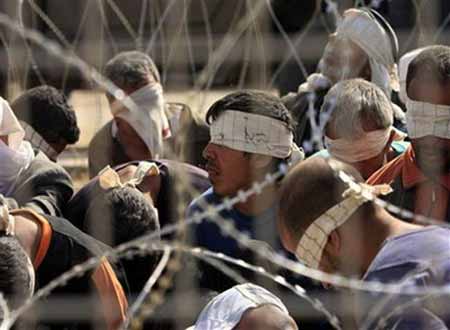
File – moheet.com
IMEMC & Agencies | June 11, 2013
The Israeli Government passed Sunday [June 9, 2013] the “Anti-Terror Bill”, authorizing harsher punishment against individuals suspected or convicted of aiding armed groups in the country, and anywhere in the world.
Several human rights groups in Israel and around the world voiced serious concerns regarding direct human rights violations, especially since this law strengthens and “legalizes” Administrative Detention orders confining hundreds, and even thousands, behind bars for extended periods without charges or trial.
The bill passed during a vote at the Israeli Ministerial Committee for Legislation, headed by Israeli Justice Minister, Tzipi Livni.
It not only targets those “convicted of terror attacks”, but also those who express support, emphasize and “incite terror activities” in addition to those believed to be engaged in preparations to carrying out violent acts.
Part of the penalties that this bill proposed include sentencing individuals for a life term without the possibility of parole, and allows the Police, the Security Services and all related agencies to confine “suspects” up to 30 days without granting them the right to any legal representation.
The passed bill also allows Israel to seize property of armed groups and individuals, in addition to preventing them from traveling abroad when there are no arrest warrants against them.
Israeli daily Haaretz has reported that the new legislation, would replace the “national state of emergency regulations” that Israel enforced after its establishment in the historic land of Palestine in 1948. Those regulations affect civil, security and economic issues.
The law particularly targets Palestinians and the indigenous Arab population in Israel, as those facing charges of “security or criminal violations”, whether in civil or military courts, would be facing very harsh sentences.
Head of the Meretz opposition party, Zahava Gal-On, said that Israel is denying human rights under the guise of combating terror.
She said that the emergency law applied in the country since the British occupation of Palestine, “cannot just be replaced with legislation that is anti-democratic”.
Also, the Association for Civil Rights in Israel (ACRI) slammed the bill, described it as anti-democratic, and warned that its provisions could turn legal organizations and law-abiding persons into terrorists just because they are suspected of aiding or practicing terror.
The Arabs48 news website reported that, under the new law, persons who even express support for groups labeled by Israel as “hostile” or “terrorist” could be imprisoned up to three years. It also considers financial support to these organizations as an “act of terror”.
Arabs48 added that the new bill increases the years of life-terms from 30 to 40 years.
It stated that the Israeli Prosecutors Office said that Price Tag attacks have not been labeled as acts of terror, as the Office believes that boosting intelligence activity and adequate training to police officers dealing with those attacks could put an end to those attacks.
The Israeli Government Legal Advisor stated that, legally, there is nothing stopping the government from describing and declaring Price Tag attacks as acts of terror.
In an Editorial Published on June 9, Haaretz said that the core of this bill has serious and extremely wide definitions for a terrorist organization, or terrorist acts, and added that once an organization, including a charity group, is labeled as a terrorist group, the moral base and all legal measures are destroyed.
Venezuela arrests Colombian paramilitaries plotting instability
Xinhua | June 10, 2013
CARACAS — Venezuelan authorities have detained two groups of Colombian paramilitary members allegedly plotting against Venezuela’s government, Venezuela’s Minister of the Interior, Justice and Peace Miguel Rodriguez Torres said Monday.
“These two groups that were captured in our territory belong to two well-known Colombian paramilitary gangs. In fact, one of the groups belongs to ‘El Chepe Barrera’s’ gang, one of the most wanted criminals in Colombia,” Rodriguez said at a press conference in Caracas.
The first group, which included six people, was captured in Venezuela’s southwest Tachira state, along the border with Colombia, and their arms were confiscated.
The second three-member group of paramilitaries, who also carried arms, were captured in Guanare in western Portugesa state.
They were also carrying a black box, such as the ones used to record flight information and aeronautical data, and a box with aviation tools, “which are being analyzed by experts to determine what type of airplane we’re talking about,” said Rodriguez.
After questioning, it became clear both groups were linked and headed to Caracas, Rodriguez said.
“They planned to travel to the capital of the country to accomplish a mission that would be assigned them once they were in Caracas,” said Rodriguez.
Rodriguez said the detained revealed the existence of a third armed group, “with weapons for sharpshooters” and other long-range arms, which may already be in Caracas as part of a plot to destabilize the country.
“All of this may be part of a plan that is being orchestrated from Colombia against the life of our president (Nicolas Maduro) and against the stability of the Bolivarian government,” Rodriguez said.
Venezuelan opposition groups may be involved in the plots, said the minister, adding the country’s intelligence units are on alert to capture the third paramilitary group.
Following the announcement, Maduro congratulated the Bolivarian Intelligence Service (Sebin) via Twitter and blamed the opposition for the presence in Venezuela of the paramilitary groups.
“I congratulate Sebin for its work in defense of the peace; these violent groups are the armed wing that carries out the plan of the fascist right,” said Maduro, adding that neighboring Colombia is being used to conspire against Venezuela.
Related article
US agents in massive sex, drug cover-up
Press TV – June 11, 2013
The US State Department may have hushed up allegations of misconduct by its employees worldwide that range from soliciting prostitutes to getting narcotics from a drug ring, a report says.
The CBS News uncovered on Monday a memo that showed the department’s security force, the Diplomatic Security Service (DSS), tried to cover up sex and drugs charges against agents and diplomats working for the State Department.
The DSS is responsible for protecting nearly 70,000 employees at the State Department and 275 US embassies around the world.
The memo by the State Department inspector general made direct reference to eight specific cases in which inquiries into alleged criminal activities by diplomatic security agents or contractors were “influenced, manipulated, or simply called off” by more senior officials.
The cases included an unnamed US ambassador who repeatedly solicited prostitutes, a security official “engaged in sexual assaults” on foreign nationals hired as embassy guards in Beirut, and the members of former Secretary of State Hillary Clinton’s security team who “engaged prostitutes while on official trips in foreign countries.”
The ambassador involved in the case was called to Washington D. C. to have a meeting with Undersecretary of State for Management Patrick Kennedy about the issue but was permitted to go back to his regular duties, the report said.
The document also revealed details of an alleged “underground drug ring” close to the US embassy in the Iraqi capital Baghdad, which provided the DSS staffers with drugs.
State Department spokeswoman Jen Psaki on Monday did not deny any of the allegations in the CBS report, but refused to go into details.
“We take allegations of misconduct seriously and we investigate thoroughly. All cases mentioned in the CBS report were thoroughly investigated or are under investigation,” she said.
Related article
Featured Video

Iran Is Not Our Enemy
or go to
Aletho News Archives – Video-Images
Frlom the Archives
The 52 Major Jewish American Organizations and Israel Celebrate Passover with the Slaughter of 25 Muslim, Christian and Secular Palestinians
By James Petras • Unz Review • April 8, 2018
Introduction
As of April 7, nearly three thousand unarmed Christian, Muslim and secular Palestinians have been wounded, over three dozen are in critical condition and at least twenty-five unarmed protestors, including children have been assassinated by hundreds of Israeli snipers and heavily armed troops shooting tank shells into crowds of civilians protesting their decades of incarceration by the racist Israeli state.
The Israeli government praised the ‘restraint and morality’ of the IDF, as did the fifty-two Major Jewish American Organizations (MJAO) who largely control the US Congress. These grotesque massacres began during the Christian Holy Week on Good Friday and Easter, coinciding with the Jewish Passover. The self-righteous officials of the MJAO and their relatives and friends broke matzos at joyful Seders as the blood of Palestinians soaked into ground at the fence containing the largest open-air prison camp in history, Gaza.
While tribal loyalties bonded the Israeli and Jewish American leaders, the politicians of the Western oligarchic electoral regimes refrained from criticizing the shocking display of brute force and even defended Israel’s cold blood mass killings of Palestinian civilians in their Gaza prison.
This paper will discuss and analyze the reasons for Israel’s willing Western accomplices and the centrality of its fifth column in the United States. … continue
Blog Roll
 Aletho News
- No time for losers: Why the war meant to save Israel may destroy it
- Top US Counterterrorism Official Resigns in Protest of Operation Against Iran
- Just Get Out! Now!
- Unpacking glaring contradictions in US-Zionist justifications for war against Iran
- Iranian model of warfare bleeds US dry while Persian Gulf states watch and learn: Analyst
- IRGC orders ‘defeated’ US to evacuate industrial facilities in region
- Hegseth’s call for ‘no mercy’ to Iranians deemed war crime
- Iran War Exposes Limits of US Military Power – Journalist
- Even The Neo-Cons Admit The Iran War Is Failing
- Inside the Caucasus Drone Corridor Fueling Tensions With Iran
- If Americans Knew
- Four news stories from Israeli media that illustrate Israeli “justice”
- CIA Prepares Criminal Referral of Tucker Carlson, as Israel and Its Loyalists Demand His Arrest
- Top US counterterror advisor resigns in protest of “war manufactured by Israel” – Not a ceasefire Day 158
- ‘I Liked the House’: When Israeli Soldiers Turn Palestinian Homes into Barracks
- ‘They Were All I Had’: Lebanese Father Buries Parents, 4 Daughters Killed by Israeli Bombing
- Israel and its supporters are causing attacks on Jewish institutions. Case in point: Michigan synagogue tragedy.
- These are the casualties and cost of the war in Iran 2 weeks into the conflict
- Chicago Teachers Union accuses AIPAC of swaying elections with ‘dark money’
- Predictions of another 9/11, amid Israel-US killing spree – Not a ceasefire Day 157
- As US-Israel war on Iran rages, Gaza faces massive dust storm – Not a ceasefire Day 156
- No Tricks Zone
- Storing Green Energy To Last Germany 10 Days Would Require A 60-Million Tonne Battery
- New Studies: UK Sea Levels Were 4 Meters Higher Than Today During The Mid-Holocene
- Destructive Green New Deal: German Energy And Metal Group Warns Of Drastic Crisis
- New Study Documents A 20-Year Pause In Arctic Sea Ice Decline – Driven By Internal Variability
- Wake-up Call: Survey Shows Majority Of Germans Now Favor Postponing Climate Targets!
- Televised! Leading German Political Candidate Tells Schoolchildren CO2 Makes Sun Hotter!
- New Study: A Century Warming Of 1.1°C Is ‘Commonplace’ And ‘Not Unusual’ During This Interglacial
- New Study: ‘Internal Noise’ And Volcanic Forcing Can Trigger 10-15°C Warming Within Decades
- Glaciers Worldwide Are Suddendly Surging, Experts Blame Warming!
- Surprising Discovery: Sahara Is Greening…Billions Of Trees Where Once Thought To Be Barren
 Aletho News