Obama, Like Ike, ‘Avoided Military Adventures’? Not Quite
By Peter Hart | FAIR | July 16, 2013
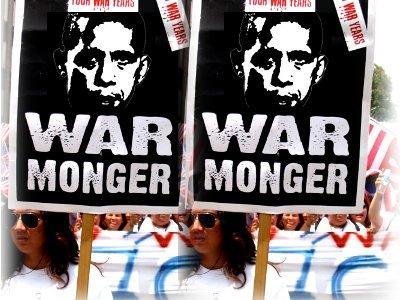
New York Times reporter Peter Baker has a piece today (7/16/13) about Barack Obama and Dwight Eisenhower that presents a somewhat confusing picture of both.
The article is about how Obama wields power–or, in the eyes of some critics, fails to take advantage of the “bully pulpit.”
The real point of the piece is to draw a parallel to Dwight Eisenhower’s “hidden hand” approach. According to an author of an Eisenhower book, Baker writes, “Mr. Obama was like the former president in avoiding major international conflict, relying more on covert action and letting Congress take the lead in legislation.”
Baker explains:
Just as Eisenhower, the 34th president, pulled troops out of Korea and avoided other military adventures, Mr. Obama has pulled out of Iraq, is leaving Afghanistan, has limited intervention in Libya largely to airstrikes and has resisted being drawn directly into the civil war in Syria.
Let’s try a rewrite–especially on the Obama years.
Obama withdrew troops from Iraq on the schedule inherited from Bush. His administration wanted to keep some troops there, but the Iraqi government would not allow it.
To say that Obama “is leaving Afghanistan” ignores the fact that he massively escalated the Afghan War, sending tens of thousands of additional troops to the country–essentially tripling the size of the U.S. military in the first 2 years of his term.
To say that Obama “limited intervention in Libya largely to airstrikes” is an odd way to describe what was a rather extensive bombing campaign in violation of the War Powers Act.
Baker does note that the White House has decided to formally begin arming the Syrian rebels–it is somewhat unclear how and/or when that will happen–and the CIA has reportedly been coordinating arms shipments into the country.
And, of course, one has to factor in ongoing drone wars in countries like Yemen, Afghanistan and Pakistan.
It is possible that these do not count as “military adventures,” but I think you’d have hard time explaining that to anyone in those countries.
As for Eisenhower, when the Times refers vaguely to “covert operations” during his term, one might want to spell out that the CIA was instrumental in the overthrow of governments in Iran, Guatemala and Congo, and that the CIA was deeply involved in supporting anti-government rebels in Indonesia fighting the Sukarno government–including dropping supplies to the rebels. His hands may have been “hidden,” but there’s no reason to not let the record speak for itself 50 years later.
Ten Years Ago: The Political Assassination of Dr. David Kelly
Dr Kelly Inquest Campaign

Detroit police arrest news photographer, lock her up with suspect
RT | July 16, 2013
Police in Detroit, Michigan have launched an internal investigation after a Detroit Free Press photographer was detained for filming a group of officers as they arrested a suspect on a public street on Thursday, July 11.
 Mandi Wright was traveling to an assignment with a newspaper reporter when the pair came upon eight officers making an arrest. The video, since posted online, shows Wright capturing a pat-down before she is approached by an officer, who orders Wright to “back up” before covering the camera lens and demanding she “turn it off.”
Wright identifies herself as a photographer for the Free Press, to which the officer responds with “I don’t care who you are.” He then reaches for the camera and Wright can be heard asking “Are you touching me?” before the images cut off. Witnesses say the two tussled before uniformed officers put Wright in handcuffs for interfering with an arrest.
Wright, 47, has accused the police of wrongfully confiscating her iPhone and briefly leaving her locked up alone with the suspect she filmed being arrested. She has also asserted that the memory card from her newspaper-issued cell phone camera went missing after an officer wrestled the device away from her, according to the Free Press.
“I was just surprised at how quickly it escalated,” Kathleen Gray, the reporter traveling with Wright, told the Free Press. “There was no effort to try to figure out who we were or what we were doing. It was just immediately going for the phone.”
The photographer was held in police custody for over six hours. Wright has said that at least part of that time was spent alone in an interrogation room with the original suspect. Deputy Chief James Tolbert said, if the latter claim is verifiable, “that could be a serious breach of department policy.”
Missing – along with a satisfactory explanation – was Wright’s SIM card, which stores files on a cell phone. The video was preserved on Wright’s iPhone’s internal memory.
Tolbert, speaking to the Free Press, refused to name the officer who first accosted Wright but said the internal investigation will examine “the whole incident, from start to end. What we did, what she did, the whole nine.”
The deputy chief told editors of the Free Press the incident had already become a point of embarrassment for the department and he reminded officers they are not authorized to impede an individual from filming.
While putting the onus on police, Free Press Editor Paul Anger was conciliatory about the incident.
“First, our photographer was doing what any journalist – or any citizen – has a right to do in a public place,” he said. “All she knew was that someone had grabbed her and her phone. We understand the difficult job that police officers do and we understand how tensions can rise. Yet some of the police actions all through this incident need scrutiny – not the actions of our photographer.”
image by @DetroitMandi
Netanyahu reminds EU that Israel is above the law
Al-Manar | July 17, 2013
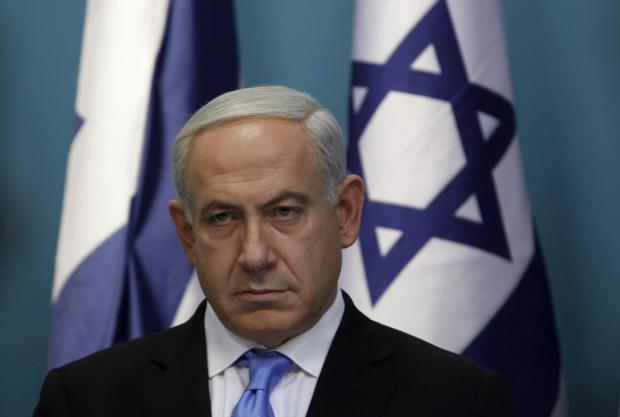
Israeli Prime Minister Benjamin Netanyahu slammed a European Union directive requiring member states to boycott Israelis living in the West Bank and East al-Quds (Jerusalem).
In an emergency meeting on Tuesday, Netanyahu pledged: “We will not accept any outside diktat about our borders.”
“This issue will be decided only in direct negotiations between the sides,” he added.
The directive included conditions for future contacts between the EU and the Zionist entity.
Netanyahu said that EU was taking steps unilaterally, while paying less attention to urgent regional matters such as the Syrian conflict and Iran’s nuclear problem.
“I would expect those who truly want peace and stability in the region would discuss this issue after solving more urgent regional problems such as the civil war in Syria or Iran’s race to achieve nuclear weapons,” he said.
“As the Prime Minister of Israel, I will not allow the hundreds of thousands of Israelis who live in Judea and Samaria, on the Golan Heights and in Jerusalem, our united capital, to be harmed,” Netanyahu added.
The meeting was held at the Prime Minister’s office in al-Quds. Those in attendance included Justice Minister Tzipi Livni, Economy Minister Naftali Bennett and Deputy Foreign Minister Zeev Elkin.
Related articles
Government Fights to Keep Court Opinions on NSA Spying Hidden From Public
By Alex Abdo | ACLU | July 16, 2013
Last month, we asked the secret Foreign Intelligence Surveillance Court—known as the FISC—to publish its legal opinions allowing the government to track the phone calls of essentially all Americans. Those secret opinions are critical to the ongoing debate about the NSA’s surveillance powers, but, perhaps even more importantly, they are the authoritative legal interpretations of a public law. Like the law itself, those opinions should be public. Given that fact, we were disappointed when, on July 5, the government opposed our request, arguing that the public is not entitled to read the FISC’s opinions.
Think about that for a minute. Our government believes that opinions of a federal court deciding what a controversial federal law actually means and whether sweeping surveillance conducted under that law is constitutional should be secret. And we’re not just talking about keeping secret the names of the government’s surveillance targets. The government’s filing was clear: The public doesn’t have the right to read even the FISC’s legal analysis.
Here is how we countered the government’s argument in the reply brief we filed late on Friday:
The First Amendment guarantees the public a qualified right of access to those opinions, because judicial opinions interpreting constitutional and statutory limits on governmental authorities— including those relevant to foreign-intelligence surveillance—have always been available for inspection by the public and because their release is so manifestly fundamental in a democracy committed to the rule of law.
The government’s contrary view—that legal opinions of an Article III court controlling the constitutional rights of millions of Americans may forever be denied to the public, even if any legitimate interest in secrecy has expired or can be accommodated—is wrong. Indeed, if the government succeeds in depriving the public of the tools necessary to understand the laws passed by its elected officials, it will have eroded the foundations of our democracy. The government’s theory affects more than the public’s right to this Court’s opinions; its reasoning would likewise deny the public a right of access to the opinions of courts sitting in review of those opinions, whether issued by the Court of Review or even the Supreme Court of the United States. That result would defeat democratic oversight and undermine public confidence in our legal institutions.
Our motion is now fully briefed and ready for the FISC to decide. Stay tuned.
Related articles
- Secret law thrives, eroding the courts (constitutioncampaign.org)
- A Secret Court Making Secret Laws? That’s No Democracy (alethonews.wordpress.com)
- Government Says Secret Court Opinion on Law Underlying PRISM Program Needs to Stay Secret (alethonews.wordpress.com)
- Reassured by NSA’s Internal Procedures? Don’t Be. They Still Don’t Tell the Whole Story. (alethonews.wordpress.com)
- Secret court allows Yahoo to disclose NSA data requests (jurist.org)
Obama administration drowning in lawsuits filed over NSA surveillance
RT | July 16, 2013
Attorneys for the Electronic Frontier Foundation have sued the Obama administration and are demanding the White House stop the dragnet surveillance programs operated by the National Security Agency.
Both the White House and Congress have weighed in on the case of Edward Snowden and the revelations he’s made by leaking National Security Agency documents. Now the courts are having their turn to opine, and with opportunities aplenty.
Day by day, new lawsuits waged against the United States government are being filed in federal court, and with the same regularity President Barack Obama and the preceding administration are being charged with vast constitutional violations alleged to have occurred through the NSA spy programs exposed by Mr. Snowden.
The recent disclosures made by Snowden have generated commotion in Congress and the White House alike. The Department of Justice has asked for the 30-year-old former Booz Allen Hamilton worker to be extradited to the US to face charges of espionage, and members of both the House and Senate have already held their share of emergency hearings in the wake of Snowden’s series of disclosures detailing the vast surveillance programs waged by the US in utmost secrecy. But with the executive and legislative branches left worrying about how to handle the source of the leaks — and if the policies publicized should have existed in the first place — the courts could soon settle some disputes that stand to shape the way the US conducts surveillance of its own citizens.
Both longstanding arguments and just-filed claims have garnered the attention of the judicial branch in the weeks since the Guardian newspaper first began publishing leaked NSA documents attributed to Snowden on June 6. But while the courts have relied previously on stalling or stifling cases that challenge Uncle Sam’s spy efforts, civil liberties experts say the time may be near for some highly anticipated arguments to finally be heard. Now on the heels of lawsuits filed by the likes of the American Civil Liberties Union and the Electronic Privacy Information Center, groups are coming out of the woodwork to wage a legal battle against the White House.
The most recent example came this week when a coalition of various organizations filed suit together against the Obama administration by challenging “an illegal and unconstitutional program of dragnet electronic surveillance, specifically the bulk acquisition, collection, storage, retention and searching of telephone communications information.” Represented by attorneys from the EFF and others, the plaintiffs in the latest case filed Tuesday in San Francisco federal court include an array of groups, such as: First Unitarian Church of Los Angeles; Bill of Rights Defense Committee; Calguns Foundation; California Association of Federal Firearms Licensees; Council on Islamic Relations; Franklin Armory; Free Press; Free Software Foundation; Greenpeace; Human Rights Watch; Media Alliance; National Organization for the Reform of Marijuana Laws; Open Technology Institute; People for the American Way, Public Knowledge; Students for Sensible Drug Policy; TechFreedom; and Unitarian Universalist Service Committee.
Cindy Cohn, the legal director of the EFF, told the Washington Post that the NSA leaks credited to Snowden have been a “tremendous boon” to the plaintiffs in recently filed court cases challenging the surveillance state. The courts are currently pondering at least five important cases, Cohn told the Post, which could, once and for all, bring some other issues up for discussion.
Since June 6, the American Civil Liberties Union, a Verizon Wireless customer and the founder of conservative group Judicial Watch have all filed federal lawsuits against the government’s collection of telephony metadata, a practice that puts basic call records into the government’s hands without a specific warrant ever required and reported to the media by Mr. Snowden. Larry Klayman of Judicial Watch has also sued over another revelation made by Snowden — the PRISM Internet eavesdropping program — and the Electronic Privacy Information Center, or EPIC, has asked the Supreme Court to vacate the order compelling Verizon Business Network Services to send metadata to the feds.
Perhaps most important, however, is a California federal court’s recent decision to shut down the government’s request to stop the case of Jewel vs. NSA from proceeding. That debate first began in 2008 when Jewel, a former AT&T customer, challenged the government’s “illegal and unconstitutional program of dragnet communications surveillance” as exposed by a whistleblower at the telecom company. That case has seen roadblock after roadblock during the last five years, but all that changed earlier this month. The government long argued that Jewel v. NSA can’t go up for discussion because the issues at hand are privileged as ‘state secrets’ and can’t be brought into the public realm.
“[T]he disclosure of sensitive intelligence sources and methods . . . reasonably could be expected to cause exceptionally grave harm to national security,” the government wrote in one earlier filing. “The very purpose of these cases is to put at issue whether the NSA undertook certain alleged activities under presidential authorization after 9/11, and whether those activities continue today. At every stage, from standing to the merits, highly classified and properly privileged intelligence sources and methods are at risk of disclosure. The law is clear, however, that where litigation risks or requires the disclosure of information that reasonably could be expected to harm national security, dismissal is required.”
Following Snowden’s recent disclosures, though, Judge Jeffrey White of the Northern District of California ruled on July 8 that there’s a way for those cases to still be heard.
“The court rightly found that the traditional legal system can determine the legality of the mass, dragnet surveillance of innocent Americans and rejected the government’s invocation of the state secrets privilege to have the case dismissed,” the EFF’s Cohn, who is working on the case, said in a statement issued at the time of the ruling. “Over the last month, we came face-to-face with new details of mass, untargeted collection of phone and Internet records, substantially confirmed by the Director of National Intelligence. Today’s decision sets the stage for finally getting a ruling that can stop the dragnet surveillance and restore Americans’ constitutional rights.”
Weighing in weeks later to the Post, Cohn said that outcome could have more of an impact than many might imagine. “It’s tremendous, because anything that allows these cases to proceed is important,” she said.
Speaking to the New York Times this week, American Civil Liberties Union attorney Jameel Jaffer said that until now the government has operated a “shell game” to shield it’s surveillance programs from litigation. “[T]he statute has been shielded from judicial review, and controversial and far-reaching surveillance authorities have been placed beyond the reach of the Constitution,” he said.
Should Cohn’s prediction come true, though, the courts could decide to weigh in and reshape the way the government currently conducts surveillance.
According to University of Pittsburgh law professor Jules Lobel, a victory there could come in more than one way. “There is a broader function to these lawsuits than simply winning in court,” he told the Post. “The government has to respond, and forcing them to go before a court might make them want to change aspects of the programs.”
“The government does things to avoid embarrassment,’’ he added, “and lawsuits are a key pressure point.’’
Interviews to the Post and the Times come just days after Sen. Ron Wyden (D-Oregon), a long-time member of the Senate Intelligence Committee, said he thought the revelations made by Snowden may influence the White House to reconsider their surveillance practices before the courts can even have their chance.
“I have a feeling that the administration is getting concerned about the bulk phone records collection, and that they are thinking about whether to move administratively to stop it,” Sen. Wyden told the Times.
“I think we are making a comeback,” he said.
Related articles
- Federal Judge Allows EFF’s NSA Mass Spying Case to Proceed (alethonews.wordpress.com)
- Privacy groups led by EFF sue to stop NSA and FBI electronic surveillance (guardian.co.uk)
- Unitarian Church, Gun Groups Join EFF to Sue NSA Over Illegal Surveillance (eff.org)
Egypt Destroys Eight Border Tunnels
By Saed Bannoura | IMEMC & Agencies | July 16, 2013
The Egyptian Army announced in managed to locate and destroy eight siege-busting tunnels across the border with the Gaza Strip over the last 48 hours, and that it located 23 containers holding a million liters of fuel.
The army said that the Egyptian Border Guards located the containers that were ready to be smuggled to the coastal region, and also located the eight tunnels that have already been operational.
Egyptian security sources said that the army used bulldozers to remove fuel pumps, and that the campaign is ongoing to locate and destroy all tunnels across the border with Gaza.
The sources said that Egypt’s Army Chief, Colonel Abdul-Fattah El-Sissi, gave direct orders to the army to destroy all border tunnels by using explosives, heavy equipment and even by flooding them.
El-Sissi said that the army would not allow any party to “jeopardize Egypt’s national security, its economy, and national resources.”
Dozens injured in Jerusalem protest against the Prawer plan
By Saed Bannoura | IMEMC & Agencies | July 16, 2013
Palestinian medical sources have reported Monday that dozens of Palestinians have been injured after being violently attacked by Israeli soldiers and police officers, during a protest against the Prawer plan that would forcibly displace between 30,000-70,000 Negev Bedouins.
The protest started at the Bab Al-‘Amoud area, in occupied East Jerusalem, and the protesters were attacked as they marched towards Sultan Suleiman Str., clashes also extended to various areas in Jerusalem.
Bassem Zeidan, of the Palestinian Medical Relief, stated that twelve Palestinians suffered fractures and bruises after being attacked by the army and the police, while a medic identified as Osama Mkheimar, suffered fractures in his foot, a cameraman identified as Amin Siyam suffered various bruises, a pregnant woman suffered a dislocated shoulder, and at least fifty more Palestinians were treated by field medics.
The Begin-Prawer Bill passed its first reading in the Israeli Knesset on June 24 2013. Adalah – The legal Center for Arab Minority Rights in Israel – previously reported the bill involves the dismantlement of “unrecognized” Bedouin villages in the Negev, and the forced displacement and relocation of the inhabitants – numbering in the tens of thousands – to settlements that will be “recognized” by Israel.
Critics of the bill claim that the Bedouin have not been consulted, and that it violates their rights to property and ignores their legitimate claims to ancestral lands.
Adalah reports that the Begin-Prawer Bill is designed to make it very difficult for the Bedouin to receive compensation following their forcible displacement, and that state development projects that privilege Jewish Israelis will be built in place of the destroyed Bedouin villages.
The United Nations said that Israel must respect the land claims of the Bedouin, who are internationally recognized as indigenous peoples of the land.
Related article
- Treatment of Palestinians is Apartheid by Any Other Name (alethonews.wordpress.com)
Featured Video

No Threat Can Force Iran’s Surrender /Trita Parsi & Lt Cl Daniel Davis
or go to
Aletho News Archives – Video-Images
From the Archives
What is the Israeli Lobby in Australia Doing in Interfaith Dialogue?
By Ali Kazak | Dissident Voice | October 11, 2015
For years Israel and its lobby around the world have been trying to normalise their relations with Arabs and Muslims without solving the Palestine Question.
One of the methods they resorted to in the last few years is using human rights and community organizations such as interfaith dialogue and Multiculturalism to achieve this objective and to: isolate the Palestinians, marginalise the Palestine question, end Israel’s isolation, and prevent criticism of Israel, knowing that these organisations will be the first to stand against Israel’s violations, racial and religious discrimination.
The group responsible for this task in Australia is The Australia/Israel & Jewish Affairs Council (AIJAC); its Director of International & Community Affairs, Jeremy Jones is in charge of lobbying religious community organizations, specifically Muslims and Christians. Consequently he convened the Faith Communities for Reconciliation, founding participant in the Australian Partnership of Religious Organisations and the Australian National Dialogue of Christians, Muslims & Jews.
AIJAC is a private political propaganda group. It is recognised as the main Israeli lobby in Australia. It coordinates its activities and works intimately with the Israeli embassy in Canberra and different institutions in Israel. It is privately funded by some Jewish businessmen. It monitors closely Australian politicians, the media, ethnic and religious groups, (especially Arabs and Muslims), unions and academics on their stands towards Israel and the Palestine question. … continue
Blog Roll
 Aletho News
- Theodore Postol: Iran’s Missiles & Drones Were Underestimated
- Iran To Target Military Industrial-Tech Complex That Facilitated Gaza Genocide
- Collapsing Empire: The Resistance Disarms ‘Israel’
- Suicide Should Not Be a Government Service
- Rethinking America’s greatest threat: Iran vs. Israel-Firsters
- Iran accuses adversaries of false flags to strain Turkey ties
- Poland rules out sending Patriot missiles to US/Israel amid war on Iran
- Tehran approves new Hormuz plan with major restrictions
- No Threat Can Force Iran’s Surrender /Trita Parsi & Lt Cl Daniel Davis
- UK’s New Pandemic Plan Would Turn Big Tech Into a Mass Location Tracking Network
- If Americans Knew
- Ann Coulter Rips Into Fox News for Iran War Coverage, Compares to False Rigged 2020 Election Reporting
- Joe Kent Urges Americans To Call White House and Congress To Object To Sending Troops Into Iran
- DNC Resolution to Reject AIPAC Funding Puts Democratic Leaders in the Hot Seat
- Swedish foundation to build 400 schools as over 650,000 Gaza children remain without education for 2 years
- Israeli army admits photshopping image of slain Lebanese journalist
- This is how Israel is systematically killing health workers under the cover of war in Lebanon
- Carrying life under fire: Israeli invasion of Lebanon leaves pregnant women facing deadly risks
- Champagne all around for the new death penalty (for Palestinians) law – Not a ceasefire Day 172
- Why are Palestinian books struggling to be seen on Amazon?
- The Line Between Affinity and Conspiracy
- No Tricks Zone
- New Study Finds Warming Saves Lives…Cold Temperatures 12 Times More Deadly Than Excess Heat
- German Science Blog Accuses PIK Climate Institute Of Hallucinating Climate Tipping Points
- Devastating Assessment Of Comirnaty Vaccine By Former Senior Pfizer Europe Toxicologist
- New Study: CO2 Is ‘Effectively Negligible’ As An Explanatory Climate Change Factor Since 2000
- Former Pfizer Toxicologist Dr. Helmut Sterz Tells Bundestag Hearing Pfizer Vaccine Should Have Never Been Approved
- Energy Expert: Germany’s Nuclear Phaseout Was A “500 Billion Euro Mistake”
- New Research: South Australia’s Mid-Holocene Sea Surface Temperatures Were 4°C Warmer Than Today
- Storing Green Energy To Last Germany 10 Days Would Require A 60-Million Tonne Battery
- New Studies: UK Sea Levels Were 4 Meters Higher Than Today During The Mid-Holocene
- Destructive Green New Deal: German Energy And Metal Group Warns Of Drastic Crisis
 Aletho News