Majority of Americans say Director of National Intelligence Clapper should be prosecuted for perjury
Press TV – August 18, 2013
An overwhelming majority of Americans say James Clapper, the spy master who lied to Congress about domestic surveillance, should be prosecuted for perjury, results from a new survey show.
During a congressional hearing in March, Clapper, the Director of National Intelligence, said the National Security Agency (NSA) did not collect phone and Internet data on millions of ordinary Americans, a response he later admitted was “clearly erroneous.”
Commissioned by the Progressive Change Campaign Committee and Credo and conducted by Public Policy Polling in five states, a new survey finds that huge majorities of Americans want Clapper prosecuted for lying to Congress.
In response to the question, “Do you think the Director of National Intelligence should be prosecuted for perjury?” 68 percent of voters in Texas and 69 percent in Kentucky said the spy chief should be prosecuted.
In the Democratic states of California and Hawaii, 54 percent and 58 percent of voters, respectively, said they want him prosecuted. In Iowa, 65 percent of voters said the same.
Recent revelations by former NSA contractor Edward Snowden about the previously secret surveillance programs have sparked a heated national debate about government transparency and privacy issues in the United States, putting the Obama administration on the defensive.
In a move to dampen the controversy, President Barack Obama outlined a number of steps last Friday to increase transparency and reform some aspects of the NSA.
However the president’s four-point reform packaged provoked a backlash when it was implied that Clapper was being appointed to head an “independent group” of “outside experts” to oversee the government’s surveillance programs.
The White House later denied Clapper would lead the independent review, saying the director had to be involved for administrative reasons as the panel would need security clearance and access to classified information.
The Konyism of Samantha Power, US Ambassador to the United Nations
By Vijay Prashad | Jadiliyya | August 15 2013
“Foreign policy is an explicitly amoral enterprise,” Samantha Power, 2003.
On 10 August, the newly appointed US Ambassador to the United Nations, Samantha Power, addressed the Fourth Estate Leadership Summit, an event of Invisible Children. This was Ambassador Power’s first public address since she took her seat at the United Nations. Invisible Children is the campaign group that has been behind several iterations of the “Stop Kony” video, which went viral in 2012. Power praised the group for its “new kind of activism” whose “army of civilian activists” had pushed the Obama administration to tougher action against Joseph Kony, the head of the Lord’s Resistance Army (LRA), and whose example had helped Kenyans and Russians and most of all Arabs, who “barely knew democracy as recently as three years ago,” to use the Internet to hold governments accountable. Power is not naïve. She knows that the Internet is not sufficient, since it is simply “a means to an end. What matters is the real world scoreboard.” The “real world scoreboard” touts up the exertions of power by actors that Power sees as benign, such as the United States government. Internet activism can prod the US government to action, and when it does, then it is effective. World history can only happen when the US government’s snout pushes along the Dialectic; anything else is simply the passage of time.
What did the Stop Kony video achieve, according to Power? It pushed a US senator (John Kerry) to draft a bill to stiffen US action against Kony. This bill and its consequent law drew on two resources. First, since 1986 the United States had drawn up lists of narco-traffickers that it wished either arrested or killed, and to which end it provided a bounty on the heads of these people through the State Department’s Narcotics Rewards Program. Each reward was not to exceed five million dollars. Second, the State Department has used a similar rewards program for individuals who helped turn in war criminals sought by international tribunals and courts (for Rwanda, Sierra Leone and Yugoslavia). These international bodies had already drawn up their lists of criminals, for whose heads the United States provided rewards. The Kerry bill refashioned these programs into the Rewards Program Update and Technical Corrections Act of 2012, signed into law by Obama in January 2013. The new approach allows the US State Department’s Office of Global Criminal Justice to draw up its own lists and to offer rewards for the capture of criminals. John Kerry, now the Secretary of State, hastened to say that the new approach is “not a dead-or-alive bounty program. Information must lead to the secure arrest, transfer, or conviction of these people in a court of law. We want these men to look into the eyes of their victims and answer for their actions.”
Power, one of the champions of the new law and an advocate of the Responsibility to Protect (R2P) doctrine for liberal interventionism, follows Susan Rice to the United Nations. Rice was equally adamant about the use of US-NATO force to enforce her perception of what counts as a human rights violation. During Rice’s tenure at the United Nations there was no use of the language of human rights and the R2P doctrine on behalf of the Palestinians (under occupation by the state of Israel), or the people of the Congo (under the yoke of neighbouring Rwanda through the M23 rebel group), or indeed of the people of Equatorial Guinea (whose ruthless president Obiang enjoyed a warm photo-op with the Obamas in 2012). US allies never felt the edge of Rice’s rhetoric, nor Obama’s sanctions. [Vijay Prashad, “The Agonies of Susan Rice: Gaza and the Negroponte Doctrine,” Jadaliyya, 15 November 2012] Dressed in sheep’s clothing, the ravenous wolves of the Global North defended their allies while they threatened their enemies. It didn’t help the latter that many of them are vicious and deserve to be caught and punished. But it did help the United States and its allies to concentrate the spotlight on them and allow their friends to sit in the shadows, smug in their impunity. It also allowed the United States and its allies to import armed forces into parts of the world (mainly Africa as it turns out) where it has interests to protect.
Kony, the Trojan Horse
Like so many post-colonial states, Uganda has not been able to settle its problems of political geography and political economy. A North-South divide in the country was exacerbated by British colonialism, which relied upon the South to provide it with recruits to the crucial King’s African Rifles and petty administrators for the region. When the South became the vanguard of the anti-colonial struggle, the British turned their recruitment efforts to the North, among the Acholi and West Nile groups, driving a wedge that endures. The South had been host to whatever economic development had been forged by colonialism, who brought in captive labor from the North. These fissures provided grist for the mill of post-colonial leaders such as Obote and Amin, both of whom used these divides to their venal ends. Yoweri Museveni’s National Resistance Army, rooted in the South, took on the Northern forces of Obote in the early 1980s that resulted in massacres of hundreds of thousands of people. Museveni came to power in 1986 through the National Resistance Movement, a thin veneer of difference from his army of previous years. It continues to rule Uganda, with Museveni crowned as one of the African Renaissance leaders by the Clinton administration.
A defeated and demoralized North came together behind two millenarian cults, first that of Alice Auma Lakwena (Holy Spirit Mobile Force) in 1987 and then second after her downfall, that of her kinsman Joseph Kony in the 1990s. Kony’s LRA became a dangerous cult, kidnapping children, using violence to sow fear in Acholiland, and fighting a war against the Ugandan government without a defined political strategy. No political dialogue emerged during the 1990s or the early 2000s, as Museveni sought a military solution against the LRA and as Kony floundered through the haze of anarchic violence. In 2005, the International Criminal Court framed arrest warrants for Kony and four of his lieutenants, and the US government placed the LRA on its terror list. Not long after this, Kony’s LRA had been severely degraded and his remaining forces (not more than 200) fled to the Democratic Republic of the Congo, from where it is reported to have taken refuge in the Central African Republic. By 2012, the LRA was no longer the existential threat it was to Northern Uganda. It had become a criminal gang, poaching animals and stealing food, looking for survival rather than for political power. As the US State Department’s own Amanda Dory told Congress in April 2012, “The common assessment is that [Kony] has been significantly degraded and is in a survival and evasion mode at this point.” This sober assessment did not slow down the frenzy of the “Kony 2012” nor of the entry of US troops into the African continent. None of the grievances of the North that gave rise to Alice Auma or Kony have been settled. The fissures remain, even as Kony has been chased off.
Invisible Children, which made the Kony 2012 video that Powers praised, has its roots in evangelical Christian politics. It came to Kony only after its foray into Darfur had floundered (on the way in which the Darfur issue suited both US and Israeli state interests, see Mahmood Mamdani, Saviors and Survivors: Darfur, Politics and the War on Terror, 2010). It sought an African mission to champion, an old colonial narrative of the white Christians who make their name by saving the black Africans. Their view of the conflict is simplified to the point of a cartoon: the more they demonize Kony, the more Museveni’s own dictatorial rule is minimized, and the more they validate the entry of US armed forces into the region (Obama sent one hundred military advisors to Uganda in 2010).
Obama’s administration sinks in the quicksand of its liberal ambitions –few of its liberal foreign policy objectives have been met; not the closing down of Guantanamo’s prison, nor the tethering of an out-of-control surveillance apparatus, nor even the War on Terror in general. In fact, Obama has intensified the drone warfare in Yemen and Pakistan, and tethered itself to a resurgent Saudi Arabia on the back of Qatari withdrawal. To polish its carapace, the Obama administration has become a latter-day believer in gay rights on the world stage. Power went on Jay Leno’s program to talk about global LGBT rights and held a Google hangout with human rights activists where the issue of LGBT rights was center-stage (later, on twitter, Power mourned the loss of “Eric Ohena Lembembe, a courageous Cameroonian activist tortured to death last month”). But, to stay on the Uganda story, Power did not raise the issue of LGBT rights and Uganda. In 2011, gay activist David Kato Kisule was murdered in Mukono, Uganda. Kato had been a leader in the struggle for gay rights in Uganda. Invisible Children’s financial links to the Discovery Institute complicates matters for Powers’ liberal interventionism–Discovery’s head Lou Engle was in Kampala, Uganda in May 2010 heading up an anti-gay rally in support of an anti-gay bill that has been championed by President Museveni. Ambassador Power’s claim to move a pro-LGBT agenda at the UN is at odds with her choosing to give her first speech at a forum that shares much with the anti-gay agenda of the Discovery Institute and Ugandan President Museveni. She did not make any remarks about this at her speech at the Fourth Estate Summit. In fact, Power did not raise the issue of LGBT rights at that Los Angeles gala. This is standard issue “pinkwashing,” a cavalier use of a real campaign to re-brand the sinking ship of US soft power.
Invisible Children’s “Kony 2012” helped shore up a new trend in US policy, to seek military solutions where much more complex policy options need to be considered. Forging military partnerships with Museveni’s Uganda will not help the people of the North, whose main issue is loss of land to investors, and loss of livelihood over the course of two generations. Nor will it solve the problems of a nascent people’s movement, which is being stamped down by the anti-protest Public Order Management Bill (passed by parliament on 6 August). Opposition leader Nandala Mafabi called this bill unconstitutional, but where will be the room to legally dispute it on the streets? None of this detained the human rights apparatus created by Rice and Power, and sanctified by Obama. Their human rights agenda is driven not by popular protests on the streets but by the cordite from an F-16.
R2P
“What matters,” said Ambassador Power at the Invisible Children gala, “are results – everything else is just noise.” But what matters are well is ideology and power – who gets to define what is a crisis and who gets to frame the actions necessary to solve the crisis? In 2005, through US pressure, the United Nations adopted the Responsibility to Protect (R2P) doctrine. One of its champions was Samantha Power. The R2P doctrine holds that a state has the legal responsibility to protect is people, and if this state fails to do so the international community must involve itself with “coercive measures” such as economic sanctions but with military intervention as “the last resort.” In other words, the R2P doctrine is endowed with the ability to conscript Chapter VII of the UN Charter, which forces the United Nations to use military force. But, as has become obvious over the past few decades, the idea of the “international community” is not as global as it seems–that term has come to reflect the views of the North Atlantic countries, whose military hegemony through the US armed forces and its tentacular base structure as well as NATO gives them the ultimate veto over the narrative of world affairs. What matters, then, is not suffering in general, but the suffering deemed by the North Atlantic states to be against their interests, to whose defence the bombers are set loose.
Last year, India’s former Ambassador to the United Nations, Hardeep Singh Puri, offered a robust criticism of the R2P doctrine from this general standpoint. Puri pointed out that the United Nations used the doctrine “selectively,” and when the United Nations selects a conflict for intervention, the armed phase is immediate rather than “calibrated and gradual”. The selectivity is a function of those who continue to exercise their power through the UN bodies, which is to say that the North Atlantic states set the agenda for the use of the R2P doctrine. Puri’s criticisms come in the wake of the Libyan intervention, which Obama, Rice, and Power use as the standard for the use of R2P. However, many powers, including the BRICS states, are wary of that usage. They argue that the United States misled the Council and then misused the UN Resolution 1973, a feint that forced UN Secretary General Ban Ki-moon to publically defend the NATO action in December 2011. It is because of the way the R2P was used in Libya that it the BRICS states have indicated that they will not allow such an open-ended R2P resolution, including for Syria. Power comes to the United Nations stepping over the rubble of R2P.
Tactically, it is smart of Power to go to Invisible Children, to pose as a grassroots activist who is going to be pushed by the people and be the people’s champion in the Security Council. It will shine Power’s reputation a bit, but not much. With the Bush administration walking away from the ICC and shredding the Kyoto agreement, Power wrote, “The United States [has come] to be seen less as it sees itself (the cop protecting the world from rogue nations) than as the very runaway state international law needs to contain.” In the Obama administration, Power did nothing to contain the “runaway state,” indeed she helped secure inside the United Nations a “law,” R2P, that gives the United States permission to be unrestrained. That is the Konyism of Samantha Power.
Related article
- Why Is Samantha Power Speaking to Invisible Children? (nationalinterest.org)
False Flags and Hijacking Minds
By Ludwig Watzal | Dissident Voice | August 17, 2013
Before I came across the book Hijacking America’s Mind on 9/11: Counterfeiting Evidence by Elias Davidsson, I believed in the official narrative on 9/11. I read the book twice. It completely shattered my former belief.
I’m no expert on 9/11 and do not believe in esoteric theories. My attitude towards 9/11 has been marked by a certain curiosity, but also by healthy skepticism. When I initially stumbled across articles questioning the official 9/11 narrative, I just read them and put them away. With Davidsson’s book, it was different: it immediately captivated me.
Having hitch-hiked extensively all over the United States and studied international relations at the University of Pennsylvania in Philadelphia, I am somehow familiar with how American society ticks. I have noted that after every severe calamity in the US, an immediate inquiry is initiated to determine the facts. When it comes to airplane crashes, it befalls the National Transportation Security Board (NTSB) to determine the circumstances in which the airplane crashed: the plane is pieced together from the debris, the cause of the crash is determined and a public report is issued regarding the circumstances of the crash. The U.S. government did not, however, permit the NTSB to investigate the 9/11 crashes. It had to be carried out, exceptionally, by the more secretive FBI, which has no obligation to publish its findings. Why did the U.S. government insist on such unprecedented secrecy?
 Elias Davidsson’s book may provide an answer to this question. His book is a very thorough study of specific aspects of the 9/11 events that have hitherto been neglected. The strength of his book lies in its reliance on primary evidence, the sources for which are provided so that readers can check for themselves the accuracy and relevance of the evidence. Davidsson does not merely provide footnoted references to the sources but has actually posted a great number of source documents on his website, sparing readers tedious searches. This unusually user-friendly approach indicates the author’s willingness to subject him to the most exacting scrutiny by readers. What makes his study so compelling is his judicious use of official U.S. government documents to undermine the assertions of the U.S. government itself? A great part of his sources are FBI documents culled from the U.S. National Archives (NARA).
The author provides persuasive evidence that the official narrative is riddled with contradictions, anomalies, puzzling coincidences, lies, forged and planted evidence; that witnesses were intimidated; and that news was fabricated. A substantial chunk of his book is devoted to an analysis of the telephone calls made between passengers and crew-members with their colleagues or loved-ones on the ground. It is actually the most comprehensive and thorough analysis of these phone calls undertaken to date. One gets the rather sinister impression – reading the quoted phone calls – that the callers were not experiencing true hijackings. Readers will have to judge for themselves whether this impression is justified.
The author was born in Palestine in 1941 to Jewish parents and grew up in Jerusalem but lived for most of his life in Iceland. Apart from his double professional career, first as a computer expert and then as a music teacher and composer, he became interested in international law in the 1990s and published a number of extensive papers in the fields of international law, human rights law, and international criminal law. In 2002, prompted by anomalies he discovered in the official narrative on 9/11, he started researching these events. The present book represents the culmination of ten years’ work.
The book is divided into four parts and 14 chapters. The style of the presentation is narrative and easy to follow. Davidsson’s book is the first one that demonstrates, beyond reasonable doubt, that there exists no evidence for the claim that Muslim terrorists hijacked planes on 9/11. His book is not limited to debunking this claim. He also shows that the U.S. authorities have failed to identify the debris of the aircraft that crashed or allegedly crashed at the various sites on 9/11. Based on his comprehensive analysis of the phone calls, Davidsson invites readers to consider what he designates as his best theory regarding the nature of the phone calls.
Before involving readers with the intricate forensics of the case, the author highlights the incredible swiftness with which the official narrative on 9/11 emerged: CBS News named Osama bin Laden as the main suspect within 15 minutes. Approximately 20 minutes after the second plane crash, President Bush declared that “America is under attack,” although he had no evidence that the events were related to a foreign source. The facts of the case were not determined by investigators, but by the U.S. Congress, meeting 24 hours after the events. Relying on a statement made by Senator Lott, Davidsson reveals that the congressional resolution was already in the works on the very day of the incident.
For the author, 9/11 was a brilliantly orchestrated “propaganda coup”. The dramatists of 9/11 must have envisaged that the events, played out real time on television, would serve to unite the American people and rally the population behind the flag. This turned out to be the case. The role of U.S. and European media in promoting the official 9/11 version is well known. Established media deliberately and routinely suppress facts that might undermine public belief in the official version, for example the admission by the FBI in June 2006 to possess no hard evidence of a link between Osama bin Laden and 9/11.
Is it possible to challenge Davidsson’s work? One might argue that a colossal crime such as 9/11 would involve so many people, that the plot could not be kept secret. According to this argument someone, among the many participants, would have long ago “spilled the beans.” How compelling is this view? What does it mean to “spill the beans”? How likely will eyewitnesses “spill the beans”?
First, it should be clarified that government conspiracies do not always remain secret. They are often exposed by scholars and historians. But as long as such exposure is limited to scholarly books and suppressed by the corporate media, these plots remain – for the general public – “conspiracy theories”. A few examples should suffice:
In 1967, the US and Israel conspired in attempting to sink the USS Liberty off the coast of Israel. The US Navy personnel who survived the perfidious attack attempted to raise public knowledge about this conspiracy but did not succeed. The facts have been thoroughly documented by British journalist Peter Hounam, who interviewed survivors and participants. They are known to those who wish to know, but are kept suppressed from the large public.
The Tuskegee Syphilis experiment is cited as “arguably the most infamous biomedical research study in U.S. history.” This experiment was conducted between 1932 and 1972 by the U.S. Public Health Service. The conspiracy of deception on which this experiment was based, was only brought to public in 1972 by a whistleblower, i.e. 40 years after the experiment began.
Operation Gladio refers to terrorist acts secretly engineered by the secret services in Italy, Belgium, Greece, Turkey and possibly Germany during the Cold War. These murderous acts were staged to appear as terrorism by leftist groups. The operation was kept secret for 40 years in Western Europe with no one blowing the whistle. It was revealed in 1990 by the Italian Prime Minister Julio Andreotti, addressing the Italian parliament, but even that did not ensure wide public knowledge because major media did not cover the story. Most European people, including academics, journalists and politicians, are not aware of this murderous conspiracy which was carried out by their own governments. Those unaware of this operation will be tempted to call it a “conspiracy theory”.
In addition to media reluctance to report government conspiracies, the modus operandi of covert operations needs also to be considered. Covert operations carried out by the military are always organized according to the “need to know” principle. Michael Ruppert, one of the first independent investigators of 9/11, reminded readers: “From the Manhattan Project to the Stealth fighter, the US government has successfully kept secrets involving thousands of people. Secondly, in order to execute a conspiracy of the size and type I am suggesting – 9/11 — it is not necessary that thousands of people see the whole picture. The success of the US in maintaining the secrecy around the atom bomb and the Stealth fighter, or in any classified operation, lies in compartmentalization. A technician in Tennessee refining uranium ore in 1943 would have had no knowledge of its intended use or any moral culpability in any deaths that occurred as a result of it. Another technician in Ohio, mixing a polymer resin in 1985, would have had no knowledge of what an F117A looked like or what it was intended to do.”
Many people believe that a government employee aware of illegal practices by his agency or his superiors will immediately report to the police or speak to a journalist. This belief is not justified. Exposing a high state crime requires great personal courage and entails risks to one’s career, security or even life. Even the courageous whistleblower cannot be certain that those, to whom he confides will publicize the information, suppress it or inform on him to his superiors. Just consider what happened to Bradley Manning, Edward Snowden or Julian Assange! Sadly, most people do not even dare to ask elementary questions about 9/11, afraid of being ostracized or even losing their jobs. Civil courage is a rare commodity.
Summing up his findings, Elias Davidsson refers to human rights norms according to which the families of 9/11 victims are entitled to know what happened to their next-of-kin and society is entitled to have the perpetrators, planners and facilitators of the mass-murder identified, prosecuted and convicted. He furthermore sees in efforts to expose 9/11 a “revolutionary potential” because it would reveal what he sees as the monumental failure of our institutions to seek the truth on these murderous events.
Davidsson’s book is not an introduction to 9/11 critical studies. It caters to those who are already aware of the major anomalies in the official narrative. The book is a must read to those concerned with the stealthy transformation of Western democracies into police states and to those who oppose the wars conducted by the United States and its allies.
Dr. Ludwig Watzal works as a journalist and editor in Bonn, Germany.
Venezuela Withdraws Its Ambassador from Egypt
Telesur | August 16, 2013
Venezuelan president Nicolas Maduro announced today that he will withdraw the country’s ambassador from Egypt because of the conflict there and confrontations between supporters of the Muslim Brotherhood and the defacto government, which has seen over 700 people killed.
“We have witnessed a blood bath in Egypt…We warned that the coup against Morsi was unconstitutional. Morsi was kidnapped and the responsible party for what is occuring in Egypt is the empire, which has its hands in it,” said the head of state.
He assured that, “The United States doesn’t have friends, it has interests, and what it wants is to control the planet”.
Maduro reiterated that, “We are against a blood bath in Egypt, it is a set-back that is going to cost a lot to our brothers, the Arabic people”.
He called on the Venezuelan people to be alert. “We can’t allow the hands of imperialism to enter Venezuela, we have to be the guarantee of independence,” he stressed.
The original article has been abridged. Translation by Tamara Pearson for Venezuelanalysis.com
Israeli soldiers violently attack and arrest peaceful protesters in Beit Ummar
International Solidarity Movement | August 17, 2013
Beit Ummar, Occupied Palestine – Yesterday, the 16th August, four people were violently arrested at a peaceful demonstration taking place near the village of Al-Masara, on the outskirts of Hebron(Al Khalil). Around sixty demonstrators calling for the dismantlement of illegal Israeli settlements upon Palestinian land were attacked and the protest was disbanded by Israeli soldiers within minutes.
At around 11.30am the procession began, with many people waving flags and calling chants for freedom. An Israeli military vehicle drove by, immediately turned around and blocked the road. Within two minutes two more military jeeps and one police car had joined the blockade. Heavily armed soldiers stormed the procession, splitting the group into two and beating protesters to the ground. The soldiers pushed protesters back and formed a wall of plastic shields. Four men including two Palestinian and two international protesters were arrested.
One of the arrested men, Abed, was holding a camera and documenting the demonstration when he was violently grabbed and pushed by an Israel soldier. Abed shouted at the soldier to let go of his arm and tried to pull away from the soldiers grasp. The soldier responded by strangling and arresting him. Another protester, Muad Al-lahham, was arrested while calmly waving a Palestinian flag.
Local Palestinians are incensed by the continuous settlement expansion and subsequent annexation of their land that deliberately prevents farmers from harvesting their crops. This disabling act of aggression has led to local Palestinian families being financially crippled. As an act of resistance, the local people regularly hold peaceful demonstrations that are consistently met with force from the Israeli occupation. These acts, usually held on Friday – Juma’a – often use symbolism to convey their message. Two weeks ago the locals erected a tent on occupied Palestinian land, as a mark of resistance to the Israeli settlements.
Palestinians here are used to being arrested at their demonstrations. Yesterday, Mahmoud from Al-Masara had his permit taken from him, which is indicative of imminent arrest. For Mahmoud, this is routine and he calmly smoked a cigarette while soldiers decided his fate. Mahmoud was allowed to maintain his freedom, but he never knows when an arrest may come. Asked why he continues to protest he said: “Our goal is to live in peace and to have our freedom like anybody else in the world. Israelis have occupied Palestine, but they can never occupy our minds.”
The majority of protesters came from the villages of Beit Ummar and Al-Masara, which are both affected by Highway 60, built by Israeli authorities. The highway cuts through the villages, dividing people from their farm lands. As well as this, the inhabitants of the Israeli settlement of Kami Tzur that is close to the villages use intimidation and force in attempt to prevent the farmers harvesting their crops. The force used by the Israeli army at yesterday’s protest demonstrates the intolerance toward peaceful protesters who make a stand against this injustice.
Related articles
- PCHR Weekly Report: 1 killed, 2 wounded, 60 abducted by Israeli troops in last two weeks (imemc.org)
- AL MASARA: Israel suppresses weekly demonstration, arrests journalist 17Aug13 | Australians for Palestine (ramyabdeljabbar.wordpress.com)
- Palestinian youth abducted in Beit Ummar by Israeli occupation forces (ramyabdeljabbar.wordpress.com)
NSA to open new $60mln facility in N. Carolina university amid surveillance scrutiny
RT | August 16, 2013
While new disclosures this week have exposed inept oversight and gross privacy violations within the National Security Agency, news out of North Carolina has revealed that the NSA is spending $60.75 million on another brand new facility.
In the midst of an international debate focused on how the United States’ premier spy agency has conducted dragnet surveillance over much of the world, including at home, the NSA is expanding even further. The News & Observer reported on Thursday that North Carolina State University in Raleigh, NC is receiving a $60.75 million grant from the NSA to develop a top-secret data analysis lab.
The grant, the paper reported, is three times larger than any award ever received by the university in the school’s history.
Randy Woodson, the school’s chancellor, said Thursday that the deal had been in the works for three years. He said he hoped the data center would make North Carolina a more attractive destination for technology companies. Woodson predicted that the project would create 100 jobs over five years.
“We appreciate the confidence of the National Security Agency to select NC State for this groundbreaking endeavor,” Woodson said in a statement. “Not only will it enhance the academic experience for our students and faculty, it will also add to the economic prosperity of our community through new jobs, new industry and new partnerships.”
Many details on the project have been kept secret because of national security, according to officials. But North Carolina State already has contracts with the Department of Defense, helping the agency research technology which will help soldiers identify improvised explosive devices and expand their foreign language capabilities, among other functions.
The NSA has come under harsh scrutiny in recent months due to the disclosure of classified surveillance programs which the government has used to justify monitoring the communications of Americans, as well as the international community. Internal emails published by the News & Observer reveal that North Carolina State originally intended to announce their deal with the NSA just before the leaks were published but decided to delay in fear of potential blowback.
“A very important announcement about our new NSA-funded Laboratory for Analytic Sciences was supposed to be made public this morning, but with that bit out of The Guardian newspaper on NSA collecting phone records of Verizon customers – everyone thought it best to not make the announcement just yet,” Randy Avent, the associate vice chancellor for research at NCSU, wrote in a message to other administrators. “By the way – our Lab is just that – a research program studying the fundamental science behind analytics. It is not a storage facility for classified data and does not work with any data like that mentioned in the article.”
The delayed announcement comes after another disclosure which further harmed the NSA’s reputation. The Washington Post published top-secret documents Thursday night which provide a glimpse into just how often the NSA breaks the law and invades the privacy of Americans. Thousands of violations were recorded in each of the years since the NSA’s power was expanded in 2008.
US contractors major beneficiaries in Egypt arms deal: Report
Press TV – August 17, 2013
The US refuses to cut off its military aid to Egypt as the American military contractors are the major beneficiaries of the scenario, a report says.
Although Washington claims that suspending the 1.3-billion-dollar annual aid will destabilize the North African country, “There is perhaps a more significant – but undisclosed – reason for sustaining military aid flows to Egypt: protecting U.S. defense contractors,” said a Friday report carried by the Inter Press Service.
“Virtually all – or an overwhelming proportion – of the 1.3 billion dollars granted under Foreign Military Financing (FMF) is plowed back into the US economy, specifically into the US defense industry,” it added.
The United States has shown no sign to stop its annual aid to Egypt’s military as the latest figures show over 600 people have died in the recent fatal crackdown by Egyptian security forces on the supporters of ousted President Mohamed Morsi.
Over the past 30 years, the bulk of the roughly USD 40 billion US military aid to Egypt has “gone straight into the coffers of US weapons makers,” the report quoted William Hartung, director of the Arms and Security Project at the Center for International Policy (CIP), as saying.
According to the report, the sophisticated weapons systems already purchased by Egypt include F-16 fighter planes, E2-C Hawkeye reconnaissance aircraft, Apache and Sikorsky helicopters, C-130 transports, Sidewinder, Sparrow, Improved-Hawk and Hellfire missiles, M-1A1 Abrams and M60A1 battle tanks, and M113A2 armored personnel carriers.
Major US defense contractors, including Lockheed Martin, Northrop Grumman, General Electric, Boeing, Sikorsky, General Dynamics, United Defense and Raytheon, are among the companies which have delivered or will deliver the weapons to Egypt, the report read.
The report cited political analyst Jacob Chamberlain as saying that although the Congress allocates the hefty military aid to Egypt on an annual basis, “That money never gets to Egypt. It goes to the Federal Reserve Bank of New York, then to a trust fund at the Treasury and, finally, out to US military contractors that make the tanks and fighter jets that ultimately get sent to Egypt.”
On Friday, tens of thousands of Egypt’s Muslim Brotherhood activists and their supporters across the country took part in what the party called the “Day of Rage” against the army and its handpicked government.
On Friday, security forces and opponents of the Brotherhood opened fire on pro-Morsi supporters, leaving more than 100 people dead and hundreds more injured across the country.
The carnage followed Wednesday’s bloodshed when Egyptian security forces killed almost 640 people during a crackdown on two pro-Morsi camps– one near the Rabaa al-Adawiya Mosque in Cairo’s Nasr City and a another one in Nahda Square in Giza.
Egypt has been the scene of massive protests since July 3, when army chief Abdel Fattah al-Sisi removed Morsi from office, suspended the constitution and dissolved the parliament.
Related article
- U.S. Arms Industry Would Lose Big from Egypt Aid Cut-Off (ipsnews.net)
Harper promotes Canadian militarism
By Yves Engler · August 16, 2013
The Conservatives’ militarism is unrelenting.
Last month the Harper government launched a Civil Military Leadership Pilot Initiative at the University of Alberta. The program “allow[s] people to simultaneously obtain a university degree while also gaining leadership experience in the Canadian Armed Forces (CAF) Reserves.” The four-year Civil Military Leadership Pilot Initiative will be “co-directed by the University of Alberta and the CAF” and the government hopes to export this “test model” to other universities.
The program is an attempt to reestablish the Canadian Officer Training Corps, which was offered at universities from 1912 until 1968. According to Lee Windsor, deputy director of the University of New Brunswick’s Gregg Centre for the Study of War and Society, the Canadian Officers Training Corps program “introduced university undergraduates to a form of military service on campus, providing them with leadership and other military training and preparing them to join the reserve or the regular force if they wished to do so.”
This latest move onto campus is part of a multifaceted effort to expand the military’s role in Canadian society. When the Conservative government updated the citizenship handbook, ‘Discover Canada: the Rights and Responsibilities of Citizenship,’ they added over a dozen photos of armed forces personnel. Citizenship and Immigration Canada also decreed that citizenship ceremonies include a military speaker. Introduced at the start of the ceremony, the veteran should declare: “As a Canadian citizen, you live in a democratic country where individual rights and freedoms are respected. Thousands of brave Canadians have fought and died for these rights and freedoms. The commitment to Canada of our men and women in uniform should never be forgotten.”
Huge sums of public money have been spent promoting the military at Canada Day festivities, the Calgary Stampede, the Canadian National Exhibition, Santa Claus Parades, the Grey Cup, NHL hockey games and other cultural and sporting events. Of recent, the Canadian Forces have been spending over $350 million a year and directing 650 staff members to carrying out these public relations efforts.
The federal government’s deference has gone to the military’s heads. Five years into the Conservative government, the Canadian Forces openly proclaimed that it should determine public opinion. In November 2011 Embassy reported: “An annual report from the Department of National Defence says Canadians should appreciate that their values are shaped in part by their military. That represents a shift from past annual departmental reports that said departmental activities were informed by Canadian interests and values. Now it’s the other way around.”
While strengthening the military’s role in the cultural and ideological arena, the Conservatives have also taken a decidedly pro-military position on arms control. Ottawa has refused to ratify the UN Arms Trade Treaty, which is designed to limit weapons from getting into conflict zones or into the hands of human rights violators.
The Harper government also watered down Canada’s adherence to the Convention on Cluster Munitions. The director of the Cluster Munition Coalition, Laura Cheeseman, explained “Canada cannot claim to have banned cluster bombs when it proposes to allow its military to help others use the weapons, and even leaves open the possibility of Canadian forces using them.”
Along with its ambivalence towards UN arms control measures, the Conservatives have expanded the list of nations that Canadian defence companies can export prohibited weapons to. In April 2008 Canada’s Automatic Firearms Country Control List was increased from 20 to 31 states and in December they added Colombia, the worst human rights violator in the Americas, to the List. Now, they are looking to add four more countries to the Automatic Firearms Country Control List.
The Conservatives have helped military companies in numerous other ways. They have been supporting the Canadian Association of Defence and Security Industries, the arms industry’s main lobby group, through grants and dedicated trade commissioners. CADSI is also benefiting from direct political support. Senior representatives from the Department of National Defense, the Canadian Forces, Foreign Affairs and the Canadian Commercial Corporation (CCC) have participated in recent CADSI trade missions. After a December 2011 visit to sell weapons to the Kuwaiti monarchy, CADSI president Tim Page applauded what he described as the Conservatives “whole of government effort.”
During the Harper reign the CCC, whose board is appointed by the government, has taken on a more expansive role as a go-between on military sales with foreign governments. According to a June 2011 Embassy article, “the Canadian Commercial Corporation has been transformed from a low-profile Canadian intermediary agency to a major player in promoting Canadian global arms sales.” Traditionally, the CCC sold Canadian weaponry to the US Department of Defense under the 1956 Defence Production Sharing Agreement but during the Conservative government it’s begun emulating some aspects of the US defence department’s Foreign Military Sales program, which facilitates that country’s global arms sales.
In June of last year, Embassy noted: “In the last few years, the Canadian Commercial Corporation, a Crown corporation, has helped Canadian firms sell everything from military hardware and weapons to wiretapping technology, forensics for ballistics, surveillance, document detection, sensor systems, bulletproof vests and helmets, training, and other services.” According to CCC president Marc Whittingham, who wrote in a May 2010 issue of Hill Times that “there is no better trade show for defence equipment than a military mission,” the agency is “partnering with government ministers to get the job done.”
The Conservatives have worked hard to expand Canadian arms sales as well as to convince the public that it should support this country’s military-industrial complex.
Related article
- Harper’s War Lobby is reacting to our campaign (ceasefire.ca)
US could easily verify massacre of Kurdish civilians in Syria if they wanted
RT | August 16, 2013
Defending themselves by all means available is the Kurdish Popular Defense Units’ (YPG) last resort in Syria, the group’s spokesperson Redor Khalil told RT.
Amid Western inaction and Russian condemnation of massacres against the Kurds, Redor Khalil said that evidence is readily available to support the injustice perpetrated against the Kurdish people by militants sponsored from abroad – if anybody were to listen.
RT: Tell us about the Popular Defense Units. Is it your objective to protect the Kurds, or to protect all the residents of this territory?
Redor Khalil: The Popular Defense Units were established to protect all the people – Kurds as well as Arabs. We formed the units in 2011 when the war began. You should know that Syria, including Western Kurdistan, has a mixed population of Kurds, Arabs, Armenians, Assyrians, Turkmens, Circassians and so on. Our units were intended to protect all these areas and their residents.
RT: But some are saying that your attacks on enemy positions in Arabic villages are impeding the relations between Kurds and Arabs. Armed clashes in these areas result in losses on both sides.
RK: We don’t believe that our actions will result in social disintegration. Kurds and Arabs have been living side-by-side in these territories for centuries, and they will keep it this way in the future.
We’ve said time and again that we strongly disapprove of ethnic, religious and sectarian wars. However, there are certain powers which have been trying to stir up confusion and to make it look like a fight between Kurds and Arabs for the sake of their own interests.
As you travel through these areas you may ask the local members of minorities and religious groups whether there is a sectarian war taking place here. I can assure you that it’s not the case.
Our traditions, moral values and principles prevent us from starting a war between different religious or ethnic groups. Neither Kurds nor Arabs want this war to happen. But some forces are working on instigating a conflict between us as a part of their plan.
RT: We’ve been around Qamishli, where the clashes take place. The YPG members told us that Jabhat Al-Nusra and the Islamic State of Iraq and the Levant are much better armed. With this in mind, can the YPG really ensure people’s security and extend it to other regions? And what is your opinion on some foreign states supplying weapons to these terrorist groups?
RK: The YPG units are made up of the local population. Our main strategy is defense, not offense. If there are no attacks on our territory, no threats to our towns and cities, we do not take any offensive action. We don’t attack anyone or provoke confrontation. But since our territories are under attack, we have to defend ourselves with all the means available. Our enemy gets support from the outside; they have heavy armaments and plenty of ammunition. I can state openly that the YPG units do not get any support from foreign countries. We employ a defensive strategy in all our operations, using only our own weapons and ammunition.
RT: Recently it was rumored that Kurdish political forces want to create a government of the so-called Western Kurdistan. It’s well-known that there are external Kurdish elements that support the idea. How would you comment on these rumors?
RK: Some parties and movements declare this project their main political objective. On behalf of the YPG members and based on the information we have, I can say that they don’t intend to set up a government for Western Kurdistan. This is just talk meant to drive a wedge between different ethnic groups living in the region. Syria is going through a very difficult and dangerous time right now. There are some places in Syria over which the current regime will never be able to regain control. People living there are in dire need of governing authorities, which the Free Syrian Army has already created in Idlib and Ar-Raqqah. There’s nothing surprising about that, and it’s the same thing the Kurdish people want – self-government over the areas where the Kurds live is an inherent part of our political project. Some political movements claim that it springs from our desire to separate from Syria and create our own state and government. They aim to sow seeds of discord among various ethnic and religious groups living in this area and exacerbate the already complicated state of affairs. They are just pursuing their own selfish goals.
RT: Some opposition groups say that the YPG leaders coordinate their operations with the Syrian government and its army forces. What kind of relations do you maintain with the Syrian government?
RK: We have vehemently denied these allegations before, and we will keep doing so. We don’t maintain any relations with the government. The Popular Protection Units have no connection to the regime. You have seen for yourselves that the government officials stay inside the city. The rest of the territory is under our control. Basically, the YPG is in charge there and responsible for ensuring security.
RT: Speaking of Jabhat al-Nusra’s massacre in Afrin and Qamishli, the Russian Foreign Ministry and several human rights organizations condemned it, but the US State Department said that they have no hard evidence of genocidal intent against the Kurdish people. How would you explain this US stance?
RK: I think that if the US truly wanted to get to the bottom of this, it would be very easy – it’s crystal clear what exactly is happening. The massacre of Kurdish civilians in places like Tal Hasil and Tal Aran is a dark but undeniable fact. There are eyewitnesses of these events, and we at the YPG, as well as several Kurdish civilians, have documentary proof of it. We are ready to give this proof to international organizations and mass media to show them the truth of this horrible war the radical Islamists are fighting on our soil. I think the main reason for this massacre is that the YPG defeated the militants at Ras al-Ayn where they were based, maintaining control over a border checkpoint. After they suffered defeat at Rumeylan the radical groups attacked civilians who are not involved in military action.
Related article
Tel Aviv: “Axis of Evil” Cannot Be Allowed to Win in Syria
By Yahya Dbouk | Al-Akhbar | August 16, 2013
It is perhaps one of those rare times that Israel openly clarifies its position regarding the Syrian crisis, and from the mouths of high-ranking officials: the Resistance cannot be allowed to win.
Tel Aviv is increasingly worried about the developments taking place in Syria. They want the West to be more involved, particularly as Washington seems less certain about how far it should go in supporting the opposition there.
This prompted Israel’s minister of war Moshe Yaalon to make his concerns known to his visitor from Washington, chairman of the Joint Chiefs of Staff Martin Dempsey, for all the media to hear: “The axis of evil, which extends from Tehran to Damascus and Beirut, cannot be allowed to win in the ongoing war in Syria.”
After explaining that the most important thing happening in the region is the change sweeping through many Arab countries, he asked Dempsey to consider Iran’s role and the threat it poses to Israel’s security.
“The lack of stability in the region,” Yaalon insisted, “is due to many reasons, at the top of which is the Iranian regime and its involvement in all the crises taking place in the Middle East.”
According to Israel Defense magazine, the minister said that he believed the Syrian crisis would continue for a long time and would not end even if Bashar al-Assad falls, noting that “there are bloody accounts to be settled between the Alawis and Sunnis, in addition to other minorities engaged in the fighting.”
Yaalon repeated statements he had made after the Syrian opposition’s defeat in Qusayr, that Syria is going through a period in which the state is breaking up, suggesting that the Assad regime, contrary to what recent developments suggest, is weakening.
“I don’t see a change [in the regime’s favor],” the minister maintained, “because in Syria there are many places where the opposition is hitting the regime hard, as in Aleppo and the Latakia area, in addition to the Golan. This suggests that the opposition controls more territory than before.”
In the same vein, a high-ranking Israeli official criticized the US administration’s policy, and the weakness it has shown in handling a number of files in the region. On the occasion of Dempsey’s visit to Israel, the official told Yedioth Ahronot that Washington’s hesitation “will only increase Russia’s influence in the area.”
“Israel is very worried about America’s position regarding the region,” the same source added. “The Russians are taking advantage of America’s weakness, and they are waging their battles like a superpower, therefore proving to the countries of the region and President Assad that they can be relied on, while the Americans abandon their allies and partners.”
Of more concern to the source is that the US’ weak stand extend to its confrontation with Iran, asking Washington not to fall into the trap of the country’s new president, Hassan Rouhani, and “to squeeze Iran until it surrenders.”
The source explained that Israelis are generally comfortable with what is going on around them, despite the upheaval taking place in Egypt: “We can work with the Egyptians, Jordanians and other countries, for we have common interests with many parties in the region, and Israel is the one holding up the tent these days.”
Related articles
- Chair of US Joint Chiefs of Staff arrives in Israel for talks (alethonews.wordpress.com)
- some israeli politicians have a real talent for rhetoric (and this is not one of them) (niqnaq.wordpress.com)
Featured Video
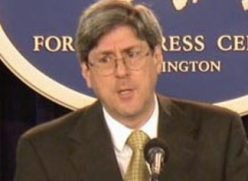
Pentagon insider says high US official Douglas Feith reported to Netanyahu
or go to
Aletho News Archives – Video-Images
Frlom the Archives
Who’s to blame for the Iraq war?
A not-so-trivial quiz
By Maidhc Ó Cathail | 14 March 2010
Maidhc Ó Cathail names and shames the top 19 politicians, academics and policy makers – all con men and all Zionist Jews – who lied and conspired to steer the US toward aggression against the Iraqi people. … continue
Blog Roll
 Aletho News
- Iranian model of warfare bleeds US dry while Persian Gulf states watch and learn: Analyst
- IRGC orders ‘defeated’ US to evacuate industrial facilities in region
- Hegseth’s call for ‘no mercy’ to Iranians deemed war crime
- Iran War Exposes Limits of US Military Power – Journalist
- Even The Neo-Cons Admit The Iran War Is Failing
- Inside the Caucasus Drone Corridor Fueling Tensions With Iran
- ‘Not our war’: Trump’s naval coalition to reopen Strait of Hormuz dead in the water
- Iran declares support centers for USS Gerald R. Ford legitimate targets
- Moscow issues warning over Trump’s Golden Dome plan
- Brussels wants ‘our sons to die for Ukraine’ – Orban
- If Americans Knew
- ‘I Liked the House’: When Israeli Soldiers Turn Palestinian Homes into Barracks
- ‘They Were All I Had’: Lebanese Father Buries Parents, 4 Daughters Killed by Israeli Bombing
- Israel and its supporters are causing attacks on Jewish institutions. Case in point: Michigan synagogue tragedy.
- These are the casualties and cost of the war in Iran 2 weeks into the conflict
- Chicago Teachers Union accuses AIPAC of swaying elections with ‘dark money’
- Predictions of another 9/11, amid Israel-US killing spree – Not a ceasefire Day 157
- As US-Israel war on Iran rages, Gaza faces massive dust storm – Not a ceasefire Day 156
- No let-up in attacks on Gaza as Israel takes on Iran, Lebanon – Not a ceasefire Day 155
- ‘Of Course’: IDF Drops Case Against Soldiers Accused of Raping Palestinian Prisoner
- Don’t Fall for the Regime Change Talk. Israel Is ‘Mowing the Lawn’ in Iran
- No Tricks Zone
- Storing Green Energy To Last Germany 10 Days Would Require A 60-Million Tonne Battery
- New Studies: UK Sea Levels Were 4 Meters Higher Than Today During The Mid-Holocene
- Destructive Green New Deal: German Energy And Metal Group Warns Of Drastic Crisis
- New Study Documents A 20-Year Pause In Arctic Sea Ice Decline – Driven By Internal Variability
- Wake-up Call: Survey Shows Majority Of Germans Now Favor Postponing Climate Targets!
- Televised! Leading German Political Candidate Tells Schoolchildren CO2 Makes Sun Hotter!
- New Study: A Century Warming Of 1.1°C Is ‘Commonplace’ And ‘Not Unusual’ During This Interglacial
- New Study: ‘Internal Noise’ And Volcanic Forcing Can Trigger 10-15°C Warming Within Decades
- Glaciers Worldwide Are Suddendly Surging, Experts Blame Warming!
- Surprising Discovery: Sahara Is Greening…Billions Of Trees Where Once Thought To Be Barren
 Aletho News