The Hypocrisies of Susan Rice
By JUSTIN DOOLITTLE | CounterPunch | November 1, 2013
Back in August, New York Times journalist Mark Landler wrote a gushing profile of Susan Rice, exploring the national security adviser’s alleged “idealism” when it comes to foreign policy and her increasingly influential role in the Obama administration. Landler documented how Rice, an “outspoken defender of human rights,” had managed to rein in her fervent humanitarian impulses and accept the need for “pragmatism” – after all, the United States cannot save everyone, everywhere. Sadly, our beneficence is constrained by practical realities.
Now we find Landler once again writing about Ms. Rice’s new realist approach to the Middle East and how it has impacted the president’s policy priorities in the region. In a piece published over the weekend, for which Rice provided an interview, Landler doesn’t even attempt to conceal his admiration for the brilliant strategist:
For Ms. Rice, 48, who previously served as ambassador to the United Nations, it is an uncharacteristic imprint. A self-confident foreign policy thinker and expert on Africa, she is known as a fierce defender of human rights, advocating military intervention, when necessary. She was among those who persuaded Mr. Obama to back a NATO air campaign in Libya to avert a slaughter of the rebels by Col. Muammar el-Qaddafi.
First, this paragraph does not belong in the news section of the Times. Landler is clearly editorializing about a government official he likes and respects very much. This is not “reporting” as that term is defined by outlets like the New York Times.
Furthermore, consider the substance of this commentary about Rice, who, we are told, is “known as a fierce defender of human rights.” This raises some obvious questions. Where, exactly, is she “known” for her advocacy in this regard? Who are the people that purportedly view Rice as a champion of human rights? Not the people of Africa, one may assume, given that Rice, over the course of her career, has “shown an unsettling sympathy” for some of the continent’s most brutal tyrants.
In perhaps the most glaring example, Rice was able to suspend her “fierce” support for human rights long enough to strongly support Meles Zenawi of Ethiopia, a violent and repressive ruler who died in 2012. Rice called him ”brilliant” and considered him a “true friend,” although she admitted to having some differences of opinion with the great man, over such trivial issues as democracy and human rights. But why let petty stuff like that come between friends?
Rice’s “self-confident foreign policy thinking” has never included any discernible consideration of the plight of the Palestinians, perhaps the most oppressed people on Earth. Her views have never strayed even an inch from the standard line that all “serious” U.S. officials must take when it comes to Israel.
Even a cursory view of Susan Rice’s career shows that her idea of “fiercely defending human rights” is essentially indistinguishable from that of virtually every other official in Washington: victims of human rights abuses are accorded dramatically different degrees of sympathy depending on the abusers’ standing with the U.S. Government. Imprisoned, suffering Gazans might as well not exist. Ditto for political prisoners in Ethiopia, or victims of terrorism in Colombia, or the countless families who have had loved ones killed by U.S. military interventions over the past few decades (all of which Rice has supported).
Mark Landler and the New York Times may genuinely not know about Rice’s flagrant hypocrisy, or they may simply be propagandizing for a particularly favored official. The latter is certainly more likely. Either way, calling a consistent advocate of military violence and repression a “fierce defender of human rights” is a clear – though unsurprising – failure of journalistic honesty. That label should only be applied to those who believe human rights are universal and are not dependent on the victims’ worthiness in the geopolitical perspective of the United States.
Justin Doolittle writes a political blog called Crimethink.
SOUTH HEBRON HILLS: Despite court order, Israeli military intimidates villagers in ‘Firing Zone 918’

CPTnet | October 31, 2013
In spite of the Israeli Defense Minister’s acceptance of the mediation proposal by the Israeli High Court to find a solution with the Palestinians [in the region] about the Israeli military’s use of Firing Zone 918, the pressure of the army on the local inhabitants does not decrease.
According to eyewitnesses, on Sunday, 20 October more than 300 soldiers arrived at the Israeli military base close to the villages of Jinba and Mirkez. Some of them invaded fields between the two Palestinian villages and camped there. For all the week, they did military drills in the area and invaded the Palestinian villages. During the drills, soldiers broke into the village of Jinba, entering into private properties, preventing some Palestinian shepherds from grazing their sheep on Palestinian fields, intimidating and scaring the inhabitants. On the nights of Thursday 24 and Friday 25, the soldiers trained around the Palestinian village of Halaweh. On the night of Wednesday 23, the soldiers entered in the houses of the Palestinian village of Al Mirkez, ransacking homes.
Finally, on Sunday, 27 October, eight Israeli soldiers stopped and detained the Palestinian who drives the school transport jeep around Masafer Yatta for the Palestinian Ministry of Education. Every day he accompanies the elementary schoolchildren on their way from several remote villages to their school in Al Fakheit village. The soldiers forced the driver to get out of the car; then they questioned him. Moreover, the soldiers shouted at him and insulted him, and beat him on his abdomen, face and back. Later, they forced the driver to get in the car and drive on the spikes used at army checkpoints in order to puncture the tires.
Despite the fact that the Ministry of Defence accepted the mediation with the [South Hebron Hills] Palestinians proposed by High Court of Justice, the Israeli government is continuing its policy of threats against the Masafer Yatta inhabitants.
The Italian peace group Operation Dove lives and works in the South Hebron Hills village of At-Tuwani. Christian Peacemaker Teams, Operation Dove, and EAPPI share responsibility for accompanying a vehicle intended for the transport of school children into an area of the South Hebron Hills the Israeli military has designated as “Firing Zone 918.” The Operation Dove report has been edited by CPT for clarity.
Related articles
- Military Training Amid Villages in South Hebron Hills (alethonews.wordpress.com)
- 48 young olive trees destroyed in South Hebron Hills (palsolidarity.org)
Brazil, Germany submit anti-spy resolution to UN
Press TV – November 1, 2013

An anti-spying draft resolution written by Germany and Brazil has been submitted to the United Nations amid the US surveillance scandal.
The draft resolution put forward on Friday would reaffirm “the right to privacy and not to be subjected to arbitrary or unlawful interference with privacy, family, home or correspondence.”
The right is already protected in the Universal Declaration of Human Rights and the International Covenant on Civil and Political Rights.
Furthermore, the draft resolution would also reaffirm the “same rights that people have offline must also be protected online, in particular the right to privacy, including in the context of the surveillance of communications.”
The draft was to be processed by the UN secretariat before being handed over to the UN General Assembly’s human rights panel for discussions.
This comes as German Chancellor Angela Merkel and Brazilian President Dilma Rousseff have both condemned the widespread spying by the US National Security Agency (NSA).
Merkel has demanded the United States enter a “no-spying” agreement with Germany and France by the end of 2013 amid recent revelations that the NSA spied on the two countries.
The Chancellor has also stressed that alleged espionage against Berlin and Paris, which are considered among closest allies of the US, should be stopped.
On October 26, a report published by German weekly Der Spiegel revealed that Merkel’s mobile phone had been listed by the NSA Special Collection Service (SCS) since 2002, and that her mobile phone number was still listed in June 2013.
Last month, Rousseff spoke at the United Nations General Assembly, calling for international regulations on data privacy and limiting espionage programs targeting the Internet.
Rousseff’s appeal came after reports were published in September by Brazil’s Globo television network, which revealed that the NSA spied on the president’s emails, phone calls, and text messages.
Snowden, a former CIA employee, leaked two top secret US government spying programs under which the NSA and the Federal Bureau of Investigation (FBI) are eavesdropping on millions of American and European phone records and the Internet data from major Internet companies such as Facebook, Yahoo, Google, Apple, and Microsoft.
The NSA scandal took even broader dimensions when Snowden revealed information about its espionage activities targeting friendly countries.
Related articles
Assaulting the sheep
As part of the campaign of quiet terrorism against Palestinians, IDF soldiers assault sheep with stun grenades
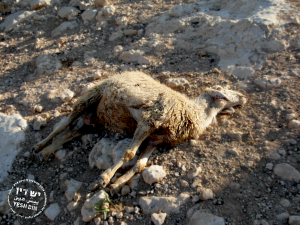
Sheep shot outside settlement of Havat Maon, January 23 2011 | Photo: CPT
By Yossi Gurvitz | October 31, 2013
One day in September, Walid Said Muhammad ‘Id, a resident of Burin – a village unfortunately surrounded by settlements and outposts, whose inhabitants as a result are frequently attacked by settlers – went with his son to herd their flock of sheep. Their pasture is close to one of the nearby outposts, Har Bracha B.
About an hour after the two reached the pasture, they observed three soldiers coming down towards them from the outpost. Yes, the outpost – illegal as it maybe – is protected by the State. This is just such a regular part of life that we ignore it, but it should be mentioned from time to time. Imagine a band of outlaws takes over other people’s land, and instead of removing the outlaws the authorities hurry to protect them, even though they openly state that the outlaws’ presence there is illegal.
The soldiers ordered ‘Id to remove his sheep from the pasture, and he in turn informed them that he was renting this plot, and that it is located in Area B and not Area C, and he refused to evacuate. The soldiers repeated their demand and ‘Id repeated his refusal. The soldiers then spoke at length on their cellular phones. Finally, they turned back to the outpost.
And then the other soldiers arrived. The two groups of soldiers passed each other, and the soldiers in the second group, without uttering a word, pulled out stun grenades. These are small explosive devices which create a flash and a loud noise, intended to cause panic and disperse demonstrations. The soldiers threw about ten stun grenades into the flock, and the sheep, terrified, dispersed in all directions. Then the soldiers turned on their heels and left.
‘Id has committed no offense. Had he committed any, even the smidgen of an offense, the soldiers would have detained him. They are not, after all, accountable to anyone.
The soldiers had no argument to field against him, not even some dubious security excuse. So they went straight to terrorism: they used violence against his flock and dispersed it. Oh, you think you may take pasture here? You have the “chutzpah” to maintain your rights in the face of an armed Jewish male? We’ll show you.
If there is a hell, and in his low moments the undersigned thinks perhaps there should be, it ought to contain a special circle for those who abuse the helpless: to those who abuse a baby, a child, a bound human, a frightened animal, anyone who is incapable of understanding what is happening to him, or why it is happening, to protest, or to defend itself. Here is the 2013 model IDF: the strongest army in the Middle East – when it comes to terrorizing sheep, at any rate. What’s next? Firing tear gas at cows? Dispersing goats with the “Skunk,” the IDF’s patented stinking liquid-squirting vehicle? Shooting rubber bullets at herding dogs? A nightly raid on chicken coops, stuffed full of terrified flightless birds? Holding beloved pets in administrative detention?
The goal of the soldiers, of course, was to terorrize ‘Id; to enable the quiet terrorism of the settlers, whose point is to take another acre, steal another goat, by scaring the Palestinians away and making them despair off their lands. But, unlike the scenario to which they’ve grown accustomed, the soldiers were facing a man who stood up steadfastly for his rights. So, instead of dealing with him, they attacked his animals, those innocent of any crime, the helpless of the helpless. They could have, we should remind you, done a lot more: they could have detained ‘Id and assaulted him though he was guiltless, knowing that the chances they would pay any sort of price for their actions are nil. I guess they couldn’t muster the courage.
This isn’t just terrorism, just despicable cowardice, just cheap sadism: it’s also very bad soldiering. An army whose troops get used to dealing with challenges in this way, ought not to be surprised when, facing a real enemy, it will march towards it on one road and flee from it in seven. Commanders who turn a blind eye to such incidents, and a public which does not want to know, not only raise a new generation of coarse thugs, who will return to civilian life as coarse thugs: they also turn an army into an occupying garrison, a broken tool. Many Israelis pride themselves on not having any moral sense, in recognizing only what is utilitarian, that morals “are for the weak.”
So this is an argument for the “strong ones.” Particularly when they need to prove their strength to sheep.
Related articles
- Israeli forces ‘deliberately’ damage Palestinian vehicle near Jenin (altahrir.wordpress.com)
- Tear gas in Hebron school leads to cancellation of classes (palsolidarity.org)
The blame game: NSA chief points finger at US diplomats in spy scandal
RT | November 1, 2013
In an unexpected twist in the NSA scandal, spy chief Keith Alexander has blamed US diplomats for ordering surveillance on EU politicians. Meanwhile, State Secretary John Kerry has admitted espionage “reached too far,” alleging it was on “automatic pilot.”
Indicating a rift between the White House and the NSA, Director of the spy organization, Keith Alexander, has accused “policy makers” and “diplomats” for dictating the targets for surveillance. In a heated exchange, former ambassador to Romania, James Carew Rosapepe, challenged Alexander to justify spying on US allies, reported the Guardian.
“We all joke that everyone is spying on everyone,” he said. “But that is not a national security justification,” said Rosapepe.
Alexander replied sharply to the question, alleging ambassadors had a hand in ordering spy activities.
“That is a great question, in fact as an ambassador you have part of the answer. Because we the intelligence agencies don’t come up with the requirements, the policymakers come up with the requirements,” Alexander said.
He added sarcastically: “One of those groups would have been, let me think, hold on, oh! – ambassadors.”
Passing the buck
As the NSA points the finger at the Obama Administration for ordering the mass surveillance of European citizens, the White House is seeking to distance itself from the scandal, intimating the NSA was acting of its own volition.
Secretary of State John Kerry addressed the accusations, that the NSA recorded millions of European citizens’ telephone calls, in a video conference to London on Thursday. Kerry conceded that US surveillance had “reached too far” and stated that the NSA had been conducting its espionage on “automatic pilot.”
“In some cases, I acknowledge to you, as has the president, that some of these actions have reached too far, and we are going to make sure that does not happen in the future,” Kerry said, stressing an inquiry is currently underway to reassess American intelligence gathering programs.
Washington came under fire this week when a delegation from the EU came to get answers over the NSA’s activities in Europe. According to the revelations released by former CIA worker, Edward Snowden, to the press, the US not only targeted regular citizens, but also businessmen and high-profile politicians.
The White House did not give many answers to the delegation, they instead sought to justify espionage in Europe as a measure to protect against terrorism.
“It is much more important for this country that we defend this nation and take the beatings than it is to give up a program that would result in us being attacked,” Alexander told the House of Representatives Intelligence Committee on Wednesday. He went on to say that the US only collected data related to warzones in the Middle East.
How Feinstein’s Fake NSA Reform Bill Could Actually Make It Easier For NSA To Record Your Phone Calls

By Mike Masnick | Techdirt | November 1, 2013
We already pointed out that Dianne Feinstein’s fake NSA reform bill is being positioned by her as real reform, when all it really does is codify the (probably currently illegal) status quo. Even worse, Feinstein is using highly misleading language to pretend that the bill “bans” the very things that it clearly allows. It’s about as dishonest a statement about a bill as you can imagine.
We had noted in our original post that the talk about how the bill would prohibit the collection of “content of communications under Section 215” was a red herring. One of the NSA’s go-to talking points is that there’s “no surveillance” on the Section 215 collections because it’s “just metadata.” They keep repeating this claim over and over again that the leaked programs do not involve collecting the “content” of calls, pretending that this is what everyone’s been complaining about. That statement alone is disingenuous. Most people following this know that the Section 215 collections don’t involve the content of communications. What we’re complaining about is the metadata collection, because that’s very revealing. Separately, while the NSA may not collect contents “under this program,” they absolutely do under other programs.
But, the actual language here may be even worse. It may be so misleading that the language being held up to “prohibit” the collection of actual call content is worded in a way that actually will allow for greater content collection. As Julian Sanchez notes at that link, the ban on content collection is only for “bulk data collection,” which could be interpreted to mean it’s okay for non-bulk collections, which most people believe 215 isn’t regularly used for today.
The problem is, under canons of judicial interpretation, a narrow and explicit prohibition on getting content under bulk orders for communications records could easily be read to imply that content can be acquired via non-bulk orders, or even via bulk orders for other types of records. At present, it is not clear whether the statute allows for the acquisition of contents under 215, but there are strong arguments it does not—though, of course, I’d argue the Constitution would forbid this even if the statute didn’t. Under this law, though, a clever Justice Department lawyer could plausibly argue that a prohibition on content collection under one very specific type of 215 order would be senseless and redundant unless Congress intended for content to be accessible under 215 orders generally—and Courts generally have to interpret the law in a way that avoids making any provision redundant.
And, as Sanchez further points out, this isn’t a theoretical concept. The Justice Department has already used exactly this type of argument to allow for the bulk data collection in the first place:
This is not at all a hypothetical concern. In 2006, Congress amended Section 215 to add special “protections” for educational and medical records. What Congress didn’t know is that, because those records are already protected under other federal laws, and 215 contained no language explicitly overriding those statutes, the Justice Department had determined that 215 simply could not be used to access those types of records—an interpretation that was reversed after the “protections” were added. Congress, in other words, inadvertently expanded the scope of 215 while trying to limit it—a fact that was discovered only later, when a report by the Inspector General revealed the unintended consequences of the amendment.
This is yet another example of the really evil word games the NSA and its defenders will use to increase spying, while pretending they’re doing the opposite. Now would be a good time to reach out to your Senator to let them know that the Feinstein bill is absolutely unacceptable.
Related articles
Snowden ready to testify in Merkel tapping case – German lawmaker
RT | October 31, 2013
Whistleblower Edward Snowden has met with a German MP in Moscow. He passed a letter addressed to the German government and federal public prosecutor where he allegedly said he is ready to testify over Washington’s probable wiretapping of Merkel’s phone.
During the meeting, Snowden made it “clear that he knows a lot,” Greens lawmaker Hans-Christian Stroebele told ARD channel.
“He expressed his principle readiness to help clarify the situation. Basis for this is what we must create. That’s what we discussed for a long time and from all angles,” the MP said. “He is essentially prepared to come to Germany and give testimony, but the conditions must be discussed.”
Stroebele, 74, is a member of the German parliament’s control committee which is responsible for monitoring the work of intelligence agencies.
Snowden wouldn’t be able to travel to Germany to give evidence, as that would effectively see his refugee status lifted. If that were to happen, it would be possible for him to be extradited to the US, Interfax news agency quoted an unknown source as saying.
“At the same time, the German General Prosecutor’s Office could in principle send its representatives to Russia or pass its written questions on to Edward Snowden,” the same source said.
German Chancellor Angela Merkel has dispatched the country’s top foreign affairs and intelligence advisers to Washington this week to further investigate the allegations that her cell phone was tapped by the NSA, the report which caused fierce outrage in Germany.
The scandal initially broke when journalists working with Snowden’s leaked documents contacted the German government for clarification. German politicians subsequently suggested involving Snowden as a witness in the wiretapping case.
The German Federal Prosecutor’s Office may summon Snowden to be a witness in the case, German justice minister Sabine Leutheusser-Schnarrenberger told Deutschlandfunk radio on Sunday.
“If our suspicions prove correct and a case is opened, the German Federal Prosecutor’s Office will have to consider the possibility of interrogating Snowden as a witness,” she said.
If Snowden were to come to Germany for the case, the EU country could breach US’ requests for extradition, the minister added.
Leutheusser-Schnarrenberger also said that the phone tapping is illegal and constitutes a crime, therefore those responsible should be held accountable.
A parliamentary session will be held on November 18 to discuss the phone tapping. The Greens, along with the far-left Die Linke party, previously asked for a public inquiry into the matter. They were the ones to call on witnesses, including Snowden.
In June, Edward Snowden, a former NSA contractor who disclosed secret US surveillance programs, fled to Hong Kong and then to Russia.
President Vladimir Putin rejected US demands to extradite Snowden to face charges including espionage.
In early August, Snowden was granted temporary asylum, which can be extended annually.
Featured Video

Theodore Postol: Iran’s Missiles & Drones Were Underestimated
or go to
Aletho News Archives – Video-Images
From the Archives
Wars for Israel: A reminder of who’s giving the marching orders
By Damian Lataan | February 7, 2012
As the West prepares to march off to yet another war in the Middle East, we should perhaps remind ourselves of who is giving the West their marching orders.
In February 2003, just weeks before the US and their allies launched their attack on Iraq and her peoples, a delegation of US congressmen, together with the US Ambassador to the United Nations, John Bolton, a well known pro-Zionist and neoconservative war-hawk, were in Israel at the invitation of the Israeli government then led by Israeli Prime Minister Ariel Sharon.
Addressing the congressmen, Sharon told them ‘that Iran, Libya and Syria should be stripped of weapons of mass destruction after Iraq’. Later, Sharon told John Bolton ‘that Israel was concerned about the security threat posed by Iran, and stressed that it was important to deal with Iran even while American attention was focused on Iraq’. … continue
Blog Roll
 Aletho News
- Wave 90: IRGC strikes US-linked industrial sites in Gulf
- Iran Says US-Israeli Claims of Its Military Strength Are Wrong
- Trump’s April Fools’ Address to the nation
- The Most Important Bet You’ve Never Heard Of
- The killing of three Indonesian soldiers in Lebanon should remind Jakarta that Israel does not want peace
- Defeated and delusional: Netanyahu’s remarks reveal $80bn war failure, says analyst
- Iran’s friends are about to make life much more difficult for Israel and the US
- The war of liberation of the Arab and Islamic peoples expands across the Gulf
- Envoy warns UN on Trump’s threat to ‘obliterate’ Iran’s civilian infrastructure
- The Larak Corridor: Iran’s Rial Gate With No US, No Israel, and No Way Around
- If Americans Knew
- Gaza families reunite years after babies evacuated amid Israel’s war
- International Rescue Committee warns Gaza’s children face grave protection risks
- Iran’s Alleged 47-Year War on America: Debunking the 1,050 American Deaths Canard
- Israel wants US to bomb more of Iran’s civilian structures (113,000 is not enough) – Not a ceasefire Day 173
- Ann Coulter Rips Into Fox News for Iran War Coverage
- Joe Kent Urges Americans To Call White House and Congress To Object To Sending Troops Into Iran
- DNC Resolution to Reject AIPAC Funding Puts Democratic Leaders in the Hot Seat
- Swedish foundation to build 400 schools as over 650,000 Gaza children remain without education for 2 years
- Israeli army admits photshopping image of slain Lebanese journalist
- This is how Israel is systematically killing health workers under the cover of war in Lebanon
- No Tricks Zone
- New Study Finds Warming Saves Lives…Cold Temperatures 12 Times More Deadly Than Excess Heat
- German Science Blog Accuses PIK Climate Institute Of Hallucinating Climate Tipping Points
- Devastating Assessment Of Comirnaty Vaccine By Former Senior Pfizer Europe Toxicologist
- New Study: CO2 Is ‘Effectively Negligible’ As An Explanatory Climate Change Factor Since 2000
- Former Pfizer Toxicologist Dr. Helmut Sterz Tells Bundestag Hearing Pfizer Vaccine Should Have Never Been Approved
- Energy Expert: Germany’s Nuclear Phaseout Was A “500 Billion Euro Mistake”
- New Research: South Australia’s Mid-Holocene Sea Surface Temperatures Were 4°C Warmer Than Today
- Storing Green Energy To Last Germany 10 Days Would Require A 60-Million Tonne Battery
- New Studies: UK Sea Levels Were 4 Meters Higher Than Today During The Mid-Holocene
- Destructive Green New Deal: German Energy And Metal Group Warns Of Drastic Crisis
 Aletho News