An unrelenting assault on the village of Deir Istiya’s farmland
International Solidarity Movement | November 28, 2013
Deir Istiya, Occupied Palestine – The village of Deir Istiya has encountered severe disruption to its agriculture and water supply since 1990 from the Israeli authorities and nearby illegal settlements. This has culminated in the Israeli army’s planned action to uproot nearly 2,500 olive trees in the very near future.
The army’s mandate to perform this action stems from a court ruling given in May 2013 that gave permission for them to cut down all olives trees in the Wadi Kana (a valley making up a large part of the village’s farmland) that are under two years old. However trees that were planted over five years ago have been included in the marking action over the last five months, a marking action typically precludes the actual uprooting process.
On the 26th of November, four men in civilian clothing marked 157 more trees across the village farmland. Before the army actually begins the action, under Israeli law, they have to inform lawyers representing the village of the date that this will commence. Although from past experience, villagers across the West Bank have not received such prior warning in similar cases. If the army succeeds with its plan, the destruction of more than 2,500 olive trees will decimate the village’s agriculture and economy, destroying the livelihoods of many of the 4,000 inhabitants of Deir Istiya.
This is the latest in a long line of aggressive acts that the Israeli government, army, courts and nearby illegal settlers have inflicted upon the people of this village. In 1990 nearby settlers deposited sewage from three separate illegal settlements into the 12 springs that provided water for the village. This water was crucial for the irrigation of the traditional crops of the village, lemon and orange trees. As water became scarce for the village, the farmers abandoned the orange and lemon crops, replacing them with olive trees due to the fact they require far less water. This is typical of the Israeli state to dramatically reduce the Palestinians methods for survival only to attempt to snatch away the small ray of hope that they have managed to build for themselves in the face of such adverse conditions.
Moreover, on the 23th of November, illegal settlers from a nearby settlement trespassed on Palestinian land in order to steal 100 meters of fencing material. The purpose of this fence was to protect a number of olive trees from pigs that have infested the area since Israeli settlers began releasing them for the exact purpose of disrupting Palestinian olive farming.
US, Israel to threaten Iran with war game
Press TV – November 28, 2013
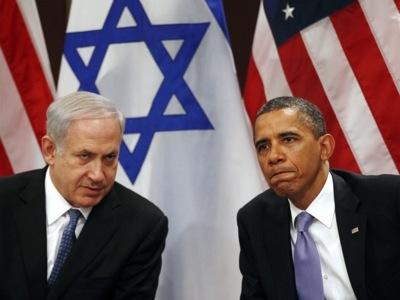
The US and Israel are planning to conduct a joint military drill in an effort to threaten Iran towards the end of the six-month period when an interim deal between Iran and the five permanent members of the UN Security Council plus Germany expires.
The drill is aimed at sending a threatening message to Iran while US President Barack Obama says “we cannot commit ourselves to an endless cycle of conflict.”
Time magazine broke the story of the planned US-Israeli military exercise on Thursday, citing a top Israeli official who said, “The strategic decision is to continue to make noise.”
“In May there’s going to be a joint training exercise with the Americans,” said the official who spoke on condition of anonymity. “It’s going to be big.”
The planned war game comes after the interim nuclear deal between Iran and the P5+1 intensely angered Israelis.
As part of the interim deal, which was announced on November 24, Iran has agreed to limit certain aspects of its nuclear activities, and the United States and its allies have agreed to lift some of the economic sanctions and offer access to a portion of the revenue that Tehran has been denied through these sanctions. No additional sanctions will be imposed.
The deal infuriated Israeli Prime Minister Benjamin Netanyahu who called it “a historic blunder.”
The American Israel Public Affairs Committee (AIPAC), the most powerful pro-advocacy group in the US, also called on US Congress to impose new sanctions on Iran.
Meanwhile, a recent Reuters/Ipsos poll has shown that the American people support the deal over Iran’s nuclear energy program by a 2-to-1 margin.
Related articles
Pakistan blows cover of suspected CIA chief after drone strike
RT | November 27, 2013
One of Pakistan’s major political parties has published the name of what it believes to be the CIA’s chief operative in Islamabad after a US drone strike killed five people last week. The group demanded on Wednesday that the spy chief face murder charges.
The Pakistan Tehreek-e-Insaaf (PTI), led by the country’s cricket star Imran Khan, dropped the name of the Central Intelligence Agency (CIA) operative to police in a letter in which the party demanded that the agent face up to the “gross offence” of the drone strike.
The letter was released to the media. However, the name could not be independently verified.
“I would like to nominate the US clandestine agency CIA (Central Intelligence Agency) Station Chief in Islamabad … and CIA Director John O. Brennan for committing the gross offences of committing murder and waging war against Pakistan,” PTI information secretary Shireen Mazarisaid wrote in the letter.
“CIA station chief is not a diplomatic post, therefore he does not enjoy any diplomatic immunity and is within the bounds of domestic laws of Pakistan,” the letter added. The complaint was lodged with Tal police station in Hangu district, northwestern Pakistan.
Intelligence agencies in foreign countries make a habit of keeping the identities of their agents and operatives private. If the PTI has successfully named the right person then he may be forced to leave the country.
This would not be the first time that an American operative has been outed in the country. In 2010 a former station chief was forced to leave Pakistan after his name was also revealed during a drone strike which led to the deaths of civilians.
The drone strike on 21 November was extremely provocative as it was one of the first outside the Federally Administered Tribal Areas, in the northwestern Khyber Pakhtunkwa province, and killed five militants – among them a senior commander of the Haqqani Network.
A separate strike at the beginning of November, which killed Pakistani Taliban chief Hakimullah Mehsud, prompted Khan to react with similar fury over how continued strikes could scuttle peace talks.
“The Taliban held only one condition for the peace talks and that was that drone attacks must end,” he said at a press conference. “But just before the talks began we saw this sabotage.”
CIA spokesman Dean Boyd would not confirm the Islamabad station chief’s name to the AP and declined to comment on the matter immediately.
Honduran Election Results Contested by International Observers
By Kevin Edmonds | The Other Side of Paradise | November 28, 2013
Honduras’ elections on November 24 had the potential of reversing some of the worst pro-market, anti-people policies put forward by the government of Porfirio Lobo, who was the direct beneficiary of the 2009 coup that ousted the left-of-center Manuel Zelaya. Instead, the elections have been fraught with irregularities and violent intimidation, threatening to throw the embattled nation into further political disarray.
These elections were regarded as pivotal for Honduras, as the administration of the ruling National Party has done little to combat the country’s poverty rate which stands at over 60 percent. Instead the National Party has been focused on opening up the country to multinational corporations. This is best demonstrated by the National Party’s passage of a new mining law that would remove the moratorium on the granting of new mining concessions put in place by former president Zelaya in 2008. The new mining law, which was passed earlier this year, was drafted with the help of the Canadian International Development Agency. The law effectively allows for a return to destructive open-pit mining practices that have been linked to numerous human rights abuses and widespread environmental destruction.
In addition to revising the mining laws, as detailed last year by NACLA’s Keane Bhatt, the Lobo administration was also busy luring developers and investors to build highly problematic “charter cities.” Bhatt described these charter cities as “privately owned municipalities that would be managed autonomously, complete with their own police forces, tax codes, and legal systems. These cities would develop industries for export-oriented growth, like textile manufacturing; they would also sign onto international trade agreements independently, and manage their own immigration policies.”
Standing in opposition to these pro-multinational corporation policies, the LIBRE (Liberty and Refoundation) Party is led by Xiomara Castro de Zelaya, the wife of former president Manuel Zelaya—who, under the constitution, was barred from running for a second term. The LIBRE party emerged from the post-coup resistance movement and seeks to build a Honduras in which self-determination and social justice—not the rule of the oligarchs—prevail. Due to the strength and wealth of those they oppose, the LIBRE party has been systematically attacked by the military police and paramilitary forces associated with the various landowners and business figures.
Rights Action has extensively documented the violent intimidation of LIBRE party members and progressive journalists in the run-up to the November 24 elections. Rights Action recently released a report that revealed since May 2012, at least 18 LIBRE party activists have been killed, with 15 others falling victim to armed attacks.
Despite the presence of hundreds of international observers, the state-sanctioned violence and intimidation did not cease. As reported by members of the Canadian NGO Common Frontiers who were part of the official delegation, the day before the election armed groups entered hotels in Tegucigalpa in order to intimidate election observers. With the passage of time, it is becoming increasingly apparent that examples of armed intimidation were crucial to the victory of the National Party’s candidate Juan Orlando Hernández.
Soon after the contested results were announced, Canadian electoral observers released a statement on November 25, stating that “After careful consideration of our own observations of the electoral process in Honduras we find the presidential elections to be inconsistent with democratic principles and rife with fraudulent practices.”
Their statement concluded with their recommendations: “We urge the Canadian government not to recognize the results of the Honduran elections. There must be an opportunity to do a full, transparent, accurate count, and fully investigate the many reports of irregularities, intimidation and threats by authorities.” (The entire statement from the Canadian delegation can be read here).
Following the statement by the Canadian delegation, on November 26, the National Lawyers Guild published a press release which declared that “The National Lawyers Guild (NLG) delegation of 17 credentialed international observers seriously question the validity of the Supreme Electoral Tribunal’s (TSE) preliminary results of Sunday’s national elections in Honduras. The NLG takes issue with the United States government’s characterization of the electoral process as transparent, given the country’s recent and pervasive human rights violations… The NLG noted a strong will and enthusiasm among Hondurans to participate in the electoral process despite a pervasive climate of fear and intimidation surrounding opposition party members and observers. Over the weekend, two LIBRE party activists were murdered, while two other deaths and three injuries were reported near a voting center in the Moskitia region. In addition, international observers reported multiple incidents of intimidation by state actors in the days leading up to the elections.”
It is predictable that the United States and Canada will support the contested results of the election, as irregularities are only important when their favoured candidate does not win. One only has to look at their support for the electoral process in Haiti in 2010—a situation in which 14 political parties were banned and observers witnessed widespread fraud and irregularities. Both countries have a great deal invested in Honduras, financially and geopolitically. Indeed the entire process was summed up brilliantly by Canales Vásquez, a LIBRE activist, who remarked to Upside Down World’s Sandra Cuffe: “They don’t want an example to be set in Honduras where the people kick the oligarchy out at the ballot box and where the system changes in favor of the people. That’s what we’re struggling for in Honduras, and that’s the reason for this repression against the people and against the LIBRE party.”
Related article
- Reports of vote buying, intimidation, violence in Honduras (voiceofrussia.com)
Obama’s Response To Too Much Secrecy About Surveillance… Is More Secrecy
By Mike Masnick | Techdirt | November 27, 2013
Anita Kumar, a reporter at McClatchy, has a good article highlighting how, for all the talk by the Obama administration about how it needs to be more open and transparent about what the NSA is doing, in actuality, the administration has built up the walls even higher, increasing the levels of secrecy… including secrecy about how he’s responded to everything:
Obama has been gradually tweaking his vast government surveillance policies. But he is not disclosing those changes to the public. Has he stopped spying on friendly world leaders? He won’t say. Has he stopped eavesdropping on the United Nations, the World Bank and the International Monetary Fund? He won’t say.
Even the report by the group Obama created to review and recommend changes to his surveillance programs has been kept secret.
As is noted in the article, the administration, which likes to pretend it’s the most transparent in history, is actually one of the most secretive. Its attempts at transparency have almost exclusively been focused on where it can get the most political bang, not for what areas people expect the government to be transparent about — such as how it interprets the laws that allow the government to spy on everyone…
What’s incredible is that it appears that no one high up in the administration seems to recognize how this is a strategy that will almost certainly make things worse, not better. It may be how the administration is used to functioning, but it makes it much more difficult to believe anything that is said about a supposed “vigorous public debate” being held on the surveillance activities. It also means that as more leaks come out revealing more questionable practices, the constant backtracking and excuses will just destroy whatever credibility the administration has left on this issue. If, instead, it were to actually be transparent and simply reveal things like how it interprets the law, and allow for a real public discussion on these matters, that would actually result in some frank discussions that the administration seems terrified of actually having.
Extreme secrecy may seem like the easier short-term strategy, but it’s just digging an ever deeper hole that the administration is going to have to try to climb out of in the long-term. Hiding reality from a public that’s going to find out eventually is just making the problem worse.
Lies of the Israeli Peace Movement
By Richard Hugus | August 8, 2004
How clever the oppressor is, learning the language and ways of the oppressed and insinuating himself among them. “Yes, yes” he says, “I too am oppressed – can we sit side by side and declare our common cause?” The US “peace and justice” group, Brit Tzedek v’Shalom, recently sent an announcement to a listing of peace events in Massachusetts for a meeting to do just this. In the announcement, the public is invited to hear from “bereaved Israeli and Palestinian families supporting peace, reconciliation and tolerance.”
By this means an ‘equals’ sign is put between Zionists and the people of the land they occupy, in the country which is the sole source of support for that occupation. This is propaganda of the most insidious kind. Now the Zionist must show “tolerance” for the Palestinian whose land he stole, whose homes he moved into, whose people he began attacking 56 years ago, and continues to attack. Now the Palestinian must accept, must renounce his right to resist this attack, his fight against occupation, his right to return, his rights as a human being – all because “both sides” have engaged in violence.
Imagine those who rule the US holding sessions with the Vietnamese on the harm the Vietnamese did to them in the Vietnam War. Imagine the white plantation owner having public meetings in which injustices done to him by his slaves could be fully and sensitively aired. Imagine the US majority – the colonial settlers of what the natives once called Turtle Island — sitting down with the Sioux or Apache or Ojibwa, saying it was time “both sides” admitted to wrongdoing.
Betrayals of history such as this are only organized by the victor when some members of its polity have a pang of conscience, or as a way to further the ongoing project of colonization. The “peace” being sought here is just another kind of war. On its web site, Brit Tzedek says unabashedly that it is “deeply committed to Israel’s well-being.” Thus, it wants an end to violence in Palestine, but it supports the source of that violence – namely, the state of Israel. It claims to be for justice, but in fact it isn’t. Justice would mean the right of Palestinians to return to the land stolen from them. It would mean restitution for past crimes. It would mean an end to the idea of a state for Jewish people only. Such things are not on Brit Tzedek’s agenda. The idea that “Israel” is an illegitimate state to be done away with, just as Apartheid South Africa was, is not on the agenda of the Israeli peace movement. In all cases the legitimacy of the current state is assumed, and its preservation sought.
Last November, Brit Tzedek held a conference at the Park Plaza Hotel in Boston to which it invited Knesset Minister Avram Mitzna. As commander of the West Bank Israeli occupation forces in the late 80’s, this star of the so-called “Israeli peace camp” was directly responsible for implementing Yitzhak Rabin’s “breaking bones” policy during the first Intifada. He did so with his own “iron fist” policy. Breaking bones meant Israeli soldiers taking large rocks and butts of guns and shattering the hands and arms and legs of any Palestinian thought to be resisting. Mitzna was a featured speaker at the Brit Tzedek conference.
At this conference, one Brit Tzedek activist came out to speak to supporters of Palestine protesting outside. She broke into tears and asked for the sympathy of one protestor because, as she admitted, she had just come to the conclusion, after wrestling with the question for many years, that the Palestinian right of return was just not going to be possible. Other progressives, like Noam Chomsky, have said the same. They speak of what is “realistic, ” as if it’s “realistic” to remove an entire people from their country by massacre and attrition, to jail inside 24 foot high walls any who remain, to shoot children in the street, to destroy farm land and water supplies, to drive people to starvation, to wage war on rock-throwers with F-16’s, tanks, and attack helicopters, and to never acknowledge that “facts created” and gains made by Ariel Sharon and all his predecessors were atrocious crimes. To the double-talking liberal, it is not “realistic” to stop any of this, and give Palestinians back what was stolen. Genocide is realistic; justice is not. The progressive “realist” is finally no different than the right wing Zionist. Like the Democrats and Republicans in the US who both support the basic goals of US empire, both sides are the same.
Not surprisingly, Brit Tzedek is also for a “two-state solution”—a position no one can take seriously anymore, as the Wall guarantees that any “state” Palestinians might have at this point would actually be a collection of separate prisons.
It is necessary for people who actually are progressives today to beware the corruption of language and values which the oppressor spews out on a daily basis. He has air-conditioned offices with well-paid staff to do this work. He has well-meaning NGO workers fulfilling grants. He has intellectuals in the academy, the media, and government to do this work.
It is time to respond to the pacifist progressive in particular who collaborates with the oppressor by equating and condemning all violence. The language of resistance must be clearly spoken: It is right for Palestinians to resist the occupation, not just the occupation of the West Bank and Gaza, but of all of Palestine, by whatever means possible. It is right for the Iraqi resistance to resist the similar vicious US occupation of Iraq. It was right for the Sioux to resist, it was right for the African slave to resist, it was right for the Vietnamese to resist. In no way can the minor losses of the oppressor be equated with or compensate for the original crime of his aggression. It is time for progressives in the US to openly and clearly support resistance to the monster that the US has become, and the entities it supports, like Israel, and increasingly this means rejecting the false language of the pacifist. The conflict in Palestine is not morally ambiguous. It is not a battle between two sides who are equally guilty. Zionists attacked, Palestinians defended. There is a right and a wrong.
Related articles
NSA spied on 2010 G8, G20 summits in Toronto with Canadian help
RT | November 28, 2013
The National Security Agency conducted widespread surveillance during the 2010 G8 and G20 summits with the blessing of host country Canada’s government.
Documents supplied by former NSA contractor Edward Snowden show the US converted its Ottawa embassy into a security command for six days in June 2010 as world leaders met in Toronto. The covert operation was known to Canadian authorities, CBC News reported.
The documents do not reveal targets of the espionage by the NSA – and possibly by its counterpart, the Communications Security Establishment of Canada (CSEC). The NSA briefing notes say the operation was “closely co-ordinated with the Canadian partner.”
Ultimately, the documents obtained by the CBC do not give exact specifications of CSEC’s role, if any, in the Toronto spying. Former Guardian reporter and Snowden’s chosen journalist to receive the NSA documents, Glenn Greenwald, co-wrote the story for CBC.
But the documents do spell out that CSEC’s cooperation in the venture was crucial to ensuring access to telecommunications systems needed to spy on targets during the summits.
Both NSA and CSEC were implicated, along with British counterpart GCHQ, for monitoring phone calls and email of foreign leaders and diplomats at the 2009 G20 summit in London. In addition, it was recently reported that CSEC hacked into phones and computers at the Brazilian government’s department of mines. These revelations also came via documents from Snowden, who has received asylum in Russia.
The revelations also contradict a statement made by an NSA spokesman to The Washington Post on August 30, which said that the US Department of Defense – of which the NSA is is part of – “does not engage in economic espionage in any domain, including cyber.”
The NSA briefing document says the operational plan at the 2010 summit included “providing support to policymakers.”
The Toronto summit was chock full of major economic issues following the 2008 recession. Measures like the eventually-nixed global bank tax were strongly opposed by the US and Canadian governments. Further banking reform, international development, countering trade protectionism and other issues were on the docket – and on NSA’s list of main agenda items in the aim of supporting “US policy goals.”
The partnerships by some Western spying arms at the Toronto and London summits, not to mention other stories that have come out based on the Snowden documents, call attention once again to the “Five Eyes” surveillance coalition among Australia, Canada, New Zealand, the UK and the US.
Wall Street Journal Columnist Repeatedly Gets His Facts Wrong About NSA Surveillance
By Trevor Timm | EFF | November 27, 2013
Wall Street Journal columnist L. Gordon Crovitz wrote a misleading and error-filled column on NSA surveillance Monday, based on documents obtained by EFF through our Freedom of Information Act lawsuit. Since we’ve been poring over the documents for the last week, we felt it was important to set the record straight about what they actually reveal.
Crovitz:
Edward Snowden thought he was exposing the National Security Agency’s lawless spying on Americans. But the more information emerges about how the NSA conducts surveillance, the clearer it becomes that this is an agency obsessed with complying with the complex rules limiting its authority.
That’s an interesting interpretation of the recently released documents, given that one of the two main FISA court opinions released says the NSA was engaged in “systemic overcollection” of American Internet data for years, and committed “longstanding and pervasive violations of the prior orders in this matter.” The court summarized what it called the government’s “frequent failures to comply with the [surveillance program’s] terms” and their “apparent widespread disregard of [FISA court imposed] restrictions.”
Crovitz:
[The documents] portray an agency acting under the watchful eye of hundreds of lawyers and compliance officers.
Again, this is not what the actual FISA court opinions portray. “NSA’s record of compliance with these rules has been poor,” and “those responsible for conducting oversight failed to do so effectively,” FISA court Judge Bates wrote in the key opinion released last week. In another FISA court opinion from 2009, released two months ago, the NSA admitted that not a single person in the entire agency accurately understood or could describe the NSA’s whole surveillance system to the court.
It’s true that the number of compliance officers at the NSA has increased in recent years, but as the Washington Post reported, so has the number of privacy violations.
Crovitz:
These documents disprove one of Mr. Snowden’s central claims: “I, sitting at my desk, certainly had the authority to wiretap anyone, from you or your accountant, to a federal judge, to even the president if I had a personal email,” he told the Guardian, a British newspaper.
Here, Crovitz is setting up a strawman. Snowden wasn’t talking about the NSA’s legal authority, but their technical authority to conduct such searches. Snowden was likely referring to XKeyScore, which the Guardian reported allowed NSA analysts to “search with no prior authorization through vast databases containing emails, online chats and the browsing histories of millions of individuals.”
We actually have a specific example that proves Snowden’s point. As the New York Times reported in 2009, an NSA analyst “improperly accessed” former President Bill Clinton’s personal email. More recently, we’ve learned that the NSA analysts abused the agency vast surveillance powers to spying on ex-spouses or former lovers.
Crovitz:
The NSA also released the legal arguments the Justice Department used in 2006 to justify collection of phone metadata-the telephone number of the calling and called parties and the date, time and duration of the call.
…
Metadata collection is about connecting the dots linking potential terrorist accomplices. The Clinton administration created barriers to the use of metadata, which the 9/11 Commission concluded let the terrorists avoid detection. Since then, metadata has helped stop dozens of plots, including an Islamist plan to blow up the New York Stock Exchange in 2008.
Again, not true. As Intelligence Committee members Sen. Ron Wyden and Sen. Mark Udall have continually emphasized, there is “no evidence” that the phone metadata program is effective at stopping terrorists. Independent analyses have come to the same conclusion. When called out on that number in a Congressional hearing, even NSA Director Keith Alexander admitted the number was exaggerated.
The only “disrupted plot” the NSA can point to that was solely the work of the phone metadata program was a case where a man from San Diego sent a few thousand dollars to the al-Shabaab organization in Africa in 2008. In other words, the metadata did not disrupt an active terrorist plot inside the US at all.
Crovitz:
The declassified brief from 2006 made clear that such metadata “would never even be seen by any human being unless a terrorist connection were first established,” estimating that “0.000025% or one in four million” of the call records “actually would be seen by a trained analyst.”
The major 2009 FISA court opinion released in September, that apparently Mr. Crovitz either didn’t read or conveniently left out of his piece, showed that the NSA had been systematically querying part of this phone records database for years for numbers that the agency did not have a “reasonable articulable suspicion” were involved in terrorism—as they were required to have by the FISA court. Of the more than 17,000 numbers that the NSA was querying everyday, the agency only had “reasonable articulable suspicion” for approximately 1,800 of them.
The FISA court concluded, five years after the metadata program was brought under a legal framework, that it had been “so frequently and systematically violated that it can fairly be said that this critical element of the overall…regime has never functioned effectively.”
These documents clearly do not paint a picture of an agency with a clean privacy record and a reputation for following court rules, as Mr. Crovitz claims, and in fact, they show why it is vital Congress passes substantive NSA reform immediately. You can go here to take action.
Related articles
- How NSA Mass Surveillance is Hurting the US Economy (alethonews.wordpress.com)
- Obama administration defends NSA against civil liberties lawsuit (counterinformation.wordpress.com)
Echoing Dirty Past, NSA Sought to Reveal Porn Habits to Discredit Targets
By Brett Max Kaufman | ACLU | November 27, 2013
In the five months since the world first learned of Edward Snowden, story after story based on documents disclosed by the young whistleblower have filled out a picture of the National Security Agency (NSA) as an organization with a limitless — and almost indiscriminate — hunger for information. Today, Glenn Greenwald, Ryan Gallagher, and Ryan Grim add a startling new dimension to that portrait by revealing that the agency has contemplated ways to use its troves of data to discredit and undermine individuals who the agency believes are “radicalizing others through incendiary speeches” but who lack any ties to actual criminality. The government is apparently seeking out “personal vulnerabilities” of these individuals, including their online sexual activity, hoping to expose them as hypocrites to their followers. While all of the targets are outside the United States, at least one of them is a U.S. person — meaning, either a citizen or a permanent resident.
As Greenwald notes, it’s a story that’s eerily reminiscent of past abuses of government surveillance authority. Greenwald’s new report does not provide evidence of the NSA marshaling its vast databases to influence individuals or events within the United States. But you need not be a conspiracy theorist or a novelist with a knack for bending history to imagine how granting the NSA the power to “collect it all” might have seriously chilling and destructive repercussions here at home.
In fact, the NSA appears to be taking this effort right out of the shameful playbook of our not-so-distant history. Most infamously, as part of the COINTELPRO program, J. Edgar Hoover’s Federal Bureau of Investigation (FBI) obsessively monitored the activities of Martin Luther King, Jr., picking and choosing from the results to produce a report chock full of insinuations about King’s role in an evolving Communist conspiracy against the United States. Never mind that King unwaveringly espoused non-violence. It was King’s rising public stature and broadly influential political ideas that led the government to see him as a threat.
The FBI viewed no space as off limits. The agency consistently bugged King’s hotel rooms to monitor his planning of the 1963 March on Washington and to keep tabs on his strategic partnerships with other civil-rights leaders. But it also sought to compile a dossier of embarrassing information about King’s private sex life that the government could (and did) employ to discredit King and obstruct his political efforts.
King was not alone on the government’s long list of targets; he shared marquee billing with boxer Muhammed Ali, humorist Art Buchwald, author Norman Mailer, and even Senator Howard Baker. But the greater scandal was that — as the Church Committee revealed in 1976 — these big names appeared alongside more than one million other Americans, including half a million so-called “subversives.”
That is why, as disturbing as it is to read about the FBI’s sordid history of targeting domestic political “enemies,” the potential of the NSA to revive those tactics today (as exposed by Greenwald’s article) is alarming on a profoundly different scale. In the age of mass call-tracking and XKeyScore, hotel-room bugs seem almost quaint.
Indeed, Greenwald’s new story is a warning shot to those of us who have thus far ignored the Snowden revelations on the basis of having “nothing to hide.” As Greenwald makes clear, the subjects of the NSA’s newly exposed effort to target individuals with influence on social media have tangential (if any) ties to real terrorists or violent extremists. And as the ACLU has explained, the entire premise of the NSA’s focus on so-called “radicalizers” — the theory that a person’s adoption of what the government views as “radical” ideas is a step to terrorism — has been debunked. Intelligence programs based on that discredited theory are not just wrong, they’re ineffective. But they do very real damage to belief communities and political activists singled out for surveillance based on their views.
The efforts reported by Greenwald cut to the heart of the zone of expression and association that must remain free from intrusive, dragnet surveillance, both abroad and at home. In his very first public words, Snowden himself addressed the alarming consequences of the NSA’s hunger for obtaining and storing an incomprehensibly vast record of our lives:
Even if you’re not doing anything wrong, you’re being watched and recorded…[T]hey can use the system to go back in time and scrutinize every decision you’ve ever made, every friend you’ve ever discussed something with, and attack you on that basis, to sort of derive suspicion from an innocent life and paint anyone in the context of a wrong-doer.
In the months since the first Snowden revelations, few have managed to evoke the existential threat presented by unhinged NSA surveillance with such plain, direct force. In an instant, Greenwald’s new story has brought this surveillance nightmare— “collect it all” meets COINTELPRO — jarringly close to the here and now.
Can Right and Left Rally Against Walmart?
By Ralph Nader | November 28, 2013
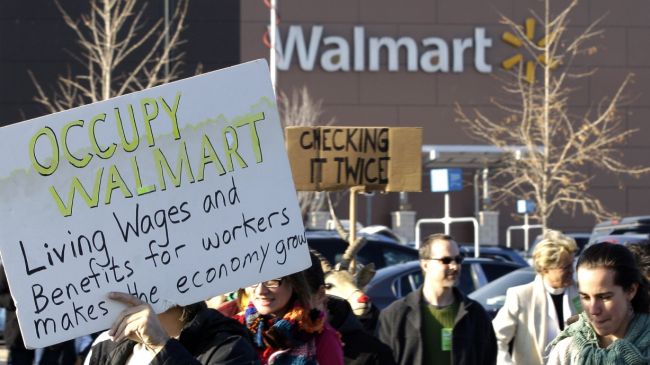
One of the most profitable corporations in America is having a holiday food drive. Sounds good — it’s the least Corporate America can do for those struggling to make ends meet while big companies rake in record profits and give so little back. But wait… there’s a catch. The food drive is for the company’s own underpaid, poverty-stricken workers. You really can’t make this stuff up.
Last week, it was reported that a Walmart store in Canton, Ohio is asking for food donations for its own employees. Photos of the food donation bins circulated online showing signs that read: “Please donate food items here so associates in need can enjoy Thanksgiving dinner.” (That’s if they even have a chance to — Walmart stores are open on Thanksgiving and are beginning their “Black Friday” deals at 6 p.m. on Thanksgiving Day to get a jump on the holiday shopping madness.)
Walmart is America’s largest employer with a workforce consisting of 1.3 million “associates.” The company made nearly $17 billion in profit last year. So why can’t Walmart afford to pay its own store workers enough for them to enjoy a holiday meal with their families? The answer is Walmart doesn’t really care about its workers.
If the Walmart food donation drive doesn’t get you properly steamed, then consider that Walmart CEO, Mike Duke, makes approximately $11,000 an hour — he took home about $20.7 million last year, plus ample benefits. Still not mad? It has also recently been reported that Duke has a retirement package worth more than $113 million! That is 6,200 times larger than the average 401k savings of a non-executive level Walmart employee! (Check out this recent report which charts other massive CEO pensions in relation to those of average workers)
One final fact to really get your dander up — The Walton family, heirs to the Walmart fortune, have accumulated more financial wealth than the entire bottom 40 percent of the population of the United States or 313 million Americans. That’s six Waltons worth a combined $102.7 billion!
No matter what one’s political leanings may be, the problem of massive income inequality and insatiable corporate greed is worsening year-by-year as CEO salaries rise, overall corporate profits soar and worker salaries stagnate. Liberal or conservative–all Americans should be outraged by this trend.
I recently wrote to conservative anti-tax advocate Grover Norquist to bring both sides of the political spectrum together on this troubling issue. In the past, Mr. Norquist and I have backed popular, reasonable policies, such as putting the full text of government contracts online, rolling back corporate welfare and opposing the civil liberties restrictive Patriot Act. As someone who claims to care about taxpayer protection, the issue of poverty-level wages and their major effect on taxpayers should be an important issue for Mr. Norquist.
Here’s why — low wages at the 10 largest fast food chains cost taxpayers $3.8 billion per year. Fifty-two percent of families of fast food workers have to rely on government assistance. McDonald’s’ “McResource” help line goes so far as to advise workers who cannot make ends meet from their poverty-level wages to sign up for government food stamps and home heating assistance. Is it fair that taxpayers have to shell out $1.2 billion a year to subsidize McDonald’s paying its workers while the fast food giant rakes in $5.5 billion in profit?
Walmart is even worse — according to a study from the Democratic staff of the House Committee on Education and the Workforce study, a single Walmart Supercenter store in Wisconsin can cost taxpayers upwards of $1.75 million in public assistance programs. If taxpayers have to cover over $1 million for just one 300-employee superstore, consider how much Walmart is costing taxpayers each year at their 4,135 stores in the United States. According to the 2012 “Walmart Associate Benefits Book”, which is distributed to employees, the company also advises its workers about getting on public assistance. Is this a fair or reasonable burden on taxpayers as Walmart reports $17 billion in profits?
Over the past five years, Walmart has had enough excess funds to buy back billions in its own stock. Walmart reportedly spent $7.6 billion last year buying back its shares. These funds are enough to raise the salaries of the lowest paid workers by $5.83 an hour. Catherine Ruetschlin, policy analyst at Demos, stated in a recent release: “These share repurchases benefit an increasingly narrow group of people, including the six Walton family heirs. But buybacks do not improve the fundamentals of the firm. If the funds were used to raise the pay of Walmart’s 825,000 low paid workers, it would not harm the retailer’s competitive ability and would add no cost to the consumer.”
(See the recent report from Demos titled: “A Higher Wage is Possible”)
The quickest way to lessen reliance on food stamp, EITC and Medicaid outlays is to raise the federal minimum wage. Raising the wage has the backing of 80 percent of Americans, 69 percent of Republicans, and even writers from The National Review and The American Conservative magazines. So why isn’t there more rage from the other end of the political spectrum? Even Rick Santorum and Mitt Romney supported raising the minimum wage to keep up with inflation — at least until Mitt Romney flip-flopped on the issue during the 2012 election.
The support of Grover Norquist and the Congressional followers of his no-tax pledge would be a significant boost for 30 million struggling workers who make less today than workers made in 1968, inflation adjusted. With a doubling in both worker productivity and the cost of living, there is no excuse for such a decline in their livelihoods.
Mr. Norquist, join this fight to protect taxpayers. Underpaid workers (who are also taxpayers) and their families need your support.
The Plot Thickens: Gaza is Flooded with Sewage and Conspiracies
By Ramzy Baroud | Palestine Chronicle | November 27, 2013
The latest punishment of Gaza may seem like another familiar plot to humiliate the strip to the satisfaction of Israel, Mahmoud Abbas’s Palestinian Authority, and the military-controlled Egyptian government. But something far more sinister is brewing.
This time, the collective punishment of Gaza arrives in the form of raw sewage that is flooding many neighborhoods across the impoverished and energy-chocked region of 360 km2 (139 sq mi) and 1.8 million inhabitants. Even before the latest crisis resulting from a severe shortage of electricity and diesel fuel that is usually smuggled through Egypt, Gaza was rendered gradually uninhabitable. A comprehensive UN report last year said that if no urgent action were taken, Gaza would be ‘unlivable’ by 2020. Since the report was issued in August 2012, the situation has grown much worse.
Over the years, especially since the tightening by Israel of the Gaza siege in 2007, the world has become accustomed to two realities: the ongoing multiparty scheme to weaken and defeat Hamas in Gaza, and Gaza’s astonishing ability to withstand the inhumane punishment of an ongoing siege, blockade and war.
Two infamous wars illustrate this idea: The first is Israel’s 22-day war of 2008-9 (killing over 1,400 Palestinians and wounding over 5,500 more) and the second is its more recent war of Nov 2012 – eight days of fighting that killed 167 Palestinians and six Israelis. In the second war, Egypt’s first democratically-elected president Mohammed Morsi was still in power. For the first time in many years, Egypt sided with Palestinians. Because of this and stiff Palestinian resistance in Gaza, the strip miraculously prevailed. Gaza celebrated its victory, and Israel remained somewhat at bay – while of course, mostly failing to honor its side of the Cairo-brokered agreement of easing Gaza’s economic hardship.
In relative terms, things seemed to be looking up for Gaza. The Rafah border crossing between Gaza and Egypt was largely opened, and both Egypt and the Hamas governments were in constant discussions regarding finding a sustainable economic solution to Gaza’s many woes. But the ousting by General Abdel Fatah al-Sisi of President Morsi on July 3 changed all of that. The Egyptian military cracked down with vengeance by shutting down the border crossing and destroying 90-95 percent of all tunnels, which served as Gaza’s main lifeline and allowed it to withstand the Israeli siege.
Hopes were shattered quickly, and Gaza’s situation worsened like never before. Naturally, Cairo found in Ramallah a willing ally who never ceased colluding with Israel in order to ensure that their Hamas rivals were punished, along with the population of the strip.
Citing Gaza officials, the New York Times reported on Nov 21 that 13 sewerage stations in the Gaza Strip have either overflowed or are close to overflowing, and 3.5 million cubic feet of raw sewage find their way to the Mediterranean Sea on a daily basis. “The sanitation department may soon no longer be able to pump drinking water to Gaza homes,” it reported.
Farid Ashour, the Director of sanitation at the Gaza Coastal Municipalities Water Utilities, told the Times that the situation is ‘disastrous’. “We haven’t faced a situation as dangerous as this time,” he said. But the situation doesn’t have to be as dangerous or disastrous as it currently is. It has in fact been engineered to be that way.
Gaza’s only power plant has been a top priority target for Israeli warplanes for years. In 2006 it was destroyed in an Israeli airstrike, to be opened a year later, only to be destroyed again. And although it was barely at full capacity when it operated last, it continued to supply Gaza with 30 percent of its electricity needs of 400 megawatts. 120 megawatts came through Israel, and nearly 30 megawatts came through Egypt. The total fell short from Gaza’s basic needs, but somehow Gaza subsisted. Following the ousting of Morsi and the Egyptian military crackdown, the shortage now stands at 65 percent of the total.
In an interview with the UN humanitarian news agency, IRIN, James W. Rawley, the humanitarian coordinator for the Occupied Palestinian Territory, depicted a disturbing scene in which the impact of the crisis has reached “all essential services, including hospitals, clinics, sewage and water pumping stations.”
Israelis on the other hand, have been doing just fine since the last military encounter with Hamas. “The past year was a great one,” the Economist quoted the commander of Israel’s division that ‘watches’ Gaza, Brigadier Michael Edelstein. Due to the massive drop in the number of rockets fired from Gaza in retaliation to Israeli attacks and continued siege (50 rockets this year, compared to 1,500 last year), “children in Israel’s border towns can sleep in their beds, not in shelters, and no longer go to school in armored buses,” according to the Economist on Nov 16.
“But Israel’s reciprocal promise to help revive Gaza’s economy has not been kept,” it reported. Israel has done everything it its power to keep Gaza in a crisis mode, from denying the strip solar panels so that they may generate their own electricity to blocking Gaza exports. “In the meantime, Gaza is rotting away.”
Desperate to find immediate remedies, Gaza Prime Minister Ismail Haniyeh issued new calls to Mahmoud Abbas for a unity government. “Let’s have one government, one parliament and one president,” Haniyeh said in a recent speech, as quoted by Reuters. A Fatah spokesman, Ahmed Assaf, dismissed the call for it “included nothing new.” Meanwhile, the PA decided to end its subsidy on any fuel shipped to Gaza via Israel, increasing the price to $1.62 per liter from 79 cents. According to Ihab Bessisso of the PA, the decision to rescind Gaza’s tax exemption on fuel was taken because sending cheap fuel to Gaza “was unfair to West Bank residents,” according to the Times.
But fairness has little to with it. Reports by the Economist, Al Monitor and other media speak of Egyptian efforts to reintroduce Gaza’s former security chief and Fatah leader Mohammed Dahlan to speed-up the anticipated collapse of the Hamas government. Al Monitor reported on Nov 21 that Dahlan, a notorious Fatah commander who was defeated by Hamas in 2007 because of, among other reasons, his close ties with Israeli intelligence, had met with General al-Sisi in Cairo. Evidently, the purpose is to oust Hamas in the Gaza Strip. But the question is how? Some “suggest that a Palestinian brigade mustered in al-Arish could march on Gaza and, with Egyptian support, defeat the broad array of Hamas forces created in the last decade.”
With Morsi’s Muslim Brotherhood out of the picture, at least for now, Gaza is more vulnerable than ever. Some of Abbas’s supporters and certainly Dahlan’s may believe that the moment to defeat their brethren in Gaza is now.
– Ramzy Baroud (www.ramzybaroud.net) is a media consultant, an internationally-syndicated columnist and the editor of PalestineChronicle.com. His latest book is: My Father was A Freedom Fighter: Gaza’s Untold Story (Pluto Press).
Featured Video
American Military Failure in Afghanistan
or go to
Aletho News Archives – Video-Images
Frlom the Archives
The Fiction of the Jewish History in Palestine
By Hasan Afif El-Hasan | The Palestine Chronicle | April 8, 2011
Prime Minister Benjamin Netanyahu told NNC Pierce Morgan on March 18, 2011 that he might agree to a Palestinian state through negotiations. And he added, “We will make territorial concessions although it is very painful to do that in our ancestral land.” Netanyahu was not talking about Poland where his ancestors lived. He was talking about Palestine where generations of its indigenous population ancestors lived, cultivated the land and are buried.
By the end of the nineteenth century, Zionism created a new Jewish identity of blood and soil. To mobilize their followers and supporters and appeal to their emotions, the Zionists created myths. Zionism started as a tribal religion without god, but in order to fulfill its function as a unifying force, Zionism required external religious and race symbols, not inner content. Its leaders regarded metaphysical religious belief and purity of race as having value in itself. They created a divine paradisiacal state of merger with the gods. Despite his non-religious ideology, Herzl’s writings were replete with religious references. The Jews should settle in Palestine because, in his words, “the Temple will be visible from long distance, for it is only our ancient faith that has kept us together”.
The Zionists and their supporters have invested tremendous financial and scholarly resources to work within the Hebrew Bible historical narratives to affirm the links between the intrusive Zionist population and the ancient Israelite past, and by doing so assert the right of that population to the land. The political end-game shaped the investigation and the outcome. Tracing the roots of Israel’s ethnic state in biblical antiquity is effectively to silence the indigenous Palestinian claim to the past and therefore to the land. The Biblical scholarship employs a bewildering array of terms for the region: “the Holy Land”, “the Land of the Bible”, “Eretz Israel”, “the Land of Israel”, or “Judah and Samaria.” To the casual reader these names appear interchangeable, but they all imply connection to ancient Israel.
Biblical narratives or poems that cannot be supported by archeology and common sense are treated by the Zionists and their supporters as historical language. … continue
Blog Roll
 Aletho News
- The Sludging of Rural America
- Lawyers’ groups demand end to British military bases in Cyprus
- CIA Assessment: The Resistance Cannot Be Crushed
- Hezbollah Returns: It Didn’t Start a War, It Is Ending One
- EU states seek ‘talks’ with Iran for access to Strait of Hormuz: Report
- Trump on Hormuz: “Others must take care of it” after US falters
- Who Is closer to collapse?
- A War that Backfired: Why the US-Israeli Campaign Is Strengthening Iran
- How Zionist Control Is Hurting US Interests
- Iran warns it may target US missile launch sites in UAE cities
- If Americans Knew
- As US-Israel war on Iran rages, Gaza faces massive dust storm – Not a ceasefire Day 156
- No let-up in attacks on Gaza as Israel takes on Iran, Lebanon – Not a ceasefire Day 155
- ‘Of Course’: IDF Drops Case Against Soldiers Accused of Raping Palestinian Prisoner
- Don’t Fall for the Regime Change Talk. Israel Is ‘Mowing the Lawn’ in Iran
- Will Israel and the US wreck the Gulf States along with Iran?
- US so far burned through ‘years’ of munitions in Iran war: Report
- How the Israeli Tail Wags the American Dog
- Outdated intel likely led to deadly U.S. strike on Iranian elementary school, sources say
- Pentagon insider says high U.S official Douglas Feith reported to Netanyahu
- In fond memory of Walid Khalidi, the historian of Palestine
- No Tricks Zone
- Storing Green Energy To Last Germany 10 Days Would Require A 60-Million Tonne Battery
- New Studies: UK Sea Levels Were 4 Meters Higher Than Today During The Mid-Holocene
- Destructive Green New Deal: German Energy And Metal Group Warns Of Drastic Crisis
- New Study Documents A 20-Year Pause In Arctic Sea Ice Decline – Driven By Internal Variability
- Wake-up Call: Survey Shows Majority Of Germans Now Favor Postponing Climate Targets!
- Televised! Leading German Political Candidate Tells Schoolchildren CO2 Makes Sun Hotter!
- New Study: A Century Warming Of 1.1°C Is ‘Commonplace’ And ‘Not Unusual’ During This Interglacial
- New Study: ‘Internal Noise’ And Volcanic Forcing Can Trigger 10-15°C Warming Within Decades
- Glaciers Worldwide Are Suddendly Surging, Experts Blame Warming!
- Surprising Discovery: Sahara Is Greening…Billions Of Trees Where Once Thought To Be Barren
 Aletho News