The (interim) nuclear agreement that was signed on 24 November 2013 by Iran and the so-called P5+1 group in Geneva is questionable on a number of grounds.
The Irony and Absurdity of the Negotiations: When the Guilty Tries the Innocent
The underlying logic for the Iran nuclear negotiations was (and continues to be) altogether preposterous: on one side of the negotiating table sat major nuclear powers who are all in violation of the Nuclear Nonproliferation Treaty (NPT), which requires them to have either dismantled or drastically reduced their nuclear arsenal; on the other side, an NPT–compliant country (Iran) that neither possesses nor pursues nuclear weapons—a fact that is testified to both by the U.S. and Israeli intelligence agencies. Yet, in an ironically perverse way, the culprits have assumed the role of the police, the prosecutor and the judge, shamelessly persecuting and prosecuting the innocent for no other reason than trying to exercise its NPT-granted right to peaceful nuclear technology.
This obviously means that Iran is essentially negotiating under duress. Largely shut out of normal international trade, and constantly threatened by economic strangulation, it is essentially negotiating with a bullet to its head. As an astute observer of the negotiations has pointed out, “Iran voluntarily agreed to the [nuclear] deal the same way that a robbery victim voluntarily agrees to give up valuable possessions” to save his/her life.
The Imbalance between what Iran Gave and what it Took
To reach the interim deal, the Iranian negotiators agreed to a number of concessions with very little reciprocity in terms of relief from sanctions. These included: limiting its enrichment of uranium to only 3-5 percent purity, from the current level of 20 percent purity; rendering unusable its existing stockpile of 20 percent fuel for further enrichment; not using its more advanced IR-M2 centrifuges for enrichment; not activating its heavy-water reactor in Arak; and consenting to highly intrusive inspections.
This means that under the deal, the Iranian negotiators have agreed to more than freezing Iran’s nuclear technology; perhaps more importantly, they have reversed and rolled back significant scientific achievements and technological breakthroughs of recent years. One can imagine the feeling of disappointment (and perhaps betrayal) on the part of the many dedicated scientists, engineers and technicians who worked so hard to bring about such scientific advances; only to see them dishonored or degraded by reversing and freezing them at a much lower level.
In return for these significant concessions, the U.S. and its allies would agree: to unfreeze less-than 7 billion dollars of Iran’s nearly 100 billion dollars of oil revenue frozen in bank accounts overseas; to consider easing sanctions banning trade in precious metals, petrochemicals and auto industry; and to suspend the EU and U.S. sanctions on insurance and transportation services for the drastically reduced sale of Iran’s oil.
The most crippling sanctions on Iran’s oil and banks, which served as the financial facilitators of international trade, would remain intact under the proposed interim deal.
Threat to Iran’s Sovereignty
A careful reading of the interim agreement reveals that the Iranian negotiators gave up more than scaling down and freezing their country’s nuclear technology and/or knowledge. More importantly, if implemented, the deal effectively places Iran’s nuclear program (through IAEA) under total control of the United States and its allies. This is no speculation; it follows from the interim deal’s vastly invasive inspections regime, which is described under the subheading “Enhanced Monitoring”:
– Provision of specified information to the IAEA, including information on Iran’s plans for nuclear facilities, a description of each building on each nuclear site, a description of the scale of operations for each location engaged in specified nuclear activities, information on uranium mines and mills, and information on source material. This information would be provided within three months of the adoption of these measures.
– Steps to agree with the IAEA on conclusion of the Safeguards Approach for the reactor at Arak, designated by the IAEA as the IR-40.
– Daily IAEA inspector access when inspectors are not present for the purpose of Design Information Verification, Interim Inventory Verification, Physical Inventory Verification, and unannounced inspections, for the purpose of access to offline surveillance records, at Fordow and Natanz.
– IAEA inspector managed access to: centrifuge assembly workshops; centrifuge rotor production workshops and storage facilities; and, uranium mines and mills.
The fact that provisions of “enhanced monitoring” tend to infringe upon Iran’s national sovereignty was implicitly acknowledged by the Washington Post when it reported on the morning following the signing of the deal (24 November 2013) that, according to Western officials in Geneva, the Iranian concessions “not only halt Iran’s nuclear advances but also make it virtually impossible for Tehran” to make any changes in its nuclear technology “without being detected.”
Another indication of Iran’s national sovereignty being threatened is the interim deal’s establishment of “a financial channel to facilitate humanitarian trade for Iran’s domestic needs. . . . This channel could also enable: transactions required to pay Iran’s UN obligations; and, direct tuition payments to universities and colleges for Iranian students studying abroad.” Although the financial channel would be using Iran’s own money, currently frozen abroad, it would not be controlled or managed by Iranians—sadly reminiscent of Iraq’s “oil for food” neo-colonial deal under Saddam Hussein.
Did Iran Have to Give up so Much for so Little?
Deprived of more than half of its oil exports/revenue, and largely locked out of the international banking and/or trade system, the Iranian economy and its people are already gravely suffering from the ravages of economic sanctions. Additional sanctions, which are pre-packaged and frequently brandished as a Damocles’ Sword in the background of the nuclear negotiations, are bound to further depress Iran’s economy and the living conditions of its people.
Under these circumstances, Iran basically faced (or faces) two options. One option would be embarking on the path of a war economy, as it has, in effect, been subjected to a brutal economic war by the United States and its allies. This would be similar to the eight years (1980-88) of war with Iraq, when at the instigation and support of regional and global powers Saddam Hussein launched a surprise military attack against Iran. The other option would be compromising its legal and legitimate rights to peaceful nuclear technology in order to appease the global bully (the U.S.) and its minions in the hope that this may prevent a further tightening of the noose of economic sanctions around the neck of the Iranian people.
During the eight-year war with Saddam’s Iraq, not only did the Western powers and their allies in the region support the Iraqi dictator militarily but they also subjected Iran to severe economic sanctions. With its back against the wall, so to speak, Iran embarked on a revolutionary path of a war economy that successfully provided both for the war mobilization to defend its territorial integrity and for respectable living conditions of its population. By taking control of the commanding heights of the national economy, and effectively utilizing the revolutionary energy and dedication of their people, Iranian policy makers further succeeded in bringing about significant economic developments. These included: extensive electrification of the countryside, expansion of transportation networks, construction of tens of thousands of schools and medical clinics all across the country, provision of foodstuffs and other basic needs for the indigent at affordable prices, and more.
Despite its record of success, this option is altogether ruled out by today’s Iranian ruling powers. There are a number of reasons for this aversion to a regimented war economy. A detailed discussion of such reasons is beyond the purview of this essay. Suffice it to say that many of the revolutionary leaders who successfully managed the 1980-88 war economy have now become business entrepreneurs and prosperous capitalists. Having effectively enriched themselves in the shadow of the public sector economy, or by virtue of the political/bureaucratic positions they held (or still hold) in various stations in the government apparatus, these folks have by now lost all appetite they once had for the radical economic measures required by a war economy. Instead, they now seem eager to strike business and investment deals with their counterparts in the West.
More than any other social strata, President Rouhani and his administration represent the interests and aspirations of this ascending capitalist–business class in Iran. Representatives of this class wield economic and political power through the highly influential Iran Chamber of Commerce, Industries, Mines, and Agriculture (ICCIMA). Ideological and/or philosophical affinity between President Rouhani and the power-brokers residing within ICCIMA is reflected in the fact that, immediately upon his election, the president appointed former head of the Chamber of Commerce Mohammad Nahavandian, a U.S.-educated neoliberal economist and an advisor to former president Hashemi Rafsanjani, as his chief of staff.
It was through Nahavandian and the Iran Chamber of Commerce that, in September 2013, an Iranian economic delegation accompanied President Rouhani to the United Nations in New York to negotiate (behind the scenes) potential business/investment deals with their American counterparts. The Iran Chamber of Commerce also organized a number of economic delegations that accompanied Iran’s Foreign Minister Zarif to Geneva in pursuit of similar objectives in Europe.
It is understandable, therefore, why major factions within Iran’s ruling circles, especially the Rouhani administration and their allies and co-thinkers, have no stomach for a regimented, war-like economy; and why, instead, they opted for compromises over Iran’s nuclear program. The question remains, however, why did they make so many concessions in return for so little? Did they have to compromise as much as they did?
Two major reasons can be identified for why they could strike a better nuclear deal in Geneva than they actually did. For one thing, President Rouhani’s and his team of negotiators’ liaison with the P5+1 group got off on the wrong foot: they showed their hand prematurely by approaching the negotiations with a sense of desperation and an attitude of eagerness to reach a deal.
Indeed, it is fair to argue that President Rouhani condemned Iran to an unsound or flawed deal long before he was elected. He did so during his presidential campaign by pinning his chances for election on economic recovery through a nuclear deal. This was a huge mistake, as it automatically weakened Iran’s bargaining position and, by the same token, strengthened that of the United States and its allies. By exaggerating (perhaps opportunistically) the culpability of his predecessor in the escalation of economic sanctions against Iran, he committed two blunders: one downplaying the culpability of the U.S. and its allies; the other (and by the same token) placing the onus of reaching a nuclear deal largely on Iran.
Secondly, whereas the U.S. and its junior partners constantly brandished the so-called “stick” of additional sanctions in the background of the Geneva negotiations to extract more concessions from Iran, the Iranian side does not seem to have effectively used its country’s recent geopolitical successes in the region to resist the one-sided concessions. While the United States and its allies have in recent months experienced a major setback over the Syrian crisis, Iran and its allies (Russia, Syria, Hezbollah and, indirectly and minimally, China) have by the same token experienced success. And while the results of the U.S. military adventures of the past dozen years or so have been chaos and civil war in countries like Afghanistan, Libya, Yemen, Iraq, and Syria, Iran remains a relatively stable and an ascending regional power, indeed, a power-broker—sanctions-induced economic distress notwithstanding.
It is thus altogether reasonable to argue that had the Iranian negotiators (a) not gone to Geneva with such an openly eager attitude to reach a nuclear deal, and (b) taken more effective advantage of their country’s recent geopolitical successes in the region, they could have struck a better nuclear deal than they actually did. For example, while agreeing on the freezing of their nuclear technology was (under the circumstances) unavoidable, they could more strongly argue that there was no reason for them to roll back Iran’s scientific achievements from 20 percent enrichment of uranium to 5 percent—20 percent enrichment is both NPT-sanctioned, or legal, and required for the Tehran Research Reactor, which manufactures medical isotopes.
Likewise, while agreeing to more intrusive inspections of nuclear sites was (again, under the circumstances) inescapable, Iranian negotiators could reasonably resist allowing inspectors access to and monitoring of their country’s centrifuge assembly workshops, or its uranium mines and mills. Furthermore, the Iranian team could, again quite reasonably, insist on making the elements of the “final agreement,” which is supposed to remove all of the sanctions against Iran, more specific. As they now stand, these elements are so vague, fluid and inconsistent that they seem to be crafted in order to be broken.
Regime Change From Within
Ever since the 1979 revolution in Iran, which significantly undermined the U.S. influence in Iran and elsewhere in the region, the United States has been on a “regime change” mission in that country. Its efforts in pursuit of this nefarious goal are rather well established. They range from instigating and supporting Saddam Hussein to invade Iran, to training and supporting destabilizing terrorist organizations to attack Iran, to constant war and military threats, to efforts to sabotage the 2009 presidential election through the so-called “green revolution,” and to systematic escalation of economic sanctions.
Not only have these imperialistic schemes fallen short of their goal of “regime change” in Iran, they have, in fact, driven that country to become a major power in the region, which has further thwarted the geopolitical plans of the United States in the area. While the U.S.–supported mercenary forces in Syria as well as its allies in Ankara, Cairo and Riyadh have experienced serious setbacks in their efforts to overthrow the government in Damascus, the Iran-Russia-Syria-Hezbollah alliance has (by the same token) gained strength and prestige in recent months.
Having thus failed at its plots for “regime change” in Iran from without, the U.S. (or more precisely, a major faction of its ruling powers) now seems to have opted for regime change (or reform) from within; that is, through political and economic rapprochement with Iran. Even some of the U.S. allies such as Turkey, Qatar, Saudi Arabia, and Israel that have always been wary of Iran’s radical influence in the region, and who initially opposed vehemently the Iran–P5+1 nuclear agreement, are beginning to see the “moderating” or “stabilizing” benefits of the success of this tactic.
What has made this option more promising (to the U.S. and its client regimes) is the rise of an ambitious capitalist class in Iran whose chief priority seems to be the ability to do business with their counterparts in the West. These folks literally mean business, so to speak; for them, issues such as nuclear technology or national sovereignty are of secondary importance. As mentioned earlier, they are the staunchest supporters of President Rouhani and the unquestioning supporters of his lopsided concessions in the nuclear deal. Also as mentioned before, it was the representative delegations of this class of Iranian capitalists that accompanied President Rouhani and Foreign Minister Zarif to the United States and Europe in order to negotiate business/investment deals with their counterparts in the West.
To be sure, the jingoistic factions of the U.S. ruling circles, headed by the beneficiaries of war dividends and the Israeli lobby, continue to push for direct military intervention and/or further economic strangulation of Iran. But the leaders and/or beneficiaries of non-military industries such as oil, automobile, airlines, agriculture, and the like are lobbying the Obama administration for economic and political rapprochement with Iran.
Which of these two major factions of the U.S. ruling powers (Proponents of regime change from within or from without) would succeed, depends largely on the process and/or outcome of nuclear negotiations. While making threats of additional sanctions, the hardline or militaristic faction seem to be for now sitting on the fence: if Iran continues to make more one-sided concessions, which would basically mean giving up its right to a level of uranium enrichment that is necessary for its peaceful domestic needs, they would soften their positions and gradually lower their shrill and menacing voices. On the other hand, if Iran does not relent on its legal and legitimate enrichment rights, and insists that the U.S. and its allies need to reciprocate Iran’s interim concessions by lifting the sanctions, they would further harden their positions by calling for additional sanctions and/or military intervention. Under this latter scenario, proponents of rapprochement with Iran, having failed in their tactic of regime change/reform from within, would most probably join the hardliners, thereby embarking, once again, on the long-standing policy of regime change from without—back to square one, so to speak.
So, how would all of these new developments on both the Iranian and the U.S. side affect and/or be affected by the interim nuclear deal toward a “comprehensive final step”?
Problematic and Uncertain Future of the Interim Nuclear Deal
Components of the interim agreement are so vague, inconsistent and even contradictory that it makes them subject to divergent interpretations and, therefore, potential breaches of the deal in the future. This explains why soon after the agreement was signed conflicting understandings of it began to surface. While the Iranian president and his team of negotiators have frequently declared that the agreement acknowledges the country’s right to uranium enrichment, the U.S. side, headed by President Obama and Secretary of State John Kerry, has vigorously denied that right.
Equally vague and (potentially) problematic is the meaning of the “elements of the final step of a comprehensive solution.” According to Iran’s negotiators, the “final step” would “Comprehensively lift UN Security Council, multilateral and national nuclear-related sanctions,” as it is, indeed, stipulated as such in the interim agreement. However, the agreement immediately adds that the final step would “Involve a mutually defined enrichment program with mutually agreed parameters consistent with practical needs, with agreed limits on scope and level of enrichment activities, capacity, where it is carried out, and stocks of enriched uranium, for a period to be agreed upon.” And it is this ambiguous and condition-laden (“mutually defined enrichment…, mutually agreed parameters…, agreed limits on scope…, for a period to be agreed upon”) sentence in the interim deal that is frequently highlighted by the United States as governing the status of the “final step.”
This is an indication, as pointed out by Gareth Porter (among others), “of uncertain U.S. commitment to the ‘end state’ agreement.” U.S. reservations or unfaithfulness toward a clear, comprehensive and sanctions-free final deal, Gareth further points out, “came in a background press briefing by unidentified senior U.S. officials in Geneva via teleconference late Saturday night [23 November 2013]. The officials repeatedly . . . referred to the negotiation of the ‘comprehensive solution’ outlined in the deal . . . as an open-ended question rather than an objective of U.S. policy”. It is this ambiguous, unsure and noncommittal U.S. approach to the nuclear deal that serves as grounds for the pessimistic conclusion that the deal is facing an uncertain future.
Ismael Hossein-zadeh is Professor Emeritus of Economics, Drake University, Des Moines, Iowa. He is the author of The Political Economy of U.S. Militarism (Palgrave–Macmillan 2007) and the Soviet Non-capitalist Development: The Case of Nasser’s Egypt (Praeger Publishers 1989). His latest book, titled Beyond Mainstream Explanations of the Financial Crisis: Parasitic Finance Capital, is forthcoming from Routledge Books.
December 7, 2013
Posted by aletho |
Economics, Militarism, Timeless or most popular | European Union, Iran, Sanctions against Iran, United States |
Leave a comment
The new media venture from billionaire philanthropist Pierre Omidyar will enlist the muck-raking talents of Glen Greenwald and Jeremy Scahill. Omidyar’s record of promoting and funding “free-market solutions” to social problems is a good indicator of what the limitations of the project will be.
Pierre Omidyar is a Punahou school alumnus who holds a bachelor’s degree in computer science. He is also the multibillionaire philanthropist behind Hawaii-based Civil Beat, a Right-Libertarian, pro-business, pay-walled media website that focuses its critique on the shortcomings of democratic governance and the public sector. Omidyar’s Civil Beat offers analysis which seems to exist in a strange land without class conflict, where the ruling-class and the working-class struggle shoulder to shoulder against the forces corrupting liberal democracy. As a result, the editorial slant is marked by a distinct disconnect from the every-day lives of non-billionaire philanthropists, those who don’t stand to gain from the schemes of Omidyar, the “classless angel.”
Omidyar’s latest project is to launch a media group whose roster of reporters will include the muckraking talents of Glen Greenwald and Jeremy Scahill. To assess the potential for this new project, it is important to know his basic ideological outlook, which we can find in the projects he has participated in.
After striking it rich by helping to establish ebay, Omidyar decided to engage in targeted philanthropy to promote opportunity and a better world. He believes he earned his billions without taking anything from society, so his philanthropic impulse cannot be traced to a sense of guilt regarding his fortune. In fact it’s the other way around: “To Omidyar, ‘giving back’ implies that, before philanthropy, you were taking away. Not so, says Omidyar, who believes that people succeed when they create value for society.”
One of Omidyar’s “value creating” projects has been to invest heavily in the micro-loan industry, through groups like Kiva which allows investors to profit off of loans to the poor, especially in impoverished regions of India. The ideology behind this business venture saw free markets magically lifting all boats where government funding did not. The actual results were often financial collapse, leaving the borrowers prey to lenders demanding repayment. “It is tough to find a household in this village in an impoverished district of Andhra Pradesh that is not deeply in debt to a for-profit microfinance company.”
The Omidyar Network states on its website that it “is a philanthropic investment firm dedicated to harnessing the power of markets to create opportunity for people to improve their lives.” Omidyar is often identified as an “economist,” perhaps explaining his profoundly distorted idea of what markets do and how capitalism works. For him, markets seem to act as avenues which unleash people-power and democracy, especially when noble-minded entrepreneurs are navigating them.
But the misguided nature of Omidyar’s philanthropy comes into sharpest focus when looking at his projects around education. He has given ten million dollars to the Skoll Foundation, a major backer of “Teach For America“, which specializes in placing undertrained Ivy League idealists in classrooms in underperforming neighborhoods. They commit to two years on the job after graduation, and are (perhaps unwittingly) deployed as part of an end run around teachers unions. TFA promotes legislation that seeks to undermine tenure, and “reward good teachers” while making it easier to fire “bad” ones. They promote charter schools as inherently superior to public ones, and advocate for a business-model-of-education with school principals acting more like CEOs than head teachers.
Opponents of Teach For America have pointed out, that TFA is an “incubator for the privatization movement”:
TFA plays a key role in developing and connecting personnel, political support, and financial backing for neoliberal and market based policies, specifically charter school reform, the deregulation of teacher education, and accountability policies.
While TFA uses the rhetoric of justice and equity, these reforms in fact stifle democratic processes and are used to justify budget cuts and the takeover of public institutions by privately funded and privately run companies.
Jeff Skoll was Omidyar’s business partner and the first President of ebay. Skoll was a major funder of the movie “Waiting For Superman” which featured Michelle Rhee as its protagonist, giving her a national platform to attack teachers’ unions and promote her privatization agenda which has resonated with both Republicans and Democrats carrying out austerity-governance. Diane Ravitch’s description of the movie (and related education “reform” films) shows how it is a perfect fit for Omidyar’s vision of entrepreneurial genius coming to the rescue of a world mired in public sector programs that are alleged to have “failed”:
The message of these films has become alarmingly familiar: American public education is a failed enterprise. The problem is not money. Public schools already spend too much. Test scores are low because there are so many bad teachers, whose jobs are protected by powerful unions. Students drop out because the schools fail them, but they could accomplish practically anything if they were saved from bad teachers. They would get higher test scores if schools could fire more bad teachers and pay more to good ones. The only hope for the future of our society, especially for poor black and Hispanic children, is escape from public schools, especially to charter schools, which are mostly funded by the government but controlled by private organizations, many of them operating to make a profit
The Omidyar Network is behind “Teach For All,” the globalized version of the Teach For America model. A look at the Board of Teach For All, provides a clear illustration of both its detachment from the educational field, and the corporate world view it embodies. Its members include top brass from Rolls Royce, Visa, Goldman Sachs, the founder of Teach For America, and Dr. Rufus Black a “theologian and ethicist” who is presumably there to provide rationalizations for their atrocious attacks on working teachers, students, unions, and communities.
Especially appalling is the push by Omidyar and other corporate education “reformers” to link teacher assessments to their students’ scores on standardized tests, and then to utilize those assessments in determining whether a teacher retains employment or not. This correlates to the “business model of education.” A profile on the Omidyar Network states that “[t]he model of investing in social change organizations requires that measurable good flows from the investment, just as accounting methods tell executives whether a for-profit investment is producing profits.” This is the lens through which corporate reformers like Bill Gates, the Broad Foundation, and Omidyar see the world. Numerical data will reflect the “measurable good” provided by a teacher, but the data will be detached from factors like poverty, student access to nutrition, problems at home, the level at which particular schools are funded and the educational resources they have access to, etc. These aspects will be abstracted out, as is the fashion in the neoliberal economics that underpin Omidyar’s crusades to create social value. Teachers with students who are learning English as a second language, who have learning disabilities, or who face issues stemming from poverty, still the main determinant in negative educational outcomes, are assessed as “failing” if their students’ scores are low.
Omidyar, and the other billionaire philanthropists who push top down, non-democratic crusades to empower the people, genuinely believe they possess the knowledge that the “best minds” have to offer. One problem is that their money gives them the right to engage in these projects whether or not they have any kind of relevant expertise, or even a grasp on reality. The corporate-philanthropist take on reality amounts to little more than ideology; specifically capitalist:
Property rights are the keys to economic security, identity, and wealth creation. … Societies that enforce these rights benefit from greater economic growth, transparency, and political stability, as they encourage investment, promote the rule of law, and give people a stake in the future.
Any grounding of capitalism in history shows that, while it unleashed productive powers never before dreamed of, it cannot be a truly liberating force for humanity. Beyond whatever role it had in overturning feudal social relations, it came with inherent problems of its own, and the concept of “property rights” is one of them. From the English enclosures carried out by the landed gentry, enabled by laws created by the parliaments they owned, to the hangings of thousands of “vagrants” who had become criminalized via this process, capitalism’s beginnings were brutal by design. Property rights as enshrined in law has mainly to do with preserving the ownership of the “means of production” in a very few hands while the masses own little more than their own labor power, which they must sell to a boss. For every gain made via capitalist production, so to have these inequalities of the class system been reproduced. The hangings were part of a ruling class pedagogy, because people had to be taught to respect the new restrictive capitalist property relations which made it so hard for them to survive. With this in mind, its hard to get on board with Omidyar’s goal of creating value for society, when the system of value production he promotes as a panacea is the same one that reinforces the process of alienation.
The idea that property rights make people free should be especially offensive when Omidyar targets former colonies for philanthropic rehabilitation. With Teach For India, we see a project promoting markets as the savior of Indian social infrastructure. Unfortunately, the impact of the market system on India has a deeply disturbing history, completely relevant to Omidyar’s present efforts. In his book Late Victorian Holocausts, Mike Davis has illuminated the incredible human toll markets unleashed on the subcontinent under British colonial rule: “Davis’ primary focus in fleshing out his story is the crown jewel of Britain’s colonial empire: India. Drought was the precipitating cause of the hardship faced by the Indian people. However, Davis demonstrates with statistics and anecdotes that it was the unregulated “free market” system imposed on India by Britain that led to the deaths of tens of millions in the mid-1870s and late 1880s.”
Aside from his ideologically dubious philanthropy, Omidyar has also drawn outrage closer to his present Oahu home from the residents of the island of Kauai, where he has proposed to develop a mixed residential and low-density hotel resort. “Despite 5,000+ petition signers, strong, visible community opposition, and several attempts to dialog directly with Mr. Omidyar, the Oahu resident and billionaire founder of eBay has thus far declined to personally dialog with concerned Kauai Community leaders.” It should be noted that Kauai’s population is roughly 68,000, so 5,000 signatures is proportionally significant. A member of Save Hanalei River Ridge, wrote to Omidyar, complaining that:
To introduce multi-million-dollar homes sitting on top of the ridge looking down on Black Pot, would break the hearts of the thousands of people who live here and also those who come to visit and enjoy the tranquility and beauty of the River and the Bay. A resort development on this massive scale on the Hanalei River Ridge opens the door to letting it become more like Laguna Beach and less like Hanalei; this Garden of Eden that so well defines Kauai.
Despite the fact that his projects consistently put him at odds with the poor and working-class, Omidyar still sees himself as a benefactor of the people. The new venture, he explains “was fueled by his ‘rising concern about press freedoms in the United States and around the world’.” Natasha Vargas-Cooper hit what is perhaps a more telling note about Omidyar’s interest in independent media when she wrote of Glen Greenwald in a profile of him for The Advocate. She believes that Greenwald’s “obsession with surveillance and privacy issues have made him into an ideological pillar of the rather sterile, unfriendly world of civil libertarian politics, a group not known for its warmth and humanism.” Omidyar’s union-busting politics, his focus on private sector saviors, his backing of disruptive land developments, and his misnomered “social entrepreneurship” put him in that world.
Reading Omidyar’s description of how his private sector experience will create success for his new media outlet, one would be justified in suspecting the blind spot toward working-class issues, so glaring in Civil Beat, will be replicated in the new venture: “Companies in Silicon Valley invest a lot in understanding their users and what drives user engagement. … That process got me thinking about what kind of social impact could be created if a similar investment was made in something entirely new, built from the ground up. Something that I would be personally and directly involved in outside of my other efforts as a philanthropist.” Omidyar’s idea of a community of readers empowered by truth is again seen through a commodified lens: “Users,” (themselves a product to deliver to advertisers and others who can utilize information they generate about themselves) are driven to engage with his product, in this case news.
For the working-class, Omidyar’s pursuit of freedom of both information and markets cannot be seen as inherently progressive. His top-down billionaire philanthropist/savior antics are as insulting as Andrew Carnegie’s public infrastructure campaigns, which created public libraries and parks from the private fortune he’d amassed repressing wages and workers’ movements. In Omidyar’s world a classless civil society fights the powers that impede the market’s ability to liberate human potential. In the real, historically grounded world there is an employing class and a working-class that “have nothing in common”. No billionaire media mogul is ever going to be in the service of working people, no matter how much rhetoric about freedom of speech is deployed in the promotion of his or her product.
David Carr is an organizer with LaborFest Hawaii and a History instructor at Leeward Community College.
December 7, 2013
Posted by aletho |
Economics, Timeless or most popular | Civil Beat, Glen Greenwald, Jeremy Scahill, Omidyar Network, Pierre Omidyar, Skoll Foundation, Teach For America |
Leave a comment
A Pakistani immigrant has filed a lawsuit against the US government in a federal court in Miami, saying he was kept for over ten months in solitary confinement after being falsely arrested on ‘terrorism’ charges.
Forty-year-old Irfan Khan, who immigrated to the United States from Pakistan in 1994, filed the complaint on December 3 at US District Court of Miami, Reuters reported on Thursday.
According to the lawsuit, Khan was arrested in California in 2011 on charges that included providing material support for the Pakistani Taliban.
The 40-year-old was then taken to a prison in Florida as he was also accused of supporting a plot for the abduction and murder of individuals overseas.
The lawsuit says that all charges against Khan were dropped in June 2012. However, until then he had been held for around 320 days in solitary confinement.
“I was shocked at the time. I’m still shocked. I don’t know why it happened, how it happened, and that’s why we are doing this. To get some answers,” Khan told Reuters on Thursday.
“The conduct the government subjected Irfan to, as a result of his religion, national origin, and its overzealousness in its war on terror was and still is, by all standards, horrendous,” the complaint says.
The lawsuit also accuses Washington of false arrest, incarceration and malicious prosecution.
The US government accused Khan of giving money to a commander of the Pakistani Taliban known as Akbar Hussain in 2008. However, Khan says he sent money to his wife, who was visiting Pakistan, through her uncle who is also named Akbar Hussain, a retired college professor.
The complaint also says that an impartial translator would have rejected the government’s interpretation of Khan’s telephone conversations with his father in Urdu and Pashto, which were cited by prosecutors.
The lawsuit says he criticized the Pakistani government during the two conversations but did not advocate violence, as was claimed by government prosecutors.
Khan said he lost his job and his car after his arrest. His wife and two children had to move over safety concerns.
December 6, 2013
Posted by aletho |
Civil Liberties, Islamophobia, Supremacism, Social Darwinism | Human rights, Irrfan Khan, United States |
Leave a comment
The Associated Press reported yesterday that the United Nations Economic Commission for Latin America and the Caribbean (ECLAC) has highlighted a slowing of progress in poverty reduction in Latin America, citing “rising food costs and weaker economic growth” as contributing factors:
Poverty in Latin America and the Caribbean is now easing at a slower pace, the UN’s regional economic body said on Thursday, calling on governments to make policy changes that encourage growth while reducing the huge gap between the rich and poor.
UN economists based in Santiago said about 164 million people, or 28 percent of the region’s population, are still considered poor. That is nearly unchanged from last year. Out of those, 68 million of them are in extreme poverty.
But there are bright spots. ECLAC’s new “Social Panorama of Latin America” report [PDF] notes that Venezuela and Ecuador led the region in decreasing poverty in 2012:
Six of the 11 countries with information available in 2012 recorded falling poverty levels (see table 1). The largest drop was in the Bolivarian Republic of Venezuela, where poverty fell by 5.6 percentage points (from 29.5% to 23.9%) and extreme poverty by 2.0 percentage points (from 11.7% to 9.7%). In Ecuador, poverty was down by 3.1 percentage points (from 35.3% to 32.2%) and indigence by 0.9 percentage points (from 13.8% to 12.9%).
This 5.6 percentage point decrease in Venezuela translates into a 19 percent decline in poverty overall last year, which CEPR Co-Director Mark Weisbrot noted last month “is almost certainly the largest decline in poverty in the Americas for 2012, and one of the largest – if not the largest – in the world.”
This dramatic decrease in poverty is likely due to the impact of two new misiones (social programmes), the Gran Misión En Amor Mayor Venezuela and the Gran Misión Hijos de Venezuela, which were, by January 2013, benefitting more than 1,400,000 people.
Both misiones are aimed at assisting people living in extreme poverty: GM En Amor Mayor provides pensions to elderly people, and the GM Hijos de Venezuela provides cash transfers to households with children and pregnant women. The two missions are reaching a significant number of people: as of January 2013, 516,000 elderly people were receiving a monthly pension through GM Amor Mayor. Meanwhile, the program GM Hijos de Venezuela was making monthly payments to 324,000 families, which represents 794,000 individuals.
As well as simply reducing poverty, the GM Hijos de Venezuela reduces gender inequality. 98 percent of the recipients of the program were women, who are in many countries in Latin America overrepresented among the poor. It can be reasonably hypothesized that this high level of targeting is likely to increase the economic independence of women, reducing the frequent economic imperative for women to stay in disadvantageous relationships.
December 6, 2013
Posted by aletho |
Economics | Ecuador, Latin America, United Nations Economic Commission for Latin America and the Caribbean, Venezuela |
Leave a comment
An article yesterday in the Washington Post disclosed the NSA’s massive cell phone location program. The program, codenamed CO-TRAVELER, is designed to track who meets with whom and covers everyone who carries a cell phone, all around the world.
With neither public debate nor court authorization, CO-TRAVELER collects billions of records daily of cell phone user location information. It maps the relationships of cell phone users across global mobile network cables, gathering data about who you are physically with and how often your movements intersect with other cell phone users. The program even tracks when your phone is turned on or off.
The trillions of collected records, which add up to twice the amount of data in the Library of Congress’ print collection, are saved and stored in the NSA’s mammoth database called FASCIA. While allegedly aimed at foreigners and mobile phones overseas, the NSA admits that it has “incidentally” collected location information on U.S. persons.
CO-TRAVELER ignores fundamental values in the Constitution the NSA has sworn to uphold, including the right against unreasonable search and seizure as well as freedom of association. Thinking globally, the program disregards international human rights law, which is currently in the process of being reaffirmed in a draft resolution by the UN General Assembly.
The Fourth Amendment Protects Cell Phone Location Data
EFF has been working for years to get the courts to recognize that the government must get a warrant before seizing cell phone location records. The court decisions are split. In 2008 the Third Circuit federal appeals court correctly held that federal magistrates have the discretion to require the government to get a search warrant based on probable cause before obtaining cell phone location records. But the Fifth and Sixth Circuit have approved the seizure of cell phone location records without a warrant. The Supreme Court has yet to rule on cell phone location, but did hold that planting a GPS device on a car requires a warrant, without reaching a decision on whether the warrantless tracking itself would violate the Fourth Amendment.
CO-TRAVELER does not simply collect location information. It creates a portrait of travel times and people who crossed paths, revealing our physical interactions and relationships. The cell site information goes beyond email and phone calls and ordinary telephony data, allowing the U.S. government to know who we are with in-person and where. This is information that would be impossible to collect using traditional law enforcement methods.
An NSA official said that the agency’s collection methods are “tuned to be looking outside the United States.” This appears to be an attempt to assert that U.S. law does not apply because they are not “targeting” U.S. persons. Without the protections of U.S. law, the spying is regulated only by Executive Orders–orders by the President that are not subject to substantive oversight, and can modified at any time. It’s likely that this program falls under Executive Order 12333. EO 12333 has few limits on surveillance overseas, even if it is a U.S. person.
CO-TRAVELER Violates the First Amendment
The CO-TRAVELER program is based on guilt by association, tracking location to determine our relationships and where we meet. The First Amendment protects our right to associate with individuals and groups without disclosing that information to the government. This is an essential right because it allows people to discuss their ideas, concerns, and feelings with others without the shadow of government surveillance. And this is not just a right recognized in the United States: the right to freely associate with individuals or groups has also been recognized in the UN Universal Declaration of Human Rights, the European Convention on Human Rights, and in countless other human rights charters.
EFF is currently representing 22 organizations from across the political spectrum who sued the NSA for violating their First Amendment right of association by illegally collecting their call records. The case, First Unitarian v. NSA, brings to light the real implications of mass surveillance–people are afraid to associate and meet based on likeminded interests.
Equally threatening to the rights guaranteed by the First Amendment are the speech-chilling effects of cell phone location tracking. Even if you use encryption online, when you meet someone in person and aren’t even on the phone, your movements may be tracked and recorded and stored. The Washington Post article reports that the NSA tracks when a cell phone has been turned off, for how long, and what nearby devices are also being used and shut off. The NSA provides further scrutiny of people who switch their phones on and off for brief periods or use throw-away phones.
Yet these security practices are common methods that journalists (or anyone else who might be privacy conscious) use to ensure security and trust when they meet with confidential sources and conduct investigations. Under this program, it is harder than ever for a journalist to guarantee a reasonable degree of privacy and security to their sources.
Privacy is an Internationally Recognized Human Right
While the NSA likes to claim it takes great care in not collecting the data of U.S. persons, the billions of people tracked by their programs have a basic human right to privacy. Right now the United Nations General Assembly is discussing a resolution that reaffirms that the human right to privacy is carried over and effective in the digital age.
EFF is part of the global movement demanding the protection of our most basic right to privacy, no matter the country or citizenship of a person. We signed on to a list of thirteen principles that a state should use to determine whether or not a surveillance program will encroach on fundamental human rights. Join us by adding your name to the global petition for privacy today.
We will continue to fight against the NSA’s unconstitutional and over-broad surveillance programs in the courts and in Congress, and advocate for deeper oversight of the NSA from all branches of government.
December 6, 2013
Posted by aletho |
Civil Liberties, Corruption, Full Spectrum Dominance | CO-TRAVELER, European Convention on Human Rights, National Security Agency, NSA, United States |
Leave a comment
Over the past few months, I’ve certainly wondered quite a bit about just how bad the NSA seems to be at recognizing how the public feels concerning what it’s doing. This week’s revelations about tracking mobile phone locations was incredible because folks at the NSA must have known that information about this program was in Snowden’s collection, and yet when they were asked about collecting location info a few months ago, they made statements that would clearly look bad, when put next to the truth:
“We don’t get any cell site or location information as to where any of these phones were located.” — Keith Alexander
These phones. Under this program. But under this other program we collect pretty much everything. Beyond that, the various “code names” the NSA uses are somewhat revealing as well. Lots of people commented on the insanity of calling the giant database FASCIA. But, at the very least, you could argue that the NSA never expected those code names to be made public. And with the misleading statements, they were still holding out hope that maybe, just maybe, a meteor would magically flatten Glenn Greenwald, Barton Gellman and Laura Poitras before the info got out.
But… how about when the US intelligence community actually does something publicly. Like live tweeting the launch of a new spy satellite. Apparently, they slap the most unsubtle logo on it that you can imagine.

Yes, it’s an octopus, with tentacles reaching all over the globe. And the tagline is “Nothing is Beyond Our Reach.”
Sure. They’re spies. This is what they do. But, somehow, you’d think that maybe, just maybe, someone with a tiny bit of sense back there at the office of the director of national intelligence would think that, “gee, a lot of people around the globe are pretty fucking angry at us for all the spying we’re doing right now. maybe we shouldn’t be spitting in their faces, mocking their concerns, and reminding them that we’re blatantly evil people who really don’t give two shits about their privacy.”
Of course, that would take some actual recognition of what anyone thinks of them, and that doesn’t seem to be part of the way that the US intelligence community operates.
December 6, 2013
Posted by aletho |
Civil Liberties, Deception, Full Spectrum Dominance | Director of National Intelligence, Human rights, Keith B. Alexander, National Security Agency, NSA, United States |
Leave a comment
Today, standing in front of news-cameras and press, newly elect mayor of New York City, Bill de Blasio responds to the grievances of stop and frisk critics and progressive non-profits groups by appointing ‘America’s Top Cop,’ William Bratton as chief commissioner of the New York City Police Department. This is a slap in the face for many liberals across the city as their dreams of a progressive mayor are quickly dashed. Yet, for the few community activists that have not sold their hopes to city electoral politics, the appointment of Bratton signals the state response to dissent and a reaffirmation of the role of police in the neoliberal era with new points of interest, namely the criminalization of youth across New York City.
Now 66 years old, Bratton, admonished by many as “America’s Top Cop” comes back to the city that in the 1990s gave him the free pass to practice his zero-tolerance policing strategies, albeit, back then under a republican mayor. Some may question de Blasio’s decision. Given the tensions that have mounted recently against stop and frisk, why appoint someone that is so closely tied to this particular form of ‘quick-fix’ policing that continues to alienate communities of color?
Broken-windows policing was the brainchild of social science. James Q. Wilson and William Kelling in a 1982 article in The Atlantic proposed that eradicating graffiti, loitering, and other outward signs of community decay would effectively make communities safer and simultaneously address future crimes. The theory was taken up and applied by William Bratton, in his tenures as police chief in New York City in the 1990s and Los Angeles in 2000s. Since then the relationship between broken windows policing and crime rates has been debunked. Bernard Harcourt for example, in his book The Illusion of Order, challenges the correlation often drawn by criminologists between crime and disorder. It is also important to note that broken windows theory, also known as zero tolerance policing became the main form of policing strategy as neoliberal agenda was being consolidated. The consequences of zero tolerance policing have been documented far and wide from heightened surveillance to harassment, police brutality, over-arrests and overall dehumanization of poor communities and communities of color. Zero-tolerance policing has effectively allowed the NYPD to practice search and stops that are similar to the counterinsurgency military techniques of ‘cordon and search’ used in Afghanistan.
So given the way in which Bratton was instrumental in implementing zero tolerance policing, out of which ‘stop and frisk’ is an aspect of, why assign him again to the task of overseeing the NYPD?
Before we get angry at DeBlasio for failing to fulfill the role that many liberals across the city have boxed him into, let us recall the mainstream response to stop and frisk policing by the “progressive” elements of NYC.
On February 4th, 2012 at a rally in the South Bronx for the beating of Jatiek Reed and the murder of Rahmarley Graham, city council members and progressive officials took the opportunity to get on the microphone and to speak against stop and frisk and to criticize the NYPD for the egregious assault of one young man and the murder of another. While politicians gave speeches on end, no one from the community was invited to speak about their experiences with the NYPD. Furthermore, the rhetoric remained one that was critical of ‘stop and frisk’ but supportive of the role that police play in combating crime. Take Back the Bronx along with other activists drew attention away from the banter of the politicians to the heart of the matter by chanting: “Fuck the NYPD.” The real problem community members shouted was not only ‘stop and frisk’: the real enemy was the NYPD. The angry politicians tried to quiet the voices, but it was too late. The community members attending the march already left the politicians behind, chanting and taking over the streets of the South Bronx. This is a unique response to stop and frisk and to policing in general that is missing from progressive mainstream accounts.
Instead, the progressive activists and their non-profits have hijacked the discourse and have focused their energies on reforming the NYPD. Examples of this abound from so-called progressive East Flatbush councilmember Jumaane Williams to coalitions like Communities United for Police Reform (which includes many progressive non-profit groups throughout NYC). Together, they have been fundamental in channeling a radical critique of the NYPD to one that has boiled down to essentially legislative reform.
So, I wonder if these same groups will be surprised today as Bratton “the father of community policing” is called up to the task of overseeing the NYPD?
It may seem confusing to try to pinpoint why Bratton is hired at a moment when ‘stop and frisk’ has come under such scrutiny. Yet when we look at developments in Chicago and Oakland the picture is clearer.
Recently, in Oakland community groups came together to challenge City Council’s decision to hire Bratton as a consultant for its police department. In Chicago, Rahm Emmanuel[1] has openly embraced broken windows policing as a way to deal with violence. While politicians and their middle-class supporters cite violence as one of the main reasons for the need for heightened police presence, they do not look deeper to see the ways in which neoliberalism has affected Chicago, Oakland and New York City. Neoliberal re-structuring has displaced thousands. In neighborhoods that continue to ‘hold out’ and whose location is prime target for developers the only people that stand in the way are the youth. So, what we see in places like Chicago, Oakland and increasingly New York City is a focus on criminalization of youth, particularly street families or as the police likes to call them: gangs.
In Oakland, Bratton’s hire as a consultant for the police department was proposed at a time when community groups were heavily fighting gang injunctions, youth curfews etc. Similarly, in New York City, his appointment as Chief Commissioner of NYPD comes at time of increased scrutiny of police practices. The state is making a particular choice when it hires Bratton as chief commissioner of the NYPD. It is responding to its critics and is clamping down on them. Bratton is coming into New York City at time when the NYPD is turning its attention to youth gangs like never before. In the next year, we will see the state focus more of its forces more heavily on criminalization of youth. What will be our response?
Zhandarka Kurti lives in the Bronx. She can be reached at zh.kurti@gmail.com
December 6, 2013
Posted by aletho |
Civil Liberties, Ethnic Cleansing, Racism, Zionism, Subjugation - Torture | Bernard Harcourt, Bill de Blasio, Bratton, Human rights, New York City, New York City Police Department, NYPD, South Bronx, William J. Bratton |
Leave a comment
The UN General Assembly has unanimously adopted a nuclear disarmament resolution that includes proposals forwarded by Iran President Hassan Rouhani as head of the Non-Aligned Movement (NAM).
The resolution, adopted on Thursday, calls on nuclear-power states to make more efforts to scale down and ultimately eliminate all types of nuclear arms.
In an address to the UN Disarmament Conference in New York on September 25, President Rouhani called for the “total elimination” of nuclear weapons across the world and said no one should possess such weapons.
Rouhani’s proposals included the holding of immediate negotiations on the conclusion of a comprehensive international convention on banning the production, proliferation and use of nuclear weapons; the holding of a high-level conference in 2018 on nuclear disarmament; and designating September 26 as the international day for total elimination of nuclear weapons.
The UN General Assembly’s resolution urges nuclear-weapon states to rapidly adopt the necessary measures in order to abide by their international commitments regarding disarmament. It specifically calls for the full annihilation of nuclear arsenals, transparently, irrevocably, and under international supervision.
According to the resolution, non-nuclear states should be given guarantees that they will not be threatened or attacked with nuclear weapons.
It also calls on the General Assembly to urge all signatories to the Non-Proliferation Treaty (NPT) to follow up on the implementation of their obligations as agreed in the 1995, 2000 and 2010 Review Conferences.
December 6, 2013
Posted by aletho |
Militarism, Timeless or most popular, War Crimes | Iran, Nuclear weapons, Treaty on the Non-Proliferation of Nuclear Weapons, United Nations, United Nations General Assembly |
Leave a comment
Here we go again. On Israel and the US losing their UNESCO voting rights, ‘Israel’s ambassador to UNESCO, Nimrod Barkan, ‘said in an interview that his country supports the U.S. decision [to suspend contributions], “objecting to the politicization of UNESCO, or any international organization, with the accession of a non-existing country like Palestine.” (AP 8-11-13)
Palestine-denial, next to straight out violent ethnic-cleansing, is Israel’s sinister stratagem to wipe Palestinians off the face of their own ancestral land in order to lay a fictitious claim to the whole of historic Palestine.
Like the boy who cried ‘wolf’, Israel’s frenetic cries of ‘delegitimisation’ or’ anti-semitism’ at criticism of its illegal occupation and apartheid policies, are falling on the skeptical ears of the decent masses fed up with Israel’s double standards of delegitimising Palestine and dehumanising Palestinians as non-people.
In between the years spanning Golda Meir’s “There were no such things as the Palestinians… They did not exist.” (June 15, 1969) to the regurgitation by US Presidential nominee candidate, Newt Gingrich, Sheldon Adelson’s ventriloquist dummy, “Remember, there was no Palestine as a state — (it was) part of the Ottoman Empire. I think we have an invented Palestinian people who are in fact Arabs” (10 12- 11) and up to Barkan’s present absurdity, are torrents of similar Zionist gibberish in the media.
Just as the English people evolved over millennia through the assimilation of indigenous folk and conquering colonisers and migrants, ie Picts, Celts, Britons, Romans, Angles, Saxons and Normans, so too modern Palestinians descended from sundry peoples; Canaanites, Edomites, Eremites, Moabites, Assyrians, Egyptians, Philistines, Hebrews, Greeks, Romans, Arabs, Europeans,Turks.
In fact the nation of England didn’t manifest from multiple kingdoms until the 10th century CE and English identity only began to develop after the Norman conquests in the 12th century. At that time Palestine was part of the Arab Caliphate that took over from 600 years of Roman rule in 634 and held Palestine until 1516 three times longer than the sum of historic Jewish control sans the fictitious monarchies of Saul, David and Solomon:
“There is no evidence of a United Monarchy no evidence of a capital in Jerusalem or of any coherent, unified political force that dominated western Palestine, let alone an empire of the size the legends describe. We do not have evidence for the existence of kings named Saul, David or Solomon; nor do we have evidence for any temple at Jerusalem in this early period. What we do know of Israel and Judah of the tenth century does not allow us to interpret this lack of evidence as a gap in our knowledge and information about the past, a result merely of the accidental nature of archeology. There is neither room nor context, no artifact or archive that points to such historical realities in Palestine’s tenth century. One cannot speak historically of a state without a population. Nor can one speak of a capital without a town. Stories are not enough.” The Bible in History: How Writers Create a Past, Thomas L Thompson
Thus the Israeli claim to Palestine on historic grounds has much less validity than a claim by modern Italians or Greeks on Palestine, or say Italians or Danes on England or Germans on France or the Syrians on Spain. In his book, ‘The Invention of the Land of Israel’, Israeli historian Prof. Shlomo Sand ‘argues that for 2,000 years the Jews did not constitute a people and that only religion, belief and culture united them.’(Haaretz 24-5-13)
To alchemise the myth that Palestine is the birthplace of the Jewish people into ‘reality’, Israel fused two elements, the Bible and archeology. As the Hebrew Bible is the basis of Christianity, which itself is a pillar of western civilisation, Biblical archeology then becomes the focus and front for a fabricated and dominant Zionist history, a ‘master story’ totally obscuring the rich heritage of Palestinian history. In short, Palestine-denial:
“Appropriations of the past as part of the politics of the present… could be illustrated for most parts of the globe. One further example which is of particular interest to this study, is the way in which archeology and biblical history have become of such importance to the modern state of Israel. It is this combination which has been such a powerful factor in silencing Palestinian history.” ( p.16 The Invention of Ancient Israel: the silencing of Palestinian history, Keith W Whitelam)
The findings of Biblical archeology have gone unquestioned until recently with the advent of The Copenhagen School which challenged the Bible’s literal value as history.
These scholars agree that the heroic biblical accounts of David and Solomon were written between the 5th and 3rd centuries BC; hundreds of years after the so-called Iron Age united monarchy. Much the same as Homer’s heroic Iliad and Odyssey were written 400 years after its Bronze age setting. Nevertheless, the state of Israel has invested heavily in the David myth for its false historic claim to Jerusalem as its capital because it was the city of David.
Indeed, archaeology has become a state apparatus for the ethnic cleansing of Palestinians in the Zionist fairyland aka the City of David Archaeological Park located in the Palestinian village of Silwan in East Jerusalem,
‘De-Arabizing the history of Palestine is another crucial element of the ethnic cleansing. 1500 years of Arab and Muslim rule and culture in Palestine are trivialized, evidence of its existence is being destroyed and all this is done to make the absurd connection between the ancient Hebrew civilization and today’s Israel. The most glaring example of this today is in Silwan, (Wadi Hilwe) a town adjacent to the Old City of Jerusalem with some 50,000 residents. Israel is expelling families from Silwan and destroying their homes because it claims that king David built a city there some 3000 years ago. Thousands of families will be made homeless so that Israel can build a park to commemorate a king that may or may not have lived 3000 years ago. Not a shred of historical evidence exists that can prove King David ever lived yet Palestinian men, women, children and the elderly along with their schools and mosques, churches and ancient cemeteries and any evidence of their existence must be destroyed and then denied so that Zionist claims to exclusive rights to the land may be substantiated.’ — Miko Peled, Israeli dissident.
Furthermore Prof. Ze’ev Herzog at Tel Aviv University in Deconstructing the walls of Jericho debunks a historic Exodus myth, “This is what archaeologists have learned from their excavations in the Land of Israel: the Israelites were never in Egypt, did not wander in the desert, did not conquer the land in a military campaign and did not pass it on to the 12 tribes of Israel.” The emergence from the desert and creating a unified state where the desert blooms and the brave pioneering Jews prosper lies at the core of Israeli identity and echoed here by President Shimon Peres:
“I remember how it all began. The whole state of Israel is a millimeter of the whole Middle East. A statistical error, barren and disappointing land, swamps in the north, desert in the south, two lakes, one dead and an overrated river. No natural resource apart from malaria. There was nothing here. And we now have the best agriculture in the world? This is a miracle: a land built by people” (Maariv, 14 -4-2013).
The old ‘there was nothing here’ strikes agin! Peres knows this is charlatanry. Palestinian agriculture and trade was booming when the Zionist colonists arrived and was vibrant, booming, and plenteous for centuries.
Guy Le Strange, in 1890, translated in his fascinating book, Palestine Under the Moslems; From AD 650 to 1500, the works of 20 medieval Muslim geographers including the famous Jerusalemite, Al Mukaddasi and Ibn Battuta:
“Filasîn is watered by the rains and the dew. Its trees and its ploughed lands do not need artificial irrigation; and it is only in Nâbulus that you find the running waters applied to this purpose. Filastîn is the most fertile of the Syrian provinces.
“From Palestine come olives, dried figs, raisins, the carobfruit, stuffs of mixed silk and cotton, soap and kerchiefs. “ From Jerusalem come cheeses, cotton, the celebrated raisins of the species known as ’Ainûnî and Dûrî, excellent apples, bananas—which same is a fruit in the form of a cucumber, but when the skin is peeled off, the interior is not unlike the water-melon, only finer flavoured and more luscious—also pine nuts of the kind called ‘ Kuraish-bite’ and their equal is not found elscwhere; further, mirrors, lamp-jars, and needles. “ From Jericho is brought excellent indigo. “ From Sughar and Baisân come both indigo and dates, also the treacle called Dibs. “
“Unequalled is this land of Syria for its dried figs, its common olive-oil, its white bread, and the Ramlah veils; also for the quinces, the pine-nuts called ‘ Kuraish-bite,’ the ’Ainûnî and Duri raisins, the Theriack-antidote, the herb of mint, and the rosaries of Jerusalem. And further, know that within the province of Palestine may be found gathered together six-and-thirty products that are not found thus united in any other land. Of these the first seven are found in Palestine alone; the following seven are very rare in other countries; and the remaining two-and-twenty, though only found thus gathered together in this province, are, for the most part, found one and another, singly, in other lands. Now the first seven are the pine-nuts, called ‘ Kuraish-bite,’ the quince or Cydonian-apple, the ’Ainûnî and the Duri raisins, the Kâfûrî plum, the fig called As Sabâ’i, and the fig of Damascus. The next seven are the Colocasia or water lily, the sycamore, the carob or St. John’s bread (locust-tree), the lotus-fruit or jujube, the artichoke, the sugar-cane, and the Syrian apple. And the remaining twentytwo are the fresh dates and olives, the shaddock, the indigo and juniper, the orange, the mandrake, the Nabk fruit, the nut, the almond, the asparagus, the banana, the sumach, the cabbage, the truffle, the lupin, and the early prune, called At Tarî; also snow, buffalo-milk, the honey-comb, the ‘Âsimî grape, and the Tamri—or date-fig. Further, there is the preserve called Kubbait; you find, in truth, the like of it in name elsewhere, but of a dififerent flavour. The lettuce also, which everywhere else, except only at Ahwâz (in Persia), is counted as a common vegetable, is here in Palestine a choice dish.
What is intriguing in these Muslim chronicles is their acknowledgement of the Jewish and Christian narratives, “In the middle of the Lake of Tiberias is a projecting rock, which they say is the tomb of Solomon, the son of David. Now, the sinking together of the waters of the Lake of Tiberias will be a sign of the coming of the Antichrist, called Ad Dajjâl.” and according to Sand, “it was not until the arrival of the armies of Islam in the early seventh century that Jews were finally allowed to freely enter and reside in their ancient holy city.”
So unlike Israel’s perpetual denial that Palestine ever existed as a nation that disregards the definition of ‘nation’ includes both the legal entity of nation as state and also nation as ‘a community of people who share a common language, culture, ethnicity, descent, or history inhabiting a particular country or territory.’ For example in Australia there are over 200 Indigenous nations and over 500 in America.
There are countless historic references to Palestine to counter Israeli denial such as:
1150 BC: “Peleset transliterated from hieroglyphs as P-r-s-t referring to the people and land of the Philistines during Egypt’s Twentieth Dynasty.
800 BC: The Assyrians referred to region as Palashtu
5th Century BC: “The first known occurrence of the Greek word Palaistine is in the Histories of Herodotus, written near the mid-fifth century B.C. Palaistine Syria, or simply Palaistine, is applied to what may be identified as the southern part of Syria, comprising the region between Phoenicia and Egypt.”
306 -337 CE: Of the Roman Emperor Constantine, Eusebius the Palestinian writes in his Vita Constantini: In this manner, then, the emperor executed in Palestine the noble works I have above described: and indeed in every province he raised new churches on a far more imposing scale than those which had existed before his time. Chapter xlvii book III and includes a letter from Constantine to “”Victor Constantinus, Maximus Augustus, to Macarius, and the rest of the bishops in Palestine “ LII
Arab Caliphate 650-1500: “the early division of Syria into five Junds. These corresponded very nearly with the old Roman and Byzantine provinces, such as the Arabs found in existence at the time of the conquest, and which are described in the Code of Theodosius, a work that dates from the fifth century A.D. Palæstina Prima, with Cæsarea for its capital, comprising Judsea and Samaria, became the Arab Jund of Filastîn, with Ramlah for capital. Palæstina Secunda, with Scythopolis (Beth Shean, Baisân) for its capital, comprising the two Galûees and the western part of Persea, became the Jund of Al Urdunn (the Jordan), with Tiberias for the new capital. Palæstina Tertia, or Salutaris, including Idumsea and Arabia Petraea, was absorbed partly into the Damascus Jund, and partly was counted in Filastîn. ( le Strange)
“ The population of Palestine consists of Arabs of the tribes of Lakhm, Judhâm, ’Âmilah, Kindah, Kais ( le Strange)
The discovery of the 7th Century Standing Caliph Coins of Aylah-Filastin
Circa 1603: Shakespeare’s Othello, Act4 Sc.3 ll38-9
EMILIA: I know a lady in Venice would have walked barefoot to Palestine for a touch of his nether lip.
1896: Even the father of Zionism, Theodor Herzl, recognised Palestine within the Ottoman Empire,”If His Majesty the Sultan were to give us Palestine, we could in return undertake to regulate the whole finances of Turkey.” (The Jewish State,)
1915-8: The Australian War memorial and the official Australian Light Horse website recognise the WW1 Sinai and PALESTINE campaigns.
1927: “the Currency Board put into circulation a new currency which in 1928 became the sole legal currency. This was the Palestine pound, equivalent in value to the pound sterling and divided into 1,000 mils. The notes in current circulation in Palestine are £P ½, 1, 5, 10, 50, 100 and 500. There are also silver coins of 50 and 100 mils and bronze and nickel coins of 5, 10 and 20 mils.”
February 1927: ultra Zionist David Ben Gurion said
“The right which the Arabs in Palestine have is one due to the inhabitants of any country . . . because they live here, and not because they are Arabs . . . The Arab inhabitants of Palestine should enjoy all the rights of citizens and all political rights, not only as individuals, but as a national community, just like the Jews.”
The same Ben Gurion who, according to Prof. Ilan Pappe, was the “architect of ethnic cleansing” during the 1948 Nakba (Catastrophe) when, 500 Palestinian villages were destroyed by Zionist militias and 750,000 Palestinians were forced to leave their ancestral land while thousands of innocents were murdered.
Israel has compelled the criminalisation of Holocaust denial in Europe and elsewhere even though it has enacted domestic laws criminalising Nakba commemoration. The flaccid reaction of world governments to Israel’s galling double standards is as ethically contemptible as Israel’s effrontery to expunge an oppressed people and their lineal land.
Dr. Vacy Vlazna is Coordinator of Justice for Palestine Matters. She was Human Rights Advisor to the GAM team in the second round of the Acheh peace talks, Helsinki, February 2005 then withdrew on principle. Vacy was coordinator of the East Timor Justice Lobby as well as serving in East Timor with UNAMET and UNTAET from 1999-2001.
December 6, 2013
Posted by aletho |
Deception, Ethnic Cleansing, Racism, Zionism, Timeless or most popular | Jerusalem, Jews, Palestine, Zionism |
Leave a comment
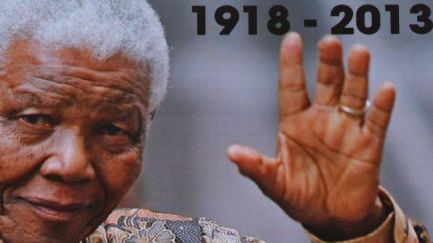
Former South African President and anti-apartheid icon Nelson Mandela passed away Thursday evening at the age of 95 and eulogies from world leaders began to appear soon after his death.
US President Barack Obama was one of the world leaders who paid their glowing tribute to South Africa’s anti-apartheid legend.
“We’ve lost one of the most influential, courageous and profoundly good human beings that any of us will share time with,” the US President said. “He no longer belongs to us, he belongs to the ages … His commitment to transfer power and reconcile with those who jailed him set an example that all humanity should aspire to.”
Nevertheless, it was not until 2008 that the US government removed Mandela’s name from its terrorism watch list.
Following the Sharpeville Massacre in 1960, when forces of South Africa’s apartheid regime shot 69 people dead in protests in the township of Sharpeville, Mandela’s African National Congress (ANC) was banned.
The apartheid regime designated the ANC as a terrorist organization because it fought against the regime’s apartheid system which legalized racial discrimination from 1948 to 1994.
The apartheid system banned the black people from voting, traveling without permission, or even possessing land.
In 1987, former British Prime Minister Margaret Thatcher also described Mandela’s ANC as a “typical terrorist organization.”
The US State Department under the presidency of Ronald Reagan also deemed Mandela’s ANC a terrorist organization and Reagan vetoed the Comprehensive Anti-Apartheid Act of 1986 passed by US Congress. Reagan’s veto was later overridden by Congress.
December 6, 2013
Posted by aletho |
Deception, Ethnic Cleansing, Racism, Zionism, Timeless or most popular | African National Congress, Margaret Thatcher, Nelson Mandela, Ronald Reagan, South Africa, United States |
Leave a comment
Palestine Information Center – December 5, 2013
GAZA — Senior Hamas official Mahmoud Al-Zahhar said that any conciliatory agreement resulting from the current negotiations between the Palestinian Authority (PA) and the occupation is non-binding for the Palestinian people.
Zahhar made his remarks during a special session held on Wednesday by the Palestinian legislative council to discuss the report that was submitted by its political committee on the negotiations between the PA and the Israeli occupation regime.
Zahhar called for forming a national front opposing the peace negotiations with the occupation and addressing their detrimental impacts on Palestinian rights and constants.
“The Palestinian negotiators are illegitimate, they neither represent the national consensus nor have the majority that allows them to speak on behalf the Palestinian people,” the Hamas official stated.
He affirmed that the Fatah faction took the Palestinian cause to a dangerous level in its negotiations with the Israeli occupation and waived many Palestinian rights, noting that the results of the negotiations had been settled in advance by the US sponsor in favor of the occupation.
Fatah chose to obey America in order to protect its presence as a representative of the people and insure financial support, he stressed.
Continuation of negotiation condemned
Dr. Ismail Radwan, Minister of Religious Affairs in Gaza, condemned the continuation of negotiation between Israeli and Palestinian authorities despite the national consensus on its rejection.
During his participation in a workshop concerning the current Palestinian situation, Radwan said that the Palestinian situation is “painful” in light the continued detention of thousands of Palestinian behind Israeli bars, escalated Judaization schemes, and security coordination between Israeli and Palestinian forces, in addition to the Islamic nations preoccupation with their internal problems.
Radwan praised the workshop, which contained participants from all Palestinian political parties, considering it a contribution to national reconciliation.

Radwan pointed to the Israeli settlers’ escalated break-ins into al-Aqsa mosque under Israeli forces’ protection in total disregard of Muslims’ feelings and freedom of religion.
He said that the continued Israeli violations in al-Aqsa Mosque aim at imposing a new fait accompli in al-Aqsa Mosque and toward building their alleged Temple on its ruins, stressing that what is happening to Jerusalem is a shame on leaders of the Islamic nations.
He praised the steadfastness of the Palestinian people in Jerusalem who continue to defend al-Aqsa Mosque.
Radwan said that the unfair Israeli siege on Gaza aims at undermining Palestinian resistance, praising Gazan people’s steadfastness.
Radwan called on the Fatah movement to implement Doha and Cairo agreements that stipulate the formation of a national unity government and achieving national reconciliation.
Commenting on a statement by one of the participants, Radwan stressed that resistance is a “red line”, adding that it is a strategic option for the Palestinian people.
Freedom is guaranteed to all Palestinian people under the rule of law, he finally said in response to a question by one of the participants.
December 6, 2013
Posted by aletho |
Ethnic Cleansing, Racism, Zionism, Illegal Occupation | Al-Aqsa Mosque, Aqsa Mosque, Gaza, Hamas, Jerusalem, Palestine, Zionism |
Leave a comment
By Stephen J. Sniegoski ~ 2003
Excerpts:
Is there any evidence that Israel and her supporters have managed to get the United States to fight for their interests?
To unearth the real motives for the projected war on Iraq, one must ask the critical question: How did the 9/11 terrorist attack lead to the planned war on Iraq, even though there is no real evidence that Iraq was involved in 9/11? From the time of the 9/11 attack, neoconservatives, of primarily (though not exclusively) Jewish ethnicity and right-wing Zionist persuasion, have tried to make use of 9/11 to foment a broad war against Islamic terrorism, the targets of which would coincide with the enemies of Israel.
For some time prior to September 11, 2001, neoconservatives had publicly advocated an American war on Iraq. The 9/11 atrocities provided the pretext. The idea that neocons are the motivating force behind the U.S. movement for war has been broached by a number of commentators.
To understand why Israeli leaders would want a Middle East war, it is first necessary to take a brief look at the history of the Zionist movement and its goals. Despite public rhetoric to the contrary, the idea of expelling (or, in the accepted euphemism, “transferring”) the indigenous Palestinian population was an integral part of the Zionist effort to found a Jewish national state in Palestine. Historian Tom Segev writes:
The idea of transfer had accompanied the Zionist movement from its very beginnings, first appearing in Theodore Herzl’s diary. In practice, the Zionists began executing a mini-transfer from the time they began purchasing the land and evacuating the Arab tenants…. “Disappearing” the Arabs lay at the heart of the Zionist dream, and was also a necessary condition of its existence…. With few exceptions, none of the Zionists disputed the desirability of forced transfer — or its morality.
However, Segev continues, the Zionist leaders learned not to publicly proclaim their plan of mass expulsion because “this would cause the Zionists to lose the world’s sympathy.”
The key was to find an opportune time to initiate the expulsion so it would not incur the world’s condemnation.
A clear illustration of the neoconservative thinking on war on Iraq is a 1996 paper developed by Perle, Feith, David Wurmser, and others published by an Israeli think tank, the Institute for Advanced Strategic and Political Studies, titled “A clean break: a new strategy for securing the realm.” It was intended as a political blueprint for the incoming government of Benjamin Netanyahu. The paper stated that Netanyahu should “make a clean break” with the Oslo peace process and reassert Israel’s claim to the West Bank and Gaza. It presented a plan whereby Israel would “shape its strategic environment,” beginning with the removal of Saddam Hussein and the installation of a Hashemite monarchy in Baghdad, to serve as a first step toward eliminating the anti-Israeli governments of Syria, Lebanon, Saudi Arabia, and Iran.
Note that these Americans — Perle, Feith, and Wurmser — were advising a foreign government and that they currently are connected to the George W. Bush administration: Perle is head of the Defense Policy Board; Feith is Assistant Secretary of Defense for Policy; and Wurmser is special assistant to State Department chief arms control negotiator John Bolton. It is also remarkable that while in 1996 Israel was to “shape its strategic environment” by removing her enemies, the same individuals are now proposing that the United States shape the Middle East environment by removing Israel’s enemies. That is to say, the United States is to serve as Israel’s proxy to advance Israeli interests.
In September 2000, the neocon think tank Project for the New American Century (PNAC) issued a report, “Rebuilding America’s Defenses: Strategy, Forces and Resources for a New Century,” that envisioned an expanded global posture for the United States. In regard to the Middle East, the report called for an increased American military presence in the Gulf, whether Saddam was in power or not., maintaining that “the United States has for decades sought to play a more permanent role in Gulf regional security. While the unresolved conflict with Iraq provides the immediate justification, the need for a substantial American force presence in the Gulf transcends the issue of the regime of Saddam Hussein.” The project’s participants included individuals who would play leading roles in the second Bush administration: Cheney (Vice President), Rumsfeld (secretary of defense), Wolfowitz (deputy secretary of defense), and Lewis Libby (Cheney’s chief of staff). Weekly Standard editor William Kristol was also a co-author.
The September 11 atrocities provided the “revolutionary times” in which Israel could undertake radical measures unacceptable during normal conditions. When asked what the attack would do for U.S.-Israeli relations, former prime minister Benjamin Netanyahu responded: “It’s very good.” Then he edited himself: “Well, not very good, but it will generate immediate sympathy.” Netanyahu correctly predicted that the attack would “strengthen the bond between our two peoples, because we’ve experienced terror over so many decades, but the United States has now experienced a massive hemorrhaging of terror.” Sharon placed Israel in the same position as the United States, referring to the attack as an assault on “our common values” and declaring, “I believe together we can defeat these forces of evil.”
In the eyes of Israel’s leaders, the September 11 attacks had joined the United States and Israeli together against a common enemy. And that enemy was not in far-off Afghanistan but was geographically close to Israel. Israel’s traditional enemies would now become America’s as well. And Israel would have a better chance of dealing with the Palestinians under the cover of a “war on terrorism.”
In the October 29, 2002, issue of The Weekly Standard, Kagan and Kristol predict a wider Middle Eastern war:
When all is said and done, the conflict in Afghanistan will be to the war on terrorism what the North Africa campaign was to World War II: an essential beginning on the path to victory. But compared with what looms over the horizon — a wide-ranging war in locales from Central Asia to the Middle East and, unfortunately, back again to the United States — Afghanistan will prove but an opening battle…. But this war will not end in Afghanistan. It is going to spread and engulf a number of countries in conflicts of varying intensity. It could well require the use of American military power in multiple places simultaneously. It is going to resemble the clash of civilizations that everyone has hoped to avoid.
In the immediate aftermath of 9/11, administration heavyweights debated the scope of the “war on terrorism.” According to Bob Woodward’s Bush at War, as early as September 12 Rumsfeld “raised the question of attacking Iraq. Why shouldn’t we go against Iraq, not just al Qaeda? he asked. Rumsfeld was speaking not only for himself when he raised the question. His deputy, Paul D. Wolfowitz, was committed to a policy that would make Iraq a principal target of the first round in the war on terrorism.”
Woodward adds, “The terrorist attacks of September 11 gave the United States a new window to go after Hussein.” On September 15, Wolfowitz put forth military arguments to justify a U.S. attack on Iraq rather than Afghanistan. Wolfowitz expressed the view that “attacking Afghanistan would be uncertain,” voicing the fear that American troops would be “bogged down in mountain fighting…. In contrast, Iraq was a brittle, oppressive regime that might break easily. It was doable.”
Within Israel herself, however, the Arabs would not be expected to adopt a “new political culture”; they would be expected to vanish.
Even the dean of Israel’s revisionist historians, Benny Morris, explicitly endorsed the expulsion of the Palestinians in the event of war. “This land is so small,” Morris exclaimed, “that there isn’t room for two peoples. In fifty or a hundred years, there will only be one state between the sea and the Jordan. That state must be Israel.”
As is now apparent, the “war on terrorism” was never intended to be a war to apprehend and punish the perpetrators of the September 11 atrocities. September 11 simply provided a pretext for government leaders to implement long-term policy plans. As has been pointed out elsewhere, including in my own writing, oil interests and American imperialists looked upon the war as a way to incorporate oil-rich Central Asia within the American imperial orbit. While that has been achieved, the American-sponsored government of Hamid Karzai in Afghanistan is in a perilous situation. Karzai’s power seems to be limited to his immediate vicinity, and he must be protected by American bodyguards. The rest of Afghanistan is being fought over by various war lords and even the resurgent Taliban. Instead of putting forth the effort to help consolidate its position in Central Asia, Washington has shifted its focus to gaining control of the Middle East.
It now appears that the primary policymakers in the Bush administration have been the Likudnik neoconservatives all along. Control of Central Asia is secondary to control of the Middle East. In fact, for the leading neocons, the war on Afghanistan may simply have been an opening gambit, necessary for reaching their ultimate and crucial goal: U.S. control of the Middle East in the interests of Israel. That is analogous to what revisionist historians have presented as Franklin D. Roosevelt’s “back door to war” approach to World War II. Roosevelt sought war with Japan in order to be able to fight Germany, and he provoked Japan into attacking U.S. colonial possessions in the Far East. Once the United States got into war through the back door, Roosevelt focused the American military effort on Germany.
The deductions drawn in this essay seem obvious but are rarely broached in public because Jewish power is a taboo subject. As the intrepid Joseph Sobran puts it: “It’s permissible to discuss the power of every other group, from the Black Muslims to the Christian Right, but the much greater power of the Jewish establishment is off-limits.”
So in a check for “hate” or “anti-Semitism,” let’s recapitulate the major points made in this essay. First, the initiation of a Middle East war to solve Israeli security problems has been a long-standing idea among Israeli rightist Likudniks. Next, Likudnik-oriented neoconservatives argued for American involvement in such a war prior to the atrocities of September 11, 2001. Since September 11, neocons have taken the lead in advocating such a war; and they hold influential foreign policy and national security positions in the Bush administration.
If Israel and Jews were not involved, there would be nothing extraordinary about my thesis. In the history of foreign policy, it has frequently been maintained that various leading figures were motivated by ties to business, an ideology, or a foreign country. In his Farewell Address, George Washington expressed the view that the greatest danger to American foreign relations would be the “passionate attachment” of influential Americans to a foreign power, which would orient U.S. foreign policy for the benefit of that power to the detriment of the United States. It is just such a situation that currently exists.
More – entire essay
December 5, 2013
Posted by aletho |
Ethnic Cleansing, Racism, Zionism, Timeless or most popular, Wars for Israel | Benjamin Netanyahu, David Wurmser, Iraq, Israel, Middle East, United States |
Leave a comment
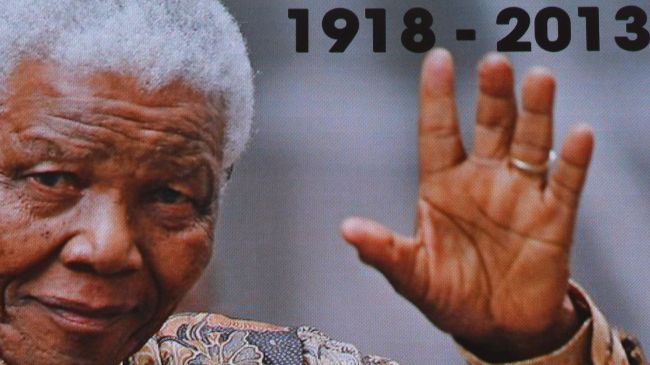


 By Aaron Siri | Injecting Freedom | March 16, 2026
 Aletho News
 Aletho News