IRS Targets Cuba Solidarity Group
Weekly News Update on the Americas | January 12, 2014
The New York-based nonprofit Inter-religious Foundation for Community Organization (IFCO) announced on Jan. 6 that the US Internal Revenue Service (IRS) has recommended ending the group’s 501(c)(3) tax-exempt status. Founded in 1967 by the late Rev. Lucius Walker [see Update #1048], IFCO is the first national foundation in the US controlled by people of color. It is probably best known as the sponsor of Pastors for Peace, which for the past 22 years has organized the US-Cuba Friendshipment Caravan, an annual shipment of humanitarian aid to Cuba; Pastors for Peace has also provided humanitarian aid for Nicaragua, Haiti and other countries.
The IRS’s two-year investigation started with a letter to the service from two members of Congress—Rep. Brad Sherman (D-CA) and Rep. Sue Myrick (R-NC)—suggesting that IFCO was tied to terrorist organizations because of some $1.2 million in aid it sent to the people of Gaza through the Viva Palestina group in 2009. In its report, the IRS cites a “comprehensive report” by Steve Emerson’s notoriously inaccurate Investigative Project on Terrorism to suggest that some of the aid may have gone to the Hamas organization, which the US lists as a terrorist group. The IRS also charges that the Friendshipments and some aid for US medical students in Cuba may violate the 50-year US embargo against Cuba. In an appeal by New York attorney Martin Stolar, IFCO denies sending aid to Hamas; notes that the relevant US agency, the Office of Foreign Assets Control (OFAC), has never penalized it for the Friendshipments; and states that OFAC has licensed the medical students to spend money in Cuba.
IFCO has asked supporters to contact US Congress members “and let them know that we need their support. Ask them to contact the Treasury Department to ask them to stop this political persecution and harassment against IFCO.” Treasure can also be contacted directly by fax at 202-622-6415 or via internet at http://www.treasury.gov/connect/Pages/contact-us.aspx. (IFCO letter 1/6/14; Vice (Montreal) 1/8/14; Ahora (Cuba) 1/10/14 from Radio Havana)
Related articles


Whose Academic Freedom Are We Talking About?
By Lawrence Davidson | To The Point Analyses | January 14, 2014
Part I – An Inevitable Controversy
 The controversy that broke out over the American Studies Association’s December 2013 vote to adopt an academic boycott of Israel was inevitable. The ASA’s academic boycott is a just a part of a much larger effort – the boycott, divestment and sanctions (BDS) movement – which has been growing worldwide over the last decade. In fact the movement’s progress in the United States has been relatively slow, but this is changing, and the ASA controversy is an indicator of this shift. That being the case, the reaction on the part of Zionist supporters of Israel in and out of academia came as no surprise.
On 5 January 2014 the New York Times reprinted a piece from the Chronicle of Higher Education more or less summarizing the reaction to the ASA move. It noted that “the presidents of more than 80 United States colleges have condemned the vote.” In addition five of these institutions of higher learning “have withdrawn from ASA membership.” The Chronicle piece concludes that the ASA has become “a pariah of the United States higher-education establishment.”
That is a rather premature judgment. There are roughly 4,500 colleges and universities in the U.S. Being condemned by the administrations (which is not the same as the faculties and student bodies) of 80 represents condemnation by less than 2 percent. Over one hundred institutions of higher learning have ASA membership. Losing five is again a small percentage. All of this hardly makes the ASA a “pariah.”
There are also other ways of judging the impact of the ASA action. If one goal of the ASA boycott move is to stimulate debate about Israeli behavior and policies within a society (the U.S.) that has long been dominated by Israeli propaganda, then the move is certainly a success. It has brought to the surface many statements and charges that demonstrate just how decontextualized attempts to defend Israeli behavior are. If insightful counterarguments are spread about because of the ASA resolution, then the “pariah” has done quite well.
Part II – Charges and Responses
Let’s take a look at some of the public charges and possible responses:
Damaging Academic Freedom:
- Carolyn A. Martin, president of Amherst College: “Such boycotts threaten academic speech and exchange, which is our solemn duty as academic institutions to protect.”
- Molly Corbett Broad, president of the American Council of Education: “Such actions are misguided and greatly troubling, as they strike at the heart of academic freedom.”
Response: It is hard to argue against the ideal. Everyone associated with higher education does, or should, value academic freedom and the free flow of ideas. The problem is, people such as Dr. Martin and Dr. Broad and many others are directing their criticism at the wrong party. The ASA resolution, which one suspects has not been read by many of its critics, is not directed against individual scholars, researchers or teachers. It is quite explicitly directed against Israeli institutions – institutions that have abetted in the destruction of the Palestinian right of academic freedom for decades. The Israelis have just done this largely out of sight of the American academic community, to say nothing of the American people.
The fact is that the Israeli government, assisted by many of the country’s academic institutions, runs an illegal occupation that has long impeded education in the Palestinian Territories. One wonders just how aware of this historical fact are those who criticize the ASA. The facts in this regard are not a secret, although one does have to go out and look for them. Just do a thorough on-line search of the subject and all kinds of reports, analyses, and documents show up. For instance, here is a link to a report about the complicity of Israeli universities in maintaining the occupation. Here is another on the impact of occupation on Palestinian education, and yet another on the struggle for Palestinian academic freedom.
It should also be mentioned that the Israeli government is embarked on an effort to enforce its own version of history on Palestinian schools. This may soon appear as an Israeli priority in its ongoing negotiations with the Palestine Authority. And, right now in the U.S., the Zionist student organization Hillel has laid down rules restricting any free discussion about Israel in their chapters on American college campuses. These facts should raise questions about the sincerity of Zionist concern over academic freedom and the free flow of ideas. It is policies and actions such as these, which have multiplied themselves out many fold, that are part of the context of the BDS movement and the action taken by the ASA.
Damaging Institutional Reputations and Solvency:
- William G. Bowen, former president of Princeton University and president emeritus of the Andrew W. Mellon Foundation: “Boycotts are a bad idea. … It is dangerous business … for institutions to become embroiled in these kinds of debates. The consequences for institutions are just too serious.”
Response: What might this mean? I don’t think that Dr. Bowen is implying that what the ASA did is “dangerous” because it allegedly put the institution on the wrong side of a moral question. Here is another possible answer:
- Leon Botstein, president of Bard College: “Calls from alumni to take a stand against the boycott had played a role [in Bard College’s withdrawal of its institutional membership in the ASA]. … I recognize that the American Jewish community is disproportionately generous to American higher education. For the president of an institution to express his or her solidarity with Israel is welcomed by a very important part of their support base.”
Response: Dr. Botstein is suggesting that if one wants to know why “the presidents of more than 80 United States colleges have condemned the vote,” one should follow the money, and not necessarily the ideal of academic freedom.
Promoting Anti-Semitism:
- Lawrence Summers, former president of Harvard University, on the Charlie Rose show of 10 December 2013: “I regard them [boycott efforts against Israel] as being anti-Semitic in their effect if not necessarily in their intent.” That is because these efforts “single out Israel.”
Response: Dr. Summers can say this only because he and other Zionists take the position that Israel and the Jews are one. This is factually wrong. There are many Jews in the U.S. (and elsewhere) who do not identify with Israel and, in fact, a good number who publicly oppose Israeli behavior and the notion of a Jewish state. As to the singling out of Israel, it is certainly warranted given the influence Zionist supporters exercise over U.S. politicians and foreign policies and the resulting inordinate amount of aid and assistance given to Israel.
Part III – Conclusion
A lot more has been written about the ASA position, and below I list a small number of articles in support of the academic boycott position by thoughtful Americans.
- Henry Siegman, former director of the National Jewish Congress, “There is no bigotry in the boycott.”
- M. J. Rosenberg, former longtime aide to various congressmen and senators, Propaganda vs. History.
- Joan W. Scott, scholar at the Institute for Advanced Studies, Princeton, N.J., “Changing My Mind about the Boycott.”
- Eric Cheyfitz, professor at Cornell University, “Why I Support the Academic Boycott of Israel,”
- Sydney Levy, director of advocacy for Jewish Voices for Peace, “Academic Freedom.”
If the academic freedom of Palestinians was not being destroyed as part of an overall policy of ethnic cleansing and apartheid, there would be no need for an institutionally centered academic boycott of Israel. As it is, however, the Zionists in their relentless drive to create a Jewish-only state in historic Palestine have created the conditions for resistance, and the boycott in its many forms is part of that effort. It is not going to go away.
Israel’s future is one of increasing isolation. The Zionists recognize this possibility and that is why they are kicking and screaming. They even want to outlaw aspects of the boycott effort. It might be easier if they joined the twenty-first century by giving up their racist ambitions. However, ideologues rarely give up their ideologies willingly, so we will all have to do this the hard way.
Lawrence Davidson
Professor of History
West Chester University
West Chester, PA 19383-2133
Related article
The Whitewashing of Ariel Sharon
By Ramzy Baroud | Palestine Chronicle | January 13, 2014
The death of former Israeli leader Ariel Sharon enlivened US media’s interest in the legacy of a man considered by many a war criminal, and by some a hero. In fact, the supposed heroism of Sharon was at the heart of CNN coverage of his death on January 11.
Sharon spent his last eight years in a coma, but apparently not long enough for US corporate media to wake up from its own moral coma. CNN online’s coverage presented Sharon as a man of heroic stature, who was forced to make tough choices for the sake of his own people. “Throughout, he was called ‘The Bulldozer’, a fearless leader who got things done,” wrote Alan Duke.
In his article, “Ariel Sharon, former Israeli Prime Minister, dead at 85″, Duke appeared to be confronting Sharon’s past head on. In reality, he cleverly whitewashed the man’s horrendous crimes, while finding every opportunity to recount his fictional virtue. “Many in the Arab world called Sharon ‘the Butcher of Beirut’ after he oversaw Israel’s 1982 invasion of Lebanon while serving as defense minister,” Duke wrote.
Nevertheless, Sharon was not called the “The Bulldozer” for being “a fearless leader” nor do Arabs call him “the Butcher of Beirut” for simply “overseeing” the invasion of Lebanon. Duke is either ignorant or oblivious to the facts, but the blame is not his alone, since references to Sharon’s heroism was a staple in CNN’s coverage.
Sharon’s demise however, and the flood of robust eulogies will neither change the facts of his blood-soaked history, nor erase the “facts on the ground” – as in the many illegal colonies that Sharon so dedicatedly erected on occupied Palestinian land.
Following the Israeli occupation of Gaza along with the rest of Palestine in 1967, Sharon was entrusted with the bloody task of “pacifying” the headstrong Strip as he was the head of the southern command of the Israel Defense Forces. Sharon was dubbed the “Bulldozer” for he understood that pacifying Gaza would require heavy armored vehicles, and Gaza’s crowded neighborhoods and alleyways weaving through its destitute refugee camps were not suited for heavy machinery.
Therefore, he resolved to bulldoze thousands of homes, preparing the way for tanks and bulldozers to move in and topple even more homes. Modest estimates put the number of homes destroyed in August 1970 alone at 2,000. Over 16,000 Palestinians were made homeless and thousands were forced to relocate from one refugee camp into another.
The Beach Refugee Camp near Gaza City sustained most of the damage. Many fled for their lives, taking refuge in mosques and UN schools and tents. Sharon’s declared objective was targeting the terrorist infrastructure. What he in fact meant was targeting the very population that resisted and aided the resistance, for they indeed were the very infrastructure he harshly pounded for many days and weeks.
Sharon’s bloody sweep also resulted in the execution of 104 resistance fighters and the deportation of hundreds of others. Some were sent to Jordan, others to Lebanon, and the rest were simply left to rot in the Sinai desert.
Sharon’s violence was part of an equally disturbing logic. He believed that any strategic long-term plan to secure Israel must have at its heart a violent campaign aimed at disorienting Palestinians. He was quick to capitalize on the Allon plan, named after Yigal Allon, a former general and minister in the Israeli government, who took on the task of drawing an Israeli vision for the newly conquered Palestinian territories.
Sharon recounted standing on a dune near Gaza with cabinet ministers, explaining that along with military measures to control the Strip he wanted “fingers” of settlements separating its cities, chopping the region in four. Another “finger” would thrust through the edge of Sinai, helping create a “Jewish buffer zone between Gaza and Sinai to cut off the flow of weapons” and divide the two regions in case the rest of Sinai was ever returned to Egypt. That legacy disfigured and isolated Gaza, even years after Sharon implemented his policy of unilateral “disengagement” in 2005. He relocated the settlers to other illegal colonies in the West Bank and imposed a hermetic siege on the Strip, the consequences of which remain suffocating and deadly.
Sharon was keen on espousing or exploiting the division of his enemies. He moved against Lebanon in 1982, when the country was at its weakest point, exhausted by civil war. And when Israeli forces finally occupied Lebanon in 1982, as Palestine Liberation Organization fighters were shipped by sea to many countries around the Middle East, a triumphant Sharon permitted his Christian Phalangist allies to enter the defenseless Sabra and Shatilla refugee camps.
In the days between September 16-18, 1982, as Israeli troops completely besieged the camps, the Phalangists entered the area and carried out a massacre that gruesomely defined both the Lebanese civil war and the Israeli invasion, killing thousands of Palestinian refugees, mostly butchered with knives, but also gunned down.
Although Sharon was partly discredited after his disastrous war in Lebanon, Israeli voters brought him back repeatedly, to lead the rightwing Likud party in May 1999 and as a prime minister of Israel in February 2001. The aim was to subdue rebelling Palestinians during the Second Intifada. In fact, it was Sharon’s provocative “visit” to one of Islam’s holiest shrines a few months earlier that sparked anger among Palestinians and, among other factors, started the uprising.
Sharon attempted to crush the uprising with the support and blessings of the US, but he failed. By the end of August 2001, 495 Palestinians and 154 Israelis were killed. International attempts at sending UN observer forces were thwarted by a US veto on March 27, thus paving the way for the Israeli army to thrash its way into Palestinian refugee camps and other areas formerly controlled by the Palestinian Authority.
In March and April 2002, Sharon ordered Operation “Defensive Wall”, which resulted in major military incursions into most West Bank cities, causing massive destruction and unprecedented bloodletting. The Israeli operation led to the killing of hundreds of Palestinians, the reoccupation of major Palestinian towns, the destruction of Arafat’s headquarters in Ramallah, and the subsequent besiegement of the Palestinian leader in his barely standing office.
Sharon was no hero. It is time for US media to wake up from its own coma, and confront reality through commonsense and the most basic human rights values. It should not be looking through the prism of the most rightwing, if not fascist elements of Israeli society.
– Ramzy Baroud is an internationally-syndicated columnist, a media consultant and the editor of PalestineChronicle.com. His latest book is My Father Was a Freedom Fighter: Gaza’s Untold Story (Pluto Press, London).
Related article
Sharon took “Brave Decisions” for Peace, says Agent Cameron

By Stuart Littlewood | Intifada-Palestine | January 14, 2014
In a statement marking the death of Ariel Sharon, British prime minister David Cameron said he was “one of the most significant figures in Israeli history and as Prime Minister he took brave and controversial decisions in pursuit of peace, before he was so tragically incapacitated.”
This sickening tribute will not go down well outside Israel. Sharon, real name Scheinermann, was the child of immigrants fleeing Russia to the British mandate of Palestine in the 1920s. At the tender age of 10 the boy joined the Zionist youth movement Hassadeh. At 14 he was a member of a paramilitary youth battalion and later joined the terrorist group Haganah.
Sharon made a name for himself in 1953 when his secret death squad, Unit 101, dynamited homes and massacred 69 Palestinian civilians – half of them women and children – at Qibya in the West Bank. His troops later destroyed 2,000 homes in the Gaza Strip, uprooting 12,000 people and deporting hundreds of young Palestinians to Jordan and Lebanon.
He was regarded as the patron of the settlers’ movement. He used his position as housing minister to encourage the establishment of a network of Israeli settlements in the occupied territories to prevent the possibility of ethnically-cleansed Palestinians returning. Explaining his policy, Sharon said: “Everybody has to move, run and grab as many (Judean) hilltops as they can to enlarge the (Jewish) settlements because everything we take now will stay ours… Everything we don’t grab will go to them.”
Chief of staff of the Israeli Defence Force, Rafael Eitan, remarked, “When we have settled the land, all the Arabs will be able to do about it will be to scurry around like drugged cockroaches in a bottle.” Sharon doubled the number of Jewish settlements on the West Bank and Gaza Strip. By the end of 2005 the total was 177.
In 1982 he masterminded Israel’s invasion of Lebanon, which resulted in a huge death toll of Palestinians and Lebanese, a large proportion being children. An Israeli tribunal found him indirectly responsible for the massacre of Palestinians in the refugee camps of Sabra and Shatila and he was forced to resign as Defence minister, but that didn’t stop him being appointed to other senior government posts.
In 2000, just before his election as prime minister, Sharon and an escort of over 1,000 Israeli armed police visited the Temple Mount, site of the Dome of the Rock and al-Aqsa Mosque, and declared that the complex would remain under perpetual Israeli control. It was a deliberately provocative move which triggered the second Intifada, although there are indications that the Palestinians had already planned an uprising and Sharon’s reckless move simply pushed the button.
He was also responsible for war crimes at Jenin in 2002 when, after the second intifada was declared, the Israeli army turned a variety of strategic weapons on the town. Accusations of a massacre were denied but many civilians living in the town and its refugee camp were killed in the street fighting and helicopter gunship attacks, and in sections of the town that were flattened by armoured bulldozers.
Israel prevented UN investigators gaining access but a Human Rights Watch report concluded:
Israeli forces committed serious violations of international humanitarian law, some amounting prima facie to war crimes. Human Rights Watch found no evidence to sustain claims of massacres or large-scale extrajudicial executions by the IDF in Jenin refugee camp. However, many of the civilian deaths documented by Human Rights Watch amounted to unlawful or willful killings by the IDF. Many others could have been avoided if the IDF had taken proper precautions to protect civilian life during its military operation, as required by international humanitarian law… Some of the cases documented by Human Rights Watch amounted to summary executions, a clear war crime… Throughout the incursion, IDF soldiers used Palestinian civilians to protect them from danger, deploying them as ‘human shields’ and forcing them to perform dangerous work … the IDF prevented humanitarian organizations, including the International Committee of the Red Cross, from gaining access to the camp and its civilian inhabitants, despite the great humanitarian need.
Sharon was the driving force behind the evil Separation or ‘Apartheid’ Wall which deviates wildly from the Demarcation/Green Line and effectively annexes 10 percent of the Palestinian West Bank’s choicest land and water resources, and cuts off villagers from their crops and livelihoods.
And there have been reports that Israeli death squads are authorised to enter “friendly” countries and kill those suspected of being a threat to the Jewish state wherever they are hiding. Targeted killings were pretty much restricted to Occupied Palestine but the appointment of a new Mossad director, Meir Dagan, in 2002 changed all that.
Sharon was said to have given his old buddy Dagan a mandate to revive the traditional methods of Mossad, including assassinations abroad, even at the risk to Israel’s bilateral relations. It is quite possible that Mossad hoodlums are at this moment prowling the streets of London, Bradford, Glasgow and Manchester – as well as major cities in Europe and the US – snuffing out plotters against their rotten racist regime.
The president of the Board of Deputies of British Jews, Vivian Wineman, paying tribute to Sharon, says: “He was among Israel’s greatest military strategists and a master of tank warfare, an art learnt at staff college in Britain… His final major act demonstrated his vision and political boldness in unilaterally withdrawing from Gaza in pursuit of the peace process with the Palestinians.”
The truth is that Israel continued to control Gaza’s airspace, air-waves, coastal waters and border crossings, and still does, creating, in effect, an open air prison camp. The idea that Sharon’s withdrawal was a peace overture is nonsense.
Former Chief Rabbi, Lord Sacks, called him “a warrior who became a man of peace”. A poll by the Israeli news website Ynet voted Sharon the eighth greatest Israeli of all time.
One of Sharon’s must famous (or should that be infamous?) sayings was at an Israeli Cabinet meeting when he (allegedly) told Peres: “We the Jewish people control America, and the Americans know it.” Americans from now on should make damn’ sure they unshackle themselves from such people.
Sharon escaped earthly justice and belongs to the mega-criminal class that Cameron’s government changed our law of Universal Jurisdiction to protect. It is hoped others, however, will live to feel the teeth of justice chewing their sorry ass.
Related articles
Ariel Sharon: the Israeli Napoleon who Never Was
By Shafiq Morton | Palestine Chronicle | January 14, 2014
Ariel Sharon, former Israeli Prime Minister, has passed on at the age of 85. After a lingering coma induced by a stroke in 2006, his body has finally shut down – and the curtain has fallen on what can only be described as a colorful, if not chequered career.
Although I never met him personally, Sharon’s presence appeared to haunt me wherever I went in the Middle East. Larger than life, his brazenness has seen him enjoying a career in which a bull in a china shop has seemed like a ballet dancer.
Indeed, no amount of apologetic obituaries will be able to wish away the fact that Ariel Sharon was one of Israel’s most belligerent political figures – the word “political architect” (as used by a US journalist) is certainly inflated language for a man whose solution in 2000 was to suggest the killing of arch foe Yasser Arafat.
Sentimental tributes written about him being an “avuncular figure”, a “warrior statesman” or a “complicated man” wrestling with the inevitability of a Palestinian settlement, are as authentic as Count Dracula being a teddy bear.
The truth is that the arrogantly imperial Sharon was never about peace. “Pragmatic” he may have been, but his chief business was ethnic separation between Israelis and Arabs. As a soldier this meant enforcement by the gun; and as a politician it meant concrete walls, razor wire and illegal settlements.
His response to Ehud Barak’s Camp David talks with PLO leader Yasser ‘Arafat is a typical example of his lack of subtlety. His Al-Aqsa mosque walkabout, accompanied by over 1,000 guards, lit the fires of the second Palestinian Intifada.
As I dig through old notebooks, Sharon’s name crops up time and again. Unit 101, a special “retaliation” force created by Prime Minister David Ben-Gurion – of which Sharon was a 25-year old major – features as prominently as the Deir Yasin massacre.
For in August 1953, Unit 101 attacked the Gazan refugee camp of Al-Bureij, killing at least 20 refugees. This was followed by Sharon leading the Qibya massacre in Jordan two months later. This time there were 69 fatalities with the victims, mainly civilians, being dynamited whilst in their homes.
The Qibya attack was condemned by the UN and the US State Department, but no-one was ever held accountable.
Sharon’s trail of destruction did not end there. In Gaza in 1971, as head of the IDF southern command, he’d bulldozed 2,000 homes, rendered 16,000 people homeless and assassinated over 100 resistance fighters.
As a politician his hand was no less heavy. The Negev Bedouin do not have happy memories of him as Agriculture Minister. In 1979 he declared a 1,500 square kilometer area a “national park”, denying the Bedouin access to their ancestral land.
He created a para-military unit called the Green Patrol that uprooted 900 Bedouin encampments and almost saw the extinction of the black goat, whose wool provided material for traditional nomad tents.
But it was in Lebanon that Sharon, as Defense Minister, became a household name. Space does not permit more than a summary background to Israel’s 1982 invasion, essentially aimed at chasing Yasser Arafat’s PLO out of the Levant and neutralizing the Syrian presence.
Bashir Gemayel, leader of the Kata’ib Party, had been voted into power with the help of western intelligence. Unfortunately, one of his neighbors was a Syrian agent, who blew him up whilst addressing party members. Sharon’s response to the assassination was to blame the Palestinians.
The PLO had just withdrawn from Beirut and Kata’ib – or Phalangist – forces were in the vicinity of the Sabra and Shatila, which were now defenseless Palestinian neighborhoods. In violation of a ceasefire accord, the Israeli IDF had reoccupied the area, sealing off Sabra and Shatila.
According to reports, Ariel Sharon and IDF chief of staff, Rafael Eitan, met with Phalangist units, inviting them to enter Sabra and Shatila. Hours later about 1,500 militias under the command of Elie Hobeika moved in. Watched by Israeli forces, and aided by IDF flares, the raping, mutilation and killing began.
All in all, it’s believed that about 2,000 people were massacred by Phalangist forces whilst the IDF looked on. The UN General Assembly condemned the killings as “genocide” and Israel’s own Yitzhak Kahan Commission fingered Sharon. However, Prime Minister Menachim Begin refused to fire him.
I visited Sabra and Shatila some 15 years after the massacre to do research for a book. Although some buildings were still burnt out and pockmarked with bullets, most of the neighborhood had been rebuilt.
But in the dark and cramped alleys there was still a somber mood. Those who’d survived asked why nobody had protected them and – unsurprisingly – had emotional difficulty recounting events. In Shatila I discovered that the mosque floor had been dug up to bury the dead because of lack of space.
I visited the main graveyard of the massacre, an open, cold space devoid of tombstones. “Too many bodies,” said my translator, “too many bodies.”
But that was not the end of the story. People kept on talking about a secondary massacre, when hundreds of people had been detained and questioned at the sports stadium, some disappearing without trace.
“There are hundreds bodies under the Rihab Gas Station,” I was told.
This took me by surprise, for not even The Independent’s Robert Fisk – who had reported on the stadium events – had spoken about this particular graveyard. Were these yet more trampled ghosts of Sharon’s past? I do not have the answer.
But who exactly was Sharon? The acerbic Israeli commentator, Uri Avnery, describes Sharon as an “Israeli Napoleon”, the ultimate integration of personal and national egocentrism. What was good for Sharon was good for national interest – and whoever wanted to stop him had to get out the way for Sharon, and Sharon alone, could save Israel.
He thought he was well on his way to doing this via Kadima when he met his Waterloo, a debilitating stroke that saw his dream of an ethnically cleansed Israel – with Palestinians finally crammed into Jordan and Gaza – condemned to an inter-space of chronic comatose incapacity between life and death.
– Shafiq Morton is an award-winning Cape Town photojournalist and author.
Related article
The Israeli army no longer even pretends it’s trying
The army admits its observers noticed the masked Israeli bandits descending on Qusra – and did nothing
By Yossi Gurvitz | Yesh Din | January 13, 2014
 A case of man bites dog: On Tuesday, January 7th, in the village of Qusra, Palestinians united in order to defend themselves from a group of Israeli marauders, taking the latter captive, and turning them over to the authorities. The rare event drew significant media attention.
However one point did not get the attention it required: The IDF told Haaretz (Hebrew) that “an observation post identified the settlers, some of whom were hooded, descending towards the village, but then eye contact with them was lost.”
You get that? The IDF identified a group of masked people heading toward a Palestinian village, and in response it did… nothing. The army entered the picture only after the raiders’ plans had been disrupted, in order to return them to their homes. That is, as far as the Israeli army – which effectively is the sovereign over the West Bank – is concerned, it is perfectly reasonable that masked men will pass by its apathetic eyes to raid a Palestinian village.
Had the villagers of Qusra not congregated to protect their persons and property, the incident would have ended with more damage to Palestinian property and perhaps more wounding of Palestinians – and it seems the IDF would not have cared that much. Now let’s try and imagine the opposite scenario: Masked Palestinians creep toward a settlement. Do you think in this case the IDF observer would consider it sufficient to inform command that it had “lost eye contact” with the suspicious masked group?
Once, the IDF – which according to international treaties and HCJ instructions is entrusted with protecting the Palestinian population in the Occupied Territories – would at least pretend to try to protect them from the settlers’ daily terrorism. Seems it has stopped even pretending.
Perhaps because the truth is much worse: this blog has reported numerous incidents of IDF troops providing protection to Jewish marauders while they have attacked Palestinian villages. The following footage, taken by B’Tselem staff, brings the incident to life. The soldiers react with apathy to the masked Jewish civilians stoning Palestinians – and when the Palestinians try to react in defense, the soldiers fire tear gas canisters at them.
So it goes.
Related article

Israel Seizes Emergency Tents Provided By UN

File photo
By Chris Carlson | International Middle East Media Center | January 13, 2014
Israeli authorities have seized emergency tents provided by the United Nations to shelter families whose homes were demolished by the army last week, according to a UN press release.
The Palestinian News & Info Agency (WAFA) reports that the release, issued by the United Nations Office for the Coordination of Humanitarian Affairs in the occupied Palestinian territories (OCHA), states that the tents were provided to the Bani Manieh families from Jiftlik, in Jericho, after the Israeli army demolished all their residential and livelihood structures on Wednesday.
13 structures, belonging to three families of the Bani Manieh community, were destroyed by the army, displacing 26 people, including 15 children.
The army claims that the area was a military training zone.
The Jordan Valley makes up about 29% of the West Bank, and Israel is simultaneously trying to empty the region of its Palestinian Arab citizens, as it attempts to keep control over the area in any future peace deal with the Palestinians.
The Palestinians refuse to allow any Israeli presence in the Jordan Valley and assert that this land is vital to their economy and statehood.
Related article

NSA Goes From Saying Bulk Metadata Collection ‘Saves Lives’ To ‘Prevented 54 Attacks’ To ‘Well, It’s A Nice Insurance Policy’
By Mike Masnick | Techdirt | January 13, 2014
Want to know why no one trusts anything NSA officials and their defenders have to say any more? When the bulk metadata collection was first revealed, those defenders went on and on about how the program “saved countless lives” and was instrumental in stopping terrorist attacks. Some skeptics then asked what terrorist attacks, and we were told “around 50” though details weren’t forthcoming. Eventually, we were told that the real number was “54 terrorist events” (note: not attacks) and a review of them later revealed that basically none of them were legitimate. There was one “event” prevented via the program on US soil, and it was a taxi driver in San Diego sending some money to a terrorist group in Somalia, rather than an actual terrorist attack.
In fact, both judges and the intelligence task force seemed shocked at the lack of any actual evidence to support that these programs were useful.
And yet, the NSA and its defenders keep insisting that they’re necessary. Director of National Intelligence, James Clapper, a few months ago, tried out a new spin, claiming that effectiveness wasn’t the right metric, but rather “peace of mind.” Of course, the obvious response to that is to point out that spying on everyone makes most of us fairly uneasy, and we’d have a lot more “peace of mind” if they dropped the program.
And, now, the NSA number 2 guy, who’s about to retire, John C. “Chris” Inglis, gave a long interview with NPR, in which he is now claiming that even if the program hasn’t been particularly useful in the past, that “it’s a good insurance policy.”
“I’m not going to give that insurance policy up, because it’s a necessary component to cover a seam that I can’t otherwise cover.”
Basically, we want to keep this information because we want that information, even if it’s not been shown to be at all useful. Of course, that’s the same logic one can use to defend just about any violation of the 4th Amendment. Putting a private drone with a camera and a recording device streaming everything it sees and hears while following around NSA deputy director Chris Inglis may not discover that he’s a corrupt bureaucrat willing to lie to the public, but it seems like a reasonable “insurance policy” to make sure he stays honest. After all, without that, the American public can’t prove that he’s not corrupt — so it seems like a reasonable “insurance policy to cover a seam we can’t otherwise cover.” At least, in the logic of Chris Inglis.
Related articles


Flag of paradox
By Kinnan Zaloom | MEMO | January 13, 2014
All my life, the flag of Palestine has been ingrained deeply into my brain. From news reports that my father used to consume incessantly to the many protests I attended as a child, the bold colours of the flag are instantly recognisable to me. Recently, however, have I started to question the Palestinian flag. How is it that an unrecognised state, supposedly a state of non-people, has been able to identify itself with a national flag?
I could make this post into a diatribe on why flags should be obsolete, but I will focus on the one that is supposed to be most important to me. Personally, I find the flag repulsive. Everything from the harsh colours to the simplicity and lack of Palestinian identity makes me think: why this flag? Now, in order to justify my hate towards the blocks of colour that represent a nation, I took it upon myself to research its origins so as to have a legitimate reason to express my distaste towards it. And oh how I was rewarded.
The majority of Arabian flags, those that contain the colours black, green, red and white, are based on the flag of the Arab Revolt (1916–1918). For all those who believe in the beauty and meaning of the Palestinian flag, or in other similar Middle Eastern flags, they can owe their gratitude to Sir Mark Sykes for it was he who designed and produced the fag of the Arab Revolt. The same man who was undoubtedly instrumental in aiding the creation of the state of Israel on Palestinian land.
Sir Mark Sykes is infamous for his part in the secret Sykes-Picot Agreement between Britain, France and Russia (The Triple Entente) that determined their intended spheres of influence in the Middle East, should the Ottoman Empire be defeated in the First World War. The agreement led to France’s control over Syria, the formation of the Arab states and ultimately the creation of the state of Israel.
So what does Sykes have to do with the flag? During the First World War, the Triple Entente was up against the Central Powers, which included the Ottoman Empire. Now the British, not having enough influence in the countries surrounding the Ottoman Empire, sought to establish some sort of revolt to aid them in defeating one of the key players in the Central Powers. Sykes, then a diplomat, established a relationship with the Emir of Mecca, Hussein bin Ali. With the promise of an Arab state free of outside influence, whether Western or Ottoman, the Emir was persuaded to lead the Arab Revolt against the Ottomans. Sykes, seeking to establish a feeling of Arabness, a sense of nationality, took it upon himself to design the Flag of the Arab Revolt. Using the colours of previous Arabian caliphates, the production of flags by the British Army in Cairo began. And the only input any Arab had in the design was the Emir, who expressed his distaste towards the shade of red used.
Sure, some might argue that the Palestinian flag’s origins are now irrelevant, as the flag was adopted by the Palestinian struggle and has come to represent it. Of course, people use it as a sign of solidarity with the Palestinian effort in a true an honest manner, but surely a Palestinian, or any Middle Eastern identity, should be established free of all Western intervention? This should also apply to borders and constitutions, which the Western powers have influenced not only in the Middle East, but also worldwide.
An established identity and a solid cultural origin are vital in order to be effective in attaining Palestinian rights. Whether this means a respected constitution, true economic independence or a secure social order, we need to work stronger together. Whatever the political or social ideology, religious or racial background, we cannot work independently to attain a free Palestine. Furthermore, I believe an elevated sense of nationalism does not help. We must seek to clear corruption in the Middle Eastern conflicts, mainly from the West but also from Middle Eastern governments. Nationalism only serves a sense of selfish pride and visceral divisions.
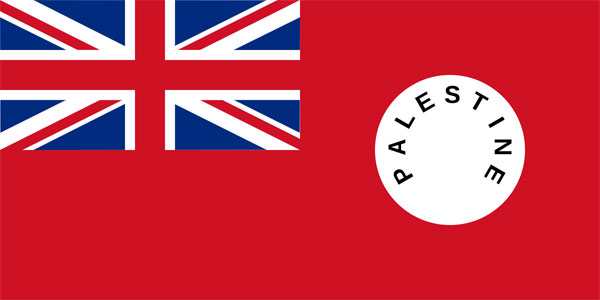 No composition of colour and shapes will help unless it was subliminally controlling, which in any case would be immoral to use anyway. So next time you decide to hoist a flag in solidarity with the Palestinian struggle, remember that it was Sir Mark Sykes who created it in order to advance the occupation. The flag of Palestine is a paradox. You might as well hoist up the flag of Mandatory Palestine, because unlike Israel it was not formed from the ideals of Mark Sykes.
REMEMBER Sabra & Shatila ~ Roots of Blood!
Sabra and Shatila are two Palestinian refugee camps in Beirut, Lebanon where nearly two thousand Palestinian refugees were massacred during three days from September 16 to September 18, 1982. The massacre was carried out by hundreds of Christian Lebanese Phalangists with the aid of Israeli Defense Forces (IDF) surrounding the camp.
This was only possible because of the tacit approval and complicity of Israeli Defence Minister, butcher Ariel Sharon and his gang of zionist war criminals.
__________________
“Thou shalt not be a Victim.
Thou shalt not be a Perpetrator.
Above all, thou shalt not be a Bystander” ~ Yahuda Bauer,
Inscription at the Holocaust Museum, Washington, DC
__________________
“Remember the solidarity shown to Palestine here and everywhere … and remember also that there is a cause to which many people have committed themselves, difficulties and terrible obstacles notwithstanding.
Why?
Because it is a just cause, a noble ideal, a moral quest for equality and human rights.” ~ Edward Said
___________________
*FURTHER READING:
| Lest we forget:
http://www.palestinefacts.org/pf_1967…
| The Legacy of Ariel Sharon, by Robert Fisk
The Independent, February 6, 2001
http://www.thirdworldtraveler.com/Fis…
| The Massacre at the Sabra and Shatila Camps: http://www.soundofegypt.com/palestini…
Related article
Israeli police detain Palestinian woman near al-Aqsa Mosque
File photo
Ma’an – January 13, 2014
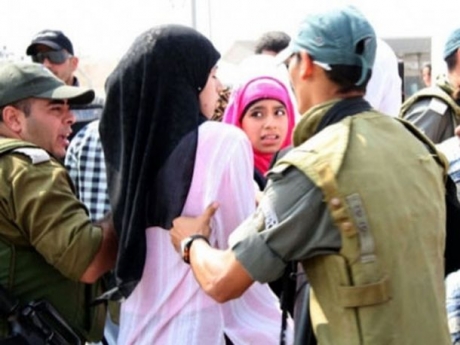
JERUSALEM – Israeli police officers detained a young Palestinian woman Sunday morning as she tried to enter the al-Aqsa Mosque compound through the Chain Gate.
Witnesses told a Ma’an reporter that Hiba al-Taweel, a student who takes courses on Islamic teaching in the compound, was detained.
Israeli police spokesman Micky Rosenfeld was not familiar with the incident.
Separately, more than 30 Jewish Israelis led by right wing extremist Yehuda Glick toured the al-Aqsa compound on Sunday.
Yehuda Glick is an American-born Israeli and the chairman of the Temple Mount Heritage Fund, an extremist Jewish organization focused on “strengthening the relationship between Israel and the Temple Mount.” He has been previously banned by Israeli authorities from entering the compound due to provocations while on the site.
Critics charge that the Fund actually leads tours to the site with the intention of leading Jewish prayer there — currently banned under Israeli agreements — and encouraging Jews to destroy the Al-Aqsa mosque and build a Jewish temple there.
Because of the sensitive nature of the Al-Aqsa compound, Israel maintains a compromise with the Islamic trust that controls it to not allow non-Muslim prayers in the area. Israeli forces regularly escort Jewish visitors to the site, leading to tension with Palestinian worshipers.
The compound, which sits just above the Western Wall plaza, houses both the Dome of the Rock and Al-Aqsa mosque and is the third holiest site in Islam.
It is also venerated as Judaism’s most holy place as it sits where Jews believe the First and Second Temples once stood. The Second Temple was destroyed by the Romans in 70 AD.
According to mainstream Jewish religious leaders, Jews are forbidden from entering for fear they would profane the “Holy of Holies,” or the inner sanctum of the Second Temple.
Al-Aqsa is located in East Jerusalem, a part of the internationally recognized Palestinian territories that have been occupied by the Israeli military since 1967.
Kifl Hares: Closure of village and settler harassment
International Solidarity Movement | January 12, 2014
Kifl Hares, Occupied Palestine – On Friday, 10th January 2014, at approximately 4 o’clock in the morning a group of twenty settlers from nearby illegal settlements entered the Palestinian village of Kifl Hares. Some of them arrived in cars, others on foot. The settlers made noise and broke windows of parked cars. Palestinians on their way to the mosque for the first prayers were harassed and settlers in cars tried to run them over. Children were frightened and the villagers were afraid to leave their homes.
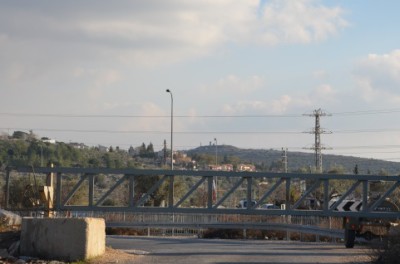 Previously, on Tuesday 7th January, the Israeli army closed the gate at the main entrance to the village, which leads to the main road. When villagers asked the reason for this, the soldiers stationed in a watchtower nearby answered that the gate would be closed indefinitely for security reasons.
On Thursday, 9th January, an emergency occurred, when an ambulance attempted to take an elderly lady living near the entrance to a hospital in Nablus. The residents requested that the Israeli soldiers open the gate for just five minutes so that the ambulance could reach the main road. The Israeli forces refused and the paramedic had to carry the lady by hand on a stretcher from her house to the other side of the gate. This delayed her arrival at hospital.
The gate has been opened only once in the past few days. This happened on Friday, when the settlers entered the village, implying that the Israeli forces knew of the settler attack.
Illegal settlers and Jewish tourists have entered Kifl Hares on many occasions. The village is located in the northern West Bank in the Salfit district and close to Ariel, the largest of the illegal settlements. The pretext for the incursions into Kifl Hares is a pilgrimage to three disputed tombs. The centuries-old tombs belonging to the village are also important for Muslims. Large numbers of settlers arrive on visits organized by the DCO and with Israeli army protection. Settlers and Jewish tourists from all over the world arrive by bus, frequently during the night. During the incursions, Israeli forces declare the village a closed military zone and Palestinians are required to stay in their homes until the settlers have left. This event occurs around twenty times a year. Nevertheless settlers also come weekly without army protection to pray in the tombs and often to harass or attack villagers. Several years ago Palestinian youth would resist these incursions by throwing stones at the illegal settlers and Israeli forces. This resistance was invariably responded to with night raids and arrests that resulted in imprisonment for up to five years. Since then villagers have been afraid to resist these settler attacks.
Related articles


Featured Video

Iran Is Not Our Enemy
or go to
Aletho News Archives – Video-Images
Book Excerpt
“Vaccines Do Not Cause Autism!” The Science is Settled. Right?
ICAN urges the IACC to actually study infant vaccines and autism
 By Aaron Siri | Injecting Freedom | March 16, 2026
On behalf of ICAN, we just sent a copy of chapter 11 of Vaccines, Amen to the newly appointed members of the federal Interagency Autism Coordinating Committee (IACC).
If you haven’t already read this chapter, you can read the whole thing in the attached letter. I trust that after you read it, you’ll see why the statement “vaccines do not cause autism” is a belief, not science!

IACC Public Comment Letter
1.53MB ∙ PDF file
Includes chapter 11 of Vaccines, Amen
Blog Roll
 Aletho News
- Weapons makers cash in on Trump’s Iran war
- Why Trump’s anti-Iran naval coalition in Strait of Hormuz is doomed to fail
- IRGC says regional energy sites linked to US will be reduced to ashes
- Qatar condemns ‘dangerous’ Israeli attack on gas field
- Iran made ‘unexpectedly substantial’ offer during Geneva talks, US envoys ‘dragged’ Trump into war: Report
- Russia condemns Israel’s attack near Bushehr plant, files complaint
- Russia Strongly Condemns Actions Aimed at Harming Health of Iranian Leadership – Kremlin
- Israeli Journalist Demands Tucker Carlson and Candace Owens Be Placed in WWII-Style Internment Camps
- No Liability, No Studies, No Accountability: The Vaccine System Aaron Siri Exposed in Federal Court
- No time for losers: Why the war meant to save Israel may destroy it
- If Americans Knew
- Tucker Carlson says ‘neocons’ will try to destroy Joe Kent over resignation
- Lebanon death toll exceeds 900, another assassination in Iran, bombing in Gaza – Not a ceasefire Day 159
- Trump’s counterterrorism chief, whose own wife was killed by ISIS, quits over Iran War saying Tehran posed ‘no imminent threat’
- Here’s what US could fund instead of Bibi’s war on Iran
- Israel Killed Over a Dozen Lebanese Paramedics in Three Days, Now Claiming That Ambulances Are “Hezbollah” Targets
- War on Iran: These are the heritage sites devastated by US and Israeli attacks
- Four news stories from Israeli media that illustrate Israeli “justice”
- CIA Prepares Criminal Referral of Tucker Carlson, as Israel and Its Loyalists Demand His Arrest
- Top US counterterror advisor resigns in protest of “war manufactured by Israel” – Not a ceasefire Day 157
- ‘I Liked the House’: When Israeli Soldiers Turn Palestinian Homes into Barracks
- No Tricks Zone
- Energy Expert: Germany’s Nuclear Phaseout Was A “500 Billion Euro Mistake”
- New Research: South Australia’s Mid-Holocene Sea Surface Temperatures Were 4°C Warmer Than Today
- Storing Green Energy To Last Germany 10 Days Would Require A 60-Million Tonne Battery
- New Studies: UK Sea Levels Were 4 Meters Higher Than Today During The Mid-Holocene
- Destructive Green New Deal: German Energy And Metal Group Warns Of Drastic Crisis
- New Study Documents A 20-Year Pause In Arctic Sea Ice Decline – Driven By Internal Variability
- Wake-up Call: Survey Shows Majority Of Germans Now Favor Postponing Climate Targets!
- Televised! Leading German Political Candidate Tells Schoolchildren CO2 Makes Sun Hotter!
- New Study: A Century Warming Of 1.1°C Is ‘Commonplace’ And ‘Not Unusual’ During This Interglacial
- New Study: ‘Internal Noise’ And Volcanic Forcing Can Trigger 10-15°C Warming Within Decades
 Aletho News