Iran may spend unfrozen oil money on plane parts: Official
Press TV – January 19, 2014
Iran is likely to spend oil funds, expected to be unfrozen with the implementation of its nuclear deal with world powers, for aircraft and car spare parts, an Iranian deputy oil minister says.
Ali Majedi made the remarks in an interview with The Wall Street Journal as Iran’s nuclear accord with the Sextet of world powers is to take effect on Monday.
He said Iran may spend its oil money, currently stuck in foreign banks, on machinery and spare parts for aircraft and automotive industries.
World powers are set to ease sanctions on Iran under last November’s interim nuclear accord.
The sanctions relief is targeted at Iran’s aircraft, automotive and petrochemical industries. Billions of dollars in oil revenues will be also unfrozen.
Majedi said unfreezing Iran’s petrodollars opens “a new window of cooperation with the Europeans and the US.”
The official said Iran may also consider buying stocks in Asian refineries in a bid to strike long-term oil sale contracts.
“With sanctions, it’s difficult. We are trying to be ready” for the time when sanctions on Iran’s oil are lifted, said Majedi.
On January 12, Iran and the Sextet of world powers finalized an agreement to start implementing the Geneva nuclear deal from January 20. The accord is aimed at setting the stage for the full resolution of the West’s decade-old standoff with Tehran over its nuclear energy program.
Under the nuclear deal, the European Union will suspend 2012 sanctions against insuring and transporting Iranian crude oil.
The EU will also suspend embargoes on gold, precious metals and petrochemical products and raise the ceiling on financial transfers not related to remaining sanctions.
If everything takes place according to the plan, as of Monday, EU companies will be authorized to insure or transport Iranian crude oil to Tehran’s major customers, China, India, Japan, Korea, Turkey and Taiwan.

The Missing Quote from the King Memorial
By Don DeBar | Black Agenda Report | January 17, 2012
“The greatest purveyor of violence in the world today: my own Government… I cannot be silent.” – Rev. Dr. Martin Luther King, Jr.
While the insiders in Washington parse the meaning of the paraphrased words of Dr. Martin Luther King, Jr. regarding his own epitaph, his true legacy – the one that many believe led to his murder – has been whitewashed from the King Memorial entirely.
Speaking at the Riverside Church in New York City, exactly one year – to the day – before he was shot and killed in Memphis, Dr. King announced that he was expanding his focus on America’s national shame of segregation to include its international crime of war on the people of Vietnam:
“(I)n the ghettoes of the North over the last three years — especially the last three summers, (a)s I have walked among the desperate, rejected, and angry young men, I have told them that Molotov cocktails and rifles would not solve their problems. I have tried to offer them my deepest compassion while maintaining my conviction that social change comes most meaningfully through nonviolent action. But they ask — and rightly so — ‘what about Vietnam?’ They ask if our own nation wasn’t using massive doses of violence to solve its problems, to bring about the changes it wanted. Their questions hit home, and I knew that I could never again raise my voice against the violence of the oppressed in the ghettos without having first spoken clearly to the greatest purveyor of violence in the world today — my own government. For the sake of those boys, for the sake of this government, for the sake of the hundreds of thousands trembling under our violence, I cannot be silent.”
The King Memorial lists a total of 15 direct quotes and a paraphrase (currently in controversy) from Dr. King’s words; yet, curiously, this particular quote – which ties together the struggle for social and economic justice at home with the actions of the government abroad in an elegant and profound way – did not make the list.
Here are the quotes that appear on the Inscription Wall of the Memorial:
“We shall overcome because the arc of the moral universe is long, but it bends towards justice.” (16 August 1967, Atlanta, GA)
“Darkness cannot drive out darkness, only light can do that. Hate cannot drive out hate, only love can do that.” (1963, Strength to Love)
“I believe that unarmed truth and unconditional love will have the final word in reality. This is why right, temporarily defeated, is stronger than evil triumphant.” (10 December 1964, Oslo, Norway)
“Make a career of humanity. Commit yourself to the noble struggle for equal rights. You will make a greater person of yourself, a greater nation of your country, and a finer world to live in.” (18 April 1959, Washington, DC)
“I oppose the war in Vietnam because I love America. I speak out against it not in anger but with anxiety and sorrow in my heart, and above all with a passionate desire to see our beloved country stand as a moral example of the world.” (25 February 1967, Los Angeles, CA)
“If we are to have peace on earth, our loyalties must become ecumenical rather than sectional. Our loyalties must transcend our race, our tribe, our class, and our nation; and this means we must develop a world perspective.” (24 December 1967, Atlanta, GA)
“Injustice anywhere is a threat to justice everywhere. We are caught in an inescapable network of mutuality, tied in a single garment of destiny. Whatever affects one directly, affects all indirectly.” (16 April 1963, Birmingham, AL)
“I have the audacity to believe that peoples everywhere can have three meals a day for their bodies, education and culture for their minds, and dignity, equality and freedom for their spirits.” (10 December 1964, Oslo, Norway)
“It is not enough to say ‘We must not wage war.’ It is necessary to love peace and sacrifice for it. We must concentrate not merely on the negative expulsion of war, but on the positive affirmation of peace.” (24 December 1967, Atlanta, GA)
“The ultimate measure of a man is not where he stands in moments of comfort and convenience, but where he stands at times of challenge and controversy.” (25 February 1967, Los Angeles, CA)
“Every nation must now develop an overriding loyalty to mankind as a whole in order to preserve the best in their individual societies.” (4 April 1967, Riverside Church, New York, NY)
“We are determined here in Montgomery to work and fight until justice runs ‘down like water, and righteousness like a mighty stream.'” (5 December 1955, Montgomery, AL)
“We must come to see that the end we seek is a society at peace with itself, a society that can live with its conscience.” (16 April 1963, Birmingham, AL)
“True peace is not merely the absence of tension: it is the presence of justice.” (16 April 1963, Birmingham, AL)
Within the list, there is one quote which deals directly with the Vietnam war, two that deal directly with war, and others that deal, in one way or another, with issues of war and peace in general. One is lifted from the Riverside speech.
Inscribed on the Stone of Hope are two statements – one, a direct quote, the other, the paraphrase of his words that is at the center of the present controversy:
The first, from the “I Have a Dream” speech, is “Out of the Mountain of Despair, a Stone of Hope” – the quotation that serves as the basis for the monument’s design. The words on the other side of the stone read, “I Was a Drum Major for Justice, Peace, and Righteousness,” which is a paraphrased version of a longer quote by King: “If you want to say that I was a drum major, say that I was a drum major for justice. Say that I was a drum major for peace. I was a drum major for righteousness. And all of the other shallow things will not matter.” The memorial’s use of the paraphrased version of the quote has been criticized (Wikipedia).
Nowhere on the monument is there any mention of Dr. King’s clearly-stated indictment of American foreign policy as being intrinsically evil (above); nor is there any mention that America’s wars are the cause of economic hardship at home:
“There is at the outset a very obvious and almost facile connection between the war in Vietnam and the struggle I, and others, have been waging in America. A few years ago there was a shining moment in that struggle. It seemed as if there was a real promise of hope for the poor — both black and white — through the poverty program. There were experiments, hopes, new beginnings. Then came the buildup in Vietnam, and I watched this program broken and eviscerated, as if it were some idle political plaything of a society gone mad on war, and I knew that America would never invest the necessary funds or energies in rehabilitation of its poor so long as adventures like Vietnam continued to draw men and skills and money like some demonic destructive suction tube. So, I was increasingly compelled to see the war as an enemy of the poor and to attack it as such.”
At the dedication of the King Monument last October, President Barack Obama invoked the words of Dr. King – some of them – without even mentioning war:
“When met with hardship, when confronting disappointment, Dr. King refused to accept what he called the ‘is-ness’ of today. He kept pushing towards the ‘ought-ness’ of tomorrow.
“And so, as we think about all the work that we must do –- rebuilding an economy that can compete on a global stage, and fixing our schools so that every child — not just some, but every child — gets a world-class education, and making sure that our health care system is affordable and accessible to all, and that our economic system is one in which everybody gets a fair shake and everybody does their fair share, let us not be trapped by what is. We can’t be discouraged by what is. We’ve got to keep pushing for what ought to be, the America we ought to leave to our children, mindful that the hardships we face are nothing compared to those Dr. King and his fellow marchers faced 50 years ago, and that if we maintain our faith, in ourselves and in the possibilities of this nation, there is no challenge we cannot surmount.”
Obama even went so far as to impute to Dr. King words that, if the record is any indication, are mere sterile parodies of the words of this Nobel Peace Prize winning minister:
“If he were alive today, I believe he would remind us that the unemployed worker can rightly challenge the excesses of Wall Street without demonizing all who work there; that the businessman can enter tough negotiations with his company’s union without vilifying the right to collectively bargain. He would want us to know we can argue fiercely about the proper size and role of government without questioning each other’s love for this country — with the knowledge that in this democracy, government is no distant object but is rather an expression of our common commitments to one another. He would call on us to assume the best in each other rather than the worst, and challenge one another in ways that ultimately heal rather than wound.”
Not a word about “the greatest purveyor of violence in the world today” – this is particularly odd when one considers that the US is now currently involved in more war and destruction, in more places and involving more people, weaponry and expense, than at the time Dr. King uttered those words in 1967.
As to the shared status with the President as a fellow Nobel Peace Prize winner, in contrast to the Commander-in-Chief’s actions over the past three years, Dr. King said:
“I cannot forget that the Nobel Peace Prize was also a commission, a commission to work harder than I had ever worked before for ‘the brotherhood of man.’ This is a calling that takes me beyond national allegiances, but even if it were not present I would yet have to live with the meaning of my commitment to the ministry of Jesus Christ. To me the relationship of this ministry to the making of peace is so obvious that I sometimes marvel at those who ask me why I’m speaking against the war. Could it be that they do not know that the good news was meant for all men — for Communist and capitalist, for their children and ours, for black and for white, for revolutionary and conservative? Have they forgotten that my ministry is in obedience to the One who loved his enemies so fully that he died for them? What then can I say to the Vietcong or to Castro or to Mao as a faithful minister of this One? Can I threaten them with death or must I not share with them my life?”
Quite a different interpretation of the charge that comes with joining the company of other Nobel Peace Prize winners than that demonstrated by the man who sat silent during the siege of Gaza (“Only one President at a time”), expanded the wars in Iraq and Afghanistan into Pakistan, Libya, Bahrain, Syria and, soon, Iran. Could we imagine Dr. King conducting – or sanctioning – a six-month bombing campaign for “humanitarian reasons”? Or might he instead feel compelled to speak out:
“And as I ponder the madness of Vietnam and search within myself for ways to understand and respond in compassion, my mind goes constantly to the people of that peninsula. I speak now not of the soldiers of each side, not of the ideologies of the Liberation Front, not of the junta in Saigon, but simply of the people who have been living under the curse of war for almost three continuous decades now. I think of them, too, because it is clear to me that there will be no meaningful solution there until some attempt is made to know them and hear their broken cries.
“They must see Americans as strange liberators.”
“Strange liberators,” indeed…
Don DeBar is a journalist and political activist residing in Ossining, NY. He currently serves as senior producer for WBAIX.org, an internet news and public events outlet featuring progressive producers who were purged from Pacifica Radio.
Turkey signs law ‘criminalizing’ medical first aid without govt permit
RT | January 19, 2014
A medical bill has been signed into law in Turkey that requires doctors to obtain government permission before administering emergency first aid. Critics have blasted the bill as a crackdown on doctors who treat activists injured during protests.
The bill, which was drawn up by the ruling Justice and Development Party (AKP), punishes health care professionals with up to three years in prison or a fine of almost $1 million if they administer emergency first aid without government authorization.
It also bans doctors from practicing outside state medical institutions and aims to stop them from opening private clinics.
President Abdullah Gul signed the legislation into law Friday. It has prompted a flurry of accusations from rights groups, condemning it as an attempt to criminalize emergency health care and deter doctors from treating protesters.
The US-based Physicians for Human Rights (PHR) attacked the legislation as an attempt to quash dissent in Turkey, following last year’s violent protests.
“Passing a bill that criminalizes emergency care and punishes those who care for injured protesters is part of the Turkish government’s relentless effort to silence any opposing voices,” PHR senior medical adviser Vincent Iacopino said in a statement on the PHR website.
Describing the bill as “repugnant,” Iacopino said the legislation not only puts everyone’s health at risk, but also conflicts with the Turkish constitution and “must be blocked through Turkey’s constitutional court.”
The PHR says the bill will also put the medical community at odds with their ethical and professional responsibility to care for the sick and wounded.
The UN has implored the Turkish government to rethink the bill because it will have “chilling effect on the availability and accessibility of emergency medical care in a country prone to natural disasters and a democracy that is not immune from demonstrations.”
In last year’s wave of protests against Prime Minister Tayyip Erdogan, six people were killed and over 8,000 were injured across the country.
The government was accused of cracking down on medical professionals when the Turkish Health Ministry launched a probe into those doctors treating protesters in June. They asked the Turkish Medical Association (TBB) to hand over the names of the doctors and their patients.
“Recently we were inspected by the Ministry of Health, they said what we were doing here is wrong. But there could be no punishment for those who are helping people. There is no such religion or law that could discriminate against us,” Abtullah Cengiz, spokesman for the Gezi Park doctors, told RT in June.
3 Israeli airstrikes on Gaza injure motorcyclist, child
Ma’an – 19/01/2014
GAZA CITY – A young Palestinian man and a child were injured on Sunday morning after Israeli air forces launched three strikes across the Gaza Strip.
An Israeli airstrike in the northern Gaza Strip hit a motorcyclist on Saftawi Street near Jabaliya, injuring the driver and a number of passersby.
Two other airstrikes in the central and southern Gaza Strip left no reported injuries.
Spokesman for the Gaza Strip Ministry of Health Ahraf al-Qidra told reporters that the motorcyclist was a 22-year-old man, and that he was taken to al-Shifa Hospital in Gaza City after he sustained serious injuries.
Al-Qidra added that a 12-year-old boy was taken to Kamal Udwan Hospital in Jabaliya, and that doctors said he suffered moderate wounds.
A statement by Israeli forces said that they had “successfully targeted a terrorist operative” named Ahmad Saad, who they described as “a senior operative in the ‘Palestinian Islamic Jihad'” organization.
The statement added that Saad was a specialist “in rocket launching” and is “personally responsible for the launching of 5 rockets towards Ashkelon” on Thursday.
Also on Sunday morning, Israeli air forces bombed two sites in the central and southern Gaza Strip used as training sites for Palestinian militants.
Witnesses told Ma’an that at least three missiles hit a military training site in the town of Bani Suheila east of Khan Younis in the southern Gaza Strip.
The site and neighboring civilian houses sustained material damage, but no injuries were reported.
Less than 10 minutes later, another Israeli airstrike targeted a training site of the Hamas’ military wing the al-Qassam Brigades near Nuseirat refugee camp in the central Gaza Strip.
No injuries were reported in that strike either.
An Israeli military spokesperson said the attacks came after a homemade shell fired from the Gaza Strip landed in the Western Negev.
The airstrikes come only days after four Palestinian children and a woman were injured in Israeli bombing in the Gaza Strip early on Thursday, and a day after after Israeli forces opened fire on Palestinian protesters near the border, injuring two.
The Gaza Strip has been under a severe economic blockade imposed by the State of Israel since 2006.
US Ambassador Ford to Syria Opposition: Bandar on Long Vacation, Go to Geneva 2
al-Manar | January 19, 2014
The US Ambassador to Syria Robert Ford has ordered foreign-backed opposition figures to take part in the international peace conference, noting that there are many changes in Saudi policy regarding the Syrian crisis.
Quoting an official in the executive committee in the so-called “Syrian National Coalition”, Nidal Hamade said that Ford had called for an urgent meeting for the SNC figures in Istanbul, noting that the US envoy had threatened to cut funds for anyone who will not attend the meeting.
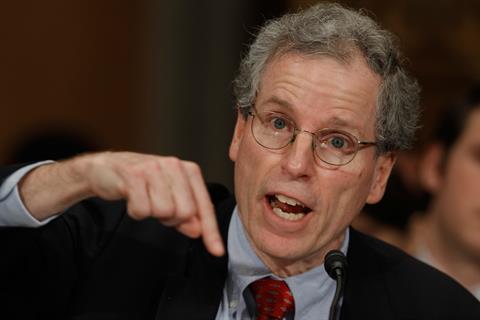 In addition to Ford, all SNC figures who were opposing Geneva 2 participation were at the meeting: Loay Safi, Anass al-Abdeh, Haitham al-Maleh, Burhan Ghalioun, Najeeb al-Ghadban and Maher Noaimi, Hamade wrote in his corner on al-Manar Website.
During the meeting, Ford told the SNC figures that Saudi prince Bandar Bin Sultan is on a long vacation in the United States, “because of sickness and psychological fatigue,” Hamade added, citing the Syrian opposition official who is also close to former Prime Minister, Riyad Hijab.
“We would like to inform you that there are some changes that will take place in Saudi Arabia next March,” Ford said, noting that these changes will reach Bandar Bin Sultan and Saud al-Faissal.
“We also would like to tell you that the US had asked Saad Hariri (head of al-Mustaqbal parliamentary bloc in Lebanon) to participate in a coalition government with Hezbollah.”
The US ambassador added that the Saudi committee for Lebanon and Syria (which comprises Abdulaziz Khoja, Abdulaziz Bin Abdullah Al Saud and Muqren Bin Abdullah Al Saud) is to be activated and will take over the Lebanese and Syrian file from Bandar.
Ford told the Syrian opposition figures: “Bandar’s plan for the Syrian conflict, put [in place during] 2012, had catastrophic repercussions on Syria and the region. It had made of Syria a powerful hub for al-Qaeda that US cannot confront. For that, you have to stop objecting and to go to Geneva 2, this is the US’ interest.”
Related article
Israeli nukes aimed at terrorizing world: Ralph Schoenman
Press TV interview with Ralph Schoenman | January 19, 2014
Press TV has conducted an interview with Ralph Schoenman, author of Hidden History of Zionism, from Berkeley, California, to discuss Israel’s use of nuclear bombs to terrorize and dominate populations with the help of the United States.
What follows is a rough transcript of the interview.
Press TV: First of all, with this report in, will there be any political or legal implications for those who assisted Israel in acquiring these nuclear weapons?
Schoenman: The question is really going to the relationship of imperialism to the Zionist [entity] from its inception, in specific terms now the issue of the use of nuclear weapons.
There is a book,The Unspoken Alliance: Israel’s Secret Relationship with Apartheid South Africa, by Sasha Polakow-Suransky, which details the joint development of nuclear weapons by including neutron bombs by Israel and South Africa, and their testing.
The well-known figure Mordechai Vanunu – who was kidnapped by the Israelis when he disclosed the evidence of the Israeli preparations for nuclear capacity and testing of weapons, indeed, with the full panoply of evidence pertaining to this – was kidnapped, taken to Israel and held in incommunicado for 18 years.
There is a very sorted and menacing history of the use of these weapons to menace peoples across the world. I want to give a specific example in illumination of this, namely ‘View of the Cameroon Disaster…’, which Dan Fisher wrote about in the Los Angeles Times on August 27, 1986.
Death occurred in which people were found frozen in place as if they have been killed by gas. This was an event in 1986 in Cameroon – it was immediately described as an event in which the Israelis were involved. The Israeli infantry troops were soon to be on the scene. In fact, Shimon Perez, who was the former Foreign Minister and Prime Minister of Israel, was quickly on the scene with a team.
Indeed, the evidence about this was documented by Dan Fisher in the Los Angeles Times, as I’ve mentioned, but also there was a detailed account by the Cameroonian journalists which specified the role of the Israelis and the evidence of a neutron weapon: ‘The Lake Nyos Disaster 20 Years After: Revisiting Israeli Connection’, by Dibussi Tande.
My wife and I had a role in this expose because after the time we flew to the big island of Hawaii where leading volcanologist in the island of Hawaii was involved in the report on what occurred in Cameroon, he confirmed that the claims that this was the result of gases emerging from a lake with presumptive latent volcano that emitted gases in Lake Nyos, those gases then reached the atmosphere in causing thousands of people to die in their tracks frozen, while no damage to property occurred, was quickly exposed as a myth.
In fact, what we’re dealing with here is a neutron weapon. One of the people who’s most associated with the neutron bomb, Sam Cohen, who was working with the RAND Corporation in the United States, has detailed the neutron weapon.
There is no question whatsoever, given what Vanunu has exposed, given what evidence there is in Cameroon, that neutron weapons have been used and tested by the Israelis with the approval and collusion of the United States and the imperial powers notably France.
This is not a new development. The story is important. It is the culmination of a series of documentations, revelations over a period of 20, 30 and 40 years. These are crimes against humanity.
These are ongoing threats to the peoples of the world. They define the relationship of Israel and the Zionist [entity] to imperialism and the utilization of the nuclear capacity and of neutron bombs and weapons of this nature to terrorize the populations they seek to dominate, whose sovereignty they wish to destroy.
Related article
FBI Arrests Michael Grimm’s Girlfriend; Meanwhile Another Congress Member Implicated

Diana Durand (L) has been arrested in connection with illegal campaign contributions allegedly made to the 2010 campaign of New York Republican Congressman Michael Grimm (R)
By Richard Edmondson | Fig Trees and Vineyards | January 18, 2014
Diana Durand, a Texas woman who apparently has been romantically involved with Congressman Michael Grimm, has been arrested and charged with illegally funneling money into the New York congressman’s 2010 campaign.
She is also accused of steering “straw donations” into the campaign of yet another congress member, Rep. Aaron Schock (R-IL), according to the New York Daily News.
A straw donation is a donation to a political campaign made by one person, though under another person’s name. It is a way of getting around legal limits on the amount of money that can be contributed to political candidates.
Schock, like Grimm, is an avid supporter of Israel.
Durand is 47-years old and was arraigned in federal court in Houston on Wednesday. She has hired an attorney, Stuart Kaplan, who is a longtime associate of Grimm, both having served in the FBI.
Grimm left the FBI in 2006, was elected to Congress in 2010, and in 2012 the FBI opened an investigation into him over possible illegal campaign donations to his 2010 congressional campaign made by supporters of Israeli Rabbi Yoshiyahu Pinto.
Durand is free on $50,000 bond and is scheduled to appear in court on January 30. The following is from the New York Daily News account:
The single mother of one worked with Grimm before his election when he launched a trucking company near Houston. Records list her brother and sister-in-law as executives at the firm.
Sources said Durand and Grimm, 43, who is divorced, were involved romantically, and that she visited him in Washington after his election.
Durand was busted Friday, nearly five months after a Brooklyn judge first ordered her arrest. Feds spent the intervening months in an unsuccessful bid to win her cooperation in an ongoing probe into allegations that Grimm and supporters encouraged donors to make illegal contributions to his 2010 campaign, people with knowledge of the case said.
As I reported previously, campaign donations totaling more than $500,000 were reportedly solicited on Grimm’s behalf by a top Pinto aide, Ofer Biton, who was arrested in 2012 for immigration fraud and who pled guilty to that charge last August.
The FBI had sought to have Biton turn state’s evidence against Grimm, but he has refused, and apparently Durand intends doing likewise. Also as I repoted before, Grimm has friends in high places—Israel—where he reportedly maintains close ties to Prime Minister Benjamin Netanyahu, and according to reports, the Israeli police have done their best to sabotage the FBI’s investigation.

Grimm with Benjamin Netanyahu
Schock would appear to be the second congress member implicated in what seems to be a widening investigation. According to the Chicago Tribune:
Schock, 32, is a prolific fundraiser serving his third term in Congress. He had more than $2.9 million in his war chest in September, when the most recent campaign-finance reports were filed.
The House Ethics Committee has been examining Schock’s fundraising after reports that in 2012, he solicited $25,000 for a super PAC, in excess of a $5,000 limit for lawmakers asking for money for that kind of independent-expenditure group.
The Tribune also reports on a statement issued by Schock’s office in which a spokesperson said, “This literally is the first our office has heard of this issue.”
In March of 2010, Schock and 326 other members of Congress signed onto a letter to Secretary of State Hillary Clinton affirming their “commitment to the unbreakable bond that exists between our country and the State of Israel and to express to you our deep concern over recent tension.”
The “recent tension” referred to by the signatories of the letter is an incident I referred to in my first article on the Grimm investigation. On March 9, 2010 the Israeli government announced the construction of 1,600 new homes, for Jews only, to be built in East Jerusalem. The announcement coincided with a state visit to Israel by US Vice President Joe Biden, and was viewed by many as insulting to America. Clinton referred to it as “deeply negative” for US-Israeli relations.
And as I also noted:
Coincidentally, simultaneous to the slight against Biden, the parents of Rachel Corrie were in Israel for the start of their civil trial charging the Israeli military in the wrongful death of their daughter.
Biden’s response to the announcement of the 1,600 new homes was to issue a servile statement in which he declared that “there is no space between the United States and Israel,” whereupon he boarded a plane and jetted home to America without offering any words of support to the Corrie family.
Schock and the other signers of the letter went on to state:
Our valuable bilateral relationship with Israel needs and deserves constant reinforcement. As the Vice-President said during his recent visit to Israel: “Progress occurs in the Middle East when everyone knows there is simply no space between the U.S. and Israel when it comes to security, none. No space.” Steadfast American backing has helped lead to Israeli peace treaties with Egypt and Jordan. And American involvement continues to be critical to the effort to achieve peace between Israel and the Palestinians.
We recognize that, despite the extraordinary closeness between our country and Israel, there will be differences over issues both large and small. Our view is that such differences are best resolved quietly, in trust and confidence, as befits longstanding strategic allies. We hope and expect that, with mutual effort and good faith, the United States and Israel will move beyond this disruption quickly, to the lasting benefit of both nations.
Born of Morrocon Jews, Pinto is one of the richest rabbis in Israel and is viewed by some as a religious and financial “guru” and a “wonder rabbi.” His adherents in the past have included some of the wealthiest oligarchs in the world and also Israeli political leaders:
In Israel, the list of those seeking Rabbi Pinto’s advice reads like a high-society gossip column: Multi-millionaires Lev Leviev and Nochi Danker, opposition leader Tzipi Livni and former Industry Minister Benjamin Ben Eliezer, who the rabbi supposedly brought out of a coma earlier this year. It is even rumoured that Prime Minister Benjamin Netanyahu consults him.
Now, however, he seems to be in hotwater with Israeli police, who have charged him with attempting to bribe a police official—apparently in a bid to sabotage the FBI’s investigation of Grimm. The FBI is hoping to have Pinto testify against Grimm, and reportedly is in possession of a wiretap audio in which Israeli police can be heard threatening the rabbi.
And finally, as I reported yesterday, Grimm apparently isn’t the only Congress member who has accepted donations from Pinto’s wealthy followers. House Majority Leader Eric Cantor is reported to have as well.
Cantor’s ties to Pinto have also been commented upon by blogger Richard Silverstein, who has written extensively on the FBI’s investigation of Grimm:
The key question is whether the techniques and solicitors used in Grimm’s campaign match those used by Cantor. If so, then the FBI is very interested in Cantor. If Cantor was smarter than Grimm and didn’t use mafiosi to collect cash as Grimm did, then he may not get into trouble. But the very fact that Cantor dipped into Grimm’s cookie jar so heavily is mighty suspicious. Who knows where it will lead?
Grimm, by the way, is not Jewish but of Italian descent, which makes us wonder why the Israelis are apparently so keen to protect him—and after all, there are plenty of Israel supporters in Congress. But as Silverstein notes, it’s insurance:
To be clear, I don’t have a smoking gun that points to Netanyahu involvement in sabotaging the FBI investigation. But I do have a series of strong circumstantial evidence that leads in that direction. But why would Bibi or Sara care about this enough to take such risky actions as agitating the FBI? Let’s return to that grand strategy of electing even more Israel-friendly GOP members of Congress. If Michael Grimm was their model to see whether Pinto was a new source of campaign cash, they needed to protect him if he might be going down. Rather than lose their investment and shut down this conduit for millions in new campaign funding, they’d go to the mat to help Grimm.
More background on Bibi’s strategy in dealing with the U.S. political process: he’s found that presidents may not like him because they are slightly more independent than members of Congress. But Congress is in his back pocket due to that campaign largess I mentioned earlier. Bibi is hated in the White House but loved (or feared) in Congress. When he can’t get an invitation to the White House, he goes over the president’s head and gets to address a Joint Session of Congress.
This is the same strategy he and the Lobby are following regarding the Iran sanctions legislation. The president doesn’t want new sanctions. Most sane members of Congress don’t want them either. But the Lobby and Israel do. They want a war with Iran. So they want to sabotage Obama’s strategy of negotiating his way out of the impasse. How best to do this? Don’t confront Obama head-on because he’s an immovable object on this matter. But do an end-around. Activate all those pro-Israel IOUs in Congress.
So the more Michael Grimms there are in Congress, the more Israel has its own interests guaranteed in the halls of Congress.
And of course, there’s no shortage of money. In fact, in a manner of speaking, there’s money to burn:

Rabbi Pinto, center, surrounded by oligarchs, including Israeli diamond billionaire Lev Leviev, far right.
Japan hopes seabed will yield data and resources
DW | January 17, 2014
With scant energy and mineral reserves of its own, and nuclear plants mothballed since the Fukushima nuclear disaster, Japan is investing heavily in exploring beneath the oceans for resources that will power its future.
Seabed off coast of Japan
On the first day of 2014, the Japanese research ship Chikyu set a new record by drilling down to a point 3,000 meters beneath the seabed off southern Japan. It was an appropriate way to ring in the new year and signals an increased commitment to learning more about the secrets that lay beneath the floor of the ocean close to Japan.
The research has two distinct but connected driving forces. As Japan prepares to mark the third anniversary of the March 11 Great East Japan Earthquake, the Chikyu is undertaking the most extensive survey ever attempted of the Nankai Trough, a geological fault that extends for several hundred kilometers parallel to the southern coast of Japan and widely seen as the source of the next major earthquake that will affect this tremor-prone nation. And with all of Japan’s nuclear reactors presently mothballed in the aftermath of the disaster, which destroyed the Fukushima Dai-Ichi nuclear plant, there is a new sense of urgency in the search for sources of energy and other natural resources close to Japan.
Limited natural resources
“When I was in elementary school, we learned that Japan does not have many natural resources of its own and that we needed to import all the oil, the gas, the metals and minerals that we needed,” Toshiyaki Mizuno, the deputy director of the Ocean and Earth Division at the ministry of science and technology, told DW.
“And that was what we thought for a long time,” he said. “Until we recently discovered that there are significant deposits of methane hydrates within Japan’s exclusive economic zone.”
Also known as natural gas hydrate or “fire ice,” it is a solid compound in which high levels of methane have been trapped in a crystal structure of water. Originally believed to only exist on the outer reaches of the solar system, significant deposits are now being discovered beneath seabed sediment and it is estimated that supplies are as much as 10 times the known reserves of natural gas.”
The dream of new energy
“There are many problems that we need to overcome before we can say that Japan’s energy problems have been solved, but the dream is to exploit this new source of energy and other resources and this is the first step in achieving that,” Mizuno said.
The Japanese government has announced plans to work with private companies to develop new technologies to explore the resources that are below the seabed off Japan, including the development of advanced submersibles and remote-controlled underwater vehicles.
Companies will work with no fewer than four Japanese ministries, representing trade and industry, science and technology, land and infrastructure and the Internal Affairs Ministry and there are hopes that the proposed recovery of resources could go ahead in as little as five years.
The government is putting aside a portion of the 50 billion yen (352.3 million euros) budget for strategic innovation projects to support the ambitious drive, with organizations such as the Japan Agency for Marine-Earth Science and Technology tasked with developing submarines that can operate at depths of up to 3,000 meters and large-scale excavation ships.
“This issue is becoming quite urgent for Japan because the government’s growth policy to date has largely focused on the weakening yen, which means that all imports of resources and energy are very expensive,” said Martin Schulz, senior economist at the Fujitsu Research Institute.
“Japan has to reduce those costs over the long term and developing these undersea resources is becoming much more economic than it was before,” he said.
“It is also important in terms of Japan’s energy mix as it does not seem likely that the nuclear reactors will be restarted in a significant way in the immediate future,” he added.
“Exploring close to Japan’s coastline for these resources makes complete sense, although we also know that methane hydrates can be extremely dangerous to collect and develop,” he said.
At the same time as Japan attempts to reduce its reliance on expensive imports and distance itself from relying on volatile suppliers of rare earth minerals – such as China – it is also in a hurry to learn more about the geological structure of the surface of the Earth close to the Japanese archipelago and the threats that natural disasters pose.
a Chinese navy missile frigate passing a drilling rig at the Tianwaitian gas field in the East China Sea, taken by Japanese Maritime Self-Defense Forces patrol plane on 09 September, 2005.
Questions over sovereignty and natural resources in the East China Sea have led to disputes with China
The drilling being conducted by the Chikyu is to examine the layers beneath the seabed in the Nankai Trough. In March last year, a study by the Central Disaster Management Council as a direct result of the impact of the earthquake that struck northeast Japan predicted that a magnitude-9 quake in the danger zone could trigger a tsunami as much as 30 meters high that could kill 320,000 people.
The disaster would destroy road and rail links the length of the country, the tsunami would pulverize buildings that had already been weakened by the tremor, infrastructure would be wiped out for hundreds of kilometers along the coast and the projected cost in terms of the damage wrought on the country is 220 trillion yen (1.84 trillion euros).
Given the scale of the threat, scientists say there is no time to lose in trying to determine when and precisely where the disaster might strike.
Related article
Senate EPW Hearing on the President’s Climate Action Plan
By Judith Curry | Climate Etc. | January 16, 2014
The hearing is now concluded, I’m on a plane flying back to Atlanta.
The testimony from each of the witnesses is now online [here]. The link for my testimony is [here].
The content of my verbal remarks is below:
I would like to thank the Committee for the opportunity to present testimony this morning. I am Chair of the School of Earth and Atmospheric Sciences at the Georgia Institute of Technology. I have devoted 30 years to conducting research on topics including climate of the Arctic, the role of clouds and aerosols in the climate system, and the climate dynamics of extreme weather events.
The premise of the President’s Climate Action Plan is that there is an overwhelming judgment of science that anthropogenic global warming is already producing devastating impacts. Anthropogenic greenhouse warming is a theory whose basic mechanism is well understood, but whose magnitude is highly uncertain. Multiple lines of evidence presented in the recent IPCC 5th assessment report suggest that the case for anthropogenic warming is now weaker than in 2007, when the 4th assessment report was published.
My written testimony documented the following evidence:
- For the past 16 years, there has been no significant increase in surface temperature. There is a growing discrepancy between observations and climate model projections. Observations since 2011 have fallen below the 90% envelope of climate model projections
- The IPCC does not have a convincing or confident explanation for this hiatus in warming.
- There is growing evidence of decreased climate sensitivity to atmospheric carbon dioxideconcentrations
- Based on expert judgment in light of this evidence, the IPCC 5th assessment report lowered its surface temperature projection relative to the model projections for the period 2016-2036.
The growing evidence that climate models are too sensitive to CO2 has implications for the attribution of late 20th century warming and projections of 21st century climate change. Sensitivity of the climate to carbon dioxide, and the level of uncertainty in its value, is a key input into the economic models that drive cost-benefit analyses, including estimates of the social cost of carbon.
If the recent warming hiatus is caused by natural variability, then this raises the question as to what extent the warming between 1975 and 2000 can also be explained by natural climate variability. In a recent journal publication, I provided a rationale for projecting that the hiatus in warming could extend to the 2030’s. By contrast, according to climate model projections, the probability of the hiatus extending beyond 20 years is vanishing small. If the hiatus does extend beyond 20 years, then a very substantial reconsideration will be needed of the 20th century attribution and the 21st century projections of climate change.
Attempts to modify the climate through reducing CO2 emissions may turn out to be futile. The stagnation in greenhouse warming observed over the past 15+ years demonstrates that CO2 is not a control knob that can fine tune climate variability on decadal and multi-decadal time scales. Even if CO2 mitigation strategies are successfully implemented and climate model projections are correct, an impact on the climate would not be expected for a number of decades. Further, solar variability, volcanic eruptions and natural internal climate variability will continue to be sources of unpredictable climate surprises.
As a result of the hiatus in warming, there is growing appreciation for the importance of natural climate variability on multi-decadal timescales. Further, the IPCC AR5 and Special Report on Extreme Events published in 2012, find little evidence that supports an increase in most extreme weather events that can be attributed to humans.
The perception that humans are causing an increase in extreme weather events is a primary motivation for the President’s Climate Change Plan. However, in the U.S., most types of weather extremes were worse in the 1930’s and even in the 1950’s than in the current climate, while the weather was overall more benign in the 1970’s. The extremes of the 1930’s and 1950’s are not attributable to greenhouse warming and are associated with natural climate variability (and in the case of the dustbowl drought and heat waves, also to land use practices). This sense that extreme weather events are now more frequent and intense is symptomatic of pre-1970 ‘weather amnesia’.
The frequency and intensity of extreme weather events is heavily influenced by natural climate variability. Whether or not anthropogenic climate change is exacerbating extreme weather events, vulnerability to extreme weather events will continue to increase owing to increasing population and concentration of wealth in vulnerable regions. Regions that find solutions to current problems of climate variability and extreme weather events and address challenges associated with an increasing population are likely to be well prepared to cope with any additional stresses from climate change.
Nevertheless, the premise of dangerous anthropogenic climate change is the foundation for a far-reaching plan to reduce greenhouse gas emissions and reduce vulnerability to extreme weather events. Elements of this Plan may be argued as important for associated energy policy reasons, economics, and/or public health and safety. However, claiming an overwhelming scientific justification for the Plan based upon anthropogenic global warming does a disservice both to climate science and to the policy process.
Good judgment requires recognizing that climate change is characterized by conditions of deep uncertainty. Robust policy options that can be justified by associated policy reasons whether or not anthropogenic climate change is dangerous avoids the hubris of pretending to know what will happen with the 21st century climate.
This concludes my testimony.
JC comments: The hearing was very long; not so much because of questioning of the witnesses, but there was much pontification by the committee members (much more of this than on the House Subcommittees, it seems).
Several things struck me. All of the members seem pretty well educated on the topic of climate change. I cannot say the same of the administrators on the first panel.
Most of the members were there for Panel 1; only a few remained for Panel 2.
I’m fairly happy with my written testimony, but was surprised that my verbal testimony went over the time limit (have never gone over before). The questions were fairly light weight.
Andrew Dessler did a pretty good job particularly on the verbal testimony and answering questions.
All in all, a very interesting experience, but stressful since you need to pretty much drop everything to prepare your testimony (and I have a pile of things that need to be finished before tomorrow).
So does any of this matter? We’ll see. I felt that my previous testimony to the House Committee did have an impact.
Turkish police fire water cannon at rally against ‘Internet censorship’ law
RT | January 18, 2014
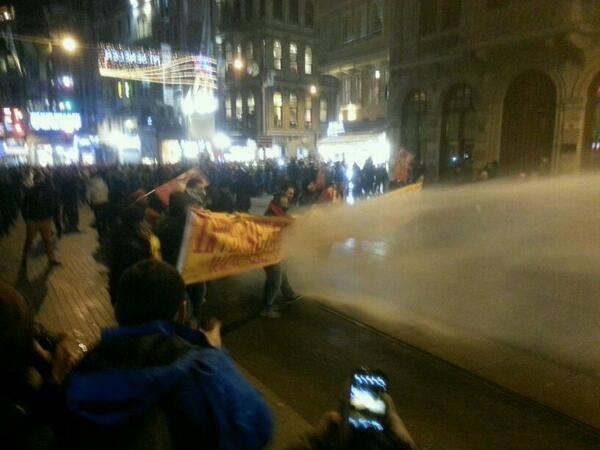
Police used water cannon and fired teargas to disperse hundreds of protesters that gathered in Istanbul’s central Taksim Square on Saturday for a rally calling against a bill that would tighten government control over the Internet.
Protesters ran to the side streets to escape the water cannons and teargas that police used on the peaceful demonstration.
Smaller rallies have been held around Turkey including the capital Ankara and coastal city of Izmir.
In Ankara about 300 protesters gathered chanting slogans opposing the government and the internet bill, calling the Turkish prime minister ‘a dictator.’
Activists have called for protests against the law further limiting the use of the Internet and social media. The campaign is circulating the internet with the hashtag #sansüredurde (#StopInternetCensorshipinTurkey).
The bill that includes the controversial law was adopted on Thursday. It gives the courts power to remove material that “violates individual rights” from the internet. People will be able to apply to the state Telecommunications Directorate (TIB) as well as the courts to block any websites.
Under the new law 26 government officials in Turkey can also block access to information online by a personal decree. These include the Prime Minister Recep Tayyip Erdoğan, his cabinet and other officials.
Critics argued that the law will enhance monitoring internet user’s activities and will allow officials to limit keywords, local Hurriyet daily reported. The newspaper added that the head of TİB will now be given enough authority to directly limit access, pending a court ruling.
Related article
Cantor Tied to Controversial Rabbi at Center of Probe


By Richard Edmondson | Fig Trees and Vineyards | January 17, 2014
Yesterday I posted an article on the FBI investigation of New York Congressman Michael Grimm in connection with campaign donations to his 2010 campaign made by supporters of Israeli Rabbi Yoshiyahu Pinto. If you haven’t read the article, it’s here.
Pinto is listed as one of the richest rabbis in Israel (he is rabbi to some of the world’s wealthiest oligarchs), and in the article I speculated on whether other supporters of Israel now serving in congress may have received donations from the same source.
Well, a news article posted in 2012 would seem to indicate that there are, and that one of them is Eric Cantor, one of the most powerful members of Congress, and a staunch supporter of the Jewish state (Cantor is himself Jewish). The article in question is posted at Al-Monitor. Here is an excerpt.
Indeed, detailed examination of federal campaign filings by Al-Monitor indicate that the top seven donors to Cantor’s 2008 campaign are followers or associates of Rabbi Pinto. Together, the group of close Rabbi Pinto associates that made up Cantor’s seven top donors in 2008 gave about $330,000 to the Virginia Republican–almost 10% of the $3.9 million total Cantor raised for the 2008 race. None of them are from Virginia, and some had not previously given to US political campaigns.
Josef Ben Moha of New Jersey donated $48,100 to Cantor’s Victory Fund on April 11, 2008 — his only campaign donation in US records. Moha is listed as managing director of Livono (or Livorno) Partners, whose CEO Ben Zion Suky also donated $48,100 to Cantor on the same date. Suky serves as the “right-hand man … translator, gatekeeper and conduit to the outside world” for Pinto, the Forward reported last year. He also owns property with Rabbi Pinto’s wife, as well as a porn DVD distribution business.
Haim Milo Revah, a real estate developer from California who has credited Pinto with offering successful business advice, donated $48,100 to Cantor on April 21, 2008, records show.
Real estate broker Haim Binstock, and his wife his wife, Gallya Binstock, together donated $91,600 to Cantor’s campaign on Oct. 31, 2008. Binstock’s business partner Ilan Bracha, and his wife, Mati Bracha, also donated $91,600 to Cantor’s campaign on the same date, campaign filings show. In 2008, Binstock and Bracha Manhattan property they planned to donate for use as a synagogue for Rabbi Pinto, they told The Wall Street Journal last year.
More recently, George Klein, described by The New York Times as a longtime Republican power broker who attends Pinto’s Shuva Israel congregation at 155 E. 58th St. in Manhattan, donated $50,000 to Cantor’s Victory Fund on Oct. 18, 2011, campaign filings show. Klein, who has donated to several other Republican candidates in smaller amounts, is also a member, with Cantor, of the Republican Jewish Coalition.
As I noted in yesterday’s article, Grimm is reportedly a close confidante of Israeli Prime Minister Benjamin Netanyahu, and the Israeli police seem to be trying to deliberately sabotage the FBI’s investigation of him.
The FBI is hoping to have Pinto testify against Grimm, but the rabbi has been charged in Israel with bribing a police official, a development which would compromise his credibility as a witness–presumably against Grimm or any other member of Congress who may have broken the law. A wiretap reportedly in the possession of the FBI has Israeli police threatening Pinto.
The case has been written about extensively by blogger Richard Silverstein, who has reported that among the allegations are that donors to Grimm’s 2010 campaign were promised green cards in return for their support (campaign contributions by non-citizens are illegal) and also that some of the donations exceeded the legal limit.
“There is no evidence of any impropriety in Cantor’s contacts with Rabbi Pinto,” notes the 2012 Al-Monitor report.
Related article

UK police watchdog apologetic about Duggan case
Press TV – January 18, 2014
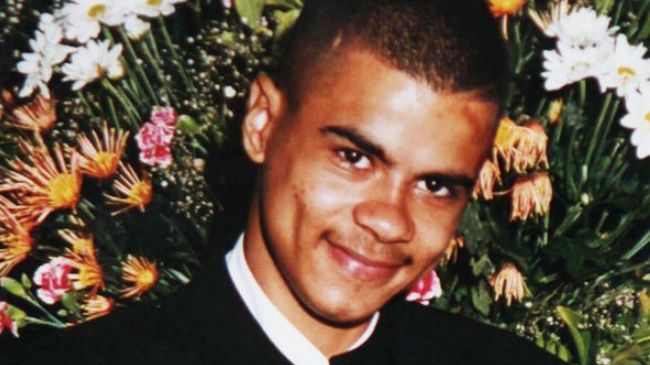
Britain’s Independent Police Complaints Commission (IPCC) has offered an apology to the family of Mark Duggan for “wrongly” telling the media that the black man opened fire at police before he was fatally shot in 2011.
On Friday, deputy chairwoman of the IPCC Rachel Cerfontyne stated that the non-departmental public body is following “a number of significant lines of inquiry” surrounding the death of the 29-year-old.
An inquest jury ruled last week that Tottenham police in northern London lawfully gunned down Duggan on August 4, 2011.
Duggan’s death triggered the massive 2011 summer unrest across England. It was the worst social unrest Britain faced in a generation, unleashing street protests, fighting with the police and arson attacks.
“We know that the family’s confidence in us and our investigation was damaged by mistakes made in the early stages – both in relation to inaccurate information we provided to the media, and the initial management of the incident,” Cerfontyne said.
She added, “I would like again to record my sincere apology to them that on the evening that Mark was fatally shot by a police officer, a member of our staff wrongly led the media to believe that he had fired at police officers. I fully understand the damaging impact of this.”
Cerfontyne further noted that the IPCC is trying to interview key witnesses who have either declined to speak or have given conflicting accounts.
“Having assessed the evidence at inquest, there are initially a number of significant lines of inquiry which we are pursuing. These include following up concerns about the way the police responded to intelligence and seeking to interview some key witnesses who have so far declined to speak to or be interviewed by us or whose accounts are inconsistent with other evidence,” she said.
“We expect police officers to cooperate fully with us if required, including answering questions at interview, something they have so far refused to do,” the IPCC deputy chairwoman pointed out.
Featured Video
Pax Judaica Explained | Prof. David Miller
or go to
Aletho News Archives – Video-Images
From the Archives
History and Biblical Scholarship: Al-Quds Is Not Jerusalem
By Dr. Elias Akleh | Global Research | July 3, 2018
The Zionist Israeli state calls on the Old Testament/Torah as a historical document to prove its legality to “re-claim” Palestine; their god’s promised land. To assert this legality and the myth of the promised land Zionist Organization, since its establishment, had recruited the science of archaeology, employing western Christian biblical archaeologists, to provide the required “historic” proof of the right of the Jews; alleged modern Israelites, to Palestine. This became very critical after Julius Wellhausen; the biblical scholar and Professor Ordinarius of Theology and head of the German School of Biblical Criticism, published his 1883 book “Geschichte Israels”, later titled as “Prolegomena zur Geschichte Israels” claiming that the Old Testament/Torah stories were invented during the Babylonian exile to serve certain theological and political purposes.
American biblical scholars and archaeologists, such as William Fox Albright, were recruited to refute Wellhausen’s claims. Albright was endorsed by covertly Zionist financed Biblical Colloquium; a scholarly society devoted to the analysis and discussions of biblical matters, and the preparations, publication, and distribution of biblical literature to brainwash readers and students with a specific theological ideology. Albright, as well as other biblical archaeologists like him, was also honored (bribed) by the American Friends of the Israel Exploration Society. His writings; such as “Why the Near East Needs the Jews”, are flagrant racist Zionist propaganda ignoring the vast archaeological history of the indigenous Palestinians while emphasizing the fake unproven Israelites’ narrative in Palestine. … continue
Blog Roll
 Aletho News
- Your Enslavement Begins in Gaza: The ‘Board of Peace’
- Israeli FOIA Data Reveals Massive Heart Injury Spike in Children Immediately After mRNA Shot Rollout
- What is Zionism? And what is anti-Zionism?
- Hungary’s Blocking of EU Loan to Ukraine May Jeopardize IMF Funding – Reports
- Pax Judaica Explained | Prof. David Miller
- Was MAHA Too Good to Last in the Trump Administration?
- Vermont advances bill letting unelected Health Commissioner decide which vaccines ctizens should receive
- Why the US-Israeli alliance will lose against Iran
- US envoy Huckabee claims Israel has ‘biblical right’ to conquer all West Asia
- Testing the Alliance: Netanyahu’s Washington Visit
- If Americans Knew
- Palestinian church leaders admonish Christian Zionist Mike Huckabee – Not a ceasefire Day 135
- Ominous messaging from Trump’s “Board of Peace” – Not a ceasefire Day 134
- ‘Christians Out’: Jerusalem Church Tagged With Hate Graffiti, Police Investigating
- Israeli Settlers Kill American Teen
- ‘We returned from hell’: Palestinian journalists recount torture in Israeli prisons
- No mercy for Gaza in Ramadan – Not a ceasefire Day 133
- The Israeli Government Installed and Maintained Security System at Epstein Apartment
- Tucker Carlson interrogated in Israel, has passport seized after interviewing US ambassador
- 6,000 Amputees in Gaza Face Impossible Recovery amid Israeli War Ultimatum
- The Lancet: Gaza death toll far higher than reported – Not a ceasefire Day 132
- No Tricks Zone
- Germany: Electric Car Catches Fire At Charging Station, Sets Off Local “Inferno”, Widespread Damage
- New Study: Canada’s New Brunswick Was 1°C Warmer Than Today During The Medieval Warm Period
- Coal Power Back In Trend As Globe Tries To Keep Pace With Growing Demand For Power
- New Study: A 4°C Warmer Beaufort Sea Had ‘No Sea Ice’ 11,700 – 8200 Years Ago
- Unfudging The Data: Dutch Meteorological Institute Reinstates Early 20th Centruy Heat Waves It Had Erased Earlier
- German Gas Crisis…Chancellor Merz Allegedly Bans Gas Debate Ahead of Elections!
- Pollen Reconstructions Show The Last Glacial’s Warming Events Were Global, 10x Greater Than Modern
- Germany’s Natural Gas Storage Level Dwindles To Just 28%… Increasingly Critical
- New Study Rebuts The Assumption That Anthropogenic CO2 Molecules Have ‘Special’ Properties
- Climate Scientist Who Predicted End Of “Heavy Frost And Snow” Now Refuses Media Inquiries
 Aletho News