GCHQ Oversight Tribunal Has To Ask GCHQ’s Permission To Reveal GCHQ’s Wrongdoing
By Glyn Moody | Techdirt | March 7, 2014
One of the key themes to emerge in the debate about surveillance is the oversight of the agencies involved, and to what extent it is effective. In the US, that has been put into stark relief by news that the committee that is supposed to keep an eye on the spies was itself spied upon. And now over in the UK, we learn that things are just as bad when it comes to the equivalent oversight body, the Investigatory Powers Tribunal (IPT). Its powers sound impressive:
The Tribunal can investigate complaints about any alleged conduct by, or on behalf of, the Intelligence Services – the Security Service (sometimes called MI5), the Secret Intelligence Service (sometimes called MI6) and GCHQ (Government Communications Headquarters).
The scope of conduct the IPT can investigate concerning the Intelligence Agencies is much broader than it is with regard to the other public authorities. The IPT is the only Tribunal to whom complaints about the Intelligence Services can be directed
Unfortunately, the IPT’s credibility as the public’s watchdog for the intelligence services has just been seriously undermined by the following information published by The Guardian :
A controversial court that claims to be completely independent of the British government is secretly operating from a base within the Home Office, the Guardian has learned.
The Investigatory Powers Tribunal, which investigates complaints about the country’s intelligence agencies, is also funded by the Home Office, and its staff includes at least one person believed to be a Home Office official previously engaged in intelligence-related work.
It gets worse:
the IPT will not say whether GCHQ had disclosed the existence of its bulk surveillance operations, which attempt to capture the digital communications of everybody — including those people who complain to the tribunal.
Nor will it disclose whether it has issued any secret ruling on the lawfulness of those operations, on the grounds that the rules under which it operates stipulate that it cannot do so without the permission of GCHQ itself. It has not sought that permission on grounds it knows it would not be given.
So the body tasked with overseeing GCHQ has to get GCHQ’s permission before it can reveal any wrongdoing by GCHQ, which it doesn’t bother doing when it knows it would be refused. Isn’t oversight a wonderful thing? Follow me @glynmoody on Twitter or identi.ca, and +glynmoody on Google+

Nukes Now
Obama Worse Than Reagan
By Steve Breyman | CounterPunch | March 6, 2014
Heads-up, veterans of the nuclear freeze movement in the US, the anti-Euromissile campaigns in Western Europe, and the various anti-nuclear weapons efforts in New Zealand, Australia and Japan. Incoming.
We spent much of the eighties resisting Ronald Reagan’s new Cold War, and his new nuclear weapons of all shapes and sizes. We pushed back against his giant ‘defense’ budgets and countered his harrowing rhetoric. We knew Star Wars was a scam, and the MX missile a danger. We grimaced at his appointments to key policymaking positions, and scoffed at his insincere arms control efforts.
In the end, we prevailed (after a sort). We get much of the credit for preventing planetary incineration that seemed frighteningly close at the time (Gorbachev deserves some too). Professional activists, Plowshares heroes, and a handful of stalwart others stayed in the anti-nuclear weapons movement trenches. Although nukes were not abolished with the end of the Cold War, most of the rest of us nonetheless moved on to fight other evils, and to work on one or more better world construction projects.
It’s time to return. President Obama released his FY 2015 budget on Tuesday, March 4. Ready for this? It asks for considerably more money (in constant dollars) for nuclear weapons maintenance, design and production than Reagan spent in 1985, the historical peak of spending on nukes: $8.608 billion dollars, not counting administrative costs (see graph below). The Los Alamos Study Group crunched the numbers for us.

Next year’s request tops this year’s by 7%. Should the President’s new Opportunity, Growth and Security Initiative be approved, yet $504 million more would be available for warhead spending. The OGSI is $56 billion over and above the spending agreed to in the December 2013 two-year budget (unlikely to pass given that it’s an election year, would be paid for by increased taxes on the retirement funds of the rich, and reduced spending in politically dicey areas like crop insurance).
Increased lucre for the nuclear weapons complex maintains Obama’s inconsistency on the Bomb. He wrote his senior thesis at Columbia on the arms race and the nuclear freeze campaign. Two months after his first inauguration, he uttered these words in Prague: “So today, I state clearly and with conviction America’s commitment to seek the peace and security of a world without nuclear weapons.”
The Pentagon’s 2010 Nuclear Posture Review promised to avoid “new military missions or . . . new military capabilities” for nuclear weapons (don’t laugh, you’d be surprised how imaginative those guys can be). 2011 was even better: Obama signed the New START Treaty. It limits the number of operationally deployed nuclear warheads to 1550, a 30% decrease from the previous START Treaty, signed in 2002. New START also lowered limits on the number of launch platforms — ICBMs, ballistic missile launching subs, and nuke-equipped bombers.
At the same time, his State Department refuses—under first Hilary Clinton and now John Kerry—to present the Comprehensive Test Ban Treaty to the Senate for ratification out of timidity over expected resistance (never mind that the US has essentially figured out ways to circumvent the Treaty’s spirit if not letter; the CTB was once the ‘holy grail’ for arms control and disarmament advoates).
That same State Department refrains—under both Hilary Clinton and John Kerry—from getting tough with Pakistan over its years-long obstruction of United Nations-sponsored negotiations over a global ban on the stuff needed to make bombs. (Pakistan is the country building them faster than any other; how about: ‘we’ll ground the killer drones in exchange for a fissile material cut-off?’). And Obama now wants to outspend Reagan on nuclear weapons maintenance, design and production.
Winding down nuclear weapons spending, and eventually abolishing the things (for which no negotiations are underway) has been the right thing to do since the first bomb exploded in the New Mexico desert in 1945. State Department support for the coup in Ukraine and the resultant saber rattling (echoes of August 1914?) make it as urgent as ever.
Steve Breyman was 2011-12 William C. Foster Visiting Scholar Fellow in the Euro-Atlantic Security Affairs Office of the Bureau of Arms Control, Verification and Compliance at the US Department of State where he worked fruitlessly on reforming nuclear weapons policy.
Hillary Clinton: Playing a Dog-Eared “Hitler” Card

By Norman Solomon | War is a Crime | March 7, 2014
The frontrunner to become the next president of the United States is playing an old and dangerous political game — comparing a foreign leader to Adolf Hitler.
At a private charity event on Tuesday, in comments preserved on audio, Hillary Clinton talked about actions by Russia’s President Vladimir Putin in the Crimea. “Now if this sounds familiar, it’s what Hitler did back in the ’30s,” she said.
The next day, Clinton gave the inflammatory story more oxygen when speaking at UCLA. She “largely stood by the remarks,” the Washington Post reported. Clinton “said she was merely noting parallels between Putin’s claim that he was protecting Russian-speaking minorities in Crimea and Hitler’s moves into Poland, Czechoslovakia and other parts of Europe to protect German minorities.”
Clinton denied that she was comparing Putin with Hitler even while she persisted in comparing Putin with Hitler. “I just want people to have a little historic perspective,” she said. “I’m not making a comparison certainly, but I am recommending that we perhaps can learn from this tactic that has been used before.”
Yes indeed. Let’s learn from this tactic that has been used before — the tactic of comparing overseas adversaries to Hitler. Such comparisons by U.S. political leaders have a long history of fueling momentum for war.
“Surrender in Vietnam” would not bring peace, President Lyndon Johnson said at a news conference on July 28, 1965 as he tried to justify escalating the war, “because we learned from Hitler at Munich that success only feeds the appetite of aggression.”
After Ho Chi Minh was gone, the Hitler analogy went to other leaders of countries in U.S. crosshairs. The tag was also useful when attached to governments facing U.S.-backed armies.
Three decades ago, while Washington funded the contra forces in Nicaragua, absurd efforts to smear the elected left-wing Sandinistas knew no rhetorical bounds. Secretary of State George Shultz said on February 15, 1984, at a speech in Boston: “I’ve had good friends who experienced Germany in the 1930s go there and come back and say, ‘I’ve visited many communist countries, but Nicaragua doesn’t feel like that. It feels like Nazi Germany.’”
Washington embraced Panama’s Gen. Manuel Noriega as an ally, and for a while he was a CIA collaborator. But there was a falling out, and tension spiked in the summer of 1989. Deputy Secretary of State Lawrence Eagleburger said that drug trafficking by Noriega “is aggression as surely as Adolf Hitler’s invasion of Poland 50 years ago was aggression.” A U.S. invasion overthrew Noriega in December 1989.
In early August 1990, the sudden Iraqi invasion of Kuwait abruptly ended cordial relations between Washington and Baghdad. The two governments had a history of close cooperation during the 1980s. But President George H. W. Bush proclaimed that Saddam Hussein was “a little Hitler.” In January 1991, the U.S. government launched the Gulf War.
Near the end of the decade, Hillary Clinton got a close look at how useful it can be to conflate a foreign leader with Hitler, as President Bill Clinton and top aides repeatedly drew the parallel against Serbia’s president, Slobodan Milosevic. In late March 1999, the day before the bombing of Kosovo and Serbia began, President Clinton said in a speech: “And so I want to talk to you about Kosovo today but just remember this — it’s about our values. What if someone had listened to Winston Churchill and stood up to Adolf Hitler earlier?”
As the U.S.-led NATO bombing intensified, so did efforts to justify it with references to Hitler. “Clinton and his senior advisers harked repeatedly back to images of World War II and Nazism to give moral weight to the bombing,” the Washington Post reported. Vice President Al Gore chimed in for the war chorus, calling Milosevic “one of these junior-league Hitler types.”
Just a few years later, the George W. Bush administration cranked up a revival of Saddam-Hitler comparisons. They became commonplace.
Five months before the invasion of Iraq, it was nothing extraordinary when a leading congressional Democrat pulled out all the stops. “Had Hitler’s regime been taken out in a timely fashion,” said Rep. Tom Lantos, “the 51 million innocent people who lost their lives during the Second World War would have been able to finish their normal life cycles. Mr. Chairman, if we appease Saddam Hussein, we will stand humiliated before both humanity and history.”
From the Vietnam War to the Iraq War, facile and wildly inaccurate comparisons between foreign adversaries and Adolf Hitler have served the interests of politicians hell-bent on propelling the United States into war. Often, those politicians succeeded. The carnage and the endless suffering have been vast.
Now, Hillary Clinton is ratcheting up her own Hitler analogies. She knows as well as anyone the power they can generate for demonizing a targeted leader.
With the largest nuclear arsenals on the planet, the United States and Russia have the entire world on a horrific knife’s edge. Nuclear saber-rattling is implicit in what the prospective President Hillary Clinton has done in recent days, going out of her way to tar Russia’s president with a Hitler brush. Her eagerness to heighten tensions with Russia indicates that she is willing to risk war — and even nuclear holocaust — for the benefit of her political ambitions.
Forgetting His Own History: William Hague Once Understood How Not to Handle a Black Sea Crisis
By Mark Almond | CroixBlog | March 6, 2014
“All the assumptions on which… this policy [was]
based turned out to be wrong…. British domestic
opinion would prove hard to persuade that seeking
the return… of a fortress on the Black Sea merited
the risk of a war with Russia.”
William Hague on the Anglo-Russian Crisis (1791)[1]
Oxford historian, Mark Almond, recalls the lessons from history once taught by Foreign Secretary, William Hague, in his study of Pitt the Younger’s mishandling of what he called the “Ochakov fiasco” in 1791.
The current imbroglio over Crimea may be America’s first crisis with Russia in the Black Sea, but it is not Britain’s. Even the Crimean War (1854-56) was not Britain’s first face-off with Russia. More than two hundred years ago as the French Revolution convulsed Western Europe (rather as the Arab Spring has sent shock waves across the Mediterranean), Catherine the Great expanded her hold on the Black Sea coast by seizing Ochakov, not far from the new city of Odessa. Under the supervision of the exiled French Duc de Richelieu who acted as governor, the Tsarina’s architects would soon erect as a naval base to match Sebastopol across the Black Sea in the Crimea which she had already annexed in 1783.
With her major rival, France, apparently rendered impotent by revolution since 1789, William Pitt’s Britain seemed the only superpower – at least to itself. Whitehall was as convinced in 1791 as the White House seems to be today that a combination of global reach via the Royal Navy with the City of London’s financial hegemony would both cause the Tsarina to back off and the other European states to fall into line behind Britain’s demand that Russia retreat from its southern Ukrainian conquests from the waning Ottoman Empire.
Convinced of that the West could cow the East with its combination of advanced military technology and commercial wealth even in a theatre so far from its sources of power and so close to Catherine’s, William Pitt turned the Ochakov issue into a first-rate crisis by demanding Russia withdraw or else.
But when push came to shove, the British government’s assumption that everyone in Europe would fall into line behind its bellicose approach proved as illusory as the sanctions-first strategy-later approach of David Cameron’s government today. The echoes of today’s crisis are obvious – except it seems to the author of an excellent biography of the Younger Pitt described as a “fiasco”.
Britain’s Foreign Secretary, William Hague, set out a succinct account of Britain’s over-reach in 1791 back in 2002 when he was in the political wilderness. His diplomacy, albeit as the junior partner of the USA, suggests that he has forgotten everything about what lessons might be derived from Whitehall’s past performance in the great game for influence in the Black Sea region.
The EU summit in Brussels on 6th March, 2014, should have had painful echoes of Pitt’s brutal learning curve in 1791. Don’t trust the private assurances of “allies” that they will cut off their noses to spite Russia’s face, nor believe over-optimistic British diplomats telling you that everyone is on board and the Russians are too militarily weak and economically backward to face up to a Western challenge in their own backyard.
Looking back two centuries later, Hague described how the Old Etonian prime minister of the day presumed that his European partners would fall into line behind London’s publicly-proclaimed policy to sanction Russia for its occupation of Ukraine’s Black Sea coast. But Europe’s capitals were far from firmly resolved to incur Catherine the Great’s wrath:
“While Prussia joined in pressing the British demands, the Dutch were unwilling to risk a war, the Swedes demanded a subsidy, the Spanish were not prepared to help and the Austrians became markedly less cooperative and were actually playing a double game with the Russians.”
Pitt’s majority in the House of Commons sank because he could not persuade MPs why they should risk a war “for a faraway fortress of which they had never before heard.” Because the Russians had not harmed a hair on a British head in 1791, public opinion like Parliament could not get its mind around the need for military threats. Pitt complained that emotions were not running high enough to overrun his MPs scepticism about war in the Black Sea. Raison d’état did not cut much ice in Britain: “They can be embarked in a war from motives of passion, but they cannot be made to comprehend a case in which the most valuable interests of the country are at stake.” Maybe, but the mercantilist elite which provided so many MPs then had a very good understanding of self-interest and could be ruthless about asserting Britain’s interests when they made pounds-and-pence sense. What they could not be won over to was a war for alleged strategic interests well beyond their commercial reach and in fact against a major trading partner like Russia.
Rather as phone intercepts have embarrassed Victoria Nuland – “F*ck the EU” – and Catherine Ashton over the apparently pro-opposition “snipers” in Kiev, so in 1791 the Russian acquisition of British establishment inside information from Robert Adair, an ally of Pitt’s bête-noire Charles James Fox, revealed to Catherine II’s government that – surprise, surprise – the British had been making contradictory promises to Austria and Turkey to keep them both on board – so both drifted away from London on the news.
Pitt had to back down, but, in a lesson for the blundering Bullingdon Club bully[2] in 10 Downing Street today, a colleague noted, “He hoped means might be found to manage matters so as not to have the appearance of giving up the point.”[3]
Diplomacy is often best when it provides a smokescreen for a retreating from a foolish policy. Maybe if William Hague could act like his hero Pitt, he could persuade the White House to declare Vladimir Putin’s permission of a referendum on the future of Crimea to be a triumph of Western ideals to spread democracy and so a sign of Russia’s climb-down! But don’t expect too much: Hague like his American patrons has approached real-time crises with an open mouth, so thinking first before shooting the West in the foot would require reflecting on his own experience as well as remembering the history which appears under his name.
[1] See William Hague, William Pitt the Younger (Harper Perennial: London, 2005), 285.
[2] Cameron’s main unilateral sanction has been to kick away the UK government’s crutch from our para-olympians going to Sochi for the Winter Games this weekend.
[3] Quoted in Hague, William Pitt, 287.
Related article

Washington’s Hysteria Towards Russia Hides US Regime Change
By Finian Cunningham | Strategic Culture Foundation | March 6, 2014
Legally, Washington and its European allies haven’t a leg to stand on. Both can be rightly accused of violating international law from their gross interference in Ukrainian sovereign affairs – from the instigation of violent street protests that led to the sacking of an elected president and government, to the subsequent climate of lawlessness and fear sweeping across Ukraine and felt in particular by the majority Russian ethnic population in the east and south of the country.
The latest revelations that killings in Kiev’s Maidan Square among protesters and police were covertly carried out by snipers working for the Western-backed agitators are further proof that a coup d’état was orchestrated. A leaked phone call between EU foreign affairs chief Catherine Ashton and Estonian foreign minister, Urmas Paet, dated February 25, indicates that snipers were used as provocateurs during the demonstrations, with the intention of heightening violence and blaming it on the government of President Viktor Yanukovych.
In the phone call, reported by Russia Today, Paet is heard to say: «There is now stronger and stronger understanding that behind the snipers, it was not Yanukovych, but it was somebody from the new [Western-backed] coalition».
Ashton replied: «I think we do want to investigate. I mean, I didn’t pick that up, that’s interesting. Gosh».
The evidence for Western-sponsored subversion in Ukraine is so glaring – from the parade of American and European politicians over the past four months whipping up protesters in Kiev, to documented infiltration of civic organizations by the CIA, USAID, National Endowment for Democracy, Freedom House, the Adenauer Foundation, among others, to their own words of admission from the likes of State Department official Victoria Nuland on the desired formation of a new governing administration in Kiev – that in order to distract from this mountain of damning evidence, the Western governments and their servile media are trying to shift the terrain of discourse away from the panoramic obvious.
The latest revelation of snipers used as provocateurs adds a new sinister twist.
However, against all the evidence, it is not the West that is in violation over Ukraine; it is Russia – so they claim.
More than this, the Western leaders and media have gone into hysterical mode, accusing Russia of «brazen aggression» and «bringing the region to the brink of war». Ironically, given the astounding denial of reality by the West, it is now turning around and accusing Russia of peddling propaganda over recent events in Ukraine. One France 24 headline read: «The fanciful claims of Russian propaganda».
Never mind fanciful claims, how about just some hard facts – facts that Western media are in abject denial of?
Apart from the above litany of outrageous Western interference in Ukrainian politics, the fact is that President Viktor Yanukovych was ousted in a violent putsch at the end of last month.
Yanukovych was elected in 2010; and in a constitutional democracy his removal from office requires a vote by the electorate, not the diktats of a bunch of gun-wielding paramilitaries. We may not have liked Yanukovych’s alleged authoritarian style of governance or accusations of cronyism, but the only legal way to correct that would have been for an orderly constitutional process of elections or some other form of due process.
Yanukovych signed a national unity deal with political opponents on February 21, which European Union ministers had been involved in brokering. But his opponents immediately trashed the deal with threats of violence unless Yanukovych stood down.
Russian President Vladimir Putin is therefore correct when he told a press conference this week that what has happened in Kiev is «an unconstitutional coup» and «an armed seizure of power».
Legally speaking, and even under the terms of the EU-brokered national unity accord signed on February 21, Viktor Yanukovych is still the lawful president of Ukraine. When Yanukovych subsequently sent a formal letter to Putin requesting military assistance in the light of unconstitutional and violent upheaval, the Russian Federation had a legal and moral mandate to enter into Ukrainian territory.
The differing responses to the February 21 «event» are instructive. Both Washington and Brussels immediately recognized the new office holders in Kiev as the «legitimate government» of Ukraine with its self-declared president Oleksandr Torchynov and prime minister Arseniy Yatsenyuk. The new cabinet, comprising members of the fascist Svoboda party who had been previously waging street war, was also conferred with official Western recognition. The Western media have since gone on to use euphemisms like Kiev’s «fledgling government».
A more accurate definition of the new administration in Kiev is an unelected, self-imposed junta. But the violent, unconstitutional means of taking political power has not stopped British foreign secretary William Hague coming to Kiev this week, followed by US secretary of state John Kerry, to shake hands with the junta. Brussels also invited the mob rulers in Kiev to a ministerial summit this week.
By contrast, Russia is calling for a return to the national unity deal signed on February 21 – a deal which recognizes Yanukovych as the president in office until mutually agreed constitutional reforms are worked out and mandated by the entire electorate of Ukraine – as the legal starting point for any future political settlement. This is the most reasonable and constitutionally legal way forward. Let the people decide whom they want in government by voting, that is by democracy, which, pointedly, Western leaders do not seem able or willing to countenance. The latter prefer imposing governance by force according to their diktat because the real agenda is the economic pillaging of Ukraine by Western capital, an outcome that the Ukrainian people would not vote for if they truly had a democratic choice in the matter.
Given the self-publicized threats of aggression towards ethnic Russians in Ukraine and other perceived political opponents issued by Svoboda and its Right Sector paramilitaries, together with documented acts of recent violence in Kiev, it is was eminently legal and appropriate that Moscow embarked on defensive security measures in Ukraine. Securing military bases and a majority Russian-speaking population in the autonomous southern republic of Crimea this week – at the written requests of President Yanukovych and the Crimean regional prime minister Sergei Aksyonov, as well as under the legal terms of a long-standing bilateral agreement with Ukraine – all that gives Moscow an irrefutable mandate to do so.
Yet, with frothing hysteria, the Western governments and their media have turned reality upside down. There is not a mention of the unlawful Western interference and subversion in the Ukraine or of its hand-in-fist association with neo-Nazi street mobs in executing a violent putsch in Kiev. US ambassador to the United Nations Samantha Power brazenly denied reality earlier this week when she accused Moscow of citing «imaginary threats» in Ukraine. The bitter irony of that is that Samantha Power is one of the cheerleaders for the so-called «responsibility to protect» which has given her country the fictitious cover to illegally intervene and militarily overthrow governments in former Yugoslavia, Iraq, Libya and anywhere else the US deems desirable for regime change.
In a feat of sheer doublethink, the West has accused Russia of «illegal invasion» in Ukraine and of using «pretexts for acts of aggression». This hysterical rhetoric is being used to cover up the West’s own glaring transgressions in Ukraine and to shift the blame for the turmoil.
Unabashed by its unequivocal involvement in engineering regime change in Ukraine, American and European leaders are demanding that Russia withdraw troops from Crimea or face sanctions. Washington’s top diplomat John Kerry said the US would isolate Russia «economically, politically and diplomatically» if it did not reverse security measures, or as Kerry put it «aggression».
Meanwhile, there is not a scintilla of indication that the Americans and Europeans have any intention of reversing their unlawful interference in Ukraine. Far from it, Kerry on his visit to the junta in Kiev this week said that the US was offering $1 billion in loan guarantees. The New York Times explained: «The purpose of the loan guarantees is to support Ukraine’s efforts to integrate with the West».
European Union ministers this week somehow found reserves of €11 billion for the new «Western friendly» administration in Kiev – against the backdrop of millions of EU citizens suffering from unemployment and deprivation. The International Monetary Fund is also drawing up a lure (loan) of $2 billion.
With pro-Western, pro-capitalist Yatsenyuk now at the helm in Kiev (as Nuland prescribed), Ukraine is being steered inexorably into debt bondage by the West. This bondage, facilitated by an unelected junta, will entail an austerity assault on Ukrainian workers, beginning with swingeing cuts in public spending, wages and subsidies on fuel. It will also lead to privatization of Ukrainian oil and gas industries and the full take over of other prodigious Ukrainian natural resources, such as its wheat agriculture, by Western capital. Yatsenyuk, who talks with pride about being willing to commit political suicide for the sake of pro-Western reforms, that is Western subjugation, is exactly the kind of ideologue the West want and need in Kiev, as Nuland duly recognized.
Interestingly, this week the new Ukrainian ambassador to Belarus, Mykhailo Yeshel, admitted in a media interview that loans (lures) from Washington were being offered on condition of the Ukraine permitting the deployment of American missile systems on its territory – right on the border with Russia.
The emerging picture is clear. Despite all the hysterical nonsense being spouted by Western leaders and their media propaganda machine, demanding Russia to «back off» from Ukraine, the Western regime-change operation in that country is not just being consolidated – it is being ramped up.
Lewis and Crok: Climate less sensitive to CO2 than models suggest
By Judith Curry | Climate Etc. | March 5, 2014
Nic Lewis and Marcel Crok have published a new report on climate sensitivity.
The title of the report is “A sensitive matter: How the IPCC buried evidence showing good news about global warming.” The report is published by the GWPF. The long version of the report is found [here]; a short version is found [here].
From the press release issued by the GWPF:
A new report published by the Global Warming Policy Foundation shows that the best observational evidence indicates our climate is considerably less sensitive to greenhouse gases than climate models are estimating.
The clues for this and the relevant scientific papers are all referred to in the recently published Fifth Assessment report (AR5) of the Intergovernmental Panel on Climate Change (IPCC). However, this important conclusion was not drawn in the full IPCC report – it is only mentioned as a possibility – and is ignored in the IPCC’s Summary for Policymakers (SPM).
For over thirty years climate scientists have presented a range for climate sensitivity (ECS) that has hardly changed. It was 1.5-4.5°C in 1979 and this range is still the same today in AR5. The new report suggests that the inclusion of recent evidence, reflected in AR5, justifies a lower observationally-based temperature range of 1.25–3.0°C, with a best estimate of 1.75°C, for a doubling of CO2. By contrast, the climate models used for projections in AR5 indicate a range of 2-4.5°C, with an average of 3.2°C.
This is one of the key findings of the new report Oversensitive: how the IPCC hid the good news on global warming, written by independent UK climate scientist Nic Lewis and Dutch science writer Marcel Crok. Lewis and Crok were both expert reviewers of the IPCC report, and Lewis was an author of two relevant papers cited in it.
In recent years it has become possible to make good empirical estimates of climate sensitivity from observational data such as temperature and ocean heat records. These estimates, published in leading scientific journals, point to climate sensitivity per doubling of CO2 most likely being under 2°C for long-term warming, with a best estimate of only 1.3-1.4°C for warming over a seventy year period.
“The observational evidence strongly suggest that climate models display too much sensitivity to carbon dioxide concentrations and in almost all cases exaggerate the likely path of global warming,” says Nic Lewis.
These lower, observationally-based estimates for both long-term climate sensitivity and the seventy-year response suggest that considerably less global warming and sea level rise is to be expected in the 21st century than most climate model projections currently imply.
“We estimate that on the IPCC’s second highest emissions scenario warming would still be around the international target of 2°C in 2081-2100,” Lewis says.
I was asked to review this article prior to publication, and then was subsequently asked to write the foreword. The text of my foreword:
The sensitivity of our climate to increasing concentrations of carbon dioxide is at the heart of the scientific debate on anthropogenic climate change, and also the public debate on the appropriate policy response to increasing carbon dioxide in the atmosphere. Climate sensitivity and estimates of its uncertainty are key inputs into the economic models that drive cost-benefit analyses and estimates of the social cost of carbon.
The complexity and nuances of the issue of climate sensitivity to increasing carbon dioxide are not easily discerned from reading the Summary for Policy Makers of the assessment reports undertaken by the Intergovernmental Panel on Climate Change (IPCC). Further, the more detailed discussion of climate sensitivity in the text of the fullWorking Group I reports lacks context or an explanation that is easily understood by anyone not actively reading the published literature.
This report by Nic Lewis andMarcel Crok addresses this gap between the IPCC assessments and the primary scientific literature, providing an overview of the different methods for estimating climate sensitivity and a historical perspective on IPCC’s assessments of climate sensitivity. The report also provides an independent assessment of the different methods for estimating climate sensitivity and a critique of the IPCC AR4 and AR5 assessments of climate sensitivity.
It emphasizes the point that evidence for low climate sensitivity is piling up. I find this report to be a useful contribution to scientific debate on this topic, as well as an important contribution to the public dialogue and debate on the subject of climate change policy.
I agreed to review this report and write this Foreword since I hold both authors of this report in high regard. I have followed with interest Nic Lewis’ emergence as an independent climate scientist and his success in publishing papers in major peer-reviewed journals on the topic of climate sensitivity, and I have endeavored to support and publicize his research. I have interacted with Marcel Crok over the years and appreciate his insightful analyses, most recently as a participant in climatedialogue.org.
The collaboration of these two authors in writing this report has resulted in a technically sound, well-organized and readily comprehensible report on the scientific issues surrounding climate sensitivity and the deliberations of the IPCC on this topic.
While writing this Foreword, I considered the very few options available for publishing a report such as this paper by Lewis and Crok. I am appreciative of the GWPF for publishing and publicizing this report. Public accountability of governmental and intergovernmental climate science and policy analysis is enhanced by independent assessments of their conclusions and arguments.
JC comments: I did think twice about writing a foreword for a GWPF publication. I try to stay away from organizations with political perspectives on global warming. That said, GWPF has done some commendable things, notably pushing for inquiries into the Climategate affair. And there really are very few options for publishing a report like this.
I think it is important to put forward alternative assessments of the key elements of the climate change debate — alternative to reports issued by the IPCC, the UK MetOffice, and the RS/NAS.
Related articles
Homeland Security Detained US Citizen Inside The US, Used Intercepted Emails To Quiz Her About Her Sex Life
By Mike Masnick | Techdirt | March 6, 2014
Just recently, we wrote about how the Department of Homeland Security’s (DHS) Customs and Border Patrol (CBP) has been increasingly detaining and harassing people at the border (or near the border) under highly questionable circumstances — and then refusing to comment on any of it. Instead, CBP has relied on a cloak of secrecy to live outside the law, acting out what we’ve come to expect from authoritarian police states. Recently, the ACLU filed a lawsuit on behalf of a woman, Christine Von Der Haar, who is a senior lecturer at Indiana University, after CBP detained her at the airport.
She was not entering or leaving the country. She was not even boarding a flight. She merely accompanied a friend to the airport so that he could retrieve some computer equipment that he had shipped separately a few days earlier. After detaining Von Der Haar, CBP officials, who clearly had access to some of the emails Von Der Haar and her friend had sent back and forth, quizzed her about her sex life and if she was planning to marry the friend.
CBP appeared to be concerned that the friend, a Greek national named Dimitris Papatheodoropoulos, was trying to stay in the country illegally. Von Der Haar had first met Papatheodoropoulos 40 years earlier while studying abroad, and the two had recently reconnected thanks to the internet. Papatheodoropoulos had obtained a B1/B2 business/leisure visa to the US which actually let him enter and leave the country for a period of 10 years. He came to the US for business, but while there also wished to visit Von Der Haar since they’d been catching up online.
After detaining and questioning Papatheodoropoulos for some time, CBP officials took Von Der Haar into another room and started asking questions specific to the emails between the two of them. According to the lawsuit:
Given that Mr. Papatheodoropoulos had retained his hard drive that contained the emails, the only way that the Customs and Border Protection Agents could have reviewed the emails is for someone to have surreptitiously monitored the communications between Dr. Von Der Haar and Mr. Papatheodoropoulos and reported those communications to the agents questioning her. Defendant Lieba admitted that employees of the United States had read email communications between Dr. Von Der Haar and Mr. Papatheodoropoulos.
This raises all sorts of serious questions. As the post at Papers Please (linked above) notes:
CBP officers grossly exceeded their jurisdiction. Dr. Dr. Von Der Haar’s US citizenship was never questioned; she wasn’t trying to enter, leave, or ship and goods in or out of the country; and she was never accused of any crime. In general, immigration (as distinct from customs) offenses are handled by Immigration and Customs Enforcement (ICE) and the Border Patrol, not CBP. We’re curious what basis CBP will claim for its officers’ authority to detain and interrogate Dr. Dr. Von Der Haar or obtain her email.
The post also wonders how or why CBP got access to those emails, wondering if they were shared by the NSA. There are, of course, other possible explanations as various investigations may have resulted in CBP getting access to the emails separately, but it still raises serious questions about under what authority those emails were obtained and why she was then quizzed about her sex life.
The claims that officials made about Papatheodoropoulos were equally questionable. Again, from the lawsuit:
Customs and Border Protection agents seized Mr. Papatheodoropoulos’ passport.
On June 8, 2012, Mr. Papatheodoropoulos was served with notice that a proceeding was initiated against him for removal from the United States. The notice stated, in relevant part:
You obtained your B1/B2 visa by misrepresenting your intentions to come to the United States to wit; It is your intention to immigrate to the United States, you abandoned your foreign residence, you intend to overstay your admission to the United States.
None of this was true.
Mr. Papatheodoropoulos consulted with lawyers and the Greek Consulate in Chicago and the removal action did not proceed.
His passport was returned to him and he left the United States at the end of August of 2012 and has not returned
The whole thing seems ridiculous yet again, and you can expect DHS to use its standard cloak of secrecy. I’m sure they’ll argue some sort of state secrets or national security claim to try to get the entire case thrown out.
Violence in Venezuela: The Myths Versus Facts
By Federico Fuentes | Green Left Weekly | March 5, 2014
Below, Australia Venezuela Solidarity Network activist Federico Fuentes, provides answers to common questions about recent events in Venezuela. Key facts are referenced, largely from media outlets that could not be identified as pro-government.
***
Is recent unrest in Venezuela due to government repression against peaceful protests?
No. This version of events, widely disseminated by the media, ignores the fact that security forces only acted after groups within the protests initiated violent actions. In the case of the first of the current round of protests that gained media attention, in Tachira on February 6, police only moved in after small groups of protesters attacked local governorship offices and home of the local governor.http://www.eluniversal.com/nacional-y-politica/140206/maduro-quieren-apl…
When protests took place in Merida the next day, security forces intervened only after armed protesters had carried out actions such as hijacking trucks carrying food and medicine.http://www.eluniversal.com/nacional-y-politica/140207/herido-estudiante-…
During protests in Caracas on February 12, which gained international media attention due to deaths on the day, there is clear evidence security forces only moved into action after a small group of protesters had them, destroyed the attorney-general’s office and burned five police trucks.http://www.elsoldemargarita.com.ve/posts/post/id:128117
None of this is to deny there were incidents of heavy-handed action by security forces, or to excuse the death of protesters. One fact the media has studious ignored is that 11 members of Venezuela’s security forces and three Bolivarian National Guard soldiers have been arrested and charged after evidence of wrongdoing.
In relation to the two deaths on February 12 (an opposition student and government supporter), eight SEBIN (intelligence) officers who violated strict orders to not confront protesters were arrested. The head of SEBIN has been replaced.http://www.ultimasnoticias.com.ve/noticias/actualidad/sucesos/ocho-funci…
The pattern is clear: small groups of protesters have consciously tried to incite violence and provoke security forces.
The pattern is all the more obvious when we look at the death toll.
As of March 5, there had been 19 deaths that could be directly attributed to the protests. Of these, three have been attributed to state security forces (including that of a government supporter). http://www.cepr.net/index.php/blogs/the-americas-blog/venezuela-who-are-…
In comparison, opposition protesters have shot death two National Guard soldiers and a brother of a national assembly deputy.
A further six have been killed as a result of the opposition road blockades (including two motorbike riders nearly decapitated by barbed wire strung across roadways by protesters).
At least 30 people have indirectly died due to the roadblocks blocking access to emergency medical treatment or other vital services.
It is important to recall that far-right opposition force have continuous used violence against pro-government supporters. In the wake of presidential elections in April last year, 11 people — all government supporters — were killed during days of violent protest. None received the media coverage we see today.
Are these protests in response to legitimate grievances?
Not even President Nicolas Maduro’s government denies Venezuela faces crucial challenges regarding crime and the economy. But it is clear these protests have been organised by right-wing forces who, unable to defeat socialist candidates in elections, are seeking to depose the government via violent means.
Just two months before the recent unrest began, pro-government candidates won 54% of the vote in nation-wide municipal elections recognised as legitimate by the opposition. http://www.americaeconomia.com/analisis-opinion/elecciones-municipales-e…
That is why key opposition leaders, such as Leopoldo Lopez from the Popular Will party, have said repeatedly that the only way to get rid of Maduro’s government is via the streets. http://www.eluniversal.com/nacional-y-politica/140124/dirigentes-invitan…
On February 2, four days before the student protests began in Tachira, Lopez and the opposition-aligned student federation president at the Central University of Venezuela held a public rally.
Lopez called for opposition supporters to take to the streets of Caracas on February 12, National Youth Day, by saying: “The problem is not just Maduro, it is the heads of all the public powers … all of the have to go”. http://www.laverdad.com/politica/45606-la-oposicion-retoma-las-calles-co…
With this in mind, student leaders aligned with Popular Will instigated protests on February 4 in Tachira. They provoked confrontations with police and used images of “repression” to build momentum for the February 12 rally.
Far from being spontaneous protests over social or economic issues, these protests represented a bid by opposition forces to by-pass the democratic process to bring down the elected government.
Who is Leopoldo Lopez?
Lopez is a former mayor of Chacao, a municipality that covers some of the wealthiest suburbs of Caracas and where most of the recent protests have taken place. As mayor, he actively supported the 2002 military coup that briefly ousted president Hugo Chavez and led the arrest of then-interior minister Ramon Rodriguez Chacin. http://www.npr.org/blogs/thetwo-way/2014/02/20/280207441/5-things-to-kno…
Lopez was found guilty of charges of corruption dating back to his time as an employee of the state oil company PDVSA, when he siphoned money towards starting up a new political party.
Despite this, it is clear Lopez and other opposition figures have received financial support from the US to help their campaign to get rid of first Chavez and now Maduro.
US embassy cables made public by WikiLeaks describe Lopez as “a divisive figure within the opposition … He is often described as arrogant, vindictive, and power-hungry …” http://www.cablegatesearch.net/cable.php?id=09CARACAS1408&q=leopoldo-lopez
Nevertheless, the cables reveal a concerted campaign by Washington to promote and maintain unity among opposition spokespeople, including Lopez. http://venezuelanalysis.com/analysis/10388
Embassy cables also reveal US government funding of opposition parties, including Lopez’s. Just this year, the US government earmarked a further US$5 million towards opposition groups. http://www.wikileaks.org/plusd/cables/04CARACAS2224_a.html
Does the Venezuela government control all the media?
No. More than 70% of the media in Venezuela is privately owned, with 25% being in community hands and only about 5% being controlled by the state. http://www.bbc.co.uk/news/world-latin-america-19368807
Moreover, 40% of households have cable TV — giving access to Fox and CNN en Espanol.
Almost all private media have shown bias towards the opposition. A study of the three main private TV stations conducted by the Carter Centre during the 2013 presidential elections, found they dedicated 79% of their election coverage to opposition candidate Capriles.https://www.cartercenter.org/news/pr/venezuela-070313.html
These same media outlets have ran constant coverage of the recent protests and statements made by opposition leaders.http://www.cepr.net/index.php/blogs/the-americas-blog/does-venezuelan-te…
There have been many cases of media outlets deliberately misreporting what is occurring in Venezuela. One example is the continued misrepresentation of media ownership in Venezuela. http://www.fair.org/blog/2014/02/27/nyt-corrects-venezuela-tv-falsehood/
The more brazen example is the continued claim by media outlets in Venezuela and internationally (such as El Universal and the New York Times , to give two examples) that a young man was killed as a result of police actions in Tachira.
http://www.eluniversal.com/nacional-y-politica/140228/fallecidos-durante…
http://www.nytimes.com/2014/02/25/world/americas/in-venezuela-middle-cla…
This is despite video evidence showing that he had fallen off a building. No correction has been issued by any of these outlets.http://venezuelanalysis.com/news/10410
But is the Maduro government a dictatorship? How is it possible to bring him down if not via street protests?
Maduro is democratically elected. The political movement he represents has won 17 out of 18 national elections since Chavez was first elected in 1998.
Despite some opposition claims, Venezuela’s electoral system has been described by former US president Jimmy Carter, whose Cater Center observes elections in many countries, as “the best in the world”. http://www.youtube.com/watch?v=fBwQ40TtCFA
Since October 2012 alone, Venezuelans have gone to the polls four times. Each time the election results have been verified by numerous international election observer teams.
Opposition forces claimed fraud after Maduro narrowly won elections last April, but no actual evidence of fraud was ever presented. A recount demonstrated the results were accurate. Moreover, opposition candidates made no complaints when the same voting system was used in the December municipal council elections.
What elections have repeatedly shown is that the “Chavista” movement remains the largest political force in the country.
It is precisely because the right-wing opposition has failed to win elections that they have turned towards violence, just as they did in 2002 with the failed coup against Chavez.
Protests to bring down an illegitimate government is one thing. Violent protests aimed at imposing a government against the will of the majority are another.
How serious is the economic crisis facing the country?
Few, least of all the Maduro government, deny Venezuela is facing some serious economic problems. However, they are nothing like what the private media portrays.
For example, despite problems with inflation and shortages, Venezuela registered a decline in its poverty rate (from 21.6% in 2012 to 19.6% last year) and unemployment rate (from 5.9% to 5.6%). http://www.ciudadccs.info/?p=521684
Last June, the UN Food and Agriculture Organization praised Venezuela for making great strides in lowering malnutrition. Venezuela’s daily rate of calories consumption per person is almost 60% above the FAO’s proposed minimum intake (3182 calories per day in Venezuela, as compared to 1800 calories). http://www.rlc.fao.org/es/paises/venezuela/noticias/venezuela-sera-recon…
Last year, inflation was a very high 56, compared with 23.4% average during the time of Chavez’s presidency (1999-2012). But inflation is not a new problem in Venezuela.
Media outlets have not noted that in the decade prior to Chavez’s elections, the average inflation rate was 52%, with peaks of 81% (1989) and 103% (1996). http://www.elmundo.com.ve/firmas/blagdimir-labrador/la-inflacion-en-vene…
These and many other figures indicate that the picture is far more complex than media portrayals suggest.
Rather than shed light on the situation, the media prefers to highlight selective facts and blame the government for problems. This enables the media to accomplish two things.
First, it conceals the real role that Venezuela’s rich elites are playing in provoking economic problems. In November last year, the Venezuelan government carried out an audit of thousands of private-owned stores and found almost all of them were involved in marking-up prices by 500%-10,000%.
Since then, the government has enacted a new law that would set a 15%-30% limit on profit margins. This law came into effect around the same time the recent unrest began.
Second, the media’s role is to reinforce the idea that any attempt to change the status quo will result in disaster.
From his first days in office, Chavez was vilified by the media and opposed by the elite. They rejected his proposal that the Venezuelan state should control the country’s oil riches and redistribute its wealth n order to more equitably.
Such policies led to a dramatic fall in poverty and contributed to record economic growth rates. It funded a huge expansion of free, accessible public services (health, education, etc) and community empowerment via funding for grassroots neighbourhood committees.
This is why the Maduro government continues to enjoy popular support — as shown in elections and large pro-government demonstrations.
This is also why the rich elites, and the media outlets they own, are continuously working to bring down the government. Part of this campaign involves discrediting the very idea that people’s needs could take priority over the market.
That is also why it’s not a question of defending a government versus protesters. It’s about defending a political movement of the poor against the violent reaction of the old elites.
Pensions in Ukraine to be halved – sequestration draft
RT | March 6, 2014
The self-proclaimed government in Kiev is reportedly planning to cut pensions by 50 percent as part of unprecedented austerity measures to save Ukraine from default. With an “empty treasury”, reduction of payments might take place in March.
According to the draft document obtained by Kommersant-Ukraine, social payments will be the first to be reduced.
“The Finance Ministry has prepared a plan for optimizing budget expenditures, which implies budget sequestration is to be in force before the end of March. For this purpose, in particular, it has been proposed to reduce capital costs, eliminate tax schemes and preferences and to cut social benefits, for example, 50 percent of pensions to working pensioners,” Kommersant-Ukraine reported.
Ukraine’s Ministry of Social Policy reported on December 1, 2013, that an average pension in Ukraine is $160.
Right after the formation, the self-proclaimed government in Kiev announced that the “treasury is empty”.
Ukraine’s new prime minister, Arseny Yatsenyuk, promised the government would do its best to avoid a default, adding that he expects an EU/IMF economic stabilization package soon. The plan has been formulated in record time, with the government’s strategy ratified in the Ukrainian parliament on February 27, and the document being sent for evaluation to the Ministry of Economic Development and Trade on March 3.
The European Commission offered Ukraine an 11 billion euro loan if Kiev agrees a deal with the IMF, European Commission President Jose Barroso announced on Wednesday. As a rule, help from financial organizations such as the IMF or the World Bank normally includes drastic austerity measures.
Accepting IMF money will mean many sacrifices for Ukraine’s economy, which are likely to include increased gas bills, frozen government salaries, and all around budget cuts.
The government in Kiev has already announced sequestration plans from $6.8 to $8.4 billion in 2014.
Related article

My Home
Housing demolitions carried out under the pretext of unlicensed construction are a common occurrence in occupied East Jerusalem. Palestinians are rarely granted permits by the Israeli authorities to build houses in the city. Apartments prices have risen drastically in Jerusalem — 120 m apartment would cost approximately $350,000. As a result, they are forced to build without a permit, which often results in the Israeli authorities issuing demolition orders on unlicensed buildings.
In 2013, 82 houses owned by Palestinians in Jerusalem were demolished, effecting 281 people. In recent years, self-demolition of houses has become common in East Jerusalem as the Palestinian owners of “unlicensed” houses are forced to choose between demolishing the houses themselves or paying the Jerusalem municipality to do so for them.
In this video Muhammad ‘Amireh speaks of his experience of having to demolish his own house.
Related article

US Policy of Isolating Russia and Expanding NATO Is a Dismal Failure
By Rodrigue Tremblay | The People’s Voice | March 5, 2014
[NATO’s goal is] to keep the Russians out, the Americans in, and the Germans down.
— Hastings Ismay, first NATO Secretary-General
Of all the enemies to public liberty, war is perhaps the most to be dreaded because it comprises and develops the germ of every other.
— James Madison (1751-1836), fourth American President
The hazards associated with American foreign policy since the collapse of the Soviet Union in 1991 should appear obvious to all, because it is precisely this policy that has caused the crisis in Ukraine with all its negative consequences for the coming months and years.
President Barack Obama was candid in admitting it on March 3, 2014: “we are indicating to the Russians [that] if in fact they continue on the current trajectory they’re on, then we are examining a whole series of steps — economic, diplomatic— that will isolate Russia.”
Well, it is precisely this desire to expand NATO and to isolate Russia by incorporating all the countries bordering Russia into NATO; i.e., a strategy of geopolitical and military encirclement of Russia, which has provoked that country when it felt threatened in its national security.
This is easy to understand.
For example, what would the United States do if a hypothetical Russian Empire were to incorporate Mexico or Canada into a military alliance? To ask the question is to answer it. Why is it so difficult to understand that the best way to start a war is to threaten a country’s vital interests?
The truth is that NATO should have been disbanded after the collapse of the Soviet empire in 1991, and especially after the Warsaw Pact was itself dismantled. Europe should have then moved to build an expanded Europe of nations, large, democratic and peaceful, within a framework of economic and political cooperation and peace. But no! The United States wanted to take advantage of the situation and demanded that everything fell into the military-financial U.S. empire.
That is the source of many problems.
In my book The New American Empire, originally published in 2003, just before the onset of the Iraq war, I pointed out the dangers of the American global imperial ambition and explained the reasons. The Middle East was the first to suffer under this global policy of interventionism. And now, Europe as a whole, most unfortunately, may have to pay the price for this unbridled American hubris, under both George W. Bush and Barack Obama, although that policy goes back to George H. Bush and Bill Clinton.
This is why President Obama and his neocon advisers do not think beyond their nose, as was the case for the not-too-bright George W. Bush, when they adopted such a global imperialist ideology.
In 2008, it just happened that I wrote an article in which I advanced the idea that Europe had a vital interest in disbanding that relic of another age: NATO. Indeed, we must blame European leaders not to have understood that the fundamental interest of Europe was not to blend into the American Empire but rather to build an independent and united Europe. Because that reality has not been well understood, Europe is now running the risk of falling prey to a new Cold War with divisive and ruinous conflicts, while the United States will try to pull the chestnuts out of the fire, with the U.K. as its convenient ally from within Europe.
It may be not too late for European leaders to rectify the situation. This would, however, require wisdom and the courage to tell the American neo-cons who have designed American foreign policy for a quarter of a century that they are not masters of the world and that the European Union has no intention to pursue an aggressive policy of military encirclement of Russia. Point to the line.
Rather, on the contrary, Russia should be invited to join an expanded Europe of nations, large, democratic and peaceful within a framework of economic cooperation and peace.
What is needed of them is vision, insight, and a spirit of independence, which currently seems to be lacking badly in many current European governments.
Carelessness and the current European abdication in letting Washington decide European foreign policy may serve the interests of the American empire, but this could lead Europe to disaster.
The author can be reach at: rodrigue.tremblay1@gmail.com
US Supreme Court Denies Review of NSA Warrantless Surveillance Case
Center for Constitutional Rights | March 4, 2014
New York – The Supreme Court announced yesterday that it would not hear Center for Constitutional Rights v. Obama, a lawsuit challenging the National Security Agency’s warrantless surveillance of people within the United States. The suit sought an injunction ordering the government to destroy any records of surveillance that it still retains from the illegal NSA program. The Center for Constitutional Rights issued the following statement in response to the Court’s decision:
The Supreme Court’s refusal to review this case guarantees that the federal courts will never address a fundamental question: Was the warrantless surveillance program the NSA carried out on President Bush’s orders legal? The Court’s decision also guarantees that the Obama administration, which has for the last five years refused to take any position on that question, will now never have to answer either.
Despite mounting evidence of government spying on attorneys’ privileged communications, the Court yesterday declined to review the lower court’s determination that CCR attorneys’ fears of surveillance under President Bush’s NSA program, which involved no review by judges or Congress and flew directly in the face of express criminal prohibitions, were too “speculative” to allow CCR to challenge the program in court.
The Court’s decision comes as increasing evidence suggests the government has been surveilling attorney-client communications for some time. The New York Times recently reported that in 2013 the NSA surveilled law firm Mayer Brown while it represented the government of Indonesia in trade talks with the United States. In 2008, The Times reported Justice Department officials had confirmed that attorney-client communications in terrorism cases were sometimes subject to surveillance. And a document accidentally released to an Islamic charity in 2004 indicated that the D.C.-based attorneys for the charity had been subject to surveillance while speaking to their clients.
A memo released by whistleblower Edward Snowden indicated that the government only excludes attorney-client communications from collection when the client is under actual indictment in the United States. Communications of attorneys not directly with a client (for example, with expert witnesses or investigators abroad), or with a client not formally charged in the United States (including, for example, the Center for Constitutional Rights’ many Guantanamo detainee clients, none of whom are charged in federal courts) might now be subject to surveillance under broad orders issued under the current FISA statute.
press@ccrjustice.org
Related article
Featured Video
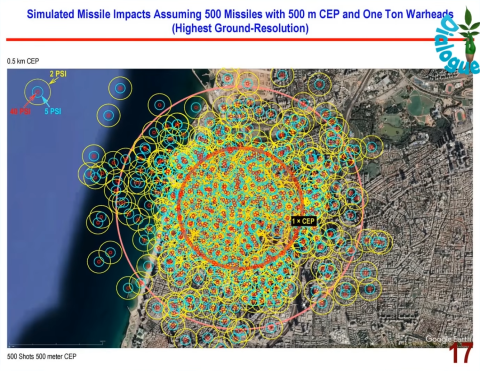
Prof. Ted Postol: US–Iran War? Israel’s Fatal Gamble
or go to
Aletho News Archives – Video-Images
From the Archives
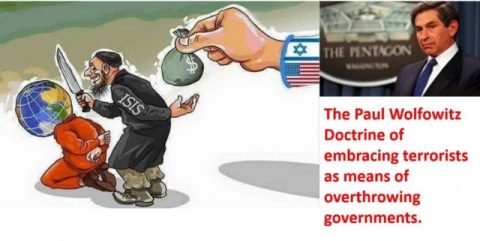
Neocon Max Boot: Legal and illegal aliens need to enlist in the US army and die for Israel
By Jonas E. Alexis | Veterans Today | October 16, 2107
In 1973 Irving Kristol, the godfather of the Neoconservative movement, made a stunning statement which is still relevant to understanding the Israeli influence in US foreign policy. Kristol said:
“Senator McGovern is very sincere when he says that he will try to cut the military budget by 30%. And this is to drive a knife in the heart of Israel… Jews don’t like big military budgets. But it is now an interest of the Jews to have a large and powerful military establishment in the United States…
“American Jews who care about the survival of the state of Israel have to say, no, we don’t want to cut the military budget, it is important to keep that military budget big, so that we can defend Israel.”
Read the statement again very carefully. A big military budget, said Kristol, is only good for Israel, not America or much of the Western World. In other words, precious American soldiers who go to the Middle East to fight so-called terrorism are just working for Israel, not for America.
So, whenever the Neocons use words such as “democracy” or “freedom,” they are essentially conning decent Americans to support Israel’s perpetual wars. … continue
Blog Roll
 Aletho News
- Macron: French citizens fighting for Israel cannot be labeled ‘genociders’
- US eyes Gaza security force drawn from armed gangs
- The Only Motive Behind The ‘Imminent’ U.S. War With Iran Is The Zionist Lobby
- Trump eyes 350-acre US military base housing 5,000 troops in Gaza
- Israel Pushing US Toward a Big and Damaging War With Iran – Ex-Pentagon Analyst
- Meet The Liberal Zionist And Ukraine War Supporter Advising AOC On Foreign Policy
- Buck Dancing for Zion: Kenya’s and Nigeria’s Growing Love Affair With Israel
- Israel installed, oversaw security system at Barak-Epstein residence in New York: Report
- ‘Britain’s Index of Repression’ documents 964 incidents of anti-Palestinian crackdown
- Prof. Ted Postol: US–Iran War? Israel’s Fatal Gamble
- If Americans Knew
- Tucker Carlson interrogated in Israel, has passport seized after interviewing US ambassador
- 6,000 Amputees in Gaza Face Impossible Recovery amid Israeli War Ultimatum
- The Lancet: Gaza death toll far higher than reported – Not a ceasefire Day 132
- Compliant aid: Who are the Israel-approved NGOs scaling up in Gaza?
- Why won’t Trump’s “Board of Peace” bring peace? – Not a ceasefire Day 131
- Help end the injustice against Shadi
- Israel’s Favorite American President
- Israel’s “Yellow Line” Is a Death Trap for Palestinians. We Drove Into It.
- Why Israel’s expanding occupation in Syria presents a critical legal test
- Gaza is not a natural disaster. It is the victim of genocide enabled by global inaction
- No Tricks Zone
- Coal Power Back In Trend As Globe Tries To Keep Pace With Growing Demand For Power
- New Study: A 4°C Warmer Beaufort Sea Had ‘No Sea Ice’ 11,700 – 8200 Years Ago
- Unfudging The Data: Dutch Meteorological Institute Reinstates Early 20th Centruy Heat Waves It Had Erased Earlier
- German Gas Crisis…Chancellor Merz Allegedly Bans Gas Debate Ahead of Elections!
- Pollen Reconstructions Show The Last Glacial’s Warming Events Were Global, 10x Greater Than Modern
- Germany’s Natural Gas Storage Level Dwindles To Just 28%… Increasingly Critical
- New Study Rebuts The Assumption That Anthropogenic CO2 Molecules Have ‘Special’ Properties
- Climate Scientist Who Predicted End Of “Heavy Frost And Snow” Now Refuses Media Inquiries
- Polar Bear Numbers Rising And Health Improving In Areas With The Most Rapid Sea Ice Decline
- One Reason Only For Germany’s Heating Gas Crisis: Its Hardcore-Dumbass Energy Policy
 Aletho News